Simerg is an independent initiative dedicated to Ismaili Muslims, the Aga Khan — their Hereditary Imam — and the Ismaili Imamat, and Islam in general through literary readings, photo essays and artistic expressions
Sunday, January 21, 2024, marks the 3rd anniversary of the death of my beloved mum, Alwaeza Maleksultan Merchant, who passed away at the age of 89, shortly after contracting COVID-19. The brief tribute that was penned in her memory after her death, elicited hundreds of responses from around the world, honouring her life of service to the Jamat, its institutions and the Imam-of-the-Time. She was extremely popular among her students in Lourenço Marques (now Maputo), Mozambique, Dar es Salaam, Tanzania, and London, England.
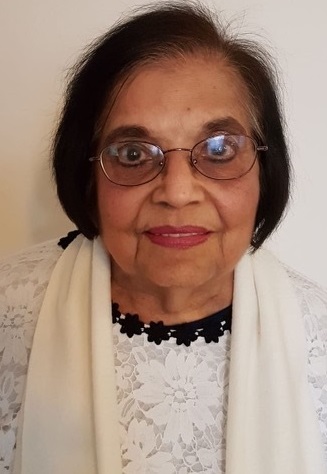
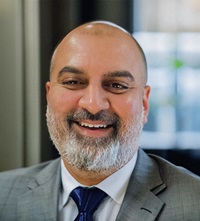
Mrs. Merchant (June 9, 1931 – January 21, 2021), pictured a few month before she passed away at the age of 89. Photograph: Shellina Karmali.
My mother was also a wonderful speaker, and the waezs (sermons) that she delivered were very well received by Ismaili congregations around the world. Hundreds of students she taught — many of whom went on to become, and still are, leaders in the Ismaili community — have always expressed their immense respect and gratitude for her shining example of hard work and inspiring teaching.
Article continues below
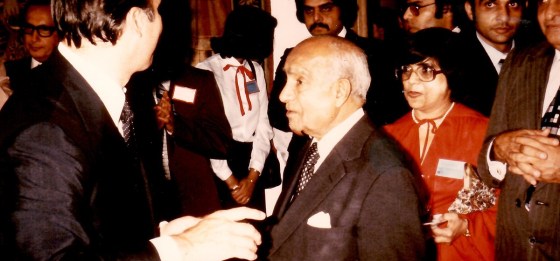
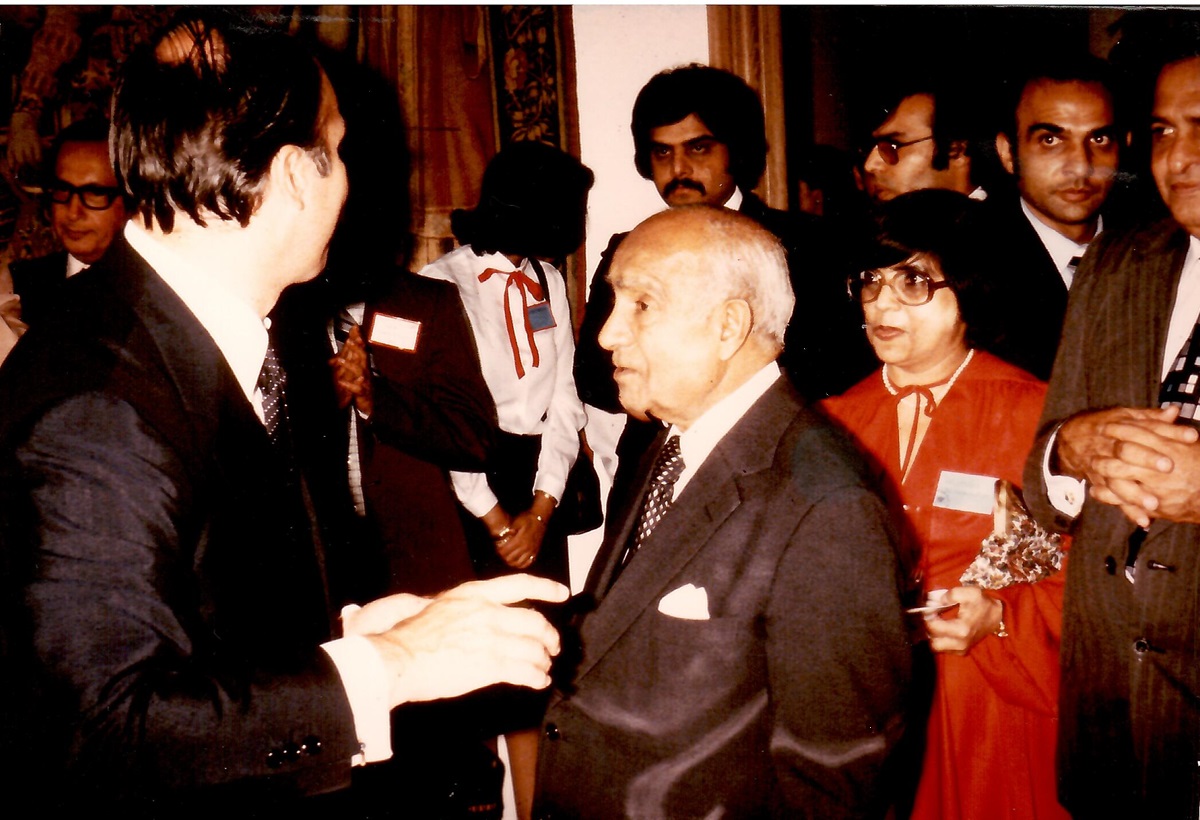
Mrs. Merchant in the presence of Mawlana Hazar Imam, His Highness the Aga Khan, during her visit to Aiglemont, France, in the 1980s. In picture are Diwan Sir Eboo Pirbhai, an iconic leader of the Ismaili community in the 20th century, and missionaries Rahim Bana and Nizar Chunara. Photograph: Jehangir Merchant collection.
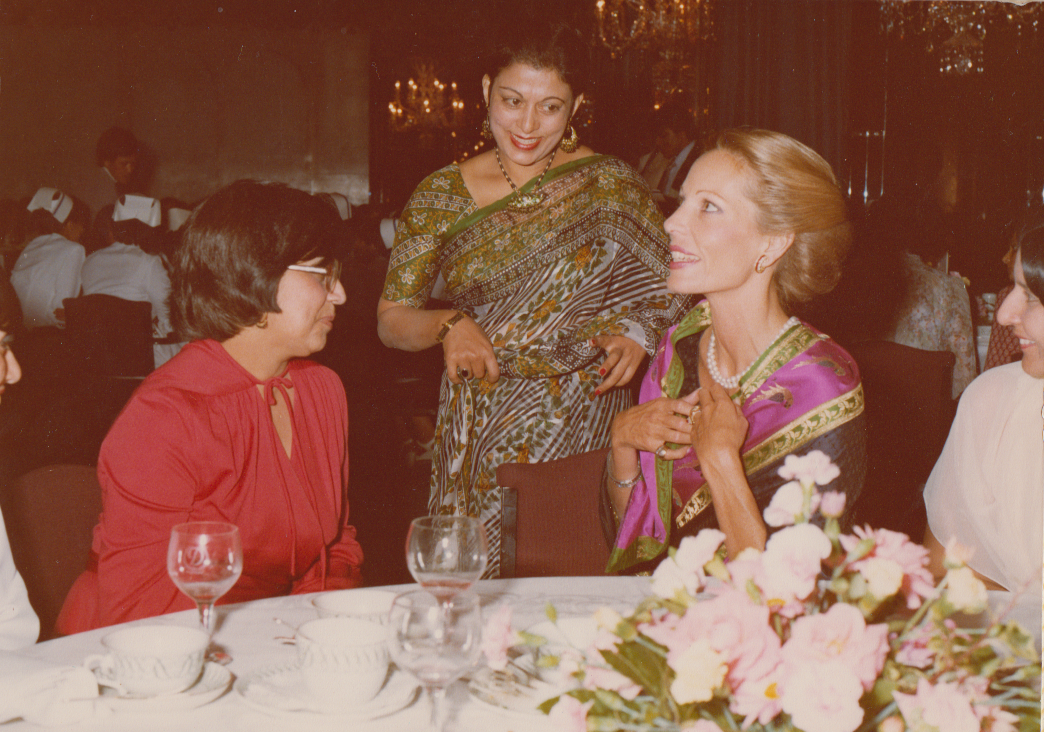
Late Gulzar Muller (centre) introduces Mrs. Merchant to Begum Salimah Aga Khan at a function held in London during Mawlana Hazar Imam His Highness the Aga Khan’s week long visit to the Ismaili Muslim community of the United Kingdom in September 1979. Photograph: Jehangir Merchant collection.
On January 20, when I went to convey my condolences to Shirin Harji on the sudden demise of her son, Rahim, who passed away a day earlier (January 19) at the age of 41, she and her sister-in-law, Shamim, told me about the impact of my mum as their teacher in Dar es Salaam in the 1960s.
Rahim Salim Harji (d. January 19, 2024, aged 41)
They said that whenever the Ginan (Hymn) Satgur Avea Kain Apane Duwar is recited in the Jamatkhana they always think of “Mrs. Merchant” — as she was fondly called — because she entrenched the Ginan firmly in their hearts. Shirin, I may note, recites beautiful Ginans. Of course, I am in deep shock over Rahim’s death, whose father Salim — my beloved friend of 60 years — passed away six months ago on July 13, 2023. Please read my tribute to Salim. Thus, I was deeply touched when Shirin and Shamim spoke about my late mum.
On this day as her entire family of children, grandchildren, daughters-in-law, two surving sisters, as well as her nieces and nephews and indeed friends remember her, Simerg is pleased to refer readers to a beautiful article Varas Ismail Gangji: The Turning Point that she penned for the special series I Wish I’d Been There.
Upon my mum’s retirement from professional duties, her students in London presented her with a rich 40 page tribute of photographs and textual material that reflected their appreciation and affection for her. I present a couple of images from the volume as well as a photograph of my parents with my daughter Nurin shortlty after her birth.
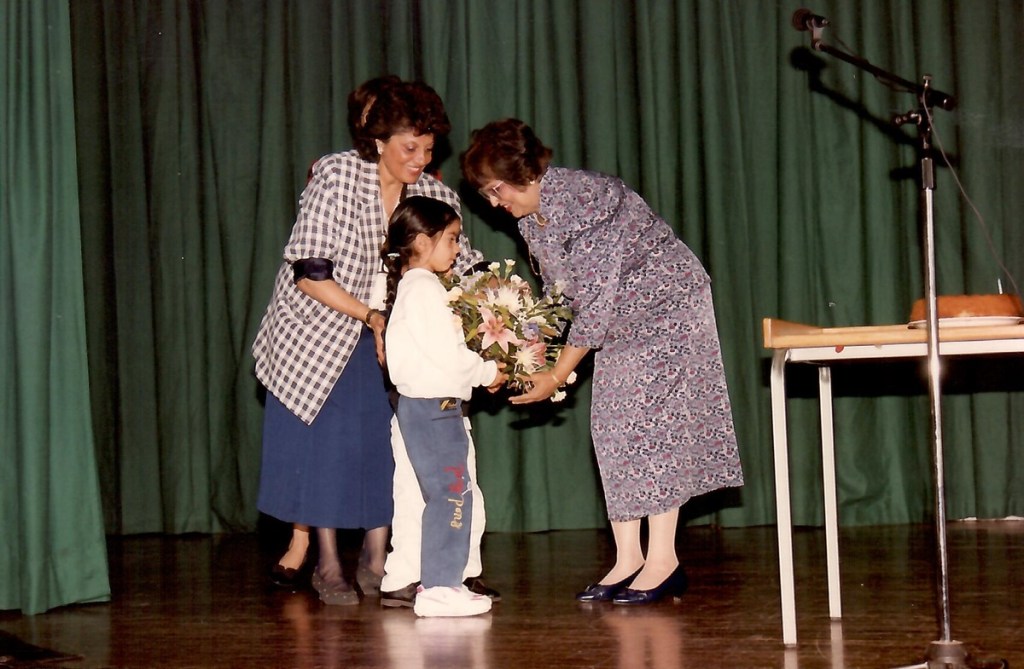
Mrs Merchant is presented with a bouquet of flowers on behalf ot Baitul Ilm students as she and her husband, Jehangir, retire from professional duties with the Ismaili Tariqah and Religious Education Board for the UK (ITREB); 1990s. Photograph: Jehangir Merchant collection.
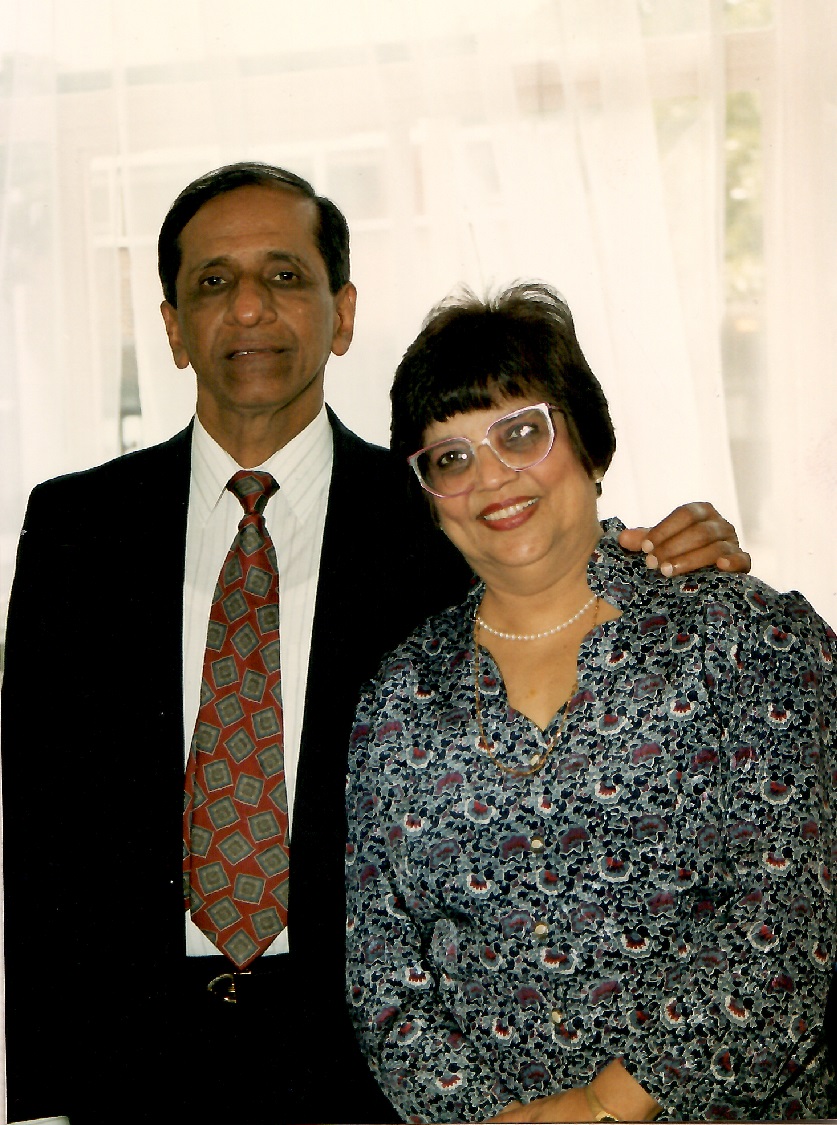
Mr. and Mrs. Merchant on the first page of the tribute album prepared by the BUI students of London, England, on their retirement. Photo: Jehangir Merchant collection,
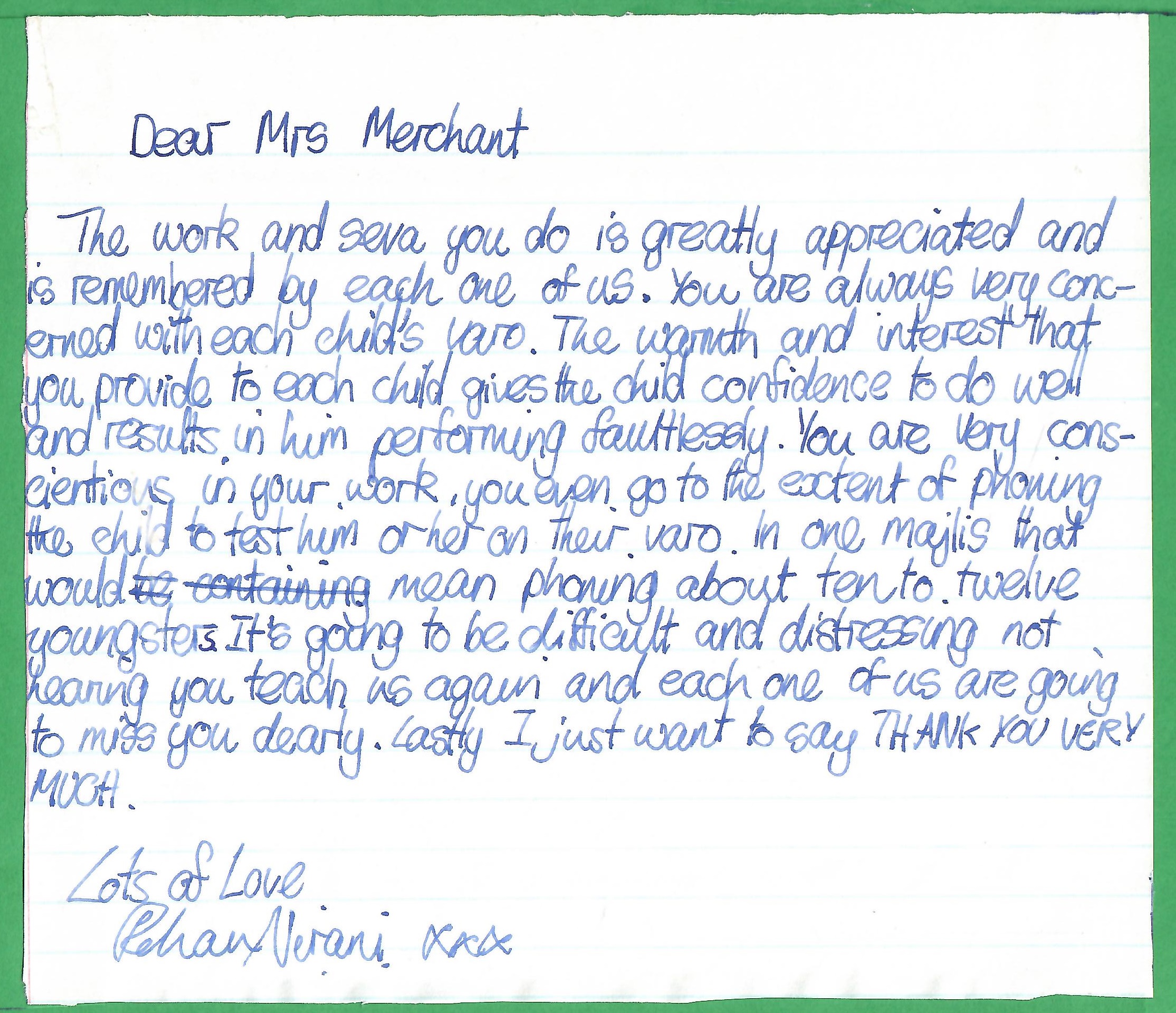
One of many tributes penned by Ismaili Baitul Ilm (BUI) students as Mrs. Merchant retired from professional teaching in the early 1990’s. Her professional service with Ismaili instituions began, with her husband Jehangir, in Lourenço Marques (now Maputo), Mozambique in 1954. Past her retirement, she continued to render honorary services until she passed away in 2021. Photograph: Jehangir Merchant collection/Tribute volume presented to Mrs. Merchant by her London BUI students,1990s.
Mr. and Mrs. Merchant with their newly born granddaughter Nurin, daughter of Malik and Rozina Merchant, July 1992. Nurin is now a veteriniarian. She has been practicing in the field for the past 5 years since her graduation from the Ontario Veterinary College, University of Guelph. Photograph: Malik Merchant collection.
On this day of remembrance of my mum, as well as a day on which I have been deeply affected by the untimely death of Rahim Harji, I pray for the souls of my parents, Rahim and Salim Harji, and all the deceased members of the Ismaili community. May their souls rest in eternal peace. Ameen.
During times of bereavement, Muslims seek and find inspiration and strength from the following Qur’anic verse:
Inna lillahi wa inna ilayhi raji’un “Surely we belong to God and to Him we return” — Holy Qur’an, 2:156.
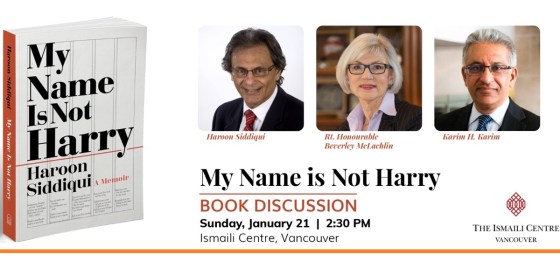
EVENT: In person discussion of book, “My Name Is Not Harry: A Memoir” by Haroon Siddiqui PANELISTS: Author Haroon Siddiqui, Honourable Beverley McLachlin, Professor Karim H. Karim, and Zahra Premji (emcee) WHERE: Ismaili Centre Vancouver WHEN: Sunday, January 21, 2024, 2:30 PM TO ATTEND: Please click Register
After a journalistic career spanning almost half-a-century, including the final 37 years at Toronto Star, Haroon Siddiqui retired from the paper with a parting column published on April 1, 2015 reflecting on his life as a journalist at the Star and how Canada has changed since he arrived in the country in 1967. He recently published his memoir, My Name Is Not Harry (September 2023), which will be the focus of discussion on Sunday, January 21, 2024, at the Ismaili Centre Vancouver. With the likes of Honourable Beverley McLachlin, former Chief Justice of the Supreme Court of Canada, and Professor Karim H. Karim from Carleton University, joining the award-winning journalist, the event promises to be enlightening and informative. CBC’s Vancouver news anchor Zahra Premji will act as the emcee.
While I was familiar with the Globe and Mail in London, England, because the Saturday edition was available at Dillon’s Bookstore in London, I did not know anything about the largest selling newspaper in Canada, the Toronto Star, until I visited Toronto in November 1978, for Mawlana Hazar Imam His Highness the Aga Khan’s first mulaqat (meeting) with his Ismaili Muslim community in Canada. His Highness is the 49th Hereditary Imam of the Ismaili Muslims and the direct descendant of Prophet Muhammad (may peace be upon him and his progeny). Ismailis began arriving in Canada in large numbers after their expulsion with other Asians from Uganda in 1972.
For the historic visit I was welcomed to stay at my cousin’s place in Don Mills, close to the present location of the Aga Khan Museum, the Ismaili Centre Toronto and the Aga Khan Park. My cousin subscribed to the Star and, if I my memory serves me right, the paper got delivered in the afternoon, unlike newspapers in London, UK, where delivery would be very early in the morning. The Star’s coverage of the Aga Khan’s visit was lively, and I took back with me to London several reports.
Siddiqui, who arrived in Canada in Montreal during Expo ’67, was recruited by the Star after a ten-year stint at Manitoba’s Brandon Sun. Writing a special piece for the Sun in the issue of October 3, 2023, Siddiqui says that the decade at the paper “was the best thing that could have happened to me personally and professionally. It made me a Canadian journalist and let me experience the vast expanse of the Prairies and their rolling hills, and beyond, to the Rockies, the West Coast, and parts of the North that I’d have known only fleetingly had I remained in Southern Ontario.”
The Brandon Sun had a circulation of 15,000 and was regarded as the Cadillac of small newspapers in Canada. Siddiqui notes that the paper “was well designed, too, winning awards, including the prestigious Inland Daily Press Association and Northwestern University Medill School of Journalism Award, the only Canadian newspaper so honoured.”
This ten-year experience led Siddiqui to a long and fruitful 37-year career at the Toronto Star where he says he was initially “dumped in the newsroom and forgotten.” In the ensuing years, Siddiqui went on to establish himself as a great and respected Canadian journalist winning several awards and distinctions including, most recently, the Canadian Journalism Foundation’s (CJF) Lifetime Achievement Award. The 2023 award recognized his decades-long groundbreaking career in Canadian journalism and his commitment to diversity, journalistic integrity, and social justice. The Rt. Hon. Adrienne Clarkson, the 26th Governor General of Canada, and a member of the CJF’s Lifetime Achievement Award Jury noted in her (jury) statement that “Haroon Siddiqui is a trailblazer of astonishing vision and compassionate decency. Nuanced and brilliant, he is unique in the pantheon of great Canadian journalists.” The CJF award cemony was held on June 13 at Toronto’s prestigious Royal York Hotel.
I first arrived in Canada in 1981 in Edmonton and then made Ottawa my home in the autumn of 1983. The Saturday Star became my newspaper of choice. Why? It had introduced a special standalone section on motoring called Wheels, and I had always loved cars, as did my late dad whose dream car was to own a Jaguar! My strong — and long — love affair with the Star introduced me to Haroon Siddiqui’s columns! Whenever he wrote about Islam and Muslim countries, he did so with purpose, and I admired him for that.
In 1992, on the Aga Khan’s third visit to his Canadian Ismailis, Siddiqui conducted an excellent interview with him for the Star in which he raised interesting questions including Salman Rushdie’s highly controversial and offensive novel, The Satanic Verses (September 1988). Rushdie had stirred an immense amount of anger and unrest among Muslims all around the world. Indeed, Iran’s Ayatollah Khomeini even issued a death sentence on Rushdie through a fatwa (edict), and the author went into hiding for ten years. When he showed up at a book event in London, one of my friends took Rushdie’s entire collection of books he owned for signing. Rushdie jokingly remarked whether there was a concealed weapon in the large pile he was carrying! Nanowisdoms, which is dedicated to the writings and speeches of Ismaili Imams, carries excerpts from Haroon’s interview with the Aga Khan (please read it HERE.)
Article continues below
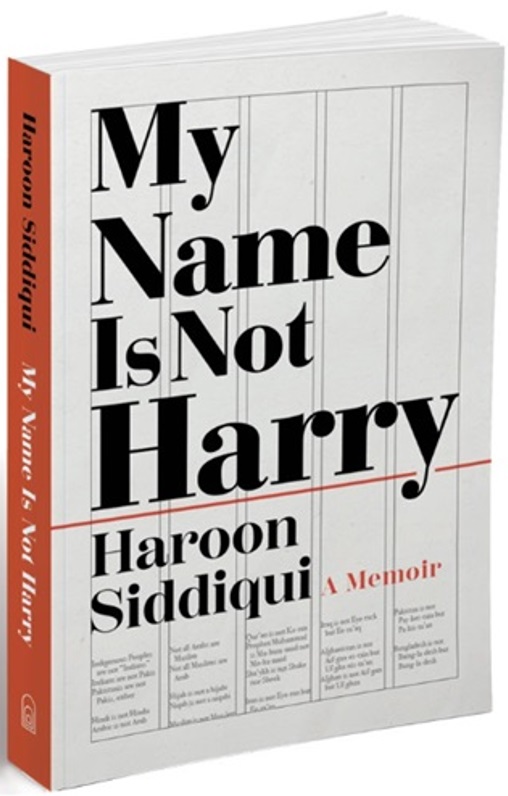
Front cover, My Name Is Not Harry: A Memoir, by Haroon Siddiqui, published September 26, 2023, Dundrum Press, 472 pp, available at Indigo (paperback and Kobo editions), Amazon (paperback and Kindle editions) and other booksellers.
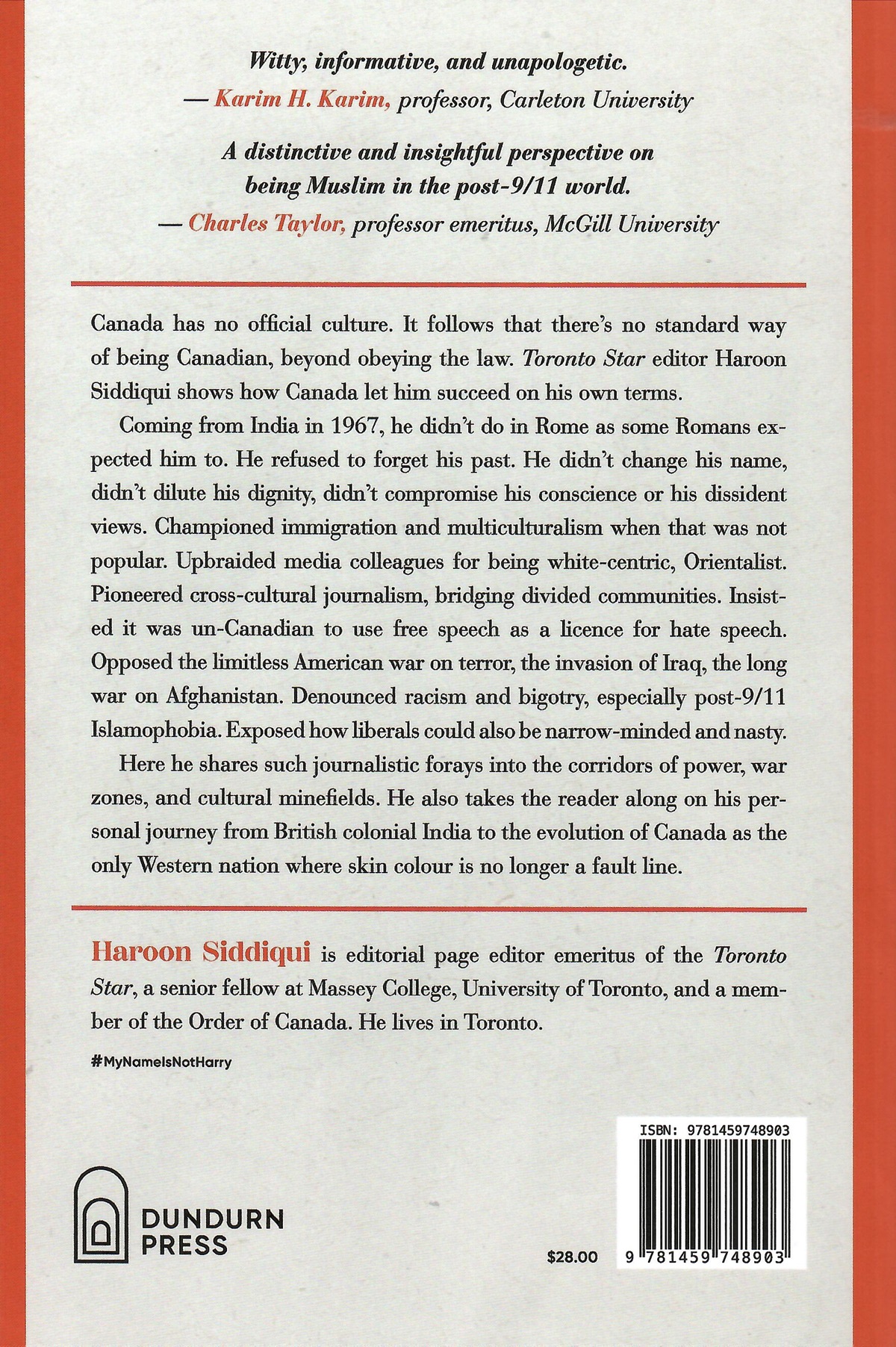
Back cover of My Name Is Not Harry. Please click on image for enlargement
I must admit I haven’t followed Siddiqui’s columns in recent years, to the extent that I did between 1985 and 2010, due to important family engagements. However, on a recent visit to a Calgary Indigo, I was pleased to see Siddiqui’s new book prominently displayed on a book stand near the main entrance. I was drawn to the book title’s sincere proclamation My Name Is Not Harry. At once, the title reminded me of a message that I had come across in my father’s archive notes in which the Aga Khan, during a meeting in 1961 in London, had asked his Ismaili Muslim followers to preserve and be proud of their Muslim heritage. He asked them to use Muslim names that had been given to them at birth, and not to adopt Western names. Of course, we have numerous examples today of Muslims abbreviating their names for the sake of simplicity or using Latinized names to conceal their Islamic identity!
Well, we have a proud and sincere Muslim by the name of Haroon — and not Harry — who is taking to the stage on Sunday, January 21, 2024 at the beautiful Ismaili Centre Vancouver. He will no doubt offer his words of wisdom to fellow Muslims and Canadians as well as everyone who loves newspapers and journalism.
Being in Calgary, I will miss the event but I hope Ismailis in and around Vancouver will support this important community initiative. To register for the event and to read profiles of the panel members, please click Book Discussion: My Name is Not Harry.
The discussion with Haroon Siddiqui will be of interest to everyone around the world, and it is hoped that a video of the complete program will be made available online soon after.
Inna lillahi wa inna ilayhi raji’un “Surely we belong to God and to Him we return” — Holy Qur’an, 2:156
“Life is a great and noble calling, not a mean and grovelling thing to be shuffled through as best as we can but a lofty and exalted destiny.” — Mawlana Sultan Mahomed Shah, His Highness the Aga Khan III (1877-1957), 48th Imam of the Shia Imami Ismaili Muslims.
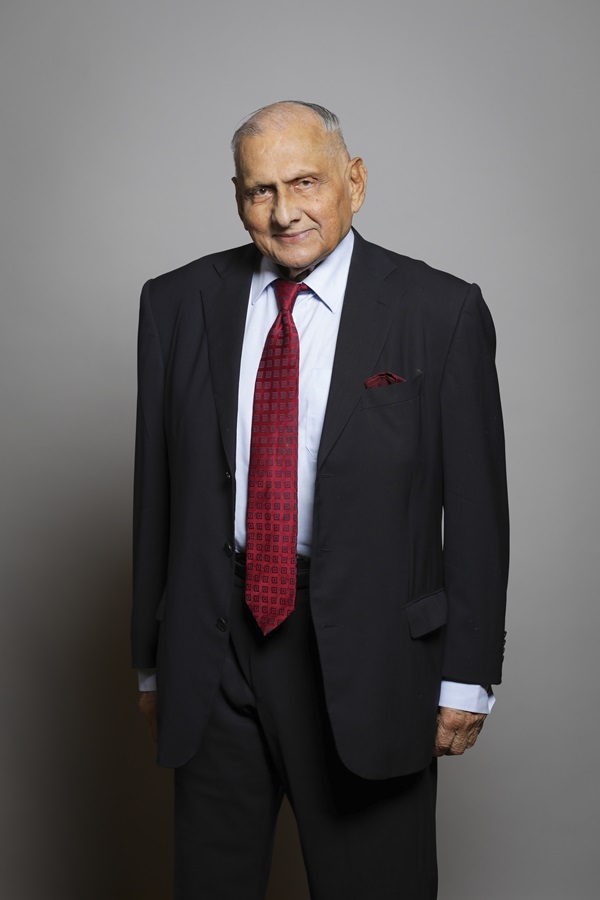
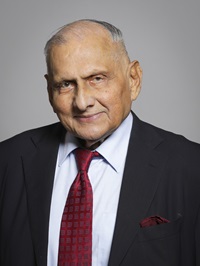
Amirali Alibhai Bhatia (b. March 18, 1932), a long-serving education administrator in the Imamat institutions of Mawlana Hazar Imam, His Highness the Aga Khan, in Tanzania and the UK, as well President of the Aga Khan Council for the UK from the late 1970s until the early 1980s, has died in London, England, at the age of 91.
Mr. Bhatia was bestowed with the title of Vazir by Mawlana Hazar Imam during his tenure as the President of the UK Aga Khan Council. Mr. Bhatia also served as member of the Board of Governors of the Institute of Ismaili Studies, which was created by Mawlana Hazar Imam on December 13, 1977.
Article continues below
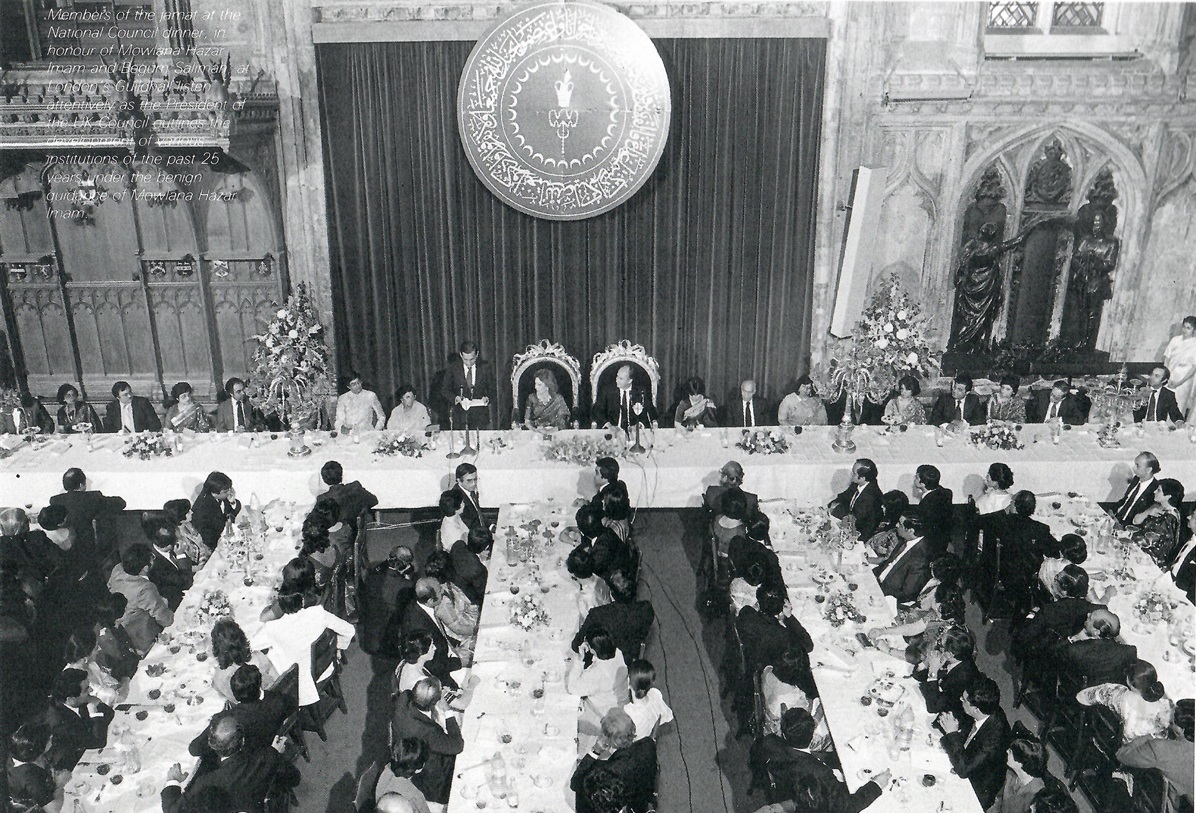
Mawlana Hazar Imam, His Highness the Aga Khan, and Begum Salimah look on as Vazir Amir Bhatia, President of His Highness the Aga Khan Shia Imami Ismaili Council for the UK, addresses members of the community at the Aga Khan Council dinner in honour of Mawlana Hazar Imam’s Silver Jubilee visit to the UK in July 1983. Photograph: Ismaili Forum, December 1983.
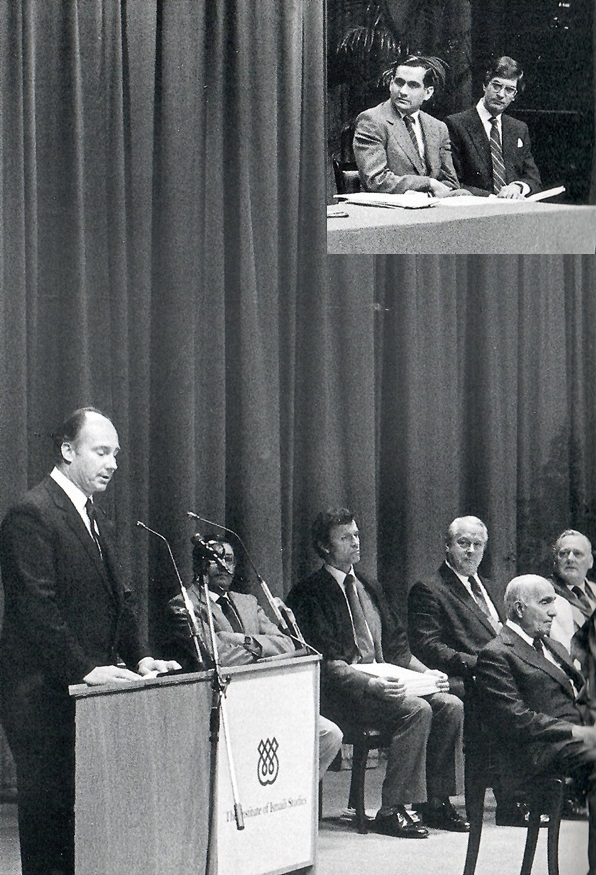
Mawlana Hazar Imam, His Highness the Aga Khan, addresses the new graduates at the University of London Institute of Education during his Silver Jubilee visit to the UK in July 1983. Seated in front row is Diwan Sir Eboo Pirbhai. Looking on, in the inset picture, are Amir Bhatia, President of the UK Aga Khan Council, and Anil Ishani, both of whom were members of the Board of Governors of the Institute of Ismaili Studies. Photograph: Ismaili Forum, December 1983.
Mr. Bhatia was awarded the Order of the British Empire (OBE) in 1997 for his numerous contributions in the UK, and was amongst the 15 peers appointed from 3000 nominations to the House of Lords in 2001 during Tony Blair’s term as the Prime Minister of the UK. He then took his seat in the House of Lords (The House of Lords is the upper chamber of the United Kingdom’s parliament. The members of the House of Lords are not elected by the public, but are appointed by the monarch, appointed by the Prime Minister, or are hereditary peers. To become a lord in the House of Lords, one can be appointed as a life peer by the monarch on the advice of the Prime Minister.)
Mr. Bhatia was thereafter referred to as Lord Bhatia and actively contributed in the House (see excerpts from 3 of his more than 150 oral statements, below). He ceased to be a member of the House of Lords in 2023 due to non-attendance. Several years earlier, in 2010, Lord Bhatia was mired in a controversy when he was found to have broken the House’s expense rules. He was suspended from the House of Lords for eight months. Aside from this and another similar controversy a few years later, and his indifference to an important sister Ismaili Institution in the 1980s, Vazir Bhatia was an outstanding administrator, and a very organizerd, hard-working and conscientious leader. In one of his speeches made at an event in London attended by the editor during the mid 1970s, Vazir Bhatia spoke about his role as Tanzania’s education administrator. He said that when he assumed the position, he studied all the files from the mid 1930s onwards to learn about the developments that had taken place in the education sector within the Ismaili community. The late Vazir was meticulous in all his undertakings.
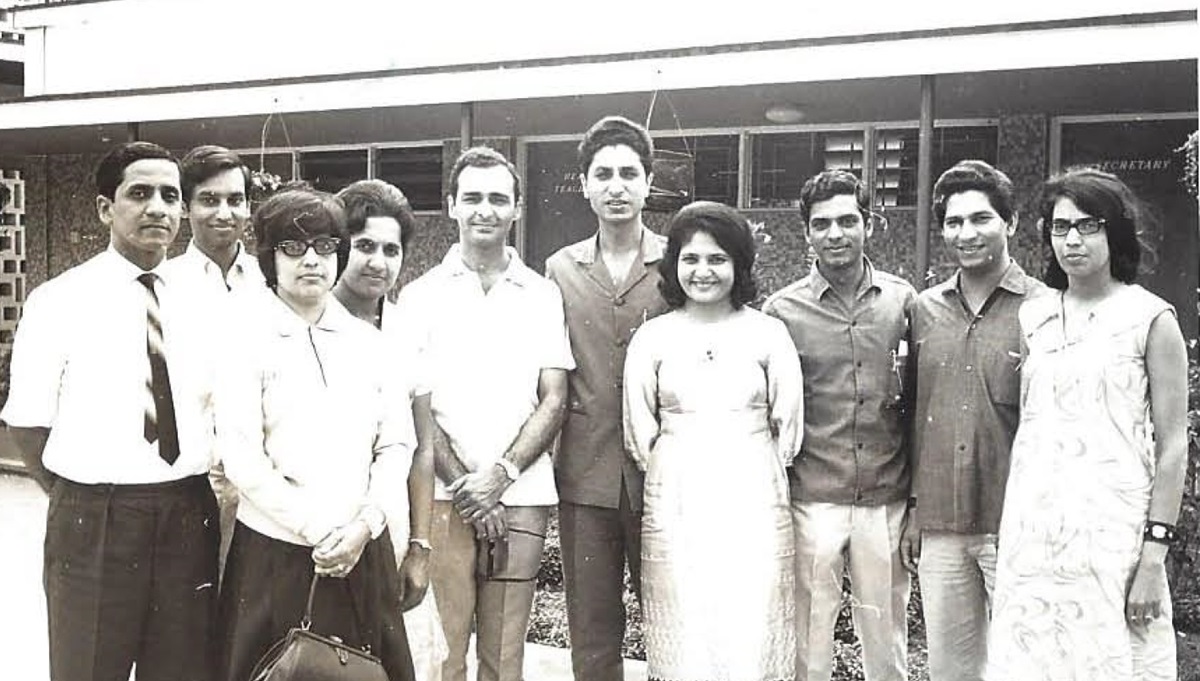
Mr. and Mrs. Merchant are pictured in front at left in this photograph submitted to Malik Merchant, editor of Simerg, by Lord Bhatia. Other recognizable faces in the photograph are Mr. Dina and Mr. and Mrs. Hasni Remtulla. Photograph: Lord Bhatia.
In recent years, Lord Bhatia was in touch with the editor of Simerg, commending him on his 3 websites, and also spoke to his mother, Mrs Merchant (d. 2021), to convey his condolences when her loving husband, Jehangir, died in 2018. To the editor’s surprise, Lord Bhatia shared a picture of Mr and Mrs Merchant when they were teachers at the Aga Khan Girls Secondary School in Dar es Salaam. Lord Bhatia wrote: “Dear Malic (sic): Here are some photos of your parents. I thought you would like them as you may not have them.” Indeed, I had never seen the photos before, and will treasure them for the rest of my life.
A very compact summary of Mr. Bhatia’s services is posted on the website of United Religions Initiative (URI). Readers are also invited to read an article published in 2004 in the UK Muslim magazine, Emel, entitled A Week in the Life of Lord Bhatia.
We convey our deepest condolences to the family of Vazir (Lord) Amirali Bhatia and pray that his soul may rest in eternal peace. Ameen.
We invite our readers to offer their condolences and tributes to Lord Bhatia by clicking on LEAVE A COMMENT
As part of this brief tribute, Simerg researched the UK Parliamentary Hansard and found transcripts of some 167 spoken statements made by Lord Bhatia between 2013 and 2121 on a wide range of subjects. We have excerpts from 3 statements that are important to our readers; they show Lord Bhatia’s insights into important issues of the day.
My Lords, I thank the noble Lord, Lord Elton, for initiating this timely debate on the persecution of people of faith in this century.
There are a number of national and international treaties on this subject; I will not repeat them because the noble Lord has already referred to them. Despite that, these treaties continue to be violated.
When I was introduced to the House of Lords, I took my oath with a Holy Koran and quietly started with the word “Bismillah”, meaning, “In the name of Allah, most beneficent and most merciful”. I have never differentiated between faiths. As a Muslim, my closest friends have been Hindus, Sikhs, Christians, Buddhists, Jews and those of no faith. The Holy Koran, in surah 2, says: “The Apostle believeth in what hath been revealed to him from the Lord, as do the men of faith. Each one of them believeth in God, His angels, His books and His apostles. ‘We make no distinction (they say) between one or another of His apostles’”.
As an ex-trustee of Oxfam, I met another trustee, Ansel Harris, and we became very good friends; our children and spouses became good friend as well. We travelled together to Israel, India and the Middle East. We learnt about the practice of each other’s faiths and shared each other’s jokes and stories. Ansel and his wife Lea were to attend my introduction to the House of Lords—but Ansel had another appointment, with his maker.
I attended the funeral and saw very little difference between Muslim and Jewish rituals. A few weeks later, there was a memorial service in Hampstead Town Hall. I was asked to speak and made my speech. Chief Rabbi Jonathan Sacks was present, and after a few days he wrote an article in the Times. I have deposited the full article in the Library, but will quote a few sentences:
“At the memorial service recently, one of the speakers was Lord Bhatia, whom he had come to know through his work for Oxfam. It was clear from the tone of his tribute that the two men shared a moral vision and had been close friends.
“What held them together, one a passionate Jew, the other a no less committed Muslim? The short answer is that they cared for something larger than their respective faith communities … When they saw disease, poverty and despair, they didn’t stop to ask who was suffering; they acted.
“They knew that tears are a universal language, and help a universal command. They saw faith not as a secluded castle but as a window onto a wider world. They saw God’s image in the face of a stranger, and heard His call in the cry of a starving child.
“Does faith make us great or does it make us small? On this question, much of the future of our world depends. Jews, Christians and Muslims can live together in friendship, so long as we never forget those things that transcend religious differences – of which human suffering is one.
“When we focus, not on ourselves, but on those who need help, our separate journeys converge and we become joint builders of a more gracious world”.
To conclude, whenever someone attacks Christians, I feel that they have attacked my faith. This is my contribution to this important debate. The world will be a better place if attacks on any faith are dealt with by the full force of the law. These attacks on faith are made by a small number of people who, in the name of their faiths or for political or personal gain, attack other faiths.
My Lords, the statement made by the Prime Minister on 3 June 2013 is correct and has been echoed by the leaders of the Labour Party and the Lib Dems. Terrorism and extremism has existed in people from all faiths and religions. The important thing to understand is that such terroristsform a very small part of the faith groups.
If one looks at the Muslim communities in Britain, there is a huge silent majority who abhor violence in the name of their religion. They are peace-loving British citizens who practise their faith and contribute to the welfare of their own communities, the wider communities and the United Kingdom. They oppose the attacks on innocent civilians. No religion advocates violence. Those who commit violence should be dealt with by the police and other law-enforcing agencies.
Turning to Islam as a faith community, I wish to say that Islam, although it is the fastest-growing faith in the world, is little understood or not understood at all in the West. There is a deficit of understanding of Islam. Islam is a peaceful faith and occasionally, like all other faiths, it is hijacked by a handful of radicalised people for their own perverted personal or political reasons and ambitions. Islam reveres all the prophets — Christ, Moses, Abraham and others. Muslims are shocked when the prophets are ridiculed or abused on the altar of freedom of speech and expression.
Freedom of expression is a democratic right, but it carries responsibility. Our democracy is based on the rule of law, and those who break the law should be dealt with in the courts. Our courts are independent and magistrates and judges ensure that justice is not only delivered but seen to be done.
Turning to the Muslim community in Britain, I ask the Minister whether more could be done to support newly arrived spouses and partners from different parts of the world who come to join their families. In order to integrate them into the wider communities, they need to learn English. There are thousands of Muslim women who need to learn English to be able to communicate with the wider community and participate in civic society. They also need to be able to communicate with their own children who go to school. I believe that English and the ability to use a computer with internet connectivity are the two tools that will bring such isolated groups of women from the margins to the mainstream.
English and computers will enable the mothers to understand what their children are doing with their computers when they return home from school. Are they doing their homework, or are they playing computer games or chatting with undesirable people? The Minister should consider talking to some of the charities who work with these isolated groups of women to explore how additional funding could be given to those charities to help these isolated groups of women.
My Lords, this year’s International Women’s Day is like no other. As countries and communities start to slowly recover from a devastating pandemic, we have the chance to finally end the exclusion and marginalisation of women and girls. Women must have the possibility to play a full part in shaping the pivotal decisions being made right now, as countries respond to and recover from the pandemic. These choices will affect the well-being of people and the planet for generations to come.
To do this, we must break down the deep-seated historic, cultural and socioeconomic barriers that prevent women taking their seat at the decision-making table, while ensuring that resources and power are more equitably distributed. However, having a seat at the table also leads to problems. The question is whether the women are heard or not. Unless the table has equal numbers of men and women, having a seat will not work.
Different countries have different attitudes to women. Disappointingly, there is a known attitude in some families that, if a girl is born, it is considered as a problem. Science now enables families to find out early in pregnancy whether it is a boy or a girl. The women are often encouraged, and in some cases forced, to abort. I came across an article written by a prominent lady researcher in India. She talked about a family who had a boy and a girl; as they grew up, the girl related to the researcher: “If you look at me or my mother, we are both weak and not in good health. My father and brothers are very healthy. If they are ill, the best doctors or hospitals are used. If I or my mother are ill, only the local untrained person is called in. At mealtimes, my brother and father are served first. My mother and I get the leftovers”.
Unless such attitudes are dealt with, women will always be second-class citizens in their families –and unless legislation is in force, things will not change. I hope that this International Women’s Day will highlight such problems and get Governments to give equal rights to women.
Date posted: January 16, 2024.
____________________
We invite our readers to offer their condolences and tributes to Vazir Amir Bhatia by clicking on LEAVE A COMMENT. If you encounter a technical issue submitting your comment, please email it to mmerchant@simerg.com, Subject Lord Bhatia.
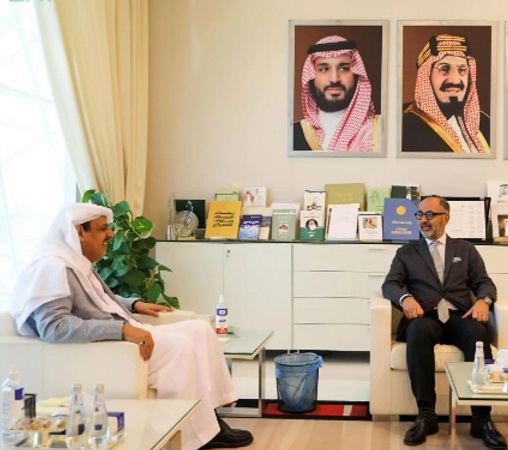
On January 7, 2024, Prince Abdulaziz bin Ayyaf, Vice Chairman of the Board of Trustees at Riyadh Philanthropic Society for Sciences and Chairman of the Board of Trustees at Prince Sultan University, welcomed Farrokh Derakhshani, the Director the Aga Khan Award for Architecture in Jeddah, Saudi Arabia. Seen on the wall are portraits of Mohammed bin Salman Al Saud, Crown Prince and Prime Minister of Saudi Arabia (left), and King Abdul Aziz Al-Saud, First Monarch Of Saudi Arabia Photograph: KSA.Com
The website News from the Kingdom of Saudi Arabia (KSA.Com) reports that “in a significant encounter today [January 7, 2024], Prince Abdulaziz bin Ayyaf, Vice Chairman of the Board of Trustees at Riyadh Philanthropic Society for Sciences and Chairman of the Board of Trustees at Prince Sultan University, welcomed Farrokh Derakhshani, the Director of the esteemed Aga Khan Award for Architecture. This award holds a distinguished reputation in the realm of architectural design.
“The meeting between the two influential figures delved into the architectural brilliance prevalent in the Kingdom of Saudi Arabia. Moreover, discussions centered around potential collaborations between Prince Sultan University and the Aga Khan Award for Architecture.
Story continues below
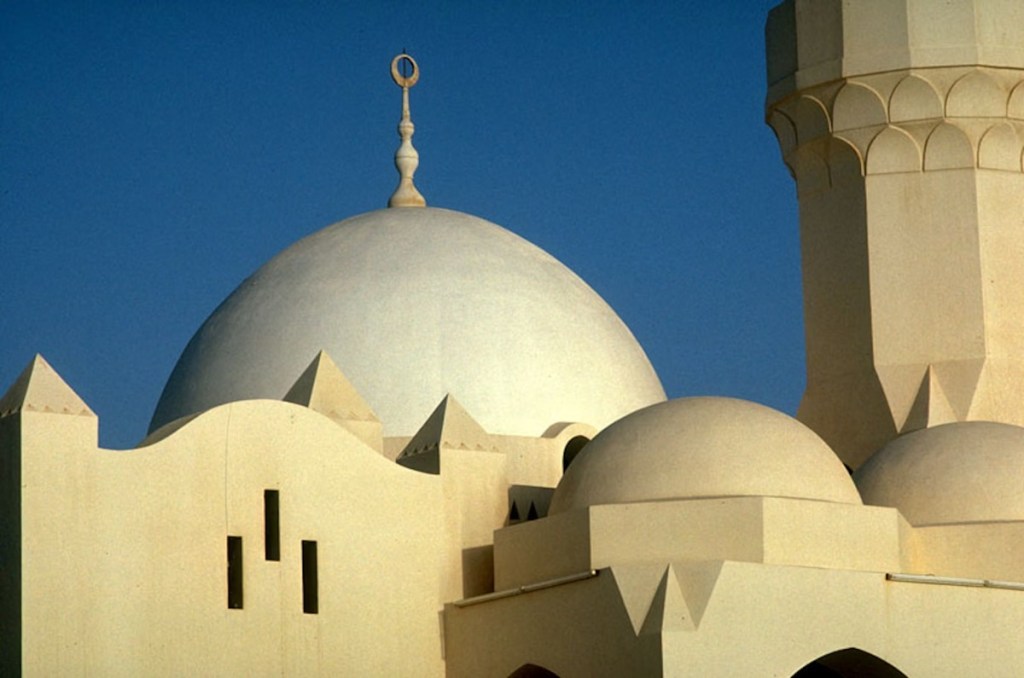
Corniche Mosque, Jeddah, Saudi Arabia, one of the recipients of the Aga Khan Award for Architecture in the 1987-1989 award cycle. Photograph: AKDN.
“Beyond exploring partnership opportunities, the participants engaged in dialogue about fostering cooperation and sharing insights between the Aga Khan Award and the Prince Abdulaziz bin Ayyaf City Humanization Award. This convergence of minds signifies a promising step toward advancing architectural excellence and mutual learning in the field.”
The following are the buildings from Saudi Arabia that were shortlisted or received the Aga Khan Award for Architecture in previous years (please clik on links for photographs and details):
After an abnormally mild December across much of Canada, winter is finally coming with a bang across most regions of the country starting Wednesday, January 10, 2024. Temperatures in Edmonton, which has not seen any snow, and Calgary are expected to plunge to lows ranging between -16C to -32C!
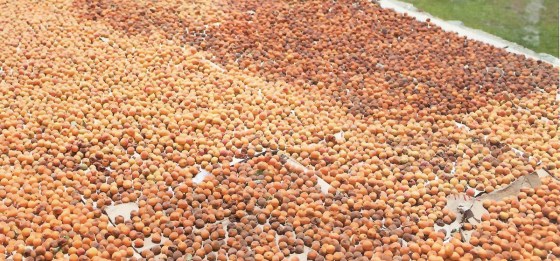
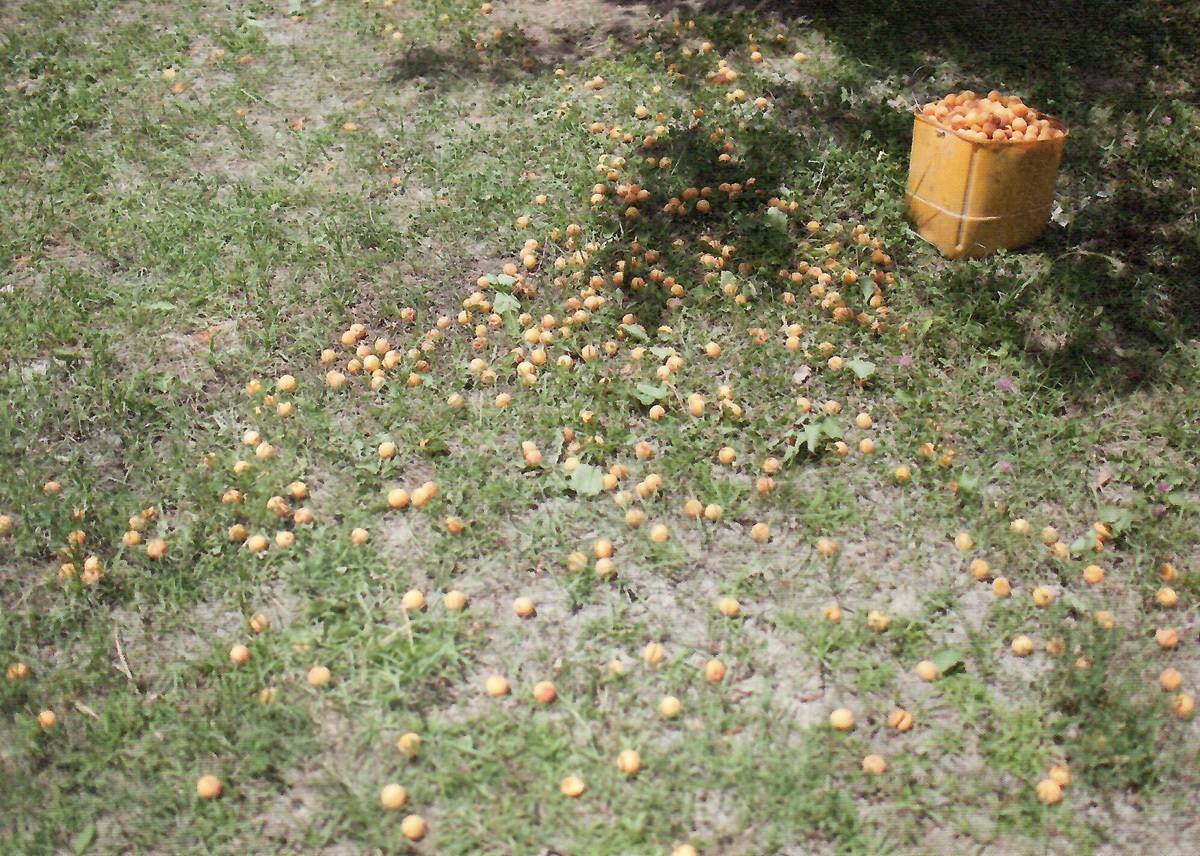
The centuries-old apricot soup (Bataring Daudo) from Hunza is what you want on your dining table to warm you up during the winter season, and for that we have turned to Aysha Imtiaz’s special feature article on the BBC website. Aysha writes: “The deceptively simple soup, has been nourishing Pakistan’s Hunza community for centuries and is perhaps the purest celebration of the fruit and the Hunza ideology.”
Shahzadi, who runs the Hunza Food Pavilion in Karimabad, Hunza’s capital, says: “The Hunza diet is instinctively reliant on fruit — fresh in the summer and dried in the winter. Simple, fuss-free food [means a] simple, fuss-free life.” She adds: “This soup has been used for centuries because it wards off colds and is nutrient dense.”
Note: Dried apricots, one of the 3 ingredients mentioned in the recipe, are easily available from small and large grocery stores across Canada, the Bulk Barn being one of them. You will also find large varieties of organic dried apricots in ethnic stores around the country.
~~~~~~~~~~
The Apricot
The cure for a weakened heart is apricot, The medicine for a bad mood is apricot, Fresh or dried, don’t eat too much, Drink its juice when you don’t feel well. (ode from With Our Own Hands, page 245).
~~~~~~~~~~
IN THE PAMIRS, THE APRICOT IS A SECOND FRUIT FROM PARADISE
The following piece by Tahmina Saodatkadamova is excerpted from the beautiful volume With Our Own Hands by Frederik van Oudenhaven and Jamila Haider. The unique award winning book was featured in Simerg a number of times, and reviewed by Nairobi’s Shariffa Keshavjee. The book was a sell-out on our website when we offered it to our readers on two occasions.
By TAHMINA SAODATKADAMOVA Dean of the Faculty of Biology, Khorog State Univeristy
Also from paradise according to local lore, the apricot is the Pamirs’ second fruit [after mulberries]. Where mulberries speak of necessity and ‘bread’, the apricot is the luxurious topping, very much a sign of wealth. Not very different from its role in the diet of the people of Hunza who use the fruit, its seed and oil in many different dishes and who attribute the near-mythical age to which they live to its many qualities, apricots play a very significant role in the food of the Pamirs.
More than 300 varieties, many of the unique to the Pamirs, have been identified by scientists.
Judging from wood fragments found in Stone Age graves, it is possible that the first apricot trees that arrived, thousands of years ago, took root as wild trees and were eventually brought into cultivation by the farmers of the Western Pamirs. Even now, groves of wild apricot trees can be seen on dry mountain slopes among enormous boulders. Of all the fruit trees in the Pamirs, they are best able to withstand drought.
In the Pamirs, apricots grow at altitudes of 1,600 to 3,000 metres above sea level. Here, the strong rays of the sun, the stark cold, the dry air and soil, and the care of many generations of farmers have made the apricot unique. Like mulberries and other fruit and berries growing in these mountains, the apricots are filled with flavour and are rich in vitamins and antioxidants. This is why local fruit varieties play such an important part in Pamiri folk medicine.
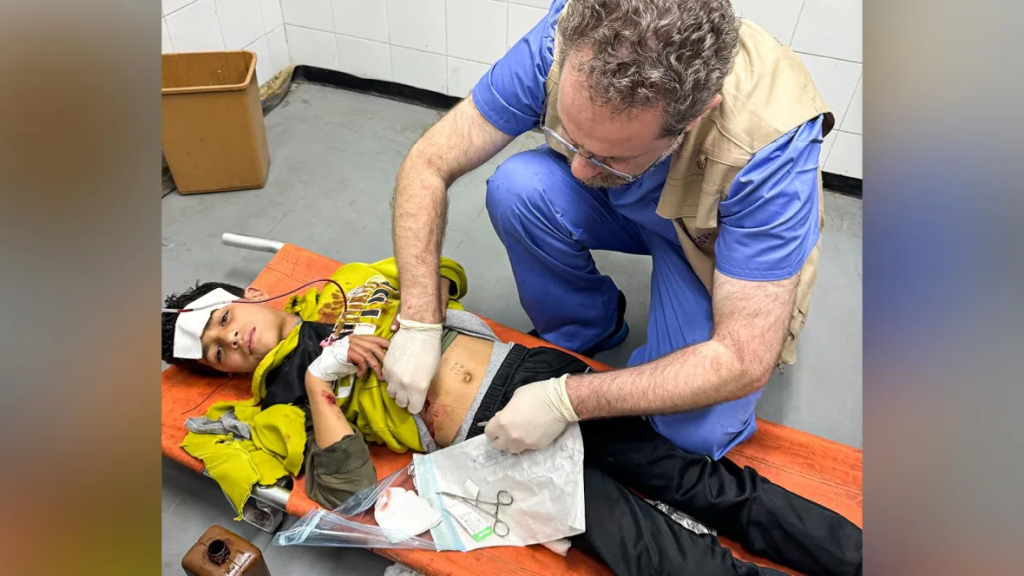
The CBC news clip that you will see by clicking on the link below in which Dr. Anas Al-Kassem is being interviewed by CBC newscaster Chris Glover will pierce anyone’s heart. In the photograph shown above, Dr. Al-Kassem stitches up a child’s wound on the floor of the hospital in the city of Khan Yunis. Photograph: CBC/Submitted by Anas Al-Kassem.
A Canadian trauma surgeon says that for every child he saved in the hospital in southern Gaza, another would die of their injuries. “We lost many children before our eyes,” said Dr. Anas Al-Kassem, chief surgeon at Norfolk General Hospital and West Haldimand General Hospital.
The Hamilton-based doctor travelled to Gaza last month as part of a medical convoy to help Palestinians injured in the Israel-Hamas war, and suffering from what the World Health Organization has called “catastrophic” health conditions.
Dr. Al-Kassem said he would treat upwards of 30 people each day, at least half of whom were children, some as young as two. Many suffered head trauma, shrapnel in the chest and abdomen, or injuries to their arms and legs that required surgery. He’d stitch up patients’ wounds on the floor without having any bed or painkillers to offer. After quick assessments, the doctors would have to decide who to try to save with their limited resources, he said.
Al-Kassem said there were bright moments, like when he and another surgeon from Toronto saved an eight-year-old boy’s life by removing shrapnel from his heart. Al-Kassem, a father of five, returned to his Ancaster, Ont., home last Thursday after the two-week mission, but said his “heart and soul” stayed behind. PLEASE READ THE FULL STORY ON CBC.
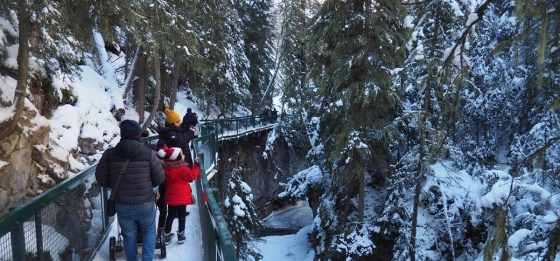
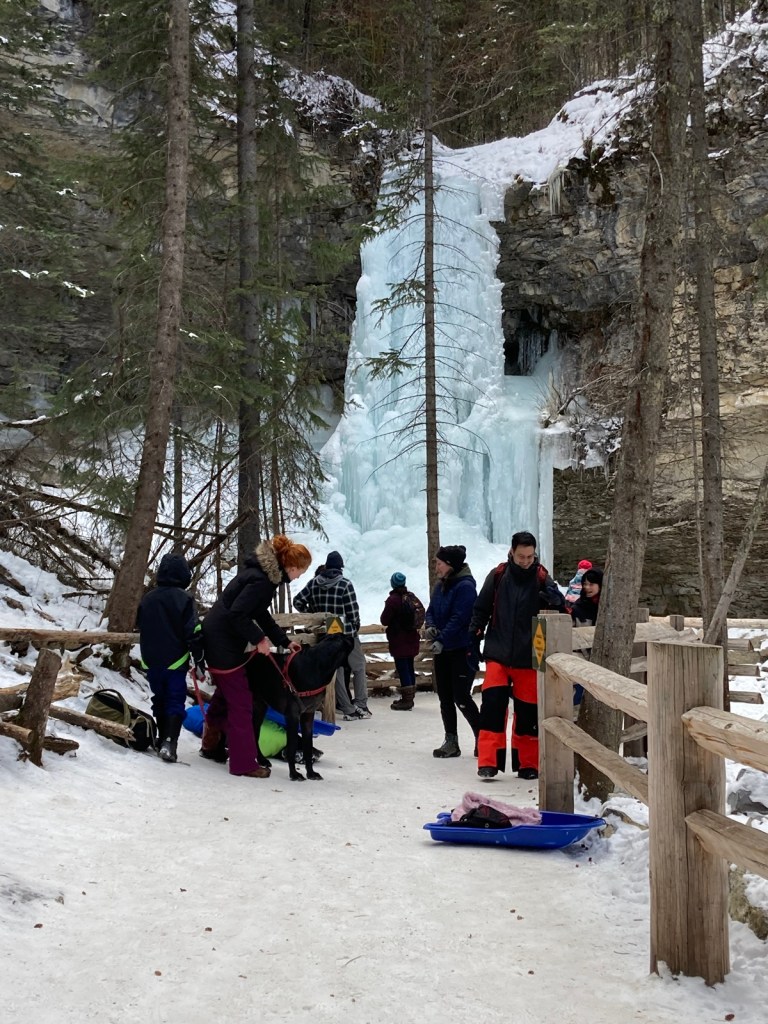
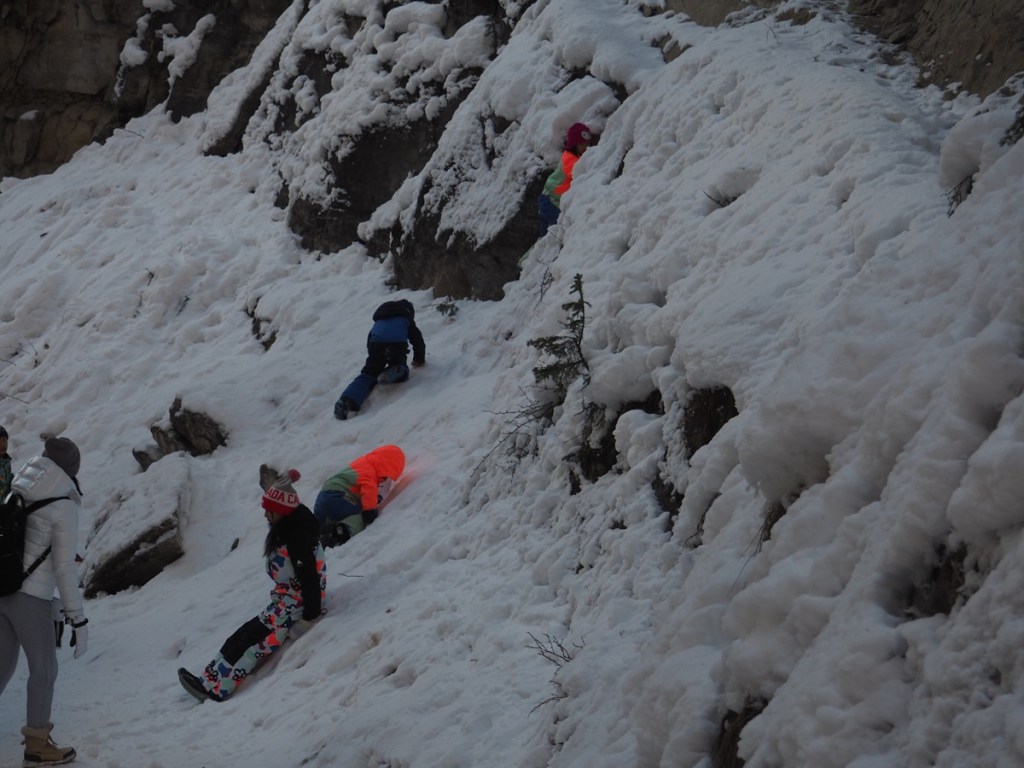
On New Year’s Day, January 1, 2024, Malik Merchant drove 90 minutes from Calgary to stunning Johnston Canyon on the Bow Valley Parkway (Hwy 1A) for a hike to the Lower Falls. Then, 5 days later, his drive to Kananaskis Country was shorter, and his hike through the aspen forest to Troll Falls was slow-paced and easy-going. The two contrasting hikes are beautifully captured in his photographs.
“That Which Defeats” (Kileme) is what the Wachagga people traditionally called Mount Kilimanjaro. Whereas the deceptively gentle slope of Africa’s highest elevation looks easier to climb than steeper peaks, it regularly defeats physically fit individuals equipped with 21st-century gear and supported by teams of guides, porters and cooks. 30,000 eager souls from around the world attempt to scale “Kili” annually but altitude sickness, dehydration, and exhaustion prevent many from reaching the summit. The dormant volcano’s most powerful weapon is psychological — it tricks the human mind into surrendering. Compared to the 90% success of those leaving from the Mount Everest Base Camp, only 45% from Kilimanjaro’s Base Camp make it to the top. Around ten people die on Kili every year.
In pushing themselves to their extremes climbers become sharply aware of their relationship with nature and life itself. The attempt’s enormous exertion involves an intense engagement of the entire human being — body, mind and spirit — regardless of whether one reaches the summit. The words of Aga Khan III, Imam Sultan Mohamed Shah, resonate with this experience:
“Struggle is the meaning of life; defeat or victory is in the hands of God. But struggle itself is man’s duty and should be his joy.”
Dedicated and persistent striving enables perceptions of deep, concealed truths about oneself.
Today, as I gaze at Vancouver’s North Shore Mountains, my thoughts turn back to December 1973 when Kilimanjaro itself taught me how to ascend it. Fifty years later, I still strive to understand the enigmatic experience during which the mountain forced a humbling introspection. Kili crushed my 17-year-old self’s delusions and repositioned my attitude towards nature to make the ascent possible. The event became a landmark on life’s uneven terrain and a point of re-orientation during times of difficulty.
Stumbling Upon Arrival
Eruptive activity 2.5 million years ago in the Great Rift Valley began forming the world’s highest free-standing mountain above sea level. Three volcanic cones, Kibo, Mawenzi and Shira, crown the colossus that geographically covers 1,000 square kilometres and from base to summit holds five eco-climatic zones (cultivation, forest, heather-moorland, alpine desert, and arctic).
Article continues below
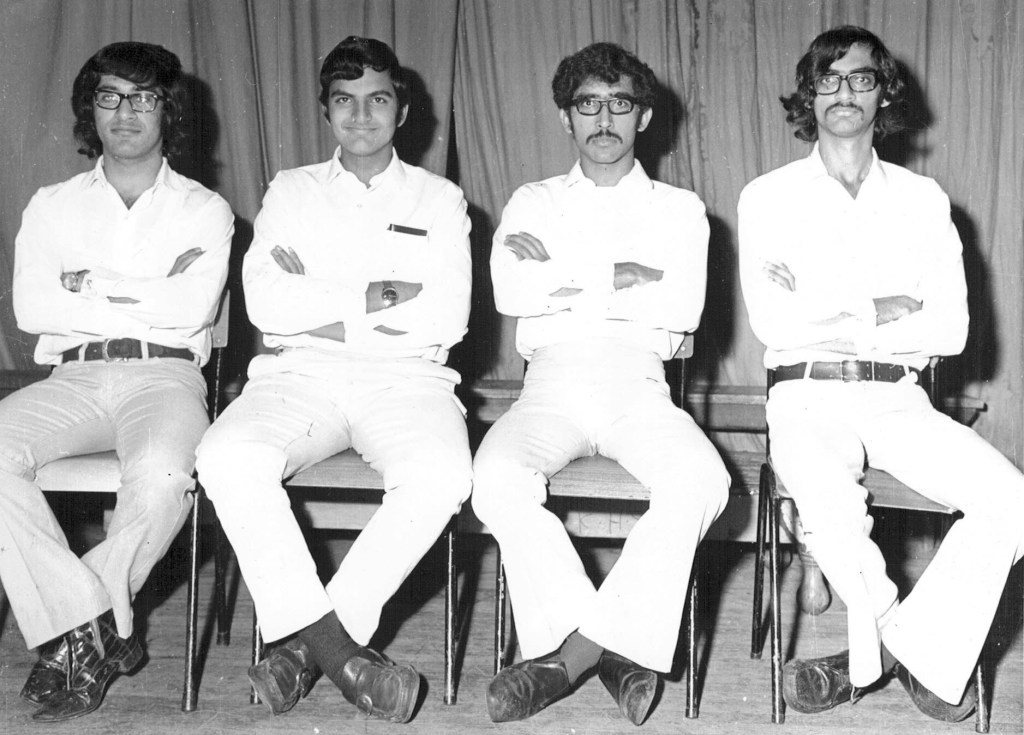
Students from Aga Khan High School, Nairobi, who attended the Outward Bound Mountain School of East Africa in 1973 and 1974. From left, Karim H. Karim, (author of this piece), Mahmud Mitha, Nashir Abdulla, and Amin Ahmed. Photograph: Karim H. Karim collection.
Mountains hold a universal mystique and to some, they beckon as a personal challenge. Aga Khan High School, which I attended in Nairobi, had held annual mountain-climbing trips for senior students, but these ventures had been discontinued by the time I reached the upper levels.
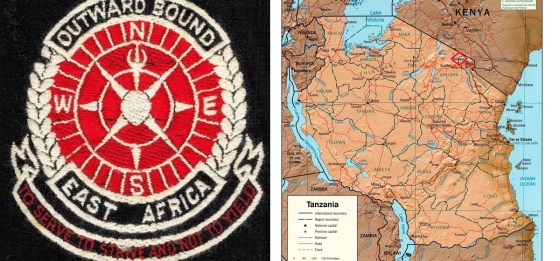
Some students looked to the Outward Bound Mountain School of East Africa, whose brochure said that its strenuous 23-day courses, including Kilimanjaro climbs, were “based on a spiritual foundation” and as an opportunity for self-discovery through self-discipline, teamwork and “man-management.” The school’s motto, “To Serve, To Strive and Not To Yield” is adapted from the line in Tennyson’s poem Ulysses, whose original wording reads: “To serve, to strive, to find and not to yield.” Ironically, it was “to find” that was vital to my Outward Bound experience.
Article continues below
Outward Bound badge (left) with the motto “To Serve to Strive and Not to Yield” and Outward Bound pin. Photographs: Karim H. Karim collection.
Alexander Pope, another poet, famously remarked that “fools rush in where angels fear to tread.” How foolish I was, never having climbed so much as a hill or gone camping, to think that I would tackle Africa’s highest mountain. Whereas my athletic performance in my early secondary years had been above average, the high school’s physical education program was non-existent at upper levels. I had become used to the comfortable and spoiled life of a middle-class South Asian teenager in a household where African servants did most of the physical labour. Even the doctor who provided my fitness certificate to attend Outward Bound was somewhat skeptical, but that did not spoil my dream of reaching Africa’s summit.
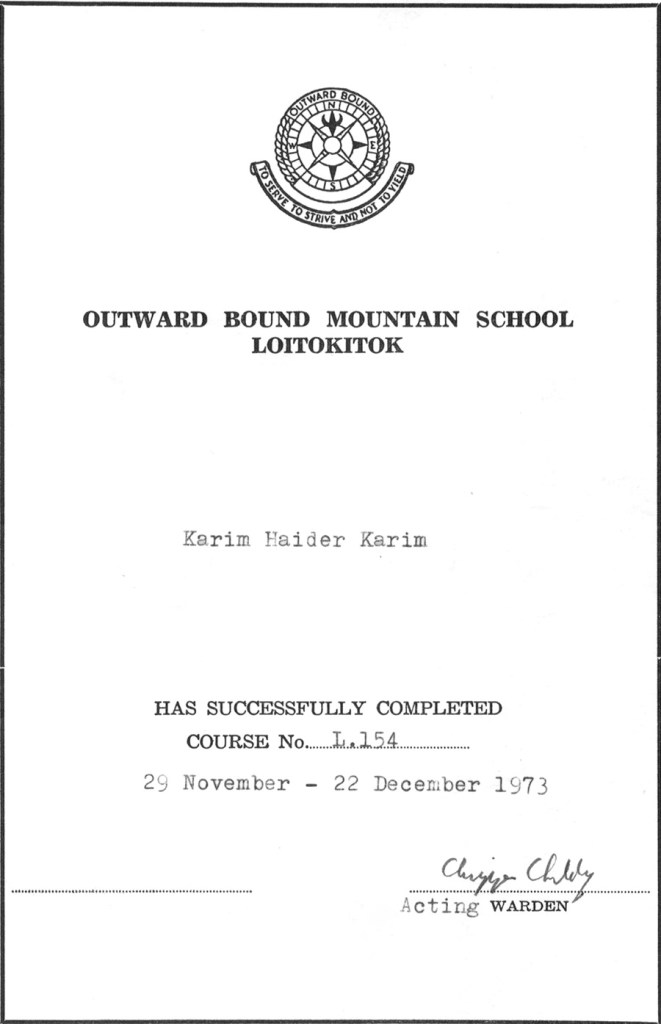
The Outward Bound campus occupied 27 acres on the Kenyan side of the Kilimanjaro rain forest near the small town of Loitokitok in Maasai country — a bumpy four-hour bus ride from Nairobi. Excited would-be mountaineers were dropped off for Course L154 held from November 29 to December 22, 1973. The contingent was met by instructors who told us to embark immediately on a cross-country run. I jogged along with the group but, after a while, could not keep up with the bigger, fitter colleagues. My lungs strained, and though I strove to push myself it wasn’t long before I found myself gasping on the ground. The goal to be at the mountain’s top had stumbled at its base. I looked up at Kilimanjaro and the large Kibo peak seemed to be mocking me.
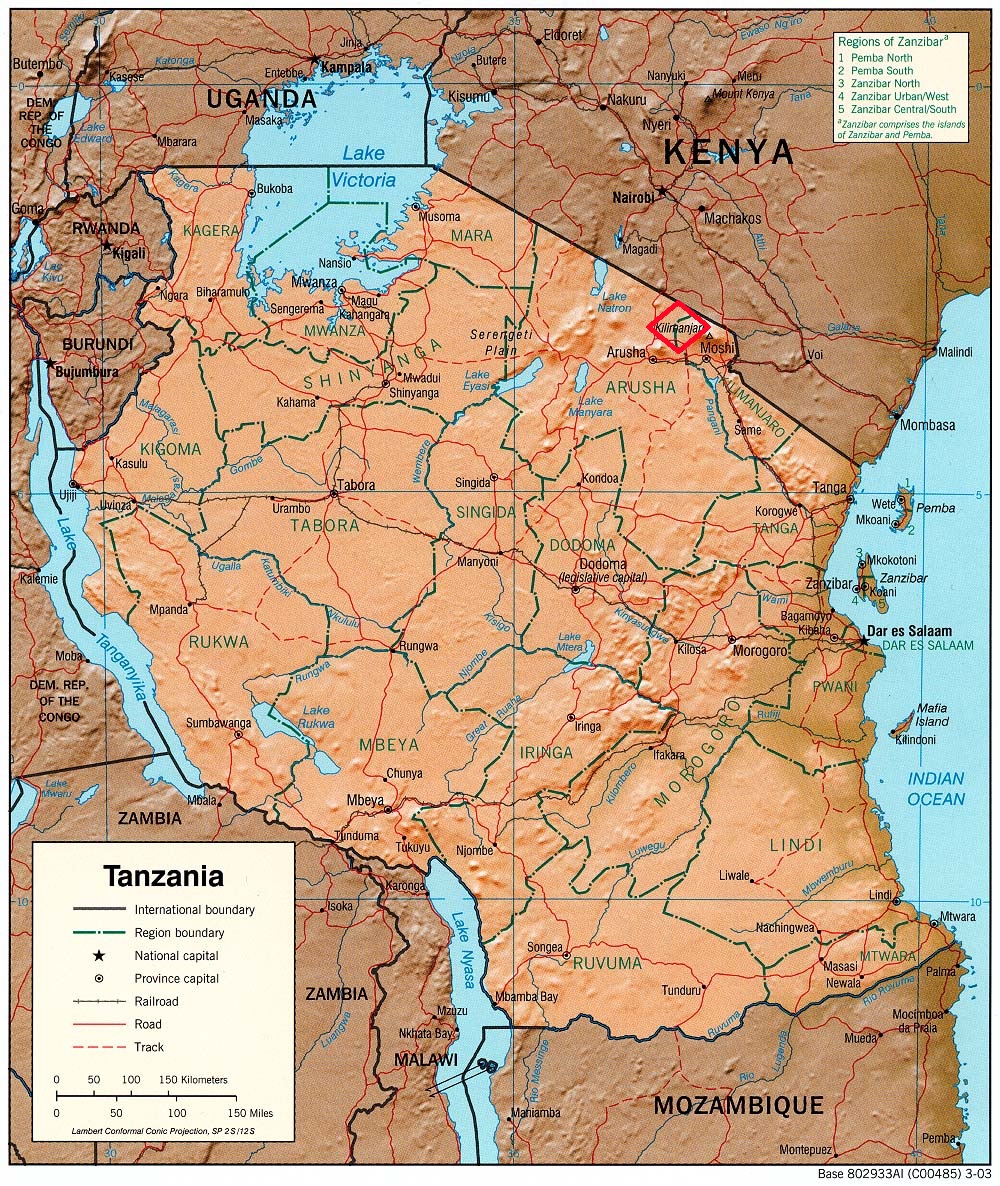
Article continues below; click on map for enlargement
Tanzania map (Shaded Relief), 2003, Perry-Castañeda Library Map Collection. Simerg has added an annotation — the location of Mt Kilimanjaro in Tanzania is shown with an orange diamond. The mountain is very close to the Kenya border. The approximate distance from the small town of Loitokitok (not shown) in Kenya, where the Outward Bound Mountain School of East Africa was located, to Kilimanjaro is 140 km. Please click on map for enlargement.
Students were assigned dormitories according to designated “patrols.” Kenya, Uganda and Tanzania had been allocated 20 participants each, but something was lost in translation and the Tanzanian coordinator sent 60. Rather than send 40 back, the British warden decided to let all stay and the course was hurriedly reconfigured into two sections, whose activity schedules were staggered. Consequently, students in my section were given little preparatory training before they were sent up the mountain for the Solo Expedition. This did not bode well.
The Pangs of Failure
The course’s students were all Africans except for three South Asians and most of the instructors came from the US with a few from Tanzania and Uganda. Additional patrols were formed due to the unexpectedly large contingent and assistant instructors were put in charge of some patrols including mine. Participants were assigned responsibilities; I was appointed quartermaster, responsible for distributing supplies.
Article continues below
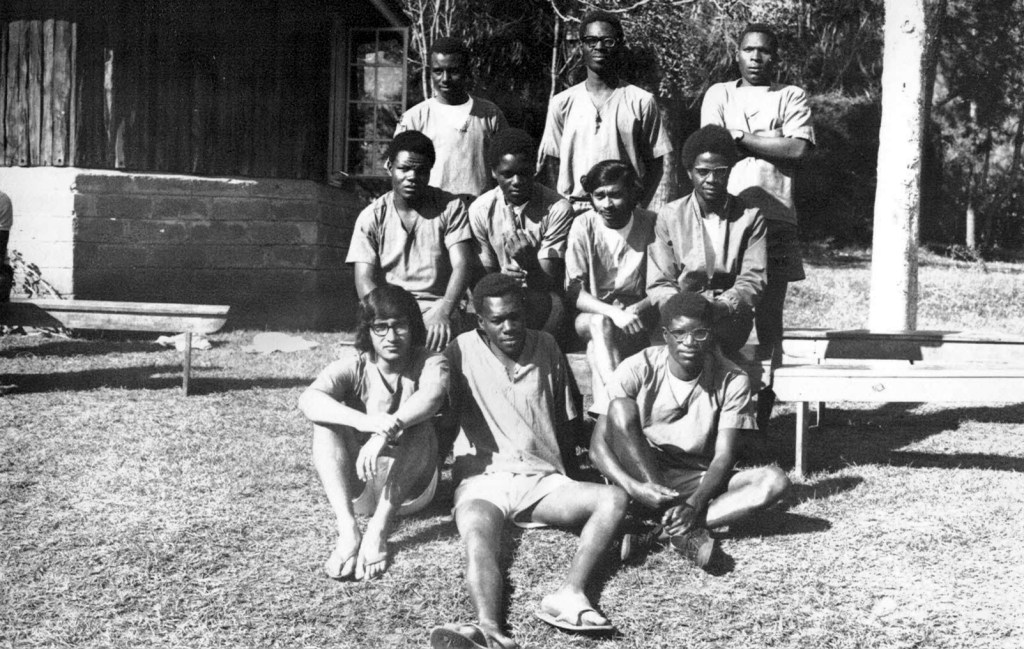
Group photo of the Nelion Patrol, with Karim H. Karim sitting at the bottom left. Photograph: Karim H. Karim collection.
The Solo Expedition involved a trek up to the altitude of 12,000 feet where each student spent a night alone on the mountainside. This major activity was normally scheduled for the course’s fifth day, but our section had to embark two days early. Nonetheless, we excitedly started our trek up Kilimanjaro, crossing the border into Tanzania, going past farms and into the rain forest. As the heat and humidity pressed on us in the early morning, a blur of black and white fur suddenly appeared on tall trees — it was a Colobus monkey swinging over us. We wondered how many other animals watched our contingent passing through their territory.
Vegetation became sparser and the air got thinner and cooler as we climbed higher into the heather-moorland zone. Rucksacks felt heavier at the sharper incline and feet began to slip on the rocky terrain. Most carried around 40 pounds of weight but I had unthinkingly over-packed mine and was taking frequent breaks, which slowed the patrol down. Then, without saying a word, one person took my bag and distributed several of its contents among the patrol as I, the quartermaster, sat on a rock feeling very embarrassed. (I learned later that such an experience was not uncommon in Outward Bound courses.)
The patrol reached its destination in the late afternoon. We were to spend the night alone on the rocky slope half a kilometre from one another. Each student had only a few food supplies, three matchsticks and a well-worn sleeping bag. The instructor designated our respective spots on the mountainside, and I resolved to put the day’s humiliation aside to make the best of the situation.
Article continues below
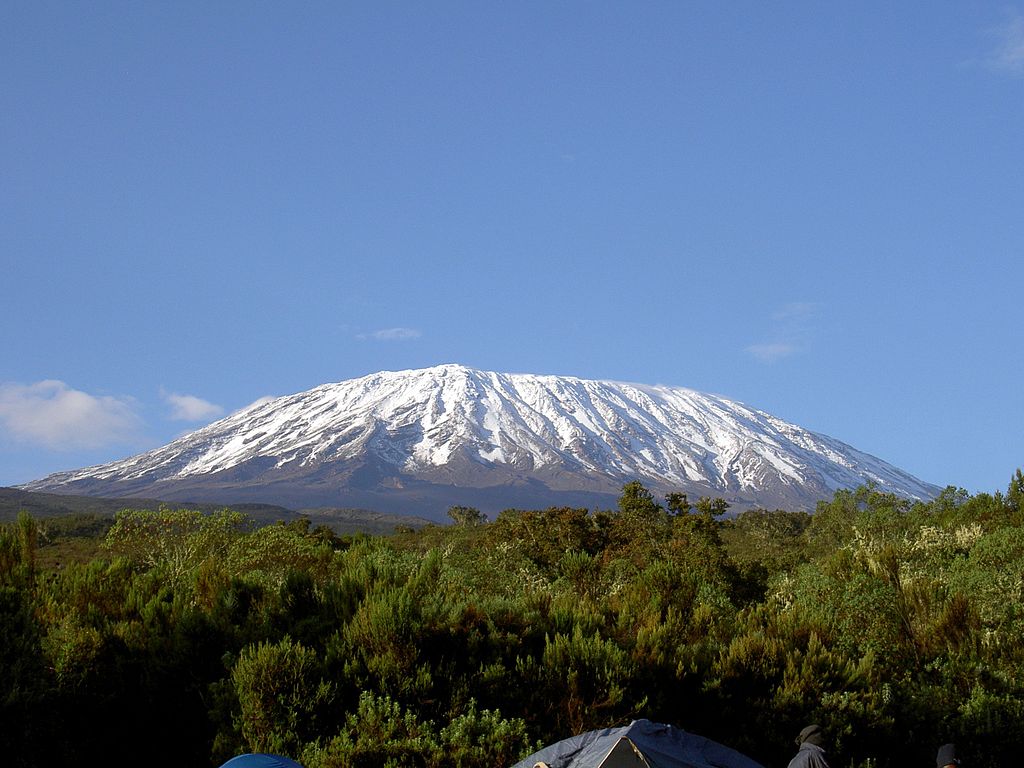
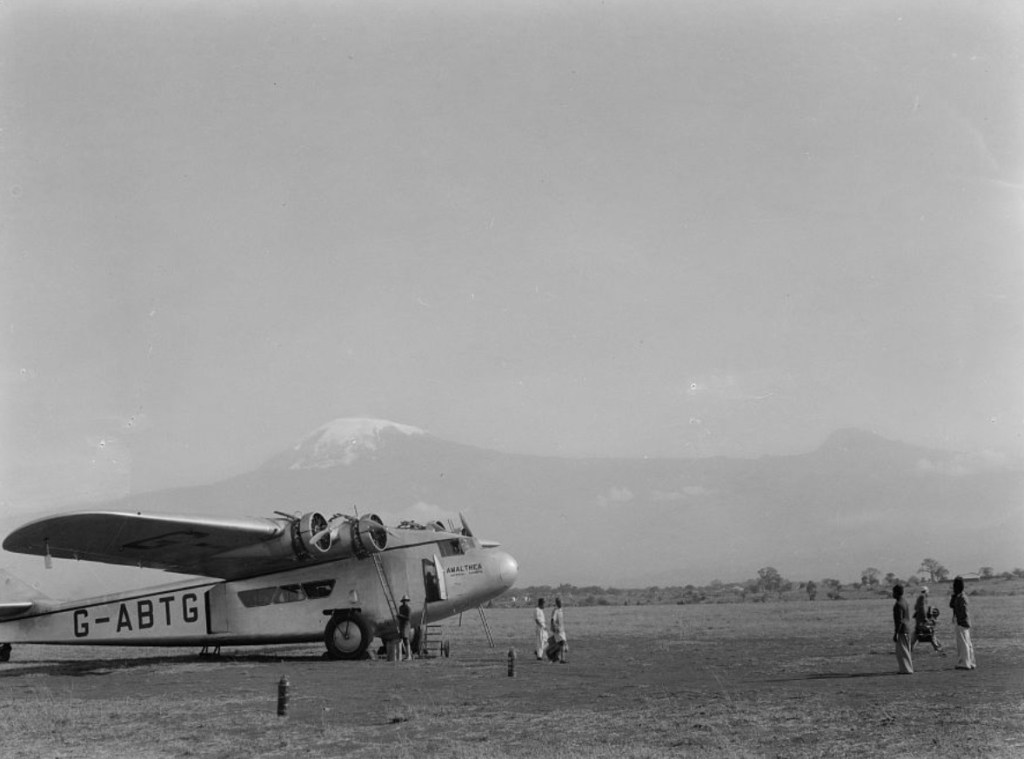
Snow-capped Kibo peak of Kilimanjaroat left with the Mawenzi peak at right, picturedin 1936 from a landing ground near Moshi, Tanzania (then Tanganyika). The plane was en route to Arusha. Photograph: Matson (G. Eric and Edith) Photograph Collection, US Library of Congress.
Looking upwards, Kibo’s snowy peak gleamed closer than ever before and on the other side was the vast mountainside sloping downwards. It was getting dark, and I set to gathering firewood. Never having made a campfire in my life, I diligently assembled a pile of sticks that would warm me in the night. With the wood and kindling arranged in a neat pile, the fire was all set to be lit. The evening sky was clear except for the small clouds that were swiftly riding up the mountain and through my small campsite. I struck the first match and put it to paper to start the fire. The flame fizzled out as soon as it touched the kindling. No matter, I told myself — there are two more left. The second match also went out at the paper. Only one remained. My hands trembled and I began to pray. But no success again. What went wrong? I realized that I had been foiled by the innocent-looking clouds that had moistened the kindling. My spirits dampened as I set to spend the night on the cold and desolate mountainside with no fire to warm me or my food. The hazy half-moon also gave no comfort. I looked up at Kibo and it seemed to be laughing at me again.
When the patrol reassembled the following morning for the descent, it became apparent that almost everyone had had a difficult time. We trudged downhill, arriving at the school late in the evening. My confidence was severely depleted, and I was overcome with a sense of failure. Many Outward Bound participants experienced mental distress at this stage of the course, but the possibility of escape from the isolated school was slim. The bus came to Loitokitok once a week and communication with the rest of the world was only by a ham radio in the warden’s office. “Warden” indeed! We had found ourselves to be in a prison.
Daybreak at the school began with a cross-country run followed immediately by a plunge into the freezing swimming pool. This rapid hot-cold transition increased the body’s haemoglobin to enhance oxygen intake at high altitude. Participants engaged for some two weeks in various forms of training and activities (which are amply described in the book Kilimanjaro Outward Bound by Salim Manji). The anticipation of the impending climb to Kili’s summit was constantly in our minds and from time to time, we stared at the peak in the distance, wondering about the challenges that it would hurl at us as we attempted to scale it.
The Final Expedition
Sixty students and instructors set out in the week before Christmas for the Final Expedition, taking the Rongai Route on Kilimanjaro’s northern face as we had for the Solo Expedition. Private sector package trips along this way took six to seven days. On Outward Bound’s schedule, the climbers carrying their own loads endeavoured to reach the summit on the third morning and return to the school after spending another day descending.
The course’s activities were designed to toughen students physically and mentally, but a sense of failure from the previous ascent weighed heavily on me. Nonetheless, the aspiration to make it to the top was still very much alive. I had figured out how to climb better and gained more confidence as we rose above the level of the Solo Expedition, but the going got harder as the oxygen thinned. Ultraviolet exposure at high altitude peeled the skin off my face. Objects looked and felt strange. The alpine desert zone, strewn with sharp-edged reddish rocks, appeared like terrain on Mars. An airliner flying near the peak to give passengers a closer view seemed like a surreal sight. I asked a senior instructor during a break whether it was physical or mental preparation that was more important for the climb. He replied that “mental fitness helps you draw on untapped physical resources.” I gazed at Kibo and it seemed to smile.
Article continues below
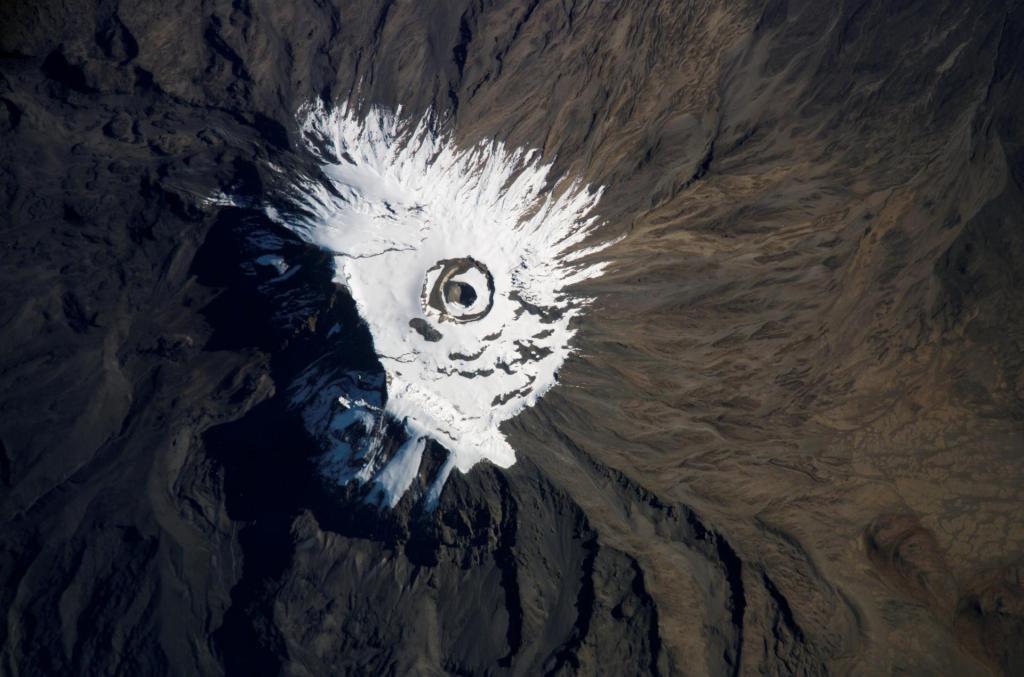
This image taken by EO-1’s Advanced Land Imager (ALI) on Jan. 20, 2017, shows snowcap of the volcanic Mount Kilimanjaro. Photograph: NASA’s Earth Observatory.
We reached the base camp on the second afternoon. The large, rugged Outward Bound Hut sat on the desolate rocky saddle between Kibo and Mawenzi peaks at 15,469 ft (4,715 m), where the barren environment’s only visible life was our group. It became dark and cold quickly as the sun passed behind the mountainside, which was now an enormous presence. We slipped into our sleeping bags early as the remaining 4,000 ft ascent was to begin at 2 am. It seemed that we had hardly slept when the instructors roused us. I noticed in the dim light that some water that had spilled from a container near my head and had frozen on the floorboards.
Scaling at nighttime is a vital tactic to improve the chances of reaching Kibo’s summit. Many climbers fail because the slope’s convex shape makes the summit seem closer than it really is. The mountain’s cap remains hidden by the terrain’s curve and as hikers approach what they think is the top they realize that there is more to go. The disappointment hits people repeatedly, and they feel increasingly disheartened. It is in this way that Kili mentally defeats many able mountaineers who make it this far. Attempting the final ascent in pitch dark helps prevent climbers from succumbing to Kibo’s deception.
It was impossible to walk straight up the slope as feet sank into screes — the masses of loose, little stones that cover the peak — so we snaked on the slope in long zig-zag lines. After some time, several colleagues began to fall prey to severe altitude sickness, dehydration, or exhaustion and were forced to turn back. Others pushed on. We had been hiking for four hours under the starry sky when it started becoming brighter and the sun inevitably rose. Looking up, we saw the visible edge of the mountain meet the sky and imagined that we were close to the summit. But this was a mirage: despite walking on and on we would just not arrive. The curve ball that Kibo was throwing at us played havoc with our minds and deeply frustrated climbers surrendered one after another.
Article continues below
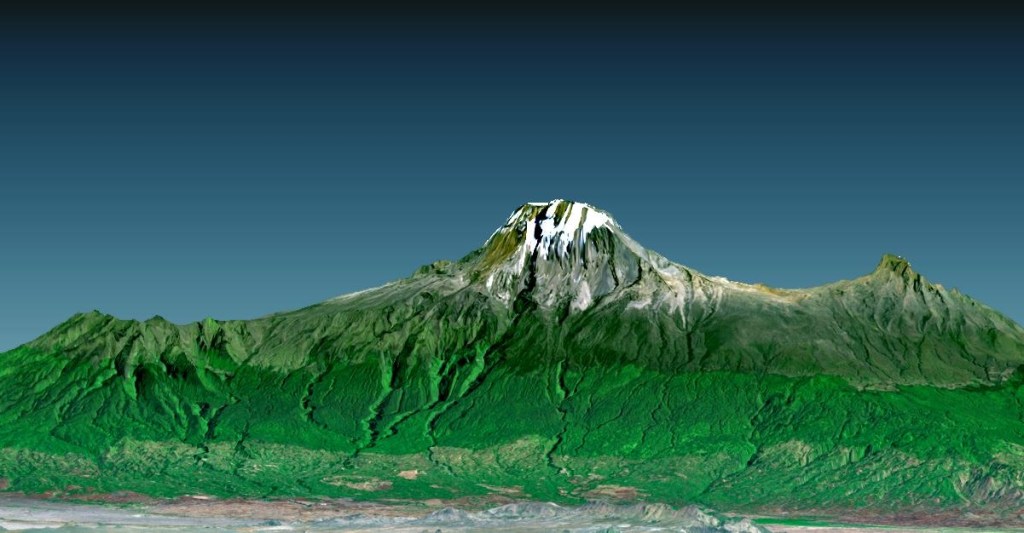
This 3-D perspective view of Mount Kilimanjaro was generated using topographic data from the Shuttle Radar Topography Mission (SRTM), a Landsat 7 satellite image, and a false sky. The topographic expression is vertically exaggerated two times. Landsat has been providing visible and infrared views of the Earth since 1972. Date Acquired: February 21, 2000 (Landsat 7).
One-third of the group remained. It was harder to lift our legs because our boots were partially buried in the screes, and we advanced only one step for every three steps that we took. I looked up to find Kibo’s snowcap, but it was not visible from our location on the slope. How close was it? How much more to go? I prayed to find a way for me to reach the goal. To serve, to strive, to find and not to yield.
My mind appeared to slide into a kind of trance and the pain, the exhaustion and the endless climb’s futility slipped out of consciousness. Nothing seemed to matter. I even disconnected with the aim of reaching the top. Nevertheless, the body continued to move forward — but with little awareness of motion. One foot went in front of the other, on and on and on. It seemed that the intense struggle had dimmed the perception of physical agony and mental anguish, and my being had found a way to ignore completely the urge to stop.
When body and mind recede, spirit comes to the fore. Kilimanjaro had battered me for almost three weeks, putting the body through punishing challenges and the mind through deep feelings of frustration and failure. It seemed that I had asked the instructor the wrong question about physical or mental preparation on the previous day because the mountain regularly defeated people with superior physical and mental training. It turns both body and mind into one’s enemies. How was it then that I had survived to this point? It seemed that Kilimanjaro itself was the instructor that had shown me gradually, through a series of defeats, how to tackle the biggest challenge. The failures of body and mind had induced me to look for a way beyond them. Instead of trying to conquer the mountain, I had to have the humility to learn from it. Rather than obey my own body and mind’s command to surrender, my being instead had to turn to nature and bow to it. With that submission, Kili itself lifted me.
It felt like an anti-climax to arrive at Gilman’s Point after what seemed to be an interminable journey. Standing at 18,885 ft (5,756 m) it is one of Kilimanjaro’s three summits, the other two being Uhuru and Stella. With my name written in the book kept in a wooden box, I continued with the remaining climbers towards Uhuru Point, the mountain’s highest spot (19,341 ft / 5,895 m), which was 139 meters higher than Gilman and a 5.5 km trek around Kibo’s volcanic rim. My mind continued in a trance-like state. Although I had never previously been near snow, I did not even notice it around me on the Arctic-zone summit. My body seemed to have reached extreme limits, but it kept walking. At one point, when an instructor helped me up after I had collapsed with utter fatigue onto a boulder, my frame immediately resumed walking as if it were a programmed machine.
Thick clouds had gathered ahead on the volcano’s ridge. Instructors assessed it too dangerous to continue and decided that the group had to turn back. There must have been some human emotion left in me because I felt the disappointment of not reaching Uhuru, even though climbers making it to Gilman are formally considered to have scaled Kilimanjaro. The descent took one day and there were blisters on the soles of my feet by the time we made it to the school. Many were surprised to hear that I had made it to the summit.
Article concludes below
On the course’s last day, students went on a final daybreak run and plunge, the warden presented certificates and we said our goodbyes. My mind tried to process the Outward Bound experience on the bus trip back to Nairobi, but it was overwhelmed. Kilimanjaro had put me through a profoundly humbling process of self-realization. I seemed to be in a state of shock, from which it took months to recover. Half a century later, I have finally been able to write about the 23 days in 1973 that made a life-long impact.
Date posted: December 27, 2023.
_______________________
We welcome feedback from our readers. Please click LEAVE A COMMENT. Your letter may be edited for length and brevity and is subject to moderation.
Karim H. Karim
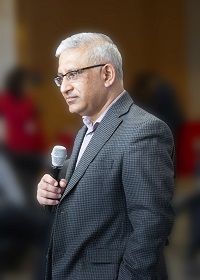
About the author: Karim H. Karim is Chancellor’s Professor at Carleton University. He is an award-winning author and the Government of Canada has honoured him for his public service. Dr. Karim has served as director of Carleton’s School of Journalism & Communication and its Centre for the Study of Islam as well as of the Institute of Ismaili Studies. His publications can be accessed at Academia.edu.
(This article has been adapted and abridged from an article first published on the official website of the Ismaili Muslim community under the title Why Do Muslims Revere Jesus? Please note that the photograph of the Altar of Nativity and the selected verses from chapter 19 of the Qur’an, are not part of the Ismaili piece — Ed.)
“Then she brought him to her own folk, carrying him. They said: O Mary! Thou hast come with an amazing thing.” — Qur’an, 19:27
His name is mentioned in the Holy Qur’an twenty-five times, often in the form ‘Isa ibn Maryam, meaning “Jesus, son of Mary.” In the Qur’an, he is referred to by the unique title of “Messiah” (al-masih in Arabic), meaning “anointed one.” Descriptions of Jesus in the Qur’an include many aspects of the narrative found in the Gospels about the life of Jesus, including his virgin birth, the signs given to him by God, that he was raised by God into His presence, and it also suggests his future return. Jesus is also referred to in the Qur’an as the “Word” and the “Spirit” of God, a special honour.
The Altar of the Nativity, beneath which is the star marking the spot where tradition says the Virgin Mary gave birth to Jesus. Photograph: Muslim Harji, Montreal.
The Holy Qur’an frequently mentions that divine guidance was sent to humankind through various prophets. For example, it says:
“So [you believers], say, ‘We believe in God and in what was sent down to us and what was sent down to Ibrahim (Abraham), Isma’il (Ishmael), Ishaq (Isaac), Ya’qub (Jacob), and the Tribes, and what was given to Musa (Moses), ‘Isa (Jesus), and all the prophets by their Lord. We make no distinction between any of them, and we devote ourselves to Him’” (Qur’an 2:136).
This view that all prophets are considered to be equal is also supported by a widely-reported hadith, in which Prophet Muhammad (peace be upon him and his family) is believed to have said:
“Both in this world and in the Hereafter, I am the nearest of all the people to Jesus, the son of Mary. The prophets are paternal brothers; their mothers are different, but their religion is one.”
Many Qur’anic verses also describe the prophets as belonging to the same family. For example, there is a line of prophets descended from Prophet Ibrahim. Both of his sons, Ishaq and Isma’il were prophets, as was Prophet Ishaq’s son, Prophet Ya’qub, and his grandson, Prophet Yusuf, or Joseph (peace be upon them).
Thus, God chose certain families over others based on their devotion, faith and commitment towards the Divine, as reflected in the following two Qur’anic verses:
“Allah chose Adam and Nuh (Noah), the family of Ibrahim, and the family of Imran above all mankind: a progeny one from the other” (Qur’an, 3:33-34).
“We have already given the family of Ibrahim the Book and Wisdom and conferred upon them a great kingdom” (Qur’an, 4:54).
Article continues below, after quotes from the Qur’an
_________________________________________
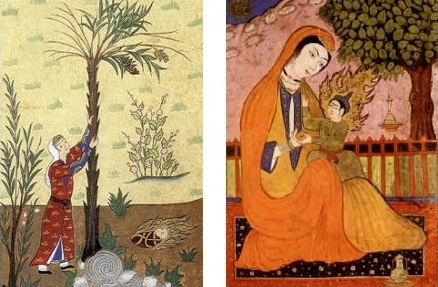
Mary and the Birth of Jesus in the Qur’an
Left: Virgin Mary nurtured by a palm tree in a Turkish miniature, as described in the Qur’an; right: Mary and Jesus in a Persian miniature. Images: Wikipedia.
Please click on the image for enlargement. Read Barnaby Rogerson’s story related to the above verses HERE
_________________________________________
Jesus in Islamic Traditions
The Qur’an mentions that angels announced the coming birth of Prophet ‘Isa, saying:
The angels said, ‘O Maryam, Allah gives you good news of a Word [kalima] from Him. His name is [the Messiah], ‘Isa ibn Maryam, honoured in this world and in the next, and of those brought near [to God]’” (Qur’an, 3:45).
Throughout history, Prophet ‘Isa has been viewed by Muslims as someone who embodied the qualities of piety and a concern for the needy, and whose example inspired Prophet Muhammad. In Sufi literature, he is frequently portrayed as an example of detachment from the material world and closeness to God.
The Ikhwan al-Safa’, or Brethren of Purity, depicted Prophet ‘Isa as a spiritual exemplar par excellence. In his article “Jesus, Christians and Christianity in the Thought of the Ikhwan al-Safa’,” Dr Omar Ali-de-Unzaga writes:
“Jesus figures prominently in the Rasa’il, as one of the exemplars who embodied the views of the Ikhwan al-Safa’: belief in the eternity of the soul and the pursuit of the purification of the soul from matter by detachment from the bodily realm.”
“Despite the long history of religious conflict, there is a long counter-history of religious focus on tolerance as a central virtue – on welcoming the stranger and loving one’s neighbour. ‘Who is my Neighbour?’ – one of the central Christian narratives asks. Jesus responds by telling the story of the Good Samaritan – a foreigner, a representative of the Other, who reaches out sympathetically, across ethnic and cultural divides, to show mercy to the fallen stranger at the side of the road.”
THE people Of the book
In Islamic traditions, Jesus is held in high regard as a messenger of God and an exemplar of piety and as a guide to spiritual truth. He is also part of the shared heritage that binds the monotheistic faiths of Judaism, Christianity, and Islam. Together, they are known in the Qur’an as the ahl al-kitab, or People of the Book, that is, people to whom God sent revelation.
His Highness Prince Karim Aga Khan highlighted this shared Abrahamic heritage in his address to the Canadian parliament in 2014, stating:
“We find singularly little in our theological interpretations that would clash with the other Abrahamic faiths — with Christianity and Judaism. Indeed, there is much that is in profound harmony.”
We welcome feedback from our readers. Please click LEAVE A COMMENT. Your letter may be edited for length and brevity and is subject to moderation.
~~~~~~~~
SOURCES:
Faith and Practice in Islamic Traditions, vol. 1 (Student Reader). London: Islamic Publications Limited for The Institute of Ismaili Studies, 2015.
The Qur’an and its Interpretations vol. 1 (Student Reader). London: Islamic Publications Limited for The Institute of Ismaili Studies, 2017.
Shedinger, Robert F. “Jesus“, in: Oxford Bibliographies in Islamic Studies.
Omar Ali-de-Unzaga. “Jesus, Christians and Christianity in the Thought of the Ikhwan al-Safa’”, in: Christian-Muslim Relations. A Bibliographical History. Volume 2 (900- 1050), ed. David Thomas et al. (Leiden: E.J. Brill, 2010); The History of Christian-Muslim Relations, 14; pp. 306-311.
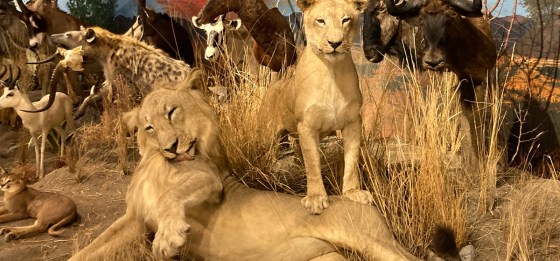
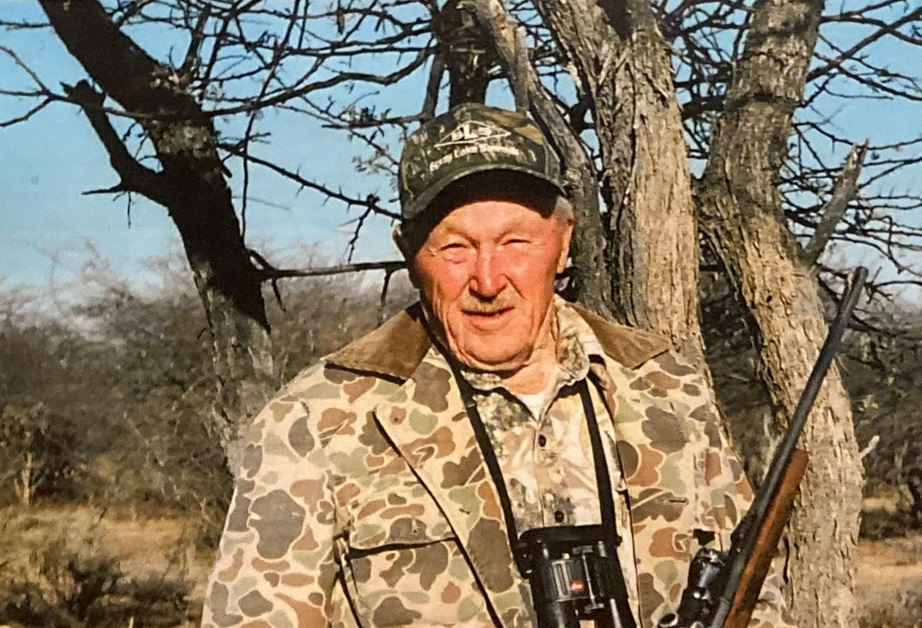
Malik Merchant spends a thrilling day in Sundre watching wild horses and then visiting the Sundre & District Museum, featuring Chester Mjolsness World of Wildlife. For Malik, the museum display bring back memories of wildlife he had seen in East Africa’s top national parks more than 50 years ago. The museum is open year round and also features local history. Sundre is a short 75 minute drive from Calgary. Please also visit the Museum Website for opening hours — the museum is open year-round — and other information.






 Simerg - Insights from Around the World