Simerg is an independent initiative dedicated to Ismaili Muslims, the Aga Khan — their Hereditary Imam — and the Ismaili Imamat, and Islam in general through literary readings, photo essays and artistic expressions
Thursday, November 6, 2025, marked a historic day in the life of the Ismaili Muslims of the USA as Mawlana Hazar Imam, His Highness the Aga Khan, the 50th Hereditary Imam of the Ismaili Muslims, and the Honorable Mayor of Houston, John Whitmire, officially inaugurated the Ismaili Center in Houston.
Mawlana Hazar Imam, His Highness the Aga Khan, welcomes the Honorable Mayor of Houston, John Whitmire, as he arrives to inaugurate the Ismaili Center, Houston, November 6, 2025. Photograph: IPL / Akbar Hakim.
It was also a historic day in the context of six other beautiful Ismaili Centres that were conceived and inaugurated around the world between 1985 and 2014 by His Late Highness Aga Khan IV, Mawlana Shah Karim, the 49th Imam. The Ismaili Center Houston, first conceived by Mawlana Shah Karim in 2006, was inaugurated by his Hereditary successor, His Highness Prince Rahim Aga Khan.
An aerial view of the 11-acre site of the Ismaili Center, Houston. In the centre of the photo, the Ismaili Center building, with the larger North garden — bottom of photo — facing the Allen Parkway as well as the largest evian in the Ismaili Center. . The South Garden, at the top of the photo, has vehicle exits to West Dallas Avenue (top) and to Montrose Boulevard at the right. To the left of the photo, there is a smaller Evian with views of a residential neighbourhood and the downtown skyline of Houston. Photograph: Iwan Baan.
The new seventh Ismaili Center in Houston is situated on more than nine acres of gardens and green space. It is in close proximity to Houston’s downtown core, featuring fantastic cultural spaces. Houston is ranked as America’s most ethnically diverse major city and is home to thriving communities that have shaped its reputation for innovation, the arts, and culture. Among these vibrant communities is the diverse Ismaili community, estimated to be around 30,000 strong. The Ismaili Center, with its unique architecture and cultural programs, will serve as a hub for cultural, artistic and educational exchange, connecting the Ismaili community with the rest of Houston and contributing to the city’s rich cultural tapestry.
Mawlana Hazar Imam, His Highness the Aga Khan (2nd from left), with members of his family — his brother Prince Hussain, his uncle and younger brother of His Late Highness Aga Khan IV, Prince Amyn, and his youngest brother Prince Aly Muhamad, who joined him for the inauguration in Houston of the first Ismaili Center in the USA, November 6, 2025. Photograph: IPL / Akbar Hakim.
Mawlana Hazar Imam’s uncle, Prince Amyn, the younger brother of the late Imam, His Late Highness Aga Khan IV, and his two younger brothers, Prince Hussain and Prince Aly Muhammad, attended the ceremony alongside members of Congress, Texas state legislators, and representatives of faith communities from across the country.
Story continues below
The stage is set for the arrival of Mawlana Hazar Imam, His Highness the Aga Khan, and Houston Mayor John Whitmire for the inauguration of the Ismaili Center, Houston. The new logo of the Ismaili Center, Houston, takes a prominent position at the center of the stage, symbolizing a new chapter for Ismaili Centres located in other countries worldwide. The unveiled plaque is positioned to the right, with the flags (from right to left) of the Ismaili Imamat, the State of Texas, and the USA at the left. Photograph: Malik Merchant / Barakah.
The soft tunes from a team of musicians from Central Asia filled the air as the 3rd-floor social hall, the space chosen for the inauguration, began to fill up shortly after 10:00 AM. A simple yet beautiful stage had been set up with flags of the USA, the State of Texas, and the Ismaili Imamat at one end, and the inauguration plaque, waiting to be unveiled, at the other. When the arrival of His Highness the Aga Khan’s motorcade was announced, everyone’s attention was drawn to the TV screen. His Highness then warmly received Mayor John Whitmire. The audience was asked to rise as the dignitaries entered the inauguration hall. A rendering of the American National Anthem was sung by a group of Ismaili youth, followed by a musical rendition of the Nashid al Imamah, a significant part of the Ismaili community’s culture during events such as this. This Nashid is somewhat equivalent in tune to what was once regarded by community members as its anthem, the “Noore-Rasullilah,” which marked the commencement of important events for decades before the musical rendition of the Nashid was introduced during the Golden Jubilee of His Late Highness in 2008.
Story continues below
Mawlana Hazar Imam, His Highness the Aga Khan, Houston Mayor John Whitmire and attendees pay their respects at the recitation of the USA Anthem and a rendering of the Nashid al Imamah during the inauguration of the Ismaili Center, Houston, November 6, 2025. Photograph: IPL / Akbar Hakim.
The recitations were then followed on the stage with an Arabic reading of a Quranic verse from Surah Al-Hujurat (49:13) and its English translation, which reads as follows:
“O mankind, indeed We have created you from male and female and made you peoples and tribes that you may know one another. Indeed, the most noble of you in the sight of Allah is the most righteous of you.” — Al-Hujurat, The Dwellings, 49:13.
Al-Karim Alidina, President of the Aga Khan Ismaili Council for the USA, welcomed guests and traced the project’s origins to a long-term vision. “His Highness Prince Karim Aga Khan had a decades-long aspiration to establish an Ismaili Center in the United States,” he said, “one that would reflect the values and identity of the Ismaili community. So today marks a moment of pride and joy for the community.”
Story continues below
The Honorable Mayor of Houston, John Whitmire, delivers a passionate extempore speech at the inauguration of the Ismaili Center, Houston, November 6, 2025. Photograph: IPL / Akbar Hakim.
~~~~~~~~
Mawlana Hazar Imam, His Highness the Aga Khan, applauds during a moment of Mayor John Whitmire’s remarks delivered at the inauguration of the Ismaili Center, Houston, November 6, 2025. Photograph: IPL / Akbar Hakim.
In his extempore speech, Mayor Whitmire passionately spoke of the magnitude and historic nature of the landmark occasion. “The Ismaili community working with the city of Houston residents,” he said, “our region, our state of Texas, and the United States — we’re making a statement today that we’re all in this together. The Mayor looked forward to the Center’s impact in the city and beyond: “This is only the beginning of something great,” he said. His remarks were met with a rousing reception from the audience and greatly appreciated by His Highness.
In his address, Mawlana Hazar Imam reflected on his father Mawlana Shah Karim’s vision for the building and its gardens, his personal interest in their design, and his wish to designate the Ismaili Center in Houston as a Diamond Jubilee project. Mawlana Hazar Imam also spoke about his own aspirations for the building and its intended use. “This building may be called an Ismaili Center, but it is not here for Ismailis only. It is for all Houstonians to use; a place open to all who seek knowledge, reflection, and dialogue,” he said.
Story continues below
Mawlana Hazar Imam, His Highness the Aga Khan, addresses guests gathered for the inauguration of the Ismaili Center, Houston, November 6, 2025. Photograph: IPL / Akbar Hakim.
“Whether through hosting recitals, launching books, presenting concerts, promoting local artists, or offering training, our intent is to provide a constant rhythm of events that spark curiosity, engender understanding, and encourage exchange.” However, in his remarks, he did emphasize the importance of the building as a Jamatkhana, a space for Ismaili worship.
Hazar Imam thanked the Mayor’s office, design team, project committee, leaders of the Jamat, donors, and the many volunteers for their time, effort, and dedication. His Highness also acknowledged the support of the mayors preceding Mayor Whitmore. He thanked the entire building team, including the architect, the landscape architects, and the engineers.
In paying a special tribute to his uncle Prince Amyn, he said that his “guidance, commitment, and close personal engagement over many years have been pivotal to the creation of Ismaili Centres across the world, and to this Ismaili Center here in Houston. He has been a constant and regular presence on this site and at deliberations throughout planning and execution. I am profoundly grateful for his insight and contribution.”
Story continues below
Mawlana Hazar Imam, His Highness the Aga Khan, and Houston Mayor John Whitmire, congratulate each other after unveiling the Ismaili Center, Houston, inauguration plaque, November 6, 2025, marking an historic day in the life of the 50th Ismaili Imam, the Ismaili community in the usa and around the world, and the city of Houston, November 6, 2025. Photograph: IPL / Akbar Hakim.
The Mayor and His Highness then unveiled the plaque, etched in Gold. The plaque spanning 12 rows reads:
BISMILLAHIR RAHMANIR RAHIM (inscription is in Arabic) THE CREST OF THE ISMAILI IMAMAT followed by:
THE OPENING CEREMONY OF THE ISMAILI CENTER WAS PERFORMED BY THE HONORABLE JOHN WHITMIRE MAYOR OF HOUSTON IN THE PRESENCE OF HIS HIGHNESS PRINCE RAHIM AGA KHAN FIFTIETH IMAM OF THE SHIA IMAMI ISMAILI MUSLIMS ON NOVEMBER SIXTH, 2025
The Inauguration Plaque of the Ismaili Center, Houston, was unveiled by Houston Mayor John Whitmire and Mawlana Hazar Imam, His Highness the Aga Khan, November 6, 2025. Photograph: Malik Merchant / Barakah.
After congratulatory exchanges, the dignitaries left the inauguration hall. Many visitors stayed behind to have their photos taken on the stage in front of or alongside the Flags and the inauguration plaque. In contrast, others were guided to the reception area in the large verandah where volunteers walked around and served a variety of tasty hors d’oeuvres accompanied by delicious light sherbet and a fruit drink.
Story continues below
A beautiful and intricate Mehndi (Henna) design on the hands of a visitor attending the inauguration of the Ismaili Center, Houston. Note the words’ Ya Ali’ appearing on the left hand (with the ring). November 6, 2025. Photograph: Malik Merchant / Barakah.
~~~~~~~~
The Ismaili Centre, Houston design and project teams — design architect Farshid Moussavi, Landscape architect Thomas Wolz, structural design consultant Hanif Kara, and Ismaili leaders pose for a group photo with Mayor Whitmire, Mawlana Hazar Imam — His Highness the Aga Khan –Prince Amyn, Prince Hussain, and Prince Aly Muhammad, as visitors watch from the reception area overlooking the Garden, November 6, 2025. Photograph: IPL / Akbar Hakim.
Overlooking the Gardens from the reception area, we witnessed the keen interest that Mawlana Shah Rahim and Mayor Whitmore showed as they were guided through the building by the building team.
Story continues below
Mawlana Hazar Imam, His Highness the Aga, and members of his family, along with Mayor John Whitmire, gather by the reflecting pool at the North Garden of the Ismaili Center in Houston and receive an overview of the magnificent buildings from the dedicated design and building team on November 6, 2025. Photograph: Malik Merchant / Barakah.
~~~~~~~~
The North Garden of the Ismaili Center, Houston, is the larger of the two gardens. This is a view from the North Eivan (veranda), which is the largest of the three eivans. It can accommodate up to 800 people for lectures or receptions and up to 600 for banquets, November 6, 2025. Photograph: Malik Merchant / Barakah.
~~~~~~~
Mawlana Hazar Imam, His Highness the Aga, and members of his family, along with Mayor John Whitmire and leaders of the Ismaili community, listen attentively as they receive an overview of the Ismaili Center, Houston, from the dedicated design and construction team, November 6, 2025. Photograph: Malik Merchant / Barakah.
~~~~~~~
Mawlana Hazar Imam, His Highness the Aga Khan, and Mayor John Whitmire listen attentively as they receive an overview of the Ismaili Center, Houston, from the dedicated design and construction team, November 6, 2025. Photograph: Malik Merchant / Barakah.
~~~~~~~~
Mawlana Hazar Imam, His Highness the Aga Khan, and members of his family, along with Mayor John Whitmire, listen closely as the President of the Aga Khan Council for the USA, Al-Karim Alidina, offers remarks during the tour of the Ismaili Center in Houston following the inauguration ceremony, November 6, 2025. Photograph: Malik Merchant / Barakah.
Having relished the tasty hors d’oeuvres, the visitors were then delighted as Prince Amyn, Prince Hussain, and Prince Aly Muhammad joined them and freely mingled with the crowd, happily taking pictures with them.
Story continues below
Prince Hussain Aga Khan, younger brother of Mawlana Hazar Imam, His Highness the Aga Khan, mingles with visitors gathered at the North Verandah of the Ismaili Center Houston, the reception area, following the inauguration ceremony and after completing his tour of the building and its gardens. He mentioned to me that he would need to revisit the Center to see it in its entirety, November 6, 2025. Photograph: Malik Merchant / Barakah.
~~~~~~~~
Prince Amyn Aga Khan, uncle of Mawlana Hazar Imam, His Highness the Aga Khan, and younger brother of His Late Highness Aga Khan, mingles with visitors gathered at the North Verandah of the Ismaili Center Houston, following the inauguration ceremony and after completing a tour of the building and its gardens, November 6, 2025. Photograph: Malik Merchant / Barakah.
~~~~~~~~
Prince Aly Muhammad, younger brother of Mawlana Hazar Imam, His Highness the Aga Khan, mingles with visitors gathered at the North Verandah of the Ismaili Center, Houston, following the inauguration ceremony and after completing a tour of the building and its gardens, November 6, 2025. Photograph: Malik Merchant / Barakah.
I had been introduced to the Ismaili Center, along with several other media representatives, in a three-hour session the day before, on Wednesday, November 4. However, time was limited to visit the many spaces within and outside the Center, as preparations had to be finalized for the following day’s inauguration.
Story continues below
Amazingly, the Ismaili Center, Houston, has interconnected wings, three in all, each of which features a soaring Eivan. This view of the largest Evian, which hosted the reception after the inauguration ceremony, is from another smaller Evian, November 6, 2025. Photograph: Malik Merchant / Barakah.
~~~~~~~~
A view of a residential neighbourhood and further away, Houston’s downtown skyline from a smaller Evian at the Ismaili Center, Houston, November 6, 2025. Photograph: Malik Merchant / Barakah.
On inauguration day, after most of the visitors had left, I spent a considerable amount of time touring the interior and exterior of the building. I was fascinated by the Center’s interconnected wings, each of which features a soaring eivan — an open-sided veranda that provides shaded spaces for gathering and reflection, as well as the classrooms, the theatre room, and the more than 30 artistic works that were being mentioned as being a permanent feature of the Center.
On inauguration day, a special exhibit of creative objects was displayed in an exhibition space. Additionally, the Center features offices, meeting rooms, social halls, and exhibition spaces. The central atrium features a very high skylight, inspired by Ismaili dwellings in the Pamirs of Central Asia.
Story continues below
The Ismaili Center, Houston, with its beautiful reflecting pond in the South Garden, as buses come to collect visitors for a trip back to their hotels after a historical inauguration ceremony performed by Mawlana Hazar Imam, His Highness the Aga Khan, and Houston Mayor John Whitmire, November 6, 2025. Photograph: Malik Merchant / Barakah.
Outside, the visitors are welcomed by a diverse array of green spaces that change with the seasons. These include reflecting pools, flower beds, lawns, and walkways. The gardens are home to 800 trees and native floodplain species, carefully chosen to suit the local environment. As the landscape architect explained, the entire outdoor space will take on a different appearance as plants and trees grow over the coming months. The elusive monarch butterflies added a touch of enchantment.
Story continues below
From left to right, the Flags of the Ismaili Imamat, bearing the gold crest of Mawlana Hazar Imam, His Highness the Aga Khan, the State of Texas and the USA fly in the south garden, near the Montrose Blvd gate exit of the Ismaili Center, Houston, November 6, 2025. Photograph: Malik Merchant / Barakah.
Reflecting the late Imam’s desire to infuse the Gardens with a sense of whimsy, he proposed planting cacti around one of the reflecting ponds. As a flag enthusiast, I made my way to one of the Center’s gates to capture the American, Texas, and the Ismaili Imamat Flags fluttering in the breeze — it was a patient wait, as the wind was calm. In every corner of the two longitudinal gardens, I experienced a serene and beautiful environment.
Story continues below
Cacti in the South Garden of the Ismaili Center, Houston, November 5, 2025. Photograph: Malik Merchant / Baralkah.
Back inside, I observed the heart of the building filled with natural light, with views of the sky above. The in-out concept presented a visitor from the outside at any entrance. The myriad offices, meeting rooms, social halls, exhibition space, and a theatre offer places for learning and contemplation as well as entertainment.
Story continues below
An exhibition prepared to celebrate the inauguration of the Ismaili Center, Houston, November 6, 2025. Photograph: Malik Merchant / Barakah.
~~~~~~
A depiction of the central atrium area of the Ismaili Center, Houston, by Salina Kassam, a Kenyan-born Ismaili artist now based in Canada, as part of her series entitled “Ineffable Spaces: The Seven Ismaili Centres, 2025.” The works of art of the seven beautiful centres form part of a permanent collection of artistic works in the Houston Ismaili Center. They are inkjet photographs printed on cotton paper, November 6, 2025. Photograph of the artwork captured by Malik Merchant / Barakah.
~~~~~~~~
Central Atrium of the Ismaili Center, Houston, with a skylight inspired by the traditional ceiling of Ismaili dwellings in the Pamirs in Central Asia, November 5, 2025. Photograph: Malik Merchant / Barakah.
~~~~~~~~
A view of the Jamatkhana in the Ismaili Center, Houston, a place of worship for the Ismaili Muslims. The Mihrab, facing the Kaaba, is in the far end of the photo. The panels around the diamond-shaped Jamatkhana, which can accommodate around 1,500 people, are inscribed in Arabic with the names of Allah, Muhammad, and Ali. The carpet has a beautiful pattern, November 5, 2025. Photograph: Malik Merchant / Barakah.
The diamond-shaped Jamatkhana prayer hall, which can accommodate up to 1,500people, is surrounded by panels featuring calligraphy that bears the words “Allah,” “Ali,” and “Muhammad.” The beautiful carpet is lightly coloured. My greatest wish to participate with my brothers and sisters within the Jamatkhana space for prayers will not be fulfilled as the Ismaili Center’s official opening will take place days after my departure.
Story continues below
After a memorable and historic day celebrating the inauguration of the Ismaili Center in Houston, visitors board their buses to return to their hotels, November 6, 2025. Photograph: Malik Merchant / Barakah.
For the hundreds of thousands who will visit the Center in the future, Ismailis and non-Ismailis alike, its opening marks a milestone moment for the 50th Ismaili Imam, and his spiritual children, the Ismailis, in the USA and worldwide.
As Mawlana Hazar Imam explained in his speech: “It is my deep hope, that with your engagement, this Center will lift spirits and broaden horizons; this Center will bring people together, strengthen bonds, and help us all, collectively, to bring happiness and harmony to societies here and elsewhere.”
Date posted: November 7, 2025. Last updated: November 24, 2025 (formatting.)
A version of this post appears on Simerg’s sister website, Barakah, which is dedicated to His Highness the Aga Khan.
Simerg’s introduction of “Books by Ismaili Authors” continues with Calgary-based Mansoor Ladha’s latest book “Aga Khan: Bridge between East & West.” Mansoor is being featured in the series for the fourth time, following introductions of his three previous books “A Portrait in Pluralism: Aga Khan’s Shia Ismaili Muslims,” “Memoirs of a Muhindi” and “Off the Cuff.” We follow the same Q/A format as our earlier presentations of books, which are listed chronologically below. We encourage Ismaili authors worldwide to participate in this series, regardless of when their books were published. See details of the series HERE and submit your responses to Simerg’s editor, Malik, at mmerchant@simerg.com.
****************
Renowned worldwide as a transnational humanitarian, the Aga Khan has established schools, universities and hospitals in some of the remotest parts of the world. Portraying a moderate face of Islam, he has built bridges between East and West and has been a champion of pluralism, diversity and promoting Islamic values aimed at reducing extremism and radicalism — Mansoor Ladha
Simerg’s Interview with Mansoor Ladha
Ismaili journalist and author Mansoor Ladha will launch his new book in Calgary on Sunday, November 17, 2024. CBC’s Zain Velji will moderate the launch. Please refer to the image for details.
Simerg: What is behind the naming of the title of the book?
Mansoor Ladha: The book is “Aga Khan: Bridge between East & West.” It chronicles Hazar Imam’s global contributions and achievements as a transnational humanitarian. His role as a bridge builder between East & West, his efforts to promote the Muslim Ummah, and his progressive interpretation of Islam have had a profound impact. The book also highlights his mission to eliminate extremism and radicalism through education, a beacon of hope for the future, which led to establishing schools and universities in some of the most remote parts of the world.
Simerg: Why would you want me or my family members to read the book, and what will we all learn from it?
Ladha: The book, a comprehensive 616-page volume, presents a detailed account of Hazar Imam’s achievements. It explores his profound connections with Canada, his philosophy on pluralism, interviews with Time and Knowledge Nazrana (TKN) volunteers, the establishment of Diwan of the Ismaili Imamat in Lisbon, Portugal, interviews with Uganda refugees, and standard Ismaili practices. Its purpose is to inform Ismaili readers and enlighten and educate non-Ismailis about our Imam’s global achievements and the crucial role of the Imamate institutions in the world. This book is a bridge, a must-have for every Ismaili’s bookshelf, and a perfect gift for non-Ismaili friends, colleagues, and neighbours, fostering a deeper understanding of who we are and the transformative work Hazar Imam and the community are doing to bridge the gap between races, societies, and nations.
Simerg: What inspired you to write the book?
Ladha: In the minds of many Canadians, the main question is: Who is the Aga Khan? This book attempts to answer this question, describing his pivotal role as a religious leader of over 15 million Ismailis worldwide and his contributions to humanity, portraying a moderate face of Islam. In a world desperately needing change, I believe writers are responsible for inspiring personal, organizational, and global transformation. This book is a testament to that belief, as it aims to shed light on the work of Hazar Imam, which, among other things, is focused on eradicating radicalism and extremism.
Story continues below
Cover page of “Aga Khan: Bridge Between East & West” by Mansoor Ladha, with foreword by Professor Karim H. Karim of Carleton University, published July 12, 2024, 616 pp; formats: paperback and eBook.
Simerg: How can I purchase the book and what are its available formats?
Ladha: The book is available in softback and eBook format from Amazon and Barnes & Noble. You can also acquire signed copies directly from me by writing to me at mladha695@gmail.com. I am based in Calgary, Canada.
Simerg: How did you find a publisher for the book?
Ladha: This is my fourth book published. I decided to self-publish this book after facing rejections from traditional publishers, a process that can be disheartening. However, reputable self-publishing companies offer editing, formatting, and designing services, providing much-needed support and guidance. While two of my other books have been published by traditional publishers, the self-publishing route has merits. The recognition and respect for self-published books is on a steady rise, validating the choice of many authors and providing reassurance in the self-publishing journey. The future of self-publishing is bright, with more and more authors finding success in this industry.
Simerg: Did you hire an editor, an illustrator or did you do all the work by yourself?
Ladha: Most publishers provide editing and other services once you sign up. As someone who has been a copy editor and publisher of newspapers, my job throughout my career involved editing stories submitted by reporters. It’s worth noting that the publisher also plays a significant role in the editing process. In fact, one publisher complimented me, saying that it was a pleasure to receive my manuscript as he didn’t have much work to do!
Simerg: Which was your first book and how many have you written?
Ladha: My first book was Portrait in Pluralism: Aga Khan’s Shia Ismaili Muslims, published by Detselig. Memoirs of a Muhindi: Fleeing East Africa for the West, my second book published by the University of Regina Press, is not just a publication but a profoundly personal journey. I was also among a select group of journalists and scholars invited to contribute a chapter in a book called “The Story that Brought Me Here,” published by Brindle & Glass. My last book was Off the Cuff!
Simerg: How long did it take you to write Aga Khan: Bridge between East & West — from start to finish and to begin marketing it?
Ladha: It took me almost a year to complete the book. Writing is a solitary work involving lots of time and patience. Sometimes, writers get an author’s block, meaning an author can either not produce new work or experiences a creative slowdown. On top of that, there are family obligations that need to be fulfilled. So, writers must surmount all these to complete their work.
Date posted: November 14, 2024. Last updated: November 17, 2024 (correction, see note below.)
Correction: Our earlier version mentioned that the book is available in hardback, softback, and eBook forms. The author has advised us that it is unavailable in a hardback edition, although the online sellers mention its availability as a hardback.
_______________
We welcome feedback from our readers. Please click LEAVE A COMMENT. Your letter may be edited for length and brevity and is subject to moderation.
Mansoor Ladha
Mansoor Ladha’s career is a testament to his unwavering dedication to journalism. He has held senior editorial positions as a copy editor in Canada (Edmonton Journal & Calgary Herald), features editor (The Standard in Dar es Salaam, Tanzania), copy editor (Daily Nation, Nairobi, Kenya) and was the only owner/publisher of colour of a mainstream English newspaper in Canada for 25 years. His contributions to journalism have been recognized with numerous awards, including being a Citizen of the Year in the Town of Morinville, Alberta; the Silver Quill Award by the Alberta Weekly Newspapers for distinguished service to newspapers as well as Canada’s Caring Canadian Award for “outstanding and selfless contribution to your community and Canada” by the Governor General of Canada. Since retiring, he has travelled worldwide and published travel features in leading Canadian newspapers and magazines. Author of four books, Ladha has also contributed to Simerg’s highly acclaimed series I Wish I’d Been There with a remarkable piece, His Name is Jawhar. He has also contributed an exclusive piece for this website’s sister blog, Barakah, under the title Ismaili Journalist Mansoor Ladha’s Precious Moments with His Highness the Aga Khan.
_______________
Calling All Ismaili Authors
We encourage Ismaili writers to introduce their books in a similar format as has been done in the post above. Please also see the series Ismaili Authors Series and submit your responses to Malik at mmerchant@simerg.com. All submissions will be acknowledged. If a writer has published multiple books, each book will be highlighted in a separate article, and not combined with other books into one post. All writers should include a brief profile with a portrait photo.
We welcome feedback from our readers. Please click Leave a comment. Your letter may be edited for length and brevity, and is subject to moderation.
_______________
Links to the Ismaili Authors’ Series (in chronological sequence, oldest article first):
Before departing this website please take a moment to review Simerg’s Table of Contents for links to hundreds of thought provoking pieces on a vast array of subjects including faith and culture, history and philosophy, and arts and letters to name a few. Also visit Simerg’s sister websites Barakah, dedicated to His Highness the Aga Khan, and Simergphotos.
“Ultimately, the art of teaching is a mission. Those who embark upon the journey of teaching seek to transform individuals and communities, inspired by a sense of purpose” — Mawlana Shah Karim Hazar Imam, His Highness the Aga Khan, 2008, Dhaka, Bangladesh.
The late South African statesman and leader Nelson Mandela said, “Education is the most powerful weapon you can use to change the world.” This profound statement underscores the transformative power of education, inspiring us to believe in its potential to shape a better future. Martin Luther King Jr. also emphasized the importance of education, stating that it teaches one to think intensively and critically.
Education is a powerful tool for building intelligence and character when done right. Teachers are the key figures in this process, guiding students to acquire knowledge, competence, and virtue. The Aga Khan’s quote on teachers further underscores their crucial role.
In the 1940s, 50s, and 60s, Mbeya, a small town situated in the Southern Highland region of Tanganyika (now known as Tanzania), was blessed with dedicated and enthusiastic teachers who changed the lives of many children of Indian origin who had moved to East African countries from India in the late 19th and early 20th Centuries to towns such as Mbeya.
A UN map showing significant towns and cities in Tanzania, including Mbeya neighbouring Zambia in the south-west of Tanzania.
During the British colonial time, separate European, Indian and native African Schools were established. The Colonial Government funded the schools for the Europeans and Africans; the Asians (or Indians from South Asia), on the other hand, had to build their own education and schooling system. This was a community effort, funded with donations from the community and fees collected from the students. In the 1940s and early 1950s, Indian Public School, a primary school, was the first such teaching institution in Mbeya for the Indian community. The medium of instruction was Gujarati. After primary education, the students continued their education in Dar es Salaam.
A photo of staff and students of the Indian Public School from around the late 1940s. Among those in the photograph are Haji Yusufmia (wearing hat), Mr. Hassam Somani, Mr. Sadru Bhanji Jiwa, Mr. Gulamhussein Mukadum, Mr. Hassanali Dhanani and other teachers.Photograph: Dr. Mohamed Manji collection.
~~~~~~~
Indian Public School teachers Mr Almeida, Mr Lohar, Mr Jagirdar, Mr. Hassanali Abdulla Walji and Vigiabenji Talavia. Photograph: Dr. Mohamed Manji collection.
~~~~~~
Indian Public School girl students with Vijiabenji Talawia. Photograph: Dr. Mohamed Manji collection.
~~~~~~
Indian Public School girl students with Vijiabenji Talawia. Photograph: Dr. Mohamed Manji collection.
~~~~~~
A photo from the early 1950s of the staff of the Indian Public School, Mbeya. Pictured are G. D. Talavia, Hassanali Abdallah Walji, Mrs. Vijiaben Talavia, K. R. Lohar and Abdulmalek Ali Valla. Photograph: Dr. Mohamed Manji collection.
In the late 1950s, the Ismaili Muslim community, a group of the Mbeya Indian diaspora, built the Aga Khan Primary School, which would teach up to the tenth standard. It was part of the Aga Khan Education System and was open to all races. The medium of instruction would be English; it also had facilities to teach science subjects. This educational system, built and sustained by the Indian community, not only provided quality education but also instilled a profound sense of pride and empowerment among the Indian diaspora in East Africa.
Mr. Vallimohamed Sarani (Sarani Master). Photograph: Dr. Mohamed Manji collection.
From the scanty information I obtained for the 1940s, one of the first teachers at the Indian Public School was Mr. Vallimohamed Sarani (known as Sarani Master), who initially taught in Zanzibar. Sarani Master came to East Africa in the late 1920s or early 1930s, joining his uncle in Kampala. He got married in Kampala and then shifted to Zanzibar as a teacher. His children were born in Zanzibar. He left Zanzibar during the early 1940s and started teaching in Mbeya at the Indian Public School for eight years. In 1948, he moved to Nayasaland (now Malawi) and stayed there till 1975. He retired and moved to Texas, USA, to be with his children until 1982. His final residence was in Leicester, UK, where he passed away in 1987 at the age of 84 years.
Mr. Ayub Kassammia, assistant to Sarani Master. Photograph: Dr. Mohamed Manji collection.
Another significant figure in the Indian Public School was Mr. Ayub Kassammia, the second son of the brother of Haji Yusufmia, a pioneer and successful businessman of Mbeya. After completing his studies in India in Kutch/Gujrat, Ayub returned to Mbeya. Initially, he taught at the Indian School organized by the local Indian community. The School was held in a rented house behind Haji Yusufmia’s house. After building the formal Indian Public school and hiring new teachers, Ayub left teaching. He joined the British Army in Nairobi during 2nd World War till the end of the War.
At the end of the 1940s and early 1950s, with the relocation of Sarani Master and his family to Nyasaland, Indian Public Schools hired new teachers from India. In 1949, a husband-and-wife team of Mr. G. D. Talavia and his wife, Vijiaben Talavia, joined the School. Mr Talavia was made the headmaster. The School continued with Gujarati as a medium of instruction, with lessons to teach English at the end of Standard 2 or the beginning of Standard 3.
Farewell to Zarinabenji Virji who left the Indian Public School for Dar es Salaam in 1952/53 after her marriage. Photograph: Dr. Mohamed Manji collection.
Among other teachers were Miss Zarina Virji (commonly known as Zarinabenji), who taught briefly and moved to Dar es Salaam after marrying Mr. Malek Ratancy, a well-known cricketer; Mr. Kassim Rahemtulla Lohar (Mr. K. R. Lohar); Mr. Hassanali Abdulla Walji of Mbeya (commonly addressed at that time as Hassanali Master and later as Dr. Walji); and Mr. Abdulmalek Ali Valla also of Mbeya.
In the 1940s and early 1950s, children’s schooling started in Standard One. When I joined Indian Public School in 1952, Vijiabenji (as we addressed her) was my first teacher in Standard One. Sudha, the younger daughter of the well-known medical doctor in Mbeya, Dr. Carpenter, joined me in Standard One. Other teachers were also involved in my education, especially Mr. Lohar and Hassanali Master (my father’s first cousin). My mother used to complain to him if I got mischievous or was not following her orders. Hassanali Master was an excellent teacher, especially in health science subjects, but he was also strict. We used to be frightened of him. Sudha and I were only four and a half years old when we joined Standard One, and competing with other older students in early primary School was difficult. Thus, my father always made me take extra tuition from Mr. Lohar, and his help and guidance in those early primary school days can never be forgotten.
Mr. K. R. Lohar was born in Bhuj Kutch, India. He moved to Nyasaland in April of 1950 at the suggestion of his uncle, Sarani Master, who, as I already mentioned, moved from Mbeya to Nyasaland in 1948. Mr. Lohar taught at Zumba school in Nyasaland. In 1952, he married his cousin Khulsum, Sarani Master’s daughter. She was born in Zanzibar, where her father had once taught early in his teaching career. At the advice of Sarani Master, Mr. Lohar and Khulsum moved to Mbeya to teach at the Indian Public School. They have three sons; the eldest, Rhemutulla (Rhemu), was born in 1953; Rafiq in 1955; and the youngest, Hanif, in 1962 — all in Mbeya.
Mr. Dennis H. Noronha was the head teacher at Indian Public School and then at Mbeya Aga Khan School when the school first opened in 1957. Photograph: Dr. Mohamed Manji collection.
~~~~~~
Mr. Dennis H. Noronha as Head Master with Mr. and Mrs. Talavia, Mr. K. R. Lohar, Mr. Hassanali A. Walji and teacher assistant Mr Abdulmalek Ali Valla. Photograph: Dr. Mohamed Manji collection.
In 1953, Indian Public School received a new teacher who would become the new headmaster. His name was Mr. Dennis H. Noronha, and he was from India. His leadership and vision would end up being the catalyst for change in the Indian community of Mbeya, transforming the lives of many students. One of his main tasks was introducing English as the instruction medium. He and Mr. Hassanali Walji also introduced a physical program and sports into the school curriculum.
Physical education at Indian Public School, Mbeya with Mr. Hassanali Walji and Mr. D. H. Noronha. Photograph: Dr. Mohamed Manji collection.
~~~~~~
Physical education at the Indian Public School Mbeya. Photograph: Dr. Mohamed Manji collection.
Mr. Hassanali Abdulla Walji (later known as Dr. Walji) was born in Manyoni, a small town in the Singida district of Tanganyika. He was one of the earliest teachers at the Indian Public School after completing his studies in Dar es Salaam. His main subjects were health science and physical education. Before the closure of the Indian Public Schools and the move to the new Aga Khan School, this local young man decided to go to London, England, to study physiotherapy and Chiropody (podiatry). Studying overseas at that time was a privilege, especially in Western countries. While in Europe, he also had an audience with Sir Sultan Mahomed Shah, His Highness the Aga Khan, the 48th Hereditary Ismaili Imam.
Mr. Hassanali A Walji (Dr. Walji) with Mawlana Sultan Mahomed Shah, His Highness the Aga Khan; mid-1950s. Photograph: Dr. Mohamed Manji collection.
After completing his studies in the UK, he returned to Mbeya. On his return, I still remember that Dr. Hassanali Walji, as he was now known, gave us (the whole student group and the community) a talk on his travel overseas by ship and about the process of studying overseas. At least for me, he sowed the seeds for further education overseas after my studies in Mbeya, and I always remember that talk and thank him for it.
Mbeya is a small town, and for his practice in physiotherapy and podiatry, Dr. Walji moved to Nairobi, Kenya, where he established a very successful practice. He, however, continued with his other main interest in Ismaili and Islamic studies through his extensive reading and self-studying. He was also gifted with a fantastic singing voice, and with his love for Ginans (Ismaili hymns composed by Ismaili Pirs and missionaries centuries earlier), he recited them regularly. Dr. Anil Walji, his son, an Anatomy Professor at the University of Alberta in Edmonton, inherited that from his father. Dr. Hassanali Walji also became an honorary Alwaez (missionary) in the Ismaili community and preached regularly. His sermons were very well received. It was a significant loss in 1978 when he passed away apparently from a heart attack in Nairobi, Kenya.
It may be noted that the Aga Khan Education Structure in East Africa had started as early as the end of the 19th Century; the earliest center to teach basic literacy and numeracy may have been initiated in 1895 in Bagamoyo, Tanganyika by Mawlana Sultan Mahomed Shah, Aga Khan III. In the 1940s and 1950s, under the chair of Princess Joan Aly Khan (the late mother of the present Aga Khan) and with the revised structure, more Aga Khan primary and secondary schools were established in Dar es Salaam in Tanganyika, Mombasa and Nairobi in Kenya, and Kampala in Uganda, first for girls and then for the boys. Later, co-ed schools for boys and girls were built for primary education in other East African towns and opened to all races and faiths.
One such School was constructed in Mbeya and opened in 1957 to replace the existing Indian Public School. This new School would cater to teaching from Standard One to Ten.
Mbeya Aga Khan School Education Committee 1957 with the teaching faculty. Photograph: Dr. Mohamed Manji collection.
Mr. Denis H. Noronha headed the Mbeya Aga Khan School. He gained quick recognition and respect among students, parents and the school committee, given his tenure as the headmaster of the Indian Public School and his kind concern for the students of this small town, his leadership abilities and his forward thinking for the student’s further education. His advice and criticism were genuine. Indian Public School was closed permanently, and all the teachers from that School moved to the new Aga Khan School. The teaching faculty consisted of Mr. K. R. Lohar, Mr. Almeida, Mr. Jagirdar, Mr. Sadrudin Merchant, Mrs. Aramita Geraldine Narohna and Mrs. Shrin Ratancy.
With the new Mbeya Aga Khan School in operation and open to all races and faiths, Mr. Noronha, as the Headmaster, managed to attract more teachers, and his teaching faculty increased; Mr. and Mrs. Philips and a second, Mr. Philips from India, joined. The two male Philips were distinguished from each other by their heights, and the students referred to them by calling them “Tall” and ‘Short” Mr. Philips. Afterward, Mr. Rawat, Mr. Demelo, and Mr. de Souza joined.
Staff, Mbeya Aga Khan School, 1958-1960. Photograph: Dr. Mohamed Manji collection.
With their hard work and dedication, this teaching faculty brought up the standard of teaching per the Aga Khan Education criteria, making it possible for the students to relocate quickly to other schools when they moved to other secondary and high schools in East Africa to continue their education beyond Grade 10.
In 1959/60, Mr. Denis Noronha retired as head teacher of the Aga Khan School. He and his teacher wife, Aramita, opened their own business, providing tuition for school subjects and accountancy courses. He became an insurance agent with an office in the Mbeya East African Airways building. In the 1960s, the Noronha family left Mbeya for good and relocated to Bangalore, India. They opened a private school there, which became quite successful and well-known. Aramita passed away in Bangalore on January 6, 1989. Mr. Noronha and his eldest daughter continued running the School there. Mr. Dennis Noronha passed away on December 7, 2008. Mr. and Mrs. Noronha’s passing was a significant loss to his immediate family and the Mbeya people, who had come to regard them as their own family.
Staff, Mbeya Aga Khan School, 1960-1962. Photograph: Dr. Mohamed Manji collection.
After Mr. Noronha left the Aga Khan School, Mr. Naidu took over the head teacher’s position. Subsequently, after his departure in 1962/63, Mr. de Souza became the head teacher. Unfortunately, just six months later, he died of an apparent heart attack. Mr. K. R. Lohar succeeded him.
Mr. de Souza, Head Teacher, Mbeya Aga Khan School, 1963. Photograph: Dr. Mohamed Manji collection.
In 1971/72, the socialist government of Tanzania nationalized all the Aga Khan Schools, and they came under the government administration. Mbeya Aga Khan School’s name was changed to Azimo School. Mr. Lohar taught there up to 1972 and left to teach at another school in Mbeya situated in the previous “European” area of Mbeya. He, with his wife Khulsum, moved to Leicester, UK, to join their sons in 1990 and for the treatment of Khulsum’s cancer. She passed away in Leicester in 1990. Mr. Lohar lived in Leicester with his son. In April of 1997, he had a stroke, and two months after his stroke, he was found to have cancer of the throat (he smoked heavily). He passed away on December 1, 1997, at the age of 67 years.
Mr. K .R. Lohar, Head Teacher, Mbeya Aga Khan School, 1964. Photograph: Dr. Mohamed Manji collection.
In the mid-and late 1960s, Tanzanian-trained teachers and teacher assistants joined the team. To name a few (who were from the Mbeya Indian community), they were Miss Gulshan Dharsee, Miss Nurjehan Karim Lalji, Miss Fatma Bandali, Miss Gulzar Razak Hirji, and Mr Sadrudin Ali Valla. Mr Salim Dawood, originally from Dar es Salaam, also took up a teaching position at the Mbeya Aga Khan School. He would later move to the Aga Khan Primary School in Dar es Salaam, where he taught maths. Mr. Dawood passed away in Toronto in 2019. The native African teachers also joined the team.
Local trained including African teachers at the Mbeya Aga Khan School in the mid 1960s. Photograph: Dr. Mohamed Manji collection.
~~~~~~
Local trained including African teachers at the Mbeya Aga Khan School in the mid 1960s. Photograph: Dr. Mohamed Manji collection.
The population of Mbeya Indians by the 6th decade of the 20th Century was about one thousand. Practically all the children who attended Mbeya Indian Public School and then Aga Khan School were born in the Southern Highland region of Tanganyika, of which Mbeya was the main administrative town. With this small population, Mbeya produced eight Medical doctors, one lawyer, eight registered nurses, five Chartered/Certified Accountants, four engineers, two legal secretaries, one with an Agriculture degree, and many more with college certification. This proud result of the Mbeya student’s achievement resulted from good schooling and ongoing guidance during the 1940s,1950s, and 1960s, which were done by those mentioned above, very dedicated and committed teachers of Mbeya. They were our Mbeya’s education heroes. They sparked the value and importance of education for students and society. I should state that Mr. Denis H. Noronha played a significant part in this. He brought the change in the early 50s by making English the medium of instruction, changing the curriculum to a UK one, recruiting good teaching staff, and advising the students and their parents regarding further education. He groomed the students to think far ahead. With this foundation, teachers like Mr. de Souza and Mr. K. R. Lohar, who followed him as a head teacher, continued to use the same approach and policy.
Mawlana Hazar Imam, His Highness the Aga Khan, speaking at the foundation stone laying ceremony of the Aga Khan Academy in Dhaka, Bangladesh, in May 2008. Photograph: Gary Otte/The Ismaili.
At the Foundation Laying Ceremony of the Aga Khan Academy in Dacca, Bangladesh, in 2008, His Highness the Aga Khan stated, “Ultimately, the art of teaching is a mission. Those who embark upon the journey of teaching seek to transform individuals and communities, inspired by a sense of purpose”. Secondly, in a speech at the Aga Khan University in Karachi in 2000, His Highness said, “Teaching is one of the most valued professions because it opens minds to greater self-awareness as well as to the knowledge that gives learners greater control over their destinies.”
This statement proved very true for the Mbeya students of the 1940s, 50s, & 60s when they had to emigrate to the West in the early 1970s because of the “mopping up” measures in the way of the “Acquisition of Building Act 1971” brought by the socialist government of Tanzania. Indian-owned buildings, farms, etc., were nationalized without compensation. The economic security of the Indians was jeopardized because of the Africanization of businesses and jobs. Things became difficult to live there, and thus, the Indian population left Tanzania in large numbers. The students were able to resettle in countries like Canada, the USA, the UK & Australia, and they have done well in their jobs, practices and businesses. Some of us have achieved good positions at various institutions and academic positions at multiple Universities.
On behalf of all Mbeya students and their parents, I want to thank the teachers who taught us and prepared us for the future. We students also pray for the peace of the souls of all our departed teachers.
Date posted: August 14, 2024.
____________________________
Acknowledgement: The author would like to thank Cynthia (Noronha) Mascarena, Mr. Vincent Noronha, Mr. Rhemtulla (Remu) K. R. Lohar, and Mr. Karim Nurdin Popat Kassam for their help and information for this article.
Feedback: We welcome feedback from our readers in response to Dr. Manji’s informative piece about Mbeya teachers. Please click Leave a comment or send your comment to mmerchant@simerg.com. We welcome similar pieces about your experiences studying or teaching in Ismaili educational institutions in any part of the world.
Dr. Mohamed (Mo) Fazal Manji
About the author: Dr. Mohamed Fazal Manji, MD, DMRT, DABRT, FRCPC, who is originally from Mbeya Tanzania, is a cancer specialist. He is a Consultant Radiation Oncologist at BC Cancer Agency of British Columbia, Canada, and Clinical Associate Professor, University of British Columbia. He graduated in medicine from Makerere University, Kampala, Uganda, and immigrated to Canada in 1972. He specialised in radiation cancer treatments at Princess Margaret Hospital (Cancer Center as it is called now) in Toronto. He obtained the Canadian Fellowship (FRCPC) and American Board Specialist Certification (DABRT) in Radiation Oncology. He also undertook special courses in Nuclear Medicine and Endocrinology at Harvard Medical School, Boston, USA. He became the first Canadian trained Ismaili Radiation Oncologist in Canada and probably in North America. He has been working at BC Cancer agency since 1977. He spent time abroad, working in Riyadh, Saudi Arabia to help modernize the Radiation Department at King Faisal Specialist Hospital & Research Center. He spent 12 years at this tertiary hospital for cancer and other diseases. He was also involved in the planning and development of Radiation Oncology Departments at the Aga Khan University Hospitals in Karachi and Nairobi and spent some time working at both places. He has contributed to many peer review publications, abstracts, book chapters and also lecture presentations nationally and internationally. Dr. Manji is also a recipient of 2022 Royal College of Physician & Surgeon of Canada’s M Andrew Padmos International Collaboration Award.
He is the son of Rai Fazal Manji of Mbeya Tanzania, who served as a member of Aga Khan Supreme Council of Tanganyika in 1950s and Raibanu Rehmat Fazal Manji, daughter of Alijah Mohamed Hamir who, in early 1930s, built an iconic Jamatkhana in Iringa, Tanzania, and donated to Imam Sultan Mahomed Shah unconditionally. Appointed by His Highness the Aga Khan, Dr. Manji served as the first Member for Health on the first Aga Khan Ismaili Regional Council of Ontario and Quebec in 1973 under President Riaz Jethwani.
Prince Rahim Aga Khan and India’s Minister of Culture and Tourism, Shri Gajendra Singh Shekhawat, perform a lamp-lighting ceremony to formally inaugurate the Humayun Tomb World Heritage Site Museum in New Delhi on July 29, 2024. Photograph: PIB/Government of India.
India’s Minister of Culture and Tourism, Shri Gajendra Singh Shekhawat, inaugurated the sprawling 100,000 square feet state-of-the-art Humayun’s Tomb World Heritage Site Museum at the Humayun’s Tomb, a UNESCO World Heritage site in New Delhi, on July 29, 2024. The museum, equipped with the latest technology and innovative design, promises an immersive and enlightening experience for all visitors.
The inauguration event was graced by the presence of Prince Rahim Aga Khan, the oldest son of Mawlana Hazar Imam, His Highness the Aga Khan, the Ismaili Muslims’ 49th Hereditary Imam in direct lineal descent of the Prophet Muhammad (may peace be upon him and his family). Ismailis number 12 million worldwide, and Canada’s highly organized and respected Ismaili community has more than 100,000 members. The Ismaili Imamat’s projects in Canada include the iconic Aga Khan Museum in Toronto, the beautiful Aga Khan Garden in Edmonton and the Global Centre for Pluralism in Ottawa.
The Humayun Tomb Museum, a facility of the Archaeological Survey of India designed and built in collaboration with the Aga Khan Trust for Culture (AKTC), is a significant step in preserving India’s rich cultural heritage. It opened to visitors on July 30, 2024. Please click HERE to read a report on the opening ceremony on our sister website, Barakah.
Tweet
Hon'ble Minister for Culture & Tourism, Shri @gssjodhpur , along with Prince Rahim Aga Khan, and other key dignitaries from Ministry of Culture, ASI inaugurated the state-of-the-art Humayun’s Tomb #WorldHeritageSite Museum in New Delhi. pic.twitter.com/NkJruGDeRQ
— Archaeological Survey of India (@ASIGoI) July 29, 2024
“God chose Adam and Noah and the House of Abraham and the House of Imran above all beings, the seed of one another; God hears, and knows” — Qur’an, 3:33-34, translation by A. J. Arberry, see Corpus Quranfor multiple translations
A calligraphy designed by Toronto’s Karim Ismail honouring the first Shia Imam Ali, on the auspicious commemoration of Idd-e Ghadir.
On Monday, June 24, 2024, Ismaili Muslims in Canada and other parts of the world will unite to observe and celebrate Eid-e Ghadir. This momentous occasion marks the pivotal gathering at Ghadir Khumm, where Prophet Muhammad (peace be upon him and his family) designated Hazrat Ali as his successor, the first in the continuing line of Hereditary Imams.
This historical event holds immense significance in the Ismaili faith. Today, the holder of the Hereditary position is Mawlana Hazar Imam, His Highness the Aga Khan, the 49th Imam in direct succession. In this regard, the Aga Khan has affirmed “that the Ismailis are the only Shia community who, throughout history, have been led by a living, hereditary Imam in direct descent from the Prophet” — His Highness the Aga Khan, Parliament of Canada, Ottawa, February 27, 2014.
History records that on the way back to Medina after performing the final pilgrimage to Mecca, the Prophet received a revelation:
“O Messenger, deliver [to the people] what has been revealed to you from your Lord, and if you do not do so, then you will not have delivered His message” Surah al-Ma’ida (5:67)
Upon receiving this revelation, the Holy Prophet stopped at an oasis known as Ghadir Khumm. He addressed a large gathering of Muslims who had accompanied him. The Prophet proclaimed: “Man kuntu mawlahu fa aliyyun mawlahu,” meaning: “He whose Mawla I am, Ali is his Mawla.” The Prophet then prayed: “O Allah, be a friend of whoever is his friend and extend your support to those who support him.”
This event, occurring at a crucial point in Islamic history, marked the transition of leadership from the Prophet to Hazrat Ali, setting the stage for the leadership and future of the Muslim community. Thus, by declaring Hazrat Ali Mawla after him, the Prophet transferred the spiritual authority bestowed upon him by Allah to Hazrat Ali, making him — and all the Imams that follow — the Amirul Mu’minin, or Master of the Believers. In this context, ‘Mawla’ refers to a leader, protector, and guide, indicating the profound responsibility and authority bestowed upon Hazrat Ali.
Article continues below following excerpts
________________________________
Excerpts from L. Veccia Vaglieri piece in Encyclopaedia of Islam, Second Edition
“Ghadir Khumm is famous in the history of Islam because of a sentence (or some sentences) in favour of ‘Ali which the Prophet uttered there during a discourse….Taking ‘Ali by the hand. he asked of his faithful followers whether he, Muhammad, was not closer to the Believers than they were to themselves; the crowd cried out: “It is so, O Apostle of God!”, he then declared. “He of whom I am the mawla, of him ‘Ali is also the mawla (man kuntu nawlahu fa-‘Ali mawlahu)
Photograph: Vysotsky – Own work, CC BY-SA 3.0, Wikimedia.
~~~~~~
“Most of those sources which form the basis of our knowledge of the life of the Prophet pass in silence over Muhammad’s stop at Ghadir Khumm….Consequently, the western biographers of Muhammad, whose work is based on these [Sunni] sources, make no reference to what happened at Ghadir Khumm. It is however certain that Muhammad did speak in this place and utter the famous sentence…the hadiths are so numerous and so well attested by the different isnads that it does not seem possible to reject them.” Vaglieri goes on to state that on instruction from Prophet Muhammad, Hazrat Ali received baiyat (the oath of allegiance) from the Muslims assembled there, including Umar b. al-Khattab, Islam’s second Caliph.
(Note: special access is required to read articles in the on-line edition of EI2. Vaglieri’s piece was reproduced in full in the UK Ismaili Association’s publication Ilm, December 1976, pages 28-30, with the permission of E.J. Brill, publishers of EI2.)
________________________________
Excerpts from the Preamble of the Ismaili Constitution
“In accordance with Shia doctrine, tradition, and interpretation of history, the Holy Prophet (s.a.s.) designated and appointed his cousin and son-in-law Hazrat Mawlana Ali Amiru-l-Mu’minin (a.s) to be the first Imam to continue the Ta’wīl and Ta’līm of Allah’s final message and to guide the murids, a term referring to the followers and disciples of the Imams. The proclamation also established the principle of the Imamat continuing by heredity through Hazrat Mawlana Ali (a.s) and his daughter Hazrat Bibi Fatimat-az-Zahra, Khātun-i-Jannat (a.s)”
Mawlana Hazar Imam, His Highness the Aga Khan, is seen signing a new constitution for the worldwide Ismaili community on his 50th birthday, December 13, 1986. The preamble excerpts produced in this post are from this constitution.
“Mawlana Hazar Imam Shah Karim al Hussaini, His Highness Prince Aga Khan, in direct lineal descent from the Holy Prophet (s.a.s.) through Hazrat Mawlana Ali (a.s.) and Hazrat Bibi Fatima (a.s), is the Forty-Ninth Imam of the Ismaili Muslims.”
________________________________
…. continued
On instruction from Prophet Muhammad, Hazrat Ali received baiyat (the oath of allegiance) from the Muslims assembled there. According to Shia traditions and sources, following the proclamation, the final verse of the Qur’an was revealed to the Prophet:
“On this day, I have perfected for you your religion, completed my favours upon you, and have chosen for you Islam as your religion.”
Eid-e Ghadir is an anniversary of profound significance to all Shia Muslims. It is also associated with the well-attested tradition that the Prophet is said to have proclaimed:
“I am leaving among you two matters of great weight (al-thaqalayn), the Book of Allah and my kindred (itrati), the People of my House (Ahl al-Bayt), and these two shall never be separated until they return to me at the Pool [of Kawthar in Paradise on the Day of Judgement]…”
The phrase ‘two matters of great weight’ refers to the Quran and the Ahl al-Bayt, emphasizing their inseparability and eternal significance in the Islamic faith.
In commemorating Eid-e Ghadir, the Ismaili community celebrates the seminal event of Ghadir Khumm, reaffirming their allegiance to the Imam of the Time as the direct lineal successor and inheritor of Hazrat Ali’s authority. The community is not just inspired, but united and driven by the following remark made during his speech in Canada’s Parliament on February 27, 2024:
“Today, the Ismailis are the only Shia community who, throughout history, have been led by a living, hereditary Imam in direct descent from the Prophet.”
Date posted: June 23, 2024.
____________________
Please click HERE for many more pieces on this website on the topic of Eid-e Ghadir.
Aunt, Nurumasi, at 100! Acrylic, 16″ x 20″, March 2020. Painting by Mobina Marani, Crystal Beach, Ontario, Canada.
By MOBINA MARANI
Two years ago, I introduced a selection of my paintings on this website as part of its Artistic Expressions category, which encourages Ismaili Muslim artists to showcase their works of art. Among the paintings on the website was a portrait that I had painted of my aunt when she turned 100. The work was completed for her 100th birthday, celebrated on March 4, 2020.
Recently, I exhibited at the Illume Festival — an event showcasing talented Ismaili artists from across Canada — at both the regional and national levels. Out of the four paintings shown at the regional event, one was picked for display at the National Illume Festival held in November 2023 at the Ismaili Centre Toronto. It was that of my beloved aunt! This couldn’t have made me happier. My aunt, carrying a tasbih (rosary), honoured me by attending the event.
Nurbanu Esmail — popularly known as Nurumasi — was born in Uganda and married Haiderali Esmail, who passed away in Kampala on December 28, 1971, when she was only 51. All their children — daughters Khatoon, Parin, Firoza and Laila, and son Sultan — are still alive. She has 9 grandchildren and 13 great-grandchildren. Nurumasi, at 104, may be among the oldest living Ismailis in Canada.
My aunt dedicated her life to serving the Ismaili community, its institutions, and the Imam-of-the-Time, Mawlana Hazar Imam, His Highness the Aga Khan. She has served as a congregational leader in an Ismaili Jamatkhana and held many voluntary positions in Ismaili institutions. She was also a member of the ghusal committee that oversees all the funeral arrangements and preparations for deceased Ismaili community members. This is one of the noblest services one can perform.
Nurumasi has also keenly followed all the worldwide Imamat projects and travelled widely to see them.
Ismaili artist Mobina Marani pictured with her aunt, turning the beads on her tasbih (rosary), at the National Illume Ismaili Art Festival held at the Ismaili Centre Toronto in November 2023. On the wall is Mobina’s painting of her aunt, completed in March 2020, when she turned one hundred on March 4. Photograph: Mobina Marani Collection.
Nurumasi’s immense strength has come from regularly attending the Jamatkhana for prayers and services and her devotion and love for Mawlana Haza Imam. She has come to be adored by the community members who seek her out for prayers for strength in all aspects of their and their family’s lives.
It is a privilege for me and all the family members to have been blessed with an outstanding lady who has been with us for so long. Her presence and inspiration have been a source of strength and courage to all of us. Nurumasi is indeed one of the elders who has lived by Mawlana Hazar Imam’s guidance to both the young and older community members, in which he asked us to fulfill our material and spiritual responsibilities to the best of our abilities. He told the old that they were never too old and that as long as they were alive, every day must be lived, and we must seek to fulfill our responsibilities. That message has guided her throughout her life, leading to the age of 104.
May Allah, in His Infinite Mercy, continue to shower our beloved Nurumasi with strength, courage and faith and bestow her with the Light (Noor) of the Imam-of-the-Time in the days and weeks to come. Ameen.
Date posted: April 2, 2024.
_________________
Is anyone in your family a centenarian? We would like to hear from you, with a story and a photograph or two! Please write to the editor Malik at mmerchant@simerg.com.
We welcome feedback/letters from our readers. Please click Leave a comment. Your feedback may be edited for length and brevity and is subject to moderation. We are unable to acknowledge unpublished letters.
The authors, Salim and Sultan Somani, acknowledge with thanks Nizar Adatia and Sultan Allidina for their valuable feedback and contribution to this article.
Introduction
This brief essay on the history of the Jamat of Jinja was prompted largely by some historical photos found in our family album and also by other photos that we encountered on the internet. Over the years we have shared these photos with friends and family from Jinja. But there are many others with whom we never had the chance to meet in person or through social media to share these remembrances. As we grow older, memories fade and people pass away, carrying with them some of the past history that the young and upcoming generation never get a chance to know about and appreciate. There are many who have no inkling of what their parents and grandparents went through, growing up in Africa, the trials and tribulations they encountered and the challenges they faced.
Rather than let these photos sleep in our albums, we have decided to give them exposure through this website, Simerg, and talk a little bit about them in the hope that they will trigger some memories and invite contributions to make this essay more complete. This essay has some gaps and missing information and is, by no means, exhaustive. Simerg, which is the repository of historical facts, findings and accounts, is, we believe, the right forum for this exposé.
These photos belonged to our beloved father, Gulamali Kara Somani, who was a great teacher and a volunteer. It is to him that we dedicate this essay and honor his memory. Towards the end of this essay, we have paid him a tribute for his outstanding and exemplary contributions to the Jinja Jamat and the role that he played in shaping and impacting the lives of all those whom he taught and worked with.
Jinja in Brief
Map of Uganda. Image credit: Perry-Castañeda Collection / University of Texas.
Situated on the shores of Lake Victoria (the third largest lake in the world), where the River Nile (the longest river in the world) leaves the lake to make its long, meandering 4000 mile journey up north to the Mediterranean Sea, Jinja had the second largest Jamat in Uganda, after the Jamat of Kampala, some 50 miles away. This is going back some 70 years, to the fifties and sixties before the 1972 crisis when the dictator Idi Amin expelled everybody of Asian origin as well as many expatriates.
Jinja. Victoria Nile above the Rippon Falls. Photo taken in 1936 on a flight with Imperial Airways on a World Trunk route following the Nile from the Delta to the Victoria Nile and the Victoria Lake. Photo: G. Eric and Edith Matson Photograph Collection / US Library of Congress.
On the banks of the River Nile in Rippon Village was a huge rock which was a drop off or pick up point for travellers crossing the Nile. Jinja literally means a stone or rock and this is how the city derived its name. John Hanning Speke, a British explorer, discovered Jinja as the source of the River Nile in 1858.
First Indian Settlers in Jinja
The early 1900s saw the arrival of the first Indian settlers to Jinja. This is best described in the facebook post by Jinja City:
“Indians first settled in Jinja in the early 1900s. During the late 19th century, Indians of mostly Sikh descent were brought to Uganda on three-year contracts, with the aid of Imperial British contractor Alibhai Mulla Jeevanjee, to build the Uganda Railway from Mombasa to Kisumu by 1901, to Jinja by 1920 and to Kampala by 1931. Some died, others returned to India after the end of their contracts, and others chose to settle.
“Hajji Tamachi was the first Indian settler in Jinja. He set up Jinja’s first shop and Post Office. Hajji Tamachi played a vital role in encouraging other Indians to settle and do business in Jinja. Other Indians followed suite, with Alidina Visram, Vithaldas and Kalidas also setting up shop. Vithaldas and Kalidas, Madhvani’s uncles, helped to tutor Madhvani in business. Madhavani would later single handedly transform Jinja.”
With the building of the railway and much later in 1954, the Owen Falls Dam for generation of hydro-electric power, the Indian population grew with more of them setting up shop. Different communities lived side by side in peace and harmony, doing business and providing services in their respective fields of expertise and professions. Schools were built and so were places of prayer and worship. The Hindus had their temple, the Sikhs their Gurudhwara, the Ithnasharis their Masjid and, in 1937, the Ismaili Jamatkhana was built.
Ismaili Jamatkhana in Jinja
In 1937, on March 01, thanks to the generosity of Varasianima Virbai, widow of late Mr. Ali Bandali, the Jamatkhana, school, library, traveller’s residence (or musafarkhana) etc. were constructed at a cost of 25,000 shillings, for the benefit of Ismailis of Jinja. The project was dedicated to Mawlana Sultan Mahomed Shah Aga Khan (A.S.).
In the top photo, younger and older members of the Jamat are seen gathered at the entrance to the Jamatkhana building at the time of the opening, a proud moment indeed for the Jamat of Jinja. The second photo shows antique cars parked in the front of the Jamatkhana building, indicating that even at that time there were affluent members in the Jamat. Photos: Fidai Magazine, 1885-1936 Golden Jubilee Number.
A photo of the Jamatkhana taken much later shows a wall built around the perimeter of the building to make it more secure and private. Land was also acquired for sports activities and to hold Imamat Day, Salgirah and Navroz festivities (generally referred to as Khushialis), as well as other special events.
Another new building was built to house the Council Chamber and the Council Office with some space allocated for activities such as baby shows, cooking demonstrations, exhibitions and other social events etc. The foundation stone of the building was laid by Mukhi Gulamhussein Karim. Mukhi Karim was a prominent and affluent member of the Jamat who served in key leadership positions and commanded lot of respect from members of the Jamat.
Religious Education Classes in Jinja
Shams Somani, who was on an assignment as a volunteer teacher with Aga Khan Schools Uganda during the year 1999-2000, is seen standing in front of the building adjacent to the Jamatkhana building where religious education classes were held. Next to the classrooms was the musafar khana (or traveller’s residence) and a residence for the Jamatbhai (caretaker of the Jamatkhana). Photo: Gulamali Kara Somani Family Collection.
Adjacent to the Jamatkhana building, was the building where there were spaces allocated for conducting religious education classes, a musafar khana and a residence for the caretaker of the Jamatkhana known as the Jamatbhai.
One of the principal mandates of the Ismailia Association, precursor to the present day Ismaili Tariqah and Religious Education Board (ITREB), was to run a religious education school. This school comprised of classes for students of all age groups, from lower primary to senior secondary level students. Popularly referred to as dharmic (religious) classes (the equivalent of today’s Baitul Ilm or BUI religious education program), they were held in the evenings during Jamatkhana time. After recitation of the two Du’as, subjects such as Du’a and its meanings, Ginans, History of our Holy Imams, and General Knowledge etc. were all taught. Our father, Gulamali Kara Somani, was the sole senior teacher and was assisted by other student teachers (e.g. Sultan Allidina, Rosy Kassamali) to teach the lower primary students. He was addressed to as ‘Sir’, a title that stuck with him for many years, even after he settled in Canada.
Much later on, there were other teachers who taught, namely, Gulamhussein Alibhai Pradhan (popularly referred to as GAP) and Yusufali K. Adatia (popularly referred to as YK).
‘Sir’ was a disciplinarian. Like it or not, all students were expected to go to the classes and parents made sure they did. In the evenings, there were those who played cricket and when it was time for classes, they would come carrying their cricket gear and place it at the back of the classroom. Before commencing the class, ‘Sir’ would take a cricket stump and place it on the teacher’s table in front. If anybody did not learn properly or misbehave, they would get the stump on the palms of their hands. Those were the days of corporal punishment. Generally, girls were better students than boys. But everybody learnt, whether out of fear or personal motivation and went on to progress in life. There were competitions held, such as waez (sermon) competitions, which brought out the best in the students.
It was customary to have a visiting Alwaez meet and address the students of the dharmic classes. Such was the case when Alwaez Gulamhussein Juma visited Jinja. An opportunity was taken to take group pictures of the different classes of students on the steps of the Council Chamber and Office building.
Younger students of Jinja’s Ismaili religious education classes pictured with visiting Alwaez Juma, members of the Ismailia Association and the Jamatbhai, Dhanjibhai, standing at back centre, with hands folded. Seated front row left to right: Mr. Sadru Jiwani, Mr. Fazal Gulamhussein, Alwaez Gulamhussein Juma, Mrs. Maleksultan Hemani, Mr. Yusuf Adatia and Mr. Gulamali Kara Somani, our father (popularly called ‘Sir’).Individuals who can identify themselves or can be identified through their friends and colleagues are invited to present their names to Simerg@aol.com for a caption update.Photo: Gulamali Kara Somani Family Collection.
Younger as well as some older students of Jinja’s Ismaili religious education classes pictured with visiting Alwaez Juma, members of the Ismailia Association and the Jamatbhai, Dhanjibhai, standing at back, second from left, with glasses. Seated front row left to right: Mr. Sadru Jiwani, Mr. Fazal Gulamhussein, Alwaez Gulamhussein Juma, Mrs. Maleksultan Hemani, Mr. Yusuf Adatia and Mr. Gulamali Kara Somani, our father (popularly called ‘Sir’). Individuals who can identify themselves or can be identified through their friends and colleagues are invited to present their names to Simerg@aol.com for a caption update. Photo: Gulamali Kara Somani Family Collection.
The three historic photos that are presented here may have volumes to speak about the individuals, with their own personal stories and experiences. Unfortunately, some may have passed away. Of course, individuals who can identify themselves or whose friends can identify for them are invited to present their names to Simerg@aol.com so that the captions may be updated. For now the captions in all the three photos only include the names of the office bearers seated on the front row with Alwaez Juma.
All girls! Students of Jinja’s Ismaili religious education classes pictured with visiting Alwaez Juma and members of the Ismailia Association. Seated front row left to right: Mr. Sadru Jiwani, Mr. Fazal Gulamhussein, Alwaez Gulamhussein Juma, Mrs. Maleksultan Hemani, Mr. Yusuf Adatia and Mr. Gulamali Kara Somani, our father (popularly called ‘Sir’).Individuals who can identify themselves or can be identified through their friends and colleagues are invited to present their names to Simerg@aol.com for a caption update.Photo: Via author contacts.
Dhanjibhai – Jinja’s Jamatbhai
Dhanjibhai – see previous group photos
A unique individual in two of the photographs shown above, is the unmistakable figure of Dhanjibhai, bespectacled standing behind the group. He was the Jamatbhai, the caretaker for the Jinja Jamat who took care of the day-to-day operation of the Jamatkhana: opening and closing the Jamatkhana, cleaning, making all the necessary arrangements, preparing tea on a sigri (charcoal burning stove) etc. He was the point man for getting anything done on the Jamatkhana premises and had the keys to all the rooms. He was also responsible for collecting Jamatkhana empty plates, bowls etc. from Ismaili households, going from house to house and putting them in a big raffia basket carried by an assistant. Dhanjibhai also delivered notifications to all those who had been given waras (assignments) to recite Du’a, Tasbih, Ginan etc. in Jamatkhana. The response for the acceptance or non-acceptance of the wara had to be given immediately and indicated on the wara card.
Dhanjibhai lived in a residence just next to the musafarkhana with his wife, popularly known as maasi (aunty). In the evenings, maasi would prepare fried mogo (cassava) on a makaara (charcoal) burning sigri (stove) and was stationed near the back exit door. She would sell these mogo pieces inexpensively to supplement their meager income. There was chili, salt and a ambli (tamarind) sauce to go with the mogo which was a real treat. As youths, we would always look forward to this mouth-watering mogo after Jamatkhana, huddling near the parked cars on the street and socializing as we waited for our parents to come out of Jamatkhana.
Ismaili Institutions in Jinja
Jinja Ismailia Association members. Sitting left to right: Mrs. Shirin Haji Bachu, Mr. Ibrahim Mohamed Jamal (Chairman) and Mrs. Noorbanu Mohamed Mitha; and standing are Mr. Gulamali Kara Somani (our father: ‘sir’) and Ms. Malek Alarakhia, who was a secular school teacher.Photo: Gulamali Kara Somani Family Collection.
Inspite of the relative small size of the Jamat, Jinja was very well organized with a functioning Provincial Council, an Ismailia Association as well as numerous sub-committees to cater to the needs of different segments of the Jamat including women and youth. The Ismailia Association was primarily responsible for imparting religious education to members of the Jamat, arranging waezeen tours from time to time, selling religious books, making Farmans available, as well as ensuring that rites, rituals and religious ceremonies were being followed.
The Jinja Aga Khan Provincial Council in session. Sitting clockwise from left are Mr. Sadru Mitha, Mr. Abdul Ramji, Mr. Haji Bachu, Mr. Abdul Devji, Mr. Badru Gulamhussein Adatia (Secretary), Mr. Haroon R. Khamis (Council President), Mrs. Gulshan Adatia, Mr. Madat Hemani, and Mr. Sadru Walji Adatia.Photo: Via author contacts.
Members of the Jinja Ismaili Entertainment Committee. Seated left to right: Sadrudin V. Virani (Hon. Treasurer), Sadrudin Mitha (Ismaili Youth Organization, IYO, member), Madat Shariff (Chairman), Parin Jamani (Hon. Secretary); standing left to right: Zebun Mitha, Nizar Shariff, Zebun Khamis, Bahadur Shamji, Gulzar J. Karim and Amirali A. Lalani.Photo: Via author contacts.
In sports, the youths of Jinja were very active in practically every sport, be it badminton, table tennis, volleyball and netball (equivalent to today’s basketball). Soccer and cricket were also played, though the playground was not large enough. Volleyball, traditional style, was played regularly, usually over the weekends. Of particular interest was the volleyball match played between married vs bachelors that took place once a year during one of the Khushialis. The match created quite a rivalry and was talked about for weeks afterwards.
At Khushialis, the whole playground was taken over with various activities, both for youths and adults. Starting with the flag raising ceremony, there were games and matches played. Usually the finals in sports such as table tennis were played on that day and trophies awarded to the winners. At lunch time there was sagridaam jaman (communal feast) when pillau (rice), cooked in a deg (large pot) was served in thalaas (large round trays) by the dynamic volunteer corps in full uniform. The Khushiali was a two-day weekend event with dandiya raas (Indian folk stick dance) and raas garba (circular folk dance) being played on Saturday until late at night with music provided by the Ismaili band.
Ismaili Business and Professional Activities in Jinja
Ismaili entrepreneurs were active in all spheres of business; Taxi & Car Rental (Hadi Jamal), Bus Company (Mohamed Mitha, Ibrahim Mohamed, Kassam Haji), Watches & Jewellery (Charanias), Insurance (Hussein Velji), Hotel Blue Cat (Abdul Devji), Restaurant & Bar (Sadru Hussein Rashid Khamis), Wholesale Clothing (Jeraj Sheriff), Portello Soda (Mohamed Remtulla), Pharmacy Retail (Jamal Govindji – Musa Diamond), Gifts (Madatali Hemani), Shoes (Sadru Bata), Molasses (Madatali Moolji), Bakery (Rahim Rajan), Butchery (Alaudin Kara) etc. to name just a few. There were also professionals such as Dr. Abdul Kassam Adatia, first Dean of Faculty of Dentistry at Bristol University (U.K) and visiting professor at Makerere University (Kampala), Yusuf Adatia (Architect) and secular school teachers, Ms. Malek Alarakhia, Ms. Gulzar Allidina and Ms. Gulshan Allidina, who appears in a very rare secondary school staff photo shown below. Indeed, generations of Ismaili students who attended the school will be able to relate to the photo, by recognizing some of their teachers.
Photo of Staff at Senior Secondary School in Jinja
Back row, left to right: R. L. Avasthi, Bahal Singh, L. A. Gomes, B. S. Bhabuta, C. M. Bashir, R. C. Saksena, S. V. Ayyar, P. S. Nayar, Jaswant Singh, A. D. Oza and C. P. Bhabuta; Middle row, left to right: D. B. Deshpande, Beant Singh (Sr. Master Eng.) K. M. Chakravartty, R. S. Aggarwal, J. C. Aggarwalla, Sheikh M. Hussain, B. S. Batra, S. Chakraborti (Sr. Master Hist.), A. A. Khan (Sr. Master Urdu), and H. P. Joshi; and Seated left to right: Miss J. K. Sandhu, Mrs. J. K. Sangha, Mrs. P. Dass, R. N. Banernjee (Headmaster), N. R. Metha (Chief Asstt,), Miss G. Allidina, Mrs. M. Saxana, and Mrs. S. Desai.Photo: Via author contacts.
Visit by Mawlana Hazar Imam to Jinja in 1957
The Jinja Jamat was blessed with two visits by Mawlana Hazar Imam. The first one was in 1957, shortly after the Takhtnashini (ceremonial installation) on October 25, 1957 in Kampala, and the second took place in 1966, when Mawlana Hazar Imam made an extensive visit to East Africa.
Mawlana Hazar Imam arrives at Jinja airfield, and is received by the Jamati leadership. Here he is seen blessing Kamadia Haji Bachu with Kamadiani Shirin standing next to him. Immediately behind Hazar Imam is Mukhi Shamsudin Mohamed (with hat). Leaning on the car is Alwaez Jaffererali Sufi. On the extreme right is our father (‘Sir’) in full uniform, standing behind Mr. Haji Molu, his colleague.Photo: Gulamali Kara Somani Family Collection.
Mawlana Hazar Imam blesses Mrs. Jenabai Karim after being garlanded by her upon his arrival at the Jinja airfield. In the foreground, dressed in white with a hat is Mr. Sadruddin Karim, who was designated to drive Mawlana Hazar Imam’s car in Jinja. In volunteer uniform, at far left, are (left to right): Mr. Amin Alarakhia, Mr. Haji Molu and our father, Mr. Gulamali Kara Somani (‘Sir’). The two persons shown immediately to the left of the policeman (in shorts) are President Mr. Haji Rashid Khamis (in a light colored suit and dark glasses) and Mr. Abdulla Hassam Gangji (light suit). Photo: Gulamali Kara Somani Family Collection.
Mawlana Hazar Imam paid a visit to the Jinja Provincial Council Chamber during his 1957 visit. In this photograph, he is seen conferring with the leaders of the Jamat. Seen from left to right are President Haji Rashid Khamis, person standing (not visible), Mr. Abdulla Hassam Gangji, Kamadia Haji Bachu, Mawlana Hazar Imam, Mrs. Zohrakhanu Allidina (seated), who held the portfolio of Member for Women and Mukhi Shamsudin Mohamed (standing).Photo: Allidina Family Collection.
The Jinja Ismaili volunteers in full uniform on duty in 1957 during Mawlana Hazar Imam’s arrival at the Jinja airfied. Standing from right to left: Our father Gulamali Kara Somani (Lieutenant), Haji Molu (Lieutenant), Amin Alarakhia, Bahadur Fazal, Hassam Mawji, Ahmed Jamal, Madat Khamis, Feroz Khamis, Sultan Allidina and Nizar Sheriff.Photo: Gulamali Kara Somani Family Collection.
Visit by Mawlana Hazar Imam to Jinja in 1966
Mawlana Hazar Imam graced the Jinja Jamat with a second visit in 1966. The photos shown are also from our album. The first photo, though, where Hazar Imam is seen stepping down, is of his arrival at Entebbe Airport.
Mawlana Hazar Imam arrives at Entebbe Airport for his visit to Uganda in 1966.Photo: Gulamali Kara Somani Family Collection.
Mawlana Hazar Imam leaving the Ismaili Council Chamber building surrounded by his murids, trying to get a last glimpse before his departure. From left to right are Amir Madhavji, Zulfikar Devji, Abdul Alarakhia, Mehboob Charania, Malik Kassim-Lakha, Salim Somani, Nizar Sheriff and Sadruddin Karim.Photo: Gulamali Kara Somani Family Collection.
____________________
Conclusion
We trust that this short essay has served to provide some history of the Jinja Jamat from our perspective and in so doing, we have honored the memory of our beloved father. But by no means is it complete. There may be some minor errors that need to be corrected and some omissions and information gaps that need to be filled. We are sure that there is much more that others can contribute, and readers can do that by completing the comments box below.
After the 1972 Uganda crisis, when there was a mass exodus, the economy went down tremendously. But since then things have picked up particularly in Kampala, the capital, where there is lot of construction going on. A number of ex-Ugandans have returned and there is new immigration, mostly from India. There is lot of outside investment including by Hazar Imam, e.g Serena Hotel, Bujagali Falls Hydro-electric power station (in partnership between Aga Khan Fund for Economic Development or AKFED, Sithe Global Power of USA, Government of Uganda, Industrial Promotion Services, IPS, and Jubilee Investment Company).
Photo taken in 2000 on the steps of previously used Jinja Council Chamber/Office building, which is now used as a Jamatkhana by the Jinja Jamat. Among those pictured in the front row are Mukhiani Saheba of Jinja (3rd from left), originally from Northern Pakistan, ITREB Uganda Chairman Anil Samji, Religious Education Coordinator Karim Jiwani, and Kamadia Saheb of Jinja Jamat; in middle row at left is Shams Somani of Montreal who was on voluntary assignment in Uganda with Aga Khan Schools during 1999-2000; and in back row are Council Secretary Shellina Hasham with her husband Salim Hasham, ITREB District Member. Photo: Gulamali Kara Somani Family Collection.
The economy in Jinja is still depressed with abandoned buildings and buildings in a state of disrepair. The historic Jamatkhana building still stands but there is now a clinic there. The small Jamat that is there, mostly from India, meets for Jamatkhana in the Council Chamber/Office building (see photo, above).
Let us hope and pray that the beautiful city of Jinja, once the industrial hub of Uganda, prospers and blossoms to its days of past glory and become the dynamic and vibrant city that it once was.
_____________________
A Tribute to Our Late Father, Gulamali Kara Somani
Gulamali Kara Somani (1924 – 2010).
The history of Jinja Jamat and the pictures that we have shared with readers with Simerg are a testimony of our father’s love for Mawlana Hazar Imam and his Jamat. He preserved these photos in our family album for more than 62 years. We wish to pay him our humble tribute.
Our loving father, Gulamali Kara Somani, was born in 1924 in Jinja, He lost both his parents when he was just 8 years old. He was brought up by his uncle and, like many from his generation, he set up shop and started to do business after finishing school. He was always mechanically inclined, fixing things, be it cars, bicycles etc. and was always very creative. For example, he could take a black & white picture and color it using photo tints. (There were no colored pictures at the time). He also developed his own pictures at home. Music was his passion. He started writing and composing songs and played them on a musical stringed instrument of Japanese origin called Taishokoto.
Then he got into repairing watches and got very good at it, a skill that he practiced till his last days. He could pull apart a watch completely, clean the parts, oil them and put them back together for perfect timing. It was this skill that landed him a job in Montreal when he applied to come to Canada. His mind worked on small, intricate details which is why he was very successful in fixing things or creating works of art. At Jamatkhana, when they needed something decorative to be prepared, they knew that they could count on him for something original and he never let them down.
In the 50s and 60s his services were called upon to teach in the religious night school at Jinja to students from junior level to senior secondary level covering all subjects: Du’a and its meanings, Ginans, History of the Imams, Farmans etc. We remember that at one time during a wa’ez competition he wrote a wa’ez in English for us on the subject of: “Education”.
He also served as a senior volunteer (Lieutenant: the highest ranking officer) rendering exceptional services along with other volunteers particularly during Hazar Imam’s two visits to Jinja. We remember seeing him with burn-bubbles on his hands from serving hot, steaming pillau (rice) from the deg (large pot). When he presented himself for Mehmani to Hazar Imam, Hazar Imam blessed him and mentioned: “Good service!”
He was also a member of the Ismaili Band that provided music for dandiyaraas and garba during the Khushiali celebrations.
In 1966 when Hazar Imam visited Uganda, there was a small town named Mbale in Eastern Uganda, on his itinerary (see Uganda map on top of page). Mr. Hadi Jamal of Jinja provided a fleet of cars for Hazar Imam’s staff to travel to Mbale. Our father volunteered to drive one of the cars and was assigned Hazar Imam’s photographer, which was great because he could go everywhere where Hazar Imam went. At one point, Hazar Imam was at a reception and was drinking Coca-Cola from a glass. Our father did not take his eyes off this glass. As soon as Hazar Imam kept his glass on the table and started to leave, our father made a beeline for the glass, picked it up, and then took the glass with him. We still have this glass in our possession which our father preciously guarded and brought it with him to Canada.
A teacher, a volunteer par excellence and above all, a humanitarian, our father served with utmost distinction and dedication, never seeking recognition. His outstanding and exemplary services are truly worthy of admiration and emulation and rubbed off on of us, his children, who have served in various capacities over the years in Jamati institutions.
Our younger sister, Shams, a secular teacher, took one year out of her teaching profession to work as a volunteer with Aga Khan Education Services (AKES) in Kampala from 1999 to 2000. Both our sisters, Layla and Shams were also heavily involved in BUI (Bait-ul Ilm) and have continued to play a role in imparting religious education for many years now. I, Salim Somani, served in various Majalis as Mukhi and Kamadia, in committees (audio visual, catering etc.) and also as a volunteer. My brother Sultan Somani, the co-author with me on this Jinja piece, served as Chairman of Ismailia Association (6 years), as Hon. Secretary on the Aga Khan Council for Quebec & The Maritime Provinces (6 years), Member and Chairman, Conciliation and Arbitration Board (6 years), and as Majlis Mukhi (3 years), among other duties etc.
Never missing a day, except for health reasons, our father attended Jamatkhana everyday in the morning and evening, no matter what the weather was like. We have seen him bundle up and walk to Jamatkhana when it was extremely cold.
Our beloved father passed away in April 2010 at the age of 86.
We pray that may Allah in His Infinite Grace and Mercy forgive all his sins and rest his soul in eternal peace – Amen.
Date posted: July 31, 2020. Last updated: August 12, 2020 (caption updates with name of person(s) as they become available, and typos).
CORRECTIONS:
(1) In the original version of this piece, the year 1958 was mentioned as Mawlana Hazar Imam’s first visit to Jinja, Uganda. Actually, the visit took place in 1957, shortly after Mawlana Hazar Imam’s enthronement (Takhtnashini) ceremony in Kampala on October 25, 1957. The article has been updated with the correct year (correction made on August 9, 2020).
(2) Earlier versions of this piece mentioned that Mawlana Hazar Imam travelled by car to towns outside Kampala, such as Jinja and Mbale. Our attention has been drawn to the fact that in 1957, Mawlana Hazar arrived in Jinja by plane, where there was an airfield available for the landing of military aircraft as well as some civilian planes. We have updated our captions of the 1957 visit to reflect this (correction made on August 10, 2020).
Before departing this website please take a moment to review Simerg’s Table of Contents for links to hundreds of thought provoking pieces on a vast array of subjects including faith and culture, history and philosophy, and arts and letters to name a few.
Please report typo or error in story to Simerg@aol.com.
___________________
We welcome your feedback/letters on this special piece on Jinja by clicking on Leave a comment or writing to the editor, Malik Merchant, at Simerg@aol.com. If you were a Jinja resident, your reminiscences about life in Jinja, your participation as a student, a volunteer, a leader or a member of the Jinja Jamat, as well your surprising anecdotes will uncover a wealth of information about Jinja. We also welcome historical photographs of Mawlana Hazar Imam’s visit to Jinja. Kindly note that your feedback may be edited for length and brevity, and is subject to moderation. We are unable to acknowledge unpublished letters.
____________________
About the Authors
Salim, in volunteers uniform, 1966
The authors of this article, Salim and Sultan Somani, were both born in Jinja, Uganda and now reside in Montreal, Quebec.
Salim immigrated to Canada in 1974 from England where he pursued his studies in Hotel Management & Catering at Huddersfield Polytechnic and specialized in cuisine. Unable to return to Uganda, following the 1972 expulsion of Asians, Salim moved to join his parents in Montreal where over the years he applied his culinary skills at a number of prestigious places, including the Ritz Carlton, Bonaventure Hilton and Montreal Casino in different cuisines. Most recently he worked at the renowned catering company, La Maison Carrier-Besson.
He is married to Rashida and has a son, Hussein, a National Account Executive with RGIS and a daughter, Aliya, Educational Consultant with EMSB (English Montreal School Board). Salim is now retired.
In recent years, Salim has started carving fruits, particularly watermelons, and his impressive work has resulted in him being invited to carve fruits for several important festivals and ceremonial occasions.
Sultan Somani with his daughter, Sarah
Salim’s brother, Sultan, immigrated to Canada in 1973. He was studying Physics/Mathematics at Makerere University, and 3 months before writing his final exams, he was in the unfortunate position of having to leave Uganda due to Idi Amin’s expulsion orders. He proceeded to Nairobi, Kenya, and with the assistance of the United Nations High Commission for Refugees, under the leadership of late Prince Sadruddin Aga Khan, was moved to a refugee camp in Italy where he stayed for 5 months. He then joined his parents in Montreal, where he studied computer science in a university before commencing a career as a systems analyst and programmer at Bell Canada’s Behavioural Sciences Group, Comptrollers Results Department and Corporate Systems Organization (CSO).
Sultan later diversified into a number of businesses in partnership. He has for years dedicated his time to serving Ismaili Institutions in numerous capacities and the Ismaili community in general, for which the title of Rai was bestowed on him. He is now retired, and at the age of 70 is a father of 6 year old daughter, Sarah, whom he takes care of on a full-time basis with his wife, Shainaze.
________________________
The authors recommend the website Sikh Heritage for more information and photos of Jinja.

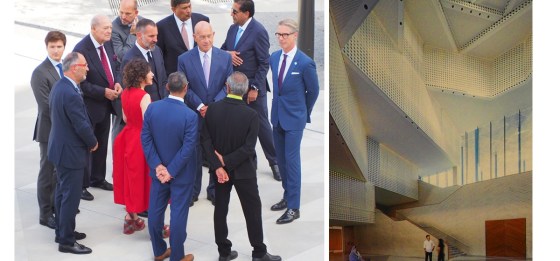



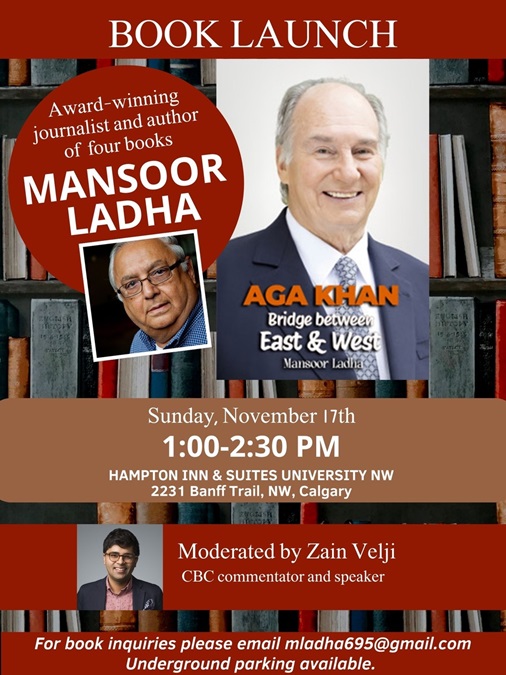
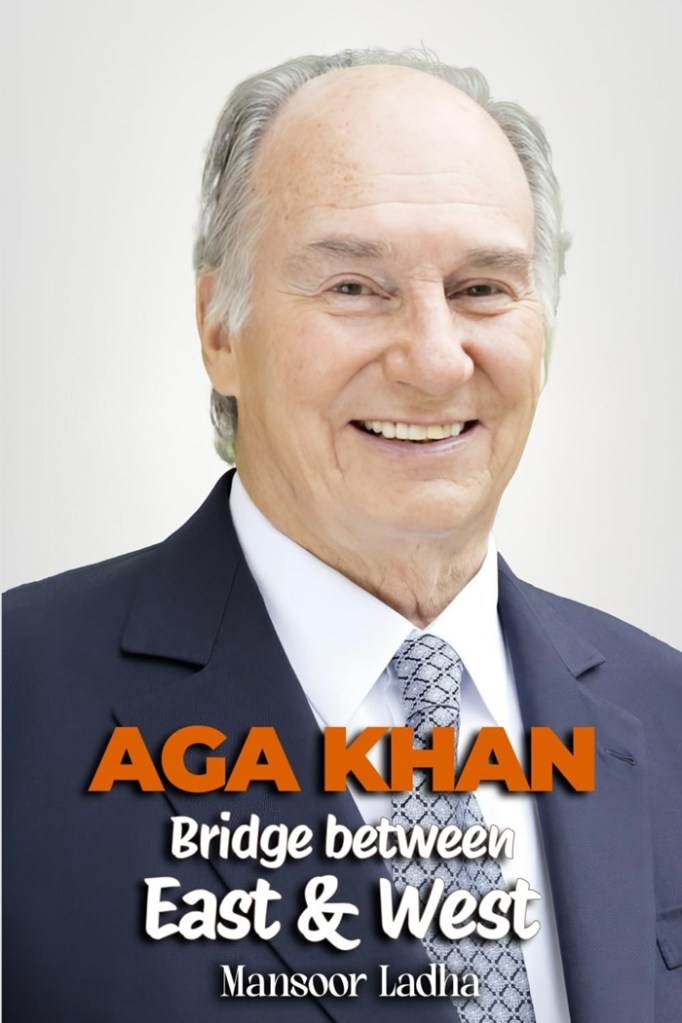


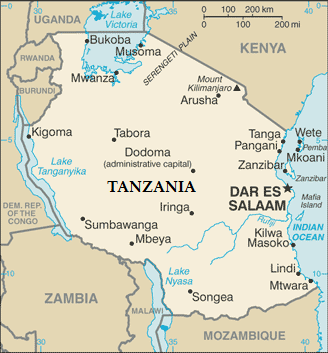
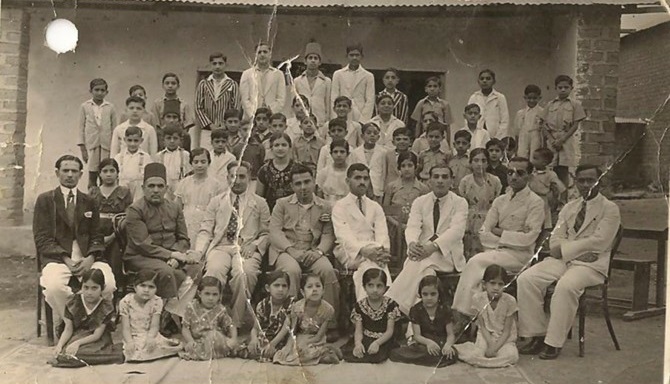

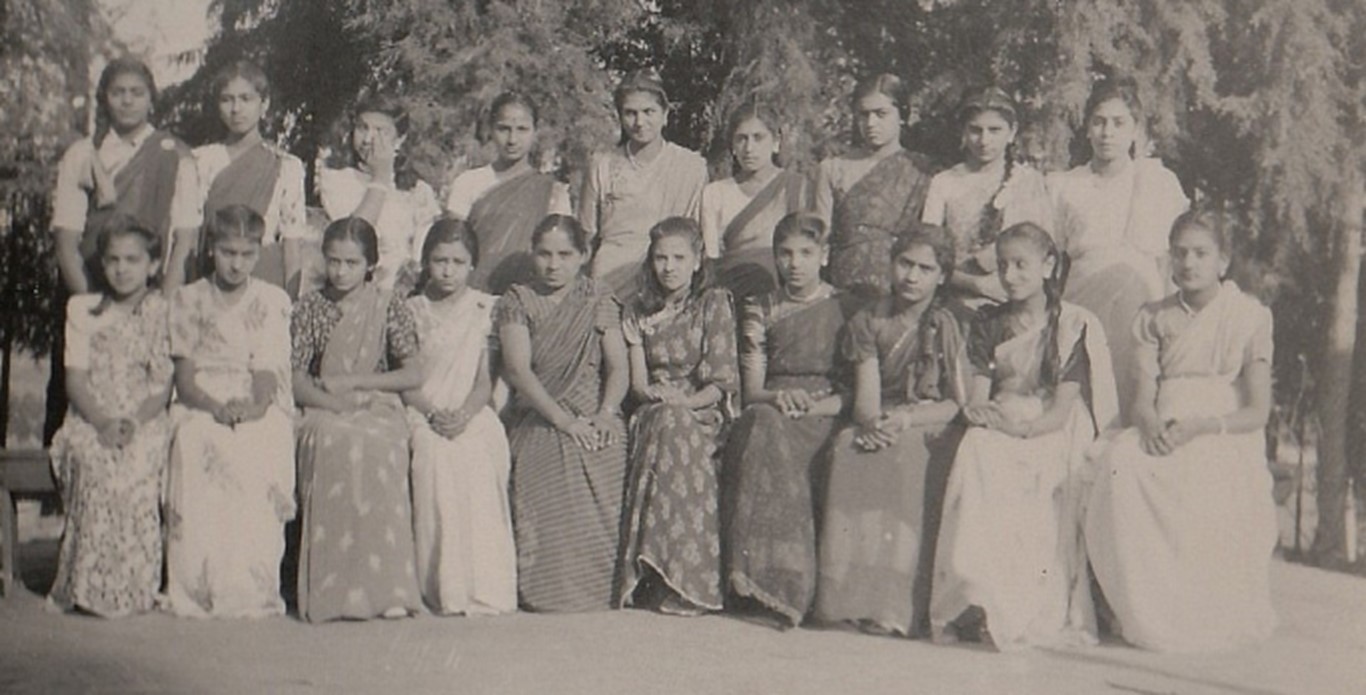


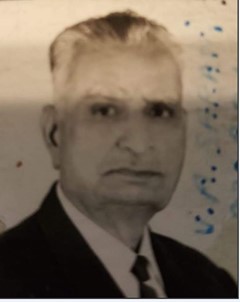

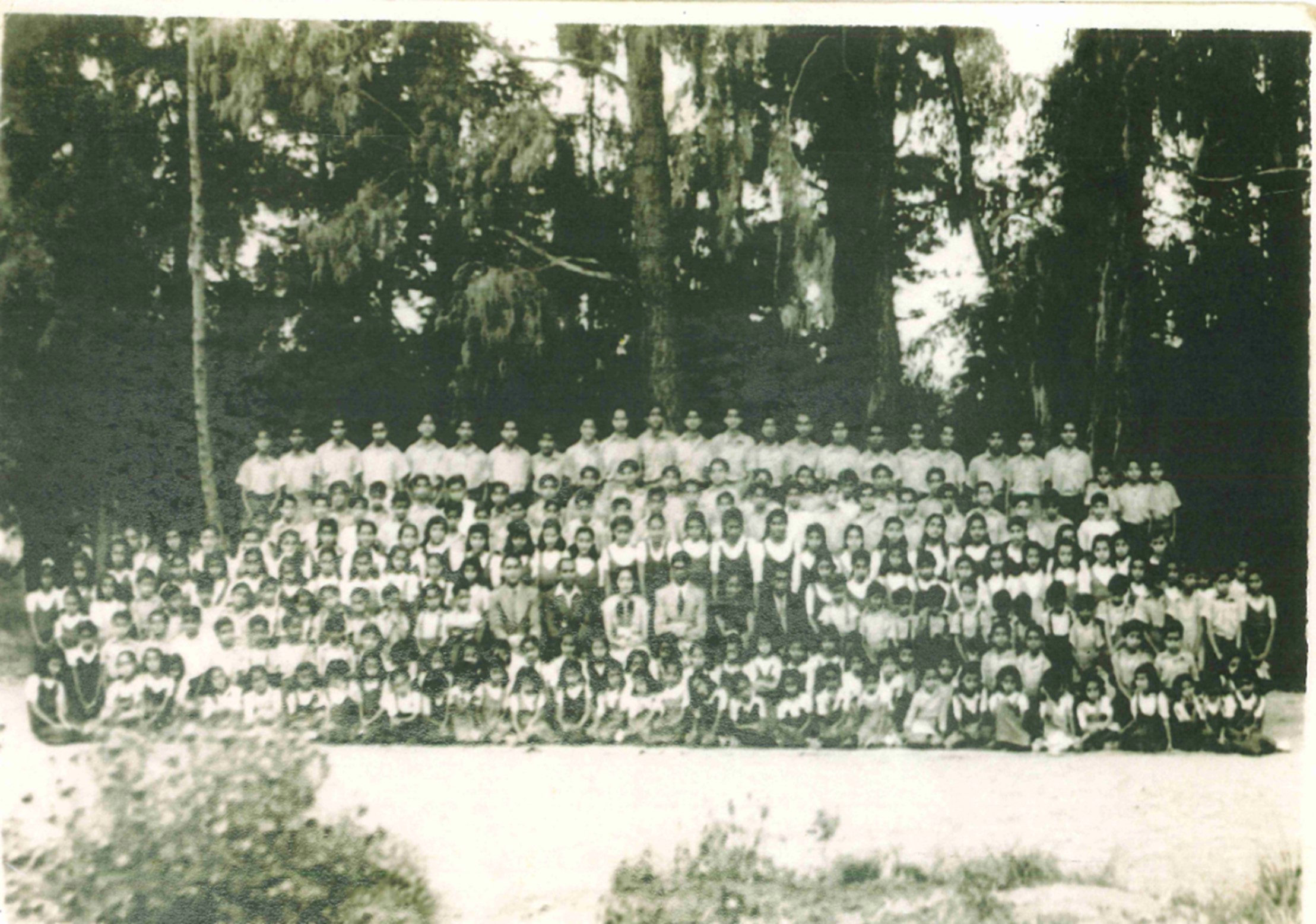

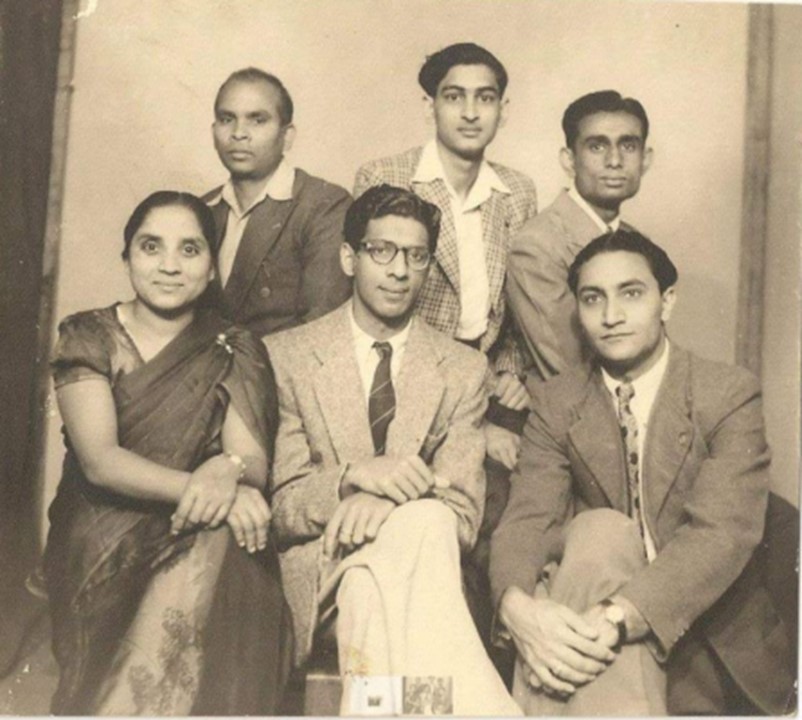

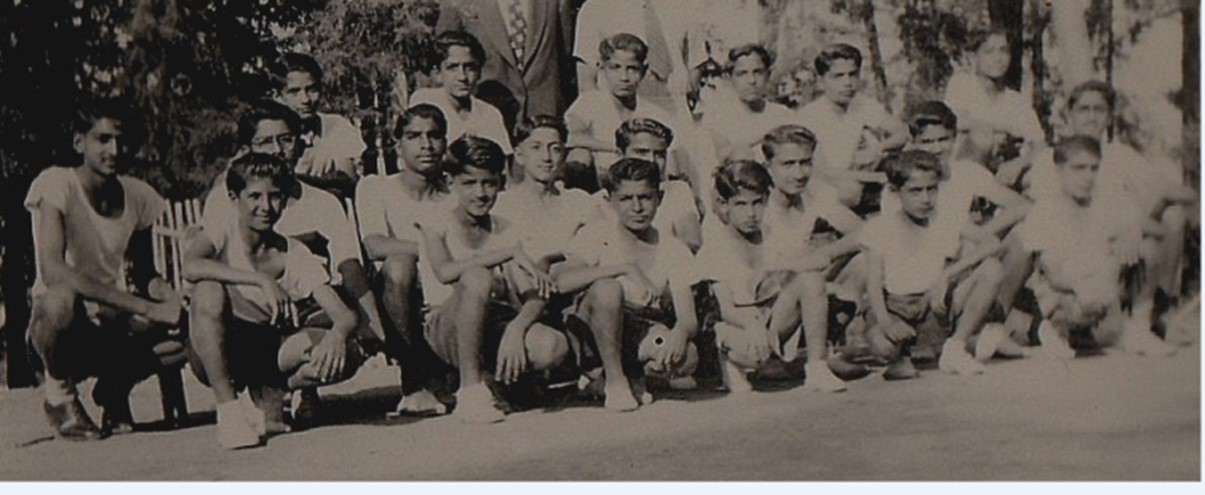
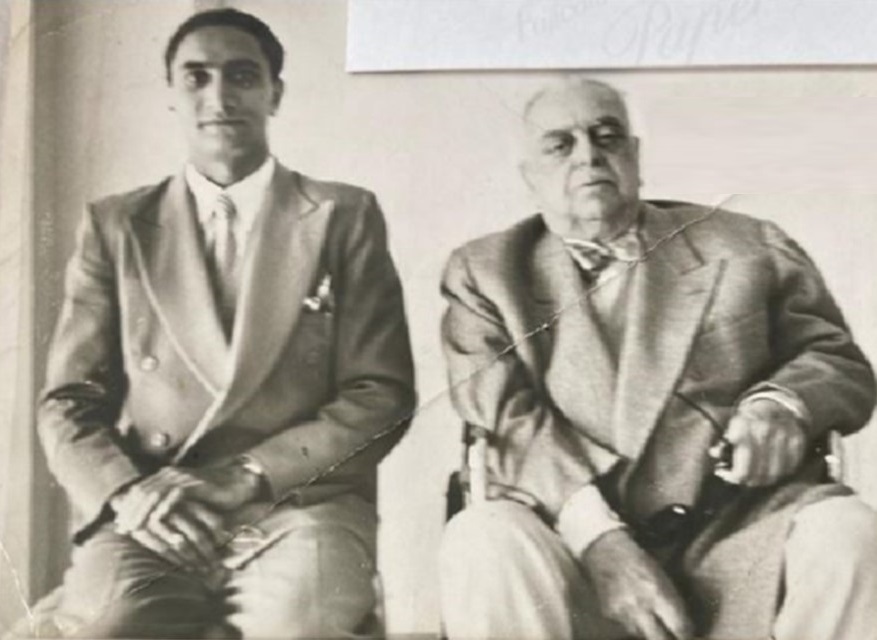


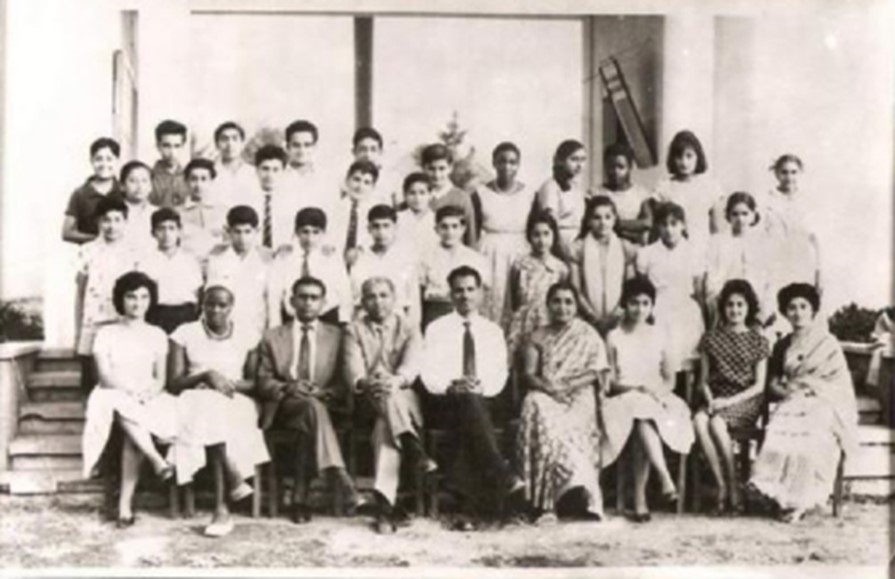


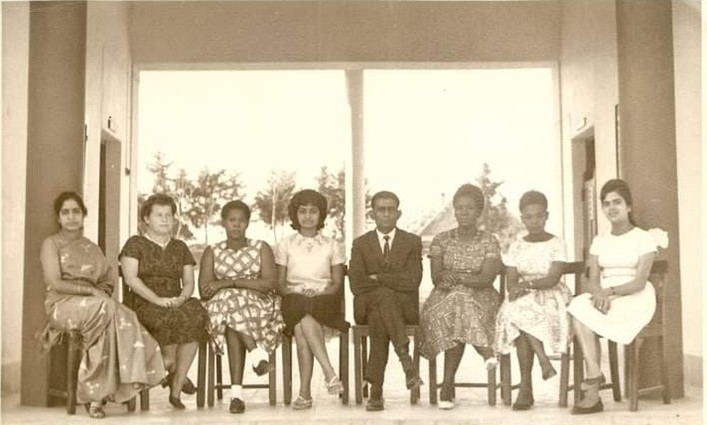
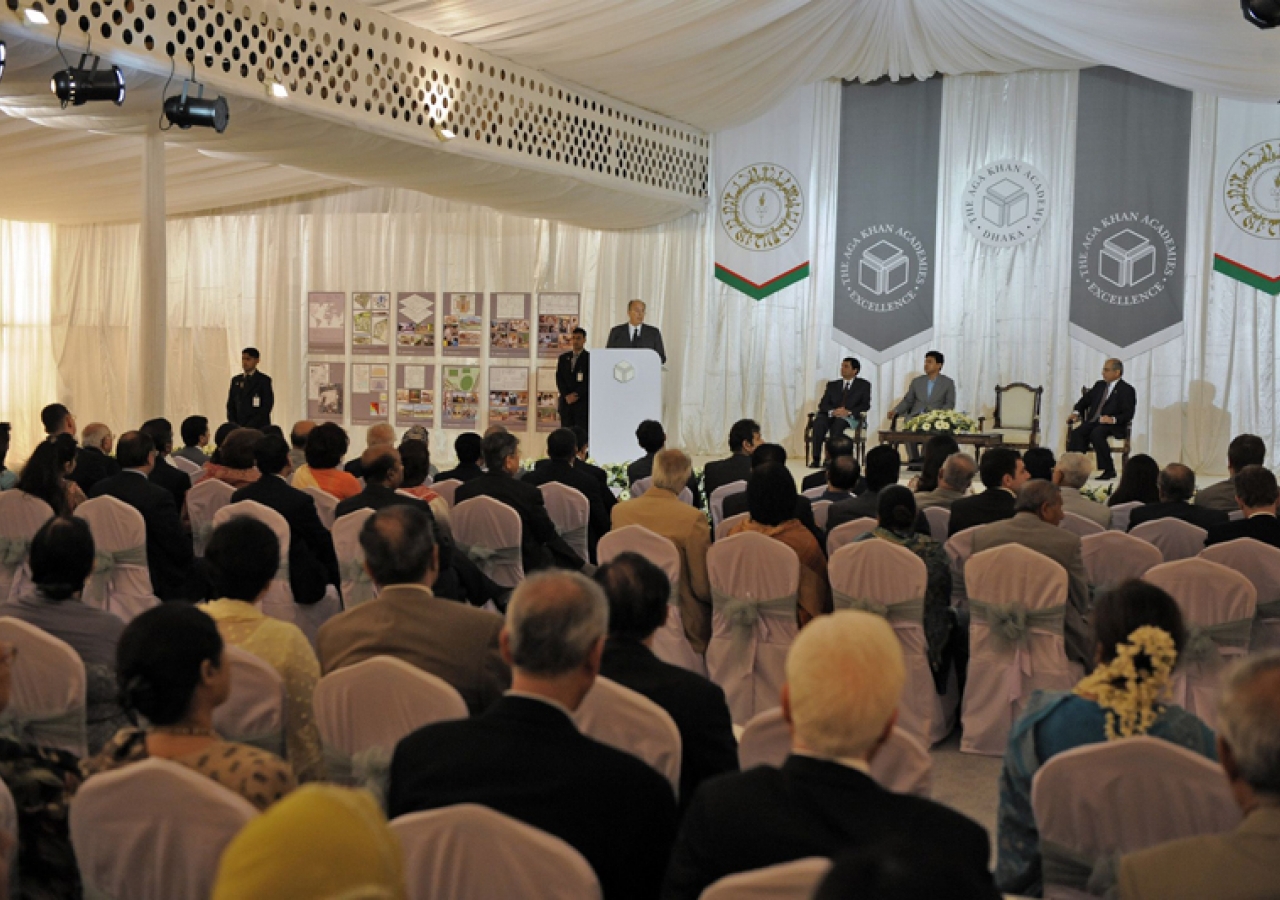

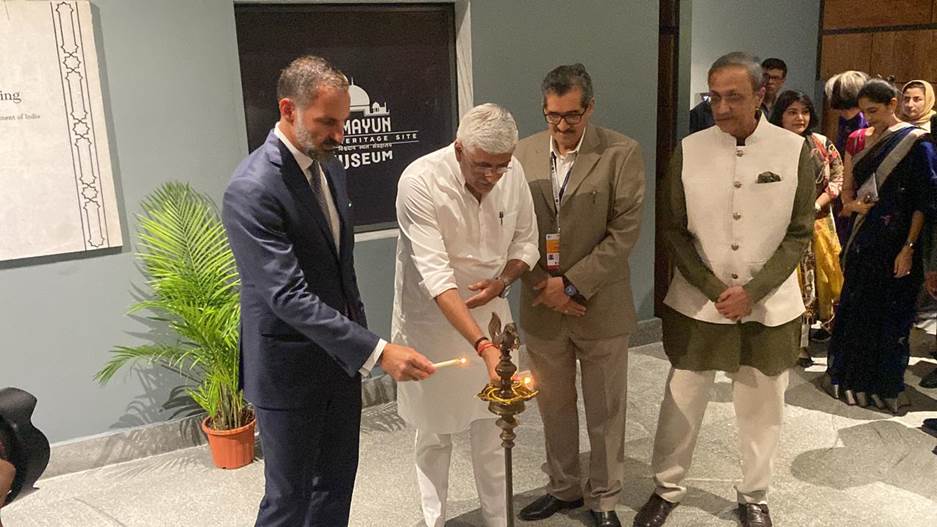
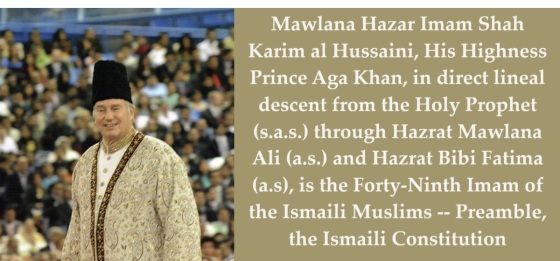

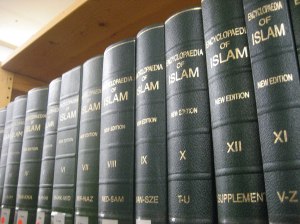

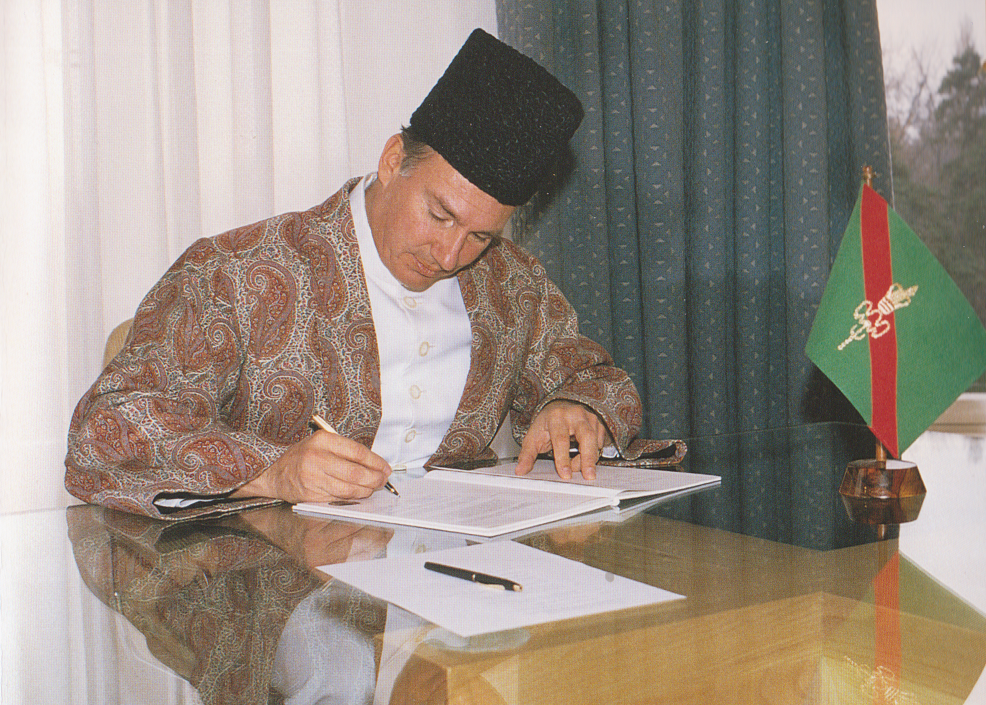


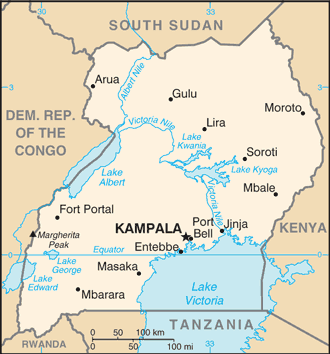
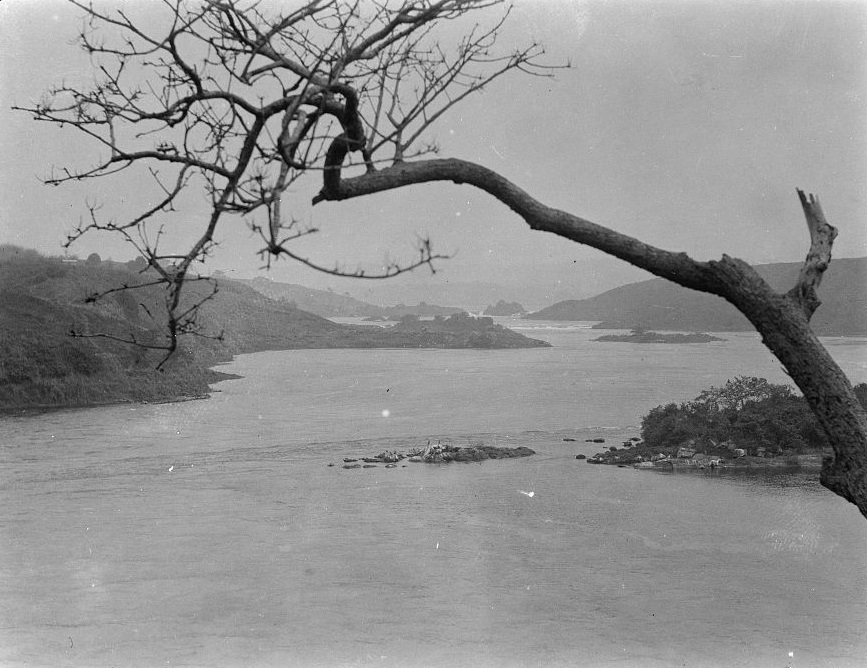
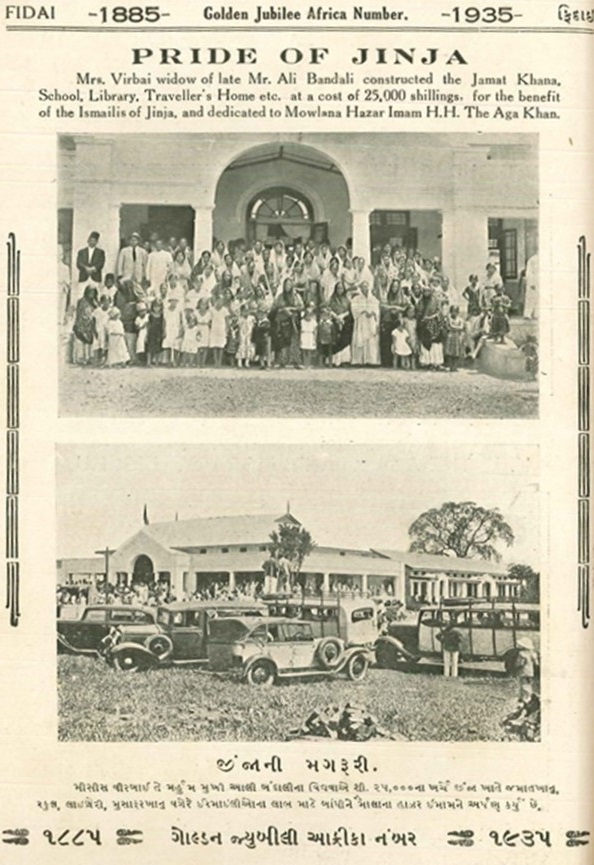
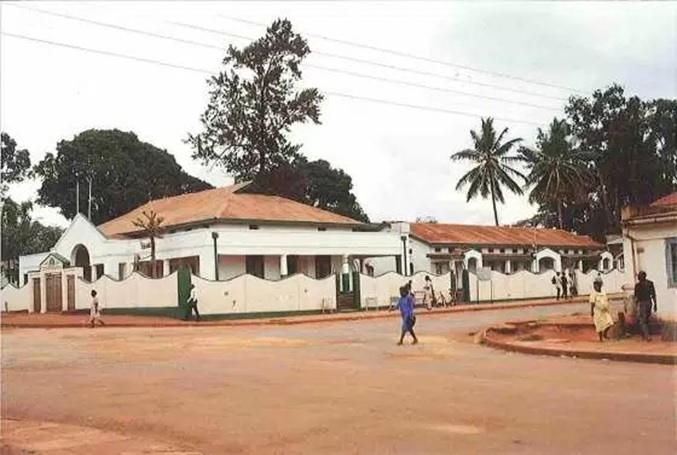
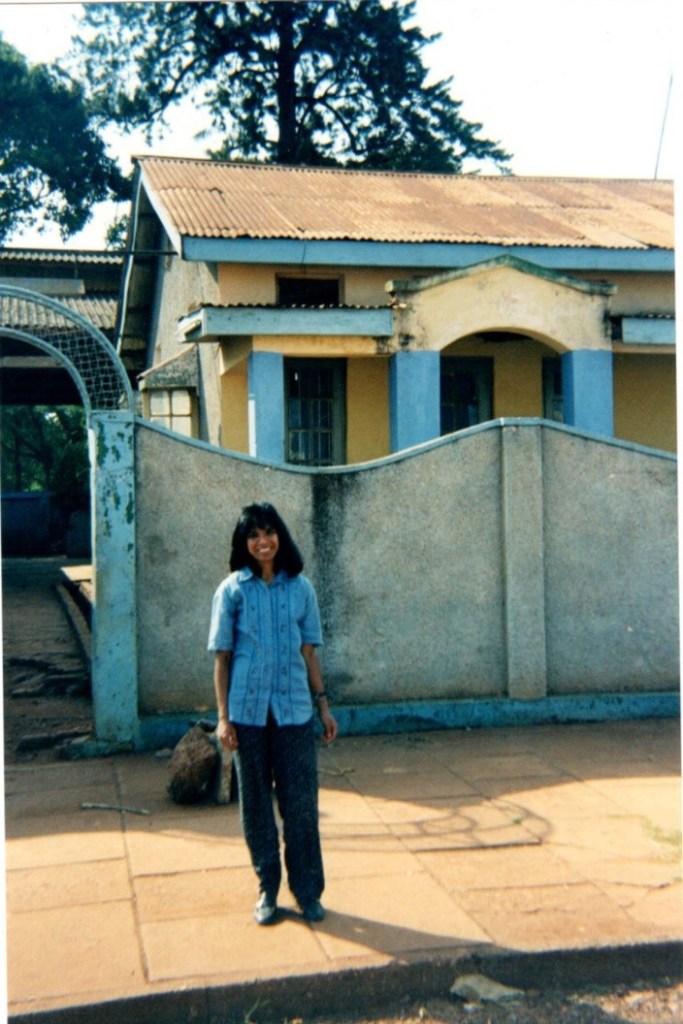
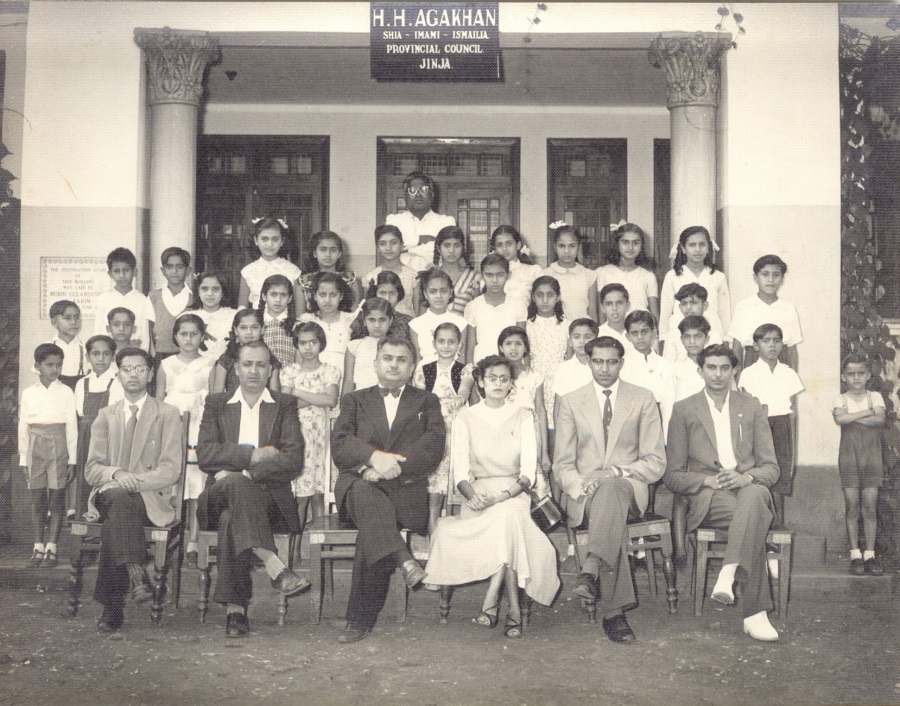
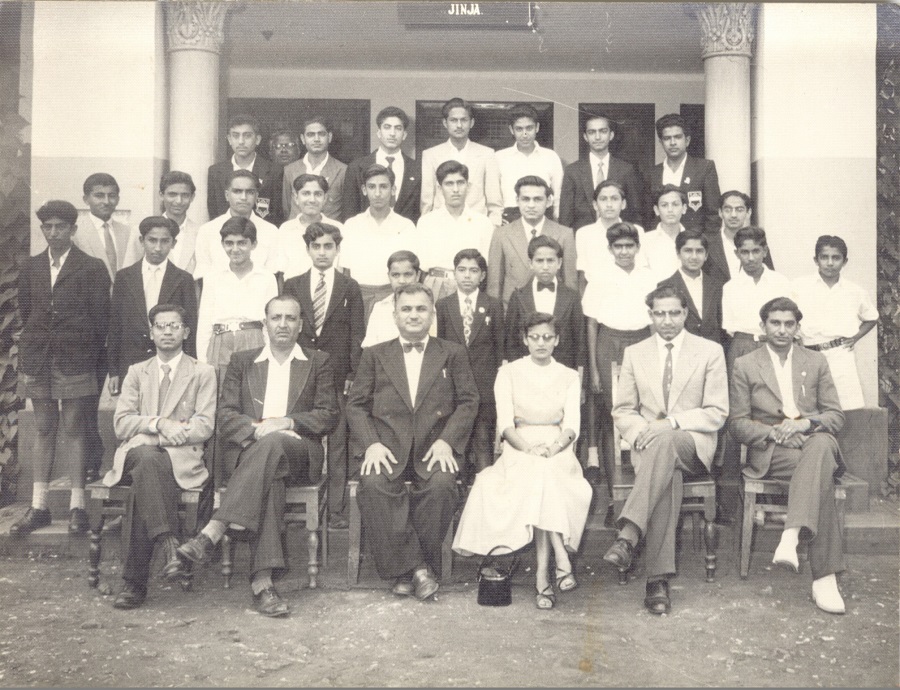
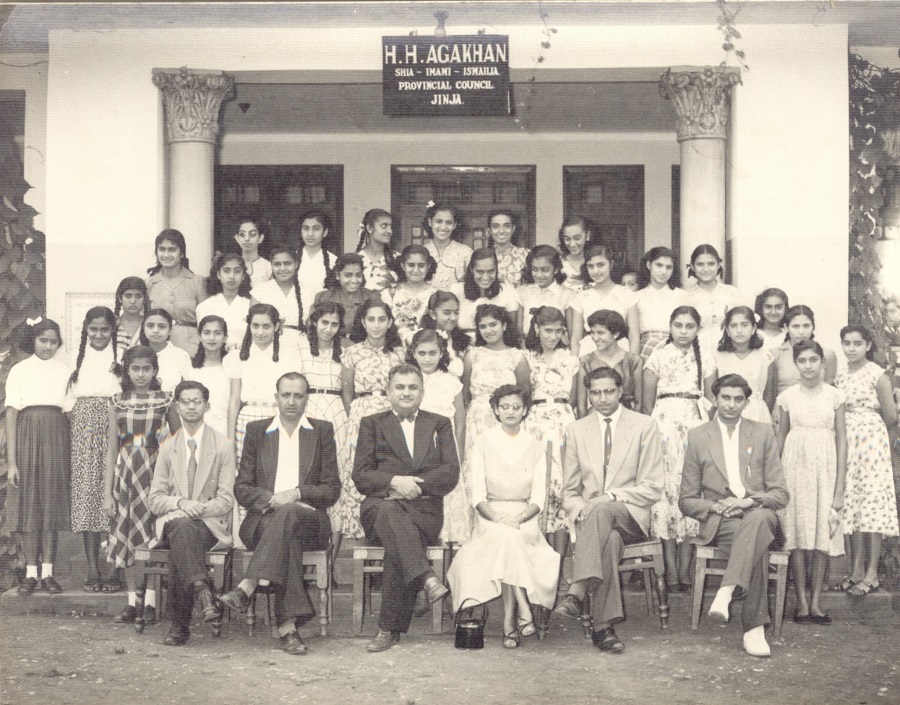

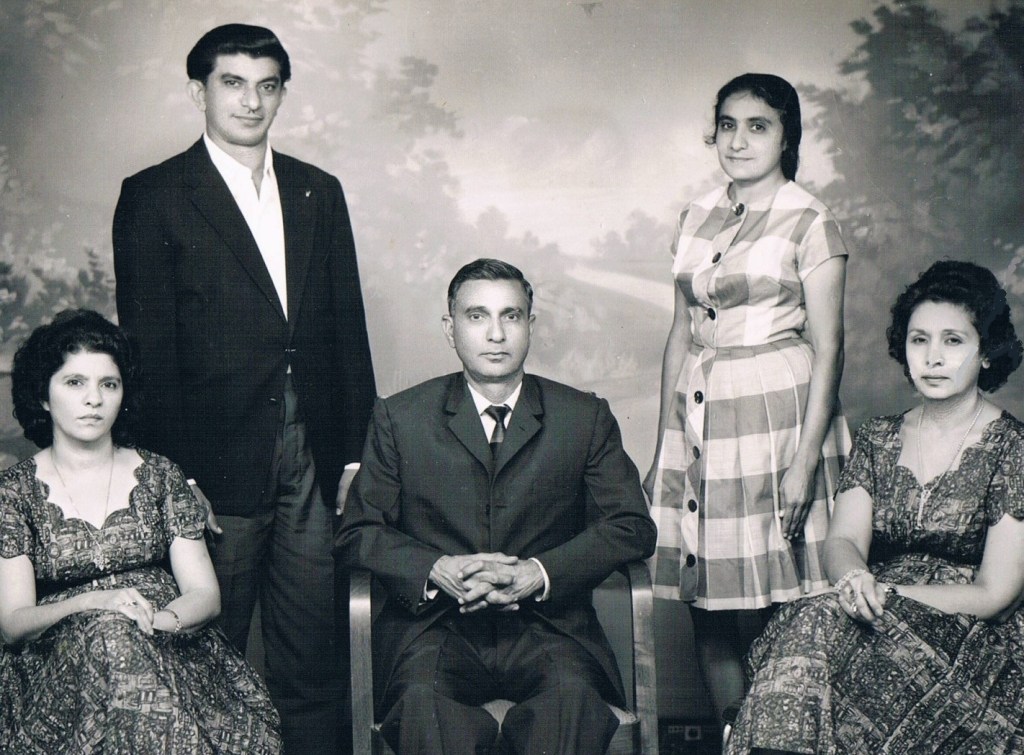
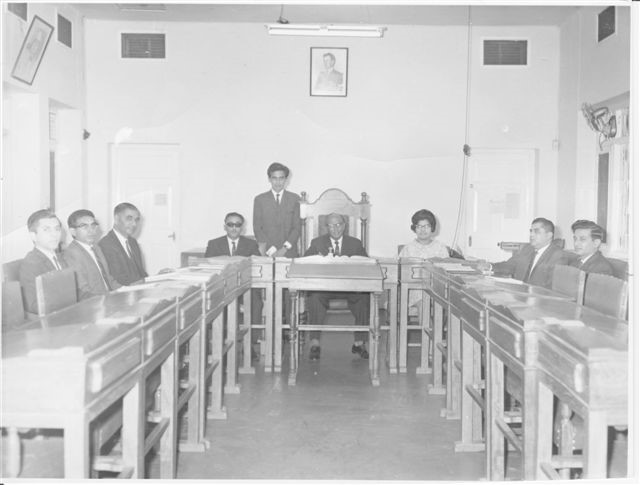
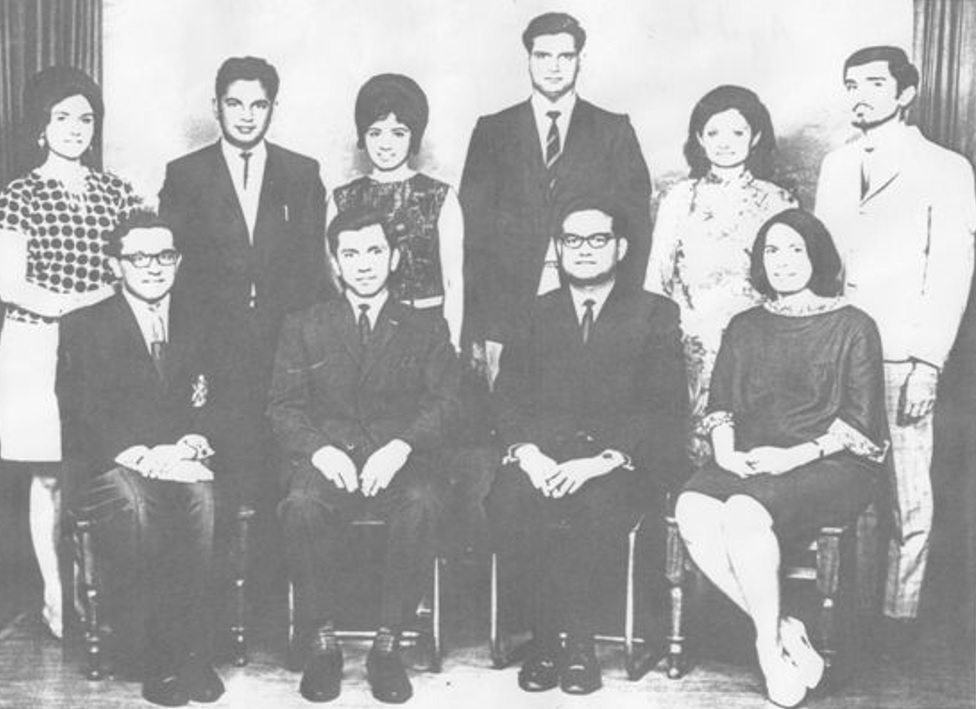
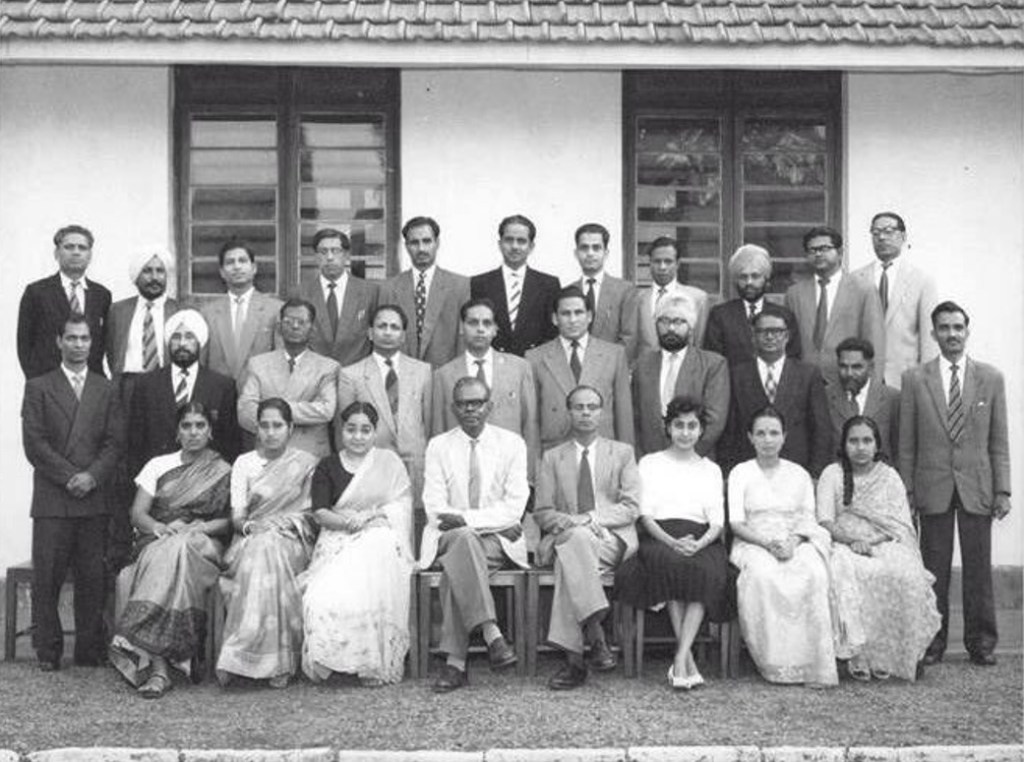
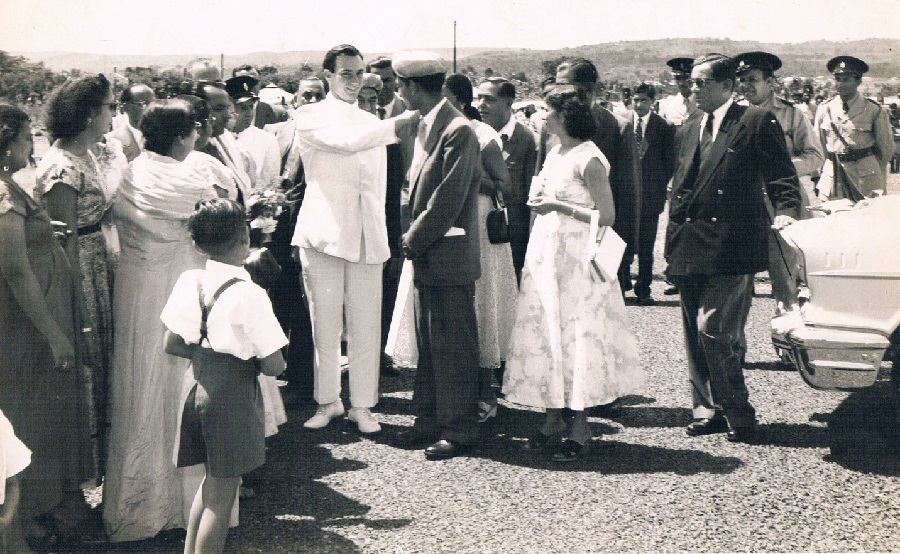
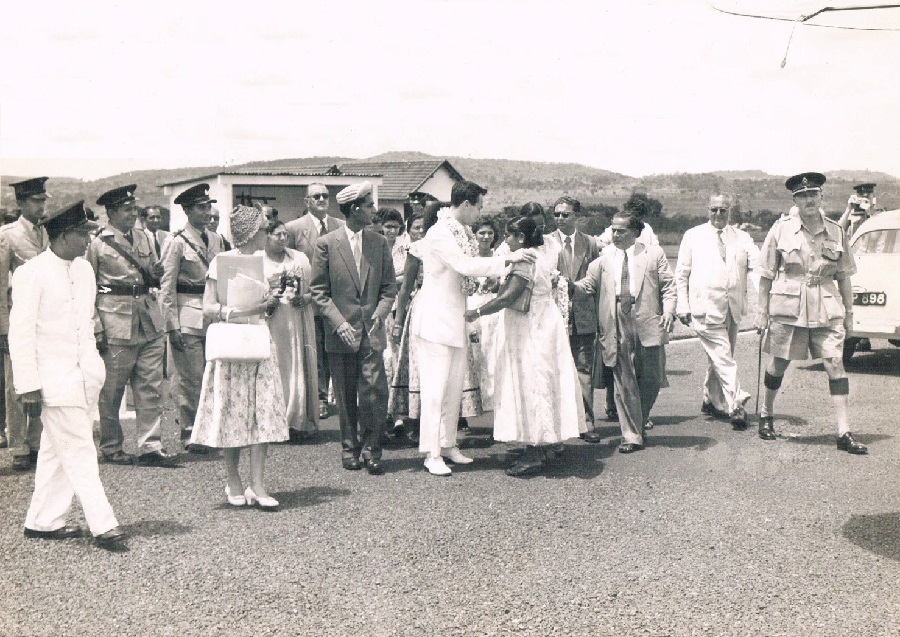
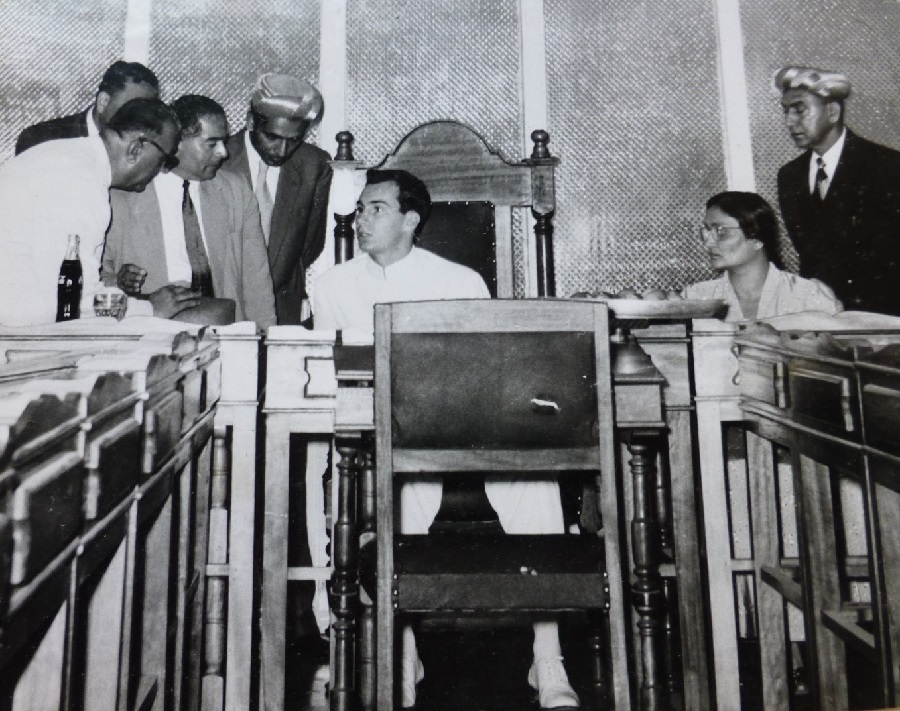
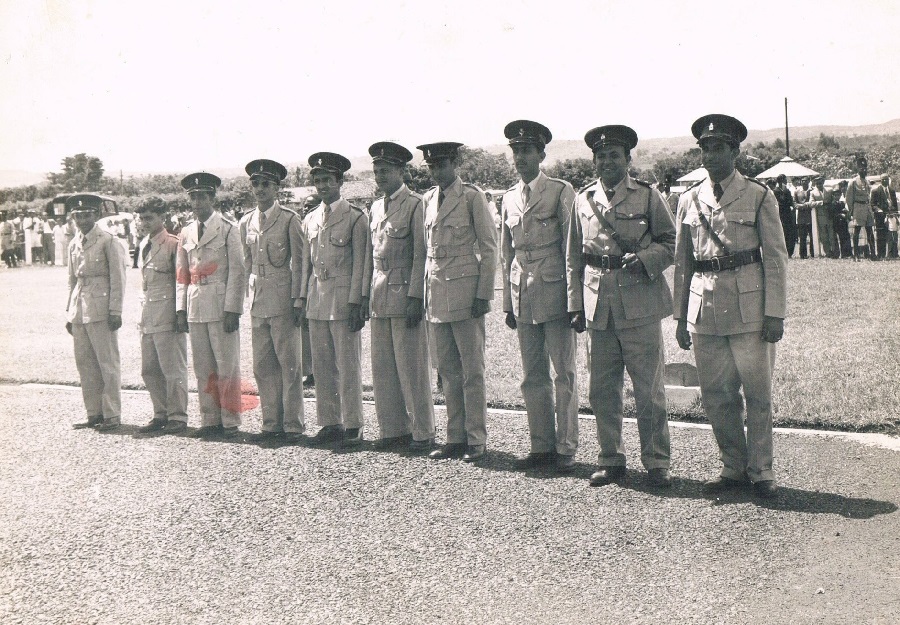
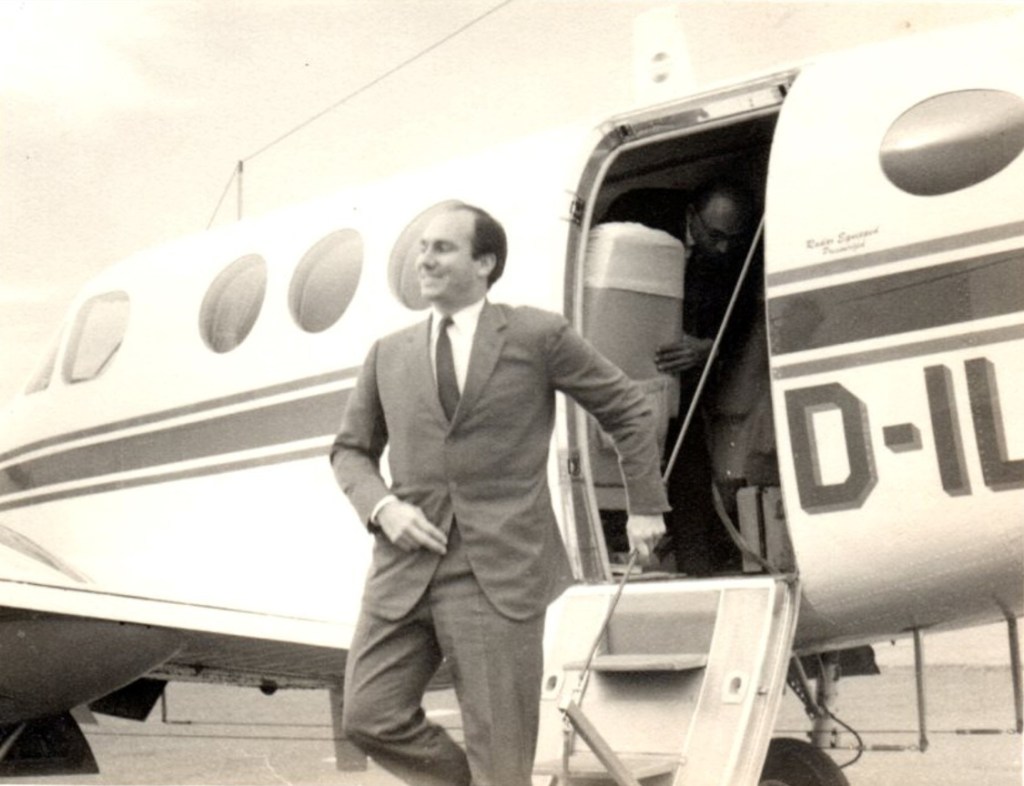
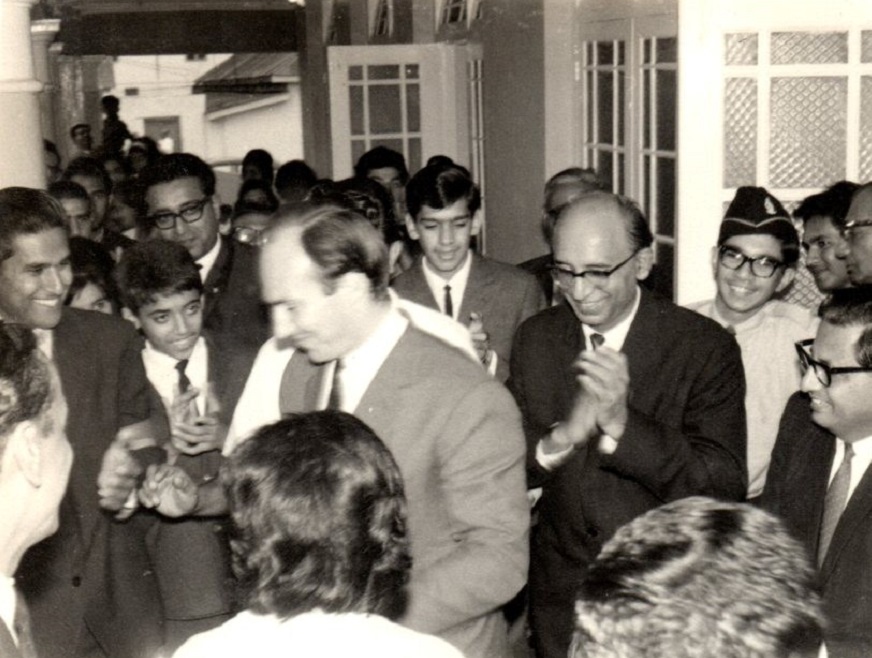
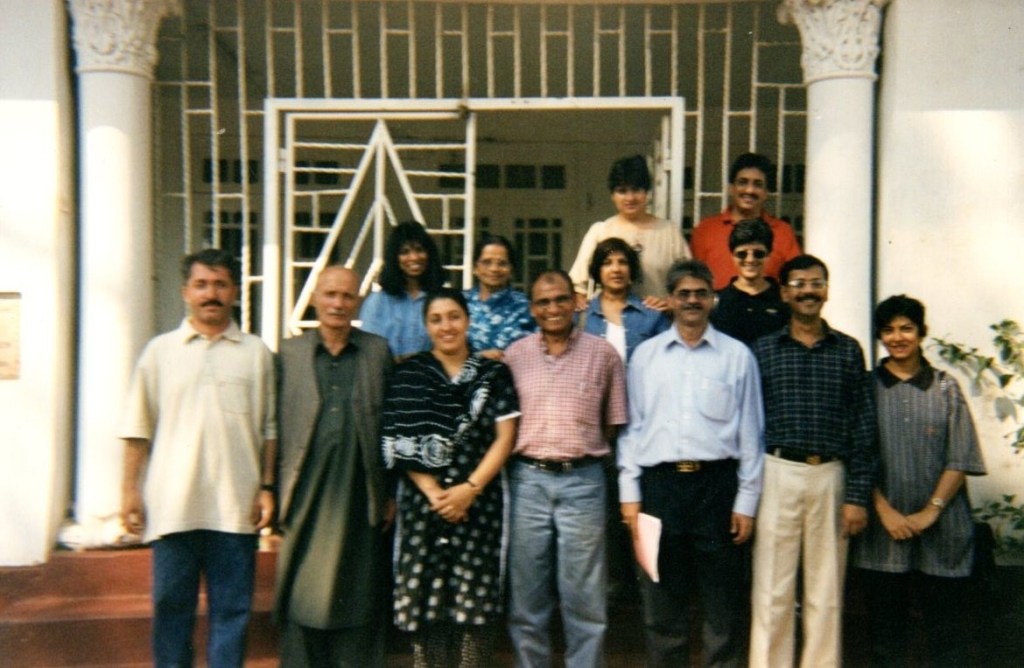
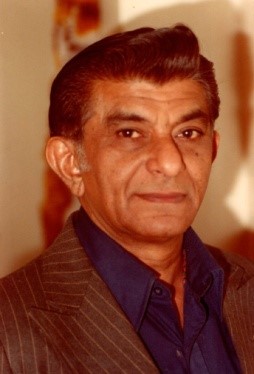
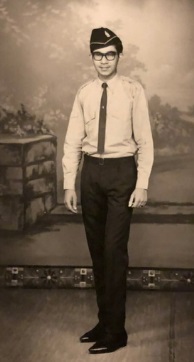

 Simerg - Insights from Around the World