Simerg is an independent initiative dedicated to Ismaili Muslims, the Aga Khan — their Hereditary Imam — and the Ismaili Imamat, and Islam in general through literary readings, photo essays and artistic expressions
My beloved daughter, Farah, sadly passed away on December 17, 2025, at the age of 57. As a creative writer and storyteller, she contributed several pieces to Simerg and its sister website Barakah, one of which elicited a response from Mawlana Hazar Imam, His Highness the Aga Khan, then Prince Rahim.
Farah’s arduous personal journey over the past 27 years was intertwined in 2025 with the profound events of the Ismaili Imamat — the passing of Mawlana Shah Karim and the succession of Mawlana Shah Rahim Hazar Imam — both of which are central to the community’s modern history.
Rashida Tejani with her daughter, Farah, who passed away in Vancouver on December 17, 2025, aged 57. Photograph: Rashia Tejani Collection.
~~~~~~~~
Farah Tejani (d. December 17, 2025) with her younger brother Faizal, 50. Photograph: Rashida Tejani Collection.
For Farah, the most significant shock in her life was the loss of our beloved 49th Imam, Mawlana Shah Karim, on February 4, 2025. I vividly recall breaking the news of his passing over the phone. It tore her heart, and I can’t express the shock she felt or the depth of her grief until the announcement the following day that Prince Rahim was the new Mawlana Hazar Imam of the Ismailis. As the new Imam took over the reins and marked his Takht-nishini a week later, her emotions began to settle, and she penned a tribute to Mawlana Shah Karim while reflecting on the eternal rope of Imamat, whose new holder was Mawlana Hazar Imam.
Mawlana Shah Karim, His Late Highness Aga Khan IV (d. February 4, 2025, aged 88) and his successor Mawlana Hazar Imam, His Highness Prince Rahim Aga Khan.
This tribute — the piece below — was Farah’s last story, shaped by the tragic event of the 49th Imam’s passing and the succession of the 50th Imam. With the piece, she scanned several photos of Mawlana Shah Karim from Gary Otte’s pictorial biography, “Depth of Field: The Aga Khan Beyond the Lens,” and, in two images, she wrote her own touching reflections on the late Imam. I am gratified that the editor of Barakah is publishing this piece by her before 2025 ends. It is a fitting conclusion to her series of articles published on this inspiring platform.
For me, as for any other parent, the death of my beloved daughter has been the most hurtful episode in my life. I ask you to join me in praying for the eternal peace of my daughter, and for my courage and fortitude to bear her loss. I also invite you to read Simerg’s tribute to Farah published on December 19.
~~~~~~~~~
Reflections on Mawlana Shah Karim and Mawlana Hazar Imam
Mawlana Hazar Imam, His Highness the Aga Khan, the 50th Hereditary Imam of the Ismaili Muslims, addressing Ismailis worldwide on his Takht-nishini (ceremonial installation) held at the Diwan of Imamat, the Seat of the Ismaili Imamat, in Lisbon, Portugal, February 11, 2025. Photograph: AKDN.
By FARAH TEJANI
As I begin this piece, I humbly say to my 50th Imam, Mawlana Hazar Imam Shah Rahim al Hussaini: I hold fast to the Rope of Imamat and offer my devotion and allegiance to you.
The moment I learned that my Mawlana Shah Karim, His Late Highness Aga Khan IV, had passed away, my heart was pierced with profound grief and a sense of tragic loss. I remember my mom calling me on the phone and saying with a sense of urgency, “Farah, I have some very tragic news.” I immediately called out the name of one family member after another, to which she would sob and say, “No! Way Worse!”
She did not want to torture me anymore; she just wanted to somehow prepare me. But there was no way to prepare for this. “WHO?!?” I demanded. She blurted out, “Mawla Bapa!” The news struck me with awe, like a thunderclap, shattering the peace of my world. Mawlana Shah Karim’s face of Pure Nurani Light filled the inside of my eyelids. I responded “NNNNOOOOOOOOOOOOOO!!!!!!!!”
Story continues below
Mawlana Shah Karim, His Late Highness Aga Khan IV, at work in the office at his residence, Gstaad, Switzerland, 1963. Photograph: Depth of Field: The Aga Khan Beyond the Lens, ed. by Gary Otte, page 112. Farah Tejani submitted this photo for publication, sharing a personal message to encourage her readers to write, just as Mawlana Shah Karim does in this historic image.
~~~~~~~~
Mawlana Shah Karim His Late Highness Aga Khan IV, in the start area for a giant slalom ski race that prepared him for participation in the 1964 Winter Olympics in Innsbruck, Austria. Photograph: Depth of Field: The Aga Khan Beyond the Lens, ed. by Gary Otte, page 81.
I saw his face again. And then I saw pictures of him from my copy of “Depth of Field: The Aga Khan Beyond the Lens”: The one of him working intently at his desk at his residence. Then, the black-and-white photo of him competing in downhill skiing in preparation for the Olympics, to represent Iran. Then, the iconic one of him greeting to his Jamat, with a big smile and waving lovingly for all His Beloved Spiritual Children to see. Then, focusing on a view from the Great Wall of China. Then giving a mulaqat to his spiritual children in Bartang, Tajikistan, amidst the Pamir mountains under blue skies. Then, standing in front of the entire House of Commons in the Canadian Parliament, humbly, after giving a powerful speech and being met with a unanimous standing ovation. These pictures and moments connect him with us, his community, and his Imamat at different times. There are countless faces of him at so many ages, and there are so many meaningful expressions of hope, discipline, determination, celebration, deep thought, peaceful divinity, and inner joy. So many expressions.
Story continues below
Mawlana Shah Karim, His Late Highness Aga Khan IV, addresses his community and others present during a mulaqat in Bartang, Tajikistan, September 1998. Photograph: Depth of Field: The Aga Khan Beyond the Lens, ed. by Gary Otte, page 112. Farah Tejani submitted this photograph, expressing her grief over Mawlana Shah Karim’s passing, with a prayer and a teary eye, in her own writing.
My heart could not take it. I felt lonely in my studio apartment, and tears filled my eyes as I envisioned him, with his gentle, loving, tender hands that had touched and blessed millions of people all over the world. The world at large was grieving the loss of one of the most significant humanitarians on this globe today, who put the needs of the impoverished, economically downtrodden and educationally unfortunate at the forefront. As the Founder and Chair of the Aga Khan Development Network, the Aga Khan University, the University of Central Asia, Aga Khan Hospitals, and hundreds of Aga Khan Schools, their impact was felt across the globe.
I will never forget my travels to East African Aga Khan Schools in Nairobi, Kisumu, Mombasa and Tanzania in 1992, with 26 other Ismaili youth. We were all armed with a Bachelor’s Degree in one of the areas of service, such as English, Education, Science, Algebra, or any of the other core subjects. I distinctly remember the Aga Khan, my spiritual father, encouraging me to question, take time, offer our service in an area not as fortunate, and study the Aga Khan Schools and Institutions to see what it is all really about. His words of wisdom and encouragement continue to inspire and motivate me to this day. I even went to Mawlana Sultan Mahomed Shah’s burial site in Aswan, and along with 26 others, we were graciously permitted to enter the Mausoleum and see the long-stem red rose that Begum Aga Khan, Om Habiba (Mata Salamat), arranged to have placed daily on her late husband’s coffin.
Story continues below
Mawlana Shah Karim, His Late Highness Aga Khan IV, focuses on a view from on top of the Great Wall of China during a tour that was part of the Aga Khan Award for Architecture International Seminar, October 1981. Photograph: * Depth of Field: The Aga Khan Beyond the Lens, ed. by Gary Otte, page 125.
~~~~~~~~
Mawlana Shah Karim, His Late Highness Aga Khan IV, acknowledging volunteers as he leaves a ceremony at Dar es Salaam’s Darkhana, Tanzania’s main Jamatkhana, July 2011. Photograph: Depth of Field: The Aga Khan Beyond the Lens, ed. by Gary Otte, page 167.
~~~~~~~~
Mawlana Shah Karim, His Late Highness Aga Khan IV, receives a standing ovation during his speech to a joint session of the Canadian House of Commons and the Senate in the Parliament Building in Ottawa, February 27, 2014. Photograph: Depth of Field: The Aga Khan Beyond the Lens, ed. by Gary Otte, pages 100-101, a two-page spread.
I was also fortunate enough to work at the Aga Khan University and the Institute for Educational Development in Karachi, Pakistan, thanks to a cousin who sent me a detailed day-to-day itinerary for the entire month of 1997. I was grateful to have received a few job offers, but my true heart’s desire was to serve in one of the Aga Khan Schools in East Africa, where I was born and had already visited in 1992. Nevertheless, I will never forget the sense of awe, absolute inspiration, and wonder I felt when I first saw the beautiful pink marble university with students going from here to there with so much pride in holding their textbooks and knapsacks. The Aga Khan University was poetically beautiful and architecturally designed, and even had courtyards that were non-discriminatory, with benches where you would see less fortunate people sleeping. With gardeners who would give their time to keep up the meticulous landscaping, I was always thinking about my Mawlana Shah Karim.
February 4th, 2025, will always be a sombre day for everyone around the world. For 67 years, Mawlana Shah Karim devoted his life to health, education, rural development, economic growth, institution-building, and enhancing the quality of life. Due to his spiritual and material guidance, Ismailis are settled in the countries in which we live. At the same time, he has shown deep concern for his Jamats, who are poverty-stricken, and has been asking his institutions, for as long as I can remember, to assist them in overcoming their plight.
The resting place for Mawlana Shah Karim was in Aswan, in the same mausoleum as his grandfather, Shah Sultan Mohammed Shah, Aga Khan III. Mourners and especially his family were grief-stricken but poised and gracious under the circumstances.
We are so blessed and fortunate to have the Rope of Imamat to hold on to for over 1,400 years of unbroken Hereditary Imamat. The auspicious occasion of the Takht-nishini (ceremonial installation) on February 11, when the Oath of Allegiance (Baya’h) was given to the 50th Imam, Mawlana Shah Rahim, took place at the Diwan of the Ismaili Imamat in Lisbon. At this moment, our community stood united, filled with joy and anticipation for our new Present Living Imam’s guidance and love despite the grief of losing our Beloved Shah Karim.
The momentous ceremony moved many to tears of joy and hope, especially the first Farman made by Mawlana Shah Rahim, when he also reflected on his father’s Imamat. The significance and meaning of his poignant, solemn, sensitive, timely, authoritative words were so powerful, endearing and comforting. The Farman was detailed and covered subjects like pluralism, diversity, world peace and order, climate control, taking care of the less fortunate, volunteerism and his solemn vow and commitment to the protection and security of his global Ismaili Jamat. Every youth in the community should seek to read the Farman, as official printed copies are now available.
Ismailis truly are very blessed. The Divine and Sublime beauty of it all is that I feel Shah Karim’s eternal ever-lasting presence in his son, Mawlana Shah Rahim. Shah Karim always promised us that he would never leave us: “Always remember…I am always with you,” he would often tell us, whether he was physically around us. Throughout the Takht-nishini ceremony, I felt his genuine promise come true. I felt this through the same Nur vested in the Rope of Imamat from the time of Hazrat Ali (A.S.) I hear his words echoing in my head. And now they are Mawlana Rahim’s words. He even went on to say, “If you have any worries and concerns, then turn to your Imam.” These are powerful soothing words full of comfort and inspiration.
Story continues below
The students Mukhi and Kamadia from Belgium, and Mukhiani and Kamadiani from Switzerland — who serve as congregational leaders in periodic Jamatkhana student gatherings — welcome Mawlana Hazar Imam, His Highness the Aga Khan, to the youth mulaqat (meeting) in Paris, France, July 12, 2025. Photograph: IPL / Akbar Hakim.
Glory Be to Allah, and All Praise Goes to Allah, the Lord of All Worlds. Mashallah. Ya Hazar Imam, Oh Mawlana Shah Rahim, bless us with your Wisdom, your Experience, your Nurani Deedar, your Holy Blessed Guidance, Spiritually and Materially and your Divine and Physical Protection from any ill fate or disposition. Ameen.
I feel secure in the knowledge that our faith will be practiced and interpreted as it should be by the Nass that Shah Karim conferred to Him as Imam-of-the-Time, and by the Nur that he is carrying with him from the very moment of Shah Karim’s passing.
With no doubt in my mind, heart and soul, I have complete faith in Mawlana Shah Rahim, and I feel so Physically and Divinely protected by our beloved 50th Imam just as I did by his father, Mawlana Shah Karim Aga Khan IV.
Date posted: December 31, 2025.
A version of this post appears on Simerg’s sister website Barakah, which is dedicated to His Highness the Aga Khan.
Inna lillahi wa inna ilayhi raji’un “Surely we belong to God, and to Him we return” — Holy Qur’an, 2:156
“Life is a great and noble calling, not a mean and grovelling thing to be shuffled through as best as we can, but a lofty and exalted destiny.” — Mawlana Sultan Mahomed Shah, His Highness the Aga Khan III (1877-1957), 48th Ismaili Imam.
A PERSONAL TRIBUTE TO A FANTASTIC AND TALENTED WRITER, AND A PURE SOUL
Farah Tejani (d. December 18, 2025)
UPDATE, DECEMBER 21, 2025: Dilsoji (condolences to family members) at Richmond Jamatkhana on Monday, December 22, after evening prayers; Funeral ceremonies at Burnaby Lake Jamatkhana on Wednesday, December 24, from 10 am; samar and zyarat (special prayers for the departed soul), December 24, Richmond Jamatkhana.
My heart is sunk and deeply saddened as I announce the death of Farah Tejani in Vancouver on December 17, 2025, conveyed to me by her loving mother, Rashida Tejani, the noblest of souls I have met in my life. Farah earned a Bachelor of Arts in English Literature and a Master of Fine Arts in Creative Writing from the University of British Columbia in May 1997, earning top Honours for her thesis on Short Fiction, reflecting her dedication and talent.
Farah was brought to my attention by her family friend in Montreal. I was amazed and convinced by what I read and felt that Farah’s writings deserved recognition, hoping that sharing her creative pieces would inspire readers and warm their hearts. I began introducing her work to Simerg readers by first publishing a series of poems titled Elastic Embrace. Shortly thereafter, I got to know her loving mother, Rashida. Her care and concern for her daughter were remarkable, and I had never seen anything like it before. There was nothing she wished more than to remain hopeful and pray for her daughter’s resolution of her challenges. Rashida’s dedication and struggle — and never losing hope — continued unabated until Farah left this world.
However, Farah’s creative writing, storytelling, and inspiring poetry has brought immense joy to her and our readers. She gained a large readership across Canada and around the world. Above all, Farah was thrilled when Mawlana Hazar Imam, then Prince Rahim, recognized her talent by leaving a comment on one of her poems. It made her feel genuinely appreciated and valued. I personally felt deeply humbled and blessed by Mawlana Hazar Imam’s support for Farah on Simerg. Farah passionately pursued writing and contributed the following excellent pieces for Simerg and its sister website, Barakah:
Just a few days before her passing, I spoke with Rashida, who had earlier had a very happy and fulfilling conversation with Farah. I suggested that Farah consider writing a piece for Mawlana Hazar Imam’s first Imamat Day, on February 4, 2026, an idea she said she would pass along to her daughter. Rashida indicated Farah would be thrilled to follow up on the suggestions. Alas, this would never be realized anymore, with Farah’s death. Rashida was devastated. She knew that her daughter’s dreams and hopes had remained unfilled. For years, she had looked after Farah single-handedly and sought to uplift her. I personally witnessed this dedication throughout Farah’s journey of writing for Simerg.
With the passing of Mawlana Shah Karim and the succession of Mawlana Hazar Imam Shah Rahim as the 50th Ismaili Imam, Farah submitted a meaningful and inspiring poem titled Ya, Hazar Imam, Please Accept My Devoted Allegiance, which we reposted again as Mawlana Hazar Imam was nearing his three-day visit to Lisbon from December 3. The piece was read widely.
Sadly, Farah died in very challenging circumstances, bereft of the support she deserved beyond what her mother offered, and the blessings of the Imam-of-the-Time that she had received and carried in her heart for the rest of her life. We did our best to support her writings and thank the many readers who responded with so much affection and love for Farah and her contributions.
As I think of Farah and meeting her with Rashida over breakfast at an IHOP restaurant in Vancouver, some three years ago, and presenting her with Gary Otte’s pictorial volume of Mawlana Shah Karim, Depth of Field: The Aga Khan Beyond the Lens, I saw a delightful twinkle in her eye expressing her love for books and writing, but above all, her unbounded love and faith in the Imam-of-the-Time, then Mawlana Shah Karim.
At this time of bereavement, we sincerely extend our condolences to her mum, Rashida, and share in her grief. We pray for the eternal peace of Farah’s soul. This talented and passionate writer could have continued writing for years with better external help and gratitude beyond what her mother provided, which many may not be aware of. Her creative works for Simerg will inspire readers to cherish her memory and budding writers to draw inspiration from her. In my conversations with her, I found excitement and passion in her voice, “Malik Bha” as she worked toward completing a piece. Her faith, devotion and love for Mawlana Hazar Imam were enormous. I saw that devotion in her face, heard it in her voice and felt it in my heart. To Rashida, I say: Bravo for your support for your daughter. You were a fantastic mother, like none I have seen. Your daughter has left a lasting legacy on this website. She was a pure soul and is at peace surrounded by Nur.
Date posted: December 19, 2025. Last updated: December 21, 2025 (added funeral information, see top).
_______________
FEEDBACK: We invite our readers to express condolences and tributes to Farah Tejani on LEAVE A COMMENT.
We paid tribute to Kutub Kassam of the Institute of Ismaili Studies after he passed away on March 24, 2019. Several readers shared their condolence messages, highlighting his lasting impact.
More recently, Arthur Rosenthal, who met Kutub in the 1960s in Kenya, learnt of his death on Simerg and responded with a beautiful message, which we publish below. Kutub, in his many years with Jamati institutions and the IIS, made significant contributions that continue to inspire. He spent 35 years at the Institute of Ismaili Studies, for which he was congratulated and recognized by Mawlana Hazar Imam, His Highness the Aga Khan, then Prince Rahim, during the Institute’s 40th anniversary celebration held in London in November 2017. Simerg’s original tribute also included a beautiful poem by Kutub, Come, who will walk with me? Please read the poem, and let’s remember Kutub again for his accomplishments, as we publish Rosenthal’s message.
I stopped at a fast food Indian takeout stand in my hometown in Northern California this afternoon [November 21, 2025] and ordered 2 samosas. It made me think of my friend Kutub Kassam who I knew at the University College of Nairobi in 1966 when I was an American student spending a year abroad in East Africa. Kutub and I had a mutual interest in writing and reading poetry. We collaborated, along with another friend, Leonard Kibera, on a poetry anthology magazine that we published through the University. We spent many afternoons walking together through the streets of Nairobi, stopping for tea and samosas. Since my memory of Kutub was kindled by today’s samosas I decided to do an internet search and this website [Simerg] popped up. I am saddened to learn of Kutub’s passing. I wish we’d had a chance to connect again before he left the earth, but that was not meant be.
Inna lillahi wa inna ilayhi raji’un “Surely we belong to God, and to Him we return” — Holy Qur’an, 2:156
“Life is a great and noble calling, not a mean and grovelling thing to be shuffled through as best as we can, but a lofty and exalted destiny.” — Mawlana Sultan Mahomed Shah, His Highness the Aga Khan III (1877-1957), 48th Ismaili Imam.
It is with deep sadness that we record the death of Nadir Mohamed on September 18, 2025, at the age of 69. We convey our heartfelt condolences to his wife, Shabin, and Nadir’s entire family and wish them strength and courage at this difficult time of bereavement.
Upon his passing, his family issued the following statement in the Globe and Mail’s Legacy page:
“The family of Nadir mourn his passing. He was an extraordinary man whose grace, wisdom, and openness deeply enriched our lives. May his spirit endure as a guiding light and his kindness live on in our hearts. Nadir passed away peacefully on September 18, 2025. In lieu of flowers, donations can be made to Princess Margaret Hospital or Mt. Sinai Hospital.”
An invitation has been extended to those who wish to plant trees in his memory at the Sympathy Store.
The exceptional tributes paid to Nadir Mohamed in the media bear witness to his remarkable contributions and achievements as a visionary in business and high technology. In recognition of Nadir’s contributions to Canada, he was named a Member of the Order of Canada (C.M.) by the Governor General on November 22, 2019, and invested with C.M. on May 6, 2022. The Order reads as follows:
“Esteemed leader Nadir Mohamed has advanced Canada’s high-tech sector. Using his expertise from a successful 30-year career in the telecommunications and media industry, the former president and CEO of Rogers Communications co-founded ScaleUP Ventures to fund and foster promising start-up technology companies across Canada. The accomplished business executive has also shared his time and sought-after acumen with Ryerson University’s innovation initiatives, including Digital Media Zone, as well as with a range of community organizations in the business, arts and health sectors.”
Rogers Communications, Canada’s leading communications and entertainment company, released the following statement in their tribute to Nadir:
QUOTE
“We are deeply saddened by the passing of Nadir. Nadir was an exceptional leader, a deeply respected executive and a generous person who led Rogers during an extraordinary time of change for our company and industry. He contributed immensely to our long-term success and made meaningful contributions to our community and our country,” said Edward Rogers, Executive Chair, Rogers.”
“Nadir joined Rogers in August 2000 and served as President and CEO of Rogers Wireless from 2001 to 2005. He was appointed President and Chief Operating Officer of Rogers in 2005, and in 2009 succeeded Ted Rogers as President and CEO. He retired from Rogers in January 2014. During his tenure, he strengthened Rogers balance sheet, solidified its financial position and set Rogers up for long-term success.
“Nadir was co-founder and chair of ScaleUP Ventures and chair of DMZ Ventures. Nadir also gave back to his community as a board member of Tennis Canada, Toronto Metropolitan University, UHN Toronto General & Western Hospital Foundation and a founding board member of NEXT 36/NEXT Canada.
“Nadir was a remarkable leader who played a pivotal role at Rogers and the broader Canadian business community,” said Tony Staffieri, President and Chief Executive Officer, Rogers. “He meaningfully contributed to Rogers legacy of innovative firsts, and he passionately contributed to Canada’s innovation agenda. He was a gracious leader, and a true class act. Our thoughts are with Shabin and the entire Mohamed family during this difficult time.”
UNQUOTE
Although I did not know C.M. Nadir Mohamed personally, I had met him on a few occasions. My first memory of meeting him was at the Rogers Centre during the Golden Jubilee of His Late Highness Aga Khan IV in 2008. I was deeply affected when I was informed about his passing. I was further moved on Tuesday, September 23, 2025, as I watched the Toronto Blue Jays play the Boston Red Sox on Sportsnet Plus. The Blue Jays commentator, Dan Shulman, alongside Buck Martinez, paid tribute to Nadir between the 3rd and 4th innings of the baseball game, which was played at Rogers Centre. A moment of silence was also observed during the game, with Nadir’s portrait projected onto the stadium’s jumbotron. A friend who was at the game has shared the following clip:
Video clip: A moment of silence for Nadir Mohamed at the Rogers Centre
It is worth noting that during his tenure at Rogers, the communications company also made significant inroads in sports, including negotiating what was then a record-breaking $ 5.2 billion, 12-year exclusive broadcast deal for NHL hockey rights.
C.M. Nadir Mohamed’s funeral will take place at the Burnaby Lake Ismaili Jamatkhana on Thursday, September 25, 2025.
We pray that his soul may rest in eternal peace. Ameen.
Date posted: September 24, 2025.
___________________
Condolence messages: We invite readers to submit their condolences, memories and tributes to Nadir Mohamed, Member of the Order of Canada, by clicking LEAVE A COMMENT. If you encounter technical difficulties submitting your feedback, please email your message to mmerchant@simerg.com, subject line: Nadir Mohamed.
Over the years, Zarina Moosa, a teacher by profession, has read the late Aga Khan’s autobiography, The Memoirs of Aga Khan, several times. She was always highly moved when she came to the page where he spoke of his mother, Lady Ali Shah. Read Zarina’s introductory piece and the Aga Khan’s reflections on his mother on our sister website, Barakah, a platform dedicated to preserving and sharing the wisdom of His Highness the Aga Khan.
His Late Highness Aga Khan III (1877 — 1957), 48th Hereditary Imam of the Ismaili Muslims; inset with his mother, Lady Ali Shah. Please click on the image for the article.
Over twenty years ago I, a Christian, began a journey to learn about my Muslim neighbours.
Throughout this process of learning, there was one individual — arguably the most impactful world leader without a country of his own — who, as a Muslim, taught me more about being a good Christian than I ever would have expected. In his humble, earnest way, he used his influence to be a powerful force for good, not just for those whom he lived his entire life to guide and protect but for all the rest of us as well.
The Aga Khan and Ismaili Muslims
This quietly powerful, beautiful soul is, of course, the 49th Hereditary Imam of Nizari Ismaili Muslims, Mawlana Shah Karim Al Hussaini, His Highness the Aga Khan. He passed away in Lisbon, Portugal, on February 4, 2025, at the age of 88, thus becoming the longest-lived Imam in the 1400-year history of the Shia Imami Ismaili Muslims, whose first Imam was Ali, the cousin and son-in-law of Muhammad.
Mawlana Hazar Imam (our Lord, the Imam of the Time), as Ismailis address their reigning Imam, was their protector and guide for 67 years, filled with parental love for all his followers around the world, a profoundly inspiring world leader — but for me, a Christian, he was my hero.
A life-size depiction of Mawlana Shah Karim, His Highness the Aga Khan, (d. February 4, 2025, aged 88) exhibited at the Canadian Museum for Human Rights in Winnipeg, Manitoba. The exhibit appears with depictions of other Honorary Canadian Citizens on a floor dedicated to “Turning Points of Humanity.” Photograph (of the exhibit taken July 2017): Malik Merchant / Barakah.
In his guidance to the world Nizari community living in more than 35 countries, with over 200,000 having made their homes in North America over the past fifty years, he not only spoke to immediate worldly concerns but encouraged his followers to show compassion and understanding; to volunteer, educate, and be educated; to support and empower women, and those who historically have little voice; to be good citizens of whatever country around the world they might find themselves in; and to be powerful examples of pure charity to everyone encountered. Prince Karim’s support of Nizari Ismailis was without bounds, and his charity and caring towards the world at large were without measure.
Shortly after his grandfather’s passing and his installation as the 49th Imam on July 11, 1957, Prince Karim delivered Takht-nishini (ceremonial installation) addresses internationally in Africa and South Asia — messages immediately impactful for their time and still profoundly relevant today.
He spoke to the promise of electronic education and cheaply distributed power, admonishing them to make wholesome use of these advancements while maintaining their faith.
“The most significant thing about the atomic age is the new and unbounded sources of energy which are released for the use of mankind. In Europe and America today, power stations are springing up which need no coal, nor oil, nor water power to run them. They feed themselves. This is close to the secret of perpetual motion. In my life time, it is almost certain that such atomic power stations will be exported, very likely to countries like Tanganyika. From them will flow the energy which will create new towns, railways, factories and all the foundations of modern industrial progress — Dar-es-Salaam, October 19, 1957 [1].
“The years of development and change which lie ahead are certain to throw up many new problems. We should not be afraid of these. You will surely surmount them if you stand by your faith and meet your difficulties in the spirit of humility and tolerance that your religion demands of us. This is especially important for the younger generations who will have to carry the future on their shoulders” — Nairobi, October 22, 1957 [1].
“The faith by which we live is the only sure guarantee that our problems will be surmounted. The younger people among you must be especially aware of this. Only the faith of your fathers will enable you to live in peace.” — Dar-es-Salaam, October 19, 1957 [1].
He talked about the need to find our spiritual center and work together as we navigate rapidly evolving technological landscapes.
“Never before in the history of man has there been such an age of technological progress… It is most important for the future of this country that the various races face these changes together” — Nairobi, October 22, 1957 [1].
Mawlana Shah Karim, His Highness the Aga Khan, at his Takht-nishini, in Nairobi, Kenya, 1957. Photograph: 25 Years in Pictures, Volume 1, Islamic Publications, 1983, London.
He spoke on contests of skill where every participant does their best and succeeds; that competition and respect are not mutually exclusive.
“You must work together with mutual forbearance and with respect for each other. Only thus shall we achieve the harmony and happiness which is necessary for the true advancement of our faith.” — Kampala, October 25, 1957 [1].
He declared that technological success and community development are tools to benefit everyone.
“As a community, our Faith will always preserve our special identity, but there should be nothing exclusive in what you do…There is no reason why our traditions and our faith should stop us from moving with our times, nor in fact why we should not lead our fellowmen to new spheres of knowledge and learning.” — Karach, January 23, 1958 [1].
He spoke to the power that compassion, understanding, and service have within a spiritually powerful minority community.
“With humility, tolerance, and respect for each other, by honest work and straight dealings, you will earn the true friendship of you fellows… By the way you conduct your daily lives, by the compassion you show your fellow men and women, and above all by your faith in God — you will ultimately be judged” — Bombay, March 11, 1958 [1].
Through living his own life, he transformed mine!
O mankind, indeed We have created you from male and female and made you peoples and tribes that you may know one another. Indeed, the most noble of you in the sight of Allah is the most righteous of you — Surah Al-Hujurat (49:13).
For me, Prince Karim Al-Hussani, Aga Khan IV, will always stand as a unique global figure, an exemplary world leader who effortlessly combined his spiritual role as the 49th hereditary Imam of the Nizari Ismaili Muslims with his transformative contributions to education, culture, and development.
A sign etched on a mountain to welcome Mawlana Shah Karim, His Highness the Aga Khan to Pasu in the Hunza region of Gilgit-Baltistan, Pakistan; November 1987. Photo: Faqir Ullah Khan.
~~~~~~~~
In a setting of spectacular natural beauty, Mawlana Shah Karim, His Highness the Aga Khan addresses Ismailis and non-Ismaili Muslims in Ishkashim during his first historic visit to Badakhshan in Tajikistan; May 27, 1995. Photograph: The Ismaili.
Remarkable Aspects of Leadership
For a period longer than my lifetime he led a community of millions across the world, guided by the principles of Islam while expanding his work to improve the quality of life for countless individuals, regardless of their faith or background. This perspective — anchored in faith but outward-facing and inclusive — defined his leadership and shaped his vision for a more compassionate and interconnected world.
Central to this vision was a unique worldview he termed “empathic pluralism,” the idea that humanity’s differences should be viewed not as sources of division but as opportunities for mutual enrichment. In one of his most profound observations, Prince Karim stated, “The world needs an architecture of generosity, one that speaks to a global ethic of respect and compassion.” [2] More than the design of physical structures, this “architecture” extended to encompass the systems, institutions, and relationships forming the very foundations of human society.
Cultures across the globe are grappling with complex challenges: rising inequality, deepening cultural divides, and the rapid erosion of both natural and cultural heritage. Though diverse in nature, these crises share a common thread — they require responses prioritizing empathy, resilience, and cooperation. Prince Karim’s work provided a blueprint for addressing these issues, tempering spiritual guidance with practical, sustainable solutions which strengthen communities and foster understanding.
Indeed, Allah orders justice and good conduct and giving to relatives and forbids immorality and bad conduct and oppression. He admonishes you that perhaps you will be reminded –Surah An-Nahl (16:90).
In my eyes, the most remarkable aspect of his leadership was his ability to bridge faith and reason. As a spiritual leader, he inspired millions of Ismailis through teachings emphasizing ethical conduct, introspection, and commitment to social welfare. Yet his initiatives extend far beyond his community, addressing universal concerns and building institutions that continue to serve as models of inclusivity and excellence. Whether funding hospitals and schools in remote areas or revitalizing cultural landmarks that hold meaning for widely diverse communities, his efforts reflected a holistic understanding of humanity’s shared destiny.
He continuously emphasized that understanding one’s heritage and connecting with cultural expressions — through art, music, and architecture — strengthens both individuals and communities alike. The Aga Khan Museum in Toronto perfectly documents this commitment and understanding.
A view of the Aga Khan Museum during the annual Toronto Open Doors event, May 27, 2023. Photograph: Malik Merchant/Barakah.
~~~~~~~~~
Treasures at the Aga Khan Museum Toronto. From the upper floor, one can see permanent and loaned exhibits, such as the Wagner Garden Carpet, Burrell Collection, Glasgow, Scotland. Photograph: Malik Merchant / Simerg.
The exhibits housed within its walls celebrate the artistic and intellectual contributions of Muslim civilizations spanning the globe, providing a space where visitors from all walks of life can explore and appreciate our shared human history. Reflecting on this purpose, he noted that such sites are “places where people from every background can experience the wisdom and beauty of Muslim cultures.” [2] A world standard of contemporary museology and conservatorship, the entire project underscores his broader vision of cultural dialogue as catalyst for empathy and mutual respect.
This showcase of international art was not conceived for just one group or community, but for the world. The Prince’s philosophy of unceasing kindness, consideration, and thoughtfulness is evident across his wide range of initiatives in architecture, spirituality, education, and philanthropy internationally. Together, they form a cohesive vision seeking tirelessly to heal divisions and inspire a deeper sense of global solidarity.
Pluralistic Vision for Architecture
Allah is the Light of the heavens and the earth. The example of His light is like a niche within which is a lamp…Surah An-Nur (24:35)
This vision for the world becomes particularly vivid when considering his contributions to physical architecture. For Prince Karim, architecture was far more than the design of buildings; it is a profound expression of values and aspirations. His belief that “architecture is a bridge to cultural dialogue” [1] emphasizes the transformative potential of thoughtfully designed spaces. In his view, architecture nurtures empathy, fosters inclusion, and celebrates diversity — all of which are essential to a world where only pluralistic solutions can truly resolve complex problems.
As he once said, “The spaces we build must reflect the diversity of those who occupy them and encourage coexistence. Architecture is a bridge to cultural dialogue.” [2] This perspective guided his work in architecture and urban development for decades, shaping physical environments of social harmony and cultural diversity.
The Humayun Tomb, the resting place of the second Mughal emperor and a precursor to the Taj Mahal, forms a backdrop in this picture taken during the inauguration ceremony on September 18, 2013 which was attended by the Chief Guest, the Prime Minister of India, Dr Manmohan Singh, Mawlana Shah Karim, His Highness the Aga Khan, the Minister of Culture, Chandresh Kumari Katoch, Chairman Ratan Tata of the Sir Dorabji Tata Trust and Prince Hussain Aga Khan. Photograph: Prime Minister’s Office (GODL-India), GODL-India , via Wikimedia Commons.
Through the Aga Khan Trust for Culture (AKTC), he spearheaded projects that restored significant landmarks while revitalizing the surrounding communities. In places like Islamic Cairo and the historic cities of Northern Pakistan, these initiatives preserve cultural heritage and serve as catalysts for social and economic development. These efforts are grounded in his conviction that “cultural preservation is as essential to a people’s spirit as food is to their bodies.” [2] By linking preservation with community engagement, Prince Karim demonstrated how architecture can simultaneously honour the past and empower the future.
Recognizing the urgent need for environmentally sensitive design, the projects he supported often integrated green technologies and sustainable practices. In urban spaces, this might mean prioritizing water conservation, using locally sourced materials, or creating public parks that enhance both environmental and social well-being. These initiatives addressed the practical demands of a changing climate and reflected his broader belief in stewardship and responsibility toward future generations.
There shall be no compulsion in [acceptance of] the religion. The right course has become clear from the wrong — Surah Al-Baqarah (2:256)
Underlying all these efforts was his commitment to pluralism. The Aga Khan IV consistently emphasized architecture should celebrate diversity, stating, “Architecture that embraces diversity creates not only beautiful spaces but also peaceful communities.” [2] For him, the physical environment is a reflection of society’s values — or should be — and inclusive design serves as a powerful tool for promoting understanding and coexistence. His architectural projects, whether cultural museums, educational institutions, or restored historic sites, embody this principle, offering spaces where people from all walks of life are given space to come together in mutual respect.
Architecture, in Prince Karim’s view, is not merely about creating physical spaces but about shaping environments which inspire understanding and cooperation. This principle of building for the future extends naturally into his approach to education, where cultivating minds and hearts becomes the foundation for fostering ethical leadership and global citizenship.
Education and Knowledge
Say, ‘Are those who know equal to those who do not know?’ — Surah Az-Zumar (39:9)
For Prince Karim, education was not merely about imparting knowledge but about cultivating minds and hearts to create effective and nurturing leaders in our rapidly evolving world. Education should be holistic, fostering intellectual curiosity, ethical reasoning, and cultural awareness. He observed, “An education that emphasizes both the mind and the heart…will empower young people to create positive change.” [3] Education should be a transformative force capable of addressing global challenges while enriching individual lives and inspiring future leaders.
President Chissano of Mozambique and Princess Zahra Aga Khan look on as Mawlana Shah Karim, His Highness the Aga Khan, addresses dignitaries at the foundation laying ceremony of the Aga Khan Academy Maputo on June 25, 2004. Photograph: The Ismaili USA, December 13, 2004.
~~~~~~~~
Mozambique’s President Filipe Nyusi and Portugal’s President Marcelo Rebelo de Sousa unveil the inaugural plaque of the Aga Khan Academy Maputo, as Prince Rahim, who succeeded as the 50th Imam on February 4, 2025, looks on. Photograph: Akbar Hakim/IPL
The Aga Khan Academies are a network of schools located in diverse cultural settings, each committed to nurturing future leaders who value pluralism and social responsibility. These schools emphasize a rigorous academic curriculum alongside lessons in ethical leadership, preparing students not only to excel in their chosen fields but also to contribute meaningfully to society at large. Reflecting on this mission, he remarked, “Education should be an opening of the mind to the rich diversity of human experience” [3], underscoring his belief in the power of education to build bridges across cultural and intellectual divides.
The University of Central Asia Naryn campus in the Kyrgyz Republic lies on the banks of the Naryn River, surrounded by the Tien Shan mountain range. Photograph: AKDN.
Another cornerstone of Prince Karim’s educational vision was his focus on post-colonial societies, where the legacies of imperialism include painfully fractured identities and profoundly limited opportunities. Through initiatives like the University of Central Asia and the Aga Khan University, he sought to address these challenges by creating institutions which blend global standards with local relevance. These universities prioritize research and teaching directly tied to the needs of the communities they serve, fostering a sense of agency and self-determination.
Education should not only elevate individuals but also empower entire communities, particularly in a world where globalization often threatens to homogenize identities. By integrating cultural literacy into educational frameworks, Prince Karim fostered a sense of pride and belonging while encouraging cross-cultural empathy.
Read in the name of your Lord who created. Created man from a clinging substance. Read, and your Lord is the most Generous — Who taught by the pen — Taught man that which he knew not — Surah Al-Alaq (96:1-5).
His vision for education also extended to global ethics. In a time of increasing polarization and ethical dilemmas posed by technological and social change, he called for education systems worldwide to prioritize moral reasoning and empathy. His institutions place a strong emphasis on teaching integrity, respect for diversity, and responsibility toward others, reflecting his understanding that intellectual achievements are hollow without a foundation of ethical principles.
The Prince’s educational institutions and initiatives actively work to increase access to education for women and marginalized groups, and recognize that equitable education is a prerequisite for truly sustainable development. These efforts echo his broader belief in the transformative potential of empowering all individuals, regardless of gender or socioeconomic background.
The transformative power of education lies not only in the knowledge it imparts but also in its ability to nurture creativity and cultural pride. These values resonated deeply with Prince Karim’s work devoted to supporting the arts, where he championed the preservation of heritage alongside present innovation, bridging the past and present.
Empathic Pluralism in the Arts
God is beautiful and loves beauty — Hadith Qudsi, Prophet Muhammad, Saheeh Muslim
The arts are a universal language — a means of expressing the human spirit and fostering understanding across cultures. Throughout his leadership, the Aga Khan championed the preservation and celebration of artistic traditions while encouraging contemporary forms of expression resonating with modern audiences. The arts are an integral part of human development, a tool for cultural dialogue and empathy — as he stated: “Art is a universal language that has the power to build bridges where words cannot.”
Mawlana Shah Karim, His Highness the Aga Khan, meeting musicians from the Kyrgyz Republic. The troupe was brought to the Smithsonian Folklife Festival held in Washington, DC, in 2002 by the Aga Khan Trust for Culture. Photograph: AKDN/Zahur Ramji
The Aga Khan Music Initiative is one of the most compelling examples of his vision. Through this initiative traditional music from Central and South Asia, the Middle East, and North Africa is preserved and revitalized, ensuring that these rich cultural legacies are passed down to future generations. The initiative goes far beyond preservation; it supports innovation as the initiative encourages collaborations between traditional and contemporary artists. This dynamic approach ensures that these traditions remain relevant in a changing world, inspiring new audiences and fostering a deeper appreciation of cultural diversity.
Stamps issued by the Sultanate of Oman to commemorate the Aga Khan Award for Architecture and the Aga Khan Music Awards, October 2022.
More than just a repository of objects, the Aga Khan Museum mentioned earlier is a space where visitors actively explore the shared history and interconnectedness of humanity. Through its exhibits, performances, and educational programs, the museum brings the relevance of art forward into the contemporary space — while encouraging dialogue and a dynamic exchange of ideas with other cultures. The Aga Khan described the museum as “a place where art and history come together to foster mutual understanding.” [2] This ethos of inclusivity underscores every one of the Prince’s artistic initiatives, all designed to invite reflection and inspire respect for diversity.
He who created seven heavens in layers. You do not see in the creation of the Most Merciful any inconsistency…Surah Al-Mulk (67:3-4).
Secretary of State Madeleine Albright and President Bill Clinton with Mawlana Shah Karim, His Highness the Aga Khan, at the first White House conference on culture and diplomacy convened by President and Mrs. Clinton on November 28th, 2000. The Aga Khan was among the distinguished panelists invited to advise the president and secretary of state on the role of culture in foreign policy. Photograph: Official White House Photo.
Arts are essential to resilience. Prince Karim often spoke about the role of cultural expressions in providing communities with a sense of identity and continuity, particularly in times of upheaval. When traditions are preserved and celebrated they serve as anchors, helping individuals and communities alike to navigate change. This perspective is particularly relevant in a globalized world where many traditional practices face the risk of extinction. In the Prince’s eyes, the arts are not merely luxuries or entertainment but vital elements of human survival and flourishing.
While his efforts often focused on Muslim cultures, they were never exclusive. In encouraging artistic dialogue across traditions, he demonstrated that the arts have a unique ability to transcend boundaries and bring people together. Whether it is musical collaboration between Central Asian and Western artists or museum exhibits juxtaposing Islamic and European art, his initiatives remind us of the shared threads connecting all of humanity.
Philanthropy, Social Impact, and Community Resilience
Whoever saves one [life] – it is as if he had saved mankind entirely — Surah Al-Ma’idah (5:32)
Prince Karim’s commitment to fostering pluralism and preserving cultural heritage is inseparable from his broader vision of social impact. His work in philanthropy demonstrated the same principles of empathy and inclusivity that shaped his approach to education, architecture, and the arts. While the arts nurture the soul and build bridges of understanding, philanthropy addresses the practical realities of building stronger, more resilient communities. For Prince Karim these endeavors are complementary, working together as a holistic strategy to uplift humanity.
One of the defining characteristics of the Aga Khan’s philanthropy was its emphasis on long-term sustainability. Standing apart from traditional charity models, the focus is instead on enabling communities to achieve self-reliance.
He said, “True philanthropy is about empowering people to help themselves.” [4] This guiding principle underpins the work of the Aga Khan Development Network (AKDN), a sprawling network of institutions and programs addressing everything from health and education to economic development and environmental sustainability.
(Late) Kofi Annan, former UN Secretary-General, presents the Champion for Global Change Award to Mawlana Shah Karim, His Highness the Aga Khan, at a special gala dinner held in New York on October 18, 2017. Photo: The Ismaili/Akbar Hakim/Mairaj Manji.
The AKDN’s work is vast in scope but deeply localized in its execution, tailoring each initiative to the specific needs of the communities it serves. In regions recovering from conflict or grappling with systemic poverty, the AKDN projects create opportunities for employment, education, and healthcare, while also investing in infrastructure supporting long-term growth. This strategy is evident in the AKDN’s investments in East Africa, Central Asia, and South Asia, where initiatives not only dramatically improved living conditions but also strengthened social cohesion.
Healthcare is a cornerstone of his philanthropic mission. Hospitals and clinics established under the AKDN are recognized worldwide for their excellence and accessibility, often serving marginalized populations who might otherwise lack any access to quality care. These institutions reflected his belief that health is a fundamental human right and a prerequisite for broader societal progress. By combining world-class medical care with community outreach and preventative programs, these initiatives continue to improve both individual and collective well-being.
Mawlana Shah Karim, His Highness the Aga Khan, during one of his visits to the site of the Al-Azhar Park, in Cairo.
~~~~~~~
In the 1980’s the Aga Khan turned his attention to a site in Cairo, where garbage had been dumped for more than 500 years and was nearly 25 feet deep. After more than 15 years of work masterminded by his Trust for Culture, his vision has transformed the derelict site into a sequence of formal gardens filled with groves of fruit and flowering trees, fountains and an artificial lake studded with a modern lakeside café and a central allee of royal palms lines a path that has views of Islamic Cairo’s minarets and domes. Atop the dump site sit three new sunken reservoirs that provide invisible succor and a children’s playground and other special features. Shown in the image are: the 1992 park site, Al Darassa municipal dump (top left); on going work in shaping the Al-Azhar Park site in 1999 (top right); and the completed Al-Azhar Park which was inaugurated in 2005. Photos: Aga Khan Trust for Culture via Archnet.
~~~~~~~~~~
Mawlana Shah Karim, His Highness the Aga Khan, welcomes Prince Charles, The Prince of Wales, and The Duchess of Cornwall to Al-Azhar Park in 2006 at the beginning of their official 2-week to Egypt, Saudi Arabia and India. Photo: AKDN/Gary Otte.
The AKDN’s philanthropy also emphasized the importance of resilience in the face of environmental and economic challenges. Projects restoring cultural landmarks, such as the restoration of Humayun’s Tomb in India or the Al-Azhar Park in Cairo, served multiple purposes: preserving heritage while creating jobs and revitalizing urban spaces. These initiatives exemplify the Prince’s view that cultural and economic development are deeply interconnected, and both are essential for sustainable progress.
Underlying all of these efforts is the principle of pluralism. The Aga Khan consistently argued diversity is a strength, not a weakness, and his philanthropic projects reflected this belief. Whether promoting cross-cultural dialogue through the arts or fostering inclusive growth through development initiatives, his work embodied a profound respect for the unique contributions of every community. He noted, “Pluralism is not simply a concept but a necessity for peace.” [5] A perspective particularly relevant in a world where divisions often seem to outweigh connections.
Universal Values: Connecting Vision with Broader Global Concerns
And of His signs is the creation of the heavens and the earth and the diversity of your languages and your colors. Indeed, in that are signs for those of knowledge — Surah Ar-Rum (30:22)
While deeply rooted in the traditions of the Ismaili Muslim community, Prince Karim’s vision spoke to universal values that resonate across cultural, religious, and national boundaries. His emphasis on pluralism, empathy, and resilience reflected a profound understanding of the interconnected challenges facing humanity. From addressing social inequalities to fostering environmental stewardship, his work transcended the particulars of any one community, offering lessons and solutions relevant to the world at large.
Mawlana Shah Karim, His Highness the Aga Khan, and Norway’s Minister for International Development, Ms. Hilde F. Johnson, sign a Memorandum of Understanding between the AKDN and the Government of Norway, to enhance collaboration on development issues and programmes in Africa, Central and South Asia; April 6, 2005, Oslo, Norway. Photograph: AKDN / Gary Otte.
Righteousness is not that you turn your faces toward the east or the west, but [true] righteousness is [in] one who believes in Allah, the Last Day, the angels, the Book, and the prophets…Surah Al-Baqarah (2:177)
Dr. Friedemann Greiner, Director and Chairman of the Jury (left), presents the Tolerance Award 2006 to Mawlana Shah Karim, His Highness the Aga Khan, as the then-German Minister of Foreign Affairs Dr Frank-Walter Steinmeier (right) looks on; May 2006. Photograph: AKDN/Zahur Ramji.
One of the most compelling aspects of Prince Karim’s vision was his ability to bridge the material and the spiritual. While his work often addressed practical needs — such as healthcare, education, and infrastructure — it was deeply informed by both ethical and spiritual considerations. He argued that “faith should be a source of hope, not division,” a sentiment highlighting the potential of religious values to inspire positive change in a fractured world. His leadership exemplified this philosophy, demonstrating how faith can be a unifying force transcending differences and fostering shared purpose.
His belief that “education should be an opening of the mind to the rich diversity of human experience” [3] underscored his commitment to fostering global citizens who are both informed and compassionate.
Ultimately, the Aga Khan’s vision was about creating a world where differences are seen as opportunities for enrichment rather than barriers to progress. His initiatives offered a model for addressing some of the most pressing issues of our time, from inequality and cultural polarization to environmental degradation. By combining empathy, practicality, and a deep respect for humanity’s shared heritage, he demonstrated that it is possible to build a future both inclusive and sustainable.
His universal values continue to offer a beacon of hope for a world in search of unity and resilience.
Inspiring Ethical Leadership and Global Solidarity
So by mercy from Allah, [O Muhammad], you were lenient with them. And if you had been rude [in speech] and harsh in heart, they would have disbanded from about you — Surah Al-Imran (3:159)
Synergos Founder and Chairperson Peggy Dulany presenting the David Rockefeller Bridging Leadership Award to Mawlana Shah Karim, His Highness the Aga Khan in London on October 22, 2012. Photo: AKDN/JMB Photographic Ltd
Prince Karim’s life and work reflect a rare combination of visionary leadership and grounded pragmatism. As a spiritual leader, he inspired his followers with values rooted in compassion, justice, and the pursuit of knowledge. As a global leader, he applied these principles to initiatives which address head-on the most immediate and pressing challenges of our time, offering solutions resonating far beyond his immediate community. This dual role positioned him as a bridge between spiritual ideals and worldly realities, demonstrating that leadership rooted in ethical principles can foster solidarity and resilience on a global scale.
He repeatedly emphasized that leaders must strive to understand and address the needs of those they serve, saying, “Leadership is not about power but about responsibility.” [3] In prioritizing service over authority, the Prince modelled leadership that seeks to empower rather than dominate, fostering collaboration and mutual respect.
Mawlana Shah Karim, His Highness the Aga Khan, receives the inaugural Adrienne Clarkson Prize for Global Citizenship in Toronto, Canada, on September 21, 2016. The prize recognises an individual who has, through thought and dialogue, encouraged approaches and strategies that strive to remove barriers, change attitudes, and reinforce the principles of tolerance and respect. Photo: AKDN/Lisa Sakulensky.
His emphasis on solidarity is evidenced in his approach to global challenges. Prince Karim recognized that issues such as inequality, environmental degradation, and cultural polarization cannot be addressed in isolation. Instead, they require collective action and a willingness to transcend narrow interests for the greater good. He argued that “our survival depends on collaboration, not competition” [2], a sentiment underscoring his commitment to fostering partnerships and alliances across sectors and borders.
Prince Karim Al-Hussaini’s leadership inspired individuals to take personal responsibility for creating positive change. Through his speeches, writings, and projects, he tirelessly encouraged people to reflect on their own roles as stewards of their communities and the planet. By emphasizing that small, collective actions can lead to significant impact, he inspired a path forward that is both practical and hopeful.
Mawlana Shah Karim, His Highness the Aga Khan, is presented the World Monument Fund’s Hadrian Award on October 25, 1996 by David Rockefeller. In the keynote speech at the presentation ceremony, Cyrus Vance, former US Secretary of State, noted Aga Khan’s lifelong labour in improving the lives of Islamic peoples worldwide and his commitment to preserving and renewing societies. Photograph: The Ismaili Canada, July 1997, print edition.
The contributions of this singular individual, an Olympic skier who chose to study and help his friends rather than live frivolously, offer profound lessons for individuals and institutions alike. As we reflect on his enduring legacy, it becomes clear that his vision was not just a roadmap for his community but a source of inspiration for all the world.
Then shall the King say unto them on his right hand, Come, ye blessed of my Father, inherit the kingdom prepared for you from the foundation of the world: for I was an hungred, and ye gave me meat: I was thirsty, and ye gave me drink: I was a stranger, and ye took me in: naked, and ye clothed me: I was sick, and ye visited me: I was in prison, and ye came unto me.
Then shall the righteous answer him, saying, Lord, when saw we thee an hungred, and fed thee? or thirsty, and gave thee drink? When saw we thee a stranger, and took thee in? or naked, and clothed thee? Or when saw we thee sick, or in prison, and came unto thee?
And the King shall answer and say unto them, Verily I say unto you, Inasmuch as ye have done it unto one of the least of these my brethren, ye have done it unto me — Matthew 25:34-40, KJV
So race to [all that is] good.Surah Al-Baqarah (2:148)
Through his initiatives in architecture, the arts, education, and development, he demonstrated that honoring the past need not come at the expense of embracing the future. Instead, he showed that these forces can complement and support one another, creating solutions both innovative and deeply rooted in cultural and ethical values. His projects, from the Aga Khan Museum to the revitalization of historic urban centers around the world, serve as living testaments to this philosophy, embodying a balance urgently needed in today’s world.
His legacy continues to remind us of the strength which comes from embracing differences and seeking common ground. Whether through volunteering, fostering cross-cultural understanding, or advocating for sustainability, his vision continues to offer pathways for meaningful contribution.
I am a Christian, and the late Prince Karim Al-Hussaini, Aga Khan IV, was Muslim. We come from different backgrounds and world views, but we are both Children of the Book. I have quoted from one of my most favorite books in the world, the Illustrious Qur’an, and my perspective is shaped in large part by another which I was introduced to first, the Holy Bible. As a Christian, I have looked to the Aga Khan and his works as encouragement — inspiring me in my own demonstrations of compassion, empathy, and caring.
This Muslim has managed to make me a better Christian.
Prince Karim once remarked, “To be an architect of a better world requires both compassion and courage.” [2] These words are the essence of his leadership. His life’s work will continue to serve as a powerful reminder that unity is not only possible but is absolutely essential — and that by working together with empathy and integrity, we will create a brighter future for all.
A version of this post appears on our sister website Barakah, which is dedicated to His Highness the Aga Khan
______________________
About the author: Andrew Kosorok is an artist, educator, and bridge-builder. An art glass designer, sculptor, and university instructor, he is also a pluralist chaplain and a writer. Andrew examines the Christian/Muslim interface looking for opportunities to use art and the creative process to deepen friendships, encourage exploration, and build community. He writes: “Art is the language which communicates outside of words — it allows us to embrace our similarities and celebrate those wonderful elements which make each of us unique. At the heart of every faith tradition is the knowledge we are all intentionally made different by a wisely governing Creator; understanding these differences is a fundamental part of building a wonderful future for humanity.” Andrew is the author of the books 99 Names: A Christian’s Exploration of the Names of God from the Qur’an and United Design Principles in Islamic Architecture During Safavid Era in Kerman City: A perspective to Gestalt laws (with Drs. Mina Safizadeh and Fatemeh Khozael), as well as a growing series of books exploring world views and regional folklore.
______________________
Simerg welcomes your tributes to Mawlana Shah Karim Shah, His Highness the Aga Khan. Please click Leave a comment If you encounter problems, email the comments to mmerchant@simerg.com. We want to reassure you that we respect your privacy and that your published comment will never reveal your email address. For recent and older posts, please visit our HOME PAGE.
Inna lillahi wa inna ilayhi raji’un “Surely we belong to God, and to Him we return” — Holy Qur’an, 2:156
“Life is a great and noble calling, not a mean and grovelling thing to be shuffled through as best as we can but a lofty and exalted destiny.” — Mawlana Sultan Mahomed Shah, His Highness the Aga Khan III (1877-1957), 48th Ismaili Imam.
A TRIBUTE TO SALIM JIWA & HIS DEVOTED WIFE MINA & FAMILY
The late Salim Jiwa (d. September 2024) with his wife Mina. Photograph: Jiwa Family Collection.
By FAROUK B.K.S. VERJEE
Salim Sadrudin Jiwa passed away in Vancouver in September 2024 at the age of 73. He leaves behind his devoted wife, Mina, and 3 children.
Salim, born on the shores of Lake Victoria in Bukoba, Tanzania, began his journalism career in Dar es Salaam, the Capital. This was a significant time for Tanganyika, which was newly independent and faced a scarcity of local journalists. In this urgent context, ambitious Salim quickly made his mark. President Nyerere wanted local journalists to write their aspirations for a multi-racial, African Socialist society. His vision was reflected in his diverse cabinet, which included Amir Jamal, an Ismaili, as his Minister of Finance and a European Bryson, as his Minister of Agriculture, showcasing the inclusivity of his leadership.
Nyerere’s policy of African Socialism followed the Arusha Declaration of February 5, 1967, which, over the years, resulted in nationalizing businesses and individual properties. These measures unsettled many in the Indian and expatriate business communities.
For young Salim, Canada was a welcoming choice. He could apply for his status from within Canada, and with freedom of speech, as a journalist, he could write as he pleased.
He never went back.
Starting with the Province Newspaper, the second largest daily in British Columbia (BC), as a minority immigrant, he faced the usual challenge of no “Canadian experience.” His relentless ambition, determination, and sharp humour made him a daring crime reporter. His drive is a testament to what can be achieved with sheer determination. Crime reporters get hardened over time.
He reported on a murder in the posh British Properties in West Vancouver.
A daughter-in-law was killed by her father-in-law, leaving behind a daughter of 4 months.
Salim and his wife Mina stepped forward and adopted her to give the young baby a loving home and an escape from the terrible family trauma.
At his well-attended funeral in September, I met some of Salim’s retired colleagues from the Province Newspaper. I thanked them for coming and told them I had met Salim in 1975 when he was a cub reporter. His colleagues remarked that Salim was no cub; he was a Lion!
In 1985, the bombing of Air India Flight 182 over the Atlantic took over 329 lives, 90 of whom were children. The flight had originated from Toronto and had suspected links to the Khalistan Movement. To this day, it remains the largest terrorist event in Canadian history.
After a $100 Million prosecution, this crime remains unresolved. A memorial marks this horrendous tragedy in Vancouver’s Stanley Park, bearing the names of all the victims. Salim wrote a bestseller, Death of Air India Flight 182.
In his book’s dedication, he writes: “This book is dedicated to the 329 victims of the sabotage of Air India Flight 182 and the two victims of the Narita bomb, as well as their families. Also to the Royal Canadian Mounted Police for their extraordinary work, members of the Canadian Security Intelligence Service, who must remain in the shadows, and investigators in the United Kingdom, Ireland, Japan, the USA and India. Finally, to my wife and children for all their help.”
Fabian Dawson the former Deputy Editor of the Province expressed the following sincere and heartfelt tribute to Salim:
“Salim was larger than life character in the newsroom. He was well respected, funny and always armed with a pun.”
Fabian worked alongside Salim for almost three decades. He continued:
“Throughout his career, Salim’s ability to build rapport with sources, from law enforcement to the families affected by tragedy, was legendary….his ability to connect with people on a human level made him not only a remarkable journalist but also a cherished friend to many. Salim’s presence in the newsroom was influential as it will be unforgettable.”
Story continues below
Salim Jiwa at his desk at The Province, Vancouver’s daily newspaper, first published in 1898. Photograph: Via Jiwa Family Collection.
As the Honorary Secretary of the Aga Khan Council for Western Canada in 1975, we were wary and very shy of the media. Salim was very pushy about asserting our Ismaili identity, as most had arrived here stateless, impoverished, with a loss of identity, and in culture shock.
~~~~~~
“At his well-attended funeral in September, I met some of Salim’s retired colleagues from the Province Newspaper. I thanked them for coming and told them I had met Salim in 1975 when he was a cub reporter. His colleagues remarked that Salim was no cub; he was a Lion!” — Farouk Verjee
~~~~~~
Salim was a big man with a huge heart. He did not mind stepping on toes to get his job done. He was gentle with my toes and most cooperative, as was his other colleague, publisher Promod Puri, the founder of the weekly Link Newspaper, which covers the broadest spectrum of the South Asian Communities news and social and political activities in BC. The paper continues to thrive today.
Salim’s contribution to our Just Society has been enormous but rarely acknowledged in the larger community.
His peers awarded him the prestigious Jack Webster Award for excellence in legal journalism. He also received the MacMillan Bloedel’s Annual Journalism Award for outstanding writing, journalistic initiative, public service, and contribution to the understanding of important issues.
Salim in in his last days left the following message to his family:
“I have had a full and beautiful life, and I have done everything one could wish for far and beyond any anticipation in my life. I have no regrets about the way I have lived my life. I have supreme affection for Mina, Farouk, Hafeez, Alyia, and my children’s wives.
Story continues below
Salim Jiwa with his children Farouk, Hafeez, and Alyia. Photograph: Jiwa Family Collection.
“My grandchildren have been a source of love and joy. My sisters, my mother, and my father have loved me. No regrets people. Enjoy your lives, as I have mine. Do good to all. Be generous, be fair, help the less fortunate and act with justice towards all.”
Salim, you are greatly missed by your family, friends and colleagues. Rest in Peace. Brother, Ameen.
Indeed, I may conclude that by their inspiring examples, Salim and Mina are the unsung heroes and heroines of the Ismaili Jamat. They have also served the larger community as outstanding, exemplary citizens.
Date posted: October 24, 2024. Last update: October 31, 2024 (added text of Salim Jiwa’s dedication in his book and an image of the cover page).
Correction: In an earlier version of this post, we misstated Fabian Dawson as the former publisher of The Province. He was the deputy editor.
_______________
Condolence messages: We invite readers to submit their condolences, memories and tributes to Salim Jiwa by clicking LEAVE A COMMENT.
Farouk Verjee, left, with Baroness Margaret Thatcher (1925 – 2013) at the opening of the Ismaili Centre London, April 24, 1985.
About the writer: Farouk B.K.S. Verjee served as the Honorary Secretary of His Highness the Aga Khan Shia Imami Ismaili Council for Canada for 5 years from 1979-1984. He then became the Council’s President until 1987. His terms of office saw the foundation laying ceremony of the Ismaili Jamatkhana and Centre (a Silver Jubilee Project) by the Honourable Henry Bell-Irving, Lieutenant-Governor General of British Columbia, as well as its opening in 1985 by Canada’s Prime Minister, Brian Mulroney (d. February 2024). Both the ceremonies took place in the presence of Mawlana Hazar Imam, His Highness the Aga Khan, and his family members.
Inna lillahi wa inna ilayhi raji’un “Surely we belong to God and to Him we return” — Holy Qur’an, 2:156
“Life is a great and noble calling, not a mean and grovelling thing to be shuffled through as best as we can but a lofty and exalted destiny” — Mawlana Sultan Mahomed Shah, His Highness the Aga Khan III (1877-1957), 48th Imam of the Shia Imami Ismaili Muslims.
Update, February 17, 2024: Funeral ceremony for Zawahir Moir will take place at North London Jamatkhana, Saturday February 17, 2024; Fateha will be recited at 10:45 AM. Samar and Zyarat ceremonies at North London Jamatkhana.
It is with heartfelt sadness to inform readers that Huzur Mukhiani Zawahir Moir, one of the most distinguished and pioneering scholars of Ismaili Ginans (Hymns), passed away in London, United Kingdom, on February 9, 2024, at the age of 90.
Born in Karachi in 1933, Zawahir Noorally (as she was known before marriage) grew up with a passion for Ginans from an early age. After completing her early education, Zawahir completed her first Master’s degree in Islamic history from Karachi University in 1958. Subsequently, she was awarded a scholarship by Mawlana Shah Karim al-Hussaini Hazar Imam, His Highness the Aga Khan, to continue her studies in London, and thus became the first Ismaili from Pakistan to undertake Islamic studies abroad. For four years (1960-64), Zawahir pursued a second M.A. at the School of Oriental and African Studies (SOAS), University of London, completing her research on the modern period of Ismaili history, focusing on the Imamat of Aga Khan I, Mawlana Shah Hasan Ali Shah.
She returned to Pakistan and joined the Ismailia Association (now the Ismaili Tariqah and Religious Education Board), where she was a Research Associate for nearly 15 years. Ismaili readers in the early 1970’s would especially remember Zawahir for contributing to the Ismailia Association for Pakistan’s 1973 publication Great Ismaili Heroes, a 160 page booklet, highlighting the lives of 33 Ismaili historical figures spanning 1000 years.
In 1979, Zawahir moved permanently to London, where a year later she married Martin Moir, then archivist and deputy director of the India Office Library and Records. In 1982, she joined the academic faculty of The Institute of Ismaili Studies, where she worked for three years.
Article continues below
Participants at the Devotional Expressions of South Asian Muslims conference organized by The Institute of Ismaili Studies and held at The Ismaili Centre, London, in November 2006. Zawahir Moir is in the front row, third from the left. Photograph: The Institute of Ismaili Studies
Within the field of Ismaili studies, Zawahir’s interests were much kindled by one of the foremost modern authorities on Ismailism, Wladimir Ivanow (1886-1970), with whom she had been in constant correspondence since 1958, and whom she met during a visit to Iran in 1966. During her sojourn at the Ismailia Association, in 1975, Zawahir participated in an international conference of Ismaili leaders and scholars — a conference that led to the establishment of The Institute of Ismaili Studies in London. Also, while at the Ismailia Association, Zawahir prepared a catalogue of the collection of Khojki manuscripts that had been collected from the Ismaili communities in Punjab and Sind, and which represented the largest known corpus of Satpanth Ismaili literature. She continued working on this collection when it was transferred to The Institute of Ismaili Studies, London, painstakingly cataloguing the manuscripts over a period of three years. Although this catalogue remains unpublished, it has been an invaluable source for scholars.
Article continues below
Ismaili Hymns from South Asia by Christopher Shackle and Zawahir Moir, Routledge, See Amazon for formats
For over thirty years, since the mid-1980s, Zawahir collaborated closely with scholars working in the field of South Asian literatures and cultures. In 1992, she co-authored with Christopher Shackle Ismaili hymns from South Asia: An introduction to the Ginans, and continued to present papers on various aspects of Satpanth Ismailism and Ginanic literature, as well as encouraging and inspiring students to this field of Ismaili studies.
In the foreword to the collection of essays presented in her honour, Christopher Shackle writes: “The passing of years has encouraged an ever greater regard for her unique combination of personal and professional qualities. Beneath a delightful self-deprecation, she possesses the extraordinary devotion to her subject characteristic of the best private scholars, which is both the envy and the shame of those of us who cannot avoid the compromises of professional academic employment. To the extraordinarily wide and deep knowledge of the Ginans she first gained through family inheritance, she has added a remarkably sustained programme of subsequent study, especially of the historical aspects of the Ginans and of their complex manuscript record….She has continued with this personal programme to develop with a wonderfully youthful willingness to explore new avenues and lines of inquiry….Even though at times she had had to face serious discouragement and adversity,……her enthusiasm for the study of the Ginans has never been dimmed.”
Article continues below
Ginans Texts and Contexts: Essays on Ismaili Hymns from South Asia in Honour of Zawahir Moir
Zawahir Moir’s passing has certainly dimmed the study of the Ginans. However, her encouragement, enthusiasm and commitment to the study of the Ginans, it is hoped, will be an inextinguishable candle guiding the way for researchers and students.
As Professor Ali Asani of Harvard University himself noted, “Many of the seeds of my scholarship on Ginan literature were planted by the pioneering work of Zawahir Moir and I shall always be grateful to her for her encouragement early in my career.”
Date posted: February 13, 2024. Last updated: February 17, 2024.
_____________________
We invite you to submit your condolences, memories and tributes to Zawahir Moir by completing the feedback form below or by clicking on LEAVE A COMMENT. Should you encounter technical issues or difficulties in submitting your comment, please submit it via email to mmerchant@simerg.com (subject Zawahir Moir).
IMPORTANT NOTE: Simerg invites Ismaili families to submit obituaries and tributes to deceased members of their families, whether they passed away recently or in the past. Please review PASSINGS on how to prepare and submit your tribute.
The Ismaili Imamat is a Hereditary Institution and originates from the time the Prophet Muhammad (may peace be upon him and his family) appointed Hazrat Ali — his cousin and son-in-law — to succeed him as the Imam at a pivotal gathering held between Mecca and Medina following his final pilgrimage. The current Hereditary Imam of the Shia Imami Ismaili Muslims, directly descended from Imam Ali (may peace be on him), is His Highness the Aga Khan (actual name Shah Karim Al Hussaini) who is lovingly addressed by his Ismaili Muslim followers as Mawlana Hazar Imam (Our Lord, the manifest and present living Imam).
Canada is home to more than 100,000 Ismailis and the Aga Khan Museum in Toronto, the Aga Khan Garden in Edmonton, and the Global Centre for Pluralism in Ottawa are just some of the many projects of the Ismaili Imamat in Canada. The Aga Khan’s younger brother Prince Amyn has been singularly involved in these and other projects of the Imamat around the world for almost six decades and we honour him today, September 12, 2023, as he celebrates his 86th birthday. Please click Prince Amyn Aga Khan or on the photographs to find out more about his contribution and devotion to the Imamat.
Prince Amyn Aga Khan, seated at left, looks on as his older brother, His Highness the Aga Khan, addresses his Ismaili Muslim followers at a Darbar — a grand ceremonial gathering — in Lisbon, Portugal, during his Diamond Jubilee celebrations in July 2018. Photograph: The Ismaili.
Featured photo at top of post: Former Daily Nation chief photographer Azhar Chaudhry (d. November 2020, aged 75) looks on as His Highness the Aga Khan signs a copy of a special souvenir publication entitled “Smiling Safari” that Azhar published in 1976 to commemorate the 49th Ismaili Imam’s visit to Kenya in the same year. Photograph: Azhar Chaudhry Family Collection. See same image in black and white below, that includes the Aga Khan’s inscription in the souvenir.
By FAISAL (FAS) NADEEM
In the early hours of November 1, 2020, my beloved uncle Azhar Chaudhry lost his battle to live and I lost one of my heroes.
Azhar was only two years old in 1947 at the time of Indo-Pak partition and his family migrated from Indian Punjab to Pakistan’s rich farmlands of South Punjab. Soon after, his father took them to Kenya as he had found work on the railways.
In his early 20’s, Azhar had to go through a personal tragedy when due to some medical complications one of his legs was amputated. But he never had this get him down as he narrates his own story in Zarina Patel’s book “The In-between World of Kenya’s Media: South Asian Journalism, 1900-1992,” a limited edition of which was published in 2016.
Azhar was a self-made man through and through. He started his professional life as an apprentice with the Kenyan newspaper, The Standard, working as a Lino Operator and trained to become a professional photographer at the London School of Arts. From 1963 he worked for The Daily Nation and later on became their Chief Photographer and Picture Editor. His love and passion for photography remained in his DNA for the rest of his life and Azhar contributed to many important publications. In 1969, Azhar’s published his first book “Jomo Kenyatta: A man and his people”.
Being a keen traveler, shooter, safari enthusiast and photographer was a combination that opened several high-profile avenues for him. He travelled with former Kenyan President Moi and also with the Aga Khan, the founder of the Nation Group of newspapers, and documented the Aga Khan’s travels to Kenya through two special souvenir issues — Smiling Safari published in 1976 and Family Safari published in 1981.
Story continues below
Cover page of “Smiling Safari — H.H. The Aga Khan on Tour,” photos by Azhar Chaudhry and text by Kul Bhushan, published by Azhar Chaudhry, 1976, 80 pp.; out of print.
~~~~~~~
Cover page “Family Safari — H.H. The Aga Khan on Kenya Tour,” pictures by Azhar Chaudhry, published by Azhar Chaudhry, 1981, 108 pp., out of print.
~~~~~~~
This black and white image appears in Azhar Chaudhry’s Family Safari, his second pictorial souvenir which commemorated the Aga Khan visit to Kenya in 1981. The Aga Khan’s signed inscription in the book reads “With every warm wish and admiration for such wonderful work. Aga Khan.”
Azhar was a keen rifle shooter and represented Kenya’s shooting team at various world shooting events. He was part of the overseas teams that took part at the international shooting events of 1986 and 1990 at The National Rifle Association of the United Kingdom (Bisley, Surrey).
A man of many talents, Azhar had developed his love for cooking into passion and from early 1990’s Azhar had become a full-time restaurateur. He successfully ran the famous Nairobi restaurant renowned for its steaks ‘The Professional’. Located in the heart of Nairobi and just opposite the Kenyan Parliament Buildings, this famous joint was based in the Kenyatta International Conference Centre. He ran this restaurant for a decade or so.
Azhar was a colorful man in his personal life too, and for various reasons he got married about 4 times but was never able to settle in a long-term marriage. During the first decade of the 2000, when Azhar was in his 4th marriage, he left Kenya and settled with his wife and two boys Ayman and Areeb in Nelspruit, South Africa. His first venture here was to run a butcher’s shop furthering his culinary skills. By 2005 he was keeping the family in Nelspruit and had moved himself to Johannesburg.
This is the time when I had planned to do an extensive family holiday in South Africa with visits to places such as Cape Town Peninsula, Robyn Island, Nelsprut, Kruger Safari Park, Johannesburg and Sun City. During this trip, we had the pleasure of spending time with his family in Nelspruit and then visited him at his newly opened Pakistani restaurant Dawat. I must say it was one of the best restaurants that I experienced in South Africa; it not only specialised in Pakistani cuisine but also served Chinese, Thai and Continental dishes including his famous steaks. Over the years many celebrities visited the famed Dawat which was located in Fordsberg (Johannesburg). Subsequently, he opened a branch in Cape Town as well. He sold both these restaurants to settle into his retirement days.
I had the pleasure of meeting and spending time with Azhar in Pakistan during 2015 when he was accompanying his friend from South Africa, the world-renowned orthopaedic specialist Professor Charles Lautenbach who was in Lahore to deliver his research paper at a Conference. Professor Lautenbach had designed a procedure for treating bone infections, which he researched and continued to refine over the span of his medical career. He also trained a number of doctors from around the world in what became known as the ‘Lautenbach technique’. It was a pleasure to accompany Azhar and the Professor to a few private dinners. I was lucky enough to meet Azhar again for the last time in 2017 when he came to Lahore for dental treatment.
He then re-organised his personal life and settled in Port Alfred with his elder son Ayman who was completing his commercial pilot training there. I last spoke with Azhar on Aug 29, 2020, after he and Ayman had moved to their new place in Port Alfred by the river.
Sadly, during the last week of October 2020, when visiting his younger son Areeb in Cape Town, he felt poorly and had to be taken to the Netcare Christiaan Barnard Memorial Hospital. He was diagnosed with COVID-19 and never recovered from this episode and passed away during the early hours of November 1, 2020. Azhar’s last resting place is at Grassy Park Cemetery, Cape Town.
Rest in Peace Azhar. You will always be my hero. Your family — the Chaudhry clan — and your friends all over the globe will miss you dearly.
Date posted: August 31, 2023. Last updated: September 1, 2023 (link updates.)
____________________
As Chief Photographer of the Daily Nation for many years, Azhar Chaudhry was well-known by readers of the Daily Nation and widely respected by his colleagues in the East African media. Of course, many know him through his popular restaurants in Nairobi and South Africa. We invite our readers to submit their personal tributes and fond memories of Azhar Chaudhry by clicking on LEAVE A COMMENT.
ABOUT THE AUTHOR
Faisal Nadeem
Faisal (Fas) Nadeem is an electrical engineer and an IT specialist by profession and lives near Oxford, England. As a hobby, Fas spends his time researching on those who are near and dear to him, as well as his family who come from a humble Punjabi farming background. With facts not easy to come by, he relies on older members of his family for information gathering. Fas is widely travelled and has toured several countries across Europe, Asia, Africa and the Middle East. Thus his interests span across many cultures and faiths. Fas, who has two grown-up sons, is surrounded by members of his extended family and has many friends in the UK who are from East Africa and the Sub-Continent. Fas may be reached by email at fasnadeem@gmail.com.




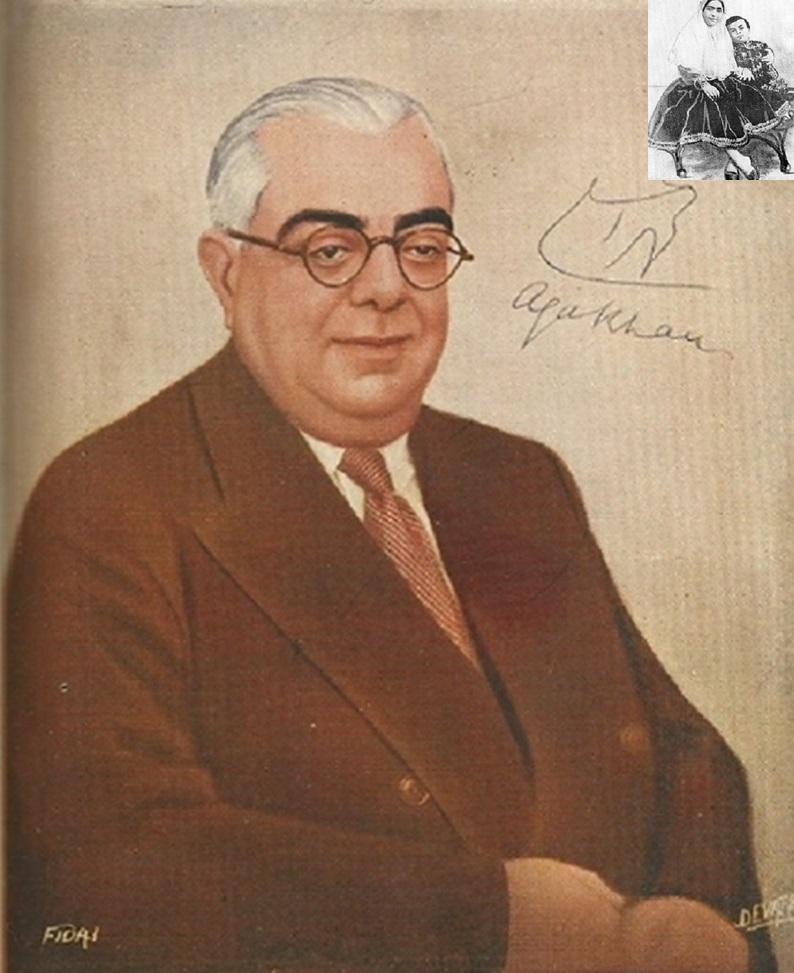

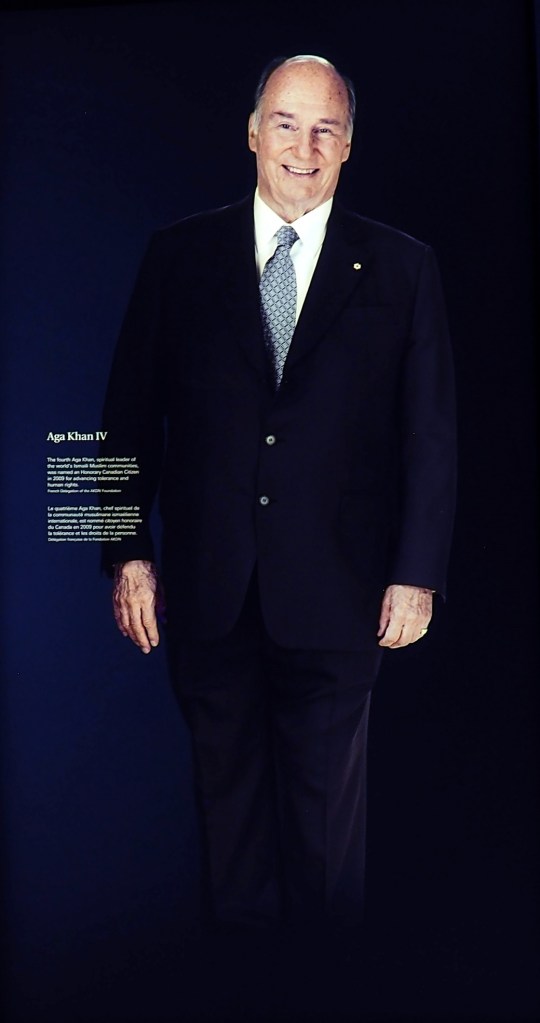

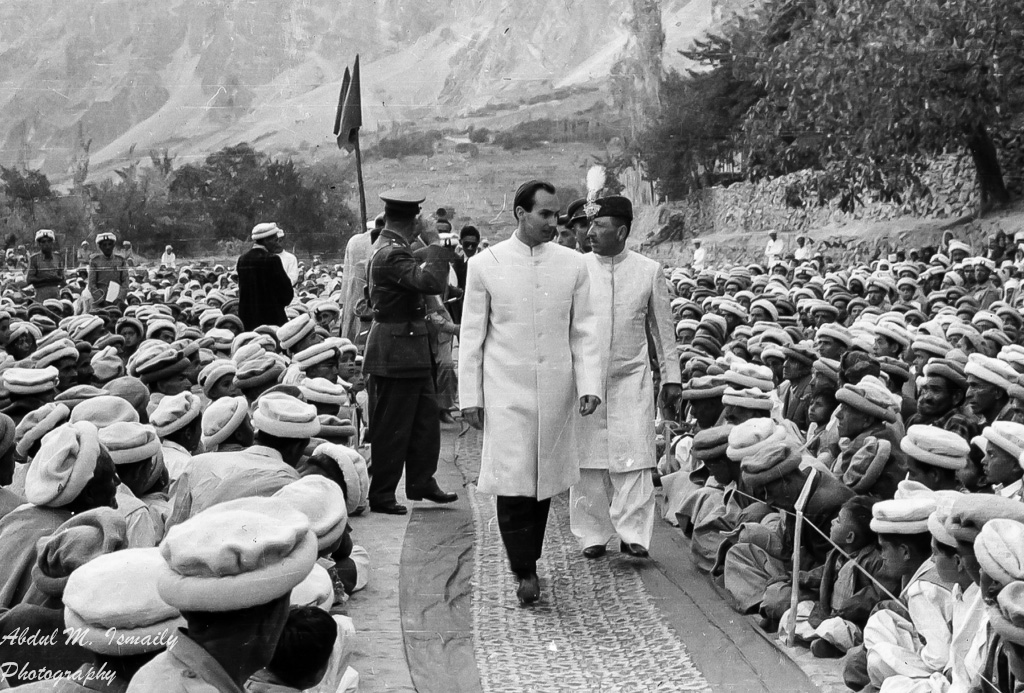







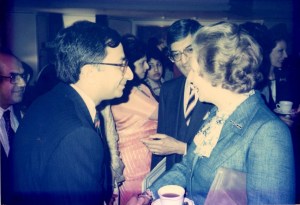
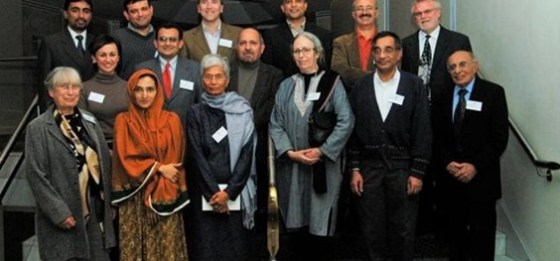
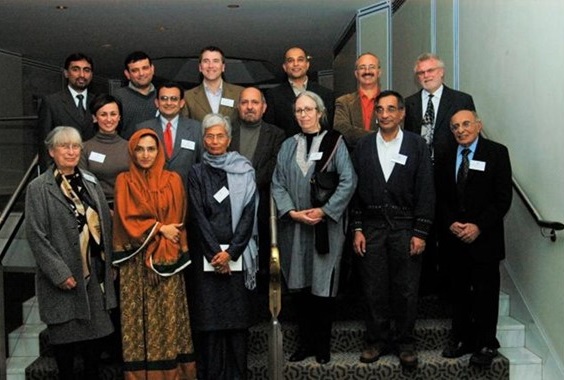
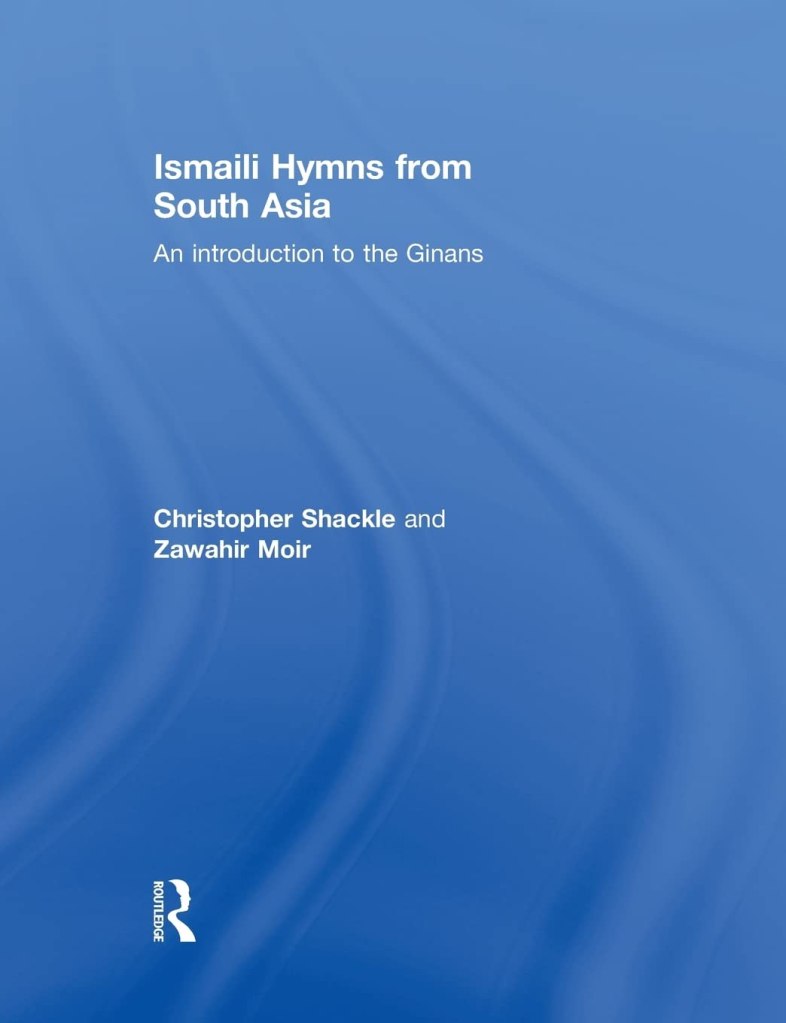
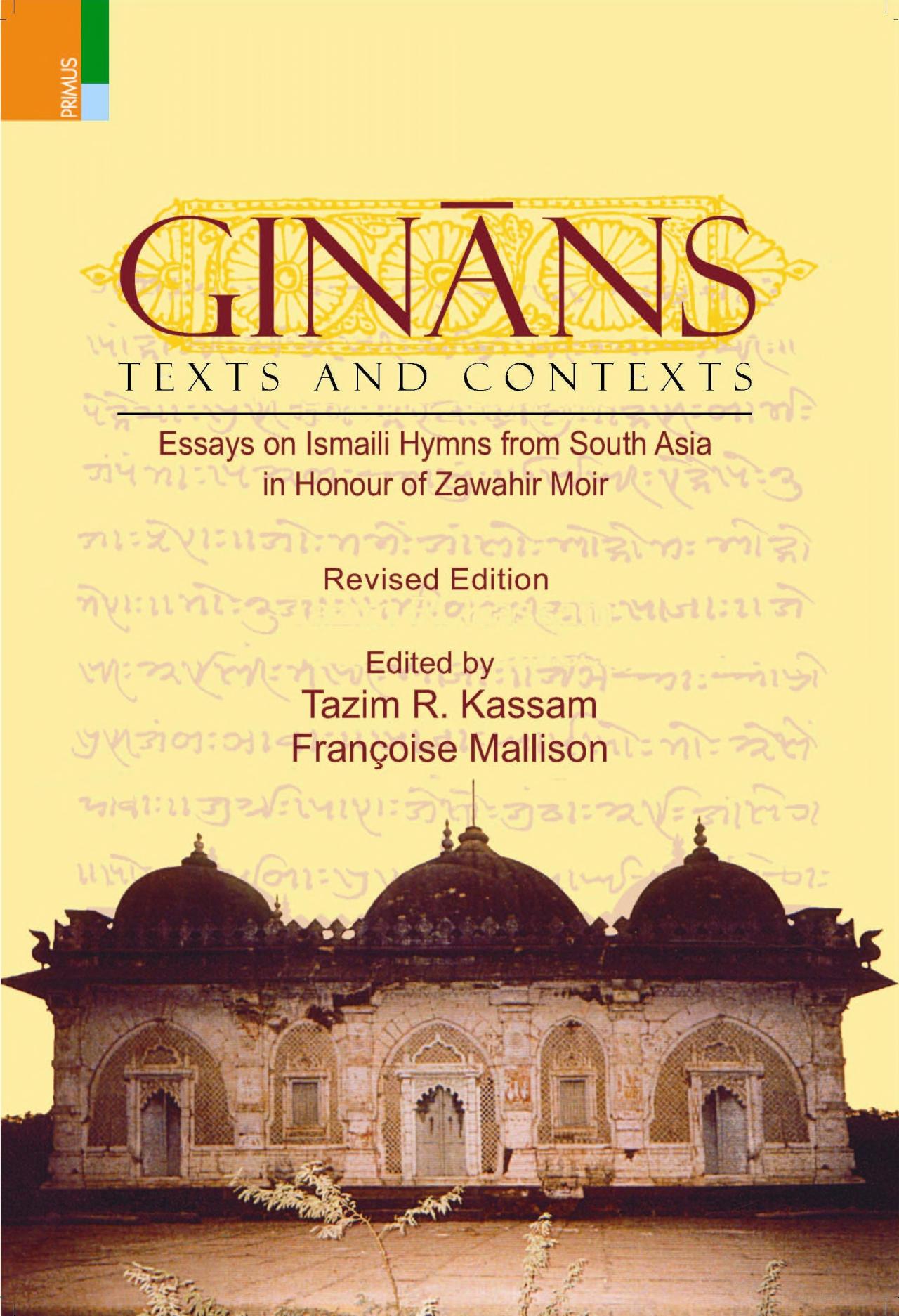
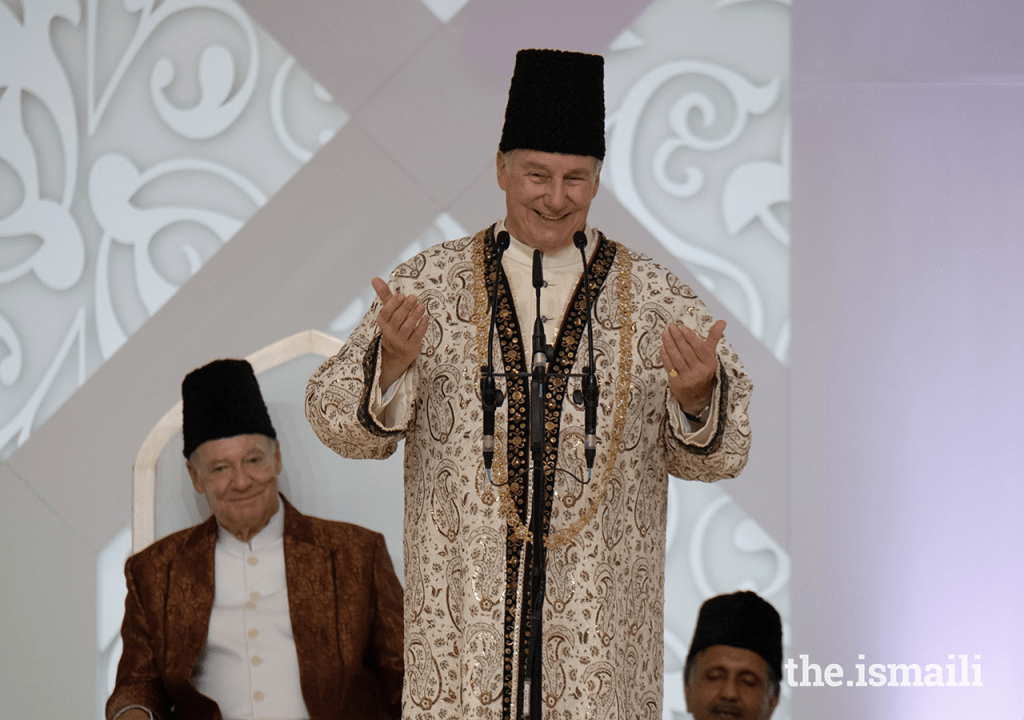


 Simerg - Insights from Around the World