
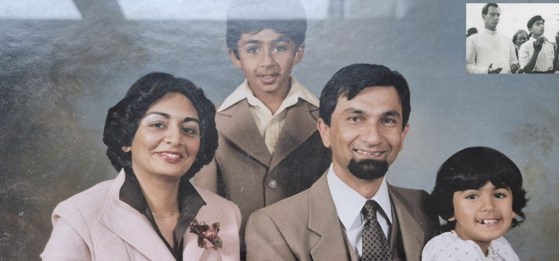
Inna lillahi wa inna ilayhi raji’un
“Surely we belong to God, and to Him we return” — Holy Qur’an, 2:156
“Life is a great and noble calling, not a mean and grovelling thing to be shuffled through as best as we can, but a lofty and exalted destiny.” — Mawlana Sultan Mahomed Shah, His Highness the Aga Khan III (1877-1957), 48th Ismaili Imam.
***
A TRIBUTE TO AHAMED ISMAIL
(1942 – 2025)
Prepared by MALIK MERCHANT
(The family of AHAMED ISMAIL and FAROUK VERJEE contributed to the tribute)
It is with deep sadness that we announce the passing of Ahamed Ismail of Vancouver, Canada, on December 5, 2025, at age 83. He is survived by his wife, Nasim; his son, Aly, and his wife, Sarah; his daughter, Feyzi, and his grandchildren, Adam, Alysa, and Latifa.
Ahamed was born on March 8, 1942, and grew up in Musoma, Tanzania. In 1956, he moved to Dar es Salaam for further studies. A defining moment during this period came when his religious education teacher, Karim Master, selected him to recite Qur’anic verses before Mawlana Shah Karim during the Imam’s second visit to Dar es Salaam in 1957, the first being for his ceremonial installation (Takht-nishini).

This event was a profoundly meaningful and happy moment in Ahamed’s life. When he shared his inspiring story with the editor, Malik Merchant, during their meeting in Vancouver, it left a lasting memory on him. Malik’s rich memory of Ahamed is that of a devout murid of the Imam-of-the-Time, demonstrating purity of heart and thought, and being very humble and sincere.
Upon completing his studies, Ahamed returned to Musoma, where he pursued a career in banking. He was then promoted and transferred to Dar es Salaam, where he married Nasim in 1970 in the presence of Mawlana Shah Karim.
In June 1972, Ahamed moved with his wife to Vancouver, where the Ismaili population was only 50 people at the time. Immigrants faced many challenges finding suitable jobs, but with his background in banking and a sound secondary education, Ahamed was able to secure a job with CIBC within a month and progressed in the banking industry to become the branch manager of Van City’s main branch, the largest credit union in Vancouver, where one of his roles was to approve mortgages. Highly regarded by his community, he was sought out for advice on financial and mortgage matters.

Seeing the potential of Ahamed as a highly motivated and talented individual who could serve the Ismaili community well in an administrative capacity, the newly appointed President of the Aga Khan Council for Canada, Farouk Verjee, and the Hon. Secretary, Bashir Jaffer, enlisted Ahamed into the Council for Canada, which at the time was headquartered in Vancouver. Ahamed did excellent work in his position under the Council’s inspiring leadership. Unassuming in his role, Ahamed played a vital role in the construction and opening phases of the Ismaili Centre in Burnaby. His dedication and efforts were instrumental in preparing for the momentous historic opening ceremony on August 23, 1985, which was graced by Prime Minister Brian Mulroney and Mawlana Shah Karim. The same evening, Mawlana Shah Karim declared to the delight of the Jamath of some 20,000 at BC Place that it would henceforth be the Darkhana — the chief among all Jamatkhanas — of Canada.
Story continues below
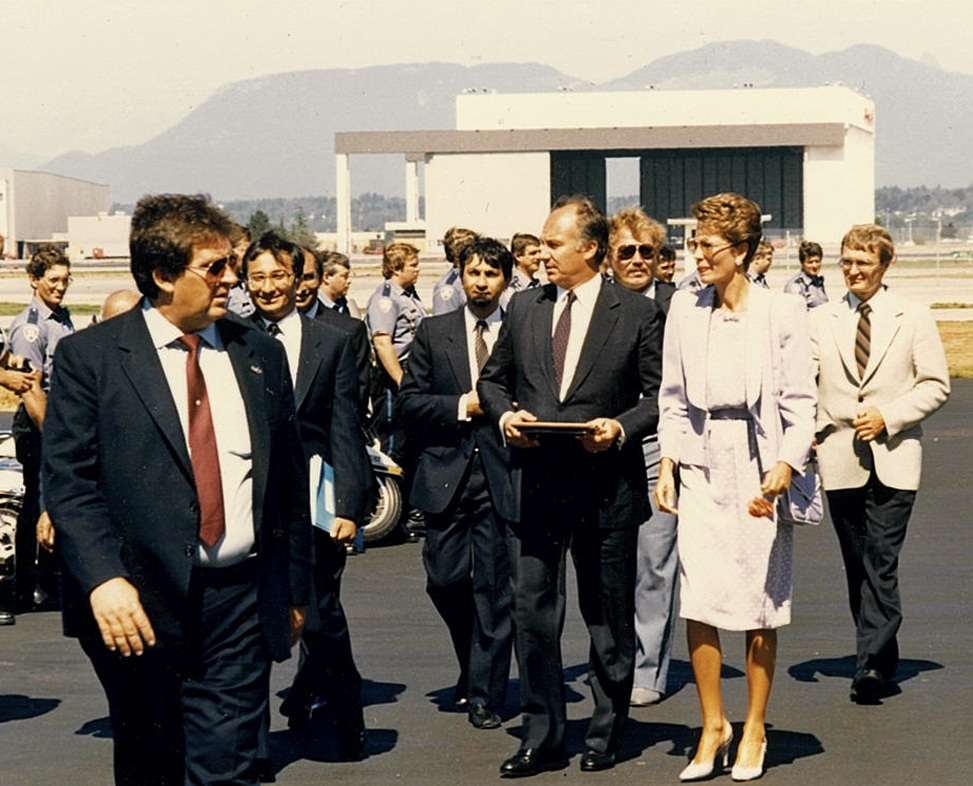
When Mawlana Shah Karim was departing Vancouver, President Farouk Verjee humbly requested that Mawlana Shah Karim formally appoint Ahamed as CEO of the Aga Khan National Council, highlighting the strategic importance of the role. Mawlana Shah Karim immediately agreed, making Ahamed the first CEO of the Aga Khan National Council of Canada, a milestone for the Ismaili institution.
At the end of Verjee’s term as Aga Khan Council President, Ahamed and Bashir Jaffer accompanied him to his final and most significant meeting at Aiglemont, France, with Mawlana Shah Karim, reflecting on the meaningfulness of their leadership and service. As Verjee notes, “We were very privileged to serve the House of Hazrat Ali during the early years of our settlement in Canada.”
Story continues below

In May 1987, Mawlana Shah Karim made the significant decision to relocate the Aga Khan National Council’s headquarters to Toronto, marking a substantial shift in its history. A few months later, in August 1987, Ahamed moved there with his family. He worked tirelessly, sincerely, and with dedication. Still, his term with the Council ended in a major disappointment for him and his family, who had uprooted their lives in Vancouver to relocate to Toronto. He then joined Revenue Canada (now known as the Canada Revenue Agency or CRA) and, with his wife, became an Investment Executive at ScotiaMcLeod and an associate at First Associates.
In 2005, while still in Toronto, Ahamed was diagnosed with Parkinson’s, which led him to leave his job. His wife also left her position, and they began working as travel agents from home at a much slower pace due to his illness.
In 2011, Ahamed moved back to Vancouver with his wife to be with his son, Aly, and his first grandchild, Adam. His life was deeply rooted in family, and he cherished these moments, spending his last 14 years in peace and happiness, surrounded by the love of his family and friends. He managed Parkinson’s well and, with strength and grace, inspired everyone around him.
However, his health took a turn for the worse. On November 28, 2025, he experienced some severe internal bleeding, which damaged his intestines, and he left this world a week later, on December 5. The news of his passing saddened all those who knew him and worked with him. Abdul Rahemtulla, the Chair of the Edmonton Ismaili Administrative Committee in the 1980s, described Ahamed as a kind, calm, and intelligent gentleman, a good listener, and someone with whom he had the pleasure of working.
The Ismaili community has lost a giant of a leader, a pure-hearted, sincere, and humble individual whose qualities of compassion and humility left a lasting impression. His funeral at the Burnaby Lake Jamatkhana on December 11, attended by hundreds of community members and friends, and his burial at Victory Memorial Cemetery in White Rock, reflect the community’s respect and gratitude for his life.
We pray that Ahamed Ismail’s soul may rest in eternal peace and that his family continues to find strength and courage to face the significant loss of their beloved husband, father and grandfather. Ameen.
Date posted: December 26, 2025.
~~~~~~~~~~
We invite our readers to express condolences and tributes to Ahamed Ismail. Please click LEAVE A COMMENT.




















 Simerg - Insights from Around the World