Caricatures, Killings in France, Canadian PM Trudeau Pleads for Careful Use of Free Speech, and the Aga Khan’s 2006 Response to the Original Publication of the Danish Cartoons

“I am suggesting that freedom of expression is an incomplete value unless it is used honorably, and that the obligations of citizenship in any society should include a commitment to informed and responsible expression.” His Highness the Aga Khan, February 2006

We owe it to ourselves to act with respect for others and to seek not to arbitrarily or unnecessarily injure those with whom we are sharing a society and a planet…..In a pluralist, diverse and respectful society like ours, we owe it to ourselves to be aware of the impact of our words, of our actions on others, particularly these communities and populations who still experience a great deal of discrimination” — Prime Minister Justin Trudeau, October 30, 2020 in response to a question from a journalist

Prepared and compiled by MALIK MERCHANT
Publisher/Editor SimergBarakah and Simergphotos

Two weeks ago, French teacher Samuel Paty was beheaded after showing his class caricatures of the Prophet Muhammad in a civics class about freedom of expression. The cartoons had first appeared in the Danish newspaper Jyllands-Posten in 2005, and were reproduced in the French magazine Charlie Hebdo, which then led to killing of several of its journalists some years ago. The newspaper’s many critics worldwide said that the editorial staff was attacking Islam itself.

In response to the killing of the teacher recently, French President Emmanuel Macron defended the cartoons depicting Prophet Muhammad in the name of free speech, and said France would not “give up cartoons”, pledging that Islamists “will never have” his country’s future. This sparked protests and boycotts in a number of Muslim countries. Pakistani Prime Minister Imran Khan accused French President Emmanuel Macron of “attacking Islam” by defending the publication of the caricatures. 
 
“Sadly, President Macron has chosen to deliberately provoke Muslims, including his own citizens, through encouraging the display of blasphemous cartoons targeting Islam & our Prophet PBUH (peace be upon him),” Khan said in a series of tweets. “It is unfortunate that he has chosen to encourage Islamophobia by attacking Islam rather than the terrorists who carry out violence, be it Muslims, White Supremacists or Nazi ideologists,” Khan wrote.

This week, three more people were in killed near a a church in Nice, in southern France, by a young Tunisian man. President Macron’s defiant statements may have triggered the brutal stabbings.

Canada’s parliament observed a moment of silence on Thursday, October 29. As he had done the day before with the leaders of the European Union, Prime Minister Trudeau condemned the “awful and appalling” extremist attacks in France.

Justin Trudeau with wife Sophie Grégoire-Trudeau just as results from polling stations across the country confirmed a Liberal majority government in the Federal election held on October 19, 2015 . Photo: © Jean-Marc Carisse.

However, in response to a newspaper’s question a day later, while defending free speech, Prime Minister Trudeau distanced himself from the position of French President Macron and pleaded for a careful use of free speech, He stated that freedom of speech was “not without limits” and it should not “arbitrarily and needlessly hurt” certain communities.

“We owe it to ourselves to act with respect for others and to seek not to arbitrarily or unnecessarily injure those with whom we are sharing a society and a planet. We do not have the right for example to shout fire in a movie theatre crowded with people, there are always limits,” the Prime Minister argued.

“In a pluralist, diverse and respectful society like ours, we owe it to ourselves to be aware of the impact of our words, of our actions on others, particularly these communities and populations who still experience a great deal of discrimination,” he said.

The Aga Khan on “The Great Conversation” of Our Times — Being Unafraid of Controversy but Also Being Sensitive to Others
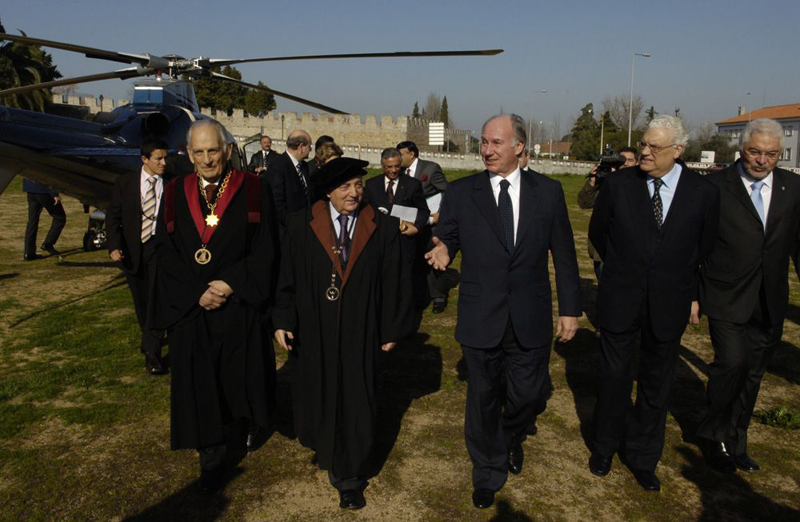
His Highness the Aga Khan arrives at the University of Évora , Portugal and is greeted by Professor Adriano Moreira, Manuel Ferreira Patricio, Rector of the University, Portuguese Foreign Minister, Freitas do Amaral and José Ernesto Oliveira, Mayor of the city of Évora. Photo: AKDN/Gary Otte.

Mawlana Hazar Imam, His Highness the Aga Khan, touched on the controversy soon after the cartoons first appeared in the Danish journal during a speech that he delivered at the University of Evora in Portugal. His remarks are as follows:

“An important goal of quality education is to equip each generation to participate effectively in what has been called “the great conversation” of our times. This means, on one hand, being unafraid of controversy. But it also means being sensitive to the values and outlooks of others.

“This brings me back to the current headlines. For I must believe that it is ignorance which explains the publishing of those caricatures which have brought such pain to Islamic peoples. I note that the Danish journal where the controversy originated acknowledged, in a recent letter of apology, that it had never realized the sensitivities involved.

“In this light, perhaps, the controversy can be described less as a clash of civilizations and more as a clash of ignorance. The alternative explanation would be that the offense was intended — in which case we would be confronted with evil of a different sort. But even to attribute the problem to ignorance is in no way to minimize its importance. In a pluralistic world, the consequences of ignorance can be profoundly damaging.

“Perhaps, too, it is ignorance which has allowed so many participants in this discussion to confuse liberty with license — implying that the sheer absence of restraint on human impulse can constitute a sufficient moral framework. This is not to say that governments should censor offensive speech. Nor does the answer lie in violent words or violent actions. But I am suggesting that freedom of expression is an incomplete value unless it is used honorably, and that the obligations of citizenship in any society should include a commitment to informed and responsible expression.

“If we can commit ourselves, on all sides, to that objective, then the current crisis could become an educational opportunity—an occasion for enhanced awareness and broadened perspectives.

“Ignorance, arrogance, insensitivity—these attitudes rank high among the great public enemies of our time. And the educational enterprise, at its best, can be an effective antidote to all of them.” — Read Full Speech by His Highness the Aga Khan, Evora University Symposium, Lisbon, Portugal, February 12, 2006. We also invite you to read Gems from the 49th Ismaili Imam’s 21st century speeches.

Date posted: October 30, 2020.

__________________________________

Before departing this website please take a moment to review Simerg’s Table of Contents for links to hundreds of thought provoking pieces on a vast array of subjects including faith and culture, history and philosophy, and arts and letters to name a few.

We welcome feedback from our readers. Please complete the LEAVE A REPLY form below or, if you don’t see the box, please click Leave a comment. Your letter may be edited for length and brevity, and is subject to moderation.

Idd-e-Milad: A Documentary on Prophet Muhammad and Islam’s Rise, the Aga Khan on Allah’s Last Messenger, and “I Wish I’d Been There” by Astrophysicist Farzana Meru

"Muhammad" written in Thuluth script,  a work by Morgan Phoenix, CC by SA 3.0.
“Muhammad” written in Thuluth script, a work by Morgan Phoenix, CC by SA 3.0.

Prepared and compiled by MALIK MERCHANT
Editor/Publisher SimergBarakah and Simergphotos

The Milad or Mawlid of the Prophet Muhammad (S.A.S.) falls on the 12th day of the Islamic month of Rabi’ al-awwal. In 2020, Muslims in different countries around the world will be observing the birth anniversary between October 28-30. This post has a number of pieces on the Prophet that will be of interest to everyone.

We invite our readers to view the first episode of a 3-part series that covers the Prophet’s birth, the first revelation and early writing of the Qur’an, the creation of the first mosque, the persecution suffered by the first Muslims and the major battles fought by the Prophet and his followers to establish the new religion. Narrated by Academy Award-winning actor Ben Kingsley, and directed and produced by Robert Gardner, the captivating episode which first aired on PBS in 2001, has been highly recommended over the years for its educational value.

Watch video.

________________________

Readers who have just seen the documentary will be able to relate numerous segments in it to the following excerpt from the Presidential address made by Mawlana Hazar Imam, His Highness the Aga Khan, at the Seerat Conference in Pakistan in 1976. They will next appreciate Ismaili astrophysicist Farzana Meru’s reflection on a moment in Ismaili history that she would have loved to experience.

The Prophet Muhammad

By MAWLANA HAZAR IMAM, HIS HIGHNESS THE AGA KHAN

Mawlana Hazar Imam

“The Holy Prophet’s life gives us every fundamental guideline that we require to resolve the problem as successfully as our human minds and intellects can visualise. His example of integrity, loyalty, honesty, generosity both of means and of time, his solicitude for the poor, the weak and the sick, his steadfastness in friendship, his humility in success, his magnanimity in victory, his simplicity, his wisdom in conceiving new solutions for problems which could not be solved by traditional methods, without affecting the fundamental concepts of Islam, surely all these are foundations which, correctly understood and sincerely interpreted, must enable us to conceive what should be a truly modern and dynamic Islamic Society in the years ahead.” — Read full speech and listen to audio HERE.

________________________

A Moment in Ismaili history I Would Have Loved to Experience: The Time of Prophet Muhammad

By FARZANA MERU

I am struggling to narrow down all the moments in Ismaili history that I would love to have experienced. As I journey through the modern day trying to understand the past, I often ponder what it would be like to rewind time and experience a number of occasions in Ismaili history. But if I could only choose one of the vast number of spectacular incidents, I would go back and experience the beginning of Ismaili history, the key events that sparked the origin of our religion, the dawn of a new era: the time of our Prophet Muhammed (S.A.S.) in seventh century Arabia.

I would love to have experienced first-hand the living conditions and lifestyles of the people in those times. I would want to understand the culture, the tribal systems, the harsh desert conditions that people had to move through on camels. I would want to see how the Prophet himself dealt with the pressures of leading a community which started off very small but grew rapidly and flourished. I want to understand how people transitioned from the way of life in pre-Islamic Arabia into the new times. As a fly on the wall, I could watch the seventh century Arabian world go by, in awe. I would want to experience “where it all began”, an era that would mark the beginning of Ismaili history.

Astrophysicist Farzana Meru

The piece you just read was contributed by astrophysicist Farzana Meru for our first and original series I Wish I’d Been There series some ten years ago. On October 26, 2020, Dr. Meru and NASA’s aerospace engineer, Dr. Farah Alibay, were on the air on Ismaili.TV and reflected on their respective career paths as well as offered some outstanding words of wisdom to Ismaili youth during their schooling years, and for them to be passionate about their chosen area of interest, whatever that may be. Please watch Ismaili.TV’s excellent program by clicking HERE or below.

Date posted: October 27, 2020.
Last updated: October 29, 2020.

________________________

Before departing this website please take a moment to review Simerg’s Table of Contents for links to hundreds of thought provoking pieces on a vast array of subjects including faith and culture, history and philosophy, and arts and letters to name a few.

We welcome feedback from our readers. Please complete the LEAVE A REPLY form below or, if you don’t see the box, please click Leave a comment. Your letter may be edited for length and brevity, and is subject to moderation.

Traditions of the Prophet Muhammad on the Pumpkin, as the Aga Khan Museum Uses it to Decorate its Courtyard

By MALIK MERCHANT
Editor/Publisher SimergBarakah and Simergphotos

The Aga Khan Museum is one of the few museums in Toronto that has been able to implement Covid-19 protocols and make the museum safe for its visitors. The visiting times were revised this past week, and it is now open from Thursdays through Sundays from 10 a.m. until 5:30 p.m.

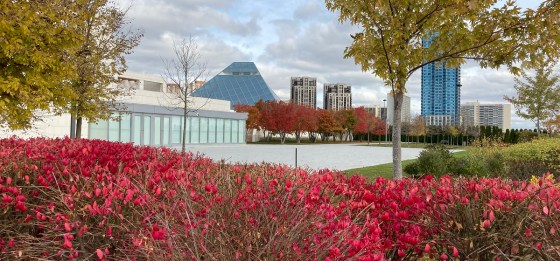
In recent weeks, Simerg and its sister websites have produced a superb collection of photos of the Museum, the Ismaili Centre and the Aga Khan Park, which divides the two magnificent buildings. Readers have been uplifted to see the photos of the 3 magnificent projects, built by Mawlana Hazar Imam, His Highness the Aga Khan, under the full moon, crescent moon, as well as at the peak of the autumn foliage season.

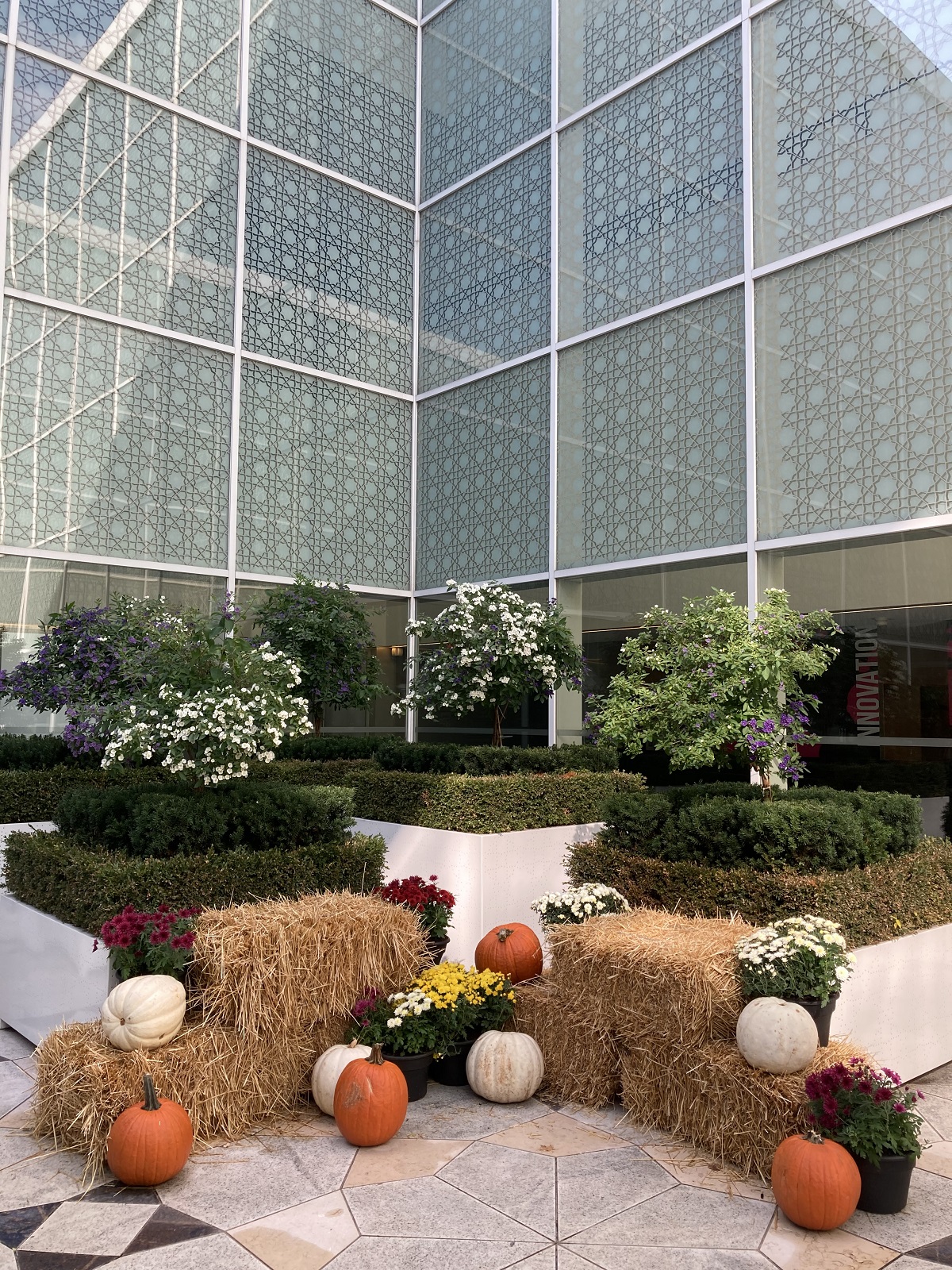
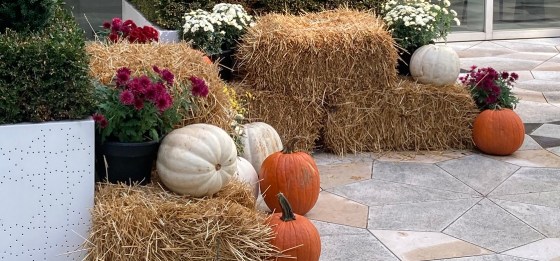
Aga Khan Museum Courtyard Pumpkin Decoration Simerg Malik Merchant
Aga Khan Museum Toronto Courtyard decorated with pumpkins. Photo: Malik Merchant / Simerg.

On a fine day, there is no better place in the museum than to be sitting in its open air courtyard, while enjoying a delicious cup of latte.

October 23, 2020 was one such day. It actually felt like summer, with blue skies and very warm temperatures. The magnificent courtyard was a perfect place for my morning coffee as well as a late breakfast — an egg salad croissant, slightly grilled. I was thrilled to enter the courtyard, and noticed pumpkin decorations in one corner of the courtyard. Of course, pumpkins are to be seen everywhere at this time of the year. It is one of the most popular desserts served during Thanksgiving holidays in Canada (October 12, 2020) and the USA (November 26, 2020), and I wondered how the food was viewed in Islam. My little bit of research led me to numerous traditions of the Prophet Muhammad (S.A.S.) on the pumpkin, and I am delighted to post adaptations of some that I read.

“I saw the Prophet being served with soup and containing gourd (pumpkin or squash) and cured meat, and I saw him picking and eating the pieces of gourd.” — Bukhari Volume 7, Book 65, Number 348.

It is related that a sailor once invited Prophet Muhammad to eat some food that he had prepared. Anas bin Malik who accompanied the Prophet, noted that the Prophet was served barley bread and a soup with pumpkin in it. The Prophet keenly ate the pumpkin around the dish, and from that day Anas made it his favourite food. Traditions also note that whenever a a dish of bread, meat and broth was presented to the Prophet and it contained pumpkin, the Prophet would pick up the pumpkin because he really liked it, and made the heart strong. Other Muslim traditions note that the pumpkin increases brain function and brain strength.

Ibn Ridwan, in a medical treatise written during the Fatimid period, recommended the pumpkin as a diet for healthy living along with several other fruits and vegetables such as celery, carrots, lentils and cucumbers.

Interestingly, there is also a general consensus among scholars about the Arabic word yaqteen that is mentioned in the Holy Qur’an. They say that it refers to the pumpkin — a food that nourished and helped heal Prophet Yunus (A.S.), after he was cast into the wilderness while he was sick (see Qur’an, 37:144-146, at Corpus Quran English Translation).

The website healthline mentions that pumpkin is rich in vitamins, minerals and antioxidants, and is incredibly healthy. Moreover its low calorie content makes it a weight-loss-friendly food. It goes on to add that “its nutrients and antioxidants may boost your immune system, protect your eyesight, lower your risk of certain cancers and promote heart and skin health.”

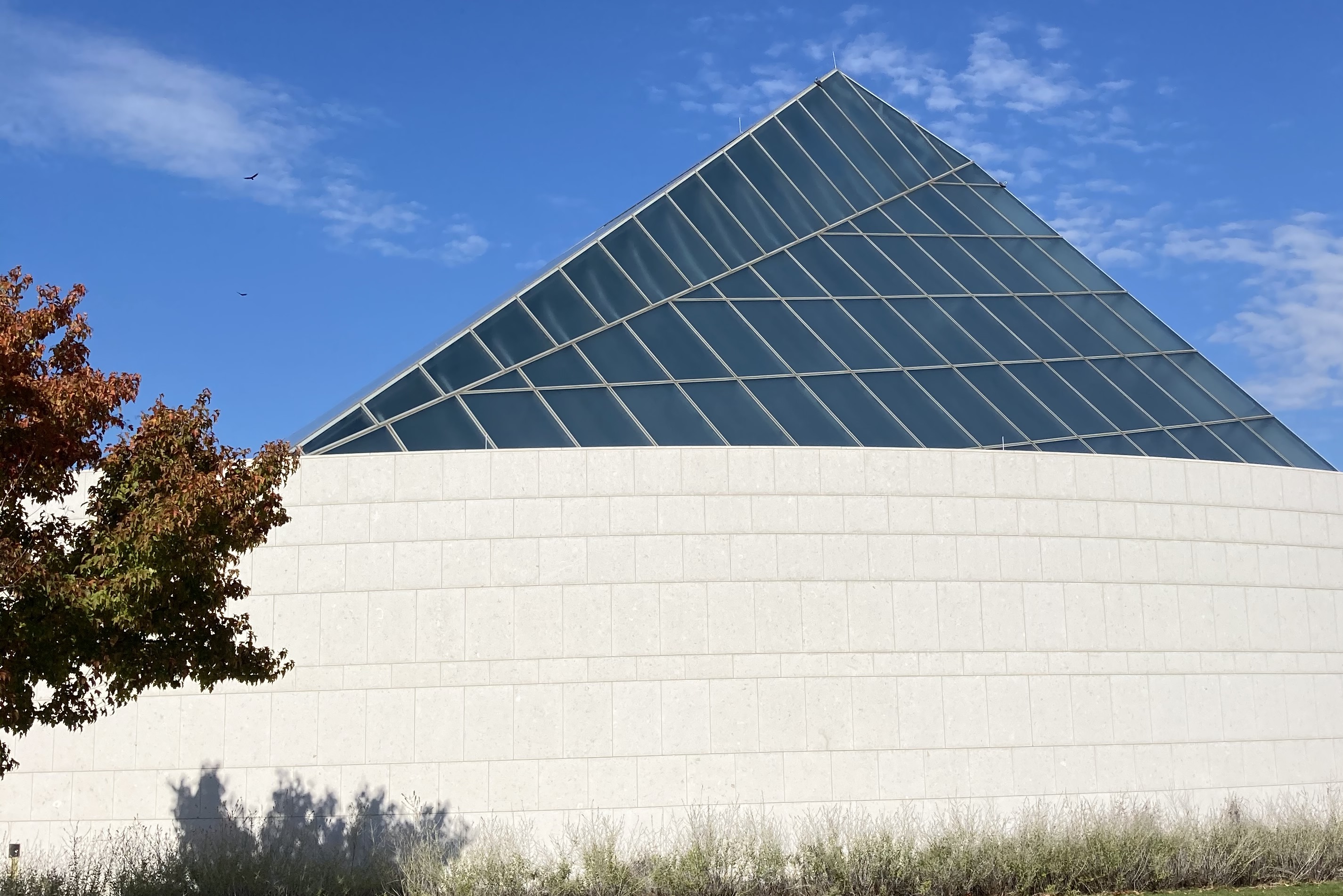
After about an hour at the museum’s courtyard, I could not return home without walking around the Aga Khan Park. As I looked up in the blue sky above the Ismaili Jamatkhana dome, I saw two birds beautifully gliding at the dome’s left. I was left wondering: Were they turkey vultures, eagles or hawks? Alas, I wasn’t carrying a powerful lens to get a better and sharper close-up.

Please click on photo for enlargement

Headquarters Jamatkhana Toronto at the Ismaili Centre, with birds overhead.
Two birds seen gliding at left of the dome of the Toronto Headquarters Ismaili Jamatkhana, part of the Ismaili Centre. Click on image for enlargement. Photo: Malik Merchant / Simerg.

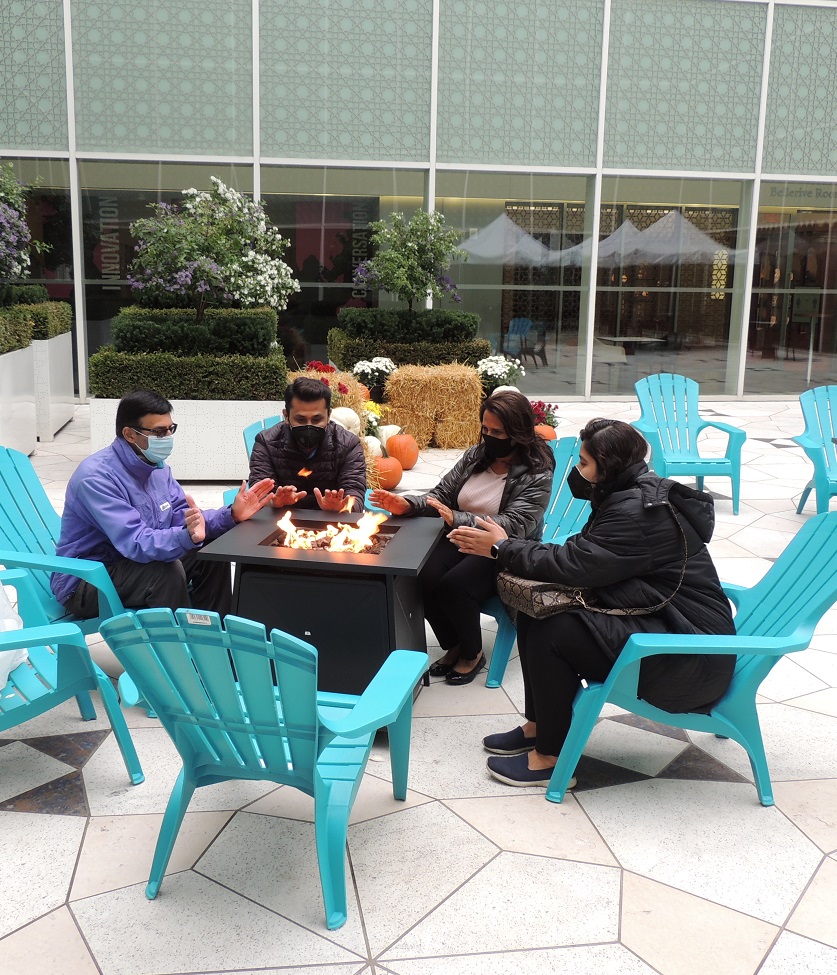
Returning to the museum’s courtyard on Sunday October 25, offered a much different kind of experience, as the temperature had dropped from Friday’s 22°C to only 8°C. But the museum had that in mind too! Blue lounge blue chairs had been placed in the courtyard, with portable fireplaces where visitors mingled with their family members over light refreshments.

Aga Khan Museum Courtyard
Visitors keep warm at a portable fireplace at the Aga Khan Museum’s courtyard as temperatures take a dip on Sunday, October 25. 2020. Photo: Malik Merchant / Simerg.

The overall experience at the three Aga Khan projects during recent weeks has been overwhelming.

As we all seek good health, I dedicate this post to the humble pumpkin which supports heart and eye health, and boosts immunity, among other benefits.

And, without the pumpkin’s presence in the museum’s courtyard, it may have never occurred to me to search out the traditions of the Prophet Muhammad (S.A.S.) that have showed that he really liked the pumpkin. For 2020, Muslims around the world will celebrate his birth anniversary — the Milad un Nabi — between October 28-30. It is an appropriate time to learn more about his inspiring life and leadership as well as his faith in God whom he served as the last messenger for 23 long and devoted years, bringing to Muslims the blessing of the Holy Qur’an.

Date posted: October 24, 2020.
Last updated: October 25, 2020 (new photo/information added)

_____________________

Before departing this website please take a moment to review Simerg’s Table of Contents for links to hundreds of thought provoking pieces on a vast array of subjects including faith and culture, history and philosophy, and arts and letters to name a few.

We welcome feedback from our readers. Please complete the LEAVE A REPLY form below or, if you don’t see the box, please click Leave a comment. Your letter may be edited for length and brevity, and is subject to moderation.
Mouth Watering Ismaili Owned Restaurants in Vancouver with an East African Touch

Introduced by MALIK MERCHANT
Editor/Publisher Simerg, Barakah and Simergphotos

Established as the news, lifestyle, and entertainment weekly in Vancouver for 50 years, the weekly Georgia Straight is an integral part of the active urban West Coast lifestyle with over 816,000 unduplicated readers/visitors print and website per week.

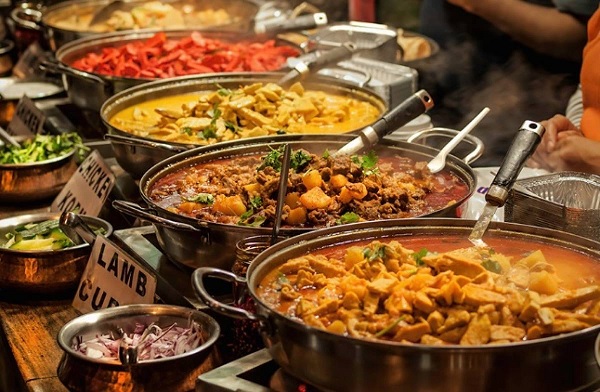
Recently, the paper published an overview of four Ismaili owned restaurants known for their distinct East African based Indian cuisines. The restaurants highlighted in the paper with corresponding website links are Ember Indian Kitchen, Jambo Grill, Simba’s Grill and Cayenne Bistro.

Missing in the Straight report are two restaurants that the editor of Simerg frequents whenever he visits Vancouver. These are the award winning Safari Snack House on Canada Way located near the Burnaby Lake Jamatkhana, known for its delicious black kebabs, and James Street Café & Grill, also on Canada Way, but closer to the Ismaili Centre Vancouver. Straight’s review can be read by clicking HERE or on the following image.

Please click on image for Straight.com article on Ismaili owned restaurants in Vancouver

We take this opportunity to invite owners of Ismaili restaurants in Canada and the USA specializing in South Asian, East African and Central Asian cuisine to write to us with a comprehensive 100-200 word overview of their restaurant, a picture of the restaurant as well as a photo of their most popular dish, along with a link to their website. Simerg will be most happy to provide a listing of their established eatery in a future piece. The description submitted should be accurate and complete, as any material that needs an extended amount of editorial changes will not be accepted for publication. Please write in confidence to Malik Merchant at Simerg@aol.com.

Date posted: October 22, 2020.

________________________

We invite our readers from around the world to submit feedback on their favourite Ismaili owned restaurants — in any part of the world! Please complete the submission form below or click on Leave a comment.

Before departing this website please take a moment to review Simerg’s Table of Contents for links to hundreds of thought provoking pieces on a vast array of subjects including faith and culture, history and philosophy, and arts and letters to name a few.

Aga Khan Park

Let Storms Beware

Karim H. Karim’s beautiful poem is followed by a brief note from the editor as well as some pictures that he set off to take at Toronto’s Aga Khan Park, shortly after he had been inspired by the poem.

 By KARIM H. KARIM

(Dedicated to all who are sad)

Sweetest are the songs
That we sing in sorrows;
Tears swell in our eyes
Even when joy overflows.

Naïve folk fear the thorns
Where flowers do flourish,
Fresh with hues of hope.

Dawn’s light is nearest
When sadness is darkest,
Sings the black night
In stars’ silent twinkle.

Embrace the aching pain,
Learn to laugh a little
And to comfort others.

Let storms beware
That we are lighting
The lamps of love.

Date posted: October 20, 2020.
Last updated: October 22, 2020.

__________________

(Based on Shankardas Shailendra’s (1923-1966) “Hain Sabse Madhur Wo Geet,” which evokes Percy Shelley’s (1792-1822) line “Our sweetest songs are those that tell of the saddest thought.”)

Karim H. Karim Carleton University
Karim H. Karim

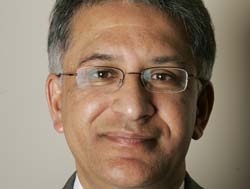
About the author: Karim H. Karim is the Director of the Carleton Centre for the Study of Islam and a Professor at Carleton University’s School of Journalism and Communication.

__________________________

Editor’s note: I was truly feeling sad earlier today (October 20), thinking about my daughter and my mother whom I haven’t visited for several months due to Covid-19. I was lonely, and also worried about my health in these uncertain times! My friend Karim H. Karim who is nearly 450 kms from me must have sensed that. I was waiting for another article from him altogether, not a piece dedicated for those who are sad. In my reply to his humble submission, I told him I would review it in a few days time! However, I decided to read it straight away, and his piece truly cheered me up. And in that moment of becoming a lot less sad, I gained some energy and headed to my favourite place! Yes, the Aga Khan Park, with two incredible buildings, the Ismaili Centre and the Aga Khan Museum around it — gracious gifts from Mawlana Hazar Imam, His Highness the Aga Khan.

Admittedly, I haven’t been to the Park for a number of weeks, passing by it only in my car. The photographs that I took during my visit to the Park, represent my joyous moments, that I owe to Karim’s beautiful rendition. As I walked to the park, I was reminded of Mawlana Hazar Imam’s quote where he says that if one has faith, one may be worried, one may at times feel sad but one will never be unhappy. How true! Enjoy the photos, which were inspired by the poem.

Note: The following photos — and more — can be viewed in larger format at Simerg’s special photo blog. Please click Bidding Farewell to Vibrant Autumn Colours at Aga Khan Park. If you haven’t visited the blog please click Simergphotos for an outstanding collection of photo essays!

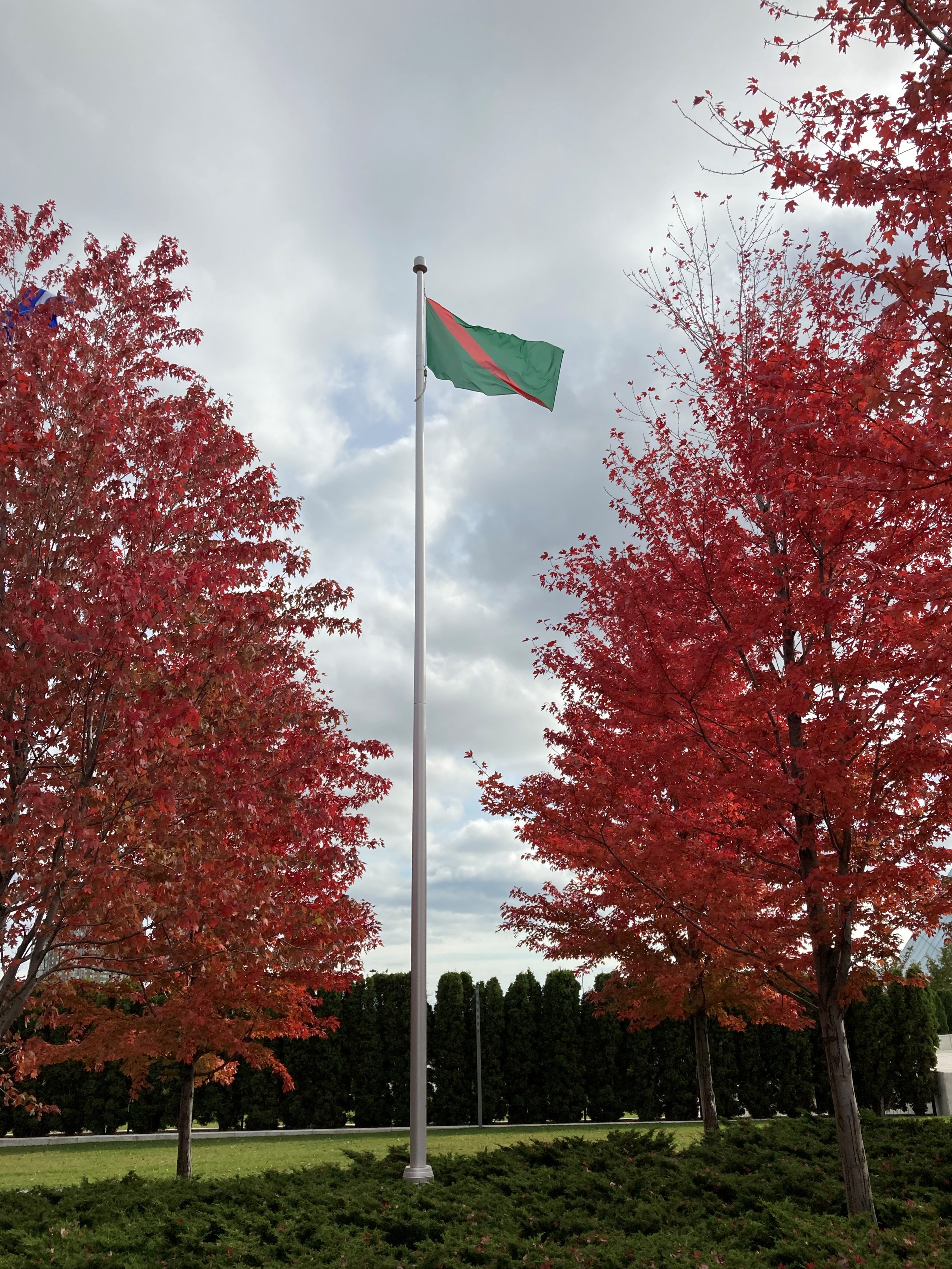
The Flag of the Ismaili Imamat
The flag of the Ismaili Imamat by maple trees at the peak of autumn colours. Photo: © Malik Merchant / Simerg.
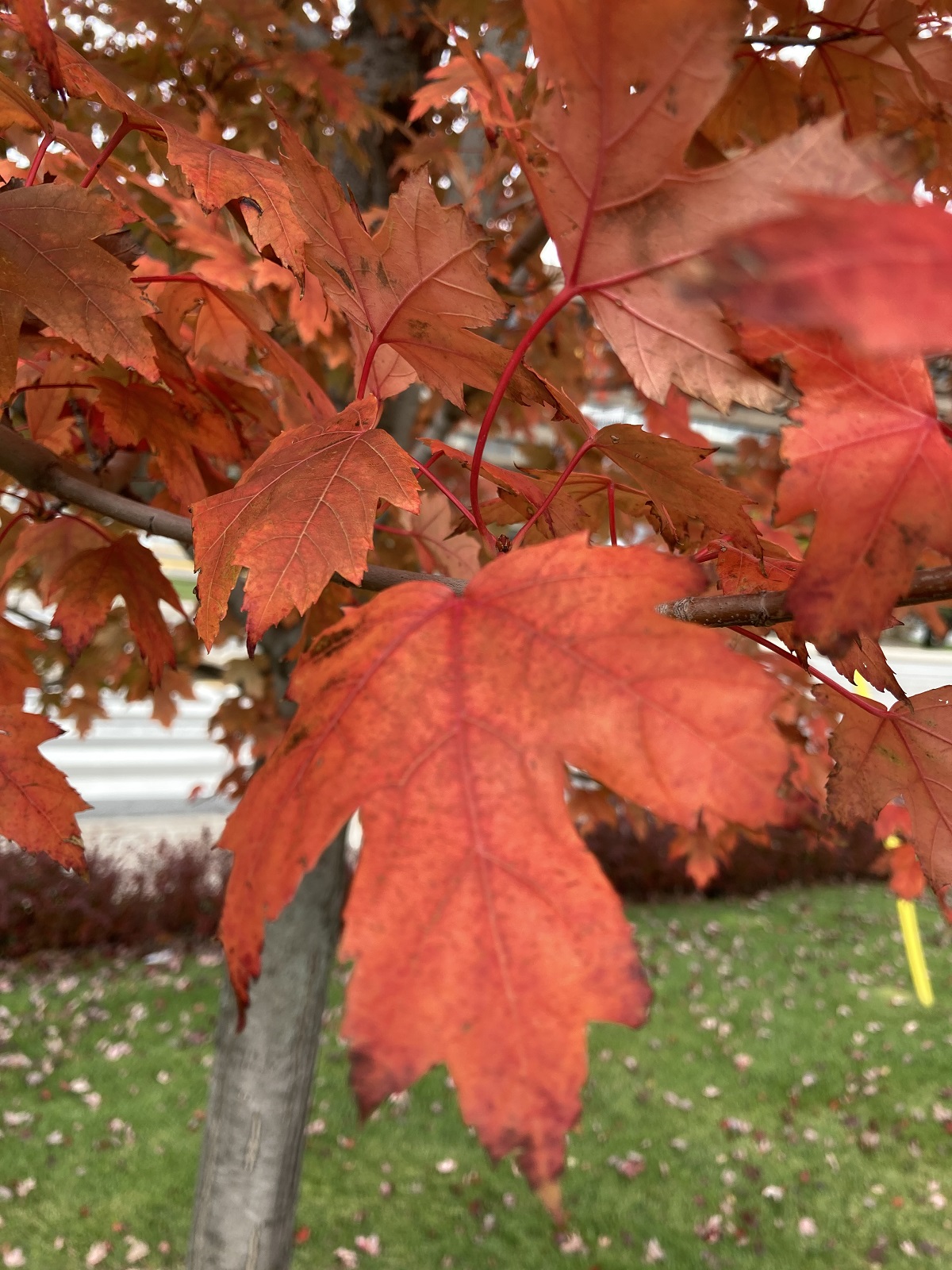
Close-up of vibrant orange autumn leaves on a tree, with a blurred background of grass and other foliage.
A close up of autumn colours on a maple tree at the Aga Khan Park. Photo: © Malik Merchant / Simerg.
Aga Khan Museum and Aga Khan Park
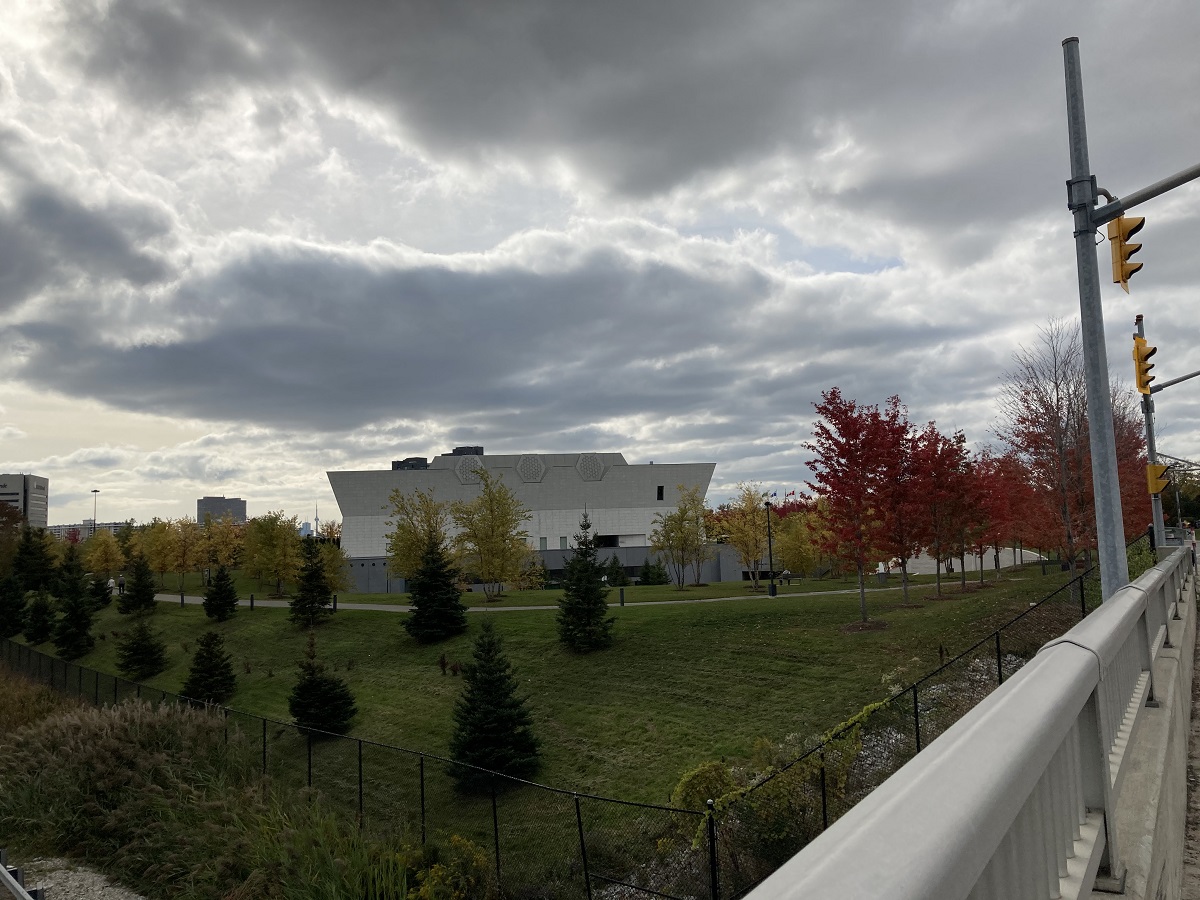
The Aga Khan Museum building as seen from the edge of the Aga Khan Park at the Wynford Drive bridge over the Don Valley Parkway. Photo: © Malik Merchant / Simerg.
Big Heech Aga Khan Museum
The famous Big Heech sculpture by the north end of the Aga Khan Museum, with maple trees in the background exhibiting their fall colours. Photo: © Malik Merchant / Simerg.
Aga Khan Park
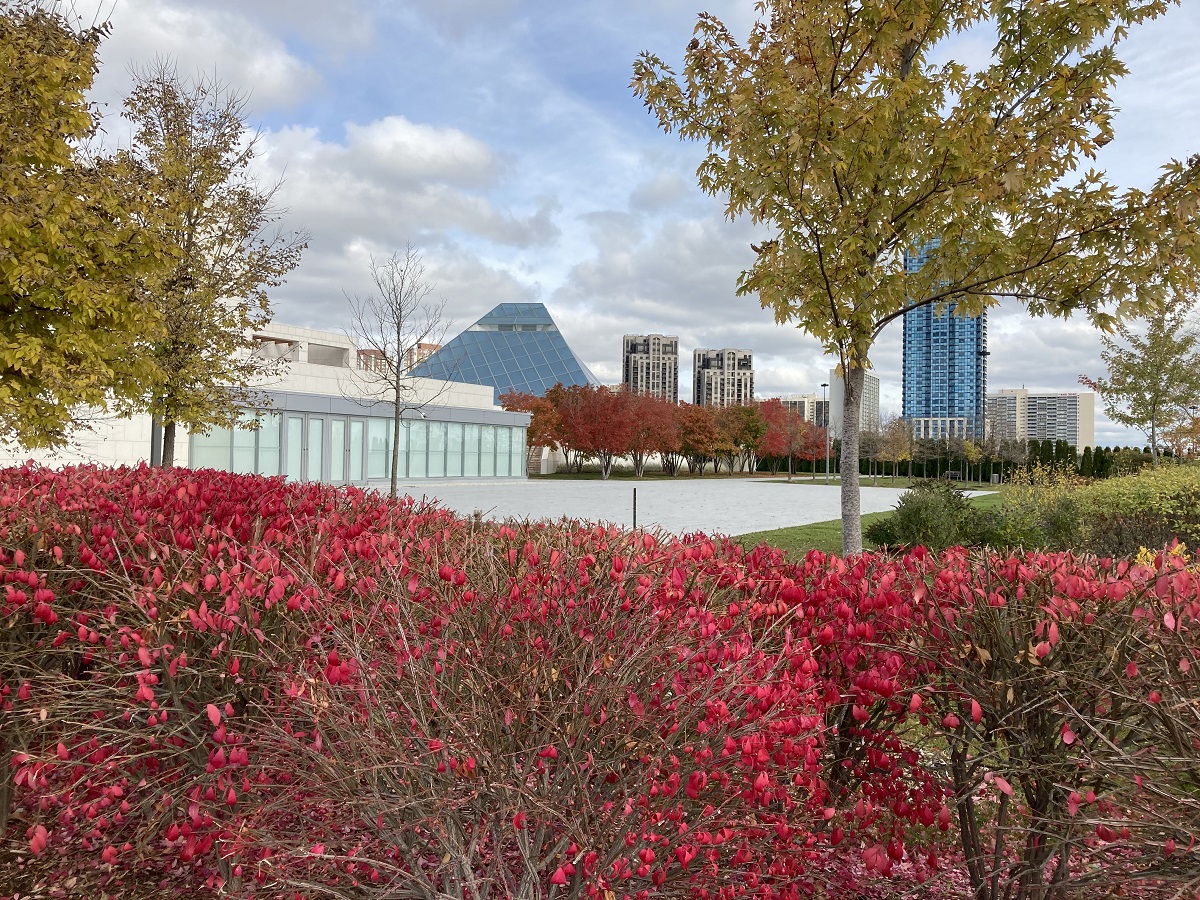
A gorgeous view of the dome of the Ismaili Jamatkhana, with rich autumn colours at the Aga Khan Park adding to the beauty of entire area. Photo: © Malik Merchant / Simerg.
Aga Khan Park Autumn Foliage Malik Merchant
Beautiful trees with rich autumn colours at the Aga Khan Park. To the left and not shown is the dome of the Ismaili Centre. See previous photo. Photo: © Malik Merchant / Simerg
Ismaili Jamatkhana Dome and Aga Khan Park
A close up of the Ismaili Jamatkhana dome with a maple tree rich in autumn colours in the foreground. Photo: © Malik Merchant / Simerg.
Evergreen Brick Works
A view of CN Tower from the Evergreen Brick Works located in the Don River Valley on 550 Bayview Avenue, Toronto, a 10 minute drive from the Aga Khan Park. Photo: © Malik Merchant / Simerg.
Red maples Aga Khan Park
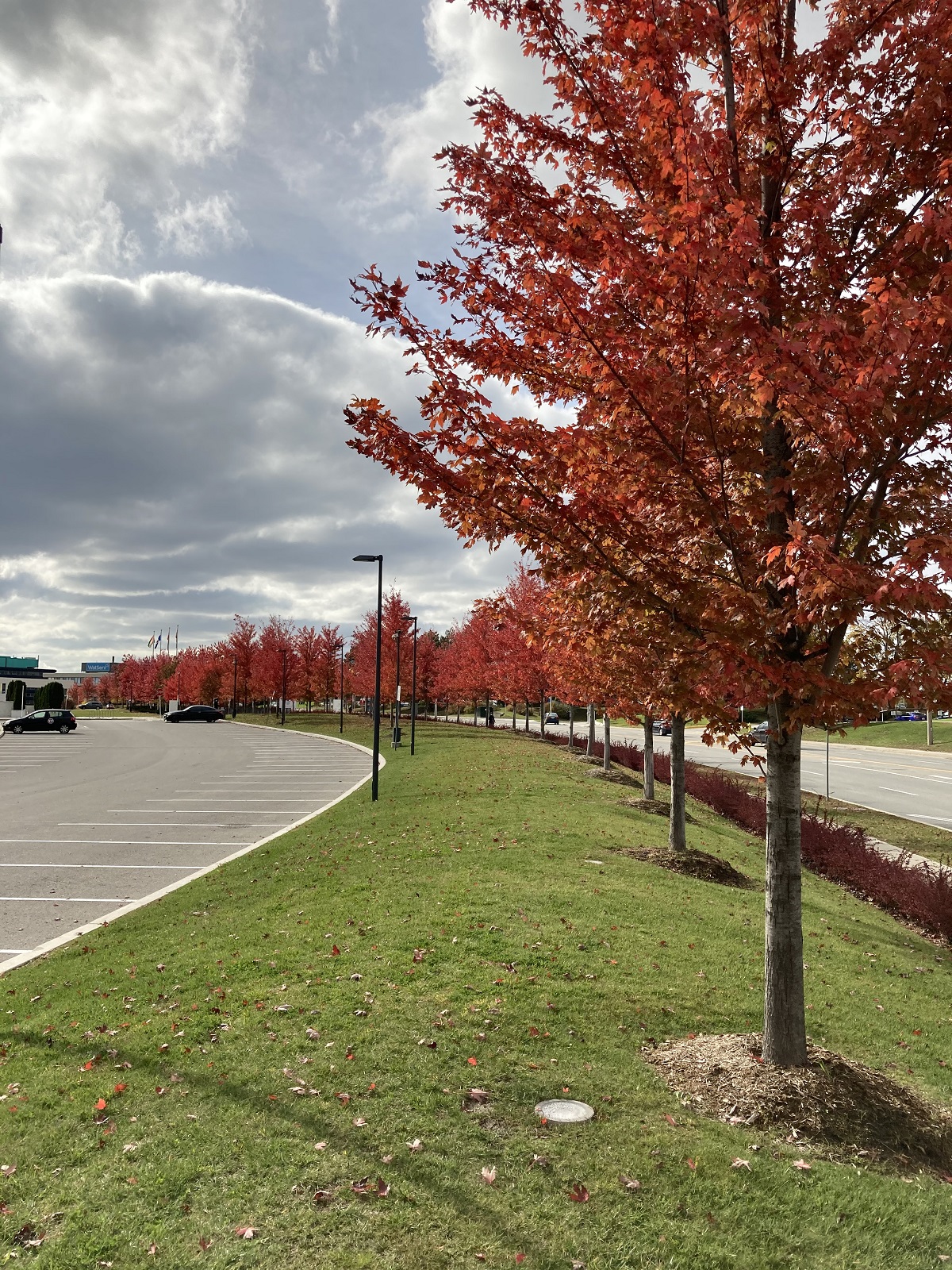
A beautiful view of red maple trees lined up at the edge of the Aga Khan Park along Wynford Drive, from the Aga Khan Museum (near end) to the Ismaili Centre. Photo: © Malik Merchant / Simerg
Red Maples Aga Khan Park
Red maples reach the peak of their fall colours at the Aga Khan Park, with a view of the Ismaili Jamatkhana dome at left. Photo: © Malik Merchant / Simerg.
Aga Khan Park, Flags of Canada and the Ismaili Imamat
From left to right, flags of the Ismaili Imamat, the City of Toronto, the Province of Ontario and Canada, with its famous Maple Leaf. Photo: © Malik Merchant / Simerg.

Date posted: October 20, 2020.
Last updated: October 21, 2020 (new link).

______________________

We welcome feedback from our readers. Please complete the LEAVE A REPLY form below or, if you don’t see the box, please click Leave a comment. Your letter may be edited for length and brevity, and is subject to moderation.
Before departing this website please take a moment to review Simerg’s Table of Contents for links to hundreds of thought provoking pieces on a vast array of subjects including faith and culture, history and philosophy, and arts and letters to name a few.

Short Videos: Ismailis Keep Unique Culture Alive on Roof of the World; and 2 Canadians Bike Through Wilderness of the Pamirs

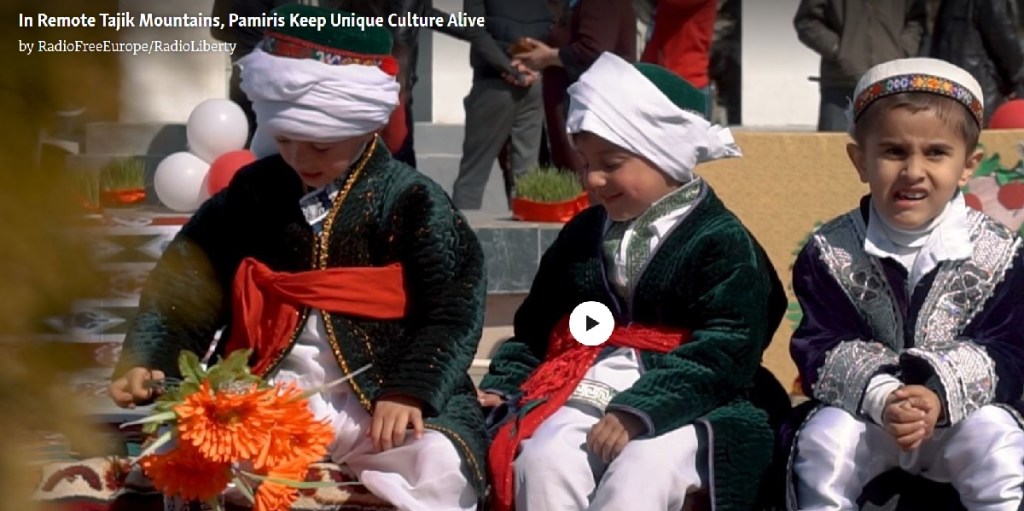
In the 11th century, Nasir Khushraw came to the Pamirs, and brought the Shiite Ismaili branch of Islam to the region. Today, two religious traditions 2000-3000 years apart, continue to co-exist in a remote corner of the earth. Watch the short cultural video in RadioFreeEurope/RadioLiberty by clicking HERE or on image below. Next, watch a video of two Canadians, Christian Meier and Peter Gaskill, taking on the remote Pamir landscape on their bicycles.

Video: Ismailis Keep Unique Culture Alive

Children in traditional clothing celebrating in the Pamirs, Tajikistan.

______________

Video: Canadians Christian Meier and Peter Gaskill Ride Through the Pamirs

Suggestion: Watch Tajikistan video in full screen mode.

Date posted: October 18, 2020.

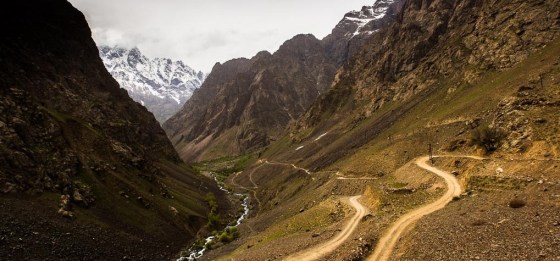
Featured photo at top of post: Narrow and winding roads from Khorough to Raushan in the Pamirs. Photo: © Muslim Harji. Please also see Harji’s photo essay Landscapes of Tajikistan.

___________________

Before departing this website please take a moment to review Simerg’s Table of Contents for links to hundreds of thought provoking pieces on a vast array of subjects including faith and culture, history and philosophy, and arts and letters to name a few.

A Comprehensive Guide by Two University of Virginia Medicine Professors on What Doctors Know Works for All Stages of the Covid-19 Illness

This article was updated on October 5, 2020 with the new details of President Trump’s COVID-19 treatments. It is republished from The Conversation under a Creative Commons license. You may read the original article by clicking HERE. Note: The featured image shown at top of this post and the first image shown below are reproduced from the website of USA’s Centre for Disease Control — they are not part of the original article in The Conversation.

BY WILLIAM PETRI, Professor of Medicine, University of Virginia and JEFFREY M. STUREK, Assistant Professor of Medicine University of Virginia

With 74-year-old President Trump and 50-year-old first lady Melania Trump testing positive for the coronavirus, what are the best proven treatments for them and other patients?

We are both physicianscientists at the University of Virginia. We care for COVID-19 patients and conduct research to find better ways to diagnose and treat COVID-19.

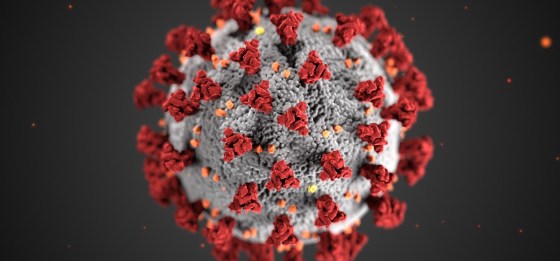
Transmission electron microscopic image of an isolate from the first U.S. case of COVID-19, formerly known as 2019-nCoV. The spherical viral particles, colorized blue, contain cross-section through the viral genome, seen as black dots. Image Credit: Centre for Disease Control and Prevention, USA (cdc.gov.).

Here we are sharing what physicians have learned over the past eight months treating various stages of this disease. Early in the year, there were few known treatments for people who showed severe COVID-19 symptoms apart from sustaining them on ventilators. Now, several months later, there are a handful of treatments, including drugs, that give doctors far better tools to heal patients, particularly very ill ones.

Who is at greatest risk for severe COVID-19?

Men are one-and-a-half times more likely to die, and an 80-year-old has a twentyfold greater risk of death than a 50-year-old. In addition to age and male gender, obesity; diabetes; recent cancer diagnosis; chronic heart, lung and liver disease; stroke; and dementia all are associated with an increased risk of dying from COVID-19. Based on these criteria, the president falls into a higher-risk category based on male gender and age.

Is treatment different depending upon how sick one is?

The approach to therapy differs depending on the stage of the illness.

It is therefore important to not only diagnose COVID-19 but to define whether the infection is asymptomatic or pre-symptomatic. Also, how sick a person is – whether it’s a mild, moderate, severe or critical case – changes how a patient is treated.

What treatment is there for asymptomatic or pre-symptomatic infection?

Asymptomatic or pre-symptomatic infection is defined as having a positive diagnostic test for COVID-19 (a PCR or antigen detection test) without symptoms of infection.

There is currently no known effective treatment for this stage. Someone with asymptomatic or pre-symptomatic infection should isolate themself at home for 10 days so as not to expose others.

What are the symptoms of mild disease, and what treatments work?

Symptoms of mild COVID-19 infection can include fever, cough, loss of taste or smell, muscle aches, headache, nausea, vomiting, diarrhea, congestion and runny nose.

Someone with mild COVID-19 does not have shortness of breath, chest pain or evidence of pneumonia during a chest X-ray. The exception to this is children with mild disease who may still have an abnormal X-ray.

There are no treatments that have been demonstrated to benefit those with mild disease. However, such patients should be well versed on the symptoms of moderate illness, so that they and others recognize if they progress to moderate illness. This is important because progression to more severe disease can be rapid – typically five to 10 days after initial symptoms.

Moderate illness

Moderate illness is defined as shortness of breath, chest pain, or on a chest X-ray, evidence of pneumonia but without hypoxia (low blood oxygen levels).

There currently is no known effective therapy for moderate illness.

Severe illness

Severe illness is identified by a rapid breathing rate (greater than 30 breaths per minute) or low oxygen levels in the blood, which is called hypoxia. Also, evidence of pneumonia affecting more than half of the lungs, as diagnosed on a chest X-ray, is a sign of a severe case.

Controlled clinical trials have demonstrated that the antiviral drug remdesivir hastens recovery for patients with severe but not critical illness.

In addition the anti-inflammatory steroid medicine dexamethasone (a prednisone-like drug) decreases mortality.

Critical illness

Critical illness occurs when the patient becomes so sick that vital organs begin to fail and they require medicines or other therapies to support these vital functions.

If failure of the lungs is severe enough, physicians may put the patient on a mechanical ventilator or high quantities of oxygen. There is no evidence that remdesivir treatment is beneficial during this critical phase. Dexamethasone is still recommended for treatment because it has been shown to decrease mortality.

What therapies don’t work or are still being tested?

Some treatments that have been shown to be ineffective include chloroquine and hydroxychloroquine.

Other potential treatments are still in the middle of clinical trials to test whether they are effective. These include human convalescent plasma, which contains antibodies that should bind to the virus and prevent it from entering cells.

There are also drugs to modulate the immune response, such as interferons and inhibitors of IL-6, which in some cases may prevent a harmful overreaction of the immune system, commonly referred to as cytokine storm.

A nurse collects convalescent plasma from a recovered COVID-19 patient to help the healing process of other COVID-19 patients in Indonesia. Budiono,/ Sijori images/Barcroft Media via Getty Images

Newer treatments, including one President Trump has been given

Right now there is no approved treatment for outpatients with asymptomatic or mild to moderate COVID-19. But this appears to be changing, with Eli Lilly’s and Regeneron’s release of clinical trial data on the use of laboratory-manufactured antibodies against the spike glycoprotein of the new coronavirus.

In this approach, as with convalescent plasma, the antibodies work by binding to the virus and blocking it from entering cells and multiplying. This could be particularly effective early on in infection before illness becomes severe.

In an early preview of data from an ongoing phase three clinical trial, subjects with COVID-19 who received an injection of a cocktail of monoclonal antibodies against the SARS-CoV-2 spike glycoprotein had symptoms that lasted only seven days rather than 13. The amount of virus remaining in the nasopharynx – the upper part of the throat behind the nose – was also reduced.

An update from the president’s physician on the afternoon of Oct. 2 indicated that, as a precautionary measure, the president received an infusion of Regeneron’s antibody cocktail. This treatment is not widely available, and can be given only under what is called compassionate use.

On the same day, the president reportedly also received supplemental oxygen and a first dose of the antiviral drug Remdesivir. Research shows this antiviral can decrease the length of COVID-19 patients’ hospital stays, but only when given prior to the patient needing mechanical ventilation.

On Saturday, Oct. 3, the president received a second dose of Remdesivir and a first dose of the steroid dexamethasone. Dexamethasone is an anti-inflammatory medicine in the same class as prednisone. It decreases mortality in patients with COVID-19 that is severe enough to require supplemental oxygen, but may actually worsen disease in those who are not as severely ill.

All of this suggests that the president is receiving state-of-the-art therapies.

Other External Link(s)

Please read:

1. BBC: Covid and Trump: The president’s healthcare v the average American’s
2. New York Times: President Trump Says He’s ‘Better’ From Covid-19. Doctors Aren’t So Sure
3. New York Times: How Much Would Trump’s Coronavirus Treatment Cost Most Americans?

Date posted: October 6, 2020.
Last updated: October 7, 2020 (new external links).

____________________

Before departing this website please take a moment to review Simerg’s Table of Contents for links to hundreds of thought provoking pieces on a vast array of subjects including faith and culture, history and philosophy, and arts and letters to name a few.

_____________________

We welcome feedback from our readers. Please complete the LEAVE A REPLY form below. Your letter may be edited for length and brevity, and is subject to moderation.