Simerg is an independent initiative dedicated to Ismaili Muslims, the Aga Khan — their Hereditary Imam — and the Ismaili Imamat, and Islam in general through literary readings, photo essays and artistic expressions
Author Archives: Malik Merchant, Editor
Founding publisher and editor of www.barakah.com, www.simerg.com and www.simergphotos.com.
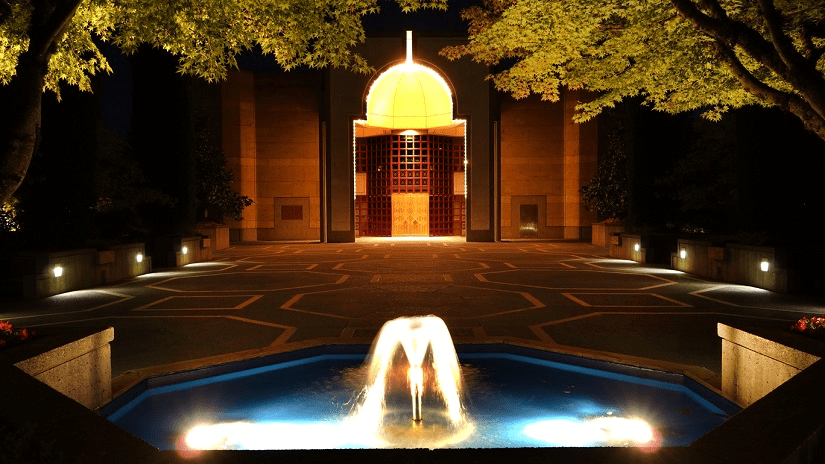
Bruno Freschi (Order of Canada, OC) discusses his project of building the first Ismaili Centre in North America in Burnaby, British Columbia, and his compassionate journey with His Highness the Aga Khan, the 49th Hereditary Imam of the Ismaili Muslims, in creating a new Jamatkhana for the Ismailis. Freschi writes: “The journey was a patient, creative search with the Ismaili community, exploring architecture for an established culture in a new community. In all his architectural undertakings, His Highness has honoured both the Islamic architectural traditions and evolutions of that heritage within diverse cultures.” READ MORE
On October 15, at the Aga Khan Museum’s Nanji Foundation Auditorium, will be the Canadian premiere of two short films by award-winning Canadian filmmaker, Kiana Rawji. Kiana recently graduated summa cum laude from Harvard College with a joint concentration in History & Literature and Film, specializing in Cross Cultural Encounters, Diasporic Identities and The Indian Ocean. From independent theaters to Oscar-qualifying film festivals, her films have screened across Canada, the US, and East Africa.
The two films screening on October 15th are:
Inside Job: A short fictional film about an Indian woman who, when preparing to leave her home in 1970s Kenya, loses a piece of jewelry and suspects one of her African domestic servants stole it; and
Mama of Manyatta: A short documentary about an extraordinary woman fighting HIV and gender-based violence in a Kenyan slum
In our interview with Kiana we learn more about her work and what inspires her. We invite you to watch her two short films at the Aga Khan Museum in Toronto on Sunday, October 15:
Voices: Simerg’s Interview with Kiana Rawji
“I strive to tell stories that recognize diversity, complexity, and nuance, while connecting people through universal, human experiences. I’m especially interested in topics surrounding migration, diasporas, and identity” — Kiana Rawji
Kiana Rawji
Simerg: Can you tell us about how you got into filmmaking?
Kiana Rawji: Throughout high school, I had been interested in the intersection between storytelling and social justice, and I had pursued that through writing and public speaking. Filmmaking was always a hobby of mine growing up, but I never even considered it as an academic or career path. When I got to Harvard, I thought I was going to study Government and go to Law School. But then I took a class called Social Justice and the Documentary Film my first year and I was drawn to film as a provocative medium to raise awareness, evoke empathy, and elevate marginalized voices. After I made my first short film in that class, I never looked back. Now I can’t imagine myself as anything other than a filmmaker.
At Harvard, I pursued a joint concentration because through History & Literature, I could learn about the very histories, in all their nuance and complexity, that would inform the stories I want to tell through film. Inside Job was a perfect example of that.
Simerg: Where did the idea for Inside Job come from?
Kiana: The film was largely based on my own family history — my parents and grandparents grew up in Nairobi, but before that my family traces back to Gujarat, India. I knew I wanted to make a film set in the 1970s Kenya, during a period of exacerbated racial tensions, due to the rise of ethnocentric nationalism in the region. I was particularly interested in the ways “Africans” and “Indians”/“Asians” perceived and interacted with each other. Since society was so racially segregated though, I realized the most common realm of interracial interaction and intimacy was in the household; virtually all brown households employed black domestic “servants”. What was all the more interesting was that, despite the deeply entrenched taboo that restricted social contact between brown women and black men in particular, these two types of people consistently interacted on a daily basis through the domestic labor relationship. I started to wonder how larger cultural norms and boundaries as well as political tensions were both reinforced and transcended in such close quarters.
Interview continues below
Inside Job, a film by Kiana Rawji that will premiere with Mama of Manyatta on Sunday, October 15, 2023, at the Aga Khan Museum, Toronto.
So I decided to explore that dynamic through oral history research. I interviewed many East African Asian women who lived through the 70s, as well as black African domestic workers. These interviews informed my whole script, from the subtleties of the dialogue to the core elements of the plot. I decided to focus on the theme of theft because of how much it came up in my interviews, and how symbolic it was; it was clear that both sides felt the other had stolen something from them. South Asians in East Africa felt that their own homes, along with properties, businesses, etc., were stolen from them when they were largely expelled from the region in the 70s. At the same time, native East Africans felt that “Asians” had stolen all the wealth and land in the first place. Both were stuck in a colonial system of inequality and a highly racialized socioeconomic hierarchy that lasted well beyond the colonial period. It’s a complex issue. Both sides built up mythologies around and resentments toward each other, and I think part of that can be reflected in relationships fostered in the household.
Simerg: What was most difficult about filming Inside Job?
Kiana: Well, the effort to make a period film in a foreign country in under a week with a budget under $10,000 was a huge challenge in itself. But I was able to find an incredible, talented cast and crew to achieve this and make it all easier.
The biggest challenge I faced was trying to get it right. I was recreating a history that I hadn’t lived through. I studied Swahili at Harvard and that helped but I don’t even speak or understand Gujarati. But the way I addressed that challenge was to consult a lot of experts.
The interviews I conducted before writing the script were, themselves, instrumental to helping me understand the details of what it was like to live in 1970s East Africa, from the food that was eaten to the daily routines. I looked at old photos from my interview subjects as source material for my costume designer. I based the Indian family off of an Ismaili family, since that’s who I was primarily interviewing and that’s my family history, so that meant that the family would be much more westernized than other South Asians in the region, wearing western clothing and using British dishware.
I was fortunate to receive generous support from Nazim Mitha at the National Museum in Nairobi; he connected me with one of the main museum curators (who was helping put together the upcoming exhibit on East African Indians) who was basically my set design consultant, guiding me on props and setups. Shariffa Keshavjee, who has been a regular contributor to Simerg and an avid patron of the arts, was also such an amazing source of support; she was a source of cultural knowledge and also helped connect me to people in the local film industry. And then one of the most important things was finding actors who spoke the languages of the film (English, Gujarati, and Swahili) and could move authentically and fluidly between them, infusing scripted lines with their own touch. All these details are what helped me build the world of my film in a colorful, sensitive, and authentic way. It was one of the most fun and rewarding experiences I’ve had.
____________
“When it comes to filmmaking around social issues, I’ve learned that stories of injustice and adversity are incomplete without the stories of resilience and endurance that invariably exist alongside them” — Kiana Rawji
____________
Simerg: As for your other film, Mama of Manyatta, how did that come about? How did you come to meet the subject, Phelgone Jacks?
Kiana: A few years before I made the film, my older sister Zahra had met Mama Phelgone through a Harvard College summer global health program that connected students with local NGOs and CBOs. Mama Phelgone worked on removing stigma around those affected by HIV/AIDS in Kisumu. After spending some time with Mama Phelgone, Zahra told me there was a story there that I had to tell. The next summer (summer 2019), when I went to Kisumu and met Phelgone myself, I instantly agreed that hers was a story that needed to be told. Her community-centered approach to creating impact was remarkable, and she, herself, was one of the most generous, compassionate, and dedicated people I have ever met.
Twenty years ago, Phelgone founded a community-based organization fighting HIV/AIDS and gender-based violence in the slum of Manyatta in Kisumu. She was a mother figure to Manyatta’s young and old; she built an Early Childhood Development Center outside her home, hosted safe-sex workshops for teenage girls, counseling sessions for women survivors, and more. Though she helped people work through immense trauma, what was most remarkable about Mama Phelgone (as she was affectionately known in Manyatta) was that she cultivated strength and joy wherever she went, through prayer, song, and dance. She was, in her own words, an “ambassador of hope.”
Rather than the all-too-common narrative of the suffering African poor, I wanted Mama of Manyatta to present a portrait of African empowerment and leadership.
In a similar vein, while my 2021 documentary Long Distance was an exposé of systemic racial injustice in Canada’s immigration system, it was also, at its core, a love story about a Filipino immigrant couple — two resolute dreamers who prevailed despite the forces working against them. When it comes to filmmaking around social issues, I’ve learned that stories of injustice and adversity are incomplete without the stories of resilience and endurance that invariably exist alongside them.
Soon after I shot Mama of Manyatta in 2022, Mama Phelgone was diagnosed with metastatic cancer. She passed away in the middle of my post-production. Though I was deeply saddened, my drive to preserve a remarkable life and legacy only intensified. Through my film, I hope Phelgone’s story continues to inspire change.
Interview continues below
Mama of Manyatta, a film by Kiana Rawji that will premiere with Inside Job on Sunday, October 15, 2023, at the Aga Khan Museum Toronto.
____________
“I decided I didn’t want to be a filmmaker who hides behind her lens, observing, recording, then leaving. I want to be the kind who knows when to stop being a fly on the wall and start engaging — when to be a friend, not just a filmmaker. When artists get proximate to their subjects — which sometimes requires those precious interactions unmediated by a camera lens — opening their souls and immersing themselves in the lives of others, the product is more meaningful and fulfilling for everyone involved” — Kiana Rawji
____________
Simerg: What were some of the most memorable moments from the production/filming of Mama of Manyatta?
Kiana: There were so many — it was such a joy and a privilege to be included in the circle of warmth and love that Mama Phelgone radiated.
But there is one moment in particular that stuck with me. It was in the middle of a workshop on gender-based-violence; Phelgone was helping a group of women — survivors of sexual assault –prepare for upcoming post-election violence and the risk it posed to women in the community, including themselves. I remember that, when Phelgone sensed the air in the room growing heavy, she suggested a dance break.
And so they got up, they played music, they danced, they smiled, and they laughed.
Phelgone and the women beckoned for me to join them. But the filmmaker in me was so keen to capture every detail of this moment — the rhythmic body movements, the courageous smiles, the unbridled laughter. Something unexpected and beautiful could happen any second, and if my camera wasn’t rolling, I thought, I might miss it. But that day, I realized that sometimes you also miss things when the camera is rolling. After filming the women dancing for a few minutes, I decided to set down my camera and join them. They showed me some moves, I was awful, they laughed at me, Ilaughed at me, and it was wonderful.
I went into that shoot believing in the power of the camera, but I came out of it having also learned the power of putting it down. I decided I didn’t want to be a filmmaker who hides behind her lens, observing, recording, then leaving. I want to be the kind who knows when to stop being a fly on the wall and start engaging — when to be a friend, not just a filmmaker.When artists get proximate to their subjects — which sometimes requires those precious interactions unmediated by a camera lens — opening their souls and immersing themselves in the lives of others (whether through dancing, sharing meals, or conversations), the product is more meaningful and fulfilling for everyone involved.
Simerg: What inspires you? What drives your creative process?
Kiana: My intersecting identities as a South Asian Muslim woman and child of immigrants from East Africa inform the stories I want — and need — to tell.I strive to tell stories that recognize diversity, complexity, and nuance, while connecting people through universal, human experiences. I’m especially interested in topics surrounding migration, diasporas, and identity.
My creative process is driven by compassion, curiosity and collaboration. It begins with passion and personal investment in a story, followed by detailed research and engagement with real people and real stories. Sometimes my work is based on my personal life and serves as catharsis. Other times, I start with family history, like in Inside Job. Other times yet, I look for the extraordinary in ordinary people who endure injustice, like in Mama of Manyatta, or my previous documentary, Long Distance.
Simerg: What is your advice to aspiring filmmakers?
Kiana: It doesn’t take much to start. You don’t need fancy equipment or huge amounts of funding — all you need is a camera (which could be your phone) and a good story. There are so many resources online. I taught myself how to use film editing software and write film scripts on the Internet. It just takes initiative and passion, and if you have those two things, you’re off to the races. I always remember what my idol, Ava DuVernay, said once when giving advice to filmmakers starting out. (I remember meeting her at a Harvard event, and feeling so energized and unbelievably inspired by her; she is the person who made me realize I wanted to be a filmmaker in the first place). She said something along the lines of ‘don’t wait for something precious.’ Just begin. It doesn’t need to be the perfect, most eye-grabbing, world-changing idea. Everything you make will help you learn, and you’ll only get better. Just begin by telling stories you care about.
~~~~~~~~~
Purchase Tickets at Eventbrite for Kiana Rawji’s Film Screening at the Aga Khan Museum, October 15, 2023, 11 AM – 1 PM
A limited number of tickets to the screening of Kiana’s two films on Sunday, October 15, 2023 from 11 AM – 1 PM at the Aga Khan Museum’s Nanji Foundation Auditorium are available and can be purchased by clicking on EVENTBRITE – KIANA RAWJI FILM SCREENING. Secure your tickets ASAP before they sell out! The price of the ticket includes parking at the Museum.
On the day of the screening, the Museum’s restaurant, Diwan, will be open (it is recommended to make a reservation in advance) as well as the Museum cafe.
Film screening guests will receive a 50% off discount on museum tickets (normally valued at $20), and are invited to explore the Aga Khan Museum exhibitions before or after the screening, during operating hours of 10 AM – 5:30 PM.
~~~~~~~~~
Visit Kiana Rawji’s Website
Details about Kiana and her previous work can be found at www.kianarawji.com.
Date posted: September 28, 2023.
____________________
Kiana Rawji
Kiana Rawji is an award-winning filmmaker from Calgary, Alberta, and daughter of South Asian immigrants from Kenya. She recently graduated summa cum laude from Harvard College studying Film and History & Literature. Through film, she tries to amplify social issues and drive cultural change; from independent theatres to Oscar-qualifying film festivals, her films have screened across Canada, the USA, and East Africa. Kiana’s TEDx talks on Islam and the Cosmopolitan Ethic have reached over 150,000 people worldwide.
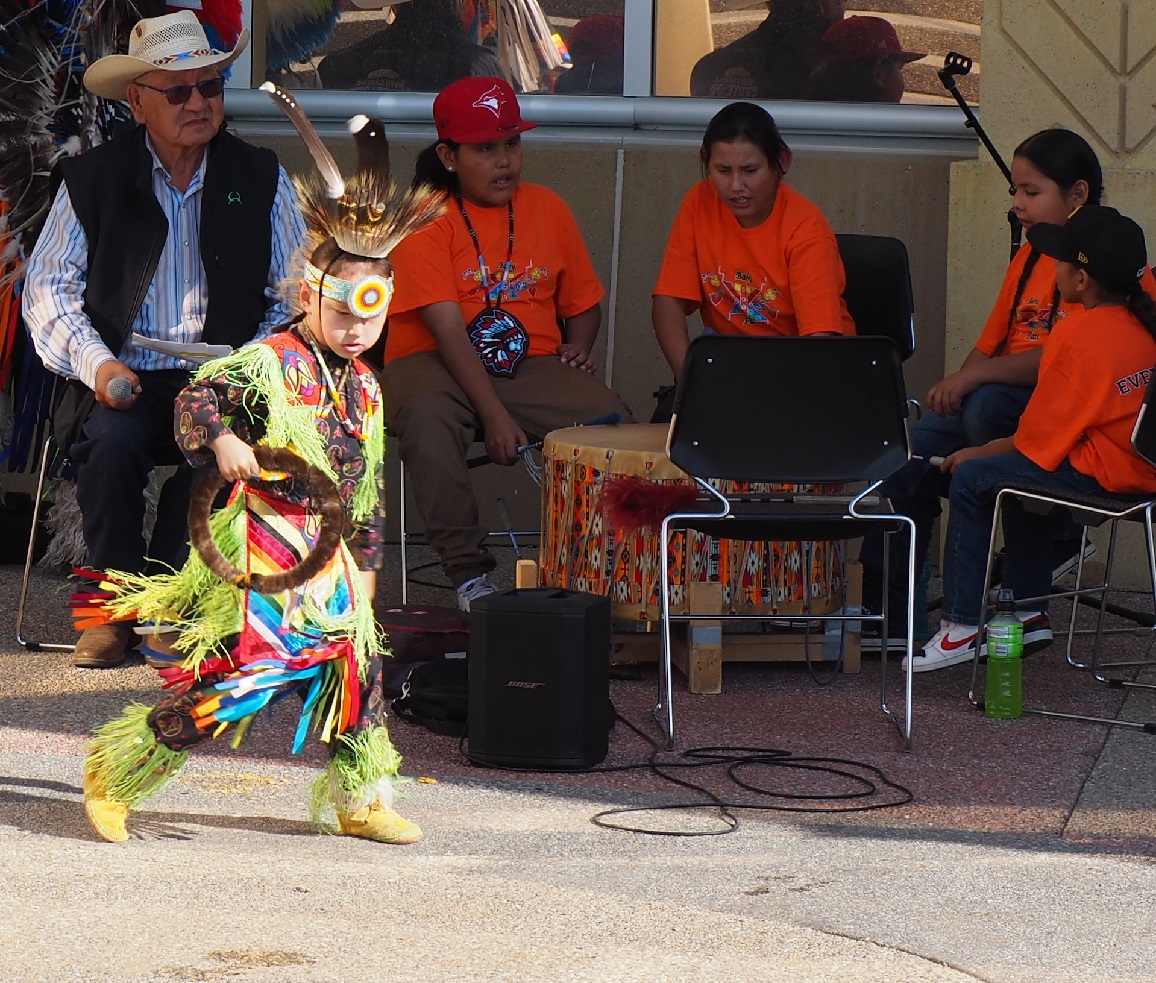
On Friday, September 22, 2023, Blackfoot Crossing, the Historic Site of the signing of Treat No. 7, held a special commemoration event to celebrate the 146th year of the signing with traditional activities that included drum beating and dancing by the children and youth of The Siksika People — also known as The Blackfoot. Malik Merchant drove down to the stunning site overlooking the Bow River. While he enjoyed the traditional activities as well as a BBQ lunch — all free on Commemoration Day — he was impressed and inspired by the exhibits in the beautifully curated museum dedicated to showcasing the history and culture of The Blackfoot.
Story continues below
A traditional dance performance by a young child to the tune of traditional drum beating by children and youth of the Siksika Nation. Please click on image for full report and more photographs.
~~~~~~~
A view of the valley and Bow River from Blackfoot Crossing’s lookout point. Please click on photo for full report and more photographs.
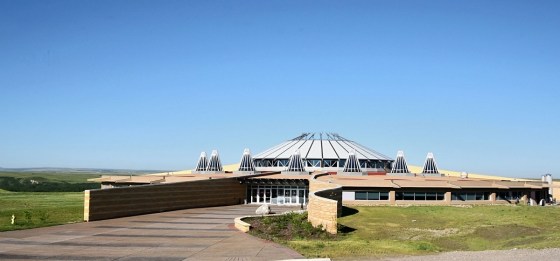
The Historical Park is just over an hours drive from Calgary and one cannot fail to admire and be impressed by the central building’s architecture that has tipis and tipi shaped structures incorporated into its design. The centre includes a cafeteria, a gift shop, a beautiful little theatre as well as an amphitheatre. The lookout point is 300 metres from the building and there is also a paved trail leading to see tipi tents and other interesting features of the area. Please click HERE or on the images below to view Malik’s full report and photographs. Also click Blackfoot Crossing Historical Park Website for more information about the unique heritage site. Plan a day to visit and learn about the history and culture of the Siksika First Nations People as well as to enjoy the beautiful natural surroundings and easy trails for the entire family.
~~~~~~~
A view of Blackfoot Crossings beautiful museum dedicated to the Siksika First Nations. Please click on photo for full report and more photographs.
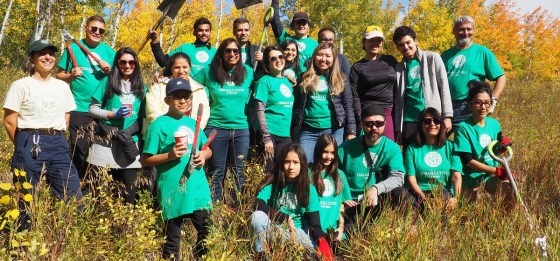
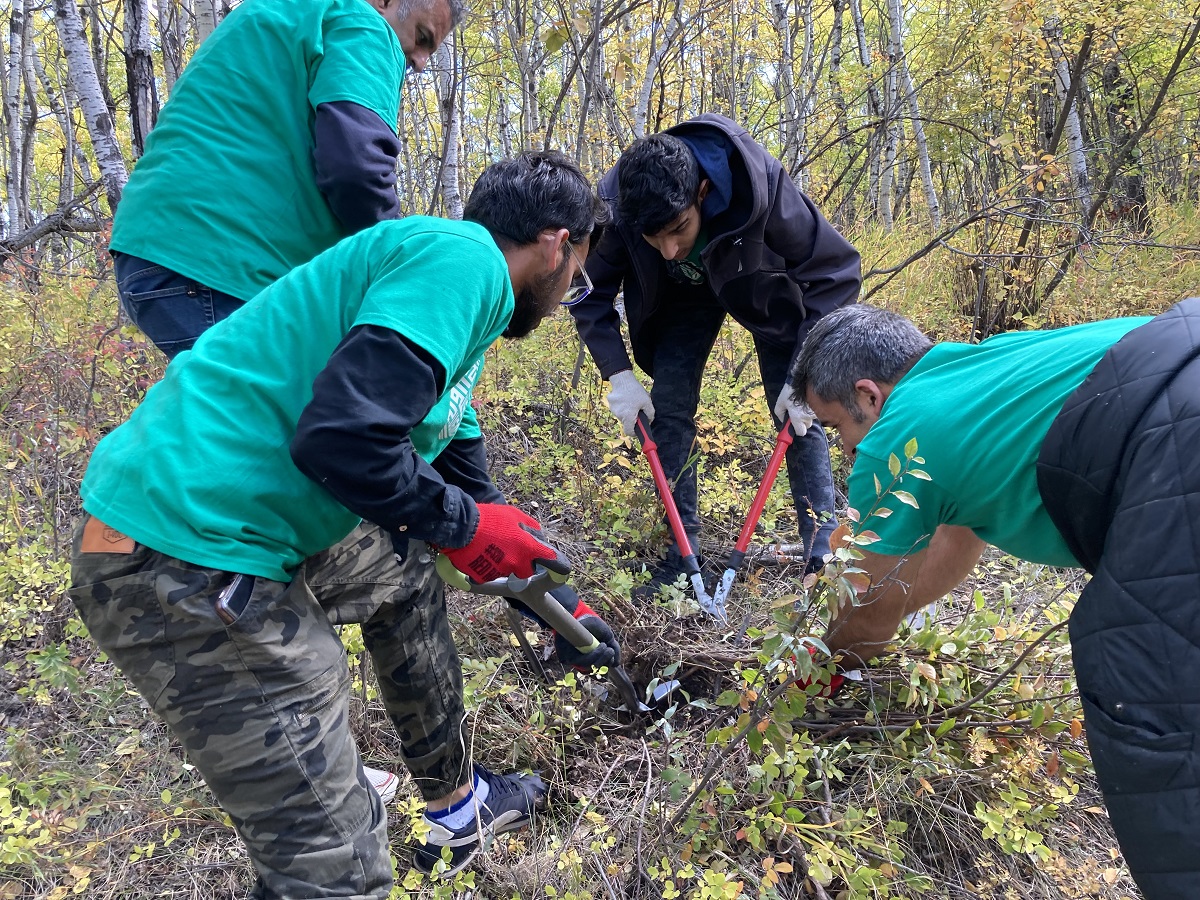
Guided by Dylann Golbeck, Coordinator of the Invasive Plants Program at the Weaselhead/Glenmore Park Preservation Society, Ismaili Civic Day volunteers participated in pulling out more than 100 invasive plants from a section of the Weaselhead Flats Natural Environment Park in SW Calgary on Sunday, September 24, 2023. Thousands of Ismailis around the world participated in unique ways in the annual Ismaili Civic Day weekend to contribute to local communities where they live. This year’s theme was Environmental Stewardship. For full story and photographs, please click ISMAILI CIVIC DAY CALGARY
Ismaili Civic Day volunteers pull out invasive plants from a Calgary Park. Please click on photograph for full story.
Known as Mawlid or Mild-un-Nabi, the birth anniversary of the Prophet Muhammad (may peace be upon him and his family) is celebrated in different parts of the world by reflecting on his rich and inspirational life. In 2023, the anniversary falls on September 26/27, equivalent to the 12th day of the Muslim month of Rabi Al-Awwal, in the Islamic year 1444 Hijri. The Islamic calendar is roughly 10 days shorter than the Gregorian Calendar every year.
The Aga Khan’s speech was made at a special Seerat Conference honouring the life of Prophet Muhammad. Attended by eminent Muslims and non-Muslims historians and scholars from around the world, the speech answers the question: What should Muslim Societies seek to be in the future?
Did Muslims and Islamic countries and their leaders take up the clarion call and follow the 49th Ismaili Imam’s timeless advice given 47 years ago? Please read the Aga Khan’s 1976 insightful speech by clicking HERE.
Note: With the exception of the featured photograph shown at the top of this post which also appears in full within the body of the post, the remaining photographs in this piece are not part of the official news release issued by the Aga Khan Museum — Ed.
SEPTEMBER 21, 2023: AGA KHAN MUSEUM PRESS RELEASE
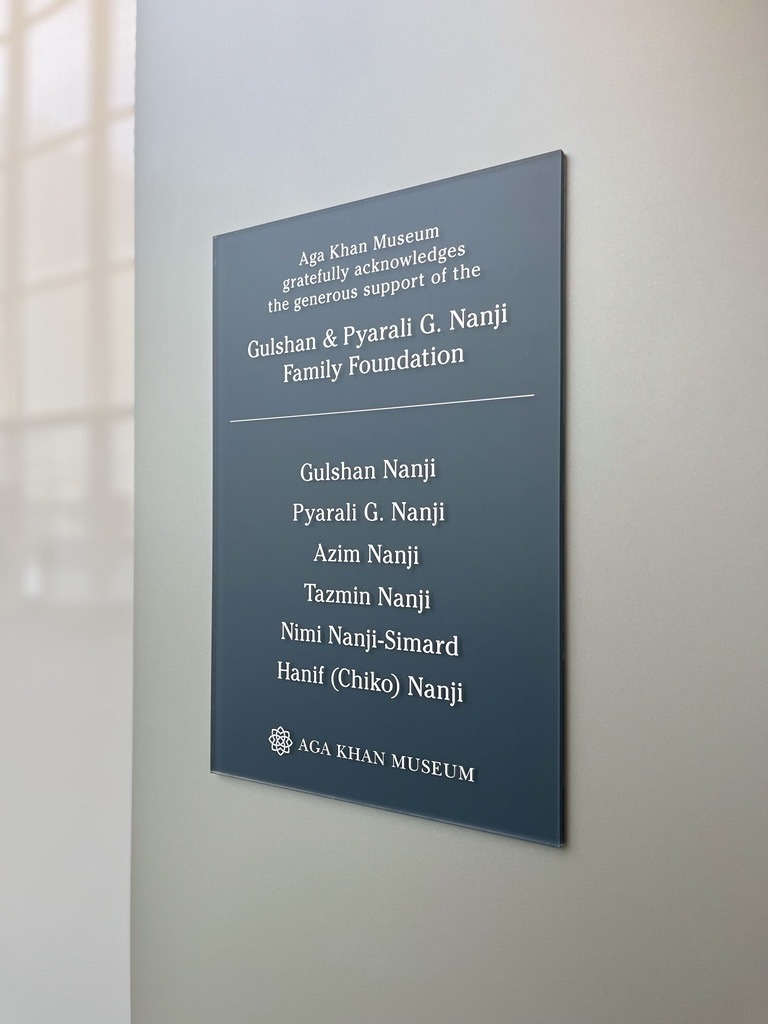
“In recognition of their longstanding generosity and support, the Aga Khan Museum’s Auditorium will be renamed the Nanji Family Foundation Auditorium” — Press Release, Aga Khan Museum
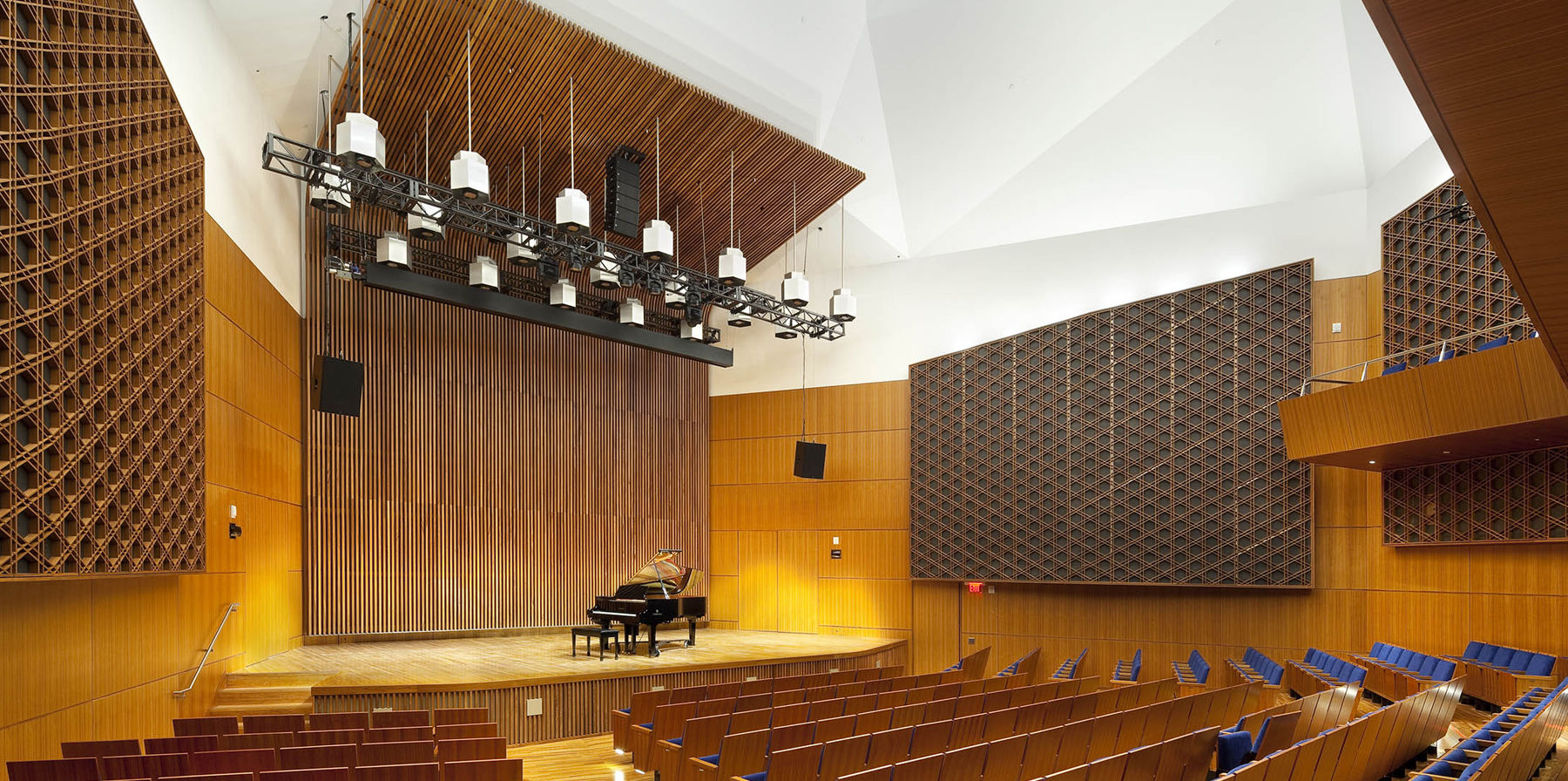
A view of the ceiling of the Aga Khan Museum’s Auditorium which is being renamed the Nanji Family Foundation Auditorium following the family’s magnificent multi-million dollar gift to the Aga Khan Museum. Photograph: Cramenwalker/Wikipedia/Attribution 4.0 International (CC BY 4.0).
TORONTO, CANADA – September 21, 2023 – The Gulshan and Pyarali Gulamali Nanji Family Foundation has recently gifted a transformative multi-million-dollar donation to the Aga Khan Museum that will expand the Museum’s reach and impact millions of people around the globe, deepening their understanding of Muslim arts and cultures and their connection with the world. The generous donation will enable the Museum to enhance onsite and digital learning around the Museum’s renowned Permanent Collection and engender significant, unique Performing Arts programs which provide opportunities for communities to connect through collaboration and performance.
The Nanji Family Foundation is a philanthropic organization dedicated to supporting a wide range of charitable initiatives, impacting the lives of thousands through its contributions to a wide range of Canadian and international initiatives and healthcare facilities, including the Sunnybrook Foundation, North York General Hospital, and the United Nations High Commissioner for Refugees (UNHCR).
“Our support for the Aga Khan Museum stems from our passion and appreciation for the arts and the ways in which they unify us,” says Azim Nanji, Gulshan and Pyarali Nanji’s son. “The Museum has established its place within the shared fabric of Canadian society, encouraging mutual understanding and appreciation of one another. We hope this contribution will encourage others to support their community, country, and the world.”
Story continues below
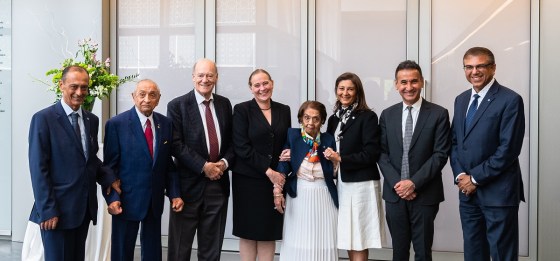
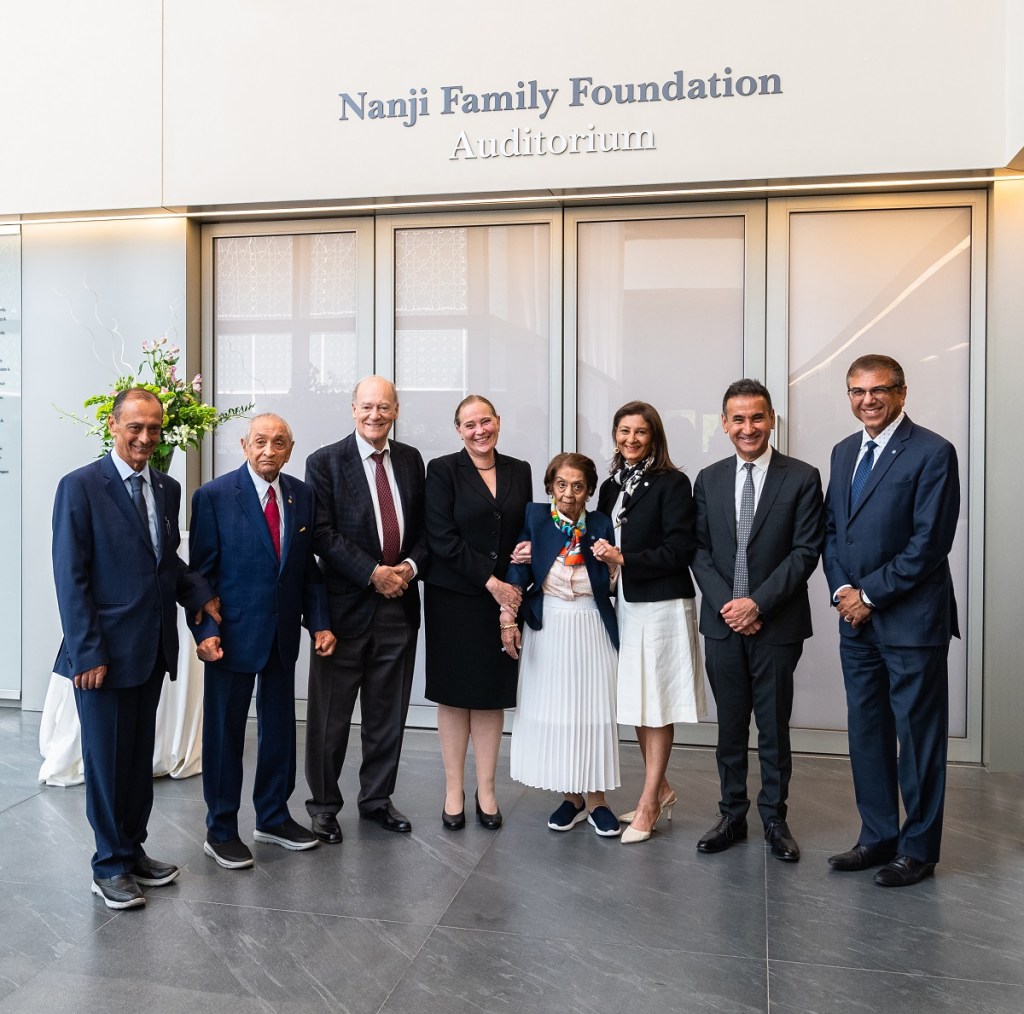
Nanji Family members with Prince Amyn Aga Khan and leaders of the Ismaili community and the Aga Khan Museum. From left to right: Mr. Azim Nanji, Mr. Pyarali G. Nanji, Prince Amyn Aga Khan (Board Chairman, Aga Khan Museum), Dr. Ulrike Al-Khamis (CEO, Aga Khan Museum), Mrs. Gulshan Nanji, Ms. Tazmin Nanji-Amlani, Mr. Ameerally Kassim-Lakha (President, Aga Khan Ismaili Council for Canada), Mr. Moyez Jadavji (COO, Aga Khan Museum). Photograph: Akber Dewji/Aga Khan Museum.
~~~~~~~~
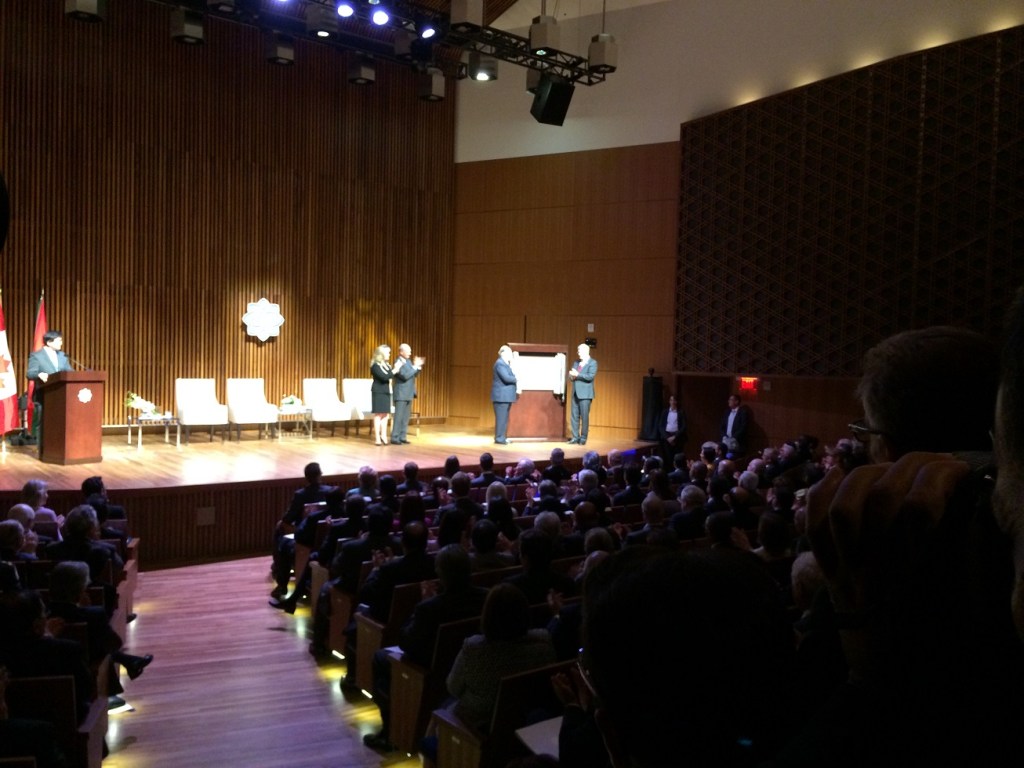
A view of the Aga Khan Museum’s Auditorium which has been renamed as the Nanji Family Foundation Auditorium in recognition of the Foundation’s longstanding generosity and support. Photograph: The Aga Khan Museum.
~~~~~~~~
Plaque on wall at the Aga Khan Museum acknowledging the generous support of the Nanji Family Foundation. Photograph: Aga Khan Museum.
~~~~~~~~
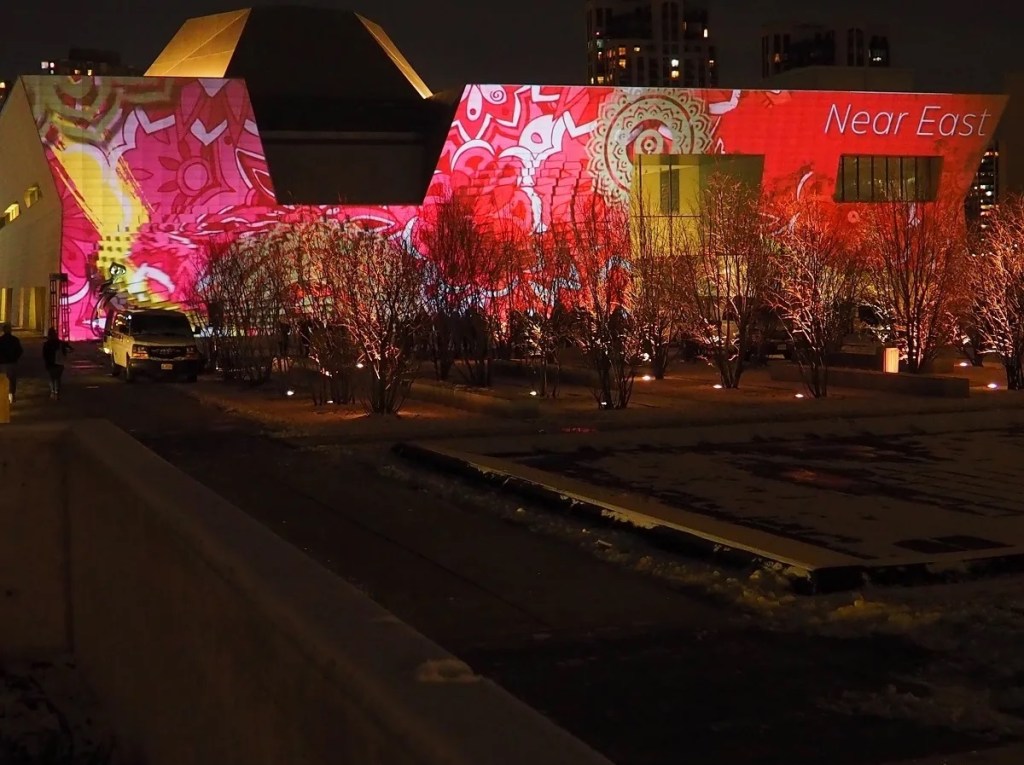
A spectacular light show projected on the front wall of the Aga Khan Museum in the middle of a Toronto winter, December 27-30, 2018. Photograph: Malik Merchant/Simerg.
~~~~~~~~
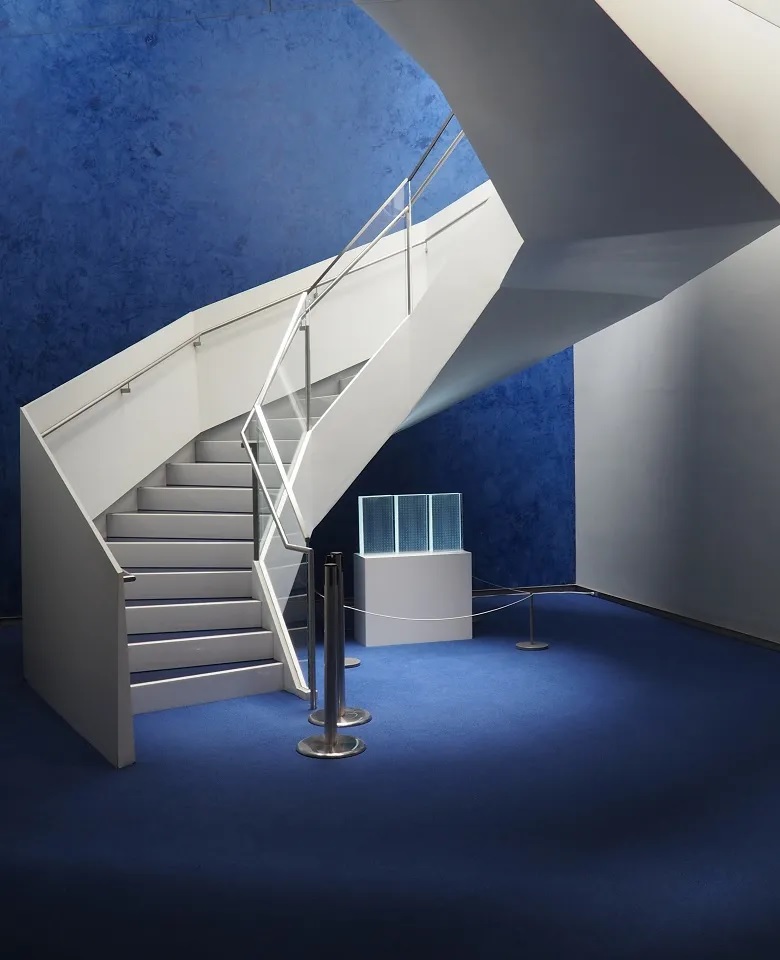
A view of the beautiful stairwell leading to the upper section of Aga Khan Museum’s Auditorium, now known as the Nanji Family Foundation Auditorium. Photograph: Malik Merchant/Simerg.
“We are truly humbled and awed by the transformational donation from the Gulshan & Pyarali G. Nanji Family Foundation,” says Dr. Ulrike Al-Khamis, Director and CEO of the Aga Khan Museum. “This phenomenal gift will enable us to drive our mandate of building intercultural bridges through the arts while growing our Museum and its impact with the aim of contributing to more inclusive and peaceful communities.” The generous donation will be the largest granted by the Nanji Family Foundation to an arts organization. In recognition of their longstanding generosity and support, the Museum’s Auditorium will be renamed the Nanji Family Foundation Auditorium.
______________
FLASHBACK: THE AGA KHAN MUSEUM’S OPENING DAY, SEPTEMEBER 12, 2014
I believe strongly that art and culture can have a profound impact in healing misunderstanding and in fostering trust even across great divides. This is the extraordinary purpose, the special mandate, to which this Museum is dedicated. In its role to reveal and to stimulate dialogue between different cultures, the Aga Khan Museum will continue a long history of cultural sharing between Islam and the West — Prince Amyn Aga Khan, speaking at the opening ceremony of the Aga Khan Museum, September 12, 2014.
The then Canadian Prime Minister Stephen Harper and Mawlana Hazar Imam, His Highness the Aga Khan, unveil the plaque inside the Aga Khan Museum’s Auditorium to officially open the Museum on September 12, 2014. Looking on from right to left are Prince Amyn Aga Khan, younger brother of the Aga Khan, Shelly Glover, then Minister of Canadian Heritage and Official Languages, and Henry Kim, the former CEO of the Museum. The Museum opened to the public on Thursday, September 18, 2014. Photograph: Malik Merchant/Simerg.
Date posted: September 21, 2023. Last updated: September 21, 2023 (inserted photograph of plaque honouring the Nanji Family Foundation).
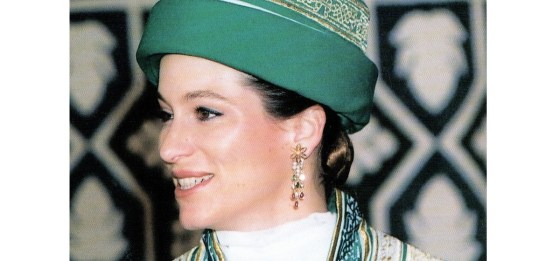
For almost three decades, Princess Zahra Aga Khan has immersed herself in the work of the Ismaili Imamat, a Hereditary Divine Institution which is led by her father, His Highness the Aga Khan, the 49th Imam in direct descent of the Prophet Muhammad (may peace be upon him and his family). The scope of the work of the Imamat extends to all areas of human endeavour and the entire family of the Aga Khan contributes to Ismaili institutions around the world as well as to the Imamat’s primary development organization, the Aga Khan Development Network (AKDN).
Princess Zahra is one of four children of the Aga Khan. As she celebrates her 53rd birthday on September 18, we bring to our readers her beautiful story through a selection of photographs that we have been able to gather from printed Ismaili community magazines as well as the official websites of the Ismaili Imamat. Please click PRINCESS ZAHRA AGA KHAN.
Albertans and Canadians may note that she was here 12 months ago for the opening of the Diwan Pavilion at the Aga Khan Garden in Edmonton, part of the University of Alberta’s Botanic Garden. The garden was a gift from the Aga Khan to the university.
Please click on photo for story of Princess Zahra Aga Khan.
The Ismaili Imamat is a Hereditary Institution and originates from the time the Prophet Muhammad (may peace be upon him and his family) appointed Hazrat Ali — his cousin and son-in-law — to succeed him as the Imam at a pivotal gathering held between Mecca and Medina following his final pilgrimage. The current Hereditary Imam of the Shia Imami Ismaili Muslims, directly descended from Imam Ali (may peace be on him), is His Highness the Aga Khan (actual name Shah Karim Al Hussaini) who is lovingly addressed by his Ismaili Muslim followers as Mawlana Hazar Imam (Our Lord, the manifest and present living Imam).
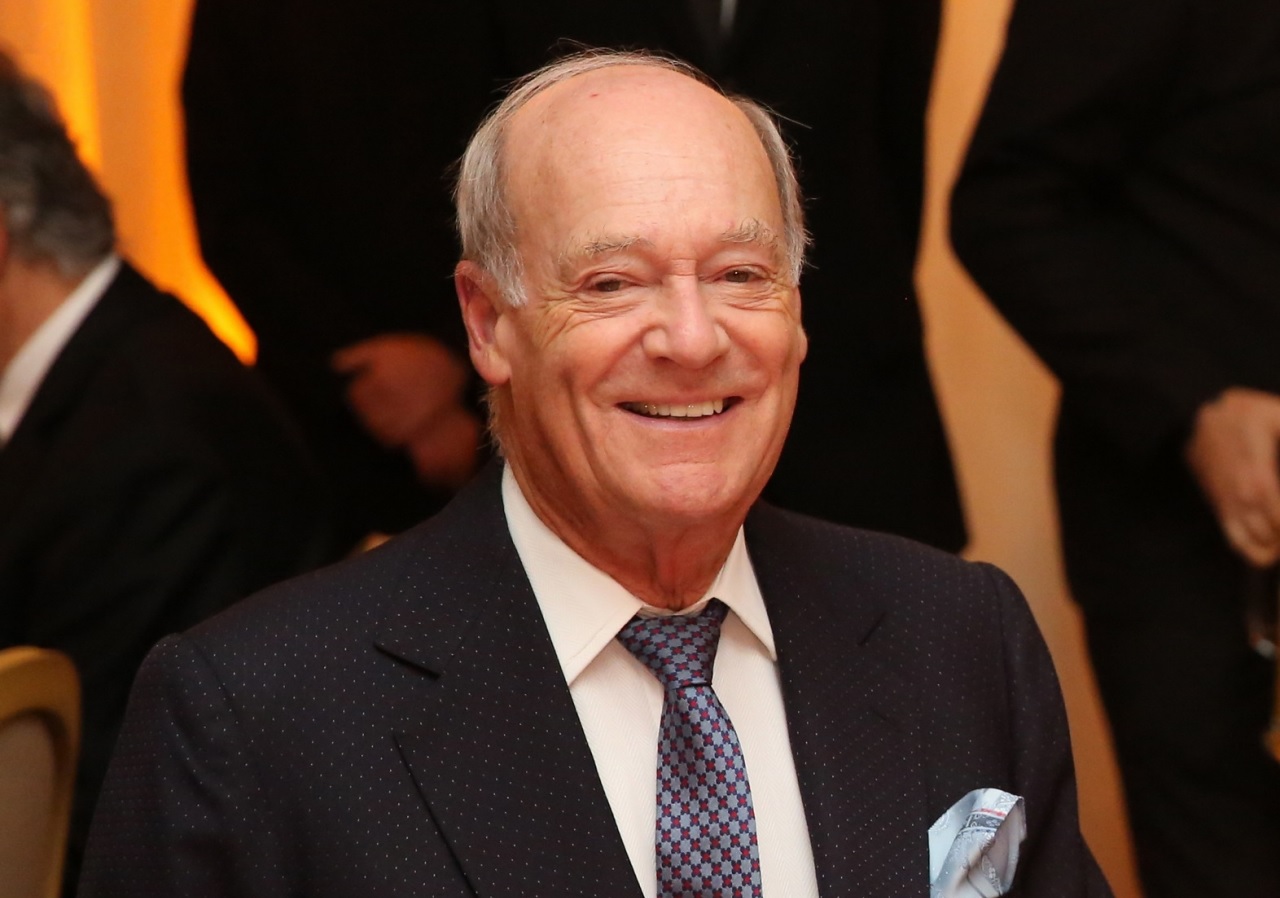
Canada is home to more than 100,000 Ismailis and the Aga Khan Museum in Toronto, the Aga Khan Garden in Edmonton, and the Global Centre for Pluralism in Ottawa are just some of the many projects of the Ismaili Imamat in Canada. The Aga Khan’s younger brother Prince Amyn has been singularly involved in these and other projects of the Imamat around the world for almost six decades and we honour him today, September 12, 2023, as he celebrates his 86th birthday. Please click Prince Amyn Aga Khan or on the photographs to find out more about his contribution and devotion to the Imamat.
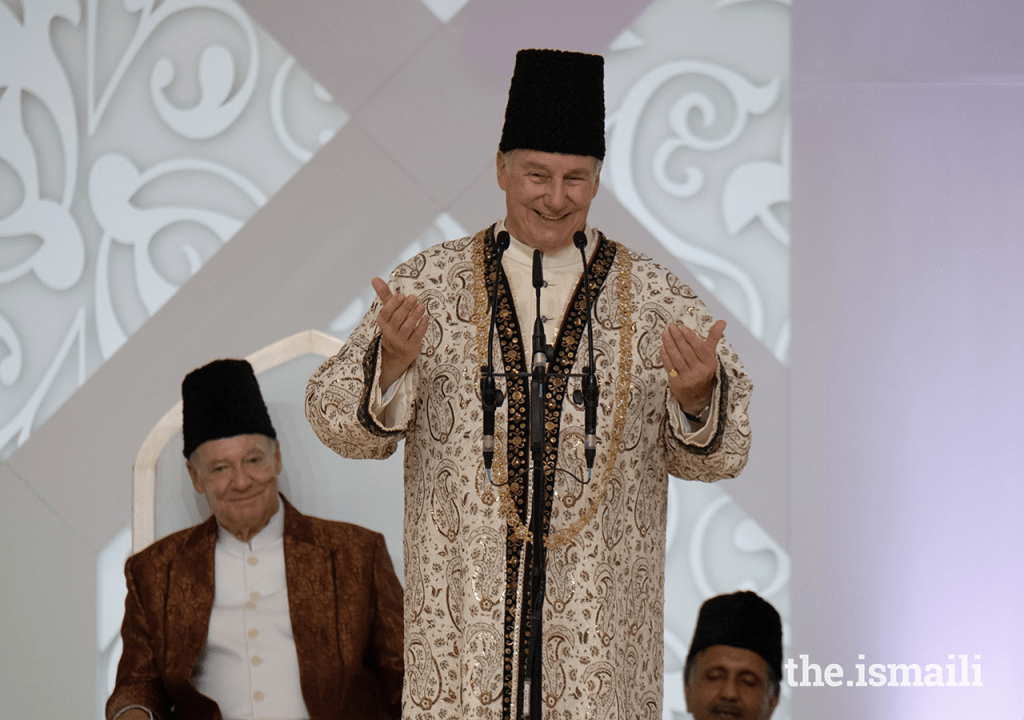
Prince Amyn Aga Khan, seated at left, looks on as his older brother, His Highness the Aga Khan, addresses his Ismaili Muslim followers at a Darbar — a grand ceremonial gathering — in Lisbon, Portugal, during his Diamond Jubilee celebrations in July 2018. Photograph: The Ismaili.
UPDATE, September 9, 2023:This is an update to a post featuring UK based Ismaili Muslim artist Taniya Dharani who has created a special platform to support the Ismaili Artist Community around the world through Artany Art Gallery and Advisory (AAGA). Readers can view Taniy’as beautiful artwork as well as learn about her motivation and purpose for establishing AAGA below, after this special announcement about the launch of a new print magazine.
Established and Emerging Ismaili Artists: Submit Your Details to be Included in New Print Magazine
In her latest venture, Taniya Dharani is launching a special quarterly print magazine in collaboration with Ismaili Artist Alliance, led by Shakeel Bhamani, and Ismaili Artists Worldwide, led by Rubina Rajan, to support the global emerging and established Ismaili artists. The first issue will be printed on December 12, 2023 and will feature a special section on Global Ismaili Artists. Artists are advised to submit their details no later than October 12 by clicking on Magazine Registration.
Taniya is passionate about Ismaili artists and seeks to promote their artworks in an international context and bringing their artworks to the international art market. The Ismaili Muslim community is culturally diverse and the artists are globally dispersed. She works with artists and team members from international backgrounds such as China, USA, India, Canada, Uganda, and Pakistan, among other countries. The commercial aspect of Artany has facilitated sponsoring artists from Afghanistan, Tajikistan, Syria and other countries. Through Artany, Taniya also offers strategic mentorship to emerging artists to enhance and encourage their creativity.
With the deadline for the print edition fast approaching, Taniya is requesting all Ismaili artists to contact her by clicking on Contact – ARTANY or submitting their details at Magazine Registration.
_____________________
Taniya Dharani Creates an Inspirational Platform for Ismaili as Well as Emerging Global Artists from Around the World
“Supporting the Ismaili Artist Community is enormously valuable to me. I wanted to create a platform that I wish I had when I was an aspiring artist…Students in high school and college who are interested in the arts can also apply for internships at Artany within the department of graphic design, marketing, content creation, website management, and business development. In order to provide internships, we have now collaborated with the Aga Khan Academy in Hyderabad” — Taniya Dharani, Founder, Artany Art Gallery and Advisory
Taniya Dharani, founder of Artany Art Gallery and Advisory.
By ARTANY ART GALLERY AND ADVISORY (Special to Simerg)
“Supporting the Ismaili Artist Community is enormously valuable to me. I wanted to create a platform that I wish I had when I was an aspiring artist,” says Taniya Dharani, founder of Artany Art Gallery and Advisory (AAGA).
A digital gallery space and art consultancy, AAGA focuses on emerging Ismaili artists with a global audience and specializes in contemporary art. The artistic narratives and skills of up-and-coming artists from various multicultural origins are artistically rendered by Artany. Along with supporting the Ismaili artistic community, we mentor them and aim to elucidate their work on a global scale.
How did she find her way into the artistic world?
Taniya explains: “Without the support of their family, friends, and loved ones, I don’t believe anyone can become a practicing professional artist. I consider myself fortunate to have a family who supports what I do, has faith in my artistic and entrepreneurial approach, and is very understanding of my development.”
Having thus found a way to build a solid platform, AAGA now seeks to encourage both the global emerging artist community and the Shia Imami Ismaili Muslims.
Taniya obtained a Master’s degree in Art Business from the Sotheby’s Institute of Art in London with an emphasis on establishing a platform for commercial as well as aesthetic promotion, encouragement, and instruction of up-and-coming artists. Having come from a diverse and cosmopolitan background, Taniya seeks to use her vast knowledge and professional experience to bridge the gap between Eastern and Western cultures. She is able to interact effectively and appropriately with a wide range of stakeholders due to her bilingual skills and understanding of both Far Eastern and Western cultures, including those of India, Namibia, and England.
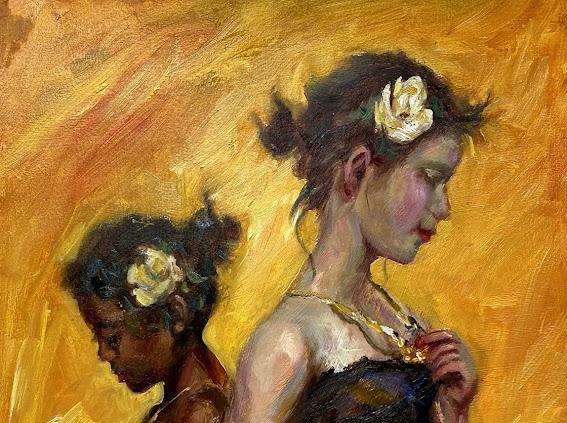
Mawlana Hazar Imam, His Highness the Aga Khan, by Taniya Dharani, UK. Credit: Artany Art Gallery and Advisory.
Taniya grew aware of the necessity for a mentor and a platform for the encouragement of artists. After identifying a market gap, she made the decision to further her education by enrolling in the “Fundamentals of the Gallery Business” programme at the Sotheby’s Institute in Manhattan, New York, followed by a Masters in Art Business from the same Institute in London, England.
Her goal and objective is to make sure Artany’s team is in tune with both the contemporary and diverse Ismaili community and the larger world of artists.
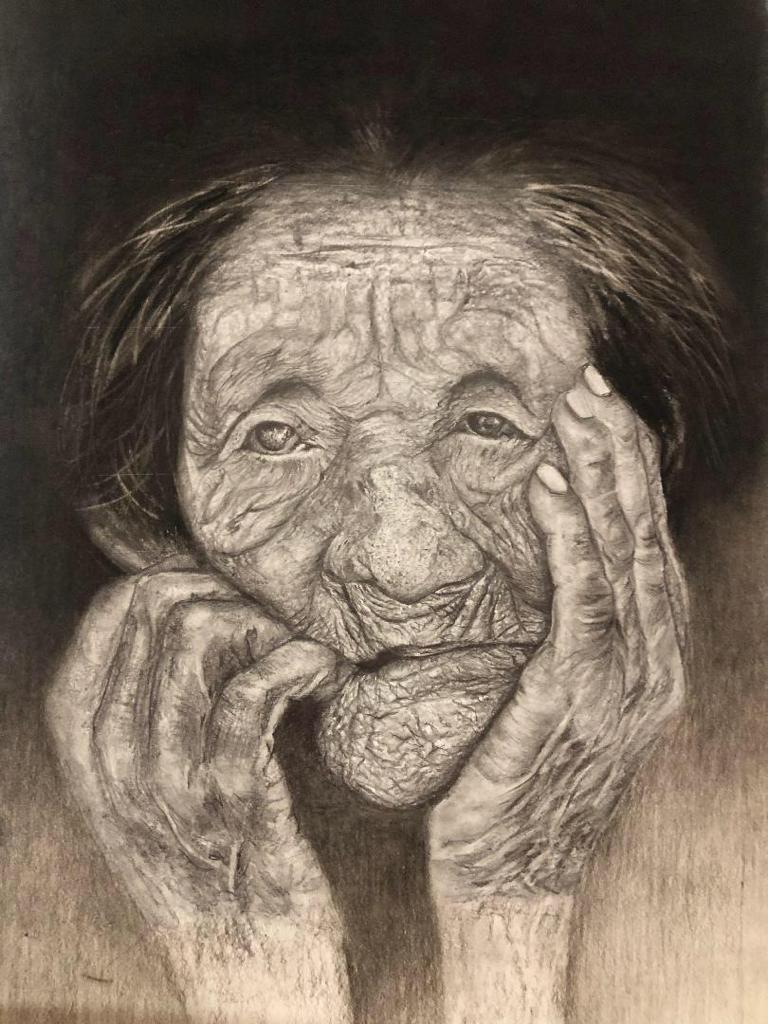
Portrait by Taniya Dharani, UK. Credit: Artany Art Gallery and Advisory.
Today, Artany offers a portfolio of art investment collections that include original works by Ismail Gulgee, limited-edition “Ashtavinayak” serigraphs by Maqbool Fida Husain, and authentic Vaikuntham Thota.
The gallery continues to expand with works by Aquil Virani of Toronto, up-and-coming artists Zainab Khuwaja and Nizar Macojia from Texas, Dr. Mubarak Muhammad Ali from Pakistan, and Rukshana Hooda from India, to name a few. Their artistic styles of Islamic calligraphy, Sufi art, geometric patterns, realism, and contemporary are just a few of the several artistic genres they work in.
Painting by Rukshana Hooda, India.Credit: Artany Art Gallery and Advisory.
~~~~~
Painting by Dr. Mubarak Muhammad Ali, Pakistan.Credit: Artany Art Gallery and Advisory.
~~~~~
Calligraphy by Zainab Khuwaja. Texas, USA. Credit: Artany Art Gallery and Advisory.
~~~~~
Nizar Macojia, Texas, USA.Credit: Artany Art Gallery and Advisory.
~~~~~
Aquil Virani, Toronto. Credit: Artany Art Gallery and Advisory.
Students in high school and college who are interested in the arts can also apply for internships within Artany in the departments of graphic design, marketing, content creation, website management, and business development. In order to provide internships, we have now collaborated with the Aga Khan Academy in Hyderabad. We encourage Ismaili artists at all levels and of all ages to collaborate with Artany by either contacting Taniya Dharani or registering as an artist.
Date posted: January 24, 2023. Last updated: September 9, 2023.
____________________
Taniya Dharani
Taniya Dharani is founder of Artany Art Gallery and Advisory. She has worked as a contemporary artist, curator, and mentor for up-and-coming artists. She is a member of the associate team for the International Art Gallery at Global Encounters and is presently studying at the Bares Atelier in London to become a traditional classical realist artist. You can collaborate or sign up as an Artany artist, by clicking HERE. Please also visit Artany’s Gallery on Instagram.
____________________
REVIEW SIMERG’S TABLE OF CONTENTS AND VISIT ITS SISTER WEBSITES
Before departing this website, please take a moment to review Simerg’s Table of Contents for links to hundreds of thought-provoking pieces on a vast array of subjects including faith and culture, history and philosophy, and arts and letters to name a few. Also visit Simerg’s sister websites Barakah, dedicated to His Highness the Aga Khan, and Simergphotos. The editor may be reached via email at mmerchant@simerg.com.
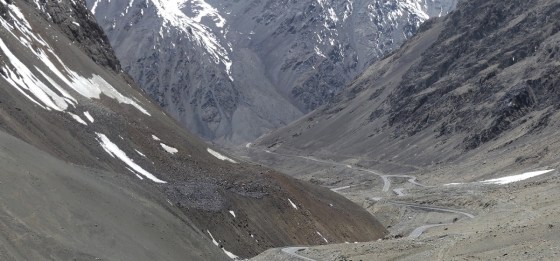
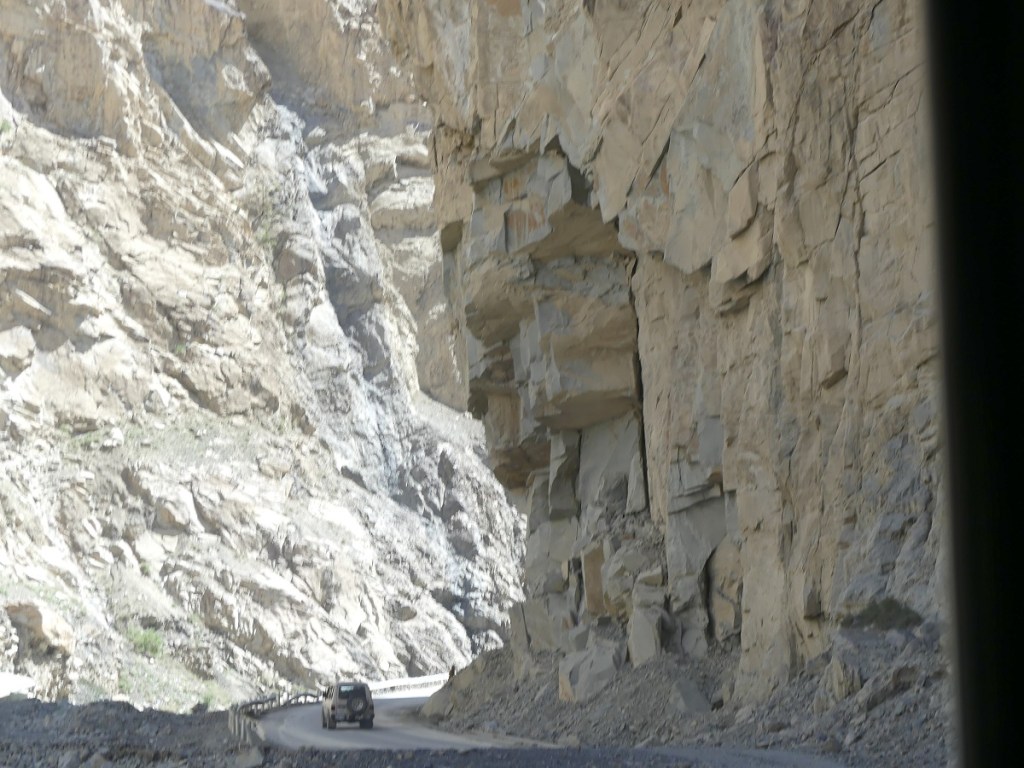
The Karakoram Highway (KKH) cuts through some of the most astounding rock faces on the planet. Often coined the “Eighth Wonder of the World”, it’s a road trip of dreams, yet few have ever heard of it, or how it came to be. The highway stretches for 1,300 km from Pakistan to China, but Samantha Shea was particularly drawn to the 194km stretch of the highway that runs through the Hunza Valley, a region surrounded by the Karakoram Mountains that give the highway its name.
“This impossibly beautiful section is where you can see pristine glaciers, alpine lakes and snow-capped peaks right from the comfort of your ride. However, as alluring as the journey is, it’s the incredible people and traditions of the Hunza Valley that make this part of the highway so special….Hunza is known for being the most liberal region, in part due to the predominance of Ismailism, a moderate sect of Islam known for promoting tolerance and women’s rights. Education and sports are encouraged for girls, and many go on to study at university and beyond.” READ MORE ON BBC TRAVEL















 Simerg - Insights from Around the World