A Tribute to My Beloved Papa, Kurbanali Kassamali Mulji (1935 – 2022)

By ANIZA MEGHANI

Its just over three months since my papa, Kurbanali Kassamali Mulji, passed away on 14th January 2022. I was aware that Simerg had a Passings category to which one can contribute obituaries or tributes for one’s deceased family members, but my emotions had been all over the place and I could not put pen to paper. How could I best write about my dad’s life and my 56 beautiful years with him? I felt the best was to write as though I were writing a letter to him. This, then, are some of my fond memories of my dad, my beloved papa.
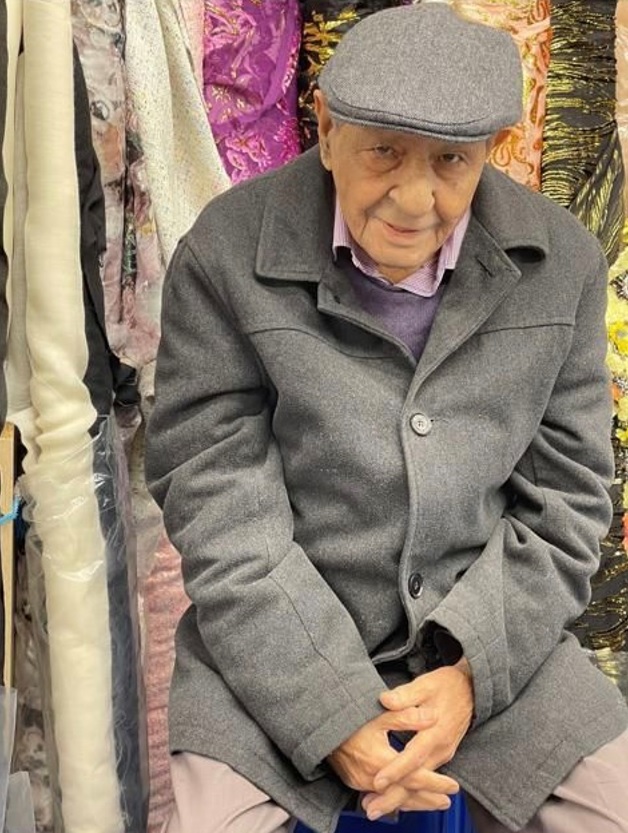
Aniza Meghani Letter to Dad Kurbanali Kassamali Mulji Passings Simerg Insights from around the world
A beautiful portrait of Kurbanali Kassamali Mulji taken in November 2021. He passed away two months later on January 14, 2022. Photo: Aniza Meghani Collection.

Dear Papa,

Thank you for the fabulous 56 years of having been blessed as my father. As I sit and write about your life span of 86 years, I feel immensely proud that your journey began on 13th May 1935, in Masaka, Uganda.

Often, when we would drive around London, you would recall your history, and never once did you complain about how difficult it had been, and then you would tell me “I worked hard and I don’t think I have done badly,” with a slight smile.

Although you did well at maths, unlike me who still uses a calculator, it amazed me, that in your time, you had no calculators and your generation of mental maths was as good as today’s technology.

You never completed school or even had a degree to your name. However, having been gifted with a business acumen, and the experience you got through the family business, gave you a sense of a worldly certificate in how to survive and be successful in your own right.

Your father made you join the family business which, due to competition, was difficult to run and you ended up working in Jinja in a shop/bar/restaurant. For four years you slogged 7 days a week and managed to save 13,700 shillings. At that point, you decided to take a break and travel to Tanzania (then Tanganyika). During this short vacation, you met many people who inspired you, and the trip gave you a taste of wanting to travel more and have a better life.
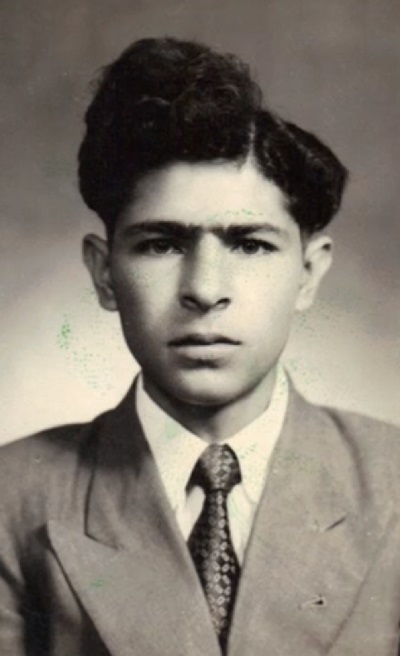
Aniza Meghani Letter to Dad Kurbanali Kassamali Mulji Passings Simerg Insights from around the world
Kurbanali Mulji pictured during his youthful days, undated photo. Photo: Aniza Meghani Collection.

You made your way to Kampala and came across “GOPE (Zulfikar, Suleiman Kanji, with whom you became best friends. He advised you not to start a business as yet, but perhaps take a course in hairdressing for men as there was only one shop in Kampala at the time, which was Madat’s Hairstyle.

So off you went to the UK with all your savings and reached 5 Palace Gate, which for years remained the focal point and headquarters of the Jamat as well as London’s main Jamatkhana, before the Ismaili Centre was opened in 1985. This property was bought by Prince Aly Khan. When you arrived there, they guided you on how to go about in London. You joined Bogins London School of Hairdressing, on Margaret Street, behind Oxford Circus Station. There you learned the art of trendy haircuts (college boy style) for six months. Mindful of struggles you had undergone, your teacher took sympathy for you as to how you had saved all your life’s earnings for this course. He kindly gave you extra lessons for free and helped you develop more skills. You studied during the day and worked at night at restaurants washing dishes to earn your keep. In those days, you barely made a pound a week. 

After 6 months, you had mastered hairdressing and decided to return home. You purchased all the equipment required to start your business in Kampala. There was only one problem, while you were left with only 1000 shillings, your budget had exceeded by 3000 shillings. Although the goods would take a month or so to reach Africa you were worried how you would be able to raise the 3000 shillings needed to clear customs upon arrival. With panic in your heart, as to who you could ask help from, luck came to your rescue when you entered Salim’s Sweetmart and filled in the football pools lottery. You won £370! You had covered your expenditure and were left with enough to open a shop and name it “HairCo”.

Success followed rapidly and then another family encounter took place. Your brother Mohammed’s health was not so good and he asked you to help run his business that included selling anything from groceries to household goods to textiles imported from abroad. 

In between working, you fell in love and married Nargis Rashid Ladha. Mum decided to work from home selling fabrics that were imported from the UK via Mohammed uncle’s business. Both of you then decided to set up a shop called Nargis Stores. 

It was this trade of textiles that became your passion for fashion. You understood from nylons to chiffons and your taste in buying was simply outstanding. There would be queues for the next delivery. You were blessed with immense barakah and good wisdom. 
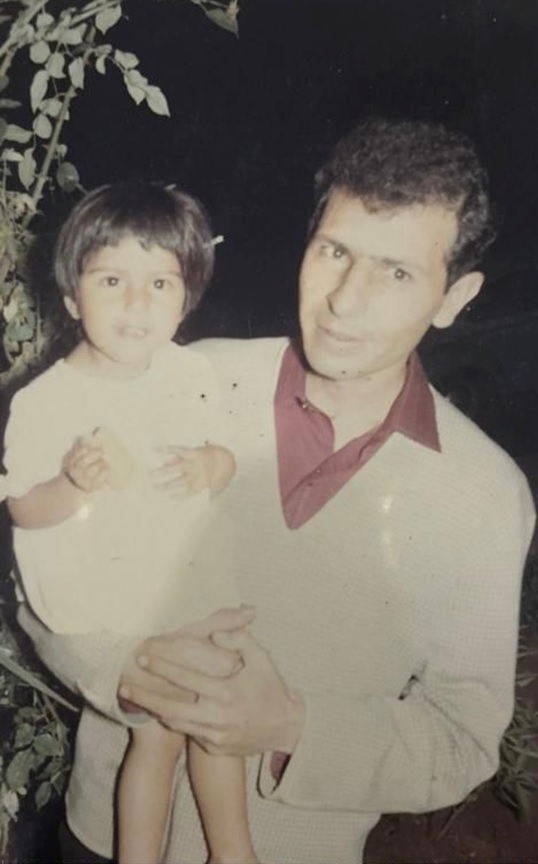
Aniza Meghani Letter to Dad Kurbanali Kassamali Mulji Passings Simerg Insights from around the world
Kurbanali Mulji holding his daughter Aniza, in a photo taken in Uganda in 1967. Photo: Aniza Meghani Collection.

However, in 1972 East Africa faced the biggest shake-up of the mass exodus of Ugandan Asians. With three daughters, myself, Ashifa, Azmina and mum expecting a fourth child,(Rahim born in London) you took us to the UK. I remember landing at Heathrow airport. The weather was dull and gloomy. Perhaps the signs of how times would be changing from sunny Africa to hard times ahead.

You rented a room in Kensington for a few months. A one bedroom, with five of us sharing it. You worked in a laundry, a perfume factory and eventually becoming a bus conductor for a few years. Never did you complain or compare the good times or the “struggle” that you had experienced in Africa and the UK, for it was the “meaning of life”. You worked, took all the shifts you could to make ends meet. Simultaneously from home, you set up a business selling washing up liquids, whilst mum babysat 4 children plus 3 others and catered for homemade takeaways.

This would carry on for 8 years, until one fateful day, while on duty as a bus conductor, you noticed a shop called Classic Textiles on Goldhawk Road, a fabric shop, with a “For Sale” signboard. History was in the making once again. In July 1981, you and mum embarked on making Classic Textiles a thriving business. From royalties, television, catwalk, to the future designers, word of mouth was the best form of advertising. We didn’t have social media but yellow pages phone books. Even though you both had retired, your blood, sweat, tears, and most of all your soul vibrated onto the shelves full of beauty, textures, and colors of rolls of fabrics.

Aniza Meghani Letter to Dad Kurbanali Kassamali Mulji Passings Simerg Insights from around the world
Kurbanali Mulji in front of his thriving shop, Classic Textiles, on Goldhawk Road in west London, September 2020. Photo: Aniza Meghani Collection.

You still came to overlook the shop during the pandemic to make sure all was well. However, in the late summer of 2021, the benign tumor, which you had for 15 years, suddenly erupted. I can still remember that cold month of November 2021. Both Azmina and I took you to St Mary’s Hospital in Paddington. You could barely walk but managed to make it to the consultant’s office for your biopsy results.

Consultant: Mr. Mulji, for a man of your age, to undergo a biopsy you did very well. But I am afraid, I don’t have good news. It’s cancer you have. I can’t tell you what stage, for that the oncologist will tell you more next week and what therapy can be recommended. Mr. Mulji, do you understand what I am saying?

Papa, when you heard this your face went white and blank. You held onto the stick. I don’t know what thoughts went through you, but tears just flowed from my eyes. 

Papa: Well, I have no regrets. I have lived a good life.

Papa, you still had hope. All the previous years, you would ask me in “Do you think I will live to make it to the Golden Jubilee?”

When you made it through that, you dreamt of the Olympics in a similar tone.

Me: Of course, you will. Look Papa, all your wishes have been fulfilled. You saw the Golden Jubilee, the Olympics, Diamond Jubilee and you saw Serena Williams on the opening day of Wimbledon on court 1!

Papa: I hope I live 5 more years, then I can see Platinum Jubilee too. I will be happy for just five more years.

Me: Inshallah you will see that too.

A week later we went to Charing Cross and met the oncologist. By then you struggled to make it to the lift and did not want a wheelchair. You were quiet all the way. We entered the room and you looked at the oncologist, wishing or hoping for some good news.

Oncologist: Mr. Mulji, as you know that the biopsy report, showed that you have cancer. It’s stage 4. Do you know what stage 4 cancer is?

Papa: No.

Oncologist: Let me explain. It’s a severe form of cancer of the lungs you have and it’s spreading to other parts of your body. Mr. Mulji, a man of your age will find chemotherapy or radiation treatment at this stage too invasive to handle. You are 86 years old. We stop treatment at age 80, that’s the cut-off point in the hospital. You were wise in all these years not to have it investigated as you saw fit that it had done no harm to you. We believe the quality of life is better than the quantity of life. Mr. Mulji is there anything else you would like to ask….

Papa: No. I have had a good life and I have no regrets. I had never been in hospital till recently. So I can say, I am blessed.

Oncologist: That’s very rare for a man of 86 years to have never been in hospital till now. Go home Mr. Mulji and enjoy the remainder of your life. We are still here for you.

We reached home in silence. You were very brave and dignified to have not asked the oncologist the time left. You took it in your stride that whatever time you had remaining you were going to embrace it with peace. When we went upstairs to your bedroom, it was at that point, that the full impact of what the oncologist had told you, really hit you. You burst into tears, you fell onto the bed with great shock and cried and said: “Forgive me if I was a bad father, but I only told you off because I love you all and wanted nothing but the best and to make sure you were all doing the right things in life. 

Me: Papa there is nothing to forgive. Forgive me too if I have done anything to hurt or upset you.

I hugged him. I vowed then, that I would not cry in front of him as the doctors had given him less than a month to live. That evening, all the grandchildren, Alykhan, Jina, Amara and Alim came round to comfort him. He gave them sound advice for the future.

As I write this saddest moment we shared together, my tears are overflowing. I moved into my parent’s place.

Papa, you slept in the hospital bed and I slept on your side of the bed with mum. On that first night, all three of us were in one room. Papa had become the child and I became the parent.

Papa: I am so overjoyed/ happy that you are sharing this room with us.

I was overwhelmed by his sweet words that despite the seriousness of his ill health, he made me feel comfortable that his journey would be of no pain to me.

He was truly blessed, and the doctors were surprised that his level of pain was sustained by paracetamols. He had no morphine. I remember his own GP coming that first night and telling my sister Azmina and I: “We are doctors, scientifically we give time, dates, etc. But remember, it is the Creator, who only knows the time. Don’t think of days or times, just put that at the back of your mind, carry on as normal, spend time with him, and make it comfortable for him. If you worry about what time he has left, you will not be able to help him without constant pain on your face. Believe me, I have seen many miracles in my life when you expect death to happen, the living then somehow lives… so please don’t think of time, none of us know.”
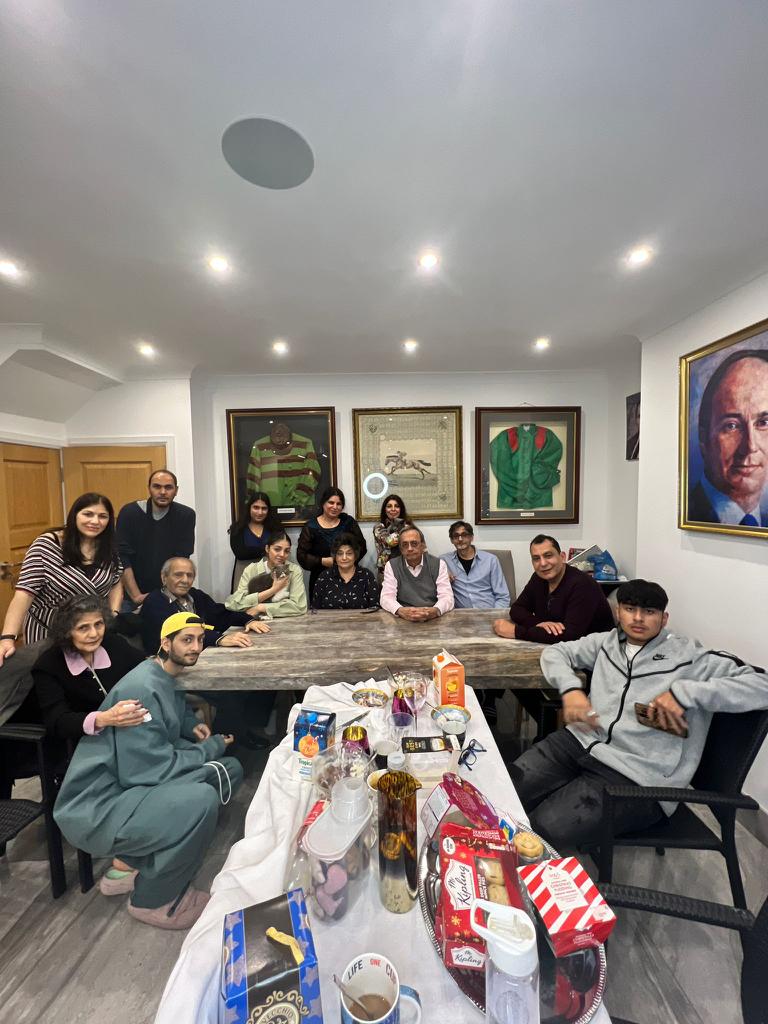
Aniza Meghani Letter to Dad Kurbanali Kassamali Mulji Passings Simerg Insights from around the world
Kurbanali Kassamali Mulji and his wife Nargis, both seated at left, are pictured with their family members during a family gathering in December 2021. A beautiful photo of a painting of Mawlana Hazar Imam, His Highness the Aga Khan, by the late Pakistani Ismaili artist Gulgee (d. 2007) at the Ismaili Centre London and framed sports memorabilia adorn the dining room walls of Aniza’s home. Photo: Aniza Meghani Collection.

With such words, we both forgot and carried on as normal. He made sure he spoke to everyone who called him. His days flew with many phone calls from his beloved friends and family around the world. The Zoom calls gave him great joy. The relatives, due to Covid-19, came by to see him in small groups. We were happy to see him talk in great depth about his history.

Five days before he passed away, I had cooked him kalio, rice and a dessert. We were so happy that he ate a full meal. He walked normal. For that whole day, I felt a miracle had taken place. I just couldn’t believe he got out of bed normal, without any walking aid. Little did I know that this would be his ‘Last Supper’. I have been told that just before anyone passes away, God kindly allows us to see few moments of happiness with loved ones. I truly have come to conclusion, that this indicates that life with the Creator gives us a foresight that their journey will be a happy one. The following day, Papa, called Altaaf (my husband) and I: “Altaaf, I want you to know, I am going very soon”.

Altaaf: No, you are not going yet. You are going to live still.

As for the shop, not a day goes by, when customers ask: “How are papa and mama?” At that point, I sit them down.

Me: Papa passed away three months ago.

Customer: “No way! My Lord! Papa Gone! Papa Gone. Good man papa was. He helped me you know. He guided me you know. Always honest in advice. Gave me credit you know. Papa gone, I can’t believe it! Am so sad…. papa you know is in heaven. Am telling you. He was such a good man. My papa gone…”

You taught me about how to run a business. How to be kind and respectable to customers. How to help them.
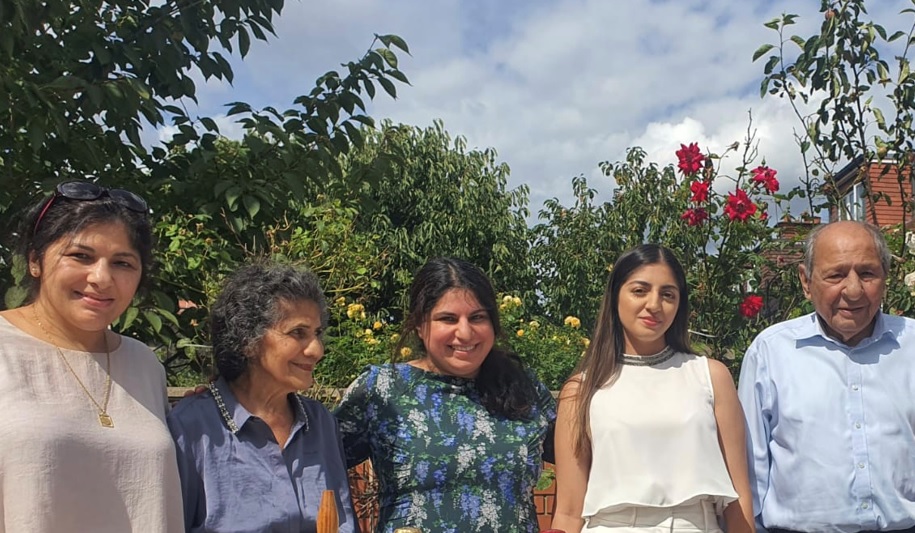
Aniza Meghani Letter to Dad Kurbanali Kassamali Mulji Passings Simerg Insights from around the world
Kurbanali Mulji pictured in August 2020 with (l to r) daughter Azmina, wife Nargis, daughter Ashifa and granddaughter Jina. Photo: Aniza Meghani Collection.
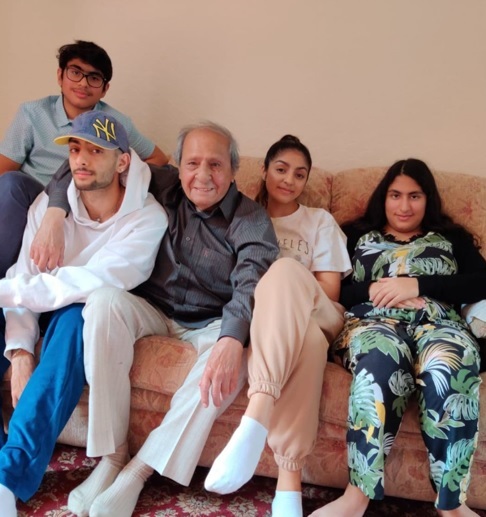
Aniza Meghani Letter to Dad Kurbanali Kassamali Mulji Passings Simerg Insights from around the world
(L to R) Alim, Alykhan, Jina and Amar pictured during Eid 2021 with their nana (maternal grandfather) Kurbanali Mulji, centre. Photo: Aniza Meghani Collection.
Aniza Meghani Letter to Dad Kurbanali Kassamali Mulji Passings Simerg Insights from around the world
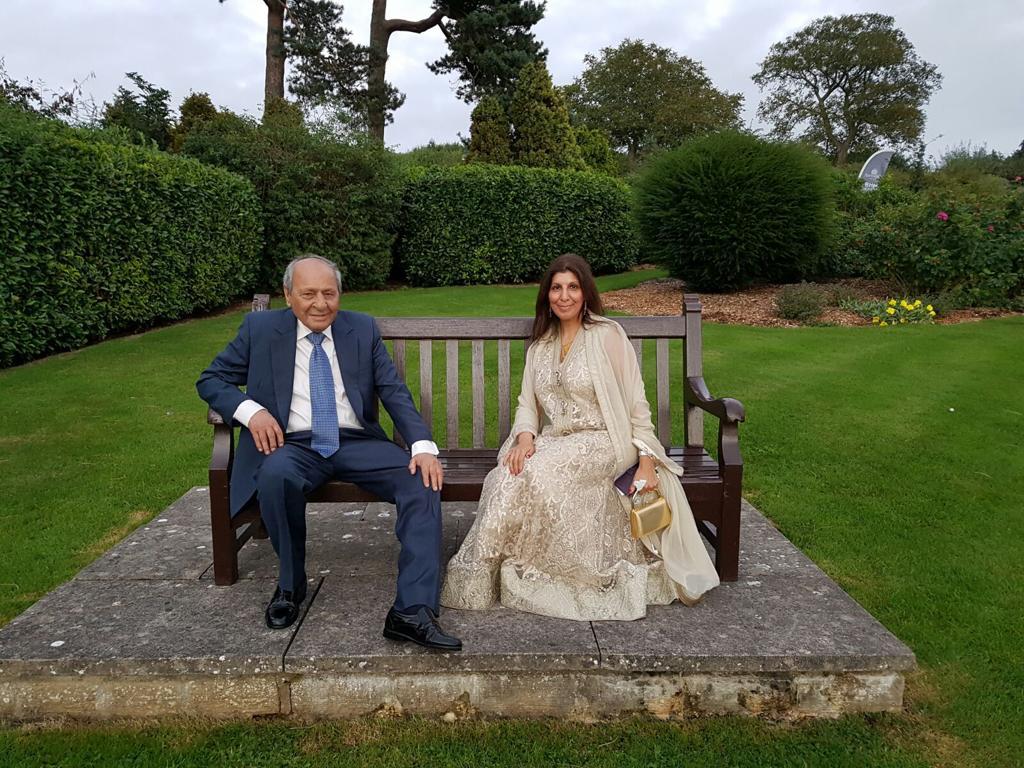
Aniza, author of this tribute, pictured with her beloved papa Kurbanali Mulji, September 2016. Photo: Aniza Meghani Collection.

Papa: if any new customer/ designer comes in, give them discount. Let them make a bit of money Give them a helping hand to move up in life. If you help them, they will come back again. Customers are our bread and butter. I don’t mean customers are always right, but a little help to them goes a long way. Don’t overprice fabrics for more money. Its greed. A little profit is halal (permissible). God does not like greed. There will always be stock. Be honest in your transactions.

In the early hours of Friday 14th January 2022, I witnessed him call out to late Mohammed Uncle:

Mohamed, come back, Mohamed …

I knew then this would be his day to return to His Creator. This journey of time is really short. There were no tears, but thankfulness, laughter, conversations and prayers for 11 hours before the undertakers came. 

As another dear friend quoted yesterday: Dream until its reality. MAN GIVES YOU REPUTATION, CHARACTER IS WHO YOU ARE…

Papa was a firm believer on these quotes. May his soul rest in eternal peace. Ameen.

Date posted: April 28, 2022.

__________________

We invite you to submit your condolences and tributes to Kurbanali Kassamali Mulji in the comments box below or by clicking on Leave a comment. Should you encounter issues in completing the comment box, please email your tribute to mmerchant@simerg.com; subject Kurbanali K. Mulji.

Aniza Meghani Letter to Dad Kurbanali Kassamali Mulji Passings Simerg Insights from around the world
Aniza Meghani

About the writer: Originally from Uganda, Aniza Meghani lives in London, England, and is an entrepreneur of classic textiles fabrics.

We invite you to read Aniza’s highly acclaimed piece Ismailis on Social Media: You Need to Take Care and STOP Indiscriminate Likes, Follows and Forwards!

Simerg invites Ismaili families to submit obituaries and tributes to deceased members of their families, whether they passed away recently or in the past. Please review PASSINGS on how to prepare and submit your tribute.

Before departing this website please take a moment to review Simerg’s Table of Contents for links to hundreds of thought provoking pieces on a vast array of subjects including faith and culture, history and philosophy, and arts and letters to name a few. Also visit Simerg’s sister websites Barakah, dedicated to His Highness the Aga Khan, and Simergphotos. Simerg’s editor Malik may be reached at mmerchant@simerg.com
Available for Viewing and Purchase in Calgary: Prince Hussain Aga Khan’s Signed Copies of “Diving Into Wildlife” PLUS An Exclusive Collection of Italian Made Scarves Inspired by His Beautiful Photos of Sea Animals

By MALIK MERCHANT
Publisher/Editor SimergBarakah and SimergphotosBarakah 

Hussain Aga Khan
Prince Hussain

For more than 12 years, Simerg has supported the initiatives of Prince Hussain Aga Khan to his satisfaction. When we first received his signed book “Animal Voyage” in 2009, they were snapped up within a few days. Then, we received his signed and unsigned copies of “Diving Into Wildlife” containing sea animal photos that were also sold out. We are pleased to inform you that we now have in stock very limited quantities of signed copies of “Diving Into Wildlife” for sale in Canada. The signed copy is available at US $125.00 (Note: The current Canadian bank exchange rate will be used for payments in Cdn $).

In addition to Diving Into Wildlife, we have also received for sale an entire collection of Italian made scarves inspired by Prince Hussain’s photography. The beautiful STENNELA produced scarves were conceived by Valérie Maurice and designed by Kirsten Synge, exclusively for the Prince’s organization Focused on Nature (FON). The scarves as well as the signed books may be viewed in Calgary, before making a purchase. As in the past, the entire proceeds from the sales of scarves and books will be submitted to Prince Hussain’s organization FON, which assists in the conservation and protection of threatened and endangered species, as well as habitat conservation efforts.

Story continues below

PHOTO BOOK: DIVING INTO WILDLIFE

Diving Into Wildlife by Hussain Aga Khan Simerg Signed copy
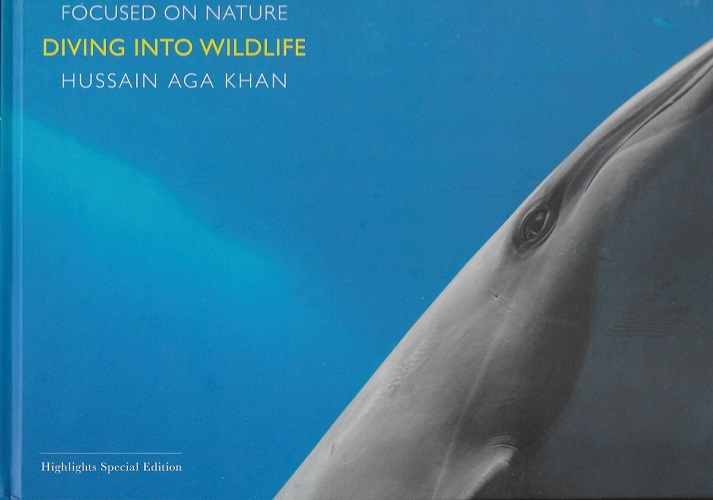
Cover Page of Prince Hussain Aga Khan’s Diving Into Wildlife.

______________

Hussain Aga Khan with his father and Portuguese President in Lisbon
Prince Hussain presents a photograph to his father, Mawlana Hazar Imam His Highness the Aga Khan, and Portugal’s President Marcelo Rebelo de Sousa at The Living Sea photo exhibition in Lisbon in September 2019. Photo: The Ismaili/Jorge Simão.

______________

STENELLA SCARF COLLECTION INSPIRED BY PRINCE HUSSAIN’S PHOTOGRAPHS

Focused on Nature Scarves
200 cm x 140 cm ( 85% modal, 15% silk) $US 290.00; Italian made and produced by STENELLA brand for Prince Hussain’s organization FON. Other sizes are also available and priced from $US 90.00. Please contact Malik Merchant at mmerchant@simerg.com to view – and purchase – the scarves in person in Calgary.

The author of this piece will gladly arrange to show you, by appointment, the entire collection of the beautiful scarves in person in Calgary. At the same time, you will also be able to make purchase of the scarf of your choice; they range in price from approximately US $ 95.00 to US $ 295.00, depending on material (silk or silk/cotton) and size. Please contact mmerchant@simerg.com for more details about the objects and to arrange a viewing in Calgary. During the viewing at a mutually arranged location, Malik will respectfully observe the social distancing guidelines in place for COVID-19 as well as any other recommendation(s) you and your family members may be observing at the time. Malik looks forward to your interest in these beautiful objects related to Prince Hussain Aga Khan’s incredible voyage of discovery in wildlife and nature since his childhood.

Date posted: April 22, 2022.

_____________________

Malik Merchant, publisher and editor of Simerg, Insights from Around the World
Malik Merchant

Malik Merchant is the founding publisher and editor of Simerg (2009) as well as its two sister websites Barakah (2017) and Simergphotos (2012). An IT consultant for more than 40 years in the UK, USA and Canada, he now engages in family related projects and is devoted to his websites. His passion for literature and community publications began in his childhood years through the work of his late parents Jehangir (d. 2017) and Malek Merchant (d. 2021), who both devoted their lives to the service of the Ismaili community, its institutions and the Imam-of-the-Time as missionaries and religious education teachers. In the UK, Malik edited Ilm magazine with his father. The internet encouraged him to launch his first website, Simerg, in 2009. A resident of Ontario since 1983, he recently relocated to Alberta. He has an animal loving daughter Dr. Nurin Merchant; she is a vet and practices in Ontario. Malik can be contacted by email at mmerchant@simerg.com. He can also be reached — and followed — @twitter and @facebook.

Laylat al-Qadr: The Night of Power

BY KARIMA MAGHRABY
(Additional material compiled by Simerg)

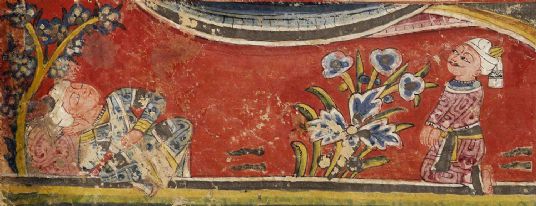
In his Khamsa, Shab-i Qadr (the Night of Power), the renowned Persian poet Amir Khusraw Dihlavi (d. 1325 CE) tells the story of a saint who made a failed attempt to stay awake until the Laylat al-Qadr. This image is taken from a folio in the Aga Khan Museum collection; the Toronto museum is due to open in 2014. Photo: Courtesy of the Aga Khan Museum
In his Khamsa, Shab-i Qadr (the Night of Power), the renowned Persian poet Amir Khusraw Dihlavi (d. 1325 CE) tells the story of a saint who made a failed attempt to stay awake until the Laylat al-Qadr. This image is taken from a folio in the Aga Khan Museum collection.

Laylat al-Qadr is the auspicious night when the Prophet Muhammad (s.a.s.) first received the revelation of the Holy Qur’an, thereby conferring upon him the mantle of prophethood at the age of forty.

The Shia Ismaili Muslims observe Laylat al-Qadr on the 23rd night of Ramadan, in keeping with traditions received through Hazrat Ali (a.s.) and his wife Hazrat Bibi Fatimah (a.s.), and the Imams of the Fatimid dynasty. It is a night of special prayer, reflection and remembrance of Allah. In 2022, this falls on Saturday, April 23.

When Prophet Muhammad was 40 years old, he received his first divine revelation from Allah through Angel Jibreel. When Angel Jibreel appeared to him, he said:

“Recite: In the Name of thy Lord who created,
created, Man of a blood-clot.

Recite: And thy Lord is the Most Generous,
who taught by the Pen,
taught Man that he knew not” — Holy Qur’an, Al-Alaq, 96:1-5

The first revelation
Part of Al-Alaq (The Clot) – 96th sura of the Holy Qur’an – the first revelation received by Prophet Muhammad

The night of this first revelation is celebrated as Laylat al-Qadr (the Night of Power). The following verses from the Holy Qur’an describe the loftiness of this night and articulate the importance of the final revealed scripture to mankind:

“Lo! We revealed it on the Night of Power. What will convey unto you what the Night of Power is! The Night of Power is better than a thousand months. The angels and the spirit descend therein, by the permission of their Lord, with all decrees. Peace it is until the rising of the dawn.” — 94:5

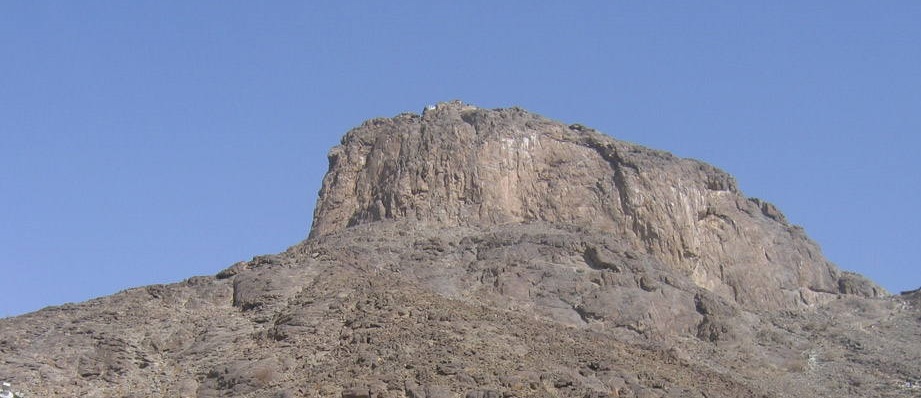
Cave of Hira
A photo of Cave of Hira in the Mount of Light, near Mecca, where the Prophet would come for his devotions and meditations, and the sacred spot where the Holy Quran began to be revealed. Prophet Muhammad (s.a.s.) had just stepped into the forty-first year of his life, when during the 23rd night in the month of Ramadan the first 5 verses of the Surah Al-Alaq (96) were revealed to him. The small cave is about 3.5 meters long and 2 meters wide. Hira was the Prophet Muhammad’s most adorable place for meditation.

“(This is) a Scripture which We have revealed unto you (Muhammad) that thereby you may bring forth mankind from darkness unto light, by the permission of their Lord, unto the path of the Mighty, the Owner of Praise.” — 14:01

“And celebrate the name of thy Lord morning and evening. And part of the night, prostrate thyself to Him; and glorify Him a long night through. As to these, they love the fleeting life, and put away behind them a Day (that will be) hard.” — 76:25-27

Mountain of Light
Prophet Muhammad (s.a.s) received his first revelation from Allah through Angel Jibreel (Gabriel) in the Hira cave which is on Jabl al Nur (Mount of Light) shown in this photo. The peak is visible from a great distance. The Prophet used to climb this mountain often even before receiving his fist revelation from Allah.

“We sent it down during a Blessed Night” — 44:3

“Ramadhan is the (month) in which was sent down the Qur’an, as a guide to mankind, also clear (Signs) for guidance and judgment (Between right and wrong)” — 2:185

Hazrat Mawlana Murtaza Ali (a.s.) the successor of Prophet Muhammad (s.a.s) to the throne of Imamat is quoted as having said:

“Do not remember God absent-mindedly, nor forget Him in distraction; rather, remember Him with perfect remembrance (dhikran kamilan), a remembrance in which your heart and tongue are in harmony, and what you conceal conforms with what you reveal.” — quoted in Justice and Remembrance, Introducing the Spirituality of Imam Ali, by Reza Shah Kazemi, p. 162.

Date first posted: July 18, 2014.
Last updated: April 23, 2022.

____________

Credits:
1. Wikipedia.org

2. Mecca.net
3. English Translation of the Qur’anic verses by Arthur John Arberry.

LINKS TO A SELECTION OF ADDITIONAL ARTICLES ON THE HOLY QUR’AN

_______________

Princess Yasmin Aga Khan’s Relentless Fight Against Alzheimer’s: “This is Our Moment”

PLEASE CLICK: THIS IS OUR MOMENT
(Note: contributions can only be made using a US or Canadian address)

By MALIK MERCHANT
Publisher/Editor Simerg, Barakah and SimergphotosBarakah 

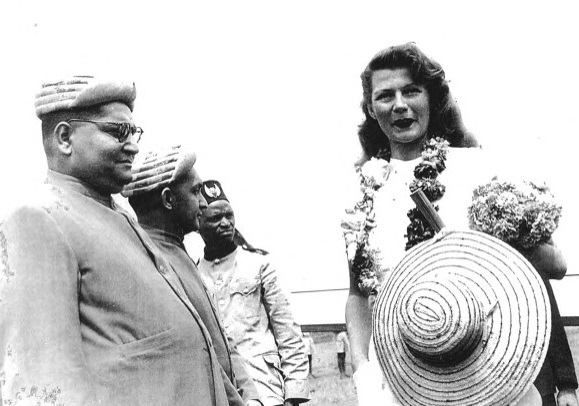
Ms. Rita Hayworth being met by Ismaili leaders during her arrival at Arusha airport in 1951, with Prince Aly Khan.

In loving memory of her mother Ms. Rita Hayworth, whose life was cut short due to Alzheimer’s, Princess Yasmin Aga Khan has for four decades sought to raise awareness about the disease and has also raised tens of millions of dollars by hosting the Rita Hayworth Galas through the Alzheimer’s Association, the world’s leading voluntary health organization in Alzheimer’s care, support and research. These gala events as well as related functions have been held in many cities across the USA, with the major ones being the annual Galas in New York (founded in 1984, and now known as The Imagine Benefit) and Chicago (1987). The next Rita Hayworth Gala with the theme “This Is Our Moment” is scheduled to be held at the Chicago Hilton on Saturday April 23, 2022 as an in-person event that will be attended by Princess Yasmin herself.

Story continues below

Banner, Rita Hayworth Gala, Chicago Hilton, April 23, 2022. Image credit: The Alzheimer's Association. Please click on banner to donate.
Banner, Rita Hayworth Gala, Chicago Hilton, April 23, 2022. Image credit: The Alzheimer’s Association. Please click on banner to donate (Note: contributions can only be made using a US or Canadian address).

Recently, Simerg’s sister website Barakah published a special piece entitled Yasmin Aga Khan: A Princess With a Mission that profiled the Princess as well as presented details about the upcoming Chicago Gala. Now, with a few days remaining before the Rita Hayworth Gala in Chicago, I make a personal appeal to all readers and subscribers of the 3 websites, namely Simerg, Barakah and Simergphotos, as well as my friends on the social media, to consider participating in Princess Yasmin’s gallant and noble initiative to win the fight against Alzheimer’s. I might note that the disease affects hundreds of members of the Ismaili Jamat in North America, and probably thousands more in other countries around the world. Alzheimer’s has a considerable impact on everyone supporting those afflicted with it, and is regarded by medical experts as “one of the saddest diseases in existence.”

I am proud to note that since the mid 1990’s Princess Yasmin’s initiatives through the Alzheimer’s Association, have been faithfully championed and supported by my dear Ismaili friend in Chicago, Sadruddin Noorani. He has held important honorary positions within the Association both as a member of its executive team as well as a benefactor. Noorani, writing in Barakah’s recent piece, noted: “It has been my honour and privilege to have been involved with the Rita Hayworth Gala for more than 25 years, and I am truly humbled by this opportunity that has come into my life, to be associated directly with the work of a beloved member of Mawlana Hazar Imam’s family.”

In recognition of Noorani’s incredible support since the mid 1990’s, the Alzheimer’s Association has designated a special page under his name, where donations specifically to the Rita Hayworth Gala can be made (note: contributions can only be made using a US or Canadian address). Kindly note that all donations to the Rita Hayworth Gala and any tickets purchased for the gala are processed through the industry leading fundraising platform GiveSmart exclusively for the Alzheimer’s Association.

Princess Yasmin Aga Khan

Once a contribution is made of any amount, small or big — and I emphasize no amount, even $5.00, is ever small — the “Contributor’s Name” or the word “Anonymous” (if the donor chooses to stay anonymous) will be displayed on the page along with the amount contributed. While Noorani may have set a goal of $ US 10,000.00 (ten thousand), I sincerely hope we can get close to the number or perhaps even exceed the amount, which I personally consider to be an arbitrary number. Above all, your contribution of any amount as well as an awareness and understanding of the disease are extremely important.

I ask all of you to do what you can for this extraordinary cause that is close to the heart of Princess Yasmin. As of April 24 $ US 10,155.00 has been raised through Simerg and Barakah as well as personal efforts of Mr. Noorani, whose involvement with Princess Yasmin and the Alzheimer’s Association has been noted above. Make your contribution for any amount that fits within your budget by clicking on THIS IS OUR MOMENT.

As Princess Yasmin noted in her remarks at the New York Imagine Benefit Gala last November, “The fight to end Alzheimer’s hasn’t stopped, and neither have we.” Let us heartily join Princess Yasmin in her fight to combat Alzheimer’s, and make sure our future generations and our loved ones do not have to live and cope with one of the saddest of all the diseases.

Once again, I sincerely look forward to your interest in this initiative. Please click THIS IS OUR MOMENT (note: contributions can only be made using a US or Canadian address).

Date posted: April 16, 2022.
Last updated: April 24, 2022 (10:21 AM EDT).

___________________

Before departing this website please take a moment to review Simerg’s Table of Contents for links to hundreds of thought provoking pieces on a vast array of subjects including faith and culture, history and philosophy, and arts and letters to name a few. Also visit Simerg’s sister websites Barakah, dedicated to His Highness the Aga Khan, and Simergphotos. Simerg’s editor may be reached at mmerchant@simerg.com

National Geographic Photo Story: A Journey Through Tajikistan’s Pamir Mountains

In the heart of Central Asia lie the dramatic Pamir Mountains; while the topography of this lofty region poses unique challenges to daily life, new initiatives including those by the Aga Khan Development Network have helped to bring fresh opportunities to some of Tajikistan’s remotest communities. Please click on Pamir Mountains or on photo below to read Christopher Wilton-Steer’s piece in the National Geographic.

National Geographic Photo
Please click on image to read Pamir photo story in the National Geographic.

Date posted: April 21, 2022.

________________

Before departing this website please take a moment to review Simerg’s Table of Contents for links to hundreds of thought provoking pieces on a vast array of subjects including faith and culture, history and philosophy, and arts and letters to name a few. Also visit Simerg’s sister websites Barakah, dedicated to His Highness the Aga Khan, and Simergphotos. Simerg’s editor may be reached at mmerchant@simerg.com

Fantastic Glimpses and Insights from the 1964 East African Safari Rally

Introduced by MALIK MERCHANT
Publisher/Editor  SimergphotosBarakah and Simerg

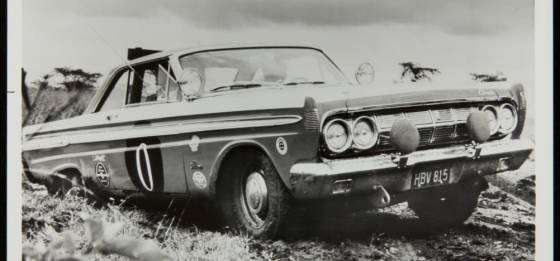
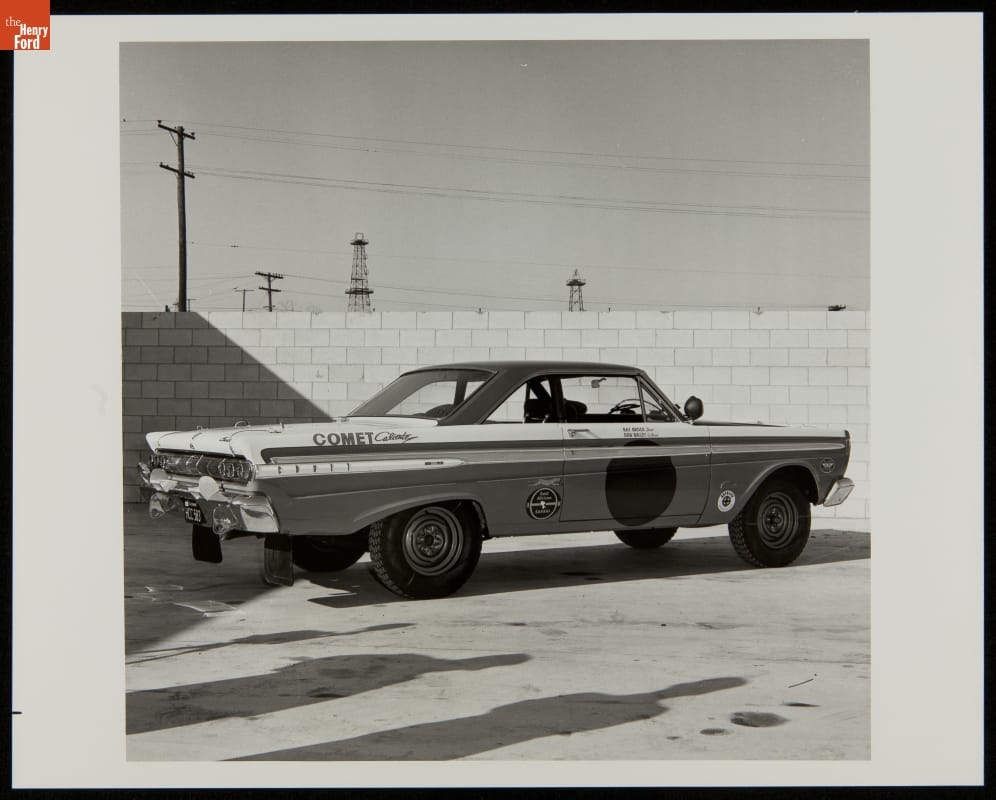
The football matches between great rival teams in East Africa such as Young Africans and Sunderland of Tanzania and Luo (later Gor Mahia) and Nakuru of Kenya caused a great deal of excitement among football fans, but no sporting event could match the mass appeal and interest of the gruelling 3,000 mile East African Safari rally that was held over 4 days during Easter. Weeks before the event, we would wonder how many cars would be entering the race, how many drivers would come from overseas, and the makes of the cars. Once the rally began in Nairobi, tens of thousands people from all walks of life in Kenya, Uganda and Tanzania would throng the streets to see the arrival of the rally cars in their villages and towns. We would be listening to the radio for updates, and waiting to read the morning papers. We are pleased to bring to our readers a selection of photos of the 1964 rally from the collections of The Henry Ford. While the focus is on Ford cars — and specifically the Comet — readers will get an appreciation of the preparations that went into making each car “safari ready” to withstand all that the East African roads and weather would throw at the drivers and their cars to push them into early exit from the rally. Please click HERE or on the photo below to read the story.

Comet Caliente East African Safari American entry; simerg and simergphotos malik merchant
This beautiful Comet Caliente was one of a team of special Ford Comets which was the first American entry in the gruelling 1964 East African Safari rally. The two-door fastback model was equipped with numerous safety features including roll bars, extra lights, engine skid plates and tow bolts. Photo Credit: From the Collections of The Henry Ford. Please click on photo to read more.

Date posted: April 15, 2022.

______________________

Before departing this website please take a moment to review Simerg’s Table of Contents for links to hundreds of thought provoking pieces on a vast array of subjects including faith and culture, history and philosophy, and arts and letters to name a few. Also visit Simerg’s sister websites Barakah, dedicated to His Highness the Aga Khan, and Simergphotos. The editor may be reached at mmerchant@simerg.com

This Week: Birthdays of 2 Princes in Mawlana Hazar Imam His Highness the Aga Khan’s Family

Please click Prince Hussain Aga Khan

Cover Page of Prince Hussain Aga Khan’s Diving Into Wildlife. Please click on image for article celebrating Prince Hussain’s 48th birthday, April 10 2022.

Please click Prince Irfan Aga Khan

Prince Rahim and his son Prince Irfan, 7 years old on April 11, 2012, at Prince Hussain’s photo exhibition in Lisbon, Portugal, during the Diamond Jubilee of Mawlana Hazar Imam, His Highness the Aga Khan. Please click on photo for article on Prince Irfan and meaning of his name.

Date posted: April 11, 2022.

________________

Before departing this website please take a moment to review Simerg’s Table of Contents for links to hundreds of thought provoking pieces on a vast array of subjects including faith and culture, history and philosophy, and arts and letters to name a few. Also visit Simerg’s sister websites Barakah, dedicated to His Highness the Aga Khan, and Simergphotos.

Simerg’s editor may be reached via email at mmerchant@simerg.com, and also @Twitter and @Facebook.

Princess Yasmin Aga Khan and her determination for a world without Alzheimer’s

Princess Yasmin Aga Khan, Alzheimer's Association, Rita Hayworth Gala, Simerg and Barakah
Please click on image for article “Yasmin Aga Khan: A Princess with a Mission.”

For four decades, Princess Yasmin Aga Khan, younger sister of Mawlana Hazar Imam, His Highness the Aga Khan, and Prince Amyn Mohamed Aga Khan, has worked with the Alzheimer’s Association to fight the disease that contributed to the death of her mother, Ms. Rita Hayworth, at the age of 68. Princess Yasmin was compelled to turn her personal pain into a positive force and she founded the Alzheimer’s Association’s Rita Hayworth Galas to fulfill the Association’s Vision, “A world without Alzheimer’s and all other dementia®”. The work of the Association is accelerating global research, driving risk reduction and early detection, and maximizing quality care and support. Simerg’s sister website, Barakah, which is dedicated to His Highness the Aga Khan, members of his family and the Ismaili Imamat, brings to its readers a special piece highlighting the life of Princess Yasmin and the forthcoming Rita Hayworth Gala on April 23, 2022 at the Hilton Chicago, an event that is being held in person and that will be attended by Princess Yasmin. Please read Barakah’s special piece Yasmin Aga Khan, a Princess with a Mission and learn how you can become an active force in Princess Yasmin’s fight to end Alzheimer’s.

Date posted: April 2, 2022.

__________________________

Before departing this website please take a moment to review Simerg’s Table of Contents for links to hundreds of thought provoking pieces on a vast array of subjects including faith and culture, history and philosophy, and arts and letters to name a few. Also visit Simerg’s sister websites Barakah, dedicated to His Highness the Aga Khan, and Simergphotos.

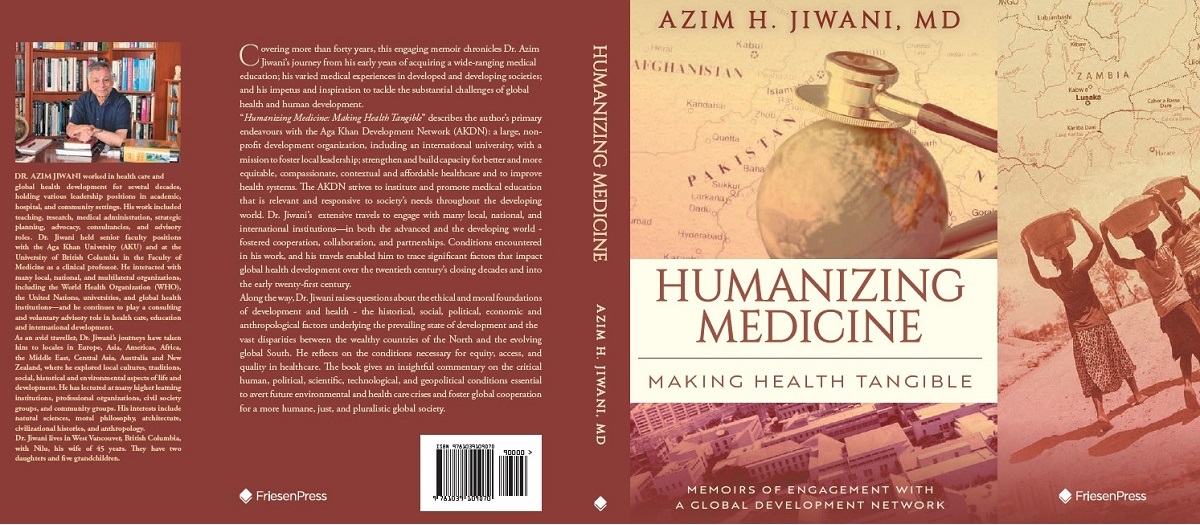
Book Review: “Humanizing Medicine: Making Health Tangible” – Memoirs of Engagement with the Aga Khan Development Network

________________________________________________________

Humanizing Medicine: Making Health Tangible – Memoirs of Engagement With A Global Development Network by Azim H. Jiwani, MD
300 pp. FriesenPress,
US$ 30.99 (Hardback), US$ 24.99 (Paperback) and US$ 7.99 (eBook) as listed at FriesenPress; also available in all formats at Amazon.ca and Indigo.ca.
________________________________________________________

BOOK REVIEW BY NIZAR MOTANI, PhD

Dr. Azim Jiwani’s book was a surprise gift from a dear friend. This unexpected gesture obligated me to read it, which I did with much gratitude, and it even inspired me to write this review. The author’s work is a “pandemic baby” born during the extended lockdown. This Kenya-born Makerere University Medical School (Kampala, Uganda) graduate acquired a broad further medical education in the U.K., U.S.A. and Canada. He subsequently established a thriving private medical practice in Calgary, Canada, enjoying affiliations with local universities and hospitals.

Dr. Jiwani’s breadth and depth of interests give his memoir a multidisciplinary flavour. The book draws upon insights from anthropology, architecture, civilizational history, natural sciences, moral philosophy, and restless global trotting. I might add that he carries some genes of a novelist and a travel guide.

The synopsis of his book reveals his most earnest and pressing concerns for the future of humanity and the planet, which he champions even after his partial retirement: “Rarely in recent times has the world found itself gripped in conditions that pose a substantial existential threat to lifeforms on earth, destabilize societies, impact health, quality of life, economic and cultural survival, and engender greater inequality and division between and within countries and regions.” Moreover, he continues: “The recent onset of the Covid-19 global pandemic and the accelerating but belatedly acknowledged climate crisis, and its devastating effects on human health, have laid bare the historical, political and policy and institutional deficiencies in health systems worldwide.”

Dr. Jiwani’s concerns about conflict and the global arms race and its devastating health, social and economic impacts, especially in the developing countries, serendipitously led to a life-changing meeting with Prince Sadruddin Aga Khan at the prince’s chateau in Geneva in 1983. This meeting deeply inspired him to further Prince Sadruddin’s tireless efforts to foster a more just, humane and equitable world. Coincidentally, and again serendipitously, in 1985, he found an excellent umbrella organization to join — the Aga Khan University (AKU), an apex agency of the Aga Khan Development Network (AKDN), which he describes at an enlightening length. “The Aga Khan University, the Aga Khan Health Services and empowerment of civil society are an integral part of AKDN’s mission to anticipate and respond to foreseeable effects of unaddressed inequities, poverty, programs and leadership deficits in some of the most challenging regions of the developing world. AKDN also endeavours to enhance institutional capacities, establish collaborative networks and promote best practices and international standards of excellence.”

Chapters 8, 9, 10 and 11 largely focus on his multiple roles as physician, academic, strategic planner, administrator and occasionally as AKDN representative at various conferences. Dr. Jiwani took part in or led AKU teams involved in negotiating and finding common ground with private and public hospitals and universities and local, national and transnational organizations in Asia and Africa. He aimed to promote some of AKDN’s seemingly revolutionary vision and mission. These endeavours included strengthening institutional capacities to provide good quality, ethical, cost-effective and contextual care — especially for marginalized populations. He established and promoted continuing education of physicians widely and convinced urban specialists in lucrative private practices to incorporate practical primary care approaches for better patient and population outcomes. Also, he led the development of advanced formal education in family and community medicine and fostered comprehensive local, regional, and international partnerships in medical education.

Despite his demanding duties and schedules, he and his wife, Nilufa, squeezed in travels to many exotic places, leading to sundry and memorable encounters. For example, in Cambodia and Morocco, their tour guides requested Dr. Jiwani to examine and advise on their very sick family members, which he readily did. They got paid in the local “currency” – hospitality, home-cooked food, and prayers and blessings for the couple’s well-being!

Article continues below

"Humanizing Medicine: Making Health Tangible" Akdn, Azim Jiwani and book review by Nizar Motani, Simerg Insights from around the world
“Humanizing Medicine: Making Health Tangible” by Dr Azim H. Jiwani, 300 pp., Friesen Press, August 2021.

After more than three decades of enriching global engagement with AKDN and other institutions, he settled in Vancouver, Canada. His reputation derived primarily from his affiliation with AKDN as a worldwide healthcare expert and an advocate for compassionate and affordable care. His passion for linking critical primary and secondary care medicine and making medical education relevant to societies had preceded him. Soon he was fielding requests to help manage understaffed health clinics in the Vancouver area, especially for the marginalized people facing complex medical, mental health and drug addiction problems. Some of the most severe cases were noted in the First-Nations people, where his compassion, broad experience and cultural sensitivity were valued in an underdeveloped native health care system. He led crucial community and hospital programs as a physician leader while re-establishing his clinical and academic career in Canada. 

Similarly, his past engagement with AKDN and clinical reputation brought him seductive and lucrative offers. A former patient, a confidant of the ruling family of a fabulously wealthy country, had identified him as the ideal candidate to head the newly built hospital and serve as the Royal family’s personal physician. The chasm between the lives of the privileged elite and the neighbouring populations that seemed plagued with poverty and privations so disturbed him that he quickly left without meeting the prince. But the intrepid doctor accepted a much less lucrative, occasional position as the onboard physician for a luxury cruise line group! His wide travels whetted and rewarded his insatiable curiosity and interests in marine medicine, environment and culture. Besides attending to all types of routine and emergency cases, the couple was able to “sail on every river, sea, and ocean.” And his readers can vividly and vicariously enjoy these and other adventures.

Dr. Jiwani’s fascinating and instructive memoir raises critical questions about the historical, ethical and moral foundations of health and development. He concludes with an insightful epilogue in which he reflects on the necessary conditions for equity, justice, access and quality in health care and development and appeals for global cooperation for a sustainable future for shared humanity.

The book is available in hardcover, softcover and digital formats. Of note, the author has pledged all royalties from the book sales to the Aga Khan Foundation to support the patients’ welfare funds in Asia and Africa.

This captivating memoir would likely appeal to healthcare and other professionals or avid general readers interested in international organizations, career advancement, or simply expanding their knowledge about the interdependent planet we inhabit.

In conclusion, I am delighted to learn that this book is on the 2021 Finalist list of the prestigious Chanticleer International Book Awards (CIBA) in the non-fiction long-form journalism and memoirs category, where outstanding books from many countries compete. The first prize will be announced at a ceremony and banquet in Washington in June. The beautiful finalist badge is shown along with the front cover of the book at top of this page.

Date posted: March 25, 2022.

[Dr. Azim Jiwani was featured recently in Simerg’s ongoing series on books by Ismaili authors. Please read our interview with Dr. Jiwani – Ed.]

________________________

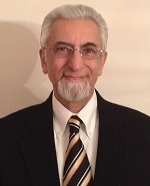
A portrait of Dr. Azim H. Jiwani, an author and physician, wearing a suit and tie with a friendly expression.

Nizar A. Motani has a doctorate from the University of London (SOAS) in African history, specializing in British colonial rule in East Africa. He has been a college professor at Bowdoin College (Brunswick, ME) and Western Michigan University (Kalamazoo, MI). He was the first Publication Officer at the Institute of Ismaili Studies (London, UK). He now lives in Atlanta, Georgia.

Dr. Motani’s previous pieces on Simerg and its sister website Barakah are: 

_____________________

Before departing this website please take a moment to review Simerg’s Table of Contents for links to hundreds of thought provoking pieces on a vast array of subjects including faith and culture, history and philosophy, and arts and letters to name a few. Also visit Simerg’s sister websites Barakah, dedicated to His Highness the Aga Khan, and Simergphotos.

Simerg’s editor may be reached via email at mmerchant@simerg.com.

Cover page, Dr. Tammy Gaber's beautiful new book "Beyond the Divide: A Century of Canadian Mosque Design", Hardcover, pp. 304 with 306 photos and 135 drawings, colour throughout, February 2022, pub. McGill-Queen's University Press, simerg

Simerg in Conversation with Dr. Tammy Gaber, Author of a Stunning and Insightful New Book on Canadian Mosques Over the Past Century

We recently read Professor Tammy Gaber’s new book “Beyond the Divide: A Century of Canadian Mosque Design” and found it to be beautiful and impressive — its design brings together pictures, text, and architectural drawings in a clean and easy-to-read layout. Her analysis covers a lot of ground, quite literally. Simerg presented a few questions to Dr. Gaber about her book, with the focus on women’s presence and participation in mosques. She kindly obliged and we are pleased to present the following interview which was conducted via email.

Simerg: You write that your investigation began two decades ago. Please tell our readers a little about your journey, intellectually in that time and geographically across Canada.

DR. GABER: In my acknowledgements I was hinting at the fact that my research on mosques began with my Bachelor of Architecture thesis (at University of Waterloo completed in 1999) for which I designed a mosque in Canada. It was a struggle to find information on the subject and to approach the design as critically as I had any other building type in my education. I was also hinting at my Masters (Cairo University, 2004) in which I examined qualities of design of ‘Western’ mosques and my PhD (Cairo University 2007) in which I examined the historical roots, development and contemporary impact of women’s spaces in mosques. This specific project, the examination of mosques in Canada began in 2015 with a SSHRC (Social Sciences and Humanities Research Council) funded grant.

Simerg: Beyond your studies at these important institutions in Canada and Egypt, how far and wide have you travelled as designer, educator and author of a truly beautiful book.

DR. GABER: I travelled to 53 cities to see 90 mosques in the space of 2.5 years while I was full-time teaching — so all travel took place during holidays or study weeks and were focused on the examination of mosque spaces. A large number of the mosques I studied were in converted buildings, some of which used to be other places of worship. As an architecture educator I am very interested in excellent architecture and when I could I would visit other buildings I did.

Simerg: The title Beyond the Divide speaks of an existential search for a more equitable presence for women in mosques. Their points of view are central to this endeavor. You use a captivating term room sometimes with a view. As an architect you classify mosques into those with no view, with a partial view, and with a full view. An astonishing 46% of mosques you studied had no view for women and only 15% had a full view, and the colour coding you use in the architectural drawings illustrates the stark divisions with clarity. 

DR. GABER: It was important for me to relay the architectural facts about women’s spaces in mosques with data on the proportion, location, materials and recurrent patterns so that the issue would become very clear.

Simerg: You write about the Ka’ba in Mecca as exhibiting equal access. Men and women have prayed there without separation for 14 centuries and continue to do so. And yet, in the Canadian mosques you have studied, the allocation of spaces is tending towards more separation. Indeed, mosques with equal access have become gendered spaces with women allocated about a third only of the built spaces. Often, the spaces are of inferior quality. Edmonton’s Al-Rashid Mosque began as an equitable space. Not any more. Others like the Sudbury mosque have resisted this change to gendered spaces. The Ismaili jamatkhanas are full view and divided equally by default. 

Article continues below

Dr. Tammy Gaber''s beautiful new book "Beyond the Divide: A Century of Canadian Mosque Design, Interview with Simerg
Cover page, Dr. Tammy Gaber’s beautiful new book “Beyond the Divide: A Century of Canadian Mosque Design”, Hardcover, pp. 304 with 306 photos and 135 drawings, colour throughout, February 2022, pub. McGill-Queen’s University Press.

DR. GABER: My apologies, but I am tempted to reiterate all of chapter 7 [of the book] here.  It was important for me to relay the architectural facts and that architecture has agency and affects behaviour in both positive and negative ways: spaces that do not welcome women lead to less attendance by women; spaces that welcome women equally not only leads to more attendance but more participation in all aspects of the communities use of the spaces and sustained attendance over generations. Additionally there is a disjunction between women’s ability to use spaces of the mosque and other public spaces like schools or shops — this becomes an accessibility issue. 

Simerg: Mimar Sinan from the 16th century is generally spoken of the glowing terms. Yet you uncover this divide in his architecture. His students follow with similar designs. Please explain how this inequity built into stone has become a “tradition” with vocal defenders.

DR. GABER: Mimar Sinan’s mosques borrowed and greatly developed structural forms and ideas inherited from Byzantine architecture (for example Hagia Sophia). It was common in Byzantine architecture to include a designated women’s balcony in the church space. That practice was abandoned in subsequent periods of church architecture but was adopted again, centuries later, by Ottoman mosque architecture including Sinan’s works. The impact of this introduction was very far reaching: during the Ottoman empire hundreds of mosques were constructed across vast geographies placing in stone designated spaces for women that were much smaller in proportions (height and floor area) and made common the cultural adoption that this was the ‘norm’.

Simerg: Apparently, it is new immigrants to Canada from many different countries who are not so accommodating of equitable spaces for women and are pushing for regressive changes.  Are the critiques of Zarqa Nawaz and others fostering  better counter conversations?

DR. GABER: The spaces for women in the Canadian mosque is an unfolding conversation as users (and mosque governance) modify spaces over time. Additions or subtractions to spaces are a result of these conversations. Zarqa Nawaz’s film, book, and publications have brought attention to this matter which is important. During the exhibition of this research in 2017 at the Noor Cultural Centre many people spoke to me how surprised they were at the range and quality of women’s spaces in mosques. My hope is that by demonstrating the architectural facts of the breadth of mosque spaces in Canada and the impact these spaces have that there can be further conversations.

Simerg: Coast to coast is the term often used when speaking of Canada. However, the third coast, in the extreme north, has two mosques. There is one in Iqaluit (Nunavut) and another in Inuvik (North West Territories) delightfully named Midnight Sun Mosque. Having the North Pole as your neighbour brings its own challenges. Apart from the cold at the extreme latitudes, there are the orientation of the qiblah and fasting in Ramadan. Please could you tell us more.

DR. GABER: I like this phrasing of a ‘third coast’, you are very right! It was incredible to travel to Iqaluit and Inuvik and to meet the communities who created the mosques in each of these northern cities. There are many challenges associated with location and its impact on fasting and prayer — I have outlined in detail in chapter 6 the facts relating to the calculations and the conversations that are influx with respect to adaptation.

Simerg: You write about the disjunction between users and designers. In what areas do you hope your book will contribute to bridging the divide? Can this happen without women in the governance structures of the mosques?

DR. GABER: It is my hope that the survey in my book will demonstrate the inspiring possibilities of architecture to users, governance and architects  – and that the agency of each (users, governance and architects) is important and amplified when in dialogue.

Date posted: March 23, 2022.

__________________

Purchasing the Book

Dr. Tammy Baker's beautiful new book "Beyond the Divide: A Century of Canadian Mosque Design, Interview with Simerg

Tammy Gaber’s “Beyond the Divide: A Century of Canadian Mosque Design” is available for on-line purchase at the publisher’s website McGill-Queen’s University Press (it has more details about the book including its table of contents) as well as Indigo, Amazon, and Barnes and Nobles among other on-line booksellers.

______________

About Dr. Tammy Gaber

Tammy Gaber, Laurentian University, author of Beyond the Divide: A Century of Canadian Mosque Design, interview with Simerg Malik Merchant
Dr. Tammy Gaber

Dr. Tammy Gaber is Director and an Associate Professor at Laurentian University’s McEwen School of Architecture (MSoA), where she teaches architecture design and theory courses. Dr. Gaber joined MSoA as founding faculty in 2013 and previously taught at University of Waterloo, American University in Cairo and the British University in Egypt.  Dr. Gaber completed a SSHRC funded research project which led to her book Beyond the Divide: A Century of Canadian Mosque Design and has published on gender and architecture with a chapter in the forthcoming Global Encyclopedia of Women in Architecture  (Bloomsbury press). Dr. Gaber has also published chapters on vernacular and regional architecture in Habitat: Vernacular Architecture for a Changing Planet (Thames and Hudson) and Diversity and Design: Perspectives from the Non-Western World (Fairchild Publishing), and has two chapters in The Religious Architecture of Islam (in 2 volumes; 2021, Brepol Publishing). In 2019 Dr. Gaber won the Women Who Inspire Award from the Canadian Council of Muslim Women and in 2020 she was awarded Laurentian University’s Teaching Excellence Award for a Full-time professor.  During her 2020-2021 academic sabbatical Dr. Gaber  completed a two-month academic residency in Finland for her research on Alvar Aalto in the fall of 2020 and was an invited scholar at the Centre for Theological Inquiry at Princeton University for the 2020-2021 academic year.