Simerg is an independent initiative dedicated to Ismaili Muslims, the Aga Khan — their Hereditary Imam — and the Ismaili Imamat, and Islam in general through literary readings, photo essays and artistic expressions
Known as Mawlid or Mild-un-Nabi, the birth anniversary of the Prophet Muhammad (may peace be upon him and his family) is celebrated in different parts of the world by reflecting on his rich and inspirational life. In 2023, the anniversary falls on September 26/27, equivalent to the 12th day of the Muslim month of Rabi Al-Awwal, in the Islamic year 1444 Hijri. The Islamic calendar is roughly 10 days shorter than the Gregorian Calendar every year.
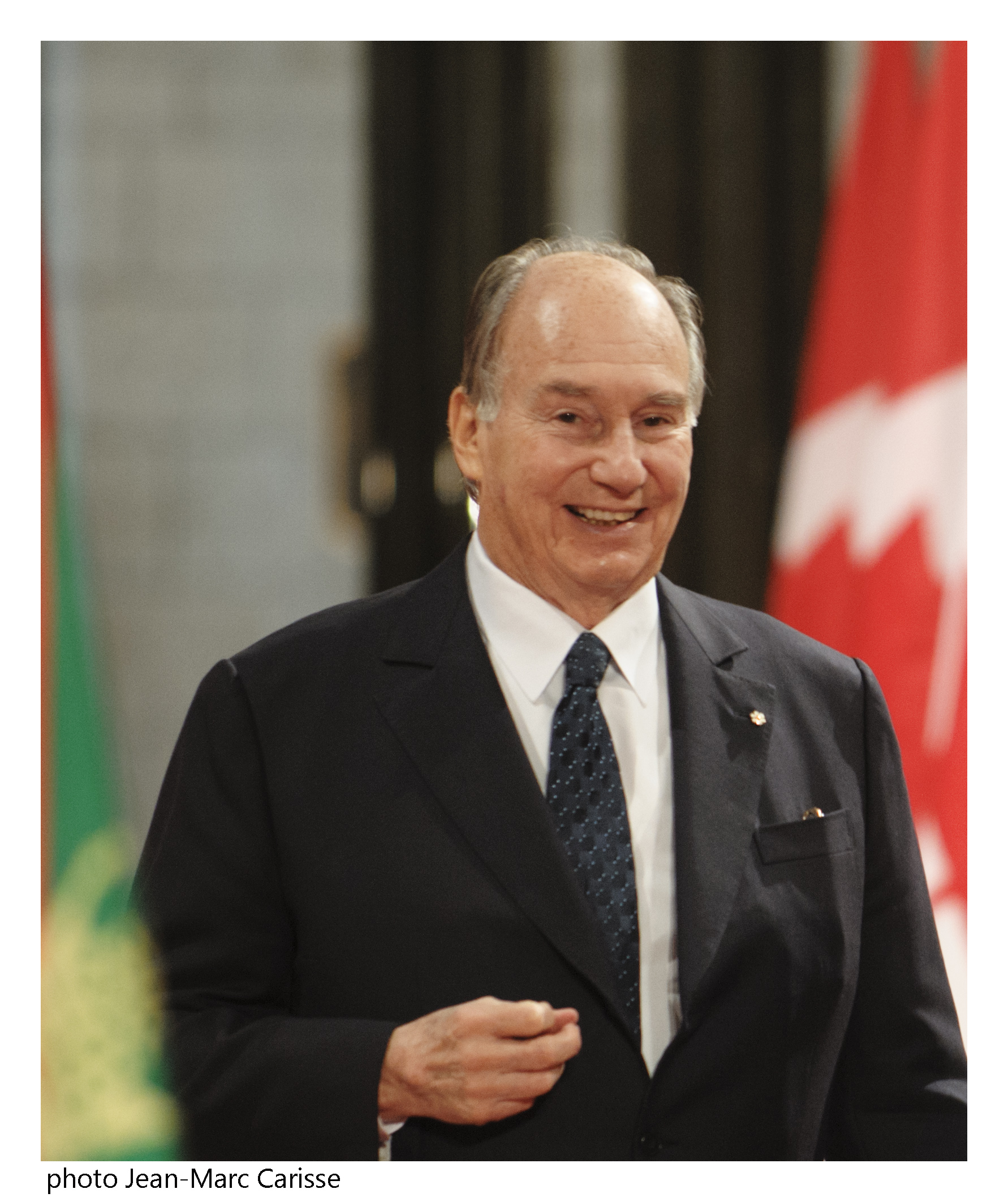
The Aga Khan’s speech was made at a special Seerat Conference honouring the life of Prophet Muhammad. Attended by eminent Muslims and non-Muslims historians and scholars from around the world, the speech answers the question: What should Muslim Societies seek to be in the future?
Did Muslims and Islamic countries and their leaders take up the clarion call and follow the 49th Ismaili Imam’s timeless advice given 47 years ago? Please read the Aga Khan’s 1976 insightful speech by clicking HERE.
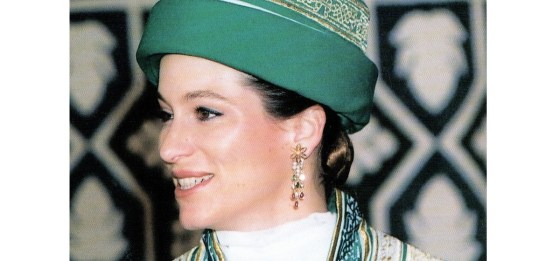
For almost three decades, Princess Zahra Aga Khan has immersed herself in the work of the Ismaili Imamat, a Hereditary Divine Institution which is led by her father, His Highness the Aga Khan, the 49th Imam in direct descent of the Prophet Muhammad (may peace be upon him and his family). The scope of the work of the Imamat extends to all areas of human endeavour and the entire family of the Aga Khan contributes to Ismaili institutions around the world as well as to the Imamat’s primary development organization, the Aga Khan Development Network (AKDN).
Princess Zahra is one of four children of the Aga Khan. As she celebrates her 53rd birthday on September 18, we bring to our readers her beautiful story through a selection of photographs that we have been able to gather from printed Ismaili community magazines as well as the official websites of the Ismaili Imamat. Please click PRINCESS ZAHRA AGA KHAN.
Albertans and Canadians may note that she was here 12 months ago for the opening of the Diwan Pavilion at the Aga Khan Garden in Edmonton, part of the University of Alberta’s Botanic Garden. The garden was a gift from the Aga Khan to the university.
Please click on photo for story of Princess Zahra Aga Khan.
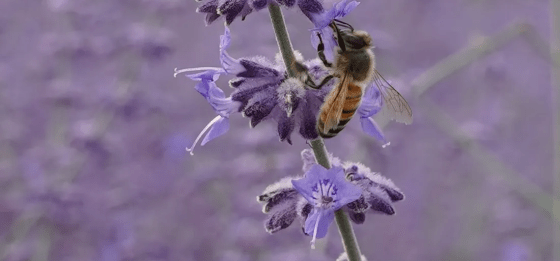
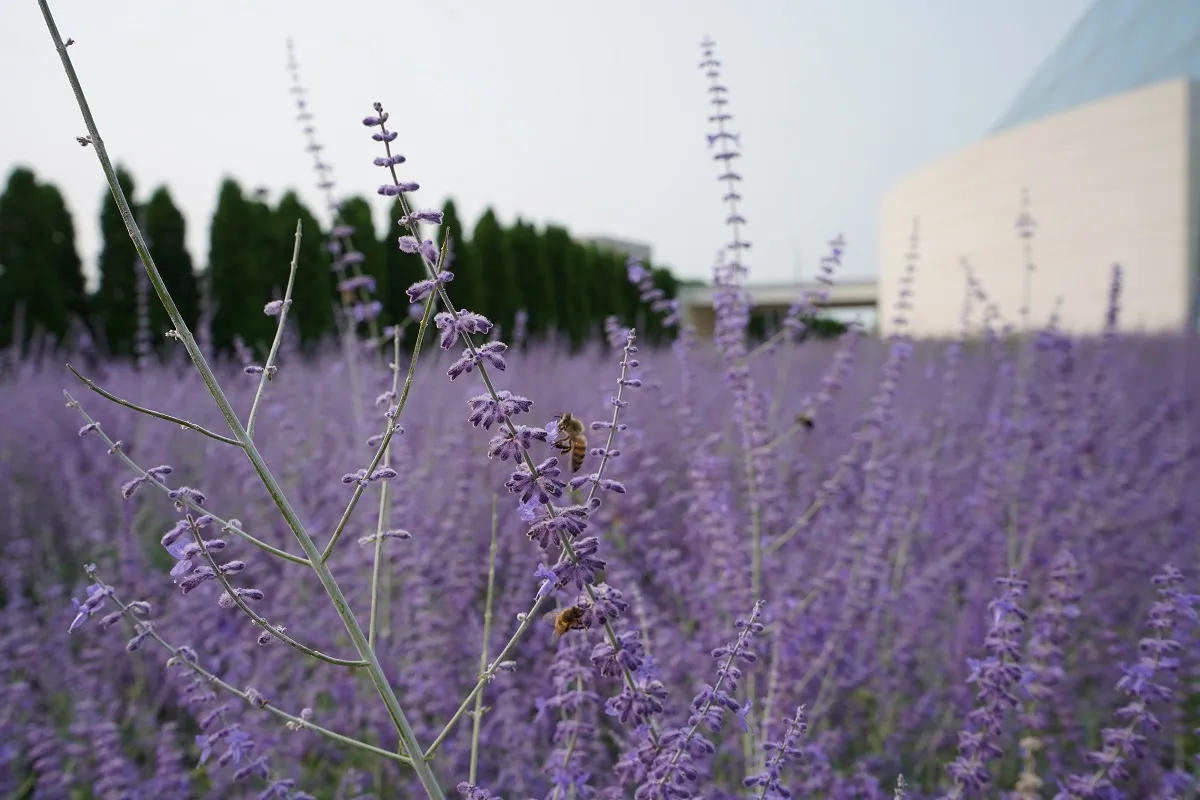
During my stay in Toronto between 2018-2021, the Aga Khan Park became my primary getaway place as it was so close from where I lived. The spring, summer and autumns months were particularly exciting as the park attracted lots of wildlife (see our stunning photo essays on The Hawk and The Birth of Goslings.) The sage and lavender plants in front of the Kaaba facing niche of the Ismaili Jamatkhana building attracted bees for pollination during the warm and sunny summer days. My daughter Nurin, on one of her visits to Toronto, captured some magnificent photographs of the bees. After relocating to Alberta, I read that the province produces nearly 40 million pounds of honey each year making it the fifth largest honey producing region in the world. There are 1,400 beekeepers in Alberta, managing over 300,000 bee colonies. Of course, the vast amount of honey produced is made possible by the alfalfa and clover nectar that is plentiful in the province.
Amazingly, of the 114 chapters or suras in the Qur’an, several are named after animals and insects. Examples are: Al-Baqarah (Chapter 2, The Calf, The Cow), Al-Anam (6, The Cattle), An-Nahl (16, The Bees), An-Naml (27, The Ant), An-Ankabut (26, The Spider), and Al-Feel (105, The Elephant). Many other chapters are named after objects or events in nature and the universe, including The Daybreak, The Earthquake, The Fig Tree, The Bright Morning Hours, The Night, The Sun, The Constellations, The Moon and so on.
Over time, we will endeavour to highlight the verses in the Qur’an that speak of God’s bountiful creation but we begin with the Bees and the Ants. These two insects are regarded as industrious, and they are also disciplined. They work together to support their colonies.
God speaks of The Bees in the following verses from chapter 16:
“And thy Lord revealed unto the bees, saying: ‘Take unto yourselves, of the mountains, houses, and of the trees, and of what they are building. Then eat of all manner of fruit, and follow the ways of your Lord easy to go upon.’
“Then comes there forth out of their bellies a drink of diverse hues wherein is healing for men. Surely in that is a sign for a people who reflect” — Quran, 16:68-69 (translation by A. J. Arberry, see Corpus Qur’an.)
In these verses, mankind is told about the healing power found in the different coloured honey made by the hard-working bees. The teamwork and level of organisation that goes into its production — because a single bee can’t make honey on its own — should serve us as an example on the importance of working and living together in the spirit of one-humanity.
The bees are venerated for their diligence and sacrifices. The importance that Islam holds for the insect is mentioned again in the following hadith (tradition) of the Prophet Muhammad (peace be upon him and his family):
“By the one in whose hand my soul is, the believer is like a bee which eats that is pure and wholesome and lays that which is pure and wholesome. When it lands on something, it doesn’t break or ruin it.”
Although chapter 27 in the Qur’an is called “The Ant”, there is only one verse that specifically mentions the hard-working ant. It is part of the story of Prophet Sulaiman (Solomon), who was gifted with the ability to speak and understand the language of animals, birds and insects.
The Qur’an tells of his encounter with the smallest of creatures as follows:
“….When they [Soloman’s army] came on the Valley of Ants, an ant said, ‘Ants, enter your dwelling-places, lest Solomon and his hosts crush you, being unaware!’
“But he smiled, laughing at its words, and he said, ‘My Lord, dispose me that I may be thankful for Thy blessing wherewith Thou hast blessed me and my father and mother, and that I may do righteousness well-pleasing to Thee; and do Thou admit me, by Thy mercy, amongst Thy righteous servants’.” — Qur’an, 27:18-19 (translation by A. J. Arberry, see Corpus Qur’an.)
The Prophet couldn’t hold back a smile as he heard the ant talk, and he thanked God for the many favours bestowed upon him, including his ability to understand and avoid trampling over the homes of the ants.
These verses and stories illustrate the importance Islam places on all God created life forms.
Featured photo at top of post: A general view of the Imam Husayn (Hussein) Mosque in Karbala, Iraq. The photo was taken between September 26 and October 12, 1932. Photograph: G. Eric and Edith Matson Photograph Collection, Library of Congress, Washingon D.C.
INTRODUCTION: Mawlana Hazar Imam Shah Karim al Hussaini, His Highness the Aga Khan, is the 49th Hereditary Imam of the Shia Imami Ismaili Muslims, and directly descended from Hazrat Ali and his son Imam Husayn.
Imam Husayn B. ‘Aly began his reign as the 2nd Ismaili Imam* on the death of his father, Hazrat Ali on January 27, 661 CE who, 29 years earlier in 632 CE, had been publicly proclaimed by the Prophet Muhammad (May peace be upon him and his progeny) to be his successor at Ghadir Khumm.
The succession ended the cycle of the Divine Institution of Nubuwwah and ushered the world into a new era of the Divine Institution of Imamat. Thus, the Imams directly descended from the Prophet Muhammad, from Hazrat Ali to Mawlana Shah Karim, have continued to guide their murids (followers) in the ta’wil (interpretation) and talim (teaching) of the Holy Qur’an for the last 1391 years.
Article continues below
A 1932 photograph showing the entrance to the great mosque at Karbala, the holy city of e Shia Muslims. Photograph: G. Eric and Edith Matson Photograph Collection, Library of Congress, Washingon D.C.
Imam Husayn was martyred in the Battle of Karbala on the 10th day of the Muslim month of Muharram, or October 10, 680, at the age of 54, and was succeeded to the Hereditary throne of Imamat by Imam Zainul Abideen.
The Islamic calendar is based on the lunar cycle, and thus shorter than the 365 day solar calendar by roughly 11 days. This year (2023), the 10th day of Muharram falls on or around July 28/29, almost 1343 years since the Imam’s tragic death at the hands of Yazid’s army.
Please download the PDF version of Wilfred Madelung’s excellent piece on Imam Husayn B. ‘Ali published on the IIS website. Note: The eminent German scholar Professor Madelung passed away in May 2023 and the IIS has published an In Memoriam in his honour HERE
Date posted: July 28, 2023 (This post is an update to earlier versions of the article that has appeared periodically on this website over the past few years.)
______________________
*Note: In the Shia Imami Nizari Ismaili tradition Imam Husayn’s brother, Hazrat Hassan, is not counted as an Imam. However, he is regarded as their second Imam by other Shia Muslims, thus making Imam Husayn as their 3rd Imam.
The family of Ajmal Andani (1949 – 2021) originally of Tanzania (known as Tanganyika until 1964) has shared Ajmal’s collection of the Tanganyika Standard newspapers that carried reports of the celebration of the Diamond Jubilee of the late Aga Khan in 1946, his death in 1957 after a reign of 71 years, and the succession of his grandson, the current Aga Khan, as the 49th Ismaili Imam. Our sister website, Barakah, brings you a selection of Jpeg images from the newspaper along with a PDF file. Please click HERE or on the image below for the memorable post.
God chose Adam and Noah and the House of Abraham and the House of Imran above all beings, the seed of one another; God hears, and knows — Qur’an, 3:33-34, translation by A. J. Arberry, see Corpus Quran for multiple translations.
Today the Ismailis are the only Shia community who, throughout history, have been led by a living, hereditary Imam in direct descent from the Prophet — His Highness the Aga Khan, Parliament of Canada, Ottawa, February 27, 2014.
On Wednesday June 28, 2023, corresponding to the 10th day of the Islamic month of ‘DhuI-Hijjah, Muslims around the world celebrated the Festival of Sacrifice or Eid al-Adha at the completion of the annual pilgrimage to Mecca.
Little is it known in the broader context and understanding of Islamic history, that on the 18th day of ‘DhuI-Hijjah, a week following his final pilgrimage, the Prophet Muhammad (may peace be upon him and his family) — based on a divine command from Allah — designated Hazrat Ali as his successor and the first in the continuing line of Hereditary Imams. This event took place in 632 CE and is observed by all Shia Muslims, including the Ismailis, as Eid-e Ghadir, because the event itself took place at a place called Ghadir Khumm, a valley between Mecca and Medina.
The majority of the Muslims, the Sunnis, do not accept the Shia version of this historic event and do not associate it with Ali’s succession to Muhammad. Thus, the world’s lack of knowledge about a pivotal historic moment in Islam.
For the Shia Ismaili Muslims, who will be commemorating this historic day on or around July 5, 2023, this event is of added significance as they are led by a living Hereditary Imam, His Highness the Aga Khan, whom they lovingly and respectfully address as Mawlana Hazar Imam (Our Lord the Present/Living Imam).
The Aga Khan in a rare interview with France’s journal, Politique International, has comprehensively described the general Shia understanding of Imamat, the Sunni belief as well as his own status as follows:
“The religious leadership of the Ismaili Imam goes back to the origins of Shia Islam when the Prophet Muhammad appointed his son-in-law, Ali, to continue his teachings within the Muslim community. The leadership is hereditary, handed down by Ali’s descendants, and the Ismailis are the only Shia Muslims to have a living Imam, namely myself. The other Shia — the Twelvers — revere a “hidden” Imam who will return on the Day of Judgment to take part in the final judgment.
“It is the presence of the living Imam that makes our Imamat unique.
“The Sunni are completely different in that they do not accept the idea of continuity of religious leadership by members of the Prophet’s family.”
“The Ismaili Imamat is a supra-national entity, representing the succession of Imams since the time of the Prophet. But let me clarify something more about the history of that role, in both the Sunni and Shia interpretations of the Muslim faith. The Sunni position is that the Prophet nominated no successor, and that spiritual-moral authority belongs to those who are learned in matters of religious law. As a result, there are many Sunni imams in a given time and place. But others believed that the Prophet had designated his cousin and son-in-law, Ali, as his successor. From that early division, a host of further distinctions grew up — but the question of rightful leadership remains central. In time, the Shia were also sub-divided over this question, so that today the Ismailis are the only Shia community who, throughout history, have been led by a living, hereditary Imam in direct descent from the Prophet.”
In historical sources, it is recorded that on the way back to Medina after performing a pilgrimage to Mecca, the Prophet received a revelation that Ismaili Muslims recite in their daily prayers:
“O Messenger, deliver that which has been sent down to thee from thy Lord; for if thou dost not, thou wilt not have delivered His Message. God will protect thee from men. God guides not the people of the unbelievers” — Qur’an, 5:67, translation by A.J. Arberry, see Corpus Quran.
Article continues after quote
“We search for a union with the family of the Chosen (Prophet Muhammad). We search for the truth of son after son. We are totally obedient to his offspring, one of the other. There is no other thing we can add to this but itself. We endeavour in our faith so that we do not turn out to be faithless.” — Ismaili poet Nizar Quhistani in reference to the Qura’nic verses mentioned at top of post
Upon receiving this revelation, the Holy Prophet stopped at an oasis known as Ghadir Khumm, and addressed a large gathering of Muslims who had accompanied him.
In History in Quotations M. J. Cohen and John Major write:
“Muhammad said: ‘He of whom I am the Mawla, Ali is his Mawla. O God, be the friend of him who is his friend and be the enemy of his enemy.’
“This became the proof text for the Shia claim that Ali, the Prophet’s cousin and son-in-law, was the Prophet’s rightful successor after the Prophet’s death in 632. The meaning of Mawla here probably implies the role of patron, lord or protector.”
In an entry for the Encyclopaedia of Islam, 2nd edition, (EI2), under the title Ghadir Khumm, L. Veccia Vaglieri writes:
“Ghadir Khumm is famous in the history of Islam because of a sentence (or some sentences) in favour of ‘Ali which the Prophet uttered there during a discourse….Taking ‘Ali by the hand. he asked of his faithful followers whether he, Muhammad, was not closer to the Believers than they were to themselves; the crowd cried out: “It is so, O Apostle of God!”, he then declared. “He of whom I am the mawla, of him ‘Ali is also the mawla (man kuntu nawlahu fa-‘Ali mawlahu)
Article continues below
Images of some stamps and coins issued by the Islamic Republic of Iran between 1990 and 2010 commemorating the Idd-e-Ghadir. The inscriptions inlude the Shahada, Qur’anic ayats and the declaration made by Prophet Muhammad at Ghadir Khumm, “Mun Koontu Mawla, Fa Hada, Aliyun Mawla” meaning “He of whom I am the Mawla Ali is also the Mawla.”
“Most of those sources which form the basis of our knowledge of the life of the Prophet pass in silence over Muhammad’s stop at Ghadir Khumm….Consequently, the western biographers of Muhammad, whose work is based on these [Sunni] sources, make no reference to what happened at Ghadir Khumm. It is however certain that Muhammad did speak in this place and utter the famous sentence…the hadiths are so numerous and so well attested by the different isnads that it does not seem possible to reject them.” (Note: special access is required to read articles in EI2. Vaglieri’s piece was reproduced in full in the UK Ismaili Association’s publication Ilm, December 1976, pages 28-30, with the permission of E.J. Brill, publishers of EI2.)
The Prophet, about 90 days before his death, was transferring his own spiritual authority bestowed upon him by Allah to Hazrat Ali, making him — and all the Imams that follow — the Amirul Mu’minin, or Master of the Believers.
On instruction from Prophet Muhammad, Hazrat Ali received baiyat (the oath of allegiance), from the Muslims assembled there, including Umar b. al-Khattab, Islam’s second Caliph, as stated in Vaglieri’s piece in EI2.
According to Shia traditions and sources, following the proclamation, the final verse of the Qur’an was revealed to the Prophet:
“Today I have perfected your religion for you, and I have completed My blessing upon you, and I have approved Islam for your religion” — Qur’an 5:5/3, translation by A. J. Arberry, see Corpus Qur’an.
This marked the end of the period of Nabuwwa, or Prophethood, and the historical beginning of the Institution of Imamat.
Eid-e Ghadir is an anniversary of special significance to all Shia Muslims, as it is also associated with the well-attested tradition in which the Prophet is said to have proclaimed:
“I am leaving among you two matters of great weight (al-thaqalayn), the Book of Allah and my kindred (itrati), the People of my House (Ahl al-Bayt), and these two shall never be separated until they return to me at the Pool [of Kawthar in Paradise on the Day of Judgement]…”
The Shia Ismaili tradition bears witness to the continuity of the authority vested at Ghadir Khumm. Today, this leadership and authority is vested in Mawlana Hazar Imam, His Highness the Aga Khan. The rope of Imamat has continued over 1,400 years, from Hazrat Ali, to the present 49th hereditary Imam and direct descendant of Prophet Muhammad through Hazrat Ali and Hazrat Bibi Fatima al-Zahra, Khatun-i Jannat.
In commemorating Eid-e Ghadir, the Ismaili Muslims celebrates the seminal event of Ghadir Khumm, reaffirming their allegiance to the Imam-of-the-Time as the direct lineal successor and inheritor of the authority of Hazrat Ali.
Date posted: July 4, 2023.
__________________
A selection of further readings on Ghadir Khumm and related topics in Simerg and its sister websites:
Featured image at top of post: An Arabic-script ambigram, where ‘Muhammad’ upside down is read as ‘Ali’ and vice versa.
A special note about the Encyclopaedia of Islam, Second Edition (EI2): Finished in 2005, the EI2 is a massive resource spanning five decades of scholarship. It sets out the present state of our knowledge of the Islamic World. It is a unique and invaluable reference tool, an essential key to understanding the world of Islam, and the authoritative source not only for the religion, but also for the believers and the countries in which they live.
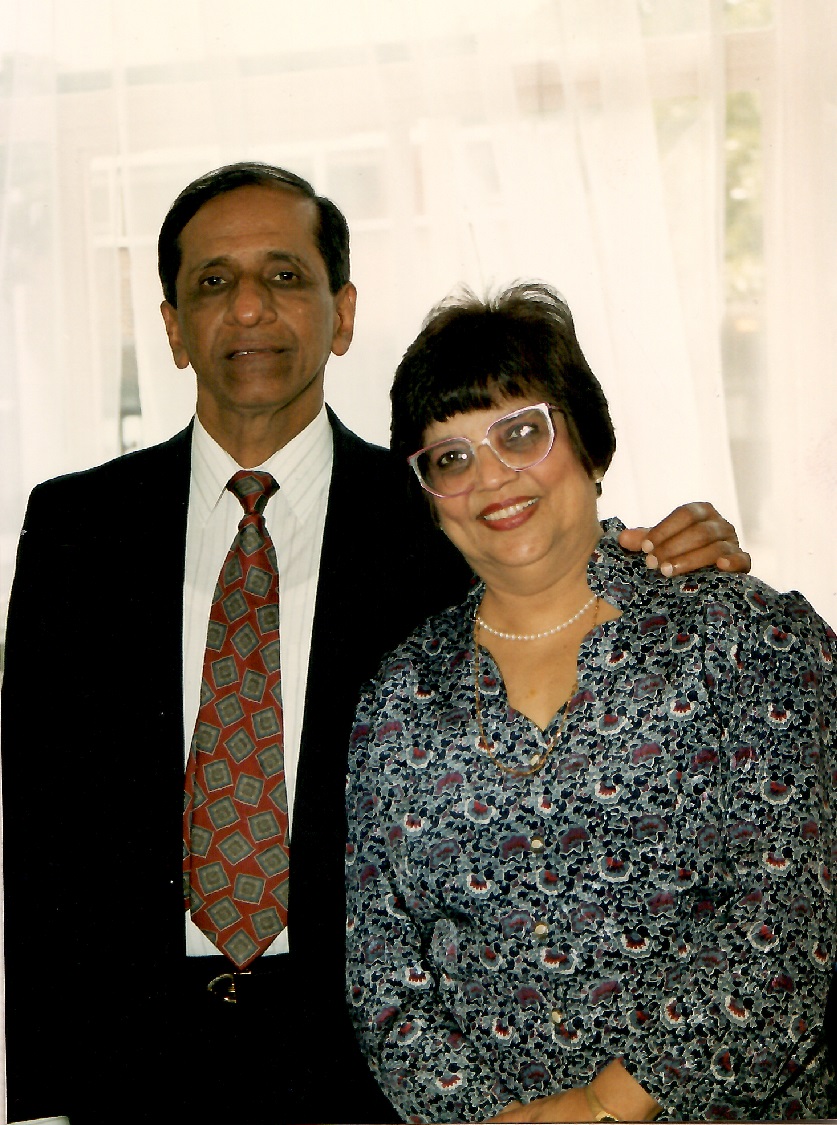
On September 17, 2012, the United Nations General Assembly proclaimed June 1 as the Global Day of Parents to be observed annually, honouring parents throughout the world. On May 27, 2023, the entire Merchant family remembered their loving dad and grandfather, Jehangir, on the 5th anniversary of his death.
Alwaez Jehangir (d. May 2018) and Alwaeza Maleksultan “Mrs. Merchant” (d. January 2021).
I was personally by his side in 2018 when he left this world peacefully to return to his original abode. Of course, we also remembered our mum. She passed away on January 21, 2021. Were she alive today, the family would be celebrating her 92nd birthday a week from today, on June 9th.
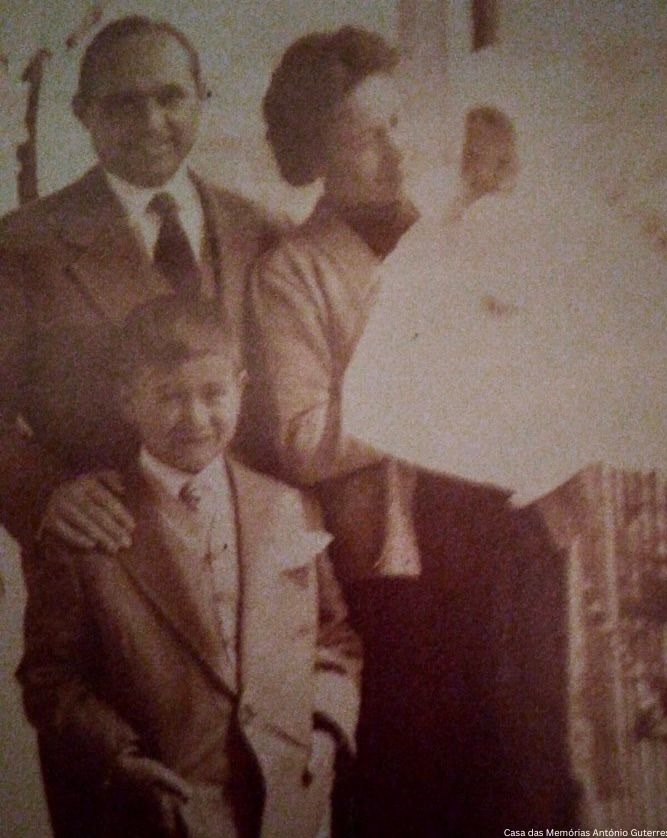
I became aware of the Global Day of Parents late into the night of Thursday June, 1, through a tribute — along with a picture — that the United Nations Secretary General General, António Guterres, paid to his late parents in LinkedIn. He wrote:
“This Global Day of Parents I think of my mother Ilda and my father Virgílio. I will always cherish their nurture, encouragement and unconditional love. I am grateful for them and all parents worldwide committed to raising their children in a peaceful and healthy world.” Inspiring words, indeed.
While June 1 is Global Parents Day, we must be mindful that parents need care and support regularly. Many of us have lost one or both our parents, while others have both parents alive, some in good health and others facing extraordinary challenges. They depend on their children, the spouses of their children as well as grandchildren to provide them with comfort and companionship as they age.
Islam places a particular emphasis on devotion and being good to parents, as shown by the following verses in the Qur’an:
“Serve God, and associate naught with Him. Be kind to parents, and the near kinsman” — 4:36.
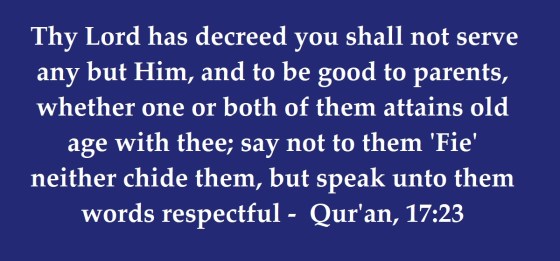
“Thy Lord has decreed you shall not serve any but Him, and to be good to parents, whether one or both of them attains old age with thee; say not to them ‘Fie’ neither chide them, but speak unto them words respectful, and lower to them the wing of humbleness out of mercy and say; ‘My Lord, have mercy upon them, as they raised me up when I was little.“ — Quran, 17:23-24.
“(And We have charged man concerning his parents — his mother bore him in weakness upon weakness, and his weaning was in two years — ‘Be thankful to Me, and to thy parents; to Me is the homecoming.” — 31:14.
‘You shall not serve any save God; and to be good to parents, and the near kinsman, and to orphans, and to the needy — 2:83.
“They will question thee concerning what they should expend. Say: ‘Whatsoever good you expend is for parents and kinsmen, orphans, the needy, and the traveller; and whatever good you may do, God has knowledge of it” — 2:215.
“Our Lord, forgive Thou me and my parents, and the believers, upon the day when the reckoning shall come to pass.” — 14:41.
“Lower to them the wings of humility out of compassion” — 17: 24.
“O John, take the Book forcefully; and We gave him judgment, yet a little child, and a tenderness from Us, and purity; and he was godfearing, and cherishing his parents, not arrogant, rebellious.” — 19:12-14.
“Give them company in the worldly affairs with appropriate courtesy and kindness” — 31:15.
These are beautiful verses for us to keep in mind. In this regard, mutual support between spouses for the care of both their parents is critical for family unity and harmony; it will ensure barakah (happiness) in both the worlds and give us peace of mind in our daily lives.
Date posted: June 2, 2023. Last updated: June 3, 2023 (added Qur’anic verse 17-24.)
________________________
English translations of Qur’anic verses quoted above by A. J. Arberry. Please visit Corpus Qur’an for upto 7 different translations of every verse in the Qur’an.
“It may seem unusual that an ancient artifact from medieval Iran would make its way onto a Canadian stamp, but it’s really not at all. This is a wonderful reflection of who we are as Canadians and how diverse our country is. We celebrate cultures from across the world here.” — Dr. Fahmida Suleman, curator of the Islamic World collections, Royal Ontario Museum, Toronto, as quoted in Canada Post Magazine article.
Crafted nearly 700 years ago in medieval Iran, the elegant, hand-painted ceramic bowl on this year’s Eid stamp was made during Ramadan — one of the holiest months in the Islamic calendar, when Muslims in Canada and around the world fast as an act of worship, self-purification and spiritual growth. This is Canada Post’s fifth Eid issue. The 2023 stamp also features, in calligraphy, the words Eid Mubarak, a traditional Arabic greeting that means “have a blessed Eid”. Its issue date is April 3, in advance of both Eid al-Fitr which is expected to be observed on Friday, April 21, and Eid al-Adha, the Festival of Sacrifice, which marks the end of the Hajj pilgrimage to the Kaaba in Mecca. The 2023 Hajj is scheduled to take place between June 26 and July 1…. PLEASE READ MORE IN CANADA POST MAGAZINE.
To buy stamp (in booklet of 6), please click Eid (2023): Permanent domestic rate stamps. The link includes an image of the stamps booklet and describes the two Islamic Eid festivals in more detail. The booklets should be available at Canada Post locations around the country. The specifications for the stamp are as follows:
Designer: Subplot Design Inc; Issue date: April 3, 2023; and Quantity produced: 55,000.
“We have indeed sent it (the Qur’an) down in the Night of Power! And what will make you understand what the Night of Power is? The Night of Power is better than a thousand months. The angels and the Spirit (Ruh) descend therein with the permission of their Lord, to regulate all things. It is peace until the rising of the dawn” — Qur’an, 97:1-5 (Surah al-Qadr)
The Qur’an affirms in the final two verses of this very short Surah of Qadr — The Night of Power — that angels and luminous spirits descend to earth on the blessed night, expressing the Grace and Mercy of Allah.
What symbolic dimension and esoteric meaning should we give to this night of the angels in the blessed Islamic month of Ramadan?
Of course, during this crucial night, as Shia Imami Ismaili Mulsims, under the spiritual authority of the Imam-of-the-Time, we will devote our time in congregation as well as individually to spiritual exercises that will especially help us to enter into communion with our soul and succeed in opening our heart to the vision of God.
The recitation of verses and surahs of the Qur’an, Ginans and Qasidas, special Tasbihs (invocations), the Hadiths (the traditions of the Prophet), the Farmans (guidance) of Mawlana Hazar Imam, as well as the remembrance of Allah, the Prophet Muhammad, Hazrat Ali and his (Hereditary) successors, as we commemorate this special event, will support our spiritual search.
On this Holy Night it is necessary to be in tune, by reason and with our hearts, with the angels and the luminous entities sent in mission as providential messengers.
Musicians know this phenomenon well. Here are two absolutely identical tuning forks: you touch one of them, it vibrates, and the other, which has not been touched, also vibrates. We say that there is a resonance.
Well, a similar phenomenon occurs with the human beings: if each one of us manages to tune our physical and psychic being to the most subtle vibrations of the universe, we can reach the celestial powers to make an exchange with them and thus receive help and comfort.
We also know that there is no true listening without the fundamental attitude of humility!
During this night of the angels, we can even touch certain currents of forces to make them come to us. As soon as we know this law (of tuning), we understand how important it is to surpass ourselves — to surpass ourselves to touch the most subtle chords of our being and to make them vibrate, because there will be forces that will respond by making us benefit from their knowledge.
Through Ibadat (worship), special Zikr prayers and Bandgi (meditation and contemplation), we can communicate and be heard! We have to make the sincere effort to enter the sacred silence of interiority and to understand the importance of the spiritual quest by going down to the bottom of our soul.
This Night of the Angels remains precious for introspection, awareness, offers moments of purification, forgiveness, enlightenment, contemplation, submission, renewing our act of allegiance to the Spiritual Authority of the Imam-of-the-Time.
Laylat al-Qadr is a night of the angels where Allah in His Great Mercy and Glory has concentrated His Blessings and entrusted the angels and the invisible light entities to make the night the centre of His Favours.
Laylat al-Qadr is a night that is conducive to our spiritual maturity because these hours of worship, allow us to see the treasures of knowledge and recognition.
We conclude by offering our prayers and sincere fraternal thoughts for a complete, serene and satisfying night of Laylat al-Qadr.
Date posted: April 12, 2023. Last updated: March 22, 2025.
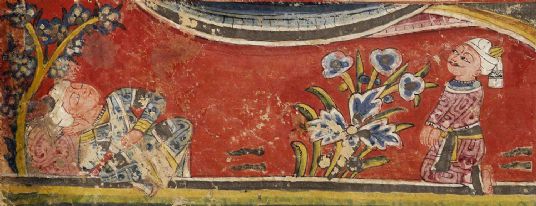
Featured image shown at top of post: In his Khamsa, Shab-i Qadr (the Night of Power), the renowned Persian poet Amir Khusraw Dihlavi (d. 1325 CE) tells the story of a saint who made a failed attempt to stay awake until the Laylat al-Qadr. This image is taken from a folio in the Aga Khan Museum collection in Toronto, Canada.
_________________
Born and raised in Madagascar, Mohez Nato went to France in the late 1960’s to pursue his university education. Political tensions in Madagascar prevented him from returning to his home country, where he had planned to teach and carry out research on medicinal plants. Instead, he remained in France and completed his PhD, following which he worked as a teacher-researcher in Plant Biotechnology at the University of Paris Sud XI from 1971 to 2011.
Now, in his retirement, Mohez does voluntary work giving courses in French-speaking Universities in countries like Burkina Faso, Lebanon, Benin, Algeria and Tunisia. He is also the president of a Humanitarian Association which has been active in Madagascar since 1993. Within the Ismaili community, Mohez was Secretary General of the Ismailia Association for France (with President Mohamad Peera) which organized Mawlana Hazar Imam His Highness the Aga Khan’s visit to Paris in 1980. Thereafter, he devoted time for the opening of a Jamatkhana in Antony in southern suburb of Paris, where he also held the position of Kamadia from 1981 to 1983. After the Golden Jubilee celebrations in 2007-08, Mohez was bestowed with the title of Alijah by Mawlana Hazar Imam. Mohez is married to Farida, with whom he has two daughters, Farahna and Rahima. We invite you to read his earlier piece Ode à l’Imam du Temps Présent / Ode to the Imam of the Present Time published in Barakah.
Editor’s note: Rachael Kohn, a broadcaster, author, and speaker on religion and spirituality, conducted an interview with Alice Hunsberger on her former Australian program, “The Ark”, on the occasion of the millennium birth anniversary of Nasir Khusraw. A shorter version of the interview was prepared and presented by Mashal Ali (acting as Rachael) and Nurin Merchant (acting as Alice) at a literary night event hosted in Ottawa to celebrate the Golden Jubilee of His Highness the Aga Khan. Their presentation is produced below with the kind consent of Ms. Kohn. It is followed by a brief History Pod video presentation on Nasir Khusraw and his travelogue Safarnama.
~~~~~~
Hello, this is “The Ark”, and I am Rachael Kohn.
A thousand years ago a Persian poet defied the conventions of the day. His name was Nasir Khusraw, an Ismaili Muslim, a branch of Shi’a Islam.
Instead of lavishing praise on the sultan or his horse, he praised learning and spiritual purity. For example he beautifully wrote:
The world is a deep ocean Its water is time. Your body is like a shell, Your soul the pearl. If you wish to have the value of a pearl, Raise up the pearl of your soul with learning.
Rachael Kohn: Unlike Rumi or Omar Khayyam, Nasir Khusraw isn’t well-known in the West. Yet! But New Yorker Alice Hunsberger may change that, with her book on his life and work. She was particularly interested in how different Khusraw’s poetry was at the time.
Alice, when one thinks about the period, the Persian poet that comes to mind is Omar Khayyam who was almost a contemporary of Khusraw, I guess he was about a generation later. Now he is much more well known in the West; how would you compare Omar Khayyam and Khusraw?
Alice Hunsberger:Yes, Omar Khayyam is best known because of the wonderful and inspired translation a century and a half ago by Edward Fitzgerald, and one of the tricks to becoming well-known, is finding a good translator.
Right now for example, Omar Khayyam is best known as a poet to the West but in the East he was primarily known as a brilliant mathematician and astronomer. Nasir Khusraw on the other hand is one of the best, highest ranking poets in the Persian speaking world.
Nasir Khusraw really is not a love poet, so you will not find mystical expressions of love. What he calls for is the use of intellect in religion in one’s life; and in contrast to Omar Khayyam, who was, we could say, cynical toward religious people.
Rachael Kohn: Well, Khusraw himself was something of a religious seeker. He seems to have even read about other religions as well as philosophy. What faction or what tradition of Islam did he align himself with?
Alice Hunsberger: He was very well educated and did look at lots of different religions. At some point in his life, he had a spiritual awakening, and in one place he tells it as a dream, and in another its a more journey-like kind of story.
He finally found the truth and the peace in faith that he was seeking in the Ismaili faith, that is a branch of the Shi’ites. He believes that what God sent down is the external, and that the internal meaning is what needs to be brought out and that needs an Imam, an interpreter.
ARTICLE CONTINUES BELOW
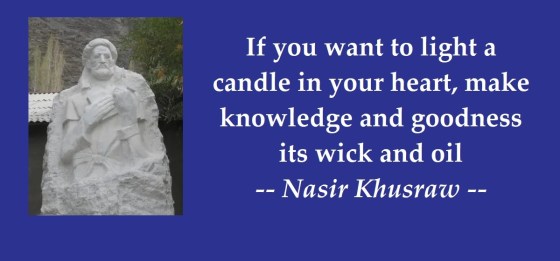
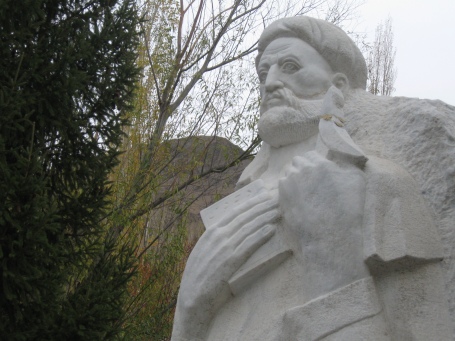
A statue of the famous Ismaili philosopher, poet and missionary Nasir Khusraw in Badakhshan.
Rachael Kohn: Well, Nasir Khushraw, I think was referred to as ‘the real wisdom of the East’; how did he earn that accolade?
Alice Hunsberger: Well I would think that would refer to this inner wisdom which beyond the scientific knowledge, beyond external religious practices, there’s an inner truth that underlies the teachings. This is what he was preaching. So we have to get to the inner truth.
Rachael Kohn: What sort of personality or character comes through in his writing?
Alice Hunsberger: When you read his works you feel right away, ‘Here’s a strong person, a strong, definite individual’. You feel him in many emotions; he opens up some of his poems with sadness, other ones he begins with beautiful springtime visions of trees and flowers so that you see a person in all his complexity.
Rachael Kohn: Is there a strong ethical sense that comes through in his poetry? Is he a critic, a sharp observer of the religious life around?
Alice Hunsberger:Absolutely. As a member, as a leading intellectual of the Ismaili faith, he came under the criticism and enmity of the other schools of the Sunnis and others, so he used his pen very forcefully to defend the faith and to defend his actions.
Rachael Kohn: Alice, are Nasir Khusraw’s poems used today as an inspiration for progressive thought in Islam?
Alice Hunsberger: I think so. I haven’t been back to Iran for a while but they’re having conferences about him now and, even though he is from another branch of Shi’ism, they certainly respect his ethics and his strong personality.
Rachael Kohn: Well Nasir Khusraw ended his days rather sadly, exiled. Why was he exiled?
Alice Hunsberger: After his journey which he undertook as a result of the spiritual awakening, he stayed in Cairo because it was a very powerful Ismaili seat; for about 200 years there was an Ismaili caliph in Cairo, and so he studied there. He left to become a preacher back in his homeland of Khurasan and converted many people.
His success brought enmity and danger to his life, so he fled into a region of Badakhshan where he lived out his life under the protection of a local prince and he wrote much of his sad poetry of his exile from there. Here is a short verse of one of these poems:
But it doesn’t matter where we are, Sometimes we’re in bad places; But no-one values a ruby less for coming out of dirty soil And no-one criticises roses for coming out of manure. So we all are like a ruby and like a rose. We need to blossom and shine wherever we are.
Rachael Kohn: Wise words a thousand years ago and today. That was Alice Hunsberger speaking about the poetry of Nasir Khusraw, who’s been the subject of celebrations by Ismaili communities around the world.
_____________
YouTube Video
Date posted: March 5, 2023. Last updated: March 25, 2023.
___________
Before departing this website, please take a moment to review Simerg’s Table of Contents for links to hundreds of thought-provoking pieces on a vast array of subjects including faith and culture, history and philosophy, and arts and letters to name a few. Also visit Simerg’s sister websites Barakah, dedicated to His Highness the Aga Khan, and Simergphotos. The editor may be reached via email at mmerchant@simerg.com.










 Simerg - Insights from Around the World