Simerg is an independent initiative dedicated to Ismaili Muslims, the Aga Khan — their Hereditary Imam — and the Ismaili Imamat, and Islam in general through literary readings, photo essays and artistic expressions
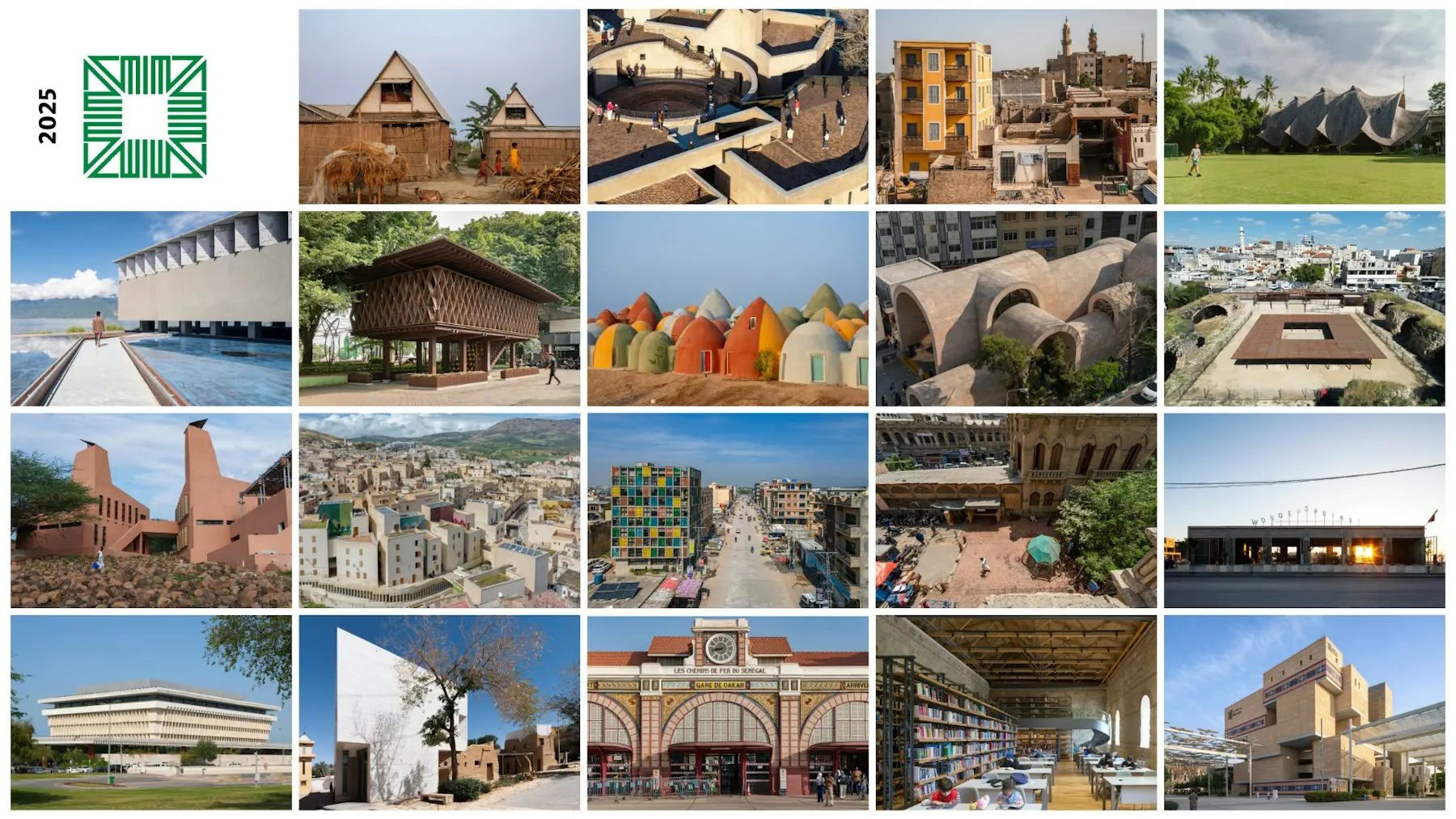
On June 9, 2025, the Aga Khan Award for Architecture (AKAA) announced 19 shortlisted projects for the 2025 Award cycle, a selection made with utmost care and expertise by an independent Master Jury, which meticulously reviewed 369 projects nominated for the 16th Award Cycle (2023-2025). Established by Mawlana Shah Karim, His Late Highness Prince Karim Aga Khan IV, the 49th Hereditary Imam of the Ismaili Muslims, in 1977, the Award identifies and encourages building concepts that successfully address the needs and aspirations of communities in which Muslims have a significant presence.
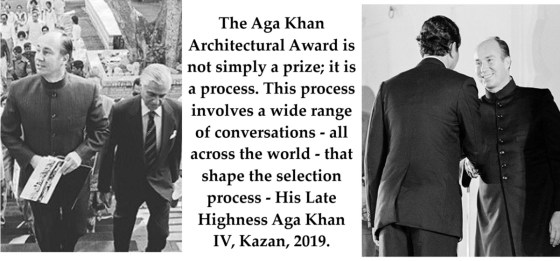
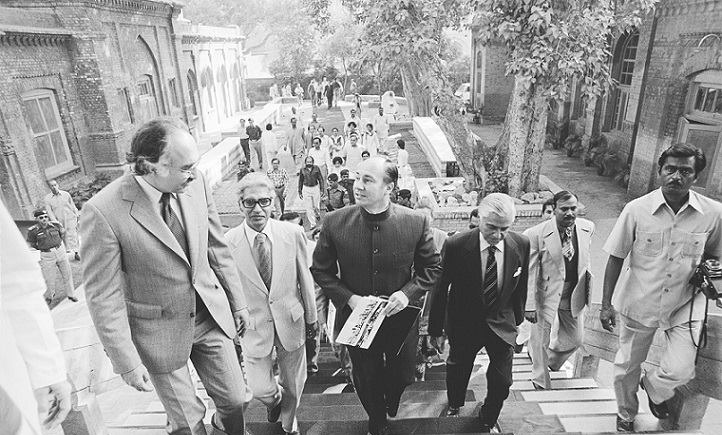
Flashback: Mawlana Shah Karim, His Late Highness Aga Khan IV, arrives for the inaugural ceremony of the Aga Khan Award for Architecture held on October 23. 1980, in Lahore, Pakistan. Photograph: AKDN / Christopher Little.
~~~~~~
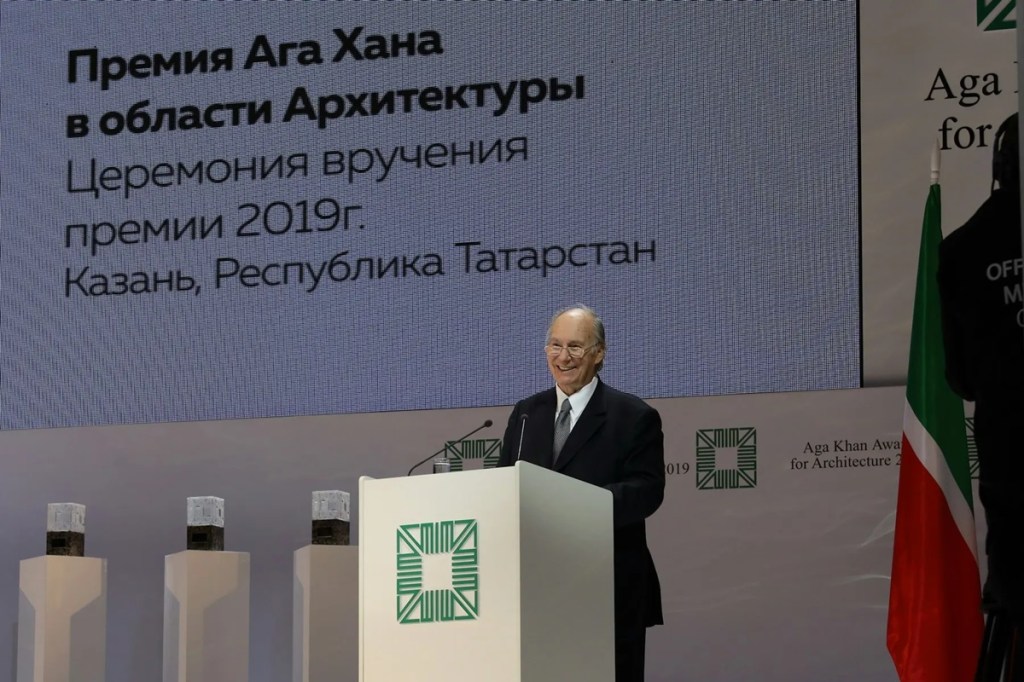
Mawlana Shah Karim, His Late Highness Aga Khan IV, delivering his speech at the Aga Khan Award for Architecture ceremony, Kazan, Tatarstan, September 13, 2019. This was the last Award ceremony he attended in person. In 2022, at the Award Ceremony and seminars held in Muscat, Oman, he was represented by his brother, Prince Amyn and his children, Princess Zahra and Prince Hussain. Photograph: AKDN. Please read speech HERE.
Since its launch 48 years ago, with the first award ceremony taking place in Lahore, Pakistan, on October 23, 1980, 128 projects have received the award, and nearly 10,000 building projects have been documented. The AKAA’s selection process emphasizes architecture that not only provides for people’s physical, social and economic needs, but that also stimulates and responds to their cultural aspirations.
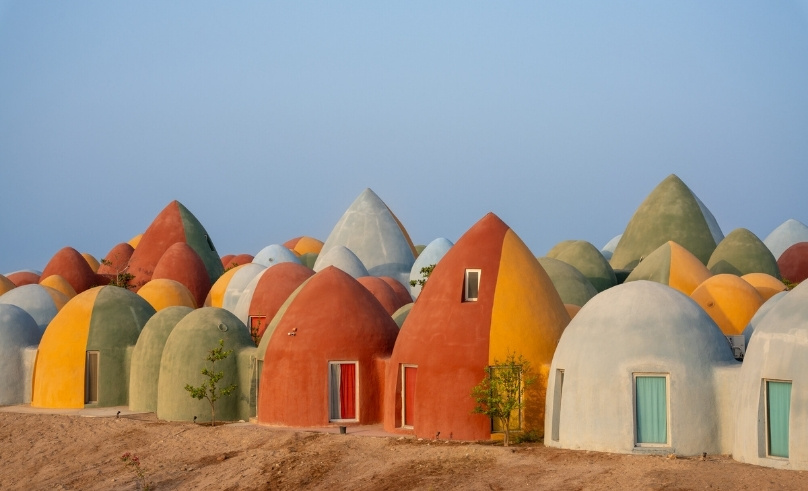
Majara Complex and Community Redevelopment, Hormuz Island, Iran. Please click on the image for the Cairo Scene article.
Salma Ashrat Thabit, writing for Cairo Scene, says that “the 2025 Aga Khan Award for Architecture shortlist is here, and the Middle East is in the spotlight. From Egypt’s revived markets to Iran’s vibrant domes, these standout projects offer fresh visions of culture and community.” Please read Salma’s piece Cairo Scene: Middle Eastern Marvels.
A collage of 19 projects shortlisted for the 2025 Aga Khan Award for Architecture. Please click on the image for overviews and descriptions of the projects on the AKDN website.
The AKDN website provides a comprehensive overview with links to detailed descriptions of the 19 shortlisted projects from Bangladesh to China to Kenya to Türkiye to the United Arab Emirates. Please click Aga Khan Award for Architecture 2025 shortlist.
The Institute of Ismaili Studies (IIS) in London, England, was established by Mawlana Hazar Imam, His Highness the Aga Khan, the 49th Hereditary Imam of the Ismaili Muslims, on December 13, 1977. For more than 45 years, the IIS has sought to promote scholarship and learning on Islam in historical and contemporary contexts and contributed to a better understanding of Islam’s relationship with other societies and faiths.
The Institute has also dedicated a significant amount of time and resources to studying the history of the Ismaili branch of Islam in all its aspects, including its intellectual, scientific, artistic and commercial activities. The Ismaili Imams ruled over vast territories such as the Fatimid Empire in North Africa and Egypt and the Nizari Ismaili state of Iran and Syria during the Alamut period. Under the Fatimid rule, the Ismailis created one of the world’s oldest learning seats, the Al-Azhar University in Cairo; today, the university is a major Sunni institution.
The IIS’s research and publications, led by both Ismaili and non-Ismaili scholars, have had a profound impact over the past 30 years. They have fundamentally reshaped the perception of Ismailis, who, for centuries, were primarily understood through the lens of works by medieval heresiographers and polemicists, who were generally hostile towards Shias and particularly the Ismailis.
Story continues below
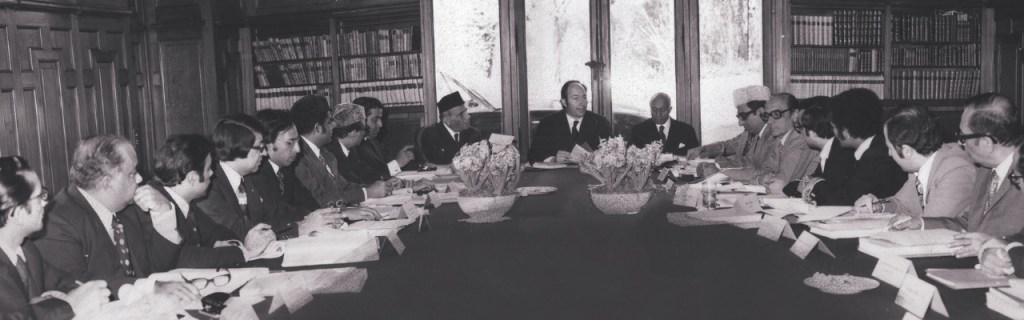
Mawlana Hazar Imam, His Highness the Aga Khan, met with leaders of the Ismailia Association and Ismaili scholars in April 1975 in Paris. A decision was taken at the world conference to establish the Institute of Ismaili Studies. Photo: Ilm magazine, October 1975.
Aside from research papers, scholarly publications and participation in essential conferences worldwide, the IIS has conducted significant programmes such as the Waezeen and Teacher Education Programme (WTEP), the advanced curriculum-planning programme with the University of London’s Institute of Education, the joint IIS-McGill University programme, the Graduate Programme in Islamic Studies and Islamic Humanities (GPISH), and the Secondary Teacher Education Programme (STEP). Some eight hundred individuals have graduated from IIS’s educational programmes since the Institute began receiving postgraduate students in 1980.
Story continues below
Professor Zayn Kassam, the current director of the Institute of Ismaili Studies, presents the inaugural IIS Alumni Recognition Award to Professor Karim H. Karim during the IIS’s 2024 graduation ceremony, March 23, 2024, at the Ismaili Centre in London. Photograph: Farid Daya.
Several IIS alumni have made remarkable achievements in different parts of the world. On March 23, 2024, the IIS had its first ever Alumni Recognition Award at the Ismaili Centre in London, UK, during its 2024 graduation ceremony.
The Award celebrates those who have demonstrated a career of exceptional service and leadership. A panel of senior management and academics from the AKDN and IIS reviewed the nominations for the Award and selected Professsor Karim H. Karim as the recipient of the First Award based on the following primary criteria:
Professional or Academic Accomplishment: Achieved a high degree of prominence and leadership in their respective field, which may or may not be directly relevant to the work of the IIS.
Contributions to Community Service: Distinguished service to their professional or faith community.
Professor Zayn Kassam, the Institute’s current director, presented the inaugural Award to Professor Karim.
~~~~~~~~
Citation Honouring Karim H. Karim on Being the First Recipient of the IIS’s Alumni Recognition Award
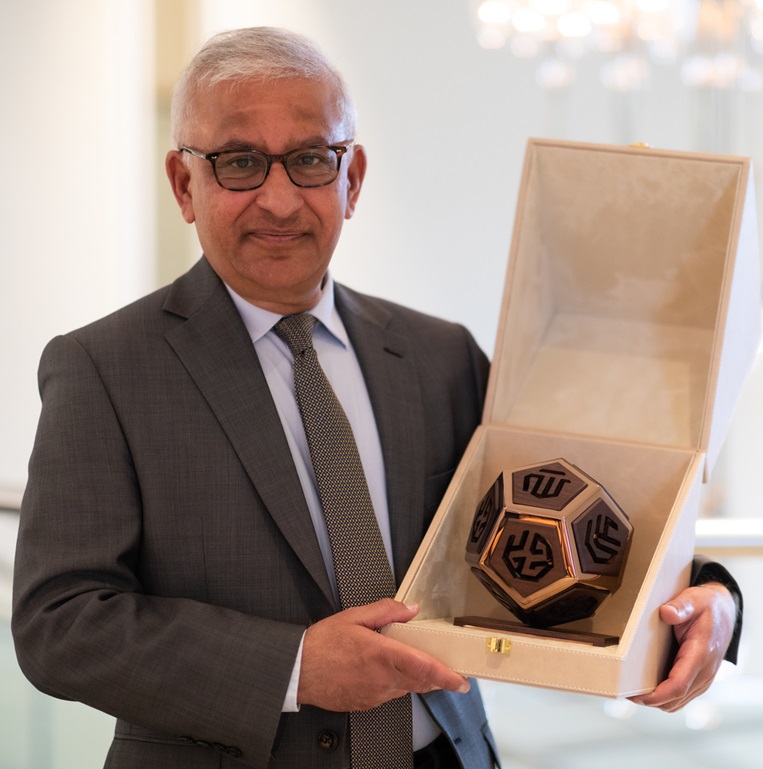
Professor Karim H. Karim holding the first Alumni Recognition Award that was presented to him by the Institute of Ismaili Studies on March 23, 2024, at the Ismaili Centre London. The sculpture was designed by Mohammed Adra (AKDN Geneva) and is inspired by (Late) Karl Schlamminger’s Hepta Globe sculpture, which is placed at the entrance of the Aga Khan Centre in London. Photograph: The Institute of Ismaili Studies via Karim H. Karim.
The citation for the award read as follows:
“Professor Karim has an extensive record of over three decades of scholarship, service, and leadership. His designation as Chancellor’s Professor is the highest honour given by Carleton University for scholarship of outstanding merit with substantial international impact, research leadership and continued active participation in the development of research excellence. Professor Karim has a worldwide reputation as a leading scholar of media representations of Muslims and diasporic communications. He has had visiting appointments at Harvard, Aga Khan, and Simon Fraser universities. Professor Karim has delivered keynote addresses in several countries and his critically acclaimed publications are cited widely. He was the inaugural winner of the Robinson Book Prize and has received media coverage in six continents.
“Dr. Karim has served as Director of Carleton’s renowned School of Journalism and Communication and its Centre for the Study of Islam, respectively. He was also the Institute of Ismaili Studies’ first alumnus to lead it in a directorial capacity. He spearheaded founding initiatives on Accessibility to Digitized Collections and the Canadian Race Relations Foundation as a Senior Policy Officer in the Canadian Government, which endowed him with awards for exceptional public service and for fostering collaboration between ethno-religious communities.
“Karim has an extensive record of international service to academic, community, government, and civil society institutions, including Aga Khan University (Kenya) and Central Asian University; AKDN Higher Education Forum; Canadian Parliamentary Committees and government boards; and Ismaili community organizations (Kenya, USA, and Canada). He has also held an International Ismaili Studies Conference at Carleton University; founded a prize for research in Ismaili Studies’ understudied aspects; and has been a mentor and external Ph.D. examiner for IIS alumni.”
We take this opportunity to congratulate Professor Karim on his accomplishments over the past several decades and on receiving the First Alumni Recognition Award from the Institute of Ismaili Studies. We are proud to have published several of his pieces on our websites (follow the links below).
Below are excerpts from his acceptance speech upon receiving the IIS’s inaugural Alumni Recognition Award.
“Let the Truth Infuse Your Words”
Professor Karim H Karim delivering his remarks on March 23, 2024, at the Ismaili Centre in London upon being presented Inaugural Alumni Recognition from the Institute of Ismaili Studies. Photograph: Institute of Ismaili Studies via Karim H. Karim.
By KARIM H. HARIM March 23, 2024, Ismaili Centre, London
Bismillahir-Rahmanir-Rahim.
I would like to thank the Institute of Ismaili Studies for selecting me as the recipient of its inaugural Alumni Recognition Award. This is a profound honour, which takes me back 40 years when I was a student at the IIS. This beautiful building, the Ismaili Centre London, was under construction at that time.
Congratulations to all the GPISH and STEP students who have graduated today. You carry enormous potential and promise. Allow me to speak about an event in my life that underlined the long-term impact that an individual can have. I attended the funeral of Professor Amin Amershi, a mathematician, two weeks ago in Vancouver. He taught me one class as a guest lecturer in a religious class in Nairobi, when I was 12 years old. It was a singular experience that opened my mind and sparked my imagination because his explanations had the ring of truth. I have found it remarkable that I continue to think about his ideas some 55 years later. You, too, have the potential of a long-lasting impact that will span decades and range as far into the future as the 22nd century. Let the truth infuse your words.
As you may know, our tradition adopted the name “Ismaili” in the early 20th century. Prior to that it was called Da’wat al-Haqq — which means Invitation to Truth, Summons to Truth, or Mission of Truth. In India, the Pirs named it Satpanth — Path of Truth or the True Path. Our aspiration is to have truth manifest our worldview and actions. It underpins our ethical outlook.
We are thrown many challenges throughout our lives. We face success, failure, joy, and frustration. The organizations that we work for pressure us to get the job done and we are often tempted to take shortcuts in order to fulfill expectations. But this is where critical thinking, which you have discussed extensively in your studies, becomes pertinent. How does one balance the imperative to get the job done, on the one hand, and remain ethical, on the other? His Highness the Aga Khan, Mowlana Hazar Imam, instructed the community’s leaders at a gathering in the United States in 1986, that “we will ask the hard questions.” Fulfilling your tasks ethically is one of the hard issues that you will face constantly in your careers.
Let the truth infuse your words, your music, your art, and your actions as you go ahead to fulfill your potential and promise.
Date posted: April 17, 2024.
______________
Featured image at top of post: Professor Zayn Kassam, the current director of the Institute of Ismaili Studies, presents the inauguralIISAlumni Recognition Award to Professor Karim H. Karim during the IIS’s 2024 graduation ceremony, March 23, 2024, at the Ismaili Centre in London. Photograph: Farid Daya.
The following are links to articles by Karim H. Karim published in Simerg and its sister websites:
“You and I are brothers, and you and I are from the same city, the same country; we speak the same language and share the same history” — Christian pastor
Every Ramadan, an Iraqi Christian preacher returns from the Netherlands to his hometown of Mosul. He celebrates the holy Islamic month there to promote understanding between Muslims and Christians. Voice of America’s Kawa Omer has the story, narrated by Bezhan Hamdard.
The Aga Khan on Moving Christian-Muslim Relations Forward for a Better World
“Our histories have taught us the value of dialogue, and that rarely, indeed very rarely, does anything good come out of conflict. Our world view is to engage with the problem of social exclusion in our societies and to contribute to building bridges across faiths and across nations, by linking diverse parts of the world” — the Aga Khan
“I have no doubt that for you, whose historical roots are in the Christian world, it is as painful as it is for us Muslims, with our roots in the East, to watch an increasingly deep gulf growing between significant parts of our respective worlds. We cannot stand by as passive observers letting this gulf grow wider and wider, at the cost of future generations. If we have the will, which I am certain we share, we have the historical knowledge and the ethical foundations to move our world forward, to make it a better and more hopeful place, and to put an end to the storm of hatred which appears to be building up around us.
“Our histories have taught us the value of dialogue, and that rarely, indeed very rarely, does anything good come out of conflict. Our world view is to engage with the problem of social exclusion in our societies and to contribute to building bridges across faiths and across nations, by linking diverse parts of the world.
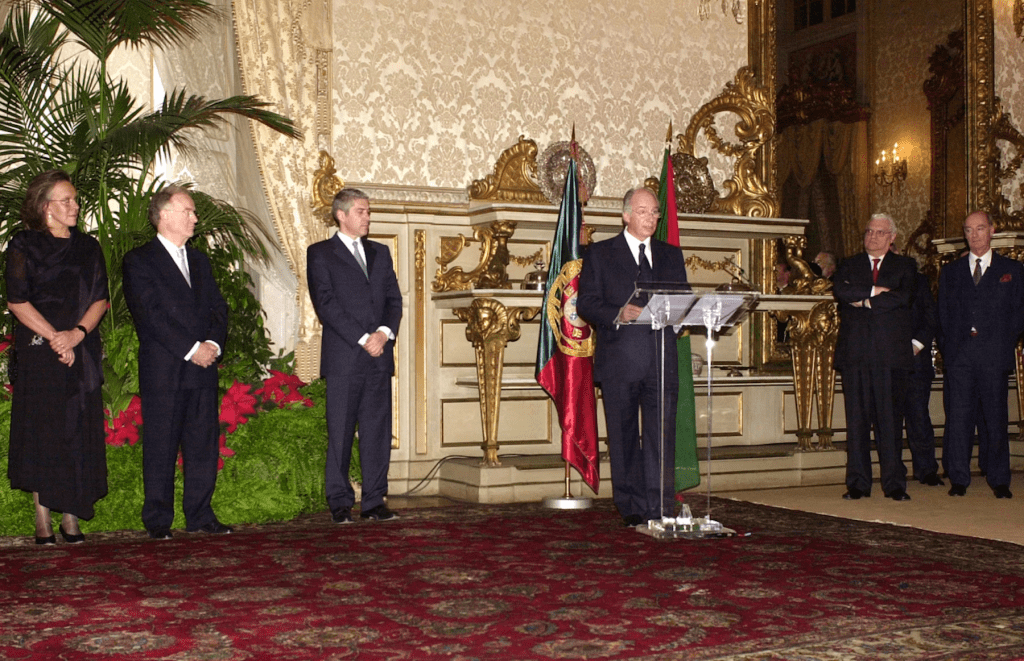
“We are concerned, and most rightly so, that there is poverty among our respective peoples, and we cannot stand by watching this inhuman indignity become a permanent part of our societies, of our generations of today and tomorrow. We must work together to develop an arsenal of peaceful weapons to attack this plight which blights our times, and to try to make sure that those who are marginalised today can be certain that we are not blind to them, that we will not let their future generations live in the same hopeless world in which they themselves are seeking, often only in despair, to survive.” — the Aga Khan, speaking at the Protocol of Co-operation Signing Ceremony between the Ismaili Imamat and the Government of Portugal, Lisbon, Portugal, December 19, 2005 (Read full speech HERE).
The following story by Benazir Samad is reproduced from the Voice of America (VOA) website. The VOA article, dated March 23, 2024, originated from VOA’s Urdu Service. Please note that the photographs and the Brief Profile within the body of the story are not part of the original VOA article; Simerg has reproduced the photos from Suriya Bibi’s Official Facebook Page.
Historic Win Shatters Stereotypes, Empowers Women in Pakistani Politics
“Sometimes, I had to walk kilometers on foot when there were no roads for vehicles. Despite facing these difficulties and even being unwell at times, I remained dedicated to connecting with people and meeting voters. The support of women who walked with me provided comfort and bolstered my determination throughout this demanding campaign” — Suriya Bibi.
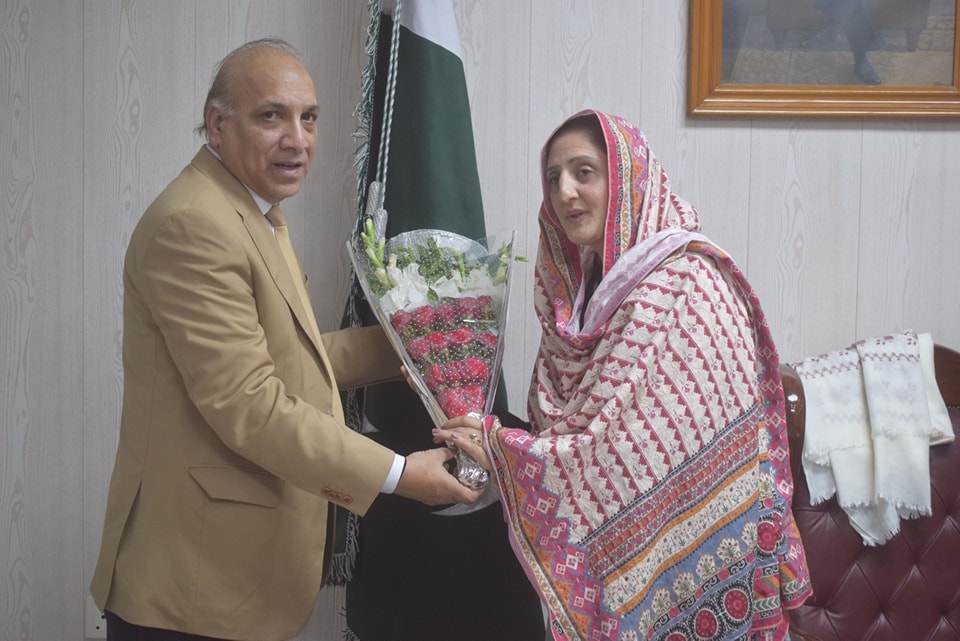
(Former) Aga Khan Ismaili Council President for Peshawar, Imtiaz Sahib, presents a bouquet of flowers to Suriya Bibi as he pays his respects at her office chamber following her election victory. Photograph:Official Facebook Page of Suriya Bibi.
By BENAZIR SAMAD, VOA
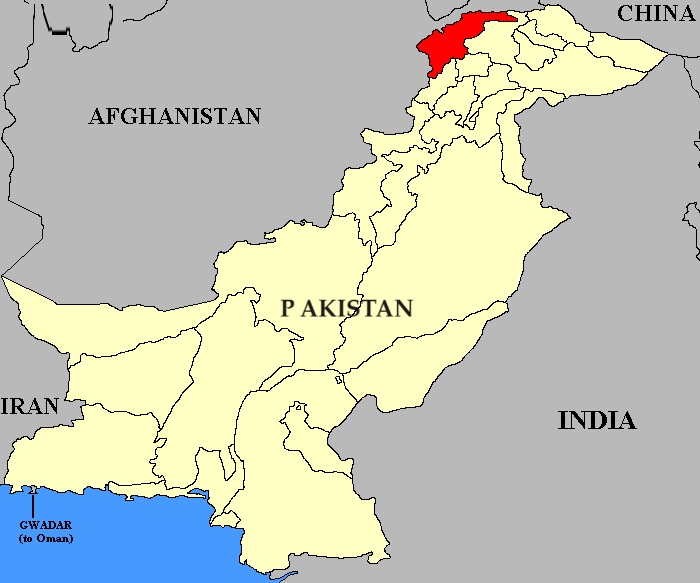
When Suriya Bibi was running for a seat earlier this year on the Khyber Pakhtunkwa provincial assembly, she faced numerous challenges beyond being a woman and hailing from a minority sect in Pakistan’s remote district of Chitral.
Another obstacle appeared when the Election Commission randomly assigned a hen symbol as her identifier on ballot papers — such symbols are tools to aid illiterate voters. In January, Pakistan’s Supreme Court barred her political party, Pakistan Tehreek-e-Insaf, or PTI, from using the cricket bat symbol associated with former Prime Minister Imran Khan.
The hen symbol inadvertently perpetuated the stereotype that women in Chitral were better suited for poultry farming than politics. Her opponents capitalized on their good luck, ridiculing her and mocking the symbol’s association with domesticity.
In a phone interview with VOA, Bibi said that there was no shame in poultry farming and rejected the attempt to diminish her worth based on her election symbol.
History Made
Bibi made history in early February by becoming the first woman from Chitral district to secure an assembly seat through a direct election rather than assuming a seat reserved for women, as is customary in the region. Not only did she clinch victory in the PK-1 constituency in Chitral with a decisive majority, but she also ascended to the position of deputy speaker in the Khyber Pakhtunkhwa assembly.
In Pakistan, where women’s involvement in governance is often restricted, Bibi encountered obstacles while navigating and challenging traditional norms to carve out her place in male-dominated politics.
According to social critic and feminist writer Sabahat Zakariya, Bibi belongs to the rare category of women parliamentarians who have secured their positions through open seats without relying on the political influence or lineage of male family members.
“Currently, all the big female names in Pakistani politics are scions of big feudal or industrial political families,” Zakariya said. “In that, Suriya Bibi’s achievement is not just unique for Chitral but also [for] all of Pakistan.”
VOA story continues below
_____________________
BRIEF PROFILE: SURIYA BIBI
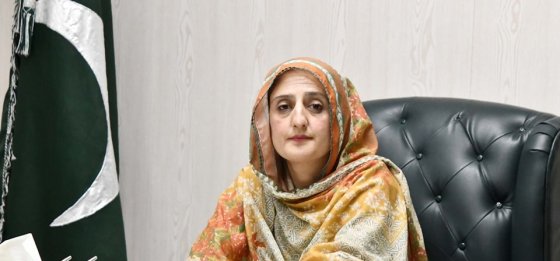
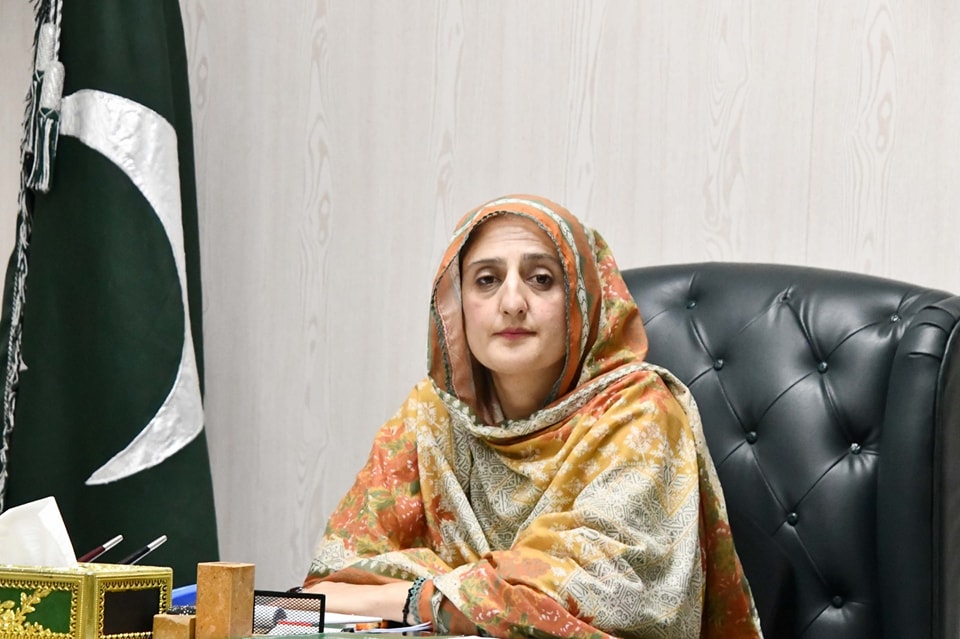
Suriya Bibi. Photograph: Official Facebook Page of Suriya Bibi.
Suriya Bibi hails from the Chitral District of Khyber Pakhtunkhwa, Pakistan’s 4th largest province in the country’s northwest, with Peshawar as its capital. Chitral District is situated in the north of Khyber Pakhtunkhwa province. She earned a master’s degree in Urdu (M.A Urdu) in 2002, after which she became involved in the socio-economic development of the population with a particular focus on the promotion of education among women and their social upliftment through organizations such as the Aga Khan Rural Support Program and Biyar Local Support Organization. Concurrently, she became engaged in politics with the Pakistan Tehreek-e-Insaf (PTI) party, where she has been the Vice President of PTI Malakand Division since 2007. Suriya Bibi is the first female member elected to a general seat in the history of Chitral. (Profile condensed from Provincial Assembly Khyber Pakhtunkhwa.)
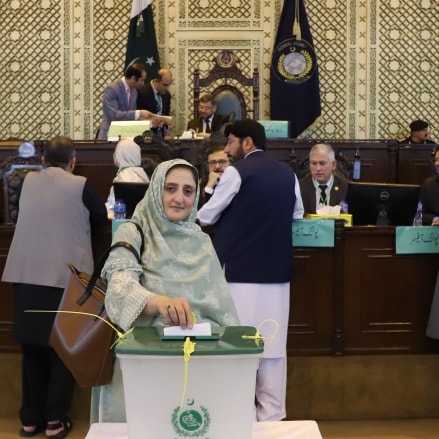
Suriya Bibi casts her vote in the Khyber Pakhtunkwa Assembly during the Pakistan presidential election held in March 2024. Photograph: Official Facebook Page of Suriya Bibi.
__________________________
Campaigning in Rough Terrain
The remote District of Chitral (red) in Pakistan. Map adapted from Wikipedia.
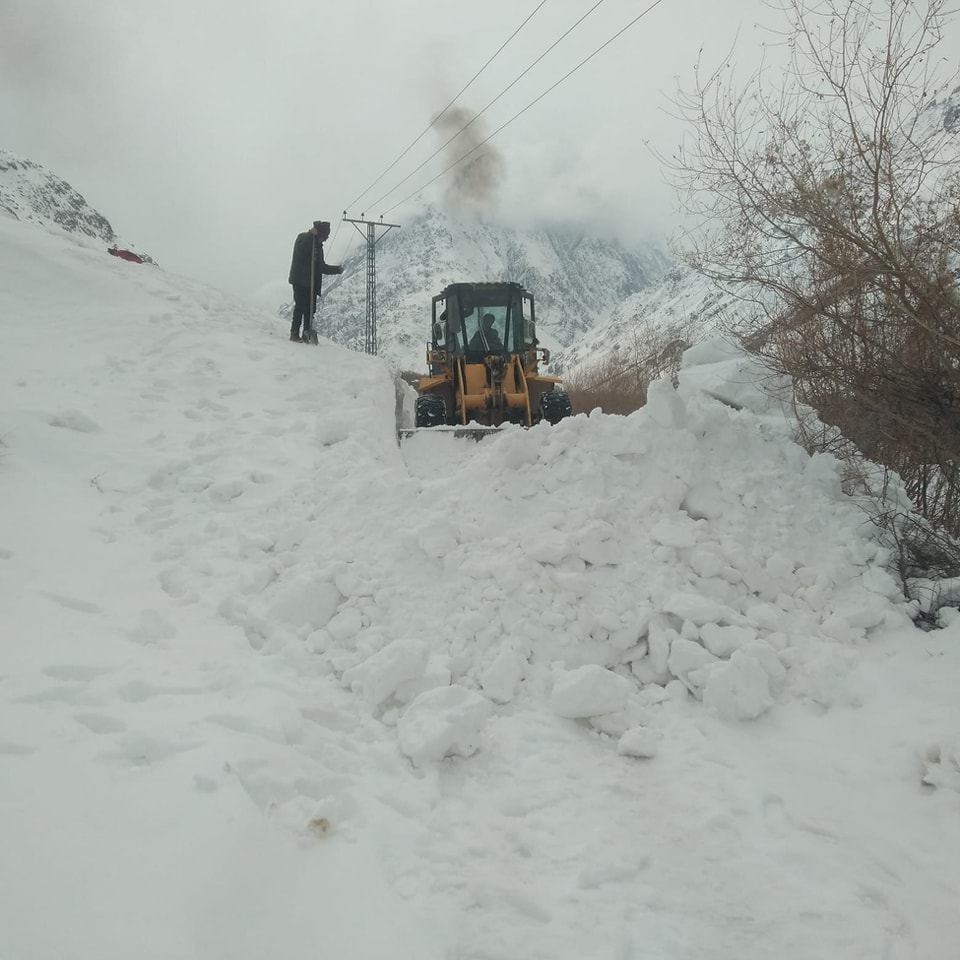
Bibi also reflected on how the severe winters and the daunting terrain of the Hindukush mountains presented yet another challenge to her campaign.
Dilapidated roads and inadequate infrastructure made reaching the remote areas of her constituency difficult. Spanning approximately 210 kilometers (about 130 miles), the upper Chitral PK-1 district encompasses the farthest village, Broghil, which borders the Badakhshan province of Afghanistan.
“Sometimes, I had to walk kilometers on foot when there were no roads for vehicles,” she said. “Despite facing these difficulties and even being unwell at times, I remained dedicated to connecting with people and meeting voters. The support of women who walked with me provided comfort and bolstered my determination throughout this demanding campaign.”
VOA story continues below
Rough terrain in Chitral as snow clearance is underway following heavy snowfall; Photograph: Official Facebook Page of Suriya Bibi.
Bibi grew up with both her father and a grandfather engaged in local politics and knew that she, too, wanted to be a politician.
“Despite my family’s support for another party, I made an independent choice and joined Pakistan Tehreek-e-Insaf, PTI party, [which means] ‘Pakistan movement for justice,’ in 2007,” she said.
“Joining politics, I initially faced resistance and received criticism for participating in protests and rallies, as it wasn’t common for women in the conservative region like Chitral to break through a male-dominated field like politics.”
Starting as a grassroots worker, Bibi began by mobilizing women at the village level, then represented Chitral as a female leader and then became the vice president of PTI Malakand Division. So, she ascended through the ranks within her party before getting a nomination to run for election from the party.
In the recent election, Bibi’s constituency was predominately female. Women voters surpassed men in supporting her, giving Bibi 35,377 votes, compared with the 30,345 votes from men.
In Chitral, where no local woman had previously secured an electoral victory and where her opponents wielded greater financial resources, Bibi initially doubted her chances.
“Men establish connections, friendships, and network with party officials, gaining exposure and influence,” she said. “However, as a woman, I couldn’t do the same. Despite these challenges and cultural norms, I only had dedication and the unwavering support of my family, particularly my husband. He consistently encouraged me when I was nominated to run for the seat, urging me to take it up as a challenge.”
VOA story continues below
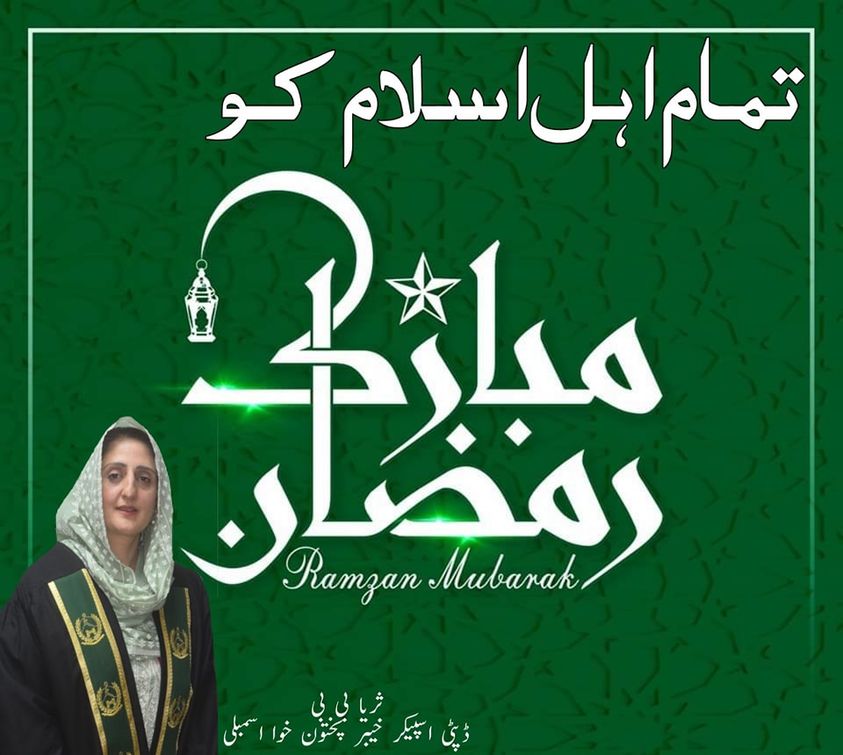
Ramzan Mubarak greeting from Suriya Bibi. Photograph: Official Facebook Page of Suriya Bibi.
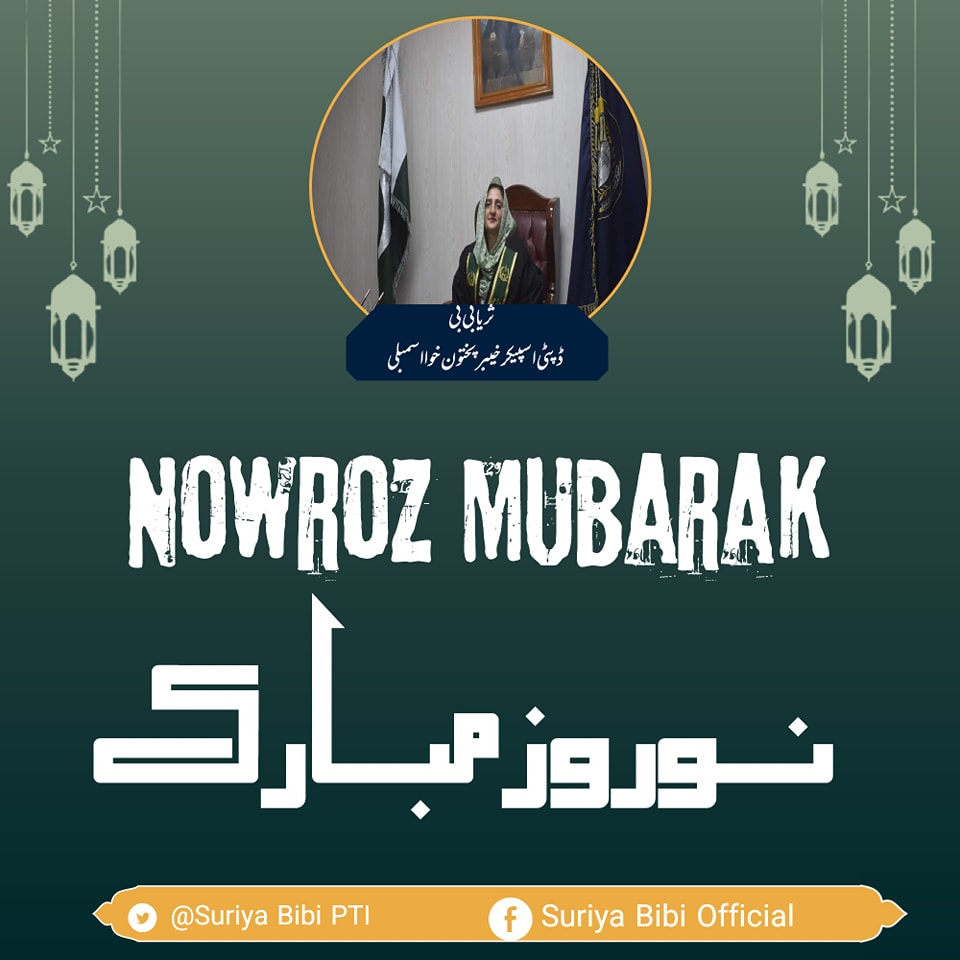
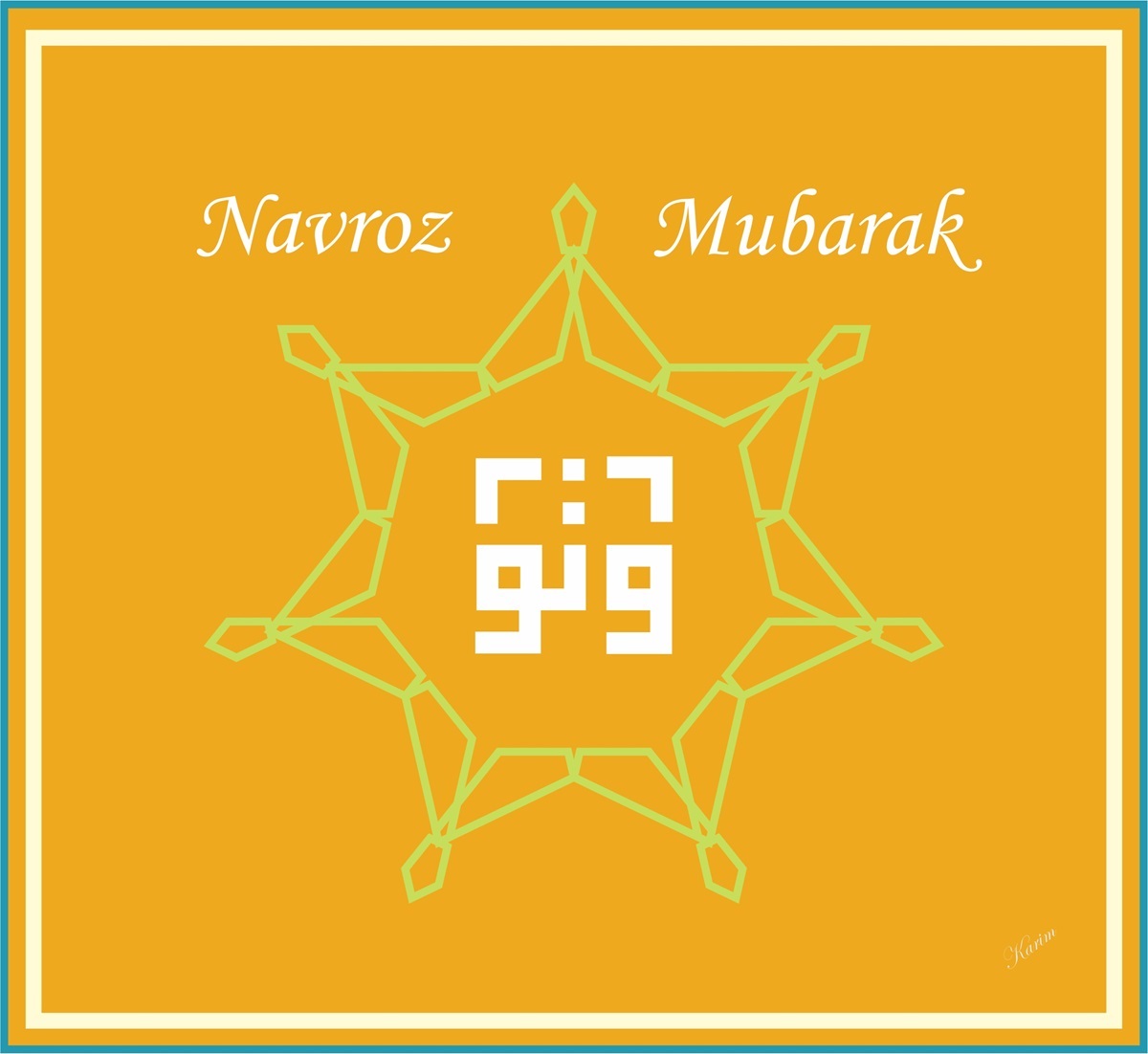
Navroz Mubarak greeting from Suriya Bibi. Photograph: Official Facebook Page of Suriya Bibi.
Speaking about her plans, Bibi said her focus would be on tackling property rights issues for women and prioritizing girls’ education. Given her background as an educator, she eagerly anticipates establishing a nursing school in the region, recognizing that young women who pursue nursing careers often must move far from their families.
Aspiring female students have begun approaching her about internship opportunities in her office, she said, reflecting a shift in the perception that politics are exclusively dominated by powerful men.
She said her political journey shows how even an ordinary middle-class woman like herself can ascend to great heights in the realm of politics.
The author has adapted this article from the March 1982 issue of Al-Misbah Magazine, published by the Ismailia Association for the UK. The original article, which was under the title Navroz, has been edited and improved for clarity and includes additional material.
Navroz, meaning New Day or New Year, marks the start of the Persian spring festival. It occurs on or around March 21 of the March equinox. The United Nations has designated March 21 as the International Day of Nowruz annually (the Secretary General’s 2024 message can be read HERE.)
It is an occasion of great rejoicing among people in Iran, many parts of the Middle East, Central and South Asia, and the Shi’a communities worldwide. Besides being New Year’s Day, it is also celebrated as the Festival of Spring because it is at this period that winter makes its exit for the colourful spring season.
Navroz holds a significant place in history, dating back some 2,500 years to the reign of King Jamshed. Despite a temporary halt after the rise of Islam in Iran, it was reintroduced by the Abbasid Caliph Mansoor in 770 AC (153 AH, or Hijri). Since then, Navroz has been a cherished national occasion and custom, celebrated with zeal by more than 300 million people worldwide.
In Fatimid Egypt, the state ruled by Ismaili Imams, the Spring Festival was a national celebration during the reign of the first eight Fatimid Imams/Caliphs from 969 to 1094 AC (358 to 487 AH). Although the Fatimid Imams ruled over Egypt, this festival was not exclusively Ismaili because the Ismailis, even at that time, were a minority group in the Caliphate.
The actual celebration of Navroz among the Ismailis could be said to have started in Iran during the Alamut Period of Ismaili history. Ismailis living in Alamut were farmers; hence, in the spring season, they would look forward to preparing their farms for a good harvest.
The glorious transformation of nature at the time of Navroz, the start of the spring season, reminds us of Allah’s creative power and the bounties He continually showers on us. The arrival of spring, with its sprouting seedlings, blossoming buds, vibrant colours, and rushing waters, is a vivid reminder of our true inner essence.
Like these elements of nature, we, too, have the potential to bloom and grow under the nurturing care and warmth of Imam-of-the-Time. The Preamble of the Ismaili Constitution proclaims that the Imam’s ta‘lim (guidance/teaching) lights the each follower’s path to spiritual enlightenment and vision.
Born as Ismailis, with the recognition of the Imam, this life is the spring season of our souls. The Divine Noor shines brightly over our souls. We must cleanse ourselves of unrighteousness and cultivate an original, spontaneous, and permanent relationship with the Noor (Light) of Imamat so that every breath and activity of our life becomes the worship of the Merciful. The festival of Navroz should result in a spiritual rebirth for each of us and inspire greater love for our Imam.
Article continues below
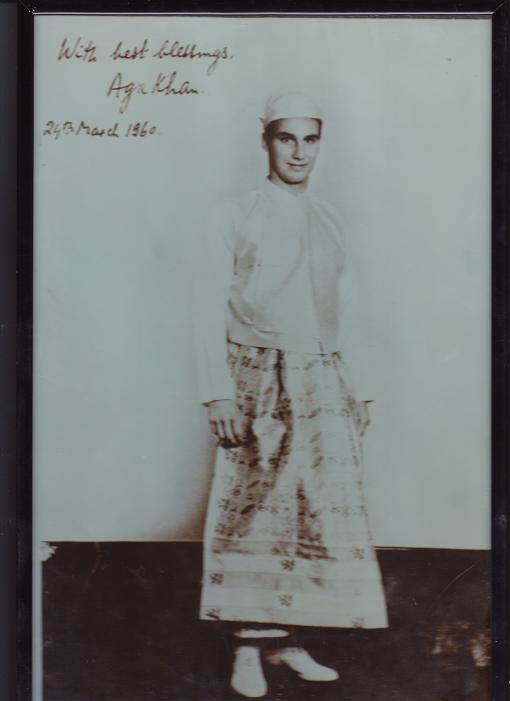
This is a signed photograph, dated March 24, 1960, of Mawlana Hazar Imam, His Highness the Aga Khan, 49th Imam of the Shia Imami Ismailis, pictured in a Burmese traditional dress during his visit to Burma in March 1960 when he celebrated the Persian New Year, Navroz, which falls on March 21st, with his Ismaili followers. The signed photograph contains his blessings. Photo: Anwar Virani Archives, Ottawa.
Navroz is an auspicious time to initiate self-improvement because nature, so to speak, is turning a new page in the book of life. It is a time to review our lives and determine necessary improvements. In a detached, objective way, we should analyze our positive and negative traits and then resolve to change bad habits into good ones.
Our covenant with Mawlana Hazar Imam is a promise we have given him to endeavour to achieve a proper balance between our material and spiritual lives. When choosing our resolution, one idea should always loom before the rest: ask ourselves, “What do we want from life, and what will earn Mawlana Hazar Imam’s divine pleasure?” A straightforward answer to this question should be: “To govern our lives by his deep desire for us to live within the Islamic concepts of unity, justice, tolerance, goodwill, generosity and the regularity by which we practice our faith.”
Mowlana Hazar Imam’s message spells out the meaning and significance of this auspicious day for us. He says: “I say to you all on Navroz, ‘Navroz Mubarak,’ and I want you, at the beginning of this New Year, to try to think a bit ahead in your future. Each Navroz, say to yourselves, ‘Have we done our work?’ If you have, then I will be very happy indeed. I say Idd Mubarak to all of you and give you most affectionate blessings.” — Rangoon, Burma, March 21, 1960.
By steeping our consciousness in love for the Imam-of-the-Time and wisely directing our activities, we shall make our lives one unending act of worship. Therefore, let this Navroz be a New Day on the path of spiritual glory, material well-being, and progress. Let each New Day be a Navroz to strengthen our spiritual bonds with Imam-e-Zaman, reminding us that his blessings are always with us.
We conclude with our beloved Imam’s final words spoken in Rangoon: “On this day of Navroz, I say to each and every one of you, Idd Mubarak, and I pray that in this New Year, your worldly and spiritual happiness should progress tenfold and that this will be the case every year.” — Rangoon, Burma, March 21, 1960.
Date posted: March 18, 2024. Last updated: March 20, 2024 (inserted link to UN Secretary General’s 2024 Nowruz message in 1st paragraph).
At long last, literature counters in Jamatkhanas across Canada have received Dr. Farhad Daftary’s “The Ismaili Imams: A Biographical History” in larger quantities than what was available in 2021-2022 at the height of COVID-19. That inventory sold out quickly, and the new inventory has reached several Jamatkhanas around the country. We request families to visit the literature counters at their respective Jamatkhanas before the book is sold out. Simerg has collaborated with the Ismaili Tariqah and Religious Education Board (ITREB) for Canada to facilitate the sale and distribution of the The Ismaili Imams by mail to Ismailis in Canada who live remotely or who do not have easy access to Jamatkhana literature counters. The book will be sold at the same price as at literature counters, but postage, packing and shipping costs will be added.
How to Purchase The Ismaili Imams: A Biographical History from Simerg
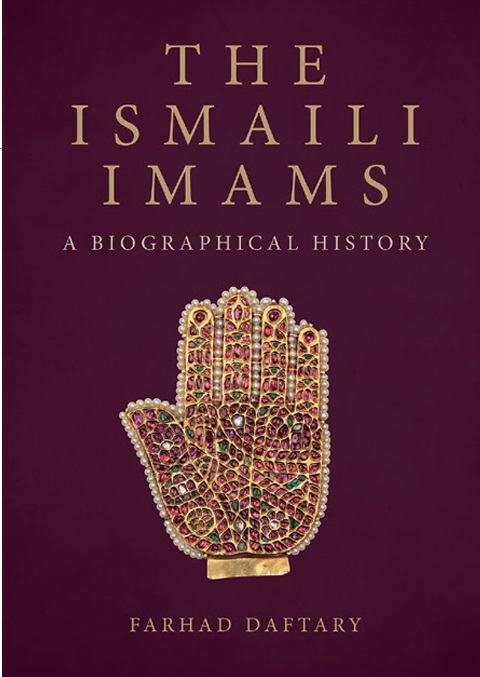
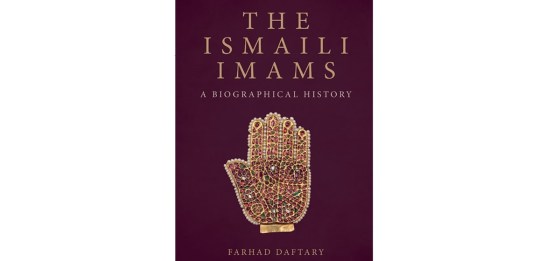
Cover page of The Ismaili Imams: A Biographical History by Farhad Daftary, Hardback, 260 pp., published October 2020, I.B.Tauris in association with the Institute of Ismaili Studies.
Ismaili individuals and families who live remotely or who do not have access to the book at their own Jamatkhana literature counters are advised to order Ismaili Imams through Simerg’s offer before the book is completely sold out.
The book will be sold at the same price as at Ismaili Jamatkhana literature counters across Canada. However, postage, package and handling charges of C$25.00 will be added to the book’s COST PRICE of C$23.00, for a total price of C$48.00. Note that each shipment will be sent via Canada Post’s expedited parcel post. A tracking number will be provided to track the shipment.
To inquire if the book is still available, and to order/reserve the book, please write to Malik Merchant of Simerg, Barakah and Simergphotos at mmerchant@simerg.com. Please provide your full name, phone number and address where you can be reached. Simerg will contact you within 24 hours to verify your address and provide you with payment information. Please note that payments will only be accepted via Interac E-transfer or by cheque. The book will be shipped out within 24 hours upon receipt of the payment.
Each individual/family will be able to order a maximum of 2 copies, as Simerg’s stock is limited.
What arguably should have been among the first publications to be published by the Institute of Ismaili Studies (IIS) in London was ultimately published in October 2020, 43 years after its founding on December 13, 1977. The book, The Ismaili Imams: A Biographical History, has now reached literature counters in Ismaili Jamatkhanas across Canada in larger quantities than the first stock that arrived in the midst of Covid-19, when the book quickly sold out. The long awaited book, in my humble opinion, should find a place in every Ismaili home and should be read by the youth and professionals in the Jamat.
Simerg is pleased to collaborate with the Ismaili Tariqah and Religious Education Board (ITREB) for Canada to facilitate the sale and distribution of the The Ismaili Imams by mail to Ismailis in Canada who live remotely or who do not have easy access to Jamatkhana literature counters. The book will be sold at the same price as at literature counters, but postage, packing and shipping costs will be added. See details below.
Article continues below
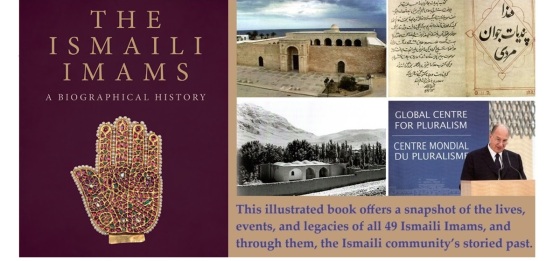
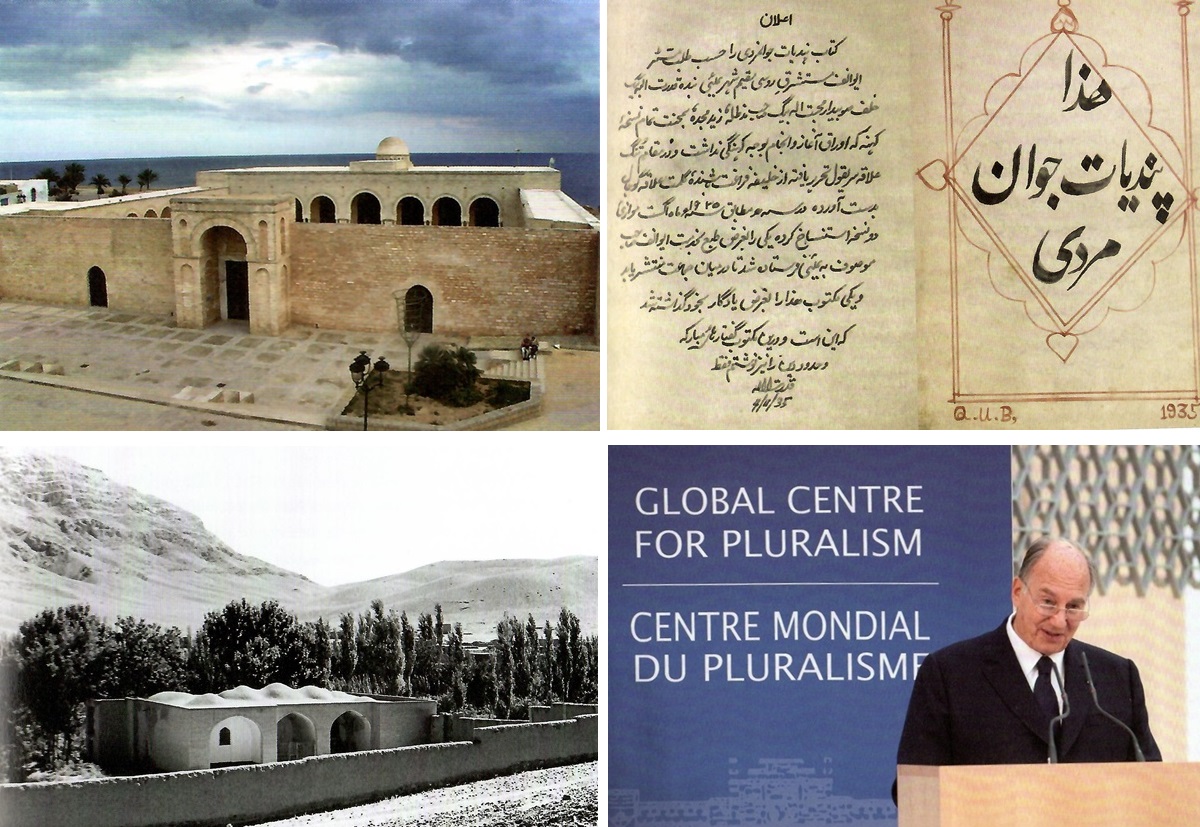
Top left: Great Mosque of Mahdiyya; top right: Title page and opening page of a manuscript of the Pandiyat-i javanmardi, a collection of the sermons of Imam Mustansir bi’llah; bottom left: Restored mausoleum of Imam Shah Nizar in Kahak; and Mawlana Hazar Imam, His Highness the Aga Khan, delivering a speech at the Global Centre for Pluralism, Ottawa. All Illustrations: The Ismaili Imams: A Biographical History.
The Ismaili Imams: A Biographical History has been authored by Farhad Daftary, a pre-eminent authority on Ismaili Studies, and author and editor of dozens of books and articles on Ismaili history and literature. Dr Daftary, who joined the IIS in 1988, became the head of its Department of Academic Research and Publications, and went on to become its co-director upon the departure of Dr Azim Nanji. Daftary finally stepped down from his management roles in 2022, and was succeeded as IIS director by Professor Zayn Kassam in January 2023.
On January 18, 2023, Dr Daftary was honoured in the presence of Prince Rahim at a special reception held in London. During the event, Prince Rahim announced that Mawlana Hazar Imam, His Highness the Aga Khan, had decided to acknowledge Dr Daftary’s contributions to the Institute by attaching his name to PhD Scholarships awarded by IIS. Prince Rahim also recognized Dr Daftary’s central role not only as a leader, but as the IIS’s most respected and productive scholar and author.
___________________
Cover page of The Ismaili Imams: A Biographical History by Farhad Daftary, Hardback, 260 pp., published October 2020, I.B.Tauris in association with the Institute of Ismaili Studies.
The Ismaili Imams is the first collection of biographies of all the Ismaili Imams, from the seminal Imams of early Shi’i Islam, through to those of the first ‘period of concealment’ when their public identities remained hidden, to the Imam-caliphs of the illustrious Fatimid dynasty, and those of the Alamut period, up to the Aga Khans of the modern period. The Ismaili Imams draws from the rich scholarship of the developing field of Ismaili Studies, providing a simple and clear resource for both the Ismailis themselves and for general readers, ensuring accessibility for all. This extensively illustrated book offers a snapshot of the lives, events, and legacies of all 49 Ismaili Imams, and through them, the Ismaili community’s storied past.
___________________
The 260 page richly illustrated hardback volume features the 49 Ismaili Imams through the following nine sections: 1.The Ismaili Imamat in History; 2.The Early Imams (from Hazrat ‘Ali to Imam Muhammad b. Isma’il); 3.The Concealed Imams (Imam Wafi Ahmad to Imam Radi al-Din ‘Abd Allah); 4.The Early Fatimid Imam-Caliphs (from Imam al-Mahdi to Imam Nizar); 5.The Imams at Alamut (from Imam al-Hadi to Imam Rukn al-Din Khurshah); 6.The Early Imams after Alamut (Imam Shams al-Din Muhammad to Imam Muhammad b. Islam Shah); 7.The Imam of the Anjudan Period (Imam Mustansir bi’llah to Imam Khalil Allah ‘Ali); 8.The Imams in the Eighteenth Century (Imam Shah Nizar to Imam Shah Khalil Allah); and 9.The Imams in the Modern Age (Imam Shah Hasan ‘Ali Shah, Aga Khan I, to Mawlana Shah Karim al-Husayni, Aga Khan IV). The book ends with a four page glossary, select bibliography, and an index. The full contents page is available on the IIS website HERE.
How to Purchase The Ismaili Imams: A Biographical History from Simerg
SOLD OUT: We do not have any more copies of the book in stock. Please check the availability of Ismaili Imams at the Jamatkhana literature counters in your respective countries, or buy it from Amazon.ca or Amazon.com.
Simerg is pleased to facilitate the distribution of The Ismaili Imams: A Biographical History in conjunction with ITREB Canada, to Ismaili addresses in Canada. Ismaili individuals and families who live remotely or who do not have access to the book at their own Jamatkhana literature counters, should take advantage of this offer before the book is completely sold out.
The book will be sold at the same cost price as at Ismaili Jamatkhana literature counters across Canada. However, postage, package and handling charges amounting to a total of C$25.00 will be added to the book’s COST PRICE of C$23.00, for a total payment price of C$48.00. Note that each shipment will be nicely packaged and sent via Canada Post’s expedited parcel post. A tracking number will be provided to track the shipment.
To order/reserve the book, please write to Malik Merchant of Simerg, Barakah and Simergphotos at mmerchant@simerg.com. Please provide your full name, phone number and address where you can be reached. Simerg will contact you within 48 hours to verify your address and provide you with payment details. Please note that payments will only be accepted via Interac E-transfer or by cheque. The book will be shipped out immediately upon receipt of the payment.
Each individual/family will be able to order a maximum of 2 copies.
Over the past 14 years, Simerg has had the privilege and honour to support Prince Hussain Aga Khan’s books such as Animal Voyage, Diving Into Wildlife and The Living Sea. We are happy to collaborate with ITREB Canada in this new endeavour and look forward to serving members of the Ismaili community in this joint initiative. Ismaili readers should note that the book is available for purchase through online booksellers like Amazon, albeit at a higher price.
Date posted: February 17, 2024. Last updated: August 16, 2025.
____________________
Have you read The Ismaili Imams? We want to hear from you. Please submit your feedback on the book by clicking on LEAVE A COMMENT.
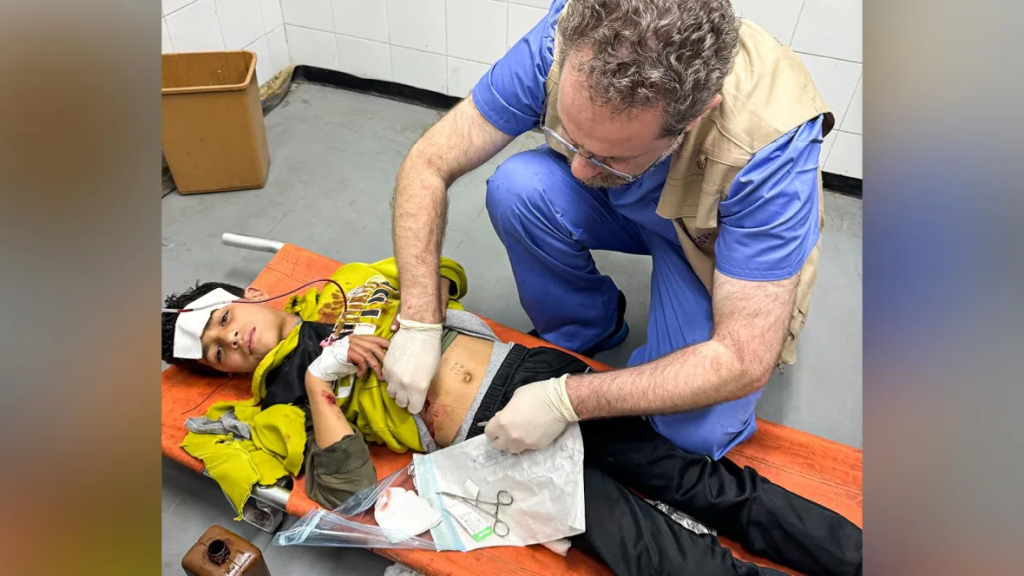
The CBC news clip that you will see by clicking on the link below in which Dr. Anas Al-Kassem is being interviewed by CBC newscaster Chris Glover will pierce anyone’s heart. In the photograph shown above, Dr. Al-Kassem stitches up a child’s wound on the floor of the hospital in the city of Khan Yunis. Photograph: CBC/Submitted by Anas Al-Kassem.
A Canadian trauma surgeon says that for every child he saved in the hospital in southern Gaza, another would die of their injuries. “We lost many children before our eyes,” said Dr. Anas Al-Kassem, chief surgeon at Norfolk General Hospital and West Haldimand General Hospital.
The Hamilton-based doctor travelled to Gaza last month as part of a medical convoy to help Palestinians injured in the Israel-Hamas war, and suffering from what the World Health Organization has called “catastrophic” health conditions.
Dr. Al-Kassem said he would treat upwards of 30 people each day, at least half of whom were children, some as young as two. Many suffered head trauma, shrapnel in the chest and abdomen, or injuries to their arms and legs that required surgery. He’d stitch up patients’ wounds on the floor without having any bed or painkillers to offer. After quick assessments, the doctors would have to decide who to try to save with their limited resources, he said.
Al-Kassem said there were bright moments, like when he and another surgeon from Toronto saved an eight-year-old boy’s life by removing shrapnel from his heart. Al-Kassem, a father of five, returned to his Ancaster, Ont., home last Thursday after the two-week mission, but said his “heart and soul” stayed behind. PLEASE READ THE FULL STORY ON CBC.
“As you build your lives, for yourselves and others, you will come to rest upon certain principles. Central to my life has been a verse in the Holy Quran which addresses itself to the whole of humanity. It says: ‘Oh Mankind, fear your Lord, who created you of a single soul, and from it created its mate, and from the pair of them scattered abroad many men and women. I know of no more beautiful expression about the unity of our human race — born indeed from a single soul.” — The Aga Khan, excerpt from an address to both the Houses of the Canadian Parliament, February 27, 2014, see featured photo at top of post.
A calligraphy by Toronto’s Karim Ismail depicting the 87th birthday of His Highness the Aga Khan, the 49th Hereditary Imam of the Ismaili Muslims. Please clik on image for special post.
On December 13, 2023, Ismaili Muslims around the world mark the 87th birthday of their Imam, His Highness the Aga Khan. Simerg’s sister website Barakah presents a special post for the birthday. Please click The Benevolent Imam.
At the age of 87, the current Aga Khan is the oldest living Imam in Ismaili history. On July 11, 2023, he celebrated his 66th Imamat Day, still 5 years away from the record breaking 71 years of his predecessor, Aga Khan III (d. July 11, 1957), who began his reign at the age of seven in August 1885. Canada is home to more than 100,000 Ismailis and the Aga Khan’s projects include the beautiful Aga Khan Garden in Edmonton — part of the University of Alberta’s Botanic Garden — and the Aga Khan Museum in Toronto, two iconic Ismaili Centres in Toronto and Vancouver, and the Global Centre for Pluralism in Ottawa. In Calgary, the Ismailis host the annual stampede breakfast which is open to the entire public. Thousands attend and enjoy this annual event.
Note to readers: The program commences in the YouTube video below shortly after the 22-minute mark with Omar Sachedina, the Chief News Anchor and Senior Editor for CTV’s national evening newscast CTV National News, acting as the emcee. Princess Zahra Aga Khan, who is a Board Member of the Global Centre for Pluralism, presented the prizes on behalf of her father, His Highness the Aga Khan, the Chairman of the Board. This was the 4th edition of the Award which is held every 2 years. A report and photographs of the event will be shared later with our readers on our sister blog Barakah, which is dedicated to the Aga Khan.






 Simerg - Insights from Around the World