Simergphotos – Where You Will Find A Collection of Stunning Images and Informative Photo Essays

During the  past six months, this (literary) website’s companion blog, Simergphotos,  has featured  hundreds of beautiful images and stories covering people (His Highness the Aga Khan, President Barack Obama, Prince Amyn Aga Khan, Ibn Sina, the Maasai, Thomas Jefferson), places (Alamut, Zanzibar, Jerusalem, Bagamoyo, Tashkorgan), arts of the book (the Fatimid Blue Qur’an, the American Declaration of Independence), and calligraphy (Naade Ali).

The shrinking ice fields of Mount Kilimanjaro

The shrinking ice fields of Mount Kilimanjaro

Newcomers to this website as well as readers who may have missed or overlooked some of the thirty stunning and informative photo pieces will welcome the following links. We invite you to share this post with your family and friends:

  1. Peaceful Times and Fond Memories of Salamiyya, Syria….Then Terror Strikes Violating the Qur’anic Injunctions on the Sanctity of Life
  2. Photo Flashback: His Highness the Aga Khan at NATO Headquarters in January 2007
  3. Exclusive Photos and Story: The Investiture Ceremony of Prince Amyn Mohamed as Chief of Ismaili Scouts
  4. Historical Images: The Naad-e-Ali, “Call Upon Ali….oh Ali, oh Ali, oh Ali,” in Ottoman Calligraphy, and Other Shia Inscriptions in the British Museum’s Islamic Collection
  5. Historical Images: The Blue Qur’an from the Fatimid Period, “A Very Spiritual Piece”
  6. Historical Images: Ibn Sina and His Canon of Medicine
  7. Historical Images: President Thomas Jefferson’s Copy of the Qur’an
  8. The Executive Jets of His Highness the Aga Khan
  9. Historical Images: The American Declaration of Independence Illustrated
  10. A Tribute to President Barack Obama on His Re-election: Endearing Photos from the White House
  11. His Highness the Aga Khan with Ismaili Leaders and Volunteers at the London Ismaili Centre’s Rooftop Garden
  12. Beautiful People and Places of Zanzibar and Tanganyika: Photos from 1936
  13. Photo Essay: The Historical Jubilees of His Highness the Aga Khan (1877-1957), the Imam of the Socio-Economic Revolution
  14. Photo Essay: Historic Signing of Agreement in Alberta Between His Highness the Aga Khan and Premier Alison Redford
  15. From John F. Kennedy to Pierre E. Trudeau to Stephen E. Harper – A Selection of Photos and Videos of His Highness the Aga Khan with USA Presidents and Canadian Prime Ministers
  16. Magnificent Photos of Chateau de Chantilly and His Highness the Aga Khan’s Visit to the Jewel of French Culture
  17. The Nairobi Aga Khan Hospital’s Kitengela Sculptures
  18. Rare Photos of His Highness the Aga Khan’s Visits to Kenya and Pemba
  19. 5 Colossal Faces in the Black Hills of South Dakota
  20. His Highness the Aga Khan’s Work at a Glance
  21. A Journey to the Bagamoyo Jamatkhana
  22. An Ismaili Jamatkhana in China
  23. The Mausoleums of Ismaili Pir Sadardin and His Son Pir Hasan Kabirdin
  24. The Ismaili Journal “Rahe Rast” – A Legacy of the Iconic Karim Master
  25. Iran and Alamut Like You Have Not Seen Before
  26. His Highness the Aga Khan and the Ismailis
  27. Discovery of Fatimid Glass in a Byzantine Shipwreck
  28. My Journey to Alamut Where Every Stone Tells a Story
  29. Jerusalem – A Photo Essay of the Holy City

In Brief: Little Known Facts From Ismaili History – (I) The Imitation of Fatimid Gold Coins in Christian Kingdoms

BRIEF FACTS FROM ISMAILI HISTORY

Three gold quarter dinars of the Fatimid Imam-Caliph al-Hakim were among the Fatimid objects found in a shipwreck in Turkey. Please visit Simerg's new photo blog. Click http://simergphotoblog.wordpress.com or on image. Photo credit: Institute of Nautical Archaeology.

Three gold quarter dinars of the Fatimid Imam-Caliph al-Hakim were among the Fatimid objects found in a shipwreck in Turkey. Photo credit: Institute of Nautical Archaeology.

“In the twelfth century the gold dinars of the Fatimid caliphs of Egypt were so highly valued throughout the Middle East, especially by Syrian merchants, that the Christian kingdoms founded in Palestine by the Crusaders began to issue imitations of them. These imitations, the so-called “Saracenic besants”, were clumsily produced at first, but their design was gradually improved until they were such faithful copies of the dinar that the horrified papal legate who accompanied King Louis IX of France (Saint Louis) on the Crusades in 1250 threatened those responsible with excommunication for daring to issue coins to the glory of Allah for commercial profit. A compromise was reached. The Saracenic besant was replaced by another issue which was almost identical to its predecessor but bore a cross and Arabic inscriptions to the glory of the Holy Trinity and the Lord Jesus Christ”  – Source: “Dinars Club” by Gerard Krebs, UNESCO Courier, January 1990, page 29.

_________________

For an excellent photo essay about the shipwreck in which thousands of pieces of Fatimid artifacts and objects including the gold dinars (shown above) were found please click Fatimid Shipwreck. For a detailed essay about the Fatimids, please click on Great Moments in Ismaili History: The Establishment of the Fatimid Caliphate

“The Blue Manuscript” – A Fiction About the Hunt for a Fatimid Masterpiece

The highlight of the book is the history/storytelling of the Fatimid era….Goodreads….Al Khemir seduces readers with the manuscript’s mythical beauty and the philosophy of its art form…The Independent….A remarkable novel, skilfully and imaginatively weaving history and human lives across time and continents….The Guardian

PLEASE CLICK: “The Blue Manuscript” by Sabiha Al Khemir – An Intriguing Fiction About the Hunt for a Priceless Fatimid Qur’an

Please click for review by David Skinner

Please click for review by David Skinner

The Great Islamic Scholar Averroes: An Essay by Robert Pasnau and a Quote by His Highness the Aga Khan

“…After several centuries of flourishing, however, the study of philosophy and science faded in Muslim countries…What happened? How did Western Europe, by the late Middle Ages, become the prime locus for philosophical and scientific research? These are, of course, complex matters. But to see something of the factors at play, we might consider the life and work of Averroës, one of the last great Islamic philosophers, and the one who made the strongest argument on behalf of philosophy” — Robert Pasnau

PLEASE CLICK: Averroes – The Islamic Scholar Who Gave the West Modern Philosophy

Averroes. Line engraving by D. Cunego, 1785, after A. R. Men after Raphael Sanzio. Credit: Welcome images. Pleasse click on image for article.

Averroes. Line engraving by D. Cunego, 1785, after A. R. Men after Raphael Sanzio. Credit: Wellcome images. Pleasse click on image for article.

~~~~~

HIS HIGHNESS THE AGA KHAN ON AVERROES

His Highness the Aga Khan (1877 - 1957). Photo Credit: © The National Portrait Gallery, UK.

His Highness the Aga Khan (1877 – 1957). Photo Credit: © The National Portrait Gallery, UK.

“Ibn-Rushd, the great Muslim philosopher, known to Europe as Averroes, established clearly the great distinction between two kinds of apprehensible human experience: on the one hand, our experience of nature as we recognize it through our sense, whence comes our capacity to measure and to count (and with that capacity all that it brought in the way of new events and new explanations); and on the other hand, our immediate and imminent experience of something more real, less dependent on thought or on the processes of the mind, but directly given to us, which I believe to be religious experience. Naturally, since our brain is material, and its processes and all the consequences of its processes are material, the moment that we put either thought or spiritual experience into words, this material basis of the brain must give a material presentation to even the highest, most transcendent spiritual experience. But men can study objectively the direct and subjective experiences of those who have had spiritual enlightenment without material intervention.” — The Memoirs of Aga Khan

~~~~~

PLEASE CLICK: Averroes – The Islamic Scholar Who Gave the West Modern Philosophy

Striking Images of Important Sites of Tanzania and other African Countries @Simergphotos

TANZANIA, NAMIBIA, SOUTH AFRICA, MAURITANIA, CHAD AND EGYPT

[In Tanzania] Ngorongoro’s caldera is 14 miles across at its widest point and is 2,000 feet deep…It is part of the Ngorongoro Conservation Area and is home to over 75,000 animals… [In Namibia] the dunes, pushed up by strong onshore winds, are the highest sand dunes in the world — as high as 1,000 to 1,167 feet in places….Stunning Images

Please click to view images of Africa

Please click to view images of Africa

Salamiyya and Syria: “Peace Will be Again”

By Elia Badrudin
Dates in season - Salamiyya, Syria

Salaam , al Salaam, O salaam
to all of humanity, Peace

al Salamiyeh , KNOW that Peace will be again.
the heavens will smile on you again.
all humanity which speaks for Peace
has promised that
the planet has your place

al Salamiyeh, more than a thousand years before
prayers were seeds of this ground
a grassland lying on Syrian steppes
a fertile plain of hope
a soft quiet spawning the golden age
a diverse Ummah immersed with the Fatimids…
you’ve nurtured yourself for the heavens here
and it is not all gone today.
you are not lost to us; neither sand grain lost to the sky.
as hearts are the stronger carrying yours
as anguish is balanced with resolute prayer
transformed, you will return, al Salamiyeh
the world is not asleep.

we are an entire Ummah living together in al Salamiyeh
the world has not left you
nor any other facing terror —
“you may feel alone
but you are not alone”
does not your date tree stand strong in windstorm?
and your smile not nourish your child?
He is “Always with you, Always with you”
remember.
and the world will not sleep.

not dogma, not terror,
there’s no martyrdom in suicide!
whosoever taketh life of another..
brutal condemnation
the bestiality of his own cowardly nature
who will betray your homeland and ours
has fallen to the brainwashing of his idols
and their very own envy

not even an animal kills but of hunger
leave them to their desolate running.
only, the ends of the earth are round
and of the heavens, eternal.
where will they go?

and the world will not sleep
all day and all night
across our globe
Ismailis holding hands with every other faith
for all of Syria and for all your families.
“you are not alone, you are never alone”

our seven days, a satado,
are seven ages of pain vanquished
are hearts awry yet steadfast
and hope takes root in this action
then Time too will make space..

and these fools will not rule
fear not the evils, for though they have drained innocent blood,
their souls and hearts are for His Taking

Salaam , al Salaam, O salaam
to all of humanity, Peace.

~~~~~~~~

Date posted: January 30, 2013
© Simerg.com

Please also see Peaceful Times and Fond Memories of Salamiyya, Syria….Then Terror Strikes Violating the Qur’anic Injunctions on the Sanctity of Life

Salamiyya: Our Thoughts and Prayers are with You

Home to tens of thousands of Ismailis, the peaceful city of Salamiyya was struck by terror a few days ago, resulting in the loss of precious human lives and property. Simergphotos brings to its readers some vivid memories of the historic city and its wonderful people through anecdotes and photos, and prays for the return of peace to Syria.

PLEASE CLICK: Peaceful Times and Fond Memories of Salamiyya, Syria….Then Terror Strikes Violating the Qur’anic Injunctions on the Sanctity of Life

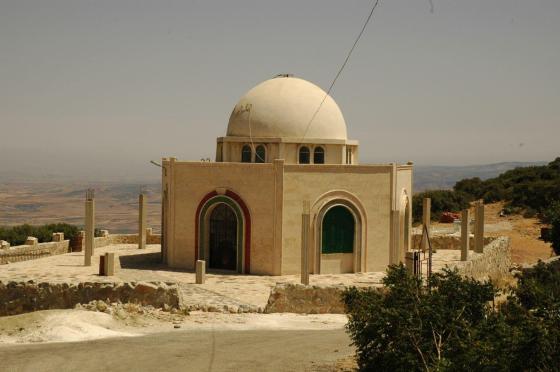
Jabal Mashhad in Salamiyya, Syria, is thought to hold the tomb of the 8th Ismaili Imam Wafi Ahmed. Photo: Arif Babul, Vancouver. Copyright. Please click for enlargement. Photo: Professor Arif Babul. Copyright.

Jabal Mashhad in Salamiyya, Syria, is thought to hold the tomb of the 8th Ismaili Imam Wafi Ahmed. Please click for Salamiyya. Photo: Arif Babul, Vancouver, Canada. Copyright.

~~~~~~~~

“Islam: A Mosaic, Not a Monolith” – a brief but ambitious essay by Vartan Gregorian

“[Vartan] Gregorian is a national treasure, one of the most interesting intellects and
personalities in the United States” – Houston Chronicle

To download essay, please click: Islam – A Mosaic, Not a Monolith

May 26, 1996: His Highness the Aga Khan receives a standing ovation at the conclusion of the Baccalaureate Address at Brown University, Providence, Rhode Island. Next to him is Vartan Gregorian who was then President of the University. In 2010, the Ismaili Imam established the Aga Khan Visiting Professor of Islamic Humanities at Brown University in honour of Vartan Gregorian, who is currently the President of Carnegie Corporation of New York. Please click on image to download his essay "Islam: A Mosaic, Not a Monolith."

May 26, 1996: His Highness the Aga Khan receives a standing ovation at the conclusion of the Baccalaureate Address at Brown University, Providence, Rhode Island. Next to him is Vartan Gregorian who was then President of the University. In 2010, the Ismaili Imam established the Aga Khan Visiting Professor of Islamic Humanities at Brown University in honour of Vartan Gregorian, who is currently the President of Carnegie Corporation of New York. Please click on image to download his essay “Islam: A Mosaic, Not a Monolith.”

ESSAY EXCERPT

“Huntington [author of The Clash of Civilizations and The Remaking of the World Order] and others who write about a clash of civilizations do not recognize that class, tribal, family, personal, ethnic, cultural, economic, and national interests have always defied a unity of purpose that transcends all these divisions….instances when the Muslim world was a unified monolith have been extremely rare. Throughout Islamic history, the gravitational pull of regional, dynastic, and since the nineteenth century nationalist interests has consistently outweighed the spiritual affiliations of some idealized, transcendent, organic umma. If history is a guide, it shows that in Islam, as in most major religions, there is a broad gulf between the ideal of unity and the realities on the ground… Read More

~~~~~~~

For a profile of the author, please click Aga Khan Gifts Brown University in Honour of Vartan Gregorian

1952 Historical Recordings of Allidina Jamal Walji Luvungivalla’s Ismaili Songs in Kiswahili at SAMAP

CORRECTION NOTICE

In my piece below about Ismaili songs in Kiswahili archived at the SAMAP, I mistakenly attributed the songs to Mukhi Allidina Jamal of Upanga Jamatkhana in Dar-es-Salaam, Tanzania. My attention has been drawn by the family of the actual composer and singer, Allidina Jamal Walji Luvungivalla, that the (late) Mukhi Allidina Jamal, who I attributed the songs to, and the (late) Allidina Jamal Luvungivalla were different individuals. I convey my apologies to the readers as well as members of the two families for this confusion, and appreciate Allidina Jamal Luvungivalla family’s kind reaction and understanding in this matter of mistaken identity. I hope to obtain information about the actual composer in due course, with some background notes about the context of the compilations.

Needless to say, the short description I have provided in the piece about the singer of Anant Akhado, Mukhi Allidina Jamal, is fair and accurate, except that he is not the composer and singer of the Kiswahili songs — Malik Merchant, Editor, Simerg.com

~~~~~~~~~~~

Allidina Jamal's Swahile songs were recorded on Shellac recordes, similar to the one shown above.

Allidina Jamal’s Swahili songs were recorded on Shellac records, similar to the one shown above.

Simerg.com is pleased to bring to its worlwide viewers a unique link to a series of devotional Ismaili songs in Kiswahili which have been archived with the South African Music Archives Project (SAMAP), which aims to promote multidisciplinary research in the field of popular music and culture.

The songs were composed and sung by the iconic Tanzanian personality, Allidina Jamal (please see correction note at top of this page), who was the Mukhi of Dar-es-Salaam’s Upanga Ismaili Jamatkhana during the 1960’s. Before assuming the post as Mukhi, he would be regularly called upon to recite verses from Pir Hasan Kabirdin’s composition “Anant Akhado” to the delight of the Jamat. The few verses that he sung from this monumental composition before the first Dua provided immense inspiration to everyone in attendance, setting the stage and religious fervour for the prayers that followed.

The 1952 recordings were done on the brittle Shellac gramophone records, although the much better Vinyl technology had been introduced by then.

Friends and admirers of Mukhi Allidina Jamal as well as viewers who speak or understand Swahili will be thrilled to hear these songs of devotion which include titles such as Mubarak-mubarak imame-zaman, Kwimbho ya zilsile ya imamat, Kwimbho ya Nooran Mubbin and Kwimbho ya sifu ya imam.

We invite you to click Allidina Jamal Kiswahili Song Archives at SAMAP

Readers are also invited to submit comments on this unique memory that Mukhi Jamal has left behind as well as other fond recollections with respect to his recitations in Jamatkahanas around the world.

Shia-Sunni Reconciliation and Enriching the Ummah and the World Through a Common Islamic Ethic, as Articulated by the Modern Direct Descendants of the Prophet Muhammad (s.a.s.)

SPEECHES, STATEMENTS AND WRITINGS OF THE 48TH AND 49TH ISMAILI IMAMS

PLEASE CLICK: Modern Ismaili Imams on Shia-Sunni Reconciliation and
Enriching the Ummah and the World Through a Common Islamic Ethic

Please click on image for reading

Please click on image for reading