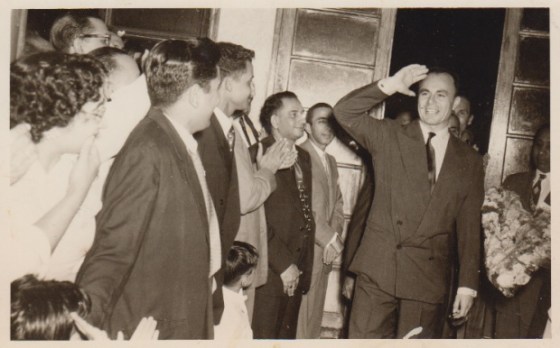
1957-1958 Photos: His Highness the Aga Khan and Prince Aly Khan in Lourenço Marques + Forthcoming @Simergphotos

PLEASE CLICK: Photos of Visits by Mawlana Hazar Imam and Prince Aly Khan to Mozambique in the late 1950’s

Prince Aly Khan, Lourenco Marques, 1957Please click image for more photos

~~~~~

Forthcoming Photo Essays at Simergphotos

EXCLUSIVE PHOTOS BY PAPA JAN: HUNZA AND UGANDA 
(from Muslim Harji Collection, to be published week of Monday, February 8, 2016)

Please click on photos for enlargement

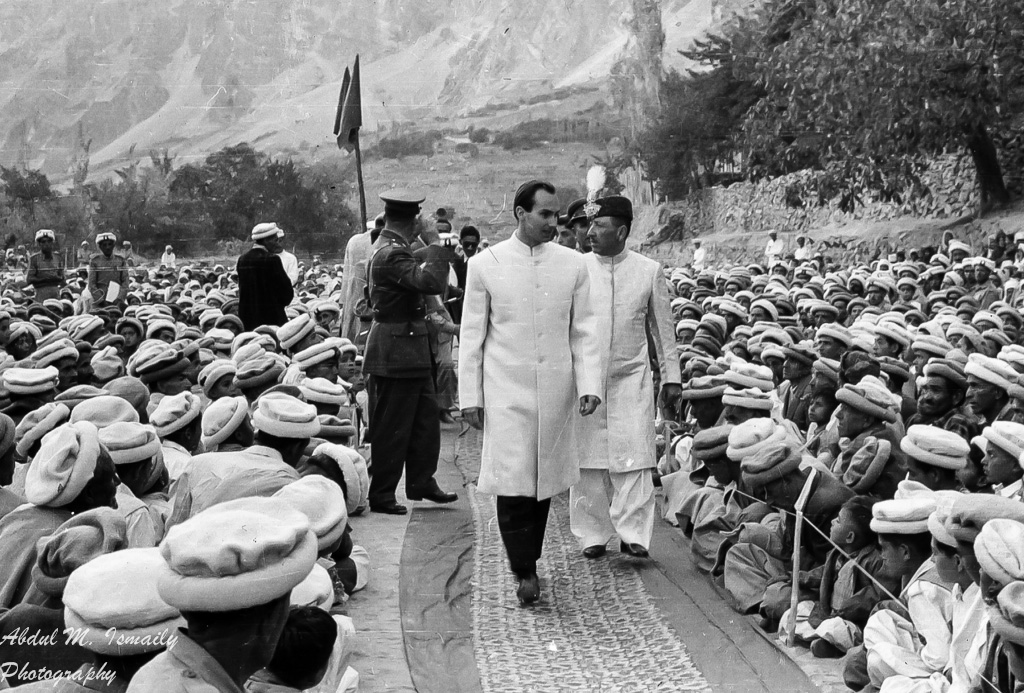
Papa Jan Photo: His Highness the Aga Khan Hunza VisitHunza. Photo by Papa Jan (late Abdul Mohamed Ismaily). Copyright.

~~~~~

EXCLUSIVE PHOTOS BY AZHAR CHAUDHRY
(from Sultan Jessa Collection, to be published week of Monday, February 15, 2016)

Photo: Azhar Chaudhry. Copyright

Nairobi, Kenya. Photo: Azhar Chaudhry. Copyright.

Date posted: Saturday, February 6, 2016.

______________

We invite readers to submit historical photos in their collection for publication on this web site and its sister blog, http://www.simergphotos.com. Please write to the editor, Abdulmalik Merchant, at simerg@aol.com.


In London Conference, His Highness the Aga Khan, 49th Ismaili Imam, Calls for ‘Islands of Stability’ in War-Torn Syria

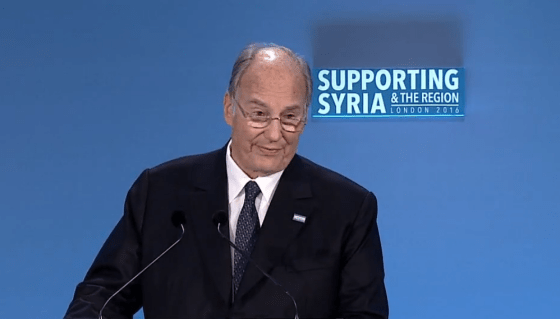
In remarks made at an International Conference under the theme “Supporting Syria and the Region Conference”, in London, England, Mawlana Hazar Imam, His Highness the Aga Khan, today called for the establishment of ‘islands of stability’ in war-ravaged Syria that could provide areas of relative safety in the midst of conflict. The conference, co-hosted by Germany, Kuwait, Norway, the United Kingdom and the United Nations. was attended by representatives from sixty countries, including 30 world leaders.

“The situation in Syria is a close to hell as we are likely to find on this earth,” said UN Secretary General Ban Ki-moon. Referring to the Geneva meeting between the Syrian Government and the opposition parties that had broken down just a day earlier, he said the talks were “undermined by the continuous lack of sufficient humanitarian access, and by a sudden increase of aerial bombings and military activities within Syria”. He urged the warring sides to “get back to the table, not to secure more gains on the battlefields”.

Aga Khan 2016 Support Syria Conference London

Deploring the devastation in war-ravaged Syria, Mawlana Hazar Imam, His Highness the Aga Khan, called for the establishment of “islands of stability” to provide areas of relative safety in the midst of conflict. The 49th Shia Ismaili Imam, pledged $200 million towards achieving peace, stability, and reconstruction in the country.

The British Prime Minister, David Cameron, said that “if ever there was a moment to take a new approach to the humanitarian crisis in Syria surely it is now,” mentioning the huge number of Syrians who “fear they have no alternative than to put their lives in the hands of evil-people smugglers in search of a future”.

The following are the transcript and video of the remarks made by His Highness the Aga Khan at the Supporting Syria and the Region Conference.

Bismillah-ir-Rahman-ir-Rahim

Co-hosts of the Conference on Supporting Syria and the Region,

Excellencies,

Ladies and gentlemen,

I thank the co-hosts for organising this much-needed initiative to deepen the understanding of, and garner international support for the peoples of Syria, Alongside all those present here today, I am deeply distressed over the indiscriminate and widespread devastation of life and property, including that of irreplaceable cultural assets which are the manifestation of Syria’s stunningly rich pluralistic history.

The Aga Khan Development Network (AKDN), which is the Ismaili Imamat’s global agency for supporting development, is fully engaged with the peace process under UN leadership, and is firmly committed to helping build a Syria that continues to respect pluralism, remains secular, and embarks on a political process led by Syrians.

AKDN’s development and humanitarian work in Syria began many years before the war. In the present situation, we have committed resources and efforts to ensure that Internally Displaced People receive humanitarian assistance, and are supported to sustain their livelihoods. We are taking two approaches:

First, we are supporting local community leaders, teachers, doctors, engineers and others to foster stability, protecting their families and their communities. We are thus building and strengthening civil society to take as much responsibility as possible for their own future.

Second, we are investing in communities, by supporting agriculture, income generation, early childhood education, schools, and hospitals. We also provide vocational training to create skills. Our goal is to sustain hope.

We aim to meet the urgent needs of the present, but where also possible to protect and strengthen the foundations for the future. We seek to create “islands of stability”, where there is public consensus, in the face of war. It is my conviction that “islands of stability” can be replicated wherever security permits. Investing in them will help prevent displacement of people and anchor communities that would otherwise flee as refugees.

Since the onset of conflict in 2011, AKDN has dedicated $50 million towards these endeavours in Syria and is now committing to increasing this investment to $200 million over the next four years. Our efforts will expand to wider areas of the country. Our goal is peace, stability, and reconstruction.

Thank you.

_________________

Date posted: February 4, 2016.

Aga Khan’s Speeches in the UK and USA Tell Marvellous Stories About Cairo’s Al-Azhar Park and Convey Profound Messages of Our Common Humanity

PLEASE CLICK: His Highness the Aga Khan’s 2015 Speeches in the UK and USA Tell Stories About the Al-Azhar Park and Convey a Profound Message of Our Common Humanity

Aga Khan Mawlana Hazar Imam 2015 VisitsPlease click on image for His Highness the Aga Khan 2015 Visits to UK and the USA

His Highness the Aga Khan, 49th Ismaili Imam, is a Champion of Diversity and Compassion and Inspires Millions, Says Prime Minister Justin Trudeau

His Highness the Aga Khan is greeted by Justin Trudeau as he arrives in Ottawa, Canada, to celebrate his Golden Jubilee in 2008. At that time, Mr. Trudeau was a Member of Parliament in his riding in the Province of Quebec. He won the Liberal leadership in 2011, and after winning the recent Federal Elections held in October, he was sworn in as the Prime Minister of Canada on November 4th 2015. A day earlier he visited the Delegation of the Ismaili Imamat Building on Sussex Drive in Ottawa - see photo below. Photo: The Ismaili.

His Highness the Aga Khan is greeted by Justin Trudeau as he arrives in Ottawa, Canada, to celebrate his Golden Jubilee in 2008. At that time, Mr. Trudeau was a Member of Parliament in his riding in the Province of Quebec. He won the Liberal leadership in 2011, and after winning the recent Federal Elections held in October, he was sworn in as the Prime Minister of Canada on November 4th 2015. A day earlier he visited the Delegation of the Ismaili Imamat Building on Sussex Drive in Ottawa – see photo below. Photo: The Ismaili.

The Prime Minister of Canada, the Right Honourable Justin Trudeau, issued the following statement on December 13, 2015, on the 79th birthday of His Highness Prince Karim Aga Khan:

“Today, we celebrate the birthday of His Highness the Aga Khan, the spiritual leader of the Shia Ismaili Muslims, who has dedicated his life to the promotion of peace, pluralism, and compassion around the world.

“For over fifty years, the Aga Khan has been an inspiration to millions, working tirelessly to improve the health and education of those living in some of the world’s most vulnerable countries. As a global humanitarian leader, he has worked with many partners – including Canada – to implement vital programs that advance long-term solutions to poverty, illiteracy, and disease.

Prime Minister Justin Trudeau with AKDN Representative Dr. Mahmoud Eboo (left) and the President of the Aga Khan Ismaili Council for Canada, Malik Talib, at the Delegation of the Ismaili Imamat in Ottawa on November 3, 2015, the day before he was sworn in as the Prime Minister. Photo: The Ismaili.

Prime Minister Justin Trudeau with Aga Khan Development Netork (AKDN) Representative Dr. Mahmoud Eboo (left) and the President of the Aga Khan Ismaili Council for Canada, Malik Talib, at the Delegation of the Ismaili Imamat in Ottawa on November 3, 2015, a day before he was sworn in as Prime Minister. Photo: The Ismaili.

“I have seen first-hand the Aga Khan’s commitment to the ideals of diversity and inclusion. As a nation, we are proud His Highness was granted honourary Canadian citizenship for the leadership he has shown to advance development, pluralism, and tolerance – values that are at the core of our national identity.

“The world needs champions of diversity and compassion. Today, we are delighted to thank our good friend, the Aga Khan, for all that he has done to help those in need, and wish him good health, happiness, and peace on this special day.”

__________

“Happy Birthday to the Hazar Imam” – Yasmin Rattansi, MP Don Valley E.

Marc Carisse 2005 0607 203

His Highness the Aga Khan, MP Yasmin Ratansi and External Affairs Minister Pierre Pettigrew (July 2004 – February 2006). Photo: Jean-Marc Carisse. Copyright.

“Mr. Speaker, I take this opportunity to thank the constituents of Don Valley East for re- electing me to Parliament.

“My riding is proud to house three architectural jewels of Toronto: the Aga Khan Museum, the lsmaili Centre, and the Aga Khan Park built in Canada by His Highness the Aga Khan with his own funds.

“On December 13, His Highness will be celebrating his 79th birthday. I rise today in the House to pay a special tribute to a remarkable human being. His tireless efforts in building bridges across the globe, his commitment to eradicating poverty and ignorance for millions of people, irrespective of race or religion, through the AKDN network are unparalleled.

“I was fortunate to have worked with His Highness in establishing the Global Centre for Pluralism here in Ottawa.

“Happy birthday to the Hazar Imam. May all who come in touch with him benefit from his integrity, humility, honesty, and courage to do good.”

~~~~~~~~~

A Message and Tweets from the Premier of Ontario, Kathleen Wynne, and Arif Virani, MP Parkdale–High Park.

OLYMPUS DIGITAL CAMERA

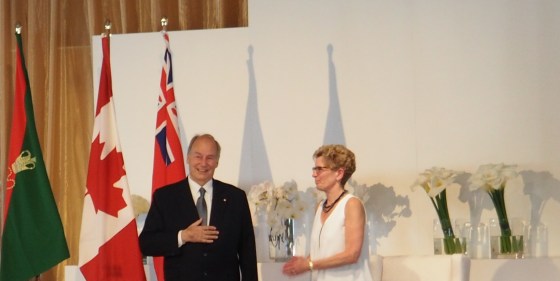
Mawlana Hazar Imam graciously accepts the standing ovation he receives after completing his speech at the opening of the Aga Khan Park in Toronto on May 25, 2015. With him is the Premier of Ontario, Kathleen Wynne. Photo: Simerg/Malik Merchant. Copyright.

Premier of Ontario Kathleen Wynne Aga Khan Message

~~~~~~~~

~~~~~~~~

….and a Tweet from the 2 Ismaili Mountaineers, Mirza Ali and Samina Baig, who conquered the “Seven Summits”, i.e. the highest mountain in each of the 7 continents

Date posted: December 13, 2015.
Last updated: December 14, 2015 (Message from Ontario Premier)

____________________

Glimpses of His Highness the Aga Khan’s Global Travels and Work in 2015

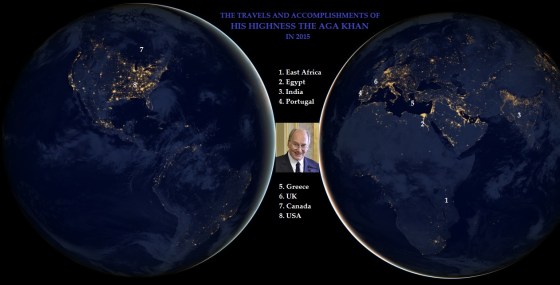
PLEASE CLICK: The 2015 Travels and Accomplishments of the Global Humanitarian and Spiritual Leader, His Highness the Aga Khan

Please click on image for the first part of a special 3-part series on His Highness the Aga Khan's Work and Travels in 2015.

Please click on image for the first part of a special 3-part series on His Highness the Aga Khan’s Work and Travels in 2015.

The Aga Khan’s “Cosmopolitan Ethic in a Fragmented World” a worthy read for all

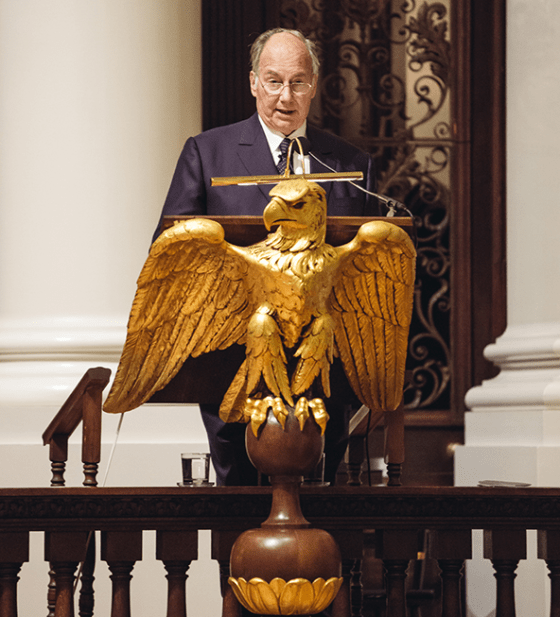
Aga Khan IV, 49th Ismaili Imam, at Harvard

June 5, 2008: His Highness the Aga Khan received an Honorary Doctor of Laws degree from Harvard University in Cambridge, Massachusetts. He is seen speaking to fellow honorary degree recipient British author J.K. Rowling who received an honorary Doctor of Letters degree. Photo Credit: Akdn.org

His Highness the Aga Khan shared his decades long experience as the 49th hereditary Imam of Shia Ismaili Muslims in an address he delivered at Harvard University on November 12, 2015 in which he focused on building a better world through the notion of the Cosmopolitan Ethic. In an analysis of  the term and what it means to him, he also emphasized that it resonates with the world’s great ethical and religious traditions. The address that he delivered is one which every Muslim and non-Muslim should reflect on and hold true to their hearts because, as His Highness said, each one of us is born of a single soul.

The following are concluding remarks from the address, but we recommend that  readers click on http://www.akdn.org/Content/1368 to read the complete speech. Also, Simerg prepared and published a thematic version of the speech at Two Absolutely Essential Messages in His Highness the Aga Khan’s Harvard Lecture: “The Cosmopolitan Ethic” and the Timeless Truth that “Humanity is Born of a Single Soul”

THE HEART OF THE ISLAMIC MESSAGE: COMMON HUMANITY

Aga Khan Jodi Lecture Harvard

His Highness the Aga Khan spoke at Harvard on November 12, 2015 as part of the Samuel L. and Elizabeth Jodidi Lecture series, which provides for “the delivery of lectures by eminent and well-qualified persons for the promotion of tolerance, understanding and good will among nations, and the peace of the world. Photo: AKDN

“…I would emphasise that a cosmopolitan ethic is one that resonates with the world’s great ethical and religious traditions.

“A passage from the Holy Qur’an that has been central to my life is addressed to the whole of humanity. It says: “Oh Mankind, fear your Lord, who created you of a single soul, and from it created its mate, and from the pair of them scattered abroad many men and women…”

“At the very heart of the Islamic faith is a conviction that we are all born “of a single soul.” We are “spread abroad” to be sure in all of our diversity, but we share, in a most profound sense, a common humanity.

“This outlook has been central to the history of Islam. For many hundreds of years, the greatest Islamic societies were decidedly pluralistic, drawing strength from people of many religions and cultural backgrounds. My own ancestors, the Fatimid Caliphs, founded the city of Cairo, and the great Al Azhar University there, a thousand years ago in this same spirit.

“That pluralistic outlook remains a central ideal for most Muslims today. There are many, of course, some non-Muslims and some Muslims alike, who have perpetrated different impressions.

“At the same time, institutions such as those that have welcomed me here today, have eloquently addressed these misimpressions. My hope is that the voices of Islam itself will continue to remind the world of a tradition that, over so many centuries, has so often advanced pluralistic outlooks and built some of the most remarkable societies in human history.

CENTRAL LESSON FROM A PERSONAL JOURNEY OF 58 YEARS

“Let me repeat, in conclusion, that a cosmopolitan ethic is one that will honour both our common humanity and our distinctive Identities — each reinforcing the other as part of the same high moral calling.

“The central lesson of my own personal journey — over many miles and many years — is the indispensability of such an ethic in our changing world, based on the timeless truth that we are — each of us and all of us — “born of a single soul.”

Date posted: December 7, 2015.

_________________

Who is His Highness the Aga Khan? Learn more about him and the Ismailis at The Preamble Of “The Constitution of the Shia Imami Ismaili Muslims”

Glimpses of His Highness the Aga Khan from Harvard, as he prepares to speak at the University on November 12th, 2015

His Highness the Aga Khan will deliver the Samuel L. and Elizabeth Jodidi Lecture at Harvard University’s Weatherhead Center for International Affairs on 12 November. Entitled “The Cosmopolitan Ethic in a Fragmented World”, his lecture is expected to cover the challenges to pluralism and cosmopolitanism. After the lecture there will be a conversation with Diana L. Eck

Although tickets for the lecture are no longer available, the entire event will be webcast live on http://www.akdn.org starting at 4pm EST.

Please check this website again on Wednesday, November 18, 2015, for speech and interview excerpts as well as a fine selection of photographs related to the event.

His Highness the Aga Khan graduated from Harvard University in 1959 with a BA Honours in Islamic History. This is his portrait in a Harvard University blazer as he smiles with an armful of books, on the Harvard Campus, Cambridge, Massachusetts, 1958. Copyright: Photo by Hank Walker/Time & Life Pictures/Getty Images.

His Highness the Aga Khan graduated from Harvard University in 1959 with a BA Honours in Islamic History. This is his portrait in a Harvard University blazer as he smiles with an armful of books, on the Harvard Campus, Cambridge, Massachusetts, 1958. Copyright: Photo by Hank Walker/Time & Life Pictures/Getty Images.

ON HIM BECOMING THE 49TH IMAM

“The summer before his senior year, Prince Karim Khan ’58 received unexpected news. His grandfather, His Highness Aga Khan III, had died, and his will named Karim — fondly known by his classmates as ‘K’ — as his successor, making him Aga Khan IV. And so, at 20 years old, Karim became the leader of the Ismaili Muslims, a sect of Shia Islam with over 15 million followers who consider him a direct descendant of the Prophet Muhammad.

“Once Karim became the Aga Khan, the Islamic history concentrator no longer led a student’s life. 

“[Aga Khan III] plucked K right out of the College,” said David H. Rhinelander ’58, one of Karim’s freshman roommates in Wigglesworth Hall. “He moved to a hotel and had to begin to run his empire while he was a student.” — Excerpts from an article by Nini S Moorhead published in the Harvard Crimson, June 2008.

_____

SOCCER TEAM

“The varsity soccer team opens its season this afternoon against Tufts and the game will be one of experimentation for Crimson coach Bruce Munro. He has had to revamp his lineup several times because of an alarming number of injured personnel, including Karim Aga Khan, the starting outside left. Larry Ekpebu will start for Khan at outside left, while Ken Marmar will open at outside right.” — Harvard Crimson, October 1, 1958.

_____

SCHOLARSHIP ESTABLISHMENT

“Karim Aga Khan ’59, who graduates with the Class of 1959 tomorrow, has established a ten-year program of scholarships for students attending Harvard from India, Pakistan, the Middle East, Persia, and East Africa.

“In a statement, the Aga Khan said that he will never regret his decision, after succeeding to his grandfather’s title, to return to Harvard to his studies. He added that he was ‘particularly impressed by the recent growth of facilities for the study of Middle Eastern and Asian affairs’.” — Harvard Crimson, June 10, 1959.

_____

LAUNCH OF ARCHNET

“The Aga Khan ’59, spiritual leader of the world’s 15 million Ismaili Muslims, joined the presidents of Harvard and MIT Friday to launch the world’s largest online resource for scholars of Islamic architecture.

“The resource, called ArchNet, contains over 600,000 images of Islamic architecture, tools for discussion and collaboration online among scholars and access to key journals of Islamic architecture. Harvard served as one of the primary collaborators in the creation of the site.

“Those speaking at Friday’s launch said they hoped the free site would provide architects, urban-planners and academics in resource-poor areas the tools they need to study, and give the Western public an opportunity to experience Islamic culture.

“In a brilliant way, [ArchNet] combines new technology and ancient culture to do something that is really quite important,” University President Lawrence H. Summers said in his remarks to the 150-person audience at MIT’s Media Laboratory.” — Harvard Crimson, September 30, 2002.

_____

HONORARY DOCTOR OF LAWS DEGREE

His Highness the Aga Khan receives an Honorary Doctor of Laws degree from Harvard University at commencement ceremonies June 5, 2008, in Cambridge, Massachusetts. Photo: AKDN.

His Highness the Aga Khan receives an Honorary Doctor of Laws degree from Harvard University at commencement ceremonies June 5, 2008, in Cambridge, Massachusetts. Photo: AKDN.

~~~~~

FLASHBACK TO THE 48TH IMAM AND HARVARD

“The Aga Khan, world-famous leader of the Ismaili Community, a sect of the Moslem religion, has endowed a professorship of Iranian at the University, President Pusey announced yesterday.

“The chair, to be known as the Aga Khan Professorship of Iranian, will be devoted to the study of the history and civilization of Iran. Its purpose, according to the Khan, is “to preserve and transmit to future generations knowledge of the rich heritage of the Iranian past.”

“At the same time, Sadruddin Aga Khan, son of the Aga Khan, has established the Ismaili Community Fellowships for the study of the Middle East here.

“In announcing the gifts, Pusey said, ‘The sentiment of the Aga Khan and his son, Sadruddin, in thus fostering the growth of understanding between the East and the West is one we all deeply share. Certainly, all peoples around the world need to know and better understand the cultural heritage of those who are our neighbors in the modern age’.” — Excerpts from the Harvard Crimson, December 6, 1956

Date posted: November 11-12, 2015.

________________

Please visit http://www.thecrimson.com – the daily newspaper of Harvard

His Highness the Aga Khan on Lake Sarez: Mitigating a Catastrophic Risk if the Lake’s Natural Dam Would Break

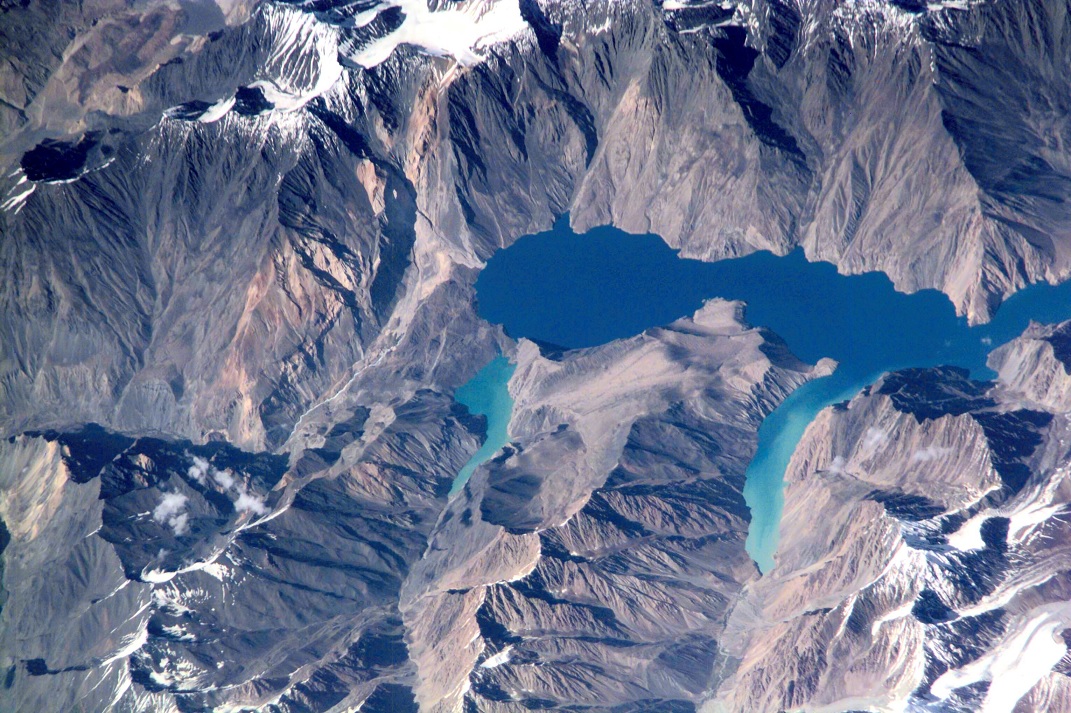
LAKE SAREZ NASA IMAGE

Please click on image for enlargement
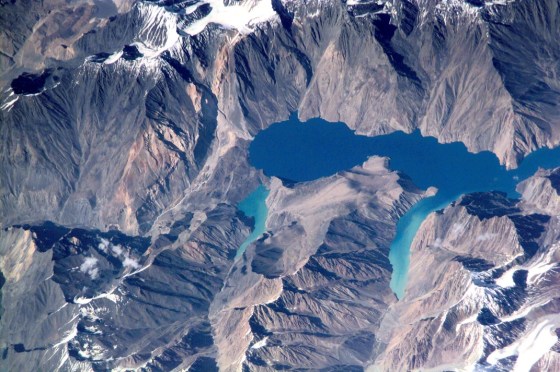
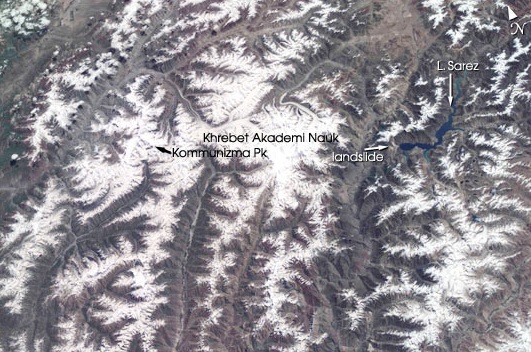
Lake Sarez in the Pamirs of TajikistanLake Sarez, deep in the Pamir mountains of Tajikistan, was created 90 years ago when a strong earthquake triggered a massive landslide that, in turn, became a huge dam along the Murghob River, now called the Usoi Dam. The resulting lake is perched above surrounding drainages at an elevation greater than 3000m, and is part of the watershed that drains the towering Akademi Nauk Range (see the regional image, below). The lake is 61 km long and as deep as 500 m, and holds an estimated 17 cubic km of water. The area experiences considerable seismic activity, and scientists fear that part of the right bank may slump into the lake, creating a huge wave that will top over and possibly breach the natural dam. Such a wave would create a catastrophic flood downstream along the Bartang, Panj and Amu Darya Rivers, perhaps reaching all the way to the Aral Sea. Currently, central Asian governments, as well as the World Bank and the UN are monitoring the dam closely, and have proposed gradually lowering the lake level as a preventive measure. Image: NASA Earth Observatory; digital photograph  was taken in the spring of 2001 from Space Station Alpha and is provided by the Earth Sciences and Image Analysis Laboratory at Johnson Space Center.

REMARKS BY HIS HIGHNESS THE AGA KHAN

“…From a global perspective, it is here, in Central Asia, that one of the most unusual water situations exists. I am referring to Lake Sarez. It is some 60 kilometres in length, containing some 17 cubic kilometres of water, is at 3200 meters altitude and has a natural dam of 550 meters, the highest of any dam in the world. For years it has been seen as a major hazard to millions of lives in this country [Tajkistan] and in Afghanistan, Uzbekistan, Turkmenistan and Kazakhstan. It is clear that if the rock dam, caused by an enormous landslide following an earthquake in 1911, were to break as a result of another such event; or if another earthquake were to cause landslides to fall into the lake, raising the level of the water and causing a massive spill across the top of the dam, the consequence would be a major catastrophe. It is estimated that 5 million lives could be at risk. Fear of this happening has dominated the thinking of government officials and the population living in the area around and below Lake Sarez for years.
Lake Sarez

“More recently the World Bank, the Aga Khan Development Network (AKDN), USAID and the Swiss Government have expended time, thought and resources to develop a credible protective response that can alert downstream populations as quickly as possible. In simple terms, this is risk management. The question I wish to raise today is whether we are not perhaps also facing a question of opportunity management. Thousands of cubic meters of consumable water are trapped at high altitude. Is this not a situation which could be turned into a force for development, rather than a threat of tragedy? Studies are presently underway to test this idea, in particular in regard to the use of the Sarez Lake waters for hydro energy and irrigation for the area they now threaten, and probably much more. Any wisdom that this conference could bring to bear on these issues would be an extremely valuable outcome…” — Excerpts from a speech made by His Highness the Aga Khan, 49th hereditary Ismaili Imam, at the Dushanbe Fresh Water Forum (Dushanbe, Tajikistan), August 30, 2003.

~~~~~~

ACTION TAKEN

In 2004, a special satellite equipment and early warning system for monitoring the situation around Lake Sarez was installed by a World Bank project working on risk mitigation in the area, a step to ensure early warning for the vulnerable population in the region.

According to an interview with IRIN (Humanitarian News and Analysis), Rustam Bobojonov, a coordinator of the project said that “the equipment is for monitoring the situation around Lake Sarez, the dam and the Bartang valley, including seismic activity, landslides, water, wind speed and so on. It is aimed at ensuring early warning for the Tajik government, including the emergency ministry, international community and the residents of all the villages in the Bartang Valley about the possible risk.”

The total cost of the project was at US$4.5 million out of which the Aga Khan Foundation contributed US$1, with the Swiss Government providing another US$2.9 million.

~~~~~~

Background Article

“…Below the Usoi dam there are more than 30 small villages in the Bartang Valley, with a total population of about 7,000 mountain Ismaili people. Most villages (kishlaks) are sited on alluvial cones near to the river and use all available gently sloping land. Many of the villages are subject to floods, landslides, mudflows, and avalanches annually…”

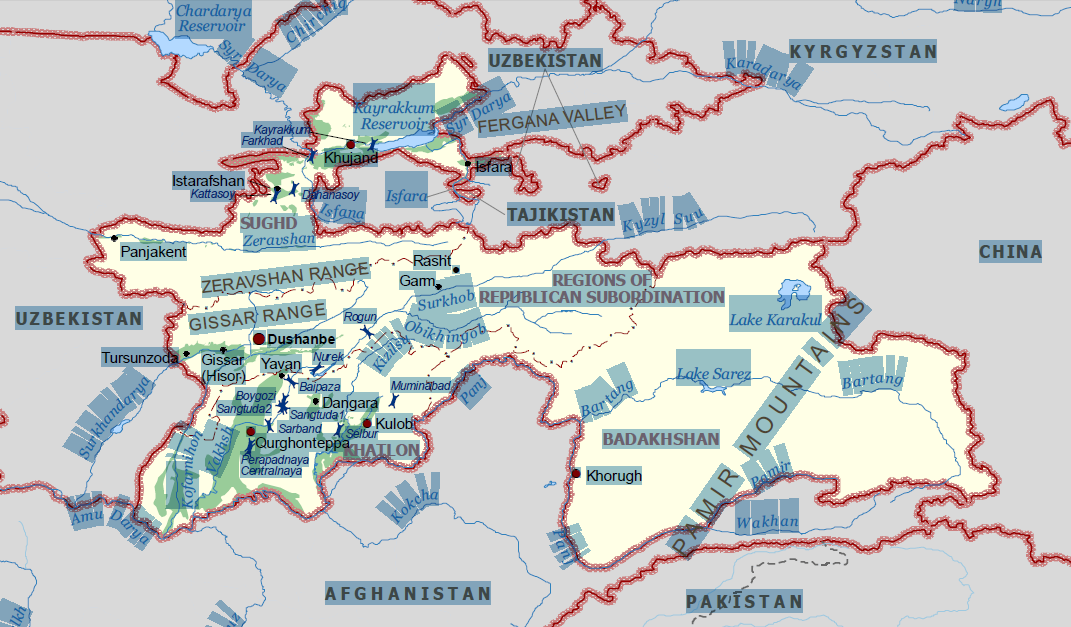
TAJIKISTAN: LAKE SAREZ AND THE PAMIR MOUNTAINS

Please click on map for enlargement.

FAO Map Tajikistan and Lake SarezPlease click on map for enlargement. This map has been adapted from the original map produced on the website of FAO.

(Map shown above and the following article have been adapted from the website of the United Nations Food and Agriculture Organization, FAO, see link below)

Lake Sarez, high in the Pamir Mountains is close to 3,000 m above sea level and its location is one of the most remote in the world. It formed following a very large landslide, set off by an earthquake in the winter of 1911. The landslide, with a volume of some 2-3 km3 , plunged down a mountain side to form a dam between 500 and 600 metres in height and two kilometres wide to block the Murgab River. This river is a tributary of the Bartang River which, below the confluence with the Murgab, flows for 120 km through a gigantic mountain gorge to join the Pianj River, itself a tributary of the Amu Darya. The Amu Darya is one of the two major rivers that drains into the Aral Sea 2,000 km below the dam site. The Pianj and Amu Darya rivers form part of the frontier between Tajikistan and Afghanistan and further downstream their combined waters flow through Uzbekistan and Turkmenistan. The fallen mass of rock and earth was named the Usoi Dam after the village that it completely annihilated. The dammed waters of the Murgab River produced Lake Sarez, named for a village that was submerged by the rising waters. Initially, the level of the lake rose at a rate of about 75 metres a year.

Today it is more than 60 km in length and has a maximum depth in excess of 500 metres. Its total volume is about 17 km3. The lake surface is close to 3,200 m above sea level and surrounded by peaks rising to more than 6,000 m. The Usoi dam is the highest dam, natural or man-made, in the world. Set in the heart of the Pamir Mountains, the lake itself and its surroundings form a magnificent mountain landscape.

It is also located in a region that has been central to major political and military tensions for more than 200 years. During the 19th and early 20th centuries the three rival empires, Czarist Russia, Great Britain, and China competed on a gigantic and heroic scale that became known, following the writing of Rudyard Kipling, as the ‘Great Game’. Much earlier a main branch of the Silk Road passed through the Pamir and carried Marco Polo and his uncles to the court of Kublai Khan. The present republics of Central Asia were moulded by Soviet Russia from a series of Khanates, together with territories of no clear political allegiance. Currently, with a massively disturbed Afghanistan, Pakistan, Kashmir, and India, all virtually within walking distance, and with Iran, Iraq, and Turkey as neighbours with more than a passing interest, political instability may seem the order of the day. The Pamir Mountains, in general, represent one of the most active seismic regions on the world’s geophysical map.

Lake Sarez, therefore, is a focal point for a great amount of concern. A disaster of significant proportions could be triggered in several ways. A major earthquake could shatter the Usoi dam and send an enormous flood wave down the Bartang Valley and into the Pianj and Amu Darya rivers; the dam could collapse under the pressure of the water as the lake continues to rise; the piping of water through the dam, which is occurring today, could enlarge and cause the dam to collapse; or collapse could be induced by the continued rise of the lake level and eventually over-topping it. Finally, another large landslide, caused either by an earthquake, or the spontaneous failure of the mountain wall above the lake, could fall into the lake and generate a giant wave to over-top the dam. Even if the dam was not broken by such a wave, the wall of water rushing down the Bartang Valley could set off fast moving mudflows and trigger secondary landslides by under-cutting the talus slopes along the valley sides. This could be sufficient to eliminate all the thirty villages in the valley, and even more as the disturbance entered the Pianj Valley.

It has been estimated that, in the worst case, the lives of five million people could be affected. Furthermore, the torrential flood waters could extend as far downstream as the Aral Sea itself, with the additional danger of disturbing the toxic sediments that have been exposed as the sea has dried up.

The problem is rendered the more complex by a number of other factors. The vicinity of Lake Sarez is extremely remote and physical access along the Bartang Valley is a challenge. The final approach to the dam involves a difficult ascent on foot along steep mountain slopes, with a gain in altitude of more than 1,000 metres. This would render road construction, if heavy equipment would be needed, extremely expensive and technically difficult to maintain. The regional approach also constitutes a challenge; there are two main roads into the upper Pianj Valley and Khorog, the regional capital. One of these is very long and involves transit through a small part of the territories of Uzbekistan and Kyrgyzstan and a high altitude section (above 4,000 m) across the Pamir Plateau. The other, more direct, requires passage of the Pianj gorge, with very unstable slopes and a narrow road bed subject to rockfall, mudflow, landslide, and avalanche. Both roads are closed by heavy snow for several months of the year. The difficulty of access alone would appear to eliminate large-scale engineering solutions, such as reinforcing the dam artificially, or attempting a controlled partial drainage and lowering of the lake level.
Lake Sarea and the Usoi Dam

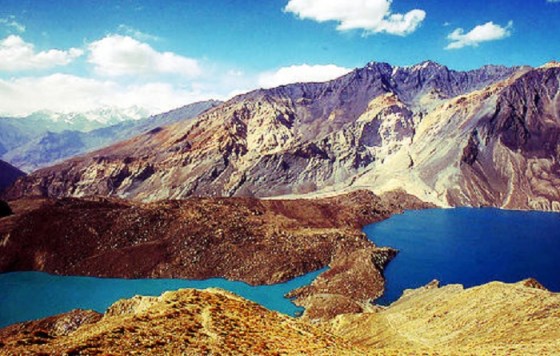
The naturally formed Usoi dam separates the Sarez (right) and Shadau (left) lakes. Photo: Wikipedia.

Below the Usoi dam there are more than 30 small villages in the Bartang Valley, with a total population of about 7,000 mountain Ismaili people. Most villages (kishlaks) are sited on alluvial cones near to the river and use all available gently sloping land. Many of the villages are subject to floods, landslides, mudflows, and avalanches annually; while these natural hazards are individually of small magnitude, compared to that posed by a potential failure of the Usoi dam, they are frequent in occurrence and constantly restrict access to the valley and would constrain any needed evacuation. Any landslide-induced flood wave capable of over-topping the dam would place all or most of the villages at risk. Soviet and Tajik scientists became aware of the threat posed by Lake Sarez some decades ago. Early warning and lake-level monitoring systems were established. The warning signals, however, were only directed to Moscow and Dushanbe. Thus, in the event of a medium- or large-scale flood, any secondary warning to reach the Bartang villages from either Moscow or Dushanbe would likely arrive after the event, if at all. With the collapse of the USSR even this approach to early warning and lake-level monitoring ended.

Then followed the civil war of 1992-1997 when the problem of Lake Sarez was put aside. Over the last three years, the dangers posed by Lake Sarez have begun to be taken seriously. Various reconnaissance visits have been made to the lake and dam and to the Bartang Valley. Several high-level planning meetings have been held: in Dushanbe, Geneva, and Washington, DC. The involved Asian republics, and especially Tajikistan, appear to favour a development approach based on the assumption that the worst case scenario (total collapse of the Usoi dam) was credible. A major investigation was mounted during June 1999. This was financed primarily by the World Bank, with additional support from the UN disaster relief organization, Focus Humanitarian Assistance (one of the Aga Khan family of organizations), and the government of Tajikistan. An international group of engineers, geophysicists, geologists, and geographers visited Lake Sarez and examined all the approach routes. There was unanimous agreement that the prospect of a worst case scenario was sufficiently remote that it should be accorded a low level of priority. However, there was strong support for installation of monitoring and early warning systems. Unlike the earlier Soviet approach, the new approach would relate to all the villages in the Bartang Valley and ensure the direct input of the local people. Concurrently, it was recommended that computer mapping and simulation of the potential impacts of various levels of natural disaster be undertaken. It was also pointed out that further, and much more detailed, studies should be undertaken of the cultural and socioeconomic situation of the local people. Sites for safe havens should be located and equipped, and a full accounting made of the attitudes of the local people toward the various levels of possible danger. One additional, and very important point, is that steps should be taken to ensure that the likelihood of actual large-scale disaster (worst case scenario) not be over-stated, so that the risk of any government-ordered forced evacuation of the Bartang Valley could be avoided. By February 2000 it appeared that, under the leadership of the World Bank and with contributions from several major donors, the recommendations of the June 1999 reconnaissance team were to be acted upon (United Nations, 2000). A year later, at time of this writing, significant planning progress has been made. Thus, the case of Lake Sarez, while representing one of the largest ever potential disasters based upon a natural situation in a high mountain region, embraces many complex inter-relations between highlands and lowlands. Ultimately, the challenging task of seeking collaboration amongst several independent countries on the use and management of a large international river, the Amu Darya and its headstreams, will have to be faced. Given the international rivalries prevailing in the region, this might well be the single most difficult task. Nevertheless, while the magnitude of the problems emanating from the potential instability of Lake Sarez may be an order of magnitude, or more, higher than other mountain hazards in the same region, their identification, evaluation, and treatment should provide a formula for ways in which other hazardous situations could be approached.

Date posted: October 31, 2015.

_________________

Credits:

  1. For complete speech of His Highness the Aga Khan, please visit http://www.akdn.org.
  2. Please visit http://www.nasa.gov for images of Lake Sarez
  3. For complete background article, please visit http://www.fao.org and enter Lake Sarez in the search box.

Profound Reflections on Nature by the 49th Ismaili Imam, His Highness the Aga Khan; and Stunning Photos of the Autumn Foliage in Ottawa-Gatineau

“Look at the mountains, the rivers, the trees, the flowers, as evidence of Allah’s love for the people He has created”

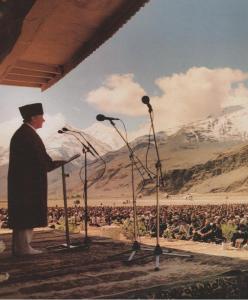
His Highness the Aga Khan or Mawlana Hazar Imam is seen addressing his followers in Ishkashim, Badakhshan, during his first historic visit to the region in 1995.

His Highness the Aga Khan, the 49th Ismaili Imam, is seen addressing his followers in Ishkashim, Badakhshan, during his first historic visit to the region in 1995.

“The Qur’an refers very often to nature as a reflection of Allah’s power of creation, and it says, look at the mountains, the rivers, the trees, the flowers, as evidence of Allah’s love for the people whom He has created. Today, I look at the environment and I say to you, I believe Allah is smiling upon you, and may His smile always be upon you.” — His Highness the Aga Khan speaking in a mountainous setting in Badakhshan in 1995.

Please click on image for autumn foliage in the Ottawa-Gatineau, the National Capital Region.

Visitors enjoying fall colours on the grounds of Rideau Hall. Please click on image for photos of autumn foliage in Ottawa-Gatineau, the National Capital Region. Photo: Malik Merchant/Simerg

Please visit http://www.simergphotos.com for a marvellous and unique collection of photo essays

~~~~~

“When I invited Professor Maki, a master of form and light, to design this [Delegation of the Ismaili Imamat] building, I made a suggestion to him – one that I hoped would help connect this place symbolically to the Faith of Islam. The suggestion I made focused on creating a certain mystique, centred around the beautiful mysteries of rock crystal.

The architecture of the dome of Delegation of the Ismaili Imamat Building seen above from Jacques Cartier Park is centred around the beautiful mysteries of rock crystal. Please see the Ismaili Imam's quote and click on image for photos of Ottawa-Gatineau foliage.

The architecture of the dome of the Delegation of the Ismaili Imamat Building seen above from Jacques Cartier Park is centred around the beautiful mysteries of rock crystal. Please read the Ismaili Imam’s quote and click on image for photos of Ottawa-Gatineau foliage. Photo: Malik Merchant/Simerg

“Why rock crystal? Because of its translucency, its multiple planes, and the fascination of its colours – all of which present themselves differently as light moves around them. The hues of rock crystal are subtle, striking and widely varied – for they can be clear or milky, white, or rose coloured, or smoky, or golden, or black.

Please click: Photo Essay: The Beauty and Glory of Autumn Foliage in Ottawa-Gatineau, Canada’s Capital Region

“It is because of these qualities that rock crystal seems to be such an appropriate symbol of the profound beauty and the ever-unfolding mystery of Creation itself – and the Creator. As the Holy Qur’an so powerfully affirms, “Allah is the Creator and the Master of the heavens and the earth.” And then it continues: ‘Everything in the heavens and on earth, and everything between them, and everything beneath the soil, belongs to Him’.” — His Highness the Aga Khan, on the occasion of the inauguration  of the Delegation of the Ismaili Imamat Building in Ottawa on December 6, 2008.

Date posted: Sunday, October 25, 2015.

_________________

A UCSF Video Introduction to His Highness the Aga Khan: “He Does Good Work and Moves Quickly”

“[the] Aga Khan and his network have done such remarkable development work across the world, especially in Asia and East Africa, and we’re delighted to play a part in spreading our knowledge throughout the world with partners like him.” — Sam Hawgood, School of Medicine, University of California San Francisco (UCSF)

PLEASE CLICK: The Aga Khan Visits UCSF to Strengthen Partnership to Advance Global Health