Simerg is an independent initiative dedicated to Ismaili Muslims, the Aga Khan — their Hereditary Imam — and the Ismaili Imamat, and Islam in general through literary readings, photo essays and artistic expressions
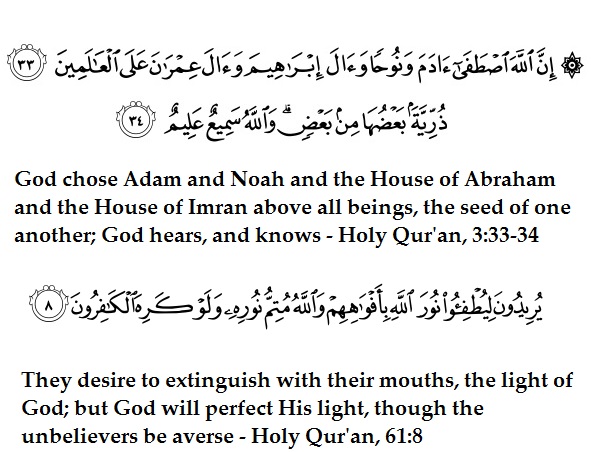
“God chose Adam and Noah and the House of Abraham and the House of Imran above all beings, the seed of one another; God hears, and knows” — Qur’an, 3:33-34, translation by A. J. Arberry, see Corpus Quranfor multiple translations
A calligraphy designed by Toronto’s Karim Ismail honouring the first Shia Imam Ali, on the auspicious commemoration of Idd-e Ghadir.
On Monday, June 24, 2024, Ismaili Muslims in Canada and other parts of the world will unite to observe and celebrate Eid-e Ghadir. This momentous occasion marks the pivotal gathering at Ghadir Khumm, where Prophet Muhammad (peace be upon him and his family) designated Hazrat Ali as his successor, the first in the continuing line of Hereditary Imams.
This historical event holds immense significance in the Ismaili faith. Today, the holder of the Hereditary position is Mawlana Hazar Imam, His Highness the Aga Khan, the 49th Imam in direct succession. In this regard, the Aga Khan has affirmed “that the Ismailis are the only Shia community who, throughout history, have been led by a living, hereditary Imam in direct descent from the Prophet” — His Highness the Aga Khan, Parliament of Canada, Ottawa, February 27, 2014.
History records that on the way back to Medina after performing the final pilgrimage to Mecca, the Prophet received a revelation:
“O Messenger, deliver [to the people] what has been revealed to you from your Lord, and if you do not do so, then you will not have delivered His message” Surah al-Ma’ida (5:67)
Upon receiving this revelation, the Holy Prophet stopped at an oasis known as Ghadir Khumm. He addressed a large gathering of Muslims who had accompanied him. The Prophet proclaimed: “Man kuntu mawlahu fa aliyyun mawlahu,” meaning: “He whose Mawla I am, Ali is his Mawla.” The Prophet then prayed: “O Allah, be a friend of whoever is his friend and extend your support to those who support him.”
This event, occurring at a crucial point in Islamic history, marked the transition of leadership from the Prophet to Hazrat Ali, setting the stage for the leadership and future of the Muslim community. Thus, by declaring Hazrat Ali Mawla after him, the Prophet transferred the spiritual authority bestowed upon him by Allah to Hazrat Ali, making him — and all the Imams that follow — the Amirul Mu’minin, or Master of the Believers. In this context, ‘Mawla’ refers to a leader, protector, and guide, indicating the profound responsibility and authority bestowed upon Hazrat Ali.
Article continues below following excerpts
________________________________
Excerpts from L. Veccia Vaglieri piece in Encyclopaedia of Islam, Second Edition
“Ghadir Khumm is famous in the history of Islam because of a sentence (or some sentences) in favour of ‘Ali which the Prophet uttered there during a discourse….Taking ‘Ali by the hand. he asked of his faithful followers whether he, Muhammad, was not closer to the Believers than they were to themselves; the crowd cried out: “It is so, O Apostle of God!”, he then declared. “He of whom I am the mawla, of him ‘Ali is also the mawla (man kuntu nawlahu fa-‘Ali mawlahu)
Photograph: Vysotsky – Own work, CC BY-SA 3.0, Wikimedia.
~~~~~~
“Most of those sources which form the basis of our knowledge of the life of the Prophet pass in silence over Muhammad’s stop at Ghadir Khumm….Consequently, the western biographers of Muhammad, whose work is based on these [Sunni] sources, make no reference to what happened at Ghadir Khumm. It is however certain that Muhammad did speak in this place and utter the famous sentence…the hadiths are so numerous and so well attested by the different isnads that it does not seem possible to reject them.” Vaglieri goes on to state that on instruction from Prophet Muhammad, Hazrat Ali received baiyat (the oath of allegiance) from the Muslims assembled there, including Umar b. al-Khattab, Islam’s second Caliph.
(Note: special access is required to read articles in the on-line edition of EI2. Vaglieri’s piece was reproduced in full in the UK Ismaili Association’s publication Ilm, December 1976, pages 28-30, with the permission of E.J. Brill, publishers of EI2.)
________________________________
Excerpts from the Preamble of the Ismaili Constitution
“In accordance with Shia doctrine, tradition, and interpretation of history, the Holy Prophet (s.a.s.) designated and appointed his cousin and son-in-law Hazrat Mawlana Ali Amiru-l-Mu’minin (a.s) to be the first Imam to continue the Ta’wīl and Ta’līm of Allah’s final message and to guide the murids, a term referring to the followers and disciples of the Imams. The proclamation also established the principle of the Imamat continuing by heredity through Hazrat Mawlana Ali (a.s) and his daughter Hazrat Bibi Fatimat-az-Zahra, Khātun-i-Jannat (a.s)”
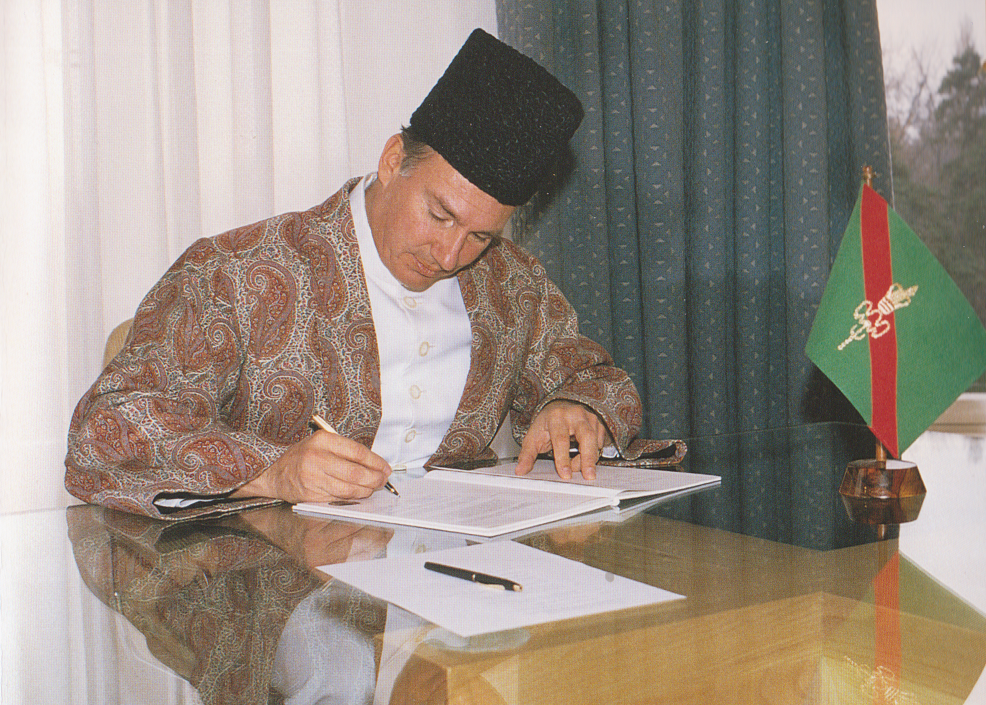
Mawlana Hazar Imam, His Highness the Aga Khan, is seen signing a new constitution for the worldwide Ismaili community on his 50th birthday, December 13, 1986. The preamble excerpts produced in this post are from this constitution.
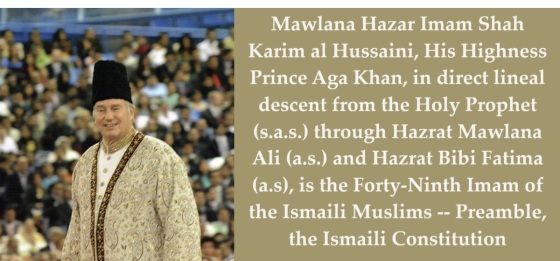
“Mawlana Hazar Imam Shah Karim al Hussaini, His Highness Prince Aga Khan, in direct lineal descent from the Holy Prophet (s.a.s.) through Hazrat Mawlana Ali (a.s.) and Hazrat Bibi Fatima (a.s), is the Forty-Ninth Imam of the Ismaili Muslims.”
________________________________
…. continued
On instruction from Prophet Muhammad, Hazrat Ali received baiyat (the oath of allegiance) from the Muslims assembled there. According to Shia traditions and sources, following the proclamation, the final verse of the Qur’an was revealed to the Prophet:
“On this day, I have perfected for you your religion, completed my favours upon you, and have chosen for you Islam as your religion.”
Eid-e Ghadir is an anniversary of profound significance to all Shia Muslims. It is also associated with the well-attested tradition that the Prophet is said to have proclaimed:
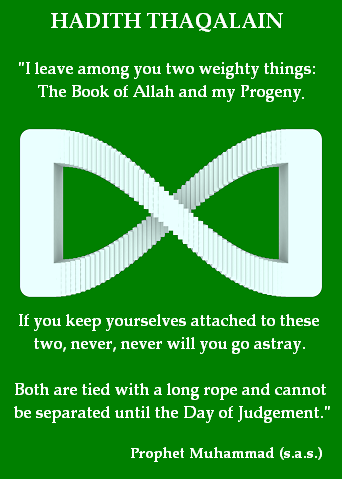
“I am leaving among you two matters of great weight (al-thaqalayn), the Book of Allah and my kindred (itrati), the People of my House (Ahl al-Bayt), and these two shall never be separated until they return to me at the Pool [of Kawthar in Paradise on the Day of Judgement]…”
The phrase ‘two matters of great weight’ refers to the Quran and the Ahl al-Bayt, emphasizing their inseparability and eternal significance in the Islamic faith.
In commemorating Eid-e Ghadir, the Ismaili community celebrates the seminal event of Ghadir Khumm, reaffirming their allegiance to the Imam of the Time as the direct lineal successor and inheritor of Hazrat Ali’s authority. The community is not just inspired, but united and driven by the following remark made during his speech in Canada’s Parliament on February 27, 2024:
“Today, the Ismailis are the only Shia community who, throughout history, have been led by a living, hereditary Imam in direct descent from the Prophet.”
Date posted: June 23, 2024.
____________________
Please click HERE for many more pieces on this website on the topic of Eid-e Ghadir.
“We search for a union with the family of the Chosen (Prophet Muhammad). We search for the truth of son after son. We are totally obedient to his offspring, one of the other. There is no other thing we can add to this but itself. We endeavour in our faith so that we do not turn out to be faithless.” Ismaili poet NIZAR QUHISTANI
~~~~~~~~~
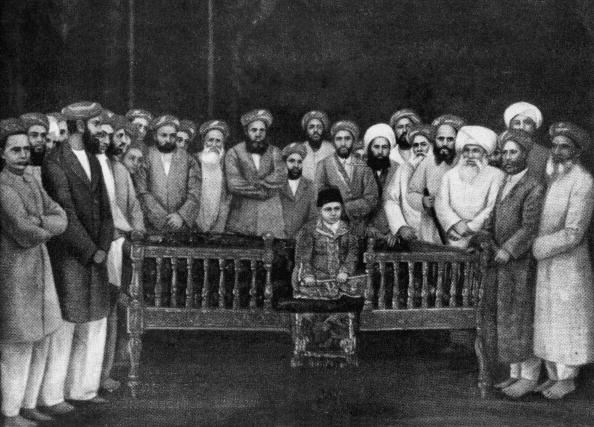
Mawlana Sultan Mahomed Shah, His Highness the Aga Khan III, is pictured above at his enthronement as 48th Imam of the Shia Ismaili Ismaili Muslims in Bombay at the age of seven. His reign lasted for 72 years. In his will, he proclaimed Prince Karim Aga Khan as the 49th Imam with the following words:
“Ever since the time of my first ancestor Ali, the first Imam, that is to say over a period of thirteen hundred years it has always been the tradition of our family that each Imam chooses his successor at his absolute and unfettered discretion from amongst any of his descendants whether they be sons or remoter male issue.
“In view of the fundamentally altered conditions in the world in very recent years due to the great changes which have taken place including the discoveries of atomic science I am convinced that it is in the best interests of the Shia Moslem Ismailian Community that I should be succeeded by a young man who has been brought up and developed during recent years and in the midst of the new age and who brings a new outlook on life to his office as Imam.
“I appoint my grandson Karim, the son of my son Aly Salomone Khan to succeed to the title of Aga Khan and to be the Imam and Pir of all my Shia Ismailian followers.”
~~~~~~~~~
Through the special designation (or the Nass) of the late Imam, Shah Karim al-Hussaini became the 49th hereditary Imam of the Nizari Ismailis at the age of twenty.
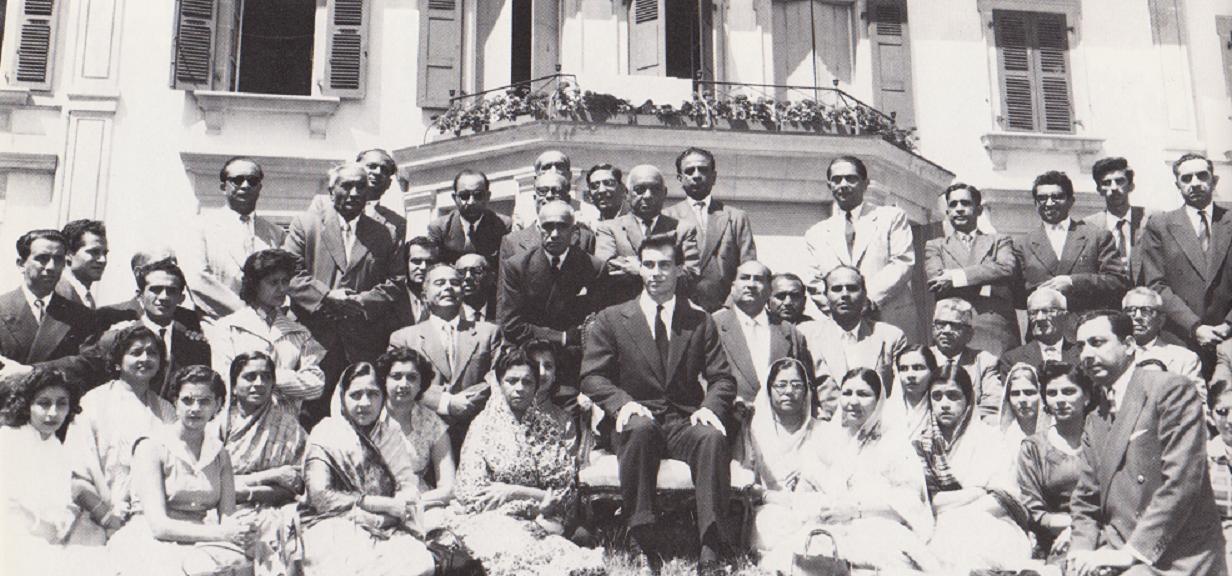
Shortly after, the newly enthroned Imam met Ismaili leaders and representatives from around the world, and also made the following statement:
“My grandfather dedicated his life to the Imamat and Islam, both of which came first, and above all other considerations. While I was prepared that one day I might be designated the Aga Khan I did not expect it so soon. I follow a great man in a great responsibility and he could have given me no more appreciated honour than to bequeath me this spiritual leadership. My life, as his, will be dedicated to the service of my followers.”
In this piece Kamaluddin Mohammed, a prominent and highly respected Ismaili scholar and missionary explains the importance of studying the Holy Qur’an, and gives an anecdote from a religious night school visit made by the current 49th Imam of the Ismailis, His Highness the Aga Khan, during his visit to India in 1967.
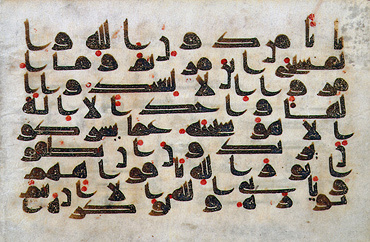
Calligraphy writing has been a preeminent Islamic art since the seventh century when the Qur’an was revealed to Prophet Muhammad and recorded in the Arabic language. Controlled, angular lettering called Kufic script was commonly employed in the writing of early Qurans. This folio from the Qur’an, is Sura 9, “Repentance” (al-Tauba), verses 31-32, Near East or North Africa, ca. 900. Photo: Doris Duke Foundation for Islamic Art. Please click on image for article.
In our classic series, I Wish I’d Been There, we had asked our readers to pick up one incident in Ismaili History which they would like to have witnessed. One of the thirty-one contributors for the series, Ismaili missionary (Alwaez), teacher and writer Jehangir Merchant, went back 1400 years to the beginnings of Islamic history and imaginatively constructed a picture of the iconic event when Prophet Muhammad (s.a.s) raised the hand of Hazrat Ali (a.s.) and declared, “He of whom I am the Mawla, Ali is also the Mawla!” Based on authoritative sources, this piece by a long-serving Alwaez shows his vast knowledge and flair, and brings alive a pivotal time in human history.
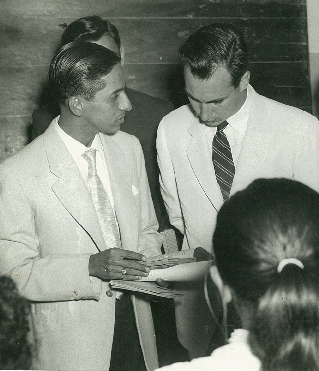
Lourenço Marques, 1958: His Highness the Aga Khan, direct descendant of the Prophet Muhammad (s.a.s.) and current 49th hereditary Imam of the Shia Ismaili Muslims is seen taking a keen interest as Alwaez Jehangir explains the Gujarati history texts that were used to impart religious education to Ismaili youth in Mozambique.



 Simerg - Insights from Around the World