Notes on Neoplatonism With Article and Audio on Ismaili Philosopher and Scientist Avicenna

The philosophical school of Neoplatonism provided ways that the individual could ascend the ladder of being through theoria – contemplation of the Divine. The ultimate goal of life is to achieve mystical union with the Divine (the One)…Many people think that Neoplatonism flourished only in the Roman Empire around the third and fourth centuries CE. However, it re-emerged again in the Islamic lands in later centuries. This new post is presented from a special issue of the Rosicrucian Digest and includes the story of Avicenna, the great Muslim Neoplatonic philosopher and mystic as well as a scientist who influenced Western thought for hundreds of years. The Ismailis consider Avicenna as one of their own.

PLEASE CLICK: Introductory Notes on Neoplatonism and “Return to the One”, With Article and Audio About the Works of the Great Ismaili Thinker Avicenna

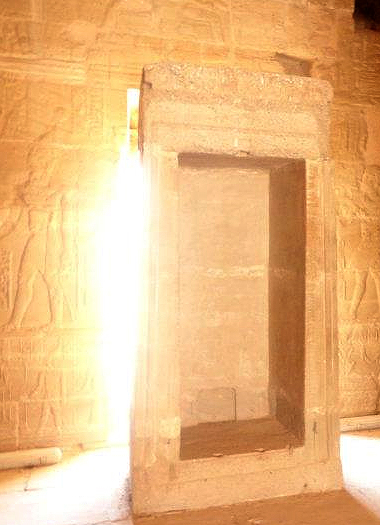
Divine light - Ancient Egypt. Please click on image for article on Neoplatonism and Avicenna.

Divine light – Ancient Egypt.
Please click on image for article on Neoplatonism and Avicenna.

The Holy Qur’an: An Anecdote from His Highness the Aga Khan’s Visit to an Ismaili Religious Night School

In this piece Kamaluddin Mohammed, a prominent and highly respected Ismaili scholar and missionary explains the importance of studying the Holy Qur’an, and gives an anecdote from a religious night school visit made by the current 49th Imam of the Ismailis, His Highness the Aga Khan, during his visit to India in 1967.

PLEASE CLICK:  Ismaili Children’s Understanding of the Holy Qur’an Gives Immense Happiness to Mawlana Hazar Imam

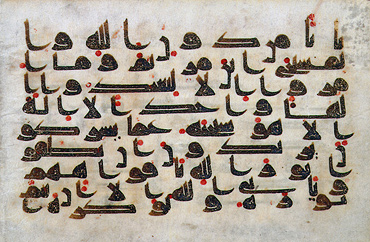
Calligraphy writing has been a preeminent Islamic art since the seventh century when the Qur'an was revealed to Prophet Muhammad and recorded in the Arabic language. Controlled, angular lettering called Kufic script was commonly employed in the writing of early Qurans. This folio from the Qur'an, is Sura 9, "Repentance" (al-Tauba), verses 31-32, Near East or North Africa, ca. 900. Photo:  Doris Duke Foundation for Islamic Art. Please click on image for article.

Calligraphy writing has been a preeminent Islamic art since the seventh century when the Qur’an was revealed to Prophet Muhammad and recorded in the Arabic language. Controlled, angular lettering called Kufic script was commonly employed in the writing of early Qurans. This folio from the Qur’an, is Sura 9, “Repentance” (al-Tauba), verses 31-32, Near East or North Africa, ca. 900. Photo: Doris Duke Foundation for Islamic Art. Please click on image for article.

His Highness the Aga Khan Shows Path to Renew and Re-Express the Post Millennium Development Goals Agreed on by World Leaders in 2000

Compiled and presented by Abdulmalik Merchant
(Editor-Publisher, http://www.simerg.com and http://www.simergphotos.com)
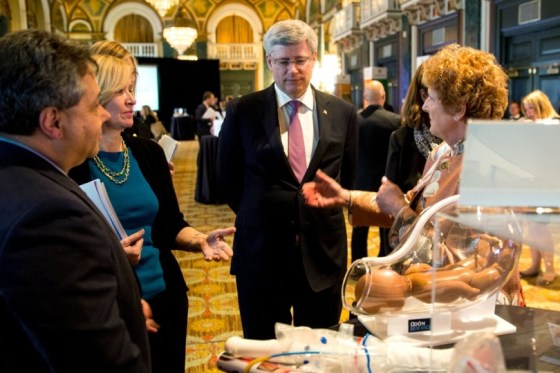
Prime Minister Stephen Harper receiving an explanation about an exhibit displaed at the summit Saving Every Woman, Every Child: Within Arm’s. Phooto: The website of the Prime Minister of Canada.

Prime Minister Stephen Harper receiving an explanation about an exhibit displayed at the summit Saving Every Woman, Every Child: Within Arm’s Reach. Photo Credit: The website of the Prime Minister of Canada.

Editor’s note: In 2000 world leaders joined together in an unprecedented UN summit to develop a blueprint to meet the needs of the world’s poorest, with the targeted date of 2015.  The leaders along with the support of worldwide institutions set the following eight goals in what became known as the Millennium Development Goals (MDGs):

  • Eradicate Extreme Hunger and Poverty
  • Achieve Universal Primary Education
  • Promote Gender Equality and Empower Women
  • Reduce Child Mortality
  • Improve Maternal Health
  • Combat HIV AIDS Malaria and Other Diseases
  • Ensure Environmental Sustainability
  • Develop a Global Partnership for Development

A special summit in Toronto under the theme Saving Every Woman Every Child: Within Arm’s Reach, is addressing some of the MDGs goals and we are pleased to publish below excerpts from His Highness the Aga Khan’s remarks made at the summit on May 29, 2014.

~~~~~

Bismillah-ir-Rahman-ir-Rahim

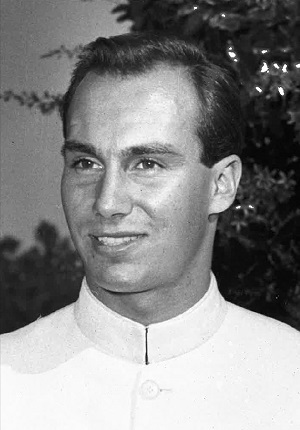
His Highness the Aga Khan, 49th Ismaili Imam and the direct descendant of the Prophet Muhammad (s.a.s), delivers keynote remarks at the Maternal, Newborn and Child Health Summit in Toronto on 29 May 2014. Photo: The Ismaili/Zahur Ramji.

His Highness the Aga Khan, 49th Ismaili Imam and the direct descendant of the Prophet Muhammad (s.a.s), delivers keynote remarks at the Maternal, Newborn and Child Health Summit in Toronto on 29 May 2014. Photo: The Ismaili/Zahur Ramji.

I. THE ISMAILI IMAM EXPLAINS HIS PRESENCE

“Like you, I am here today because of my conviction that improving maternal, neonatal and child health should be one of the highest priorities on the global development agenda. I can think of no other field in which a well-directed effort can make as great or as rapid an impact.

“I am here, as well, because of my enormous respect for the leadership of the Government of Canada in addressing this challenge. And I am here too, because of the strong sense of partnership which our Aga Khan Development Network has long experienced, working with Canada in this critical field.

“Leadership and partnership – those are words that come quickly to mind as I salute our hosts today and as I greet these distinguished leaders and partners in this audience.”

II. THE MUSKOKA INITIATIVE AND ONE OF ITS OFF-SHOOTS

“Mr Prime Minister – I recall how our partnerships were strengthened four years ago when you launched the Muskoka Initiative. It led to an important new effort in which our Network has been deeply involved in countries such as Afghanistan, Pakistan, Tanzania, Mozambique, and Mali.

“In all of these efforts, we’ve built on our strong history of work in this field. It was 90 years ago that my late grandfather founded the Kharadhar Maternity Home in Karachi. In that same city, for the last thirty years, the Aga Khan University has worked on the cutting edge of research and education in this field – including its new specialised degree in midwifery.”

III. WHAT THE AGA KHAN UNIVERSITY’S NEW REPORT REVEALS, AND HOW THE WORK OF AKDN WORK IMPACTS MILLIONS

“One of our Aga Khan University scholars [Dr. Zulfiqar Bhutta] helped fashion the new series of reports on this topic that was released last week – an effort that involved more than 54 experts from 28 institutions in 17 countries. The reports tell us that right intensified steps can save the lives of an additional 3 million mothers and children annually.

“To that end, our Development Network has also focused on building durable, resilient healthcare systems. One example is the not-for-profit health system by the Aga Khan Health Service in Northern Pakistan – a community-based network of facilities and health workers, including a growing number of nurse-midwives.

Photo: The Government of Canada.

Photo: The Government of Canada.

“We have extended these approaches to other countries, including a remarkable partnership in Tanzania funded by the Canadian government and implementing in close partnership with the Tanzanian government.

“Such AKDN activity now serves some two-and-a-half million people in 15 countries, with 180 health centres both in urban and rural areas, often in high-conflict zones, and embracing some of the world’s poorest and most remote populations.

“Last year alone, these facilities served nearly 5 million visitors, inpatients and outpatients, with more than 40,000 newborn deliveries.

IV. HIS HIGHNESS SHARES WHAT HIS NETWORK
HAS LEARNED FROM EXPERIENCE

“So our experience has been considerable. But what have we learned from it? Let me share a quick overview.

1. Sustainable Systems

“First, I would underline that our approaches have to be long-term. Sporadic interventions produce sporadic results, and each new burst of attention and activity must then start over again. The key to sustained progress is the creation of sustainable systems.

2. Local Ownership

“Second, our approaches should be community-oriented. Outside assistance is vital, but sustainable success will depend on a strong sense of local “ownership”.

3. Broad Health-Care Focus

“The third point I would make is that our approaches should support the broad spectrum of health care. Focusing too narrowly on high-impact primary care has not worked well – improved secondary and tertiary care is also absolutely essential.

4. New Financial Models – Savings Groups, Debts Financing, Tax-Privileged Donations

“Our approaches should encourage new financial models. Donor funding will be critical, but we cannot sustain programmes that depend on continuing bursts of outside money. Let me underscore for example, the potential of local “savings groups” and micro-insurance programmes, as well as the under utilised potential for debt-financing. Also – and I think this is very, very important indeed – we have watched for many years as many developing countries, and their economies of course, have created new financial wherewithal among their people. These growing private resources can and I think should, help social progress, motivated by a developing social consciousness and by government policies that encourage tax-privileged donations to such causes.

5. Reaching the Hardest to Reach with Modern Communications Technology

“Our approaches should also focus on reaching those who are hardest to reach. And here, new telecommunications technologies can make an enormous impact. One example has been the high-speed broadband link provided by Roshan Telecommunications, one of our Network’s companies, between our facilities in Karachi and several localities in Afghanistan and in Tajikistan. This e-medicine link can carry high-quality radiological images and lab results. It can facilitate consultations among patients, doctors and specialists at various centres. And it can contribute enormously to the effective teaching of health professionals in remote areas.

6. Multi-Sectoral Challenges Need Effective Multi-Input Coordination

“Our approaches should be comprehensive, working across the broad spectrum of social development. The problems we face have multiple causes, and single-minded, “vertical” interventions often fall short. The challenges are multi-sectoral, and they will require the effective coordination of multiple inputs. Creative collaboration must be our watchword. This is one reason for the growing importance of public-private partnerships.

“These then are the points I would emphasise in looking back at our experience. I hope they might be helpful as we now move into the future, and to the renewal and re-expression of the Post Millennium Development Goals.”

V. THE USEFULNESS OF MEETINGS –  BUT PARTNERS MUST TALK AND WORK WELL TOGETHER THROUGH CANDID EXCHANGE

His Highness the Aga Khan, President Kikwete of Tanzania and Prime Minister Stephen Harper of Canada, who hosted the 3 days summit in Toronto. Photo: The website of the Prime Minister of Canada. Copyright.

His Highness the Aga Khan with President Jakaya Kikwete of Tanzania and Prime Minister Stephen Harper of Canada, who hosted the summit in Toronto. Photo credit: The website of the Prime Minister of Canada. Copyright.

“As we undertake the new planning process, the opportunity to exchange ideas at meetings of this sort can be enormously helpful. And potential partners must be able to talk well together if they are going to work well together.

“I would hope such occasions will be characterised by candid exchange, including an acknowledgment of where we have fallen short and how we can do better. The truth is that our efforts have been insufficient and uneven. We have not met the Post Millennium Development Goals.”

VI. LEVERAGING PROGRESS THROUGH THE FIELD OF MATERNAL AND NEWBORN HEALTH

“At the same time, we must avoid the risk of frustration that sometimes accompanies a moment of reassessment. Our challenge – as always – is a balance [between] honest realism with hopeful optimism.

“And surely there are reasons to be optimistic.

“In no other development field is the potential leverage for progress greater than in the field of maternal and newborn health.”

VII. RESULTS: THE HEARTENING EXAMPLE OF AFGHANISTAN

“….I thought I might close by talking about some of the results. My example comes from Afghanistan – a heartening example from a challenging environment.

“The rural province of Afghan Badakhshan once had minimal infrastructure and few health-related resources. Less than a decade ago it had the highest maternity mortality ratio ever documented.

“It was about that time that the Afghan government, supported by international donors, contracted with the Aga Khan Health Service to create a single non-governmental health organisation in each district and in each province. Today, the Badakhshan system alone includes nearly 400 health workers, 35 health centres, two hospitals, serving over 400,000 people. Its community midwifery school has graduated over 100 young women.

“The impact has been striking. In Badakhshan in 2005, six percent of mothers died in childbirth – that is 6,000 for every 100,000 births. Just eight years later, that number was down twenty-fold – for every 100,000 live births, death has gone from 6,000 down to 300.

“Meanwhile, infant mortality in Badakhshan has fallen by three-quarters, from over 20 percent to less than 6 percent.”

VIII. CHILDBIRTH RISKS GAPS ARE NOT DESTINED – WITH SCIENCE AND EFFECTIVE COORDINATION RISKS CAN BE TRANSFORMED FOR THE BETTER

“For most of the world, science has completely transformed the way life begins, and the risks associated with childbirth. But enormous gaps still exist. These gaps are not the result of fate – they are not inevitable. They can be changed, and changed dramatically.

“When government and private institutions coordinate effectively in challenging a major public problem, as this example demonstrates, we can achieve substantial, genuine, quantifiable progress – and fairly rapidly.

“This is the story we need to remember, and this is the sort of action we need to take as leaders and as partners in addressing one of the world’s most critical challenges.”

Date posted: Friday, May 30, 2014.

________________

Photos and text used in this post compilation were obtained from the following sources.

1. http://www.pm.gc.ca (Prime Minister of Canada)
2. http://www.akdn.org (the Aga Khan Development Network)
3. http://www.theismaili.org (official website of the Ismaili Community)
4. http://www.undp.org/content/undp/en/home/mdgoverview/
(The Millennium Development Goals)

The Light of Imamat Continues to Shine Forever – “Light Upon Light” by Ikhwan Allani

Ikhwan Allani of Toronto, Canada, is fascinated by the beauty of poetry, especially in the expression of mystical knowledge and devotion. In this poem, he illustrates a technique to embed an esoteric aspect of the Ismaili tariqah through a universal medium such as poetry. Please click on Light Upon Light or on the image below.

Image credit: Irfan Lakhani/Saniya Hussain. Copyright. Please click on image for "Light Upon Light" by Ikhwan Allani.

Image credit: Irfan Lakhani/Saniya Hussain. Copyright. Please click on image for “Light Upon Light” by Ikhwan Allani.

Mi’raj-e-Rasul – The Night Journey of the Prophet Muhammad (s.a.s.) by Jehangir A. Merchant

PLEASE CLICK: An Esoteric Interpretation of the Mi’raj and the Prophetic Tradition ‘I Have a Time with God’ (li ma’a Allah waqt) By Jehangir A. Merchant

This painted page from a manuscript shows the Archangel Gabriel with the Prophets Moses (left) and Muhammad (right). Surrounded by angels they discuss the question of daily prayers. This happened during Prophet Muhammad’s ascent to heaven. Because it was forbidden to show Muhammad, his face is veiled. Image: Copyright Museum With No Frontiers (MWNF). Please click on image for literary reading.

This painted page from a manuscript shows the Archangel Gabriel with the Prophets Moses (left) and Muhammad (right). Surrounded by angels they discuss the question of daily prayers. This happened during Prophet Muhammad’s ascent to heaven. Because it was forbidden to show Muhammad, his face is veiled. Image: Copyright Museum With No Frontiers (MWNF). Please click on image for literary reading.

DETAILS OF THE IMAGE

This single sheet probably came from a handwritten work completed for the Ottoman Sultan Murad III (r. AH 982–1003 / AD 1574–95), and is currently housed at the Museum of Islamic Art at the Pergamon Museum in Berlin, Germany. It features, between bands of script, the prophets Moses and Muhammad and the Archangel Gabriel conversing in heaven. Angels, perched on five clouds behind these three principal characters, appear to be listening. The scene portrayed is one from Muhammad’s visionary ascension to heaven. Muhammad stands on the right-hand side in a long green robe and turban, and Moses, wearing a long dark red robe, is on the left, in front of his heavenly throne, which is denoted by an inscription in Arabic lettering. Moses is gesturing his hands in speech. Muhammad, with whom he is conversing, stands on the opposite side. A white veil conceals his face, while his hands are hidden in the long sleeves of his gown. The heads of both prophets are crowned with halos, within which their names, written in a black script, can be deciphered. The Archangel Gabriel stands between Muhammad and Moses, turning towards Muhammad. He is characterised by a twin pair of multi-coloured wings and a crown. He is featured in the Old Testament as the gate-keeper of Paradise. As one of two angels standing in the presence of God (Luke 1:19), it was Gabriel who explained the story of the Messiah (Daniel 8:16ff.). In Muslim tradition, the angel brought the Divine Revelation of the Holy Qur’an to Prophet Muhammad. In Sura 2 verse 97 it is written that: Gabriel ‘has by God’s grace revealed it [the Qur’an] to you [Muhammad] to your heart’.

The text above the three personages, which describes the story, is written in Ottoman Turkish. It includes the account of Muhammad discussing with God the number of daily prayers. Both eventually agreed on five daily prayers. Moses is Muhammad’s heavenly adviser and Gabriel is his companion. The direct speech of all those involved is written in Arabic. The text is taken from a biography of the prophet which had appeared from the AH 1st century/AD 7th century on. The generic term for this type of biography is sira, which translates as ‘life facts’ or ‘way of life’.  (Text adapted from the website of MWNF – see link below).

Date posted: Saturday, May 24, 2014.

__________________

For further information about the image shown above, please click on Page of Ottoman Manuscript. Please also click on http://www.museumwnf.org/.

Links to a selection of Jehangir Merchant’s pieces at Simerg:

An Ode to the Indian Dukawala of East Africa by Kersi Rustomji

This work is a small tribute to the unsung intrepid pioneering Indian traders and very often their families, who braved the unknown hazards of the “Dark Continent”, carried on regardless of disease, lack of comforts, privations, ill-health, and even death, which they knew was their constant and real possibility.

“While the tribute is aimed at all the Indian, later termed Asians traders and shop keepers, we should bear in mind that these intrepid early trading pioneers also included Ismailis, who became prominent merchants and developers in all economic fields in East Africa. The Ismailis left behind an admirable record of their contribution, and this work touches them too.” — Kersi Rustomji

Hitherto the dukawala remain unrecognised nor given a deservedly appropriate place in the annals of these nations. Without record of these traders and other Indians who also played a very prominent and important part in the economic and the political growth of these nations, the histories of these three East African countries would be incomplete.

PLEASE CLICK: Ode to the Indian Dukawala on East African Plains

The image depicts on the rich red soil, a typical Indian duka, a small trading store, in small towns and remote country areas of East Africa. The signage is also typically hand painted work of the duka owners. These put up with any paint at hand, included some spelling errors. The man behind the counter is my paternal uncle Jehangirji Rustomji, who first opened a small watch repair duka in the old Indian Bazaar, now Biashara Street, in early 1906 in Nairobi, Kenya. He later moved to the then Government Road,  now Moi Avenue, in the corner of a chemist shop, Chemitex,  next to the old Alibhai Sherrif hardware shop, going towards the Ismaili jamatkhana, on the corner of Government Road and River Road. Later his youngest son Rati joined him, and after Jehangirji’s death, Rati carried on the little business until 2009, when he retired and closed the little duka after 103 years of its existence. Rati still lives in Nairobi. Copyright> Kersi Rustomji.

The image depicts on the rich red soil, a typical Indian duka, a small trading store, in small towns and remote country areas of East Africa. The signage is also typically hand painted work of the duka owners. These put up with any paint at hand, included some spelling errors. The man behind the counter is my paternal uncle Jehangirji Rustomji, who first opened a small watch repair duka in the old Indian Bazaar, now Biashara Street, in early 1906 in Nairobi, Kenya. He later moved to the then Government Road, now Moi Avenue, in the corner of a chemist shop, Chemitex, next to the old Alibhai Sherrif hardware shop, going towards the Ismaili jamatkhana, on the corner of Government Road and River Road. Later his youngest son Rati joined him, and after Jehangirji’s death, Rati carried on the little business until 2009, when he retired and closed the little duka after 103 years of its existence. Rati still lives in Nairobi. Copyright: Kersi Rustomji, Australia.


For Victoria Day, A Small Dedication to Queen Victoria, with Reflections on Her Majesty by the Aga Khans

Post compiled by Malik Merchant,
Publisher-Editor, Simergphotos.com and Simerg,com

Introduction: Victoria Day is a Federal Canadian public holiday celebrated on the last Monday before May 25, in honour of Queen Victoria’s birthday. Queen Victoria was born on May 24, 1819. Following the death of three uncles and her father, she became Queen of the United Kingdom on June 20, 1837 and reigned for 63 years until her death on January 22, 1901. Queen Victoria is still the longest-reigning monarch of the United Kingdom.

OTTAWA, CANADA

Queen Victoria Monument

Queen Victoria officially chose Ottawa as Canada’s capital in 1857. Nearly forty years later, a monument to Queen Victoria, intended as part of a lavish celebration of the Queen’s Diamond Jubilee, the sixtieth year of her reign, was proposed for the Hill. The competition for this monument was only open to Canadian sculptors. Louis-Philippe Hébert, a sculptor from Quebec, won the contract. Before being placed on Parliament Hill, the statue was first displayed at the Universal Exposition in Paris in 1900.

HISTORICAL FAMILY PHOTO OF QUEEN VICTORIAQueen Victoria

Queen Victoria and family. Copyrighted by Boussod Valadon & Co. Painting by John Philip. Date created/published c.1897. Credit: USA Library of Congress Collection

QUEEN VICTORIA’S VISIT TO THE ARCTIC SHIP RESOLUTE

Queen Victoria visIts Resolute

HMS Resolute was a mid-19th-century barque-rigged ship of the British Royal Navy, specially outfitted for Arctic exploration. Resolute became trapped in the ice and was abandoned. Recovered by an American whaler, she was returned to Queen Victoria in 1856. This is an illustration of the visit of Her Majesty Queen Victoria to the Resolute on December 16th, 1856, to whom this engraving is by special permission respectfully dedicated by her obedient servants, P. & D. Colnaghi & Co. Credit: USA Library of Congress

AN INCREDIBLE TECHNOLOGICAL
ACHIEVEMENT 150 YEARS AGO

Queen Victoria and President Buchanan Telegraphic Exchange

A telegraphic message of Queen Victoria and a reply by US President James Buchanan by trans-Atlantic telegraph cable on 16 August 1858. The Queen’s message congratulates the President for the completion of an electrical cable between the two nations, and wishes prosperity for the United States. In response, President Buchanan says that the accomplishment “is a triumph more glorious, because far more useful for mankind, than was ever won by a conqueror on the battlefield.” He continues, “May the Atlantic Telegraph under the Blessings of Heaven prove to be a bond of perpetual peace and friendship between the kindred nations, and an instrument destined by Divine Providence to diffuse religion, civilization, liberty and law throughout the world.” Date work created/published: 1858. Medium: 1 print : wood engraving. With vignette busts of the principals and scenes of the event; also inscribed are the names of 4 men who made the even possible: [Benj.] “Franklin”, [S.F.B.] “Morse”, [Cyrus] “Field”, and [Hans Christian] “Oersted”. Credit: USA Library of Congress Collection

~~~~~~

THE AGA KHANS ON QUEEN VICTORIA

0459_001-s-nf-THUMB– I –

“Over a century ago, my grandfather, Sir Sultan Mahomed Shah Aga Khan, worked closely with Her Majesty Queen Victoria and her governments in the pursuit of common ideals. These ties were further strengthened by the strong presence of the Ismaili community – initially in places which later became Commonwealth countries, and later, here in the United Kingdom.

“It is striking to me that in 1957, there were only about 100 Ismaili residents in this country, and most of them were students. Today, there are fourteen thousand Ismailis permanently living here and of all ages and walks of life.

“In 1957, there was only one Ismaili space here for congregational prayer – and that was on leased premises! Creating places of prayer as centres for community life was fundamental to ensuring the cohesion of the community, and there are now over 40 such places. Among them, of course, a central focal point is The Ismaili Centre, located in South Kensington.

All of these comments, then, speak to the context in which we gather tonight – a rich history of partnership reaching deeply into the past – and extending, we hope and trust, into an even more productive future….” — Excerpts from a speech by His Highness the Aga Khan at the Golden Jubilee Banquet in London, UK, July 3, 2008.

~~~~~~~~

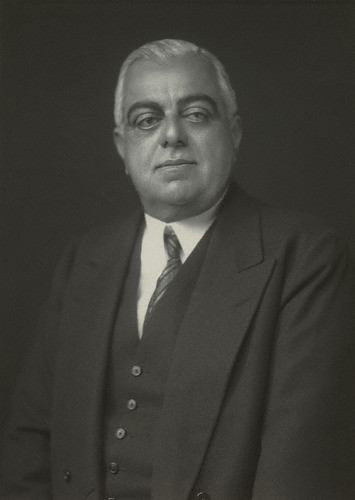
Sir Sultan Muhammad Shah, His Highness the Aga Khan (1877-1957), direct descendant of the Prophet Muhammad (s.a.s) and 48th Imam of the Shia Imami Ismaili Muslims. Photo: Copyright National Portrait Gallery, London.

Sir Sultan Muhammad Shah, His Highness the Aga Khan (1877-1957), direct descendant of the Prophet Muhammad (s.a.s) and 48th Imam of the Shia Imami Ismaili Muslims. Photo: Copyright National Portrait Gallery, London.

– II –

“The first deep impression of my life was undoubtedly when I had dinner with Queen Victoria. I was in my 20th year and that was my first visit to London. The queen was fond of Indian potentates and she kindly invited out to Windsor to dine and spend the night. She placed me next to her at the table. The queen was most gracious. She arranged that the food was served by Indians, and she spoke to me about the problems of India, the plague and all that. She was especially interested in the plague. I was young and I was particularly interested by her human element. She was then 79, you know, and the dinner was very long, with three sweet courses at the end, but she ate everything. She was dressed in black, with a white-collar. She wore a huge bracelet having a medallion of her husband, Prince Albert, on it, and one large diamond ring and several smaller diamonds. She did not wear glasses but she saw clearly and she had beautiful hearing — she could hear a whisper. She was a remarkable woman — yes, undoubtedly, I must be one of the few left alive who have dined with her” — His Highness the Aga Khan, quoted in Life Magazine, May 16, 1949.

– III –

“My life in many ways has been a bridge across vastly differing epochs. Looking at it for the moment simply from the Western point of view — I had a full life in the Victorian era, and I am leading now an equally full life in this new Elizabethan era. When I was a young man I sat next to Queen Victoria at a dinner party and talked to her throughout it; the other day I sat next to Queen Elizabeth II at a tea party and talked to her throughout it.

“In my youth the internal combustion engine was in its early, experimental phase, and the first motor cars were objects of ridicule; now we all take supersonic jet propulsion for granted, and interplanetary travel is far more seriously discussed today than was even the smallest flying venture at a time when I was quite grown up and had already lived a full and active life. I had the great honor of knowing Lord Kelvin, in his time the greatest physicist in the world; he assured me solemnly and deliberately that flying was a physical impossibility for human beings and quite unattainable. Even H. G. Wells in his early book, Anticipations, put off the conquest of the air and the discovery of atomic power for two or three centuries. Yet these and much more have come to pass in a brief half century” — His Highness the Aga Khan III, writing in Memoirs of Aga Khan, 1954.

His Highness the Aga Khan received the title “His Highness” from Britain’s Queen Elizabeth II on July 26th 1957. Here he is pictured with Her Majesty the Queen and His Royal Highness Prince Philip when the Queen hosted a dinner hosted to mark the Ismaili Imam’s Golden Jubilee and to acknowledge the close relationship he and his family have had over generations with the British Monarchy and the UK. Photo Credit: Akdn.org

– IV

“Queen Victoria herself was of course sharply conscious of the responsibilities, not only political but personal and social, which she had assumed with the splendid title of Empress of India. She insisted that Indian Princes and Indian gentlefolk should receive the respect and the dignified status accorded in those days to European princes and gentlefolk. The Duke of Connaught faithfully practiced her principles during his time in India. The Viceroy and Vicereine, Lord and Lady Dufferin, were, like Lord and Lady Reay, people of kind and gentle sensibility, warm hearts and graceful manners. A tone thus set could not be ignored, and Indo-British relationships in general were in this pattern.

“There is an outstanding example that I recall: Sir Jamsetjee Jeejeebhoy, a notable figure in the Parsee community in Bombay, gave a reception for the Viceroy and Vicereine, Lord and Lady Dufferin, for the Governor of Bombay and his wife, Lord and Lady Reay, and for the Duke and Duchess of Connaught. Sir Jeejeebhoy, as host, offered his arm to Lady Dufferin and went into the supper room, and the Viceroy followed with his hostess, Lady Jeejeebhoy, and everyone else went after in turn. A few years later – and thereafter, until the end of the Indian Empire — it would have been inconceivable that the Viceroy, a Prince of the British Royal House and the Governor of the great province of British India, would have gone to a reception at the house of a Parsee gentleman, however distinguished, and allowed him to lead the Vicereine in first and then have followed with his hostess.” — His Highness the Aga Khan III, writing in Memoirs of Aga Khan, 1954

HIS HIGHNESS THE AGA KHAN’S GIFT TO QUEEN VICTORIA

Queen Victoria Tiara

All photos: Princess Louise, Duchess of Connaught and Strathearn

“In 1896, a year before her Diamond Jubilee, an inventory of Queen Victoria’s jewels was made by Garrard, the crown jeweler. There weren’t many tiaras on the list — only five. But one of the five on the list was this one: the tiara given to her by the Aga Khan.

“The inventory describes the tiara as, ‘A pearl and diamond tiara with 12 Bouton and 12 pear-shaped pearls with a diamond chain to form a necklace, presented by Aga Khan’.

“To my knowledge, there are no images, painted or photographed, of Victoria in this tiara. However, we do know that Victoria bequeathed the tiara to one of her daughters-in-law: Princess Louise of Prussia, the wife of Prince Arthur, Duke of Connaught and Strathearn — Elia Kay writing in her blog Tiara a Day, please click The Victorian Aga Khan Tiara.

Date posted: Saturday, May 17, 2014, for Victoria Day Holiday Weekend, Canada. The post is repeated with minor updates from an earlier version which appeared at the photoblog, http://www.simergphotos.com.


An Introduction to My New Book “Qur’an and Ginan” (Qur’anic Teachings in the Ginan) by Kamaluddin Ali Muhammad

In this special piece for Simerg, erudite Ismaili missionary and scholar, Alwaez Kamaluddin of Pakistan, provides a short but very interesting insight on the subject of Qur’anic teachings in the Ginan, while highlighting the features of his most recent book published in English.

PLEASE CLICK: “Qur’an and Ginan” (Qur’anic Teachings in the Ginan)

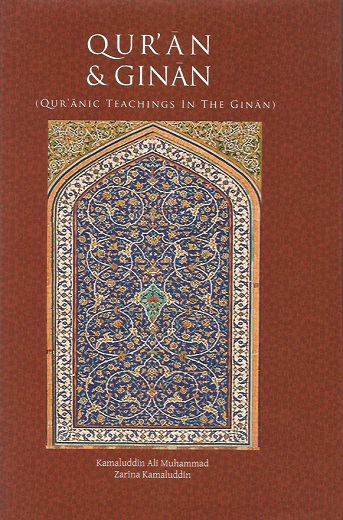
Front cover of "Qur'an and Ginan" - Qur'anic Teachings in the Ginan - co-authored by Alwaez Kamaluddin and Alwaeza Zarina Kamaluddiin. Hardback, pp. 225, Kamalzar, 2014. Please click for article.

Front cover of “Qur’an and Ginan” – Qur’anic Teachings in the Ginan – co-authored by Alwaez Kamaluddin and Alwaeza Zarina Kamaluddin. Hardback, pp. 225, Kamalzar, 2014. Please click on image for article.


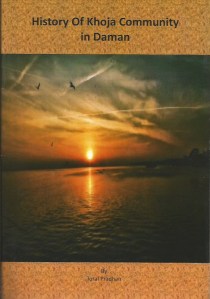
Toral Pradhan Expands and Publishes Fascinating Ismaili History Article as Dual English-Gujarati Booklet

One of the most popular history articles ever published on this bog has been expanded, revised and published as a 40 page dual-language booklet by its author, Toral Pradhan. The article which was first published in October 2013 (please click A Brief History of the Khoja Ismaili Community in Daman, India, from the Portuguese Period to the Present), was highly acclaimed by our readers, who submitted more than 30 comments.
History of Khoja Community in Daman by Toral Pradhan English CoverPradhan passionately set out to explore the history of the origins of the Daman Khoja Ismaili Jamat in order to pay her respects and tribute to the jamat as well as to commemorate the 40th anniversary of the opening of the jamatkhana in Daman in March 2014. She obtained the information for her lively small booklet from primary sources which included visits to the local archives in and around Daman. The town was formerly ruled by the Portuguese, before India took it over in 1961. The fusion of the two cultures and its impact on the small Ismaili community in Daman is strongly emphasized in the book, which includes dozens of small historical illustrations including a center fold of colourful photos of gowns and headgear.

The style and format of Pradhan’s book is like many publications in Canada where books are published in dual languages, English in the first half and French forming the other half (see the two images of the book on this post, which are the front and back of the book).

The benefit of Pradhan’s dual language book is that it can be shared among families with Gujarati and English readers.  The 40 page booklet is about 6.5″ x 4.5″ in size.

History of Khoja Community in Daman by Toral Pradhan Gujarati Cover

“Daman Khoja Samaj No Itihas”
(transliteration)

Simerg will be making this book available in the near future if there is a sufficient demand for it in North America. The cost including shipping to any North American address will be around US$6.00 – $7.00.

We invite readers interested in acquiring this booklet to send an email to Simerg@aol.com, Subject: Booklet – History of the Daman Jamat. No payment is required at this time. We will advise you when the book reaches us in Canada, and send you an invoice if you are still interested.

My Late Mother, Jean Kirk, and Her Collection of Rare Photos of His Highness the Aga Khan by Allison Wallace

“[My] mum trained as a teacher in London and was passionate about the importance of education, the communication of knowledge and the enhancement of the individual through such knowledge. During her time in Kenya, she held the position of Principal at the Aga Khan Primary School in Nairobi where His Highness the Aga Khan on at least one occasion, privileged her to host a visit.” — Allison Wallace

0492_001s-nf-thumb