Simerg is an independent initiative dedicated to Ismaili Muslims, the Aga Khan — their Hereditary Imam — and the Ismaili Imamat, and Islam in general through literary readings, photo essays and artistic expressions
Author Archives: Malik Merchant, Editor
Founding publisher and editor of www.barakah.com, www.simerg.com and www.simergphotos.com.
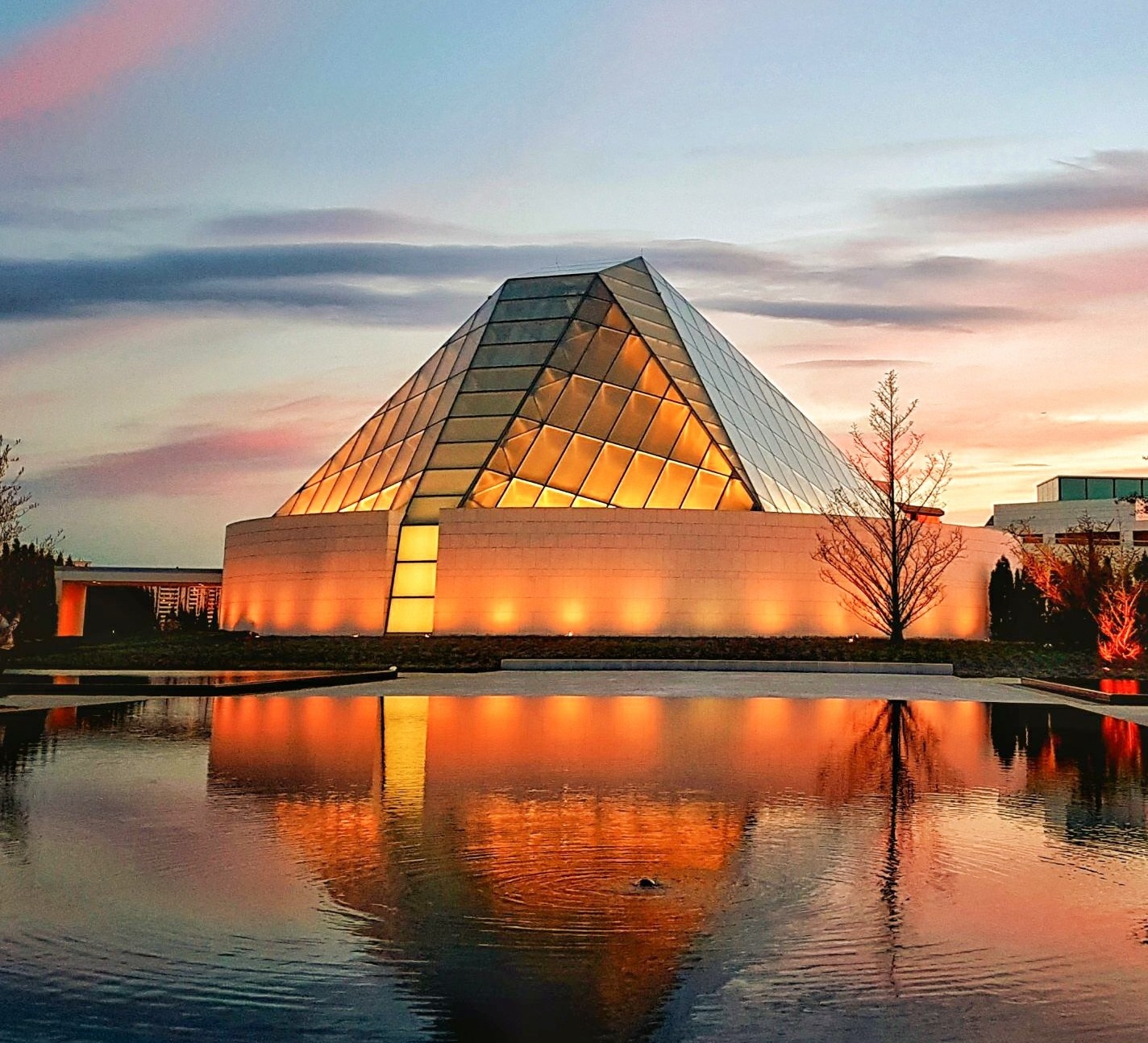
The Jamatkhana Dome, Ismaili Centre Toronto, 49 Wynford Drive. Photograph: The Ismaili.Please click on the image for the Centre’s 10th anniversary pictorial essay.
Since their inauguration by former Canadian Prime Minister Stephen Harper and His Highness the Aga Khan in mid-September 2014, the Ismaili Centre Toronto and the Aga Khan Museum have become among the most beloved buildings explored by the public during the Doors Open Toronto held every May. The buildings, with their mission to promote cultural understanding, have consistently attracted thousands of visitors for their incredible artistic and architectural features and the rich collection of artifacts housed in the Museum. The Ismaili Centre’s domed Jamatkhana, a unique architectural marvel, is a sight to behold. Its remarkable features, under which Ismaili Muslims congregate for prayers daily, make it one of the most distinctive buildings in the country. Watching the building from the Don Valley Parkway when the dome is lit at night is a truly breathtaking experience.
As the buildings celebrate their 10th anniversary, we present two posts that will give our readers a glimpse of these fascinating projects. Please click on THE ISMAILI CENTRE and THE AGA KHAN MUSEUM.
Did you know that you can book a one-hour free tour of the Ismaili Centre (77 Wynford Drive, Toronto) online? This is a fantastic opportunity to delve into the architectural and cultural wonders of this unique building. Please click HERE to get more details about an Ismaili Centre tour. If a window is not available, please send an email to tours.toronto@iicanada.net. For information on visiting the Aga Khan Museum (77 Wynford Drive, Toronto), please go to http://agakhanmuseum.org.
Plan your visit today and experience these iconic buildings’ cultural and architectural wonders.
The Aga Khan Museum, 77 Wynford Drive, Toronto. Photograph: Malik Merchant/Simerg. Please click on the image for the Museum’s 10th anniversary pictorial essay.
We were so humbled to honour Princess Zahra, and it was an inspiration to hear about the many projects in healthcare and education that she and the Aga Khan Development Network have spearheaded globally. Through her work, Princess Zahra is building hope and trust in a world where both are greatly needed — Bonna Kol, President of Asia Society Texas Center. READ MORE
As Princess Zahra Aga Khan, eldest child of His Highness the Aga Khan, 49th Hereditary Imam of the Ismaili Muslims, celebrates her 54th birthday on September 18, we present pictorial highlights of her life from 1970 to 2024. Please read MORE.
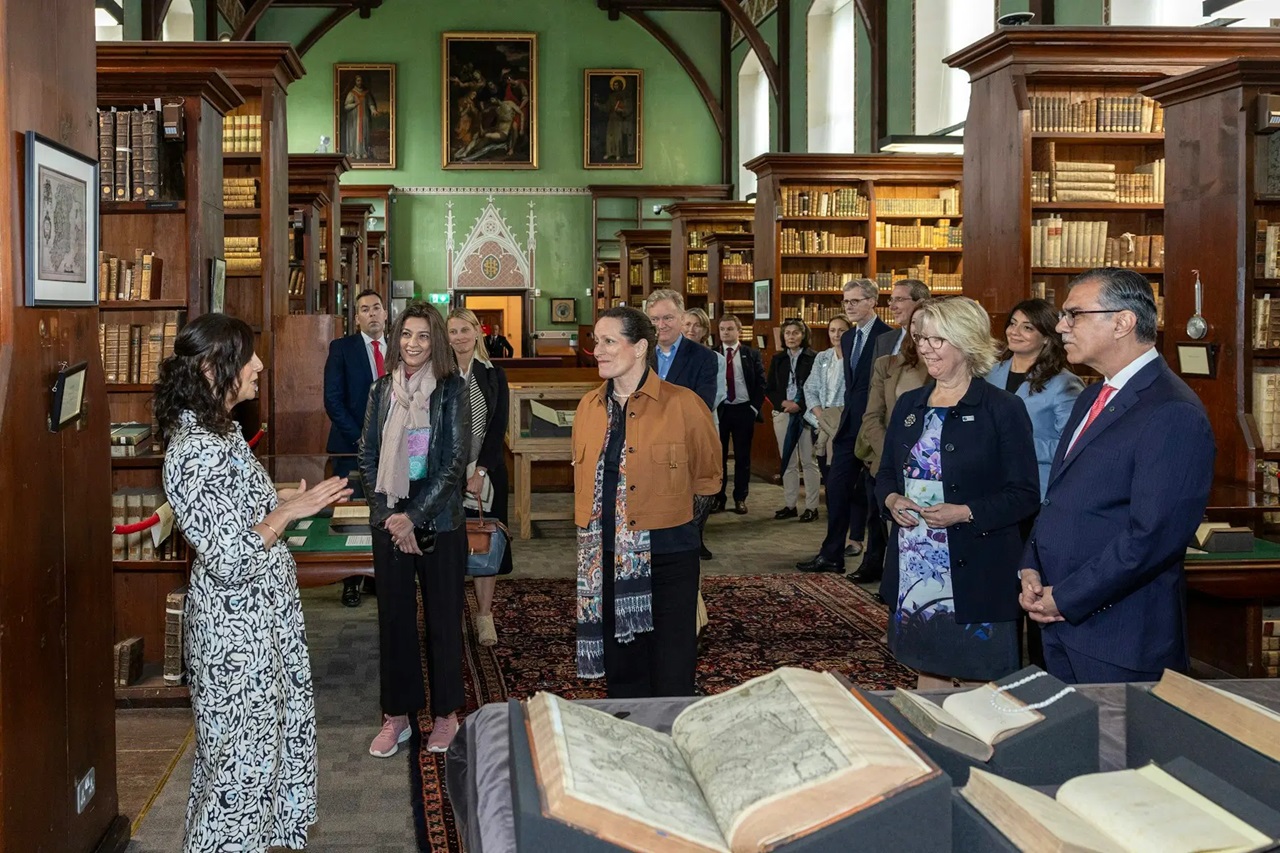
Princess Zahra Aga Khan (centre) gets a tour of Ireland’s Maynooth University while signing a Memorandum of Understanding between the University and Aga Khan University. This first-of-its-kind partnership between AKU and an Irish university will promote collaboration in research, student and staff mobility, and knowledge exchange in mutual expertise and development areas. Photograph: Maynooth University via AKDN.
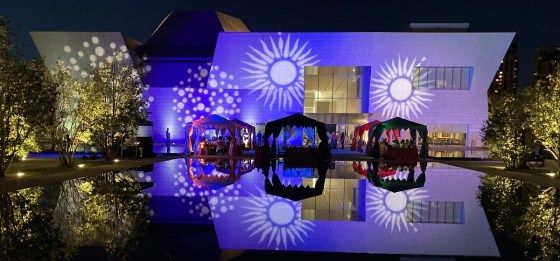
On May 28, 2010, Prime Minister Stephen Harper and His Highness the Aga Khan, the 49th Hereditary Imam of the Ismaili Muslims, performed the foundation ceremony of three projects: the Aga Khan Museum, the Ismaili Centre Toronto, and their Park. Just over four years later, on September 12, 2014, the Prime Minister and His Highness inaugurated the two iconic buildings — the Park was inaugurated in the spring of 2015 — which have become an intrinsic part of Toronto’s cultural landscape. These buildings, with their unparalleled architectural and artistic wonders, have captivated the hearts of thousands during the Toronto Doors Open, inspiring them to appreciate the beauty and creativity that went into their design. Click HERE or on the photo below for stories and photographs of this unique cultural landmark in Canada’s largest city.
The Aga Khan Museum, Wynford Drive, Toronto. The Ismaili Centre Toronto is directly across from the Museum, with the Aga Khan Park dividing the two iconic buildings built by His Highness the Aga Khan. Please click on the image for the story and photographs.
_______________________
The 10th anniversary of the Aga Khan Museum coincides with the 87th birthday of Prince Amyn Aga Khan, younger brother of His Highness the Aga Khan. We honour the Prince through a special post. Please click HERE or on the photo below
“The doors of goodness are many: enjoining good, forbidding evil, removing harm from the road, listening to the deaf, leading the blind, guiding one to the object of his need, hurrying with the strength of one’s legs to one in sorrow who is asking for help, and supporting the feeble with the strength of one’s arms.” And the Aga Khan has accepted this tradition of the Prophet Muhammad as a personal job description…Many prophets of the Bible recorded their prophetic lineage, just as Matthew and Luke in the New Testament stressed Jesus’s ancestry. In similar vein, His Highness the Aga Khan, is the 49th Imam directly descended from the Prophet Muhammad — Please click NOT ALL HEROES WEAR CAPES BY ANDREW KOSOROK.
~~~~~~~~~~~~
“We are receiving you here officially and not just as a friend because you are an important leader of the Muslim religion…What we admire in you is that you have been able to integrate a modern outlook with religion so that religion has been allowed its true role which is not merely to provide an all-embracing explanation of the universe but also to furnish the fundamental solutions of the problems which life poses us.” —Please click LEOPOLD SENGHOR’S TRIBUTE TO THE AGA KHAN.
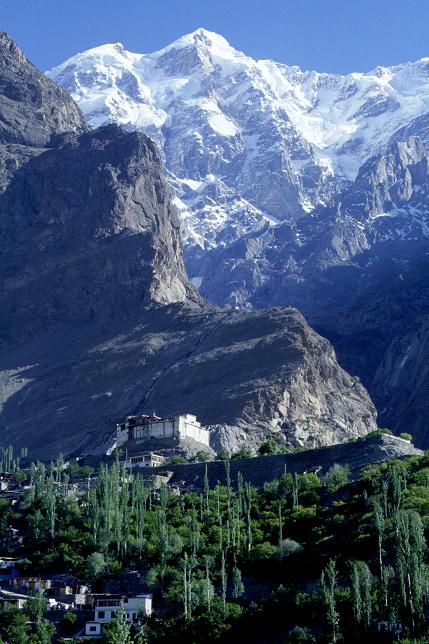
In 1954, at the invitation of the Mir of Hunza, a revered figure in the region, Mishal Husain’s grandfather, Shahid Hamid, made a journey to the northern reaches of Pakistan. He wrote: “Hunza is situated among a congress of great mountains, a concentration of lofty peaks, many of them unnamed, where the greatest folding of the Earth’s surface is to be found.”
Guided and inspired by her grandfather’s travelogue “Karakoram Hunza: The Land of Just Enough,” Mishal Husain, a BBC journalist and presenter of the ‘Today’ programme, embarked on a personal journey with her family, following in her grandfather’s footsteps. Precisely 70 years after her grandfather’s, she shares her unique experience in the Financial Times of London travel section. Please click Mishal Husain: Recreating my grandparents’ epic journey into remotest Pakistan.
In her piece, Mishal notes: “I reached Hunza after dark and walked through a small bazaar to our hotel, the Serena Altit Fort Residence — the first of three heritage properties we’d visit. All have been restored through projects led by the Aga Khan Fund for Economic Development, and being able to stay in such places allows the visitor to appreciate the history of the region’s people and their craftsmanship alongside its natural beauty.” Please click FT Travel: Mishal Husain in Hunza.
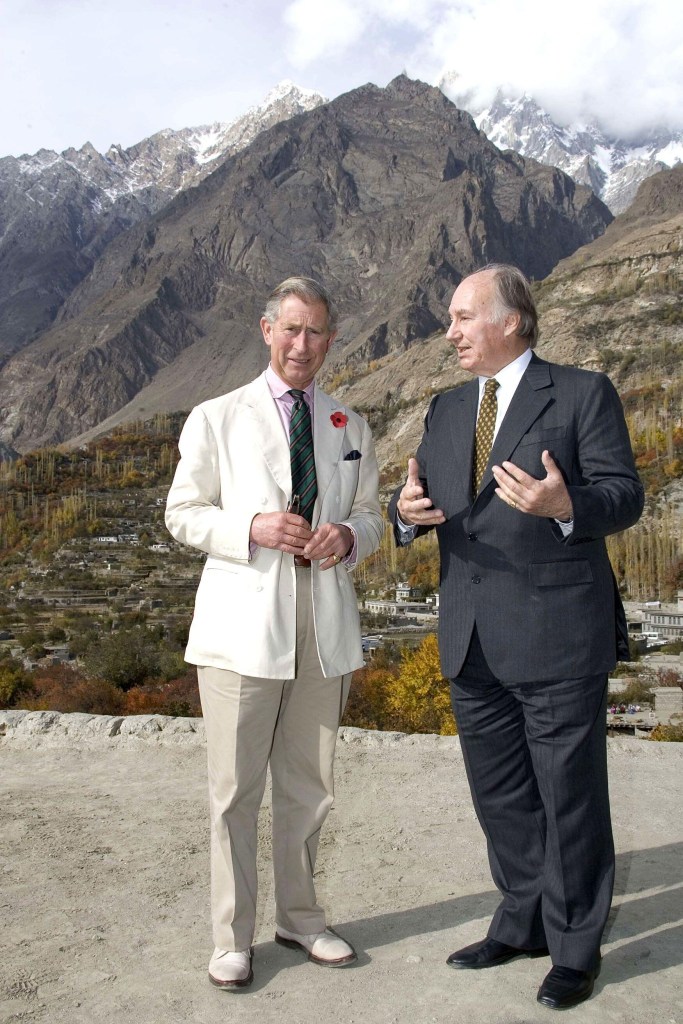
Credits: The featured image at the top of the post is from Mishal Husain’s piece in the Financial Times. The two photos in the body of this post were published on this website earlier; they relate to some of the places Mishal visited in Hunza.
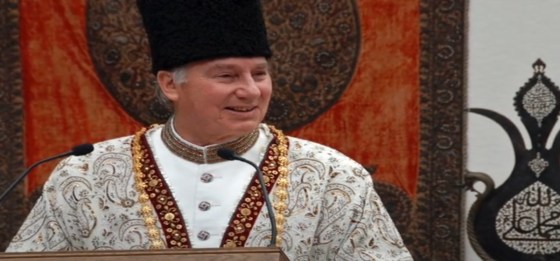
“The love of the Imam knows no physical boundaries. No mountain, no river, no desert, can stop the love of the Imam for his Jamat [community] worldwide” — Mawlana Hazar Imam, His Highness the Aga Khan, 49th Hereditary Imam of Ismaili Muslims (please watch video, below)
From Prophet Muhammad’s declaration at Ghadir-e-Khumm, after his farewell pilgrimage to Mecca, appointing his son-in-law Ali as his successor to the present 49th Hereditary Imam of the Ismailis, we invite our readers to watch the following video to learn about the Ismaili Imamat. Each Imam, from the past to the present, has been a Guiding Light to his followers, a source of inspiration and guidance through their changing times and circumstances. We present this video as two Aga Khan projects in Canada, the Aga Khan Museum and the Ismaili Centre in Toronto, are about to celebrate their tenth anniversary in mid-September. The most recent project, the beautiful Aga Khan Garden near Edmonton, is part of the University of Alberta Botanic Garden and will soon mark its 6th anniversary in mid-October.
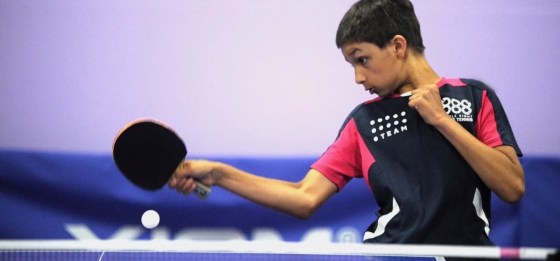
It was heartening to read Kef Noorani’s table tennis success story, which is currently featured as the main story on The Ismaili, the official website of the Ismaili Muslim community. It immediately brought back fond memories of another fantastic Ismaili table tennis player, Faazil Kassam, who qualified to represent Canada in the 2004 Athens Olympic Games. While Kef’s introduction to the game began in his parent’s car garage, with his father coaching him, Faazil’s introduction took place in the social hall of the previous Ottawa Jamatkhana on 991 Carling Avenue, with his father Nashir coaching him. The community’s recognition of Faazil’s Olympic qualification, which I initiated with the Ismaili leadership, was a significant milestone. Ottawa’s then Mukhisaheb Nazib Charania was highly supportive, ensuring that an announcement was made in the Jamatkhana, followed by a fantastic send-off for Faazil in the Jamatkhana social hall.
Upon his return from the Athens games, where Faazil and his doubles player lost to former Swedish champions, his parents, Nashir and mother Shaida (now deceased), organized a fantastic homecoming event at their Ottawa home. We watched his doubles match with great excitement and, of course, disappointment that he did not proceed further. We were each given a souvenir table tennis bat signed by Faazil. He then pursued a medical career in ophthalmology.
Story continues below
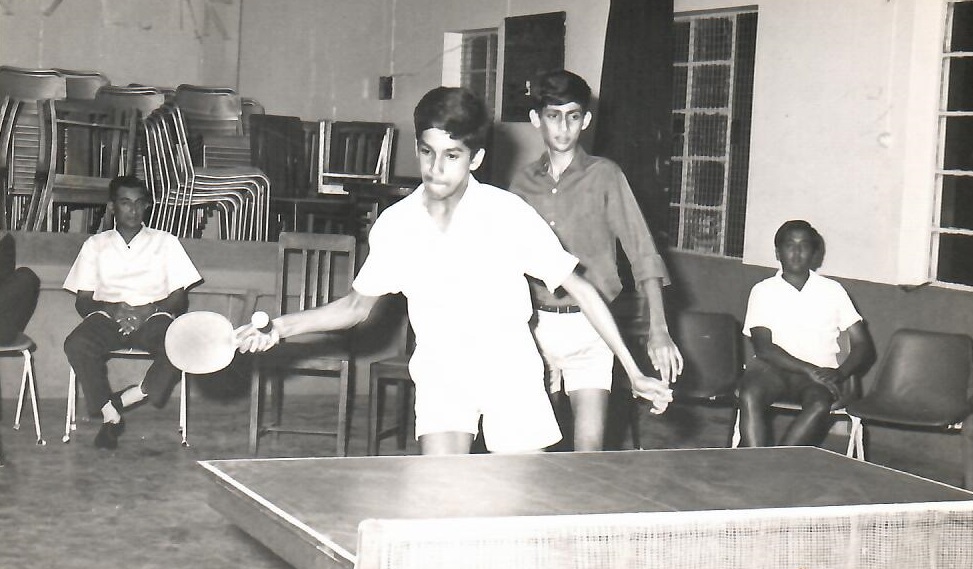
I was introduced to the game in the mid 1960s in the home of our ground-floor neighbour, Abdulbhai, at Islamabad Flats on United Nations Road. He owned the famous Vega Radio store on Morogoro Road in Dar es Salaam. One day, while visiting his home, I saw his children, Alnoor and Shanawaz, playing table tennis on their large dining room table. I took up the game and was beating both of them within weeks at their own game. My subsequent success in Dar es Salaam was when I shockingly upset the top two seeds in the semi-final and final of the Aga Khan Table Tennis Junior Under 17 championship. It was inspired by the training I received from (Late) Mohammed Amersi (Kanji), who was the best table tennis player in Tanzania. Also a great badminton player, Mohammed would first come to my table at the Aga Khan Club in Dar es Salaam, located behind my secondary school, Shaaban Robert, and intentionally allow me to win games against him to encourage me. His coaching to me and his younger brother, Salim Kanji, who is now in Toronto, nearly led us to a shocking win in a men’s doubles match against top seeds Priyakant Patel and Subash Bharadia in the Dar es Salaam Open held at the Indian Gymkhana. I remember I had forgotten my mandatory coloured polo shirt at home and wore my regular white shirt for the game, to which Subash fiercely objected — and wanted a default win — before Priyakant stepped in and asked his partner to calm down!
Malik Merchant, with his doubles partner Salim Kanji, smashes a forehand return in a double’s match against Priyakant Patel and Subash Baradia, at the Indian Gymkhana’s 1969 open table tennis tournament in Dar es Salaam, Tanzania. Photograph: Malik Merchant collection.
~~~~~
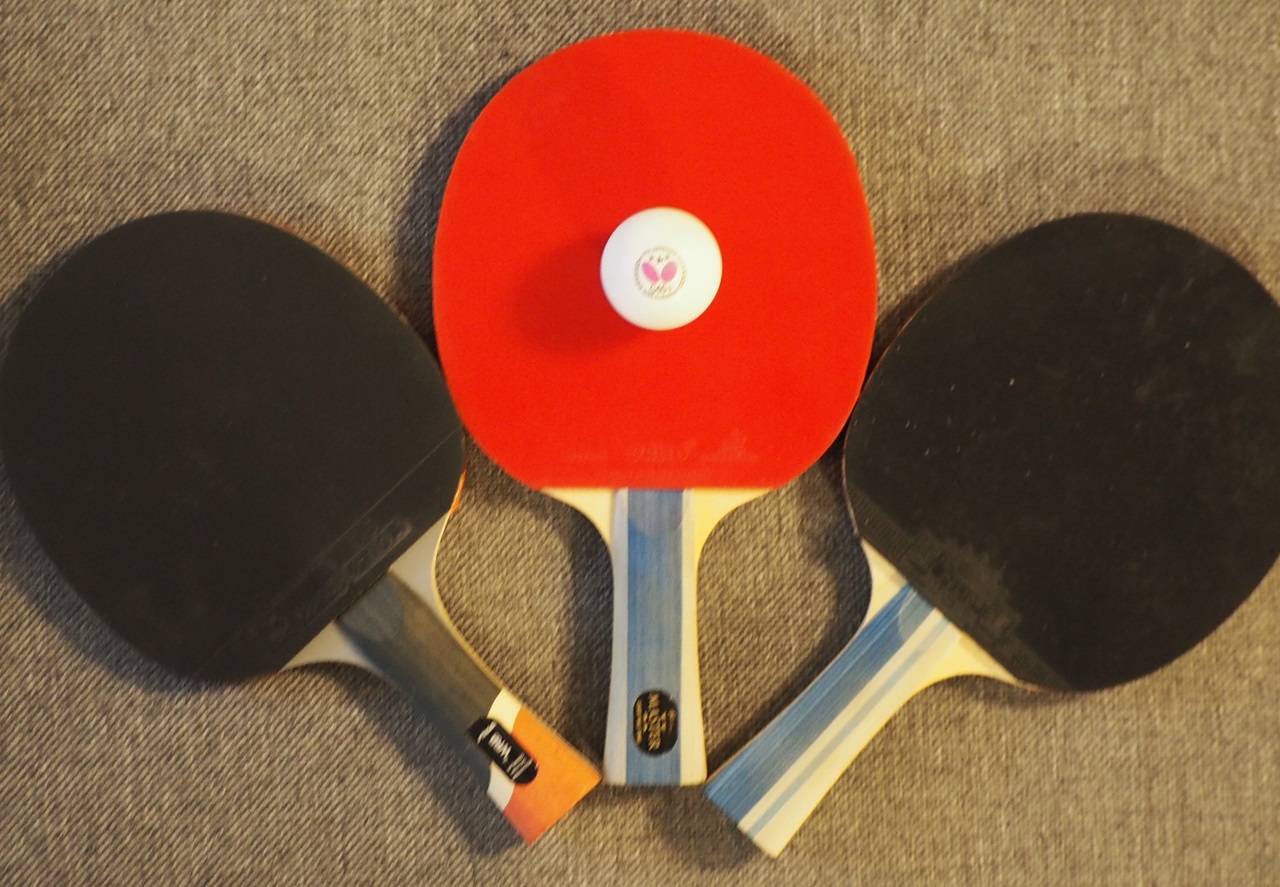
Malik Merchant’s current collection of table tennis bats that he uses in Calgary (Stiga, left, and two Palio bats, Master, centre, and Legend). Photograph: Malik Merchant collection.
~~~~~
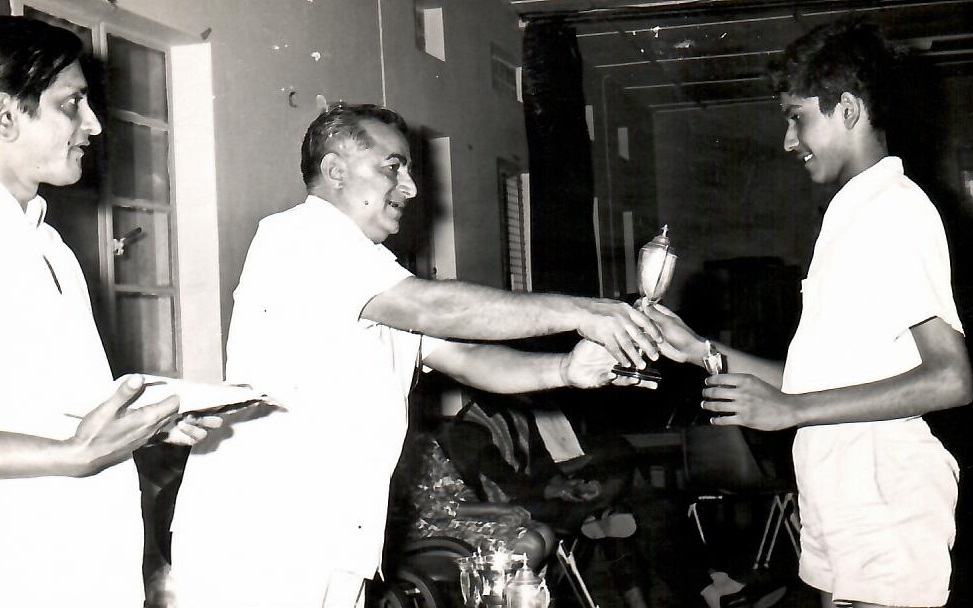
Malik Merchant proudly collects his trophy from “Mama” at the Indian Gymkhana for winning the Aga Khan Club Juniors Singles under 17 Table Tennis tournament a few months earlier. The tournament took place at the Aga Khan Gymkhana in Dar es Slaam in 1969. Photograph: Malik Merchant collection.
In the early 1970s in London, UK, I represented my North London Polytechnic in the inter college/university league.
With table tennis, my cricket batting improved dramatically. Bowlers were quick to note my fast reaction times. I saw the ball like a football, after leaving the bowler’s arms. However, no one could have excited me in London more than my friend Aziz Jetha, who defeated seeded players in the earlier rounds of the Fulham Broadway tournament before knocking out a strongly favoured and top-seeded Nigerian player. Jetha’s incredible defensive game, with sudden bursts of attacking play, was genuinely frustrating to the Nigerian and others he played earlier. As one my best table tennis friends, I lost 70% of all the matches I played with Aziz, whether at 5 Palace Gate or at the Imperial College’s table tennis room, where we would meet after Jamatkhana. In between my time in the UK and Canada, I was in Salt Lake City, Utah, where my doubles partner and I lost very narrowly in the city’s open finals in 1980.
Coming to Canada, Habiba Thawer and I won the mixed double for Ottawa in the Ismaili Games in the mid-1980s. My drawback over the decades I played the game was a weak backhand due to the wrong grip of the bat, which no one noted and corrected since my teenage years. I knew about this all along but only recently corrected my grip in Calgary. I have seen a significant improvement in my backhand game, even at my current retirement age! COVID-19 prevented my regular participation at the local CUSTTA table tennis club. The club has some fantastic players, but no one could match Faazil Kassam when he was at the top.
Table tennis is a quick-paced game, and the Chinese won all 5 individual and team gold medals at the recent Paris Olympics. Some of the rallies I watched were absolutely incredible. Homes with basements should have table tennis tables where children can start this beautiful sport, which will help them in other sports, including skiing, ice hockey, basketball and baseball, which require fast reactions and responses. I remember being frustrated with the Blue Jays batters some years ago. I even wrote a letter to the club asking their batters to play table tennis regularly to improve their batting. That’s not a joke! It had helped me in my cricket batting.
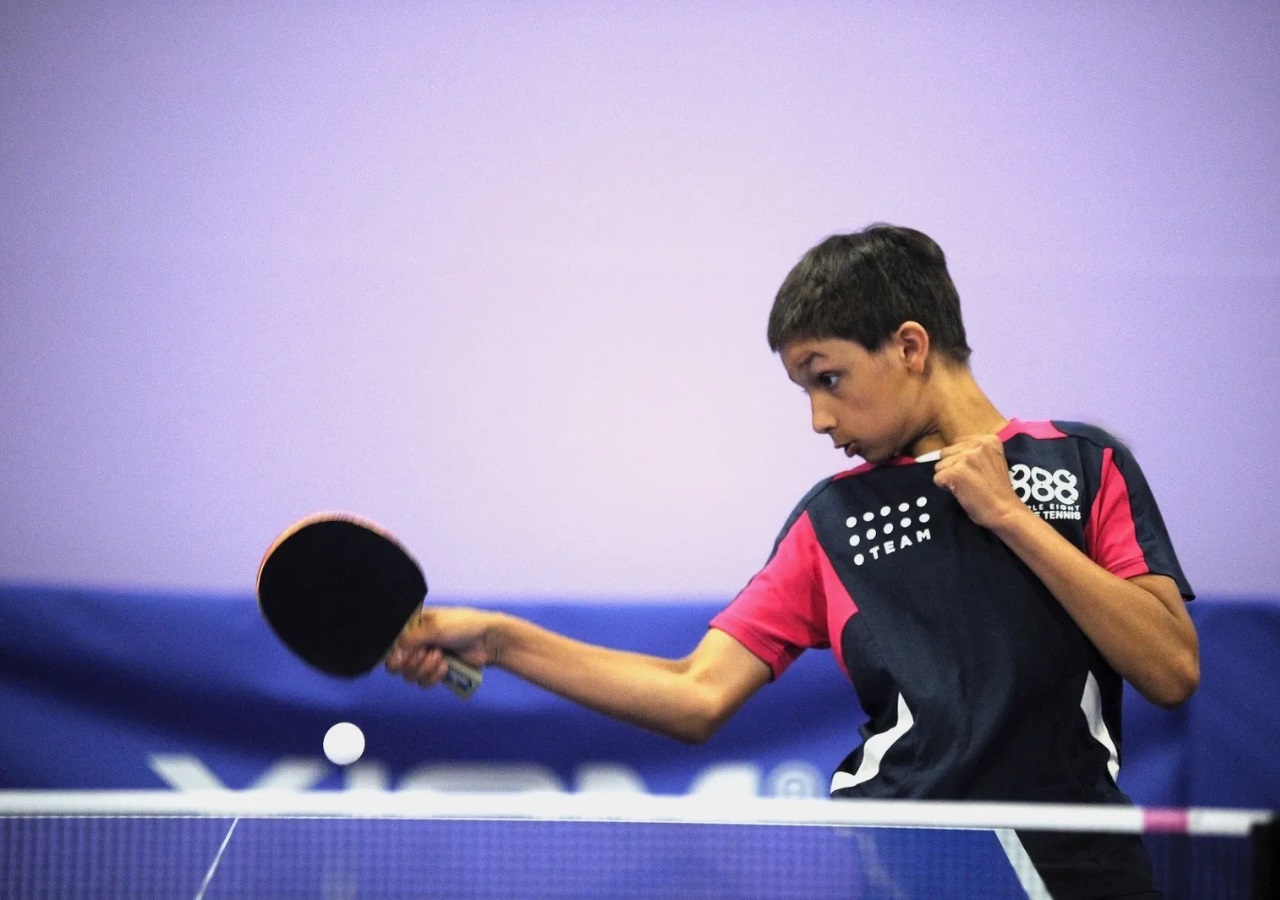
Ismaili boy Kef Noorani of California has dreams of making the US Men’s National Team and competing in the Olympics. Photograph: The Ismaili.
Kef Noorani’s inspiring story in The Ismaili reflects his keen interest and recent achievements, and offers a glimpse into his promising future. As he continues to develop and participate on the world stage at the Junior Level, I sincerely hope that he will qualify to represent the USA in the World Table Tennis Championships and the next Olympic Games, which will be held in his home state, California, in Los Angeles, in 2028. The members of the Ismaili community across North America and worldwide can’t help but feel a sense of anticipation and excitement for what’s to come for Kef Noorani.
Date posted: August 27, 2024. Last updated: August 28, 2024 (typos.)
Nature — and some of the best in the world — is so close to Calgary. But it need not be just nature. In Drumheller, we have a magnificent dinosaur museum — the Royal Tyrrell, where you are genuinely illuminated about Dinosaurs and the Universe! Banff’s Whyte Museum of the Canadian Rockies has beautifully curated permanent and temporary exhibits. The Banff Arts Centre is a must-visit place for its art gallery and learning programs, concerts in the theatre and the amphitheatre located by the MacLab Bistro, which serves excellent food with stunning views of the mountains. This past week, I enjoyed taking a friend from Ottawa to Drumheller, Banff National Park and the beautiful Aga Khan Garden, part of the University of Alberta Botanic Garden, near Edmonton. Please click HERE or on the Horsethief Canyon picture shown below for photographs of our trip.
“Ultimately, the art of teaching is a mission. Those who embark upon the journey of teaching seek to transform individuals and communities, inspired by a sense of purpose” — Mawlana Shah Karim Hazar Imam, His Highness the Aga Khan, 2008, Dhaka, Bangladesh.
The late South African statesman and leader Nelson Mandela said, “Education is the most powerful weapon you can use to change the world.” This profound statement underscores the transformative power of education, inspiring us to believe in its potential to shape a better future. Martin Luther King Jr. also emphasized the importance of education, stating that it teaches one to think intensively and critically.
Education is a powerful tool for building intelligence and character when done right. Teachers are the key figures in this process, guiding students to acquire knowledge, competence, and virtue. The Aga Khan’s quote on teachers further underscores their crucial role.
In the 1940s, 50s, and 60s, Mbeya, a small town situated in the Southern Highland region of Tanganyika (now known as Tanzania), was blessed with dedicated and enthusiastic teachers who changed the lives of many children of Indian origin who had moved to East African countries from India in the late 19th and early 20th Centuries to towns such as Mbeya.
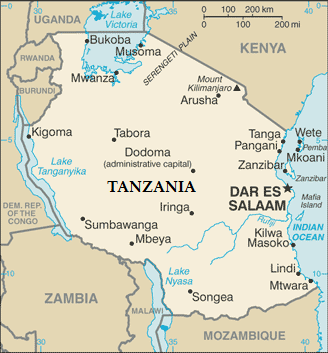
A UN map showing significant towns and cities in Tanzania, including Mbeya neighbouring Zambia in the south-west of Tanzania.
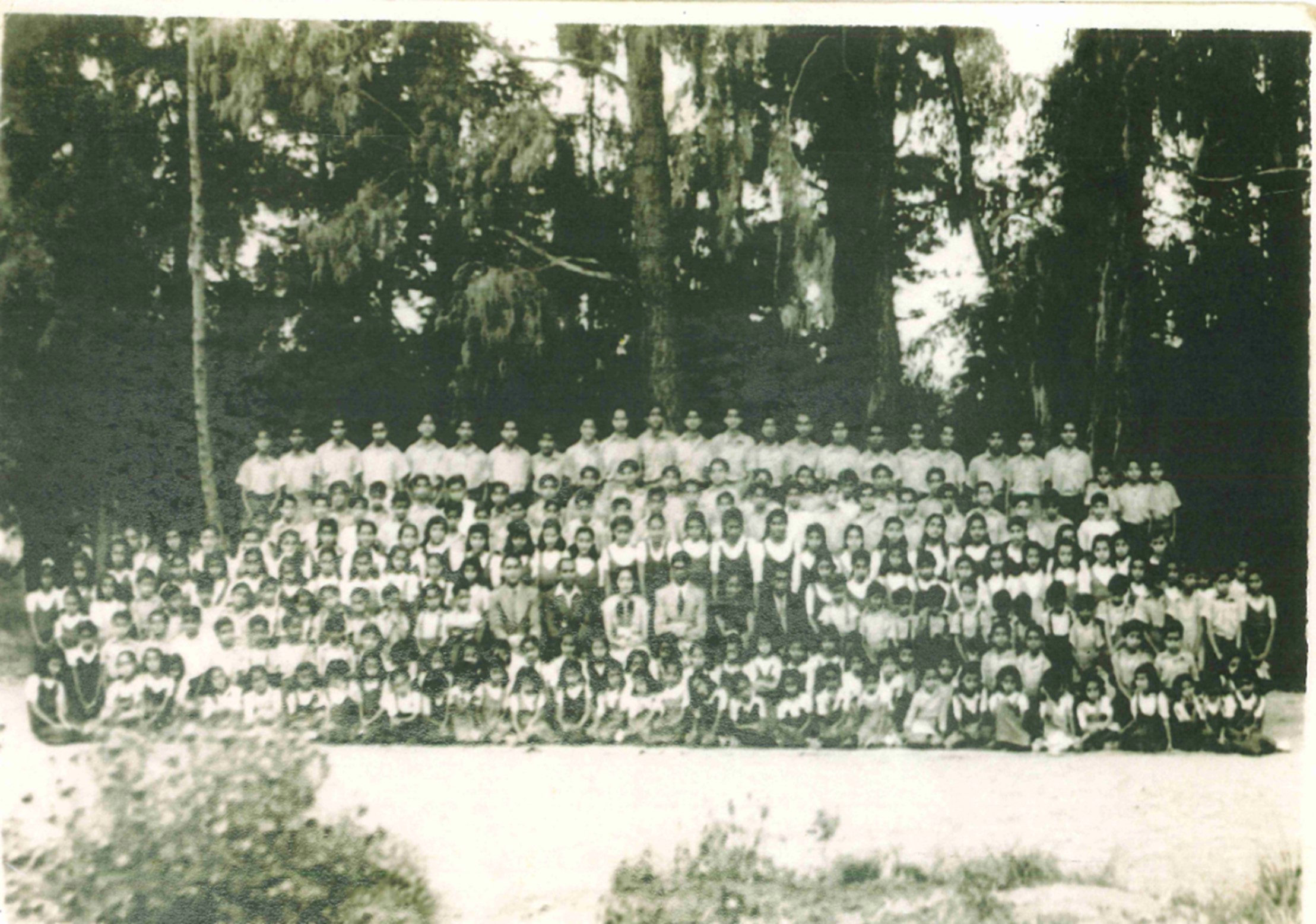
During the British colonial time, separate European, Indian and native African Schools were established. The Colonial Government funded the schools for the Europeans and Africans; the Asians (or Indians from South Asia), on the other hand, had to build their own education and schooling system. This was a community effort, funded with donations from the community and fees collected from the students. In the 1940s and early 1950s, Indian Public School, a primary school, was the first such teaching institution in Mbeya for the Indian community. The medium of instruction was Gujarati. After primary education, the students continued their education in Dar es Salaam.
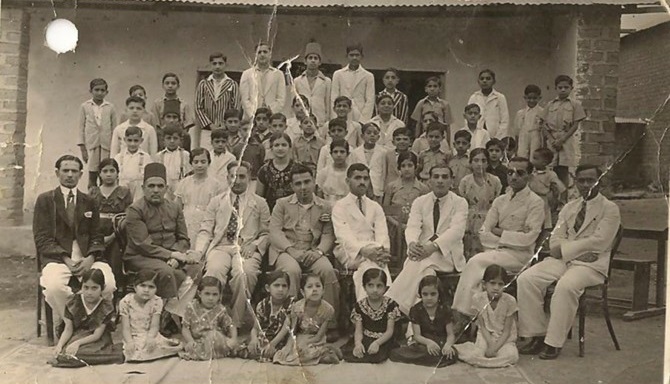
A photo of staff and students of the Indian Public School from around the late 1940s. Among those in the photograph are Haji Yusufmia (wearing hat), Mr. Hassam Somani, Mr. Sadru Bhanji Jiwa, Mr. Gulamhussein Mukadum, Mr. Hassanali Dhanani and other teachers.Photograph: Dr. Mohamed Manji collection.
~~~~~~~
Indian Public School teachers Mr Almeida, Mr Lohar, Mr Jagirdar, Mr. Hassanali Abdulla Walji and Vigiabenji Talavia. Photograph: Dr. Mohamed Manji collection.
~~~~~~
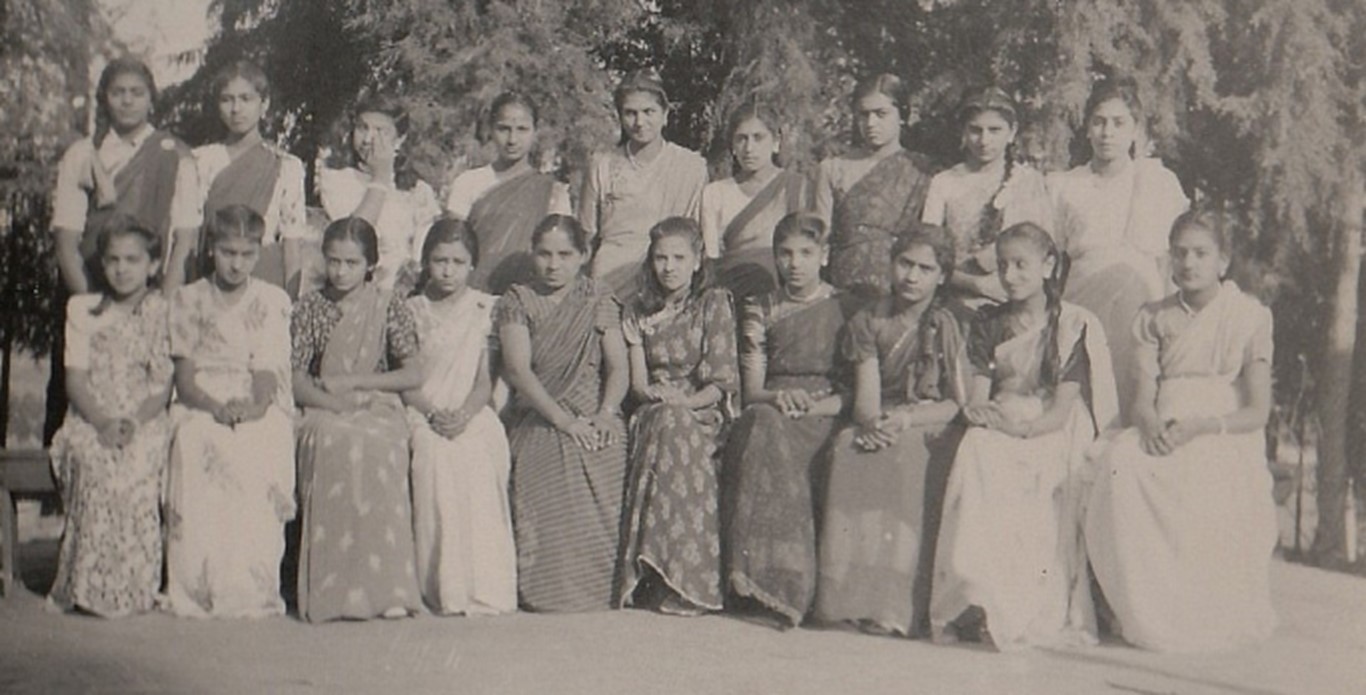
Indian Public School girl students with Vijiabenji Talawia. Photograph: Dr. Mohamed Manji collection.
~~~~~~
Indian Public School girl students with Vijiabenji Talawia. Photograph: Dr. Mohamed Manji collection.
~~~~~~
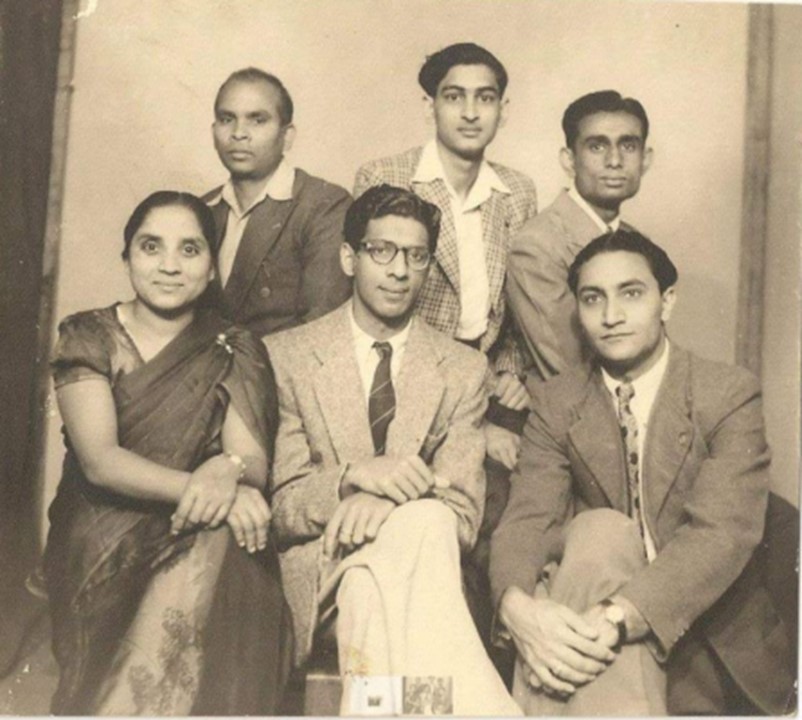
A photo from the early 1950s of the staff of the Indian Public School, Mbeya. Pictured are G. D. Talavia, Hassanali Abdallah Walji, Mrs. Vijiaben Talavia, K. R. Lohar and Abdulmalek Ali Valla. Photograph: Dr. Mohamed Manji collection.
In the late 1950s, the Ismaili Muslim community, a group of the Mbeya Indian diaspora, built the Aga Khan Primary School, which would teach up to the tenth standard. It was part of the Aga Khan Education System and was open to all races. The medium of instruction would be English; it also had facilities to teach science subjects. This educational system, built and sustained by the Indian community, not only provided quality education but also instilled a profound sense of pride and empowerment among the Indian diaspora in East Africa.
Mr. Vallimohamed Sarani (Sarani Master). Photograph: Dr. Mohamed Manji collection.
From the scanty information I obtained for the 1940s, one of the first teachers at the Indian Public School was Mr. Vallimohamed Sarani (known as Sarani Master), who initially taught in Zanzibar. Sarani Master came to East Africa in the late 1920s or early 1930s, joining his uncle in Kampala. He got married in Kampala and then shifted to Zanzibar as a teacher. His children were born in Zanzibar. He left Zanzibar during the early 1940s and started teaching in Mbeya at the Indian Public School for eight years. In 1948, he moved to Nayasaland (now Malawi) and stayed there till 1975. He retired and moved to Texas, USA, to be with his children until 1982. His final residence was in Leicester, UK, where he passed away in 1987 at the age of 84 years.
Mr. Ayub Kassammia, assistant to Sarani Master. Photograph: Dr. Mohamed Manji collection.
Another significant figure in the Indian Public School was Mr. Ayub Kassammia, the second son of the brother of Haji Yusufmia, a pioneer and successful businessman of Mbeya. After completing his studies in India in Kutch/Gujrat, Ayub returned to Mbeya. Initially, he taught at the Indian School organized by the local Indian community. The School was held in a rented house behind Haji Yusufmia’s house. After building the formal Indian Public school and hiring new teachers, Ayub left teaching. He joined the British Army in Nairobi during 2nd World War till the end of the War.
At the end of the 1940s and early 1950s, with the relocation of Sarani Master and his family to Nyasaland, Indian Public Schools hired new teachers from India. In 1949, a husband-and-wife team of Mr. G. D. Talavia and his wife, Vijiaben Talavia, joined the School. Mr Talavia was made the headmaster. The School continued with Gujarati as a medium of instruction, with lessons to teach English at the end of Standard 2 or the beginning of Standard 3.
Farewell to Zarinabenji Virji who left the Indian Public School for Dar es Salaam in 1952/53 after her marriage. Photograph: Dr. Mohamed Manji collection.
Among other teachers were Miss Zarina Virji (commonly known as Zarinabenji), who taught briefly and moved to Dar es Salaam after marrying Mr. Malek Ratancy, a well-known cricketer; Mr. Kassim Rahemtulla Lohar (Mr. K. R. Lohar); Mr. Hassanali Abdulla Walji of Mbeya (commonly addressed at that time as Hassanali Master and later as Dr. Walji); and Mr. Abdulmalek Ali Valla also of Mbeya.
In the 1940s and early 1950s, children’s schooling started in Standard One. When I joined Indian Public School in 1952, Vijiabenji (as we addressed her) was my first teacher in Standard One. Sudha, the younger daughter of the well-known medical doctor in Mbeya, Dr. Carpenter, joined me in Standard One. Other teachers were also involved in my education, especially Mr. Lohar and Hassanali Master (my father’s first cousin). My mother used to complain to him if I got mischievous or was not following her orders. Hassanali Master was an excellent teacher, especially in health science subjects, but he was also strict. We used to be frightened of him. Sudha and I were only four and a half years old when we joined Standard One, and competing with other older students in early primary School was difficult. Thus, my father always made me take extra tuition from Mr. Lohar, and his help and guidance in those early primary school days can never be forgotten.
Mr. K. R. Lohar was born in Bhuj Kutch, India. He moved to Nyasaland in April of 1950 at the suggestion of his uncle, Sarani Master, who, as I already mentioned, moved from Mbeya to Nyasaland in 1948. Mr. Lohar taught at Zumba school in Nyasaland. In 1952, he married his cousin Khulsum, Sarani Master’s daughter. She was born in Zanzibar, where her father had once taught early in his teaching career. At the advice of Sarani Master, Mr. Lohar and Khulsum moved to Mbeya to teach at the Indian Public School. They have three sons; the eldest, Rhemutulla (Rhemu), was born in 1953; Rafiq in 1955; and the youngest, Hanif, in 1962 — all in Mbeya.
Mr. Dennis H. Noronha was the head teacher at Indian Public School and then at Mbeya Aga Khan School when the school first opened in 1957. Photograph: Dr. Mohamed Manji collection.
~~~~~~
Mr. Dennis H. Noronha as Head Master with Mr. and Mrs. Talavia, Mr. K. R. Lohar, Mr. Hassanali A. Walji and teacher assistant Mr Abdulmalek Ali Valla. Photograph: Dr. Mohamed Manji collection.
In 1953, Indian Public School received a new teacher who would become the new headmaster. His name was Mr. Dennis H. Noronha, and he was from India. His leadership and vision would end up being the catalyst for change in the Indian community of Mbeya, transforming the lives of many students. One of his main tasks was introducing English as the instruction medium. He and Mr. Hassanali Walji also introduced a physical program and sports into the school curriculum.
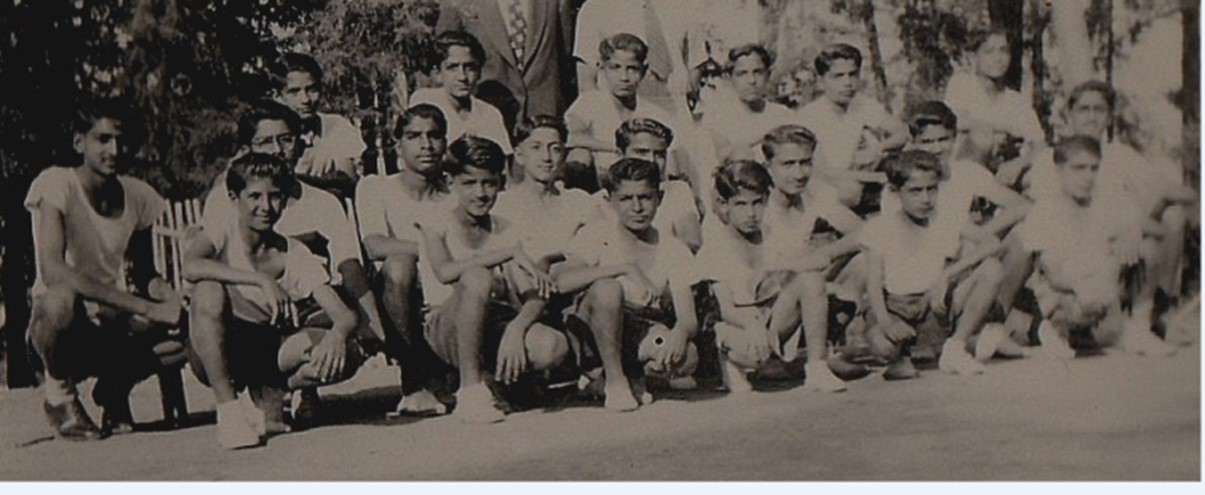
Physical education at Indian Public School, Mbeya with Mr. Hassanali Walji and Mr. D. H. Noronha. Photograph: Dr. Mohamed Manji collection.
~~~~~~
Physical education at the Indian Public School Mbeya. Photograph: Dr. Mohamed Manji collection.
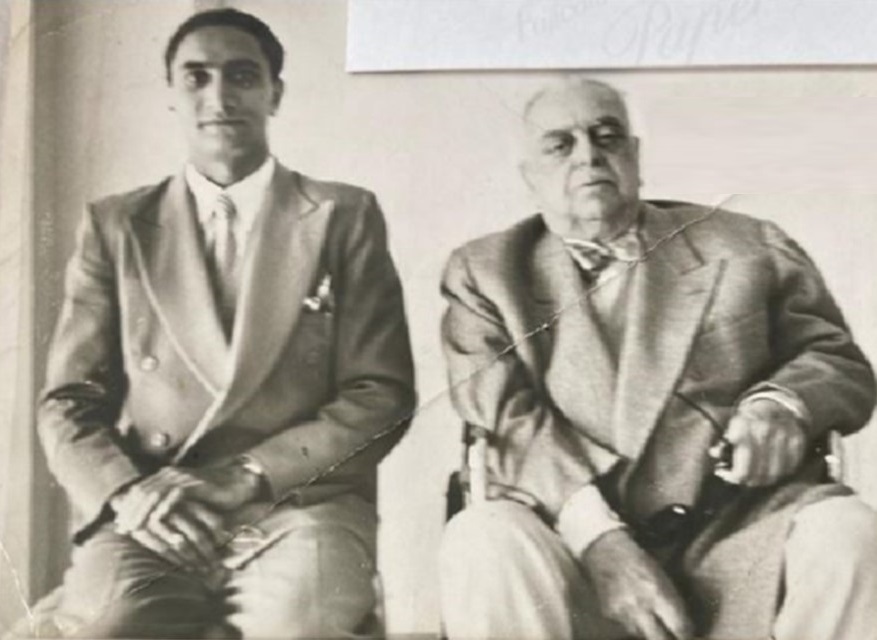
Mr. Hassanali Abdulla Walji (later known as Dr. Walji) was born in Manyoni, a small town in the Singida district of Tanganyika. He was one of the earliest teachers at the Indian Public School after completing his studies in Dar es Salaam. His main subjects were health science and physical education. Before the closure of the Indian Public Schools and the move to the new Aga Khan School, this local young man decided to go to London, England, to study physiotherapy and Chiropody (podiatry). Studying overseas at that time was a privilege, especially in Western countries. While in Europe, he also had an audience with Sir Sultan Mahomed Shah, His Highness the Aga Khan, the 48th Hereditary Ismaili Imam.
Mr. Hassanali A Walji (Dr. Walji) with Mawlana Sultan Mahomed Shah, His Highness the Aga Khan; mid-1950s. Photograph: Dr. Mohamed Manji collection.
After completing his studies in the UK, he returned to Mbeya. On his return, I still remember that Dr. Hassanali Walji, as he was now known, gave us (the whole student group and the community) a talk on his travel overseas by ship and about the process of studying overseas. At least for me, he sowed the seeds for further education overseas after my studies in Mbeya, and I always remember that talk and thank him for it.
Mbeya is a small town, and for his practice in physiotherapy and podiatry, Dr. Walji moved to Nairobi, Kenya, where he established a very successful practice. He, however, continued with his other main interest in Ismaili and Islamic studies through his extensive reading and self-studying. He was also gifted with a fantastic singing voice, and with his love for Ginans (Ismaili hymns composed by Ismaili Pirs and missionaries centuries earlier), he recited them regularly. Dr. Anil Walji, his son, an Anatomy Professor at the University of Alberta in Edmonton, inherited that from his father. Dr. Hassanali Walji also became an honorary Alwaez (missionary) in the Ismaili community and preached regularly. His sermons were very well received. It was a significant loss in 1978 when he passed away apparently from a heart attack in Nairobi, Kenya.
It may be noted that the Aga Khan Education Structure in East Africa had started as early as the end of the 19th Century; the earliest center to teach basic literacy and numeracy may have been initiated in 1895 in Bagamoyo, Tanganyika by Mawlana Sultan Mahomed Shah, Aga Khan III. In the 1940s and 1950s, under the chair of Princess Joan Aly Khan (the late mother of the present Aga Khan) and with the revised structure, more Aga Khan primary and secondary schools were established in Dar es Salaam in Tanganyika, Mombasa and Nairobi in Kenya, and Kampala in Uganda, first for girls and then for the boys. Later, co-ed schools for boys and girls were built for primary education in other East African towns and opened to all races and faiths.
One such School was constructed in Mbeya and opened in 1957 to replace the existing Indian Public School. This new School would cater to teaching from Standard One to Ten.
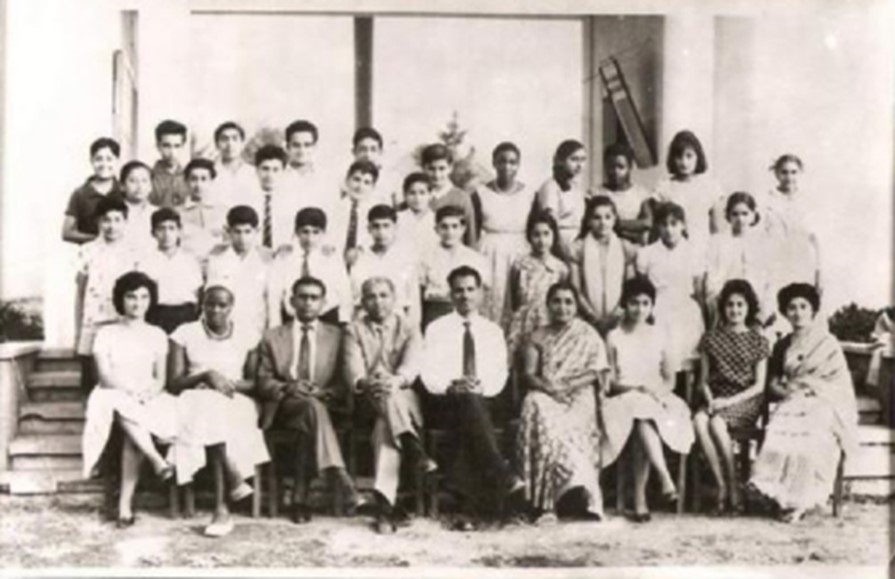
Mbeya Aga Khan School Education Committee 1957 with the teaching faculty. Photograph: Dr. Mohamed Manji collection.
Mr. Denis H. Noronha headed the Mbeya Aga Khan School. He gained quick recognition and respect among students, parents and the school committee, given his tenure as the headmaster of the Indian Public School and his kind concern for the students of this small town, his leadership abilities and his forward thinking for the student’s further education. His advice and criticism were genuine. Indian Public School was closed permanently, and all the teachers from that School moved to the new Aga Khan School. The teaching faculty consisted of Mr. K. R. Lohar, Mr. Almeida, Mr. Jagirdar, Mr. Sadrudin Merchant, Mrs. Aramita Geraldine Narohna and Mrs. Shrin Ratancy.
With the new Mbeya Aga Khan School in operation and open to all races and faiths, Mr. Noronha, as the Headmaster, managed to attract more teachers, and his teaching faculty increased; Mr. and Mrs. Philips and a second, Mr. Philips from India, joined. The two male Philips were distinguished from each other by their heights, and the students referred to them by calling them “Tall” and ‘Short” Mr. Philips. Afterward, Mr. Rawat, Mr. Demelo, and Mr. de Souza joined.
Staff, Mbeya Aga Khan School, 1958-1960. Photograph: Dr. Mohamed Manji collection.
With their hard work and dedication, this teaching faculty brought up the standard of teaching per the Aga Khan Education criteria, making it possible for the students to relocate quickly to other schools when they moved to other secondary and high schools in East Africa to continue their education beyond Grade 10.
In 1959/60, Mr. Denis Noronha retired as head teacher of the Aga Khan School. He and his teacher wife, Aramita, opened their own business, providing tuition for school subjects and accountancy courses. He became an insurance agent with an office in the Mbeya East African Airways building. In the 1960s, the Noronha family left Mbeya for good and relocated to Bangalore, India. They opened a private school there, which became quite successful and well-known. Aramita passed away in Bangalore on January 6, 1989. Mr. Noronha and his eldest daughter continued running the School there. Mr. Dennis Noronha passed away on December 7, 2008. Mr. and Mrs. Noronha’s passing was a significant loss to his immediate family and the Mbeya people, who had come to regard them as their own family.
Staff, Mbeya Aga Khan School, 1960-1962. Photograph: Dr. Mohamed Manji collection.
After Mr. Noronha left the Aga Khan School, Mr. Naidu took over the head teacher’s position. Subsequently, after his departure in 1962/63, Mr. de Souza became the head teacher. Unfortunately, just six months later, he died of an apparent heart attack. Mr. K. R. Lohar succeeded him.
Mr. de Souza, Head Teacher, Mbeya Aga Khan School, 1963. Photograph: Dr. Mohamed Manji collection.
In 1971/72, the socialist government of Tanzania nationalized all the Aga Khan Schools, and they came under the government administration. Mbeya Aga Khan School’s name was changed to Azimo School. Mr. Lohar taught there up to 1972 and left to teach at another school in Mbeya situated in the previous “European” area of Mbeya. He, with his wife Khulsum, moved to Leicester, UK, to join their sons in 1990 and for the treatment of Khulsum’s cancer. She passed away in Leicester in 1990. Mr. Lohar lived in Leicester with his son. In April of 1997, he had a stroke, and two months after his stroke, he was found to have cancer of the throat (he smoked heavily). He passed away on December 1, 1997, at the age of 67 years.
Mr. K .R. Lohar, Head Teacher, Mbeya Aga Khan School, 1964. Photograph: Dr. Mohamed Manji collection.
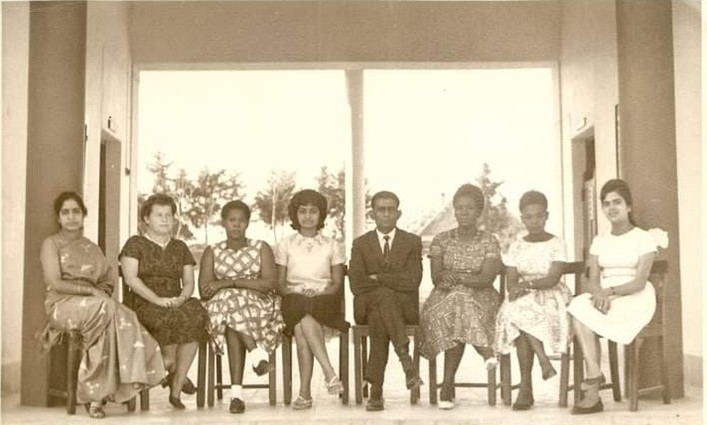
In the mid-and late 1960s, Tanzanian-trained teachers and teacher assistants joined the team. To name a few (who were from the Mbeya Indian community), they were Miss Gulshan Dharsee, Miss Nurjehan Karim Lalji, Miss Fatma Bandali, Miss Gulzar Razak Hirji, and Mr Sadrudin Ali Valla. Mr Salim Dawood, originally from Dar es Salaam, also took up a teaching position at the Mbeya Aga Khan School. He would later move to the Aga Khan Primary School in Dar es Salaam, where he taught maths. Mr. Dawood passed away in Toronto in 2019. The native African teachers also joined the team.
Local trained including African teachers at the Mbeya Aga Khan School in the mid 1960s. Photograph: Dr. Mohamed Manji collection.
~~~~~~
Local trained including African teachers at the Mbeya Aga Khan School in the mid 1960s. Photograph: Dr. Mohamed Manji collection.
The population of Mbeya Indians by the 6th decade of the 20th Century was about one thousand. Practically all the children who attended Mbeya Indian Public School and then Aga Khan School were born in the Southern Highland region of Tanganyika, of which Mbeya was the main administrative town. With this small population, Mbeya produced eight Medical doctors, one lawyer, eight registered nurses, five Chartered/Certified Accountants, four engineers, two legal secretaries, one with an Agriculture degree, and many more with college certification. This proud result of the Mbeya student’s achievement resulted from good schooling and ongoing guidance during the 1940s,1950s, and 1960s, which were done by those mentioned above, very dedicated and committed teachers of Mbeya. They were our Mbeya’s education heroes. They sparked the value and importance of education for students and society. I should state that Mr. Denis H. Noronha played a significant part in this. He brought the change in the early 50s by making English the medium of instruction, changing the curriculum to a UK one, recruiting good teaching staff, and advising the students and their parents regarding further education. He groomed the students to think far ahead. With this foundation, teachers like Mr. de Souza and Mr. K. R. Lohar, who followed him as a head teacher, continued to use the same approach and policy.
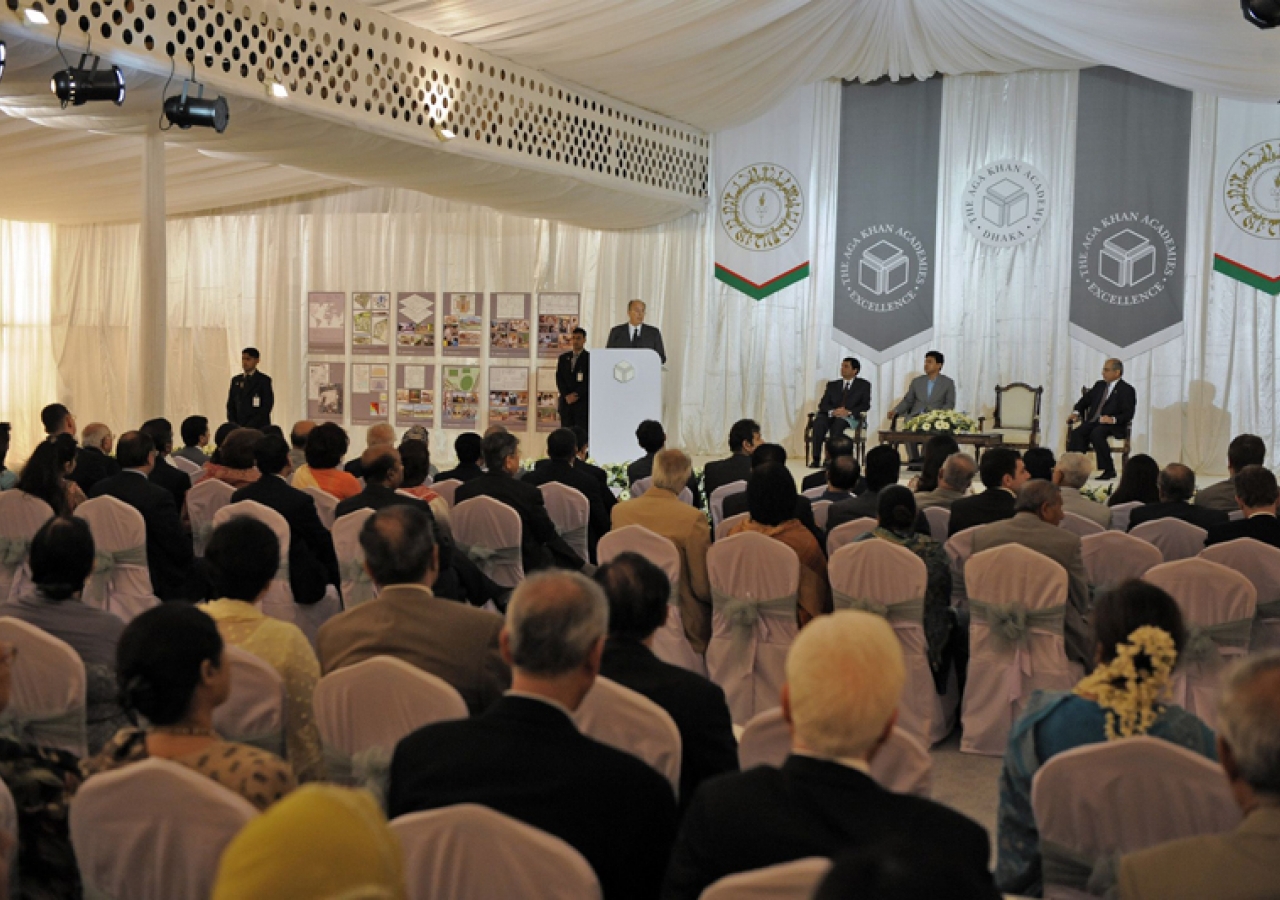
Mawlana Hazar Imam, His Highness the Aga Khan, speaking at the foundation stone laying ceremony of the Aga Khan Academy in Dhaka, Bangladesh, in May 2008. Photograph: Gary Otte/The Ismaili.
At the Foundation Laying Ceremony of the Aga Khan Academy in Dacca, Bangladesh, in 2008, His Highness the Aga Khan stated, “Ultimately, the art of teaching is a mission. Those who embark upon the journey of teaching seek to transform individuals and communities, inspired by a sense of purpose”. Secondly, in a speech at the Aga Khan University in Karachi in 2000, His Highness said, “Teaching is one of the most valued professions because it opens minds to greater self-awareness as well as to the knowledge that gives learners greater control over their destinies.”
This statement proved very true for the Mbeya students of the 1940s, 50s, & 60s when they had to emigrate to the West in the early 1970s because of the “mopping up” measures in the way of the “Acquisition of Building Act 1971” brought by the socialist government of Tanzania. Indian-owned buildings, farms, etc., were nationalized without compensation. The economic security of the Indians was jeopardized because of the Africanization of businesses and jobs. Things became difficult to live there, and thus, the Indian population left Tanzania in large numbers. The students were able to resettle in countries like Canada, the USA, the UK & Australia, and they have done well in their jobs, practices and businesses. Some of us have achieved good positions at various institutions and academic positions at multiple Universities.
On behalf of all Mbeya students and their parents, I want to thank the teachers who taught us and prepared us for the future. We students also pray for the peace of the souls of all our departed teachers.
Date posted: August 14, 2024.
____________________________
Acknowledgement: The author would like to thank Cynthia (Noronha) Mascarena, Mr. Vincent Noronha, Mr. Rhemtulla (Remu) K. R. Lohar, and Mr. Karim Nurdin Popat Kassam for their help and information for this article.
Feedback: We welcome feedback from our readers in response to Dr. Manji’s informative piece about Mbeya teachers. Please click Leave a comment or send your comment to mmerchant@simerg.com. We welcome similar pieces about your experiences studying or teaching in Ismaili educational institutions in any part of the world.
Dr. Mohamed (Mo) Fazal Manji
About the author: Dr. Mohamed Fazal Manji, MD, DMRT, DABRT, FRCPC, who is originally from Mbeya Tanzania, is a cancer specialist. He is a Consultant Radiation Oncologist at BC Cancer Agency of British Columbia, Canada, and Clinical Associate Professor, University of British Columbia. He graduated in medicine from Makerere University, Kampala, Uganda, and immigrated to Canada in 1972. He specialised in radiation cancer treatments at Princess Margaret Hospital (Cancer Center as it is called now) in Toronto. He obtained the Canadian Fellowship (FRCPC) and American Board Specialist Certification (DABRT) in Radiation Oncology. He also undertook special courses in Nuclear Medicine and Endocrinology at Harvard Medical School, Boston, USA. He became the first Canadian trained Ismaili Radiation Oncologist in Canada and probably in North America. He has been working at BC Cancer agency since 1977. He spent time abroad, working in Riyadh, Saudi Arabia to help modernize the Radiation Department at King Faisal Specialist Hospital & Research Center. He spent 12 years at this tertiary hospital for cancer and other diseases. He was also involved in the planning and development of Radiation Oncology Departments at the Aga Khan University Hospitals in Karachi and Nairobi and spent some time working at both places. He has contributed to many peer review publications, abstracts, book chapters and also lecture presentations nationally and internationally. Dr. Manji is also a recipient of 2022 Royal College of Physician & Surgeon of Canada’s M Andrew Padmos International Collaboration Award.
He is the son of Rai Fazal Manji of Mbeya Tanzania, who served as a member of Aga Khan Supreme Council of Tanganyika in 1950s and Raibanu Rehmat Fazal Manji, daughter of Alijah Mohamed Hamir who, in early 1930s, built an iconic Jamatkhana in Iringa, Tanzania, and donated to Imam Sultan Mahomed Shah unconditionally. Appointed by His Highness the Aga Khan, Dr. Manji served as the first Member for Health on the first Aga Khan Ismaili Regional Council of Ontario and Quebec in 1973 under President Riaz Jethwani.
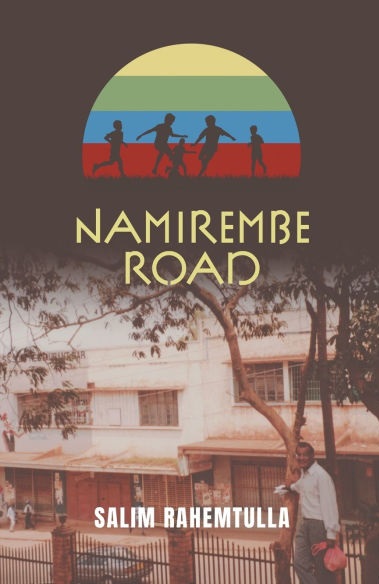
Simerg’s introduction of “Books by Ismaili Authors” continues with Salim Rahemtulla’s “Namirembe Road.” We follow the same Q/A format as our earlier presentations of books, which are listed chronologically below. We encourage Ismaili authors worldwide to participate in this series, regardless of when their books were published. See details of the series HERE and submit your responses to Simerg’s editor, Malik, at mmerchant@simerg.com.
****************
“With empathy, honesty, and insight, Rahemtulla invites readers to accompany him as he dives into the past, unraveling significant world events, including the Expulsion, Independence, Western cultural influence in East Africa and 1970s immigration to the UK. Through all of these delightful stories and characters, Salim highlights the profound significance of family and community ties that binds us together across time and distance”
Simerg: What is behind the name and title of the book?
Salim Rahemtulla: Namirembe Road is the name of the street that my family and I lived on, in a small apartment facing the majestic Kampala Jamatkhana. My father ran a second-hand shop on the road, and we lived upstairs. Right up until we had to leave Uganda, my life revolved around this road and the many friends and community members in the neighbourhood.
Simerg: Why would you want me or my family to read the book, and what will we learn from it?
Rahemtulla: This book will appeal to people that have been displaced from their homeland and forced to establish themselves in far away countries. For Ismaili readers in particular, the life of the community, how so much of life revolved around the Jamatkhana and community, may also be resonant. For those from East Africa and Kampala, a lot of the memories and places recalled in the memoir will be familiar. It’s a Life Journey that many people in similar situations can identify with.
Simerg: What inspired you to write the book?
Rahemtulla: After I retired about five years ago, my children encouraged me to enter the Arts World. Reluctantly I agreed and wrote a play about the 90 Days that Asians were given to leave Uganda. It was successful, and I continued with another project in the literary world by writing my memoir. I wanted to recall memories of Kampala, a place that is so fond to me, memories of my big family, and of my parents.
Interview continues below
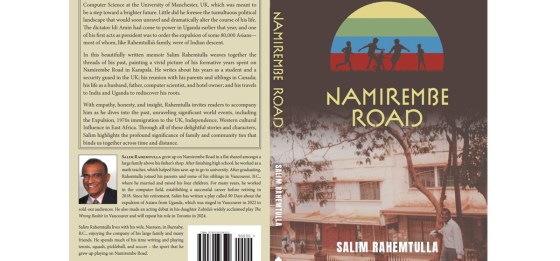
Front cover of Salim Rahemtulla’s “Namirembe Road” published by Friesen Press, June 13, 2024, hardback, paperback and eBook, 204 pp.
_____________________________
Simerg: How can I purchase the book, and what are its available formats?
Rahemtulla: The book is available in ebook, paperback, and hardback format on my publisher’s website, FriesenPress and can also in these formats from Chapter-Indigo, Amazon, and Barnes and Nobles.
Simerg: Did you hire an editor, an illustrator or did you do all the work by yourself?
Rahemtulla: When I first started, I spent a few weeks with an editor but once I settled on which publisher to go with, they provided editorial feedback and cover designers.
Simerg: How did you find a publisher for the book?
Rahemtulla: Through online research, focusing on the types of books that had already been handled by the publisher.
Simerg:Which was your first book, and how many have you written?
Rahemtulla: My first script was 90 Days, a theatre production produced by Western Gold Theatre in Vancouver in September 2022. Namirembe Road is my first book.
Simerg: How long did it take you to write the book — from start to finish?
Rahemtulla: It took me approximately two years to complete.
Simerg: Tell us something more about your book (and its primary character).
Rahemtulla: The book is my memoir/autobiography from early childhood to present day. When my children were growing up, I used to tell them stories about my life in Kampala and how I went to University and then the expulsion which brought us to Canada. They remember some of the stories and often talk about it, and also tease me for all the details I remember. So, I decided to entrench it by writing my memoir for the family, for the grandchildren to come and for friends that were with me in some of my life experiences.
Date posted: August 3, 2024.
_______________
About the Author
Salim Rahemtulla
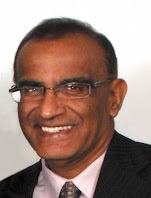
Salim Rahemtulla was raised in Kampala as one of nine children in a deeply united family of modest means. In 1971, he received a partial bursary to study Computer Science at the University of Manchester, UK, which was meant to be a step toward a brighter future. Little did he foresee the tumultuous political landscape that would soon unravel and dramatically alter the course of his life. The dictator Idi Amin had come to power in Uganda earlier that year, and one of his first acts as president was to order the expulsion of some 80,000 Asians — most of whom, like Rahemtulla’s family, were of Indian descent. Salim completed his education in the UK and then reunited with his parents and siblings in Canada, a country that had opened its arms to thousands of fleeing Asian Ugandans as refugees. Salim — a husband, father, computer scientist, and hotel owner — has travelled to India and Uganda to rediscover his roots. His theatre production “90 Days,” telling the story of an Ismaili Muslim family’s forced departure from Uganda in 1972, premiered at the Pal Studio Theatre in Vancouver in September 2022. He also made an acting debut in his daughter Zahida’s widely acclaimed play The Wrong Bashir in Vancouver and Toronto in 2024.
Salim Rahemtulla lives with his wife, Nasreen, in Burnaby, B.C., enjoying the company of his large family and many friends. He spends much of his time writing and playing tennis, squash, pickleball, and soccer — the sport that he grew up playing on Namirembe Road.
Calling all Ismaili Authors
We encourage Ismaili writers to introduce their books in a similar format as has been done in the post above. Please also see the series launch article and submit your responses to Malik at mmerchant@simerg.com. All submissions will be acknowledged. If a writer has published multiple books, each book will be highlighted in a separate article, and not combined with other books into one post. All writers should include a brief profile with a portrait photo.
_______________
Links to the Ismaili Authors’ Series (in chronological sequence, oldest article first)
Before departing this website please take a moment to review Simerg’s Table of Contents for links to hundreds of thought provoking pieces on a vast array of subjects including faith and culture, history and philosophy, and arts and letters to name a few. Also visit Simerg’s sister websites Barakah, dedicated to His Highness the Aga Khan, and Simergphotos.


















 Simerg - Insights from Around the World