Simerg is an independent initiative dedicated to Ismaili Muslims, the Aga Khan — their Hereditary Imam — and the Ismaili Imamat, and Islam in general through literary readings, photo essays and artistic expressions
Author Archives: Malik Merchant, Editor
Founding publisher and editor of www.barakah.com, www.simerg.com and www.simergphotos.com.
Inna lillahi wa inna ilayhi raji’un “Surely we belong to God and to Him we return” — Holy Qur’an, 2:156
“Life is a great and noble calling, not a mean and grovelling thing to be shuffled through as best as we can but a lofty and exalted destiny” — Mawlana Sultan Mahomed Shah, His Highness the Aga Khan III (1877-1957), 48th Imam of the Shia Imami Ismaili Muslims.
Update, February 17, 2024: Funeral ceremony for Zawahir Moir will take place at North London Jamatkhana, Saturday February 17, 2024; Fateha will be recited at 10:45 AM. Samar and Zyarat ceremonies at North London Jamatkhana.
It is with heartfelt sadness to inform readers that Huzur Mukhiani Zawahir Moir, one of the most distinguished and pioneering scholars of Ismaili Ginans (Hymns), passed away in London, United Kingdom, on February 9, 2024, at the age of 90.
Born in Karachi in 1933, Zawahir Noorally (as she was known before marriage) grew up with a passion for Ginans from an early age. After completing her early education, Zawahir completed her first Master’s degree in Islamic history from Karachi University in 1958. Subsequently, she was awarded a scholarship by Mawlana Shah Karim al-Hussaini Hazar Imam, His Highness the Aga Khan, to continue her studies in London, and thus became the first Ismaili from Pakistan to undertake Islamic studies abroad. For four years (1960-64), Zawahir pursued a second M.A. at the School of Oriental and African Studies (SOAS), University of London, completing her research on the modern period of Ismaili history, focusing on the Imamat of Aga Khan I, Mawlana Shah Hasan Ali Shah.
She returned to Pakistan and joined the Ismailia Association (now the Ismaili Tariqah and Religious Education Board), where she was a Research Associate for nearly 15 years. Ismaili readers in the early 1970’s would especially remember Zawahir for contributing to the Ismailia Association for Pakistan’s 1973 publication Great Ismaili Heroes, a 160 page booklet, highlighting the lives of 33 Ismaili historical figures spanning 1000 years.
In 1979, Zawahir moved permanently to London, where a year later she married Martin Moir, then archivist and deputy director of the India Office Library and Records. In 1982, she joined the academic faculty of The Institute of Ismaili Studies, where she worked for three years.
Article continues below
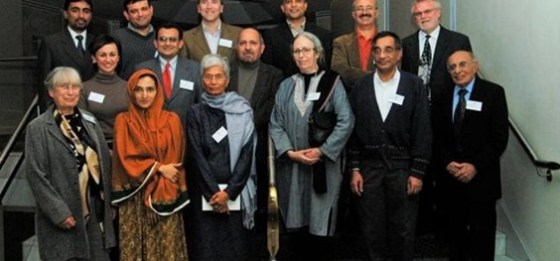
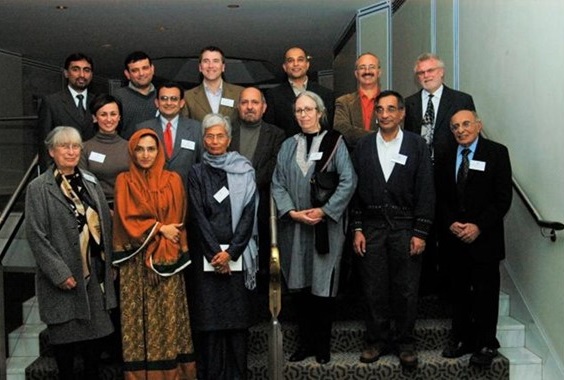
Participants at the Devotional Expressions of South Asian Muslims conference organized by The Institute of Ismaili Studies and held at The Ismaili Centre, London, in November 2006. Zawahir Moir is in the front row, third from the left. Photograph: The Institute of Ismaili Studies
Within the field of Ismaili studies, Zawahir’s interests were much kindled by one of the foremost modern authorities on Ismailism, Wladimir Ivanow (1886-1970), with whom she had been in constant correspondence since 1958, and whom she met during a visit to Iran in 1966. During her sojourn at the Ismailia Association, in 1975, Zawahir participated in an international conference of Ismaili leaders and scholars — a conference that led to the establishment of The Institute of Ismaili Studies in London. Also, while at the Ismailia Association, Zawahir prepared a catalogue of the collection of Khojki manuscripts that had been collected from the Ismaili communities in Punjab and Sind, and which represented the largest known corpus of Satpanth Ismaili literature. She continued working on this collection when it was transferred to The Institute of Ismaili Studies, London, painstakingly cataloguing the manuscripts over a period of three years. Although this catalogue remains unpublished, it has been an invaluable source for scholars.
Article continues below
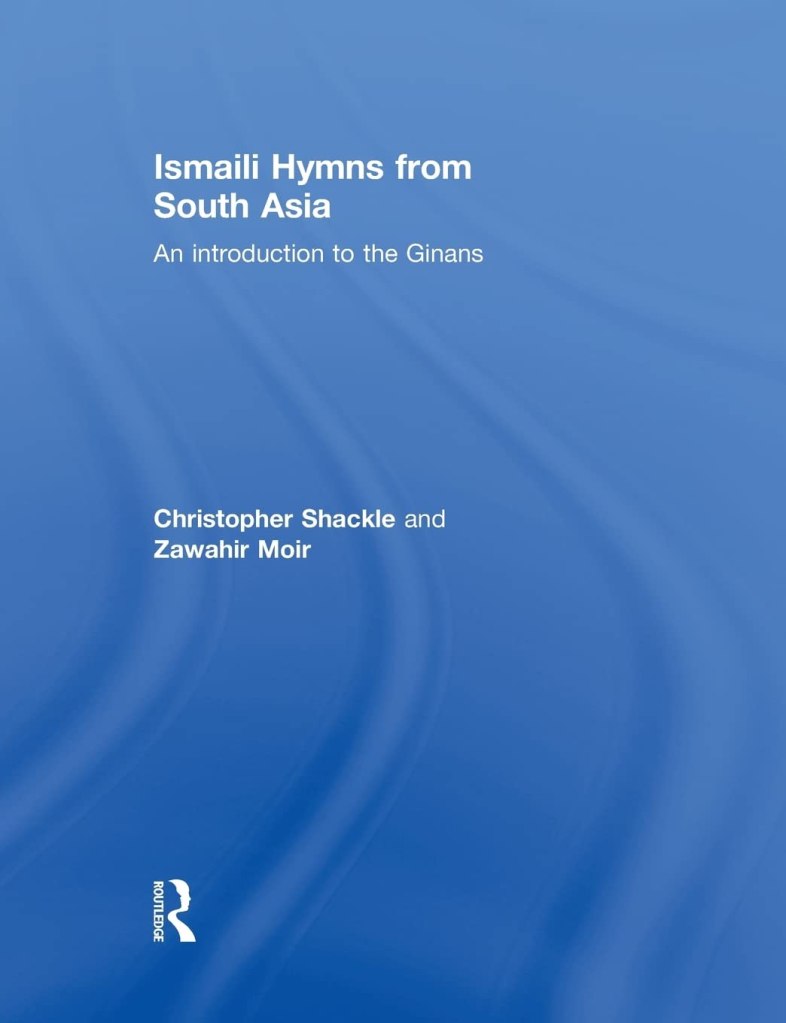
Ismaili Hymns from South Asia by Christopher Shackle and Zawahir Moir, Routledge, See Amazon for formats
For over thirty years, since the mid-1980s, Zawahir collaborated closely with scholars working in the field of South Asian literatures and cultures. In 1992, she co-authored with Christopher Shackle Ismaili hymns from South Asia: An introduction to the Ginans, and continued to present papers on various aspects of Satpanth Ismailism and Ginanic literature, as well as encouraging and inspiring students to this field of Ismaili studies.
In the foreword to the collection of essays presented in her honour, Christopher Shackle writes: “The passing of years has encouraged an ever greater regard for her unique combination of personal and professional qualities. Beneath a delightful self-deprecation, she possesses the extraordinary devotion to her subject characteristic of the best private scholars, which is both the envy and the shame of those of us who cannot avoid the compromises of professional academic employment. To the extraordinarily wide and deep knowledge of the Ginans she first gained through family inheritance, she has added a remarkably sustained programme of subsequent study, especially of the historical aspects of the Ginans and of their complex manuscript record….She has continued with this personal programme to develop with a wonderfully youthful willingness to explore new avenues and lines of inquiry….Even though at times she had had to face serious discouragement and adversity,……her enthusiasm for the study of the Ginans has never been dimmed.”
Article continues below
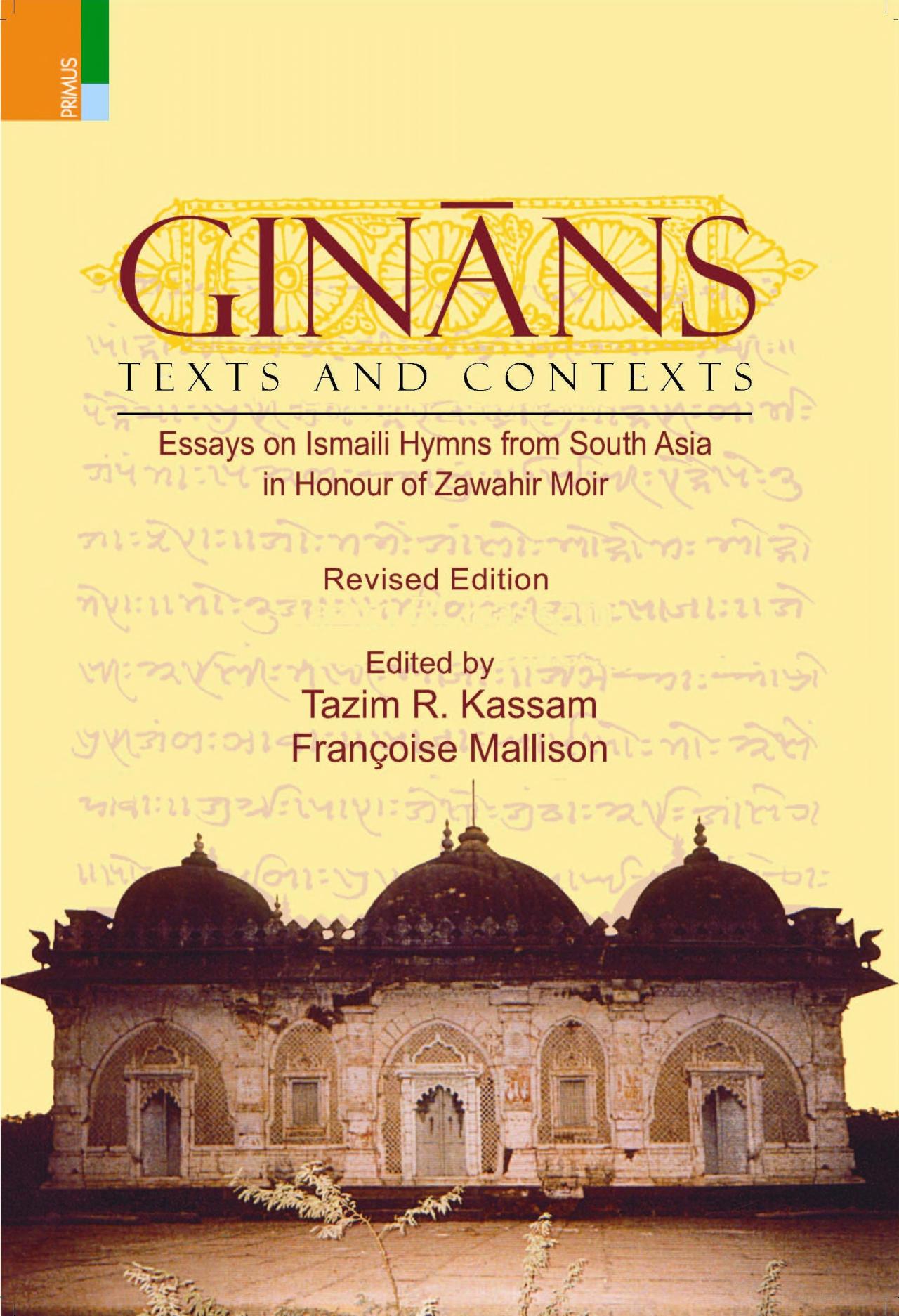
Ginans Texts and Contexts: Essays on Ismaili Hymns from South Asia in Honour of Zawahir Moir
Zawahir Moir’s passing has certainly dimmed the study of the Ginans. However, her encouragement, enthusiasm and commitment to the study of the Ginans, it is hoped, will be an inextinguishable candle guiding the way for researchers and students.
As Professor Ali Asani of Harvard University himself noted, “Many of the seeds of my scholarship on Ginan literature were planted by the pioneering work of Zawahir Moir and I shall always be grateful to her for her encouragement early in my career.”
Date posted: February 13, 2024. Last updated: February 17, 2024.
_____________________
We invite you to submit your condolences, memories and tributes to Zawahir Moir by completing the feedback form below or by clicking on LEAVE A COMMENT. Should you encounter technical issues or difficulties in submitting your comment, please submit it via email to mmerchant@simerg.com (subject Zawahir Moir).
IMPORTANT NOTE: Simerg invites Ismaili families to submit obituaries and tributes to deceased members of their families, whether they passed away recently or in the past. Please review PASSINGS on how to prepare and submit your tribute.
Vertigo attacks were the scarriest moments in my life. They started sometime in the mid 1990s and in the course of the next 15 years, I had about 6 to 8, the worst ones being after my return to Ottawa in early 2000, because I was all by myself. When you are alone, the feeling is that of helplessness, and it gives you the scarry thought that the world spinning around you may result in death or a serious injury. Even the slightest rolling movement triggers imbalance, and trying to rise from the bed or floor is even more challenging and frightening. The routine standard treatment of lying at the edge of the bed and performing specific manouevres worked for me but it took 2 or 3 days before the vertigo eventually faded and I became less panick-stricken. During some attacks, I simply lived through the vertigo until it went away on its own. And then, one day, on a very bad day of a positional vertigo attack, I came across a very short video (3:35 minutes) by University of Colarado’s Dr. Carol Foster. Her explanation on what causes vertigo, along with the recommended one to two minute exercise got rid of my problem on the same day. I did the exercise twice within a 15 minute timeframe. I have not had a vertigo attack since 2010. That’s 14 years! I thanked Dr. Foster and asked her if the exercise should be done daily and she answered, “no”; only when the vertigo was active.
Please watch her video below. Some individuals may not be able to perform this simple exercise because they have issues bending or resting their knees on the floor. I strongly suggest you give it your best try, and I think your problem may just VANISH, like magic, as it did for me. Have someone close to you if you feel afraid; call on a friend or your neighbour to encourage you if you don’t have a family member around. If my vertigo returns, I will perform the magical movements once again! NOTE: You do this exercise only when you experience the vertigo, and not when you are symptom free!
Dr. Foster was also featured on a CBS program aired in Colorado following the publication of her book Overcoming Positional Vertigo. However, I would first take the time to watch her YouTube presentation. Thank you Dr. Carol Foster for your incredible work! Please share the video with others experiencing vertigo.
The month of Rajab, 7th in the Islamic calendar, marks two important anniversaries — the birth of the first Shia Imam and Islam’s 4th Caliph, Hazrat Ali (may peace be upon him), on the 13th of Rajab (which was observed on January 24, 2024), and the Shab-i-Miʿrāj on the 26th of Rajab commemorating the blessed night when Prophet Muhammad (peace be upon him and his progeny) ascended to the heavens. The Mi’raj of the Prophet Muhammad will be observed by Ismaili Muslims in Canada and several other countries around the world on Wednesday, February 7, 2024.
Mi’raj is an Arabic word which literally means a ‘ladder’ and refers to an experience in the life of Prophet Muhammad which took place during the night. Thus, sometimes it is referred to as the ‘night journey’ of the Prophet. The first verse of Surah al-Isra (The Night Journey) in the Holy Qur’an says:
“Glory be to Him, who carried His servant by night from the Holy Mosque to the Further Mosque the precincts of which We have blessed, that We might show him some of Our signs. He is the All-hearing, the All-seeing.” — 17:1, translated by A.J. Arberry, see Corpus Qur’an for multiple translations.
Article continues below
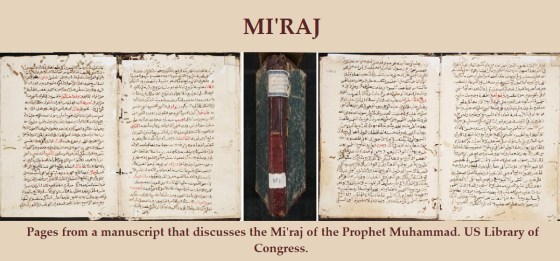
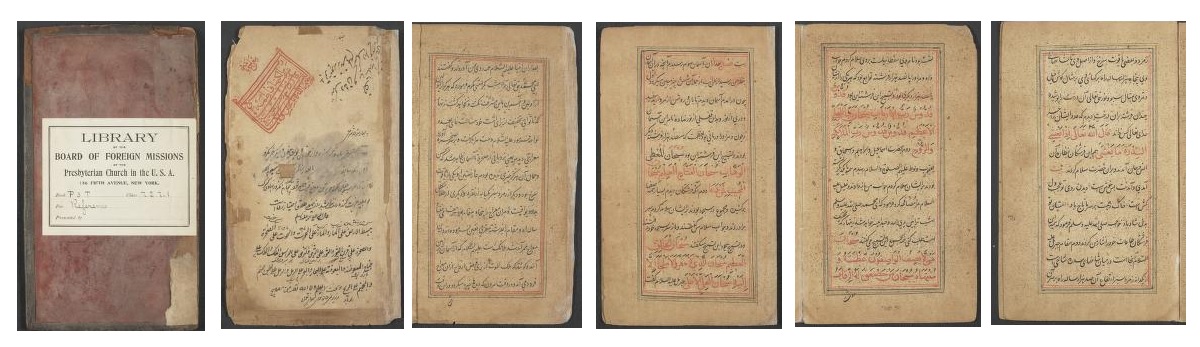
Six images from a total of 408 from an unidentified Persian treatise on the Miʻrāj and several other topics from the Hadith (traditions) of the Prophet Muhammad. Image: US Library of Congress. For more details please click https://www.loc.gov/item/2016397783/
~~~~~~
Fragment from page 7 of the Bustan of Sadi. The last two lines of poetry on this page extol the Prophet’s miraculous ascension to the heavens (mi’raj): One night he sat (on his flying steed Buraq) and passed through the heavens. / In majesty and grandeur, he exceeded the angels. / So impulsive, he urged (his steed) into the plain of closeness (to God) / While Gabriel remained behind him at the Lote Tree (of the Limit). Image: Wikipedia.
Among Sufis and other Islamic esoteric traditions, such as those practiced by Ismaili Muslims, Mi’raj is considered the highest point of spiritual perfection an individual can attain through religion and the practice of faith. Believers long to experience a Mi’raj, just as the Prophet experienced it. The Shia Ismailis seek out this spiritual elevation under the guidance of the Imam-of-the-Time, presently Mawlana Shah Karim Al-Hussaini Hazar Imam, His Highness the Aga Khan, who leads his followers to self-awareness, spiritual insight and elevation. This is clearly noted in the Preamble of the Ismaili Constitutionin paragraph (F), which reads:
“Historically and in accordance with Ismaili tradition, the Imam of the time is concerned with spiritual advancement as well as improvement of the quality of life of his murids. The Imam’s ta‘lim lights the murid’s path to spiritual enlightenment and vision. In temporal matters, the Imam guides the murids, and motivates them to develop their potential.”
His Highness the Aga Khan is the 49th Hereditary Imam, directly descended from Hazrat Ali, whose remarkable teachings have come down to us through the preservation of his sermons and teachings which are recorded in works such as Nahj al-Balaghah. Close to the heart of the Ismaili Muslims are poems of the Imam Ali known as Kalam-i Mawla that have been rendered into Hindi. The verses speak about the conduct, behaviour and action of man during his sojourn on earth (please read Farouk Topan’s excellent piece Kalam-i-Mawla)
We are pleased to provide a recitation of verses from the Kalam of Hazrat Ali that focus on ethics, spirituality and the Mi’raj of the Prophet Muhammad. The verses are recited by Alnoor Saleh and have been downloaded from the MUST VISIT website Ginans Central, which is maintained by Karim Tharani of the University of Saskatchewan.
The website Worldmusiccentral reports that the Aga Khan Master Musicians (AKMM) formed in 2013 by the Aga Khan Music Programme is dominating the world music charts in Europe through their debut album Nowruz. The website goes on to list the top 20 selections for the month of February.
The producer of the album, Smithsonian Folk Ways Recording, says that “In Nowruz, the Aga Khan Master Musicians draw on music from Central Asia, China, the Middle East, and North Africa to create a strikingly original body of work where living musical traditions meet and meld. Acclaimed virtuosos on their respective instruments, the six members of AKMM deftly blend pipa, qanun, dutar, viola d’amore, saxophone, and a panoply of percussion into a soulful new musical language that comes alive in these eloquent performances.”
Story continues below
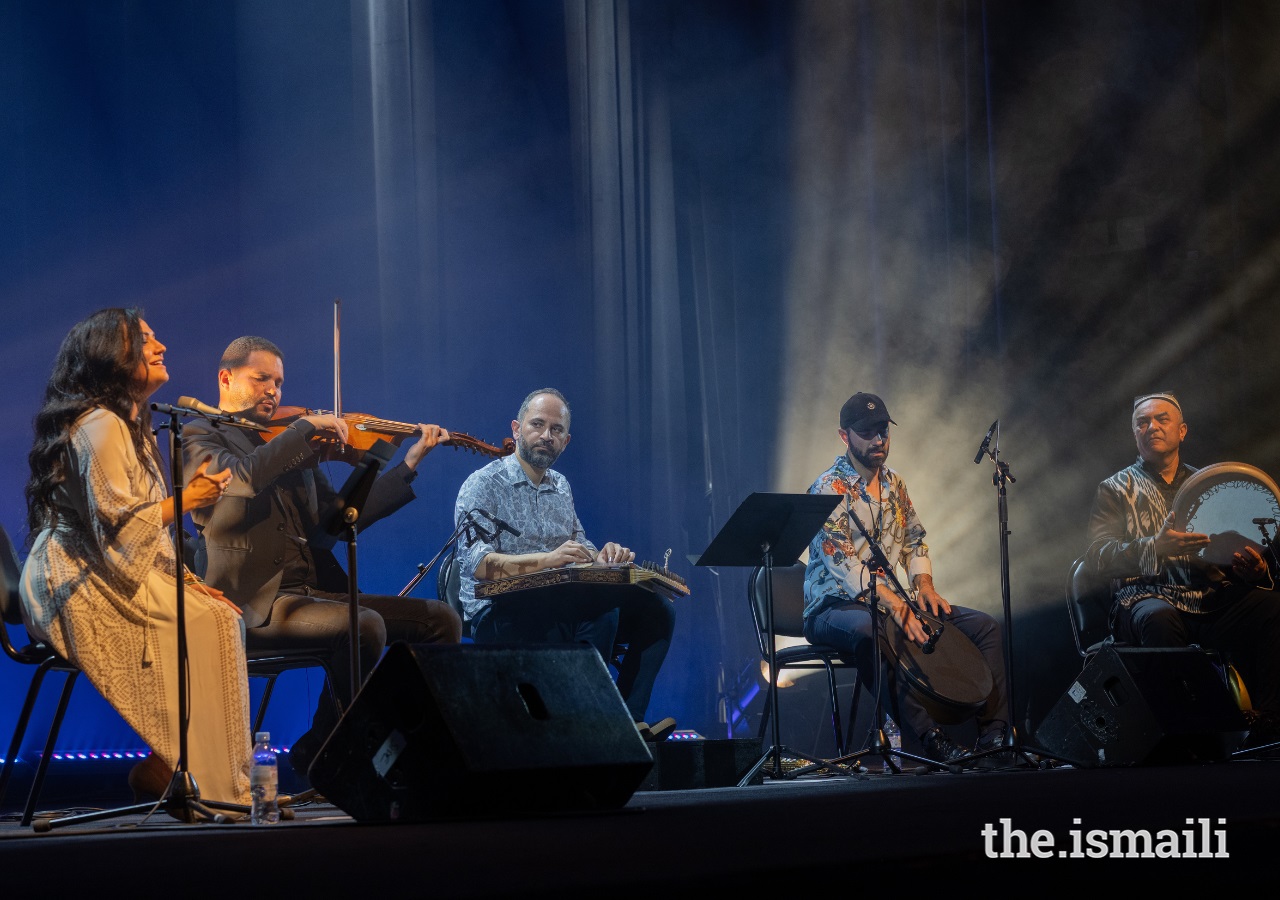
Aga Khan Master Musicians performing a mesmerizing selection of compositions at the L’Institut du Monde Arabe on October 18, 2023, in the presence of Prince Amyn Mohamed Aga Khan, younger brother of Mawlana Hazar Imam, His Highness the Aga Khan. Photograph: AKDN/Thomas Wibaux.
Prince Amyn Mohamed Aga Khan, younger brother of Mawlana Hazar Imam, His Highness the Aga Khan, delivers remarks at a post-concert reception at L’Institut du Monde Arabe on October 18, 2023.Photograph: AKDN/Thomas Wibaux.
PURCHASE (DOWNLOAD) THE NOWRUZ ALBUM PIECES AT US$0.99 EACH
Aside from the album’s namesake piece, Nowruz, the album consists of 11 other pieces such as Tashkent, Madad, Autum Flowers and Leaves, Ili and Jul Dance. Readers may listen to sample recordings on the Smithsonian Folk Ways website, and download each complete piece at US$0.99.
The University of Alberta’s 80 acre Botanic Garden in Parkland County near Edmonton, consists of cultural gardens, nature spaces, and other special collections. Having visited the Botanic Garden during spring, summer, and autumn, Malik Merchant decided to embrace the Botanic Garden’s call to visit the garden in winter. He spent hours walking around the Aga Khan and Japanese Gardens as well as the beautiful greenhouse rooms on Sunday, December 28, 2024. Please click HERE or on the photo below for Malik’s report and photographs.
The Talar buiding, Aga Khan Garden, January 28, 2024. Please click on image to view Malik Merchant’s beautiful photographs.
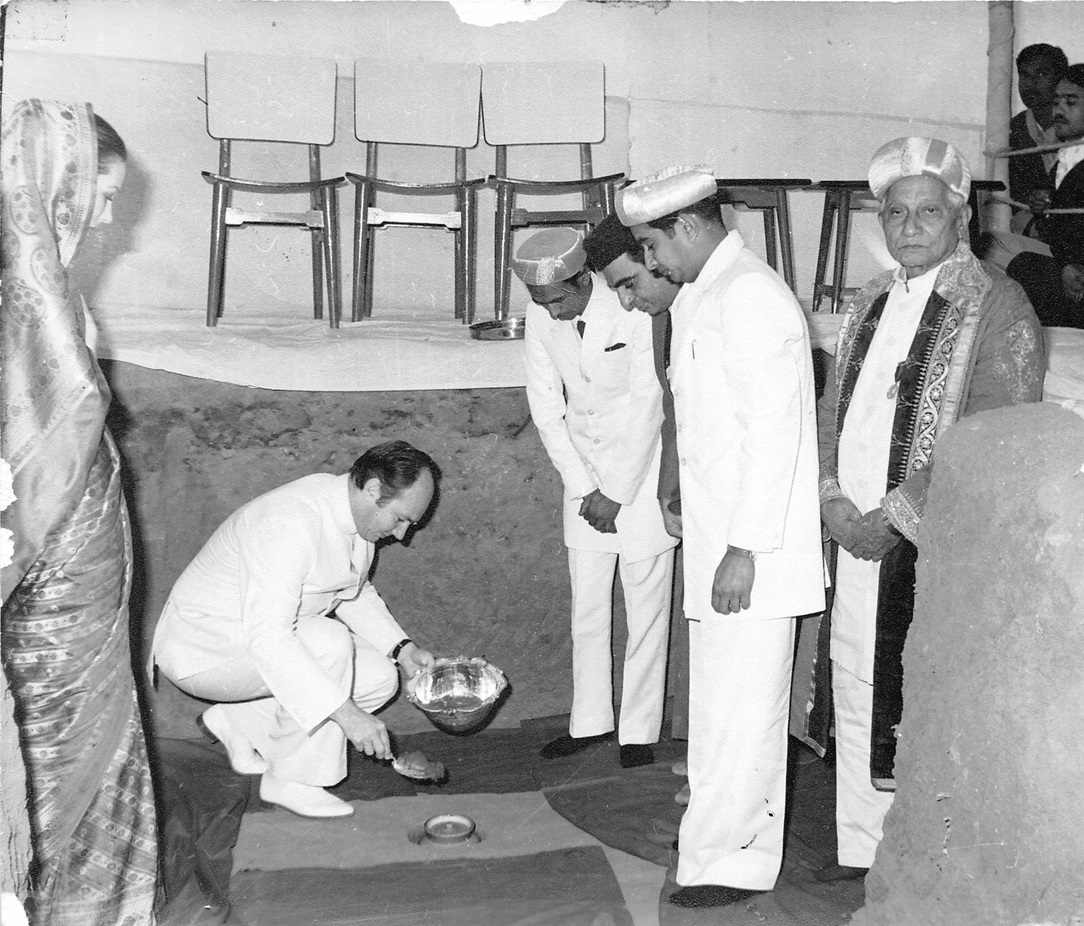
Nazar Kasamali Momin of Houston, Texas, went through his family archives, and came across a very rare collection of photos of His Highness the Aga Khan’s visit to the small village of Methan, in Sidhpur, India. It appears that the 1978 visit did not receive much media coverage, and even the Ismaili world is unaware about the historical visit. We are pleased to present a selection of photographs from Momin’s collection, along with his report of the visit. His piece appears on our sister website, Barakah, which is dedicated to the Aga Khan, the 49th Hereditary Imam of the Ismaili Muslims. Please click The Aga Khan in Methan.
The Aga Khan at the foundation for a new Jamatkhana for the Ismaili Muslim community in Methan, India. Please click on photograph for full story and more photos.
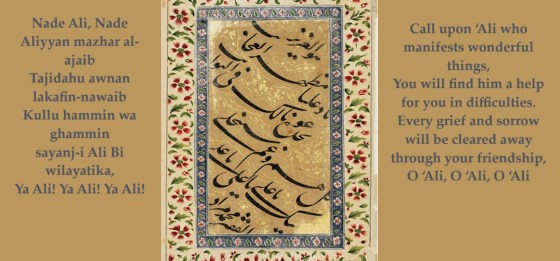
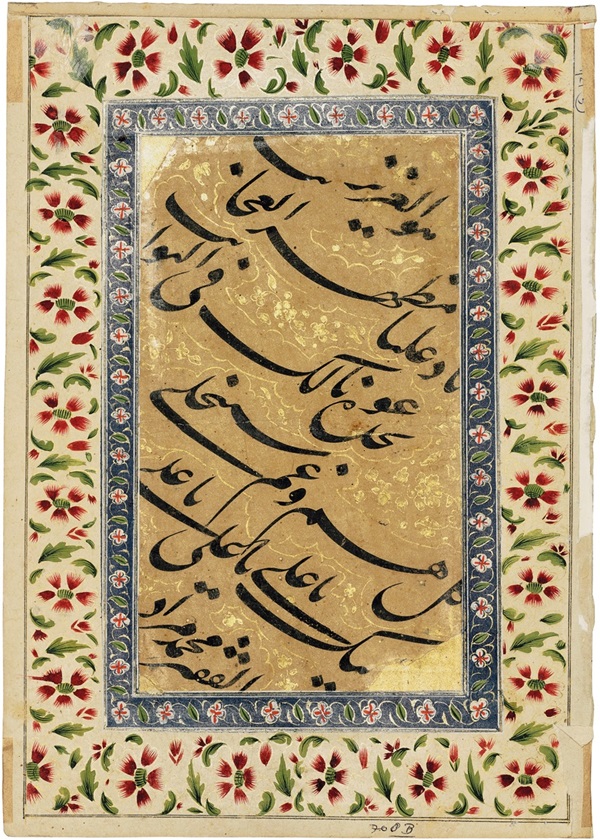
As Shia Ismaili Muslims in Canada and around the world commemorate the birth anniversary of their first Imam, Hazrat Ali, our sister website, Barakah, presents a a special post about a Mughal panel that was presented to His Highness the Aga Khan on the auspicious occasion of his 87th birthday, December 13, 2023. The panel bears an invocation to Imam Ali, from whom the Aga Khan is directly descended. Please click NAD-E ‘ALI to read more about the significance of this “wonderful” and “special” artistic work from the 16/17th century.
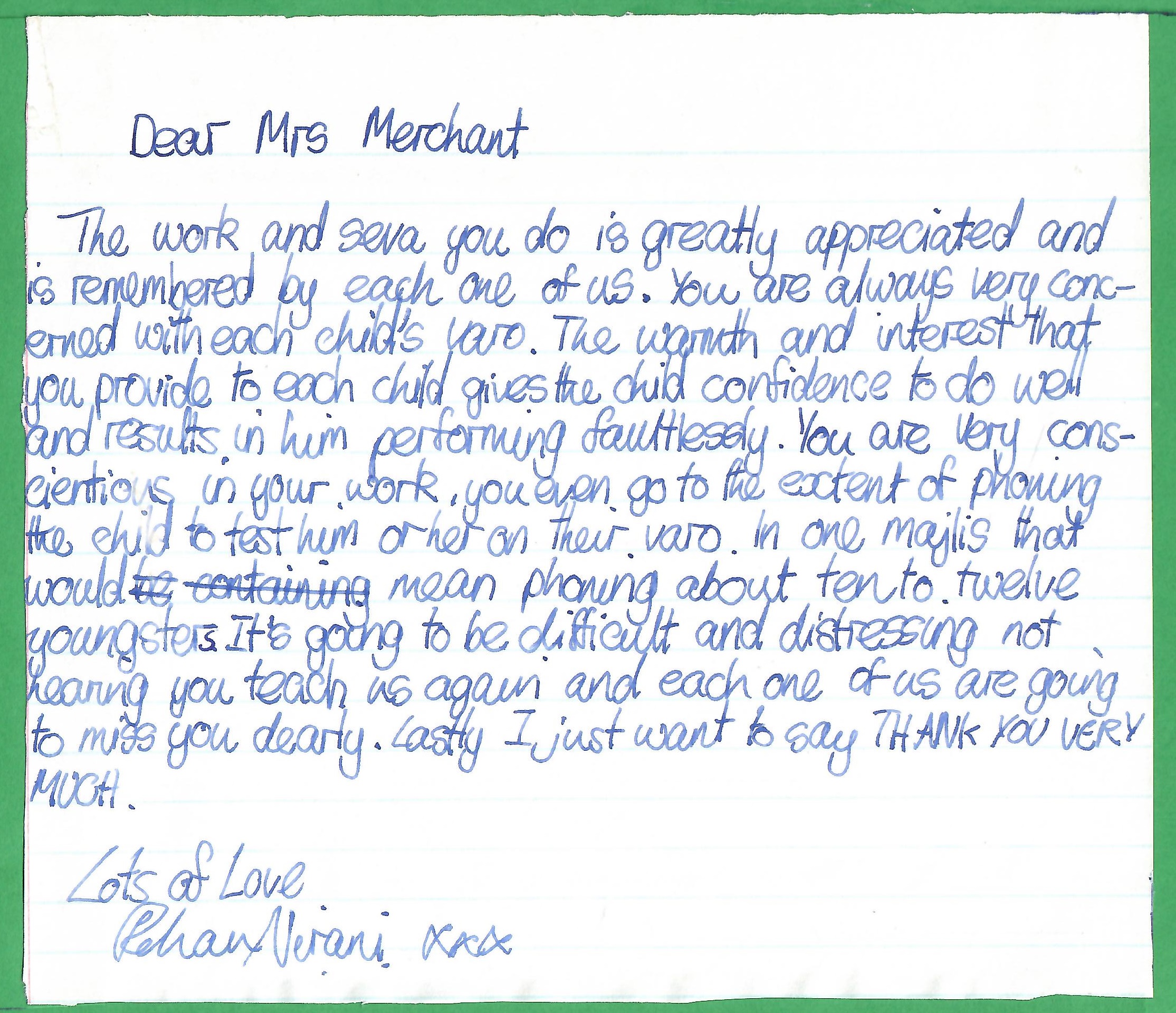
Sunday, January 21, 2024, marks the 3rd anniversary of the death of my beloved mum, Alwaeza Maleksultan Merchant, who passed away at the age of 89, shortly after contracting COVID-19. The brief tribute that was penned in her memory after her death, elicited hundreds of responses from around the world, honouring her life of service to the Jamat, its institutions and the Imam-of-the-Time. She was extremely popular among her students in Lourenço Marques (now Maputo), Mozambique, Dar es Salaam, Tanzania, and London, England.
Mrs. Merchant (June 9, 1931 – January 21, 2021), pictured a few month before she passed away at the age of 89. Photograph: Shellina Karmali.
My mother was also a wonderful speaker, and the waezs (sermons) that she delivered were very well received by Ismaili congregations around the world. Hundreds of students she taught — many of whom went on to become, and still are, leaders in the Ismaili community — have always expressed their immense respect and gratitude for her shining example of hard work and inspiring teaching.
Article continues below
Mrs. Merchant in the presence of Mawlana Hazar Imam, His Highness the Aga Khan, during her visit to Aiglemont, France, in the 1980s. In picture are Diwan Sir Eboo Pirbhai, an iconic leader of the Ismaili community in the 20th century, and missionaries Rahim Bana and Nizar Chunara. Photograph: Jehangir Merchant collection.
Late Gulzar Muller (centre) introduces Mrs. Merchant to Begum Salimah Aga Khan at a function held in London during Mawlana Hazar Imam His Highness the Aga Khan’s week long visit to the Ismaili Muslim community of the United Kingdom in September 1979. Photograph: Jehangir Merchant collection.
On January 20, when I went to convey my condolences to Shirin Harji on the sudden demise of her son, Rahim, who passed away a day earlier (January 19) at the age of 41, she and her sister-in-law, Shamim, told me about the impact of my mum as their teacher in Dar es Salaam in the 1960s.
Rahim Salim Harji (d. January 19, 2024, aged 41)
They said that whenever the Ginan (Hymn) Satgur Avea Kain Apane Duwar is recited in the Jamatkhana they always think of “Mrs. Merchant” — as she was fondly called — because she entrenched the Ginan firmly in their hearts. Shirin, I may note, recites beautiful Ginans. Of course, I am in deep shock over Rahim’s death, whose father Salim — my beloved friend of 60 years — passed away six months ago on July 13, 2023. Please read my tribute to Salim. Thus, I was deeply touched when Shirin and Shamim spoke about my late mum.
On this day as her entire family of children, grandchildren, daughters-in-law, two surving sisters, as well as her nieces and nephews and indeed friends remember her, Simerg is pleased to refer readers to a beautiful article Varas Ismail Gangji: The Turning Point that she penned for the special series I Wish I’d Been There.
Upon my mum’s retirement from professional duties, her students in London presented her with a rich 40 page tribute of photographs and textual material that reflected their appreciation and affection for her. I present a couple of images from the volume as well as a photograph of my parents with my daughter Nurin shortlty after her birth.
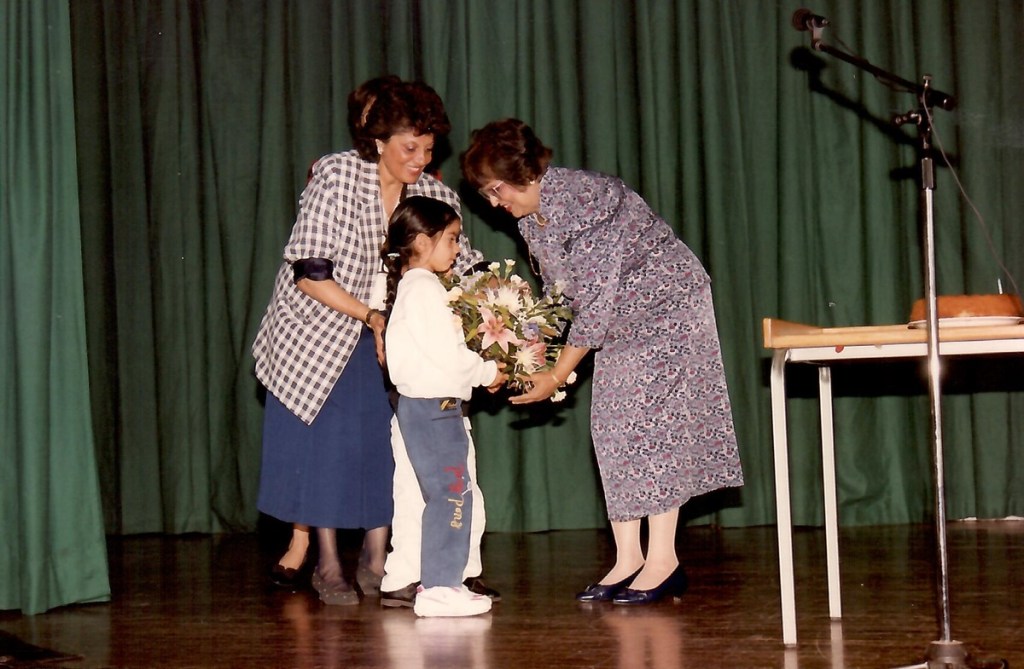
Mrs Merchant is presented with a bouquet of flowers on behalf ot Baitul Ilm students as she and her husband, Jehangir, retire from professional duties with the Ismaili Tariqah and Religious Education Board for the UK (ITREB); 1990s. Photograph: Jehangir Merchant collection.
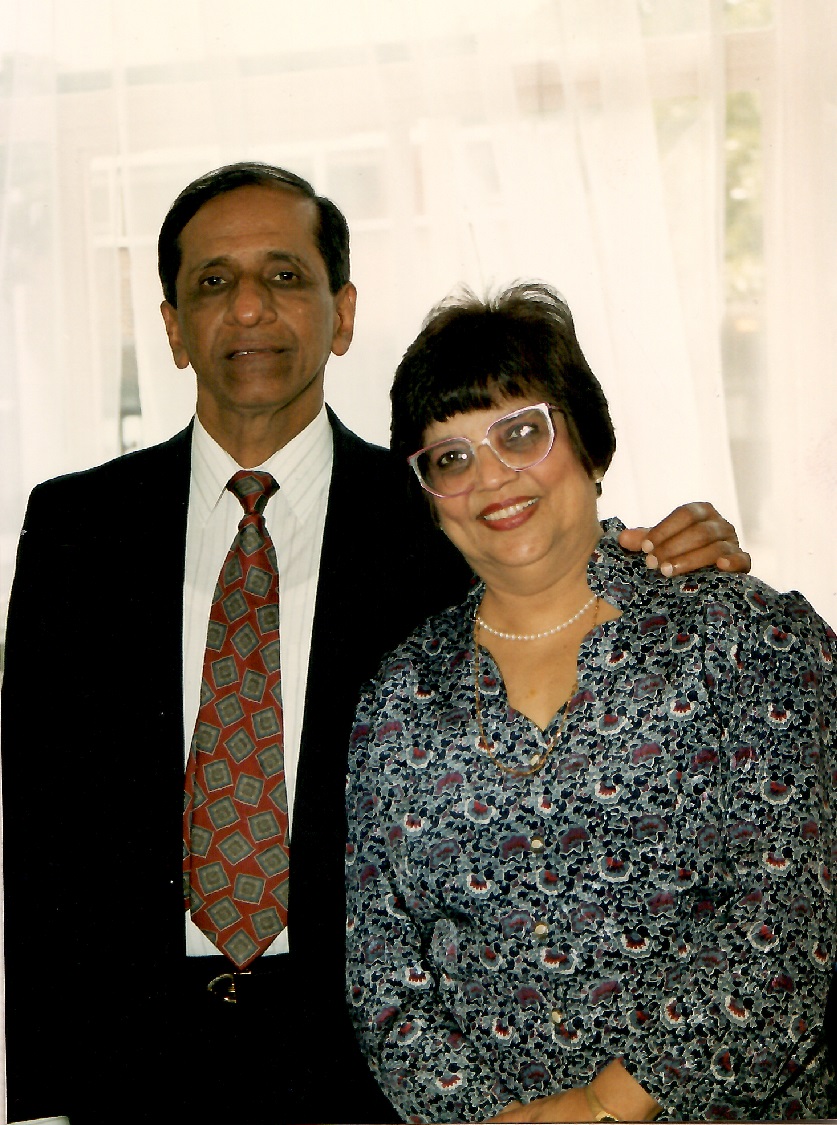
Mr. and Mrs. Merchant on the first page of the tribute album prepared by the BUI students of London, England, on their retirement. Photo: Jehangir Merchant collection,
One of many tributes penned by Ismaili Baitul Ilm (BUI) students as Mrs. Merchant retired from professional teaching in the early 1990’s. Her professional service with Ismaili instituions began, with her husband Jehangir, in Lourenço Marques (now Maputo), Mozambique in 1954. Past her retirement, she continued to render honorary services until she passed away in 2021. Photograph: Jehangir Merchant collection/Tribute volume presented to Mrs. Merchant by her London BUI students,1990s.
Mr. and Mrs. Merchant with their newly born granddaughter Nurin, daughter of Malik and Rozina Merchant, July 1992. Nurin is now a veteriniarian. She has been practicing in the field for the past 5 years since her graduation from the Ontario Veterinary College, University of Guelph. Photograph: Malik Merchant collection.
On this day of remembrance of my mum, as well as a day on which I have been deeply affected by the untimely death of Rahim Harji, I pray for the souls of my parents, Rahim and Salim Harji, and all the deceased members of the Ismaili community. May their souls rest in eternal peace. Ameen.
During times of bereavement, Muslims seek and find inspiration and strength from the following Qur’anic verse:
Inna lillahi wa inna ilayhi raji’un “Surely we belong to God and to Him we return” — Holy Qur’an, 2:156.
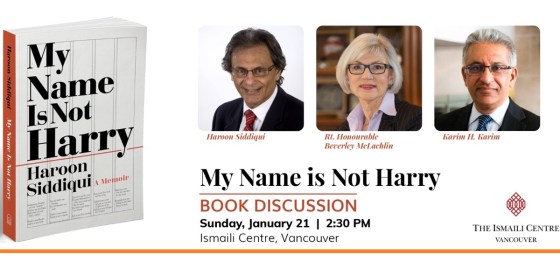
EVENT: In person discussion of book, “My Name Is Not Harry: A Memoir” by Haroon Siddiqui PANELISTS: Author Haroon Siddiqui, Honourable Beverley McLachlin, Professor Karim H. Karim, and Zahra Premji (emcee) WHERE: Ismaili Centre Vancouver WHEN: Sunday, January 21, 2024, 2:30 PM TO ATTEND: Please click Register
After a journalistic career spanning almost half-a-century, including the final 37 years at Toronto Star, Haroon Siddiqui retired from the paper with a parting column published on April 1, 2015 reflecting on his life as a journalist at the Star and how Canada has changed since he arrived in the country in 1967. He recently published his memoir, My Name Is Not Harry (September 2023), which will be the focus of discussion on Sunday, January 21, 2024, at the Ismaili Centre Vancouver. With the likes of Honourable Beverley McLachlin, former Chief Justice of the Supreme Court of Canada, and Professor Karim H. Karim from Carleton University, joining the award-winning journalist, the event promises to be enlightening and informative. CBC’s Vancouver news anchor Zahra Premji will act as the emcee.
While I was familiar with the Globe and Mail in London, England, because the Saturday edition was available at Dillon’s Bookstore in London, I did not know anything about the largest selling newspaper in Canada, the Toronto Star, until I visited Toronto in November 1978, for Mawlana Hazar Imam His Highness the Aga Khan’s first mulaqat (meeting) with his Ismaili Muslim community in Canada. His Highness is the 49th Hereditary Imam of the Ismaili Muslims and the direct descendant of Prophet Muhammad (may peace be upon him and his progeny). Ismailis began arriving in Canada in large numbers after their expulsion with other Asians from Uganda in 1972.
For the historic visit I was welcomed to stay at my cousin’s place in Don Mills, close to the present location of the Aga Khan Museum, the Ismaili Centre Toronto and the Aga Khan Park. My cousin subscribed to the Star and, if I my memory serves me right, the paper got delivered in the afternoon, unlike newspapers in London, UK, where delivery would be very early in the morning. The Star’s coverage of the Aga Khan’s visit was lively, and I took back with me to London several reports.
Siddiqui, who arrived in Canada in Montreal during Expo ’67, was recruited by the Star after a ten-year stint at Manitoba’s Brandon Sun. Writing a special piece for the Sun in the issue of October 3, 2023, Siddiqui says that the decade at the paper “was the best thing that could have happened to me personally and professionally. It made me a Canadian journalist and let me experience the vast expanse of the Prairies and their rolling hills, and beyond, to the Rockies, the West Coast, and parts of the North that I’d have known only fleetingly had I remained in Southern Ontario.”
The Brandon Sun had a circulation of 15,000 and was regarded as the Cadillac of small newspapers in Canada. Siddiqui notes that the paper “was well designed, too, winning awards, including the prestigious Inland Daily Press Association and Northwestern University Medill School of Journalism Award, the only Canadian newspaper so honoured.”
This ten-year experience led Siddiqui to a long and fruitful 37-year career at the Toronto Star where he says he was initially “dumped in the newsroom and forgotten.” In the ensuing years, Siddiqui went on to establish himself as a great and respected Canadian journalist winning several awards and distinctions including, most recently, the Canadian Journalism Foundation’s (CJF) Lifetime Achievement Award. The 2023 award recognized his decades-long groundbreaking career in Canadian journalism and his commitment to diversity, journalistic integrity, and social justice. The Rt. Hon. Adrienne Clarkson, the 26th Governor General of Canada, and a member of the CJF’s Lifetime Achievement Award Jury noted in her (jury) statement that “Haroon Siddiqui is a trailblazer of astonishing vision and compassionate decency. Nuanced and brilliant, he is unique in the pantheon of great Canadian journalists.” The CJF award cemony was held on June 13 at Toronto’s prestigious Royal York Hotel.
I first arrived in Canada in 1981 in Edmonton and then made Ottawa my home in the autumn of 1983. The Saturday Star became my newspaper of choice. Why? It had introduced a special standalone section on motoring called Wheels, and I had always loved cars, as did my late dad whose dream car was to own a Jaguar! My strong — and long — love affair with the Star introduced me to Haroon Siddiqui’s columns! Whenever he wrote about Islam and Muslim countries, he did so with purpose, and I admired him for that.
In 1992, on the Aga Khan’s third visit to his Canadian Ismailis, Siddiqui conducted an excellent interview with him for the Star in which he raised interesting questions including Salman Rushdie’s highly controversial and offensive novel, The Satanic Verses (September 1988). Rushdie had stirred an immense amount of anger and unrest among Muslims all around the world. Indeed, Iran’s Ayatollah Khomeini even issued a death sentence on Rushdie through a fatwa (edict), and the author went into hiding for ten years. When he showed up at a book event in London, one of my friends took Rushdie’s entire collection of books he owned for signing. Rushdie jokingly remarked whether there was a concealed weapon in the large pile he was carrying! Nanowisdoms, which is dedicated to the writings and speeches of Ismaili Imams, carries excerpts from Haroon’s interview with the Aga Khan (please read it HERE.)
Article continues below
Front cover, My Name Is Not Harry: A Memoir, by Haroon Siddiqui, published September 26, 2023, Dundrum Press, 472 pp, available at Indigo (paperback and Kobo editions), Amazon (paperback and Kindle editions) and other booksellers.
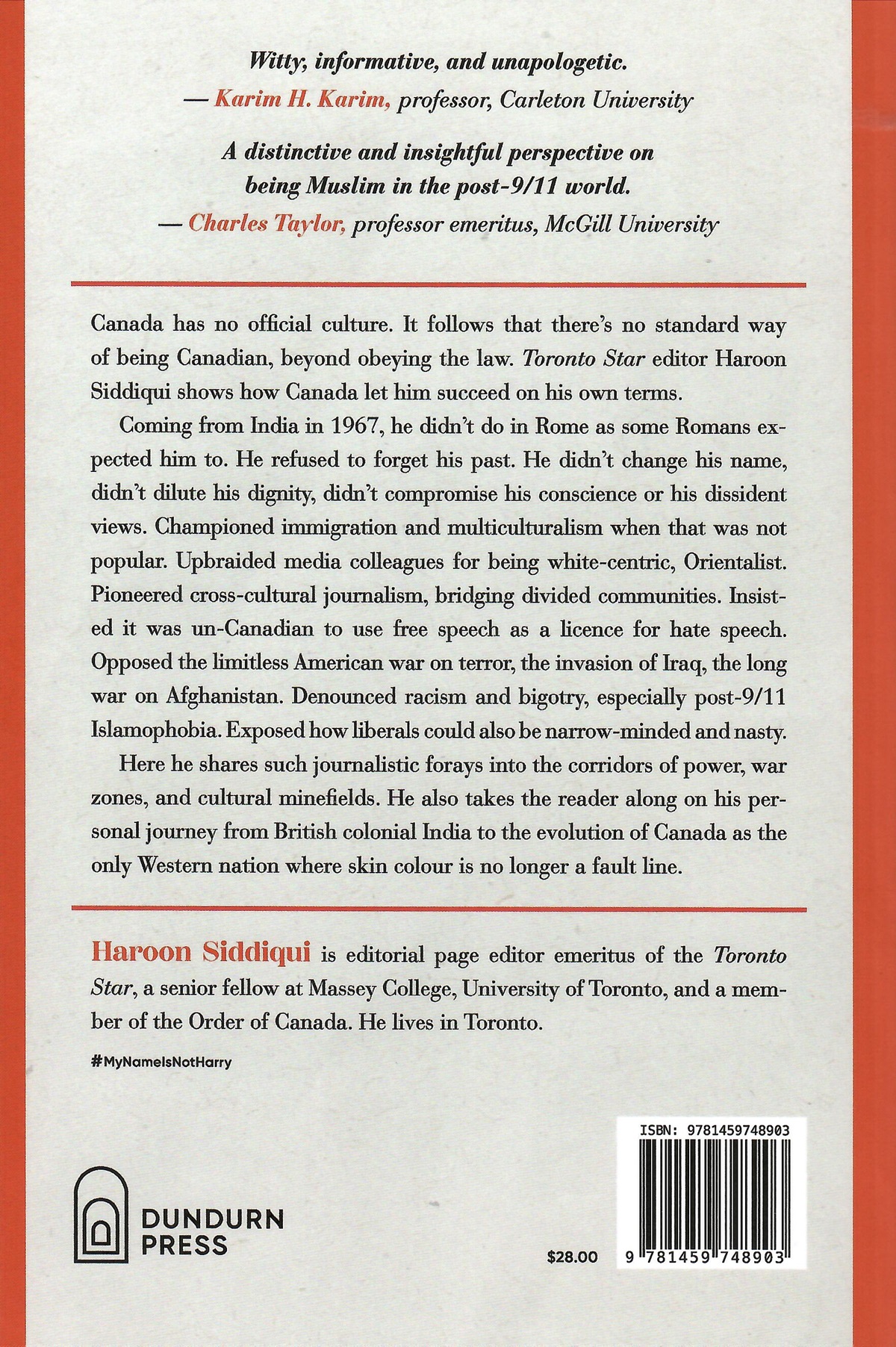
Back cover of My Name Is Not Harry. Please click on image for enlargement
I must admit I haven’t followed Siddiqui’s columns in recent years, to the extent that I did between 1985 and 2010, due to important family engagements. However, on a recent visit to a Calgary Indigo, I was pleased to see Siddiqui’s new book prominently displayed on a book stand near the main entrance. I was drawn to the book title’s sincere proclamation My Name Is Not Harry. At once, the title reminded me of a message that I had come across in my father’s archive notes in which the Aga Khan, during a meeting in 1961 in London, had asked his Ismaili Muslim followers to preserve and be proud of their Muslim heritage. He asked them to use Muslim names that had been given to them at birth, and not to adopt Western names. Of course, we have numerous examples today of Muslims abbreviating their names for the sake of simplicity or using Latinized names to conceal their Islamic identity!
Well, we have a proud and sincere Muslim by the name of Haroon — and not Harry — who is taking to the stage on Sunday, January 21, 2024 at the beautiful Ismaili Centre Vancouver. He will no doubt offer his words of wisdom to fellow Muslims and Canadians as well as everyone who loves newspapers and journalism.
Being in Calgary, I will miss the event but I hope Ismailis in and around Vancouver will support this important community initiative. To register for the event and to read profiles of the panel members, please click Book Discussion: My Name is Not Harry.
The discussion with Haroon Siddiqui will be of interest to everyone around the world, and it is hoped that a video of the complete program will be made available online soon after.
Inna lillahi wa inna ilayhi raji’un “Surely we belong to God and to Him we return” — Holy Qur’an, 2:156
“Life is a great and noble calling, not a mean and grovelling thing to be shuffled through as best as we can but a lofty and exalted destiny.” — Mawlana Sultan Mahomed Shah, His Highness the Aga Khan III (1877-1957), 48th Imam of the Shia Imami Ismaili Muslims.
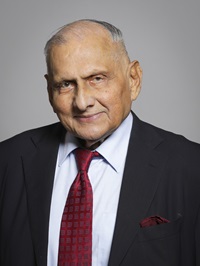
Amirali Alibhai Bhatia (b. March 18, 1932), a long-serving education administrator in the Imamat institutions of Mawlana Hazar Imam, His Highness the Aga Khan, in Tanzania and the UK, as well President of the Aga Khan Council for the UK from the late 1970s until the early 1980s, has died in London, England, at the age of 91.
Mr. Bhatia was bestowed with the title of Vazir by Mawlana Hazar Imam during his tenure as the President of the UK Aga Khan Council. Mr. Bhatia also served as member of the Board of Governors of the Institute of Ismaili Studies, which was created by Mawlana Hazar Imam on December 13, 1977.
Article continues below
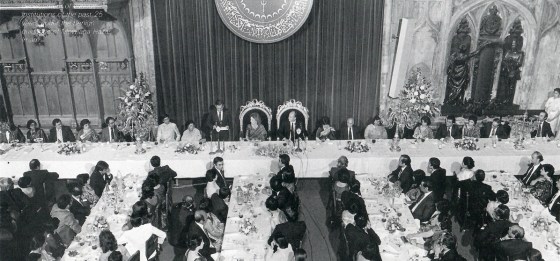
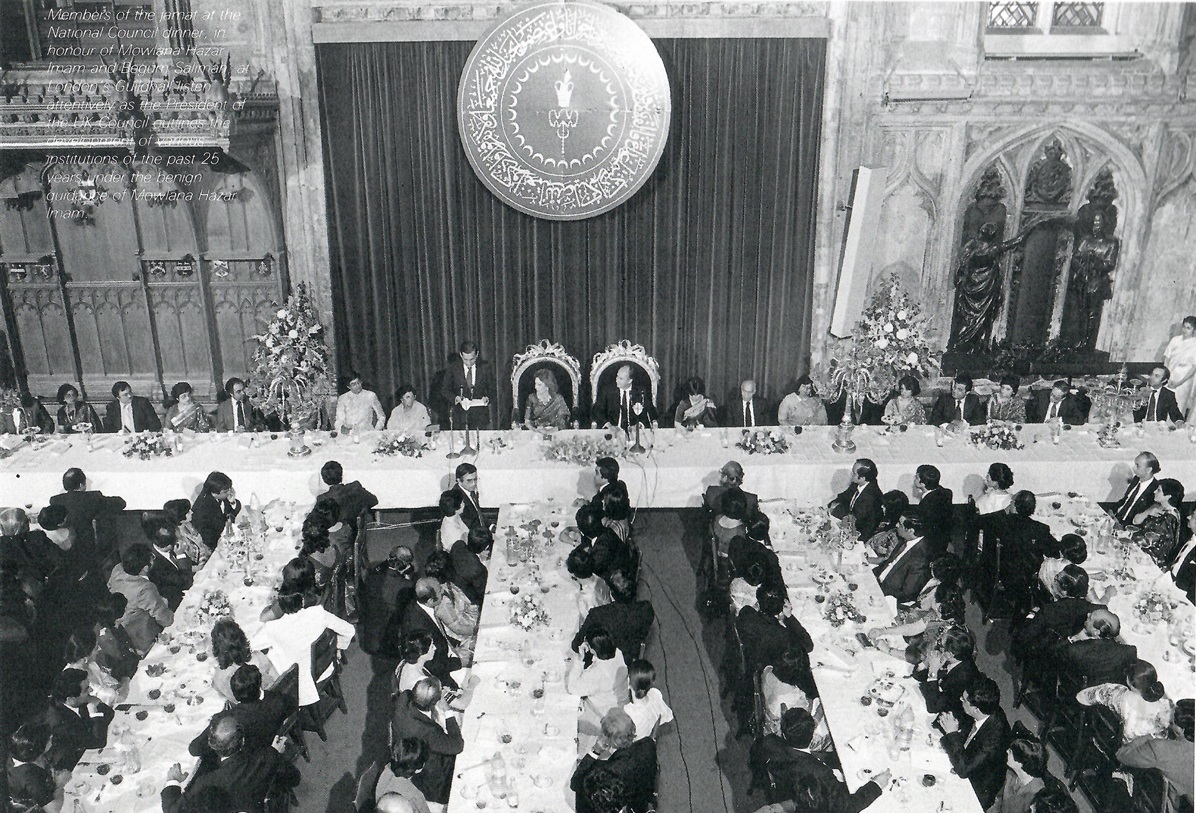
Mawlana Hazar Imam, His Highness the Aga Khan, and Begum Salimah look on as Vazir Amir Bhatia, President of His Highness the Aga Khan Shia Imami Ismaili Council for the UK, addresses members of the community at the Aga Khan Council dinner in honour of Mawlana Hazar Imam’s Silver Jubilee visit to the UK in July 1983. Photograph: Ismaili Forum, December 1983.
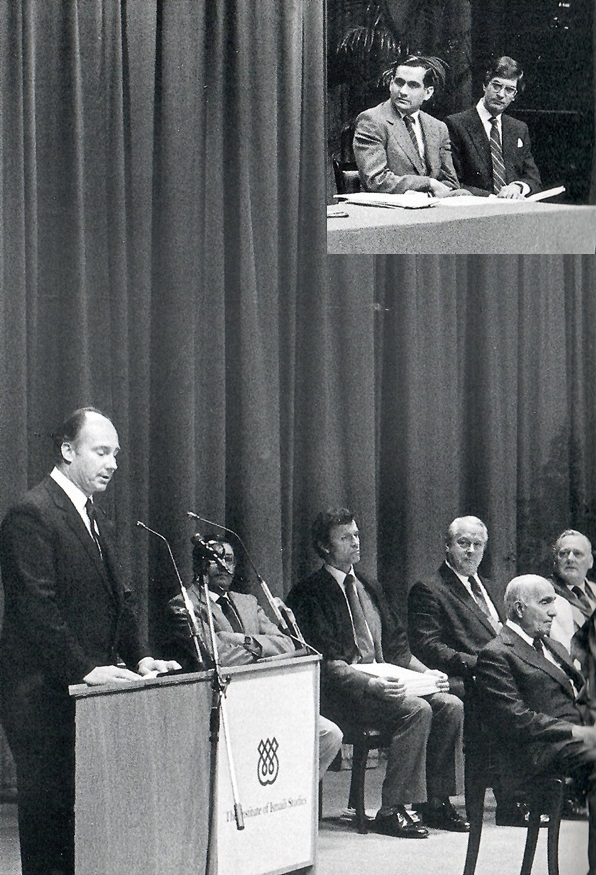
Mawlana Hazar Imam, His Highness the Aga Khan, addresses the new graduates at the University of London Institute of Education during his Silver Jubilee visit to the UK in July 1983. Seated in front row is Diwan Sir Eboo Pirbhai. Looking on, in the inset picture, are Amir Bhatia, President of the UK Aga Khan Council, and Anil Ishani, both of whom were members of the Board of Governors of the Institute of Ismaili Studies. Photograph: Ismaili Forum, December 1983.
Mr. Bhatia was awarded the Order of the British Empire (OBE) in 1997 for his numerous contributions in the UK, and was amongst the 15 peers appointed from 3000 nominations to the House of Lords in 2001 during Tony Blair’s term as the Prime Minister of the UK. He then took his seat in the House of Lords (The House of Lords is the upper chamber of the United Kingdom’s parliament. The members of the House of Lords are not elected by the public, but are appointed by the monarch, appointed by the Prime Minister, or are hereditary peers. To become a lord in the House of Lords, one can be appointed as a life peer by the monarch on the advice of the Prime Minister.)
Mr. Bhatia was thereafter referred to as Lord Bhatia and actively contributed in the House (see excerpts from 3 of his more than 150 oral statements, below). He ceased to be a member of the House of Lords in 2023 due to non-attendance. Several years earlier, in 2010, Lord Bhatia was mired in a controversy when he was found to have broken the House’s expense rules. He was suspended from the House of Lords for eight months. Aside from this and another similar controversy a few years later, and his indifference to an important sister Ismaili Institution in the 1980s, Vazir Bhatia was an outstanding administrator, and a very organizerd, hard-working and conscientious leader. In one of his speeches made at an event in London attended by the editor during the mid 1970s, Vazir Bhatia spoke about his role as Tanzania’s education administrator. He said that when he assumed the position, he studied all the files from the mid 1930s onwards to learn about the developments that had taken place in the education sector within the Ismaili community. The late Vazir was meticulous in all his undertakings.
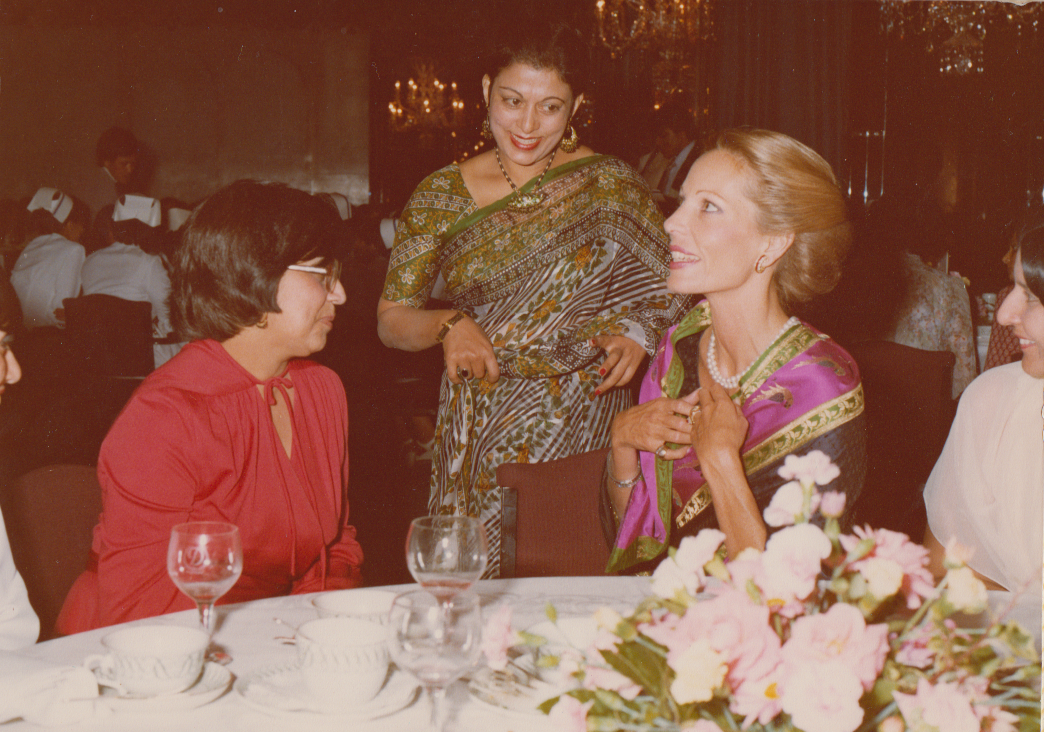
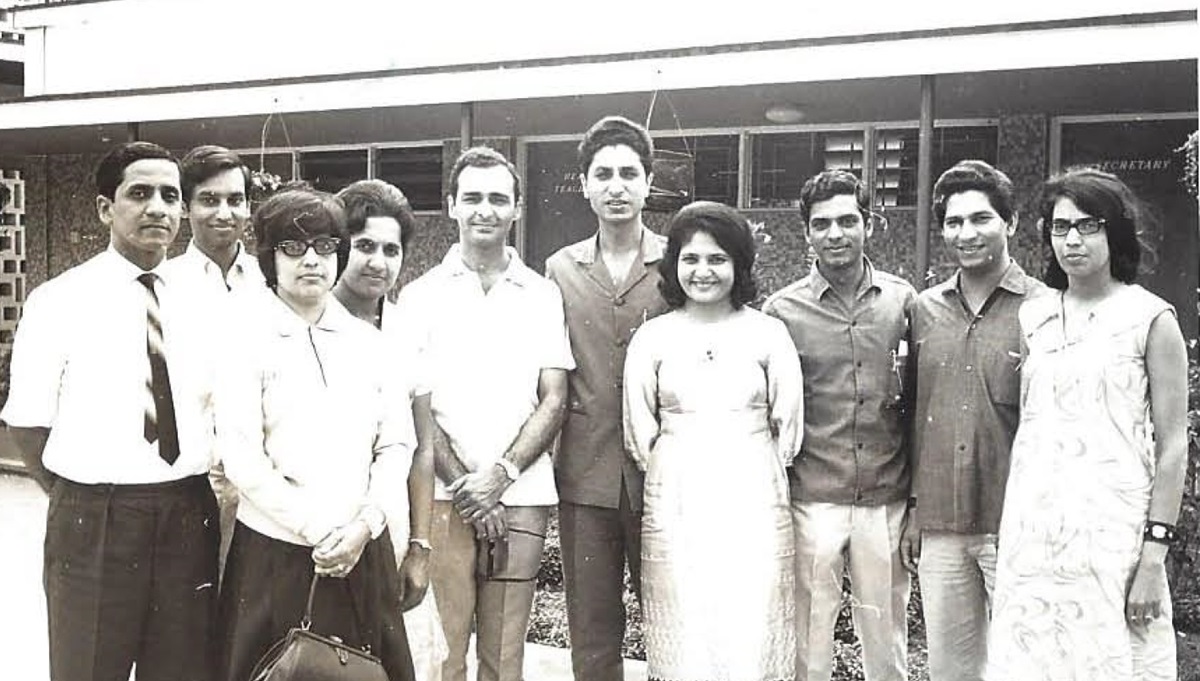
Mr. and Mrs. Merchant are pictured in front at left in this photograph submitted to Malik Merchant, editor of Simerg, by Lord Bhatia. Other recognizable faces in the photograph are Mr. Dina and Mr. and Mrs. Hasni Remtulla. Photograph: Lord Bhatia.
In recent years, Lord Bhatia was in touch with the editor of Simerg, commending him on his 3 websites, and also spoke to his mother, Mrs Merchant (d. 2021), to convey his condolences when her loving husband, Jehangir, died in 2018. To the editor’s surprise, Lord Bhatia shared a picture of Mr and Mrs Merchant when they were teachers at the Aga Khan Girls Secondary School in Dar es Salaam. Lord Bhatia wrote: “Dear Malic (sic): Here are some photos of your parents. I thought you would like them as you may not have them.” Indeed, I had never seen the photos before, and will treasure them for the rest of my life.
A very compact summary of Mr. Bhatia’s services is posted on the website of United Religions Initiative (URI). Readers are also invited to read an article published in 2004 in the UK Muslim magazine, Emel, entitled A Week in the Life of Lord Bhatia.
We convey our deepest condolences to the family of Vazir (Lord) Amirali Bhatia and pray that his soul may rest in eternal peace. Ameen.
We invite our readers to offer their condolences and tributes to Lord Bhatia by clicking on LEAVE A COMMENT
As part of this brief tribute, Simerg researched the UK Parliamentary Hansard and found transcripts of some 167 spoken statements made by Lord Bhatia between 2013 and 2121 on a wide range of subjects. We have excerpts from 3 statements that are important to our readers; they show Lord Bhatia’s insights into important issues of the day.
My Lords, I thank the noble Lord, Lord Elton, for initiating this timely debate on the persecution of people of faith in this century.
There are a number of national and international treaties on this subject; I will not repeat them because the noble Lord has already referred to them. Despite that, these treaties continue to be violated.
When I was introduced to the House of Lords, I took my oath with a Holy Koran and quietly started with the word “Bismillah”, meaning, “In the name of Allah, most beneficent and most merciful”. I have never differentiated between faiths. As a Muslim, my closest friends have been Hindus, Sikhs, Christians, Buddhists, Jews and those of no faith. The Holy Koran, in surah 2, says: “The Apostle believeth in what hath been revealed to him from the Lord, as do the men of faith. Each one of them believeth in God, His angels, His books and His apostles. ‘We make no distinction (they say) between one or another of His apostles’”.
As an ex-trustee of Oxfam, I met another trustee, Ansel Harris, and we became very good friends; our children and spouses became good friend as well. We travelled together to Israel, India and the Middle East. We learnt about the practice of each other’s faiths and shared each other’s jokes and stories. Ansel and his wife Lea were to attend my introduction to the House of Lords—but Ansel had another appointment, with his maker.
I attended the funeral and saw very little difference between Muslim and Jewish rituals. A few weeks later, there was a memorial service in Hampstead Town Hall. I was asked to speak and made my speech. Chief Rabbi Jonathan Sacks was present, and after a few days he wrote an article in the Times. I have deposited the full article in the Library, but will quote a few sentences:
“At the memorial service recently, one of the speakers was Lord Bhatia, whom he had come to know through his work for Oxfam. It was clear from the tone of his tribute that the two men shared a moral vision and had been close friends.
“What held them together, one a passionate Jew, the other a no less committed Muslim? The short answer is that they cared for something larger than their respective faith communities … When they saw disease, poverty and despair, they didn’t stop to ask who was suffering; they acted.
“They knew that tears are a universal language, and help a universal command. They saw faith not as a secluded castle but as a window onto a wider world. They saw God’s image in the face of a stranger, and heard His call in the cry of a starving child.
“Does faith make us great or does it make us small? On this question, much of the future of our world depends. Jews, Christians and Muslims can live together in friendship, so long as we never forget those things that transcend religious differences – of which human suffering is one.
“When we focus, not on ourselves, but on those who need help, our separate journeys converge and we become joint builders of a more gracious world”.
To conclude, whenever someone attacks Christians, I feel that they have attacked my faith. This is my contribution to this important debate. The world will be a better place if attacks on any faith are dealt with by the full force of the law. These attacks on faith are made by a small number of people who, in the name of their faiths or for political or personal gain, attack other faiths.
My Lords, the statement made by the Prime Minister on 3 June 2013 is correct and has been echoed by the leaders of the Labour Party and the Lib Dems. Terrorism and extremism has existed in people from all faiths and religions. The important thing to understand is that such terroristsform a very small part of the faith groups.
If one looks at the Muslim communities in Britain, there is a huge silent majority who abhor violence in the name of their religion. They are peace-loving British citizens who practise their faith and contribute to the welfare of their own communities, the wider communities and the United Kingdom. They oppose the attacks on innocent civilians. No religion advocates violence. Those who commit violence should be dealt with by the police and other law-enforcing agencies.
Turning to Islam as a faith community, I wish to say that Islam, although it is the fastest-growing faith in the world, is little understood or not understood at all in the West. There is a deficit of understanding of Islam. Islam is a peaceful faith and occasionally, like all other faiths, it is hijacked by a handful of radicalised people for their own perverted personal or political reasons and ambitions. Islam reveres all the prophets — Christ, Moses, Abraham and others. Muslims are shocked when the prophets are ridiculed or abused on the altar of freedom of speech and expression.
Freedom of expression is a democratic right, but it carries responsibility. Our democracy is based on the rule of law, and those who break the law should be dealt with in the courts. Our courts are independent and magistrates and judges ensure that justice is not only delivered but seen to be done.
Turning to the Muslim community in Britain, I ask the Minister whether more could be done to support newly arrived spouses and partners from different parts of the world who come to join their families. In order to integrate them into the wider communities, they need to learn English. There are thousands of Muslim women who need to learn English to be able to communicate with the wider community and participate in civic society. They also need to be able to communicate with their own children who go to school. I believe that English and the ability to use a computer with internet connectivity are the two tools that will bring such isolated groups of women from the margins to the mainstream.
English and computers will enable the mothers to understand what their children are doing with their computers when they return home from school. Are they doing their homework, or are they playing computer games or chatting with undesirable people? The Minister should consider talking to some of the charities who work with these isolated groups of women to explore how additional funding could be given to those charities to help these isolated groups of women.
My Lords, this year’s International Women’s Day is like no other. As countries and communities start to slowly recover from a devastating pandemic, we have the chance to finally end the exclusion and marginalisation of women and girls. Women must have the possibility to play a full part in shaping the pivotal decisions being made right now, as countries respond to and recover from the pandemic. These choices will affect the well-being of people and the planet for generations to come.
To do this, we must break down the deep-seated historic, cultural and socioeconomic barriers that prevent women taking their seat at the decision-making table, while ensuring that resources and power are more equitably distributed. However, having a seat at the table also leads to problems. The question is whether the women are heard or not. Unless the table has equal numbers of men and women, having a seat will not work.
Different countries have different attitudes to women. Disappointingly, there is a known attitude in some families that, if a girl is born, it is considered as a problem. Science now enables families to find out early in pregnancy whether it is a boy or a girl. The women are often encouraged, and in some cases forced, to abort. I came across an article written by a prominent lady researcher in India. She talked about a family who had a boy and a girl; as they grew up, the girl related to the researcher: “If you look at me or my mother, we are both weak and not in good health. My father and brothers are very healthy. If they are ill, the best doctors or hospitals are used. If I or my mother are ill, only the local untrained person is called in. At mealtimes, my brother and father are served first. My mother and I get the leftovers”.
Unless such attitudes are dealt with, women will always be second-class citizens in their families –and unless legislation is in force, things will not change. I hope that this International Women’s Day will highlight such problems and get Governments to give equal rights to women.
Date posted: January 16, 2024.
____________________
We invite our readers to offer their condolences and tributes to Vazir Amir Bhatia by clicking on LEAVE A COMMENT. If you encounter a technical issue submitting your comment, please email it to mmerchant@simerg.com, Subject Lord Bhatia.







 Simerg - Insights from Around the World