Simerg is an independent initiative dedicated to Ismaili Muslims, the Aga Khan — their Hereditary Imam — and the Ismaili Imamat, and Islam in general through literary readings, photo essays and artistic expressions
Author Archives: Malik Merchant, Editor
Founding publisher and editor of www.barakah.com, www.simerg.com and www.simergphotos.com.
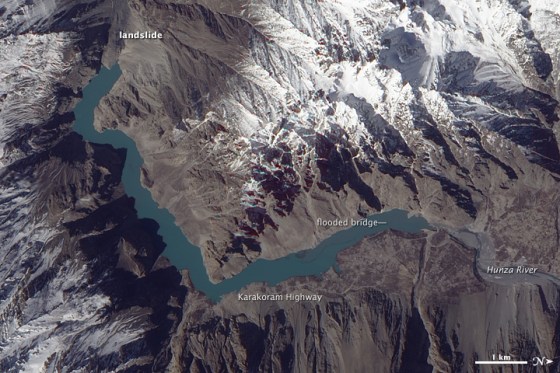
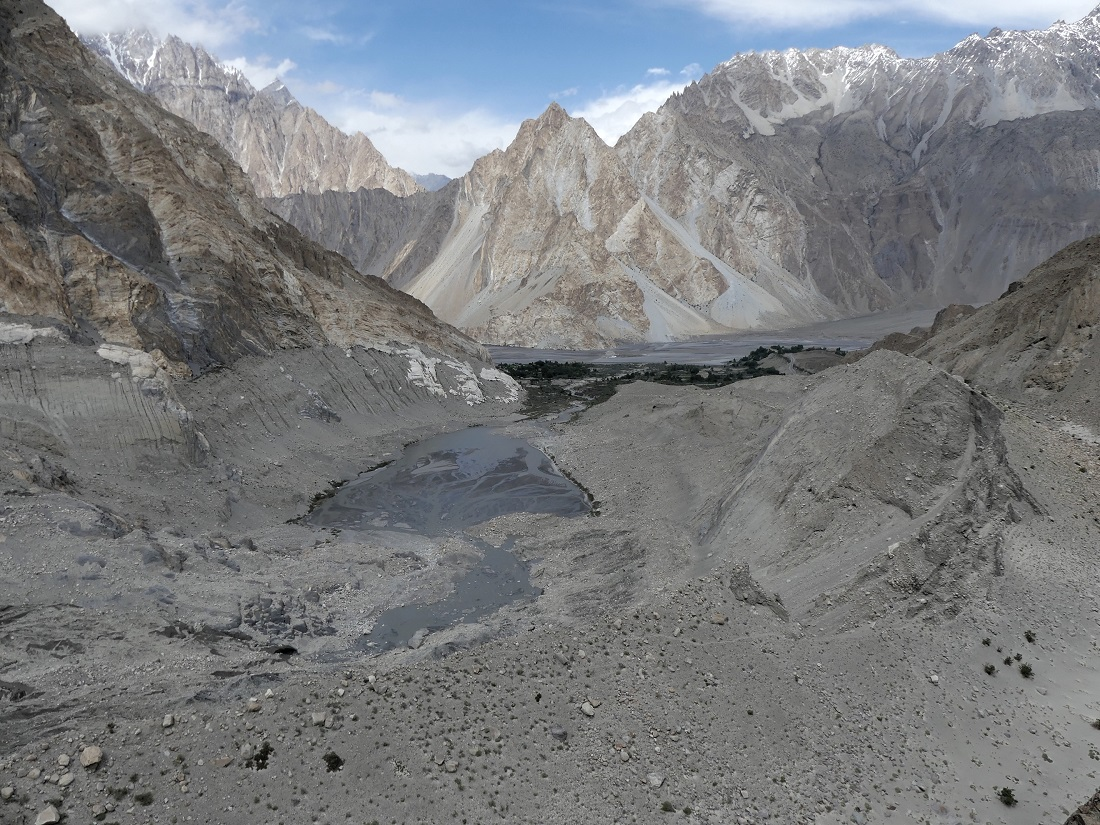
On the unsuspecting day of January 4, 2010, a rockslide, 1,200 meters long, 350 meters wide, and 125 meters high, struck the Hunza River in Attabad, a small community in the Hunza Valley of northern Pakistan, forming Attabad Lake, also known as Lake Gojal (please click on the the link to learn about the scale of the destruction as observed by NASA’s Earth Observing satellite and scientists Jeffrey Kargel and Gregory Leonard).
Story continues below
On January 4, 2010, a landslide occurred in the Hunza Valley of northern Pakistan. The initial disaster buried the village of Attabad, destroying 26 homes and killing 20 people. As the weeks passed, the problems compounded because the landslide did more than destroy a village. It also blocked the Hunza River, creating a long lake, now known as Attabad Lake, which inundated several villages and submerged a significant section of the Karakoram Highway.
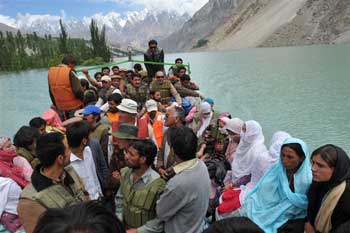
Travelers and locals cram into boats and ferries for the two-hour crossing of the new Attabad Lake formed by a rockslide in 2010. Photograph: M. Pearson / ShelterBox).
~~~~~~~~
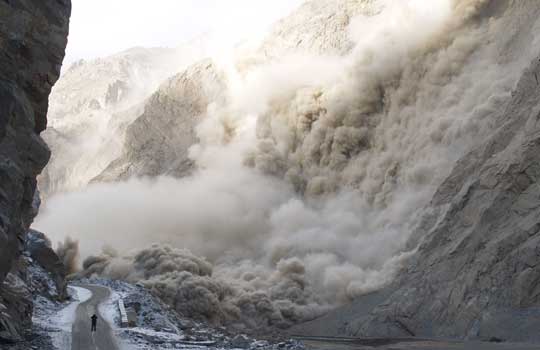
A man stands in the middle of the Karakoram Highway while rocks tumble down into the Hunza River in Pakistan’s Gojal region. The rockslide dammed the river, creating Attabad Lake (also known as Lake Gojal), which submerged eleven miles of the Karakoram Highway and isolated several villages. Photograph: I. Ali Shimshal / Pamir Times).
The initial mass movement of rock, in a sudden and unexpected event, buried the village of Attabad, destroying 26 homes and killing 20 people. It also submerged several villages and 22 kilometres of the strategic Karakoram Highway, which links Pakistan and China. Tens of thousands of people were suddenly displaced or cut off from overland connections with the rest of the country, highlighting the immediate impact on the affected residents.
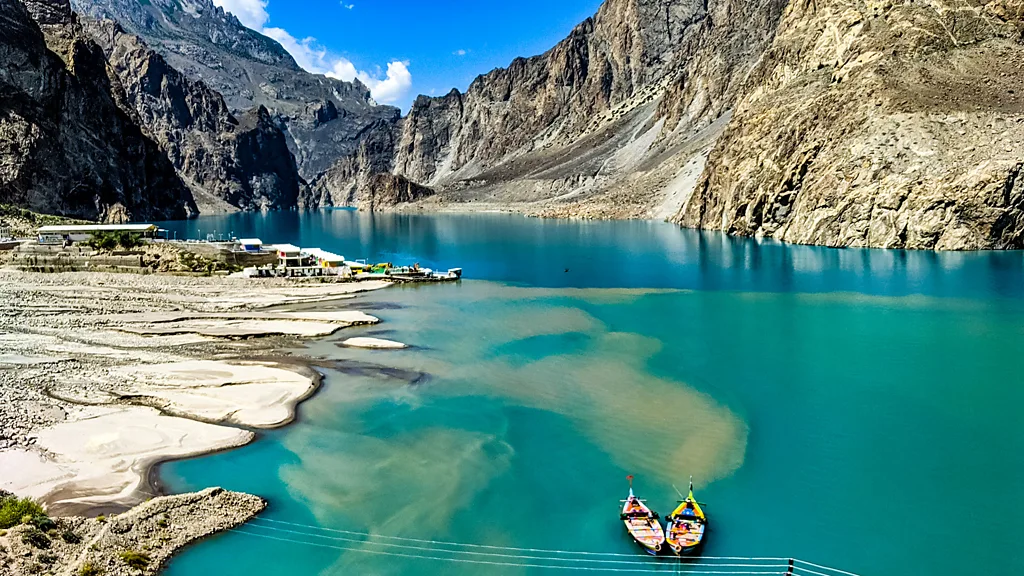
Aysha Imtiaz, in her recent BBC article, highlights the transformation of the Hunza River into a breathtaking lake, which she writes is a must-visit spot in Hunza. Despite its tragic origins, Attabad Lake has become a beacon of hope, providing a rare source of economic opportunity and a lifeline for the local population. A robust system of women entrepreneurs has emerged, leading the way in selling handicrafts and food items, and the community is rebuilding stronger than ever. Please read Aysha’s excellent piece on BBC.
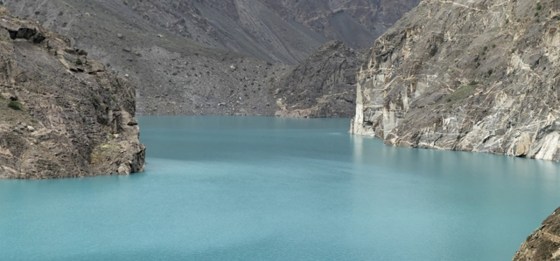
Formed by a massive landslide, Attabad lake is now a popular spot for boating, fishing and adventure sports, and hikers marvel at the beauty of the lake as they see it from high-up. Photograph: Getty Images, via BBC. Please click HERE or on image for BBC article by Aysha Imtiaz.
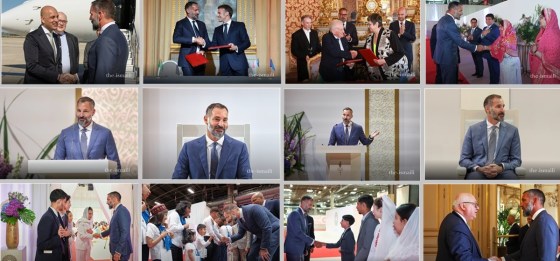
Mawlana Hazar Imam, His Highness Prince Rahim Aga Khan, concluded his official visit to France by gracing the France jurisdiction Jamat with a second Didar on July 13, 2025, meeting the youth of the Ismaili community and attending a special luncheon hosted by Ismaili Institutional leaders. He arrived in Paris on July 10, 2025, and on July 11, the first full day of his visit, he was warmly received at the Palais de l’Élysée by President Macron. He was accompanied by members of his family. President Macron decorated his uncle, Prince Amyn, younger brother of His Late Highness Aga Khan IV, with France’s highest and most prestigious order of merit. At the Palace, three important agreements were signed between the Ismaili Imamat and France in the presence of President Macron and His Highness. Later that same day, Mawlana Hazar Imam met with the French Foreign and Interior Ministers. On July 12, he met with his followers in a historic first of two Didars since becoming the 50th Hereditary Imam of the Ismailis. For a comprehensive and detailed coverage of his visit, visit our sister website, Barakah, which has a special page dedicated to the historic visit.
The official website of the Ismaili community, the Ismaili, has posted special video updates of the visit in four parts. We are sharing the YouTube videos with you below.
THE ISMAILI UPDATE, JULY 13, 2025: THE AGA KHAN BLESSES HIS FOLLOWERS WITH A SECOND DIDAR TO COMPLETE HIS FRANCE VISIT
_________________
THE ISMAILI UPDATE, JULY 11-12, 2025: THE AGA KHAN MEETS FRENCH FOREIGN MINISTER (JULY 11) AND BLESSES HIS FOLLOWERS WITH HISTORIC DIDAR (JULY 12)
_________________
THE ISMAILI UPDATE, JULY 11, 2025: PRESIDENT MACRON RECEIVES THE AGA KHAN
_________________
THE ISMAILI UPDATE, JULY 10, 2025: THE AGA KHAN ARRIVES IN FRANCE
Date posted: July 12, 2025. Last updated: July 17, 2025.
His Highness the Aga Khan, the 50th Hereditary Imam of the Ismaili Muslims, arrived in Maputo, Mozambique, on June 22, 2025, to attend the 50th anniversary of the country’s independence. Our sister website, Barakah, which is dedicated to His Highness, follows the visit with unparalleled enthusiasm through official sources, including media reports, government websites, and posts on social media. We invite you to click Special Coverage of His Highness the Aga Khan’s visit to Mozambique for a comprehensive and detailed account of this historic moment in the life of the Aga Khan, who is visiting the country for the first time as the Imam of the worldwide Ismaili community. He became the 50th Imam on February 4, 2025, succeeding his father, His Late Highness Aga Khan IV, who reigned the community for 67 years.
The Minister of Foreign Affairs, Her Excellency Ambassador Manuela Lucas, receives His Highness the Aga Khan at Maputo Airport on his arrival in Mozambique, June 22, 2025. Photograph: AKDN / Akbar Hakim.
The President of the Republic of Mozambique, Daniel Chapo, on June 18, 2025, visited the Aga Khan Academy located in Matola, the largest suburb of the capital, Maputo, and expressed great appreciation for the education the Academy offers. Mozambique celebrates its 50th Independence Day from Portugal on June 25, 2025.
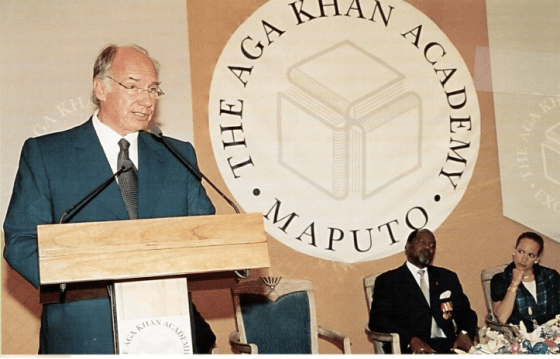
The Aga Khan Academy was inaugurated on Saturday March 19, 2022, by Mawlana Shah Rahim Al Hussaini Hazar Imam, His Highness the Aga Khan, then Prince Rahim, representing his father, the 49th Hereditary Ismaili Imam, Mawlana Shah Karim, His Late Highness Aga Khan IV, who had laid the foundation stone of the Academy on June 25, 2004.
Flashback 2004: Mawlana Shah Karim, Foundation Ceremony, Aga Khan Academy Maputo
Then President Chissano of Mozambique and Princess Zahra Aga Khan look on as Mawlana Shah Karim, His Late Highness Aga Khan IV, addresses dignitaries at the foundation laying ceremony of the Aga Khan Academy Maputo on June 25, 2004. Photograph: The Ismaili USA, December 13, 2004.
~~~~~~~~
To the students here today, I would like to share with you one perspective. Throughout your studies and your youth, adults will tell you that the future is ahead of you. I want to tell you that the future is what you leave behind you, shaped by every one of your actions and your statements and your decisions. The future follows behind you in the path that you choose. Look at this academy — it’s an institution born of past decisions and past actions, which now will shape the future: your future, the future of your families, and the future of this beautiful country, Mozambique. — Prince Rahim Aga Khan, Maputo, March 19, 2022.
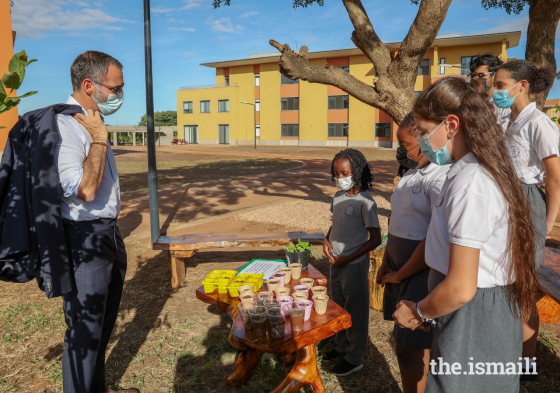
Flashback 2022: Mawlana Shah Rahim Hazar Imam, then Prince Rahim, Inauguration of Aga Khan Academy Maputo
Students at the Aga Khan Academy Maputo present an environmental project to Mawlana Hazar Imam, His Highness the Aga Khan, then Prince Rahim, during his visit to the campus on March 18, 2022, ahead of its inauguration on Saturday, March 19. Photograph: Akbar Hakim / IPL.
~~~~~~~
June 18, 2025: Mozambique President Daniel Chapo visits Aga Khan Academy
The President of Mozambique, Daniel Chapo, visits the Aga Khan Academy in Maputo on June 18, 2025, ahead of Mozambique’s Independence Day celebration on June 25, 2025. Photograph: Opais
President Chapo’s visit to the Academy took place on Wednesday morning, June 18. During it, he had the opportunity to learn about the functioning of the institution and the programs promoted by the Aga Khan Development Network. According to him, it is a model of excellence in education that combines an international curriculum with a strong leadership training component.
“We are very impressed. The assessment we are making of this visit is extremely positive”, declared the President, highlighting the cultural diversity of the school community and the inclusion of students from different Mozambican provinces and countries such as Syria and South Africa, many of whom are beneficiaries of scholarships.
Addressing the 50th anniversary of national independence celebrations, which will take place on June 25, the President linked the role of education to the country’s development, stressing that institutions such as the Aga Khan Academy contribute to the training of leaders capable of transforming Mozambique.
Tweet: President Chapo visits Maputo Aga Khan Academy
Date posted: June 19, 2025. Last updated: June 20, 2025 (added more external links, see below).
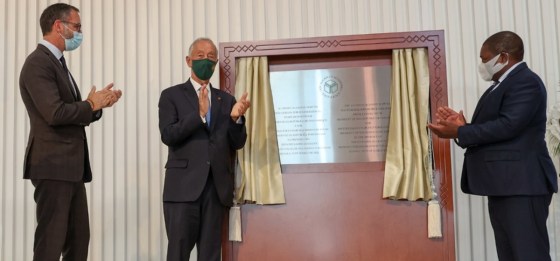
Featured picture at the top of the post: Mawlana Hazar Imam, His Highness the Aga Khan, then Prince Rahim, representing his father Mawlana Shah Karim, His Late Highness Aga Khan IV, looks on as Mozambique’s then-President Filipe Nyusi and Portugal’s President Marcelo Rebelo de Sousa unveil the inaugural plaque of the Aga Khan Academy on March 19, 2022.
“God chose Adam and Noah and the House of Abraham and the House of Imran above all beings, the seed of one another; God hears, and knows” — Qur’an, 3:33-34, translation by A. J. Arberry, see Corpus Quran for multiple translations
A calligraphy designed by Toronto’s Karim Ismail honouring the first Shia Imam Ali on the auspicious commemoration of Eid-e Ghadir.
On June 13, 2025, corresponding to the 16th day of the Muslim month Dhuʻl-Hijjah in the year 1446 A.H, Ismaili Muslims, united across Canada and the globe, will come together to observe and celebrate Eid-e Ghadir.
This momentous occasion, steeped in history, marks the pivotal gathering at Ghadir Khumm, where Prophet Muhammad (peace be upon him and his progeny) designated Hazrat Ali as his successor, the first in the continuing line of Hereditary Imams.
From the day our beloved Prophet Muhammad passed away on June 8, 632, and Hazrat Ali (A.S.) became the first Imam on the Divine Commandment that the Prophet had earlier received at Ghadir Khumm, there have been fifty Ismaili Imams, spanning an impressive 1393 years in human history.
The 50th Imam, His Highness Prince Rahim Aga Khan, holds a unique place in our history. He succeeded his father, Mawlana Shah Karim, His Late Highness Aga Khan IV, upon his death on February 4, 2025. Like all other Imams before him, Mawlana Shah Rahim Al Hussaini, who is now devotionally and respectfully addressed as Mawlana Hazar Imam, being the Imam-of-the-Time, will continue the vital role of guiding and developing the Ismaili community, leaving a lasting legacy that continues to shape the community’s identity and beliefs.
The historical event of Eid-e Ghadir, a pivotal moment in the Ismaili faith, holds profound significance. Today, the Ismaili community is led by the Hereditary position. Mawlana Shah Karim, His Late Highness Aga Khan IV, proudly affirmed that ‘the Ismailis are the only Shia community who, throughout history, have been guided by a living, hereditary Imam in direct descent from the Prophet’ — His Late Highness Aga Khan IV, Parliament of Canada, Ottawa, February 27, 2014.
History records that on the way back to Medina after performing the final pilgrimage to Mecca, the Prophet received a revelation:
“O Messenger, deliver [to the people] what has been revealed to you from your Lord, and if you do not do so, then you will not have delivered His message”… Quran, Surah al-Ma’ida (5:67).
Upon receiving this revelation, the Holy Prophet stopped at an oasis known as Ghadir Khumm. This oasis, located strategically along the route from Mecca to Medina, was a natural gathering point for travellers. Here, the Prophet addressed a large gathering of Muslims who had accompanied him. The Prophet proclaimed: ‘Man kuntu mawlahu fa aliyyun mawlahu,’ meaning: ‘He whose Mawla I am, Ali is his Mawla.’ The Prophet then prayed: ‘O Allah, be a friend of whoever is his friend and extend your support to those who support him.’
This event, occurring at a crucial point in Islamic history, marked the transition of leadership from the Prophet to Hazrat Ali, setting the stage for the leadership and future of the Muslim community. By declaring Hazrat Ali Mawla after him, the Prophet transferred the spiritual authority bestowed upon him by Allah to Hazrat Ali, making him — and all the Imams that follow — the Amirul Mu’minin, or Master of the Believers. This title signifies his role as a Muslim community’s leader, protector, and guide, which Hazrat Ali and all his successors have fulfilled with unwavering dedication and commitment, ensuring the community’s well-being and prosperity.
Article continues below following excerpts and photographs
________________________________
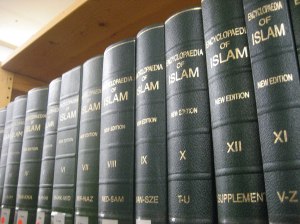
Excerpts from L. Veccia Vaglieri piece in Encyclopaedia of Islam, Second Edition
“Ghadir Khumm is famous in the history of Islam because of a sentence (or some sentences) in favour of ‘Ali which the Prophet uttered there during a discourse….Taking ‘Ali by the hand, he asked of his faithful followers whether he, Muhammad, was not closer to the Believers than they were to themselves; the crowd cried out: “It is so, O Apostle of God!”, he then declared. “He of whom I am the mawla, of him ‘Ali is also the mawla (man kuntu nawlahu fa-‘Ali mawlahu)
Photograph: Vysotsky – Own work, CC BY-SA 3.0, Wikimedia.
~~~~~~
“Most of those sources which form the basis of our knowledge of the life of the Prophet pass in silence over Muhammad’s stop at Ghadir Khumm….Consequently, the western biographers of Muhammad, whose work is based on these [Sunni] sources, make no reference to what happened at Ghadir Khumm. It is however certain that Muhammad did speak in this place and utter the famous sentence…the hadiths are so numerous and so well attested by the different isnads that it does not seem possible to reject them.” Vaglieri goes on to state that on instruction from Prophet Muhammad, Hazrat Ali received baiyat (the oath of allegiance) from the Muslims assembled there, including Umar b. al-Khattab, Islam’s second Caliph.
(Note: special access is required to read articles in the on-line edition of EI2. Vaglieri’s piece was reproduced in full in the UK Ismaili Association’s publication Ilm, December 1976, pages 28-30, with the permission of E.J. Brill, publishers of EI2.)
________________________________
Excerpts from the Pream ble of the Ismaili Constitution ordained by the 49th Ismaili Imam
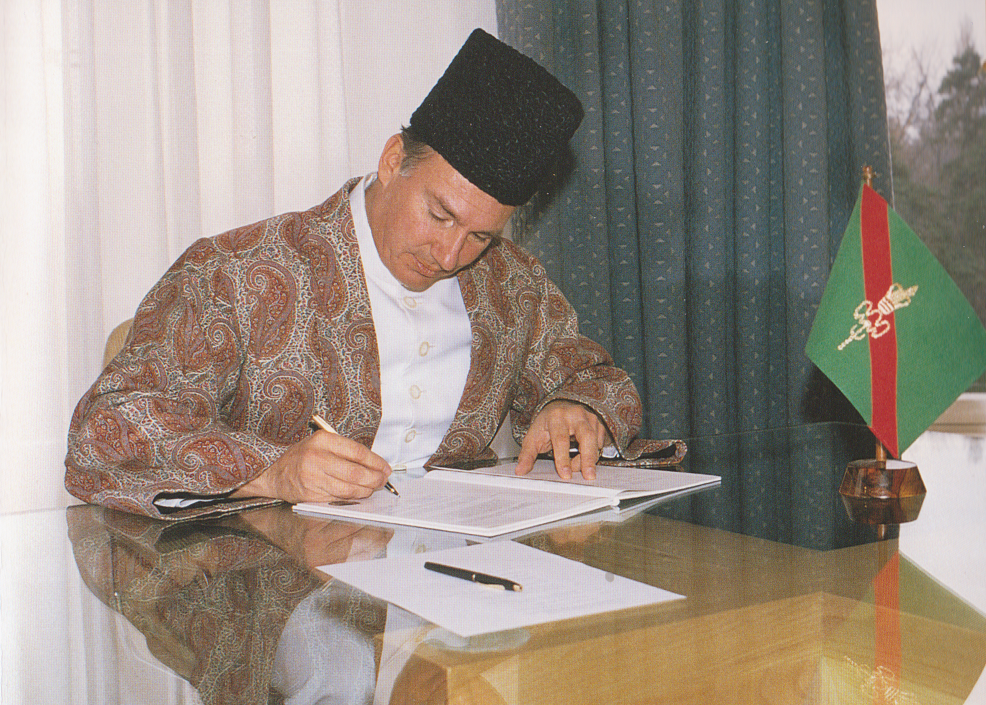
“In accordance with Shia doctrine, tradition, and interpretation of history, the Holy Prophet (s.a.s.) designated and appointed his cousin and son-in-law Hazrat Mawlana Ali Amiru-l-Mu’minin (a.s) to be the first Imam to continue the Ta’wīl and Ta’līm of Allah’s final message and to guide the murids, a term referring to the followers and disciples of the Imams. The proclamation also established the principle of the Imamat continuing by heredity through Hazrat Mawlana Ali (a.s) and his daughter Hazrat Bibi Fatimat-az-Zahra, Khātun-i-Jannat (a.s)”
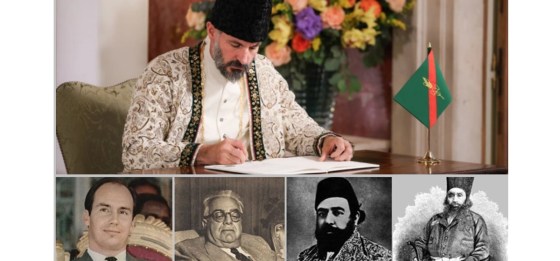
Mawlana Shah Karim, His Late Highness the Aga Khan, is seen signing a new constitution for the worldwide Ismaili community on his 50th birthday, December 13, 1986.
~~~~~~~~
The 50th Imam, Mawlana Shah Rahim Al Hussaini Hazar Imam, signs the Ismaili Constitution under his name on February 11, 2025
Mawlana Hazar Imam, His Highness Prince Rahim Aga Khan, signs the Ismaili Constitution in his name at the Diwan of the Ismaili Imamat, the Headquarters of the Imamat in Lisbon on the historic occasion of his Takht-nishini (ceremonial installation), February 11, 2025. Photograph: Akbar Hakim / The Ismaili.
________________________________
…. continued
On the instruction from Prophet Muhammad, Hazrat Ali received baiyat (the oath of allegiance) from the Muslims assembled there. According to Shia traditions and sources, following the proclamation, the final verse of the Qur’an was revealed to the Prophet:
“On this day, I have perfected for you your religion, completed my favours upon you, and have chosen for you Islam as your religion.”
Eid-e Ghadir is an anniversary of profound significance to all Shia Muslims. It is also associated with the following well-attested tradition that the Prophet is said to have proclaimed. This tradition, which is widely accepted and recognized by the Shia community, further underscores the importance of the event and its pivotal role in shaping the future of the Muslim community:
Credit: Infinity design povray.org
“I am leaving among you two matters of great weight (al-thaqalayn), the Book of Allah and my kindred (itrati), the People of my House (Ahl al-Bayt), and these two shall never be separated until they return to me at the Pool [of Kawthar in Paradise on the Day of Judgement]…”
The phrase ‘two matters of great weight’ refers to the Quran and the Ahl al-Bayt. The Quran, as the holy book of Islam, and the Ahl al-Bayt, as the Prophet’s kindred, are inseparable and hold eternal significance in the Shia Islamic tradition.
As we commemorate Eid-e Ghadir, the Ismaili community stands united, celebrating the seminal event of Ghadir Khumm. This celebration is a historical marker and a powerful reminder of our allegiance to the Imam-of-the-Time, the direct lineal successor and inheritor of Hazrat Ali’s authority.
The community is not just inspired but united and driven by the following remark made during Mawlana Shah Karim’s speech in Canada’s Parliament on February 27, 2024:
“Today, the Ismailis are the only Shia community who, throughout history, have been led by a living, hereditary Imam in direct descent from the Prophet.”
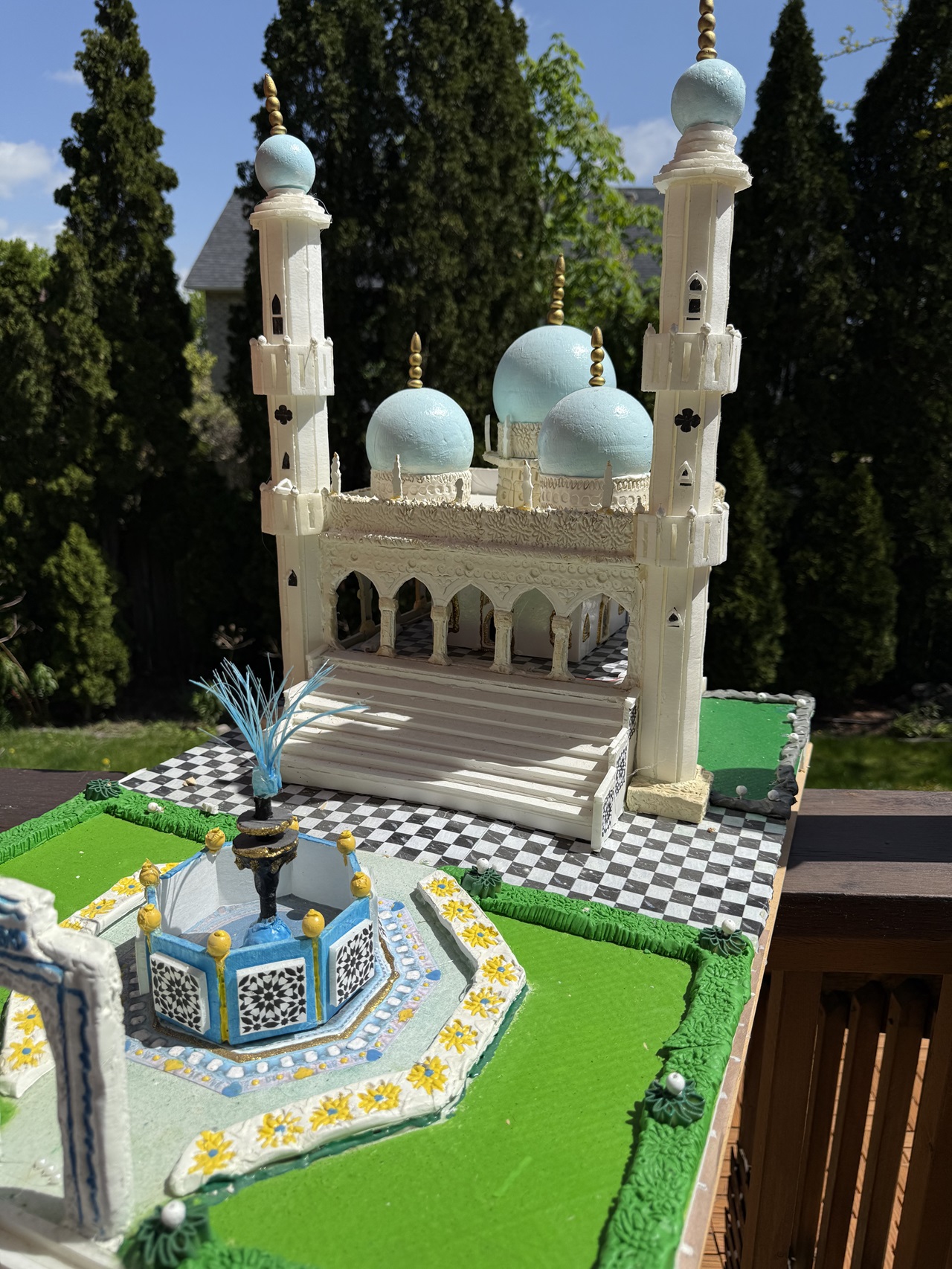
Editor’s note: As children, we have created some stunning works of art and written beautiful essays that we might have long forgotten. However, for our parents, these creations are not just objects, but the threads that weave our family memories, preserving our childhood in their hearts. A model of Hasanabad, a 3-month labour of love and creativity by Sarah and Sophia Ladha some 14 years ago, remains a cherished part of the Ladha family home in Toronto. It stands as a testament to the role of childhood creations in preserving our family memories, even as the two girls embark on their journeys in distant cities. We present their story, celebrating the enduring connection that childhood creations bring to our families.
If there is an iconic piece of art or object related to Ismaili Muslim culture that your children made years ago and remains part of your family’s proudest moment, we would like to hear about it. The Ladha sisters have set an excellent example with their inspiring project, and we encourage you to follow in their footsteps. Write to mmerchant@simerg.com and be part of this inspiring initiative. Simerg and its sister websites Barakah and Simergphotos are independent platforms, committed to encouraging the pursuit of knowledge in all areas of Ismaili history, art and culture, the Divine Institution of Imamat and His Highness the Aga Khan.
The Hasanabad Model
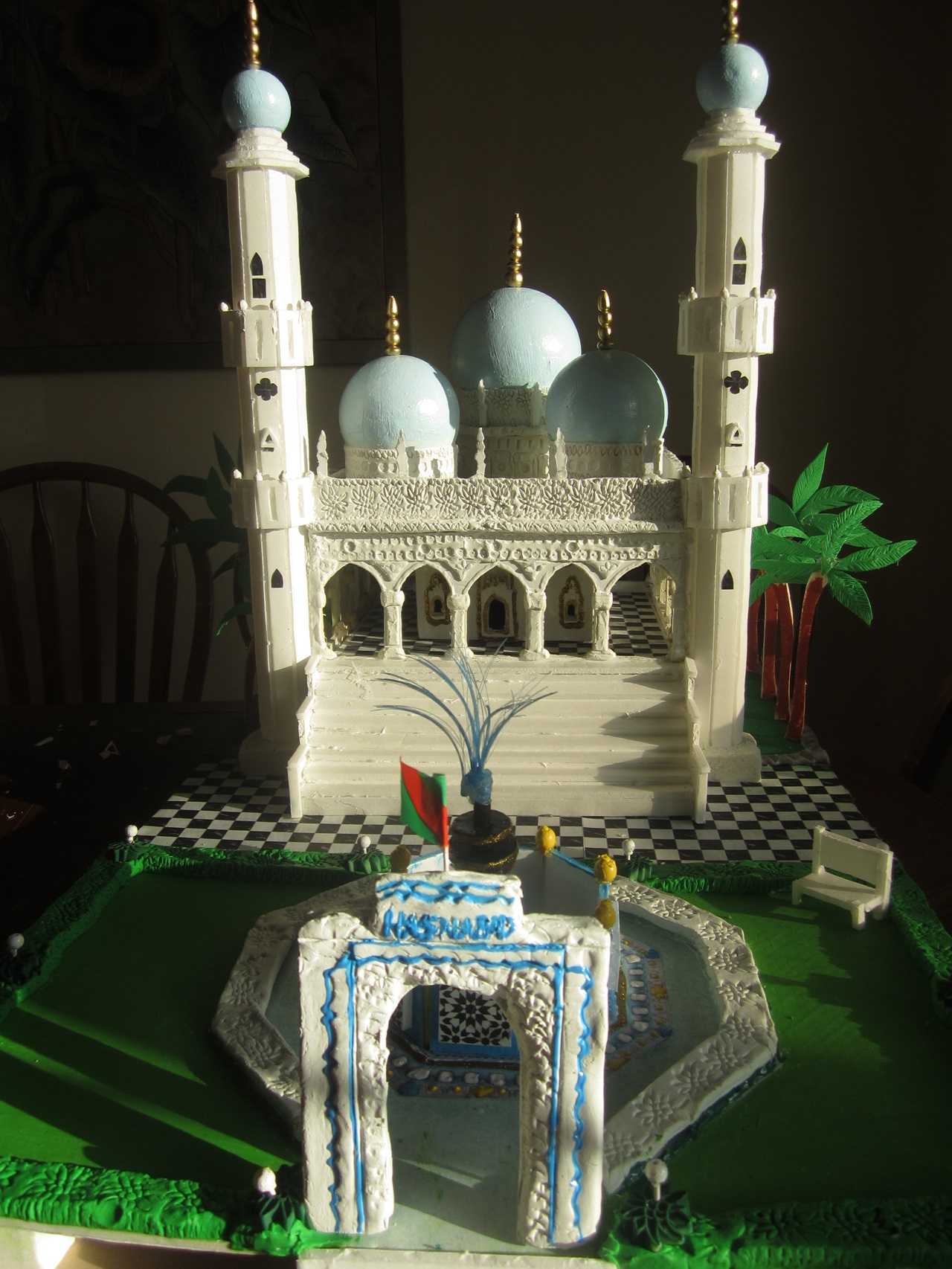
Hasanabad Model, 29″ x 19″, by Sarah and Sophia Ladha. Photograph: Murad Ladha family collection.
We were inspired to create the Hasanabad model after a profoundly personal visit to Hasanabad and its grounds, which include a Jamatkhana and a housing complex in Mumbai in 2011. This trip was particularly meaningful to us because Hasanabad is where my dad, Dr. Murad Ladha, spent his formative years as one of five children of Amina Ladha and Moledina Ladha. Experiencing its breathtaking architecture up close and learning about its historical significance left a lasting impression on us.
Hasanabad, more than just an architectural marvel, is a place of profound historical significance. It is the final resting place of the 46th Ismaili Imam, Mawlana Hasan Ali Shah, who in 1846, journeyed from Iran to Mumbai, establishing the Seat of Imamat in India after centuries in Persia.
Inspired by the grandeur of the Taj Mahal, Hasanabad’s design features intricate detailing, majestic domes, and perfect symmetry, making it a remarkable landmark and the only Ismaili historical site in India. Inside the Hasanabad Dargah — where Imam Hasan Ali Shah (Aga Khan I) is buried — there is intricate Islamic art decorating the interior of the kuba (the dome). However, due to architectural limitations and lighting, visitors do not readily see or appreciate this artwork. To address this, the fountain in the model was intentionally designed to help reflect and highlight the variety of Islamic artistic elements within the Dargah. This allows members of the Jamat, especially those unable to visit in person, to engage with and appreciate the spiritual and artistic heritage embodied in the structure.
Moved by its historical and cultural significance, we dedicated three months to meticulously crafting our 29″ x 19″ model, striving to capture every detail. Using materials like clay, styrofoam spheres, beads, and pastels, we sought to bring the essence of Hasanabad to life.
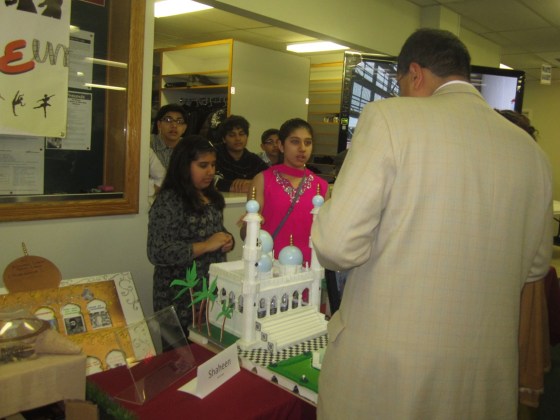
Members of the Jamat view the model of Hasanabad created by sisters Sophia and Sarah Ladha. Photo: Murad Ladha family collection.
~~~~~~~~
The fountain featured in front of historic Hasanabad is not part of the building but was created by Sarah and Sophia Ladha to depict some of the artistic work in the dome inside the building. Photograph: Murad Ladha family collection.
~~~~~~
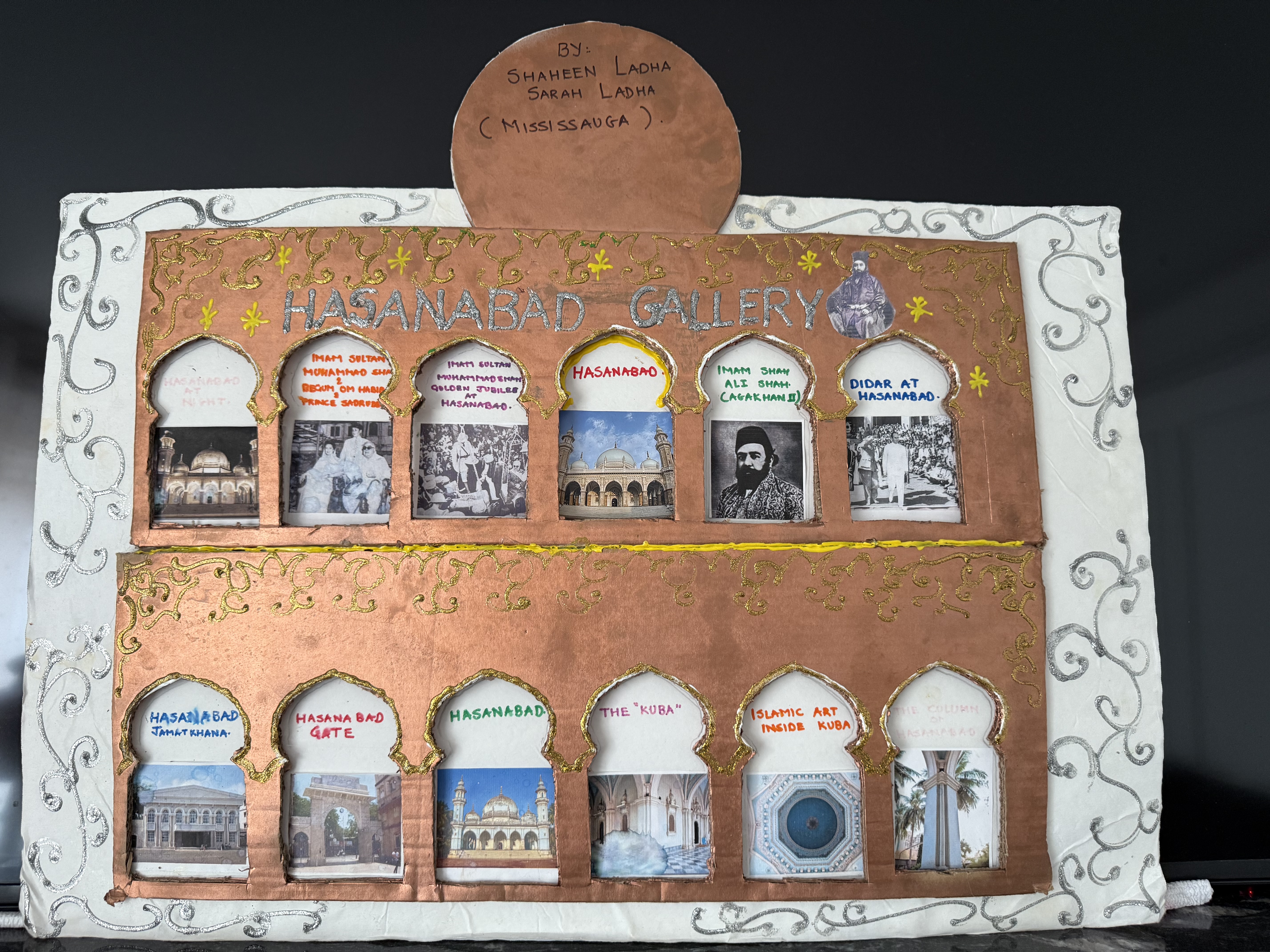
Hasanabad Gallery, accompanying the model exhibit. Photograph: Murad Ladha family collection.
The Ismaili Art and Cultural Committee recognized our model for its craftsmanship, attention to detail, and the story behind it. They appreciated how it highlighted Hasanabad’s architectural beauty and helped share its rich history with others. We displayed the model in Etobicoke Jamatkhana, along with a PowerPoint presentation explaining the the significance of historic Hasanabad to the Jamat. Subsequently, the model was displayed at the Toronto’s International Centre, during a large Navroz gathering of the Greater Toronto Area Jamats. This allowed even more members to experience and connect with this unique representation of Ismaili heritage. Today, the model is a treasured object in our parents’ home in Toronto, and we hope that other children, who have created interesting art work related to Ismaili culture and history will come forward and share their projects through this website.
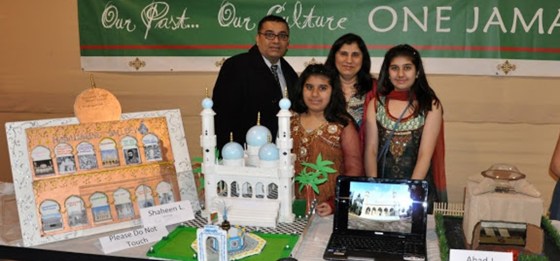
Featured photo at the top of the post: Sophia and Sarah with their parents, Mr. and Mrs. Murad Ladha, during the Hasanabad model exhibit at Etobicoke Jamatkhana.
Date posted: June 8, 2025. Last updated: September 24, 2025.
___________________
ABOUT THE ARTISTS
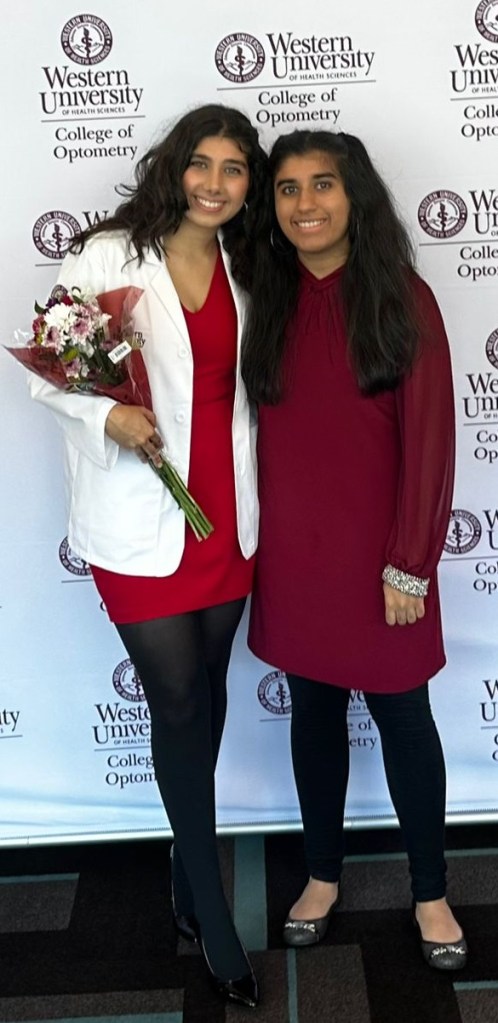
Sisters Dr. Sophia (left) and Sarah Ladha.
Dr. Sophia Ladha is a dedicated optometrist who recently completed her Doctor of Optometry degree at Western University of Health Sciences. She also holds a Bachelor of Science in Optometry from City University in the United Kingdom. Dr. Ladha is passionate about providing patient-centered eye care, combining clinical expertise with a compassionate approach. Outside of the clinic, she enjoys exploring Islamic art and calligraphy, finding harmony between scientific precision and creative expression.
Sarah Ladha is a medical student currently studying in Pennsylvania. Outside of medicine, she has a deep passion for architecture and design. She is fascinated by how structure, form, and function converge to create spaces that are not only visually striking but also purposeful. Sarah draws inspiration from the stories behind buildings — the history, culture, and intention that shape their design. Exploring these elements allows her to see architecture not just as construction, but as a form of living art.
We welcome your feedback. Please click LEAVE A COMMENT. If you are unable to post your comment, please email it to mmerchant@simerg.com. Simerg, an independent platform, has published over 2,000 pieces on all aspects of Ismaili and Islamic history, culture and thought since its launch in 2009. Please see our Table of Contents in 2 parts — 2009-2019 and 2020-Current. Please visit Simerg’s sister websites, Barakah, which is dedicated to His Highness the Aga Khan, and Simergphotos that features photo essays on history, culture and travel. Follow the publisher/editor Malik Merchant on @Facebook, @X and @LinkedIn
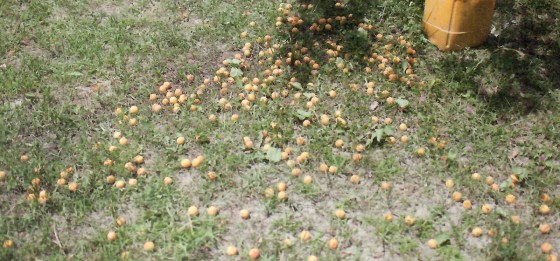
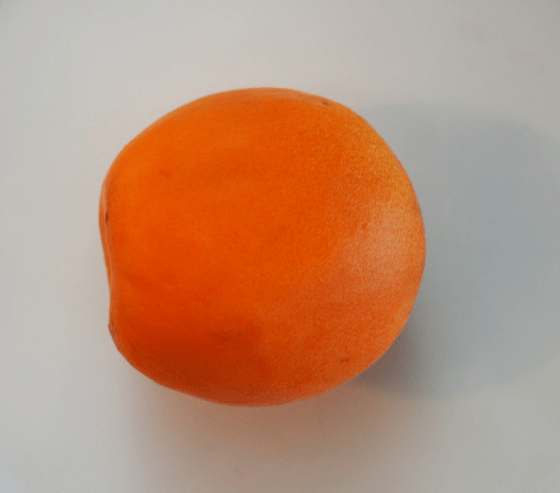
On one of my regular visits to Toronto’s St Lawrence Market in June 2021, I picked up a bagful of large apricots. I published a photograph of the largest apricot in the lot and other interesting and exciting moments from my week.
About the apricot, I wrote: “With energy from consuming a large sweet apricot, the size of a peach, that I bought from St Lawrence Market …. I spent an hour or so at the [Aga Khan] Park.” My article continued: “Imagine supermarkets all around North America offering a fruit from Hunza, where it is grown in abundance. Fair-traded organic apricots from HUNZA, the labels on the fruit shelf would read. We find New Zealand kiwis, South African oranges, Australian apples, Moroccan and Spanish clementines, Mexican ataulfo mangoes and many other tropical fruits from Latin American countries. Now, how about apricots from Hunza! Imagine its impact on the livelihood of farmers and their families in the Northern regions of Pakistan!”
Moreover, apricot lovers in North America — and other parts of the world — would delight in consuming fruit from the exotic and enchanting Hunza Valley.
~~~~~~~
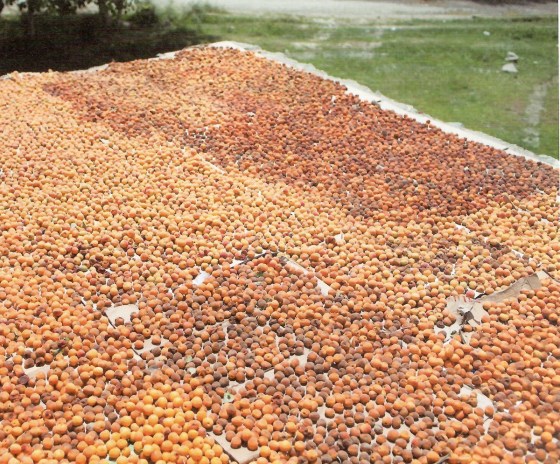
A new partnership model spreads apricots from the Karakoram Mountains in Hunza to the rest of the world
More than three years later, my heart jumped with joy as I read a piece describing IFAD’s public-private-producer partnership (4Ps) to make Hunza-grown apricots reach the rest of the world from the high mountain passes. This inspiring initiative, a beacon of hope and a potential game-changer for the future of agriculture and apricot farmers in Hunza, is part of IFAD’s unwavering long-term commitment to transforming rural communities. IFAD has been transforming rural communities for almost 50 years, and believes that “a better future starts in rural areas.” Please read Getting good grades: apricot farmers in the Hunza Valley strive for the best, which describes this inspiring initiative.
If extended to other parts of Pakistan, such as Chitral, and Central Asian countries, such as Afghanistan and Tajikistan, the initiative could not only improve the livelihood of farmers who cultivate this vital crop but also create numerous job opportunities. The apricot, a versatile fruit, can be consumed fresh, processed into dried apricots, jams, jellies, or used in juice and other products. The apricot kernels yield oil, which is used in cosmetics and other applications, such as press cake, which can be further processed as animal feed, fertilizer, and other industrial applications.
My search for Hunza apricots in North America led me to One Green World, a family-owned and operated nursery in Portland, Oregon. This unique nursery offers a diverse range of food plants and their companions worldwide, including the rare and unique Hunza apricot. The nursery states on its website that the Hunza apricot is a precious variety from northwest Pakistan, where it grows wild in the Hunza Valley. It describes the fruit as delectably sweet and tender, and fully ripe apricots as a unique, tasty treat. The bloom time for these apricots is March, and they ripen in June or July. Don’t miss the chance to experience the seasonal availability of Hunza Apricots at One Green World.
I hope this story of the Hunza Apricot will inspire Jamati institutions and the Aga Khan Development Network to seek ways to collaborate with the brokers of the 4P initiative to encourage the farmers further. Similarly, Ismaili-owned grocery chains and stores can work together to import this delicious fruit and its byproduct and make it widely available across North America, contributing to the economic well-being of Hunza and its beautiful people.
WATCH A VIDEO ABOUT HOW IFAD IS TRANSFORMING APRICOT FARMERS AND A RURAL COMMUNITY IN HUNZA
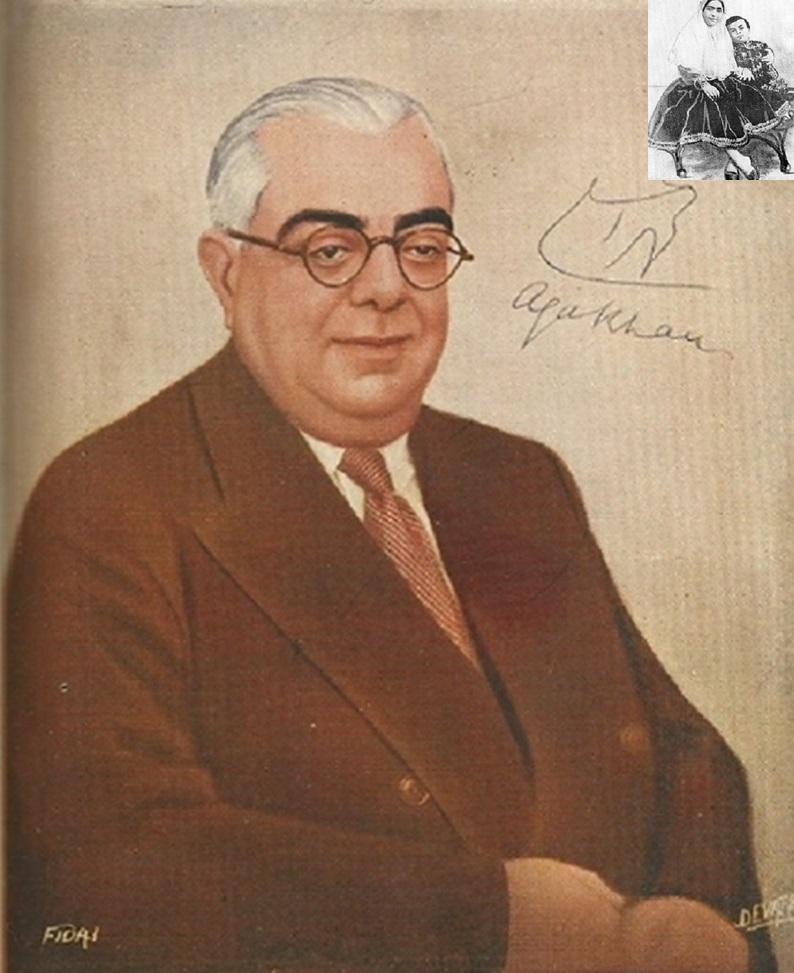
Over the years, Zarina Moosa, a teacher by profession, has read the late Aga Khan’s autobiography, The Memoirs of Aga Khan, several times. She was always highly moved when she came to the page where he spoke of his mother, Lady Ali Shah. Read Zarina’s introductory piece and the Aga Khan’s reflections on his mother on our sister website, Barakah, a platform dedicated to preserving and sharing the wisdom of His Highness the Aga Khan.
His Late Highness Aga Khan III (1877 — 1957), 48th Hereditary Imam of the Ismaili Muslims; inset with his mother, Lady Ali Shah. Please click on the image for the article.
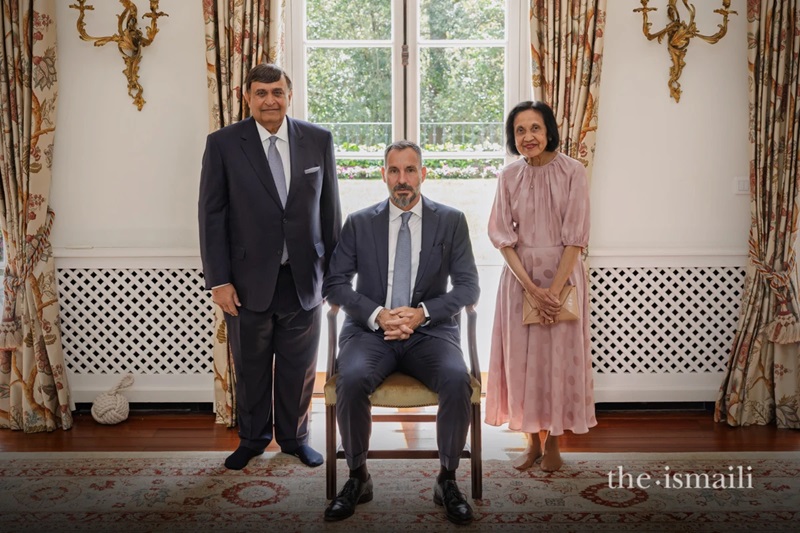
[As Mawlana Hazar Imam, His Highness the Aga Khan, confers the title of Diwan on Shafik Sachedina at his residence in Lisbon on May 4, 2025, a significant event that was announced through a Talika (Holy written message) read out on the same evening in Ismaili Jamatkhanas around the world, we present Alnoor Merchant’s exploration of its use in Islamic and Ismaili history, rooted in a rich historical context. Please also read our exclusive tribute to Diwan Shafik in Barakah, which includes excerpts from Mawlana Hazar Imam’s Talika of May 4, and a selection of photographs highlighting Diwan Shafik’s immeasurable services to the Imam-of-the-Time over the past several decades — Ed.]
Besides referring to a collection of poetry or prose, the term diwan (divan in Persian) may be defined as meaning a register or a collection of records. Within an administration context, the term first meant a register for troops, and later it was used for office. During the Umayyad and Abbasid periods, various diwans were established: diwan al-jund (register for fighting forces), diwan al-kharaj (register for taxes), diwan al-rasa’il (register for correspondence), etc. These diwans were most often under a wazir (vazir in Persian).
During the Fatimid period, the diwan al-rasa’il came to be known as the diwan al-insha’; its head was the sahib diwan al-insha’ or ra’is (head) and was addressed as al-shaykh al-ajall (Excellency). The diwan al-jund was called the diwan al-jaysh, and there was a bureau known as the diwan al-majalis (diwan of the Council) where all the administration was concentrated. In Iran, the term diwan was generally used to mean the central government in general, in which sense it was also more specifically known as the divan-i a‘la, and fell within the purview of the vazir; during the Qajar period, the chief official of the divan-i a‘la was the sadr-i a‘zam (chief minister).
A significant change occurred during the Mughal period in India: the head of the department of revenue and finance came exclusively to be known as the diwan. Indeed, during the reign of the Mughal emperor Akbar, the word wazir was seldom used, having been replaced by the term diwan, which had come to denote a person rather than an institution or a government department. During the Mughal period, the diwan performed multifarious duties. He was not only responsible for the disposal of revenue papers but also drafted urgent royal letters and farmans. He had to submit revenue collection and expenditure returns to the emperor who was in this way kept informed of the finances of the State. He allocated duties to all high dignitaries on first appointment and received regular reports from them. Later, in some of the princely states of India, the chief minister came to be known as the Diwan.
Mawlana Hazar Imam, His Highness the Aga Khan, with Diwan Shafik Sachedina and his wife Diwan-banoo Nadia Sachedina. Photograph:: IPL / Akbar Hakim
It is, most likely, in this context, that the term diwan was adopted in the modern period of Ismaili history, and came to be applied to an individual. The first individual to be invested with the title of Diwan was Muhammad Ibrahim Rawjee, who served as the President of the Aga Khan Federal Council for India from 1934 to 1958. Imam Sultan Mahomed Shah, our 48th Imam, appointed him as the legal advisor for all Ismaili Councils in India in 1935 and, in March 1935, referred to Wazir (at that time) Muhammad Rawjee as “my Chief Minister”. In 1936, the Imam bestowed upon him the title of Diwan; Diwan Rawjee passed away in 1965. The second individual to be invested with the title of Diwan by Imam Sultan Mahomed Shah was Count Ghulam Hussain Muhammad Jindani; this was through a telegraphic message on 29th December, 1948, which read:
“Occasion Imamate record, I confer on you for all your great services title Dewan for first time given in Africa.”
Diwan Jindani passed away in 1983.
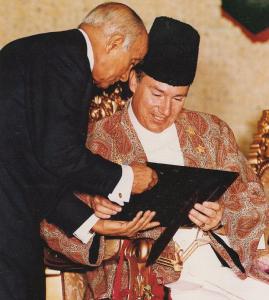
During the Silver Jubilee of Mawlana Shah Karim Shah, our 49th Imam bestowed the title of Diwan on Count Sir Eboo Pirbhai in London, on 7th July, 1983. In his Farman, the Imam said:
Diwan Sir Eboo Pirbhai
“The second thing I wish to do today is to recognise in an exceptional manner in front of the Jamat, the services of a member of the Jamat who has served my grandfather, who has served me, and who has served the Jamat consistently for more than fifty years, taking even personal risks at times of crisis in the developing world, extending to the Jamat all the benefit of his time and wisdom; and I have decided to give the title of Diwan to Count Sir Eboo Pirbhai. This is also a symbol, because the Imam is saying to the Jamat that the Imam wishes to recognise publicly, exceptional service by a very young man.”
Diwan Pirbhai passed away in January 1990.
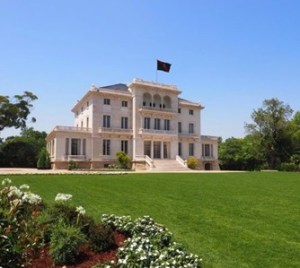
On 11th July 2018, Mawlana Shah Karim Shah officially designated the Henrique de Mendonca Palace in Lisbon as the Seat of the Ismaili Imamat, and declared that it be known as the “Diwan of the Ismaili Imamat.” This reflects, in one way, the dual nature of the nomenclature Diwan as being applicable in both an institutional and an individual context.
About the author: Alnoor Jehangir Merchant is a librarian, curator and independent researcher based in London. Between 1987 and 2012 – a period extending nearly twenty-five years — Alnoor was instrumental in developing the collections of the Library of The Institute of Ismaili Studies (IIS), London, acquiring and cataloguing materials — rare books, manuscripts, documents, coins — relating to all aspects of Ismaili studies; these are now part of the Ismaili Special Collections Unit (ISCU). Alnoor served as Head of the IIS Library from 2009 to 2012.
Besides his extensive experience in Library operations, Alnoor played a significant role, over nearly two decades, in the acquisition of artefacts and manuscripts for the Ismaili Imamat, a majority of which are presently housed at the Aga Khan Museum, Toronto.
Over the past decade, with his wide-ranging knowledge and understanding of Islamic studies and the cultures of Islam, Alnoor has advised museums, libraries and private individuals on artworks, manuscripts, rare books and coins relating to the Islamic world. Besides his research interests on various aspects of Ismaili history and material culture, Alnoor continues to be involved with work for the Ismaili Imamat and its institutions.
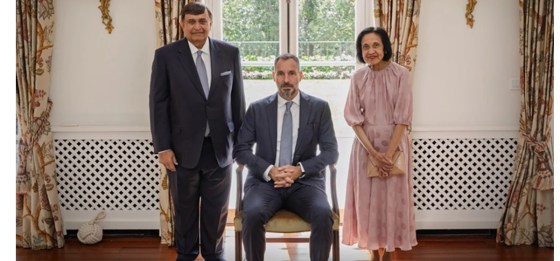
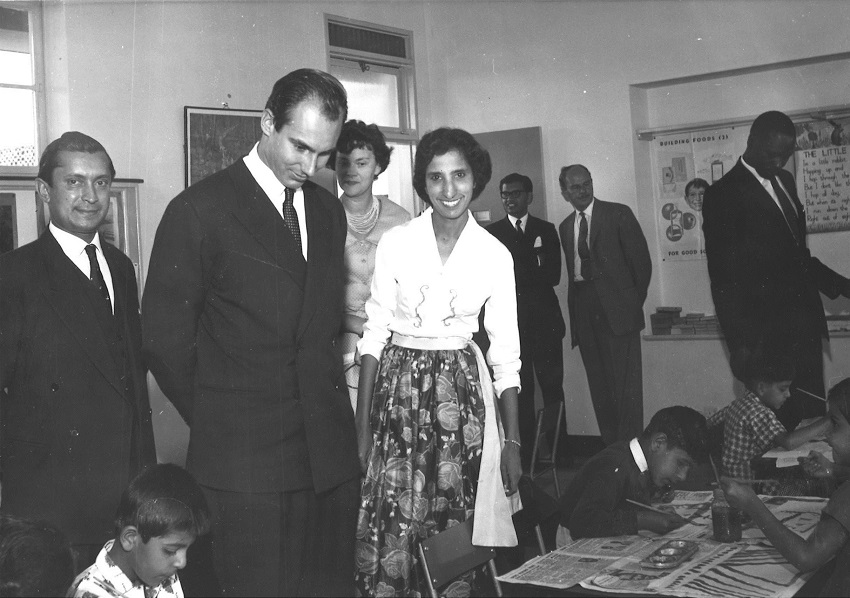
(Alijah) Mohamed Kassam of the UK was only 3 when a group photo that included his father was taken with His Late Highness Aga Khan III, the 48th Ismaili Imam. He shares the group photo and some unique pictures of the 49th Imam, Mawlana Shah Karim, His Late Highness Aga Khan IV (d. February 4, 2025), with readers of our sister website Barakah, which is dedicated to the Aga Khan. To view Kassam’s collection, please click on the photo below or HIS HIGHNESS THE AGA KHAN III AND IV PHOTOS: MOHAMED KASSAM ARCHIVES.
School teacher Shirin Kassam, sister of Mohamed Kassam, with Mawlana Shah Karim, His Late Highness Aga Khan IV, during his visit to the Aga Khan Primary School, Nairobi, Kenya, in the early 1960s. Please click on the image to view more photos.









 Simerg - Insights from Around the World