Simerg is an independent initiative dedicated to Ismaili Muslims, the Aga Khan — their Hereditary Imam — and the Ismaili Imamat, and Islam in general through literary readings, photo essays and artistic expressions
Author Archives: Malik Merchant, Editor
Founding publisher and editor of www.barakah.com, www.simerg.com and www.simergphotos.com.
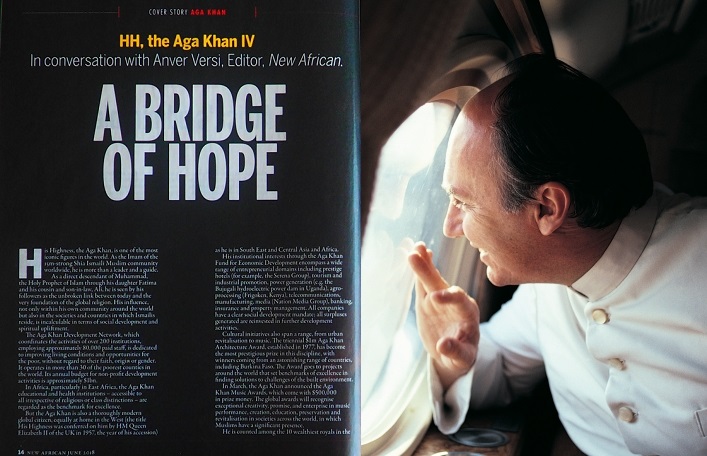
We invite our readers to read the complete interview on Simerg’s sister website Barakah, which is dedicated to Mawlana Hazar Imam, His Highness the Aga Khan. The interview was conducted by Anver Versi, Editor-in-chief of New African, the highly influential magazine on African affairs published in the UK. We are delighted to bring the interview with the editor’s permission. Please start reading the article HERE or click on the image below.
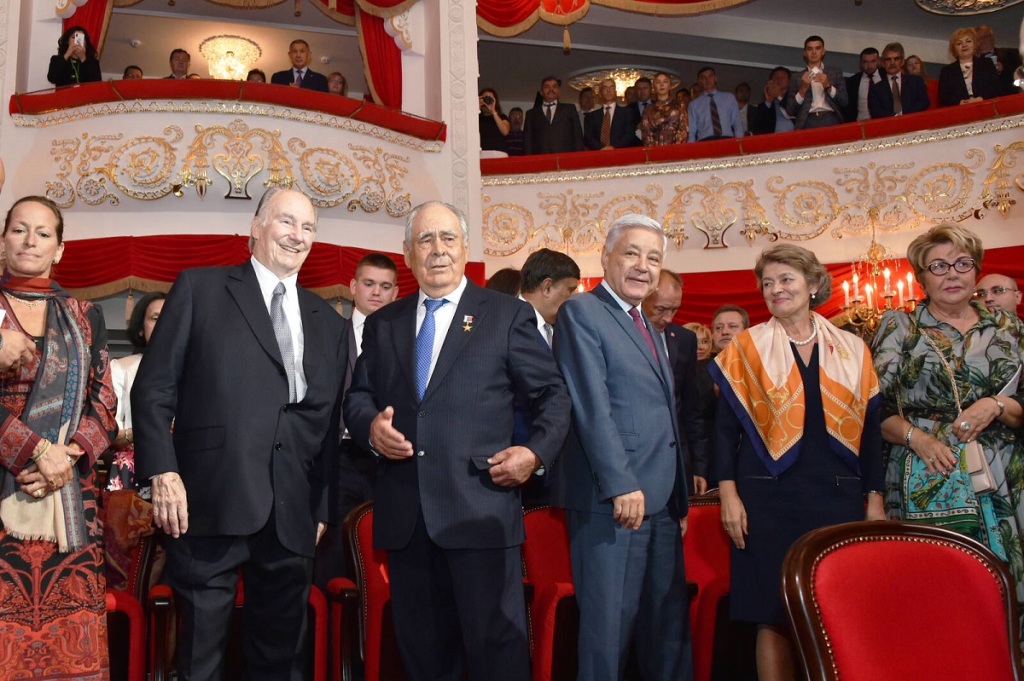
His Highness the Aga Khan at Kazan Kremlin. Please click for complete coverage of visit to Tatarstan.
A note from Publisher/Editor Malik Merchant
Simerg’s sister website Barakah is dedicated to Mawlana Hazar Imam — His Highness the Aga Khan — members of his family, and the Ismaili Imamat. It currently contains more than 170 interesting visual and textual pieces on the subject. There are 2 posts you should see about his visit to Tatarstan last week. Please click on:
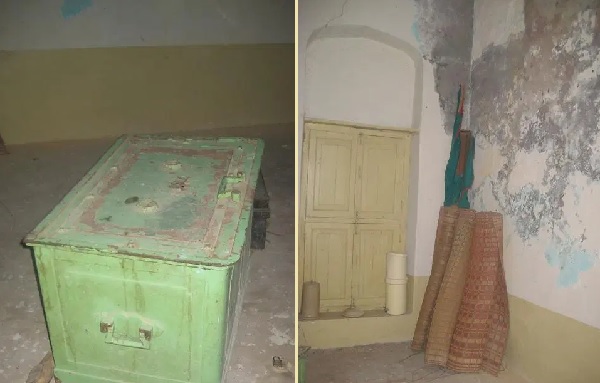
…Now no one cares, no paint on the walls. Who can save this lovely heritage? So sad to see the weeping walls — Shariffa Keshavjee in a piece for Simerg
A view of the Indian Ocean from the balcony of the Jamatkhana, overlooking the building’s rooftop. Photo: Shariffa Keshavjee, Nairobi, Kenya.
Taking Example of Pakistan’s Baltit Fort, the Bagamoyo Jamatkhana Can be Converted to a Museum Chronicling Ismaili Settlement in Tanzania
The questions we would now ask of Ismaili residents of Dar es Salaam, Bagamoyo or anyone who has visited Bagamoyo recently as well as our Tanzanian Jamati institutions are: How are the “weeping walls” of the Jamatkhana doing today? What about the passageway leading to the ocean? How about the tejori (chest) in the Jamatkhana, and what is the state of the Ismaili Flag and sadri (floor mats)? And, finally, how is the Jamatkhana being utilized today, and can the Ismaili community feel proud about its current state and usage?
We look forward to an update on the state of the Jamatkhana with the sincere hope that what was once an eyesore, both outside and inside, has been restored to its former glory. If that has not been done yet, which is what we suspect, and the building is simply languishing and not used as a Jamatkhana anymore, we humbly bring forward the idea to convert the historic building to a museum that will hold important relics as well as portray the history of early Ismaili settlement in Bagamoyo and other parts of Tanzania (then Tanganyika). Many little towns that I have visited during my drives across North America have small museums housed in heritage buildings that wonderfully tell stories about their origins and the people who first occupied them. Of course, the Bagamoyo Jamatkhana building has to be be properly restored for any such project to develop, and this should quickly become a work in progress.
As a Jamat, we have to be mindful of historical buildings and places of worship like the Bagamoyo Jamatkhana, and do everything possible to revive and revitalize our cultural and spiritual heritage before they are forgotten or lost forever due to neglect, lack of interest or apathy.
Time and Knowledge Nazrana: A Major Resource for Creative Projects
Institutions must lead and inspire the Jamat, and the Jamat must in turn respond with zeal and interest. It is a 2-way effort. Perhaps, there is an opportunity for hundreds of Ismaili architects, artists, planners and engineers who pledged their Time and Knowledge Nazrana (TKN) to Mawlana Hazar Imam to take a lead to improve the condition of our historic buildings that are in disarray for good and purposeful use.
That can be properly and effectively facilitated by the TKN leadership team that is based in Toronto, in consultation with Ismaili institutions and local TKN bodies around the world. The transformation of the Baltit Fort in Pakistan that was undertaken by the Aga Khan Trust for Culture is an example of what can be accomplished with the Bagamoyo Jamatkhana and other heritage buildings of historical importance. There is immense talent and creativity in the Jamat as well as material resources that can be utilized for well planned little museum projects that would not only enrich local history, but also help boost the tourism industry. After all Bagamoyo, with its world class historical sites, has been proposed as a World Heritage Site.
Report compiled by MALIK MERCHANT (Publisher-Editor, Simerg,Barakah and Simergphotos) Note: Photos were received from numerous sources in Dar es Salaam
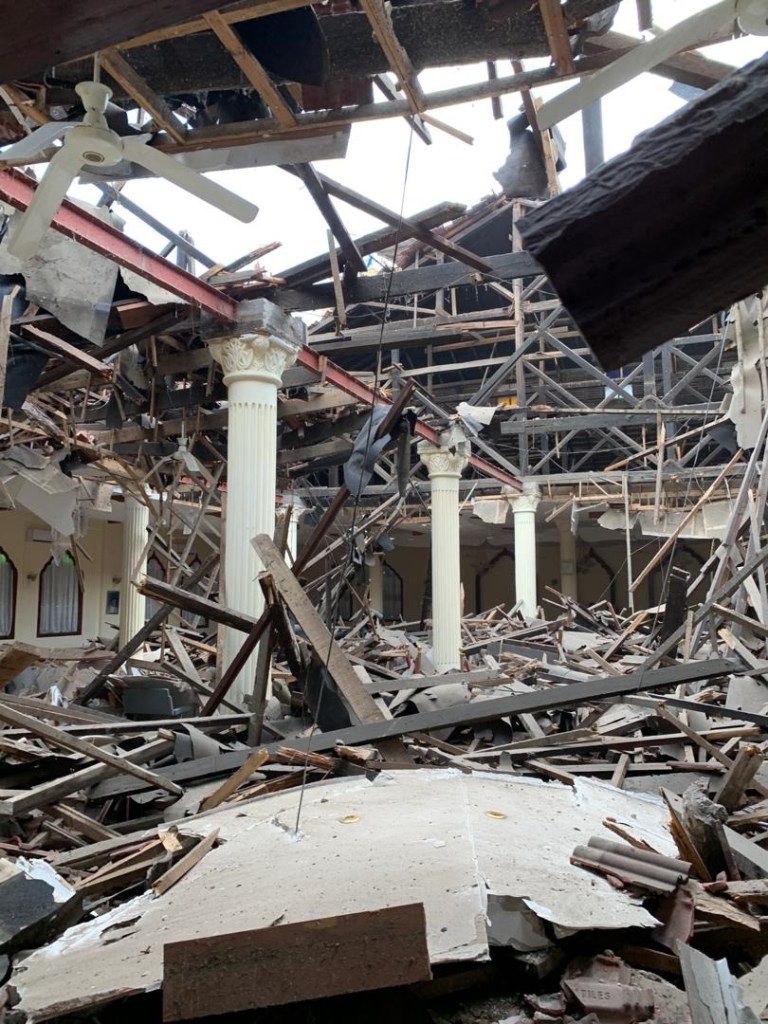
Aerial photograph of Dar es Salaam’s Darkhana Jamatkhana following collapse of a large section of the roof on Tuesday, September 3, 2019. Major tragedy was averted as the incident occured late in the morning, and not between 4-6 AM when several would have been present inside the Jamatkhana for morning prayers.
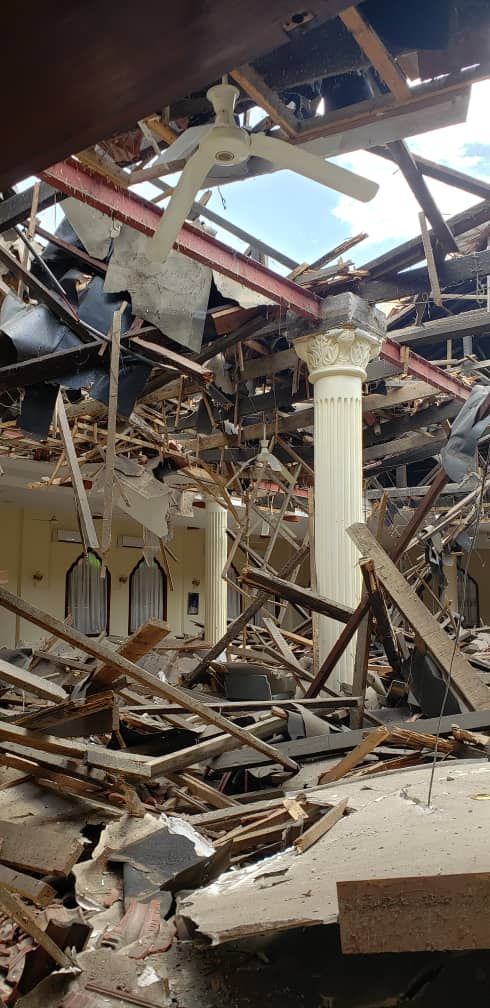
A major tragedy was averted on Tuesday, September 3, 2019, at the historic Darkhana Jamatkhana in Dar es Salaam, Tanzania, when a large segment of the roof collapsed late in the morning. An aerial view of the Jamatkhana along with several other photos we have received shows the extent of the damage on the roof as well as the interior of the Jamatkhana. Luckily, the incident occured at around 10:45 AM and not between 4:00-6:00 AM when several Jamati members would have been in attendance in Jamatkhana for the early morning prayers.
Our sources inform us that three workers who were present on site at the time of incident were immediately treated for minor injuries at the Aga Khan Health Centre located near the Jamatkhana entrance. Two workers escaped with minor bruises on the leg, and the third, after receiving a few stiches for cuts on her head, was kept in the hospital for overnight observation. She was said to be doing well.
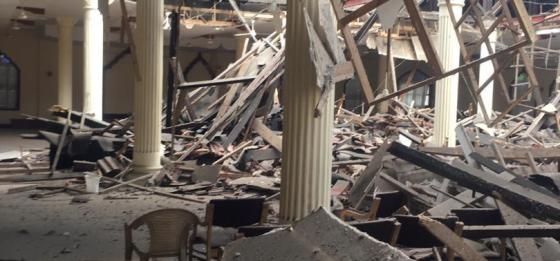
A scary view of the damage caused to the interior of Dar es Salaam’s historic Ismaili Darkhana Jamatkhana following the collapse of the roof (see photo above) on Tuesday, September 3, 2019.
We have learnt from reliable sources that the ceiling was renovated during the Golden Jubilee Year of Mawlana Hazar Imam. However, we do not know whether that involved the structural inspection of the roof.
The Jamatkhana will remain closed until repairs are completed. In the interim, the Jamatkhana ceremonies will take place at the adjacent social hall.
A view of the damage caused to the interior of Dar es Salaam’s historic Ismaili Darkhana Jamatkhana following the collapse of the roof (see photo above) on Tuesday, September 3, 2019.
A view of the damage caused to the interior of Dar es Salaam’s historic Ismaili Darkhana Jamatkhana following the collapse of the roof (see photo above) on Tuesday, September 3, 2019.
The Dar es Salaam Darkhana was built in 1930 and is considered one of several heritage buildings of architectural interest.
The last known tragedy in an Ismaili Jamatkhana was in Yeotmal, India, in 1963, when 112 Ismailis died when the Jamatkhana building collapsed. In 1967, during his visit to the new Yeotmal Jamatkhana Mawlana Hazar Imam declared the dead as “shahids” (martyrs in the cause of faith) and gave blessings for the peace and rest of their souls.
The damage shown in the photos is staggering and we humbly submit our shukrana that the incident took place without loss of lives. The timing was critical.
As of the last update to this story, we have not been made aware of any special announcement by the Aga Khan Council for Tanzania on this incident. A text message that was circulated on the day the incident occurred simply stated, “Due to unavoidable circumstances today’s congregational prayers at Darkhana Jamatkhana will be held in the Darkhana Hall.”
Date posted: September 3, 2019. Date updated: September 4, 2019, (6:55 PM, Toronto).
_____________________
Are you in Dar es Salaam? How is the Jamat coping with this tragic incident? There must be a sigh of great relief that the incident occurred later in the morning and not during the early morning Jamatkhana ceremonies. Our readers’ thoughts from around the world are welcome. Please click Leave a comment
[Before leaving this page, please take a moment to visit Simerg’s Table of Contents for links to a vast and rich collection of articles published on this blog as well as its two sister blogs Barakah and Simergphotos.]
Awarded by the Centre for Humanitarian Dialogue, the Oslo Forum Peacewriter Prize is an essay competition seeking bold and innovative responses to today’s peacemaking challenges. The following paper by Aly Verjee is the second winner of the Peacewriter Prize.
Antonio Achille, working with the Military Liaison Office of the U.N. Mission for the Referendum in Western Sahara, looks through binoculars during a cease-fire monitoring patrol in Oum Dreyga, Western Sahara. (United Nations Photo).
Monitoring Ceasefires is Getting Harder: Greater Innovation is Required
By ALY VERJEE
Far from helping resolve conflict, flawed ceasefires and ceasefire monitoring may well contribute to significantly increased mistrust between the parties to that conflict. The consequences may be even more damaging; as ceasefires are often one of the first objectives a mediator attempts to achieve, in the eyes of the combatants, early failure may more broadly damage the viability, or the perception of viability, of external action to effectively resolve the conflict.
This may reinforce the thinking of some belligerents that the only solution is military. Still, as I saw firsthand during my involvement in the peace process in South Sudan, the mediator may spend much time, energy and political capital in attempting to achieve an operable ceasefire with little promise of return.
Rather than a milestone on the road to conflict resolution, in complex conflicts that seem apparently irresolvable through peaceful means (e.g. Syria, Yemen, Ukraine), ceasefires and ceasefire monitoring often appear to be, at best, a form of conflict management. As Oliver Richmond notes, such efforts may “not even aim at a [durable] ceasefire but instead mediate . . . the continuation of violence in order to avoid further escalation.” [1]
Several recent such attempts at ceasefires have either collapsed quickly (Syria) or had a very limited geographic and political scope (Yemen), or may likely ‘freeze’ the conflict for years to come (Ukraine).
As the nature of conflict evolves and is increasingly fragmented, incrementally tinkering with conventional ceasefire monitoring may be insufficiently transformative to address its current limitations. While, for example, working to better specify the parameters of a ceasefire agreement, improving the training of international monitors prior to deployment, and improving their performance once deployed may still help in some cases, in many contemporary conflicts, peacemakers may need to consider more unorthodox and radical solutions.
At the outset, mediators who design ceasefire monitoring mechanisms should question the three core normative assumptions of conventional ceasefire monitoring. The first of these is that viable information about truce violations can be reported both accurately and in a timely manner. Second, such information can be used to deter violations and/or to incentivise agreement compliance. Third, the potential political and reputational cost of non-compliance is higher than any benefits of continuing the conflict. In a fragmented conflict, such normative logic may not fully apply, calling for other solutions to be considered.
The fragmentation of conflict has been accompanied by other discernible trends in ceasefire monitoring practice. For example, while UN peacekeeping itself began with the monitoring of ceasefire arrangements, today a regional organisation (such as the Organization for Security and Co-operation in Europe (OSCE) in Ukraine or the Intergovernmental Authority on Development (IGAD) in South Sudan) is as likely as the UN to be overseeing an agreement. There are obvious, possibly negative implications of near-neighbours being involved in monitoring conflicts on their immediate borders.
Further, the cautionary story of Norway’s experience in Sri Lanka has largely gone unheeded: today’s mediators are also often ceasefire monitors, or vice versa. Recall that in 2002, Norway agreed to oversee the ceasefire reached between the Sri Lankan government and the Tamil Tigers, despite “reservations about becoming both the mediator and the implementer of the ceasefire.” [2] As a result, ceasefire violators were not ‘named and shamed’, in order to avoid the risk of undermining Norway’s role as a mediator. [3]
Today, almost two decades later, there are numerous examples of the mediator also serving as monitor. In Yemen, the UN is both mediating between the government and the Houthis and monitoring the ceasefire arrangements in the vicinity of Hodeidah. In Ukraine, the OSCE Special Monitoring Mission is mandated “to observe and report in an impartial and objective way on the situation in Ukraine . . . and to facilitate dialogue among all parties to the crisis.” [4] In South Sudan, the regionally led Ceasefire and Transitional Security Arrangements Monitoring and Verification Mechanism (CTSAMVM) is controlled and led by the same regional body that leads the peace process, IGAD. Repeated interruptions to the disclosure of ceasefire monitoring data have resulted when IGAD leaders deemed disclosure to be inopportune.
In such multi-party, fragmented conflicts, conflating the roles of mediator and monitor may make attempts to address such conflicts even more difficult. Trying to encourage the coalescing of rival forces that may be fighting each other as well as the government may affect the mediator’s ability and enthusiasm to report on ceasefire violations, particularly in an asymmetric conflict.
Historically, the idealised, neutral third-party monitor was theoretically conceived of as a desirable aide to the exchange of credible information between former combatants, and whose monitoring presence would help reduce uncertainty. The monitor was also traditionally intended to serve as a trusted intermediary between mistrustful parties. [5]
But in many of today’s civil-war conflicts, the belligerent parties may well hold more information about the intentions and capacities of their adversaries (with whom they may have once been aligned) than any third parties. Syrian, Yemeni or South Sudanese fighters understand the topography and geography of their countries better than any external actors could ever hope to do, despite the advantage international monitors may now derive from access to satellite imagery or other technologies.
While these trends underline the sometimes problematic investing of agency in outsiders to the conflict, such as the drafters, monitors and enforcers of ceasefire arrangements, is the lower ambition of documenting, and perhaps occasionally deterring, the worst of the violence, the best to which a ceasefire process in an apparently intractable conflict can aspire? My answer is that, while there are no easy solutions, conflict mediators can do better by learning from past experience. And while no single novel approach will overcome all of the problems inherent in ceasefire arrangements, and, more particularly, in the monitoring of such arrangements, monitors can do more to innovate and adapt their practice, so that ceasefire monitoring is fit for purpose in this new era of conflict.
This essay proposes three practical possibilities, relevant to consider at both design and negotiation phases of a peace process, and during its implementation, to reshape, complement and strengthen, existing practice. These are:
to apply lessons from the evolution of election observation to ceasefire monitoring;
to widen the focus of ceasefire monitoring to other forms of violations; and,
to better specify options for corrective or remedial action within a ceasefire framework.
Learn from the evolution of election observation
Much like ceasefire monitoring, election observation began as a largely internationally led, externally directed process. Increasingly, however, the most effective election observers today are found in domestic networks (e.g. the Church-based coalitions formed in the Democratic Republic of the Congo, or Kenya, or the alliances fostered by secular groups in Nigeria, Afghanistan or Mexico). Domestic observer networks have the scale, personnel and motivation to report comprehensively and deeply on electoral processes, well before and beyond election day. Aided by crowd-sourcing, geolocation technology, quantitative rigour and greater consistency in methodology, domestic election observers cover more ground, and offer findings more statistically authoritative than those of international counterparts, whose sample is comparatively limited.
While there are some examples of broad-based, citizen-led ceasefire monitoring over the years (a recent report cites, as examples, Guatemala and Sierra Leone in 1996 and the Philippines in 2001), the paucity of recent examples suggests the practice has been largely piecemeal, and far from widespread and systematically practised. [6] Except in the most geographically modest of contexts, scale matters: more than a few plucky, courageous observers or forward-thinking local NGOs are needed for a domestic ceasefire monitoring effort to be transformative. Nor has domestic ceasefire monitoring to date usually attained sufficient sophistication, nor applied consistently robust methods (areas in which election observers have developed their methodology considerably) to make a sizeable difference in most conflicts. Often, domestic monitoring efforts have been subsumed into the more generic monitoring of peace agreement accords, as civil society actors attempt to balance multiple priorities and objectives. While the latter may seem a complementary task, the thematic areas are substantially different, and the particularities of security arrangements may necessitate more tailored methodologies.
Certainly, domestic observation of ceasefires is no panacea. The concept presents its own risks and limitations of observer credibility, consistency and investigative methodology. But, as with election observation, a domestic approach boasts the potential for greater reach, both within complex geographies, across conflict lines, and between combatants and non-combatants. The possibility of a response that may be more timely than international monitors can ever hope to achieve is also alluring. Perhaps of equal importance, at scale, there is the possibility for greater innovation in monitoring, which also offers the potential for mobilising a coalition for peace from below.
Effectively widen the focus of ceasefire monitoring to other forms of violations
Increasingly, ceasefire monitoring mandates have moved beyond mere determinations of who fired at whom, with what weapons, to broader concerns about international humanitarian law, the protection of civilians, and sexual and gender-based violence. But the core of monitoring work remains concerned with what are perceived as first-order violations. Even when other issues are explicitly outlined in a ceasefire agreement, they are often felt to be the purview of human rights investigators, not ceasefire monitors.
While some see dedicating more time, personnel and resources to other ceasefire monitoring priorities as a distraction, such monitoring may not necessarily require more money, equipment and personnel but, more specifically, monitors with more diverse backgrounds, experiences and skills. This is more than a play to political correctness; it could help unlock new paths to conflict resolution. This is because, in some contexts, there may be an opportunity to use a broader understanding of the violation environment to improve relations with the belligerents in a conflict. Conducting an investigation, or building rapport with communities, may not require a sophisticated appreciation of the different forms of arms and ammunition, as important as that knowledge may be. But these are skills that might strengthen the credibility of the mission more broadly.
The point is not to overburden ceasefire monitors with an over-ambitious mandate. Instead, it is to see these additional aspects of the monitoring mandate as both opportunities for confidence-building between the parties and as an additional means to bolster the authority and credibility of monitoring efforts.
Both the parties to an agreement and its monitors must conceptualise that the spectrum of violations is broad. It does not consist only of extremes: at one end, inconsequential technical violations (e.g. 31 rounds of ammunition held by a party instead of the prescribed 30), and, at the other, the most egregious violence and mass atrocities imaginable. In between, there is much space for manoeuvre (in all senses of that word), and therefore opportunity. While it may be impossible for the drafter of an agreement to consider every possible violation at the outset, further elaborating other forms of prohibitive behaviour might reduce the space for future ambiguity.
Beyond punitive measures, better specify options for corrective or remedial action within a ceasefire framework
The international community’s options for coercive action in support of a ceasefire agreement are limited. While both unilateral and multilateral sanctions and arms embargoes remain commonly contemplated measures, the likelihood, efficacy and effect of such measures is debatable. In some cases, such measures may be merely symbolic, even when political consensus exists amongst the great powers to impose them. At the same time, most ceasefire agreements leave the messy tasks of corrective and/or disciplinary actions to the parties to the agreement, without much specificity.
Instead, ceasefire brokers could use their formulation and facilitation functions to improve the spectrum of self-enforcement and internal disciplinary mechanisms within the framework of a ceasefire agreement itself. Further, such agreements could better link the activities of monitoring mechanisms with the power to offer appropriate recommendations.
For example, a ceasefire agreement could provide monitors with the power to recommend that identified offenders, whether as units or individuals, be rotated or removed from the theatre of operations, or from command responsibility. Or, that they be restricted to non-combat duties, or be required to perform public works (e.g. road-building or repairs) as reparation for violations. [7]
Such measures would not supersede the conventionally classical punitive measures of trials, courtsmartial and/or dismissal or suspension from the armed party that remain within the internal purview of most armed groups. But they might give a wider menu of more proportionate options to ceasefire supporters and enforcers, to bridge the extremes of total inaction and comprehensive sanctions. Such measures may also help in fragmented conflicts, where outright condemnation or the imposition of heavily punitive measures may well risk further fragmentation of the conflict. [8]
Further, in an environment where participation in a ceasefire agreement is itself a demonstration of signalling a desire to cooperate, creative specificity could identify a window for further positive signalling. A recommendation that suggests Unit A should be redeployed from Province B is a more tangible area for focus than the more conventional refrain of monitors that “it is recommended that the appropriate action be taken”. In such boilerplate formulations, the who, how, when and why of the recommended action is often left unsaid, with predictable consequences for follow-up.
Widening the spectrum of possible measures might help in fostering parties’ compliance. From the point of view of the parties, implementing a specific recommendation emanating from a neutral body may be more politically palatable, if the optics of the burden of the political costs can be partially shifted to the monitoring institution. Given their internal dynamics, the parties may be unable or unwilling to enforce consequences against their own forces on their own initiative.
However, if the parties are more willing to act at ceasefire monitors’ behest, the disadvantages of monitors being painted as the bad guys may be less consequential, even if some monitors might fear being too prescriptive would risk their neutrality, or see such innovation as moving their mandate from ‘technical’ to ‘political’. Providing the party in non-compliance with the political cover to take corrective action it might not otherwise imagine or devise itself could help in future efforts to resolve the underlying conflict.
Conclusion
The suggestions offered here are not exhaustive. They are intended to demonstrate that, even though the templates of ceasefires and ceasefire monitoring remain at the mercy of a given conflict’s internal and external political realities, creative additions to the mediator’s arsenal can be made, and could be developed further. Central to these ideas is to look to the citizens beyond the signatories to an agreement to shift the paradigm of conflict. For this to be effective, citizen-led efforts will need support beyond the conventional models. Perhaps paradoxically, the lack of active examples in the practice of many of these ideas suggests there is much latitude for innovation and creative application. Fundamentally, such strategies should be seen as more than just desirable additions to classical practice; the increasingly complicated nature of conflict demands equally meaningful innovation in response.
Verjee’s profile with photo, below, is taken from the website of the United States Institute of Peace ( https://www.usip.org).
_________________
Aly Verjee is a researcher specializing in the politics of eastern Africa. He is a visiting expert at the U.S Institute of Peace and a fellow of the Rift Valley Institute. From 2015-2016, he was deputy and then acting chief of staff of the Joint Monitoring and Evaluation Commission, overseeing the implementation of the 2015 peace agreement in South Sudan. From 2014-2015, he was senior advisor to the chief mediator of the Intergovernmental Authority on Development (IGAD)-led peace process for South Sudan.
He lived and worked in Sudan from 2005-2010, and returned in 2011 as chief political analyst for the European Union (EU) observation of the South Sudan independence referendum. He was chief political analyst for the EU election observation missions to Zambia (2016) and Tanzania (2015); directed Free Press Unlimited’s media development initiatives in Pakistan and Afghanistan (2011-12); directed Democracy International’s election observation mission to Djibouti (2011); was deputy director of the Carter Center’s political and electoral observation mission to Sudan (2008-10); helped manage the first-ever election observer network established in the DR Congo (2006), comprising some 7,000 Congolese observers, and managed international election observation missions in Somaliland (2005, 2010 and 2012).
Mr. Verjee has provided expert testimony before the High Court of Justice of England and Wales, the British Parliament and the United States Senate Foreign Relations Committee. He is the author of The Economics of Elections in Somaliland (2015); New North, Old North: The Republic of Sudan after the split (chapter) in Sudan after Separation: New Approaches to a New Region (2012); Disputed Votes, Deficient Observation: the May 2011 Election in South Kordofan, Sudan (2011) and Race Against Time: Countdown to the Referenda in Southern Sudan and Abyei (2010).
_____________________
EXCERPT FROM STATEMENT ISSUED ON ALY VERJEE BY U.S. INSTITUTE OF PEACE
The U.S. Institute of Peace congratulates our Aly Verjee on being awarded the 2019 Oslo Forum Peacewriter Prize, which recognizes “bold and innovative responses to today’s peacemaking challenges,” for his essay on addressing the increasing challenges of cease-fire monitoring.
“USIP is delighted to see Aly Verjee receive well-deserved recognition for his innovative ideas and approaches to conflict de-escalation,” said Mike Yaffe, the Institute’s vice president for the Middle East and Africa. “Aly is tireless in applying his ample knowledge of peace mediation together with incisive analysis about the situation on the ground to come up with creative and thoughtful solutions to some of the toughest conflicts in Africa.”
“So much effort is put into reaching an agreement to end violence. But then the hard work begins to ensure that those who are fighting will keep their commitments,” said USIP Director for Africa Programs Susan Stigant. “Aly draws on his rich experience in peace mediation and on elections to offer some new ways to make sure that guns remain silent and citizens remain safe. Most importantly, he challenges all of us to bring evidence, creativity and our best minds to finding solutions.”
__________________
Endnotes
[1] Oliver Richmond, “A genealogy of mediation in international relations: from ‘analogue’ to ‘digital’ forms of global justice or managed war?”, Cooperation and Conflict, January 2018, p.13.
[2] Luc Chounet-Cambas, “Negotiating ceasefires: dilemmas & options for mediators”, Mediation Practice Series 3, Centre for Humanitarian Dialogue, March 2011, p.10.
[5] Virginia Page Fortna, “Peacetime: ceasefire agreements and the durability of peace”, Princeton University Press, March 2004.
[6] Nick Ross, “Civil society’s role in monitoring and verifying peace agreements: seven lessons from international experiences”, Inclusive Peace & Transition Initiative, January 2017, pp.11–12.
[7] Aly Verjee, “South Sudan: four steps to a truce that works”, USIP, January 2018, available at: https://www.usip.org/ blog/2018/01/south-sudan-four-steps-truce-works.
[8] Kathleen Gallagher Cunningham, “Understanding fragmentation in conflict and its impacts on prospects for peace”, Oslo Forum Background Paper, Centre for Humanitarian Dialogue, June 2016, pp.9–10.
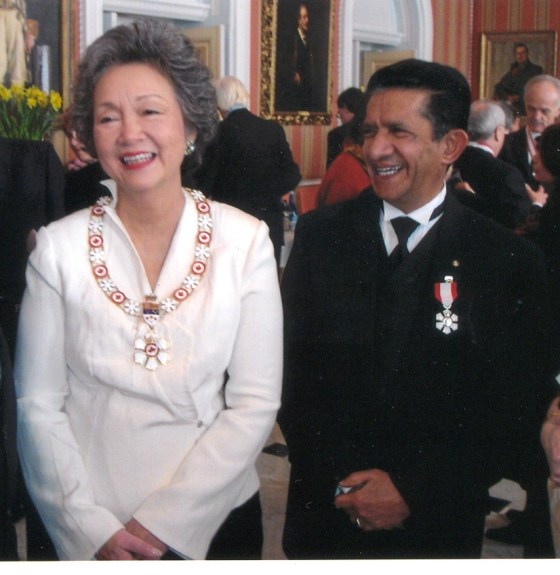
Sultan Jessa with Her Excellency Adrianne Clarkson, the former Governor General of Canada, at the event in 2005 marking the presentation to him of Canada’s highest honour, the Order of Canada. Photo: Sultan Jessa Collection, Montreal.
On August 15, 2019 at 1:15 PM, I received an article for publication from my beloved friend Sultan Jessa with a kind note that said:
Dear Malik, Feel free to use it if you find this appropriate. Sultan.
I simply replied,
Sultan: Will review.
Little did I know that exactly a week later, on August 22, he would pass away! I was having lunch at Fairview Mall in Toronto, when a note was sent to me that said, “Sultan just passed away this morning.” The email simply would not open on my Iphone, and I learnt about the sad news a few hours later on my notebook.
His funeral ceremonies will be held today, Saturday August 24, at 10 AM at Montreal’s Headquarters Jamatkhana. Samar and ziarat prayers in his remembrance will follow in the evening at the Jamatkhana.
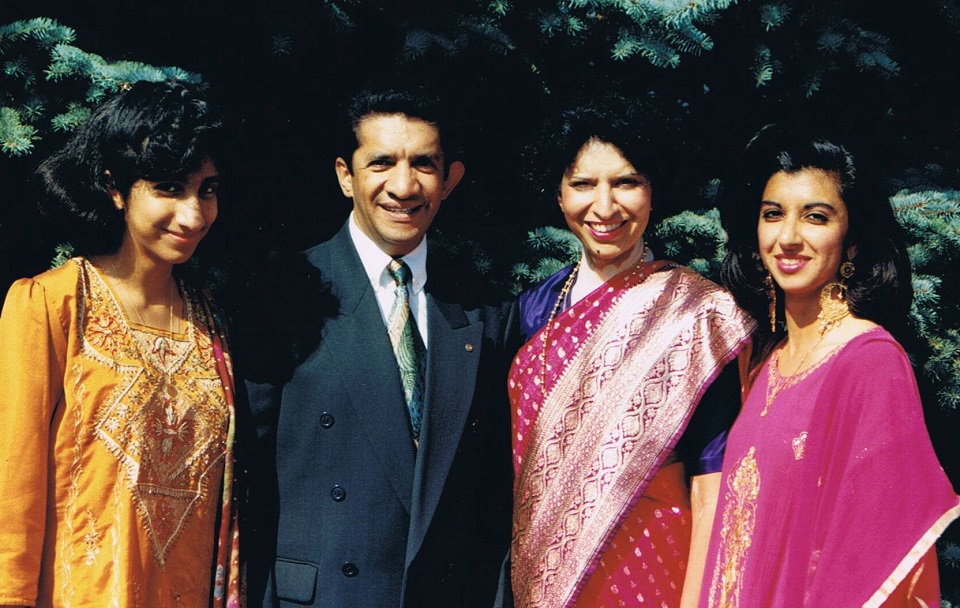
Flashback to 1990: Sultan and Rosila with daughters Yasmin (left) and Anaar. Photo: Sultan Jessa Collection, Montreal.
Their warmth and affection when I visited their home was incredible, and I cannot forget Sultan’s generosity when he unconditionally presented me a carefully preserved envelope containing memorable photos of His Highness the Aga Khan that had been taken by his former colleague at Kenya’s Daily Nation, Azhar Choudry. I was deeply touched.
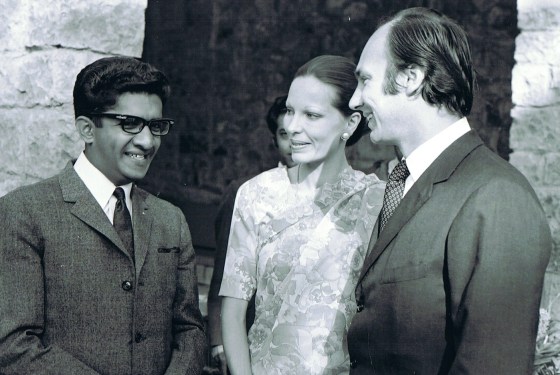
His Highness the Aga Khan and Begum Salimah with Sultan Jessa at the bungalow of the late Diwan Sir Eboo Pirbhai during their 1972 visit to Kenya. Photo: Azhar Chaudary. Sultan Jessa Collection, Montreal.
At this painful time of bereavement, we convey our heartfelt condolences to his wife Rosila, their two daughters Anaar and Yasmin, and all the members of Sultan’s family, and pray for their strength and courage. We also pray that Allah may rest Sultan’s soul in eternal peace.
We invite our readers to record their condolences and tributes honouring Sultan Jessa’s memorable life at Leave a comment.
Date posted: August 23, 2019. Last updated: August 24, 2019.
__________________
To read tributes that readers have left for Sultan Jessa or to post one please click Leave a comment.
[Before leaving this page, please take a moment to visit Simerg’s Table of Contents for links to a vast and rich collection of articles published on this blog as well as its two sister blogs Barakah and Simergphotos.]
The following piece has been compiled and adapted from material supplied by the Aga Khan Museum; it incorporates notes by Dr. Ulrike al-Khamis, the Museum’s Director of Collections and Public Programs.
From Mecca to Toronto
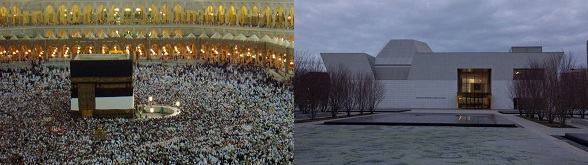
Ka’ba in Mecca. Photo: Aga Khan Museum; Toronto’s Aga Khan Museum. Photo: Rian Dewji.
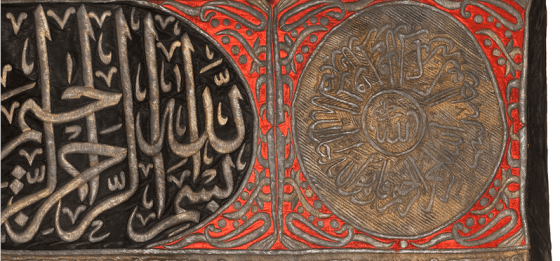
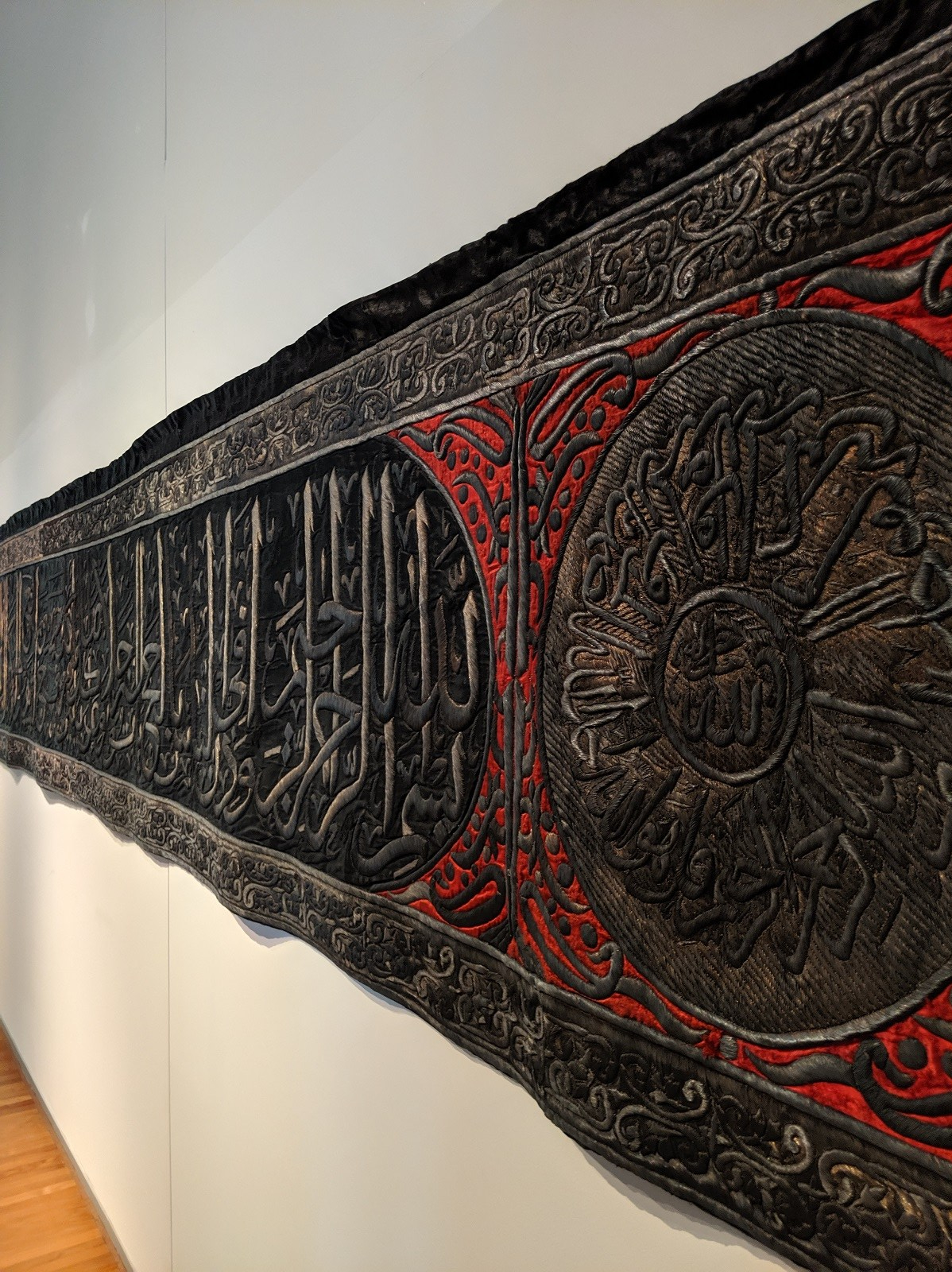
On display for the first time in Toronto is a 100-year-old silk fragment from a hizam — part of a ceremonial draping that covers the Ka’ba, Islam’s holiest site to which millions of Muslims made the annual pilgrimage on Friday August 9, 2019.
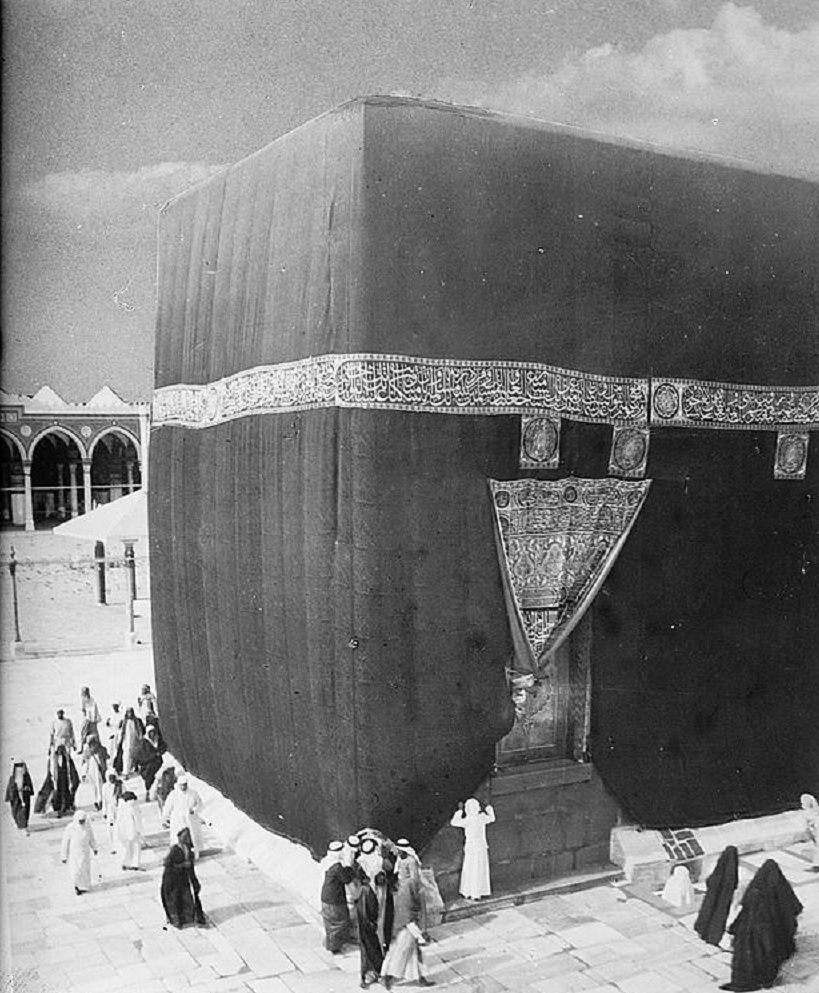
The Ka’ba is draped in a black ceremonial covering known as the kiswa, and around the upper part of the kiswa runs the hizam — an ornamented belt embroidered in silver and silver-gilt thread with Qur’anic verses relating to the pilgrimage.
This hizam is one of the Aga Khan Museum’s most significant textiles and is on special display until September 9, 2019. Measuring eight metres long and nearly one metre tall, it once belonged to a kiswa that measured 47 meters and was made in Cairo around the early 20th century.
This textile from the Ka’ba is on display at the Aga Khan Museum until September 9, 2019. Free viewing was available during celebrations marking the Hajj and Eid al-Adha from August 10-14. Photo: The Aga Khan Museum.
As one of the most prominent kiswa ornaments, the hizam traditionally runs the length of the Ka‘ba’s upper perimeter. The inscription here contains verses 27-29 from chapter 22 (Al-Hajj) of the Qur’an:
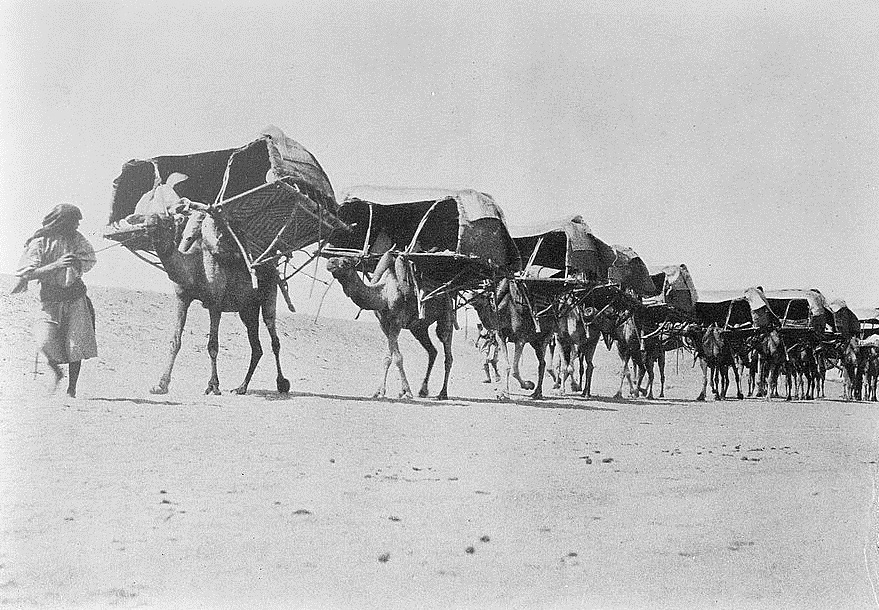
“And proclaim to mankind the hajj. They will come to you on foot and on every lean camel, they will come from every deep and distant mountain highway. That they may witness things that are of benefit to them, and mention the name of Allah on appointed days, over the beast of cattle that He has provided for them. Then eat thereof and feed therewith the poor who have a very hard time. Then let them complete their prescribed duties and perform their vows, and circumambulate the Ancient House.”
The roundels contain further Qur’anic references that mention ‘God the Eternal’ as well as the Prophet Muhammad.
The Ka‘ba receives a new drape every year during the pilgrimage season. After it ends, the kiswa is taken down, divided and either gifted to dignitaries or sold to raise money for charity.
Note: The museum is open everyday from 10 am to 6 pm (8 pm on Wednesdays). It is closed on Mondays, except holiday Mondays.
19th/20th Century Views of Ka’ba
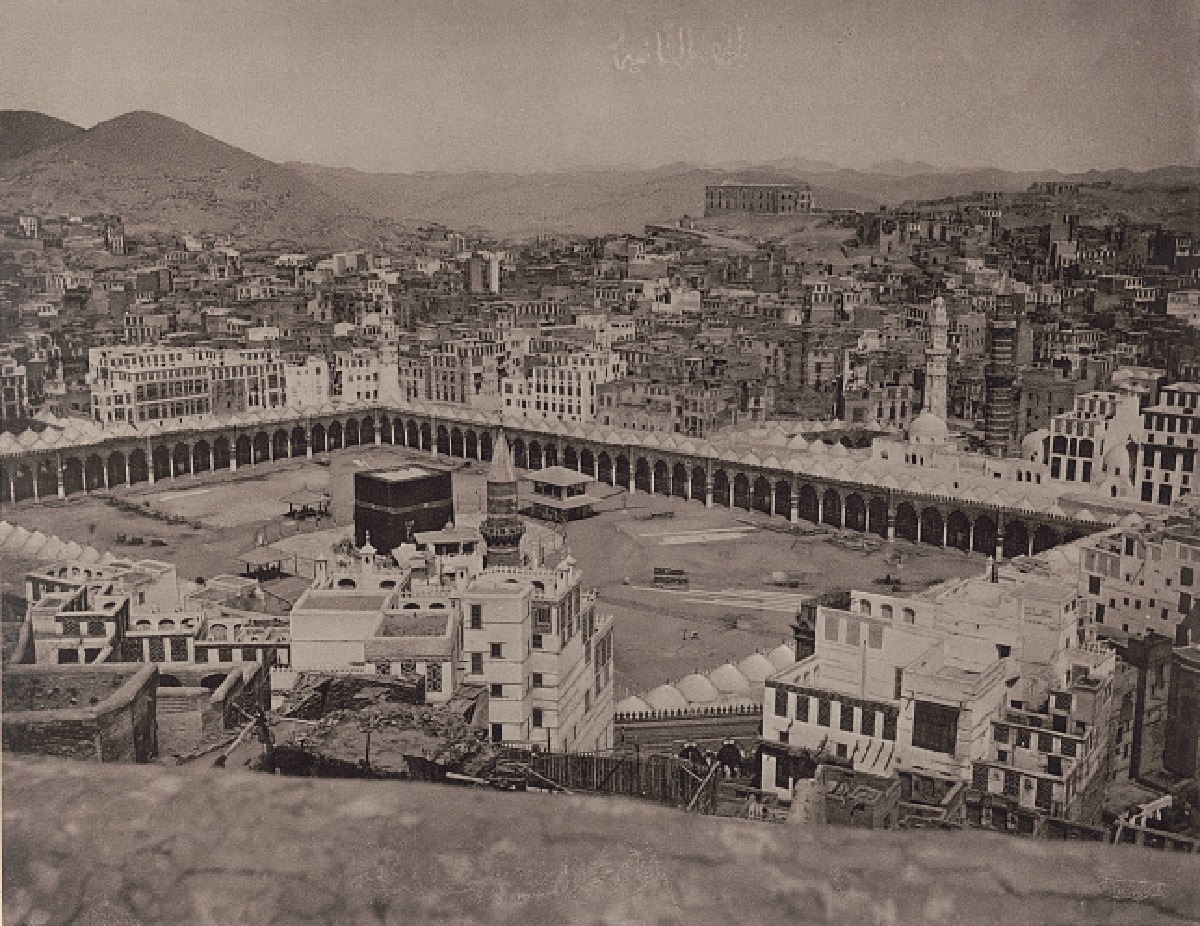
A bird’s eye view of the Ka’ba as photographed in 1889. Note the hizam that runs around the upper part of the Ka’ba. Photo: US Library of Congress.
ca. 1910. A close-up photo of the Ka’ba with the hizam running around the upper part of the black cloth (the kiswa). Photo: US Library of Congress.
Date posted: August 7, 2019. Last updated: August 15, 2019.
[Before leaving this page, please take a moment to visit Simerg’s Table of Contents for links to a vast and rich collection of articles and photographs published on this blog as well as its two sister blogs Barakah and Simergphotos.]
…Whereas Eid al-Adha, or the Festival of the Sacrifice, is an Islamic holiday which honors Abraham’s symbolic sacrifice of his son to God, as referenced in the Quran, Old Testament, and New Testament…Whereas Islam is one of the world’s major religions, sharing the belief in one God and one humanity….
For 2019, Muslims will perform the annual pilgrimage to the Kaaba starting August 9. This will culminate with the celebration of the Eid al-Adha on August 11. We would like to wish all our readers a joyous Eid, with prayers that the holy occasion will foster greater unity and understanding among all Muslims and that Muslim communities everywhere, keeping in mind that Muslims practice a universal faith, will seek to end conflicts, strive for peace and assist in the progress and development of humankind wherever they live.
The United States Capitol, often called the Capitol Building, is the home of the United States Congress with the House of Representatives in the south wing (right in photo) and the Senate in the north wing. Photo: US Library of Congress.
Many of our readers in North America and around the world may not be aware that in 2010, as Muslims celebrated Eid al-Adha from November 16 until November 20, the House of Representatives of the US Congress passed the following resolution recognizing the cultural and religious significance of Eid al-Adha.
____________
111TH CONGRESS 2D SESSION
H. RES. 1719
IN THE HOUSE OF REPRESENTATIVES
NOVEMBER 16, 2010
Mr. HONDA (for himself, Mr. CARSON of Indiana, and Mr. ELLISON) submitted the following resolution; which was referred to the Committee on Oversight and Government Reform
RESOLUTION
Recognizing the cultural and religious significance of Eid al-Adha and wishing Muslim-Americans and Muslims around the world a prosperous holiday.
Whereas Eid al-Adha, or the Festival of the Sacrifice, is an Islamic holiday which honors Abraham’s symbolic sacrifice of his son to God, as referenced in the Quran, Old Testament, and New Testament;
Whereas Abraham is a respected figure in Christianity, Judaism, and Islam;
Whereas for more than 14 centuries, Eid al-Adha has been observed;
Whereas Eid al-Adha is a holiday of great importance to millions of Muslim-Americans and approximately 1,500,000,000 Muslims around the world;
Whereas during Eid al-Adha, Muslim-Americans recognize the importance of sacrifice, freedom, and justice;
Whereas Eid al-Adha is celebrated around the world with prayers, charity and social events;
Whereas many communities across the United States hold day-long festivals in observance of Eid al-Adha;
Whereas Islam is one of the world’s major religions, sharing the belief in one God and one humanity;
Whereas Muslim-Americans have made significant contributions to the flourishing of the United States, including as ambassadors to foreign nations, award winning scientists, doctors, and engineers, and athletes;
Whereas Muslim-Americans have contributed to the defense of the United States with an estimated 10,000 Muslim-Americans serving in the United States Armed Forces;
and
Whereas Muslim-Americans contribute to the success and pluralism of the United States: Now, therefore, be it
Resolved, That the House of Representatives—
(1) recognizes the cultural and religious significance of Eid al-Adha;
(2) expresses its appreciation and respect for the contributions of Muslim-Americans to the United States; and
(3) wishes Muslim-Americans and Muslims around the world who observe Eid al-Adha a prosperous holiday.
Date posted: August 6, 2019.
_________________
We welcome feedback from our readers. Please submit your comment below or clickLeave a comment
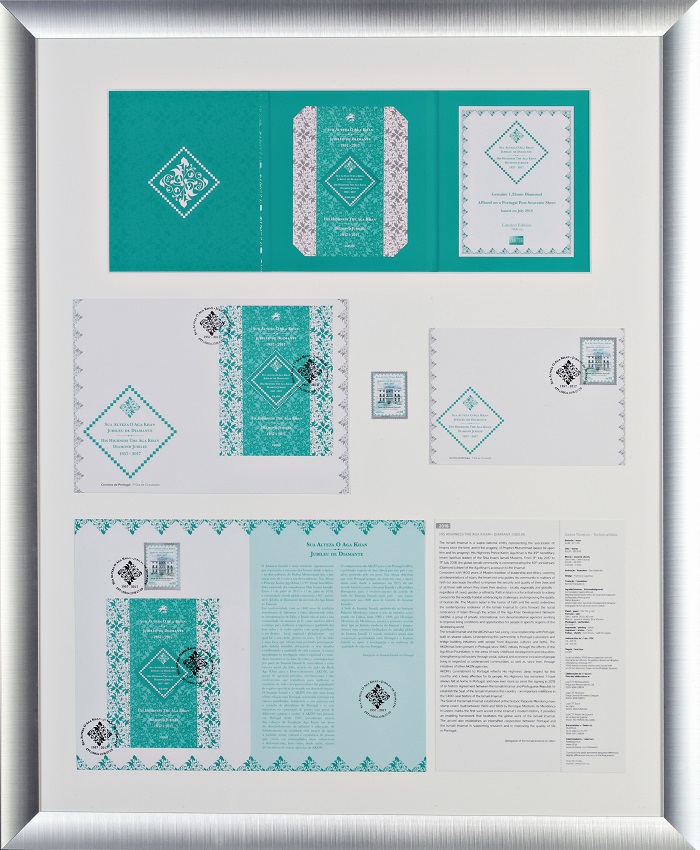
During the year long celebration of his Diamond Jubilee or 60 years of Imamat from July 11, 2017 to July 11, 2018, Mawlana Hazar Imam, His Highness the Aga Khan, at the official invitation of various governments travelled to 11 countries. In 3 countries that he visited – Tanzania, Pakistan and Portugal – he was presented with official stamps, first day covers as well as related philatelic objects to honour him on his Diamond Jubilee.
“I have just opened the frame package and I am immensely impressed, the framing is beautifully done.”
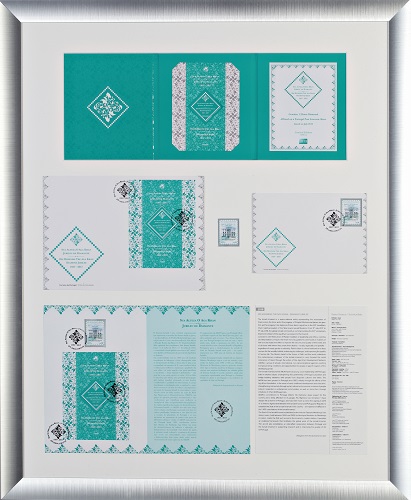
Portugal, in particular, released some extraordinary and unique philatelic objects that included a stunning souvenir sheet embedded with a genuine 1.25 mm diamond, two first day covers, a stamp and a comprehensive profile of Mawlana Hazar Imam in English and Portuguese.
“Thank you. The frame is so beautiful and will be a wonderful memory for us.”
Simerg and its sister website Barakah have captured this momentous Portuguese collection in a beautiful frame that brings alive one of the most historical events in modern Ismaili history – the celebration of the Diamond Jubilee of His Highness the Aga Khan. The philatelic objects have been mounted onto a high quality frame by one of Canada’s leading framers. It has a unique permanence, and is an enduring record of Mawlana Hazar Imam’s Imamat which will be cherished by present and future generations of Ismailis as well as friends of the community. The frame details follow.
Frame Contents: Souvenir sheet embedded with a genuine 1.25 mm Diamond; Official First Day Covers, a Mint Stamp, Stamp features including a profile of His Highness the Aga Khan in Portuguese and English. All objects original and issued by the Portugal Postal Service, CTT.
Frame Size: Appx. 26.5″ by 20″ (or appx. 67.3 cms by 50.8 cms). See photo above.
Frame Features: A high quality and durable pewter toned metallic frame; Made in the USA; protected with UV glass to prevent fading and mounted on acid-free board. Frame supplied with a wall hanging kit. Mounting done in Canada by Malen Framing, a distinguished framer in Ottawa, the nation’s capital.
Frame Inscription: The frame will come with a loose plate inscribed with the purchaser’s name (or, optionally, if it is a gift, the gift recipient’s name).
HOW TO PURCHASE THE FRAME
Availability: At the present time the frame is only available for shipment within Canada. All shipment will be done via UPS Courier Service. We welcome inquiries from the USA and overseas. Write to us at simergbooks@aol.com, or call/text 1-613-799-5663.
Price: The purchase price of the frame is US $500.00 or C $660.00 (this includes delivery in Toronto and Ottawa). For all other locations in Canada the cost including packaging/shipping/insurance will be US $625.00 C $825.00. The frame will be expertly packaged by UPS. Prices include HST.
Paypal: Simerg is Paypal verified. To purchase via Paypal, please send a request to simergbooks@aol.com and a Paypal invoice will be generated.
Email Transfer: To purchase the frame, please send a request to simergbooks@aol.com. We will generate an invoice and request you to submit a payment via email transfer.
Cheque Payments: We will also accept bank draft, postal order or certified cheque payments.
Delivery Method: The order will be processed upon receipt of payment and the CUSTOM MADE frame will be shipped within 2-4 weeks to a Canadian address by UPS land courier (allow 2-7 days for delivery from date of shipment).
Viewing the Frame: If you are in Ottawa or Toronto, we can arrange for you a personal viewing of the frame. It is truly impressive; photos will not capture the real beauty and elegance of the frame.
Questions:Please write to simergbooks@aol.comor call or send text to 1-613-799-5663. We will respond to your call or message promptly.
OUR COMMITMENT TO EXCELLENT CUSTOMER SERVICE
Over the years, Simerg, has offered numerous collection items including signed copies of Prince Hussain Aga Khan’s “Animal Voyage” and “Diving Into Wildlife,” the award winning Central Asian book “With Our Own Hands” as well as beautiful frames of Golden Jubilee Stamps (sold out). We have attained a high degree and level of customer satisfaction.
“My son was delighted with the excellent photography by Prince Hussain. We as a family will cherish this volume for a long time. Once again, thank you Simerg for making this book available in North America and your outstanding customer service and support.” Shamim Rajan, Richmond Hill, Ontario
“This is a beautiful piece of work!! The service was excellent. Very quick, safe and efficient turnaround and follow up. I recommend everyone to have a copy.” Nazir Alibhai, Markham, Ontario
“Thank you so much for the shipment – I received it today! I am impressed at how quickly the transaction went from the time of my order to the delivery. Great job!!” Zarah K.