Simerg is an independent initiative dedicated to Ismaili Muslims, the Aga Khan — their Hereditary Imam — and the Ismaili Imamat, and Islam in general through literary readings, photo essays and artistic expressions
Author Archives: Malik Merchant, Editor
Founding publisher and editor of www.barakah.com, www.simerg.com and www.simergphotos.com.
By THE GLOBAL CENTRE FOR PLURALISM (Press Release, August 1, 2019)
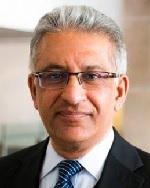
The Board of Directors of the Global Centre for Pluralism is pleased to confirm that Meredith Preston McGhie will take over as Secretary General, replacing John McNee on his retirement from the position. She will assume her new role on October 1st.
In announcing the selection, The Right Honourable Adrienne Clarkson, Chair of the Search Committee, cited Ms. Preston McGhie’s frontline negotiating efforts towards building peace and good governance in diverse societies.
Meredith Preston McGhie. Photo: Ilja C. Hendel via Global Centre for Pluralism
“Meredith stood out for the depth of her lived experience in parts of the world where conflict and exclusions are widespread,” said Madame Clarkson. “Her understanding of the value of pluralism is grounded in this extensive practical experience. After searching the world for a leader to continue the Centre’s vital work, I am delighted we convinced this outstanding Canadian to come home.”
Ms. Preston McGhie studied military and international history at the University of British Columbia before pursuing graduate studies in global security in the United Kingdom. She has since devoted more than 20 years to addressing conflict and instability in Africa and Asia in some of the most troubled situations. From working with the Naga in Northeast India and indigenous communities on the Thai-Myanmar border, to supporting UN efforts in Kosovo, Northern Iraq and several African countries, her work has straddled frontline negotiation, policy and diplomacy.
Most recently, as Africa Regional Director with the Centre for Humanitarian Dialogue, she oversaw the HD Centre’s complex mediation and dialogue efforts in Nigeria, the Gambia, Kenya, Mozambique, Sudan, Somalia and South Sudan, among other places. In the Kenyan National Dialogue and Reconciliation Process in 2007-08, she advised a panel of eminent Africans led by the late Kofi Annan. She has contributed annually to the Oslo Forum, a gathering of the world’s leading experts and policymakers in conflict resolution, and teaches mediation practice internationally.
Ms. Preston McGhie replaces John McNee, who has served as the Centre’s first Secretary General since 2011, and who presided over the restoration of 330 Sussex Drive, an Ottawa heritage landmark, as the Centre’s global headquarters.
“The Centre’s Directors look forward to working closely with Meredith to advance our agenda of building more peaceful and inclusive societies,” said Madame Clarkson. “At the same time, we are enormously grateful to her predecessor. John quite literally put the Centre on the map, and leaves a strong foundation for its future.”
Date posted: August 1, 2019.
[Before leaving this page, please take a moment to visit Simerg’s Table of Contents for links to a vast and rich collection of articles published on this blog as well as its two sister blogs Barakah and Simergphotos.]
To meet the challenge that the global ecological crisis presents today, there is an urgent need to draw on humanity’s philosophical and spiritual repertoire – because it teaches us valuable lessons on the importance of taking care of life in all its forms. Senegalese philosopher Souleymane Bachir Diagne draws on this source here, by blending the philosophical novel of a twelfth-century Andalusian Muslim scholar, African words of wisdom and thoughts from Western philosophers. We are not nature’s masters and owners, the Senegalese philosopher warns us.
By SOULEYMANE BACHIR DIAGNE
My intention is to think about a major crisis – the ecological crisis, which we agree, defines the era we are living in − by showing how the history of philosophy can shed light on it and give us guidance on the actions we must take to deal with it. More precisely, I would like to show how there is continuity between the way philosophy helps us to consider a policy of humanity and the way it illuminates a policy of the “humanization of the Earth”, in the words of the French philosopher and theologian Pierre Teilhard de Chardin (1881-1955).
I use this expression as signifying the duty and the responsibility that the human has to act accordingly, from the moment he understands that nature is entrusted to him and to humanity in the future. It forbids me to consider myself as “nature’s master and owner”, to cite the well-known phrase by the seventeenth-century French philosopher, René Descartes. On this point, regarding a philosophy that is simultaneously spiritual and ecological, I would like to evoke the ideas of the Andalusian scholar Abu Bakr Ibn Tufayl (1105-1185). They are masterfully expressed in his magnum opus, the philosophical novel Hayy ibn Yaqzān.
He presents the idea that humans realize their humanity fully only when they reach ecological consciousness − which allows them to simultaneously understand the evolution of their own becoming and the responsibility which is incumbent on them to protect life on earth.
Homo perfectus
The Arabic philosophical fable, after its translation into Latin in 1671, under the title Philosophus autodidactus, and later into English, was a source of inspiration for many writers, including the English writer, Daniel Defoe, the author of Robinson Crusoe.
Indeed, the Andalusian philosopher’s novel is the story of the survival of Hayy, a child abandoned on an island that has never known a human presence, and who is rescued, protected and fed by a doe. When the animal dies, Hayy learns to use his hands, his practical and then theoretical intelligence, in an ontogeny (the origin and development of the individual organism, from conception to death) that recapitulates phylogeny (evolution of the species over the ages): the child develops into homo perfectus, the insānkāmil of Islamic mysticism. In other words, he becomes an accomplished human who rediscovers not only the essence of civilization (and especially fire), but also the sense of transcendence that leads him to the idea, and then to the experience of the divine. We find an echo of the Philosophus autodidactus in the philosophical debate about the tabula rasa, the clean slate that represents our ability to know before experience begins to record our knowledge on it.
Thus we have underlined the continuity between the idea illustrated by the novel about Hayy and An Essay Concerning Human Understanding by the seventeenth-century English philosopher John Locke. We should note, in passing, that the teaching of the history of philosophy as it is presented in most textbooks leaves little room for a work as important as Ibn Tufayl’s, or for the intellectual tradition to which it belongs − this calls for another way of teaching the history of philosophy, which does not make it a purely European matter.
The caliph of God on Earth
The first shock that sets in motion the practical and theoretical intelligence of the child is the question that confronts him, plunging him into suffering and incomprehension, at the moment his mother, the doe, dies − what is this thing, life, which has left the body of the mother and made her forever deaf to her child’s calls? To answer this question, Hayy devotes himself to the practice of dissecting dead animals, and then attempts to surprise the vital principle in living animals by performing vivisections on them − not seeing, in his ignorance and his innocence, the cruelty of his actions. He abandons this research, again because of failure. Later, when he attains full awareness of self, God, Creation and his own place within it and responsibility for it, Hayy will understand his responsibility to be the guardian of life, in all its forms. He will take from nature only what is necessary for his sustenance, ensuring that the capacity for renewal of life is perfectly preserved, and that nature reconstitutes what it gives him.
Ibn Tufayl’s insistence on Hayy’s ecological consciousness is a philosophical illustration of Koranic anthropology that defines the human as “the caliph of God on Earth”. The word caliph, which means substitute, and the best translation for which is no doubt lieutenant – or more precisely lieu-tenant, place-holder, in French etymology – teaches humans what they have to be and defines their responsibility to watch over their environment, namely the Earth. Moreover, this word caliph, inspite of what we hear today, has in the Koran only this meaning, denoting the destination of the human. An important message from Ibn Tufayl’s book is, therefore, that the human is guardian of the Earth for itself and for the generations to come, because the human is originally the depository of what makes him the placeholder of God on Earth. Today, we need more than ever to heed this responsibility, without it being necessarily linked to a religious meaning.
Making humanity together
I’ll sum up my point in one word: ubuntu. This Bantu word gained worldwide fame when it was used by South Africans Desmond Tutu and Nelson Mandela. It literally means “to make humanity together” − to create, thanks to other people, the human that I have to become, and at the same time, create “one humanity” with others.
To be the receptacle of what makes me a placeholder of God on Earth makes me understand that “making humanity together” is the opposite of depredation. It gives me the duty to look after life in general − to think that although animals, for instance, do not themselves formulate rights that must be recognized as declared, these are not any less real to me, because my humanity obligates me to them.
In my opinion, I am not one of those people who go overboard in their efforts to bring down anthropocentrism – and for whom the different kingdoms should be self-represented in a sort of “natural contract” replacing the social contract. It is not necessary to dissolve humanity to forbid it to behave, as another seventeenth-century philosopher, Baruch Spinoza, wrote, “like an empire in an empire” − to make humans understand that they are not free nor separate from natural necessities. On the contrary, we must affirm our humanity, but affirm it as ubuntu. Ubuntu is a philosophical concept with universal scope and it seems to me that it encompasses the meaning and the role of the humanities − in particular, the philosophical humanities. By showing how these can enlighten us, I want to emphasize their contribution, even their “utility”. But it is not a matter of exaggerating what philosophy can do, nor of giving in to the imperative of the profitability of knowledge, considered solely from the point of view of its technical implementation – by insisting on the use to be made of it.
Instead, when it comes to the thought and action required by the major crises of our time, I want to show that we can, we must, rely just as much on a philosophical novel written in the twelfth century in Muslim Spain as on Western philosophical thought, or African words of wisdom. To meet the challenges of changing times, we need to revitalize ourselves by delving into what humans have thought all around the world and at different times.
In other words, I want to recall that philosophy, and the humanities in general, are what give meaning to an education aimed towards the total, complete human − the homo perfectus – who is able to use the knowledge of history to invent a future we must build all together.
Date posted: July 29, 2019.
[The article is reproduced from The UNESCO Courier, April-June 2018, under IGO Creative Commons Licence type: CC BY-SA 3.0 IGO, that has been adopted by UNESCO to give the public the right to re-use a work as freely as possible – Ed.]
Before departing this website, please take a moment to visit the Table of Contents for links to a vast collection of articles published on this blog as well as its two sister blogs Barakah and Simergphotos.
__________________
About the author: Professor Souleymane Bachir Diagne, currently Chair in the Department of French & Romance Philology at Columbia University (New York), was born in Saint-Louis, Senegal. He received his academic training in France. An alumnus of the École Normale Supérieure in Paris, he took his Ph.D (Doctorat d’État) in philosophy at the Sorbonne (1988) where he also took his BA (1977). His field of research includes Boolean algebra of logic, history of philosophy, Islamic philosophy, African philosophy and literature. Author of numerous books, his work, Bergson postcolonial: L’élan vital dans la pensée de Senghor et de Mohamed Iqbal (Paris: Editions du CNRS, 2011) is forthcoming in an English version to be published by Fordham University Press. That book was awarded the Dagnan-Bouveret prize by the French Academy of Moral and Political Sciences for 2011 and on that same year professor Diagne received the Edouard Glissant Prize for his work. Professor Diagne’s current teaching interests include history of early modern philosophy, philosophy and Sufism in the Islamic world, African philosophy and literature, and twentieth century French philosophy.
___________________
We welcome feedback from our readers. Please clickLEAVE A COMMENT
By MALIK MERCHANT (Publisher-Editor, Simerg,Barakah and Simergphotos AND proud student of Mr. Salim Dawood)
Mr. Dawood was a brilliant and dedicated Maths teacher who taught us with passion and instilled in us a great deal of confidence in the subject. He often spent hours after school to help students who were struggling with the subject — and really Maths has always been a challenge for thousands of young people.
Mr. Dawood was also a great sportsman. As a cricketer, he also captained the Young Ismailis (later Young Cricketers), the sister team of Aga Khan Club (later Dar Cricketers). My late dad, Alwaez Jehangir, enjoyed playing under Salim’s captainship. They both also played under Firoz Kassam, Dinno Bhatia and Shiraz Abdulla. Mr. Dawood bowled medium pace and scored freely as a batsman.
I have a fond recollection. One day after a school recess game (with a tennis ball), when I was in Standard 7, he asked how the game against Standard 8 went and someone told him I scored 50 (over 2 days of recess time). He called me to the front of the packed class and handed me a 10 shilling note! I was gratified. He jokingly remarked that had he been bowling I wouldn’t have managed the 50. Agree!
Above all, Mr. Dawood was a magnificent Math teacher who instilled in us a love for the subject and gave us a solid foundation to build on.
Mr. Salim Kassamali Dawood will remain in my heart and thoughts forever. My thoughts are with everyone in his family as well as his students, fellow teachers, and members of the Jamat wherever he served after leaving Tanzania.
I pray that his soul may rest in eternal peace.
(We invite you to submit your condolences, memories and tributes to Salim Dawood by completing the feedback form below or by clicking on COMMENT. Should you encounter difficulties submitting your feedback below, please email it for publication to simerg@aol.com.
Date posted: July 22, 2019. Last updated: July 24, 2019.
_____________
Simerg offers to all its Ismaili readers around the world an opportunity to submit memorials to honour and celebrate the lives of beloved members of their families who have physically departed this world. For guidelines and more information please click Passings.
Two magnificent buildings, the Aga Khan Museum and the Ismaili Centre, and their adjoining Aga Khan Park on Wynford Drive in Toronto are celebrating the 50th anniversary of man’s first landing on the moon with an extraordinary two-day festival on July 20-21, 2019 featuring live music, food fair, artisan market and family friendly activities. Here is a summary of what has been planned.
Moon Landing Festival
Date: Saturday, July 20 (12-10pm) & Sunday, July 21 (12-6pm), RAIN OR SHINE, Price: FREE
Interactive Art
Sonic Orbiter by System Sounds: Make your own tunes by ‘playing’ the craters of the moon (Sat. 12–7:30 pm & Sun. 12–6 pm)
On July 16, 1969, astronauts Neil Armstrong, Buzz Aldrin and Michael Collins were strapped into their Apollo spacecraft on top of the vast Saturn V rocket and were propelled into orbit in just over 11 minutes. Four days later, Armstrong and Aldrin became the first humans to set foot on the lunar surface. We have for our readers a magnificent collection of photos from humankind’s single greatest technological achievement…PHOTO ESSAY
“The ethics of a Da’i are unimpeachable and he practices what he preaches. The Da’i constantly pursues a better comprehension of universal truth by engaging with knowledgeable people, sharing knowledge with them and also learning from them. In our time, this would mean engaging with contemporary scientific, cultural, and religious understandings produced around the world.”
By KARIM H. KARIM
Many people have heard the position of Da‘i but are unfamiliar with its unique character. Historically, a Da‘i was a member of the Da‘wa, which was a pivotal institution of the Imamat. The word Da‘wa has sometimes been translated as a preaching mission and Da‘i as missionary. However, the precise meaning of Da‘wa is a call or an invitation, and therefore a Da‘i is someone who issues a call or invitation.
What was the nature of the Da‘i’sinvitation? The answer is to be found in the full name of the institution to which he belonged: Da‘wat al-Haqq (Invitation to the Truth). The Holy Qur’an says that “His [God’s] is the Da‘wa of the Truth” (13:14). Da‘is referred to their disciples as People of the Truth (Ahl al-Haqq or Al-Muhiqqin). (It was only in the early 20th century, after the Aga Khan Case of 1866, that the name Ismaili came to be formally adopted in reference to the Imam’s followers.) Da‘is (Pirs and Sayyids) in India, used Indian terminology to call the community Satpanth (Path of Truth).
The Concept of Truth
Truth is the core of the faith and appears repeatedly in its discourses. Imam Mustansir bi’llah II’s book Pandiyat-i Javanmardi declares that “The (real) believer is one who always, permanently, thinks of the Truth, and always intends to act righteously.” One of God’s names is Al-Haqq (the Truth). The third part of the Ismaili Du‘a affirms:
La illaha illallahul malikul haqqul mubin (There is no deity except God, the Sovereign, the Truth, the Manifest)
La illaha illallahul malikul haqqul yaqin (There is no deity except God, the Sovereign, the Truth, the Certainty)
Tasbihs in Gujarati ask for “haqiqat-i samaj” (understanding of truth). When delivering sermons, Khoja preachers in the 20th century called their congregations “haqiqat-i momino” (believers of truth) and “haqiqati-dindaro” (followers of the religion of truth). Imam Mustansir bi’llah II and Imam Sultan Mahomed Shah referred to the progression of the believer from shari‘a (“law”) to tariqa (path) to haqiqa (truth) and to ma‘rifa (wisdom; gnosis), as does Bhamar Ghufaa Upar Dekhantaa, a ginan attributed to Sayyid Nur Muhammad Shah.
The truth to which a Da‘i issues his invitation is embedded in the knowledge that the Imam imparts to his followers through a particular mode of instruction (ta‘lim). A hadith (saying) of the Prophet declared: “I am the city of knowledge and Ali is its gateway; so let whoever wants knowledge enter through its gate.”
Hazrat Ali and his designated successors in the lineage of Imamat provide unique access to knowledge about truth. Imams conduct interpretations (ta’wil) of the inner meaning of the Qur’an which they impart to their adherents through ta‘lim. Only the rightfully appointed Imams have this unique ability: “None knoweth its [the Qur’an’s] esoteric interpretationsave Allah and those who are of sound instruction” (Holy Qur’an, 3:7); Shia Muslims believe that the phrase “those who are of sound instruction” refers to the lineage of Imamat.
The concept of truth here is not limited to the practice of truth-telling and being honest, which are important in themselves, but to the deeper truth that is the inner reality of existence. This reality lies behind the illusion that constantly misleads the mind. Imam Sultan Mahomed Shah wrote in his Memoirs that Islam’s “basic principle can only be defined as mono-realism.” The enlightened soul experiences the reality of fundamental truth on which rest all other aspects of faith (such as prayer, devotion, values, and ethics). It is to such ultimate and unique spiritual enlightenment (ma‘rifa, gnosis) that the Da ‘wa offers its invitation. The identity of a Da‘i is integrally related to the essence of eternal truth. He seeks to live the truth. Nasir-i Khusraw, Hujja of Khurasan, referred to the members of the Da‘wa as “Scholars of the Religion of Truth” (ulama-yi din-i haqq). This is a position of profound depth and significance that requires understanding of the process of spiritual advancement as well as knowledge of the material world.
The Da‘wa in History
The pre-Fatimid Da‘wa emerged in the first Period of Concealment (Dawr al-Satr) that began during Imam Ismail’s time. This was a period of great danger because the Abbasid Caliphate was determined to destroy the Imamat and its followers. Therefore, the Imams in this time were in hiding and their identities and locations were known only to their closest followers. Imam Muhammad al-Mahdi brought the Dawr al-Satr to a close when he established the Fatimid state in North Africa.
It was the Da‘wa that had laid the groundwork for the Imam’s rule. Da‘is functioned largely in secret due to widespread persecution. Their institution, which operated transregionally, had a hierarchical structural model. At the head was the Chief Da‘i (Da‘i al-Du‘at), who was in close touch with the Imam. Under him operated a number of Hujjas (Proofs), the leaders of the Da‘wa in specific regions. Each Hujja supervised several Da‘is, who in turn had assistants called Ma’dhuns. Ordinary members of the community whom Da‘is taught were Mustajibs. Whereas this was an ideal model of the organization, the actual operations were more fluid especially in places where Da‘is worked in relative isolation.
The da‘wa produced a unique body of writings, some of which are described below. Da‘i Ja‘far bin Mansur al-Yaman’s Book of the Master and the Disciple (Kitab al-‘Alim wa’l-Ghulam) addresses the search for truth and the meaning of life in a series of religious dialogues between a Da‘i and his disciple. This sophisticated composition creatively uses form and language to express a complex narrative. It is a rare and valuable artifact that provides insight into the Da‘wa’s erudition and refined pedagogy.
Hamid al-Din al-Kirmani, the Hujja in Iraq, was a noted philosopher. His major work, Rahat al-‘Aql (Repose of the Intellect), presents contemporary science, philosophy, and theology in an integral manner. Its objective was to enable the believer to attain a paradisiacal state through reason. Kirmani’s book imaginatively maps out a journey in which the soul escapes the troubling state of the physical world and attains freedom in the City of God by gaining a comprehensive sense of God, angelic beings, and the realm of minerals, plants and animals.
Nasir-i Khusraw, who was Hujja of Khurasan, is acknowledged as the founder of Ismaili communities in the mountainous regions of the Pamirs in Tajikistan and Afghanistan and the Hindu Kush in Pakistan as well as Xinjiang in China. He was a foremost exponent of philosophical poetry and his poems are an essential part of Persian-speaking countries’ educational curriculum today. Khusraw’s poetry is also sung at religious gatherings in the Badakshan Jamat and its diasporic locations. Among his philosophical treatises is The Book of Two Wisdoms Reconciled (Kitab-i Jami’ al-Hikmatayn), which endeavours to bridge Aristotelian and haqa’iq philosophies.
The Satpanth branch of the Da‘wa in India produced a unique literary tradition of around one thousand ginans, many of which hold profound insight and wisdom. Like the Sufis in the subcontinent who used the region’s cultural heritage to preach their beliefs, Ismaili Pirs, notably Shams, Sadruddin, and Hasan Kabirdin, also drew from Indic mythology and symbolism to teach the message of universal truth. Major compositions like Brahm Prakash and Bhuj Nirinjan guide adherents in their spiritual journeys. The ginan tradition, which is attributed to a number of Pirs and Sayyids, speaks of sat (truth) in various South Asian languages including Gujarati, Khari Boli (proto Hindi-Urdu), Punjabi, Sindhi and Siraiki/Multani. South Asian Khoja Jamats and their diaspora find inspiration in the hymns, which are sung every day at religious gatherings.
The Da‘wa’s Pluralist Search for Truth
The quest for truth is a consistent theme that runs through the centuries-long history of Da‘wat al-Haqq and Satpanth. Da‘is drew on knowledge from a variety of Muslim and non-Muslim sources in a pluralist pursuit of universal truth. According to Imam Sultan Mahomed Shah, studying other religions is integral to spiritual search because God’s revelation has appeared among different peoples through history.
“All Islamic schools of thought accept it as a fundamental principle that, for centuries, for thousands of years before the advent of Mohammed, there arose from time to time messengers, illumined by Divine grace, for and amongst those races of the earth which had sufficiently advanced intellectually to comprehend such a message. Thus Abraham, Moses, Jesus, and all the Prophets of Israel are universally accepted by Islam. Muslims indeed know no limitation merely to the Prophets of Israel; they are ready to admit that there were similar Divinely-inspired messengers in other countries – Gautama Buddha, Shri Krishna, and Shri Ram in India, Socrates in Greece, the wise men of China, and many other sages and saints among peoples and civilizations of which we have now lost trace.“
This pluralist attitude was present in the earliest Ismaili writings such as the encyclopedia of Ikhwan al-Safa (Brethren of Purity), whose sources included Islamic, Greek, Babylonian, Hindu, Buddhist, Zoroastrian, Manichean, Jewish, and Christian knowledge. Da‘is Al-Nasafi and Al-Sijistani adapted Neoplatonist thought to indicate the cosmological place of the Imam. As the Da‘wa moved into South Asia, Pirs and Sayyids drew from Indic mythology and cosmology for a similar purpose.
Such pluralist approaches to knowledge were not uncommon in the history of Islam. Prophet Muhammad is said to have told his followers in Arabia to seek knowledge even as far as China. The receptivity of Muslims to other cultures in the Hellenic intellectual environment of Egypt, Syria, Iraq and Iran provided for their own religion’s intellectual flowering. They came upon renowned academies like those of Jondishapur, where Persian, Greek, Indian, and Roman scholars trained in medicine, philosophy, theology, and science. A major translation movement rendered numerous manuscripts written in various languages into Arabic. Muslims scholars drew on the knowledge, philosophical reasoning and analytical tools produced by other civilizations for developing Islamic philosophy (falsafa), theology (kalam), and law (fiqh). Even the modes of Islamic preaching borrowed from indigenous practices; for example, Sufi teachers adopted the bhakti mode of devotion in India.
Whereas it was commonplace for Muslim intellectuals to learn from neighbouring civilizations, Ismaili thinkers embraced the most openly pluralist Islamic approach to other cultural and religious sources. They had a cosmopolitan outlook in studying others’ material and spiritual sciences in a sustained search for universal truth. Da‘is examined the ancient world’s wisdom including that of Greeks, Babylonians, and Sabaeans as well as writings of contemporaries such as Jews, Christians, Zoroastrians, Hindus, and Buddhists.
The Da‘wat al-Haqq’s cosmopolitan outlook in studying others’ material and spiritual sciences in a sustained search for universal truth enabled them to see spiritual value in their symbols and practices. Al-Sijistani interpreted the Christian cross’s four points as representing the roots of truth. Badakshan Jamats observe Chirag-i Rawshan (Luminous Lamp), a funerary rite that has Islamic features along with characteristics of pre-Zoroastrian Iranian religions. Oral tradition attributes the establishment of this ritual to Nasir-i Khusraw. The Zoroastrian spring festival of Navroz, which is commemorated by Shia and Sunni Muslims in Persianate regions, has been embraced by all Ismailis as a major celebration of spiritual renewal. Farsi-speaking Jamats have been drawn to some of the poems of the great Sunni mystics Attar and Rumi, which are recited in religious gatherings. The Garbi category of ginan compositions bear a Hindu communal dance’s rhythm. Da ‘is were generally less concerned about exoteric differences between religious perspectives than in pursuing the greater spiritual truth.
Conclusion
Whereas Da‘is have consistently been engaged in a search for truth, this endeavor has been fraught with physical, intellectual, as well as personal spiritual dangers. These hazards led some members of the Da‘wa to turn away from the Imamat’s guidance. For example, Da‘i Abu Abdullah al-Shii, who prepared the ground for Imam Al-Mahdi to establish the Fatimid state, later conspired against him. In the time of Imam Al-Hakim, a number of Da‘is broke from the Fatimid Da‘wa to establish what came to be known as the Druze movement. Another major division took place in the Da‘wa upon the death of Imam Al-Mustansir I, when most of the Da‘is in Cairo followed Al-Musta‘li and those in the east, like Hassan-i Sabbah and Rashid al-Din Sinan, adhered to Imam Nizar. Later in India, a grandson of Pir Hasan Kabirdin, Nar Muhammad, founded a break-way religious group called the Imamshahis.
The Da‘i Ahmad bin Ibrahim al-Naysaburi wrote a treatise on the comportment expected of the members of the Da‘wa. It laid out in some detail the qualifications and behavior that a Da‘i should have. Al-Naysaburi stated that the Da‘wa is built on knowledge, piety, and good governance. A Da’i maintains a noble character and upholds the truth to which he invites believers. His ethics are unimpeachable and he practices what he preaches. He constantly pursues a better comprehension of universal truth by engaging with knowledgeable people, sharing knowledge with them and also learning from them. In our time, this would mean engaging with contemporary scientific, cultural, and religious understandings produced around the world.
Life may appear more complex than in previous periods but the struggle to remain faithful to eternal truth, which has been a constant religious quest since the dawn of time, remains relevant to this day. This endeavour was represented in previous centuries by the institution of Da‘wat al-Haqq, Invitation to the Truth. As in the past, a Da‘i’s life today would be difficult as it would involve dealing with intricate material, intellectual and spiritual challenges. The person who responds to the Call to the Truth accepts the undertaking of a demanding but ultimately rewarding enterprise. He/she can be seriously misled in this journey by others and even by the illusions of his/her own mind.
Adherence to Din al-Haqq demands a keen dedication to the Imamat and to the Truth. Followers of the Imam believe that he is the unique source of the knowledge that leads to comprehension of the Truth. However, history has shown that even the Imamat’s highly placed officials like the intelligent and heroic Da‘i Abu Abdullah al-Shii have wavered from such a conviction. Living the faith of Al-Haqq clearly requires an absolutely unrelenting commitment to and love for the Truth. Those who sincerely seek to maintain such personal steadfastness humbly ask in daily prayers for “haqiqat-i samaj” (understanding of truth) and “iman-ji salamati” (security of faith).
Date posted: July 7, 2019.
_____________________
Karim H. Karim
About the author: Professor Karim H. Karim is the Director of the Carleton Study for the Study of Islam. He has previously been Co-Director of the Institute of Ismaili Studies and Director of Carleton University’s School of Journalism and Communication. Dr. Karim has also been a Visiting Scholar at Harvard University. He is an award-winning author who has published extensively. Professor Karim has also delivered distinguished lectures at venues in North America, Europe and Asia. In 2017, he organized the international conference on Mapping a Pluralist Space in Ismaili Studies, which was the largest ever gathering of scholars working in this field. A forthcoming publication of his is titled “Ismailis: A Pluralist Search for Universal Truth.”
___________________
We welcome feedback from our readers. Please click LEAVE A COMMENT
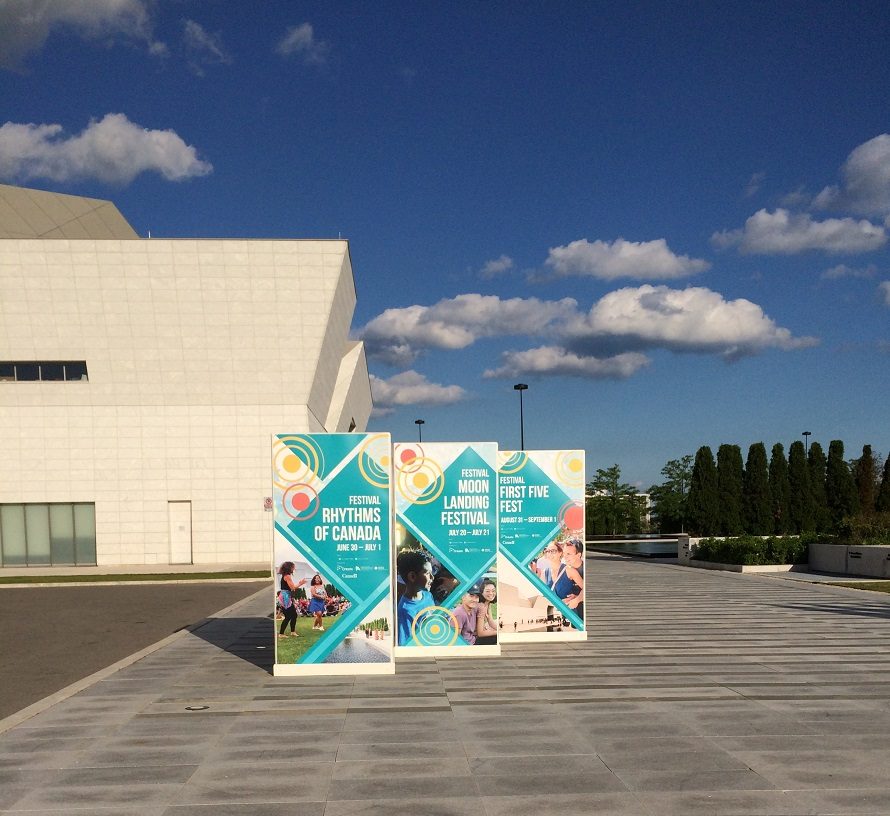
Free Festivals at Toronto’s Aga Khan Museum in summer 2019. The festival series kicks off with Rhythms of Canada on June 30 (2-11 PM) and July 1 (2-6 PM). The museum’s address is 77 Wynford Drive. Photo: Simerg/Malik Merchant.
I had hoped to celebrate July 1, Canada Day, for the first time in Toronto on the lawn of Ontario’s provincial parliament buildings or Queen’s Park. But Ontario Premier Doug Ford’s Progressive Conservative Party has just announced the cancellation of the traditional celebrations at Queen’s Park due to dwindling attendance over the years. Last year, only 5,000 people attended the celebration which cost $400,000 to host! Compare that to tens of thousands who show up at Ottawa’s Parliament Building and its surrounding streets and parks. Instead, the Ford Government will be offering free admission to 10 attractions which will cost the government $80,000.00.
I know where I will celebrate Canada Day 2019 — at the magnificent Aga Khan Museum and adjacent Aga Khan Park for “Rhythms of Canada” which will take place on June 30 (2-11 PM) and July 1 (2-6 PM). It is absolutely free and — to clarify — not part of the 10 free admissions venues offered by the Provincial Government.
The festivities at the Aga Khan Museum have been in the planning phase for some time now. In its brochure detailing 3 free summers festivals, the Museum is asking families to attend “Rhythms” to “celebrate Canada’s contemporary fabric — a dynamic mix of cultures, stories, and tythms.” It further states that “kids and adults alike will enjoy strolling through our market of artisan wares and artisanal food, inspired by the souk markets of the Middle East.”
There will be special musical performances by Cris Derksen and Asiko Afrobeat.
Derksen is known for her unique musical sound which blends classical music with traditional Indigenous music. Her music is often described as electronic cello or classical traditional fusion and has captured the attention of local and international audiences.
Asiko Afrobeat is an all-original contemporary band led by a master of the craft, Nigerian Foly Kolade. According to NowToronto, the members of the ensemble play horns, sax, keys, bass, guitars, drums, percussion and backup vocals, while Kolade handles lead vocals and the double-headed talking drum. Here is a sampling of his music.
ASIKO AFROBEAT AT THE AGA KHAN MUSEUM
Plan to be at the Aga Khan Museum for two invigorating and fun-filled days. The Museum and the Aga Khan Park are located on 77 Wynford Drive.
Date posted: June 26, 2019.
___________
Other Forthcoming Free Festivals at Aga Khan Museum:
Moon Landing Festival (July 20-21, 2019, 2-6 PM)
First Five Fest August 31, 2-11 PM; September 1, 2-6 PM
AGA KHAN PARK WAS NORTH YORK’S JURASSIC PARK ON JUNE 7, 2019!
It is estimated that around 2,400 Raptors fans gathered at the Aga Khan Park in Toronto to watch the 4th Game of the NBA Finals against the Golden State Warriors. The live game was projected on the wall of the Aga Khan Museum on Friday, June 7, 2019. Raptors won 105-92 and can become the NBA Champions for the first time by winning the fifth game to be played on Monday June 10th at downtown Toronto’s Scotiabank Arena. The lighted domed building in the background is the magnificent Ismaili Centre on 49 Wynford Drive. Photograph via Farah Rajan.
By MALIK MERCHANT
The Aga Khan Park became the new Jurassic Park on Friday, June 7, 2019 for the 4th game of the NBA Finals between the Toronto Raptors and Golden State Warriors. At the half-way stage, the two teams were almost on par and there was every possibility that the previous strong performances in the 3rd quarter by the Warriors would be repeated and overwhelm the Raptors. Instead, it was the Raptors who came out strong and dominated the quarter, leading them to win with a final score of 105-92, with the superb Kawhi Leonard contributing 36 points. The Raptors are now leading the best-of-seven 3-1, and can close the series on Monday June 10, 2019, at their home court, the Scotiabank Arena in Toronto.
Previous commitments took me to Ottawa and I watched the game with my daughter Nurin at a restaurant in Ottawa’s Byward Market Area, enjoying macaroni & cheese, burger, salad & fries just before the game.
I was trying to find out what was going on at the Aga Khan Park, and I was excited to learn that the venue was jam-packed with hundreds of basketball enthusiasts. I learn that 2400 fans were at the game. The game was also shown at several Ismaili Jamatkhanas across the Greater Toronto Region, and also at the Ottawa Jamatkhana.
Spectators watching Game 4 of the NBA Finals between Toronto Raptors and Golden State Warriors on the front wall of the Aga Khan Museum. More than 2000 excited fans crowded the area in front of the Museum and around the Aga Khan Park to watch the game. The Raptors won the game 105-92 and took a 3-1 lead in the best-of-seven series. The series continues with game 5 on Monday June 10, 2019 at the Scotiabank Arena in downtown Toronto. Photos: Aga Khan Park/Aga Khan Museum.
Canada’s excitement of the Raptors being in the finals for the first time in their franchise history has reached monumental proportions and mini outdoor “Jurassic Parks” have sprouted replicating the legendary park outside the Raptors Scotiabank Bank Arena.
One cannot imagine the kind of excitement that will be generated on Monday, June 10, 2019, should the Raptors wrap up the series and become the NBA Champions for the first time in their 24 year history. No NBA finals have ever been played North of the USA Border.
Date posted: June 9, 2019.
Last updated: June 10, 2019.



 Two magnificent buildings, the Aga Khan Museum and the Ismaili Centre, and their adjoining Aga Khan Park on Wynford Drive in Toronto are celebrating the 50th anniversary of man’s first landing on the moon with an extraordinary two-day festival on July 20-21, 2019 featuring live music, food fair, artisan market and family friendly activities. Here is a summary of what has been planned.