Simerg is an independent initiative dedicated to Ismaili Muslims, the Aga Khan — their Hereditary Imam — and the Ismaili Imamat, and Islam in general through literary readings, photo essays and artistic expressions
Author Archives: Malik Merchant, Editor
Founding publisher and editor of www.barakah.com, www.simerg.com and www.simergphotos.com.
“I am convinced that the Aga Khan’s extraordinary accomplishments, in a blessed long life, lived without a single allegation of wrongdoing, emerged out of a God-given capacity, utterly rare among leaders, to blend his spiritual, intellectual and temporal passions” — Salim Lone, Nation. Please read the tributes on our sister website; click Barakah.
A few days ago, I found myself deeply immersed in the solemnity of the funeral ceremony of the 49th Ismaili Imam, His Highness Prince Karim Aga Khan, at the Ismaili Centre in Lisbon, Portugal, on February 8, 2025. The ceremony, a profound and significant event in the Ismaili Jamat (community), was relayed live worldwide through Ismaili.TV and was simultaneously shown to Ismailis around the world in their respective Jamatkhanas. I watched it in Calgary as a live event on Ismaili.TV and then joined other community members in a nearby Jamatkhana to watch it again, each moment filled with reverence, respect, and intense emotions.
We were informed that after the burial in Aswan, Egypt, on the following day, February 9, a special Homage Ceremony was scheduled at the Diwan of the Ismaili Imamat in Lisbon on February 11. This event was about introducing the 50th Imam, Mawlana Shah Rahim, to the Ismaili world and receiving his message (Farman).
However, the Ismaili leadership requested that Mawlana Shah Rahim stage the Homage Ceremony as a Takht-nishini ceremony, similar to his father’s formal installation in East African and South Asian countries in 1957-58. The new Imam graciously agreed, and what a beautiful and memorable day February 11, 2025, turned out to be — a day that will be etched in our memories forever, with its awe-inspiring grandeur and profound religious significance. A day earlier, Prince Rahim was conferred the title of His Highness by His Majesty King Charles III.
Once again, like on the funeral day, Ismailis gathered in Jamatkhanas to watch the private Takht-nishini ceremony, relayed live from Lisbon at 11:00 AM GMT. Some parts of Canada had a delayed viewing time because the live transmission conflicted with the early morning meditational prayers.
The Diwan of the Ismaili Imamat in Lisbon was the setting for a crucial and historic day for the Ismaili Muslims.
The pre-ceremony video presentation was outstanding and educational. There was rapt attention from everyone in the Jamatkhana. It’s worth noting that even children as young as 8 years old were able to follow and learn immensely about the significance of Takht-nishini, the historical and spiritual concept of Imamat, and the description of a beautiful manuscript of prayers by Hazrat Ali, which was going to be presented to Mawlana Shah Rahim.
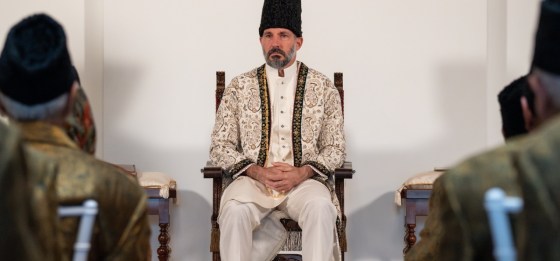
From a symbolic standpoint, there were similarities between the 1957 and February 11, 2025 ceremonies. After Mawlana Shah Rahim had taken his seat, the leaders of the Jamat presented to Hazar Imam the khilat (robe) of the preceding 49th Imam, which had been introduced during his Golden Jubilee on July 11, 2007 — a historic event that was transmitted live from Aiglemont, France.
Story continues below
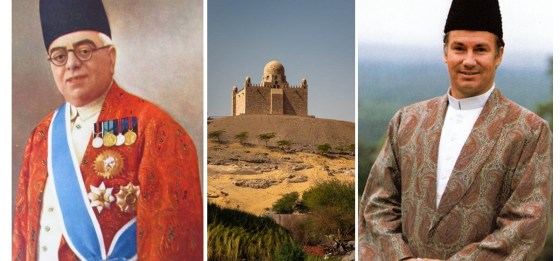
The khilat (robe) worn by the three Imams in recent Ismaili history. L to R: Red robe worn by the 48th Imam, Mawlana Sultan Mahomed Shah Aga Khan III; the khilat then passed to his successor 49th Imam Mawlana Shah Karim Aga Khan IV, who wore it for 50 years before his Golden Jubilee in 2007 when it was replaced with a white robe with golden embroidery; the 50th Imam, Mawlana Shah Rahim, wore his late father’s Khilat for the first time on his Takht-nishini on February 11, 2025. Photo collage: Malik Merchant / Barakah.
For 50 years until the Golden Jubilee, the 49th Imam wore a red-grey robe of his grandfather during Darbars and other prominent community mulaqats. The robe had been presented to him during his Takht-nishini in 1957 in East Africa. Two other items from the 1957 Takht-nishini were a chain bearing the names of 50 Imams instead of 49 Imams and a signet ring symbolizing the transfer of the office of Imamat. Mawlana Shah Rahim took the ring from the tray and placed it on his finger.
A rendition of the Nashid al-Imamah (the Ismaili anthem) was played, and the ceremonial symbols of authority — the Holy Qur’an, the Ismaili Constitution, a ceremonial sword, an intricate parasol, and an inkwell — were presented to Mawlana Shah Rahim.
Story continues below
Mawlana Hazar Imam, His Highness Prince Rahim Aga Khan, signs the Ismaili Constitution in his name at the Diwan of the Ismaili Imamat, the Headquarters of the Imamat in Lisbon on the historic occasion of his Takht-nishini (ceremonial installation), February 11, 2025. Photograph: Akbar Hakim / The Ismaili.
The items signify the inheritance of authority and Nur (light), which, unbroken for more than 1400 years, will continue to illuminate the Ismailis’ path in the decades to come. Selected verses of the Holy Qur’an were recited, including ayat al-Nur (24:35), which, translated, says:
God is the light of the heavens and the earth. His light is like a niche in which is a lantern, The lantern in a glass, The glass like a shimmering star, Kindled from a blessed tree, An olive, neither of the East nor of the West, Its oil almost aglow, though untouched by fire. Light upon light! God guides to His light whomever He wills, And strikes parables for mankind. God has knowledge of all things.
The recitation was followed by renditions of qasidas in Arabic, Persian, Dari, and a South Asian munajat, reflecting the community’s diverse cultural and religious traditions. The munajat was first composed in 1885 on the occasion of Mawlana Sultan Mahomed Shah His Highness the Aga Khan III’s enthronement ceremony in Mumbai. With its profound historical significance, the verses recited reflected the Imamat’s transition from Mawlana Shah Karim to Mawlana Shah Rahim.
All in attendance then rose, and upon the Imam’s permission, Malik Talib, the Chairman of the Ismaili Leaders International Forum (LIF), offered an insightful loyalty address on behalf of the global Jamat. His address was not just outstanding but also a significant moment and a historical milestone, as he captured the essence of Ismaili history and mentioned the key theological doctrine of the concept of Imamat. He made pledges in which he submitted the Jamat’s love, devotion, and dedication to the Imam-of-the-Time and pledged the Jamat’s commitment to and support for all the Imam’s endeavours.
Each Ismaili Council President, 22 in all, representing their countries in turn submitted bayʿa (oath of allegiance) to Mawlana Hazar Imam on behalf of their jurisdiction Jamats.
Hazar Imam then signed a constitutional instrument ordained on December 13, 1986, on Mawlana Shah Karim’s 50th birthday.
A hush fell upon the room as the Imam stepped forward to address his Jamat for the first time. Mawlana Hazar Imam graciously delivered a Farman Mubarak (edict or guidance) to assembled leaders and the Jamat worldwide. In this significant address, he accepted the Jamat’s pledges, paid tribute to his late father, thanked his family for their presence and support, and spoke of his priorities for the Jamat. He earnestly offered prayers for mushkil-asan (protection from difficulties), a comforting reminder of his unwavering care, and reassured his spiritual children that they were always with him.
Story continues below
Mawlana Hazar Imam, His Highness Prince Rahim Aga Khan, addresses his worldwide followers in a live address on the momentous occasion of his Takht-nishini or ceremonial installation at the Diwan of the Ismaili Imamat. Ismailis gathered in their respective Jamatkhanas and watched the ceremony as their National Council leaders represented them in the presence of the Imam to give their Imam the oath of allegiance; February 11, 2025. Photograph: Akbar Hakim / The Ismaili.
He pledged to dedicate his life to caring for the Ismaili Jamat’s spiritual and material well-being. He spoke of the principles of the Ismaili Muslim faith, the importance of balancing worldly and spiritual matters, and the regular practice of the faith. His Farman focused on universal concepts of peace, tolerance, inclusion and support for those in need. He said he wants his Jamat to be loyal and active citizens of the countries in which they live and urged us to lead by example in matters related to climate change, reminding us of the global impact of our actions. Leaders of the Jamat then humbly submitted a gift on behalf of the global Jamat to commemorate the historic moment of Mawlana Shah Rahim al-Hussaini Hazar Imam’s Takht-nishini.
The gift is a manuscript titled Munajat Hazrat Ali Amir al-Mu’minin, comprising a selection of silent or whispered prayers of our first Imam, Hazrat Ali (peace be upon him). The text is in Arabic, accompanied by the Persian translation, and the six folios of the manuscript are exquisitely adorned in gold with intricate plant and animal motifs, a testament to the artistic prowess of the time. It is dated to 1558-59 CE.
The manuscript reflects the profound significance of prayer and supplication at the heart of the Alid tradition. Its floral and animal motifs also suggest the importance of stewardship of our earthly environment and living in harmony with the natural world. It also highlights the connection between Mawlana Hazar Imam and his ancestor, Hazrat Ali, from whom he inherited the Nur (Light) of Imamat.
As the ceremony came to a close, each Ismaili Muslim watching felt a sense of connection. They knew that their new Imam, like his father, would guide them with grace, wisdom, and a resolute dedication to the spiritual and material progress of the worldwide Jamat. They felt reassured that their Imam was always with his spiritual children.
My Jamatkhana in Calgary watched the entire ceremony with respect and rapt attention. Children as young as 8-9 were captivated by it, appreciating the excellent educational information provided before the ceremony began. The youth, too, were impressed with the ceremony, discussing many aspects among themselves after the ceremony and later in the evening after the Jamatkhana. The evening was further celebrated as an Imamat Day Majlis, filling the air with a sense of festivity and joy.
Sad as it was a few days earlier when the Ismaili world learned about the death of their beloved 49th Imam, Mawlana Shah Karim Al-Hussaini, the Takht-nishini of his successor, Mawlana Shah Rahim, was one of the most inspirational and significant days in the life of the Ismaili community in 67 years, the length of the Imamat of Mawlana Shah Karim.
~~~~~~~~
External links: Please click on the following link(s) for more coverage of the enthronement ceremony of His Highness Prince Rahim Aga Khan:
Date posted: February 12, 2025. Last updated: February 13, 2025 (typos; the wrong year was specified as Mawlana Shah Karim’s Golden Jubilee. It is 2007, not 2017.)
____________________
Simerg welcomes your messages of congratulations to His Highness Prince Rahim Aga Khan. Please click Leave a comment. If you encounter problems submitting your message, please email the comments to mmerchant@simerg.com. Kindly note that we never publish your email address.
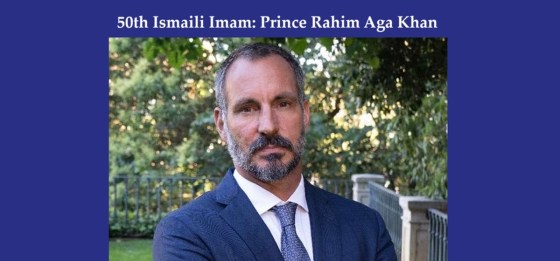
In an announcement published today, Monday, February 10, 2025, King Charles III has granted the title of “His Highness” to Prince Rahim Aga Khan. He continues the legacy as the 50th Hereditary Imam of the Ismaili Muslims, succeeding his father, His Highness Prince Karim Aga Khan, who passed away in Lisbon on February 4, 2025. The following is the King’s full announcement (please click HERE to read it at source), followed by a Tweet on ‘X.’
The King is pleased to grant the new Aga Khan the title “His Highness”
Published 10 February 2025
The tradition of the title being accorded by the Monarch to the Ismaili Imams dates back to the first Aga Khan.
To mark the accession of Prince Rahim Al-Hussaini Aga Khan as the fiftieth hereditary Imam of the Shi’a Ismaili Muslim community, and in accordance with long-standing tradition, it has pleased The King to grant the new Aga Khan the title ‘His Highness’.
Background:
This title was initially granted to Aga Khan I in recognition of his role as spiritual head of the Ismaili community and as a religious leader of global importance. Many of the Ismaili community also reside in Commonwealth countries.
This tradition continues and now also recognises the work of Ismaili Imams in the fields of interfaith dialogue, education, healthcare, and other forms of socio-economic development which make a hugely positive contribution to communities worldwide.
The title ‘His Highness’ has been accorded by the British Monarch to the Ismaili Imams dating back to the first Aga Khan, who was resident in India and has continued to this day, being reconfirmed after each succession.
Records show that the title ‘His Highness’ was accorded to Aga Khan III by Queen Victoria in 1886 when he was just 9 years old, the year after his accession to the role of Imam. The title of ‘His Highness’ was accorded to Aga Khan IV by Queen Elizabeth II in July 1957 approximately a fortnight after he succeeded his grandfather.
It is understood that the designation of the title ‘His Highness’ to the Imam of the Ismailis by the British Monarchs is a reflection of the strong relationship which has existed over time between the families, the service to the Crown which the Imams have undertaken over the years (initially in Afghanistan and India in particular) and importantly the recognition of the leadership position of the Imam in respect of the Ismaili population which has been and continues to be present in many Commonwealth countries.
The Late Aga Khan IV had a warm relationship at a personal level with Her Late Majesty and His Majesty King Charles, as well as institutionally with the British Government in diplomacy and international statesmanship. This has been recognised for example through the events hosted by Her Late Majesty and the UK Government to mark His Late Highness’ Golden and Diamond Jubilees and the award of a Knighthood.
His Late Highness Aga Khan IV was the Founding Patron of the King’s Trust.
His Late Highness Aga Khan IV and all his children, including Prince Rahim Aga Khan V, and his children, are British citizens and have close affiliations to the UK. Prince Rahim’s mother is British as was his late paternal grandmother.
External coverage: The granting of the title of His Highness to Prince Rahim by King Charles has been published in media worldwide. Here is a selection:
Note: A version of this post appears on our sister website, Barakah, which is exclusively — and passionately — dedicated to His Highness the Aga Khan.
_______________
Simerg welcomes your messages of congratulations to His Highness Prince Rahim Aga Khan. Please click LEAVE A COMMENT. If you encounter problems, email the comments to mmerchant@simerg.com. Kindly note that we never publish your email address.
The 49th Ismaili Imam, Mawlana Shah Karim, His Highness the Aga Khan (December 13, 1936 – February 4, 2025), was on Sunday, February 9, 2025, laid to rest at a private burial ceremony in Aswan, Egypt, in the mausoleum of his grandfather, Mawlana Sultan Mahomed Shah.
Story continues below
The Egypt map highlights Cairo, founded by the Fatimid Imams, the ancestors of the new 50th Ismaili Imam, Mawlana Shah Rahim, and Aswan — approximately 900 kms south of Cairo — where a mausoleum was built as the permanent burial site of the 48th Ismaili Imam, Mawlana Sultan Mahomed Shah. The 49th Imam, Mawlana Shah Karim, who died on February 4, 2025, was temporarily buried in the same mausoleum on February 9 until a new mausoleum is constructed. Map credit: Perry-Castañeda Library Map Collection / University of Texas.
His successor, Mawlana Shah Rahim, the 50th Imam, and his family were present, together with the Ismaili Jamat senior leaders. The burial follows the funeral ceremony on February 8 at the Ismaili Centre Lisbon (see our coverage of the funeral ceremony with my personal reflections HERE.)
Mawlana Shah Rahim Al Hussaini, the 50th Hereditary Imam of the Ismaili Muslims, who succeeded his beloved father, Mawlana Shah Karim, on February 4, 2025, at the age of 88. Photograph: The Diwan of the Ismaili Imamai, Lisbon.
Major General Dr Ismail Kamal, the Governor of Aswan, who had welcomed Mawlana Hazar Imam a day earlier, facilitated and participated in a dignified procession through the city to the banks of the River Nile.
Story continues below
The Mausoleum of the 48th Ismaili Imam, Mawlana Sultan Mahomed Shah in Aswan, where the 49th Imam, Mawlana Shah Karim, was temporarily buried on February 9, 2025, until one dedicated to him has been constructed. Photograph: Muslim Harji, Montreal.
Mawlana Shah Karim’s casket was transferred by boat in a ceremonial crossing to the mausoleum of his predecessor, 48th Imam, Mawlana Sultan Mahomed Shah, who wanted to be buried in Aswan.
Story continues below
Mawlana Shah Rahim and his family and residents of Aswan participate in a dignified procession through the city of Aswan to the banks of the River Nile, February 9, 2025. Photograph: AKDN.
~~~~~~~
Prince Rahim Aga Khan V and his family accompanied by the Governor of Aswan, transferring the casket of the late Prince Karim Aga Khan IV across the River Nile, Aswan, Egypt, February 9, 2025. Photograph: Akbar Hakim / IPL.
The janaza (casket) was carried by hand to the hilltop mausoleum. Mawlana Shah Karim’s body has been laid to rest in the mausoleum next to his grandfather until a new one is constructed as his final resting place on land adjacent to the existing structure.
Story continues below
The casket of the late Prince Karim Aga Khan IV being carried by hand to the mausoleum of Sir Sultan Mahomed Shah Aga Khan III, visible in the background, Aswan, Egypt, February 9, 2025. Photograph: Akbar Hakim / IPL
~~~~~~~
Casket of the late Prince Karim Aga Khan IV entering the mausoleum of his grandfather Aga Khan III where he was interred, Aswan, Egypt, 9 February 2025. Photograph: Akbar Hakim / IPL.
After the ceremony, the leaders present had the opportunity to express condolences to the family, and the Governor of Aswan presented Mawlana Hazar Imam with a symbolic key to the City of Aswan as a mark of respect (see following Tweet).
AP video/Radwan Abu Al Majd (see below): A burial service for Aga Khan IV, the 49th hereditary imam of the Shiite Ismaili Muslims, was held in the southern Egyptian province of Aswan on Sunday. After a procession through the streets, his body was carried down the Nile in a white boat.
Date posted: February 10, 2025. Last updated: February 10, 2025 (, 01:35 PM, added Tweet on Key of Aswan granted to Prince Rahim).
Note: A version of this piece has been posted on Simerg’s sister website, Barakah.com.
Correction: A typo in the title of the original version of this post, which mentioned Highness the Aga Khan as the 47th Ismaili Imam, has been corrected. He was the 49th Imam.
_________________
Simerg welcomes your tributes to Mawlana Shah Karim, His Highness the Aga Khan. Please click Leave a comment. If you encounter problems, email the comments to mmerchant@simerg.com.
The Ismaili Muslims have a beautiful Islamic devotional prayer that gives thanks and praise to God in moments of joy, happiness, and success. It also serves as a source of comfort in times of distress and sadness, such as the death of a child, parent, or sibling. The prayer is “Shukran Lillah wal Hamdulillah,” meaning “Thank you, Allah, and all praise is due to Allah.”
But why offer thanks at the time of death? Islam responds to that question through a profound Qur’anic verse, uttered when one passes away: “Inna lillahi wa inna ilayhi raji’un,” meaning “Surely we belong to God and to Him we return” — Holy Qur’an, 2:156.
This verse provides a profound insight into the concept of life and death in Islam. The birth of a child, a moment filled with boundless joy and hope, is a beautiful reminder to all Muslims and peoples of other faiths. It signifies the unique creation of every human being, with a soul that embarks on a journey on earth, culminating in the return of the soul to the hereafter. There, the soul seeks and implores to be ushered into the Abode of Peace. Nothing can be as glorious and deserving of thanks as being close to our Creator.
A Solitary Experience
On the night of February 7, 2025, after a good afternoon rest, I prepared to stay awake from 10:00 PM (MST) until mid-morning. The reason for this was the funeral ceremony of our beloved 49th Imam, Mawlana Shah Karim Al Hussaini, His Highness the Aga Khan. His passing in Lisbon, Portugal, on February 4th, 2025, after a reign of 67 years, was a profound loss that I felt deeply. The live streaming of the event from Lisbon, Portugal, was done on a delayed basis in Ismaili Jamatkhanas in Calgary and other western Canadian cities until after the completion of the morning meditative prayers. However, I needed to witness it live, so I watched it on the Ismaili TV website at 3:00 AM.
Story continues below
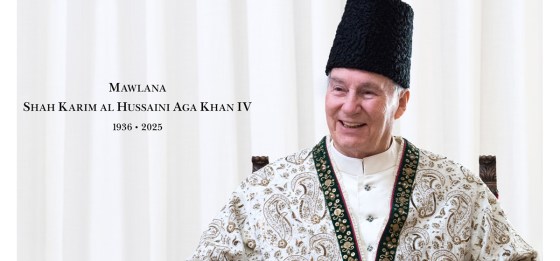
Mawlana Shah Karim, His Highness the Aga Khan
Mawlana Shah Karim’s portrait shone through my screen when I launched the website. The pre-recorded devotional singing of the prayer, Shukran Lillah wal Hamdulillah, in a mellow and beautiful tone, was being played. A short video included a clip where the Imam waves to young volunteers and scouts from years ago. Another beautiful clip showed the respectful recitation of the holy Salwaat (“Allahumm-a Sall-i ‘Ala Muhammad-in Wa Al-i Muhammad,” meaning “O, Allah shower thy choicest blessings upon Muhammad and the progeny of Muhammad.”) as the Imam walked through a crowd of Ismailis during an audience in Northern Pakistan during his Diamond Jubilee in 2017-18. The iconic moment during the mulaqat was when he climbed the stage, and before taking his seat as the Commander of the Faithful, the Imam spread his hands widely. A beautiful smile full of love told his tens of thousands of followers that he was present before them. My eyes became tearful because the scene captured his 1964 message in Karachi: “The Imam loves you much more than you can ever love him…and you must be strong in this knowledge.”
After the video, the Emcee for the funeral ceremony read out the translations of the verses from the Qur’an that would be recited during the funeral. She also spoke about the profound notion of the Divine Institution of Imamat, tracing its Divine roots to the Prophet Muhammad (may peace be upon him and his family). She emphasized that all the forty-nine Ismaili Imams over the past 1400 years have been bearers of the same Light (Nur), a tradition that unites all Shia Ismaili Muslims.
Then, our new Imam, Mawlana Shah Rahim Al Hussaini, and his family came into view, walking through the hallway corridors of the Ismaili Centre. Walking with the Imam was the long-time devout and dedicated Ismaili leader, Vazir Shafik Sachedina. I could see that the Vazir was emotional. The Imam gently stroked the back of Vazir’s coat. Vazir needed no reminding now that he was with his new spiritual father, bearing the same Divine Light of Mawlana Shah Karim he had served under for decades.
Story continues below
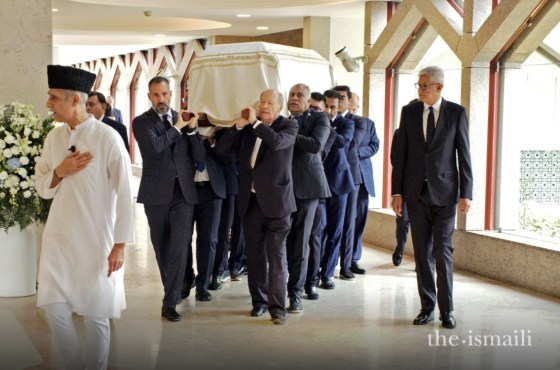
Ismaili Volunteers carry the janaza (casket) of Mawlana Shah Karim, His Highness the Aga Khan, into the funeral hall of the Ismaili Centre Lisbon, February 8, 2025. Photograph: Akbar Hakim / IPL.
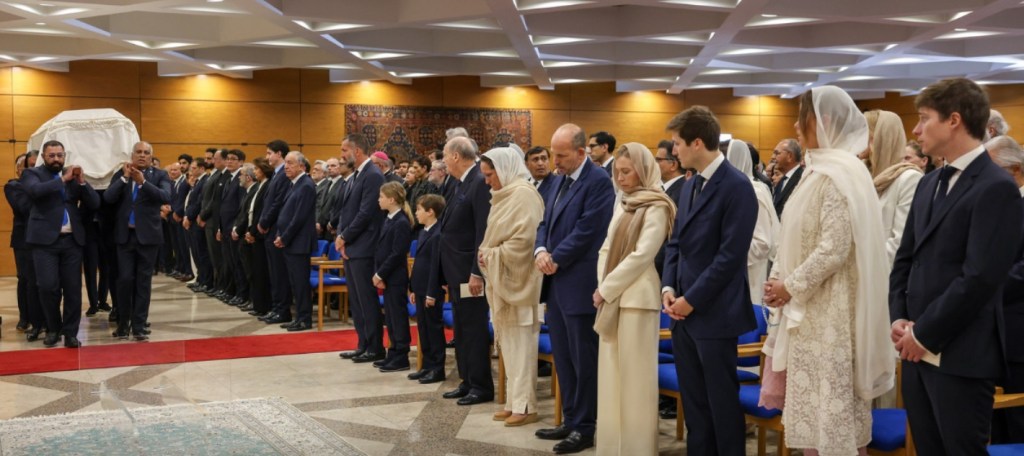
The Salwaat was continuously recited, a unified voice of the community, until the Imam and his family took their seats in the funeral hall. Then, there was a moment of beholding and strong feeling as the casket carrying the body of the deceased 49th Imam came into view. Volunteers of the Jamat, a symbol of our collective strength, carried it into the funeral hall. It was placed in front of the first row where the 50th Imam, Mawlana Shah Rahim, and his family were seated. Draped in white cloth, the historic emblem of Mawlana Shah Karim embroidered in gold was visible on top.
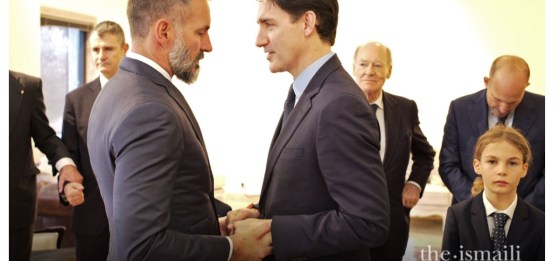
Qur’anic verses, earlier translated into Portuguese and English, were beautifully recited. The invited guests were then requested to pay their last respects to the late Imam by walking past the casket. Hundreds of guests passed by. As a proud Canadian, I was moved to see Prime Minister Justin Trudeau stand respectfully in front of the casket for a few moments. His humble gesture of the sign of the cross, a symbol of his respect for the late Imam, was a poignant moment. During these moments, as the guests paid their respects, Prince Amyn, the late Imam’s younger brother, was steeped in contemplation. Occasionally, family members would be seen wiping tears from their eyes. The whole ceremony was gracious. There was no wailing and no crying.
Story continues below
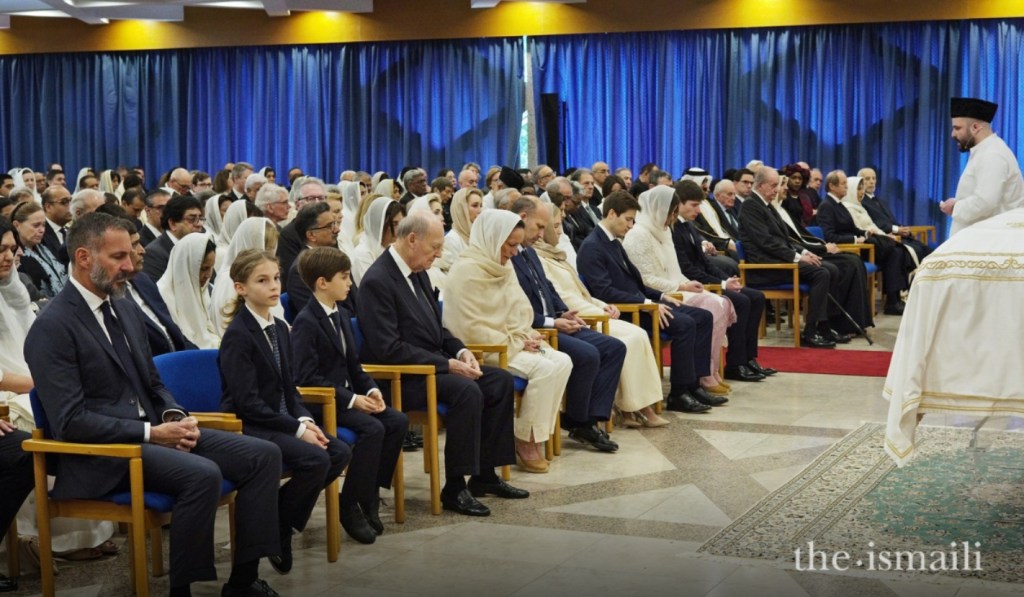
Mawlana Hazar Imam, Shah Rahim Al Hussaini, and members of Mawlana Shah Karim’s family, seated in the funeral hall at the Ismaili Centre Lisbon, February 8, 2025. Photograph: Gary Otte / IPL
After the Imam’s family members had offered their respects, everyone in the hall stood for the Fateha prayer for the deceased. The male family members were then called to carry the janaza; they were joined by other designated community members. The casket was lifted and lowered a few times as per Muslim tradition. The recitation of the Salwaat before the casket was carried to the hearse, with its powerful and moving tone, stirred deep emotions within me. The casket was carried in the front by the new Imam and his uncle, Prince Amyn, who dedicated his life to the service of his brother. Accompanying thejanaza was the continuous recitation of the Muslim declaration of faith, “Lā ʾIlāha ʾIllā Allah, Muḥammadun Rasūl Allah,” meaning, “There is no deity but God, and Muhammad is His Messenger,” a unifying declaration for all Muslims, regardless of their religious persuasion, whether they be Shias or Sunnis.
Story continues below
Mawlana Hazar Imam (left), Prince Amyn, and Ismaili Volunteers carry the janaza (casket) of Mawlana Shah Karim out of the Ismaili Centre Lisbon, February 8, 2025. Photograph: Gary Otte / IPL.
For those who do not attend the final burial ceremony in any death, the last few minutes as the casket is carried and then placed into the hearse are perhaps the most emotional moments. Tears heavily streamed down my face. Once the casket was in the car, Prince Rahim spent a few moments with Vazir Shafik and his two sons, Prince Irfan and Prince Sinan, who sadly watched their beloved grandfather’s casket in the car. At one point, the older Prince Irfan rose to his father to give him a kiss. As the vehicle moved away to another spot, the video offered a close-up view of the casket, which brought more tears to my eyes. This would be the last scene in the live broadcast.
Lovingly, I complained to Mawlana Shah Karim in Hindi, “Ya Ali Papa tum chale gaye” — O Ali, my father, you have left. Sixty-seven years of a strong physical bond with the Imam had been broken by his passing, leaving a void.
With the Imam’s passing, the Holy Qur’an, the traditions of the Prophet Muhammad, the historical events at the end of the Prophet’s lifetime, and the profound messages of the Imams in subsequent centuries assured the Ismailis of the Eternal Rope of Imamat. While bulbs will change, their power source is steady and constant.
As a community, we want to assure Mawlana Rahim of our unwavering support. He has seamlessly taken on the responsibilities that his father entrusted him during the past few years, and like his father, he is the successor to forty-nine Imams before him — from Hazrat Ali and Imam Hussein to the illustrious Fatimid and Alamut Imams and, of course, the Imams of the last two centuries. We take comfort in the continuity of the Divine Institution of Imamat leadership and are committed to standing firmly behind him during his Imamat.
A Jamati Experience (Care Cente MGH Jamatkhana, Calgary)
After my solitary experience of the funeral ceremony I watched at home, I joined my fellow compatriots who had gathered to watch this singularly historic day at the MGH Care Centre Jamatkhana. It is only 100 meters from the seniors building I live in. The -20C temperature in Calgary made my face cold within seconds. When I reached the main entrance of MGH, the door was locked, and a sign indicated there was no more space in the Jamatkhana hall and that I should go to another Jamatkhana location. As I was about to leave the building, a volunteer came to the door and invited me in as seniors who live across get the highest priority. His warmth and hospitality made me feel appreciated. I joined a couple of hundred Ismailis, including people with wheelchairs and other physical challenges, to watch the entire ceremony on a big screen.
It felt uniquely different to experience the ceremony with brothers and sisters who have the same spiritual bond with the Imam as any of his Murids. We are all blessed equally, with his hand always on our shoulders.
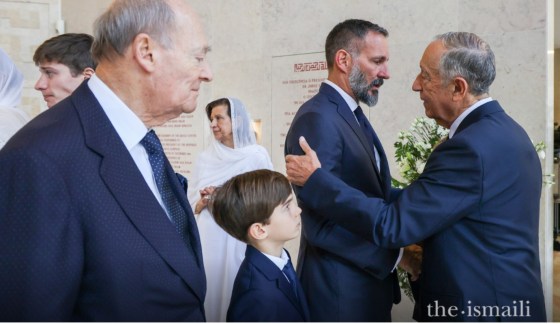
Portuguese President Marcelo Rebelo de Sousa offers Condolences to Mawlana Hazar Imam, at the funeral of his father, Mawlana Shah Karim, as Prince Sinan and Prince Amyn look on; February 8, 2025. Photograph: Akbar Hakim / IPL.
More tears were shed than when I watched the ceremony from home. The love we all held for the departed Imam was palpable, a love that had grown in our hearts during his lifetime. The sound of disciplined crying, a respectful expression of our shared grief, filled the air. As the ceremony concluded, the pre-recording of the Shukran prayer continued, and the image of Mawlana Shah Karim filled the screen. It was a truly iconic moment, a powerful symbol of our collective mourning, especially considering we had seen the closed casket just moments before.
To the 50th Imam Mawlana Shah Rahim, we express our readiness to stand by you in this time of transition. The passing of your beloved father, Mawlana Shah Karim, saddened us deeply. But we are now proudly under your reign. Let all your spiritual children fulfill the promises of Bayat (allegiance) we offered to your beloved father as we move forward under your loving care, protection, and guidance. Ameen.
Date posted: February 8, 2025.
______________
We invite our readers to write their reflections on the funeral ceremony of Mawlana Shah Karim, His Highness the Aga Khan, which was broadcast live around the world. Please complete the feedback form by clicking Leave a comment. If you have problems submitting the comments, email them to mmerchant@simerg.com,
His Highness the Aga Khan, the 49th Hereditary Imam of the Ismaili Muslims, passed away on February 4, 2025, aged 88, after an Imamat of 67 years. His funeral will take place in Lisbon on Saturday, February 8 AT 11:00 AM GMT (6:00 AM EST Canada and USA). It will be relayed live from the Ismaili Centre Lisbon and viewers around the world will be able to watch it on Ismaili TV. Arrangements have also been made to screen the ceremony live in Jamatkhanas for the Jamat to take part in this historic and important ceremony.
The burial will follow a day later, on Sunday February 9, in a private ceremony in Aswan, Egypt, where his grandfather, the 48th Imam, Mawlana Sultan Mahomed Shah, is buried.
We invite our readers to share their condolences and tributes to the 49th Ismaili Imam, a chance to express their respect and love for the departed spiritual leader. I am sure we have beautiful memories of how the Imam and his work have impacted us and our families. We might be able to recall an incident as a volunteer that has touched us or some other profound incident or experience. Your submission of a tribute will touch and inspire others and have a historical impact.
The Aga Khan: A Legacy of 67 Years of Imamat
“The closer you come, the more you will see Him,” a digital portrait by Akber Kanji of Toronto, Canada, depicting the projects of Mawlana Shah Karim during his Imamat. Click on image for enlargement.
Submission rules: These guidelines are designed to ensure a smooth and respectful interaction in our community. Every submission should include a verifiable name and an email address. Anonymous messages will not be accepted. Kindly note that we never publish your email address. Messages should contain a minimum of 90 characters (as, for example, the first sentence in this paragraph). They should preferably not exceed 200 words (the approximate length of this post), but we will accept longer messages. All messages will be reviewed and, if necessary, edited for clarity before publication. To submit your message, please click LEAVE A COMMENT. Should you encounter issues submitting comments through this post, email them to mmerchant@simerg.com, and I will post them on your behalf.
Note: A version of this post appears on our sister website, barakah.
For the past 24 hours, Ismaili Muslims worldwide have been united in a profound sense of loss over the death of their 49th beloved Imam, Mawlana Shah Karim Al Hussaini, His Highness the Aga Khan. His passing on February 4, 2025, in Lisbon at the age of 88 has brought the community of twelve million together in collective grief.
During this moment of sadness, the famous tradition (Hadith) of the Prophet Muhammad (may peace be upon him and his family) and the Qur’anic verses which follow have been comforting factors, while the Ismaili community awaited the announcement of who had been designated to continue the Hereditary Imamat:
“I am leaving behind me two things: the Book and my Progeny. If you hold fast to them, you will never go astray”
and the Quranic verses (3:33-34):
“Verily, God did choose Adam and Noah, the progeny of Abraham, and the progeny of Imran above all the worlds, descendants, one from the other: And God heareth and knoweth all things”
We have learnt with deep happiness that the late 49th Imam, Mawlana Shah Karim, has designated, through the Nass, Prince Rahim Al-Hussaini Aga Khan V, as our beloved 50th Imam. A press release (PDF format) dated February 5 2025 issued in Lisbon by the Diwan of the Ismaili Imamat says:
“Prince Rahim Al-Hussaini Aga Khan V was today named the 50th hereditary Imam (spiritual leader) of the Shia Ismaili Muslims, following the unsealing of the Will of his late father, Prince Karim Al-Hussaini Aga Khan IV, who died in Lisbon, Portugal yesterday, aged 88. Prince Rahim Aga Khan V is a direct descendant of the Prophet Muhammad (peace be upon him and his progeny) through his daughter, Hazrat Bibi Fatima, and the Prophet’s cousin and son-in-law, Hazrat Ali, the fourth Rightly Guided Caliph of Islam and the first Shia Imam.
“Throughout their 1,400 year history, the Ismailis have been led by a living, hereditary Imam. The Ismailis live in over 35 countries and number approximately 12 to 15 million.”
Story continues below
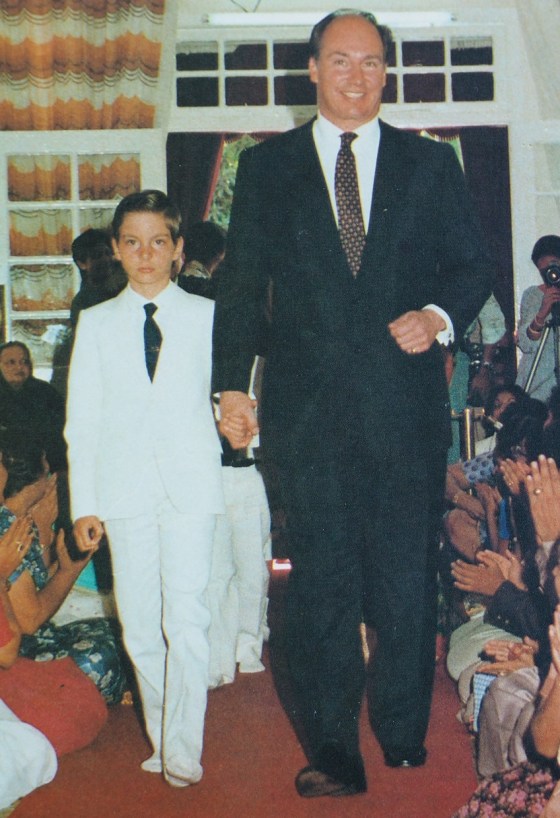
Mawlana Shah Karim, His Highness the Aga Khan (d. February 4, 2025), the 49th Hereditary Imam of the Ismaili Muslims, and Prince Rahim walk through a gathering of Ismaili Muslims during their visit to Kenya in March 1981. They were 45 and 10 years old, respectively. Photograph: Canadian Ismaili, Imamat Day Issue, July 11, 1981, Vol. 1/No. 6, print version.
~~~~~~~
Mawlana Shah Karim, His Highness the Aga Khan (d. February 4, 2025), and Prince Rahim, now the 50th Ismaili Imam, tour Filtisac, an enterprise in Abidjan, Ivory Coast, which manufactures jute and polypropylene bags, as part of the Golden Jubilee visit to West Africa between April 23 to May 1, 2008. Photograph: Gary Otte/The Ismaili United States of America, December 13, 2008, print version
We congratulate our (new) Hazar Imam, Prince Rahim, on becoming our 50th Imam and pledge our loyalty to him, as we had to Mawlana Shah Karim during his 67 glorious years of Imamat. We also congratulate his entire family on this historic news.
We congratulate Ismailis worldwide on Prince Rahim’s appointment as our 50th Imam. We are now under his loving care and protection, as we were in Mawlana Shah Karim’s throughout his Imamat.
The Diwan has issued a brief biography (PDF format) of Prince Rahim.
Once again, we express our shukrana to Mawlana Hazar Imam on his appointment as our beloved 50th Imam. We look forward to being his devoted and beloved Spiritual Children and holding firm to the Rope of Imamat.
Date posted: February 5, 2025.
_________________
We invite our readers to submit comments on this historic and transformative moment in Ismaili history, with the appointment of Prince Rahim as the 50th Hereditary Ismaili Imam. Please click LEAVE A COMMENT.
A portrait of the 49th Ismaili Imam, Mawlana Shah Karim Al Hussaini, His Highness the Aga Khan, taken after he succeeded his late grandfather to the throne of Imamat. A framed portrait of the late 48th Imam is seen in the background. Photo by Philippe Le Tellier/Paris Match via Getty Images.
“As soon as one Imam passes away, his successor takes on from the very minute the Imam has passed away” — Mawlana Shah Karim Al Hussaini, His Highness the Aga Khan, 49th Hereditary Imam, interview during Takhtnashini, 1957.
By MALIK MERCHANT
The 12 million strong Shia Imami Ismaili Muslims worldwide have learnt with deep sadness in the last few hours that our beloved 49th Imam, Mawlana Shah Karim Al-Hussaini, His Highness the Aga Khan, passed peacefully to Almighty Allah’s grace on Tuesday, February 4, 2025, in Lisbon, Portugal, surrounded by his family, who were with him in his final moments. At age 88 (December 13, 1936 to February 4, 2025), Mawlana Shah Karim was the longest-lived Imam in Ismaili history. He reigned the Ismaili community for 67 years (July 11, 1957 to February 4, 2025), just three years short of his Platinum Jubilee. His predecessor, Mawlana Sultan Mahomed Shah’s reign of 71 years was the longest in Ismaili history.
Mawlana Shah Karim’s successor, as the 50th Shia Imami Ismaili Imam, has been designated in conformity with the historical Shia Imami Ismaili tradition and practice of Nass. The designation made by Mawlana Shah Karim is recorded in his Will, which will be read in the presence of the Imam’s family and senior international Ismaili leaders. Thereafter, the Jamat will be notified of the declared Mawlana Hazar Imam in whom the Nur already exists in unbroken hereditary succession from Mawlana Ali (peace be upon him).
This belief in the continuity of the Imamat, when one Imam has passed away and succeeded by the next, was articulated by Mawlana Shah Karim in an interview with an American reporter in 1957. He said:
The [installation] ceremony is a public installation of the Imam. The Ismailis pay homage to the Imam and that is when you are recognised by the world at large as the Imam. Officially, as soon as one Imam passes away, his successor takes on from the very minute the Imam has passed away.”
This instantaneous succession underlines the principle of the Unity of Imamat, that is, the Ismaili belief and understanding that each Imam is the same Bearer of the Nur (Light) of Imamat, irrespective of his own age or the time he lives in. This belief, with its enduring nature, has been articulated and preserved throughout Ismaili history, reassuring us of its continuity. The 33rd Imam, Abd al-Salam, who lived in the 15th century, said:
“The Imam’s true face is to be perceived with the eyes of the heart. He has thousands of physical habitations, but his true home is traceless; He has had a thousand names, but all of them refer to one reality.”
As we all come to bear the sad reality and news of Mawlana Shah Karim’s passing, let us all reflect on the Farman he made on December 13, 1964, on his 28th birthday. He said:
“For hundreds of years, my spiritual children have been guided by the Rope of Imamat; you have looked to the Imam of the Age for advice and help in all matters and through your Imam’s immense love and affection for his spiritual children, his Noor has indicated to you where and in which direction you must turn to obtain spiritual and worldly satisfaction.”
As we honour, cherish, and offer gratitude for Mawlana Shah Karim’s life and legacy, we remain secure under the permanent love and protection of the eternal Rope of Imamat and the Manifest Nur (Light) in the 50th Imam-of-the-Time.
In the coming few days, reports, updates, and stories on Mawlana Shah Karim’s life will be published on Simerg and its sister website Barakah.
We express our deepest condolences to the Ismaili world and Mawlana Shah Karim’s family.
Date posted: February 4, 2025.
__________________
We invite readers to contribute their feelings about the sad news that we have all heard about the passing of our beloved 49th Imam, Mawlana Shah Karim. Please click Leave a comment.
Mawlana Shah Karim Al-Hussaini passed peacefully to Almighty Allah’s grace on 4 February 2025 in Lisbon, Portugal, surrounded by his family.
When will the next Imam be announced?
Mawlana Shah Karim’s successor, as the 50th Shia Imami Ismaili Imam, has been designated in conformity with the historical Shia Imami Ismaili tradition and practice of nass. The designation made by Mawlana Shah Karim is recorded in his Will, which is to be read in the presence of the Imam’s family and senior international Jamati leaders. Thereafter, the Jamat will be notified of the declared Hazar Imam in whom the Nur of Imamat exists in unbroken hereditary succession from Mawlana Ali (peace be upon him).
What is “nass”?
In the Shi‘a Imami tradition, the word nass is applied to the transfer of the Imamat from one Imam to the next by way of explicit designation. It is believed that in the same way as the Prophet was divinely designated by Allah, the Prophet through divine support or inspiration (ta’yid) designated Imam ‘Ali as his legatee (wasi) and successor at Ghadir Khumm.
Thus, Imamat is believed to be a prerogative bestowed by God upon a chosen person from the progeny of the Prophet, who before his death and by way of ta’yid (divine support or inspiration) transfers the Imamat to another by explicit designation. As such, nass is the ‘formal act’ of an Imam designating his successor from amongst his male progeny or a remoter issue. For the Shi‘a Ismailis, by way of nass, Imamat has continued in the line of Imams directly descended from Prophet Muhammad through Hazrat ‘Ali and Hazrat Fatima and through the lineage of Imam Husayn and his progeny in perpetuity.
When will the Will be read and who will be present for the reading?
The Will is expected to be read as soon as members of the family, senior leaders of the Ismaili community, and the Executors of the Will have gathered. The reading of the Will is to take place in Lisbon.
What happens when one Imam has passed away and the next Imam has not yet been publicly named? Is the Rope of Imamat broken?
In the Ismaili faith and tradition, the Jamat is never without an Imam. As soon as one Imam leaves this physical world, his spiritual light passes to his designated successor, thus continuing the line of Imamat, which has existed unbroken for over 1400 years. The 50th Imam has been named in Mawlana Shah Karim’s last Will and Testament.
What can I do to offer prayers for our late Imam?
As we express our sadness at the passing of our beloved 49th Imam, and express our shukrana to him, special prayers will be offered in Jamatkhanas around the world. Individual prayer and remembrance is also encouraged. The Ismaili TV will also have special programmes to accompany the Jamat during this historic moment of transition.
Prayers during this period will focus on expressing gratitude for Allah’s mercy on the departed soul, and prayers for eternal rest. Special prayers will be offered on the 40th day following death, consistent with customary practice in Ismaili and other Muslim traditions.
What are the details for the Imam’s funeral?
Mawlana Shah Karim’s funeral is expected to take place in Lisbon as soon as arrangements are finalised. Further information will be shared as it becomes available.
Will the Imam’s body lie in state?
No, in keeping with Muslim tradition, the funeral will take place as soon as possible.
Where will he be buried?
Details of Mawlana Shah Karim’s burial will be communicated in due course.
Who will attend the funeral?
Mawlana Shah Karim’s family and invited senior leaders of the Jamat and Imamat institutions will attend the funeral.
Can I attend Mawlana Shah Karim’s funeral?
Jamati members are respectfully requested to not seek to attend any of the ceremonies in person unless specifically invited.
Will there be changes in our rites and practices following the Imam’s passing?
Changes to Tariqah practices are made at the sole discretion of the Imam-of-the-Time. Any changes will be communicated in Jamatkhanas through the Ismaili Tariqah and Religious Education Boards.
Visit a specially-updated The Ismailiwebsite for more information and The Ismaili TV for related programming.
“I’d arrived at the Hyatt Regency’s Imperial Ballroom to witness Nenshi being chosen as the NDP’s new leader. A few months earlier, this outcome might have shocked me as much as that first mayoral victory…here was a real, united, ambitious opposition, ready and able to contend for power not just in the next election but in any number after that….” — Chris Turner, albertaviews
Over the last three years since relocating to Alberta and my travels to provincial and national parks, I have met friendly Albertans who quickly notice my passion and love for nature as I take photographs. Often, I approach them and say to them, as if I were a full-time paid guide, “If this is your first time here, please walk 50 metres for this incredible view.” I walk them to the point that fascinates me, which would otherwise be missed due to its hidden location. They are grateful for my suggestion! They stop to talk to me, and we engage in a mutual exchange of information, often sharing about their favourite places that I should visit.
Invariably, the conversations often turn to my origins. I proudly tell them that shortly after my birth in Mumbai, my parents were offered teaching positions in Africa. Mozambique and Tanzania were my home for almost twenty years before I moved to London to study. I also tell them that some of the best national parks in Africa are in Tanzania, which is also the home to Africa’s highest mountain, Kilimanjaro. This is where I mention Naheed Nenshi, who served 11 years as the Mayor of Calgary between 2010 and 2021. Everyone I have met, without exception, remembers Naheed fondly and admires his leadership as a Mayor, which has left a lasting impact on Calgarians. I tell them that he was also raised in Tanzania.
His Highness the Aga Khan is warmly greeted by the then Lieutenant Governor Lois Mitchell and Calgary Mayor Naheed Nenshi during his visit to Calgary in May 2018 to celebrate his Diamond Jubilee. Photograph: The Ismaili.
I am often asked what I do. I respond that I’m retired, but my time is dedicated to three non-commercial websites. I tell them that the websites, Barakah, dedicated to His Highness the Aga Khan, Simerg, and Simergphotos, serve as platforms to share and celebrate the rich Ismaili culture and the work of the Aga Khan, the 49th Hereditary Imam of the dynamic worldwide Ismaili community. I invite them to visit these blogs to learn more and also view my photographs of places I visit. I also share that Naheed, like me, is an Ismaili Muslim, and I encourage them to see the Aga Khan Garden when they are in Edmonton. This beautiful and serene space reflects the principles of Islamic garden design and is part of the University of Alberta Botanic Garden. It was gifted to the University by the Aga Khan.
During my conversations, I gather that many know that the Ismaili community hosts a breakfast in Calgary annually during Stampede Week, which is open to everyone. They appreciate that while recognizing the excellent Ismaili community float in downtown Calgary’s popular annual Stampede Parade. All this makes me happy and proud as a member of a vibrant and diverse community with over 12,000 members in Calgary.
Story continues below
The Trump Tariffs will hurt Alberta businesses whether they start today, in 30, or in 90 days. While we wait for the UCP to get to work, you can make a difference today:⁰⁰✅ Buy Alberta-made products⁰✅ Support local retailers⁰✅ Share your purchases using #ShopLocal… pic.twitter.com/KhchNQ3d3a
As all Albertans know by now, Naheed is the new Alberta NDP leader. His party will contest the 2027 provincial election against the current Premier Danielle Smith’s United Conservative Party. I receive emails from the NDP Party almost every day, and if I were to focus my attention on them, I would not have the time to dedicate myself to my three blogs.
But I stay in touch with Nenshi’s activities. His most recent Tweet on Tuesday, February 3 — see above — still asks Albertans to buy local and Alberta-made products following President Trump’s reversal of Tariffs on Canadian exports to the USA, which would have taken effect on Tuesday, February 4.
Late last year, while browsing magazines at Indigo, I was drawn to a cover page piece on Naheed Nenshi in the November 2024 issue of albertaviews. This magazine offers a new perspective for engaged citizens. Chris Turner is the author of “MASS APPEAL: Can Nenshi Win Over Alberta?” I am delighted to provide a link to this excellent six-page article by a long-time Albertan resident who witnessed Naheed win his first mayoral race in 2010 and be chosen as the new NDP leader in 2024. I invite you to click Can Nenshi win over Alberta? or on the cover page image below.
Cover page story on Alberta’s NDP leader, Naheed Nenshi, in albertaview, volume 27 Number 9, November 2024. Please click on the image for the full story in the online edition of the magazine. Photograph: Albertaviews.
Of course, Simerg will report about the Alberta elections in 2027. We featured an excellent piece submitted by Shameela Rawji of Calgary when Nenshi ran for the NDP leadership.
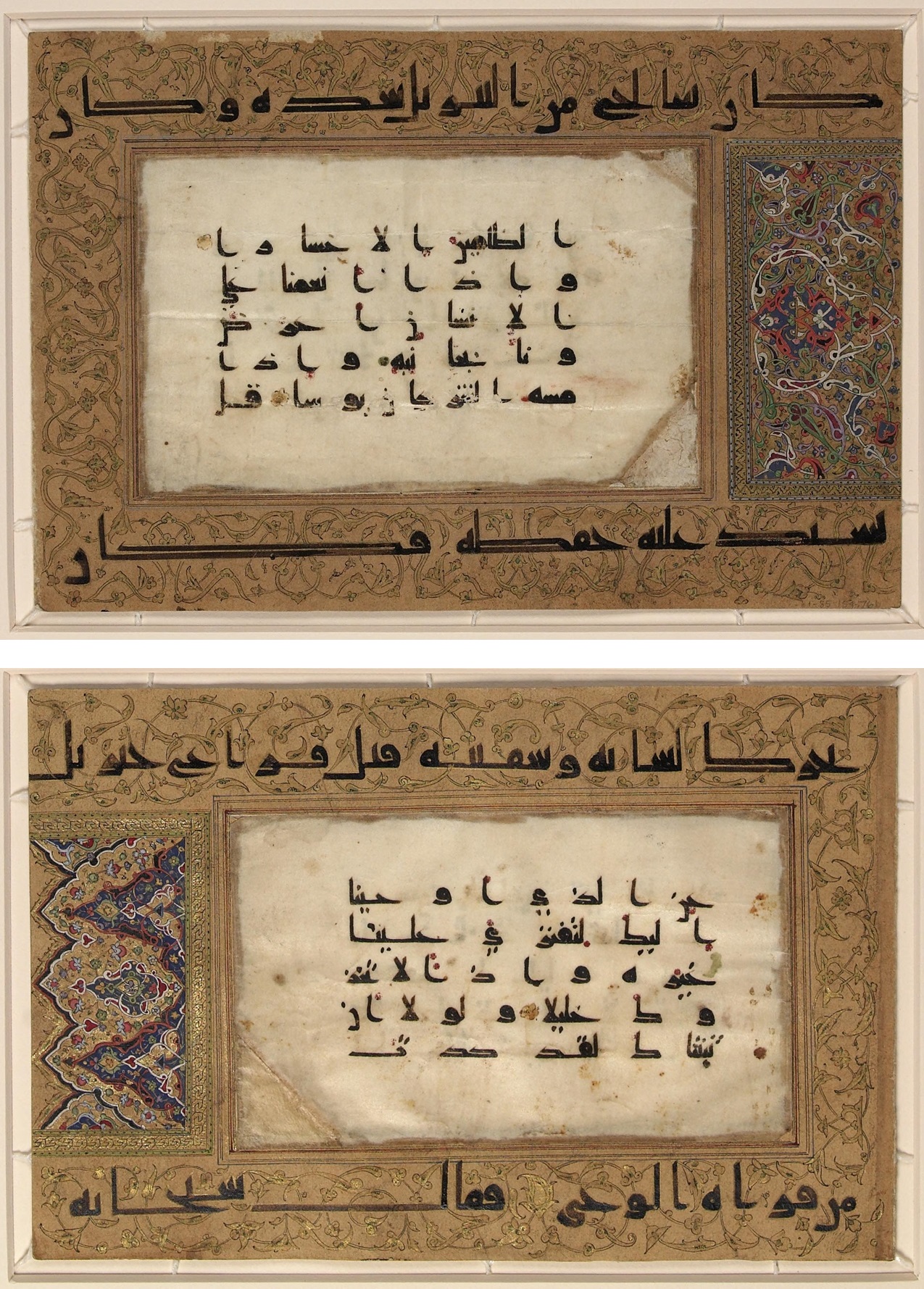
Chapter 17 of the Holy Qur’an known as Suraj I-isra (The Night Journey) or Bani Israel (The Children of Israel), describes several events, including the Prophet Muhammad’s (May peace be upon him and his progeny) night journey (Isra’) to Jerusalem and his ascension (Mi’raj) through the skies. The two fragments from the USA Library of Congress (LOC) shown in this post below are from Chapter 17, Verses 73-84, and describe the value of prayer and the Qur’an. These Qur’anic fragments are written in Kufi script on parchment. In-depth details of these fragments can be found on the LOC website HERE.
We present pertinent verses from the Qur’an on the night of Mir’aj and prayer, followed by a brief explanation of the holy night and its significance among the Shia Ismaili Muslims.
Verses from Suraj I-isra
Glory be to Him, who carried His servant by night from the Holy Mosque to the Further Mosque the precincts of which We have blessed, that We might show him some of Our signs. He is the All-hearing, the All-seeing — 17:1
Say: ‘Call upon God, or call upon the Merciful; whichsoever you call upon, to Him belong the Names Most Beautiful.’ And be thou not loud in thy prayer, nor hushed therein, but seek thou for a way between that — 17:110
Perform the prayer at the sinking of the sun to the darkening of the night and the recital of dawn; surely the recital of dawn is witnessed — 17:78
And as for the night, keep vigil a part of it, as a work of supererogation for thee; it may be that thy Lord will raise thee up to a laudable station — 17:79
The Night of Miraj is observed by Muslims around the world on the 27th night of the seventh month of
And whosoever desires the world to come and strives after it as he should, being a believer — those, their striving shall be thanked — 17:19
Your Lord knows very well what is in your hearts if you are righteous, for He is All-forgiving to those who are penitent. — 17:25.
___________
Mi’raj among the Shia Ismaili Muslims: The Imam-of-the-Time Leads his followers to spiritual elevation
Qur’anic fragments written in Kufi script on parchment. Photograph: The US Library of Congress, Washington DC
The night of Mi’raj falls on the 27th day of Rajab, the seventh month in the Islamic lunar calendar, which is 11 days shorter than the Gregorian calendar. Thus, in 2025, Miraj falls on or around January 26 or 27, 2025, depending on when the moon was sighted.
Mi’raj is an Arabic word that literally means a ‘ladder’ and refers to an experience in the life of Prophet Muhammad during the night. Interpretations of the Mi’raj include a literal event in which the Prophet Muhammad first travelled to Jerusalem before mounting a horse called Buraq and being taken to God’s Throne. Along the flight, he met with the great Prophets, including Abraham, Moses, and Jesus (may peace be on them).
However, among Sufis and other Islamic esoteric traditions, such as those practiced by the Shia Ismaili Muslims, Mi’raj is considered the highest point of spiritual perfection an individual can attain through religion and the practice of faith.
Believers long to experience a Mi’raj, just as the Prophet experienced it. The Shia Ismailis seek out this spiritual elevation under the guidance of the Imam-of-the-Time, presently Mawlana Shah Karim Al-Hussaini Hazar Imam, His Highness the Aga Khan, who leads his followers to self-awareness, spiritual insight and elevation. This is clearly noted in the Preamble of the Ismaili Constitution in paragraph (F), which reads:
“Historically and in accordance with Ismaili tradition, the Imam of the time is concerned with spiritual advancement as well as improvement of the quality of life of his murids. The Imam’s ta‘lim lights the murid’s path to spiritual enlightenment and vision. In temporal matters, the Imam guides the murids, and motivates them to develop their potential.”
His Highness the Aga Khan, the 49th Hereditary Imam, is a direct descendant of Hazrat Ali (may peace be upon him) whose remarkable teachings, preserved in works such as Nahj al-Balaghah, have a profound impact on all Shia Muslims, including the Ismailis. Another literary work, known as the Kalam-i Mawla, poems of Imam Ali, is not just historical text but holds a personal relevance to the community members. These verses, rendered in Hindi, delve deep into individuals’ conduct, behaviour, and actions during their lives on earth (please read Farouk Topan’s excellent piece Kalam-i-Mawla).
We are pleased to provide a recitation of verses from the Kalam of Hazrat Ali that focus on ethics, spirituality and the Mi’raj of the Prophet Muhammad. The verses are recited by Alnoor Saleh and have been downloaded from the website Ginans Central, which is maintained by Karim Tharani of the University of Saskatchewan.














 Simerg - Insights from Around the World