Simerg is an independent initiative dedicated to Ismaili Muslims, the Aga Khan — their Hereditary Imam — and the Ismaili Imamat, and Islam in general through literary readings, photo essays and artistic expressions
Category Archives: Literary Readings from Ismaili History
The motif representing Nur, or Light, has been utilized during the inaugural visits of Mawlana Hazar Imam, His Highness the Aga Khan, to Ismaili Muslims globally since he became the 50th Hereditary Ismaili Imam on February 4, 2025, succeeding his father, Mawlana Shah Karim, His Late Highness Aga Khan IV. His seventh visit to his followers will be to Canada from March 25-31, 2026. Photograph: The Ismaili.
Our tradition begins its teachings not with rules, but with reminders of presence. Pir Ṣadardin, in his timeless wisdom, offers us a spiritual imagination that prepares the heart before it prepares the body.
In the Ginan Satgur Sathe Gothadi Kije[1], he evokes a powerful image:
Jyote jagadine jumloji betha…
Translation
The Lord sits with His Light in full blaze.
This is not poetry for the mind alone. It is a vision for the murid. It invites us to imagine the Jamatkhana not as a hall of bricks and lamps, but as a sanctified space where the Divine Light is already present, already radiant. When a murid enters with this awareness, the heart softens, the senses awaken, and the soul becomes receptive.
Another Ginan by Pir Ṣadardin [2] deepens this inner posture:
When you enter the Jamatkhana, O chivalrous brother, remain in the presence of the Light; avoid slander and idle talk.
Here the Pir gently redirects us: the Jamatkhana is not a place for distraction, gossip, or worldly chatter. It is a sanctuary of presence. The murid is encouraged to feel, not merely know, that he or she stands before the Light of the Imam.
These verses form the spiritual foundation of our discussion. They remind us that conduct is not merely behaviour; it is an inner state that expresses itself outwardly.
When the Imam Physically Graces the Jamat with Didar
There are moments in the life of a murid that are unlike any other. When the Imam of the time physically graces the Jamat with Didar, the familiar space transforms. What was a sanctuary, becomes a royal court, a sacred, luminous, resplendent space filled with joy, anticipation, and profound gratitude.
For many murids, this moment is the fulfilment of a lifelong yearning: to see the Murshid, to be seen by the Murshid, to feel the warmth of his presence.
But this raises an essential question:
What should be the state, inner and outer, of the murid in the presence of the Imam? This is not a new question. Our tradition has contemplated it for centuries.
Guidance from Qadi Nu‘man: The Adab of the Murid
In the 10th century, Qadi Nu‘man [3], one of the great jurists of the Fatimid tradition, wrote extensively on adab, the etiquette and conduct of the followers of the Imam. His guidance remains deeply relevant.
He reminds us that the physical presence and the Didar of the Imam is not a public spectacle; it is an intense, personal, one-on-one encounter between the murid and the Murshid. Even in a gathering of thousands, the murid stands as though alone before the Imam.
From this understanding flow the essential qualities of conduct:
HUMILITY: A heart emptied of pride, ego, and self-importance.
RESPECT AND REVERENCE: Speech, movement, and gaze shaped by awareness of sanctity. No rushing to greet the Imam, no physical contact with the Imam, no standing to draw attention to oneself.
STILLNESS AND PRESENCE: No distraction. No idle talk. No wandering thoughts.
AWARENESS OF LIGHT: Every gesture shaped by the recognition that the Imam bears Divine Light.
At this point, the teaching of Pir Shams in Saloko Moto [4] becomes especially meaningful:
Satgur says…Offer your true tithe, and bow at the feet of the Imam from a respectful distance.”
This verse captures the essence of reverence: devotion expressed with humility, sincerity, and dignified distance.
The Conduct of the Murid and the Awe of the Imam
The conduct of the murid must reflect the essence of the Imam. As the master of ta’wil, the one who unveils the inner reality (batin) of the physical (zahir) universe, the Imam stands at the apex of spiritual authority [5]. In the Ginans, he is described as the sovereign of the fourteen spiritual realms, the one through whom the cosmos is interpreted and harmonized.
Such a station naturally calls the murid into a posture of awe, humility, and respectful distance. This is not distance of heart, but a way of carrying oneself that acknowledges the Imam’s spiritual stature.
In a congregation of thousands, each murid arrives for the Didar with his or her own hopes, burdens, and expectations of grace. It becomes a shared ethical responsibility to preserve the sanctity of the collective space. Any action that draws attention to oneself, disrupts the serenity of others, or creates disturbance, even unintentionally, risks overshadowing the quiet interior work that each soul is undertaking.
Mindfulness, therefore, is not only a personal virtue but a communal obligation. It ensures that the congregation remains a vessel of harmony, not distraction; a place where the murid’s inner orientation toward the Imam can unfold without interruption.
Nasir Khusraw’s Eyewitness Account
The 11th-century Ismaili da’i, traveller and poet-philosopher Nasir Khusraw offers a vivid glimpse of this reverence. In his eye-witness description of the procession of the Festival of the Canal (Fath al-khalij) during the time of Imam al-Mustansir bi’llah in AH 438-39/1047 CE, Nasir Khusraw informs us that when the Imam, wearing a white robe, passed by on a horse, the murids and citizens alike, bowed in devotion and awe, lowering their heads in deep respect, reciting prayers and benedictions [6].
This simple gesture reveals a profound truth: the presence of the Imam evokes spontaneous reverence in the hearts of believers.
A Fatimid Example of Reverent Conduct
Al-Maqrizi’s [7] historical accounts of the Fatimid court illuminate this principle with striking clarity. Audiences with the Imam–Caliph were carefully structured to preserve the dignity and contemplative gravity of the encounter. Visitors approached with measured steps, maintained silence, and observed spatial boundaries that signalled respect for the Imam’s spiritual and temporal authority.
This Fatimid ethos mirrors the ethical expectation placed upon murids today: to uphold the serenity of the communal space, to avoid actions that draw attention to oneself, and to recognize that the Imam’s presence, whether physical or symbolic, requires behaviour aligned with reverence.
The Meaning of Adab (Sabyata, Maryada)
The classical Arabic/Persian term adab, is expressed in Gujarati/Hindi as sabyata (refined behaviour) and maryada (dignified respect). They refer to the graceful, respectful way a murid carries themselves in sacred spaces in the presence of the Imam. In our tradition, adab toward the Imam is not merely social etiquette; it is a spiritual discipline. It reflects an inner recognition of the Imam’s role as the bearer of divine guidance. To act with adab is to let one’s outward behaviour mirror one’s inward understanding.
Concluding Reflection
To stand before the Imam, physically or spiritually, is to stand in the presence of Light. The murid’s conduct, shaped by humility, reverence, and awareness, becomes an offering in itself. When each murid upholds serenity and dignity, the entire Jamat becomes a vessel worthy of the moment of grace.
Date posted: March 19, 2026.
________________
END NOTES
Gujarati Ginans and Granths
[1] Pir Sadardin, Satgur Sathe Gothadi Kije. P. 28.
[2] Pir Sadardin, Gat Mahe Avine Sanmukh Rahiye. P.116
English
[3] Qādi Nu‘man’s teachings on adab are preserved across Fatimid jurisprudential works; see Halm, Heinz. The Fatimids and Their Traditions of Learning. London: I.B. Tauris.
[4] Pir Shams, SalokoMoto
[5] For the Imam as master of ta’wil, see Daftary, The Ismailis: Their History and Doctrines.
[6] Paula Saunders, Ritual, politics and the city in Fatimid Cairo. Pp. 103-04
[7] Al-Maqrizi, Ittiʿaz al-Ḥunafaʾ, descriptions of Fatimid court protocol.
___________________
BIBLIOGRAPHY
Gujarati Ginans and Granths
Mahan Ismaili Sant Pir Sadardin Rachit Ginanono Sangrah 1. Bombay 1952
Pir Shams Rachit Saloko Moto, Ginans Series 2, Ismailia Association for Pakistan, Karachi, -3, 1967
English
Daftary, The Ismaʿilis: Their History and Doctrines.
Halm, Heinz. The Fatimids and Their Traditions of Learning, London: I.B. Tauris.
Hunsberger, Alice C, and Institute of Ismaili Studies, London, 2003. Nasir Khusraw, the Ruby of Badakhshan: A Portrait of the Persian Poet, Traveller and Philosopher.
Maqrizi, Taqi al-Din Aḥmad. Ittiʿa al-Ḥunafāʾ bi-Akhbar al-Aʾimma al-Faṭimiyyin al-Khulafaʾ. Cairo: Supreme Council for Islamic Affairs.
Saunders, Paula, Ritual, politics and the city in Fatimid Cairo, New York, 1994.
______________________
About the author: Shiraz Pradhan is an international consulting engineer, author, and long‑time researcher of the Ginan tradition. He serves as the Chairperson of the Association for the Study of Ginans, an international organisation dedicated to preserving and advancing Ginan scholarship. Shiraz has written extensively on Nizari Ismaili Ginans and Satpanth in Ilm (Ismailia Association UK, 1987) and on Simerg. His interests span the Vedas, Judeo‑Christian history, and Sufism, reflecting his broad engagement with spiritual traditions. His forthcoming book, Amrapuri: Exploring the Evolution of Nizari Ismaili Satpanth through the Prism of Ginan Literature, brings together years of dedicated study.
“Read and study the good religious and cultural educational materials which have been produced for the Jamats by our institutions: seek knowledge and understanding independently. Try to deepen your understanding of our history, our values and the principles of our faith” — Mawlana Hazar Imam, Shah Rahim al Hussaini, Paris, July 12, 2025.
Continuing in the tradition of the 49th Ismaili Imam, Mawlana Shah Karim Shah, His Late Highness Aga Khan IV, his successor Mawlana Hazar Imam Shah Rahim al Hussaini, His Highness the Aga Khan V — perhaps with even greater emphasis — has recommended to his followers in many of his Farmans (guidance) delivered in 2025 that they feel the presence of faith in their hearts and souls by calling on Allah, the Prophet, and the Names of the Imams at any time or place. I want to share my personal reflections on the importance of invoking the Names of our Imams and how understanding their lives can make our invocations more meaningful and satisfying.
One day, after visiting my dad at his nursing home in the morning, I decided to walk back about 30 minutes to my mum’s home, leaving the car in the garage until my next visit to my dad later in the evening. This time, during the peaceful walk, instead of invoking Allah, the Prophet, Mawlana Shah Karim — then Imam-of-the-Time — or Hazrat Ali, I chose to remember each of the forty-nine — now 50 — Imams by repeating their names in succession, a few times each, until I reached home.
The walk through the greenery in Burnaby, Canada, with its beautiful flowers and plants in residential gardens, and the calling out of the Imams’ names, gave me immense spiritual satisfaction and happiness. I realized, however, that when I remembered the Imams whose histories I knew — even in part — a vital incident from their lives would invariably pop into my mind, even for a second or two. But what about other historical Imams I knew very little about? While all Imams are bearers of the Noor of Imamat, which transcends space and time, I could not connect with the Imams as much as I did with others whose histories I knew.
Historical knowledge also connected me with outstanding Ismailis who served the Imam-of-the-Time and the Jamat (community) with zeal, devotion, and, in many cases, extraordinary gallantry and bravery. Of course, striking my mind were also individuals, groups, and caliphates who were archenemies of the Jamat and the Imamat, and those who had broken their pledges with the Imam-of-the-Time and often misled the Jamat. Literally, a second or two can bring significant historical incidents before you! And this is where a book such as Farhad Daftary’s The Ismaili Imams has become, for me, a valuable resource over the last few years for learning about our Imams.
Story continues below
Cover page of The Ismaili Imams: A Biographical History by Farhad Daftary, Hardback, 260 pp., published October 2020, I.B.Tauris in association with the Institute of Ismaili Studies.
For many in the Jamat who do not read regularly or at all, I wish to remind them of Mawlana Hazar Imam’s recent guidance on reading. He said, “Get into the habit of putting down your phone and picking up a book. You will find it broadens the mind and provides a respite from our frenzied lives and can help relax.” (Paris, Youth Mulaqat, July 13, 2025, page 19, Farman Mubarak book distributed in Canada). Picking up a book such as the History of Ismaili Imams will help us understand our roots and follow the lives and teachings of the Imams more closely.
And Mawlana Hazar Imam has mentioned that reading “can help relax.” How? As a brief side note, my doctor’s concern that I could be suffering from sleep apnea prompted him to set me up for an appointment with an expert on the issue. When he learned about my late-night habits and the time I spent on my websites before bed, he advised me to stop using electronic devices at least 45 minutes before bed and to read during that time! This change has made a noticeable difference. It has helped me immensely. Following the advice, I am totally relaxed after reading. I’m asleep in a few moments for the rest of the night!
There are countless articles on the importance of reading in-print books rather than reading online, and my point here is to instill the habit of reading in our lives and to inspire our children, because sharing this joy can motivate others to start their own reading journey. I frequent the beautiful Canadian mega bookshop Chapters/Indigo quite often, and my heart danced with delight when, during the recent Thanksgiving sales promotion, I saw a 4-year-old pushing a cart of children’s books his mother had bought for him, excitedly heading to the cashier!
For avid readers, I encourage you to heed Mawlana Hazar Imam’s call to engage with our history. He said: “…. read and study the good religious and cultural educational materials which have been produced for the Jamats by our institutions: seek knowledge and understanding independently. Try to deepen your understanding of our history, our values and the principles of our faith” — Paris Didar, July 12, 2025.
Story continues below
Stories of the Ismaili Imams launched by the.ismaili, official website of the Ismaili Muslim community.
While I was finishing this piece, with Daftary’s History of the Imams in mind, I learned that the Ismaili website has launched a series titled “Stories of Ismaili Imams” under the Faith and Tradition category available in textual form and YouTube video. This is an excellent initiative.
However, I am a little disappointed with the level of detail provided. I am also concerned about the defensive approach the series has taken regarding the lives of a few Imams, and, as an example, I specifically take up the case of Imam Nizar, who succeeded the Fatimid Imam al-Mustansir bi’llah by his Nass. He was the rightful successor, and Hassan bin Sabah ensured that the Imamat continued as per Imam al-Mustansir bi’llah’s instructions, with Mawlana Nizar and subsequently in the fortresses of Iran. Rashid al-Din Sinan was a key Ismaili figure in Syria, supporting the Ismaili Imams who succeeded Imam Nizar. The statement, “the most prominent supporter of Imam Nizar’s claim to Imamat was the da‘i Hasan-i Sabbah,” is weak and, from an Ismaili perspective, is a defensive (and apologetic) response to the Nizari Ismaili belief that Imam Nizar was the rightful and appointed heir to his late father.
To enhance the series and tell the stories of the rest of the Imams, I reference an excellent book, The Presidents of the United States of America (see photo below), which I acquired more than a decade ago in Rapid City, South Dakota, known for its life-sized statues of U.S. presidents. Along with its current abbreviated online version titled ‘The Presidents: Biography and Portraits,’ it can serve as a model for both the online series and a future printed publication. The online portraits of the US presidents, shorter than portraits in the print version and though very concise — each president is described in much less than 1000 words — George Washington: 875 words, Lincoln: 718, Kennedy: 570, Obama: 660, Carter: 577, etc. — are informative, well-written, and engaging. In contrast, the online portrait of Hazrat Ali, for example, is covered in only 260 words, that of Imam Jafar al-Sadiq, 218 words, etc. The presidential stories stay in your mind! More detailed portraits of Imams can make the series more informative and valuable for readers. I think the Institute of Ismaili Studies (IIS) in London has access to scholars and hundreds of alumni who can write inspiring stories of Ismaili Imams. Collaboration with these experts can ensure the series is well-prepared and meaningful!
Story continues below
Front cover, The Presidents of the United States of America, by Michael Beschloss and Hugh Sidey, Foreword by Barack Obama, published by The White House Historical Association, 2009, pp. 97.
~~~~~~~~
Barack Obama profiled in the print edition of The Presidents of the United States of America. The former president’s condensed online profile is 660 words long yet covers key historical moments from his life and his US leadership.
Whether online or in print, spending a few moments, say 4-8 minutes, reading a 500-700-word narrative every few days will stir our minds, hearts and souls even more as we invoke the names of our Imams. That common thread of the Noor of Imamat that binds all murids together will become even stronger as we read the stories of the Imams, their maternal and paternal care for the Jamat of the time, and the Jamat’s devotion to the Imams and to the community. A richer, more detailed portrait of the Imams will introduce us to outstanding individuals who served the Jamat and the Imam-of-the-Time with seriousness. Again, I repeat, there are plenty of scholarly resources within the IIS and Ismaili institutions to enhance the Ismaili Imam series and make it more engaging and informative.
Story continues below
Details of the literary night program introduced in Ottawa by the Ottawa Library Committee during the Golden Jubilee of Mawlana Shah Karim, His Late Highness Aga Khan IV, are shared here. Children from senior kindergarten to Grade 12 selected unique readings from over 200 pieces on all aspects of Islam and Ismaili history, with most readings lasting 1 to 3 minutes. Although the program created great interest, it was not continued in subsequent years because, as the author was told, “it takes up too much time.” Click HERE or on the image for a PDF version of the program.
Hopefully, the Ismaili Tariqah and Religious Education Boards (ITREB) and Jamati institutions in Canada and around the world will strengthen their library systems despite potential resource constraints by leveraging existing assets, seeking support, and launching programs to inspire reading. Many libraries across Canada, including in large centres like Calgary, have been closed for years, as was the one in Ottawa for 7-8 years.
“Get into the habit of putting down your phone and picking up a book,” as Mawlana Hazar Imam said recently, is a motto we should adopt in 2026. Creating annual reading weeks, to coincide with the country’s or world’s annual reading week, and engaging informed college students, youth, and professionals in the library and literature counters to advise on good reading material are necessary steps to awaken the Jamat at all levels to become more engaged with their faith and its beauty and history. Asking young children and youth to come to the stage with a book or two, to read inspiring anecdotes from the book and tell the Jamat that the book is available in the library, or to prepare and deliver short waezes (sermons) with the help of their teachers are ways to motivate reading.
The Ismaili Canada, print edition, December 2011, 80 pages. The complete print edition was discontinued and replaced with an abbreviated version, which was then folded about two years ago.
I’m also truly worried about how our print publications have declined and folded, and I hope community leaders understand just how important they are for our cultural identity, within and outside the community, and that they are revived. The full-sized magazine, The Ismaili Canada (see photograph, above), USA, U.K., etc., which was such a joy to own and read, was cut by over 70% a few years back, and the smaller version was discontinued 2-3 years ago. Maybe there was no interest in reading these beautiful magazines. But why?
Since I arrived in Canada 45 years ago, there’s been no strong program to encourage reading among our community members. Recently, I even suggested that each youth have their own copy of the Farman books of Mawlana Hazar Imam, but I was told that interested youth can request a copy; that’s quite different from inviting them and giving them the privilege and opportunity of owning and having easy access to their own, just as Mawlana Hazar Imam gifted each Jamati member with a Tasbih during his visits to France, Kenya, Uganda, the USA and Portugal. By making the youth and professionals owners of their own Farman books, carrying them in their school bags and briefcases, or at their desks at home or work, I would expect them to read at any time, rather than seeking to access a single Farman book at home, often not easily accessible or misplaced!
I also encourage institutional leaders, those in charge of libraries and literature counters, to visit bookshops and magazine sections — they’ll see the incredible interest in books these days. Printed magazines are more abundant than ever! Let’s help our youth develop a love for reading; it’s a powerful way to strengthen our community’s future. And institutions, let’s not leave this just to parents — let’s create inspiring programs that motivate everyone to read more. Again, I say, there have been no reading programs in Canada for decades.
Whether ITREB and other Jamati leaders will follow up on these fine suggestions, which were humbly submitted to the leadership some time back, is another matter altogether. But for now, please read Daftary’s History of Ismaili Imams or visit the Ismaili Imams’ abbreviated stories online. The invocation of the Names of the Imams with some background in mind will make our engagements with the historical Imams more meaningful.
Date posted: January 10, 2026.
Note: A version of this post appears on Simerg’s sister website Barakah.
_________________
Simerg values your feedback on the pieces it publishes. Please click HERE to leave a comment. It has two sister websites: Barakah is dedicated to Mawlana Hazar Imam, His Highness the Aga Khan, members of his family and the Ismaili Imamat; Simerphotos is an exciting travelogue about art, culture, and nature. You can stay updated by following Malik on @Instagram, @Facebook, @X and @LinkedIn.
Simerg’s vast array of articles is summarized in the Table of Contents 2009-2019 and 2020-Current.
Mawlana Hazar Imam, His Highness the Aga Khan, with his children Prince Sinan Aga Khan (left, born January 2, 2018), and Prince Irfan (born, April 11, 2015)
For stories about Hazrat Ali, Prince Sinan Aga Khan and the Aga Khan’s forthcoming visit to the U.K., please click HERE
On New Year’s Day, January 1, which coincided with 13th Rajab in the Muslim lunar calendar, Ismailis worldwide gathered in Jamatkhanas to honour the birth anniversary of Hazrat Ali (Peace be upon him). This annual celebration reinforces their deep connection to the first Imam and the Hereditary Institution of Imamat, a core part of the Shia Ismaili Muslim faith, helping the community feel spiritually rooted. The occasion also featured a Talika, a holy written message, from Mawlana Hazar Imam, His Highness the Aga Khan, the 50th Imam in direct succession to Mawlana Ali, announcing his upcoming visits to the UK and Germany in February. In his Talika, Mawlana Hazar Imam also conveyed his blessings that 2026 would bring happiness, peace and good health to the Jamat. On January 2, his younger son, Prince Sinan Aga Khan, turned nine.
Please read these stories on our sister website Barakah, which is dedicated to His Highness the Aga Khan, members of his family and the Ismaili Imamat.
My beloved daughter, Farah, sadly passed away on December 17, 2025, at the age of 57. As a creative writer and storyteller, she contributed several pieces to Simerg and its sister website Barakah, one of which elicited a response from Mawlana Hazar Imam, His Highness the Aga Khan, then Prince Rahim.
Farah’s arduous personal journey over the past 27 years was intertwined in 2025 with the profound events of the Ismaili Imamat — the passing of Mawlana Shah Karim and the succession of Mawlana Shah Rahim Hazar Imam — both of which are central to the community’s modern history.
Rashida Tejani with her daughter, Farah, who passed away in Vancouver on December 17, 2025, aged 57. Photograph: Rashia Tejani Collection.
~~~~~~~~
Farah Tejani (d. December 17, 2025) with her younger brother Faizal, 50. Photograph: Rashida Tejani Collection.
For Farah, the most significant shock in her life was the loss of our beloved 49th Imam, Mawlana Shah Karim, on February 4, 2025. I vividly recall breaking the news of his passing over the phone. It tore her heart, and I can’t express the shock she felt or the depth of her grief until the announcement the following day that Prince Rahim was the new Mawlana Hazar Imam of the Ismailis. As the new Imam took over the reins and marked his Takht-nishini a week later, her emotions began to settle, and she penned a tribute to Mawlana Shah Karim while reflecting on the eternal rope of Imamat, whose new holder was Mawlana Hazar Imam.
Mawlana Shah Karim, His Late Highness Aga Khan IV (d. February 4, 2025, aged 88) and his successor Mawlana Hazar Imam, His Highness Prince Rahim Aga Khan.
This tribute — the piece below — was Farah’s last story, shaped by the tragic event of the 49th Imam’s passing and the succession of the 50th Imam. With the piece, she scanned several photos of Mawlana Shah Karim from Gary Otte’s pictorial biography, “Depth of Field: The Aga Khan Beyond the Lens,” and, in two images, she wrote her own touching reflections on the late Imam. I am gratified that the editor of Barakah is publishing this piece by her before 2025 ends. It is a fitting conclusion to her series of articles published on this inspiring platform.
For me, as for any other parent, the death of my beloved daughter has been the most hurtful episode in my life. I ask you to join me in praying for the eternal peace of my daughter, and for my courage and fortitude to bear her loss. I also invite you to read Simerg’s tribute to Farah published on December 19.
~~~~~~~~~
Reflections on Mawlana Shah Karim and Mawlana Hazar Imam
Mawlana Hazar Imam, His Highness the Aga Khan, the 50th Hereditary Imam of the Ismaili Muslims, addressing Ismailis worldwide on his Takht-nishini (ceremonial installation) held at the Diwan of Imamat, the Seat of the Ismaili Imamat, in Lisbon, Portugal, February 11, 2025. Photograph: AKDN.
By FARAH TEJANI
As I begin this piece, I humbly say to my 50th Imam, Mawlana Hazar Imam Shah Rahim al Hussaini: I hold fast to the Rope of Imamat and offer my devotion and allegiance to you.
The moment I learned that my Mawlana Shah Karim, His Late Highness Aga Khan IV, had passed away, my heart was pierced with profound grief and a sense of tragic loss. I remember my mom calling me on the phone and saying with a sense of urgency, “Farah, I have some very tragic news.” I immediately called out the name of one family member after another, to which she would sob and say, “No! Way Worse!”
She did not want to torture me anymore; she just wanted to somehow prepare me. But there was no way to prepare for this. “WHO?!?” I demanded. She blurted out, “Mawla Bapa!” The news struck me with awe, like a thunderclap, shattering the peace of my world. Mawlana Shah Karim’s face of Pure Nurani Light filled the inside of my eyelids. I responded “NNNNOOOOOOOOOOOOOO!!!!!!!!”
Story continues below
Mawlana Shah Karim, His Late Highness Aga Khan IV, at work in the office at his residence, Gstaad, Switzerland, 1963. Photograph: Depth of Field: The Aga Khan Beyond the Lens, ed. by Gary Otte, page 112. Farah Tejani submitted this photo for publication, sharing a personal message to encourage her readers to write, just as Mawlana Shah Karim does in this historic image.
~~~~~~~~
Mawlana Shah Karim His Late Highness Aga Khan IV, in the start area for a giant slalom ski race that prepared him for participation in the 1964 Winter Olympics in Innsbruck, Austria. Photograph: Depth of Field: The Aga Khan Beyond the Lens, ed. by Gary Otte, page 81.
I saw his face again. And then I saw pictures of him from my copy of “Depth of Field: The Aga Khan Beyond the Lens”: The one of him working intently at his desk at his residence. Then, the black-and-white photo of him competing in downhill skiing in preparation for the Olympics, to represent Iran. Then, the iconic one of him greeting to his Jamat, with a big smile and waving lovingly for all His Beloved Spiritual Children to see. Then, focusing on a view from the Great Wall of China. Then giving a mulaqat to his spiritual children in Bartang, Tajikistan, amidst the Pamir mountains under blue skies. Then, standing in front of the entire House of Commons in the Canadian Parliament, humbly, after giving a powerful speech and being met with a unanimous standing ovation. These pictures and moments connect him with us, his community, and his Imamat at different times. There are countless faces of him at so many ages, and there are so many meaningful expressions of hope, discipline, determination, celebration, deep thought, peaceful divinity, and inner joy. So many expressions.
Story continues below
Mawlana Shah Karim, His Late Highness Aga Khan IV, addresses his community and others present during a mulaqat in Bartang, Tajikistan, September 1998. Photograph: Depth of Field: The Aga Khan Beyond the Lens, ed. by Gary Otte, page 112. Farah Tejani submitted this photograph, expressing her grief over Mawlana Shah Karim’s passing, with a prayer and a teary eye, in her own writing.
My heart could not take it. I felt lonely in my studio apartment, and tears filled my eyes as I envisioned him, with his gentle, loving, tender hands that had touched and blessed millions of people all over the world. The world at large was grieving the loss of one of the most significant humanitarians on this globe today, who put the needs of the impoverished, economically downtrodden and educationally unfortunate at the forefront. As the Founder and Chair of the Aga Khan Development Network, the Aga Khan University, the University of Central Asia, Aga Khan Hospitals, and hundreds of Aga Khan Schools, their impact was felt across the globe.
I will never forget my travels to East African Aga Khan Schools in Nairobi, Kisumu, Mombasa and Tanzania in 1992, with 26 other Ismaili youth. We were all armed with a Bachelor’s Degree in one of the areas of service, such as English, Education, Science, Algebra, or any of the other core subjects. I distinctly remember the Aga Khan, my spiritual father, encouraging me to question, take time, offer our service in an area not as fortunate, and study the Aga Khan Schools and Institutions to see what it is all really about. His words of wisdom and encouragement continue to inspire and motivate me to this day. I even went to Mawlana Sultan Mahomed Shah’s burial site in Aswan, and along with 26 others, we were graciously permitted to enter the Mausoleum and see the long-stem red rose that Begum Aga Khan, Om Habiba (Mata Salamat), arranged to have placed daily on her late husband’s coffin.
Story continues below
Mawlana Shah Karim, His Late Highness Aga Khan IV, focuses on a view from on top of the Great Wall of China during a tour that was part of the Aga Khan Award for Architecture International Seminar, October 1981. Photograph: * Depth of Field: The Aga Khan Beyond the Lens, ed. by Gary Otte, page 125.
~~~~~~~~
Mawlana Shah Karim, His Late Highness Aga Khan IV, acknowledging volunteers as he leaves a ceremony at Dar es Salaam’s Darkhana, Tanzania’s main Jamatkhana, July 2011. Photograph: Depth of Field: The Aga Khan Beyond the Lens, ed. by Gary Otte, page 167.
~~~~~~~~
Mawlana Shah Karim, His Late Highness Aga Khan IV, receives a standing ovation during his speech to a joint session of the Canadian House of Commons and the Senate in the Parliament Building in Ottawa, February 27, 2014. Photograph: Depth of Field: The Aga Khan Beyond the Lens, ed. by Gary Otte, pages 100-101, a two-page spread.
I was also fortunate enough to work at the Aga Khan University and the Institute for Educational Development in Karachi, Pakistan, thanks to a cousin who sent me a detailed day-to-day itinerary for the entire month of 1997. I was grateful to have received a few job offers, but my true heart’s desire was to serve in one of the Aga Khan Schools in East Africa, where I was born and had already visited in 1992. Nevertheless, I will never forget the sense of awe, absolute inspiration, and wonder I felt when I first saw the beautiful pink marble university with students going from here to there with so much pride in holding their textbooks and knapsacks. The Aga Khan University was poetically beautiful and architecturally designed, and even had courtyards that were non-discriminatory, with benches where you would see less fortunate people sleeping. With gardeners who would give their time to keep up the meticulous landscaping, I was always thinking about my Mawlana Shah Karim.
February 4th, 2025, will always be a sombre day for everyone around the world. For 67 years, Mawlana Shah Karim devoted his life to health, education, rural development, economic growth, institution-building, and enhancing the quality of life. Due to his spiritual and material guidance, Ismailis are settled in the countries in which we live. At the same time, he has shown deep concern for his Jamats, who are poverty-stricken, and has been asking his institutions, for as long as I can remember, to assist them in overcoming their plight.
The resting place for Mawlana Shah Karim was in Aswan, in the same mausoleum as his grandfather, Shah Sultan Mohammed Shah, Aga Khan III. Mourners and especially his family were grief-stricken but poised and gracious under the circumstances.
We are so blessed and fortunate to have the Rope of Imamat to hold on to for over 1,400 years of unbroken Hereditary Imamat. The auspicious occasion of the Takht-nishini (ceremonial installation) on February 11, when the Oath of Allegiance (Baya’h) was given to the 50th Imam, Mawlana Shah Rahim, took place at the Diwan of the Ismaili Imamat in Lisbon. At this moment, our community stood united, filled with joy and anticipation for our new Present Living Imam’s guidance and love despite the grief of losing our Beloved Shah Karim.
The momentous ceremony moved many to tears of joy and hope, especially the first Farman made by Mawlana Shah Rahim, when he also reflected on his father’s Imamat. The significance and meaning of his poignant, solemn, sensitive, timely, authoritative words were so powerful, endearing and comforting. The Farman was detailed and covered subjects like pluralism, diversity, world peace and order, climate control, taking care of the less fortunate, volunteerism and his solemn vow and commitment to the protection and security of his global Ismaili Jamat. Every youth in the community should seek to read the Farman, as official printed copies are now available.
Ismailis truly are very blessed. The Divine and Sublime beauty of it all is that I feel Shah Karim’s eternal ever-lasting presence in his son, Mawlana Shah Rahim. Shah Karim always promised us that he would never leave us: “Always remember…I am always with you,” he would often tell us, whether he was physically around us. Throughout the Takht-nishini ceremony, I felt his genuine promise come true. I felt this through the same Nur vested in the Rope of Imamat from the time of Hazrat Ali (A.S.) I hear his words echoing in my head. And now they are Mawlana Rahim’s words. He even went on to say, “If you have any worries and concerns, then turn to your Imam.” These are powerful soothing words full of comfort and inspiration.
Story continues below
The students Mukhi and Kamadia from Belgium, and Mukhiani and Kamadiani from Switzerland — who serve as congregational leaders in periodic Jamatkhana student gatherings — welcome Mawlana Hazar Imam, His Highness the Aga Khan, to the youth mulaqat (meeting) in Paris, France, July 12, 2025. Photograph: IPL / Akbar Hakim.
Glory Be to Allah, and All Praise Goes to Allah, the Lord of All Worlds. Mashallah. Ya Hazar Imam, Oh Mawlana Shah Rahim, bless us with your Wisdom, your Experience, your Nurani Deedar, your Holy Blessed Guidance, Spiritually and Materially and your Divine and Physical Protection from any ill fate or disposition. Ameen.
I feel secure in the knowledge that our faith will be practiced and interpreted as it should be by the Nass that Shah Karim conferred to Him as Imam-of-the-Time, and by the Nur that he is carrying with him from the very moment of Shah Karim’s passing.
With no doubt in my mind, heart and soul, I have complete faith in Mawlana Shah Rahim, and I feel so Physically and Divinely protected by our beloved 50th Imam just as I did by his father, Mawlana Shah Karim Aga Khan IV.
Date posted: December 31, 2025.
A version of this post appears on Simerg’s sister website Barakah, which is dedicated to His Highness the Aga Khan.
Editor’s Note: The author’s name, a refugee in Spain, is being withheld to respect her privacy and protect her family members, who are dispersed in South and Central Asia. We have communicated with the author and are pleased to publish her inspiring and moving account of her Didar with Mawlana Hazar Imam, His Highness the Aga Khan, the 50th Hereditary Imam of the Shia Ismaili Muslims. She attended the Didar with the Jamat of Portugal and Spain on Wednesday, December 3, 2025, and with the youth of both countries the following morning, Thursday, December 4. Her resilience and courage, highlighted by her family’s widespread dispersal, are remarkable. Her piece emphasizes the importance of shared stories that strengthen our community bonds and sense of purpose.
Letter from Spain: My Didar of Mawlana Hazar Imam in Lisbon
The motif representing Nur or Light, has been used by Mawlana Hazar Imam, His Highness the Aga Khan, during his inaugural visits to Ismaili Muslims around the world. His recent visit to Portugal from December 3 to 5, 2025, was his fifth such visit since becoming their 50th Imam on February 4, 2025. It was preceeded by visits to the USA (November), Uganda (September), Kenya (August), and France (July). Photograph: The Ismaili.
I received the news of the Didar of Mawlana Hazar Imam Shah Rahim al Hussaini twenty days earlier. It felt like a morning breeze carrying a long-held, unreachable wish. When I first heard that the Didar would take place from the 1st to the 4th, my heart began to shiver with happiness. Yet, at the same time, a weight of sorrow settled in my chest. I feared that I might not be able to go — that the wish I had carried throughout my life would never come true — because I am a refugee in Spain, awaiting the final documents confirming my refugee status.
With all the “yeses” and “nos” circling in my mind, and despite all the limitations around me, a small flame of hope kept whispering in my heart: You must go… You have to try. You deserve for this dream to come true.
Following that hope, I spoke with my social worker and case lawyer. I explained the value of this visit and described how deeply it mattered to me, both mentally and personally. But their response was subdued. They warned it could jeopardize my refugee case.
Yet I knew that if I did not make it to this Didar, I might lose a part of myself forever — a part that could never be found again. I accepted the risk because this was not just a journey. It was a symbol of my resilience and hope. It made me feel as though my soul was being protected. I decided to set out on the journey I had been waiting for my entire life, trusting that faith and perseverance would guide me through.
On Monday morning, the 1st of December — the Didar by now had been confirmed for the 3rd with the Jamat and on the 4th with the youth — I took a chance and rode to Lisbon. I prayed silently: Dear Allah, please make my path into this Didar easy… I want to reach without any trouble. By Allah’s grace, I entered Portugal without any problems, and waves of joy began moving through my heart.
That night, and the night before visiting Mawlana Hazar Imam, I could not sleep at all. I kept thinking: I am going to meet someone who has known me for so long, who loves me, who cares for me, who is my Imam, and who is like a father to me.
The arrival of morning felt like the arrival of light into the darkest corners of my heart. I counted every moment, feeling deeply grateful for the bond I had with the Imam, wondering whether I was dreaming or awake. In my 24 years of life, this was my first time visiting the Hazar Imam of the Ismaili community, and it felt almost unbelievable. Suddenly, I heard “اللهم صلّی علی محمد و آل محمد”…. Allahumm-a Sall-i ‘Ala Muhammad-in Wa Al-i Muhammad…. My eyes were already open, yet I tried to open them wider — to see more, hear more, feel more.
Story continues below
Mawlana Hazar Imam, His Highness the Aga Khan, on stage at the Didar for the Jamat of Portugal and Spain, in Lisbon, December 3, 2025. Photograph: IPL / Akbar Hakim.
“From where will he enter?” I whispered with a trembling voice. And then, in that very moment, my eyes caught sight of Hazar Imam. A wave of emotion washed over me — my heart grew heavy, my throat dried, and tears began falling from the corners of my eyes. With my hand on my heart, I kept watching him, overwhelmed by a mix of awe and longing.
For a moment, my heart spoke words that had been silent for years — words filled with sorrow, loneliness, and the hardships of being a refugee. With every step Hazar Imam took, my heart repeated those words, tears streaming down my face. I whispered, Why have I come so late to see you? Why could I not attend this Didar with my family? Why have we been shattered?
Although I felt immense happiness at reaching this Didar and seeing the luminous face of Hazar Imam, a heaviness lingered in my heart. In this sacred moment, my elation from finally arriving was met by loneliness. The joy of connection stood beside the ache of separation from my family and memories of enduring many hardships. These two emotions, happiness and pain, moved together within me.
Meeting Hazar Imam was a transformative spiritual experience that marked a turning point in my faith journey. I felt his presence, hearing every word in my heart and sensing each of my steps. From that moment, I no longer remained the weak and broken version of myself. A new hope has blossomed within me, and a new strength has settled in my heart.
As I write this piece, I feel like the luckiest person on earth. I feel light and relieved, no longer weighed down. All the helplessness and weakness that overshadowed me for years have disappeared. This is the light of Imamat. From the moment I saw Imam Hazir, Shah Rahim al Hussaini, and spoke to him with my broken heart, I found the peace I had been missing for years. Now, I feel like a blessed and spiritually renewed child.
Fortunately, as a young member of the Jamat, I had the opportunity to attend another Didar the next morning, Thursday, December 4. This Didar was in the intimate setting of the Darkhana Jamatkhana at the Ismaili Centre Lisbon. The previous day’s Didar was attended by around 3,000 members from Portugal and Spain. It was held at FIL — Feira Internacional de Lisboa, in Parque das Nações. I was informed it was the venue of the Diamond Jubilee celebrations of Mawlana Shah Karim in July 2018.
Now I was already in Lisbon. I had had my first beautiful Didar, which filled me with (spiritual) happiness I cannot truly express in words. I was going to be in Mawlana Imam Hazar Imam’s presence, to see him in person once again and to listen to his loving words that always bring peace to my heart.
We left the hotel at 7:30 in the morning. With every step I took toward the venue, I felt joy slowly flooding my heart, like a calm yet powerful wave. I had prepared myself with care, wanting to be worthy of such a special moment.
But just when everything seemed perfect, something unexpected happened. I didn’t have the special card for the second day. They had told me earlier that the same card from the first day would be enough. Still, they refused to let me enter. My heart sank. I thought I might miss the second moment, surrounded by Hazar Imam’s young spiritual children, I had been waiting for.
They asked me to wait on the side while they decided. Every second felt incredibly long. I watched other young people walk in, smiling, while I stood outside. I was caught between hope and disappointment. I could feel my heartbeat slowing down, as if giving up…
After about twenty minutes, someone came and told me I could go inside. At that moment, it felt like I could breathe again. I stepped in, full of emotion. I was almost the last person to arrive, but my heart was overflowing with gratitude… truly grateful.
Not long after, Hazar Imam walked into the Jamatkhana hall. I instinctively straightened up, as if my whole being wanted to welcome him with love and respect. He looked at the youth with warm energy and a loving fatherly smile. I felt something new growing inside me.
Story continues below
Mawlana Hazar Imam, His Highness the Aga Khan, addresses young members of the Ismaili communities of Portugal and Spain in the Darkhana Jamatkhana at the Ismaili Center, Lisbon, December 4, 2025. Photograph: IPL / Akbar Hakim.
When he began to speak, his words glowed with faith, hope, learning, respect, and strength. I promised myself I wouldn’t just listen — I would live those words. Like millions around the world, I will listen again as Mawlana Hazar Imam’s Farmans are read out in Jamatkhanas and distributed as printed booklets.
I was going through one of the most challenging moments of my life, feeling lost until his words felt like fresh air filling my lungs again. At first, I was overwhelmed by despair, but his encouragement brought back my desire to live and to fight for a better tomorrow. It felt as if a hand of light lifted me from darkness and whispered: It’s not over… There is always hope. The two days of Didar became the most memorable and happiest days of my life, and I will cherish the experience for the rest of my life.
Date posted: December 9, 2025
NOTE: A version of this post appears on our sister website Barakah, which is dedicated to His Highness the Aga Khan, members of his family and the Ismaili Imamat.
We paid tribute to Kutub Kassam of the Institute of Ismaili Studies after he passed away on March 24, 2019. Several readers shared their condolence messages, highlighting his lasting impact.
More recently, Arthur Rosenthal, who met Kutub in the 1960s in Kenya, learnt of his death on Simerg and responded with a beautiful message, which we publish below. Kutub, in his many years with Jamati institutions and the IIS, made significant contributions that continue to inspire. He spent 35 years at the Institute of Ismaili Studies, for which he was congratulated and recognized by Mawlana Hazar Imam, His Highness the Aga Khan, then Prince Rahim, during the Institute’s 40th anniversary celebration held in London in November 2017. Simerg’s original tribute also included a beautiful poem by Kutub, Come, who will walk with me? Please read the poem, and let’s remember Kutub again for his accomplishments, as we publish Rosenthal’s message.
I stopped at a fast food Indian takeout stand in my hometown in Northern California this afternoon [November 21, 2025] and ordered 2 samosas. It made me think of my friend Kutub Kassam who I knew at the University College of Nairobi in 1966 when I was an American student spending a year abroad in East Africa. Kutub and I had a mutual interest in writing and reading poetry. We collaborated, along with another friend, Leonard Kibera, on a poetry anthology magazine that we published through the University. We spent many afternoons walking together through the streets of Nairobi, stopping for tea and samosas. Since my memory of Kutub was kindled by today’s samosas I decided to do an internet search and this website [Simerg] popped up. I am saddened to learn of Kutub’s passing. I wish we’d had a chance to connect again before he left the earth, but that was not meant be.
Thursday, November 6, 2025, marked a historic day in the life of the Ismaili Muslims of the USA as Mawlana Hazar Imam, His Highness the Aga Khan, the 50th Hereditary Imam of the Ismaili Muslims, and the Honorable Mayor of Houston, John Whitmire, officially inaugurated the Ismaili Center in Houston.
Mawlana Hazar Imam, His Highness the Aga Khan, welcomes the Honorable Mayor of Houston, John Whitmire, as he arrives to inaugurate the Ismaili Center, Houston, November 6, 2025. Photograph: IPL / Akbar Hakim.
It was also a historic day in the context of six other beautiful Ismaili Centres that were conceived and inaugurated around the world between 1985 and 2014 by His Late Highness Aga Khan IV, Mawlana Shah Karim, the 49th Imam. The Ismaili Center Houston, first conceived by Mawlana Shah Karim in 2006, was inaugurated by his Hereditary successor, His Highness Prince Rahim Aga Khan.
An aerial view of the 11-acre site of the Ismaili Center, Houston. In the centre of the photo, the Ismaili Center building, with the larger North garden — bottom of photo — facing the Allen Parkway as well as the largest evian in the Ismaili Center. . The South Garden, at the top of the photo, has vehicle exits to West Dallas Avenue (top) and to Montrose Boulevard at the right. To the left of the photo, there is a smaller Evian with views of a residential neighbourhood and the downtown skyline of Houston. Photograph: Iwan Baan.
The new seventh Ismaili Center in Houston is situated on more than nine acres of gardens and green space. It is in close proximity to Houston’s downtown core, featuring fantastic cultural spaces. Houston is ranked as America’s most ethnically diverse major city and is home to thriving communities that have shaped its reputation for innovation, the arts, and culture. Among these vibrant communities is the diverse Ismaili community, estimated to be around 30,000 strong. The Ismaili Center, with its unique architecture and cultural programs, will serve as a hub for cultural, artistic and educational exchange, connecting the Ismaili community with the rest of Houston and contributing to the city’s rich cultural tapestry.
Mawlana Hazar Imam, His Highness the Aga Khan (2nd from left), with members of his family — his brother Prince Hussain, his uncle and younger brother of His Late Highness Aga Khan IV, Prince Amyn, and his youngest brother Prince Aly Muhamad, who joined him for the inauguration in Houston of the first Ismaili Center in the USA, November 6, 2025. Photograph: IPL / Akbar Hakim.
Mawlana Hazar Imam’s uncle, Prince Amyn, the younger brother of the late Imam, His Late Highness Aga Khan IV, and his two younger brothers, Prince Hussain and Prince Aly Muhammad, attended the ceremony alongside members of Congress, Texas state legislators, and representatives of faith communities from across the country.
Story continues below
The stage is set for the arrival of Mawlana Hazar Imam, His Highness the Aga Khan, and Houston Mayor John Whitmire for the inauguration of the Ismaili Center, Houston. The new logo of the Ismaili Center, Houston, takes a prominent position at the center of the stage, symbolizing a new chapter for Ismaili Centres located in other countries worldwide. The unveiled plaque is positioned to the right, with the flags (from right to left) of the Ismaili Imamat, the State of Texas, and the USA at the left. Photograph: Malik Merchant / Barakah.
The soft tunes from a team of musicians from Central Asia filled the air as the 3rd-floor social hall, the space chosen for the inauguration, began to fill up shortly after 10:00 AM. A simple yet beautiful stage had been set up with flags of the USA, the State of Texas, and the Ismaili Imamat at one end, and the inauguration plaque, waiting to be unveiled, at the other. When the arrival of His Highness the Aga Khan’s motorcade was announced, everyone’s attention was drawn to the TV screen. His Highness then warmly received Mayor John Whitmire. The audience was asked to rise as the dignitaries entered the inauguration hall. A rendering of the American National Anthem was sung by a group of Ismaili youth, followed by a musical rendition of the Nashid al Imamah, a significant part of the Ismaili community’s culture during events such as this. This Nashid is somewhat equivalent in tune to what was once regarded by community members as its anthem, the “Noore-Rasullilah,” which marked the commencement of important events for decades before the musical rendition of the Nashid was introduced during the Golden Jubilee of His Late Highness in 2008.
Story continues below
Mawlana Hazar Imam, His Highness the Aga Khan, Houston Mayor John Whitmire and attendees pay their respects at the recitation of the USA Anthem and a rendering of the Nashid al Imamah during the inauguration of the Ismaili Center, Houston, November 6, 2025. Photograph: IPL / Akbar Hakim.
The recitations were then followed on the stage with an Arabic reading of a Quranic verse from Surah Al-Hujurat (49:13) and its English translation, which reads as follows:
“O mankind, indeed We have created you from male and female and made you peoples and tribes that you may know one another. Indeed, the most noble of you in the sight of Allah is the most righteous of you.” — Al-Hujurat, The Dwellings, 49:13.
Al-Karim Alidina, President of the Aga Khan Ismaili Council for the USA, welcomed guests and traced the project’s origins to a long-term vision. “His Highness Prince Karim Aga Khan had a decades-long aspiration to establish an Ismaili Center in the United States,” he said, “one that would reflect the values and identity of the Ismaili community. So today marks a moment of pride and joy for the community.”
Story continues below
The Honorable Mayor of Houston, John Whitmire, delivers a passionate extempore speech at the inauguration of the Ismaili Center, Houston, November 6, 2025. Photograph: IPL / Akbar Hakim.
~~~~~~~~
Mawlana Hazar Imam, His Highness the Aga Khan, applauds during a moment of Mayor John Whitmire’s remarks delivered at the inauguration of the Ismaili Center, Houston, November 6, 2025. Photograph: IPL / Akbar Hakim.
In his extempore speech, Mayor Whitmire passionately spoke of the magnitude and historic nature of the landmark occasion. “The Ismaili community working with the city of Houston residents,” he said, “our region, our state of Texas, and the United States — we’re making a statement today that we’re all in this together. The Mayor looked forward to the Center’s impact in the city and beyond: “This is only the beginning of something great,” he said. His remarks were met with a rousing reception from the audience and greatly appreciated by His Highness.
In his address, Mawlana Hazar Imam reflected on his father Mawlana Shah Karim’s vision for the building and its gardens, his personal interest in their design, and his wish to designate the Ismaili Center in Houston as a Diamond Jubilee project. Mawlana Hazar Imam also spoke about his own aspirations for the building and its intended use. “This building may be called an Ismaili Center, but it is not here for Ismailis only. It is for all Houstonians to use; a place open to all who seek knowledge, reflection, and dialogue,” he said.
Story continues below
Mawlana Hazar Imam, His Highness the Aga Khan, addresses guests gathered for the inauguration of the Ismaili Center, Houston, November 6, 2025. Photograph: IPL / Akbar Hakim.
“Whether through hosting recitals, launching books, presenting concerts, promoting local artists, or offering training, our intent is to provide a constant rhythm of events that spark curiosity, engender understanding, and encourage exchange.” However, in his remarks, he did emphasize the importance of the building as a Jamatkhana, a space for Ismaili worship.
Hazar Imam thanked the Mayor’s office, design team, project committee, leaders of the Jamat, donors, and the many volunteers for their time, effort, and dedication. His Highness also acknowledged the support of the mayors preceding Mayor Whitmore. He thanked the entire building team, including the architect, the landscape architects, and the engineers.
In paying a special tribute to his uncle Prince Amyn, he said that his “guidance, commitment, and close personal engagement over many years have been pivotal to the creation of Ismaili Centres across the world, and to this Ismaili Center here in Houston. He has been a constant and regular presence on this site and at deliberations throughout planning and execution. I am profoundly grateful for his insight and contribution.”
Story continues below
Mawlana Hazar Imam, His Highness the Aga Khan, and Houston Mayor John Whitmire, congratulate each other after unveiling the Ismaili Center, Houston, inauguration plaque, November 6, 2025, marking an historic day in the life of the 50th Ismaili Imam, the Ismaili community in the usa and around the world, and the city of Houston, November 6, 2025. Photograph: IPL / Akbar Hakim.
The Mayor and His Highness then unveiled the plaque, etched in Gold. The plaque spanning 12 rows reads:
BISMILLAHIR RAHMANIR RAHIM (inscription is in Arabic) THE CREST OF THE ISMAILI IMAMAT followed by:
THE OPENING CEREMONY OF THE ISMAILI CENTER WAS PERFORMED BY THE HONORABLE JOHN WHITMIRE MAYOR OF HOUSTON IN THE PRESENCE OF HIS HIGHNESS PRINCE RAHIM AGA KHAN FIFTIETH IMAM OF THE SHIA IMAMI ISMAILI MUSLIMS ON NOVEMBER SIXTH, 2025
The Inauguration Plaque of the Ismaili Center, Houston, was unveiled by Houston Mayor John Whitmire and Mawlana Hazar Imam, His Highness the Aga Khan, November 6, 2025. Photograph: Malik Merchant / Barakah.
After congratulatory exchanges, the dignitaries left the inauguration hall. Many visitors stayed behind to have their photos taken on the stage in front of or alongside the Flags and the inauguration plaque. In contrast, others were guided to the reception area in the large verandah where volunteers walked around and served a variety of tasty hors d’oeuvres accompanied by delicious light sherbet and a fruit drink.
Story continues below
A beautiful and intricate Mehndi (Henna) design on the hands of a visitor attending the inauguration of the Ismaili Center, Houston. Note the words’ Ya Ali’ appearing on the left hand (with the ring). November 6, 2025. Photograph: Malik Merchant / Barakah.
~~~~~~~~
The Ismaili Centre, Houston design and project teams — design architect Farshid Moussavi, Landscape architect Thomas Wolz, structural design consultant Hanif Kara, and Ismaili leaders pose for a group photo with Mayor Whitmire, Mawlana Hazar Imam — His Highness the Aga Khan –Prince Amyn, Prince Hussain, and Prince Aly Muhammad, as visitors watch from the reception area overlooking the Garden, November 6, 2025. Photograph: IPL / Akbar Hakim.
Overlooking the Gardens from the reception area, we witnessed the keen interest that Mawlana Shah Rahim and Mayor Whitmore showed as they were guided through the building by the building team.
Story continues below
Mawlana Hazar Imam, His Highness the Aga, and members of his family, along with Mayor John Whitmire, gather by the reflecting pool at the North Garden of the Ismaili Center in Houston and receive an overview of the magnificent buildings from the dedicated design and building team on November 6, 2025. Photograph: Malik Merchant / Barakah.
~~~~~~~~
The North Garden of the Ismaili Center, Houston, is the larger of the two gardens. This is a view from the North Eivan (veranda), which is the largest of the three eivans. It can accommodate up to 800 people for lectures or receptions and up to 600 for banquets, November 6, 2025. Photograph: Malik Merchant / Barakah.
~~~~~~~
Mawlana Hazar Imam, His Highness the Aga, and members of his family, along with Mayor John Whitmire and leaders of the Ismaili community, listen attentively as they receive an overview of the Ismaili Center, Houston, from the dedicated design and construction team, November 6, 2025. Photograph: Malik Merchant / Barakah.
~~~~~~~
Mawlana Hazar Imam, His Highness the Aga Khan, and Mayor John Whitmire listen attentively as they receive an overview of the Ismaili Center, Houston, from the dedicated design and construction team, November 6, 2025. Photograph: Malik Merchant / Barakah.
~~~~~~~~
Mawlana Hazar Imam, His Highness the Aga Khan, and members of his family, along with Mayor John Whitmire, listen closely as the President of the Aga Khan Council for the USA, Al-Karim Alidina, offers remarks during the tour of the Ismaili Center in Houston following the inauguration ceremony, November 6, 2025. Photograph: Malik Merchant / Barakah.
Having relished the tasty hors d’oeuvres, the visitors were then delighted as Prince Amyn, Prince Hussain, and Prince Aly Muhammad joined them and freely mingled with the crowd, happily taking pictures with them.
Story continues below
Prince Hussain Aga Khan, younger brother of Mawlana Hazar Imam, His Highness the Aga Khan, mingles with visitors gathered at the North Verandah of the Ismaili Center Houston, the reception area, following the inauguration ceremony and after completing his tour of the building and its gardens. He mentioned to me that he would need to revisit the Center to see it in its entirety, November 6, 2025. Photograph: Malik Merchant / Barakah.
~~~~~~~~
Prince Amyn Aga Khan, uncle of Mawlana Hazar Imam, His Highness the Aga Khan, and younger brother of His Late Highness Aga Khan, mingles with visitors gathered at the North Verandah of the Ismaili Center Houston, following the inauguration ceremony and after completing a tour of the building and its gardens, November 6, 2025. Photograph: Malik Merchant / Barakah.
~~~~~~~~
Prince Aly Muhammad, younger brother of Mawlana Hazar Imam, His Highness the Aga Khan, mingles with visitors gathered at the North Verandah of the Ismaili Center, Houston, following the inauguration ceremony and after completing a tour of the building and its gardens, November 6, 2025. Photograph: Malik Merchant / Barakah.
I had been introduced to the Ismaili Center, along with several other media representatives, in a three-hour session the day before, on Wednesday, November 4. However, time was limited to visit the many spaces within and outside the Center, as preparations had to be finalized for the following day’s inauguration.
Story continues below
Amazingly, the Ismaili Center, Houston, has interconnected wings, three in all, each of which features a soaring Eivan. This view of the largest Evian, which hosted the reception after the inauguration ceremony, is from another smaller Evian, November 6, 2025. Photograph: Malik Merchant / Barakah.
~~~~~~~~
A view of a residential neighbourhood and further away, Houston’s downtown skyline from a smaller Evian at the Ismaili Center, Houston, November 6, 2025. Photograph: Malik Merchant / Barakah.
On inauguration day, after most of the visitors had left, I spent a considerable amount of time touring the interior and exterior of the building. I was fascinated by the Center’s interconnected wings, each of which features a soaring eivan — an open-sided veranda that provides shaded spaces for gathering and reflection, as well as the classrooms, the theatre room, and the more than 30 artistic works that were being mentioned as being a permanent feature of the Center.
On inauguration day, a special exhibit of creative objects was displayed in an exhibition space. Additionally, the Center features offices, meeting rooms, social halls, and exhibition spaces. The central atrium features a very high skylight, inspired by Ismaili dwellings in the Pamirs of Central Asia.
Story continues below
The Ismaili Center, Houston, with its beautiful reflecting pond in the South Garden, as buses come to collect visitors for a trip back to their hotels after a historical inauguration ceremony performed by Mawlana Hazar Imam, His Highness the Aga Khan, and Houston Mayor John Whitmire, November 6, 2025. Photograph: Malik Merchant / Barakah.
Outside, the visitors are welcomed by a diverse array of green spaces that change with the seasons. These include reflecting pools, flower beds, lawns, and walkways. The gardens are home to 800 trees and native floodplain species, carefully chosen to suit the local environment. As the landscape architect explained, the entire outdoor space will take on a different appearance as plants and trees grow over the coming months. The elusive monarch butterflies added a touch of enchantment.
Story continues below
From left to right, the Flags of the Ismaili Imamat, bearing the gold crest of Mawlana Hazar Imam, His Highness the Aga Khan, the State of Texas and the USA fly in the south garden, near the Montrose Blvd gate exit of the Ismaili Center, Houston, November 6, 2025. Photograph: Malik Merchant / Barakah.
Reflecting the late Imam’s desire to infuse the Gardens with a sense of whimsy, he proposed planting cacti around one of the reflecting ponds. As a flag enthusiast, I made my way to one of the Center’s gates to capture the American, Texas, and the Ismaili Imamat Flags fluttering in the breeze — it was a patient wait, as the wind was calm. In every corner of the two longitudinal gardens, I experienced a serene and beautiful environment.
Story continues below
Cacti in the South Garden of the Ismaili Center, Houston, November 5, 2025. Photograph: Malik Merchant / Baralkah.
Back inside, I observed the heart of the building filled with natural light, with views of the sky above. The in-out concept presented a visitor from the outside at any entrance. The myriad offices, meeting rooms, social halls, exhibition space, and a theatre offer places for learning and contemplation as well as entertainment.
Story continues below
An exhibition prepared to celebrate the inauguration of the Ismaili Center, Houston, November 6, 2025. Photograph: Malik Merchant / Barakah.
~~~~~~
A depiction of the central atrium area of the Ismaili Center, Houston, by Salina Kassam, a Kenyan-born Ismaili artist now based in Canada, as part of her series entitled “Ineffable Spaces: The Seven Ismaili Centres, 2025.” The works of art of the seven beautiful centres form part of a permanent collection of artistic works in the Houston Ismaili Center. They are inkjet photographs printed on cotton paper, November 6, 2025. Photograph of the artwork captured by Malik Merchant / Barakah.
~~~~~~~~
Central Atrium of the Ismaili Center, Houston, with a skylight inspired by the traditional ceiling of Ismaili dwellings in the Pamirs in Central Asia, November 5, 2025. Photograph: Malik Merchant / Barakah.
~~~~~~~~
A view of the Jamatkhana in the Ismaili Center, Houston, a place of worship for the Ismaili Muslims. The Mihrab, facing the Kaaba, is in the far end of the photo. The panels around the diamond-shaped Jamatkhana, which can accommodate around 1,500 people, are inscribed in Arabic with the names of Allah, Muhammad, and Ali. The carpet has a beautiful pattern, November 5, 2025. Photograph: Malik Merchant / Barakah.
The diamond-shaped Jamatkhana prayer hall, which can accommodate up to 1,500people, is surrounded by panels featuring calligraphy that bears the words “Allah,” “Ali,” and “Muhammad.” The beautiful carpet is lightly coloured. My greatest wish to participate with my brothers and sisters within the Jamatkhana space for prayers will not be fulfilled as the Ismaili Center’s official opening will take place days after my departure.
Story continues below
After a memorable and historic day celebrating the inauguration of the Ismaili Center in Houston, visitors board their buses to return to their hotels, November 6, 2025. Photograph: Malik Merchant / Barakah.
For the hundreds of thousands who will visit the Center in the future, Ismailis and non-Ismailis alike, its opening marks a milestone moment for the 50th Ismaili Imam, and his spiritual children, the Ismailis, in the USA and worldwide.
As Mawlana Hazar Imam explained in his speech: “It is my deep hope, that with your engagement, this Center will lift spirits and broaden horizons; this Center will bring people together, strengthen bonds, and help us all, collectively, to bring happiness and harmony to societies here and elsewhere.”
Date posted: November 7, 2025. Last updated: November 24, 2025 (formatting.)
A version of this post appears on Simerg’s sister website, Barakah, which is dedicated to His Highness the Aga Khan.
Leading up to the inauguration of the Ismaili Center, Houston, on November 6, 2025, by His Highness Prince Rahim Aga Khan, Christianity Today, founded in 1956 by Billy Graham (d. 2018), and with a worldwide circulation of 130,000 today, has published a two-part series on the Ismaili Center and the Ismailis. The first article, Everything Is Bigger in Texas, Including Its New Islamic Center by Ken Chitwood, a contributing writer to Christianity Today, portrays the Center as a structure that mirrors Houston’s reputation for grandeur, situated on an 11-acre site with nine gardens and a 150,000-square-foot building that includes a theatre, banquet halls, a café, and a prayer area.
Story continues below
Please click on the photograph to read the article in Christianity Today.
The writer, in a balanced tone, underscores the Center’s role as a hub for dialogue among Houston’s religious communities. Chitwood has skillfully incorporated the perspectives of key members of the Ismaili community, as well as a Christian pastor, a Methodist Minister, and others, who share their insights and reflections on the Center and the Ismaili community in Texas.
“For Ismailis today, who number between 12 and 15 million across 35 countries, pluralism is more than a commitment — it is near dogma. That is due to the center’s subsect, Nizari Ismailism, and its distinguishing feature: the living imam. Most Shiite Muslims name the leader of the Islamic community an imam, but only the Nizari sect claims he is alive and actively present in the world today. And the imam’s legitimacy originates in his descent from Muhammad” — Jayson Caper in Christianity Today
In the second and final part of the series, the article Who Are the Ismaili Muslims? by Jayson Casper, a Lebanon-based Middle East correspondent for Christianity Today, provides an overview of Ismaili history within the context of Shia and Sunni Islam from the time of the Prophet Muhammad to the present 50th Imam, His Highness Prince Rahim Aga Khan, who is making a visit to Texas from November 5-10, 2025. The article also sheds light on its theological beliefs, including the crucial and significant role of the Ismaili Imamat.
These are balanced articles by Christianity Today, considering its Global Initiative, which seeks to “expand our coverage to better represent what God is doing around the world, interconnecting the Global Church, and illuminating the work of Jesus on every continent.” For more information about Christianity Today, see the About Page.
1. March 22, 2018: His Late Highness Aga Khan IV confirms the development of an Ismaili Center in Houston
Mawlana Shah Karim, His Late Highness Aga Khan IV, arrives at Houston airport for his Diamond Jubilee visit to the USA in March 2018. Photograph: The Ismaili / Farid Mithani.
While Houston had been selected as the site of the first Ismaili Center in the USA by Mawlana Shah Karim, His Late Highness Aga Khan IV, in 2006, it was not until March 22, 2018, that he confirmed its development. During his momentous Diamond Jubilee visit to the USA and in his fourth address to his followers in Houston, following earlier ones made on March 20 and 21, Mawlana Shah Karim said:
“I am happy to say to my Jamat today that it is my hope that in the years ahead, we will be able to develop a Centre here in Houston, And I know that this is a matter where my Jamati leaders wanted me to confirm this to my Jamat — here is your confirmation, here is your confirmation. We will work together to create a Centre. It will be an ambassadorial building for our Jamat, a building of elegance, a building containing the representation of faith, a building where, Insha’Allah, you will find peace and strength on sirat al-mustaqim [the straight path]. I am happy to tell you that my brother is already working on this project. So we are looking for professional architects, or an architect, who will express our faith in this building. We have sought to do that in other buildings around the world that have been built recently, and I think, generally speaking, we have been successful.”
A two-decade journey reaches a significant milestone in USA Ismaili history when His Highness the Aga Khan V, makes an official visit to the USA from November 5-10, 2025, during which he will inaugurate the Ismaili Center, Houston, the seventh high-profile Ismaili cultural center in the world and the first in the United States.
___________________
2. The site of the Ismaili Center, Houston
An empty lot situated on Allen Parkway and Montrose Boulevard, across from Buffalo Bayou Park, just west of downtown Houston, was selected as the site of the Ismaili Center, Houston. Photograph: The Aga Khan Ismaili Council for the USA.
___________________
3. Competition is launched to design the Ismaili Center, Houston
An international design competition was launched in 2019, inviting architectural firms to submit design proposals for the new Ismaili Center in Houston. Submissions were received from high-profile firms, including OMA, David Chipperfield and Studio Gang.
___________________
4. Iranian born architect Farshid Moussavi wins designer contest
Farshid Moussavi holds up a model of the Ismaili Center, Houston, in her London studio. See a full-size photograph and read the related article in Metropolis magazine.
Farshid Moussavi of the Harvard University Graduate School of Design (GSD) was selected by His Late Highness Aga Khan IV to design the first Ismaili Center in the United States. The design team for the center also included the GSD’s Hanif Kara, co-founder of engineering firm AKT II, who served as structural design consultant. Paul Westlake of DLR Group was the architect of record, while Thomas Woltz of Nelson Byrd Woltz Landscape Architects led the landscape design.
A model and facade study of the new Ismaili Center, Houston, is on display in Farshid Moussavi’s London studio. See a full-size photograph and read the related article in Metropolis magazine.
“Our team brings a broad perspective, with diverse skills and experience in international practice, scholarly research, multidisciplinary thinking and delivering cultural projects successfully in the U.S.,” Moussavi told the Houston Chronicle. “It will bring Houston’s diverse communities together in a unique space for cultural, educational and social activities.”
___________________
5. November 15, 2021: Farshid Moussavi unveils design of Ismaili Center, Houston
“What made this project especially rewarding was the close alignment between the aspirations of the client and architect. What made it especially challenging was my awareness of the rigorous standards that His Highness the Aga Khan has established for architecture!” — Farshid Moussavi.
An artistic rendering of the Ismaili Center, Houston. Photograph: Imara Houston Inc / IPL via the Ismaili.
The design for the Ismaili Center in Houston’s Buffalo Bayou watershed was presented to the public on November 15, 2021, at a gathering of government and civic officials, community representatives and leaders from civil society organizations. Situated on Allen Parkway and Montrose Boulevard, the Ismaili Center was commissioned by Mawlana Hazar Imam, His Late Highness Aga Khan IV, the 49th Hereditary Imam of the Shia Ismaili Muslims and founder and Chairman of the Aga Khan Development Network (AKDN).
In presenting the design, Farshid Moussavi, internationally acclaimed architect, who also designed the Museum of Contemporary Art in Cleveland, observed:
“What made this project especially rewarding was the close alignment between the aspirations of the client and architect. What made it especially challenging was my awareness of the rigorous standards that His Highness the Aga Khan has established for architecture! We have tried to work with Islamic design philosophy, and celebrate its singularity and unique qualities as well as the features it has in common with Western design, so that the building, both through its fabric and through the way it is used, would act as a symbol of dialogue.”
“The building is designed with a compact footprint, leaving large portions of the site to be used as gardens. Given the frequently hot and humid climate of Houston and the prominence of the site in the city, it is designed with a tripartite form with each of its volumes hosting a soaring eivan (veranda) to enable social and cultural gatherings to occur outdoors throughout the year. The eivans are supported by forty-nine slender columns reminiscent of those used in Persepolis and seventeenth century palaces in Isfahan, Persia. In being open on all sides and visible from all approaches to the site, the eivans will make the Ismaili Center open and inviting in every direction. At night, they will transform it to a beacon of light along Montrose Boulevard and Allen Parkway.
A depiction of the garden spaces at the Ismaili Center, Houston. From wherever one enters the site, visitors will be welcomed by garden spaces. The Center’s landscaped gardens will provide a sense of serenity and peace, offering a respite from its urban surroundings. Photograph: Imara Houston Inc. / IPL.
“The Center’s design, contemporary in its expression, is reflective of a historically rooted, rich architectural heritage. It combines contemporary architectural technology – its light steel structure – with traditional Persian forms and ornament, including ceramic mosaics and screens drawn from Islamicate traditions around the world. Its design for sustainability includes assuring enhanced energy performance and longevity and durability of materials, by encasing exposed steel with concrete for a 100-year lifecycle, and using stone for the building’s exterior walls. Conceived as a tapestry in stone, the exterior walls will transition from solid areas to porous screens that will provide shade and privacy, and from flat surfaces to deep alcoves to permit shady repose fronting the gardens. The building exterior will therefore be defined by simplicity of form, openness, and an abstract decorative character.
“The building interior will include three atriums that will act as common, non-exclusive flexible spaces between rooms dedicated to specific events. Each is located adjacent to an eivan to bring in natural light and views of the sky to the heart of the building. The central atrium’s stepped structure clad in ceramic screens, celebrates the heritage of the cupola dating back to 3000 BCE, dominant in both the architecture of the Sasanian period in Persia and the Christian buildings of the Byzantine empire. The west and east atriums will give access to a theater, a large hall and learning spaces.
“The Center’s landscaped gardens will provide a sense of serenity and peace, offering a respite from its urban surroundings. The gardens will include tree canopies, fountains, shaded footpaths, flowerbeds, lawns and walkways. These will be spaces of solace, providing for the rejuvenation of the mind and the spirit.”
___________________
6. 2023-2024: Prince Amyn Aga Khan’s visits to the Ismaili Center, Houston, for the topping-up ceremony and to review construction progress
Prince Amyn Aga Khan and Mayor Sylvester Turner together planted a Texas Red Oak tree to commemorate the topping out ceremony of the Ismaili Center, Houston, October 23, 2023. Photograph: The Ismaili / Akbar Hakim Hakim.
~~~~~~~~
Prince Amyn Aga Khan and (Late) Mayor Turner co-sign the final beam that completed the superstructure of the Ismaili Center, Houston, during the Topping Out Ceremony of the building as President Al-Karim Alidina of the Aga Khan Ismaili Council for the USA looks on, October 23, 2023. Photograph: The Ismaili / Akbar Hakim.
~~~~~~~~
Prince Amyn Aga Khan in conversation with lead design architect Farshid Moussavi and landscape architect Thomas Woltz during his visit to review the progress of the Ismaili Center, Houston, July 2, 2024. Photograph: IPL / Akbar Hakim.
~~~~~~~~
Prince Amyn Aga Khan, the Honorable Mayor of Houston John Whitmire, who succeeded Mayor Turner, and leaders of the Ismaili community, including Shafik Sachedina, USA Aga Khan Council President Alkarim Alidina and Vice President Celina Shariff, discuss the progress of the Ismaili Center in Houston, July 2, 2024. Photograph: IPL / Akbar Hakim.
___________________
7. February 4, 2025: Mawlana Shah Karim, His Highness the Aga Khan IV, the Imam who built six beautiful Ismaili Centres in his lifetime and almost saw the completion of the Ismaili Center, Houston, passes away
Mawlana Shah Karim, His Late Highness Aga Khan IV, the 49th Hereditary Imam of the Ismaili Muslims, under whose Imamat six Ismaili Centres were inaugurated between 1985 and 2014. His son, Mawlana Hazar Imam, His Highness Prince Rahim Aga Khan V, will inaugurate the 7th Ismaili Center in Houston during his visit to the USA from November 5-10, 2025.
~~~~~~
Top image, clockwise from top: Ismaili Centres in London (April 1985), Vancouver (August 1985), Lisbon (1988), Toronto (September 2014), Dushanbe (October 2009) and Dubai (March 2008); Bottom: Ismaili Center Houston (November 6, 2025).
___________________
8. February 2025: Designer Farshi Moussavi and structural design consultant Hanif Kara pay their tributes to His Late Highness Aga Khan IV
His Late Highness Aga Khan IV: “An unparalleled force for good”
A TRIBUTE BY FARSHID MOUSSAVI
“It is with huge sadness that yesterday I learnt about the passing of His Highness The Aga Khan, a visionary leader who dedicated his life to improving the quality of life for individuals and communities worldwide — regardless of origin, faith, or gender. Through hospitals, universities, community centers, places of worship, museums, gardens, and parks, he empowered countless communities, ensuring access to education, healthcare, and spaces for spiritual and cultural enrichment.
“Beyond these tangible contributions, he also championed the preservation of cultural heritage while embracing innovation. He restored and conserved fragile monuments, safeguarding history for future generations, and established awards in architecture and music to foster creativity and excellence in these fields. The Aga Khan Award for Architecture, in particular, has become a model for how design can be both aspirational and sustainable.
“His Highness has been an extraordinary leader and an unparalleled force for good. I feel truly fortunate to have been in his presence while serving on the Master Jury and Steering Committee of the Aga Khan Award and, most recently, working closely with him on the Ismaili Center Houston. The lessons I have learned from him are immeasurable.
“His passing is a profound loss — not just for me personally but for the entire Ismaili community and all those who had the privilege of working with him. While his absence will be deeply felt, I take solace in knowing that his legacy will continue to inspire and guide us for generations to come. I send His Highness’s family my most heartfelt condolences. They are in my thoughts.”
~~~~~~~
His Late Highness Aga Khan IV: “He empowered his architects to take charge”
A TRIBUTE BY HANIF KARA
“I am deeply saddened by the passing of His Highness Prince Karim Aga khan IV, both on a professional and a personal level. I had the great honour and privilege to work with, and for, him on many levels. His renowned contribution to humanitarian causes, with a capacity and dedication to drive change as a statesman, leaves an unparalleled mark on the broken world we see. He was a lover of art and architecture but also a patron who commissioned work of the highest quality as a client, and empowered his architects to take charge. Under his leadership, The Aga Khan Award for Architecture has, for almost five decades, sought the most incredible projects and talents in what was largely an invisible ‘world’, often navigating the tough geographies of fear. These projects consistently improved quality of life through design.
“His endowed education programmes at the Harvard Graduate School of Design and the Massachusetts Institute of Technology were ahead of the curve in raising scholarly awareness about the environmental and social impact of the cities we build. The Aga Khan Development Network and Aga Khan Trust for Culture, as just two of his institutions, will continue his ambitious legacy shaped by vision, care, and dedication.”
___________________
9. March 27, 2025: Prince Amyn Aga Khan visits Ismaili Center, Houston, to review progress
Prince Amyn Aga Khan, 4th from the left, with members of the Ismaili Center Oversight Committee, views the building’s North Evian from the Central Atrium, March 27, 2025. Photograph: IPL / Akbar Hakim.
In March 2025, Prince Amyn Aga Khan travelled to Houston to review the ongoing progress of the Ismaili Center. He was accompanied Members of the Ismaili Center Oversight Committee.
During his visit, Prince Amyn engaged in collaborative discussions with the Design Team members. Together, they reviewed significant updates to the project, including proposed artwork to be installed and its placement, the trees and plants in the gardens, and various internal and external finishes in the building. Additionally, they discussed the types of programs that were expected to be held at the Center.
___________________
10. September 25, 2025: Ismaili Center nears completion
The Ismaili Center, Houston, brings a new architectural and cultural landmark to Houston’s Urban Core. Photograph: Abbas Yasin, Assad Yasin and Abizer Yasin via DLR Group.
The following story has been compiled from a report by the DLR Group as they prepared to hand over the Ismaili Center Houston to its owner:
Final preparations are underway, including the completion of dramatic veranda spaces and the landscaping of nine acres of gardens by Nelson Byrd Woltz Landscape Architects. This marks the conclusion of a journey that began in 2006, when His Highness the Aga Khan IV (1936–2025), the then spiritual leader of the world’s Shia Ismaili Muslims, selected Houston as the site of the first Ismaili Center in the United States, joining others in London (1985), Vancouver (1985), Lisbon (1998), Dubai (2008), Dushanbe (2009), and Toronto (2014).
As home to approximately 40,000 Ismaili Muslims, Houston has one of the largest Ismaili communities in the U.S. The Ismaili cultural centers, including the one in Houston, are not just places of worship, but also vibrant hubs of cultural diversity. They are part of a global network that spans Toronto, London, Lisbon, Vancouver, Dushanbe, and Dubai, and celebrate the rich cultural heritage of the Ismaili community. The centers are characterized by distinctive designs that blend Islamic aesthetic precepts and symbolism with their local contexts.
__________________
11. October 3, 2025: His Highness the Aga Khan announces official visit to the USA
Mawlana Hazar Imam, His Highness Prince Rahim Aga Khan, will inaugurate the Ismaili Center, Houston, on November 6, 2025.
In a Talika Mubarak (holy written message) read in Jamatkhanas worldwide on or around October 3, 2025, Mawlana Hazar Imam, His Highness the Aga Khan, informed his Ismaili community (Jamat) that he would undertake an official visit to the USA from November 5 to 10, 2025. This visit holds historical significance as he will inaugurate the Ismaili Center in Houston, a landmark event that marks a significant chapter in the history of the USA community.
___________________
12. Textual and visual coverage of the construction phases of the Ismaili Center, Houston, in the Ismaili USA
In a fantastic series of stories beginning in 2022, Ismaili USA provided its readers with stories, photographs, and videos of the development and progress of the first Ismaili Center in the USA, the third in North America, and the seventh in the world. We are pleased to provide these links, allowing readers to appreciate the phases of construction over the past three years. The Ismaili links are followed by links to other external media sources, including renowned design and architecture magazines. These sources offer not only educational but also insightful readings about the Center, enriching your understanding of its development.
13. Coverage of the Ismaili Center, Houston, in world media
External links: The Ismaili Center Houston has garnered extensive media coverage, and we are including a selection of links that are both educational and fascinating to read:
Sunday, November 2, 2025, marks the 148th anniversary of the birth of Mawlana Sultan Mahomed Shah, His Highness the Aga Khan III, the 48th Imam of the Ismaili Muslims. Born on November 2, 1877, he assumed the role of Imam at the remarkably young age of seven on August 17, 1885, a fact that never fails to inspire awe.
48th Ismaili Imam, Mawlana Sultan Mahomed Shah, His Late Highness Aga Khan III.
His 72-year reign was the longest in Ismaili history. He passed away on July 11, 1957, and appointed his grandson, Mawlana Shah Karim, His Highness the Aga Khan IV, as the 49th Imam.
49th Ismaili Imam, Mawlana Shah Karim Shah, His Late Highness Aga Khan IV.
Born on December 13, 1936, Mawlana Shah Karim reigned for a total of 67 years, until his passing on February 4, 2025, at the age of 88, making him the oldest Imam in Ismaili history. Together, the 48th and 49th Imams served an astonishing total of 139 years.
50th and present Ismaili Imam, Mawlana Shah Rahim Al Hussaini Hazar Imam, His Highness the Aga Khan V.
Mawlana Shah Karim’s successor is his eldest son, Mawlana Shah Rahim Al Hussaini, His Highness the Aga Khan V. Since becoming the 50th Imam earlier this year, he has visited his Ismaili communities in France, Kenya, and Uganda and is scheduled to visit them in the USA and Portugal from November 5-10 and December 1-4, 2025, respectively.
We present stories of the three Imams, which provide a comprehensive and enlightening picture of their lives and guidance to the Ismailis as well as their contributions to the world at large, in all aspects of human endeavour. The stories will ensure that you are well-informed about their legacy.





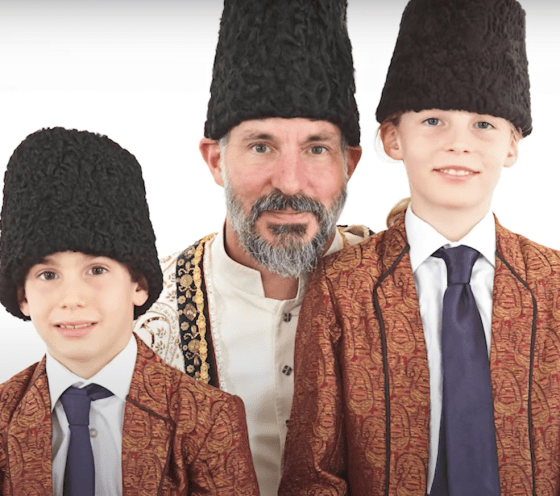


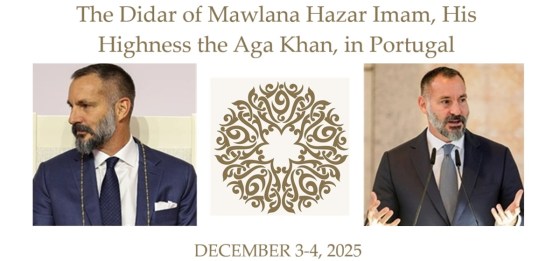




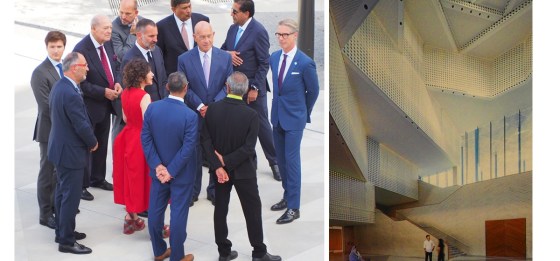


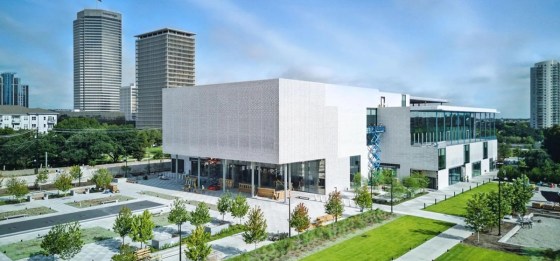

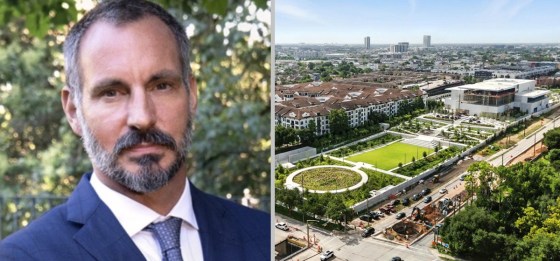


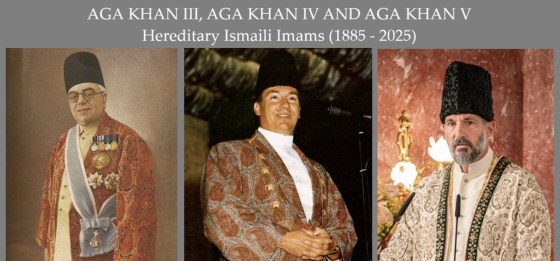


 Simerg - Insights from Around the World