Simerg is an independent initiative dedicated to Ismaili Muslims, the Aga Khan — their Hereditary Imam — and the Ismaili Imamat, and Islam in general through literary readings, photo essays and artistic expressions
Category Archives: Literary Readings from Ismaili History
When I left home (Monday, November 9) to run an errand, I went northbound on the Don Valley Parkway (DVP), and had planned to drive back south along the same route, and take the Wynford Drive exit that brings you to a T-junction, 200 metres east of the Aga Khan Museum entrance. But instead of taking the DVP, I decided to drive on Don Mills Road, and then turn left into Wynford Drive, and drive past the Ismaili Centre, the Aga Khan Park and the Aga Khan Museum before getting home. The Museum now opens from Thursday through Sunday, and the full parking lots at both the Ismaili Centre and the Museum made me wonder what was going on — perhaps a community event I wasn’t aware of.
The Aga Khan Museum outdoor parking area was packed with cars, as it hosted the shooting of a feature film The Man from Toronto on Monday, November 9, 2020. This photo was taken after the event was over. Photo: Malik Merchant / Simerg.
A (possible) police officer on horse at Aga Khan Park during the shooting on Monday, November 9, 2020 of the film The Man from Toronto that will be released sometime later in 2021. Photo: Malik Merchant / Simerg.
That hyped me up, and I drove into the Aga Khan Museum Parking lot, and managed to find a tight spot to squeeze into near a huge truck. Many vehicles carried US license plates. A gentleman politely asked me to walk on the pedestrian pathway on Wynford Drive. A volunteer I met on the way refused to answer my simple question, “What is going on?” citing a non-disclosure agreement! Such secrets make me really really mad!
A scene being shot at the Aga Khan Park on Monday, November 9, 2020 for the film The Man from Toronto to be released later in 2021. Photo: Malik Merchant / Simerg.
A transportation truck and filming equipment at Aga Khan Park during the shooting on Monday, November 9, 2020 of a new film The Man from Toronto. Photo: Malik Merchant / Simerg.
Then a few metres away, I met another gentleman who told me that the shooting of the action comedy film, “The Man from Toronto,” was underway, starring Woody Harrelson, a Primetime Emmy Award winner who has been nominated for three Academy Awards and four Golden Globe Awards! After about a minute, as I got closer to the Ismaili Centre, I watched and photographed a scene being completed, which had to be retaken. It was a 45 second event!
Visitors taking photos against the front wall of the Aga Khan Museum Building on November 8, 2020, a day before the shooting of the movie “The Man from Toronto” that saw the museum name replaced with “D.C. Art Museum” in its place (see photos below). Photo: Malik Merchant / Simerg.A temporary D.C. Art Museum banner covers the bilingual Aga Khan Museum sign for the shooting on November 9, 2020, of the film The Man from Toronto to be released in 2021. Photo: Malik Merchant / Simerg.
A man, with his shadows, walk past the “temporary” D.C. Art Museum on the day of the shooting of the film The Man from Toronto on Monday, November 9, 2020. The film will be released later in 2021. Malik Merchant / Simerg.
An Ismaili standing outside the guardrails alongside me explained that earlier when he was taking his daily routine Aga Khan Park walk, he was asked to remain away from specific areas. Then he told me that as he glanced up at the museum wall, he was bewildered to see the original bilingual “Aga Khan Museum” sign in English and French now reading “D.C. Art Museum.” He said that for a moment he was in a state of shock. He saw people walk in and out of the museum doors, and only got a sigh of relief when he was informed that the new sign was for the movie shooting!
US registered cars in front of the dome of the Ismaili Jamatkhana during the shooting on November 9, 2020, of the film The Man from Toronto to be released later in 2021. Photo: Malik Merchant / Simerg.
After taking photos of the “new” looking wall, I walked across the Aga Khan Park to the Ismaili Centre, and met an American alongside some cars that I think included, a vintage Mustang. I learnt from him and others I talked to that the preparations for the shooting event had begun 10 hours earlier, and everything went according to plans. The date of the release of “The Man from Toronto” has not been finalized but it will be interesting to see the scene(s) when the movie is released. The Aga Khan Museum security guard who kept on following me from the Museum building onwards, as if I was a security threat, marred my otherwise enjoyable few moments at the Aga Khan Park under clear and beautiful blue skies and warm temperatures!
Coronavirus, you may try to deter us, but we have our winning ways!
Date posted: December 9, 2020.
__________________
Before departing this website please take a moment to review Simerg’s Table of Contents for links to hundreds of thought provoking pieces on a vast array of subjects including faith and culture, history and philosophy, and arts and letters to name a few.
We welcome feedback from our readers. Please complete the LEAVE A REPLY form below or, if you don’t see the box, please click Leave a comment. Your letter may be edited for length and brevity, and is subject to moderation.
Simerg’s Malik at Aga Khan Museum courtyard.
About the author: Malik Merchant is the founding publisher/editor of this website, Simerg (2009), as well as two other blogs Barakah (2017) and Simergphotos (2012). Formerly an IT consultant, he now dedicates his time to family projects and his 3 websites. He is the eldest son of Alwaez Jehangir Merchant (1928-2018) and Alwaeza Maleksultan Merchant who both served Ismaili Jamati institutions for several decades in Mozambique, Tanzania, Pakistan, the UK and Canada in both professional and honorary capacities as teachers and missionaries. Malik’s daughter, Dr. Nurin Merchant, assists him as an honorary co-editor of the three websites. She received her veterinary medicine degree with distinction from the Ontario Veterinary College (2019, University of Guelph) and now works as a veterinarian.
The Milad or Mawlid of the Prophet Muhammad (S.A.S.) falls on the 12th day of the Islamic month of Rabi’ al-awwal. In 2020, Muslims in different countries around the world will be observing the birth anniversary between October 28-30. This post has a number of pieces on the Prophet that will be of interest to everyone.
We invite our readers to view the first episode of a 3-part series that covers the Prophet’s birth, the first revelation and early writing of the Qur’an, the creation of the first mosque, the persecution suffered by the first Muslims and the major battles fought by the Prophet and his followers to establish the new religion. Narrated by Academy Award-winning actor Ben Kingsley, and directed and produced by Robert Gardner, the captivating episode which first aired on PBS in 2001, has been highly recommended over the years for its educational value.
Watch video.
________________________
Readers who have just seen the documentary will be able to relate numerous segments in it to the following excerpt from the Presidential address made by Mawlana Hazar Imam, His Highness the Aga Khan, at the Seerat Conference in Pakistan in 1976. They will next appreciate Ismaili astrophysicist Farzana Meru’s reflection on a moment in Ismaili history that she would have loved to experience.
The Prophet Muhammad
By MAWLANA HAZAR IMAM, HIS HIGHNESS THE AGA KHAN
Mawlana Hazar Imam
“The Holy Prophet’s life gives us every fundamental guideline that we require to resolve the problem as successfully as our human minds and intellects can visualise. His example of integrity, loyalty, honesty, generosity both of means and of time, his solicitude for the poor, the weak and the sick, his steadfastness in friendship, his humility in success, his magnanimity in victory, his simplicity, his wisdom in conceiving new solutions for problems which could not be solved by traditional methods, without affecting the fundamental concepts of Islam, surely all these are foundations which, correctly understood and sincerely interpreted, must enable us to conceive what should be a truly modern and dynamic Islamic Society in the years ahead.” — Read full speech and listen to audio HERE.
________________________
A Moment in Ismaili history I Would Have Loved to Experience: The Time of Prophet Muhammad
By FARZANA MERU
I am struggling to narrow down all the moments in Ismaili history that I would love to have experienced. As I journey through the modern day trying to understand the past, I often ponder what it would be like to rewind time and experience a number of occasions in Ismaili history. But if I could only choose one of the vast number of spectacular incidents, I would go back and experience the beginning of Ismaili history, the key events that sparked the origin of our religion, the dawn of a new era: the time of our Prophet Muhammed (S.A.S.) in seventh century Arabia.
I would love to have experienced first-hand the living conditions and lifestyles of the people in those times. I would want to understand the culture, the tribal systems, the harsh desert conditions that people had to move through on camels. I would want to see how the Prophet himself dealt with the pressures of leading a community which started off very small but grew rapidly and flourished. I want to understand how people transitioned from the way of life in pre-Islamic Arabia into the new times. As a fly on the wall, I could watch the seventh century Arabian world go by, in awe. I would want to experience “where it all began”, an era that would mark the beginning of Ismaili history.
Astrophysicist Farzana Meru
The piece you just read was contributed by astrophysicist Farzana Meru for our first and original series I Wish I’d Been There series some ten years ago. On October 26, 2020, Dr. Meru and NASA’s aerospace engineer, Dr. Farah Alibay, were on the air on Ismaili.TV and reflected on their respective career paths as well as offered some outstanding words of wisdom to Ismaili youth during their schooling years, and for them to be passionate about their chosen area of interest, whatever that may be. Please watch Ismaili.TV’s excellent program by clicking HERE or below.
Date posted: October 27, 2020. Last updated: October 29, 2020.
________________________
Before departing this website please take a moment to review Simerg’s Table of Contents for links to hundreds of thought provoking pieces on a vast array of subjects including faith and culture, history and philosophy, and arts and letters to name a few.
We welcome feedback from our readers. Please complete the LEAVE A REPLY form below or, if you don’t see the box, please click Leave a comment. Your letter may be edited for length and brevity, and is subject to moderation.
The Aga Khan Museum is one of the few museums in Toronto that has been able to implement Covid-19 protocols and make the museum safe for its visitors. The visiting times were revised this past week, and it is now open from Thursdays through Sundays from 10 a.m. until 5:30 p.m.
In recent weeks, Simerg and its sister websites have produced a superb collection of photos of the Museum, the Ismaili Centre and the Aga Khan Park, which divides the two magnificent buildings. Readers have been uplifted to see the photos of the 3 magnificent projects, built by Mawlana Hazar Imam, His Highness the Aga Khan, under the full moon, crescent moon, as well as at the peak of the autumn foliage season.
Aga Khan Museum Toronto Courtyard decorated with pumpkins. Photo: Malik Merchant / Simerg.
On a fine day, there is no better place in the museum than to be sitting in its open air courtyard, while enjoying a delicious cup of latte.
October 23, 2020 was one such day. It actually felt like summer, with blue skies and very warm temperatures. The magnificent courtyard was a perfect place for my morning coffee as well as a late breakfast — an egg salad croissant, slightly grilled. I was thrilled to enter the courtyard, and noticed pumpkin decorations in one corner of the courtyard. Of course, pumpkins are to be seen everywhere at this time of the year. It is one of the most popular desserts served during Thanksgiving holidays in Canada (October 12, 2020) and the USA (November 26, 2020), and I wondered how the food was viewed in Islam. My little bit of research led me to numerous traditions of the Prophet Muhammad (S.A.S.) on the pumpkin, and I am delighted to post adaptations of some that I read.
“I saw the Prophet being served with soup and containing gourd (pumpkin or squash) and cured meat, and I saw him picking and eating the pieces of gourd.” — Bukhari Volume 7, Book 65, Number 348.
It is related that a sailor once invited Prophet Muhammad to eat some food that he had prepared. Anas bin Malik who accompanied the Prophet, noted that the Prophet was served barley bread and a soup with pumpkin in it. The Prophet keenly ate the pumpkin around the dish, and from that day Anas made it his favourite food. Traditions also note that whenever a a dish of bread, meat and broth was presented to the Prophet and it contained pumpkin, the Prophet would pick up the pumpkin because he really liked it, and made the heart strong. Other Muslim traditions note that the pumpkin increases brain function and brain strength.
Ibn Ridwan, in a medical treatise written during the Fatimid period, recommended the pumpkin as a diet for healthy living along with several other fruits and vegetables such as celery, carrots, lentils and cucumbers.
Interestingly, there is also a general consensus among scholars about the Arabic word yaqteen that is mentioned in the Holy Qur’an. They say that it refers to the pumpkin — a food that nourished and helped heal Prophet Yunus (A.S.), after he was cast into the wilderness while he was sick (see Qur’an, 37:144-146, at Corpus Quran English Translation).
The website healthline mentions that pumpkin is rich in vitamins, minerals and antioxidants, and is incredibly healthy. Moreover its low calorie content makes it a weight-loss-friendly food. It goes on to add that “its nutrients and antioxidants may boost your immune system, protect your eyesight, lower your risk of certain cancers and promote heart and skin health.”
After about an hour at the museum’s courtyard, I could not return home without walking around the Aga Khan Park. As I looked up in the blue sky above the Ismaili Jamatkhana dome, I saw two birds beautifully gliding at the dome’s left. I was left wondering: Were they turkey vultures, eagles or hawks? Alas, I wasn’t carrying a powerful lens to get a better and sharper close-up.
Please click on photo for enlargement
Two birds seen gliding at left of the dome of the Toronto Headquarters Ismaili Jamatkhana, part of the Ismaili Centre. Click on image for enlargement. Photo: Malik Merchant / Simerg.
Returning to the museum’s courtyard on Sunday October 25, offered a much different kind of experience, as the temperature had dropped from Friday’s 22°C to only 8°C. But the museum had that in mind too! Blue lounge blue chairs had been placed in the courtyard, with portable fireplaces where visitors mingled with their family members over light refreshments.
Visitors keep warm at a portable fireplace at the Aga Khan Museum’s courtyard as temperatures take a dip on Sunday, October 25. 2020. Photo: Malik Merchant / Simerg.
The overall experience at the three Aga Khan projects during recent weeks has been overwhelming.
As we all seek good health, I dedicate this post to the humble pumpkin which supports heart and eye health, and boosts immunity, among other benefits.
And, without the pumpkin’s presence in the museum’s courtyard, it may have never occurred to me to search out the traditions of the Prophet Muhammad (S.A.S.) that have showed that he really liked the pumpkin. For 2020, Muslims around the world will celebrate his birth anniversary — the Milad un Nabi — between October 28-30. It is an appropriate time to learn more about his inspiring life and leadership as well as his faith in God whom he served as the last messenger for 23 long and devoted years, bringing to Muslims the blessing of the Holy Qur’an.
Date posted: October 24, 2020. Last updated: October 25, 2020 (new photo/information added)
_____________________
Before departing this website please take a moment to review Simerg’s Table of Contents for links to hundreds of thought provoking pieces on a vast array of subjects including faith and culture, history and philosophy, and arts and letters to name a few.
We welcome feedback from our readers. Please complete the LEAVE A REPLY form below or, if you don’t see the box, please click Leave a comment. Your letter may be edited for length and brevity, and is subject to moderation.
For a decade, Simerg has officially supported the initiatives of Prince Hussain Aga Khan to his satisfaction. When we received his signed book “Animal Voyage” ten years ago, they were snapped up within a few days. Then, more recently, his signed copies of “Diving Into Wildlife” containing sea animal photos were also sold out shortly after they were made available to Simerg. We have now received very limited quantities of his signed as well as unsigned copies of “Diving Into Wildlife” for sale in Canada.
Cover Page of Prince Hussain Aga Khan’s Diving Into Wildlife.
In addition, we have also received for sale in Canada an entire collection of Italian made scarves inspired by Prince Hussain’s photography.
The beautiful STENNELA produced scarves were conceived by Valérie Maurice and designed by Kirsten Synge, exclusively for the Prince’s organization Focused on Nature (abbr. FON). Simerg can arrange to show you the entire collection in person in Toronto. You may then purchase them. Please contact Malik Merchant at Simerg@aol.com to arrange a viewing in Toronto (or in Ottawa, when he travels to Ottawa). All social distancing rules will be adhered to. As in the past, the entire proceeds from the sales of scarves and books will be submitted to FON, which assists in the conservation and protection of threatened and endangered species, as well as habitat conservation efforts.
200×140 cm – 85% modal – 15% silk 250 € or appx. $US 290.00; Italian made and produced by STENELLA brand for Prince Hussain’s organization FON. Other sizes are also available and priced from $US 90.00. Please contact Malik Merchant at Simerg@aol.com to view – and purchase – the scarves in person in Toronto.
Once again, to view and purchase the books or the scarves, please write to Malik Merchant at Simerg@aol.com. Signed and unsigned copies of Diving Into Wildlife are priced at $US 125.00 and $US 25.00, respectively. Payments can be made by cheques, e-transfers or via Paypal (Simerg is Paypal verified). The prices of scarves range from approximately $US 95.00 – $US 295.00, depending on material (silk or silk/cotton) and size. The entire collection can be viewed online at the Prince’s FON website by clicking HERE. As mentioned, you can try the scarves in Toronto – and buy them in person in Toronto from the complete range we are carrying. We can also ship the books and scarves across Canada, and shipping charges will apply. Please write to Malik at Simerg@aol.com.
Date posted: September 26, 2020.
_____________________
We welcome feedback from our readers. Please complete the LEAVE A REPLY form below or click on Leave a comment . Your letter may be edited for length and brevity, and is subject to moderation.
For objects shown in this post and to purchase them please write in confidence to Malik Merchant at Simerg@aol.com.
Editor’s Note:Malik Mirza’s recent piece, Exclusive Photo Essay: The Mausoleum of Pir Shams in Multan, resulted in comments from our readers concerning the status of the shrine today, its role within the Ismaili community, the miracles attributed to Pir Shams, as well as confusion over the identities of Pir Shams and Shams Tabriz. Simerg turned to Mumtaz Ali Tajddin for some answers, and we are pleased to publish his piece that sheds light on the subject.
By RAI MUMTAZ ALI TAJDDIN S. ALI Special to Simerg
In the contemporary period of 13th century, there is a confusion on the name “Shams” as there were three personalities existing at the same time. These were Imam Shamsuddin Muhammad, Pir Sham Sebzewari and Shams Tabriz, which is discussed in this paper.
1. IMAM SHAMSUDDIN MUHAMMAD
Imam Shamsuddin Muhammad (1257-1310), the 28th Imam of the Nizari Ismailis is said to have been born in 646/1230 in the fortress of Maimundiz. He was known as Agha Shams in Syria and Shah Shams in India. He is also known as Shamsu’l Haq in a few Iranian poems. Poet Nizari Kohistani (d. 1320) called him Shamsuddin Shah Nimroz Ali and Shah Shams. He was also known as Shams Zardozi due to residing in a village called Zardoz in Azerbaijan, but another tradition suggests that he had adopted the profession of embroidery, and as such the term zardoz (embroiderer) became his epithet.
JUVAINI AND MODERN HISTORIANS’ VIEWS ON ISMAILIS AND THE IMAMAT
Ata Malik Juvaini, the Persian historian who wrote an account of the Mongol Empire, wrongly considers the butchery of the Ismailis conducted by the Mongols in Qazwin and Rudhbar following the reduction of Alamut in 1256, as an end of the Ismailis and unbroken line of the Imamate as well. It is however, ascertained from reliable sources that Imam Shamsuddin Muhammad had left the fortress of Maimundiz probably on 11th Shawal, 654/November 1, 1256; the Mongols reached there on 17th Shawal, 654/November 7, 1256.
Ata Malik Juvaini joined the Mongols after 12th Zilkada, 654/December 2, 1256, and as is well known entered the library at Alamut, and upon the orders of Mongol leader burnt the entire library, sparing only a few copies of the Qur’an and some other works, just enough to fit into a small wheelbarrow.
According to Bernard Lewis in The Assassins (London, 1967, p. 63), “The extirpation of the Ismailis in Persia was not quite as thorough as Juvaini suggests. In the eyes of the sectarians, Rukn al-Din’s small son succeeded him as Imam on his death and lived to sire a line of Imams.” Marshall Hodgson also writes in The Order of Assassins (Netherland, 1955. pp. 270 and 275) that, “Juvaini assures himself that every Ismaili was killed; yet even if all the members of garrison were in fact killed, a great many other will have escaped.” He further adds, “but their spirit was more nearly indomitable; as it is from among them that the great future of Nizari Ismailism sprouted again. It is said the child Imam was carried to Adharbayjan, where the Imams lived for some time.” According to W. Montgomery Watt in Islam and the Integration of Society (London, 1961, p. 77), “In 1256, Alamut was surrounded, and was destroyed and in the following year the Imam met his death and there was a widespread massacre of the Nizaris. It may be further mentioned that, despite this catastrophe and the fact that it has never since had a territory of its own, the community was not exterminated and the line of Imams was maintained unbroken.”
Imam Shamsuddin Muhammad went to Daylam, and thence moved to Ardabil. It is said that he also lived in Ahar, about 150 miles west of Ardabil. He had been also in Tabriz, which he most possibly evacuated in the early months of 1257 as Halagu invaded Tabriz on July 26, 1257. It seems that he became known as Shams Tabriz in the Sufic circle in Tabriz. Pir Shihabuddin Shah (d. 1884) writes in Khitabat-i Alliya (Tehran, 1963, p. 42) that, “Imam Shamsuddin Muhammad who lived in Tabriz, was compared by the local people to the sun, because of his handsome countenance, and thus he came to be called Shams (the sun) of Tabriz. This gave rise to the confusion between him and Shams Tabrizi, the master of Jalaluddin Rumi, but they were always in reality two different persons.”
The tradition has it that Imam Shamsuddin Muhammad most probably lived from one to another place under different mantles in the province of Azerbaijan. The veritable locality of his residence, however, has not been substantiated. Azerbaijan was an ideal land for the growing Sufi circles, and the Imam had settled in northern region with his family, where he professed in the embroidery works.
Imam Shamsuddin Muhammad is reported to have betrothed to a Sufi lady at Daylam in 1276, or in the next year. His sons, Momin Shah and Kiya Shah operated Ismaili mission as far as Gilan. Imam Shamsuddin Muhammad died in 1310 in Azerbaijan after vesting the office of Imamate to his son, Kassim Shah.
Pir Shams was born most probably in Sebzewar, a town in Khorasan, lying 64 miles west of Nishapur. His father Syed Salauddin had been deputed in Baltistan by Imam Kassim Shah, who most probably came into the contact of Taj Mughal in Badakhshan. Kamaluddin Mujahri of Sebzewar writes in Malfuz-i Kamalia that Pir Syed Muinuddin Hasan of Sebzewar of Ajmer had a meeting with Syed Salauddin in Sebzewar in 1165. It is recounted that Pir Shams had gone to Badakhshan with his father at the age of 19 years, and thence he proceeded to Tibet and returned back to Sebzewar.
It is said that after the death of Syed Salauddin, Imam Kassim Shah commissioned Pir Shams as the hujjat of Sind and Hind at Daylam. In referencing the Imam, Pir Shams says: “Adore sincerely the true guiding light manifested in the person of Kassim Shah, the Lord of the Time.” (vide, Garbi, 5:17).
The earliest description of Pir Shams is found in the treatise of the biographies of Sufis, entitled Nafahat al-Uns (comp. 1478) by Nuruddin Abdur Rahman Jami (1414-1492), the last classic poet of Iran. Nurullah bin Sharif Shushtari (d. 1610) in hisMajalis al-Mominin (comp. 1604) traces his ancestry back to the Ismaili root. Some details are also found in Tarikh-i Firishta (comp. 1606). The great Sufi saint Bulleh Shah (1680-1758) also referred to Pir Shams in his poetry.
It is indeterminable point in the modern sources as to when Pir Shams was born? The extant materials however don’t afford one to draw a safe conclusion. His death in 1356 however is indisputable, based on the plaque at the mausoleum in Multan. The most confusing and unsolved point is to locate his date of birth. Most of the scholars concur in his age for 115 years, but it however seems that Pir Shams had lived to an advanced age beyond 115 years. Syed Bawa Ahmad Ali Khaki writes in his Dar-i Khuld-i Bari (Ahmadabad, 1905, p. 123) on the basis of an old manuscript that the span of Pir Shams’s life was for 171 years. If the date of his demise in 1356 may be considered genuine, it means that his birth would have been taken place around 1175 during the period of Imam Ala Muhammad (1166-1210). The genealogy of Pir Shams given in the Shajara, preserved in the shrine at Multan, indicates the birth of Pir Shams in 1165, which is also corroborative.
Pir Shams arrived from Daylam to Badakhshan, where he is said to have brought many followers of Momin Shahi sect into the Ismaili fold. He visited Gilgit and proceeded to Tibet and as far as the ranges of the Himalayas. He came back to Ghazna, where he deputed the local converted prince to Badakhshan on mission work. Pir Shams also converted a bulk of the Hindus during their dasera festival after singing garbis (songs) in a temple for ten consecutive nights in the village called Analvad. W. Ivanow places its location in Gujrat, called Anilvad, not far from Ahmadabad. Pir Shams also visited Kashmir in 1316 and converted the Chak and Changad tribes, thence he proceeded to Multan in 1326 for the first time.
In Multan, many miracles of Pir Shams are reported, but not potential for historical value. It needs interpretation to translate the miracles. It is therefore difficult to penetrate through the mist of legends, which formed even during the lifetime of Pir Shams and thickened rapidly after his death. The most popular miracle was the bringing down of the sun on earth, which earned him an epithet of taparez (burning) in Punjab. The word taparez is so coherent with that of Tabriz that it began to be pronounced as Tabriz, contriving a wrong theory to merge these two into one. Since Pir Shams and Shams Tabriz were proximate to each other in time, it is probable that Pir Shams, also known as Shams Taprez was confused with that of Shams Tabriz. It is believed that Shams Tabriz, the master of Jalaluddin Rumi, left Konya and then died in in Khoy, where he was buried. A false tradition arose that he moved from Konya to Multan, thus charactering Pir Shams and Shams Tabriz as the same and one, which is absolutely untrue.
Among the Sufis, there existed four principal orders in India, viz. Chisti, Qadari, Suharwardi and Naqashbandi. The period of Pir Shams was thus noted for the several skilled exponents of Sufi thought. He therefore launched his brisk and pervasive mission during the eve of the growing Sufi circles in Punjab. In the villages of Punjab, he mostly converted the Aror or Rohra, a leading caste in south-western part of the Punjab, i.e., of the lower reaches of the five rivers and below their junction, extending through Bahawalpur into Sind. They were mostly cultivators, and their large portion on the lower Chinab were purely agricultures, while in the western Punjab, they were mostly tailors, weavers of mats and baskets, makers of vessels of brass and copper and goldsmiths. Pir Shams appointed musafir (one who travels) in different regions to collect the religious dues, and also built prayer-halls (khana) and appointed their Mukhis. He also introduced the daily prayer in Sairaki dilect, which continued to be recited till the period of his son, Pir Sadarddin. Pir Shams expired in 1356 and was buried at Multan.
MAUSOLEUM OF PIR SHAMS AND ITS RECONSTRUCTION
The mausoleum of Pir Shams is located on the high bank of the old bed of the river Ravi. The tomb is square, 300 feet in height surmounted by a hemispherical dome. It is decorated with ornamental glazed tiles.
Seth Mehr Ali was a prominent person in Sind. His later life was quite different from his early life, which sounds his great leaning towards the doctrine of the Kaysania sect. In spite of the diversity in the oral traditions, there is a common story that Seth Mehr Ali had visited Bombay and then proceeded to Pirana, and came into the contact of the Kaka (headman) of the Imam Shahi sect, named Syed Sharif (d. 1795). This contact would have created his strong disposition towards the veneration of the shrines. Soon after his return, he visited Multan and became the disciple of Makhdum Safdar Ali alias Jiwan Shah, the custodian of the mausoleum of Pir Shams. This contact prompted Seth Mehr Ali to rebuild the mausoleum of Pir Shams. A sum of Rs. 75,000 was spent in its renovation, which he procured through donation in Sind in 1779. He posed himself as a Syed to win the hearts of the people. This is the reason that he is called Syed Mehr Ali in Tawarikh-i Zila’e Multan (Lahore, 1884, p. 85) by Munshi Hukam Chand and Multan: History and Architecture (Islamabad, 1983, p. 206) by Dr. Ahmad Nabi Khan.
CULTURE OF VENERATNG SHRINES AND ISMAILI RESPONSE
Syed Mehr Ali intended that the mausoleum should be crowded on the first Friday after 15th Shaban. He therefore he invited the local Shi’ites and the Ismailis of Sadiqabad, Uchh Sharif and Sind, but his objective was foiled. The Shi’ites venerated it and took its possession, but few Ismailis responded.
The culture of veneration and vows gradually continued to thicken. The custodian of the shrine gave thread and so called sacred water. Imam Sultan Mahomed Shah visited Multan on February 16, 1950, the Mukhi humbly requested the Imam that some local Ismaili attended the shrine of Pir Shams, claiming that there was power, which fulfilled the vows. The Imam asked the Mukhi to make an announcement in the Jamatkhana that he would visit the shrine of Pir Shams, and the Jamat was also invited to be there
On the next day, before noon, Ismailis gathered outside the mausoleum. The Imam also came and entered alone, while the Ismailis were outside. It is said that the Imam made seven rounds around the grave of Pir Shams, and came out and said to the Ismailis, “You claim that there is power in the shrine.” Then the Imam raised his right hand and put inside his pocket and said, “I have picked up all the power. Hence, there is nothing in the shrine, therefore, don’t come here and make your vows in the Jamatkhana.” Since then, the Ismailis didn’t go to make the vows at the shrine of Pir Shams as well as other shrines of Pir Sadardin and Pir Hasan Kabirdin in Uchh.
The shrines of Pir Shams, Pir Sadardin and Pir Hasan Kabirdin are under control of the local Muslims.
3. SHAMS TABRIZ OR SHAMSUDDIN TABRIZI, MASTER OF JALALUDDIN RUMI
Tomb of Shams Tabriz in Khoy, South Azerbaijan province, Iran. Photo: Wikipedia, CC BY-SA 3.0.
Shams Tabriz was born either in Daylam or Tabriz in 1165. He was called Parinda (flying bird), because he was always traveling from place to place.
In 1244, while Maulana Jalaluddin Rumi was teaching his pupils in an open courtyard next to a fountain in Konya, a shabbily externally dressed but perfectly internally adorned Sufi Shams Tabriz came to their assembly and watched them. He saw Maulana Rumi was referring to a large stack of handwritten books in the course of his teaching. Shams Tabriz asked him as to what was in the books. Rumi scoffed and replied, “O! Sufi. This contains knowledge that is beyond your comprehension, so you continue to recite your rosary.” Unnoticed by Rumi, Shams Tabriz threw the stack of books into a nearby pond of water. When Rumi’s students saw what had occurred they began beating Shams Tabriz. Rumi complained that all his valuable knowledge had been destroyed. Shams Tabriz said, “I will give back your books.”
A visibly dejected Rumi conceded to the request thinking that this was impossible. He was surprised to see that Shams Tabriz lifted the drenched books from the pond, blew dust of them and returned the books intact. He asked Shams Tabriz as to how he did this. Shams Tabriz replied, “This knowledge is beyond your comprehension, so you continue to teach your pupils.” Rumi fell at his feet and was swept into the currents of love. The presence of this ragged Sufi, Shams Tabriz, changed Rumi from a respected professor of theology into a lover of God. This event made Rumi to become a disciple of Shams Tabriz.
Hence, Rumi left orthodox teaching of his disciples, and learnt esoteric treasure from Shams Tabriz. One day, Shams Tabriz mysteriously disappeared, and was never seen again. Some say that he was killed by close disciples of Rumi, who were jealous of the close relation between Rumi and Shams. Other also assert that in the plot of his murder, Sultan Walad, the son of Rumi was involved. Shams Tabriz the master of Jalaluddin Rumi (d. 1273), was not traceable after 1247 in Konya. Shamsuddin Aflaki, who wrote in 1353, stated that the death of Shams Tabriz took place in Konya in 1247.
However a group of Sufis maintained that after leaving Konya, Shams Tabriz travelled to Tabriz, about 900 miles to the east. Interestingly, a tomb of Shams Tabriz that had remained obscure for many centuries was discovered in Khoy in the Western Azerbaijan Province in Iran. It has been nominated to be a UNESCO World Heritage Site. The distance from Khoy to Tabriz is approximately 100 miles.
Bust, monument tower, and Tomb of Shams Tabrizi — in Khoy, South Azerbaijan province, Iran. Photo: Wikipedia, CC BY-SA 3.0
As we have noted previously, Imam Shamsuddin Muhammad died in 1310. When Imam Shamsuddin Muhammad was in Tabriz, he became known as Shams Tabriz.
Rida Quli Khan (d. 1872), a 19th century poet, scholar and literary historian in the service of Qajar kings, writes in Majmau’l Fusaha that, “Shaikh Abu Hamid Awhadu’ddin Kirmani had seen and met Shams Tabriz in Tabriz.”
It is therefore quite likely that Shaikh Abu Hamid had actually seen Imam Shamsuddin Muhammad in the mantle of Shams Tabriz, and that the Imam’s identity began to be equated with that of Shams Tabriz. Henceforward, the presence of two Shams Tabriz during the same period became perplexing and puzzling.
When Imam Shamsuddin Muhammad was identified as the “son of the last ruler of Alamut”, he was made the “son of Alauddin Muhammad,” incorporating him in the above report.
The scrutiny of the sources indicates that a bulk of the frightened Muslims began to evacuate the vicinity of Rudhbar and Kohistan during the period of Imam Alauddin Muhammad (1221-1255) to escape the main brunt of the Mongols.
The stampede of the Muslims also carried away with them, the then latest report that, “Alauddin Muhammad is the ruler of Alamut, and the Mongols are about to come to reduce Alamut.”
These Muslims ultimately settled down in Qazwin, Daylam and Tabriz, where they came to know the fall of Alamut by the Mongols in 1256. They seem to have generalized an image in mind that the Alamut’s fall would have taken place in the time of Imam Alauddin Muhammad, and this story continued to prevail for many years in Qazwin, Rudhbar and Tabriz, making Imam Alauddin Muhammad as the last ruler of Alamut.
Marco Polo (1254-1324) passed by these regions in 1272, and heard these fantastic stories from these orbits, which he noted in his diary as follows, “I will tell you his story just as I Messer Marco, have heard it told by many people…The Shaikh was called in their language Alaodin…So they were taken, and the Shaikh, Alaodin, was put to death with all his men.” (vide, The Travels of Marco Polo(London, 1958, pp.40-42) by Ronald Latham.
When the people conclusively identified Imam Ruknuddin Khurshah as the last ruler of Alamut, most probably after 1272, one other tradition seems to have originated to distinguish these two characters. Imam Shamsuddin Muhammad was deleted from that story from being the son of Imam Alauddin Muhammad, but Shams Tabriz was made known as the son of Imam Alauddin Muhammad instead. Being influenced with this tradition, Daulatshah (d. 1494) was the first to show Shams Tabriz, the master of Jalaluddin Rumi, as the son of Imam Alauddin Muhammad, in his Tazkertu’sh Shu’ara.
A question then arises, who was Shams Tabriz? He indeed was an Ismaili, the master of Jalaluddin Rumi, but not the son of Imam Alauddin Muhammad. As to the early life of Shams Tabriz, we are yet in dark. Shamsuddin Aflaki (1310-1354) in Manaqibu’l Arifin and Abdur Rahman Jami (d. 1493) in Nafhatu’l Uns concur that Shams Tabriz was the son of a certain Muhammad bin Ali bin Malikad. Rida Quli Khan (d. 1872) in his Majmau’l Fusaha also relied on Aflaki and Jami. According to Silsilatu’ad-Dhahab, it is wrong to allege Shams Tabriz to have been the son of Imam Alauddin Muhammad. It was only Daulatshah, who made him the son of Imam Alauddin Muhammad.
Prof. Muhammad Iqbal of Punjab University, who prepared the Lahore edition of Daulatshah’s work, makes his remarks that: “It is evident that Daulatshah has not written historical facts carefully in his book. He has accepted all sorts of traditions, right or wrong, owing to which several errors have crept into his work.” The British orientalist Edward G. Browne writes in A Literary History of Persia (3:436) that “This is an entertaining but inaccurate work, containing a good selection of historical errors.”
It is also curious that Daulatshah quoted another tradition of parentage of Shams Tabriz that, “Some people say that he was originally a native of Khorasan and belonged to the town of Bazar. His father had settled in Tabriz for the purpose of doing business in cloth.” It is probable that Shams Tabriz was the son of Muhammad bin Ali bin Malikad according to Aflaki and Jami, and he seems to be a native of Khorasan as per another tradition cited by Daulatshah.
Nurullah Shustari (d. 1610) in his Majalis al-Mominin (6:291) states that Shams Tabriz descended from “Ismaili headman” (da’iyani Ismailiyya budand). His father had settled in Tabriz, and was a cloth merchant. Shams Tabriz was indeed an Ismaili like his father. Imam Sultan Mahomed Shah delivered a historical speech on 20th July, 1945 at Dar es Salam during the Ismaili Mission Conference in which he said, “Jalaluddin Rumi himself was not an Ismaili, but a murid (disciple) of an Ismaili (Shams Tabriz)”. It clearly means that Shams Tabriz was the master of Jalaluddin Rumi.
There is also a reason to believe that Jalaluddin Rumi must have known both Shams Tabriz and Imam Shamsuddin Muhammad, but did not describe that palpably in his Diwan. He however addresses Shams as the heir of the Prophet (verse no. 2473) and compares him to Ali (verse no. 1944), which seems to have been referred only to the Imam.
Rumi has repeatedly said in his Mathnawi and Diwan that it was not him but Shams talking through him. That is why he did not use his name in any of the verses out of more than 50,000 verses that he left behind. Rumi ends most of his poems with the name of Shams of Tabriz.
Finally, I may humbly note that the above write-up is not conclusive; it still needs further research.
Date posted: September 23, 2020. Last updated: September 25, 2020 (typo, wrong birthdate was given for Shams Tabriz).
___________________________
Mumtaz Ali Tajddin
About the author: Mumtaz Ali Tajddin S. Ali is a prolific writer based in Pakistan. He majored in Islamic history with a Masters degree. Over the past several decades, he has contributed numerous articles to Ismaili literary journals, and is also the author of several books including101-Ismailis Heroes, Encyclopaedia of Ismailism, and Ismaili Pirs, Sayeds, Vakils of South Asian Region. Most recently his Brief History of Ismaili Imams was serialized on the website Ismaili Digest. Within Ismaili institutions, he has served as a religious education teacher at the Karachi Religious Centre in Kharadar as well as an Honorary Lecturer/Waezeen with the Ismaili Tariqah and Religious Education Board (ITREB) for Pakistan. In addition, he is a curator of Hashoo Museum in Karachi which is dedicated to memorabilia from recent Ismaili history. For his long and devoted services to the Ismaili community, he has been bestowed with the titles of Huzur Mukhi (1986), Alijah (1996) and Rai (2010) by Mawlana Hazar Imam, His Highness the Aga Khan.
__________________
We welcome feedback from our readers. Please complete the LEAVE A REPLY form below or click on Leave a comment. Your letter may be edited for length and brevity, and is subject to moderation.
A few years ago, Malik Mirza contributed a great piece on the mausoleums of Pir Sadardin and his son Pir Hasan Kabirdin, who are among the architects of Ismaili Dawa in the Indian sub-continent through the wonderful tradition and teachings of Ginans. Mirza’s wish to visit the mausoleum of Pir Shams, father of Pir Sadardin, was fulfilled recently, and he has contributed a fantastic and informative photo essay on the mausoleum. Click on EXCLUSIVE PHOTO ESSAY: THE MAUSOLEUM OF PIR SHAMS or image below to read the essay.
Depictions of Pir Shams in posters and cards sold at his mausoleum in Multan. Pakistan.
We would like to thank Lesley Bannatyne for permission to reproduce her piece on the latest work of Harvard Professor Richard Wolf, which appeared in a recent issue of The Harvard Gazette. Dr. Wolf is producing a film about two Ismaili poets, who live on either side of Amu Darya in the rugged Wakhan Corridor (see map below). Qurbonsho lives in Vrang in the Ishkashim district of Gorno-Badakhshan in Tajikistan, and Daulatsho lives approximately 80 kilometres away in Yur village in Afghanistan. Both the villages are highlighted in the map. The Wakhan Corridor is a narrow strip of land about 350 km long and 13 to 65 kms widein North Eastern Afghanistan, part of Badakhshan Province. Two large mountain ranges dominate the area, the Pamir in the North, and the Hindu Kush in the South. It is surrounded on three sides by Tajikistan, China, and Pakistan. The United Nations puts the population of the Wakhan Corridor at approximately 10,590, of which about 1,200 are Kyrgyz, and the remainder are mainly Ismailis.
‘Two Poets and a River’: Worlds of Love in the Wakhan Valley
Filmmaker and Ethnomusicologist Richard Wolf is studying two Ismaili poets living in the Wakhan Corridor. Qurbonsho lives in South Eastern Tajkistan in Vrang, in Ishkashim district, and Daulatsho about 50 miles (80 kms) miles away across the Amu Darya (specifically the Panj River) in Yur village in Northeastern Afghanistan.Map: Adapted from University of Texas; updated by Simerg with approximate locations of Vrang and Yur(both circled in red).
By LESLEY BANNATYNE Harvard Correspondent
On opposite sides of the Oxus River [or Amu Darya, see map], border between Tajikistan and Afghanistan live two poet-singers who share a common language [Wakhi], faith [Ismaili Islam], and family network, and yet remain separated by vicissitudes of the Great Game, the 19th-century conflict between the British Empire and Czarist Russia. Ethnomusicologist Richard Wolf has been contemplating the rupture that exists across this divide in “Two Poets and a River,” a film in progress about poet-singers Qurbonsho in Tajikistan and Daulatsho in Afghanistan.
Daulatsho, Yarqub and others playing their instruments and singing as they climb from Yur village to the ayloq (upper pasture). Upper Wakhan, Afghanistan, July 2016. Photo: Richard K. Wolf.
71470016 Qurbonsho, sitting beside his daughter and aunt, in front of his ancestral home. Vrang, Ishkoshim district, Tajikistan, July 2018. Photo: Richard K. Wolf.
Wolf, a professor in music and South Asian studies, has a longstanding curiosity about Central Asian people and music, but his research efforts began in earnest on a Fulbright Fellowship to Tajikistan in 2012.
“I went to Central Asia to work on Wakhi music and soon came to know of Qurbonsho, a poet-singer who lives on the Tajik side of the river,” he said. “I was always curious about the Wakhis living on the Afghan side, but in 2012–13, as a Fulbright scholar, I wasn’t allowed to cross into Afghanistan.”
The border had been negotiated long ago by Britain and Russia, and Wolf was intent on crossing it, but the effort took years. In 2015, he returned to Tajikistan with names of Wakhi poets, musicians, and their villages in hand. He and his small team drove for several days until the road came to an abrupt end: Melting snow had descended in torrents off the mountaintops and washed out the road and many settlements. Wolf and his companions were forced to continue into Upper Wakhan by foot, yak, and donkey. In village after village, he would hear of Daulatsho, who seemed to be everyone’s teacher as well as the composer of most modern Wakhi songs. Wolf arrived at Daulatsho’s village of Yur (alt. 10,500 feet / 3200.4 metres) only to find that the musician had retreated to the higher pastures where Wakhis graze their cattle in the summer months. The poet-singer finds much creative inspiration in the high mountain flowers, fields, rocks, and rushing water.
Richard Wolf and villagers recording Wakhi women singing “bulbulik.” Ayloq (upper pasture) above Yur village, Upper Wakhan, Afghanistan, July 2016. Photo: Katherine Freeze
“I left word that I’d return the next year. In July 2016, Daulatsho was ready for me and set me up in a one-room house. But I didn’t get much of a chance to see what was going on in the village. So I proposed making a film in order to have an excuse to see more of the village,” he said.
Wolf had used other formats to present scholarly material before — his 2014 book, “The Voice in the Drum: Music, Language, and Emotion in Islamicate South Asia,” was a work of creative nonfiction based on 30 years of fieldwork in India and Pakistan. He had been thinking about using a film to create a sequel, but his current research in Central Asia led him to postpone that plan.
“Two Poets and a River” took shape over the next several years and has been shown in the U.S. and Europe as a work in progress. Wolf traces the poets’ contemplations on separation, family, and environment, as well as their imaginings about what lies on the other side of the border. The two singers knew of one another by reputation and through recordings Wolf had made, but they had never met. In the winter of 2018–19, stranded with Daulatsho not far from the border because an enormous truck had broken down and blocked the road, Wolf realized he was close enough to pick up a cellphone signal from Tajikistan. He called Qurbonsho, and the two poets spoke to each other for the first time.
“The life experiences of these two musicians differ significantly,” Wolf said. “Qurbonsho studied in Soviet schools near his house and served as a construction worker for the army; Daulatsho had to relocate to the district center. He has crossed the border into nearby Pakistan but for the most part stays in Wakhan. Qurbonsho lives on what he makes from performing at weddings, but no one can afford to pay Daulatsho for his performances — rather he survives on his meager monthly salary as a schoolteacher. Distances that can be covered in hours on the Tajik side may take days on the Afghan side. Wakhis from Tajikistan see in Afghan Wakhis images of themselves 50 years ago. Afghan Wakhis see in their Tajik counterparts a measure of freedom and wealth.
“But as I worked with each of these musicians I found many similarities. They share common lifeways of pastoralism, house construction, and food. Their musical poetry is based on themes common to the Persianate world. The quintessentially Wakhi song of separation, bulbulik [nightingale], inspires the art of both poets with its sparse, three-line structure. Daulatsho’s Afghan Wakhi poems tend to be lengthy but use only a few melodies. Qurbonsho writes brief, pithy poems that draw from a variety of musical styles current in Tajikistan.”
After more than 100 years of imposed division, what resonates among the Wakhis, what their poets sing and write about, comes from something deeper: love, longing, and distance from a beloved.
“My film considers the broad trope of love as well as what it means for members of a community to be separated across a national divide. I was thinking of ending ‘Two Poets and a River’ with the two men meeting in person,” said Wolf. “But I’m not sure that would be true to the spirit of love, loss, and separation that underlies the river metaphor.”
Date posted: August 26, 2020.
________________
Harvard’s Richard Wolf
Richard Wolf is professor of Music and South Asian Studies at Harvard University who conducts ethnomusicological field research on the musical traditions, languages and cultures of South, Central and West Asia. His website http://richardkwolf.com/ includes samples of songs and film clips related to his work in diverse areas. For his more complete profile, please click Richard Wolf.
Before departing this website please take a moment to review Simerg’s Table of Contents for links to hundreds of thought provoking pieces on a vast array of subjects including faith and culture, history and philosophy, and arts and letters to name a few.
We welcome feedback from our readers. Please complete the LEAVE A REPLY form below or click on Leave a comment. Your letter may be edited for length and brevity, and is subject to moderation.
A decade has passed since the first publication of our series “I Wish I’d Been There” when we asked you to be “a fly on a wall” and pick one moment in Ismaili history that you particularly wish you had lived to see, and why. [Note: The “I Wish I’d Been There” idea had sprung from the December 1984 issue of American Heritage magazine which was dedicated to American history under the same theme.]
The response was superb, with scholars, writers and readers from every field imaginable contributing insightful and thought-provoking pieces — some long and others short and precise. Following the series, a professionally looking booklet was produced, which is downloadable as a PDF file.
Aside from the current Covid-19 pandemic which has wreaked havoc, affected everyone’s day to day life, and disrupted our plans, a great deal has changed in the past 10 years: young children have entered university, students are now in professional employment, and many have embarked on new careers and adventures. New sources of knowledge have come to light and been published, and we have celebrated the Golden and Diamond Jubilees of our beloved Mawlana Hazar Imam, as well as participated in new Imamat initiatives and projects. As such, we have decided to relaunch a series that was so well received and acclaimed for its originality and the remarkable quality of the narratives.
articles continues after image
Simerg Launches a New I Wish I’d Been There Series
Technology and the quality of podcasts keeps on improving. The new “I Wish I’d Been There” series will, therefore, avail of these developments. In addition to textual expressions, we would like to receive contributions in the form of podcasts, as well as videos (of up to 5 minutes).
We would like all age groups to contribute to the series. In 2010, we published thirty-one unique stories. Can we double that count in 2020? The series will commence on October 15th, 2020 and conclude in April 2021.
From 50 words to a narrative of 500-800 words or more (or a 1- to 5- minute podcast/video), see what you can do to inspire, and educate, thousands of readers around the world with your insight of one scene, incident or event in ISMAILI history, recent or past, you would like to have witnessed — and why?
We look forward to a fantastic response. Please write to Malik Merchant at Simerg@aol.com.
Date posted: August 21, 2020.
__________________________
Download the First “I Wish I’d Been There” Series on Ismaili History
Click on image to download complete I Wish I’d Been There Series in PDF Format
____________________
Malik with his mum Maleksultan
Malik Merchant is the founding publisher/editor of Simerg (2009), Barakah (2017) and Simergphotos (2012). A former IT consultant, he now dedicates his time to family projects and other passionate endeavours such as the publication of this website. He is the eldest son of the Late Alwaez Jehangir Merchant (1928-2018) and Alwaeza Maleksultan Merchant who both served Ismaili Jamati institutions together for several decades in Mozambique, Tanzania, Pakistan, the UK and Canada in both professional and honorary capacities. Malik’s daughter, Dr. Nurin Merchant, is a veterinarian and supports his endeavours as an honorary editor of the three websites.
Before departing this website please take a moment to review Simerg’s Table of Contents for links to hundreds of thought provoking pieces on a vast array of subjects including faith and culture, history and philosophy, and arts and letters to name a few.
If there is one Ginan that gets an entire Jamatkhana congregation immediately connected and singing in unison with joy and unbounded happiness, it has to be Pir Sadardin’s Ginanic composition of 7 verses, Eji Anand Anand Kariyo.
Eji Anand Anand is one of the first Ginans every Ismaili child learns at home and memorizes. You can sing it on any occasion or on any day, and if you have arrived in the Jamatkhana with a feeling of sadness or worry, then those worries and apprehension disappear on hearing the first line! It is arguably the most inspiring Ginan, and I personally crave for its recitation. It is good for me, any day any time. Here two beautiful recitations of the Ginan:
Though short, Eji Anand Anand incorporates key messages: the recognition of the Imam of the Time, the importance of unity, that good actions and deeds reap rewards, and the importance of service to the Imam of the Time. The Ginan reminds its listeners about the physical presence of the Imam of the Time, who at the time it was written, was located very far away in Iran. Therefore it has a congratulatory undertone to it. In other Ginans, the Pirs promised their listeners that the Imam would one day arrive at their doorstep in India, referred to as Jampu Dipma. It took several hundred years for that promise to be fulfilled, but it did happen in the 19th century when the 46th Imam, Mawlana Shah Hassanali Shah (a.s.), Aga Khan I, set both feet on Indian soil.
The same could be said for the Central Asian Jamats in the autonomous region of Gorno-Badakhshan, who physically had the mulaqat of the Imam of the Time centuries after they accepted the teachings of the revered Ismaili Da’i Pir Nasir Khushraw and other dais of his tradition, and became Ismailis. Mawlana Shah Karim was the first Imam to have visited Central Asia in centuries. His historical visit took place in 1995, and was commemorated with joy and happiness, as shown in the photo of young Ismaili ladies holding a photo of Mawlana Hazar Imam.
With 9,000 chronological quotations arranged in 90 thematic chapters, this huge treasury of quotations is bursting with historical gems, including a reference to the famous tradition of the Prophet Muhammad, “He of whom I am the Mawla, Ali is his Mawla.”
However, the recognition of the Imam goes back hundreds of years before the time of Pir Sadardin and Nasir Khushraw. The era of the Divine Institution of Imamat began with the tradition of the Prophet Muhammad at Ghadir-Khumm when he declared, by Divine Commandment, that Hazrat Ali was to be his successor. In the book “History in Quotations”, which reflects five thousand years of World History, the authors M. J. Cohen and John Major write as follows: “Muhammad said: ‘He of whom I am the Mawla (patron), Ali is his Mawla. O God, be the friend of him who is his friend and be the enemy of his enemy.’ This became the proof text for the Shia, who claim that Ali, the Prophet’s cousin and son-in-law, was the Prophet’s rightful successor after the Prophet’s death in 632. The meaning of Mawla here probably implies the role of patron, lord or protector.” The authors sum up by stating that, through the use of the term Mawla, Muhammad was giving Ali the parity with himself in this function.
Images of some stamps and coins issued by the Islamic Republic of Iran between 1990 and 2010 commemorating the Eid-e-Ghadir. The inscriptions include the Shahada, Qur’anic ayats and the declaration made by Prophet Muhammad at Ghadir Khumm, “Mun Koontu Mawla, Fa Hada, Aliyun Mawla” meaning “He of whom I am the Mawla Ali is also the Mawla.”
Coming back to the present time, the affirmation of the Institution of Imamat to the world at large has been made by Mawlana Hazar Imam on numerous occasions but none as succintly as in the following two remarks made by him at the Parliament of Canada in 2014 and in an interview in 2010 with the French journal Politique Internationale:
“The Ismaili Imamat is a supra-national entity, representing the succession of Imams since the time of the Prophet Muhammad” — Parliament, 2014
and
“The religious leadership of the Ismaili Imam goes back to the origins of Shia Islam when the Prophet Muhammad appointed his son-in-law, Ali, to continue his teachings within the Muslim community. The leadership is hereditary, handed down by Ali’s descendants, and the Ismailis are the only Shia Muslims to have a living Imam, namely myself.” — Politique, 2010
Mawlana Hazar imam, His Highness the Aga Khan, seen addressing at the House of Commons Chambers to both the houses of Canadian Parliament on Thursday, February 27, 2014. Photo: The Office of the Prime Minister of Canada.
On this auspicious occasion of Eid al-Ghadir falling on August 7, 2020, let us rejoice in the knowledge that for 1388 years, Ismailis in a multitude of settings and practicing different traditions, have been guided by the Rope of Imamat, and that the Noor of Imamat, through the physical manifestation of the Imam of the Time, has lit our path to clarity so that we may obtain spiritual and worldly satisfaction.
Date posted: August 6, 2020.
Before departing this website please take a moment to review Simerg’s Table of Contents for links to hundreds of thought provoking pieces on a vast array of subjects including faith and culture, history and philosophy, and arts and letters to name a few.
________________
An expanded version of this post can be read at Barakah.
Simerg welcomes your feedback. Please complete the LEAVE A REPLY form below or click Leave a comment. Your letter may be edited for length and brevity, and is subject to moderation.
The authors, Salim and Sultan Somani, acknowledge with thanks Nizar Adatia and Sultan Allidina for their valuable feedback and contribution to this article.
Introduction
This brief essay on the history of the Jamat of Jinja was prompted largely by some historical photos found in our family album and also by other photos that we encountered on the internet. Over the years we have shared these photos with friends and family from Jinja. But there are many others with whom we never had the chance to meet in person or through social media to share these remembrances. As we grow older, memories fade and people pass away, carrying with them some of the past history that the young and upcoming generation never get a chance to know about and appreciate. There are many who have no inkling of what their parents and grandparents went through, growing up in Africa, the trials and tribulations they encountered and the challenges they faced.
Rather than let these photos sleep in our albums, we have decided to give them exposure through this website, Simerg, and talk a little bit about them in the hope that they will trigger some memories and invite contributions to make this essay more complete. This essay has some gaps and missing information and is, by no means, exhaustive. Simerg, which is the repository of historical facts, findings and accounts, is, we believe, the right forum for this exposé.
These photos belonged to our beloved father, Gulamali Kara Somani, who was a great teacher and a volunteer. It is to him that we dedicate this essay and honor his memory. Towards the end of this essay, we have paid him a tribute for his outstanding and exemplary contributions to the Jinja Jamat and the role that he played in shaping and impacting the lives of all those whom he taught and worked with.
Jinja in Brief
Map of Uganda. Image credit: Perry-Castañeda Collection / University of Texas.
Situated on the shores of Lake Victoria (the third largest lake in the world), where the River Nile (the longest river in the world) leaves the lake to make its long, meandering 4000 mile journey up north to the Mediterranean Sea, Jinja had the second largest Jamat in Uganda, after the Jamat of Kampala, some 50 miles away. This is going back some 70 years, to the fifties and sixties before the 1972 crisis when the dictator Idi Amin expelled everybody of Asian origin as well as many expatriates.
Jinja. Victoria Nile above the Rippon Falls. Photo taken in 1936 on a flight with Imperial Airways on a World Trunk route following the Nile from the Delta to the Victoria Nile and the Victoria Lake. Photo: G. Eric and Edith Matson Photograph Collection / US Library of Congress.
On the banks of the River Nile in Rippon Village was a huge rock which was a drop off or pick up point for travellers crossing the Nile. Jinja literally means a stone or rock and this is how the city derived its name. John Hanning Speke, a British explorer, discovered Jinja as the source of the River Nile in 1858.
First Indian Settlers in Jinja
The early 1900s saw the arrival of the first Indian settlers to Jinja. This is best described in the facebook post by Jinja City:
“Indians first settled in Jinja in the early 1900s. During the late 19th century, Indians of mostly Sikh descent were brought to Uganda on three-year contracts, with the aid of Imperial British contractor Alibhai Mulla Jeevanjee, to build the Uganda Railway from Mombasa to Kisumu by 1901, to Jinja by 1920 and to Kampala by 1931. Some died, others returned to India after the end of their contracts, and others chose to settle.
“Hajji Tamachi was the first Indian settler in Jinja. He set up Jinja’s first shop and Post Office. Hajji Tamachi played a vital role in encouraging other Indians to settle and do business in Jinja. Other Indians followed suite, with Alidina Visram, Vithaldas and Kalidas also setting up shop. Vithaldas and Kalidas, Madhvani’s uncles, helped to tutor Madhvani in business. Madhavani would later single handedly transform Jinja.”
With the building of the railway and much later in 1954, the Owen Falls Dam for generation of hydro-electric power, the Indian population grew with more of them setting up shop. Different communities lived side by side in peace and harmony, doing business and providing services in their respective fields of expertise and professions. Schools were built and so were places of prayer and worship. The Hindus had their temple, the Sikhs their Gurudhwara, the Ithnasharis their Masjid and, in 1937, the Ismaili Jamatkhana was built.
Ismaili Jamatkhana in Jinja
In 1937, on March 01, thanks to the generosity of Varasianima Virbai, widow of late Mr. Ali Bandali, the Jamatkhana, school, library, traveller’s residence (or musafarkhana) etc. were constructed at a cost of 25,000 shillings, for the benefit of Ismailis of Jinja. The project was dedicated to Mawlana Sultan Mahomed Shah Aga Khan (A.S.).
In the top photo, younger and older members of the Jamat are seen gathered at the entrance to the Jamatkhana building at the time of the opening, a proud moment indeed for the Jamat of Jinja. The second photo shows antique cars parked in the front of the Jamatkhana building, indicating that even at that time there were affluent members in the Jamat. Photos: Fidai Magazine, 1885-1936 Golden Jubilee Number.
A photo of the Jamatkhana taken much later shows a wall built around the perimeter of the building to make it more secure and private. Land was also acquired for sports activities and to hold Imamat Day, Salgirah and Navroz festivities (generally referred to as Khushialis), as well as other special events.
Another new building was built to house the Council Chamber and the Council Office with some space allocated for activities such as baby shows, cooking demonstrations, exhibitions and other social events etc. The foundation stone of the building was laid by Mukhi Gulamhussein Karim. Mukhi Karim was a prominent and affluent member of the Jamat who served in key leadership positions and commanded lot of respect from members of the Jamat.
Religious Education Classes in Jinja
Shams Somani, who was on an assignment as a volunteer teacher with Aga Khan Schools Uganda during the year 1999-2000, is seen standing in front of the building adjacent to the Jamatkhana building where religious education classes were held. Next to the classrooms was the musafar khana (or traveller’s residence) and a residence for the Jamatbhai (caretaker of the Jamatkhana). Photo: Gulamali Kara Somani Family Collection.
Adjacent to the Jamatkhana building, was the building where there were spaces allocated for conducting religious education classes, a musafar khana and a residence for the caretaker of the Jamatkhana known as the Jamatbhai.
One of the principal mandates of the Ismailia Association, precursor to the present day Ismaili Tariqah and Religious Education Board (ITREB), was to run a religious education school. This school comprised of classes for students of all age groups, from lower primary to senior secondary level students. Popularly referred to as dharmic (religious) classes (the equivalent of today’s Baitul Ilm or BUI religious education program), they were held in the evenings during Jamatkhana time. After recitation of the two Du’as, subjects such as Du’a and its meanings, Ginans, History of our Holy Imams, and General Knowledge etc. were all taught. Our father, Gulamali Kara Somani, was the sole senior teacher and was assisted by other student teachers (e.g. Sultan Allidina, Rosy Kassamali) to teach the lower primary students. He was addressed to as ‘Sir’, a title that stuck with him for many years, even after he settled in Canada.
Much later on, there were other teachers who taught, namely, Gulamhussein Alibhai Pradhan (popularly referred to as GAP) and Yusufali K. Adatia (popularly referred to as YK).
‘Sir’ was a disciplinarian. Like it or not, all students were expected to go to the classes and parents made sure they did. In the evenings, there were those who played cricket and when it was time for classes, they would come carrying their cricket gear and place it at the back of the classroom. Before commencing the class, ‘Sir’ would take a cricket stump and place it on the teacher’s table in front. If anybody did not learn properly or misbehave, they would get the stump on the palms of their hands. Those were the days of corporal punishment. Generally, girls were better students than boys. But everybody learnt, whether out of fear or personal motivation and went on to progress in life. There were competitions held, such as waez (sermon) competitions, which brought out the best in the students.
It was customary to have a visiting Alwaez meet and address the students of the dharmic classes. Such was the case when Alwaez Gulamhussein Juma visited Jinja. An opportunity was taken to take group pictures of the different classes of students on the steps of the Council Chamber and Office building.
Younger students of Jinja’s Ismaili religious education classes pictured with visiting Alwaez Juma, members of the Ismailia Association and the Jamatbhai, Dhanjibhai, standing at back centre, with hands folded. Seated front row left to right: Mr. Sadru Jiwani, Mr. Fazal Gulamhussein, Alwaez Gulamhussein Juma, Mrs. Maleksultan Hemani, Mr. Yusuf Adatia and Mr. Gulamali Kara Somani, our father (popularly called ‘Sir’).Individuals who can identify themselves or can be identified through their friends and colleagues are invited to present their names to Simerg@aol.com for a caption update.Photo: Gulamali Kara Somani Family Collection.
Younger as well as some older students of Jinja’s Ismaili religious education classes pictured with visiting Alwaez Juma, members of the Ismailia Association and the Jamatbhai, Dhanjibhai, standing at back, second from left, with glasses. Seated front row left to right: Mr. Sadru Jiwani, Mr. Fazal Gulamhussein, Alwaez Gulamhussein Juma, Mrs. Maleksultan Hemani, Mr. Yusuf Adatia and Mr. Gulamali Kara Somani, our father (popularly called ‘Sir’). Individuals who can identify themselves or can be identified through their friends and colleagues are invited to present their names to Simerg@aol.com for a caption update. Photo: Gulamali Kara Somani Family Collection.
The three historic photos that are presented here may have volumes to speak about the individuals, with their own personal stories and experiences. Unfortunately, some may have passed away. Of course, individuals who can identify themselves or whose friends can identify for them are invited to present their names to Simerg@aol.com so that the captions may be updated. For now the captions in all the three photos only include the names of the office bearers seated on the front row with Alwaez Juma.
All girls! Students of Jinja’s Ismaili religious education classes pictured with visiting Alwaez Juma and members of the Ismailia Association. Seated front row left to right: Mr. Sadru Jiwani, Mr. Fazal Gulamhussein, Alwaez Gulamhussein Juma, Mrs. Maleksultan Hemani, Mr. Yusuf Adatia and Mr. Gulamali Kara Somani, our father (popularly called ‘Sir’).Individuals who can identify themselves or can be identified through their friends and colleagues are invited to present their names to Simerg@aol.com for a caption update.Photo: Via author contacts.
Dhanjibhai – Jinja’s Jamatbhai
Dhanjibhai – see previous group photos
A unique individual in two of the photographs shown above, is the unmistakable figure of Dhanjibhai, bespectacled standing behind the group. He was the Jamatbhai, the caretaker for the Jinja Jamat who took care of the day-to-day operation of the Jamatkhana: opening and closing the Jamatkhana, cleaning, making all the necessary arrangements, preparing tea on a sigri (charcoal burning stove) etc. He was the point man for getting anything done on the Jamatkhana premises and had the keys to all the rooms. He was also responsible for collecting Jamatkhana empty plates, bowls etc. from Ismaili households, going from house to house and putting them in a big raffia basket carried by an assistant. Dhanjibhai also delivered notifications to all those who had been given waras (assignments) to recite Du’a, Tasbih, Ginan etc. in Jamatkhana. The response for the acceptance or non-acceptance of the wara had to be given immediately and indicated on the wara card.
Dhanjibhai lived in a residence just next to the musafarkhana with his wife, popularly known as maasi (aunty). In the evenings, maasi would prepare fried mogo (cassava) on a makaara (charcoal) burning sigri (stove) and was stationed near the back exit door. She would sell these mogo pieces inexpensively to supplement their meager income. There was chili, salt and a ambli (tamarind) sauce to go with the mogo which was a real treat. As youths, we would always look forward to this mouth-watering mogo after Jamatkhana, huddling near the parked cars on the street and socializing as we waited for our parents to come out of Jamatkhana.
Ismaili Institutions in Jinja
Jinja Ismailia Association members. Sitting left to right: Mrs. Shirin Haji Bachu, Mr. Ibrahim Mohamed Jamal (Chairman) and Mrs. Noorbanu Mohamed Mitha; and standing are Mr. Gulamali Kara Somani (our father: ‘sir’) and Ms. Malek Alarakhia, who was a secular school teacher.Photo: Gulamali Kara Somani Family Collection.
Inspite of the relative small size of the Jamat, Jinja was very well organized with a functioning Provincial Council, an Ismailia Association as well as numerous sub-committees to cater to the needs of different segments of the Jamat including women and youth. The Ismailia Association was primarily responsible for imparting religious education to members of the Jamat, arranging waezeen tours from time to time, selling religious books, making Farmans available, as well as ensuring that rites, rituals and religious ceremonies were being followed.
The Jinja Aga Khan Provincial Council in session. Sitting clockwise from left are Mr. Sadru Mitha, Mr. Abdul Ramji, Mr. Haji Bachu, Mr. Abdul Devji, Mr. Badru Gulamhussein Adatia (Secretary), Mr. Haroon R. Khamis (Council President), Mrs. Gulshan Adatia, Mr. Madat Hemani, and Mr. Sadru Walji Adatia.Photo: Via author contacts.
Members of the Jinja Ismaili Entertainment Committee. Seated left to right: Sadrudin V. Virani (Hon. Treasurer), Sadrudin Mitha (Ismaili Youth Organization, IYO, member), Madat Shariff (Chairman), Parin Jamani (Hon. Secretary); standing left to right: Zebun Mitha, Nizar Shariff, Zebun Khamis, Bahadur Shamji, Gulzar J. Karim and Amirali A. Lalani.Photo: Via author contacts.
In sports, the youths of Jinja were very active in practically every sport, be it badminton, table tennis, volleyball and netball (equivalent to today’s basketball). Soccer and cricket were also played, though the playground was not large enough. Volleyball, traditional style, was played regularly, usually over the weekends. Of particular interest was the volleyball match played between married vs bachelors that took place once a year during one of the Khushialis. The match created quite a rivalry and was talked about for weeks afterwards.
At Khushialis, the whole playground was taken over with various activities, both for youths and adults. Starting with the flag raising ceremony, there were games and matches played. Usually the finals in sports such as table tennis were played on that day and trophies awarded to the winners. At lunch time there was sagridaam jaman (communal feast) when pillau (rice), cooked in a deg (large pot) was served in thalaas (large round trays) by the dynamic volunteer corps in full uniform. The Khushiali was a two-day weekend event with dandiya raas (Indian folk stick dance) and raas garba (circular folk dance) being played on Saturday until late at night with music provided by the Ismaili band.
Ismaili Business and Professional Activities in Jinja
Ismaili entrepreneurs were active in all spheres of business; Taxi & Car Rental (Hadi Jamal), Bus Company (Mohamed Mitha, Ibrahim Mohamed, Kassam Haji), Watches & Jewellery (Charanias), Insurance (Hussein Velji), Hotel Blue Cat (Abdul Devji), Restaurant & Bar (Sadru Hussein Rashid Khamis), Wholesale Clothing (Jeraj Sheriff), Portello Soda (Mohamed Remtulla), Pharmacy Retail (Jamal Govindji – Musa Diamond), Gifts (Madatali Hemani), Shoes (Sadru Bata), Molasses (Madatali Moolji), Bakery (Rahim Rajan), Butchery (Alaudin Kara) etc. to name just a few. There were also professionals such as Dr. Abdul Kassam Adatia, first Dean of Faculty of Dentistry at Bristol University (U.K) and visiting professor at Makerere University (Kampala), Yusuf Adatia (Architect) and secular school teachers, Ms. Malek Alarakhia, Ms. Gulzar Allidina and Ms. Gulshan Allidina, who appears in a very rare secondary school staff photo shown below. Indeed, generations of Ismaili students who attended the school will be able to relate to the photo, by recognizing some of their teachers.
Photo of Staff at Senior Secondary School in Jinja
Back row, left to right: R. L. Avasthi, Bahal Singh, L. A. Gomes, B. S. Bhabuta, C. M. Bashir, R. C. Saksena, S. V. Ayyar, P. S. Nayar, Jaswant Singh, A. D. Oza and C. P. Bhabuta; Middle row, left to right: D. B. Deshpande, Beant Singh (Sr. Master Eng.) K. M. Chakravartty, R. S. Aggarwal, J. C. Aggarwalla, Sheikh M. Hussain, B. S. Batra, S. Chakraborti (Sr. Master Hist.), A. A. Khan (Sr. Master Urdu), and H. P. Joshi; and Seated left to right: Miss J. K. Sandhu, Mrs. J. K. Sangha, Mrs. P. Dass, R. N. Banernjee (Headmaster), N. R. Metha (Chief Asstt,), Miss G. Allidina, Mrs. M. Saxana, and Mrs. S. Desai.Photo: Via author contacts.
Visit by Mawlana Hazar Imam to Jinja in 1957
The Jinja Jamat was blessed with two visits by Mawlana Hazar Imam. The first one was in 1957, shortly after the Takhtnashini (ceremonial installation) on October 25, 1957 in Kampala, and the second took place in 1966, when Mawlana Hazar Imam made an extensive visit to East Africa.
Mawlana Hazar Imam arrives at Jinja airfield, and is received by the Jamati leadership. Here he is seen blessing Kamadia Haji Bachu with Kamadiani Shirin standing next to him. Immediately behind Hazar Imam is Mukhi Shamsudin Mohamed (with hat). Leaning on the car is Alwaez Jaffererali Sufi. On the extreme right is our father (‘Sir’) in full uniform, standing behind Mr. Haji Molu, his colleague.Photo: Gulamali Kara Somani Family Collection.
Mawlana Hazar Imam blesses Mrs. Jenabai Karim after being garlanded by her upon his arrival at the Jinja airfield. In the foreground, dressed in white with a hat is Mr. Sadruddin Karim, who was designated to drive Mawlana Hazar Imam’s car in Jinja. In volunteer uniform, at far left, are (left to right): Mr. Amin Alarakhia, Mr. Haji Molu and our father, Mr. Gulamali Kara Somani (‘Sir’). The two persons shown immediately to the left of the policeman (in shorts) are President Mr. Haji Rashid Khamis (in a light colored suit and dark glasses) and Mr. Abdulla Hassam Gangji (light suit). Photo: Gulamali Kara Somani Family Collection.
Mawlana Hazar Imam paid a visit to the Jinja Provincial Council Chamber during his 1957 visit. In this photograph, he is seen conferring with the leaders of the Jamat. Seen from left to right are President Haji Rashid Khamis, person standing (not visible), Mr. Abdulla Hassam Gangji, Kamadia Haji Bachu, Mawlana Hazar Imam, Mrs. Zohrakhanu Allidina (seated), who held the portfolio of Member for Women and Mukhi Shamsudin Mohamed (standing).Photo: Allidina Family Collection.
The Jinja Ismaili volunteers in full uniform on duty in 1957 during Mawlana Hazar Imam’s arrival at the Jinja airfied. Standing from right to left: Our father Gulamali Kara Somani (Lieutenant), Haji Molu (Lieutenant), Amin Alarakhia, Bahadur Fazal, Hassam Mawji, Ahmed Jamal, Madat Khamis, Feroz Khamis, Sultan Allidina and Nizar Sheriff.Photo: Gulamali Kara Somani Family Collection.
Visit by Mawlana Hazar Imam to Jinja in 1966
Mawlana Hazar Imam graced the Jinja Jamat with a second visit in 1966. The photos shown are also from our album. The first photo, though, where Hazar Imam is seen stepping down, is of his arrival at Entebbe Airport.
Mawlana Hazar Imam arrives at Entebbe Airport for his visit to Uganda in 1966.Photo: Gulamali Kara Somani Family Collection.
Mawlana Hazar Imam leaving the Ismaili Council Chamber building surrounded by his murids, trying to get a last glimpse before his departure. From left to right are Amir Madhavji, Zulfikar Devji, Abdul Alarakhia, Mehboob Charania, Malik Kassim-Lakha, Salim Somani, Nizar Sheriff and Sadruddin Karim.Photo: Gulamali Kara Somani Family Collection.
____________________
Conclusion
We trust that this short essay has served to provide some history of the Jinja Jamat from our perspective and in so doing, we have honored the memory of our beloved father. But by no means is it complete. There may be some minor errors that need to be corrected and some omissions and information gaps that need to be filled. We are sure that there is much more that others can contribute, and readers can do that by completing the comments box below.
After the 1972 Uganda crisis, when there was a mass exodus, the economy went down tremendously. But since then things have picked up particularly in Kampala, the capital, where there is lot of construction going on. A number of ex-Ugandans have returned and there is new immigration, mostly from India. There is lot of outside investment including by Hazar Imam, e.g Serena Hotel, Bujagali Falls Hydro-electric power station (in partnership between Aga Khan Fund for Economic Development or AKFED, Sithe Global Power of USA, Government of Uganda, Industrial Promotion Services, IPS, and Jubilee Investment Company).
Photo taken in 2000 on the steps of previously used Jinja Council Chamber/Office building, which is now used as a Jamatkhana by the Jinja Jamat. Among those pictured in the front row are Mukhiani Saheba of Jinja (3rd from left), originally from Northern Pakistan, ITREB Uganda Chairman Anil Samji, Religious Education Coordinator Karim Jiwani, and Kamadia Saheb of Jinja Jamat; in middle row at left is Shams Somani of Montreal who was on voluntary assignment in Uganda with Aga Khan Schools during 1999-2000; and in back row are Council Secretary Shellina Hasham with her husband Salim Hasham, ITREB District Member. Photo: Gulamali Kara Somani Family Collection.
The economy in Jinja is still depressed with abandoned buildings and buildings in a state of disrepair. The historic Jamatkhana building still stands but there is now a clinic there. The small Jamat that is there, mostly from India, meets for Jamatkhana in the Council Chamber/Office building (see photo, above).
Let us hope and pray that the beautiful city of Jinja, once the industrial hub of Uganda, prospers and blossoms to its days of past glory and become the dynamic and vibrant city that it once was.
_____________________
A Tribute to Our Late Father, Gulamali Kara Somani
Gulamali Kara Somani (1924 – 2010).
The history of Jinja Jamat and the pictures that we have shared with readers with Simerg are a testimony of our father’s love for Mawlana Hazar Imam and his Jamat. He preserved these photos in our family album for more than 62 years. We wish to pay him our humble tribute.
Our loving father, Gulamali Kara Somani, was born in 1924 in Jinja, He lost both his parents when he was just 8 years old. He was brought up by his uncle and, like many from his generation, he set up shop and started to do business after finishing school. He was always mechanically inclined, fixing things, be it cars, bicycles etc. and was always very creative. For example, he could take a black & white picture and color it using photo tints. (There were no colored pictures at the time). He also developed his own pictures at home. Music was his passion. He started writing and composing songs and played them on a musical stringed instrument of Japanese origin called Taishokoto.
Then he got into repairing watches and got very good at it, a skill that he practiced till his last days. He could pull apart a watch completely, clean the parts, oil them and put them back together for perfect timing. It was this skill that landed him a job in Montreal when he applied to come to Canada. His mind worked on small, intricate details which is why he was very successful in fixing things or creating works of art. At Jamatkhana, when they needed something decorative to be prepared, they knew that they could count on him for something original and he never let them down.
In the 50s and 60s his services were called upon to teach in the religious night school at Jinja to students from junior level to senior secondary level covering all subjects: Du’a and its meanings, Ginans, History of the Imams, Farmans etc. We remember that at one time during a wa’ez competition he wrote a wa’ez in English for us on the subject of: “Education”.
He also served as a senior volunteer (Lieutenant: the highest ranking officer) rendering exceptional services along with other volunteers particularly during Hazar Imam’s two visits to Jinja. We remember seeing him with burn-bubbles on his hands from serving hot, steaming pillau (rice) from the deg (large pot). When he presented himself for Mehmani to Hazar Imam, Hazar Imam blessed him and mentioned: “Good service!”
He was also a member of the Ismaili Band that provided music for dandiyaraas and garba during the Khushiali celebrations.
In 1966 when Hazar Imam visited Uganda, there was a small town named Mbale in Eastern Uganda, on his itinerary (see Uganda map on top of page). Mr. Hadi Jamal of Jinja provided a fleet of cars for Hazar Imam’s staff to travel to Mbale. Our father volunteered to drive one of the cars and was assigned Hazar Imam’s photographer, which was great because he could go everywhere where Hazar Imam went. At one point, Hazar Imam was at a reception and was drinking Coca-Cola from a glass. Our father did not take his eyes off this glass. As soon as Hazar Imam kept his glass on the table and started to leave, our father made a beeline for the glass, picked it up, and then took the glass with him. We still have this glass in our possession which our father preciously guarded and brought it with him to Canada.
A teacher, a volunteer par excellence and above all, a humanitarian, our father served with utmost distinction and dedication, never seeking recognition. His outstanding and exemplary services are truly worthy of admiration and emulation and rubbed off on of us, his children, who have served in various capacities over the years in Jamati institutions.
Our younger sister, Shams, a secular teacher, took one year out of her teaching profession to work as a volunteer with Aga Khan Education Services (AKES) in Kampala from 1999 to 2000. Both our sisters, Layla and Shams were also heavily involved in BUI (Bait-ul Ilm) and have continued to play a role in imparting religious education for many years now. I, Salim Somani, served in various Majalis as Mukhi and Kamadia, in committees (audio visual, catering etc.) and also as a volunteer. My brother Sultan Somani, the co-author with me on this Jinja piece, served as Chairman of Ismailia Association (6 years), as Hon. Secretary on the Aga Khan Council for Quebec & The Maritime Provinces (6 years), Member and Chairman, Conciliation and Arbitration Board (6 years), and as Majlis Mukhi (3 years), among other duties etc.
Never missing a day, except for health reasons, our father attended Jamatkhana everyday in the morning and evening, no matter what the weather was like. We have seen him bundle up and walk to Jamatkhana when it was extremely cold.
Our beloved father passed away in April 2010 at the age of 86.
We pray that may Allah in His Infinite Grace and Mercy forgive all his sins and rest his soul in eternal peace – Amen.
Date posted: July 31, 2020. Last updated: August 12, 2020 (caption updates with name of person(s) as they become available, and typos).
CORRECTIONS:
(1) In the original version of this piece, the year 1958 was mentioned as Mawlana Hazar Imam’s first visit to Jinja, Uganda. Actually, the visit took place in 1957, shortly after Mawlana Hazar Imam’s enthronement (Takhtnashini) ceremony in Kampala on October 25, 1957. The article has been updated with the correct year (correction made on August 9, 2020).
(2) Earlier versions of this piece mentioned that Mawlana Hazar Imam travelled by car to towns outside Kampala, such as Jinja and Mbale. Our attention has been drawn to the fact that in 1957, Mawlana Hazar arrived in Jinja by plane, where there was an airfield available for the landing of military aircraft as well as some civilian planes. We have updated our captions of the 1957 visit to reflect this (correction made on August 10, 2020).
Before departing this website please take a moment to review Simerg’s Table of Contents for links to hundreds of thought provoking pieces on a vast array of subjects including faith and culture, history and philosophy, and arts and letters to name a few.
Please report typo or error in story to Simerg@aol.com.
___________________
We welcome your feedback/letters on this special piece on Jinja by clicking on Leave a comment or writing to the editor, Malik Merchant, at Simerg@aol.com. If you were a Jinja resident, your reminiscences about life in Jinja, your participation as a student, a volunteer, a leader or a member of the Jinja Jamat, as well your surprising anecdotes will uncover a wealth of information about Jinja. We also welcome historical photographs of Mawlana Hazar Imam’s visit to Jinja. Kindly note that your feedback may be edited for length and brevity, and is subject to moderation. We are unable to acknowledge unpublished letters.
____________________
About the Authors
Salim, in volunteers uniform, 1966
The authors of this article, Salim and Sultan Somani, were both born in Jinja, Uganda and now reside in Montreal, Quebec.
Salim immigrated to Canada in 1974 from England where he pursued his studies in Hotel Management & Catering at Huddersfield Polytechnic and specialized in cuisine. Unable to return to Uganda, following the 1972 expulsion of Asians, Salim moved to join his parents in Montreal where over the years he applied his culinary skills at a number of prestigious places, including the Ritz Carlton, Bonaventure Hilton and Montreal Casino in different cuisines. Most recently he worked at the renowned catering company, La Maison Carrier-Besson.
He is married to Rashida and has a son, Hussein, a National Account Executive with RGIS and a daughter, Aliya, Educational Consultant with EMSB (English Montreal School Board). Salim is now retired.
In recent years, Salim has started carving fruits, particularly watermelons, and his impressive work has resulted in him being invited to carve fruits for several important festivals and ceremonial occasions.
Sultan Somani with his daughter, Sarah
Salim’s brother, Sultan, immigrated to Canada in 1973. He was studying Physics/Mathematics at Makerere University, and 3 months before writing his final exams, he was in the unfortunate position of having to leave Uganda due to Idi Amin’s expulsion orders. He proceeded to Nairobi, Kenya, and with the assistance of the United Nations High Commission for Refugees, under the leadership of late Prince Sadruddin Aga Khan, was moved to a refugee camp in Italy where he stayed for 5 months. He then joined his parents in Montreal, where he studied computer science in a university before commencing a career as a systems analyst and programmer at Bell Canada’s Behavioural Sciences Group, Comptrollers Results Department and Corporate Systems Organization (CSO).
Sultan later diversified into a number of businesses in partnership. He has for years dedicated his time to serving Ismaili Institutions in numerous capacities and the Ismaili community in general, for which the title of Rai was bestowed on him. He is now retired, and at the age of 70 is a father of 6 year old daughter, Sarah, whom he takes care of on a full-time basis with his wife, Shainaze.
________________________
The authors recommend the website Sikh Heritage for more information and photos of Jinja.


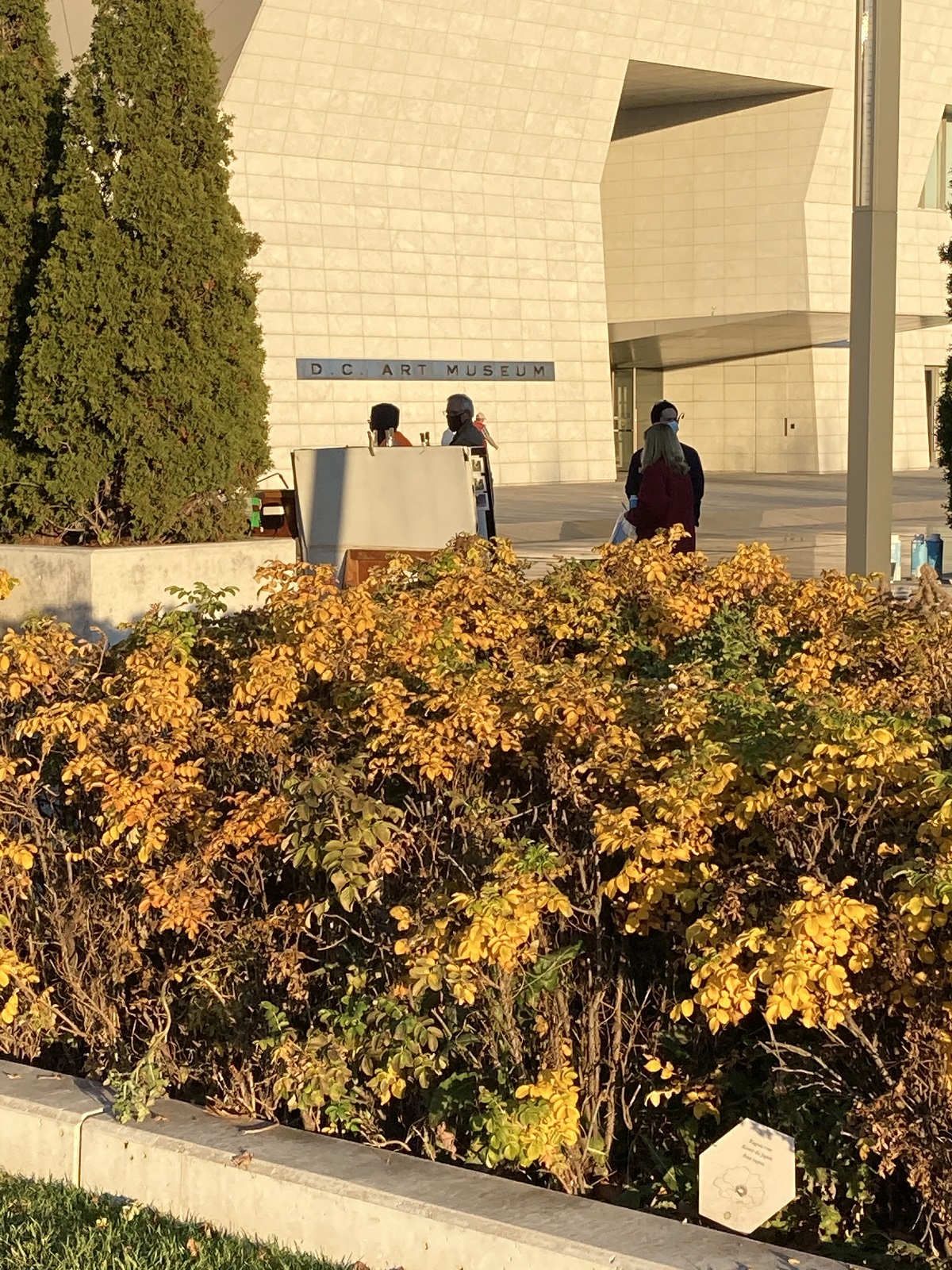






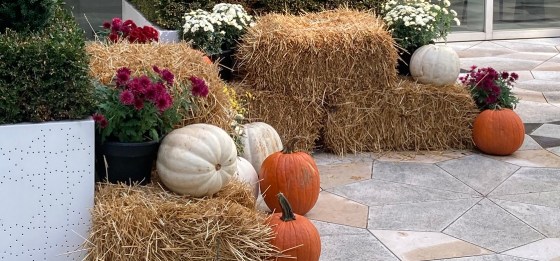
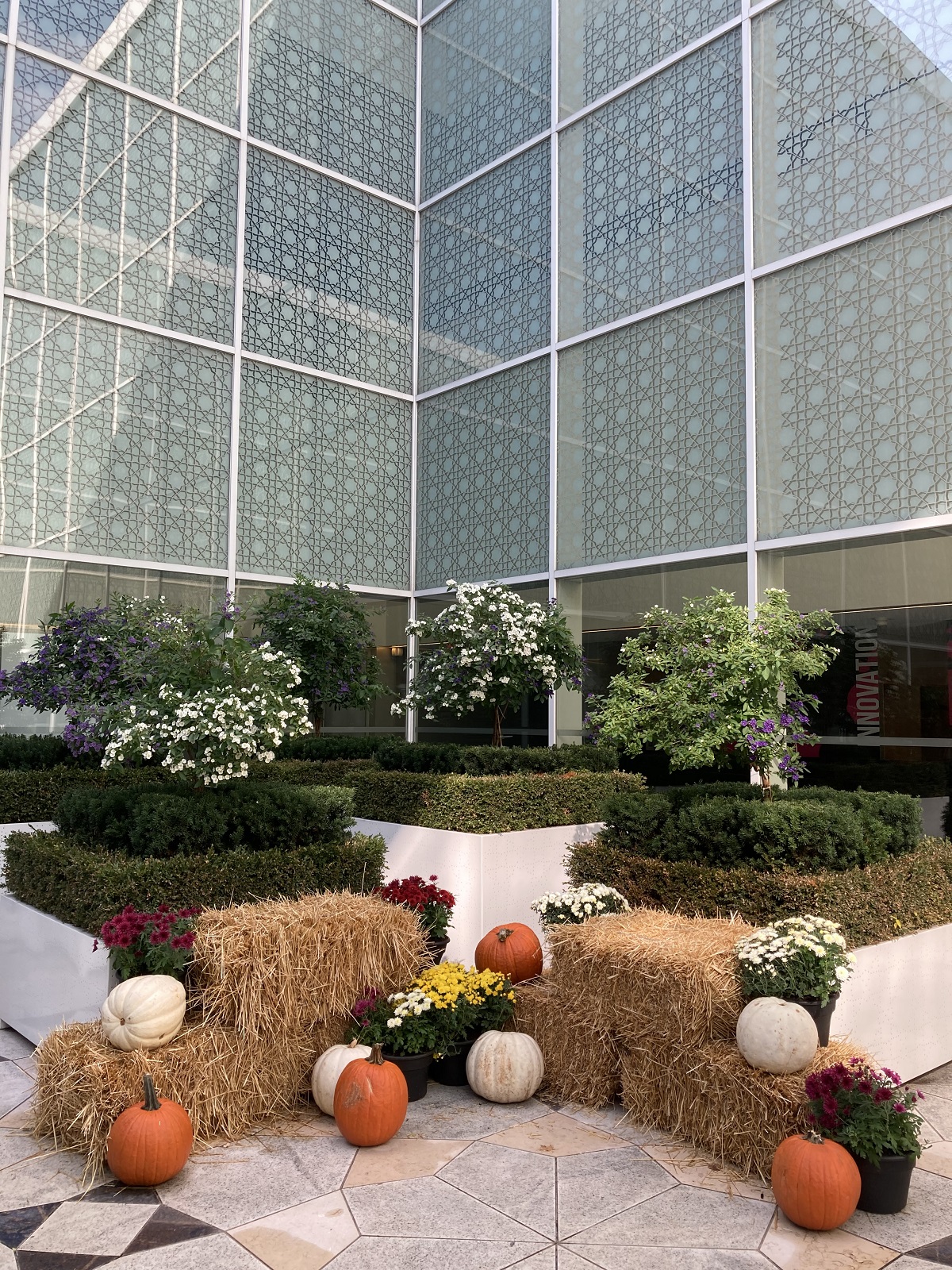
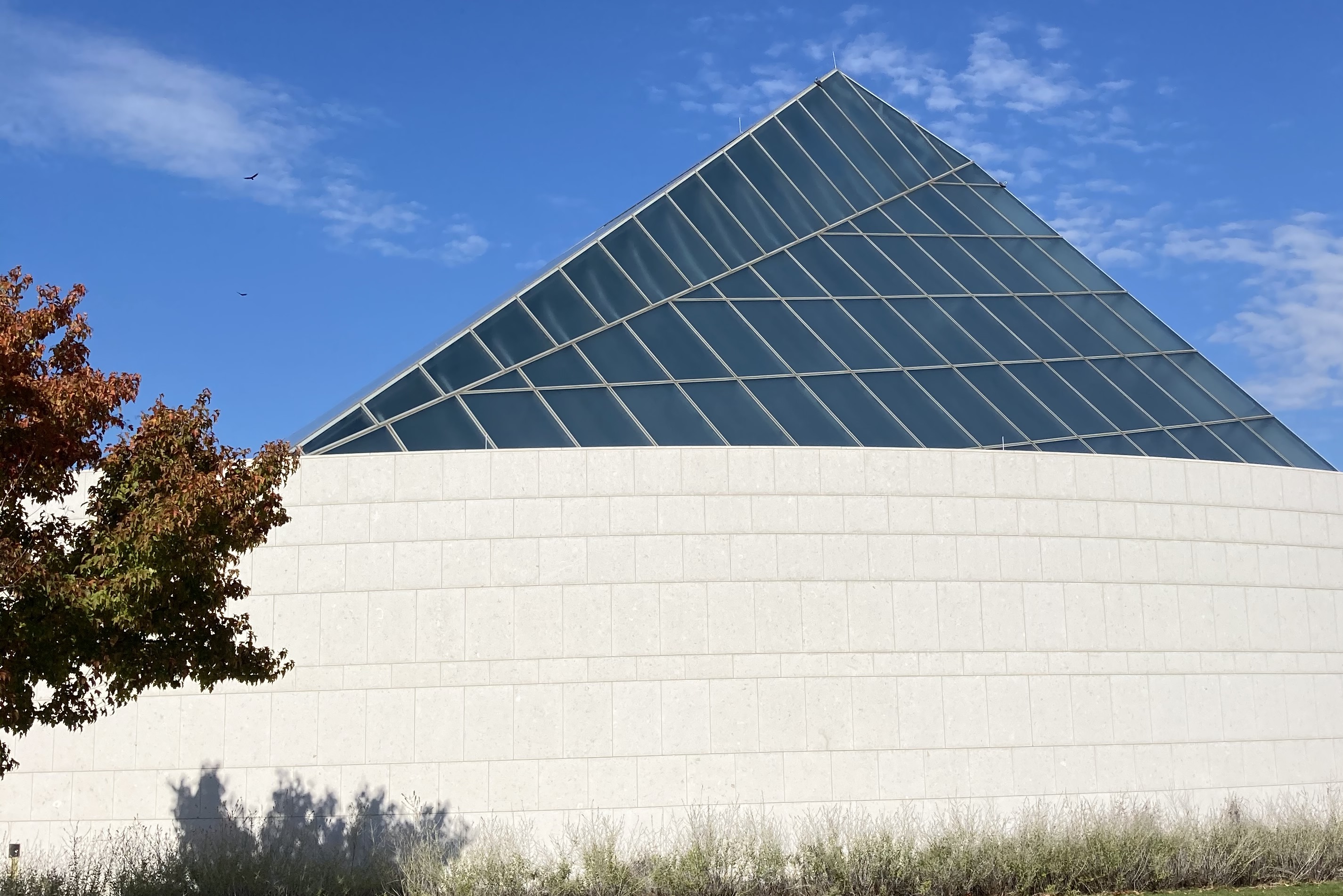
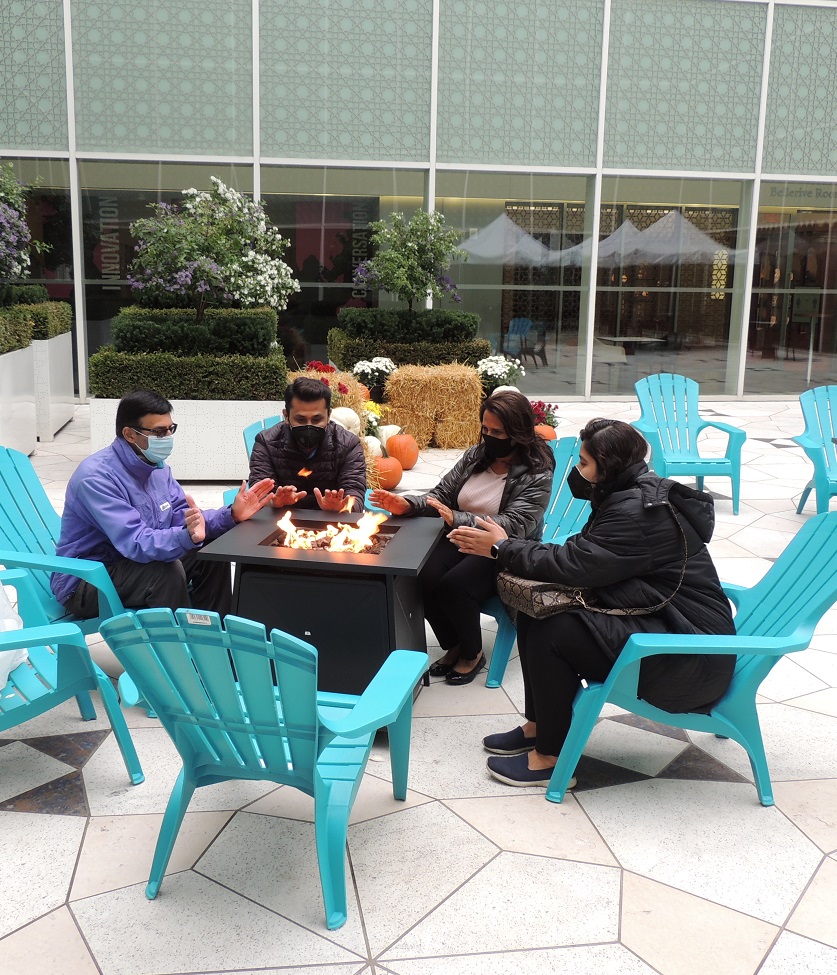




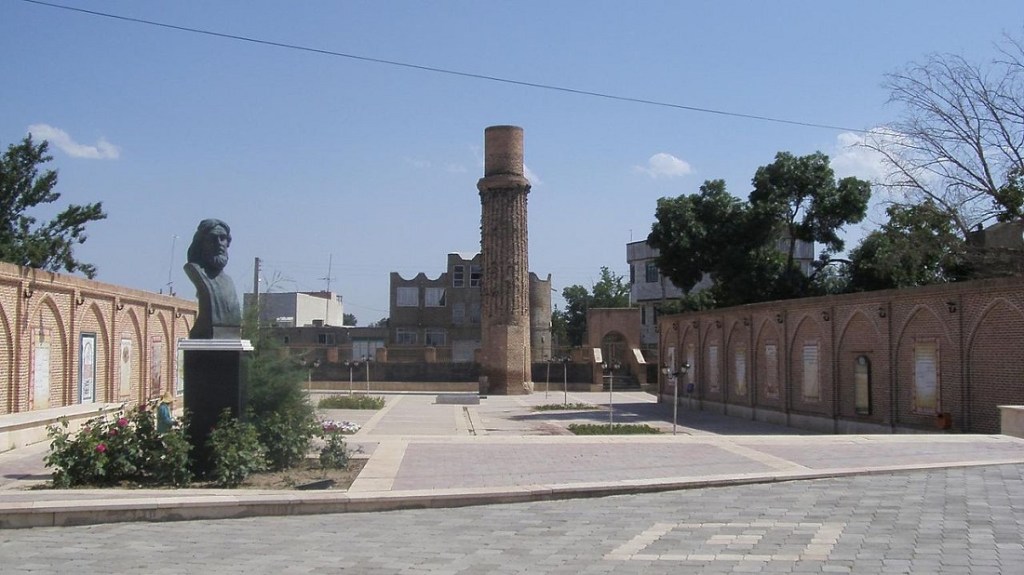
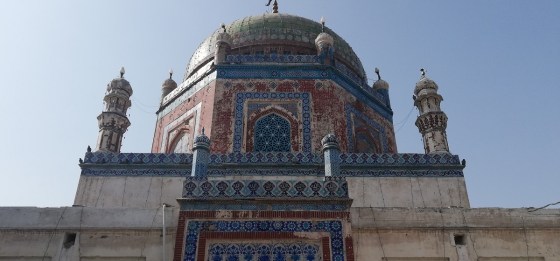
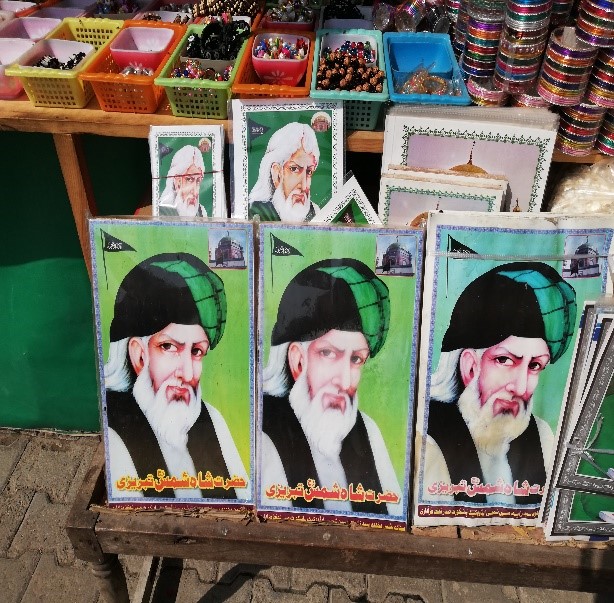


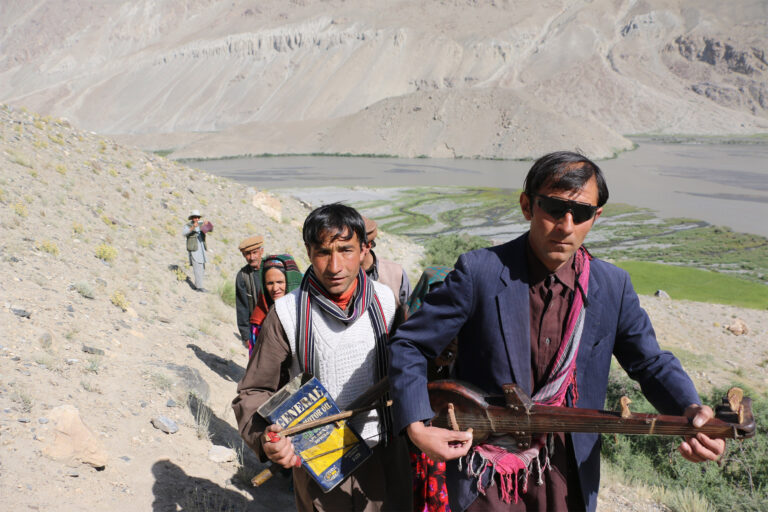





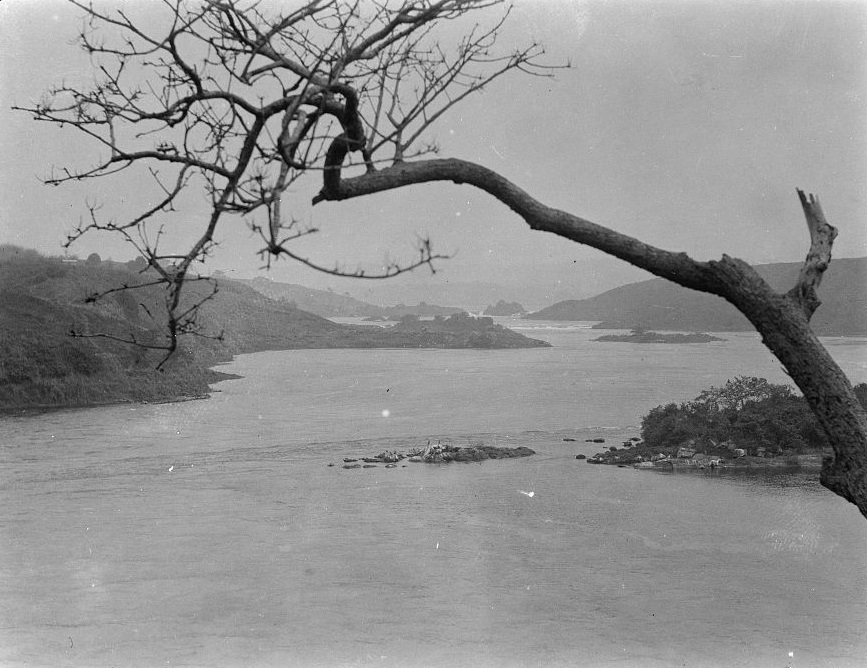
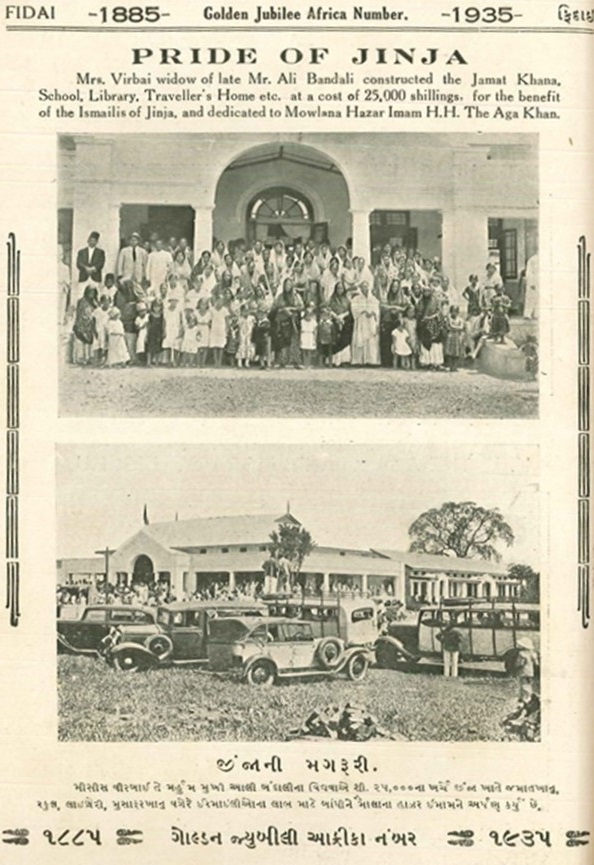
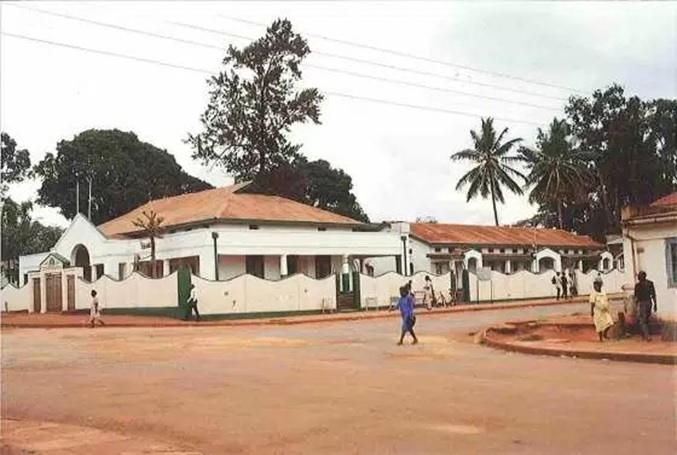
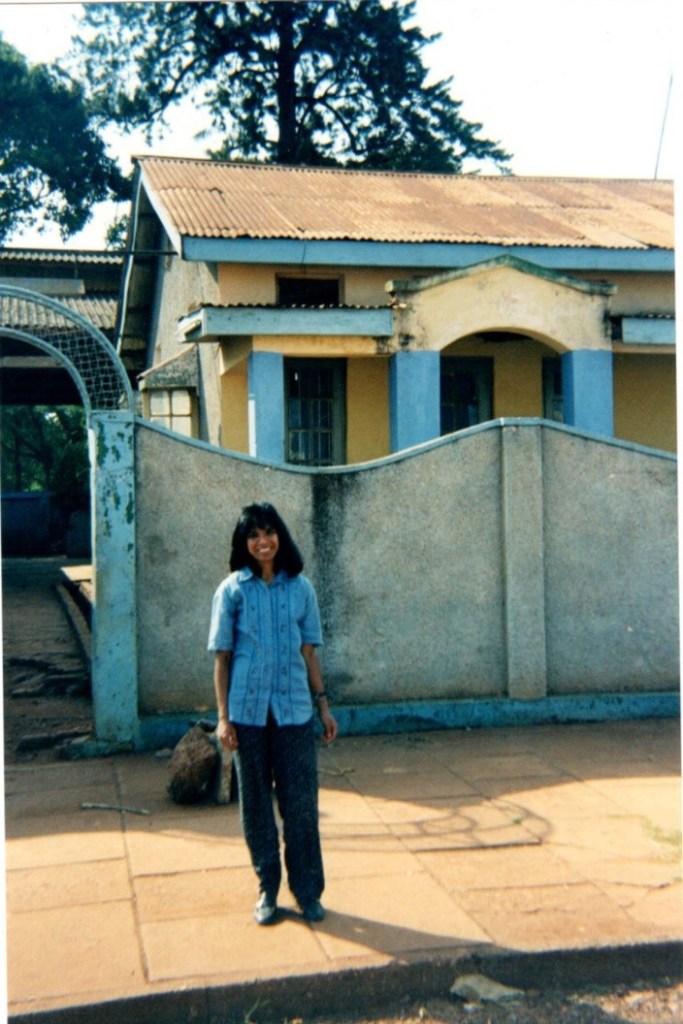
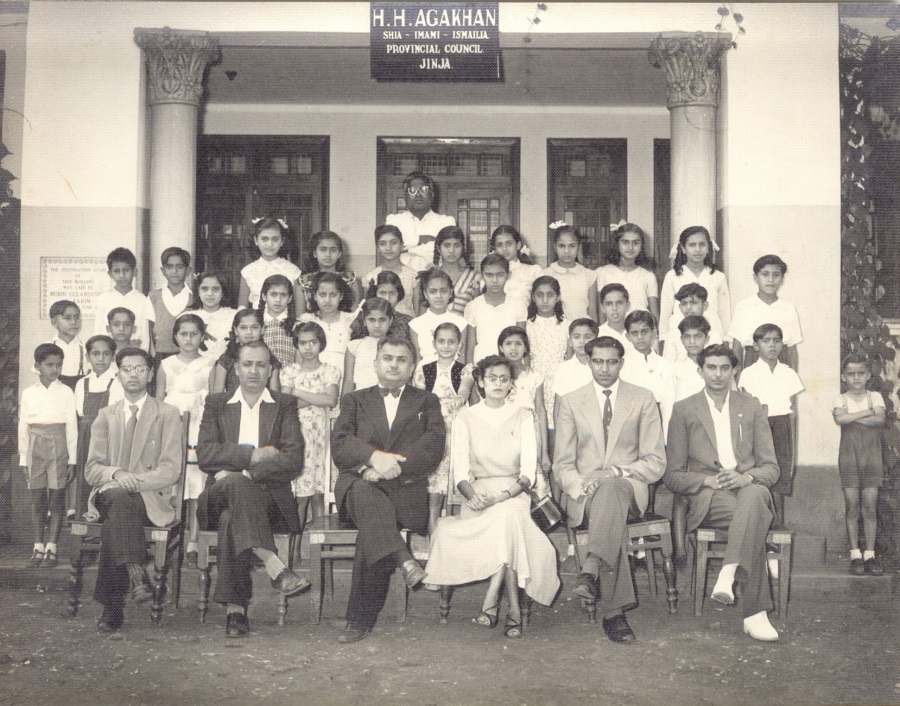
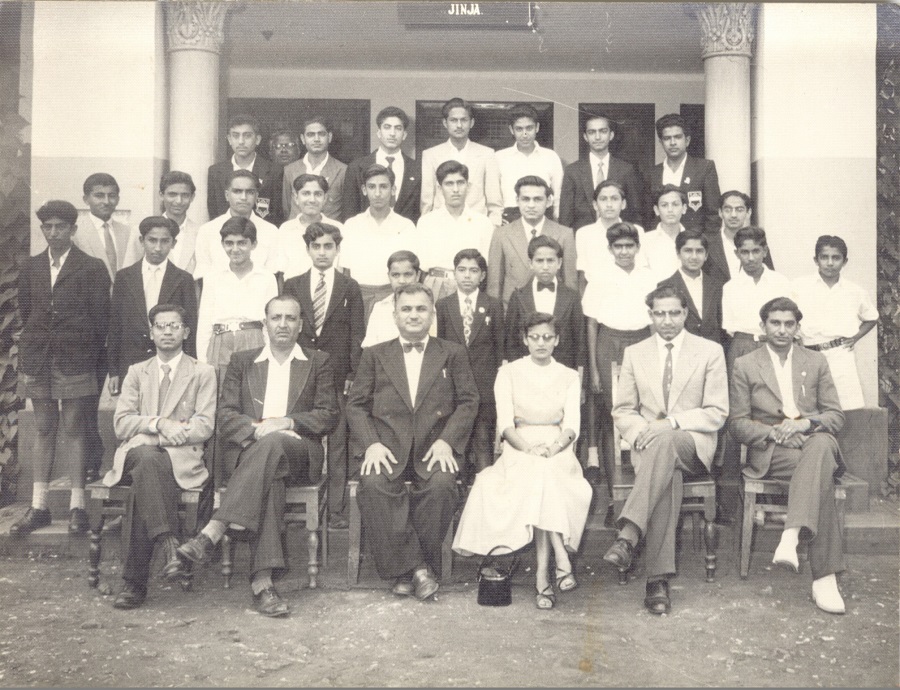
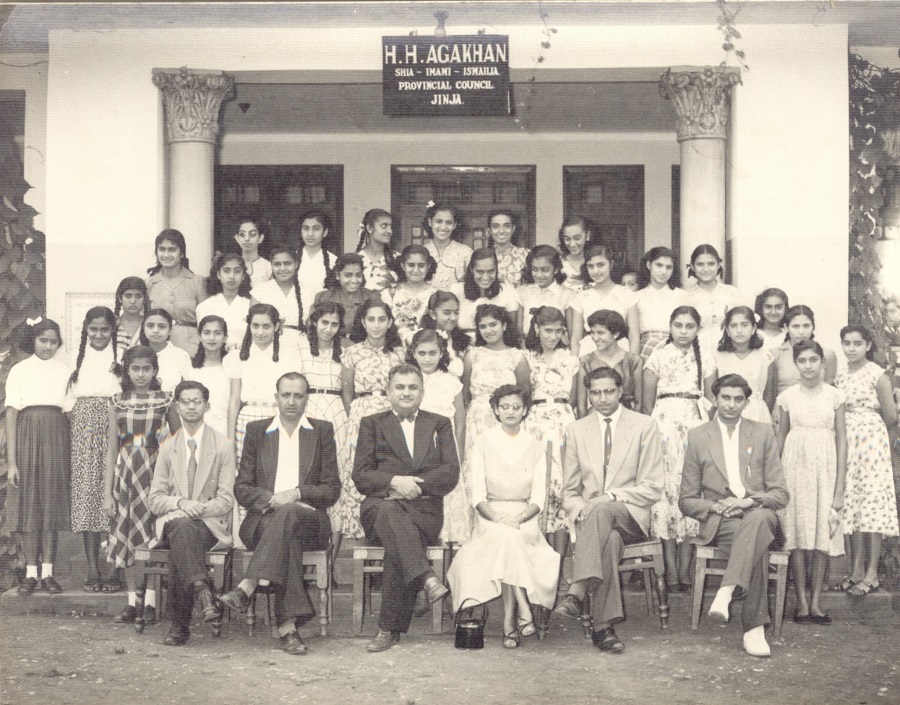

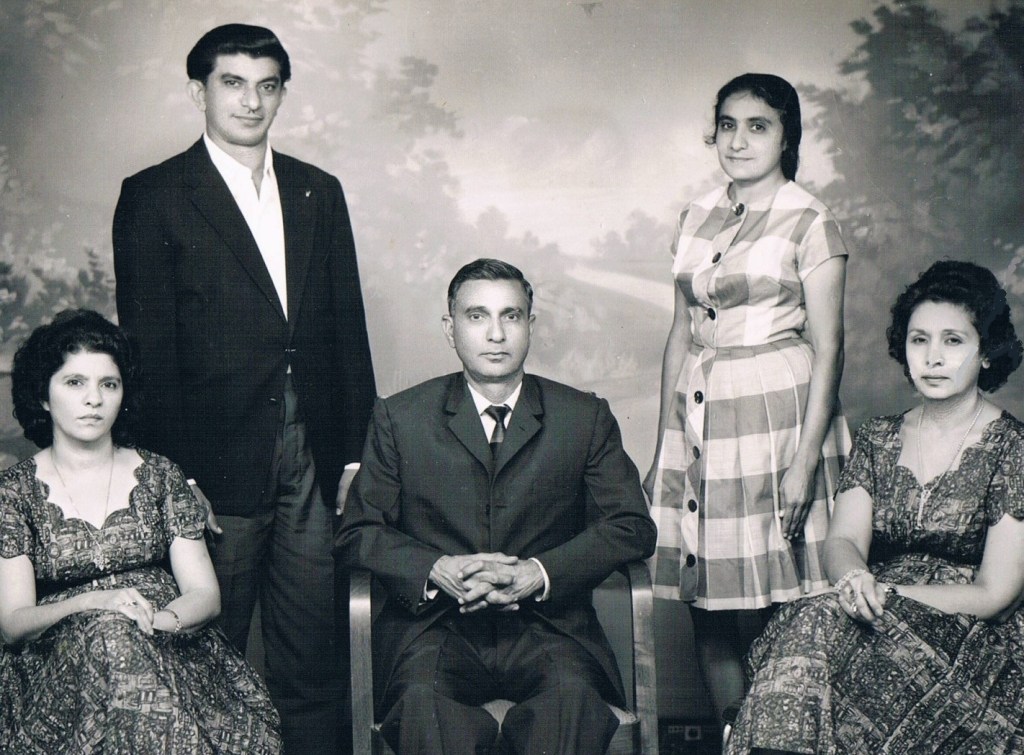
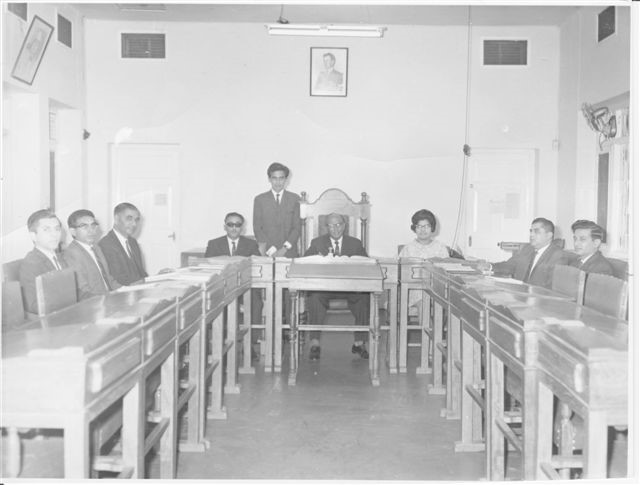
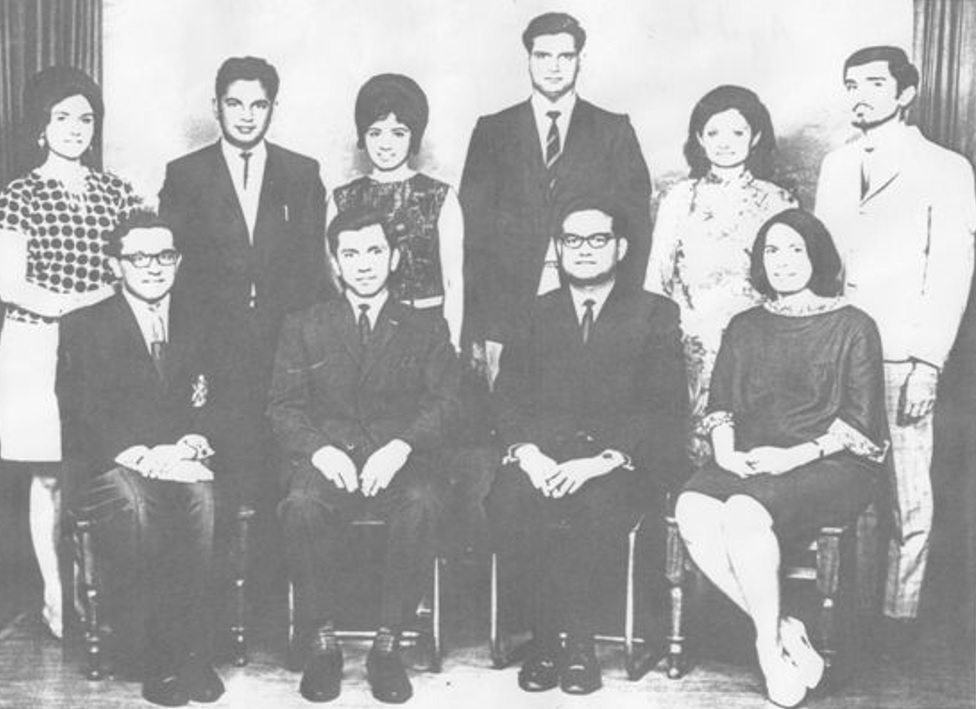
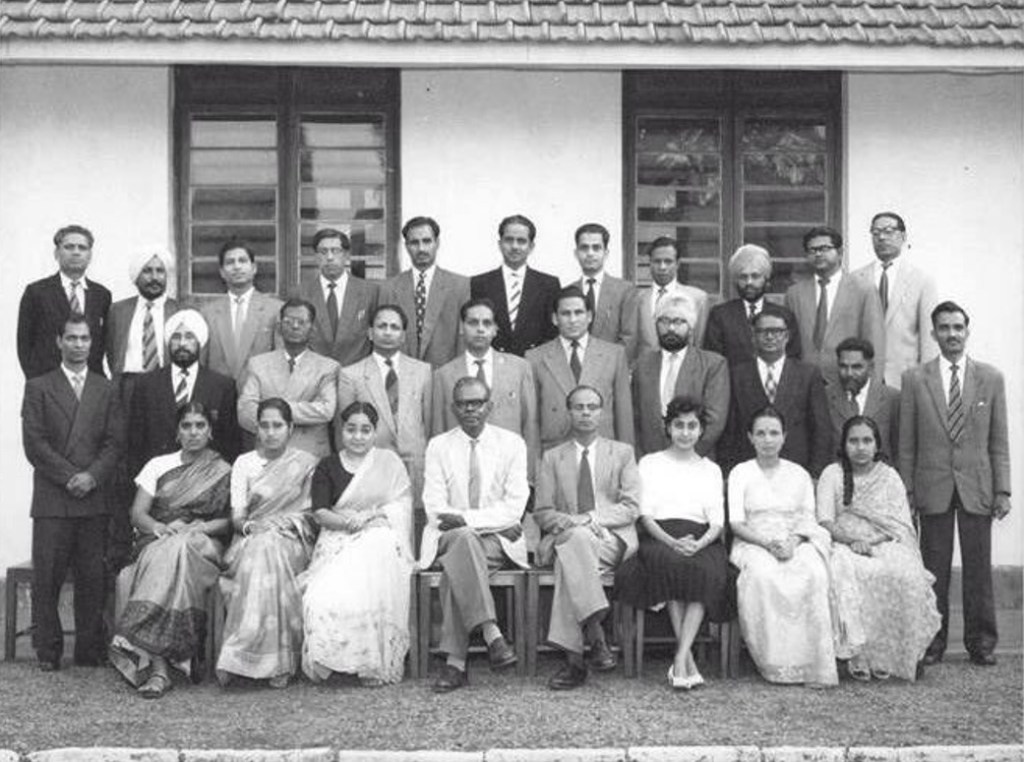
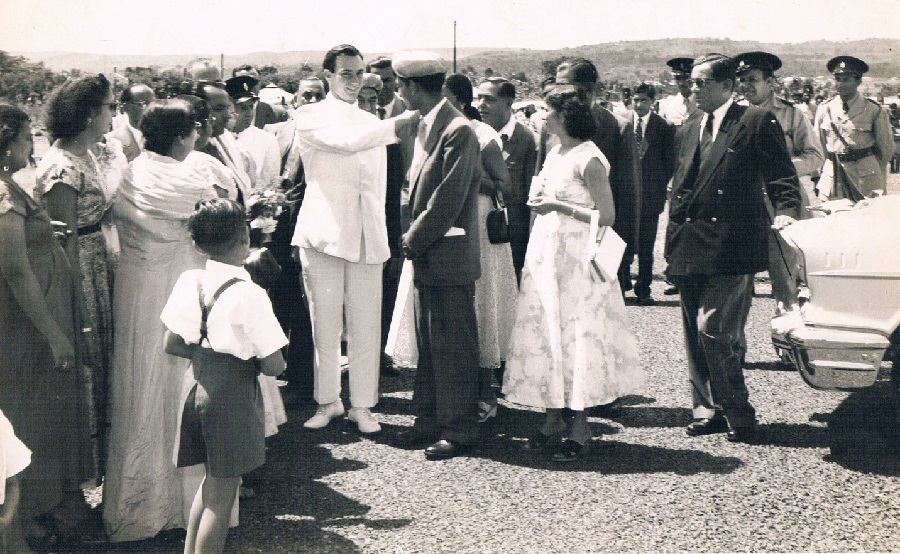
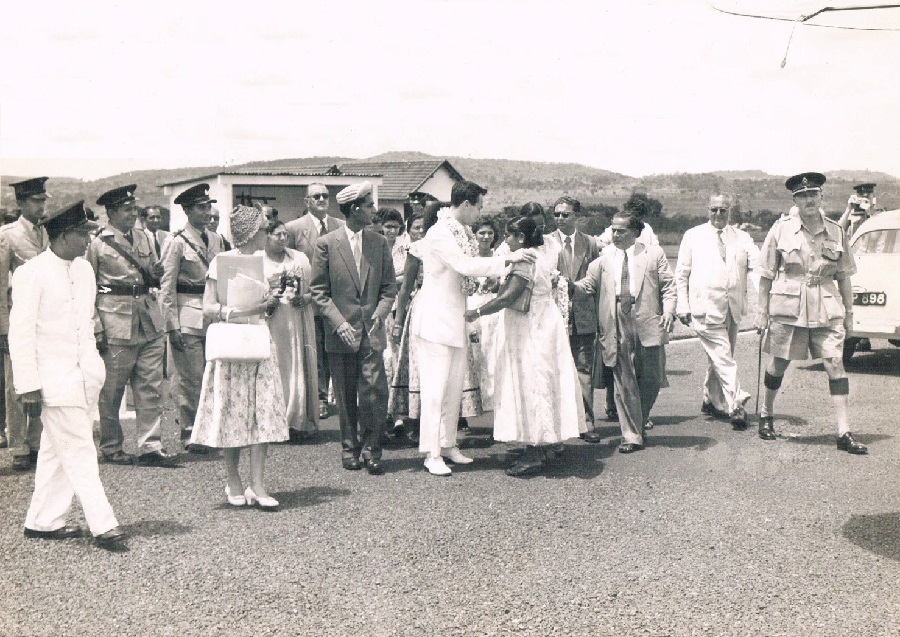
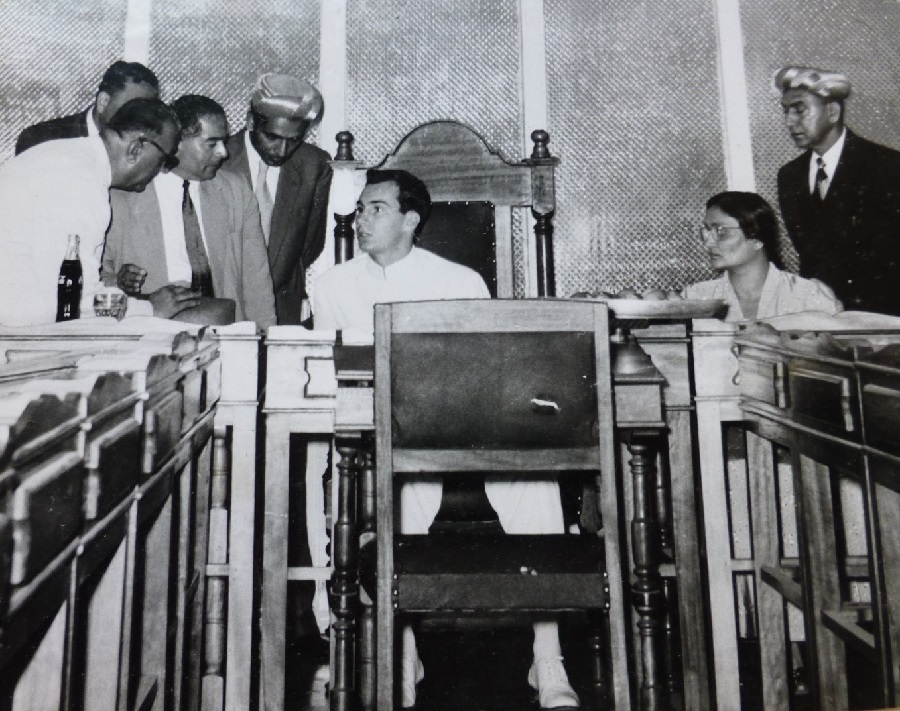
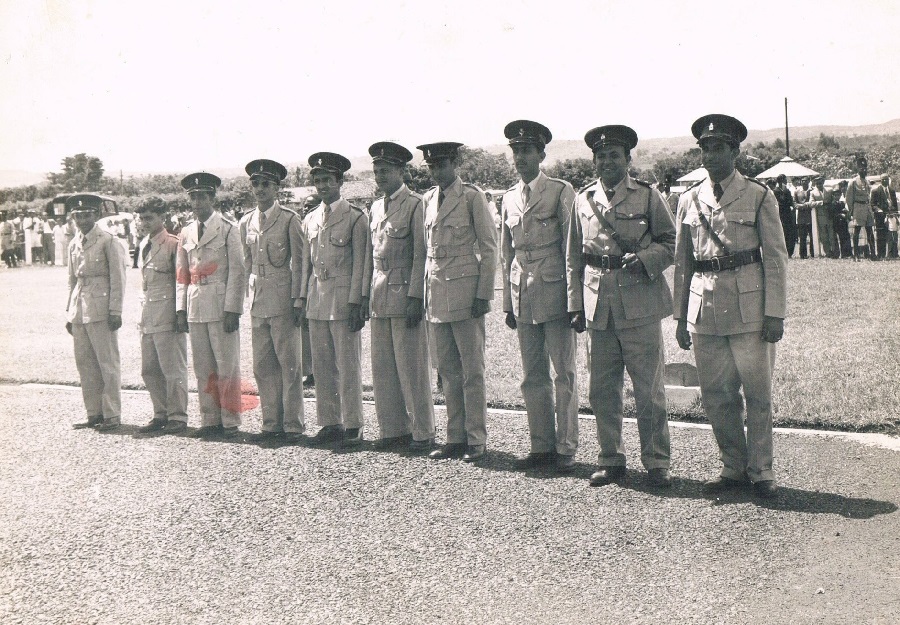
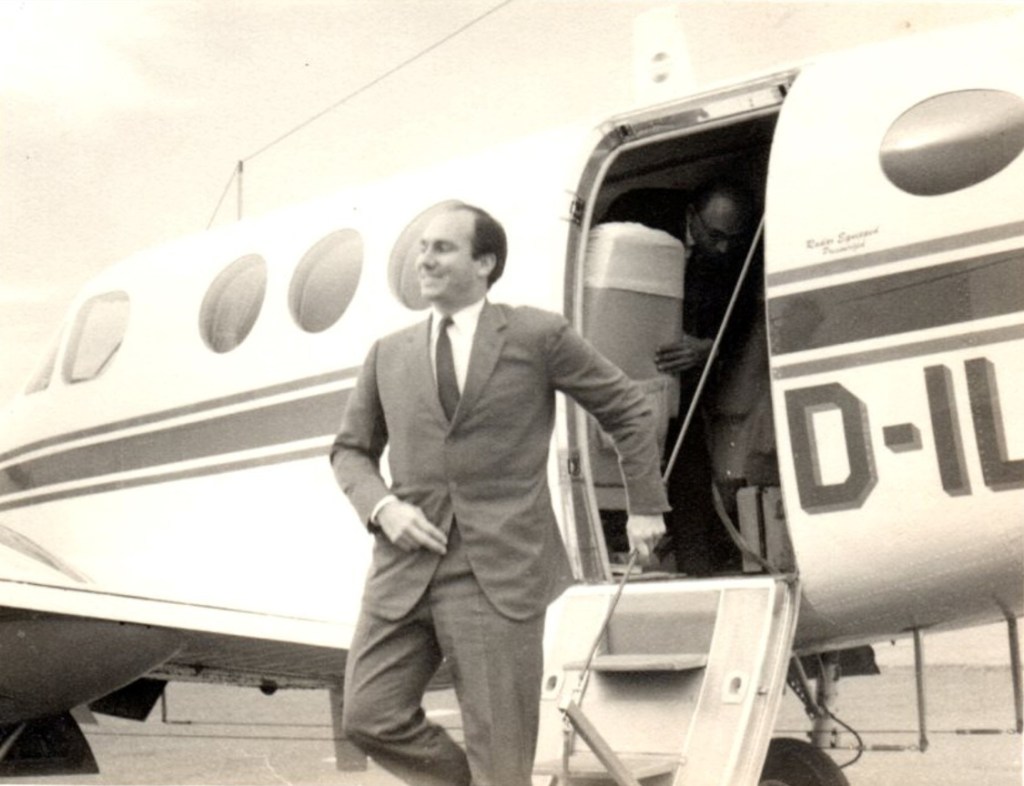
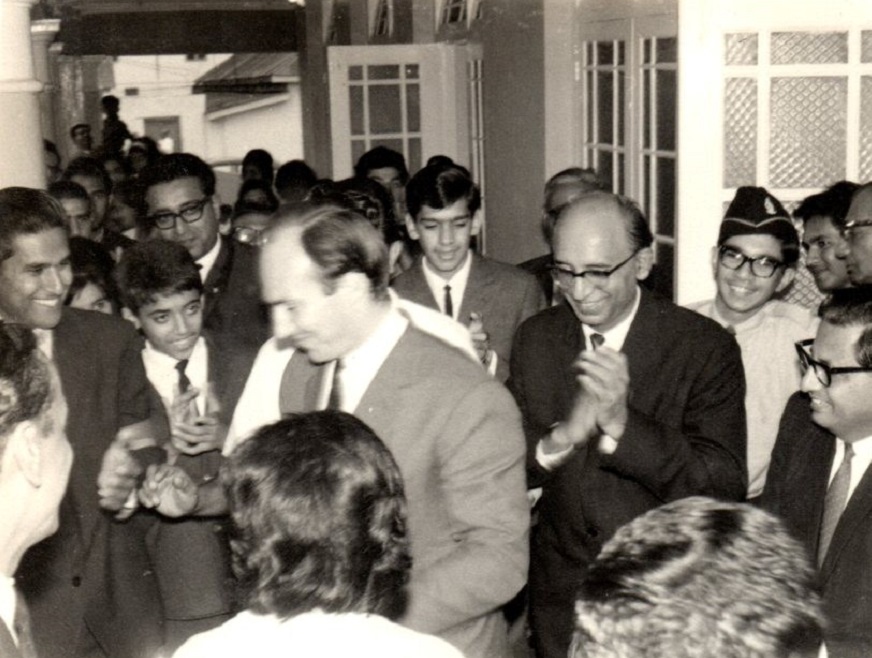
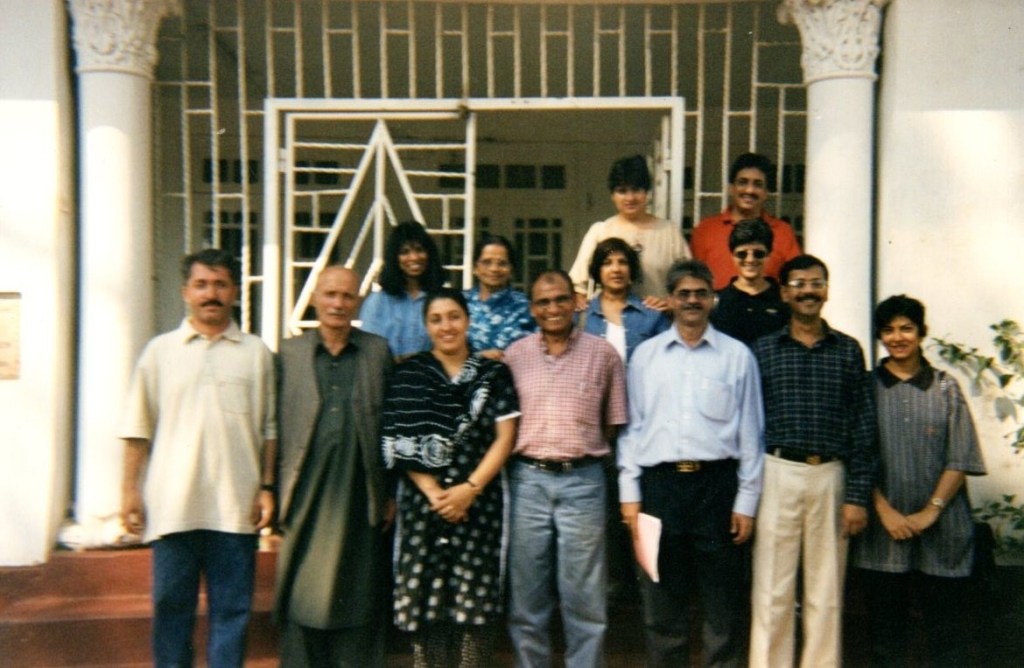
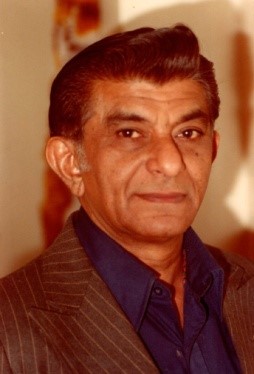
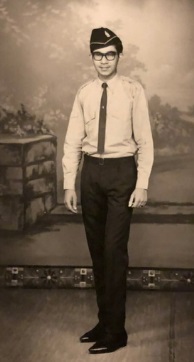

 Simerg - Insights from Around the World