“Mrs. Merchant” – Alwaeza Maleksultan Jehangir – Passes Away at 89

Inna lillahi wa inna ilayhi raji’un
“Surely we belong to God and to Him we return” — Holy Qur’an, 2:156

“Life is a great and noble calling, not a mean and grovelling thing to be shuffled through as best as we can but a lofty and exalted destiny.” — Mawlana Sultan Mahomed Shah, His Highness the Aga Khan III (1877-1957), 48th Ismaili Imam

Mrs Merchantt - Alwaeza Maleksultan Jehangir Merchant
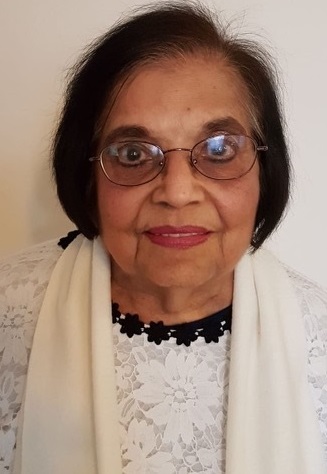
Alwaeza Maleksultan Jehangir Merchant (June 9, 1931 – January 21, 2021)
Alwaeza Maleksultan Jehangir Merchant (June 9, 1931 – January 21, 2021). Photo: Shellina Karmali.

By MALIK MERCHANT

It is with deep sadness that I am informing readers that Alwaeza Raisaheba Maleksultan Jehangir Merchant passed away peacefully at around 11:30 pm on Thursday, January 21, 2021, at the age of 89 from COVID-19 and pneumonia. She was predeceased by her late husband Alwaez Rai Jehangir Merchant on May 27, 2018.  Alwaeza is survived by her sons Malik (publisher and editor of this website), Fahar and his wife Nina, Alnoor and his fiance Shellina; grandchildren Naim and Nurin, and sisters Shahsultan Bana and Shakerkhanu (Sakuma) Vazir Ghulam Hussain Alinani.

Aga Khan in Mozambique Simerg
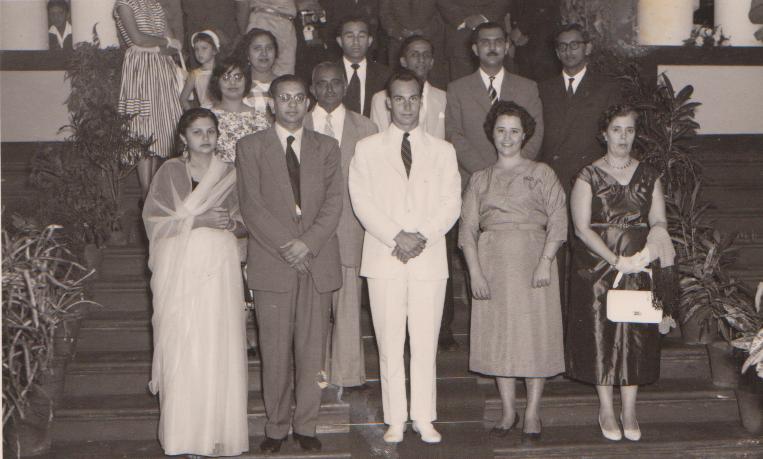
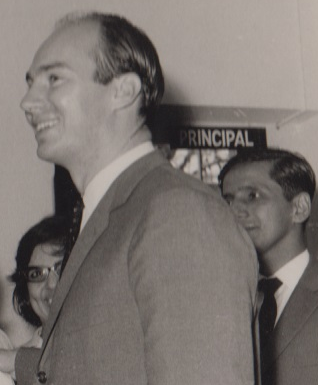
 Mawlana Hazar Imam, His Highness the Aga Khan, with leaders and teachers of the Lourenço Marques Jamat during his visit in 1958. Maleksultan is at left on second row, and Jehangir behind Mawlana Hazar Imam. Photo: Jehangir Merchant Family Collection.

With her husband of 66 years, Alwaeza Merchant devoted her life to the service of the Imam of the Time and the Jamat as a religious education teacher to the youth of the Jamats in Mozambique, Tanzania and the UK. She was a truly an exceptional teacher and she treated each student as her own child. Her co-teachers in London would recall that during a single weekend she would take the underground to visit seven Ismaili religious education centres across London. In both her hands, she would be carrying bags of religious education notes and material for distribution to students. At home, she would spend hours on the phone listening to the students’ rehearsing of Dua, Quranic verses, Ginans and Waezes before their recitations in Jamatkhana.

Maleksultan Merchant with Begum Salimah Aga Khan Simerg
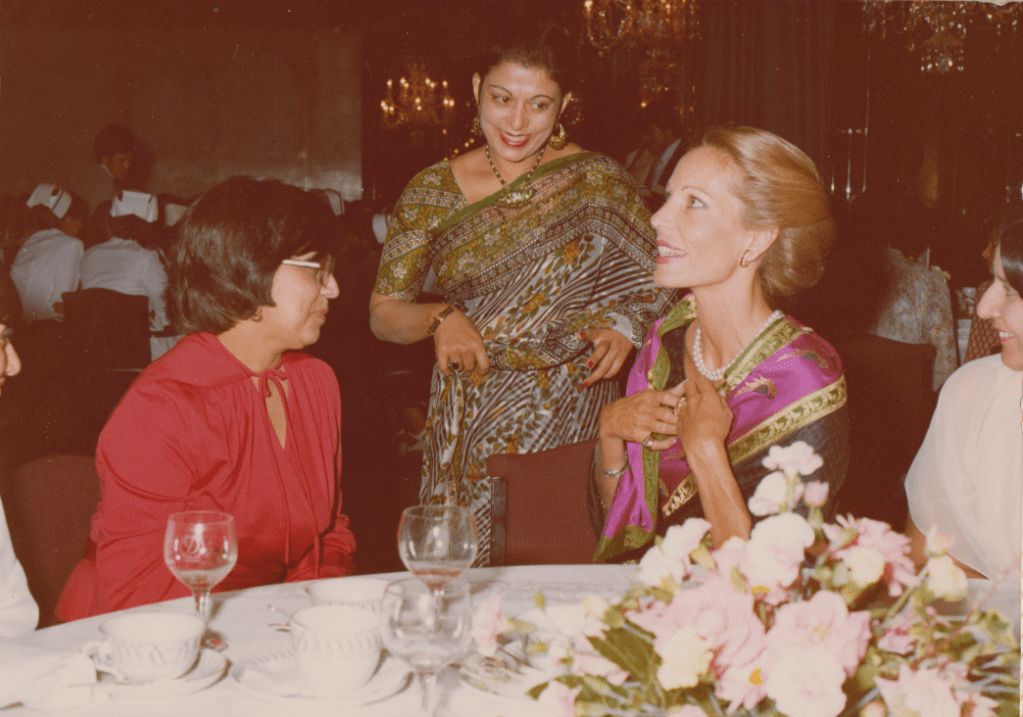
Gulzar (centre) introduces Maleksultan Merchant to Begum Salimah Aga Khan at a function held in London during Mawlana Hazar Imam’s week long visit to the Jamat of the United Kingdom in September 1979. Photo: Jehangir Merchant Family Collection.

Her oratory as a missionary (waezin) inspired Jamats around the world, enhancing their understanding of the ethics and principles of Islam and the Ismaili Tariqah. A particularly memorable period in her lifetime was when she and her husband undertook a year long Waez tour of the newly settled Jamats in the UK, Europe and North America at the behest of the Supreme Council under Diwan Sir Eboo’s leadership.

Outside her religious duties, her honorary work with the social welfare board in Dar es Salaam, Tanzania, uplifted and transformed the lives of many in the Ismaili community who were facing poverty, unemployment and other challenging family circumstances.

Jehangir and Maleksultan Mrs Merchant Simerg
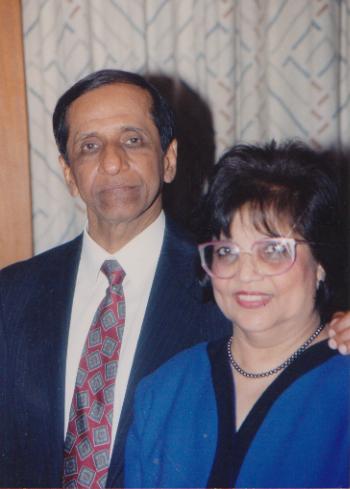
Alwaeza Maleksultan Merchant (1931-2021) with Alwaez Jehangir Merchant (1928-2018). They served the Imam of the Time and Ismaili institutions for more than 60 years.

Alwaeza and Alwaez were remarkable partners who worked hand in hand and supported each other throughout their years of service.  The president of the then Ismaili Association for the UK (now ITREB) Dr. Aziz Kurwa remarked  “…..with you Malekbai, I had a formidable team. Both of you supported my work and guided me all the time. The knowledge that Alwaez and Malekbai spread amongst young students in UK and abroad lives in the heart of thousands. There was not a situation where Malekbai and Jehangirbhai did not have the right guidance to offer. Diwan Sir Eboo always admired their devotion and knowledge.”

Alwaeza Maleksultan had remarkable strength of faith and always sought inspiration and strength from her beloved Imam throughout her life, and especially during the 30 month period since the passing of Alwaez in May 2018. Not a moment passed by in her life without acknowledging that Mawlana Hazar Imam was always by her side.

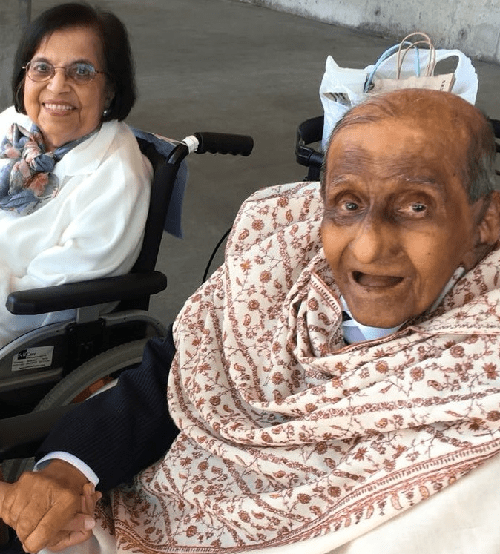
An elderly couple smiling and sitting together in wheelchairs, sharing a moment of affection.
Mrs. Merchant and Jehangir Merchant pictured at BC Place, Vancouver, prior to the Diamond Jubilee Mulaqat with Mawlana Hazar Imam, His Highness the Aga Khan. Photo: Raiya Suleman/Simerg.

Like her husband, whose mentor was the great Fatimid da’i Al-Mu’ayyad al-Shirazi, Alwaeza’s mentor was Varas Ismail Gangji. As a teacher of Ginanic literature, she would often recount his life and works. In a piece dedicated to Ismaili Gangji she noted: “I have had the immense happiness of teaching and explaining Ginans to my students and members of the Jamat alike. With zeal, enthusiasm and conviction we acknowledged the profound ethical and spiritual truths contained in Ginans, which provide guidance and inspiration in our daily lives. I would like to share one incident that I have narrated frequently during the course of my career. It was an evening that became a turning point in the life of Varas Ismailbhai Gangji.” (Read article)

The passing away of Alwaeza Maleksultan Jehangir Merchant is a difficult moment for the family. Today, the family would like to celebrate an outstanding murid of the Imam who most nobly and sincerely dedicated her life to the Imamat and the Ismaili Jamats worldwide, and we express our shukrana to Mawlana Hazar Imam for the special opportunity given to her to serve the House of the Imam in a special and unique way.

Date posted: January 22, 2021.
Last updated: July 17, 2023 (typos and reformatting.)

________________________

Mrs. Merchant’s funeral will be held on Thursday, February 4 (see new post Mrs. Merchant’s Tribute Excerpts and The Ismaili iiCanada announcement).

Condolences: We invite you to submit your condolences, memories and tributes to Mrs. Merchant by completing the feedback form below or by clicking on Leave a comment. Your comment may also be submitted to simerg@aol.com. Here is a tribute from several we have so far received.

‘Mrs. Merchant’ has passed? I am ever so sad!

Aga Khan Lourenco Marques Simerg Malik Merchant
1966: Dar es Salaam Aga Khan Girls Secondary School visit by Mawlana Hazar Imam, with Mr. and Mrs. Merchant seen in the photo.

By IZAT VELJI

No matter which way you cut the pie, whenever parents pass on, they leave such a huge void in our hearts that all you can possibly do is pray for their souls’ freedom in Mowla’s Light. May Mowla shower His Noor ke barish (showers of Light) on her and give her soul eternal peace and rest – Ameen.

I have such fond memories of her in my upper primary at Aga Khan Girls School in Dar es Salaam. Her trademark warm and affectionate smile coupled with the sparkle in her eyes endeared her to every student who had the good fortune to be in her class. She taught in an unconventional but a very effective way. She told enthralling stories. The dates and facts were picked up from a vast plethora of books and Quran and her favourite ginans. It was like a beautiful tapestry being woven with reds and greens and golds and silvers! It was done with such joy and passion that we remembered them like children’s stories. It was Mrs. Merchant who introduced us to figures in our history like Gazi Jawhar, Hasan bin Sabah, the development and spread of the Fatimid Empire, the establishment of Alamut – o boy, did the Ismaili history ever come to life when she handled it – hats off to her!

Her own affection and love for her Mowla became very evident in one class when she started her lesson on Hazrat Aly and by the time she came to Mowla Aly’s assassination, she could not control her tears. The pain and hurt were so real for both her and ‘her kids’ that when the bell rang, not one kid twitched. There was pindrop silence in class. Not a single other teacher could command that kind of control over a class like ours – rambunctious and high achievers. But she loved each and every one of us.

She became a pivot in our young lives because she took RI teaching and learning to a whole new level. It was a class you really looked forward to. Bravo and merci beaucoup, Madame Merchant! You have left warm and fond memories behind. With your passionate and selfless seva, I daresay, you will soar like a falcon and rest on Mowla’s glove!

Shukhar! Thanks.

____________________

You may leave a tribute to Maleksultan Jehangir Merchant by completing the feedback form below or by clicking on Leave a comment. Your comment may also be submitted to simerg@aol.com.

Related pieces:

Simerg – 2020 in Pictures and Words: Blessings from His Highness the Aga Khan; Photos from Private Collections; and Tributes to Deceased

Prepared by MALIK MERCHANT
(Publisher-Editor SimergBarakah, and Simergphotos)

His Highness the Aga Khan, Mawlana Hazar Imam, Talikas 2020, Simerg and Barakh
Mawlana Hazar Imam, His Highness the Aga Khan, 49th Imam of the Shia Imami Ismaili Muslims, pictured at the Diamond Jubilee Darbar in Kenya. Photo: The Ismaili

TALIKAS AND BLESSINGS FROM MAWLANA HAZAR IMAM

March 2020

Please click: Mawlana Hazar Imam sends Talika on the occasion of Navroz with special blessings for mushkil asan, and prayers for the Jamat’s health and well-being

Please click: Mawlana Hazar Imam, His Highness the Aga Khan, showers his paternal and maternal blessings on his spiritual children around the world in light of the present crisis 

April 2020

Please click: Mawlana Hazar Imam, His Highness the Aga Khan, sends message to his spiritual children around the world on Covid-19, with blessings for their protection from difficulty; multiple translations including Farsi, Dari, Arabic, Urdu, Gujarati and Russian

May 2020

Please click: Mawlana Hazar Imam’s loving and inspiring Talika on the occasion of Eid ul-Fitr shows his concern for his spiritual children in all facets of their lives 

July 2020

Please click: Mawlana Hazar Imam, His Highness the Aga Khan, sends Talika Mubarak to Ismailis around the world on the occasion of his 63rd Imamat Day

November 2020

Please click: Mawlana Hazar Imam, His Highness the Aga Khan, in his message on November 2, 2020, tells his spiritual children “there is no room for complacency” over the risks posed by the coronavirus “for sometime to come” and send his blessings for mushkil-asan

December 2020

Please click: In Talika Mubarak on the occasion of his 84th birthday, Mawlana Hazar Imam asks us to draw comfort from the practice of our faith, appreciates the excellent work of volunteers, and conveys his paternal maternal blessings to the world wide Jamat

___________________

PASSINGS

The following tributes/obituaries appeared in Simerg in 2020. Some of the deceased may have died before 2020.

Passings Simerg 2020 Year in Review
Top row (left to right): Mahebub Rupani, Nazeer Ladhani, Amirali Gillani, Salima Arthurs, Sultan Methanwalla, Goulzare Foui, Amirali Nagji; bottom row (left to right): Alnoor Ramji, Shamshu Jamal, Zubeda Jamal, Sultanali Mohamed, Razia Jamal, James Wolfensohn and Madatali Jamal. Image collage: Malik Merchant / Simerg.

Please click: Mahebub Mohamed Juma Rupani

Please click: Nazeer Ladhani

Please click: Shamshu Jamal

Please click: Missionary Amirali Gillani

Please click: Alnoor Ramji, Goulzare Foui, Amirali S. Nagji, Sultan Piroj Maknojiya Methanwala, Salima Wanda Arthurs

Please click: Madatali Merali Jamal, Razia Jamal, Zubeda Ebrahim Jamal

Please click: James D. Wolfensohn

Please click: Alwaez Sultanali Mohamed

A distinguished man wearing a ceremonial yellow and green headdress, adorned with intricate patterns, seated and engaged in conversation.

Please also click: Benjamin Mkapa (d. July 2020. As Tanzania’s President from 1995-2005, the late Benjamin Mkapa strongly supported the work of the Ismaili Imamat in his country as well as abroad. The support that he gave is clearly illustrated in a special piece about him in Barakah, a blog dedicated to Mawlana Hazar Imam, His Highness the Aga Khan)

___________________

HISTORICAL PHOTOS OF MAWLANA HAZAR IMAM AND HIS FAMILY, IMAMAT PROJECTS AND OTHER EVENTS

2020 Year Simerg photos Aga Khan and Projects
Please click on image for 2020 stories and accompanying photos

Please click: Top photo selections from our 2020 stories: Mawlana Hazar Imam and his family, Covid-19 impact, Aga Khan projects, the four seasons, and other events

Date posted: December 27, 2020.
Last updated: December 28, 2020.

__________________

We welcome feedback from our readers. Please complete the LEAVE A REPLY form below or, if you don’t see the box, please click Leave a comment. Your letter may be edited for length and brevity, and is subject to moderation.

Passings: Alwaez Rai Sultanali Mohamed (1927 – 2020)

Inna lillahi wa inna ilayhi raji’un
“Surely we belong to God and to Him we return” — Holy Qur’an, 2:156

“Life is a great and noble calling, not a mean and grovelling thing to be shuffled through as best as we can but a lofty and exalted destiny.” — Mawlana Sultan Mahomed Shah, His Highness the Aga Khan III (1877-1957), 48th Imam of the Shia Imami Ismaili Muslims.

By MALIK MERCHANT
(Publisher-Editor Simerg, Barakah, and Simergphotos)

Alwaez Rai Sultanali Mohamed Ismaili missionary and alwaez, tribute in Simerg passings
Alwaez Rai Sultanali Mohamed (March 17, 1927 – November 28, 2020). Photo: Family collection.

It is with deep sadness that I inform readers of the passing away of a great and learned missionary in the Ismaili community, Alwaez Rai Sultanali Mohamed, on November 28, 2020 in Vancouver at the age of 93.

Alwaez Rai Sultanali Mohamed, also known as Missionary Saheb, was born in Mumbai on March 17, 1927, and became an Alwaez in Mumbai studying under very prominent professors and Waezein with a group of other new missionaries that included the Late Alwaez Rai Jehangir Merchant and Alwaeza Raisaheba Malek Merchant. His wife Alwaeza Raibanu Rahematkhanu joined the Waezin training program a year later.

Alwaez Rai Sultanali Mohamed, like his wife Missinarybanu Rahematkhanu, was a deeply religious man with an extraordinarily strong belief in the Ismaili faith, and a profound devotion and love for Mawlana Hazar Imam, His Highness the Aga Khan. Missionarybanu predeceased him, passing away in Vancouver in October 2010 at the age of 77. 

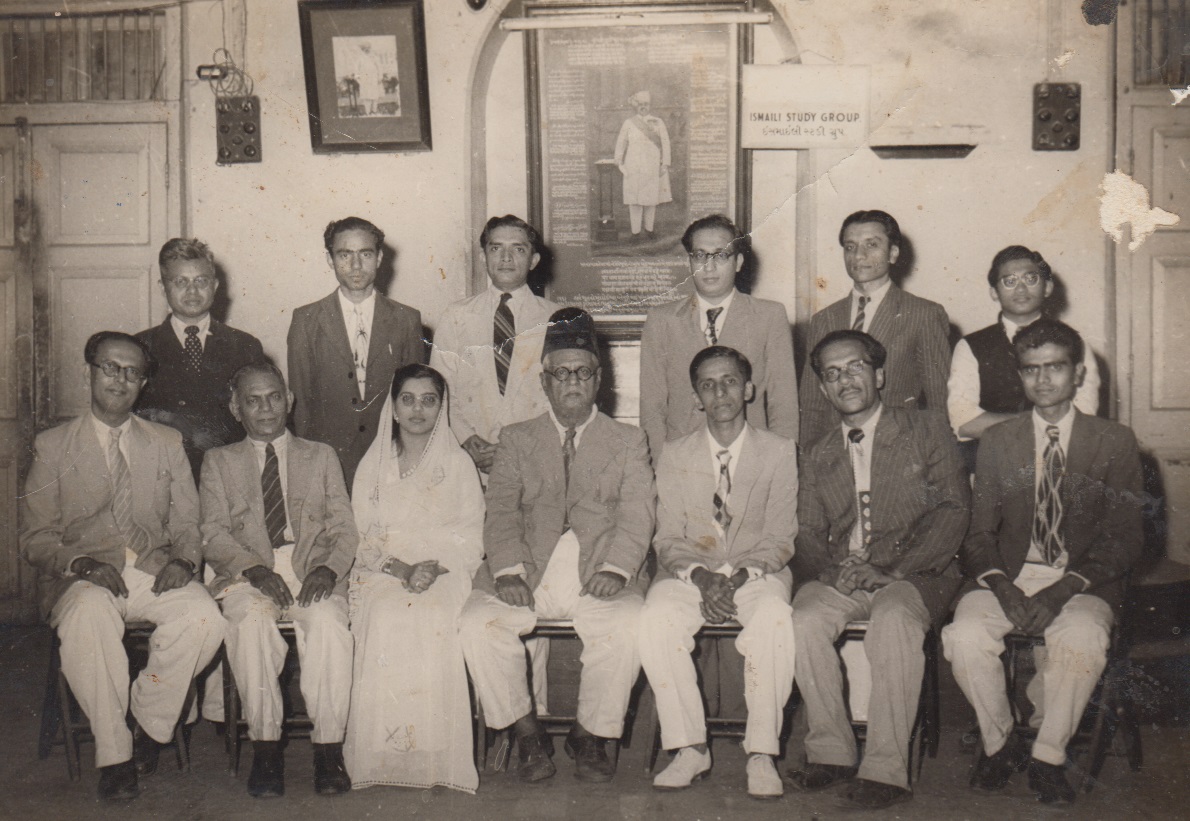
A black and white historical photo featuring a group of people, including men in suits and a woman in traditional attire, posing together in front of a wall with framed pictures and a sign that says 'Ismaili Study Group.'
Alwaez Sultanali Mohamed (standing 4th from left) with fellow students, including Maleksultan and Jehangir Merchant (seated 3rd and 5th from left) and lecturers of a waezin training program that was established in the early 1950’s to train new Ismaili missionaries. Photo: Jehangir Merchant Collection.

Alwaez and Alwaez initially began their service in Mumbai, and soon after their wedding the young couple emigrated to Kisumu, Kenya, in 1957. Whilst continuing in their respective professions in Kisumu, they rendered voluntary service with dedication and devotion as Alwaezein for many years, in various cities in Kenya and to the jamats of other countries.

Alwaez Sultanali had a deep-rooted love for knowledge and spent many hours in research, which furthered his deep knowledge of Islam and the Ismaili Tariqah. He wrote a Ginan book called Wonderful Tradition, and a book on the Ismailis in Gujarat called Heroes of Surat. He also curated the content of the monthly Chandraat Bulletin in Kisumu. The books and the bulletin were published by the Ismaili Tariqah and Religious Education Board for Kenya (ITREB), which was was then known as the Ismailia Association.

Alwaez was an authority in the field of the esoteric meaning of our Ginans and was a mentor to many on this subject. Until recent years, he conducted special Ginan talks on a weekly basis, and through his easy teaching style and kind and friendly nature, he touched the hearts of all who attended his sessions as well as everyone who knew him or met him. His departure is a great loss to his family, friends and the Jamat.

On a personal note, the late Alwaez was a great family friend and I vividly recall the few days we spent with his loving family in Kisumu. He made it a point to take us to the shores of Lake Victoria every evening until we would be able to sight a hippo. He fulfilled that promise, and one can imagine our delight at seeing the animal as young kids. That was my first memory of Alwaez and Alwaeza, who as I found out through the course of my life were always intimately connected with my parents.

Gujarati translation of Short History of Ismailis by Farhad Daftary. Translation by Sultanali Mohamed and Jehangir Merchant, and published by IIS. Simerg passings
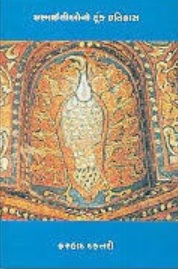
The cover page of the Gujarati translation of Farhad Daftary’s book A Short History of the Ismailis. Entitled Ismailio-no Tunk Ittihaas, the translation was done by missionaries Sultanali Mohamed and Jehangir Merchant.

Indeed, my late dad Alwaez Jehangir sought his constant advice on various terms in the Gujarati language, and was proud to have him as co-translator of Farhad Daftary’s book A Short History of the Ismailis. Alwaez Sultanali was also well known for his expert knowledge of the Khojki script. His contributions to the Institute of Ismaili Studies includes the translation of some Khojki literature into English.

Missionarysaheb and Missionarybanu will be remembered fondly by the Jamat for enhancing their spiritual knowledge and by the young students that stayed in the Aga Khan Hostel in Kisumu where they were wardens for a few yew years as their beloved Sir and Bai.

Alwaez and Alwaeza are survived by their three children: daughter Dr. Nevins married to Dr. Zuheir Saeed; son Akber married to Nasira Lakha and son Amanullah married to Nimet Babul, together with five grandchildren and two great grandchildren. This is a sad moment for the family, especially with his passing coming at a time when many of us want to pay our personal respects and be at his funeral, and simply can’t because of the restrictions that are in place due to the Covid-19 pandemic.

His funeral will take place in Vancouver on Wednesday, December 9. Relatives, friends and well wishers of the missionary may contact Alwaez’s daughter at Nevins@shaw.ca. We also invite our readers to submit their condolences, memories and tributes to the late missionary Sultanali Mohamed by completing the feedback form below or by clicking on Leave a comment.

We pray for the peace and eternal rest of the soul of Alwaez Rai Sultanali Mohamed. Amen. We also convey our deepest heartfelt condolences to members of his family for strength and courage to face his great loss. Our prayers are with them at this time of bereavement.

Date posted: December 6 , 2020.

____________________

We invite our readers to submit their condolences, memories and tributes to the late missionary Sultanali Mohamed by completing the feedback form below or by clicking on Leave a comment. The family of late Sultanali missionary welcomes your emails regarding any questions you might have on the funeral ceremony or other related matters. Please address your email to nevins@shaw.ca.

Simerg invites Ismaili families to submit obituaries and tributes for deceased members of their families. For guidelines, please click Passings.

Before departing this website please take a moment to review Simerg’s Table of Contents for links to hundreds of thought provoking pieces on a vast array of subjects including faith and culture, history and philosophy, and arts and letters to name a few.

Sir James D. Wolfensohn (1933-2020): Led the World Bank, Chaired the IAS Board and Was Deeply Reverential of Mawlana Hazar Imam, His Highness the Aga Khan, Calling Him an Icon of Action

Introduced by MALIK MERCHANT
Publisher-Editor, Simerg, Barakah and Simergphotos

It is with deep sadness and a heavy heart that we announce the death of James D. Wolfensohn on Wednesday, November 25 2020 at his home in Manhattan at the age of 86.

I reached out to the Institute for Advanced Study (IAS), where Mr. Wolfensohn served as the past chair of the board, to allow Simerg to reproduce the obituary that has been posted on its website. We sincerely thank Lee Sandberg the press contact at IAS for the permission. For the information of our readers, The Institute for Advanced Study is one of the world’s foremost centers for theoretical research and intellectual inquiry. Located in Princeton, N.J., the IAS is dedicated to independent study across the sciences and humanities. Founded ninety years ago, the Institute is devoted to advancing the frontiers of knowledge without concern for immediate application. From founding IAS Professor Albert Einstein to the foremost thinkers of today, the IAS enables bold, curiosity-driven innovation to enrich society in unexpected ways.

His Highness the Aga Khan at a Press Conference announcing the launch of the new Aga Khan Agency for Microfinance (AKAM) in the company of James Wolfensohn, President of the World Bank (3rd left) and John Fergusson, AKDN Head of the Department of Public Affairs (2nd left). AKDN / Jean-Luc Ray
His Highness the Aga Khan (left) at a Press Conference on February 22, 2005 in Geneva, Switzerland, announcing the launch of the new Aga Khan Agency for Microfinance (AKAM) to help some of the world’s most vulnerable populations through innovative services including micro-insurance, small housing loans, savings, education and health accounts, and support for small entrepreneurs seeking to develop businesses related to restored cultural assets. The Aga Khan was joined at the news conference by Jim Wolfensohn, President of the World Bank (right) and John Fergusson, AKDN Head of the Department of Public Affairs. Photo: AKDN/Jean-Luc Ray.

On a personal note, I was present on January 25, 2005 at the National Building Museum in Washington D.C. when Mr. Wolfensohn introduced Mawlana Hazar Imam as the recipient of the Vincent Scully Prize. As an Ismaili, the tribute I heard is perhaps one of the finest and most touching I have ever heard or read during Mawlana Hazar Imam’s entire Imamat. Here is an excerpt from the tribute. The link to the complete tribute follows the obituary.

“In my 10 years at the bank, I’ve had the opportunity of meeting many people in the so-called development business. People that are concerned with the issues of poverty, people that in various ways display their interest in humanity, their concern for history, their concern for hope and for the future. And in that 10 years, I can tell you that there is one person who stands out in my mind as an icon of not only thought and philosophy but of action. And I have to say this in front of His Highness, that I don’t say this about everybody in the development business. He has truly done the most amazing job not only for the Ismaili community throughout the world, but really for all the communities that he serves.”

SIR JAMES D. WOLFENSOHN

The following obituary and accompanying portrait photograph is reproduced with the permission of the Institute for Advanced Study where Mr. Wolfensohn had served as the chair of the Board. Please click James D. Wolfensohn to read the obituary at source, and to learn more about the work of the organization.

JDW portrait
James D. Wolfensohn (December 1, 1933 – November 25, 2020)

Sir James D. Wolfensohn, Chairman of Wolfensohn & Company, L.L.C. and a global champion of human rights, economic justice, scholarship, and the arts, died on Wednesday, November 25 at his home in Manhattan at the age of 86.

Wolfensohn was the ninth president of the World Bank, sworn into office on June 1, 1995, after being nominated by President Bill Clinton. A transformative and hands-on leader, Wolfensohn re-envisioned the Bank’s commitment to alleviating poverty, investing in sustainable development, and promoting social justice globally.

In 1979, Wolfensohn joined the Institute for Advanced Study’s Board of Trustees and became the Board’s longest-serving Chair (1986–2007). Wolfensohn had a passionate commitment to the Institute’s mission of enabling the world’s foremost scholars to conduct breakthrough research at the highest levels of academia.

“Jim embraced the world and everything in it—its challenges, the arts, science, politics, and people most of all,” stated Robbert Dijkgraaf, IAS Director and Leon Levy Professor. “A man of no excuses and a boundless diversity of interests, Jim believed in and harnessed the enormous potential of the human spirit for the common good. We are eternally grateful for the wisdom and generosity he brought to the Institute and world for which he cared so deeply.”

James David Wolfensohn was born on December 1, 1933, in Sydney, Australia. He was a veteran of the Royal Australian Air Force and a member of the 1956 Australian Olympic fencing team. Educated at the University of Sydney, he received a B.A. and LL.B. in 1954 and 1957, respectively. He worked as a lawyer at an Australian law firm and went on to earn an M.B.A. from Harvard University in 1959.

“Jim was larger than life, hard-working, and compassionate,” stated Charles Simonyi, IAS Board Chair. “His moral vision spanned the globe, complemented by a gift for connecting with individuals. Passionate about music and sciences, he was an inspiration to all who knew him. The Institute for Advanced Study will always treasure the memory of his extraordinary leadership.”

After launching his career as an investment banker, Wolfensohn worked for several different institutions in Australia, including Darling & Co., before joining the London-based investment bank J. Henry Schroder & Co. This position led Wolfensohn to return to the U.S. to become the managing director of the bank’s New York City office from 1970 to ’76. In 1979, as a senior executive at Salomon Brothers, he oversaw the emergency restructuring of Chrysler Corporation, working with then CEO Lee Iacocca and then President of the New York Federal Reserve Bank Paul A. Volcker. Wolfensohn spent another fourteen years in investment banking as President and CEO of James D. Wolfensohn, Inc. Wolfensohn became a naturalized U.S. citizen in 1980.

As the longest-serving Chair in the Institute’s history, Wolfensohn stewarded the growth of the Institute’s endowment, which more than doubled in real terms under his leadership. His many accomplishments as Chair included overseeing the endowment of six Professorships across the Institute’s four Schools. Wolfensohn also took a particularly active interest in extending the global impact and profile of the Institute, reaffirming and strengthening its reputation as an international center for scholarship.

Having served as Chairman of the Boards of Carnegie Hall (1980–91) and the John F. Kennedy Center for the Performing Arts (1990–95), Wolfensohn, who was an accomplished cellist himself, encouraged musical performance at the Institute, contributing to the establishment of the Artist-in-Residence program and regular concerts. Reflecting Wolfensohn’s long-standing commitment to the Institute and his dedication to the arts, the Institute named its lecture and performance hall, Wolfensohn Hall, in his honor in 1993.

Wolfensohn was the third World Bank president to serve more than one five-year term. During his tenure, which extended from 1995 to 2005, Wolfensohn visited more than 120 countries, often accompanied by his wife and partner Elaine. Wolfensohn implemented an agenda to fight corruption, fund education, and support global health and HIV/AIDS programs. His efforts were also transformative in bringing more transparency to the organization.

In 2005, Wolfensohn’s experience as an investment banker and international advocate for human rights led him to found Wolfensohn & Company, LLC. The firm provides strategic consulting advice to governments and large corporations doing business in emerging market economies.

Among his numerous awards, Wolfensohn was made an honorary officer of the Order of Australia (1987), received an honorary knighthood of the Order of the British Empire (1995) for his service to the arts and the Leo Baeck Medal (2006) for his humanitarian work promoting tolerance and social justice. In 2020, Wolfensohn was recognized with the IAS Bamberger Medal for his extraordinary service in fortifying IAS for the twenty-first century and his unwavering commitment to the pursuit of new knowledge.

Wolfensohn was a member of the American Academy of Arts & Sciences and the American Philosophical Society.

Wolfensohn was predeceased by his beloved wife Elaine, and is survived by children Sara, Naomi, and Adam; and seven grandchildren.

Date posted: November 26, 2020.
Last updated: December 3, 2020 (typo).

____________________________

To read James Wolfensohn’s tribute to His Highness the Aga Khan, please click The Aga Khan stands out as an icon of action

Featured photo at top of post: James Wolfensohn speaking on January 25, 2005 in Washington DC when the National Building Museum presented its sixth prestigious Vincent Scully Prize to His Highness the Aga Khan in recognition of his contributions to promoting design excellence and improving the built environment in the Muslim world.

__________________________

We welcome tributes and condolences in honour of Sir James David Wolfensohn. Please complete the feedback form below or click on Leave a comment.

Tributes to Ismailis who have passed away during the Covid-19 pandemic: Issue no. 2 of a multipart series

Share memories of members of your family who you have lost during the Coronavirus pandemic, either due to Covid-19 or any other cause. Please write to Malik Merchant at Simerg@aol.com; you must include your full name and contact information. Please read earlier tributes in Issue # 1.

___________

Inna lillahi wa inna ilayhi raji’un
“Surely we belong to God and to Him we return” — Holy Qur’an, 2:156

Huzurmukhi Madatali Merali Jamal
(Canada)

Madatali Jamal, age 89 (d. .April 2020)

Submitted by Shahida Mamdani-Sunderji, daughter of Madatali Jamal

Huzurmukhi Madatali Merali Jamal (April 30, 1930 – April 13, 2020), husband of Dilshad Jamal for 66 years, father of Shahida Mamdani-Sunderji and Amin Jamal, father-in-law of Begum Jamal, and grandfather of Shelina, Shairoz, Rahim and Aminmohamed, passed away in Ottawa during the spring of 2020, just over two weeks short of his 90th birthday. He was surrounded by his family in volunteers uniform at his funeral.

For the past several years, Mr. Jamal had dedicated his service to the Ottawa Jamat, at both the old and new Jamatkhana locations on Carling Avenue and Conroy Road, respectively. For years he lovingly tendered the Jamatkhana garden on 991 Carling Avenue. In the evenings, Mr. Jamal would present himself regularly as a volunteer at both the Jamatkhanas. His record of Jamatkhana attendance and services as volunteer was impeccable. He was accompanied and supported in his service and Jamatkhana attendance by his loving wife of 66 years, Dislshad. He served the Ottawa Jamat enthusiastically until the very last months of his life, when dementia took over.

Born and raised in Kakumiro, Uganda, he and his family settled in Scotland in October 1972 following the expulsion of Asians from Uganda, decreed by dictator Idi Amin. Huzurmukhi Jamal held positions of Mukhisaheb and Kamdiasaheb during his years in Uganda and Scotland. In 1985, he migrated with his family to Ottawa.

His dedication to the house of Imamat inspired his children to serve in numerous positions in the Jamat. His son Amin and wife Begum served as the Kamadia and Kamadiani of Ottawa Jamat for 4 years, which included the Golden Jubilee period of Mawlana Hazar Imam’s Imamat from July 11, 2007 until December 13, 2008. This service of his children filled Mr. Jamal with immense joy and happiness.

He was very fond of Ginanic literature, and instilled the wonderful tradition in his children. His daughter Shahida recites Ginans in Ottawa Jamatkhana regularly. Ambitious for his family, Mr. Jamal always asked them to take on life’s challenges and meet them with courage, hard work and wisdom.

He is deeply missed by all his family members in Canada and around the world, as well as his friends and the entire Ottawa Jamat.

We pray that his soul may rest in eternal peace. Ameen.

_____________________________

Huzur Mukhiani Razia Jamal
(United Kingdom)

Razia Jamal, Stoke on Trent, Tribute Simerg
Razia Jamal, age 73 (d. May 3, 2020)

Submitted by Navrose Chappell, daughter of Razia Jamal

Razia Jamal, born in Kampala, Uganda, in 1947, passed away peacefully in hospital on Sunday, May 3, 2020 with her three children by her side, her family including her much loved grandchildren, brothers and sisters holding her hand virtually, whilst her favourite Zikr tasbih played in the room.

Before she passed away, she spoke with all of her family, received Chanta (sprinkling of water on face), and the Stoke-on-Trent Mukhisaheb bestowed Dua upon her and the family via a conference call.

Razia served Stoke-on-Trent Jamati Institutions for over 40 years.  She held the position of Jamati Kamadia Saheba for six years and supported her late husband Huzur Mukhisaheb Shiraz Jamal as he undertook the role of Jamati Mukhisaheb.

She was a dedicated volunteer who also undertook the role of Vice Captain and Captain at Stoke-on-Trent Jamatkhana during her service. Razia was an integral part of the Team in securing a permanent building for Stoke-on-Trent Jamatkhana which was founded in 2000.

As the Central Property Management (CPM) Lead for Stoke-on-Trent Jamatkhana for 14 years, Razia was also the first female CPM Lead in Europe.

Since her passing, the family have received many touching tributes conveying how much of an inspiration she was regarding her voluntary work, remarking on her wonderful services, writing how she was a real example of how voluntary service (seva) should be conducted, describing her as a legend, and commenting on her immense dedication to Stoke-on-Trent Jamatkhana.

Razia was a strong, classy, beautiful, thoughtful and humble lady, who loved her children, grandchildren and family immensely. 

She will be fondly remembered by all of her family, friends, Stoke-on-Trent Jamati members, and all the other Ismaili brothers and sisters who she has worked with during her lifetime of seva.   

Razia will be deeply missed every day, and we pray for her soul to rest in eternal peace. Ameen. 

_____________________________

Alijah Saheba Zubeda Ebrahim Jamal (Canada)

Zubeda Ebrahim Jamal, d. age 83.

Submitted by Shariffa Keshavjee, friend and colleague of Zubeda Jamal

Alijah Saheba Zubeda Ebrahim Jamal’s funeral took place at Burnaby Lake Jamatkhana, in Burnaby, British Columbia, on August 6, 2020. Originally from Kisumu Kenya, she settled in Vancouver, and attended the Darkhana Jamatkhana.

Zubeda and I became friends as she encouraged me to take an active role in the Guiding Movement. In 1959, when I was in Kisumu, Zubeda was a Commissioner of the Girl Guides. I led the Brownies from the Siriguru Singh Saba School. We took the Brownies and Girl Guides camping.

I am grateful to Zubeda for her encouragement because it led me to serve as a girl guide to date.  I remain a Trustee with the Kenya Girl Guides Association and an Honorary Associate with the World Association.

Rest in peace dear Zubeda. Ameen.

Date posted: August 12, 2020.

We welcome tributes from our readers to individuals portrayed in this piece. Please use the feedback box which appears below. If you don’t see the box please click Leave a comment. Please also see our earlier tributes by clicking  Issue # 1.

_____________________

To submit a tribute to your family member who has passed away due to Covid-19 or any other cause, please read TRIBUTES and write to Malik Merchant at Simerg@aol.com; please include your full name and contact information.

Before departing this website please take a moment to review Simerg’s Table of Contents for links to hundreds of thought provoking pieces on a vast array of subjects including faith and culture, history and philosophy, and arts and letters to name a few.

Iringa Jamatkhana, Mohamed Hamir, Ismaili, Simerg

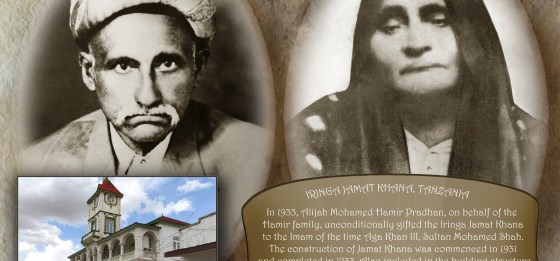
Alijah Mohamed Hamir Pradhan, Inspiration Behind the Ismaili Jamatkhana in Iringa, Tanzania

By MOHAMED HAMIR

[This special piece for Simerg is a revised version of the original article by the author that was published in Khojawiki in July 2020 — Ed.]

In 1933, in the midst of a global recession, a landmark building, a prayer house, arose in the center of a small provincial town in the interior highlands of Africa. The story of this remarkable building had its genesis in Kutch based family patriarch by the name of Hamir Pradhan, my great grandfather.

The Hamir family of Sinogra/ Nagarpur districts of Kutch was remembered as a reasonably prosperous and enterprising family in the latter half of 1800s. Hamir Pradhan had sired eight sons and one daughter. He was also a person of deep faith and community service. He had built and donated a small Jamatkhana in Sinogra. There is evidence that Hamir Pradhan had created a legacy of community service and sacrifice that left deep impression on his children and the community in Kutch. 

During early part of 1900s, six of the Hamir male siblings had joined the large scale migration of peoples from Kutch, Kathiawaar and other parts of Gujarat plagued by large scale famine, to the colonized countries of eastern and southern Africa. One of the young men among these siblings to migrate was Mohamed Hamir Pradhan, my grandfather. He was married to Bachibai, my grandmother. She and their first born daughter Fatma, who was around 3 years at the time, were to join my grandfather in Africa several years later.

Mohamed Hamir Pradhan (1880 - 1943) of Iringa, Tanzania Simerg
Mohamed Hamir Pradhan (1880 – 1943). Photo: Hamir Collection.

My grandfather, Mohamed Hamir (Pradhan) was born in Sinogra, Kutch in 1880. Following his siblings, in 1902, he arrived in Tanganyika (now Tanzania), a German colony at the time. After a short stint in Kilosa with one of his brothers, Haji Hamir, he followed another brother, Satchu Hamir, to Iringa, a quintessential German/British colonial outpost town in the Southern Highlands, where he went to work for him in his retail (duka) shop. He helped his brother expand his business to inland villages, often traveling for weeks with a caravan of porters carrying merchandise. In 1905, three years after his arrival in Tanganyika, he formed his own business.

Benefiting from his trading experience and extensive contacts with both the German and later British colonialist, he was able to capitalize and benefit from the war economy of the First World War (1914-1918). Over the next three decades he became a successful entrepreneur in retail and residential real estate development. Also over the next several years he and my grandmother Bachibai who had joined him from Kutch, expanded the family to include three more daughters and a son. This expanded, and eventually extended family through marriages, was to play a large role in my grandfather’s business successes, and more importantly in helping him achieve his ultimate legacy. Since his son, my father was only 12 or 13 years of age, his daughters played a key role in running his retail business and were deeply involved on his legacy project.

Bachibai Mohamed Hamir Pradhan, Ismaili Iringa simerg photos
Bachibai Mohamed Hamir Pradhan. Photo: Hamir Collection.

The names of my grandfather’s children and their marital families are (chronologically): daughters Fatma Mahamed Ladha, Sikina Bhimji Asser Sachedina, Jena Ramzan Parpia, and Rehmat Fazal Manji; and son and daughter-in law Akbar and Kulsum Mohamed Hamir.

In early 1930’s and in the midst of The Great Global  Economic Depression, our grandfather embarked on a project that would become a matter of pride and an important legacy for our family and the Ismaili community of Iringa. Inspired by his father Hamir Pradhan’s generosity and community service, as well as his own deep faith, he proposed to the community that he wanted to build a Jamatkhana complex and donate it to the Imam for benefit of the Ismaili community in Iringa. My grandfather’s proposal called for a two story Jamatkhana building with a capacity for 600 people, four times the Jamat size at the time. The complex was to include primary school facilities, a social hall, a guest house (dharmshara) and a recreation compound. The building was to be located right in the middle of the main street, which later was named as Jamat Street, a tribute to the Ismaili community of Iringa for the Jamatkhana building that manifested prominently on the street.

With perseverance and after several design changes, he was able to get an agreement on his plan and approval for the project from the appropriate jurisdictional leadership as well as our Imam. The construction was commenced in 1931 and completed in 1933. Due to drastic economic conditions, my grandfather had to resort to borrow money to complete the project. Several prominent families had stepped up to lend him the money. Our family folklore describes his obsession with the project that was of legendary proportion. At times, things got so desperate that he personally and physically toiled on the projects along with our family members to help the project move along to completion.

Iringa KIsmaili Jamatkhana, landmark street scene, Simerg.
Street scene with Iringa Ismaili Jamatkhana standing out prominently with its high tower and clock. The Jamatkhana was completed in 1933 with the support and initiative taken by Alijah Mohamed Hamir Pradhan. Photo: Courtesy Shafin Haji.

At the time of the completion of the Jamatkhana in 1933, it was reported to be one of the best in Tanganyika, and architecturally one of the most beautiful in the whole of East Africa. Over the next twenty-five years the Ismaili Jamat in Iringa grew five-fold, exceeding the original capacity of 600. The Jamatkhana complex was not only the anchor of the community, but also a major catalyst for the growth of the Ismaili community in Iringa. Later in the 1960s, my father, Alijah Akbar Mohamed Hamir, expanded the capacity of the Jamatkhana to accommodate the growing Khoja Ismaili community in Iringa.

At the Golden Jubilee of Imam Sultan Mahomed Shah in Nairobi 1936, our grandparents were scheduled for special audience with the Hazar Imam in order to formally present the gift of the Iringa Jamatkhana. However due to the last minute illness of my grandmother they were not able to make the long journey to Nairobi. Our Imam accepted their gift in their absence, and conveyed much appreciation and blessings to them and to their family. This was the happiest moment in our grandfather’s life! The Imam also bestowed on him an honorific title of Alijah.

Iringa Ismaili Jamatkhana Tnazania Simerg article
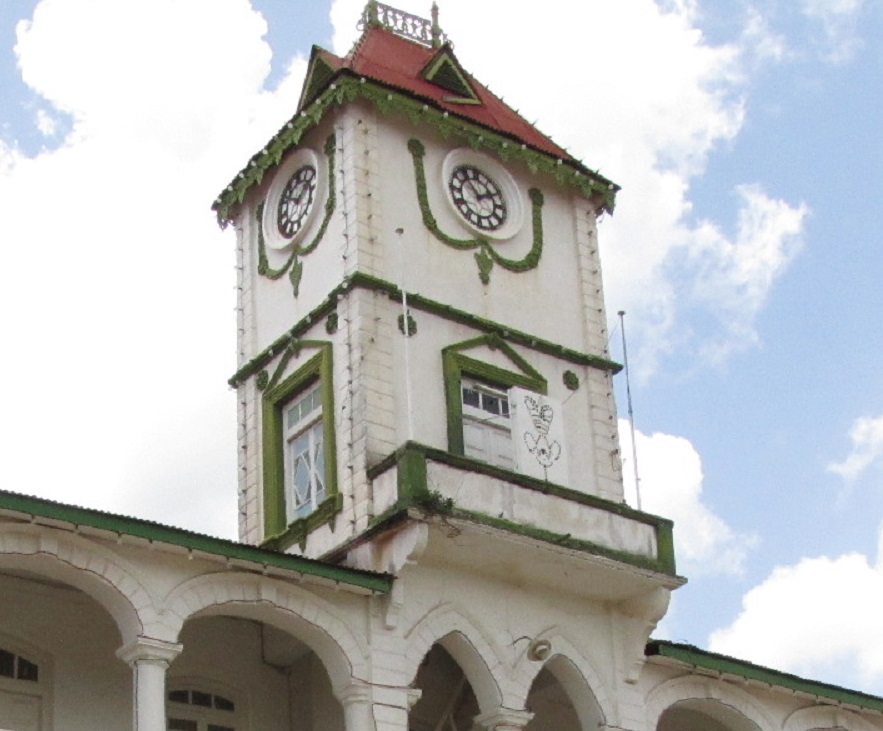
A close up view of Iringa Ismaili Jamatkhana, completed in 1933 with the support and initiative taken by Alijah Mohamed Hamir Pradhan. Photo: Courtesy Shafin Haji.
Aga Khan Ismaili Iringa Jamatkhana close-up of bell clock, Simerg
An enlarged view of the prominent bell clock of the Iringa Jamatkhana. Photo: Courtesy Shafin Haji.

Since its manifestation almost 90 years ago, the Iringa Jamatkhana  continues to stand as symbol of the town’s identity. Located in the heart of the town, the high and prominent clock tower, adoring the architecturally beautiful building, remains the emblem and inspiration to the local and diasporic community of Iringa. Its large bell clock and high visibility reminds people to the calling of the time, and the out-of-town visitors to their bearings.

It is a source of pride for our community and our family to have the Jamatkhana be such an iconic monument of the town. It is also a tribute to my grandfather’s foresight, faith, leadership and perseverance. His generosity and service to the community is a remarkable legacy and an inspiration for our family and for the future generations.

Date posted: August 2, 2020.

We welcome feedback/letters from our readers. Please use the feedback box which appears below. If you don’t see the box please click Leave a comment. Your comment may be edited for length and brevity, and is subject to moderation. We are unable to acknowledge unpublished letters

___________________

Mohamed Hamir

About the author: Mohamed Hamir, originally from Tanzania, has lived in numerous locations throughout USA since 1969. He is a retired financial services executive including a 20 year career with Citibank in the USA. He has an undergraduate degree in science from London University, UK and an MBA in finance from Indiana University. His work experience and extensive travel included both USA domestic and international markets.

Since his retirement in 2001, he has been passionate about causes involving female infanticide and education of marginalized children. He is on the Advisory Board and member of the LEADers Circle of PRATHAM USA, a prominent global educational NGO. He is also the Executive Producer of “Petals in the Dust”, an award winning documentary exposing gender discrimination, girl killing and violence against women in India.

Among his numerous services to the Ismaili community, he has served as both Mukhi and Kamadia of the Jamats in the USA. From 1988 to 1991 he served as a member of the National Council for USA with a portfolio of fund raising for Jamatkhanas. In 1968, when he was a student in London, he co-founded and was the first president of the inaugural Aga Khan Sports Club of U.K. He currently resides with his family in Southern California.

___________________

Before departing this website please take a moment to review Simerg’s Table of Contents for links to hundreds of thought provoking pieces on a vast array of subjects including faith and culture, history and philosophy, and arts and letters to name a few.

The melodious life and legacy of Shamshu Jamal (1936 – 2019)

Shamshu Jamal (1936-2019), Ismaili singer, simerg photo
Shamshu Jamal (1936-2019). Photo: Shamshu Jamal family archives.

By KARIM H. KARIM
(with contributions from Dolatkhanu Jamal, Rosemin Karim, Riyaz Jamal, Imran Karim and Irshad Karim)

Shamshu Jamal has left a profound impression on the global Ismaili jamat. His music was “magical,” declared a poem written in honour of his 80th birthday in 2016. The singer, musician, lyricist, composer, and music teacher had innumerable admirers in the countries across North America Europe, Africa and Asia where he performed in a tenure of over 60 years. Shamshudin Noordin Jamal was the unofficial poet laureate and bard of Canada’s Satpanthi Khoja Ismailis. His musical legacy has been passed on to a multitude of students and to his children and grandchildren, with whom he produced several recordings.

It was not only Shamshu’s music but his personal affability, generosity and humility that touched people’s hearts. Despite achieving success and fame, he remained grounded in family and community.

Shamshu was a loving son, husband, father and grandfather as well as a devoted friend. He and his wife lived simply in the same home in Vancouver for the last four decades. It was where he received prominent musicians and legions of admirers. It was also where he taught music and even repaired colleagues’ harmoniums.

Participating actively in the life of the neighbourhood, he stayed in touch with people who left and made new acquaintances. The many close friends and fans around the world are a testament to his compassion and graciousness. His humour was legendary – he seemed to have a joke for every occasion. Shamshu is remembered as having a smile on his lips and a twinkle in his eye. These features of his personality shone through in his singing and compositions.

Shamshu Jamal was born in a home whose air was filled with music. His father performed at gatherings and held sessions at the family’s residence. He taught the young Shamshu about the basics of Indian ragas and how to sing and play instruments during the 1940s. This early introduction to music stirred an irrepressible desire to learn more.

Formal Indian musical training was not available in Dar es Salaam, Tanzania, so Shamshu began teaching himself through research, careful listening and constant practice. He instinctively understood rhythm, melody and vocal expression. As a young teenager, he would sneak into the concerts of prominent artists visiting from India. Performing at private musical gatherings and then on the stage before turning twenty, he soon emerged as a virtuoso both within and outside the Khoja Ismaili community.

story continues after photo

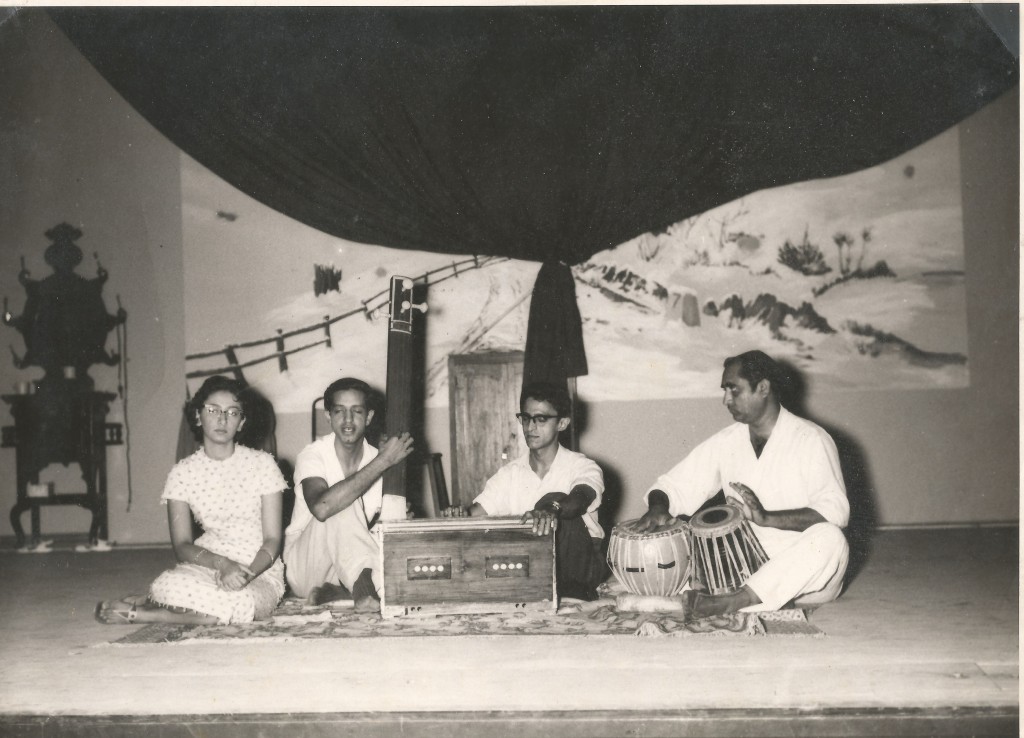
Shamshu Jamal performing in the 1960's. Photo for Simerg
Shamshu Jamal and colleagues performing in Dar es Salaam in the 1960’s. Photo: Shamshu Jamal family archives.

Shamshu’s attention to linguistic detail and diction drew him into the hearts of ghazal lovers who marvelled at his knowledgeable and precise enunciation of Urdu, which was not his mother language. He performed with a circle of fellow singers and musicians who were Muslims, Hindus, Sikhs and other members of the diaspora that had crossed the Indian Ocean to settle in Africa.

In 1973, Shamshu Jamal and his family moved to Vancouver as part of the East African Ismaili migration to western countries. He re-established old musical contacts and made new ones. The larger South Asian community of Vancouver responded enthusiastically to Shamshu’s talented renderings of ghazals and bhajans. He performed with singers and musicians from various cultures and religions. As an accomplished harmonium player, he also shared the stage with renowned artistes from India, such as the classical vocalists Pandit Jasraj and Shrimati Shweta Jhaveri and the master tabla players Ustad Zakir Hussain and Pandit Swapan Chaudhuri.

Shamshu generously gave of his musical self to his own and other communities for all of his adult life. He became a much sought-after teacher of Indian music, sharing his time and knowledge with students from various communities. Notwithstanding his success, he continued his own journey of studying music.

In 2000, the Government of Canada recognized his accomplishments and awarded him a prestigious grant to pursue advanced musical studies in India. It was in that year that he retired from his job as an accountant to devote himself more fully to music.

story continues after photo

Shamshu Jamal and fellow musicians performing in Vancouver. Photo for Simerg
Shamshu Jamal and fellow musicians performing in Vancouver in the 2010s. Photo: Shamshu Jamal family archives.

Shamshu’s live concerts were much celebrated events even when he was in his eighties. He performed at public venues, at Ginan mushairas in Jamatkhana social halls and at private music parties in homes. His particularly distinctive vocal style had been developed over many decades. Quite apart from his mastery of the technical aspects of music, the real excitement of Shamshu’s performances lay in the enthralling manner in which he engaged and connected with the audience. The mischievous smile, the impromptu alaaps and variations, and the ability to draw out deeply embedded emotions will be remembered long into the future.

His delivery remained at a sophisticated level even as age modulated the timbre of his voice. He practiced extensively before each performance. Audiences were delighted at the way that Shamshu maintained his vocal range and high notes of alaaps even as evening concerts flowed into the early morning. Apart from devotional material and heart-rending ghazals, Shamshu’s repertoire also regaled his audiences with playful songs like “Aavata Jata Jara” in Gujarati and “Nazar Se Milaa Kar” in Hindi.

From time to time, there arise individuals whose voices capture a community’s most profound feelings. For Canada’s immigrant Khoja Ismailis, one of those powerful voices has been Shamshu Jamal. His musical creativity has vocalized some of the deepest emotions of the community. Various versions of his original composition in Gujarati of “Mara Mowla Canada Padharshe” (1978) continue to be sung to this day. The word “Canada” is changed in different parts of the global diaspora to “London,” “Kenya,” “America” etc. when anticipating Mawlana Hazar Imam’s arrival in particular locations. It is viewed as Shamshu Jamal’s signature song which Malik Talib, former president of the Aga Khan Ismaili Council for Canada, termed as “iconic” for the community. This geet’s literal English translation, “My lord shall make a visitation to Canada” does not do justice to the deeply-felt range of sentiments that it expresses.

When Shamshu composed it in 1978, he creatively captured an immigrant community yearning for its spiritual leader’s first visitation in the autumn of that year. Its members were in a western country, far away from their eastern roots and were uncertain of their future. The Imam had been a constant guide when they had lived in Africa. There was eager anticipation of his advice on how to deal with the difficult situation in which they found themselves. With his finger on the pulse of the community, Shamshu Jamal gave voice to what it was feeling in its heart. The lyricist compassionately articulated the anxiety of uprootedness as well as the aspirations for renewal.

The same padhramni’s book-end composition of “Mowla Sidhaavi Gya” by Shamshu is a profoundly sad geet of the Imam leaving the community at the end of his visit. It vocalizes the bitter-sweet feelings of the Jamat at the end of the mulaqaat and to this day produces streams of tears from listeners’ eyes. This song has also become an iconic expression of similar departures of Mawlana Hazar Imam over many years since 1978.

Jamal went on to produce many other geets in praise of the Imam, particularly commemorating his various jubilees. Ever the perfectionist, he enlisted the participation of professional musicians in London, England for the Silver Jubilee album Jubilee Ke Naghme (1983) and in Mumbai, India, for the Golden Jubilee’s Jashne Jubilee (2008).

One of Shamshu Jamal’s major achievements was to enable Canadian Khoja Ismailis, who have been cut off from their cultural roots, to appreciate the profound depth of their Indian musical heritage. He enabled the Jamat to understand the musical culture and classical ragas on which the ginans are based. Shamshu recorded “Tran Tran Ved Na Dhyaavo” in Raag Malkauns, Joothi Re Duniya in Raag Bairagi Bhairav, Dur Desh Thi Aayo Vañjhaaro in Raag Jaijaiwanti and many others. These are masterful renditions that have now become integral to the treasury of the recorded Satpanth heritage, one of whose founders was Pir Shams (12th-13th century).

Shamshudin Noordin Jamal’s star shines brightly in the firmament of music. He lived a full and accomplished life. His legacy was visible at his funeral at which his grandchildren soulfully sang ginans that he had taught them. Shamshu Jamal’s final farewell is expressed in Shakeel Badayuni’s ghazal, Aakhri Waqt Hai Saans Hai Aakhri, which he used to sing at his concerts:

“Duniya walo mubarak ho duniya tumhe,
Kar chale hum salaam akhri.”

Translation

“This world is yours now, o people of the world,
I have done my final farewell.”

Date posted: July 16, 2020.

________________________

We invite you to submit your condolences, memories and tributes to Shamshu Jamal by completing the feedback form below or by clicking on LEAVE A COMMENT. Should you have difficulty in submitting your comment through the feedback form, please email it to simerg@aol.com; Subject: Shamshu Jamal.

________________________

A professional headshot of a middle-aged man with short gray hair and glasses, wearing a suit and tie, smiling gently at the camera.
Karim H. Karim

About the author: Karim H. Karim is the Director of the Carleton Centre for the Study of Islam and a Professor at Carleton University’s School of Journalism and Communication.

_____________________

To submit an obituary or tribute to a deceased member of your family, please see our post Simerg Invites Obituaries / Tributes to Honour Past / Recent Deceased Ismailis

Remembering Ismailis we have lost since Jamatkhana closures and during the coronavirus pandemic

Simerg invites Ismaili families around the world to submit short obituaries or tributes to members of their families who have passed away during the Coronavirus pandemic, either due to Covid-19 OR any other cause. Please read the first part of tributes by clicking here or on the photo below. Submit the tribute to the editor, Malik Merchant, at simerg@aol.com. The tributes we have published are good examples for a tribute you may wish to write for your family member.

Date posted: June 8, 2020.

__________________

“The Last Anointing” – an amazing must read piece in the New York Times

EDITOR’S NOTE: Ismaili Muslim families whose family members are seriously ill or are in the last stages of their lives seek out their Jamatkhana leaders — the Mukhis and Kamadias — to offer some specific prayers, blessings and rites on the sick members of the family, who may never recover from the illness. Many of us familiar with our sacred and age old traditional ceremonies will be able to relate to this remarkable piece that I have just finished reading in the print edition of the Sunday New York Times (June 7, 2020). Because the piece relates to Covid-19, the newspaper offers it as a free-read on its on-line edition, without having to subscribe. Please read it!

Tributes to Ismailis who have passed away during the Covid-19 pandemic: Issue no. 1 of a multipart series

As announced a few days ago, we commence a special series of tributes to Ismailis as well as non-Ismaili members of Ismaili families who have passed away during the Coronavirus pandemic, either due to Covid-19 or any other cause. For details on submitting your tribute to a deceased family member or a very close friend, please read TRIBUTES and write to Malik Merchant at Simerg@aol.com; you must include your full name and contact information.

___________

Inna lillahi wa inna ilayhi raji’un
“Surely we belong to God and to Him we return” — Holy Qur’an, 2:156

Alnoor Ramji
(Canada)

Submitted by Abdulrasul Allibhai Ramji and Lilly Ramji

Alnoor Ramji, Simerg
Alnoor Ramji, age 62 (d. April 14, 2020)

It was the beginning of March 2020. Alnoor’s 62nd birthday was just 3 weeks away. But he had cancer, and was in the last stages of his life. He did not let it control him. Rather, he coped with it, accepted it and carried on with his passion of raising funds for the Aga Khan Foundation’s annual World Partnership Walk (WPW). In each of the previous years, he had raised between $13,000 to $15,000. With all the passion that he had developed over the years for the work of the Imamat around the world, he started sending out a message that simply said, “Donate to WPW [World Partnership Walk].” For him, that would be the most cherished birthday gift anyone could ever give him. In a little more than 3 weeks, Alnoor raised $18,000.

He passed away on April 14, 2020, but not before the Mukhi and Kamadiasahebs of Toronto’s Headquarters Jamatkhana at the Ismaili Centre, made a conference call to him. He answered them with the greeting Ya Ali Madad. They bestowed Dua (prayers) on him, and Alnoor responded with the word “Amen” each time – a total of four times.

His funeral was held in Toronto on April 17, 2020. He leaves behind his parents, Abdulrasul Allibhai Ramji and Lilly Ramji. His two sisters, Nilam (Naushadaly) in Edmonton, Alberta, and Rubina (Craig) in Sydney, Nova Scotia, were both unable to attend the funeral.

Editor’s note: An obituary for Alnoor Ramji was published in The Toronto Star on April 17, 2020. Please click HERE to read the detailed piece.

_____________________________

Goulzare Foui
(France)

Submitted by Nigar Ribault

Goulzare, France, Simerg
Goulzare Foui

« Ma chère Goulzare Foui, 

Vous m’aviez dit de ne pas m’inquiéter parce que vous aviez juste la grippe. Vous connaissiez si bien mon caractère angoissé : « mais qu’est ce qu’on va faire de toi avec ces angoisses mon petit ? ».

Et soudain, en quelques jours, vous avez été emportée par ce virus. 

Je vous appelle et je vous cherche depuis 40 jours que vous êtes partie … 

Et vous êtes là ! : 

Les roses ont fleuri et me font signe. Je vous vois Goulzare (Jardin fleuri) dans ces fleurs. Je vois votre beau sourire lumineux. J’entends votre voix dans le chant des oiseaux du printemps. Vous chantez comme un rossignol dans le grand jardin de Mowla Bapa.

Vous ne m’avez pas quittée : vous êtes dans mon cœur pour toujours et dans ce que vous m’avez transmis. Je vous aime ma Goulzare Foui. La petite sœur de mon papa. 

Votre Nigar »

~~~~~~~~~~~~

Translation by Dr. Nurin Merchant

My dear Goulzare Foui,

You told me not to worry, that it was just the flu. You knew my anxious character well — “what are we going to do with you and all of your anxieties my little one?”

And suddenly, in just a few days, this virus had taken you from us.

I call you, I seek you ever since the day you left us 40 days ago.

And there you are!

The roses have bloomed, giving me a sign. I see you Goulzare (flowery garden). I see your beautiful and radiant smile. I hear your voice in the song of the spring birds. You are singing like a nightingale in Mowla Bapa’s big garden.

You have not left me: you are here. Here in what you shared with and passed down to me, and forever in my heart. I love you my Goulzare Foui. My dad’s little sister. 

Your Nigar.

Translators note: In the translation, I have tried to keep the meaning of Nigar’s beautiful tribute to her aunt as best as I could.

_____________________________

Amirali S. Nagji
(USA)

Submitted by Akberali Nagji

Tribute to Amir Nagji, Simerg
Amirali Nagji, age 78 (d. April 2, 2020)

Amirali Nagji passed away of natural causes on April 2, 2020 in Albuquerque, New Mexio, USA. He was 78. Originally from Mtwara, Tanzania, Amirali was very hardworking and generous; he was known for helping many people by giving free accommodation in his motel.

He served Jamati institutions for twenty years, and had also held the position of Mukhisaheb of Albuquerque Jamat.

Outside Ismaili institutions, he served seniors at a local hospital. His ever-smiling face and friendly demeanor provided comfort to many.

Amirali loved to travel and was fond of Bolywood music. As well as being a good dancer, he had a wonderful sense of humour, for which he was greatly admired.

He is survived by his wife Nurjehan, daughter Alia and her husband Shafin, and two grandchildren.

We pray that his soul may rest in eternal peace. Amen.

___________________________

Sultan Piroj Maknojiya Methanwala
(India)

Submitted by the families of Nazarali Kasamali Momin and Akbarali Kasamali Momin

Sultan Methanwalla, Simerg
Sultan P. M. Methanwala (d. May 16, 2020)

Sultan Bhai Piroj Maknojiya Methanwala passed away on May 16, 2020 in Vaishali Nagar Jogeshwari West, Mumbai.

He was a prominent leader both within and outside the Ismaili Jamat. He had served as the Mukhisaheb of the Jamat with great distinction, and was deeply loved by members of the Jamat.

He was also a life long social worker, and reached out to all communities to provide care and assistance.

He will be deeply remembered and missed by his family, the Vaishali Nagar Jamat and other communities whom he served selflessly.

May Mawla rest his soul in eternal peace and may Mawla give strength to his family members and the Jamat to bear the loss of a commendable leader of the Jamat. Amen.

___________________________

Salima Wanda Arthurs
(Canada)

Submitted by Shaida Hussein

Salima Wandra Arthurs, Simerg
Salima Wanda Arthurs, age 64 (d. April 24, 2020)

Salima Wanda Arthurs, 64 years old, passed away in Calgary, Alberta, Canada, on Friday April 24, 2020, the first day of Ramadhan, from cancer.

Her mum, Margaret, sister Linda, some friends and myself, Shaida Hussein, attended the funeral ceremony. Like other Ismaili funerals that take place during the current pandemic, the funeral and post burial ceremonies such as chaanta, last respects, samar and zyarat were conducted according to physical distancing and other guidelines that have been established by each province.

Salima  embraced the Ismaili Muslim faith in 1985, and was a committed volunteer in jamati (community) services. She contributed to the work of Ismaili Tariqah and Religious Education Board on the literature counter and served in the admissions committee, as well as participated in other institutional projects and programs. She was a humble and a compassionate person, and will be fondly remembered and missed by the Calgary Jamat as well as her family and friends.

We pray for her soul to rest in eternal peace. We also pray that Almighty God grants her family and friends the strength and courage to bear this loss.

_____________________

To submit a tribute to your family member who has passed away due to Covid-19 or any other cause, please read TRIBUTES and write to Malik Merchant at Simerg@aol.com; please include your full name and contact information.

Before departing this website please take a moment to review Simerg’s Table of Contents for links to hundreds of thought provoking pieces on a vast array of subjects including faith and culture, history and philosophy, and arts and letters to name a few.

We welcome tributes from our readers to individuals portrayed in this piece. Please use the feedback box which appears below. If you don’t see the box please click Leave a comment.