Simerg is an independent initiative dedicated to Ismaili Muslims, the Aga Khan — their Hereditary Imam — and the Ismaili Imamat, and Islam in general through literary readings, photo essays and artistic expressions
The motif representing Nur, or Light, has been utilized during the inaugural visits of Mawlana Hazar Imam, His Highness the Aga Khan, to Ismaili Muslims globally since he became the 50th Hereditary Ismaili Imam on February 4, 2025, succeeding his father, Mawlana Shah Karim, His Late Highness Aga Khan IV. His seventh visit to his followers will be to Canada from March 25-31, 2026. Photograph: The Ismaili.
Our tradition begins its teachings not with rules, but with reminders of presence. Pir Ṣadardin, in his timeless wisdom, offers us a spiritual imagination that prepares the heart before it prepares the body.
In the Ginan Satgur Sathe Gothadi Kije[1], he evokes a powerful image:
Jyote jagadine jumloji betha…
Translation
The Lord sits with His Light in full blaze.
This is not poetry for the mind alone. It is a vision for the murid. It invites us to imagine the Jamatkhana not as a hall of bricks and lamps, but as a sanctified space where the Divine Light is already present, already radiant. When a murid enters with this awareness, the heart softens, the senses awaken, and the soul becomes receptive.
Another Ginan by Pir Ṣadardin [2] deepens this inner posture:
When you enter the Jamatkhana, O chivalrous brother, remain in the presence of the Light; avoid slander and idle talk.
Here the Pir gently redirects us: the Jamatkhana is not a place for distraction, gossip, or worldly chatter. It is a sanctuary of presence. The murid is encouraged to feel, not merely know, that he or she stands before the Light of the Imam.
These verses form the spiritual foundation of our discussion. They remind us that conduct is not merely behaviour; it is an inner state that expresses itself outwardly.
When the Imam Physically Graces the Jamat with Didar
There are moments in the life of a murid that are unlike any other. When the Imam of the time physically graces the Jamat with Didar, the familiar space transforms. What was a sanctuary, becomes a royal court, a sacred, luminous, resplendent space filled with joy, anticipation, and profound gratitude.
For many murids, this moment is the fulfilment of a lifelong yearning: to see the Murshid, to be seen by the Murshid, to feel the warmth of his presence.
But this raises an essential question:
What should be the state, inner and outer, of the murid in the presence of the Imam? This is not a new question. Our tradition has contemplated it for centuries.
Guidance from Qadi Nu‘man: The Adab of the Murid
In the 10th century, Qadi Nu‘man [3], one of the great jurists of the Fatimid tradition, wrote extensively on adab, the etiquette and conduct of the followers of the Imam. His guidance remains deeply relevant.
He reminds us that the physical presence and the Didar of the Imam is not a public spectacle; it is an intense, personal, one-on-one encounter between the murid and the Murshid. Even in a gathering of thousands, the murid stands as though alone before the Imam.
From this understanding flow the essential qualities of conduct:
HUMILITY: A heart emptied of pride, ego, and self-importance.
RESPECT AND REVERENCE: Speech, movement, and gaze shaped by awareness of sanctity. No rushing to greet the Imam, no physical contact with the Imam, no standing to draw attention to oneself.
STILLNESS AND PRESENCE: No distraction. No idle talk. No wandering thoughts.
AWARENESS OF LIGHT: Every gesture shaped by the recognition that the Imam bears Divine Light.
At this point, the teaching of Pir Shams in Saloko Moto [4] becomes especially meaningful:
Satgur says…Offer your true tithe, and bow at the feet of the Imam from a respectful distance.”
This verse captures the essence of reverence: devotion expressed with humility, sincerity, and dignified distance.
The Conduct of the Murid and the Awe of the Imam
The conduct of the murid must reflect the essence of the Imam. As the master of ta’wil, the one who unveils the inner reality (batin) of the physical (zahir) universe, the Imam stands at the apex of spiritual authority [5]. In the Ginans, he is described as the sovereign of the fourteen spiritual realms, the one through whom the cosmos is interpreted and harmonized.
Such a station naturally calls the murid into a posture of awe, humility, and respectful distance. This is not distance of heart, but a way of carrying oneself that acknowledges the Imam’s spiritual stature.
In a congregation of thousands, each murid arrives for the Didar with his or her own hopes, burdens, and expectations of grace. It becomes a shared ethical responsibility to preserve the sanctity of the collective space. Any action that draws attention to oneself, disrupts the serenity of others, or creates disturbance, even unintentionally, risks overshadowing the quiet interior work that each soul is undertaking.
Mindfulness, therefore, is not only a personal virtue but a communal obligation. It ensures that the congregation remains a vessel of harmony, not distraction; a place where the murid’s inner orientation toward the Imam can unfold without interruption.
Nasir Khusraw’s Eyewitness Account
The 11th-century Ismaili da’i, traveller and poet-philosopher Nasir Khusraw offers a vivid glimpse of this reverence. In his eye-witness description of the procession of the Festival of the Canal (Fath al-khalij) during the time of Imam al-Mustansir bi’llah in AH 438-39/1047 CE, Nasir Khusraw informs us that when the Imam, wearing a white robe, passed by on a horse, the murids and citizens alike, bowed in devotion and awe, lowering their heads in deep respect, reciting prayers and benedictions [6].
This simple gesture reveals a profound truth: the presence of the Imam evokes spontaneous reverence in the hearts of believers.
A Fatimid Example of Reverent Conduct
Al-Maqrizi’s [7] historical accounts of the Fatimid court illuminate this principle with striking clarity. Audiences with the Imam–Caliph were carefully structured to preserve the dignity and contemplative gravity of the encounter. Visitors approached with measured steps, maintained silence, and observed spatial boundaries that signalled respect for the Imam’s spiritual and temporal authority.
This Fatimid ethos mirrors the ethical expectation placed upon murids today: to uphold the serenity of the communal space, to avoid actions that draw attention to oneself, and to recognize that the Imam’s presence, whether physical or symbolic, requires behaviour aligned with reverence.
The Meaning of Adab (Sabyata, Maryada)
The classical Arabic/Persian term adab, is expressed in Gujarati/Hindi as sabyata (refined behaviour) and maryada (dignified respect). They refer to the graceful, respectful way a murid carries themselves in sacred spaces in the presence of the Imam. In our tradition, adab toward the Imam is not merely social etiquette; it is a spiritual discipline. It reflects an inner recognition of the Imam’s role as the bearer of divine guidance. To act with adab is to let one’s outward behaviour mirror one’s inward understanding.
Concluding Reflection
To stand before the Imam, physically or spiritually, is to stand in the presence of Light. The murid’s conduct, shaped by humility, reverence, and awareness, becomes an offering in itself. When each murid upholds serenity and dignity, the entire Jamat becomes a vessel worthy of the moment of grace.
Date posted: March 19, 2026.
________________
END NOTES
Gujarati Ginans and Granths
[1] Pir Sadardin, Satgur Sathe Gothadi Kije. P. 28.
[2] Pir Sadardin, Gat Mahe Avine Sanmukh Rahiye. P.116
English
[3] Qādi Nu‘man’s teachings on adab are preserved across Fatimid jurisprudential works; see Halm, Heinz. The Fatimids and Their Traditions of Learning. London: I.B. Tauris.
[4] Pir Shams, SalokoMoto
[5] For the Imam as master of ta’wil, see Daftary, The Ismailis: Their History and Doctrines.
[6] Paula Saunders, Ritual, politics and the city in Fatimid Cairo. Pp. 103-04
[7] Al-Maqrizi, Ittiʿaz al-Ḥunafaʾ, descriptions of Fatimid court protocol.
___________________
BIBLIOGRAPHY
Gujarati Ginans and Granths
Mahan Ismaili Sant Pir Sadardin Rachit Ginanono Sangrah 1. Bombay 1952
Pir Shams Rachit Saloko Moto, Ginans Series 2, Ismailia Association for Pakistan, Karachi, -3, 1967
English
Daftary, The Ismaʿilis: Their History and Doctrines.
Halm, Heinz. The Fatimids and Their Traditions of Learning, London: I.B. Tauris.
Hunsberger, Alice C, and Institute of Ismaili Studies, London, 2003. Nasir Khusraw, the Ruby of Badakhshan: A Portrait of the Persian Poet, Traveller and Philosopher.
Maqrizi, Taqi al-Din Aḥmad. Ittiʿa al-Ḥunafāʾ bi-Akhbar al-Aʾimma al-Faṭimiyyin al-Khulafaʾ. Cairo: Supreme Council for Islamic Affairs.
Saunders, Paula, Ritual, politics and the city in Fatimid Cairo, New York, 1994.
______________________
About the author: Shiraz Pradhan is an international consulting engineer, author, and long‑time researcher of the Ginan tradition. He serves as the Chairperson of the Association for the Study of Ginans, an international organisation dedicated to preserving and advancing Ginan scholarship. Shiraz has written extensively on Nizari Ismaili Ginans and Satpanth in Ilm (Ismailia Association UK, 1987) and on Simerg. His interests span the Vedas, Judeo‑Christian history, and Sufism, reflecting his broad engagement with spiritual traditions. His forthcoming book, Amrapuri: Exploring the Evolution of Nizari Ismaili Satpanth through the Prism of Ginan Literature, brings together years of dedicated study.
Leading up to the inauguration of the Ismaili Center, Houston, on November 6, 2025, by His Highness Prince Rahim Aga Khan, Christianity Today, founded in 1956 by Billy Graham (d. 2018), and with a worldwide circulation of 130,000 today, has published a two-part series on the Ismaili Center and the Ismailis. The first article, Everything Is Bigger in Texas, Including Its New Islamic Center by Ken Chitwood, a contributing writer to Christianity Today, portrays the Center as a structure that mirrors Houston’s reputation for grandeur, situated on an 11-acre site with nine gardens and a 150,000-square-foot building that includes a theatre, banquet halls, a café, and a prayer area.
Story continues below
Please click on the photograph to read the article in Christianity Today.
The writer, in a balanced tone, underscores the Center’s role as a hub for dialogue among Houston’s religious communities. Chitwood has skillfully incorporated the perspectives of key members of the Ismaili community, as well as a Christian pastor, a Methodist Minister, and others, who share their insights and reflections on the Center and the Ismaili community in Texas.
“For Ismailis today, who number between 12 and 15 million across 35 countries, pluralism is more than a commitment — it is near dogma. That is due to the center’s subsect, Nizari Ismailism, and its distinguishing feature: the living imam. Most Shiite Muslims name the leader of the Islamic community an imam, but only the Nizari sect claims he is alive and actively present in the world today. And the imam’s legitimacy originates in his descent from Muhammad” — Jayson Caper in Christianity Today
In the second and final part of the series, the article Who Are the Ismaili Muslims? by Jayson Casper, a Lebanon-based Middle East correspondent for Christianity Today, provides an overview of Ismaili history within the context of Shia and Sunni Islam from the time of the Prophet Muhammad to the present 50th Imam, His Highness Prince Rahim Aga Khan, who is making a visit to Texas from November 5-10, 2025. The article also sheds light on its theological beliefs, including the crucial and significant role of the Ismaili Imamat.
These are balanced articles by Christianity Today, considering its Global Initiative, which seeks to “expand our coverage to better represent what God is doing around the world, interconnecting the Global Church, and illuminating the work of Jesus on every continent.” For more information about Christianity Today, see the About Page.
Over twenty years ago I, a Christian, began a journey to learn about my Muslim neighbours.
Throughout this process of learning, there was one individual — arguably the most impactful world leader without a country of his own — who, as a Muslim, taught me more about being a good Christian than I ever would have expected. In his humble, earnest way, he used his influence to be a powerful force for good, not just for those whom he lived his entire life to guide and protect but for all the rest of us as well.
The Aga Khan and Ismaili Muslims
This quietly powerful, beautiful soul is, of course, the 49th Hereditary Imam of Nizari Ismaili Muslims, Mawlana Shah Karim Al Hussaini, His Highness the Aga Khan. He passed away in Lisbon, Portugal, on February 4, 2025, at the age of 88, thus becoming the longest-lived Imam in the 1400-year history of the Shia Imami Ismaili Muslims, whose first Imam was Ali, the cousin and son-in-law of Muhammad.
Mawlana Hazar Imam (our Lord, the Imam of the Time), as Ismailis address their reigning Imam, was their protector and guide for 67 years, filled with parental love for all his followers around the world, a profoundly inspiring world leader — but for me, a Christian, he was my hero.
A life-size depiction of Mawlana Shah Karim, His Highness the Aga Khan, (d. February 4, 2025, aged 88) exhibited at the Canadian Museum for Human Rights in Winnipeg, Manitoba. The exhibit appears with depictions of other Honorary Canadian Citizens on a floor dedicated to “Turning Points of Humanity.” Photograph (of the exhibit taken July 2017): Malik Merchant / Barakah.
In his guidance to the world Nizari community living in more than 35 countries, with over 200,000 having made their homes in North America over the past fifty years, he not only spoke to immediate worldly concerns but encouraged his followers to show compassion and understanding; to volunteer, educate, and be educated; to support and empower women, and those who historically have little voice; to be good citizens of whatever country around the world they might find themselves in; and to be powerful examples of pure charity to everyone encountered. Prince Karim’s support of Nizari Ismailis was without bounds, and his charity and caring towards the world at large were without measure.
Shortly after his grandfather’s passing and his installation as the 49th Imam on July 11, 1957, Prince Karim delivered Takht-nishini (ceremonial installation) addresses internationally in Africa and South Asia — messages immediately impactful for their time and still profoundly relevant today.
He spoke to the promise of electronic education and cheaply distributed power, admonishing them to make wholesome use of these advancements while maintaining their faith.
“The most significant thing about the atomic age is the new and unbounded sources of energy which are released for the use of mankind. In Europe and America today, power stations are springing up which need no coal, nor oil, nor water power to run them. They feed themselves. This is close to the secret of perpetual motion. In my life time, it is almost certain that such atomic power stations will be exported, very likely to countries like Tanganyika. From them will flow the energy which will create new towns, railways, factories and all the foundations of modern industrial progress — Dar-es-Salaam, October 19, 1957 [1].
“The years of development and change which lie ahead are certain to throw up many new problems. We should not be afraid of these. You will surely surmount them if you stand by your faith and meet your difficulties in the spirit of humility and tolerance that your religion demands of us. This is especially important for the younger generations who will have to carry the future on their shoulders” — Nairobi, October 22, 1957 [1].
“The faith by which we live is the only sure guarantee that our problems will be surmounted. The younger people among you must be especially aware of this. Only the faith of your fathers will enable you to live in peace.” — Dar-es-Salaam, October 19, 1957 [1].
He talked about the need to find our spiritual center and work together as we navigate rapidly evolving technological landscapes.
“Never before in the history of man has there been such an age of technological progress… It is most important for the future of this country that the various races face these changes together” — Nairobi, October 22, 1957 [1].
Mawlana Shah Karim, His Highness the Aga Khan, at his Takht-nishini, in Nairobi, Kenya, 1957. Photograph: 25 Years in Pictures, Volume 1, Islamic Publications, 1983, London.
He spoke on contests of skill where every participant does their best and succeeds; that competition and respect are not mutually exclusive.
“You must work together with mutual forbearance and with respect for each other. Only thus shall we achieve the harmony and happiness which is necessary for the true advancement of our faith.” — Kampala, October 25, 1957 [1].
He declared that technological success and community development are tools to benefit everyone.
“As a community, our Faith will always preserve our special identity, but there should be nothing exclusive in what you do…There is no reason why our traditions and our faith should stop us from moving with our times, nor in fact why we should not lead our fellowmen to new spheres of knowledge and learning.” — Karach, January 23, 1958 [1].
He spoke to the power that compassion, understanding, and service have within a spiritually powerful minority community.
“With humility, tolerance, and respect for each other, by honest work and straight dealings, you will earn the true friendship of you fellows… By the way you conduct your daily lives, by the compassion you show your fellow men and women, and above all by your faith in God — you will ultimately be judged” — Bombay, March 11, 1958 [1].
Through living his own life, he transformed mine!
O mankind, indeed We have created you from male and female and made you peoples and tribes that you may know one another. Indeed, the most noble of you in the sight of Allah is the most righteous of you — Surah Al-Hujurat (49:13).
For me, Prince Karim Al-Hussani, Aga Khan IV, will always stand as a unique global figure, an exemplary world leader who effortlessly combined his spiritual role as the 49th hereditary Imam of the Nizari Ismaili Muslims with his transformative contributions to education, culture, and development.
A sign etched on a mountain to welcome Mawlana Shah Karim, His Highness the Aga Khan to Pasu in the Hunza region of Gilgit-Baltistan, Pakistan; November 1987. Photo: Faqir Ullah Khan.
~~~~~~~~
In a setting of spectacular natural beauty, Mawlana Shah Karim, His Highness the Aga Khan addresses Ismailis and non-Ismaili Muslims in Ishkashim during his first historic visit to Badakhshan in Tajikistan; May 27, 1995. Photograph: The Ismaili.
Remarkable Aspects of Leadership
For a period longer than my lifetime he led a community of millions across the world, guided by the principles of Islam while expanding his work to improve the quality of life for countless individuals, regardless of their faith or background. This perspective — anchored in faith but outward-facing and inclusive — defined his leadership and shaped his vision for a more compassionate and interconnected world.
Central to this vision was a unique worldview he termed “empathic pluralism,” the idea that humanity’s differences should be viewed not as sources of division but as opportunities for mutual enrichment. In one of his most profound observations, Prince Karim stated, “The world needs an architecture of generosity, one that speaks to a global ethic of respect and compassion.” [2] More than the design of physical structures, this “architecture” extended to encompass the systems, institutions, and relationships forming the very foundations of human society.
Cultures across the globe are grappling with complex challenges: rising inequality, deepening cultural divides, and the rapid erosion of both natural and cultural heritage. Though diverse in nature, these crises share a common thread — they require responses prioritizing empathy, resilience, and cooperation. Prince Karim’s work provided a blueprint for addressing these issues, tempering spiritual guidance with practical, sustainable solutions which strengthen communities and foster understanding.
Indeed, Allah orders justice and good conduct and giving to relatives and forbids immorality and bad conduct and oppression. He admonishes you that perhaps you will be reminded –Surah An-Nahl (16:90).
In my eyes, the most remarkable aspect of his leadership was his ability to bridge faith and reason. As a spiritual leader, he inspired millions of Ismailis through teachings emphasizing ethical conduct, introspection, and commitment to social welfare. Yet his initiatives extend far beyond his community, addressing universal concerns and building institutions that continue to serve as models of inclusivity and excellence. Whether funding hospitals and schools in remote areas or revitalizing cultural landmarks that hold meaning for widely diverse communities, his efforts reflected a holistic understanding of humanity’s shared destiny.
He continuously emphasized that understanding one’s heritage and connecting with cultural expressions — through art, music, and architecture — strengthens both individuals and communities alike. The Aga Khan Museum in Toronto perfectly documents this commitment and understanding.
A view of the Aga Khan Museum during the annual Toronto Open Doors event, May 27, 2023. Photograph: Malik Merchant/Barakah.
~~~~~~~~~
Treasures at the Aga Khan Museum Toronto. From the upper floor, one can see permanent and loaned exhibits, such as the Wagner Garden Carpet, Burrell Collection, Glasgow, Scotland. Photograph: Malik Merchant / Simerg.
The exhibits housed within its walls celebrate the artistic and intellectual contributions of Muslim civilizations spanning the globe, providing a space where visitors from all walks of life can explore and appreciate our shared human history. Reflecting on this purpose, he noted that such sites are “places where people from every background can experience the wisdom and beauty of Muslim cultures.” [2] A world standard of contemporary museology and conservatorship, the entire project underscores his broader vision of cultural dialogue as catalyst for empathy and mutual respect.
This showcase of international art was not conceived for just one group or community, but for the world. The Prince’s philosophy of unceasing kindness, consideration, and thoughtfulness is evident across his wide range of initiatives in architecture, spirituality, education, and philanthropy internationally. Together, they form a cohesive vision seeking tirelessly to heal divisions and inspire a deeper sense of global solidarity.
Pluralistic Vision for Architecture
Allah is the Light of the heavens and the earth. The example of His light is like a niche within which is a lamp…Surah An-Nur (24:35)
This vision for the world becomes particularly vivid when considering his contributions to physical architecture. For Prince Karim, architecture was far more than the design of buildings; it is a profound expression of values and aspirations. His belief that “architecture is a bridge to cultural dialogue” [1] emphasizes the transformative potential of thoughtfully designed spaces. In his view, architecture nurtures empathy, fosters inclusion, and celebrates diversity — all of which are essential to a world where only pluralistic solutions can truly resolve complex problems.
As he once said, “The spaces we build must reflect the diversity of those who occupy them and encourage coexistence. Architecture is a bridge to cultural dialogue.” [2] This perspective guided his work in architecture and urban development for decades, shaping physical environments of social harmony and cultural diversity.
The Humayun Tomb, the resting place of the second Mughal emperor and a precursor to the Taj Mahal, forms a backdrop in this picture taken during the inauguration ceremony on September 18, 2013 which was attended by the Chief Guest, the Prime Minister of India, Dr Manmohan Singh, Mawlana Shah Karim, His Highness the Aga Khan, the Minister of Culture, Chandresh Kumari Katoch, Chairman Ratan Tata of the Sir Dorabji Tata Trust and Prince Hussain Aga Khan. Photograph: Prime Minister’s Office (GODL-India), GODL-India , via Wikimedia Commons.
Through the Aga Khan Trust for Culture (AKTC), he spearheaded projects that restored significant landmarks while revitalizing the surrounding communities. In places like Islamic Cairo and the historic cities of Northern Pakistan, these initiatives preserve cultural heritage and serve as catalysts for social and economic development. These efforts are grounded in his conviction that “cultural preservation is as essential to a people’s spirit as food is to their bodies.” [2] By linking preservation with community engagement, Prince Karim demonstrated how architecture can simultaneously honour the past and empower the future.
Recognizing the urgent need for environmentally sensitive design, the projects he supported often integrated green technologies and sustainable practices. In urban spaces, this might mean prioritizing water conservation, using locally sourced materials, or creating public parks that enhance both environmental and social well-being. These initiatives addressed the practical demands of a changing climate and reflected his broader belief in stewardship and responsibility toward future generations.
There shall be no compulsion in [acceptance of] the religion. The right course has become clear from the wrong — Surah Al-Baqarah (2:256)
Underlying all these efforts was his commitment to pluralism. The Aga Khan IV consistently emphasized architecture should celebrate diversity, stating, “Architecture that embraces diversity creates not only beautiful spaces but also peaceful communities.” [2] For him, the physical environment is a reflection of society’s values — or should be — and inclusive design serves as a powerful tool for promoting understanding and coexistence. His architectural projects, whether cultural museums, educational institutions, or restored historic sites, embody this principle, offering spaces where people from all walks of life are given space to come together in mutual respect.
Architecture, in Prince Karim’s view, is not merely about creating physical spaces but about shaping environments which inspire understanding and cooperation. This principle of building for the future extends naturally into his approach to education, where cultivating minds and hearts becomes the foundation for fostering ethical leadership and global citizenship.
Education and Knowledge
Say, ‘Are those who know equal to those who do not know?’ — Surah Az-Zumar (39:9)
For Prince Karim, education was not merely about imparting knowledge but about cultivating minds and hearts to create effective and nurturing leaders in our rapidly evolving world. Education should be holistic, fostering intellectual curiosity, ethical reasoning, and cultural awareness. He observed, “An education that emphasizes both the mind and the heart…will empower young people to create positive change.” [3] Education should be a transformative force capable of addressing global challenges while enriching individual lives and inspiring future leaders.
President Chissano of Mozambique and Princess Zahra Aga Khan look on as Mawlana Shah Karim, His Highness the Aga Khan, addresses dignitaries at the foundation laying ceremony of the Aga Khan Academy Maputo on June 25, 2004. Photograph: The Ismaili USA, December 13, 2004.
~~~~~~~~
Mozambique’s President Filipe Nyusi and Portugal’s President Marcelo Rebelo de Sousa unveil the inaugural plaque of the Aga Khan Academy Maputo, as Prince Rahim, who succeeded as the 50th Imam on February 4, 2025, looks on. Photograph: Akbar Hakim/IPL
The Aga Khan Academies are a network of schools located in diverse cultural settings, each committed to nurturing future leaders who value pluralism and social responsibility. These schools emphasize a rigorous academic curriculum alongside lessons in ethical leadership, preparing students not only to excel in their chosen fields but also to contribute meaningfully to society at large. Reflecting on this mission, he remarked, “Education should be an opening of the mind to the rich diversity of human experience” [3], underscoring his belief in the power of education to build bridges across cultural and intellectual divides.
The University of Central Asia Naryn campus in the Kyrgyz Republic lies on the banks of the Naryn River, surrounded by the Tien Shan mountain range. Photograph: AKDN.
Another cornerstone of Prince Karim’s educational vision was his focus on post-colonial societies, where the legacies of imperialism include painfully fractured identities and profoundly limited opportunities. Through initiatives like the University of Central Asia and the Aga Khan University, he sought to address these challenges by creating institutions which blend global standards with local relevance. These universities prioritize research and teaching directly tied to the needs of the communities they serve, fostering a sense of agency and self-determination.
Education should not only elevate individuals but also empower entire communities, particularly in a world where globalization often threatens to homogenize identities. By integrating cultural literacy into educational frameworks, Prince Karim fostered a sense of pride and belonging while encouraging cross-cultural empathy.
Read in the name of your Lord who created. Created man from a clinging substance. Read, and your Lord is the most Generous — Who taught by the pen — Taught man that which he knew not — Surah Al-Alaq (96:1-5).
His vision for education also extended to global ethics. In a time of increasing polarization and ethical dilemmas posed by technological and social change, he called for education systems worldwide to prioritize moral reasoning and empathy. His institutions place a strong emphasis on teaching integrity, respect for diversity, and responsibility toward others, reflecting his understanding that intellectual achievements are hollow without a foundation of ethical principles.
The Prince’s educational institutions and initiatives actively work to increase access to education for women and marginalized groups, and recognize that equitable education is a prerequisite for truly sustainable development. These efforts echo his broader belief in the transformative potential of empowering all individuals, regardless of gender or socioeconomic background.
The transformative power of education lies not only in the knowledge it imparts but also in its ability to nurture creativity and cultural pride. These values resonated deeply with Prince Karim’s work devoted to supporting the arts, where he championed the preservation of heritage alongside present innovation, bridging the past and present.
Empathic Pluralism in the Arts
God is beautiful and loves beauty — Hadith Qudsi, Prophet Muhammad, Saheeh Muslim
The arts are a universal language — a means of expressing the human spirit and fostering understanding across cultures. Throughout his leadership, the Aga Khan championed the preservation and celebration of artistic traditions while encouraging contemporary forms of expression resonating with modern audiences. The arts are an integral part of human development, a tool for cultural dialogue and empathy — as he stated: “Art is a universal language that has the power to build bridges where words cannot.”
Mawlana Shah Karim, His Highness the Aga Khan, meeting musicians from the Kyrgyz Republic. The troupe was brought to the Smithsonian Folklife Festival held in Washington, DC, in 2002 by the Aga Khan Trust for Culture. Photograph: AKDN/Zahur Ramji
The Aga Khan Music Initiative is one of the most compelling examples of his vision. Through this initiative traditional music from Central and South Asia, the Middle East, and North Africa is preserved and revitalized, ensuring that these rich cultural legacies are passed down to future generations. The initiative goes far beyond preservation; it supports innovation as the initiative encourages collaborations between traditional and contemporary artists. This dynamic approach ensures that these traditions remain relevant in a changing world, inspiring new audiences and fostering a deeper appreciation of cultural diversity.
Stamps issued by the Sultanate of Oman to commemorate the Aga Khan Award for Architecture and the Aga Khan Music Awards, October 2022.
More than just a repository of objects, the Aga Khan Museum mentioned earlier is a space where visitors actively explore the shared history and interconnectedness of humanity. Through its exhibits, performances, and educational programs, the museum brings the relevance of art forward into the contemporary space — while encouraging dialogue and a dynamic exchange of ideas with other cultures. The Aga Khan described the museum as “a place where art and history come together to foster mutual understanding.” [2] This ethos of inclusivity underscores every one of the Prince’s artistic initiatives, all designed to invite reflection and inspire respect for diversity.
He who created seven heavens in layers. You do not see in the creation of the Most Merciful any inconsistency…Surah Al-Mulk (67:3-4).
Secretary of State Madeleine Albright and President Bill Clinton with Mawlana Shah Karim, His Highness the Aga Khan, at the first White House conference on culture and diplomacy convened by President and Mrs. Clinton on November 28th, 2000. The Aga Khan was among the distinguished panelists invited to advise the president and secretary of state on the role of culture in foreign policy. Photograph: Official White House Photo.
Arts are essential to resilience. Prince Karim often spoke about the role of cultural expressions in providing communities with a sense of identity and continuity, particularly in times of upheaval. When traditions are preserved and celebrated they serve as anchors, helping individuals and communities alike to navigate change. This perspective is particularly relevant in a globalized world where many traditional practices face the risk of extinction. In the Prince’s eyes, the arts are not merely luxuries or entertainment but vital elements of human survival and flourishing.
While his efforts often focused on Muslim cultures, they were never exclusive. In encouraging artistic dialogue across traditions, he demonstrated that the arts have a unique ability to transcend boundaries and bring people together. Whether it is musical collaboration between Central Asian and Western artists or museum exhibits juxtaposing Islamic and European art, his initiatives remind us of the shared threads connecting all of humanity.
Philanthropy, Social Impact, and Community Resilience
Whoever saves one [life] – it is as if he had saved mankind entirely — Surah Al-Ma’idah (5:32)
Prince Karim’s commitment to fostering pluralism and preserving cultural heritage is inseparable from his broader vision of social impact. His work in philanthropy demonstrated the same principles of empathy and inclusivity that shaped his approach to education, architecture, and the arts. While the arts nurture the soul and build bridges of understanding, philanthropy addresses the practical realities of building stronger, more resilient communities. For Prince Karim these endeavors are complementary, working together as a holistic strategy to uplift humanity.
One of the defining characteristics of the Aga Khan’s philanthropy was its emphasis on long-term sustainability. Standing apart from traditional charity models, the focus is instead on enabling communities to achieve self-reliance.
He said, “True philanthropy is about empowering people to help themselves.” [4] This guiding principle underpins the work of the Aga Khan Development Network (AKDN), a sprawling network of institutions and programs addressing everything from health and education to economic development and environmental sustainability.
(Late) Kofi Annan, former UN Secretary-General, presents the Champion for Global Change Award to Mawlana Shah Karim, His Highness the Aga Khan, at a special gala dinner held in New York on October 18, 2017. Photo: The Ismaili/Akbar Hakim/Mairaj Manji.
The AKDN’s work is vast in scope but deeply localized in its execution, tailoring each initiative to the specific needs of the communities it serves. In regions recovering from conflict or grappling with systemic poverty, the AKDN projects create opportunities for employment, education, and healthcare, while also investing in infrastructure supporting long-term growth. This strategy is evident in the AKDN’s investments in East Africa, Central Asia, and South Asia, where initiatives not only dramatically improved living conditions but also strengthened social cohesion.
Healthcare is a cornerstone of his philanthropic mission. Hospitals and clinics established under the AKDN are recognized worldwide for their excellence and accessibility, often serving marginalized populations who might otherwise lack any access to quality care. These institutions reflected his belief that health is a fundamental human right and a prerequisite for broader societal progress. By combining world-class medical care with community outreach and preventative programs, these initiatives continue to improve both individual and collective well-being.
Mawlana Shah Karim, His Highness the Aga Khan, during one of his visits to the site of the Al-Azhar Park, in Cairo.
~~~~~~~
In the 1980’s the Aga Khan turned his attention to a site in Cairo, where garbage had been dumped for more than 500 years and was nearly 25 feet deep. After more than 15 years of work masterminded by his Trust for Culture, his vision has transformed the derelict site into a sequence of formal gardens filled with groves of fruit and flowering trees, fountains and an artificial lake studded with a modern lakeside café and a central allee of royal palms lines a path that has views of Islamic Cairo’s minarets and domes. Atop the dump site sit three new sunken reservoirs that provide invisible succor and a children’s playground and other special features. Shown in the image are: the 1992 park site, Al Darassa municipal dump (top left); on going work in shaping the Al-Azhar Park site in 1999 (top right); and the completed Al-Azhar Park which was inaugurated in 2005. Photos: Aga Khan Trust for Culture via Archnet.
~~~~~~~~~~
Mawlana Shah Karim, His Highness the Aga Khan, welcomes Prince Charles, The Prince of Wales, and The Duchess of Cornwall to Al-Azhar Park in 2006 at the beginning of their official 2-week to Egypt, Saudi Arabia and India. Photo: AKDN/Gary Otte.
The AKDN’s philanthropy also emphasized the importance of resilience in the face of environmental and economic challenges. Projects restoring cultural landmarks, such as the restoration of Humayun’s Tomb in India or the Al-Azhar Park in Cairo, served multiple purposes: preserving heritage while creating jobs and revitalizing urban spaces. These initiatives exemplify the Prince’s view that cultural and economic development are deeply interconnected, and both are essential for sustainable progress.
Underlying all of these efforts is the principle of pluralism. The Aga Khan consistently argued diversity is a strength, not a weakness, and his philanthropic projects reflected this belief. Whether promoting cross-cultural dialogue through the arts or fostering inclusive growth through development initiatives, his work embodied a profound respect for the unique contributions of every community. He noted, “Pluralism is not simply a concept but a necessity for peace.” [5] A perspective particularly relevant in a world where divisions often seem to outweigh connections.
Universal Values: Connecting Vision with Broader Global Concerns
And of His signs is the creation of the heavens and the earth and the diversity of your languages and your colors. Indeed, in that are signs for those of knowledge — Surah Ar-Rum (30:22)
While deeply rooted in the traditions of the Ismaili Muslim community, Prince Karim’s vision spoke to universal values that resonate across cultural, religious, and national boundaries. His emphasis on pluralism, empathy, and resilience reflected a profound understanding of the interconnected challenges facing humanity. From addressing social inequalities to fostering environmental stewardship, his work transcended the particulars of any one community, offering lessons and solutions relevant to the world at large.
Mawlana Shah Karim, His Highness the Aga Khan, and Norway’s Minister for International Development, Ms. Hilde F. Johnson, sign a Memorandum of Understanding between the AKDN and the Government of Norway, to enhance collaboration on development issues and programmes in Africa, Central and South Asia; April 6, 2005, Oslo, Norway. Photograph: AKDN / Gary Otte.
Righteousness is not that you turn your faces toward the east or the west, but [true] righteousness is [in] one who believes in Allah, the Last Day, the angels, the Book, and the prophets…Surah Al-Baqarah (2:177)
Dr. Friedemann Greiner, Director and Chairman of the Jury (left), presents the Tolerance Award 2006 to Mawlana Shah Karim, His Highness the Aga Khan, as the then-German Minister of Foreign Affairs Dr Frank-Walter Steinmeier (right) looks on; May 2006. Photograph: AKDN/Zahur Ramji.
One of the most compelling aspects of Prince Karim’s vision was his ability to bridge the material and the spiritual. While his work often addressed practical needs — such as healthcare, education, and infrastructure — it was deeply informed by both ethical and spiritual considerations. He argued that “faith should be a source of hope, not division,” a sentiment highlighting the potential of religious values to inspire positive change in a fractured world. His leadership exemplified this philosophy, demonstrating how faith can be a unifying force transcending differences and fostering shared purpose.
His belief that “education should be an opening of the mind to the rich diversity of human experience” [3] underscored his commitment to fostering global citizens who are both informed and compassionate.
Ultimately, the Aga Khan’s vision was about creating a world where differences are seen as opportunities for enrichment rather than barriers to progress. His initiatives offered a model for addressing some of the most pressing issues of our time, from inequality and cultural polarization to environmental degradation. By combining empathy, practicality, and a deep respect for humanity’s shared heritage, he demonstrated that it is possible to build a future both inclusive and sustainable.
His universal values continue to offer a beacon of hope for a world in search of unity and resilience.
Inspiring Ethical Leadership and Global Solidarity
So by mercy from Allah, [O Muhammad], you were lenient with them. And if you had been rude [in speech] and harsh in heart, they would have disbanded from about you — Surah Al-Imran (3:159)
Synergos Founder and Chairperson Peggy Dulany presenting the David Rockefeller Bridging Leadership Award to Mawlana Shah Karim, His Highness the Aga Khan in London on October 22, 2012. Photo: AKDN/JMB Photographic Ltd
Prince Karim’s life and work reflect a rare combination of visionary leadership and grounded pragmatism. As a spiritual leader, he inspired his followers with values rooted in compassion, justice, and the pursuit of knowledge. As a global leader, he applied these principles to initiatives which address head-on the most immediate and pressing challenges of our time, offering solutions resonating far beyond his immediate community. This dual role positioned him as a bridge between spiritual ideals and worldly realities, demonstrating that leadership rooted in ethical principles can foster solidarity and resilience on a global scale.
He repeatedly emphasized that leaders must strive to understand and address the needs of those they serve, saying, “Leadership is not about power but about responsibility.” [3] In prioritizing service over authority, the Prince modelled leadership that seeks to empower rather than dominate, fostering collaboration and mutual respect.
Mawlana Shah Karim, His Highness the Aga Khan, receives the inaugural Adrienne Clarkson Prize for Global Citizenship in Toronto, Canada, on September 21, 2016. The prize recognises an individual who has, through thought and dialogue, encouraged approaches and strategies that strive to remove barriers, change attitudes, and reinforce the principles of tolerance and respect. Photo: AKDN/Lisa Sakulensky.
His emphasis on solidarity is evidenced in his approach to global challenges. Prince Karim recognized that issues such as inequality, environmental degradation, and cultural polarization cannot be addressed in isolation. Instead, they require collective action and a willingness to transcend narrow interests for the greater good. He argued that “our survival depends on collaboration, not competition” [2], a sentiment underscoring his commitment to fostering partnerships and alliances across sectors and borders.
Prince Karim Al-Hussaini’s leadership inspired individuals to take personal responsibility for creating positive change. Through his speeches, writings, and projects, he tirelessly encouraged people to reflect on their own roles as stewards of their communities and the planet. By emphasizing that small, collective actions can lead to significant impact, he inspired a path forward that is both practical and hopeful.
Mawlana Shah Karim, His Highness the Aga Khan, is presented the World Monument Fund’s Hadrian Award on October 25, 1996 by David Rockefeller. In the keynote speech at the presentation ceremony, Cyrus Vance, former US Secretary of State, noted Aga Khan’s lifelong labour in improving the lives of Islamic peoples worldwide and his commitment to preserving and renewing societies. Photograph: The Ismaili Canada, July 1997, print edition.
The contributions of this singular individual, an Olympic skier who chose to study and help his friends rather than live frivolously, offer profound lessons for individuals and institutions alike. As we reflect on his enduring legacy, it becomes clear that his vision was not just a roadmap for his community but a source of inspiration for all the world.
Then shall the King say unto them on his right hand, Come, ye blessed of my Father, inherit the kingdom prepared for you from the foundation of the world: for I was an hungred, and ye gave me meat: I was thirsty, and ye gave me drink: I was a stranger, and ye took me in: naked, and ye clothed me: I was sick, and ye visited me: I was in prison, and ye came unto me.
Then shall the righteous answer him, saying, Lord, when saw we thee an hungred, and fed thee? or thirsty, and gave thee drink? When saw we thee a stranger, and took thee in? or naked, and clothed thee? Or when saw we thee sick, or in prison, and came unto thee?
And the King shall answer and say unto them, Verily I say unto you, Inasmuch as ye have done it unto one of the least of these my brethren, ye have done it unto me — Matthew 25:34-40, KJV
So race to [all that is] good.Surah Al-Baqarah (2:148)
Through his initiatives in architecture, the arts, education, and development, he demonstrated that honoring the past need not come at the expense of embracing the future. Instead, he showed that these forces can complement and support one another, creating solutions both innovative and deeply rooted in cultural and ethical values. His projects, from the Aga Khan Museum to the revitalization of historic urban centers around the world, serve as living testaments to this philosophy, embodying a balance urgently needed in today’s world.
His legacy continues to remind us of the strength which comes from embracing differences and seeking common ground. Whether through volunteering, fostering cross-cultural understanding, or advocating for sustainability, his vision continues to offer pathways for meaningful contribution.
I am a Christian, and the late Prince Karim Al-Hussaini, Aga Khan IV, was Muslim. We come from different backgrounds and world views, but we are both Children of the Book. I have quoted from one of my most favorite books in the world, the Illustrious Qur’an, and my perspective is shaped in large part by another which I was introduced to first, the Holy Bible. As a Christian, I have looked to the Aga Khan and his works as encouragement — inspiring me in my own demonstrations of compassion, empathy, and caring.
This Muslim has managed to make me a better Christian.
Prince Karim once remarked, “To be an architect of a better world requires both compassion and courage.” [2] These words are the essence of his leadership. His life’s work will continue to serve as a powerful reminder that unity is not only possible but is absolutely essential — and that by working together with empathy and integrity, we will create a brighter future for all.
A version of this post appears on our sister website Barakah, which is dedicated to His Highness the Aga Khan
______________________
About the author: Andrew Kosorok is an artist, educator, and bridge-builder. An art glass designer, sculptor, and university instructor, he is also a pluralist chaplain and a writer. Andrew examines the Christian/Muslim interface looking for opportunities to use art and the creative process to deepen friendships, encourage exploration, and build community. He writes: “Art is the language which communicates outside of words — it allows us to embrace our similarities and celebrate those wonderful elements which make each of us unique. At the heart of every faith tradition is the knowledge we are all intentionally made different by a wisely governing Creator; understanding these differences is a fundamental part of building a wonderful future for humanity.” Andrew is the author of the books 99 Names: A Christian’s Exploration of the Names of God from the Qur’an and United Design Principles in Islamic Architecture During Safavid Era in Kerman City: A perspective to Gestalt laws (with Drs. Mina Safizadeh and Fatemeh Khozael), as well as a growing series of books exploring world views and regional folklore.
______________________
Simerg welcomes your tributes to Mawlana Shah Karim Shah, His Highness the Aga Khan. Please click Leave a comment If you encounter problems, email the comments to mmerchant@simerg.com. We want to reassure you that we respect your privacy and that your published comment will never reveal your email address. For recent and older posts, please visit our HOME PAGE.
“I am convinced that the Aga Khan’s extraordinary accomplishments, in a blessed long life, lived without a single allegation of wrongdoing, emerged out of a God-given capacity, utterly rare among leaders, to blend his spiritual, intellectual and temporal passions” — Salim Lone, Nation. Please read the tributes on our sister website; click Barakah.
A few days ago, I found myself deeply immersed in the solemnity of the funeral ceremony of the 49th Ismaili Imam, His Highness Prince Karim Aga Khan, at the Ismaili Centre in Lisbon, Portugal, on February 8, 2025. The ceremony, a profound and significant event in the Ismaili Jamat (community), was relayed live worldwide through Ismaili.TV and was simultaneously shown to Ismailis around the world in their respective Jamatkhanas. I watched it in Calgary as a live event on Ismaili.TV and then joined other community members in a nearby Jamatkhana to watch it again, each moment filled with reverence, respect, and intense emotions.
We were informed that after the burial in Aswan, Egypt, on the following day, February 9, a special Homage Ceremony was scheduled at the Diwan of the Ismaili Imamat in Lisbon on February 11. This event was about introducing the 50th Imam, Mawlana Shah Rahim, to the Ismaili world and receiving his message (Farman).
However, the Ismaili leadership requested that Mawlana Shah Rahim stage the Homage Ceremony as a Takht-nishini ceremony, similar to his father’s formal installation in East African and South Asian countries in 1957-58. The new Imam graciously agreed, and what a beautiful and memorable day February 11, 2025, turned out to be — a day that will be etched in our memories forever, with its awe-inspiring grandeur and profound religious significance. A day earlier, Prince Rahim was conferred the title of His Highness by His Majesty King Charles III.
Once again, like on the funeral day, Ismailis gathered in Jamatkhanas to watch the private Takht-nishini ceremony, relayed live from Lisbon at 11:00 AM GMT. Some parts of Canada had a delayed viewing time because the live transmission conflicted with the early morning meditational prayers.
The Diwan of the Ismaili Imamat in Lisbon was the setting for a crucial and historic day for the Ismaili Muslims.
The pre-ceremony video presentation was outstanding and educational. There was rapt attention from everyone in the Jamatkhana. It’s worth noting that even children as young as 8 years old were able to follow and learn immensely about the significance of Takht-nishini, the historical and spiritual concept of Imamat, and the description of a beautiful manuscript of prayers by Hazrat Ali, which was going to be presented to Mawlana Shah Rahim.
From a symbolic standpoint, there were similarities between the 1957 and February 11, 2025 ceremonies. After Mawlana Shah Rahim had taken his seat, the leaders of the Jamat presented to Hazar Imam the khilat (robe) of the preceding 49th Imam, which had been introduced during his Golden Jubilee on July 11, 2007 — a historic event that was transmitted live from Aiglemont, France.
Story continues below
The khilat (robe) worn by the three Imams in recent Ismaili history. L to R: Red robe worn by the 48th Imam, Mawlana Sultan Mahomed Shah Aga Khan III; the khilat then passed to his successor 49th Imam Mawlana Shah Karim Aga Khan IV, who wore it for 50 years before his Golden Jubilee in 2007 when it was replaced with a white robe with golden embroidery; the 50th Imam, Mawlana Shah Rahim, wore his late father’s Khilat for the first time on his Takht-nishini on February 11, 2025. Photo collage: Malik Merchant / Barakah.
For 50 years until the Golden Jubilee, the 49th Imam wore a red-grey robe of his grandfather during Darbars and other prominent community mulaqats. The robe had been presented to him during his Takht-nishini in 1957 in East Africa. Two other items from the 1957 Takht-nishini were a chain bearing the names of 50 Imams instead of 49 Imams and a signet ring symbolizing the transfer of the office of Imamat. Mawlana Shah Rahim took the ring from the tray and placed it on his finger.
A rendition of the Nashid al-Imamah (the Ismaili anthem) was played, and the ceremonial symbols of authority — the Holy Qur’an, the Ismaili Constitution, a ceremonial sword, an intricate parasol, and an inkwell — were presented to Mawlana Shah Rahim.
Story continues below
Mawlana Hazar Imam, His Highness Prince Rahim Aga Khan, signs the Ismaili Constitution in his name at the Diwan of the Ismaili Imamat, the Headquarters of the Imamat in Lisbon on the historic occasion of his Takht-nishini (ceremonial installation), February 11, 2025. Photograph: Akbar Hakim / The Ismaili.
The items signify the inheritance of authority and Nur (light), which, unbroken for more than 1400 years, will continue to illuminate the Ismailis’ path in the decades to come. Selected verses of the Holy Qur’an were recited, including ayat al-Nur (24:35), which, translated, says:
God is the light of the heavens and the earth. His light is like a niche in which is a lantern, The lantern in a glass, The glass like a shimmering star, Kindled from a blessed tree, An olive, neither of the East nor of the West, Its oil almost aglow, though untouched by fire. Light upon light! God guides to His light whomever He wills, And strikes parables for mankind. God has knowledge of all things.
The recitation was followed by renditions of qasidas in Arabic, Persian, Dari, and a South Asian munajat, reflecting the community’s diverse cultural and religious traditions. The munajat was first composed in 1885 on the occasion of Mawlana Sultan Mahomed Shah His Highness the Aga Khan III’s enthronement ceremony in Mumbai. With its profound historical significance, the verses recited reflected the Imamat’s transition from Mawlana Shah Karim to Mawlana Shah Rahim.
All in attendance then rose, and upon the Imam’s permission, Malik Talib, the Chairman of the Ismaili Leaders International Forum (LIF), offered an insightful loyalty address on behalf of the global Jamat. His address was not just outstanding but also a significant moment and a historical milestone, as he captured the essence of Ismaili history and mentioned the key theological doctrine of the concept of Imamat. He made pledges in which he submitted the Jamat’s love, devotion, and dedication to the Imam-of-the-Time and pledged the Jamat’s commitment to and support for all the Imam’s endeavours.
Each Ismaili Council President, 22 in all, representing their countries in turn submitted bayʿa (oath of allegiance) to Mawlana Hazar Imam on behalf of their jurisdiction Jamats.
Hazar Imam then signed a constitutional instrument ordained on December 13, 1986, on Mawlana Shah Karim’s 50th birthday.
A hush fell upon the room as the Imam stepped forward to address his Jamat for the first time. Mawlana Hazar Imam graciously delivered a Farman Mubarak (edict or guidance) to assembled leaders and the Jamat worldwide. In this significant address, he accepted the Jamat’s pledges, paid tribute to his late father, thanked his family for their presence and support, and spoke of his priorities for the Jamat. He earnestly offered prayers for mushkil-asan (protection from difficulties), a comforting reminder of his unwavering care, and reassured his spiritual children that they were always with him.
Story continues below
Mawlana Hazar Imam, His Highness Prince Rahim Aga Khan, addresses his worldwide followers in a live address on the momentous occasion of his Takht-nishini or ceremonial installation at the Diwan of the Ismaili Imamat. Ismailis gathered in their respective Jamatkhanas and watched the ceremony as their National Council leaders represented them in the presence of the Imam to give their Imam the oath of allegiance; February 11, 2025. Photograph: Akbar Hakim / The Ismaili.
He pledged to dedicate his life to caring for the Ismaili Jamat’s spiritual and material well-being. He spoke of the principles of the Ismaili Muslim faith, the importance of balancing worldly and spiritual matters, and the regular practice of the faith. His Farman focused on universal concepts of peace, tolerance, inclusion and support for those in need. He said he wants his Jamat to be loyal and active citizens of the countries in which they live and urged us to lead by example in matters related to climate change, reminding us of the global impact of our actions. Leaders of the Jamat then humbly submitted a gift on behalf of the global Jamat to commemorate the historic moment of Mawlana Shah Rahim al-Hussaini Hazar Imam’s Takht-nishini.
The gift is a manuscript titled Munajat Hazrat Ali Amir al-Mu’minin, comprising a selection of silent or whispered prayers of our first Imam, Hazrat Ali (peace be upon him). The text is in Arabic, accompanied by the Persian translation, and the six folios of the manuscript are exquisitely adorned in gold with intricate plant and animal motifs, a testament to the artistic prowess of the time. It is dated to 1558-59 CE.
The manuscript reflects the profound significance of prayer and supplication at the heart of the Alid tradition. Its floral and animal motifs also suggest the importance of stewardship of our earthly environment and living in harmony with the natural world. It also highlights the connection between Mawlana Hazar Imam and his ancestor, Hazrat Ali, from whom he inherited the Nur (Light) of Imamat.
As the ceremony came to a close, each Ismaili Muslim watching felt a sense of connection. They knew that their new Imam, like his father, would guide them with grace, wisdom, and a resolute dedication to the spiritual and material progress of the worldwide Jamat. They felt reassured that their Imam was always with his spiritual children.
My Jamatkhana in Calgary watched the entire ceremony with respect and rapt attention. Children as young as 8-9 were captivated by it, appreciating the excellent educational information provided before the ceremony began. The youth, too, were impressed with the ceremony, discussing many aspects among themselves after the ceremony and later in the evening after the Jamatkhana. The evening was further celebrated as an Imamat Day Majlis, filling the air with a sense of festivity and joy.
Sad as it was a few days earlier when the Ismaili world learned about the death of their beloved 49th Imam, Mawlana Shah Karim Al-Hussaini, the Takht-nishini of his successor, Mawlana Shah Rahim, was one of the most inspirational and significant days in the life of the Ismaili community in 67 years, the length of the Imamat of Mawlana Shah Karim.
~~~~~~~~
External links: Please click on the following link(s) for more coverage of the enthronement ceremony of His Highness Prince Rahim Aga Khan:
Date posted: February 12, 2025. Last updated: February 13, 2025 (typos; the wrong year was specified as Mawlana Shah Karim’s Golden Jubilee. It is 2007, not 2017.)
____________________
Simerg welcomes your messages of congratulations to His Highness Prince Rahim Aga Khan. Please click Leave a comment. If you encounter problems submitting your message, please email the comments to mmerchant@simerg.com. Kindly note that we never publish your email address.
We invite our readers to click HERE for a brief background information and the history of Ismaili Constitutions over the past 120 years.
This post presents the Preamble of the Ismaili Constitution, a significant document ordained in 1986 by His Highness the Aga Khan. This introductory succinct statement delves into the principle of Imamat succession, a vital and essential aspect of Ismaili history, culture, and tradition over the past 1400 years since the designation of Hazrat Ali as the successor of Prophet Muhammad (May peace be upon him and his family). It also discusses the permanency of the spiritual bond between the Imam-of-the-Time and his followers, who now live in more than 35 countries, forming a global community of Ismaili Muslims. This community is diverse, with members from different cultural, linguistic, and ethnic backgrounds, yet united in their faith and allegiance to the Imam. There are approximately 200,000 Ismaili Muslims in North America, contributing to this global presence of 12 million Ismailis.
The present 49th Imam of the Ismaili Muslims, His Highness Prince Karim Aga Khan, like all his predecessors, is a figure of deep respect and affection for his followers. They address him as Mawlana Hazar Imam (Our Lord, the present living Imam) with a sense of reverence. He succeeded to the throne of Imamat at the remarkable age of twenty, when he was still a student at Harvard University, by the will of his grandfather, Mawlana Sultan Mahomed Shah, His Highness the Aga Khan III. His grandfather reigned the Ismaili community (Jamat) as their 48th Imam for an impressive 72 years, from August 17, 1885, to July 11, 1957, leaving behind a weighty legacy. The will made the succession clear. It stated:
“Ever since the time of my first ancestor Ali, the first Imam, that is to say over a period of thirteen hundred years it has always been the tradition of our family that each Imam chooses his successor at his absolute and unfettered discretion from amongst any of his descendants whether they be sons or remoter male issue. In view of the fundamentally altered conditions in the world in very recent years due to the great changes which have taken place including the discoveries of atomic science I am convinced that it is in the best interests of the Shia Moslem Ismailian Community that I should be succeeded by a young man who has been brought up and developed during recent years and in the midst of the new age and who brings a new outlook on life to his office as Imam. I appoint my grandson Karim, the son of my son Aly Salomone Khan to succeed to the title of Aga Khan and to be the Imam and Pir of all my Shia Ismailian followers.”
Although the will was read on July 12, 1957, the new Imam instantly became the Imam. In a TV interview with an American reporter during his installment ceremonies in East Africa, Prince Karim stated:
“The [installation] ceremony is a public installation of the Imam. The Ismailis pay homage to the Imam and that is when you are recognised by the world at large as the Imam. Officially, as soon as one Imam passes away, his successor takes on from the very minute the Imam has passed away.” [A clip of the interview was available on Nanowisdoms, but the resourceful website containing the Aga Khan’s speeches and interviews is currently inactive and unavailable.]
This instantaneous succession underlines the principle of the Unity of Imamat, that is, the Ismaili belief and understanding that each Imam is the same Bearer of the Nur (Light) of Imamat, irrespective of his own age or the time he lives in. Ismaili Imams, missionaries, poets and scholars have articulated this belief throughout Ismaili history. The 33rd Imam, Abd al-Salam, who lived in the 15th century, said:
“The Imam’s true face is to be perceived with the eyes of the heart. He has thousands of physical habitations, but his true home is traceless; He has had a thousand names, but all of them refer to one reality.”
The present Imam, in his address to his community in Karachi on the occasion of his 28th birthday in December 1964, said:
“For hundreds of years, my spiritual children have been guided by the Rope of Imamat; you have looked to the Imam of the Age for advice and help in all matters and through your Imam’s immense love and affection for his spiritual children, his Noor has indicated to you where and in which direction you must turn to obtain spiritual and worldly satisfaction.”
With these preliminary thoughts, we now provide the text of the Preamble from the Ismaili Constitution.
The Preamble of the Ismaili Constitution
Mawlana Hazar Imam, His Highness the Aga Khan, is seen signing a new constitution for the worldwide Ismaili community on his 50th birthday, December 13, 1986. Beside him is the flag of the Ismaili Imamat, bearing his crest in the centre.
A) The Shia Imami Ismaili Muslims affirm the shahādah lā ilāha illa-llāh, Muhammadur rasulu-llāh, the Tawhid therein and that the Holy Prophet Muhammad (s.a.s.) is the last and final Prophet of Allah. Islam, as revealed in the Holy Quran, is the final message of Allah to mankind, and is universal and eternal. The Holy Prophet (s.a.s.) through the divine revelation from Allah prescribed rules governing spiritual and temporal matters.
(B) In accordance with Shia doctrine, tradition, and interpretation of history, the Holy Prophet (s.a.s.) designated and appointed his cousin and son-in-law Hazrat Mawlana Ali Amiru-l-Mu’minin (a.s), to be the first Imam to continue the Ta’wīl and Ta‘līm of Allah’s final message and to guide the murids, and proclaimed that the Imamat should continue by heredity through Hazrat Mawlana Ali (a.s) and his daughter Hazrat Bibi Fatimat-az-Zahra, Khātun-i-Jannat (a.s).
(C) Succession of Imamat is by way of Nass, it being the absolute prerogative of the Imam of the time to appoint his successor from amongst any of his male descendents whether they be sons or remoter issue.
(D) The authority of the Imam in the Ismaili Tariqah is testified by Bay‘ah by the murid to the Imam which is the act of acceptance by the murid of the permanent spiritual bond between the Imam and the murid. This allegiance unites all Ismaili Muslims worldwide in their loyalty, devotion and obedience to the Imam within the Islamic concept of universal brotherhood. It is distinct from the allegiance of the individual murid to his land of abode.
(E) From the time of the Imamat of Hazrat Mawlana Ali (a.s), the Imams of the Ismaili Muslims have ruled over territories and peoples in various areas of the world at different periods of history and, in accordance with the needs of the time, have given rules of conduct and constitution in conformity with the Islamic concepts of unity, brotherhood, justice, tolerance and goodwill.
(F) Historically and in accordance with Ismaili tradition, the Imam of the Time is concerned with spiritual advancement as well as improvement of the quality of life of his murids. The imam’s ta‘lim lights the murid’s path to spiritual enlightenment and vision. In temporal matters, the Imam guides the murids, and motivates them to develop their potential.
(G) Mawlana Hazar Imam Shah Karim al Hussaini, His Highness Prince Aga Khan, in direct lineal descent from the Holy Prophet (s.a.s.) through Hazrat Mawlana Ali (a.s.) and Hazrat Bibi Fatima (a.s), is the Forty-Ninth Imam of the Ismaili Muslims.
(H) By virtue of his office and in accordance with the faith and belief of the Ismaili Muslims, the Imam enjoys full authority of governance over and in respect of all religious and Jamati matters of the Ismaili Muslims.
(I) It is the desire and Hidāyat of Mawlana Hazar Imam that the constitutions presently applicable to the Ismaili Muslims in different countries be superseded and that the Ismaili Muslims worldwide be given this constitution in order better to secure their peace and unity, religious and social welfare, to foster fruitful collaboration between different peoples, to optimise the use of resources, and to enable the Ismaili Muslims to make a valid and meaningful contribution to the improvement of the quality of life of the Ummah and the societies in which they live.
“The doors of goodness are many: enjoining good, forbidding evil, removing harm from the road, listening to the deaf, leading the blind, guiding one to the object of his need, hurrying with the strength of one’s legs to one in sorrow who is asking for help, and supporting the feeble with the strength of one’s arms.” And the Aga Khan has accepted this tradition of the Prophet Muhammad as a personal job description…Many prophets of the Bible recorded their prophetic lineage, just as Matthew and Luke in the New Testament stressed Jesus’s ancestry. In similar vein, His Highness the Aga Khan, is the 49th Imam directly descended from the Prophet Muhammad — Please click NOT ALL HEROES WEAR CAPES BY ANDREW KOSOROK.
~~~~~~~~~~~~
“We are receiving you here officially and not just as a friend because you are an important leader of the Muslim religion…What we admire in you is that you have been able to integrate a modern outlook with religion so that religion has been allowed its true role which is not merely to provide an all-embracing explanation of the universe but also to furnish the fundamental solutions of the problems which life poses us.” —Please click LEOPOLD SENGHOR’S TRIBUTE TO THE AGA KHAN.
“The love of the Imam knows no physical boundaries. No mountain, no river, no desert, can stop the love of the Imam for his Jamat [community] worldwide” — Mawlana Hazar Imam, His Highness the Aga Khan, 49th Hereditary Imam of Ismaili Muslims (please watch video, below)
From Prophet Muhammad’s declaration at Ghadir-e-Khumm, after his farewell pilgrimage to Mecca, appointing his son-in-law Ali as his successor to the present 49th Hereditary Imam of the Ismailis, we invite our readers to watch the following video to learn about the Ismaili Imamat. Each Imam, from the past to the present, has been a Guiding Light to his followers, a source of inspiration and guidance through their changing times and circumstances. We present this video as two Aga Khan projects in Canada, the Aga Khan Museum and the Ismaili Centre in Toronto, are about to celebrate their tenth anniversary in mid-September. The most recent project, the beautiful Aga Khan Garden near Edmonton, is part of the University of Alberta Botanic Garden and will soon mark its 6th anniversary in mid-October.
“The Spiritual Adam is to be identified with the divine Nur (Light) of Imamat, which is symbolised in the poem by the ‘glittering star of glory wrought and beauty spun’. The Mazhar par-excellence is the Imam who bears this Light in the terrestrial world. He is the most perfect expression of the divine hypostasis because in him the theomorphosis is fully realised and the Absolute becomes manifest to mortal eyes.”
Before and after the notion and the conception, after and before the ascent and the descent, before the exhalation and after the inhalation, in the mirror of infinity appears reflected without being effected, an oblique plane of occultation, a formless square of un-differentiated, impalpable darkness, without sense perceived nor by cognition conceived, in dreamless sleep concealed.
II
The darkness radiates a boundless halo of purest light that radiates no colour nor projects a shadow, seeming by degrees luminous and transparent, then radiant and fiery, manifesting to itself its mirrored face, dazzling bright in its own essence, observed by itself, to itself only known the conditioned fullness of the unconditioned abeyance, the circle locked with the square, the curve straining against the tangent.
III
One timeless momentum the bow arched, the string quivered; being by compulsion caught and volition seized, at once is released a speeding shaft of thought, through seven permutations whirling, thrilling the passive womb at the point of impact, irradiating around it instantaneously, an immaculate field of unity, between the centre and the circumference vibrating, from the zenith to the nadir gyrrating.
IV
In the third heavenly circuit, the primordial point generated a continuous horizontal line; crossed vertically from within without, at the intersection of possibility and necessity, there crystallised in the firmament a glittering star of glory wrought and beauty spun, unbegotten born, non-existent known, directionlike converging and dispersing effulgent beams of nine and forty prismatic rays, which hang from it by the finest threads.
~~~~~~~~
An Introduction to Mazhar
From a stylistic point of view, the poem may be regarded as an experiment in symbolic poetry. A symbol is an image or an idea with multiple levels of significance. The language of symbolism is an essential feature of Ismaili literature, where the principles of tanzil (literal interpretation) and tawil (allegorical interpretation) correspond to the zahir (exoteric) and batin (esoteric) dimensions of meaning respectively. This poem too employs a variety of symbols, ranging from the purely poetic to the geometrical and mathematical, which may be interpreted upon several planes of exoteric and esoteric significance. No single perspective, however, can possibly exhaust the totality of explicit and implicit meaning of the poem.
The title of the poem, Mazhar, which embodies the fundamental idea of the poem, may be translated into English as Epiphany or more accurately as Theophany, that is to say a manifestation of God. The poem describes such a theophanic process in the form of a symbolic cosmology or creation of the universe. This cosmic transformation, which is basically cyclic in execution, is effected through a series of trinary and septenary emanations without upsetting the primordial Unity of Being. It is by means of the dialectical tension generated between the symbols one, three and seven that the poem attempts to capture the sense of dynamic motion inherent in the Cosmogenesis.
It is impossible in this introductory note to explore the multiple levels of symbolic complexity to be discovered in the poem. It may be possible, however, to delineate the conceptual framework within which the poem may be appreciated or criticised. This framework is basically that formulated by Ismaili philosophers such as Abu Hatim ar-Razi, Abu Ya’qub al-Sijistani and Harnid’ud-din al-Kirmani centuries ago, though not entirely conforming to their cosmological schemes, for a certain degree of poetic license has been used to adapt them to the poet’s purpose. Moreover, a number of original symbols employed here have no counterparts in traditional Ismaili cosmological literature.
Part I of the poem conceives of the Absolute in its original, indivisible, undifferentiated and transcendent state of Unity, which is unknowable, ineffable, above all qualities and attributes. The Absolute has not yet initiated the Dawr al-Saar (Cycle of Epiphany), but remains concealed in the Dawral-Kashf (Cycle of Occultation). It is in Part II that the first plane of differentiation is effected with the primordial divine epiphany, the Aql-i-Kull (First Intellect), which is the cosmic rational principle. Unlike the Absolute, the Intellect can be predicated with primary attributes and a potentiality for action. It is the mirror in which the Absolute can behold its own qualities of oneness, knowledge, perfection, etc.
The Intellect is not to be regarded as inbi-‘ath (act of emanation). The identity of the Absolute and the Intellect is aptly summarised in the negative and affirmative poles of the declaration: La Ilaha illa’l-Lah. The theophanic process becomes dynamic in Part III with the imperative Amr (Word) of God: Kun (Be! ). The word is the Logos, the first creative principle, the kinetic agent of the Intellect. Its epiphanic field of activity is the passive Nafs-i-Kull (Universal Soul). Their relationship is symbolically expressed in Ismaili literature by the Quranic designations Qalam (Pen) for the Intellect and Lawh (Tablet) for the Soul. The Intellect is the Sabiq (Precursor) and the Soul its Tali (Successor).
Part IV of the poem completes the theophanic cycle in so far as the meta-cosmic plane of reality is concerned. It is in this phase that the celestial archetype of the universe and mankind is manifested which, in Ismaili terminology, bears the name of Adam Ruhani (Spiritual Adam). Though ranking third in the hierarchy of divine epiphanies, he occupies a unique position in the theophanic order, combining within himself the virtues of the Intellect and the Soul that preceded him, as well as the entire spectrum of hierocosmic epiphanies that is to follow him, corresponding to every plane of existence and order of being in the spiritual and material worlds.
Now the Spiritual Adam is to be identified with the divine Nur (Light) of Imamat, which is symbolised in the poem by the ‘glittering star of glory wrought and beauty spun’. And therefore, the Mazhar par-excellence is the Imam who bears this Light in the terrestrial world. He is the most perfect expression of the divine hypostasis because in him the theomorphosis is fully realised and the Absolute becomes manifest to mortal eyes. It then becomes clear in what manner the Imam represents the macrocosms as al-Isan al-Kabir The Great Man), the microcosmos as al-Insan al-Kamil (The Perfect Man), as well as the Qutb (axis) of the universe, without whom the world would not survive even for an instant.
Although the phases of creation, as narrated in the poem, are basically confined to the world of primal spiritual realities, by implication the theophanic process incorporates in one spontaneous sweep the material world also, right down to the contemporary historical period. This is specified in the conclusion of the poem by reference to the ‘nine and forty prismatic rays’, which identifies the Imam of the Age, Mawlana Shah Karim al-Hussaini, His Highness the Aga Khan, the forty-ninth direct descendant of Prophet Muhammad, the spiritual guide and leader of Ismailis, as the master hierophant of the divine mystery and the Mazhar of our times.
Date posted: July 8, 2024.
________________
Kutub Kassam
The poem Mazhar and its introduction have been adapted from Kutub Kassam’s original piece, which appeared in Ilm magazine, Imamat Day Issue (July 1977, pages 38-41), published by His Highness the Aga Khan Shia Imami Ismailia Association for the UK (now known as the Ismaili Tariqah and Religious Education Board or ITREB). Kutub Kassam passed away in 2019 after 40 years of dedicated service to Ismaili Institutions in Africa and the UK as a curriculum developer, editor, writer and researcher. Simerg paid a respectful tribute to Kutub Kassam and his enduring legacy in a special piece published on March 25, 2019.
The Institute of Ismaili Studies (IIS) in London, England, was established by Mawlana Hazar Imam, His Highness the Aga Khan, the 49th Hereditary Imam of the Ismaili Muslims, on December 13, 1977. For more than 45 years, the IIS has sought to promote scholarship and learning on Islam in historical and contemporary contexts and contributed to a better understanding of Islam’s relationship with other societies and faiths.
The Institute has also dedicated a significant amount of time and resources to studying the history of the Ismaili branch of Islam in all its aspects, including its intellectual, scientific, artistic and commercial activities. The Ismaili Imams ruled over vast territories such as the Fatimid Empire in North Africa and Egypt and the Nizari Ismaili state of Iran and Syria during the Alamut period. Under the Fatimid rule, the Ismailis created one of the world’s oldest learning seats, the Al-Azhar University in Cairo; today, the university is a major Sunni institution.
The IIS’s research and publications, led by both Ismaili and non-Ismaili scholars, have had a profound impact over the past 30 years. They have fundamentally reshaped the perception of Ismailis, who, for centuries, were primarily understood through the lens of works by medieval heresiographers and polemicists, who were generally hostile towards Shias and particularly the Ismailis.
Story continues below
Mawlana Hazar Imam, His Highness the Aga Khan, met with leaders of the Ismailia Association and Ismaili scholars in April 1975 in Paris. A decision was taken at the world conference to establish the Institute of Ismaili Studies. Photo: Ilm magazine, October 1975.
Aside from research papers, scholarly publications and participation in essential conferences worldwide, the IIS has conducted significant programmes such as the Waezeen and Teacher Education Programme (WTEP), the advanced curriculum-planning programme with the University of London’s Institute of Education, the joint IIS-McGill University programme, the Graduate Programme in Islamic Studies and Islamic Humanities (GPISH), and the Secondary Teacher Education Programme (STEP). Some eight hundred individuals have graduated from IIS’s educational programmes since the Institute began receiving postgraduate students in 1980.
Story continues below
Professor Zayn Kassam, the current director of the Institute of Ismaili Studies, presents the inaugural IIS Alumni Recognition Award to Professor Karim H. Karim during the IIS’s 2024 graduation ceremony, March 23, 2024, at the Ismaili Centre in London. Photograph: Farid Daya.
Several IIS alumni have made remarkable achievements in different parts of the world. On March 23, 2024, the IIS had its first ever Alumni Recognition Award at the Ismaili Centre in London, UK, during its 2024 graduation ceremony.
The Award celebrates those who have demonstrated a career of exceptional service and leadership. A panel of senior management and academics from the AKDN and IIS reviewed the nominations for the Award and selected Professsor Karim H. Karim as the recipient of the First Award based on the following primary criteria:
Professional or Academic Accomplishment: Achieved a high degree of prominence and leadership in their respective field, which may or may not be directly relevant to the work of the IIS.
Contributions to Community Service: Distinguished service to their professional or faith community.
Professor Zayn Kassam, the Institute’s current director, presented the inaugural Award to Professor Karim.
~~~~~~~~
Citation Honouring Karim H. Karim on Being the First Recipient of the IIS’s Alumni Recognition Award
Professor Karim H. Karim holding the first Alumni Recognition Award that was presented to him by the Institute of Ismaili Studies on March 23, 2024, at the Ismaili Centre London. The sculpture was designed by Mohammed Adra (AKDN Geneva) and is inspired by (Late) Karl Schlamminger’s Hepta Globe sculpture, which is placed at the entrance of the Aga Khan Centre in London. Photograph: The Institute of Ismaili Studies via Karim H. Karim.
The citation for the award read as follows:
“Professor Karim has an extensive record of over three decades of scholarship, service, and leadership. His designation as Chancellor’s Professor is the highest honour given by Carleton University for scholarship of outstanding merit with substantial international impact, research leadership and continued active participation in the development of research excellence. Professor Karim has a worldwide reputation as a leading scholar of media representations of Muslims and diasporic communications. He has had visiting appointments at Harvard, Aga Khan, and Simon Fraser universities. Professor Karim has delivered keynote addresses in several countries and his critically acclaimed publications are cited widely. He was the inaugural winner of the Robinson Book Prize and has received media coverage in six continents.
“Dr. Karim has served as Director of Carleton’s renowned School of Journalism and Communication and its Centre for the Study of Islam, respectively. He was also the Institute of Ismaili Studies’ first alumnus to lead it in a directorial capacity. He spearheaded founding initiatives on Accessibility to Digitized Collections and the Canadian Race Relations Foundation as a Senior Policy Officer in the Canadian Government, which endowed him with awards for exceptional public service and for fostering collaboration between ethno-religious communities.
“Karim has an extensive record of international service to academic, community, government, and civil society institutions, including Aga Khan University (Kenya) and Central Asian University; AKDN Higher Education Forum; Canadian Parliamentary Committees and government boards; and Ismaili community organizations (Kenya, USA, and Canada). He has also held an International Ismaili Studies Conference at Carleton University; founded a prize for research in Ismaili Studies’ understudied aspects; and has been a mentor and external Ph.D. examiner for IIS alumni.”
We take this opportunity to congratulate Professor Karim on his accomplishments over the past several decades and on receiving the First Alumni Recognition Award from the Institute of Ismaili Studies. We are proud to have published several of his pieces on our websites (follow the links below).
Below are excerpts from his acceptance speech upon receiving the IIS’s inaugural Alumni Recognition Award.
“Let the Truth Infuse Your Words”
Professor Karim H Karim delivering his remarks on March 23, 2024, at the Ismaili Centre in London upon being presented Inaugural Alumni Recognition from the Institute of Ismaili Studies. Photograph: Institute of Ismaili Studies via Karim H. Karim.
By KARIM H. HARIM March 23, 2024, Ismaili Centre, London
Bismillahir-Rahmanir-Rahim.
I would like to thank the Institute of Ismaili Studies for selecting me as the recipient of its inaugural Alumni Recognition Award. This is a profound honour, which takes me back 40 years when I was a student at the IIS. This beautiful building, the Ismaili Centre London, was under construction at that time.
Congratulations to all the GPISH and STEP students who have graduated today. You carry enormous potential and promise. Allow me to speak about an event in my life that underlined the long-term impact that an individual can have. I attended the funeral of Professor Amin Amershi, a mathematician, two weeks ago in Vancouver. He taught me one class as a guest lecturer in a religious class in Nairobi, when I was 12 years old. It was a singular experience that opened my mind and sparked my imagination because his explanations had the ring of truth. I have found it remarkable that I continue to think about his ideas some 55 years later. You, too, have the potential of a long-lasting impact that will span decades and range as far into the future as the 22nd century. Let the truth infuse your words.
As you may know, our tradition adopted the name “Ismaili” in the early 20th century. Prior to that it was called Da’wat al-Haqq — which means Invitation to Truth, Summons to Truth, or Mission of Truth. In India, the Pirs named it Satpanth — Path of Truth or the True Path. Our aspiration is to have truth manifest our worldview and actions. It underpins our ethical outlook.
We are thrown many challenges throughout our lives. We face success, failure, joy, and frustration. The organizations that we work for pressure us to get the job done and we are often tempted to take shortcuts in order to fulfill expectations. But this is where critical thinking, which you have discussed extensively in your studies, becomes pertinent. How does one balance the imperative to get the job done, on the one hand, and remain ethical, on the other? His Highness the Aga Khan, Mowlana Hazar Imam, instructed the community’s leaders at a gathering in the United States in 1986, that “we will ask the hard questions.” Fulfilling your tasks ethically is one of the hard issues that you will face constantly in your careers.
Let the truth infuse your words, your music, your art, and your actions as you go ahead to fulfill your potential and promise.
Date posted: April 17, 2024.
______________
Featured image at top of post: Professor Zayn Kassam, the current director of the Institute of Ismaili Studies, presents the inauguralIISAlumni Recognition Award to Professor Karim H. Karim during the IIS’s 2024 graduation ceremony, March 23, 2024, at the Ismaili Centre in London. Photograph: Farid Daya.
The following are links to articles by Karim H. Karim published in Simerg and its sister websites:





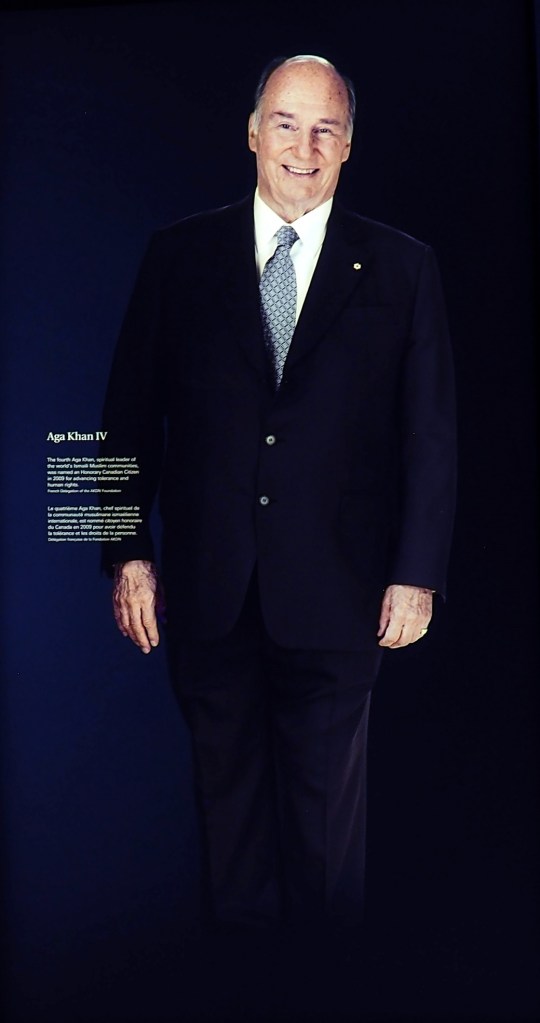

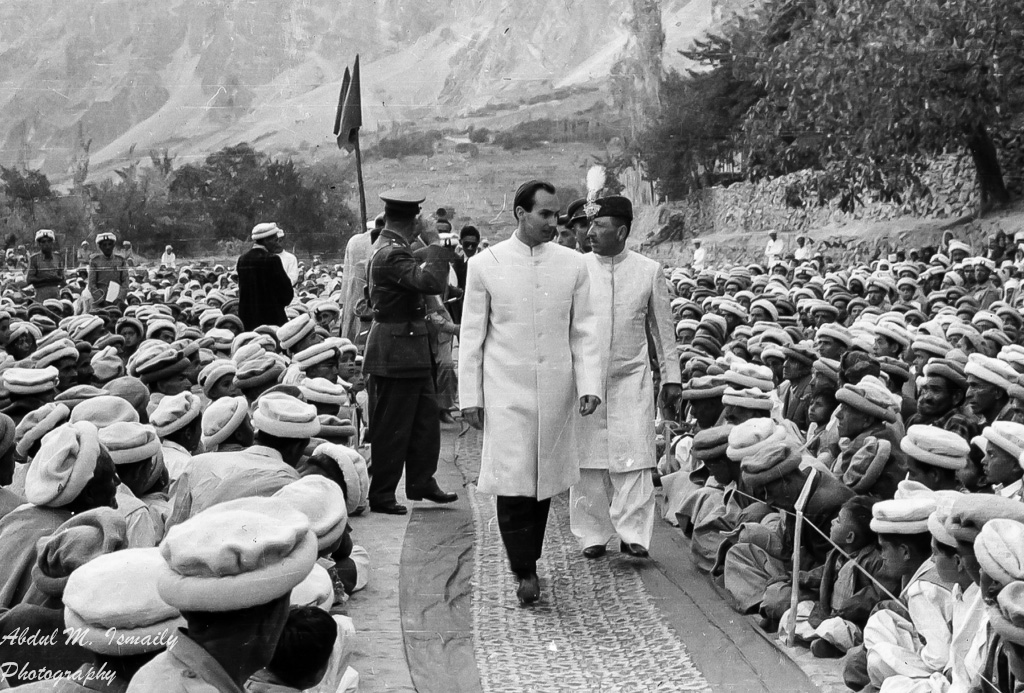


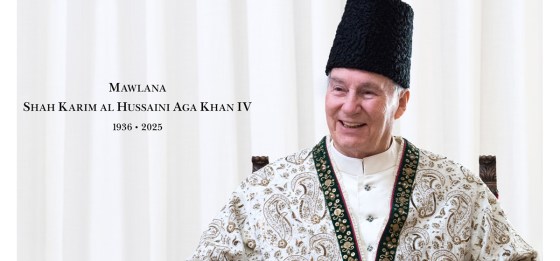
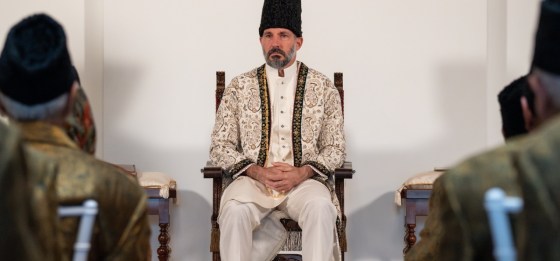


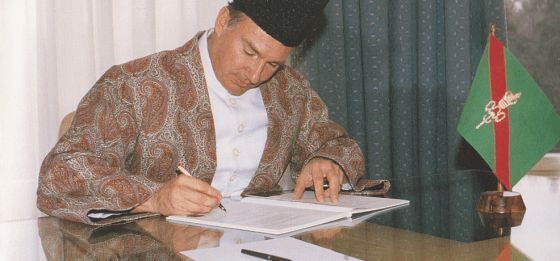





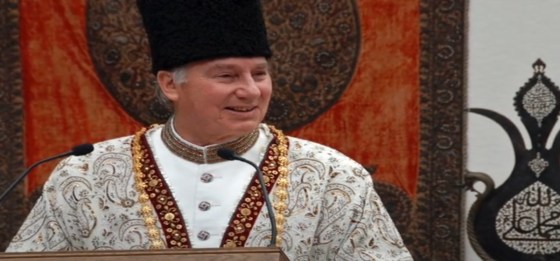




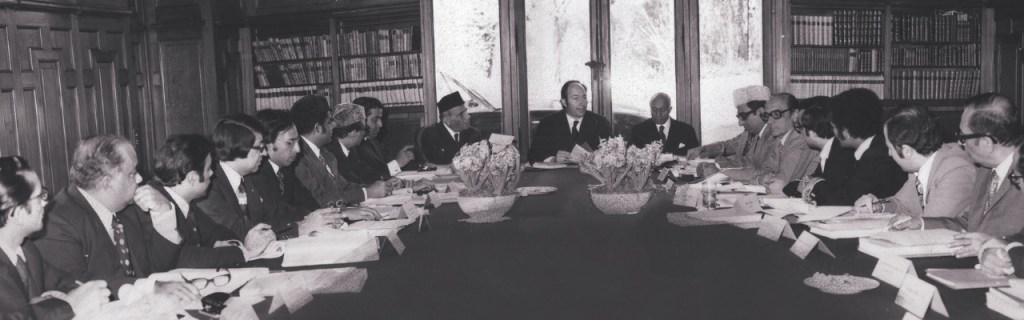

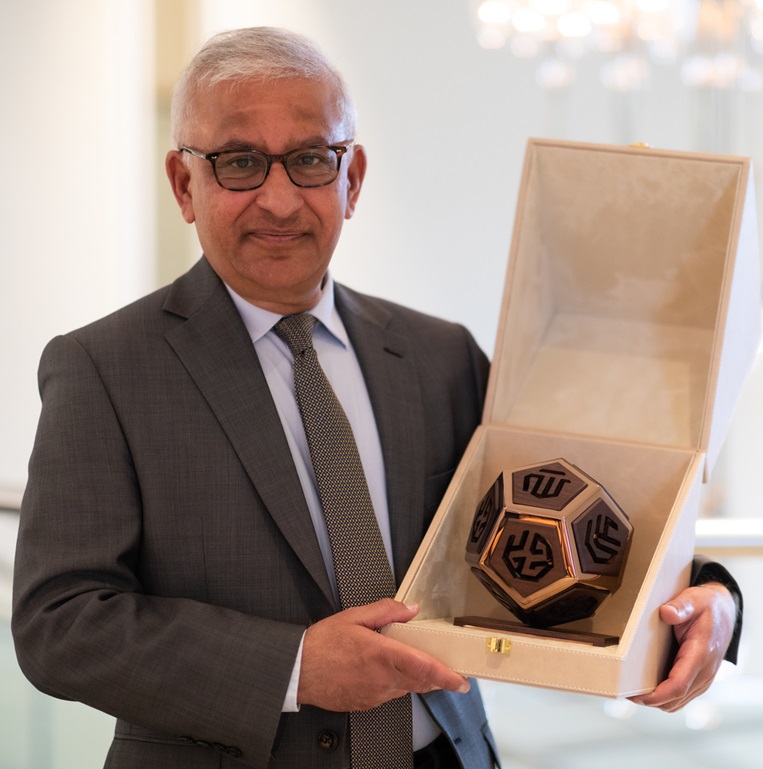

 Simerg - Insights from Around the World