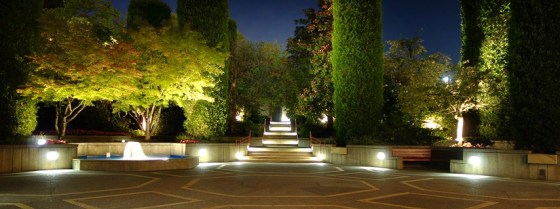
The Ismaili Centre and the Aga Khan Museum will be officially opened later this week in the presence of His Highness the Aga Khan, the 49th Imam of the Ismaili Muslims. A series of poems celebrating the many aspects of the two majestic buildings as well as their Park, which is to be opened in 2015, will be published throughout the week. We begin with Navyn Naran’s contemplative piece, Morning at the New Park, Jamatkhana and Museum.
Category Archives: World Events
Photo Essay: Stunning New Day and Night Photographs of the First Ismaili Centre in North America by Mohib Ebrahim
The Ismaili Centre and the Aga Khan Museum Opening Ceremonies Set for September 12, 2014
“The Jamati Institutions of Canada are delighted to confirm that the Opening Ceremonies of the Ismaili Centre Toronto and the Aga Khan Museum will take place in the presence of Mawlana Hazar Imam on Friday, September 12, 2014. It is anticipated that the Opening Ceremony for the Ismaili Centre will take place in the afternoon on September 12, followed immediately by an Opening Ceremony at the Aga Khan Museum. To mark this historic occasion, we invite Jamati members to view a live showing of the opening ceremony at the Ottawa Headquarters Jamatkhana and the Kingston Jamatkhana.” Courtesy: Al-Akhbar Newsletter, Special Ottawa Edition, Friday, September 5, 2014. [Note: Jamats around the country will gather at their respective jamatkhanas or specially hired halls to watch the opening ceremony – ed.]
As Canadians from all backgrounds, cultures and faiths await the official opening in Toronto of the Ismaili Centre and the Aga Khan Museum (the Park will open in 2015) conceived by His Highness the Aga Khan, the 49th Imam of the Ismaili Muslims and the direct descendant of the Prophet Muhammad (s.a.s), Mohib Ebrahim of Vancouver presents an array of stunning breathtaking photographs that he took during a recent memorable visit to the first Ismaili Centre and Jamatkhana in North America built in Burnaby, British Columbia, in 1985. Please click Photo Essay: Stunning and Beautiful Day and Night Time Photography of North America’s First Ismaili Centre.
Simerg to Launch Photo Contest to Celebrate the Opening of the New Aga Khan Museum
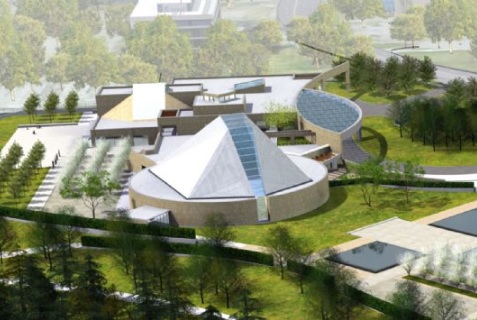
An artistic rendering of the Ismaili Centre, the Aga Khan Museum and their Park. Photo: The Ismaili/Imara.
Simerg is celebrating the public opening of the Aga Khan Museum on September 18, 2014, by launching a photography contest. A total of 25 photos, all related to the Aga Khan Museum, the Ismaili Centre and their Park taken from the time the grounds become open to the public through to September 25, 2014, will be selected by an independent panel of judges and posted on this website on or around 7th October, 2014. The prizes will consist of a total of 20 free annual youth and family memberships to the museum as well as 5 merit prizes from the museum’s shop.
There will be two categories. The Youth Category will be open to anyone 19 and under. A total of 10 annual youth memberships will be given to the winning entries and, in addition, the judges will select 5 merit entries who will be awarded with the Aga Khan Museum catalogue.
The Open Category is for anyone over the age of 19. It will be for all amateur photographers and photography enthusiasts as well as anyone who likes to shoot photographs, either using a camera or their smart hand-held devices and phones! For this category we will expect each photo to be accompanied with a 75 to 100 word narrative to encapsulate the photographer’s experience of the Aga Khan Museum, the Ismaili Centre or their Park. Only spaces where photos are allowed to be taken will be accepted for the contest.
The opening days of the museum will be the perfect breeding ground for passionate picture taking and writing a brief narrative, and if you are selected as a winner in the Open Category you will be one of 10 to receive an annual family membership.
Here are some ideas for taking and submitting photos: artistic and architecture beauty and grandeur of the projects, interior spaces (where permitted), landscape, nature (as in the park), as well as spontaneous moments involving people!
The prizes that are to be given are from gracious donations by numerous individuals and families in Ontario. Further details of the contest, including the names of judges, will be published in the coming fortnight. Start preparing for this contest as communities in Ontario and Canada as well as around the world eagerly anticipate the opening of three unique cultural initiatives undertaken by His Highness the Aga Khan!
The Hijra: Movement of God’s People by Omid Safi
Standing outside the city, Muhammad looked back lovingly on Mecca and said: “Of all God’s earth, you are the dearest place unto me, and the dearest unto God. Had not my people driven me out from you, I would not have left you.”…Read more….The Quintessential Marking Point of Islamic History

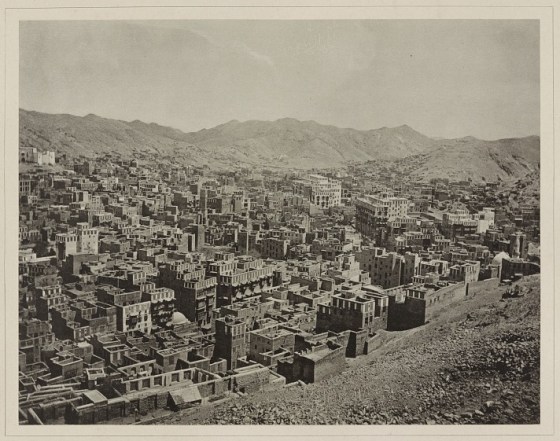
A photo taken in 1889 showing a view of the city of Mecca. Photograph attributed to al-Sayyid ʻAbd al-Ghaffār by scholar Claude Sui. (Source: “Travel to the Holy Land and photography in the nineteenth century” by Claude Sui. Chapter in: To the Holy Lands: Pilgrimage centres from Mecca and Medina to Jerusalem. Mannheim: Reiss-Engelhorn Museum, 2008, pages 56-63). Credit: USA Library of Congress. Please click on image for article by Omid Safi
My 2014 World Cup Adventure in Brazil by Rahim Khoja
Missing out the 2010 World Cup in South Africa, devout football fan Rahim Khoja from Ottawa, Canada, was determined and made it to this year’s magnificent football World Cup hosted in Brazil. He watched the Spain-Holland and Brazil-Mexico matches in person, and had the thrill of his lifetime. See his story and a selection of photos by clicking on My 2014 World Cup Adventure in Brazil – A Dream Come True! or on the image below.
Photos: Amid Suffering and Trauma, Islam’s Greatest Celebration, Eid Al-Fitr, Provides Hope and Strength to Muslim Children in Gaza
“Seven Summits” Goal Within Reach for Ismaili Mountaineers Samina Baig and Mirza Ali After Climbing North America’s Highest Peak, Mt. McKinley in Alaska
“….when it comes to being the first Pakistani woman and the first Ismaili woman to put the nation’s flag and the Ismaili Imamat red and green flag on top of the world, one cannot adequately express the feeling. It is indeed a BLESSING of a life time! We did bring the flag back, and with all love and respect, sent it to Sarcar Mawlana Hazar Imam.” — Samina Baig in exclusive interview with Simerg, see link below.
Please click on photos for enlargement

Mirza Ali and his sister Samina Baig hoist the Ismaili Imamat Flag after reaching the summit of North America’s highest mountain, Mt. McKinley, in Alaska, on June 28, 2014. Their goal is to reach all the “Seven Summits”, and with this latest conquest only one remains to be peaked. Photo: Mirza Ali/Samina Baig. Copyright.
In a recent exclusive Interview with Simerg, Samina Baig and her brother Mirza Ali Baig spoke about the challenges of mountaineering and their goal to scale the “Seven Summits”, that is to reach the top of the highest mountain in each continent over a period of several months. At the time of the interview, five of the seven mountains including Mt. Everest, the world’s highest, had been conquered since they began their quest in April 2013. Two remained to be climbed.
On June 28, 2014, at 7:20 pm, the brother and sister team made it to North America’s highest summit, Mt. McKinley (20,322ft/6,194m), also known by the native name Denali in the Koyukon and Athabaskan languages, meaning the “High One”. The weather condition was unpredictable and, incredibly, the gain from the base camp to the summit was higher than Mt. Everest!
The duration of the expedition was three weeks. Mirza Ali stated that it could have been done in 18 days, but they got struck at Camp IV at 17,200 ft for four days due to severe weather. It took them 15 hours for the return climb.
As with Mt. Everest and other mountains, Samina and Mirza hoisted the Ismaili Imamat Flag on the peak of Mt. McKinley.
MOUNT ELBRUS: NEXT AND LAST IN THE “SEVEN SUMMITS”
FOR SAMINA AND MIRZA ALI BAIG

While there are differing explanations on how the Caucasus Mountain Range is distributed between Europe and Asia, it is generally accepted that Mount Elbrus (18,510ft) is in Europe and is therefore the highest mountain in all of Europe. Samina and Mirza Ali Baig are now on their way to Russia for the climb. Photo: Wikipedia.
Simerg congratulates Samina and Mirza on their monumental feat and continuing success, and wishes them the very best as they depart the USA to conquer the last of the seven summits, Mount Elbrus (18,510ft/5,642m) in Russia, which is considered to be the highest mountain in Europe. They expect to reach their goal of “Seven Summits” by the end of this month or early next month, Inshallah.
Date posted: Saturday, July 19, 2014.
Date updated: Sunday, July 20, 2014 (Mt. Elbrus photo).
____________
His Highness the Aga Khan on Tunisia’s New Constitution + the Constitution’s Preamble
“In Tunisia…a new ‘consensus’ constitution with 94 per cent approval from the elected Constituent Assembly reaffirmed the Islamic identity of the Tunisian state, while also protecting the human rights of religious and ethnic minorities” — His Highness the Aga Khan, Ogden Lecture, Brown University, March 10, 2014
Please click: His Highness the Aga Khan on Tunisia’s New Constitution, with English Translation of the Constitution’s Preamble
On Canada Day, Reflections of Canada Through Images and Quotes of His Highness the Aga Khan
OTTAWA’S EMERGING SKYLINE
Please click on images for enlargement

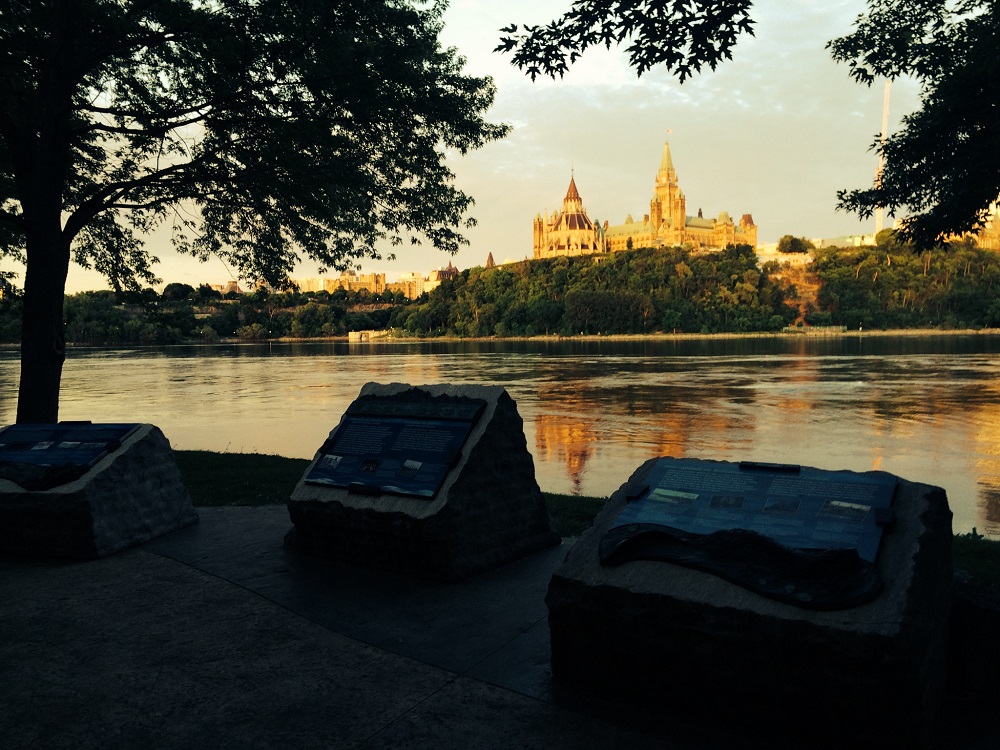
A scene of Ottawa’s emerging skyline inscribed on a stone plaque as seen from Gatineau, Quebec, across the Ottawa River, metres from the Canadian Museum of Civilization. The inscription reads as follows: “Canada has grown and evolved and so have the country’s institutions. In 1867, the new Parliament Buildings welcomed the country’s first government. When Canada became independent from Britain in 1931, new federal institutions were built to support the country’s “coming of age.” In 1967, Canadians celebrated the country’s centennial year and their shared English and French heritage. The government embraced this ideal, and in the 1970’s extended the federal public service into Quebec – a first step toward the creation of a bilingual and culturally representative capital region.” Buildings represented on the plaque (l to r) 1 – National Gallery of Canada; 2 – Embassy of the United States of America; 3 – Canada Revenue Agency; 4 – The Parliament Buildings, 5 – Confederation Building; 6 – Department of Justice; 7 – Supreme Court of Canada, and 8 – National Library and Archives Canada. Photo: Malik Merchant. Copyright. June 2014.
_______________
His Highness the Aga Khan on Canada

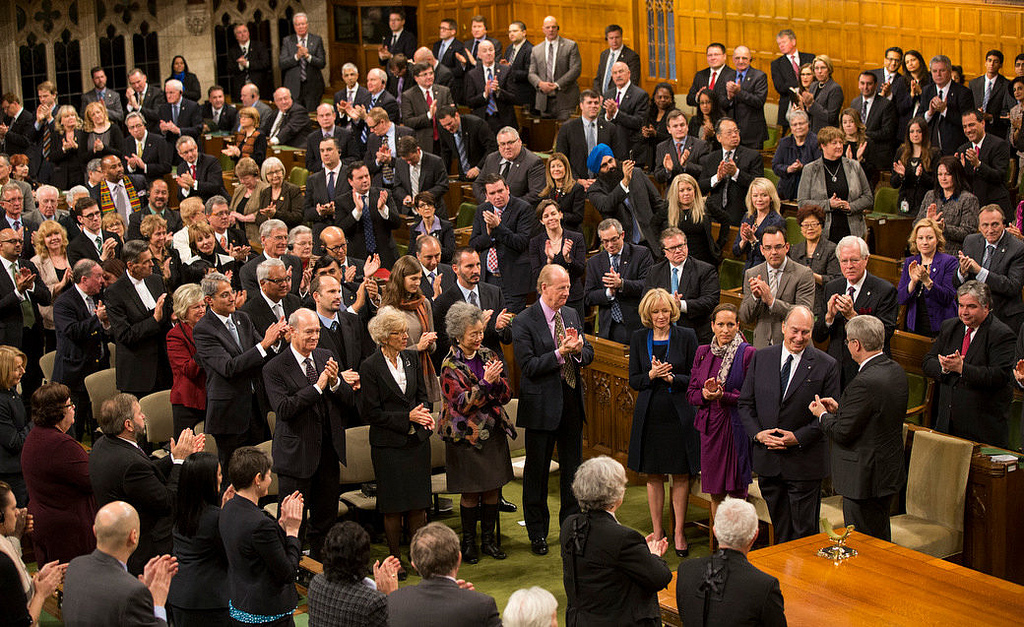
His Highness the Aga Khan is applauded by the Prime Minister, Members of the House, as well as other distinguished visitors as he arrives in the House of Commons on Thursday, February 27, 2014 to deliver a rare address – the first by a faith leader in 75 years. The Ottawa Citizen published a similar photo on its front page of Friday February 28, giving it the title “In Divine Company.” Alongside the Ismaili Imam are his daughter Princess Zahra and the Prime Minister’s wife, Laureen Harper. Others in the photo, in rows adjacent to Mrs. Harper (l to r) — 1st row: The Aga Khan’s younger brother, Prince Amyn Muhammad Aga Khan, Chief Justice of the Supreme Court of Canada, The Right Honourable Beverly McLachlin, Former Governor General of Canada, The Right Honourable Adrienne Clarkson, and renowned Canadian author, intellectual and philosopher, John Ralston Saul; 2nd row (l to r). President Malik Talib of the Aga Khan Ismaili Council for Canada, Prince Hussain Aga Khan, Princess Salwa Aga Khan and her husband Prince Rahim Aga Khan – with both the Princes in the photo being the Aga Khan’s children. Photo credit: The Office of the Prime Minister of Canada.
A VISION FOR THE OTTAWA RIVERFRONT?…. ISMAILI COMMUNITY AND CANADA
“In just three years, Canada will mark its 150th anniversary, and the whole world will be ready to celebrate with you. Sharing Canada’s robust pluralistic history, is a core mission of our Global Centre, and 2017 will be a major opportunity for doing so, operating from its headquarters in the former War Museum on Sussex Drive. Perhaps 2017 and the celebrations can be a catalyst with our neighbours to improve the entire riverfront area around that building.
“Our partnership in Canada has been immensely strengthened, of course, by the presence for more than four decades of a significant Ismaili community. Like most historic global communities the Ismaili peoples have a variegated history, but surely our experience in Canada has been a particularly positive chapter.
“I happily recall the establishment of the Delegation of the Ismaili Imamat here in 2008 and the Prime Minister’s description that day of our collaborative efforts to make Canada “the headquarters of the global effort to foster peace, prosperity, and equality through pluralism. [1]

A statue of French explorer Samuel de Champlain at Nepean Point in Ottawa. The explorer is seen holding his famous astrolabe upsidedown. Nepean Point is a hill in Ottawa, Ontario, Canada, overlooking the Ottawa River, Parliament, the Canadian Museum of Civilization, and other features of downtown Ottawa and Gatineau. It is located between the National Gallery of Canada and Alexandra Bridge. The sculpture was made by Hamilton MacCarthy in 1915. Photo: Malik Merchant, Copyright.

The rock crystal shaped dome of the Delegation of the Ismaili Imamat shown just above the top deck of a boat on the Ottawa River, beneath Ottawa’s Royal Alexandra Bridge. Photo: Malik Merchant. Copyright. June 2014.
CANADA – A HAVEN OF PEACE
“Canada is an international power who takes her responsibilities seriously and whose policies have never in her history been tainted by the cruder forms of colonialism, racialism or isolationism. [2]
“Successful experience with democracy, civil society and pluralism are the national genius of Canada of which much of the developing world is in dire need. [3]
“Canada remains for the rest of the world an enviable haven. A haven of peace, and of immense natural beauty and wealth. The wealth I speak of, is not merely its natural resources but the peoples of Canada, steeped in your tradition of tolerance, generosity and compassion in alleviating human suffering and respect for diversity of thought and culture.” [4]

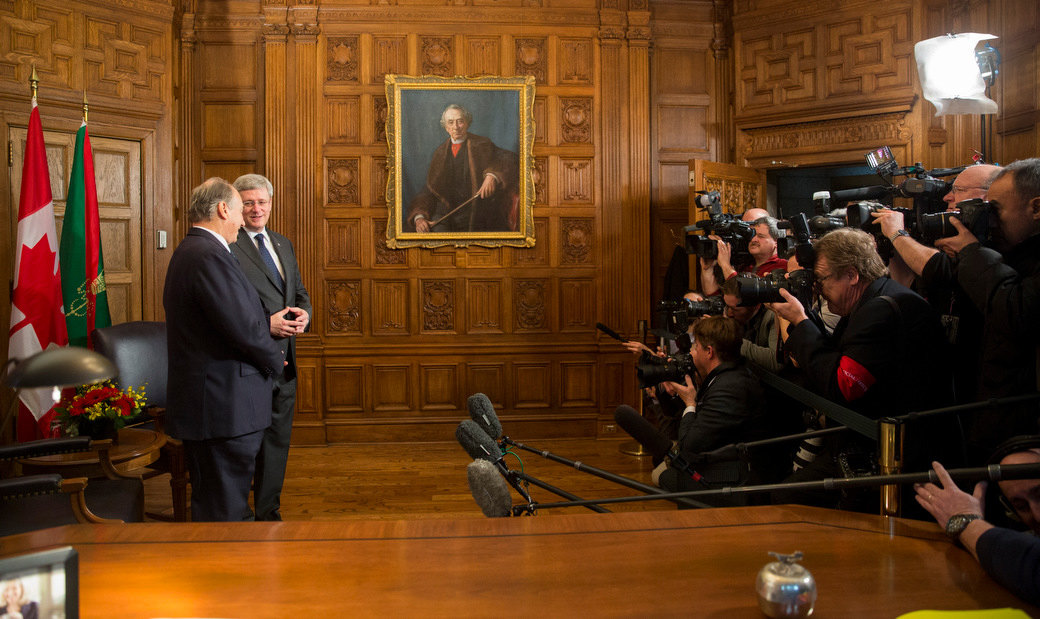
His Highness the Aga Khan and the Right Honourable Stephen Harper, the Prime Minister of Canada, face eager cameras at the Canadian Parliament Building on Thursday, 27 February, 2014. An oil on canvas painting of The Right Honourable Sir John Alexander Macdonald, Prime Minister (1867-1873; 1878-1891) adorns a wall as part of the House of Commons Heritage Collection, while the Ismaili Imamat and Canadian Flags form a backdrop in this historical photo. Photo credit: The Office of the Prime Minister of Canada.
CANADA – MOST SUCCESSFUL PLURALIST SOCIETY ON EARTH
“Canada is a country that has invested in making this potential liability [of pluralism] become an asset, and I think that Canada has been perhaps too humble in its own appreciation of this global asset. It’s a global asset, and few countries, if any have been as successful as Canada has. [5]

The Old Canadian War Museum will become the future site of the Global Centre for Pluralism, once renovations are completed inside the building. The Centre is governed by an international Board of Directors chaired by His Highness the Aga Khan. The Global Centre for Pluralism was inspired by the example of Canada’s inclusive approach to citizenship, and works to advance respect for diversity worldwide, believing that openness and understanding toward the cultures, social structures, values and faiths of other peoples are essential to the survival of an interdependent world.
“Canada is today the most successful pluralist society on the face of our world. Without any doubt in my mind. You have created the perfect pluralist society where minorities, generally speaking, are welcome, they feel comfortable, they assimilate the Canadian psyche, they are allowed to move forward within civil society in an equitable manner, their children are educated. So Canada has succeeded in putting together a form of pluralist society which has been remarkably successful. I’m not the one who’s making a judgement.” [6]
Date posted: July 1, 2014.
_______________
[1] House of Commons, Thursday, February 27, 2014.
[2] Diplomatic Banquet (Toronto, Canada), 19 November 1978.
[3] The Delegation of the Ismaili Imamat Foundation Stone Ceremony (Ottawa, Canada), 6 June 2005.
[4] Diplomatic Corps Banquet (Toronto, Canada), 19 August 1992.
[5] CBC Interview, One-on-One with Peter Mansbridge (Ottawa, Canada), 28 October 2006. Click One on One: Peter Mansbridge Interview with His Highness the Aga Khan
[6] Globe and Mail Interview (3rd), John Stackhouse and Patrick Martin (Toronto, Canada), 30 January 2002
Please also click His Highness the Aga Khan and Canada: A Profound Affinity – But Why Canada?
His Highness the Aga Khan Shows Path to Renew and Re-Express the Post Millennium Development Goals Agreed on by World Leaders in 2000
Compiled and presented by Abdulmalik Merchant
(Editor-Publisher, http://www.simerg.com and http://www.simergphotos.com)
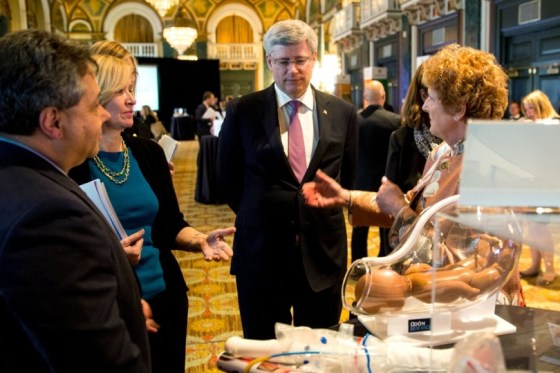
Prime Minister Stephen Harper receiving an explanation about an exhibit displayed at the summit Saving Every Woman, Every Child: Within Arm’s Reach. Photo Credit: The website of the Prime Minister of Canada.
Editor’s note: In 2000 world leaders joined together in an unprecedented UN summit to develop a blueprint to meet the needs of the world’s poorest, with the targeted date of 2015. The leaders along with the support of worldwide institutions set the following eight goals in what became known as the Millennium Development Goals (MDGs):
- Eradicate Extreme Hunger and Poverty
- Achieve Universal Primary Education
- Promote Gender Equality and Empower Women
- Reduce Child Mortality
- Improve Maternal Health
- Combat HIV AIDS Malaria and Other Diseases
- Ensure Environmental Sustainability
- Develop a Global Partnership for Development
A special summit in Toronto under the theme Saving Every Woman Every Child: Within Arm’s Reach, is addressing some of the MDGs goals and we are pleased to publish below excerpts from His Highness the Aga Khan’s remarks made at the summit on May 29, 2014.
~~~~~
Bismillah-ir-Rahman-ir-Rahim

His Highness the Aga Khan, 49th Ismaili Imam and the direct descendant of the Prophet Muhammad (s.a.s), delivers keynote remarks at the Maternal, Newborn and Child Health Summit in Toronto on 29 May 2014. Photo: The Ismaili/Zahur Ramji.
I. THE ISMAILI IMAM EXPLAINS HIS PRESENCE
“Like you, I am here today because of my conviction that improving maternal, neonatal and child health should be one of the highest priorities on the global development agenda. I can think of no other field in which a well-directed effort can make as great or as rapid an impact.
“I am here, as well, because of my enormous respect for the leadership of the Government of Canada in addressing this challenge. And I am here too, because of the strong sense of partnership which our Aga Khan Development Network has long experienced, working with Canada in this critical field.
“Leadership and partnership – those are words that come quickly to mind as I salute our hosts today and as I greet these distinguished leaders and partners in this audience.”
II. THE MUSKOKA INITIATIVE AND ONE OF ITS OFF-SHOOTS
“Mr Prime Minister – I recall how our partnerships were strengthened four years ago when you launched the Muskoka Initiative. It led to an important new effort in which our Network has been deeply involved in countries such as Afghanistan, Pakistan, Tanzania, Mozambique, and Mali.
“In all of these efforts, we’ve built on our strong history of work in this field. It was 90 years ago that my late grandfather founded the Kharadhar Maternity Home in Karachi. In that same city, for the last thirty years, the Aga Khan University has worked on the cutting edge of research and education in this field – including its new specialised degree in midwifery.”
III. WHAT THE AGA KHAN UNIVERSITY’S NEW REPORT REVEALS, AND HOW THE WORK OF AKDN WORK IMPACTS MILLIONS
“One of our Aga Khan University scholars [Dr. Zulfiqar Bhutta] helped fashion the new series of reports on this topic that was released last week – an effort that involved more than 54 experts from 28 institutions in 17 countries. The reports tell us that right intensified steps can save the lives of an additional 3 million mothers and children annually.
“To that end, our Development Network has also focused on building durable, resilient healthcare systems. One example is the not-for-profit health system by the Aga Khan Health Service in Northern Pakistan – a community-based network of facilities and health workers, including a growing number of nurse-midwives.
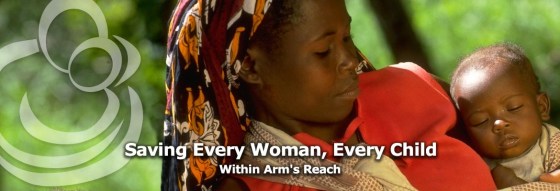
Photo: The Government of Canada.
“We have extended these approaches to other countries, including a remarkable partnership in Tanzania funded by the Canadian government and implementing in close partnership with the Tanzanian government.
“Such AKDN activity now serves some two-and-a-half million people in 15 countries, with 180 health centres both in urban and rural areas, often in high-conflict zones, and embracing some of the world’s poorest and most remote populations.
“Last year alone, these facilities served nearly 5 million visitors, inpatients and outpatients, with more than 40,000 newborn deliveries.
IV. HIS HIGHNESS SHARES WHAT HIS NETWORK
HAS LEARNED FROM EXPERIENCE
“So our experience has been considerable. But what have we learned from it? Let me share a quick overview.
1. Sustainable Systems
“First, I would underline that our approaches have to be long-term. Sporadic interventions produce sporadic results, and each new burst of attention and activity must then start over again. The key to sustained progress is the creation of sustainable systems.
2. Local Ownership
“Second, our approaches should be community-oriented. Outside assistance is vital, but sustainable success will depend on a strong sense of local “ownership”.
3. Broad Health-Care Focus
“The third point I would make is that our approaches should support the broad spectrum of health care. Focusing too narrowly on high-impact primary care has not worked well – improved secondary and tertiary care is also absolutely essential.
4. New Financial Models – Savings Groups, Debts Financing, Tax-Privileged Donations
“Our approaches should encourage new financial models. Donor funding will be critical, but we cannot sustain programmes that depend on continuing bursts of outside money. Let me underscore for example, the potential of local “savings groups” and micro-insurance programmes, as well as the under utilised potential for debt-financing. Also – and I think this is very, very important indeed – we have watched for many years as many developing countries, and their economies of course, have created new financial wherewithal among their people. These growing private resources can and I think should, help social progress, motivated by a developing social consciousness and by government policies that encourage tax-privileged donations to such causes.
5. Reaching the Hardest to Reach with Modern Communications Technology
“Our approaches should also focus on reaching those who are hardest to reach. And here, new telecommunications technologies can make an enormous impact. One example has been the high-speed broadband link provided by Roshan Telecommunications, one of our Network’s companies, between our facilities in Karachi and several localities in Afghanistan and in Tajikistan. This e-medicine link can carry high-quality radiological images and lab results. It can facilitate consultations among patients, doctors and specialists at various centres. And it can contribute enormously to the effective teaching of health professionals in remote areas.
6. Multi-Sectoral Challenges Need Effective Multi-Input Coordination
“Our approaches should be comprehensive, working across the broad spectrum of social development. The problems we face have multiple causes, and single-minded, “vertical” interventions often fall short. The challenges are multi-sectoral, and they will require the effective coordination of multiple inputs. Creative collaboration must be our watchword. This is one reason for the growing importance of public-private partnerships.
“These then are the points I would emphasise in looking back at our experience. I hope they might be helpful as we now move into the future, and to the renewal and re-expression of the Post Millennium Development Goals.”
V. THE USEFULNESS OF MEETINGS – BUT PARTNERS MUST TALK AND WORK WELL TOGETHER THROUGH CANDID EXCHANGE

His Highness the Aga Khan with President Jakaya Kikwete of Tanzania and Prime Minister Stephen Harper of Canada, who hosted the summit in Toronto. Photo credit: The website of the Prime Minister of Canada. Copyright.
“As we undertake the new planning process, the opportunity to exchange ideas at meetings of this sort can be enormously helpful. And potential partners must be able to talk well together if they are going to work well together.
“I would hope such occasions will be characterised by candid exchange, including an acknowledgment of where we have fallen short and how we can do better. The truth is that our efforts have been insufficient and uneven. We have not met the Post Millennium Development Goals.”
VI. LEVERAGING PROGRESS THROUGH THE FIELD OF MATERNAL AND NEWBORN HEALTH
“At the same time, we must avoid the risk of frustration that sometimes accompanies a moment of reassessment. Our challenge – as always – is a balance [between] honest realism with hopeful optimism.
“And surely there are reasons to be optimistic.
“In no other development field is the potential leverage for progress greater than in the field of maternal and newborn health.”
VII. RESULTS: THE HEARTENING EXAMPLE OF AFGHANISTAN
“….I thought I might close by talking about some of the results. My example comes from Afghanistan – a heartening example from a challenging environment.
“The rural province of Afghan Badakhshan once had minimal infrastructure and few health-related resources. Less than a decade ago it had the highest maternity mortality ratio ever documented.
“It was about that time that the Afghan government, supported by international donors, contracted with the Aga Khan Health Service to create a single non-governmental health organisation in each district and in each province. Today, the Badakhshan system alone includes nearly 400 health workers, 35 health centres, two hospitals, serving over 400,000 people. Its community midwifery school has graduated over 100 young women.
“The impact has been striking. In Badakhshan in 2005, six percent of mothers died in childbirth – that is 6,000 for every 100,000 births. Just eight years later, that number was down twenty-fold – for every 100,000 live births, death has gone from 6,000 down to 300.
“Meanwhile, infant mortality in Badakhshan has fallen by three-quarters, from over 20 percent to less than 6 percent.”
VIII. CHILDBIRTH RISKS GAPS ARE NOT DESTINED – WITH SCIENCE AND EFFECTIVE COORDINATION RISKS CAN BE TRANSFORMED FOR THE BETTER
“For most of the world, science has completely transformed the way life begins, and the risks associated with childbirth. But enormous gaps still exist. These gaps are not the result of fate – they are not inevitable. They can be changed, and changed dramatically.
“When government and private institutions coordinate effectively in challenging a major public problem, as this example demonstrates, we can achieve substantial, genuine, quantifiable progress – and fairly rapidly.
“This is the story we need to remember, and this is the sort of action we need to take as leaders and as partners in addressing one of the world’s most critical challenges.”
Date posted: Friday, May 30, 2014.
________________
Photos and text used in this post compilation were obtained from the following sources.
1. http://www.pm.gc.ca (Prime Minister of Canada)
2. http://www.akdn.org (the Aga Khan Development Network)
3. http://www.theismaili.org (official website of the Ismaili Community)
4. http://www.undp.org/content/undp/en/home/mdgoverview/
(The Millennium Development Goals)