Simerg is an independent initiative dedicated to Ismaili Muslims, the Aga Khan — their Hereditary Imam — and the Ismaili Imamat, and Islam in general through literary readings, photo essays and artistic expressions
The boy tells the horse, “I can’t see a way through.” The horse asks: “Can you see your next step?” The boy replies, “Yes.” The horse responds, “Just take that.” — Read More
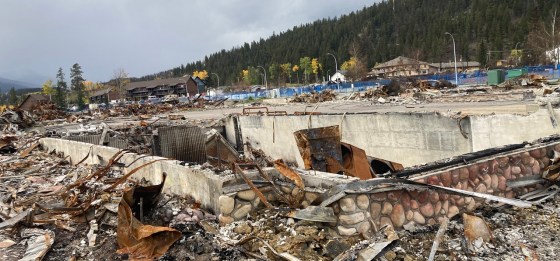
As a visitor to Jasper in the autumn of 2022, Malik Merchant was in an excellent position to compare scenes of the town then and his visit two years later, following the July 2024 Wildfire. His profoundly moving story and poignant photographs will captivate and inspire you. He relates tales of individuals he met in Jasper. The emotional impact of a young boy’s story, expressed through a drawing and a short dialogue with a horse, will surely touch your heart. Please click HERE or on the image below to learn Malik’s story and photographs.
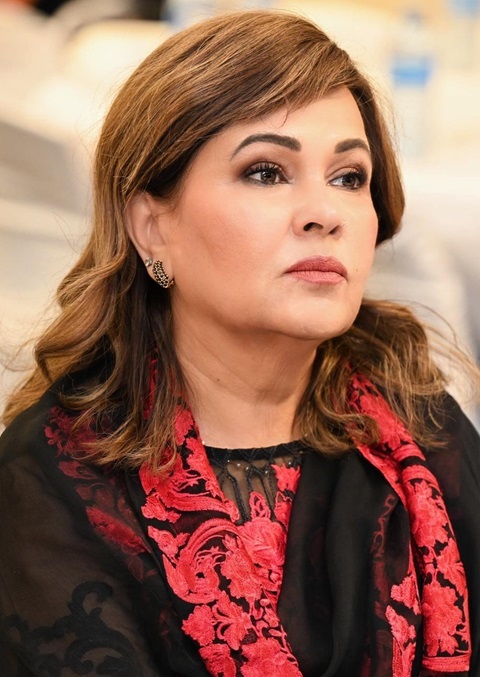
I first became aware of Salma Jadavji’s fascinating artwork when she and her husband, Taj, invited me to their Calgary home. I humbly gifted them several back issues of Ilm magazine published by the Ismaili Tariqah and Religious Education Board for the UK under my late dad Jehangir’s editorship, which I had as duplicates, which they graciously accepted. After a fantastic meal, I was privileged to get a closer look at Salma’s incredible and inspiring works of art. The Jadavji home is genuinely artistic! The visit was not just enjoyable but also a memorable experience. I am thrilled that she accepted my invitation to present a selection of her artwork for Simerg’s series on Ismaili Artistic Expressions.
Calgary-based Ismaili artist Salma Jadavji.
Salma was born and raised in Pakistan. She was always interested in arts and crafts but ended up in medical school and became a doctor in 1975. She got married to Dr. Taj Jadavji and moved to Canada in 1976. In 1992, Salma discovered she had a hidden talent: She could paint. This discovery opened a new chapter in her life. She started experimenting with different mediums and styles and has never looked back. Salma loves to paint, especially Islamic calligraphy. She has taught calligraphy to Ismaili Muslim students attending the Baitul Ilm (BUI) program, and her passion for art inspires others. Salma’s art has catalyzed the Ismaili community unity by curating art exhibitions that have benefited various charitable causes, making a tangible difference. Notably, her contributions to the Aga Khan Foundation exhibitions have been significant, raising funds to address the root causes of poverty and inequality.
Through her career as an artist, Salma has also sought to bring together the South Asian community and the broader Calgary community, fostering a spirit of philanthropy and cultural appreciation. This has promoted a deeper understanding and celebration of South Asian art and culture, creating a sense of belonging and inclusion for all.
Aside from her artwork, Salma has been a radio host for the last 12 years for a weekly radio show, Salaam Namaste Calgary. She has broken many traditional gender barriers as a woman of colour in the media and art world and paved a pathway for many females to come forward.
Salma’s art is not just a form of expression but a powerful tool that has connected her with the community on many different levels. Her Islamic Calligraphy and the message of peace Islam promotes, as well as her works of the Rockies and picturesque landscapes around Alberta, have left a lasting impact. This post showcases Salma’s passion for art, through which she inspires the community as an artist and a great art leader. Once you have viewed her paintings on this page, please visit her website with the theme, “Let me take you on an artistic journey.” Indeed! Click Salma Jadavji.
________________
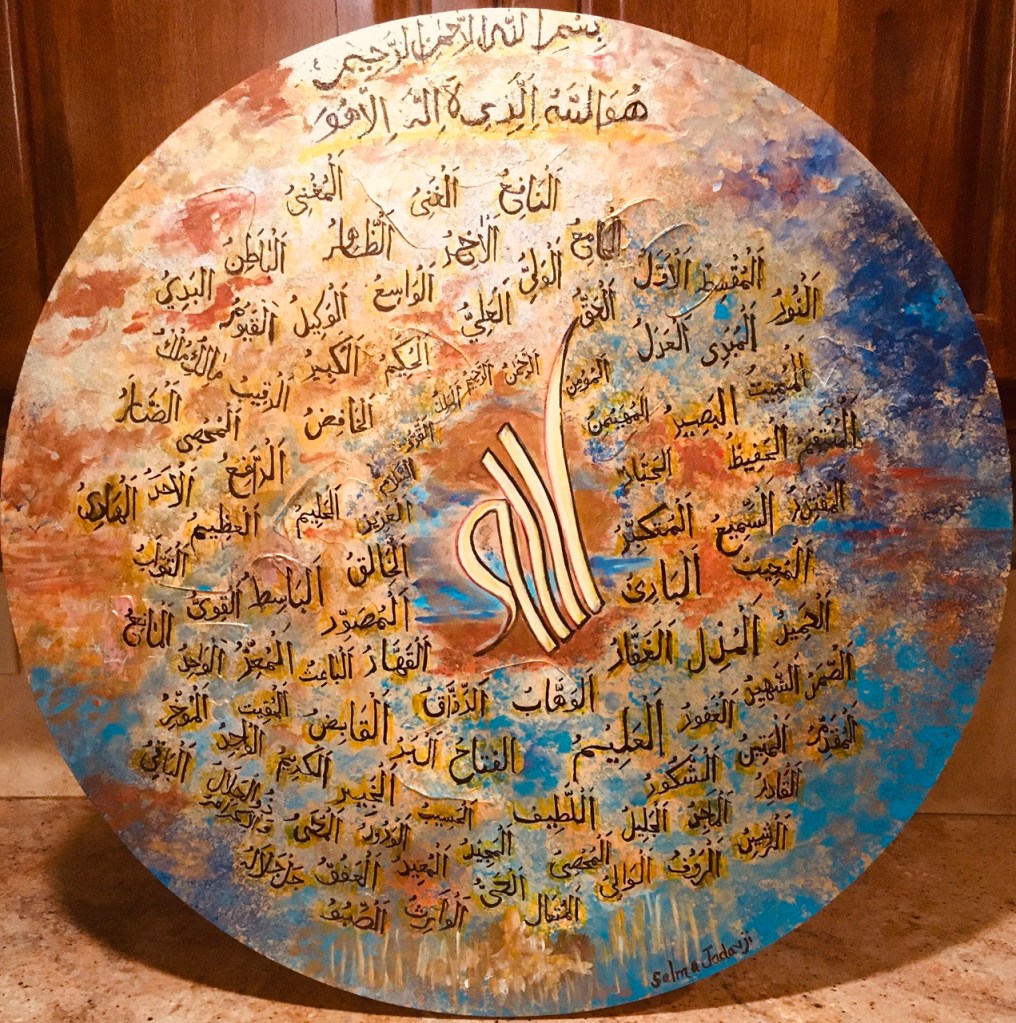
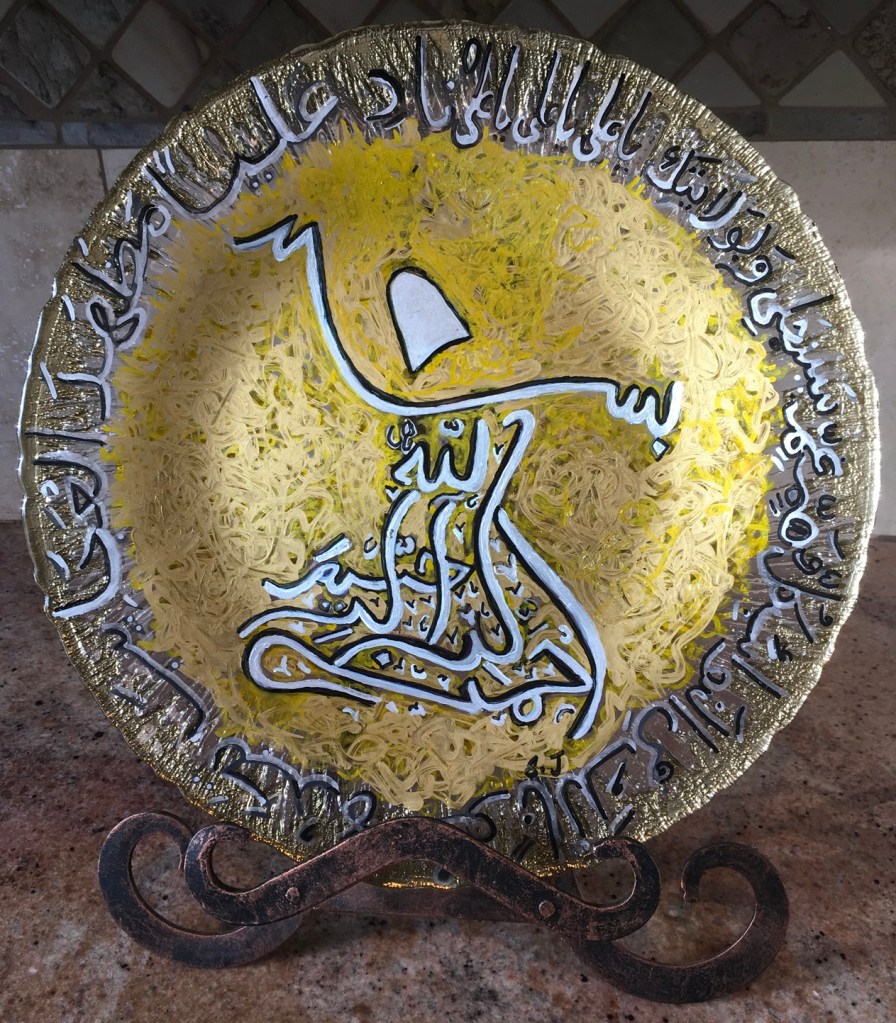
Beautiful names of Allah
Beautiful names of Allah, Oil on Canvas, 24″ diameter, 2022, sold in auction for $3000.00 to aid Shaukat Khanum Hospital, Karachi. Art by Salma Jadavji.
~~~~~~
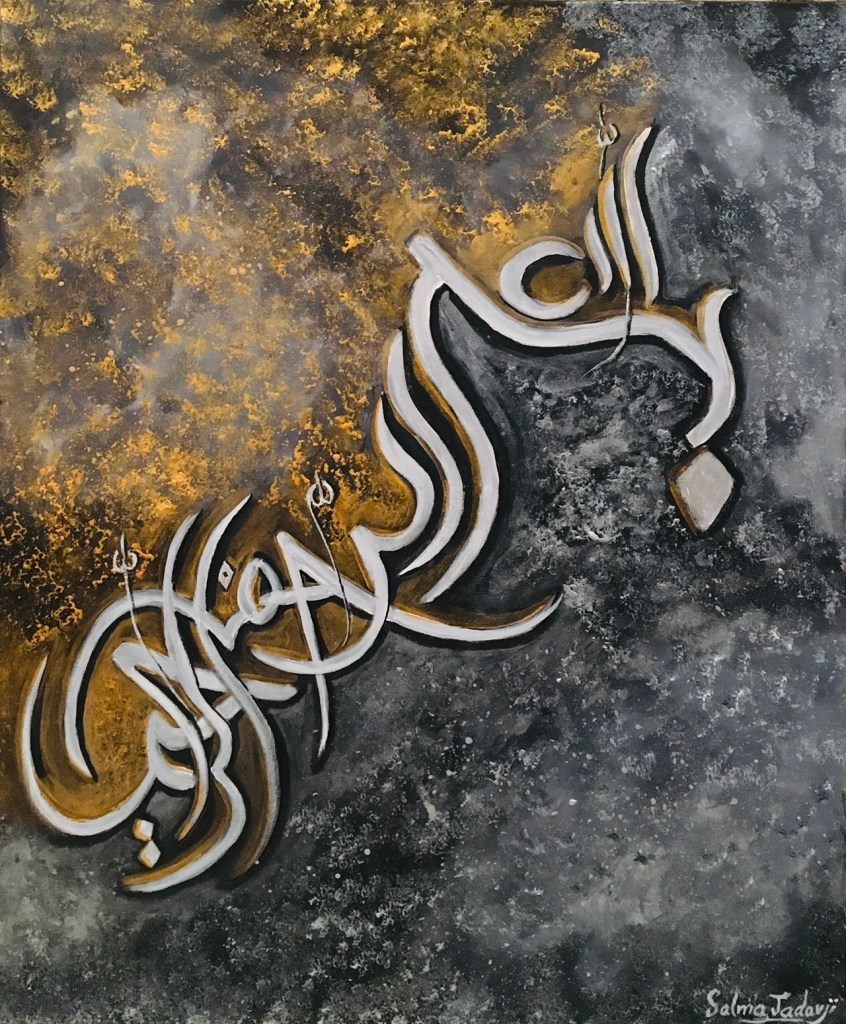
Bismillah-ir-Rahman-ir-Rahim
Bismillah-ir-Rahman-ir-Rahim, Acrylic on Canvas, 40″ x 30″, 2022. Art by Salma Jadavji.
~~~~~~
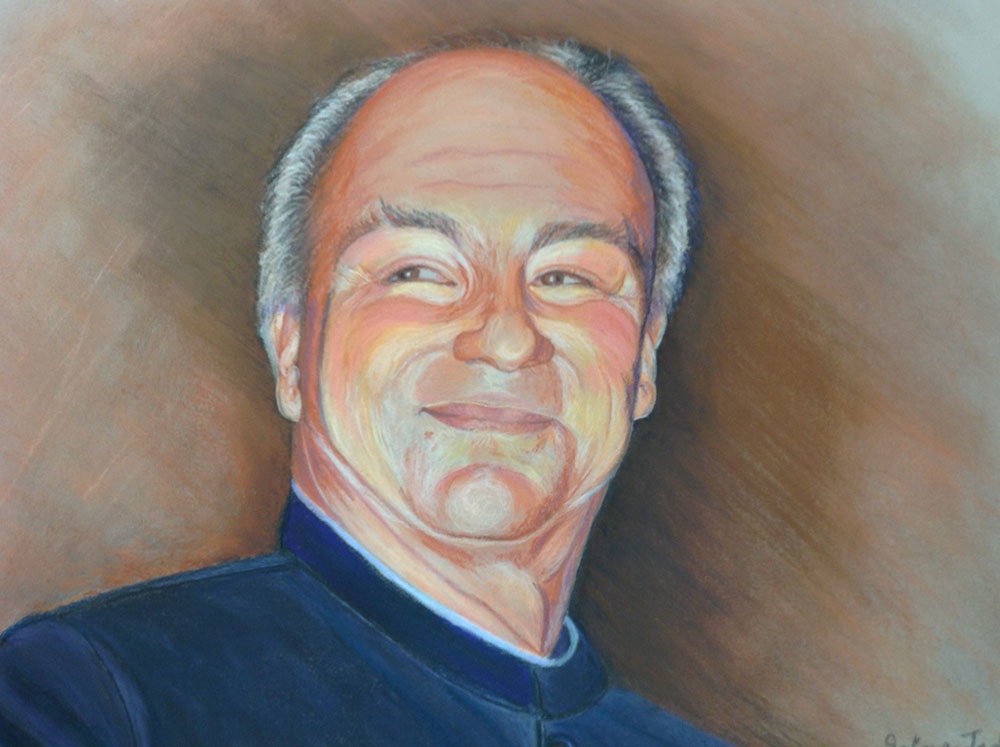
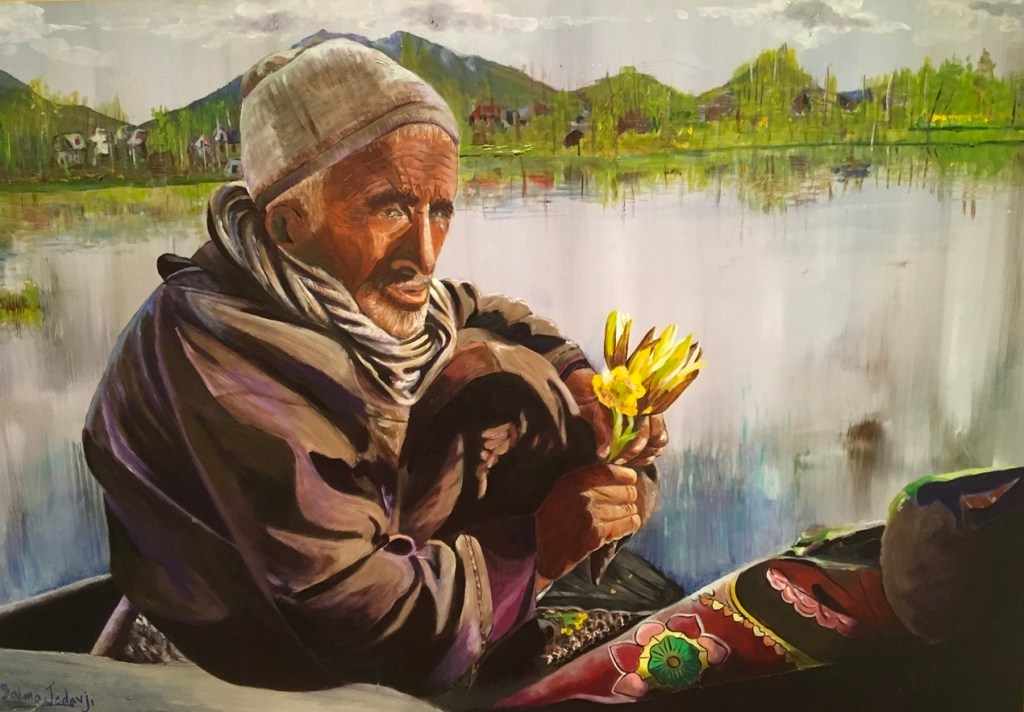
Mawlana Hazar Imam
Mawlana Hazar Imam, Pastels, 30″ x 24″, 2017. Art by Salma Jadavji.
~~~~~~
Nad-e-Ali
Nad-e-Ali, Acrylic, 12″ diameter, 2023. Art by Salma Jadavji.
~~~~~~
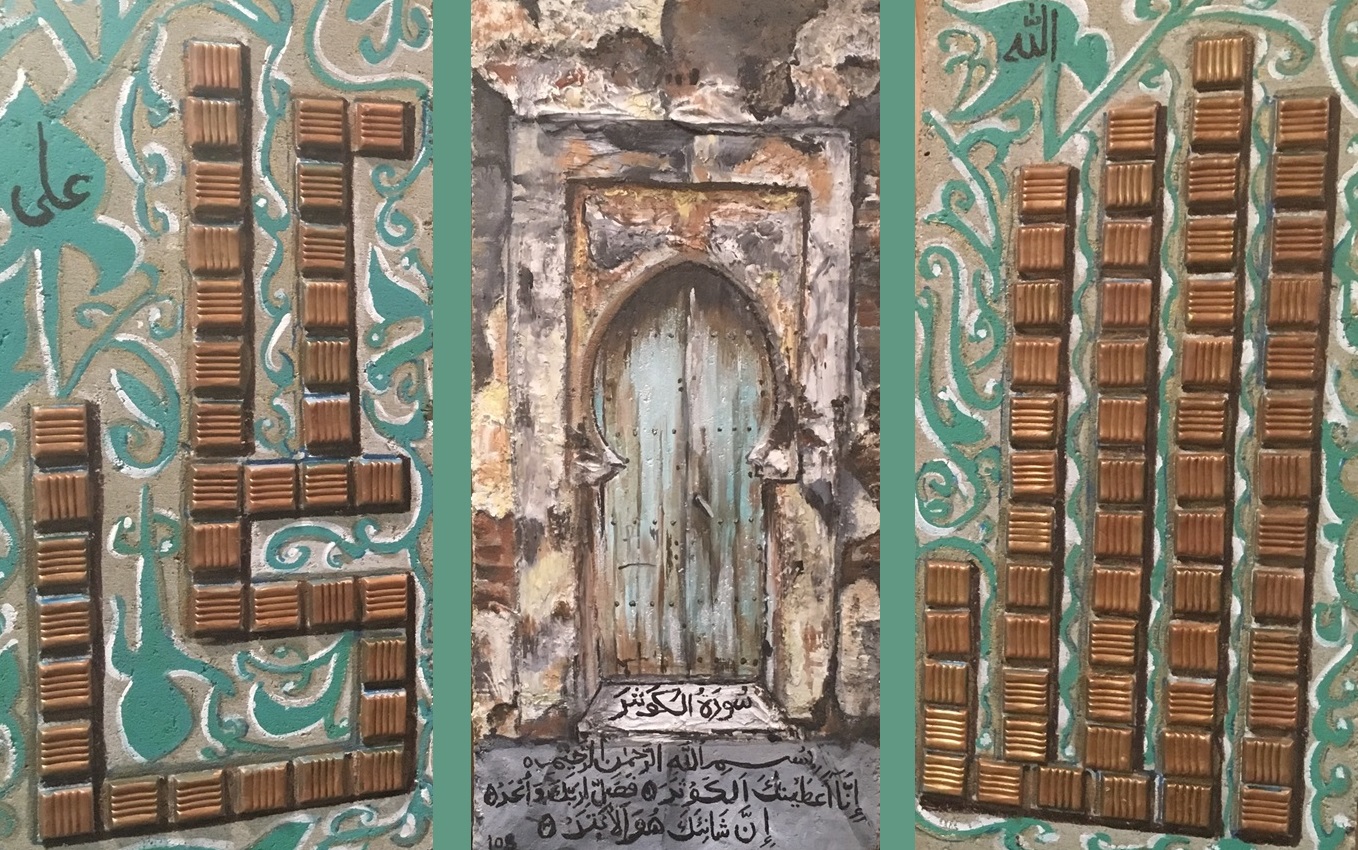
Heavenly Abode
Heavenly Abode, Mixed Media, 11″ x 17″, a three-panel display of tiled artwork depicting (left) Ali; (centre) Qur’anic verses 108:1-3, “In the Name of Allah, the Most Gracious, Most Merciful Indeed, We have granted you (O Muhammad) Alkausar. So pray to your Lord and sacrifice. Indeed, your enemy is the one cut off (from the root); and (right) Allah. The panels were displayed at the Diamond Jubilee Art Exhibition in 2018 as one exhibit (not exactly as shown). Art by Salma Jadavji, Calgary
~~~~~~
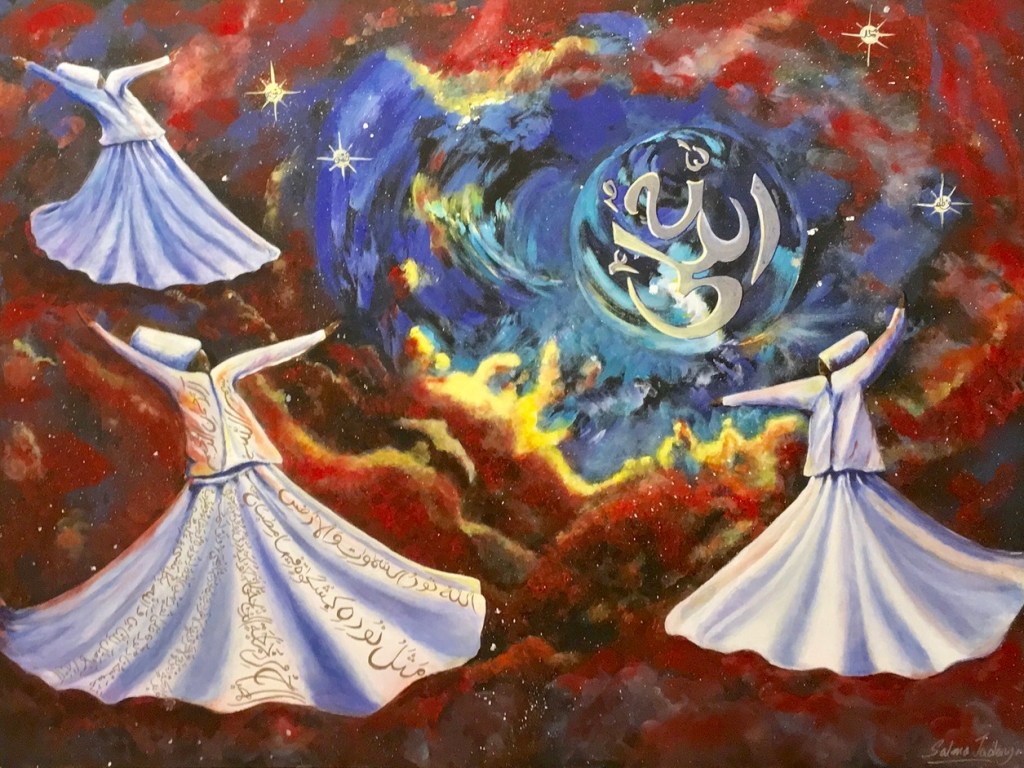
Lost in Spiritual Galaxy
Lost in Spiritual Galaxy, Acrylic, 60″ x 36″, 2021, donated to the Aga Khan Museum to raise funds for the annual Lapis Gala. Art by Salma Jadavji.
~~~~~~
My Paradise
My Paradise, Oil on Wood Board, 30″ x 24″, 2016. Art by Salma Jadavji.
~~~~~~
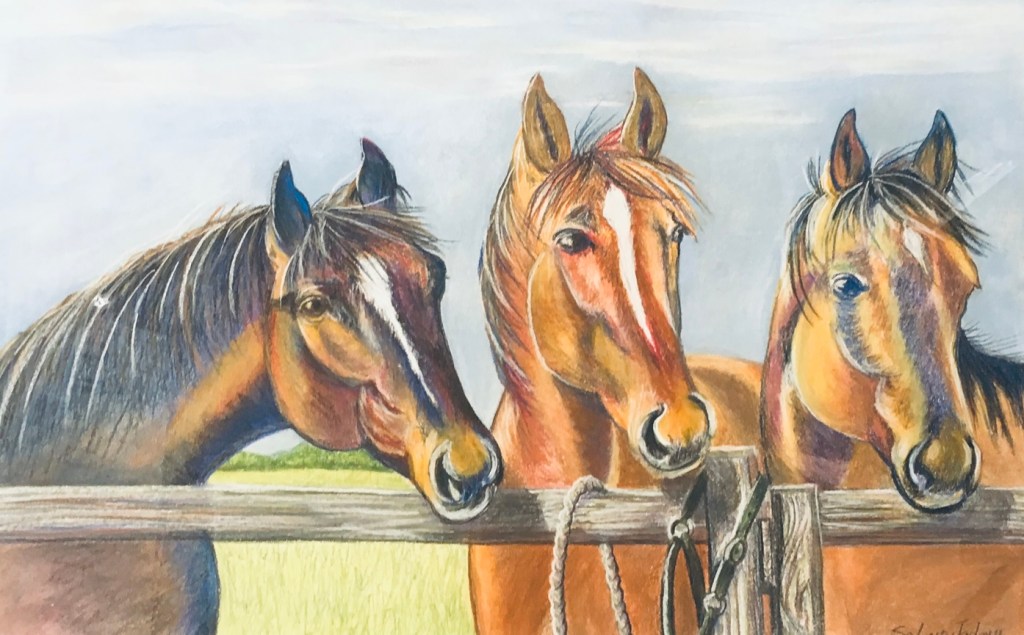
Three in a Row
Three in a Row, Pastels, 30″ x 24″, 2016 for the Aga Khan Foundation World Partnership Walk. Art by Salma Jadavji.
Date posted: November 21, 2024.
________________
We invite you to visit Salma Jadavji’s Website to view more of her artwork. We welcome feedback/letters from our readers. Please click LEAVE A COMMENT. Your feedback may be edited for length and brevity and is subject to moderation. We are unable to acknowledge unpublished letters.
The editor invites Ismaili artists to submit a selection of their paintings and other works of art for publication in Simerg. Please submit images of no more than 8 objects in Jpeg (1200 x 900) and your profile to the editor, Malik, at mmerchant@simerg.com.
We invite our readers to click HERE for a brief background information and the history of Ismaili Constitutions over the past 120 years.
This post presents the Preamble of the Ismaili Constitution, a significant document ordained in 1986 by His Highness the Aga Khan. This introductory succinct statement delves into the principle of Imamat succession, a vital and essential aspect of Ismaili history, culture, and tradition over the past 1400 years since the designation of Hazrat Ali as the successor of Prophet Muhammad (May peace be upon him and his family). It also discusses the permanency of the spiritual bond between the Imam-of-the-Time and his followers, who now live in more than 35 countries, forming a global community of Ismaili Muslims. This community is diverse, with members from different cultural, linguistic, and ethnic backgrounds, yet united in their faith and allegiance to the Imam. There are approximately 200,000 Ismaili Muslims in North America, contributing to this global presence of 12 million Ismailis.
The present 49th Imam of the Ismaili Muslims, His Highness Prince Karim Aga Khan, like all his predecessors, is a figure of deep respect and affection for his followers. They address him as Mawlana Hazar Imam (Our Lord, the present living Imam) with a sense of reverence. He succeeded to the throne of Imamat at the remarkable age of twenty, when he was still a student at Harvard University, by the will of his grandfather, Mawlana Sultan Mahomed Shah, His Highness the Aga Khan III. His grandfather reigned the Ismaili community (Jamat) as their 48th Imam for an impressive 72 years, from August 17, 1885, to July 11, 1957, leaving behind a weighty legacy. The will made the succession clear. It stated:
“Ever since the time of my first ancestor Ali, the first Imam, that is to say over a period of thirteen hundred years it has always been the tradition of our family that each Imam chooses his successor at his absolute and unfettered discretion from amongst any of his descendants whether they be sons or remoter male issue. In view of the fundamentally altered conditions in the world in very recent years due to the great changes which have taken place including the discoveries of atomic science I am convinced that it is in the best interests of the Shia Moslem Ismailian Community that I should be succeeded by a young man who has been brought up and developed during recent years and in the midst of the new age and who brings a new outlook on life to his office as Imam. I appoint my grandson Karim, the son of my son Aly Salomone Khan to succeed to the title of Aga Khan and to be the Imam and Pir of all my Shia Ismailian followers.”
Although the will was read on July 12, 1957, the new Imam instantly became the Imam. In a TV interview with an American reporter during his installment ceremonies in East Africa, Prince Karim stated:
“The [installation] ceremony is a public installation of the Imam. The Ismailis pay homage to the Imam and that is when you are recognised by the world at large as the Imam. Officially, as soon as one Imam passes away, his successor takes on from the very minute the Imam has passed away.” [A clip of the interview was available on Nanowisdoms, but the resourceful website containing the Aga Khan’s speeches and interviews is currently inactive and unavailable.]
This instantaneous succession underlines the principle of the Unity of Imamat, that is, the Ismaili belief and understanding that each Imam is the same Bearer of the Nur (Light) of Imamat, irrespective of his own age or the time he lives in. Ismaili Imams, missionaries, poets and scholars have articulated this belief throughout Ismaili history. The 33rd Imam, Abd al-Salam, who lived in the 15th century, said:
“The Imam’s true face is to be perceived with the eyes of the heart. He has thousands of physical habitations, but his true home is traceless; He has had a thousand names, but all of them refer to one reality.”
The present Imam, in his address to his community in Karachi on the occasion of his 28th birthday in December 1964, said:
“For hundreds of years, my spiritual children have been guided by the Rope of Imamat; you have looked to the Imam of the Age for advice and help in all matters and through your Imam’s immense love and affection for his spiritual children, his Noor has indicated to you where and in which direction you must turn to obtain spiritual and worldly satisfaction.”
With these preliminary thoughts, we now provide the text of the Preamble from the Ismaili Constitution.
The Preamble of the Ismaili Constitution
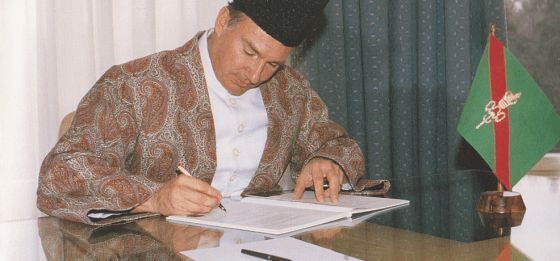
Mawlana Hazar Imam, His Highness the Aga Khan, is seen signing a new constitution for the worldwide Ismaili community on his 50th birthday, December 13, 1986. Beside him is the flag of the Ismaili Imamat, bearing his crest in the centre.
A) The Shia Imami Ismaili Muslims affirm the shahādah lā ilāha illa-llāh, Muhammadur rasulu-llāh, the Tawhid therein and that the Holy Prophet Muhammad (s.a.s.) is the last and final Prophet of Allah. Islam, as revealed in the Holy Quran, is the final message of Allah to mankind, and is universal and eternal. The Holy Prophet (s.a.s.) through the divine revelation from Allah prescribed rules governing spiritual and temporal matters.
(B) In accordance with Shia doctrine, tradition, and interpretation of history, the Holy Prophet (s.a.s.) designated and appointed his cousin and son-in-law Hazrat Mawlana Ali Amiru-l-Mu’minin (a.s), to be the first Imam to continue the Ta’wīl and Ta‘līm of Allah’s final message and to guide the murids, and proclaimed that the Imamat should continue by heredity through Hazrat Mawlana Ali (a.s) and his daughter Hazrat Bibi Fatimat-az-Zahra, Khātun-i-Jannat (a.s).
(C) Succession of Imamat is by way of Nass, it being the absolute prerogative of the Imam of the time to appoint his successor from amongst any of his male descendents whether they be sons or remoter issue.
(D) The authority of the Imam in the Ismaili Tariqah is testified by Bay‘ah by the murid to the Imam which is the act of acceptance by the murid of the permanent spiritual bond between the Imam and the murid. This allegiance unites all Ismaili Muslims worldwide in their loyalty, devotion and obedience to the Imam within the Islamic concept of universal brotherhood. It is distinct from the allegiance of the individual murid to his land of abode.
(E) From the time of the Imamat of Hazrat Mawlana Ali (a.s), the Imams of the Ismaili Muslims have ruled over territories and peoples in various areas of the world at different periods of history and, in accordance with the needs of the time, have given rules of conduct and constitution in conformity with the Islamic concepts of unity, brotherhood, justice, tolerance and goodwill.
(F) Historically and in accordance with Ismaili tradition, the Imam of the Time is concerned with spiritual advancement as well as improvement of the quality of life of his murids. The imam’s ta‘lim lights the murid’s path to spiritual enlightenment and vision. In temporal matters, the Imam guides the murids, and motivates them to develop their potential.
(G) Mawlana Hazar Imam Shah Karim al Hussaini, His Highness Prince Aga Khan, in direct lineal descent from the Holy Prophet (s.a.s.) through Hazrat Mawlana Ali (a.s.) and Hazrat Bibi Fatima (a.s), is the Forty-Ninth Imam of the Ismaili Muslims.
(H) By virtue of his office and in accordance with the faith and belief of the Ismaili Muslims, the Imam enjoys full authority of governance over and in respect of all religious and Jamati matters of the Ismaili Muslims.
(I) It is the desire and Hidāyat of Mawlana Hazar Imam that the constitutions presently applicable to the Ismaili Muslims in different countries be superseded and that the Ismaili Muslims worldwide be given this constitution in order better to secure their peace and unity, religious and social welfare, to foster fruitful collaboration between different peoples, to optimise the use of resources, and to enable the Ismaili Muslims to make a valid and meaningful contribution to the improvement of the quality of life of the Ummah and the societies in which they live.
According to the Aga Khan Development Network (AKDN), more than 48,000 people across Gilgit Baltistan and Chitral are at high risk from a lake outburst or landslide. Some, like the village of Badswat in the neighbouring district of Ghizer, are in such peril they are being evacuated entirely to relative safety, their homes rendered impossible to live in.
Caroline Davies of BBC News has captured this crisis in an illustrated story from Gilgit-Baltistan. View her visually compelling story — click BBC: Melting glaciers leave homes teetering in valley of jagged mountains — and watch the YouTube video below, which highlights the effects of climate change on the part of the world referred to by some as the “Third Pole” because it has more ice than any other part of the world outside the polar regions.
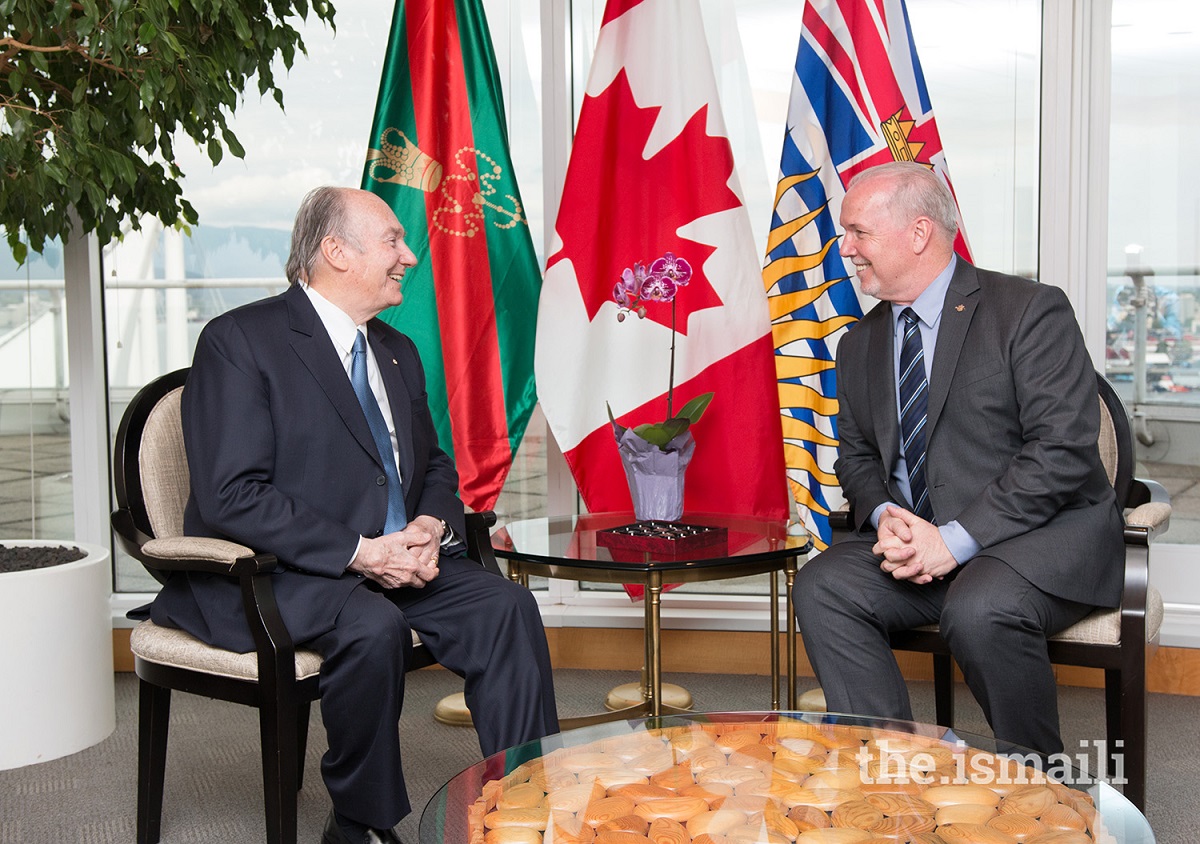
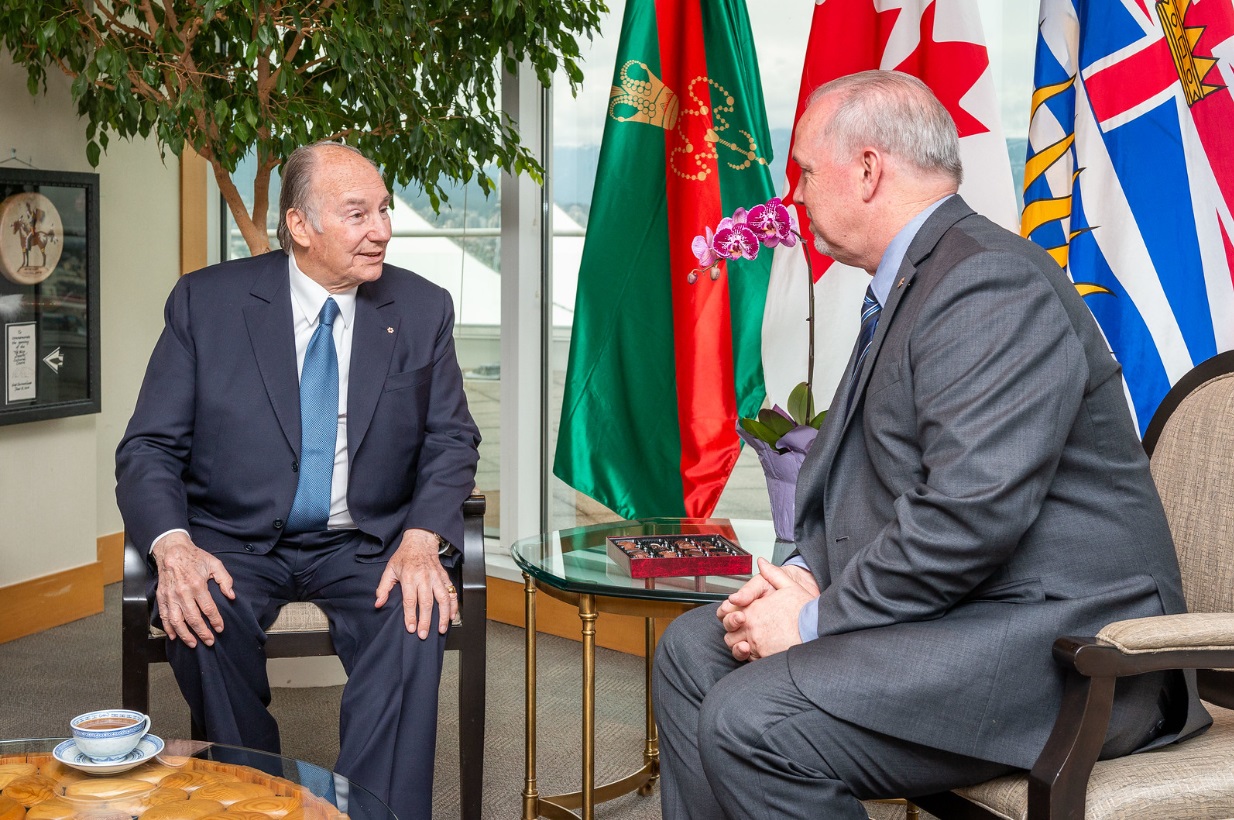
Premier John Horgan meets Mawlana Hazar Imam, His Highness the Aga Khan, on May 18, 2018, in Vancouver, on the occasion of his Diamond Jubilee. Forming the backdrop are the flags of the Ismaili Imamat, which bears the Imamat crest, Canada and British Columbia. Photograph: Province of British Columbia.
We have learnt with deep sadness that the former Premier of British Columbia, John Horgan, who served as the province’s leader from 2017 until 2022, has passed away of cancer at the age of 65. In a statement posted to X by Horgan’s longtime friend and press secretary, Sheena McConnell, the Horgan family said he passed away peacefully at the Royal Jubilee Hospital in Victoria on the morning of November 12, 2024.
Horgan’s dedication to public service is evident in his political career. He was first elected to the B.C. legislature in 2005 and became leader of the NDP in 2014. His leadership skills led to his election as B.C.’s premier in 2017. He continued to serve until 2022 when he decided to step down due to health reasons. His commitment to serving the public was further demonstrated when Prime Minister Justin Trudeau appointed him Canada’s ambassador to Germany in November 2023.
Trudeau expressed his condolences in a statement posted to social media:
“John Horgan believed in the power of public service. He saw it as a privilege, as a way to help others and to make our country better. He loved British Columbia. As premier, he had a tenacity, passion and dedication for his work that very few could match.
B.C. Ismailis will fondly remember the late Premier, who received their 49th Imam, His Highness the Aga Khan, Mawlana Hazar Imam, on May 4, 2018, upon the occasion of his Diamond Jubilee.
Story continues below
Premier John Horgan meets Mawlana Hazar Imam, His Highness the Aga Khan, on May 18, 2018, in Vancouver, on the occasion of his Diamond Jubilee. Photograph: Province of British Columbia.
~~~~~~~
Premier John Horgan meets Mawlana Hazar Imam, His Highness the Aga Khan, on May 18, 2018, in Vancouver, on the occasion of his Diamond Jubilee. Photograph: Province of British Columbia.
In a statement issued on meeting the 49th Hereditary Ismaili Imam, the Premier said:
“For the last 60 years, His Highness the Aga Khan has provided spiritual leadership to the world’s Shia Ismaili Muslims.
“In this role, he has dedicated his life to making life better for people. His work to eliminate poverty, give children early learning opportunities, and improve health care has helped people around the globe.
“It was a great honour to meet His Highness on the occasion of his Diamond Jubilee, and to welcome him to British Columbia.
“Canada’s Ismaili community has pledged to volunteer for one million hours in celebration of this special year. Our province and our country is a better place thanks to this ethic of volunteerism and compassion, shared by Ismaili people around the world.”
Story continues below
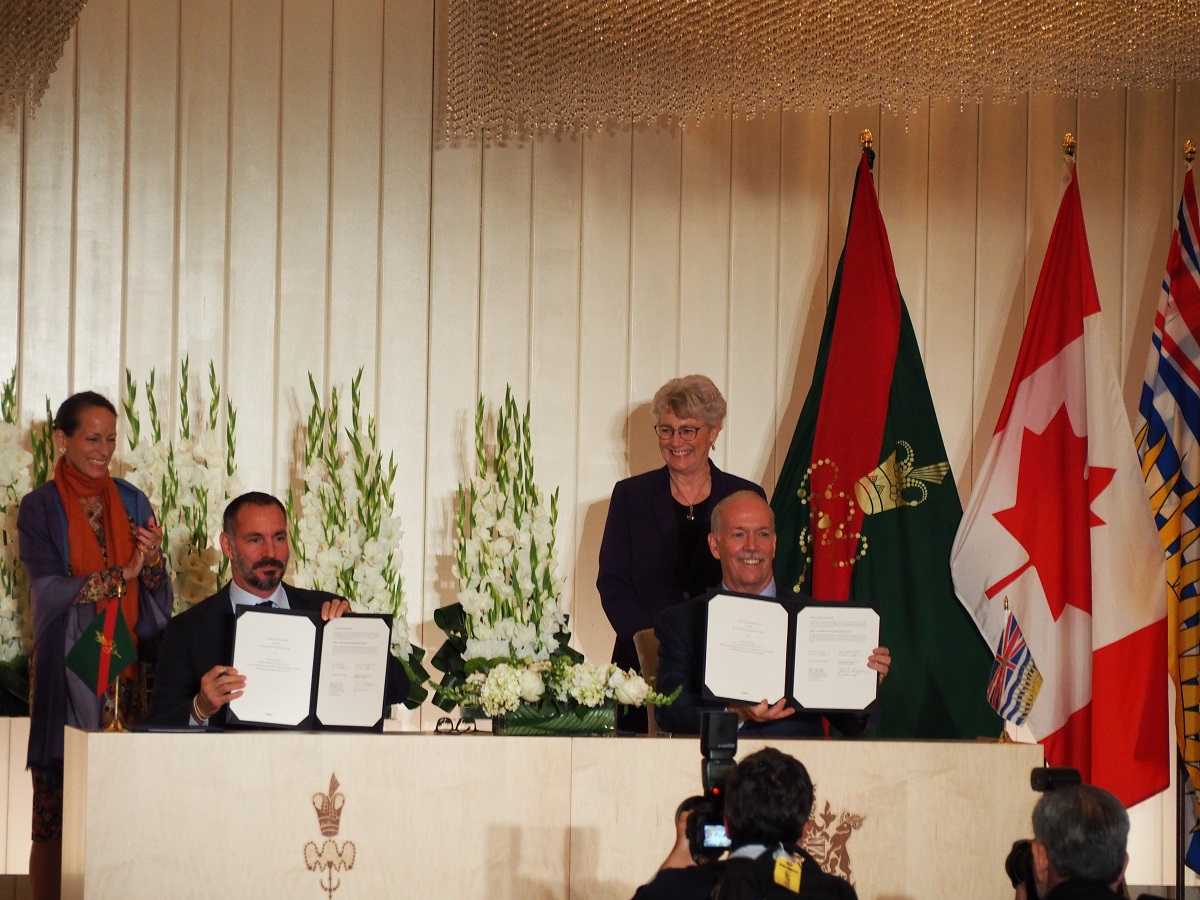
Prince Rahim Aga Khan (left), representing the Ismaili Imamat, and British Columbia’s Premier John Horgan display the Accord to the audience after the signing ceremony as Princess Zahra and BC’s Minister of Forest Katrine Conroy look on. The event was hosted on September 29, 2022, at the Pan Pacific Hotel at the iconic Canada Way in Vancouver’s beautiful waterfront. Photograph: Malik Merchant/Barakah.
On September 29, 2022, before stepping down as the premier, he signed an Accord of Cooperation with Prince Rahim Aga Khan, representing his father, at the Pan Pacific Hotel at the iconic Canada Place on Vancouver’s waterfront. The Accord, a significant milestone, was deeply rooted in the 50-year history of the Ismaili Community in Canada and Mawlana Hazar Imam’s lifetime of work to improve quality of life. The Agreement, a call to action, served to advance partnership and collaboration on one of the most pressing issues of our time: the urgent and critical issue of climate change.
During this challenging time, we express our heartfelt condolences to his wife, Ellie, and their two sons, Evan and Nate.
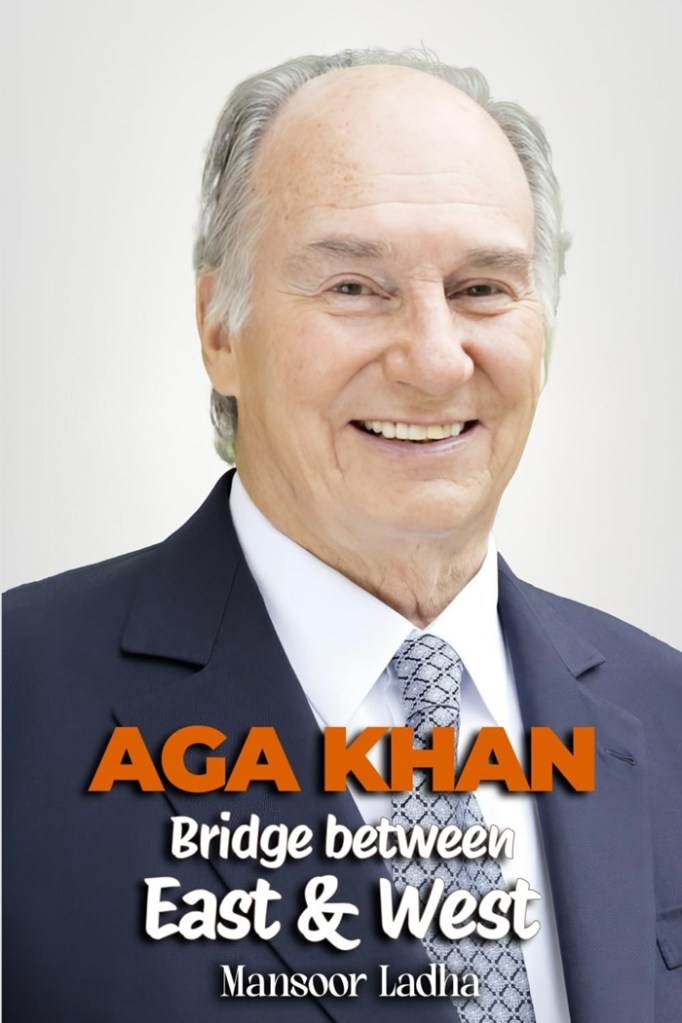
Simerg’s introduction of “Books by Ismaili Authors” continues with Calgary-based Mansoor Ladha’s latest book “Aga Khan: Bridge between East & West.” Mansoor is being featured in the series for the fourth time, following introductions of his three previous books “A Portrait in Pluralism: Aga Khan’s Shia Ismaili Muslims,” “Memoirs of a Muhindi” and “Off the Cuff.” We follow the same Q/A format as our earlier presentations of books, which are listed chronologically below. We encourage Ismaili authors worldwide to participate in this series, regardless of when their books were published. See details of the series HERE and submit your responses to Simerg’s editor, Malik, at mmerchant@simerg.com.
****************
Renowned worldwide as a transnational humanitarian, the Aga Khan has established schools, universities and hospitals in some of the remotest parts of the world. Portraying a moderate face of Islam, he has built bridges between East and West and has been a champion of pluralism, diversity and promoting Islamic values aimed at reducing extremism and radicalism — Mansoor Ladha
Simerg’s Interview with Mansoor Ladha
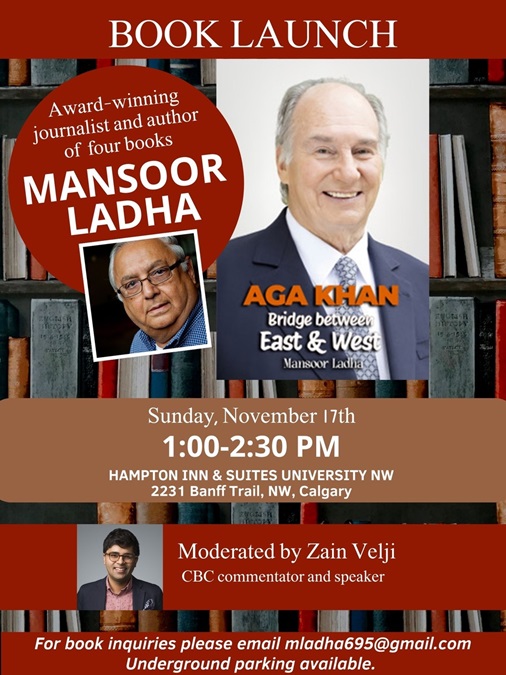
Ismaili journalist and author Mansoor Ladha will launch his new book in Calgary on Sunday, November 17, 2024. CBC’s Zain Velji will moderate the launch. Please refer to the image for details.
Simerg: What is behind the naming of the title of the book?
Mansoor Ladha: The book is “Aga Khan: Bridge between East & West.” It chronicles Hazar Imam’s global contributions and achievements as a transnational humanitarian. His role as a bridge builder between East & West, his efforts to promote the Muslim Ummah, and his progressive interpretation of Islam have had a profound impact. The book also highlights his mission to eliminate extremism and radicalism through education, a beacon of hope for the future, which led to establishing schools and universities in some of the most remote parts of the world.
Simerg: Why would you want me or my family members to read the book, and what will we all learn from it?
Ladha: The book, a comprehensive 616-page volume, presents a detailed account of Hazar Imam’s achievements. It explores his profound connections with Canada, his philosophy on pluralism, interviews with Time and Knowledge Nazrana (TKN) volunteers, the establishment of Diwan of the Ismaili Imamat in Lisbon, Portugal, interviews with Uganda refugees, and standard Ismaili practices. Its purpose is to inform Ismaili readers and enlighten and educate non-Ismailis about our Imam’s global achievements and the crucial role of the Imamate institutions in the world. This book is a bridge, a must-have for every Ismaili’s bookshelf, and a perfect gift for non-Ismaili friends, colleagues, and neighbours, fostering a deeper understanding of who we are and the transformative work Hazar Imam and the community are doing to bridge the gap between races, societies, and nations.
Simerg: What inspired you to write the book?
Ladha: In the minds of many Canadians, the main question is: Who is the Aga Khan? This book attempts to answer this question, describing his pivotal role as a religious leader of over 15 million Ismailis worldwide and his contributions to humanity, portraying a moderate face of Islam. In a world desperately needing change, I believe writers are responsible for inspiring personal, organizational, and global transformation. This book is a testament to that belief, as it aims to shed light on the work of Hazar Imam, which, among other things, is focused on eradicating radicalism and extremism.
Story continues below
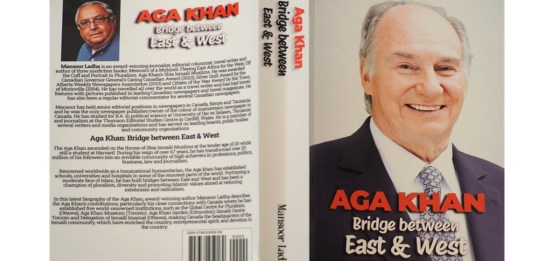
Cover page of “Aga Khan: Bridge Between East & West” by Mansoor Ladha, with foreword by Professor Karim H. Karim of Carleton University, published July 12, 2024, 616 pp; formats: paperback and eBook.
Simerg: How can I purchase the book and what are its available formats?
Ladha: The book is available in softback and eBook format from Amazon and Barnes & Noble. You can also acquire signed copies directly from me by writing to me at mladha695@gmail.com. I am based in Calgary, Canada.
Simerg: How did you find a publisher for the book?
Ladha: This is my fourth book published. I decided to self-publish this book after facing rejections from traditional publishers, a process that can be disheartening. However, reputable self-publishing companies offer editing, formatting, and designing services, providing much-needed support and guidance. While two of my other books have been published by traditional publishers, the self-publishing route has merits. The recognition and respect for self-published books is on a steady rise, validating the choice of many authors and providing reassurance in the self-publishing journey. The future of self-publishing is bright, with more and more authors finding success in this industry.
Simerg: Did you hire an editor, an illustrator or did you do all the work by yourself?
Ladha: Most publishers provide editing and other services once you sign up. As someone who has been a copy editor and publisher of newspapers, my job throughout my career involved editing stories submitted by reporters. It’s worth noting that the publisher also plays a significant role in the editing process. In fact, one publisher complimented me, saying that it was a pleasure to receive my manuscript as he didn’t have much work to do!
Simerg: Which was your first book and how many have you written?
Ladha: My first book was Portrait in Pluralism: Aga Khan’s Shia Ismaili Muslims, published by Detselig. Memoirs of a Muhindi: Fleeing East Africa for the West, my second book published by the University of Regina Press, is not just a publication but a profoundly personal journey. I was also among a select group of journalists and scholars invited to contribute a chapter in a book called “The Story that Brought Me Here,” published by Brindle & Glass. My last book was Off the Cuff!
Simerg: How long did it take you to write Aga Khan: Bridge between East & West — from start to finish and to begin marketing it?
Ladha: It took me almost a year to complete the book. Writing is a solitary work involving lots of time and patience. Sometimes, writers get an author’s block, meaning an author can either not produce new work or experiences a creative slowdown. On top of that, there are family obligations that need to be fulfilled. So, writers must surmount all these to complete their work.
Date posted: November 14, 2024. Last updated: November 17, 2024 (correction, see note below.)
Correction: Our earlier version mentioned that the book is available in hardback, softback, and eBook forms. The author has advised us that it is unavailable in a hardback edition, although the online sellers mention its availability as a hardback.
_______________
We welcome feedback from our readers. Please click LEAVE A COMMENT. Your letter may be edited for length and brevity and is subject to moderation.
Mansoor Ladha
Mansoor Ladha’s career is a testament to his unwavering dedication to journalism. He has held senior editorial positions as a copy editor in Canada (Edmonton Journal & Calgary Herald), features editor (The Standard in Dar es Salaam, Tanzania), copy editor (Daily Nation, Nairobi, Kenya) and was the only owner/publisher of colour of a mainstream English newspaper in Canada for 25 years. His contributions to journalism have been recognized with numerous awards, including being a Citizen of the Year in the Town of Morinville, Alberta; the Silver Quill Award by the Alberta Weekly Newspapers for distinguished service to newspapers as well as Canada’s Caring Canadian Award for “outstanding and selfless contribution to your community and Canada” by the Governor General of Canada. Since retiring, he has travelled worldwide and published travel features in leading Canadian newspapers and magazines. Author of four books, Ladha has also contributed to Simerg’s highly acclaimed series I Wish I’d Been There with a remarkable piece, His Name is Jawhar. He has also contributed an exclusive piece for this website’s sister blog, Barakah, under the title Ismaili Journalist Mansoor Ladha’s Precious Moments with His Highness the Aga Khan.
_______________
Calling All Ismaili Authors
We encourage Ismaili writers to introduce their books in a similar format as has been done in the post above. Please also see the series Ismaili Authors Series and submit your responses to Malik at mmerchant@simerg.com. All submissions will be acknowledged. If a writer has published multiple books, each book will be highlighted in a separate article, and not combined with other books into one post. All writers should include a brief profile with a portrait photo.
We welcome feedback from our readers. Please click Leave a comment. Your letter may be edited for length and brevity, and is subject to moderation.
_______________
Links to the Ismaili Authors’ Series (in chronological sequence, oldest article first):
Before departing this website please take a moment to review Simerg’s Table of Contents for links to hundreds of thought provoking pieces on a vast array of subjects including faith and culture, history and philosophy, and arts and letters to name a few. Also visit Simerg’s sister websites Barakah, dedicated to His Highness the Aga Khan, and Simergphotos.
“All men, rich and poor, must aid one another materially and personally. This fraternity is absolute, and it comprises men of all colours and all races: black, white, yellow, tawny; all are the sons of Adam in the flesh and all carry in them spark of the Divine Light. Everyone should strive to see that this spark be not extinguished but rather developed to that full Companionship-on-High.” — Aga Khan III in a message to commemorate his Platinum Jubilee
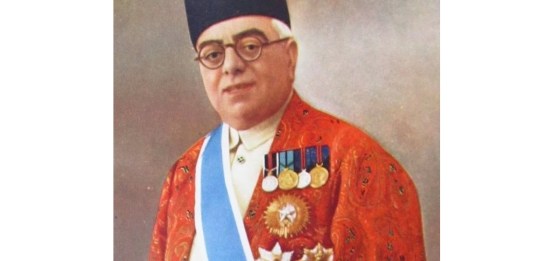
Born on November 2, 1877, Aga Khan III became the 48th Hereditary Imam of the Shia Ismaili Muslims at seven! He led his worldwide community for an astonishing 72 years until his death on July 11, 1957, when he designated his grandson, Prince Karim Aga Khan, the 49th Imam.
Prince Karim said of his grandfather: “On 2nd November 1877, my beloved grandfather was born here in Karachi. Through 72 years of Imamat, he guided his spiritual children to happiness and prosperity….Many, many memories come to our minds as we think of him. He achieved in his life, for our community, that which could only have been accomplished normally in a period of many generations. The tributes that the world has paid him bear honest testimony to his great life and work.”
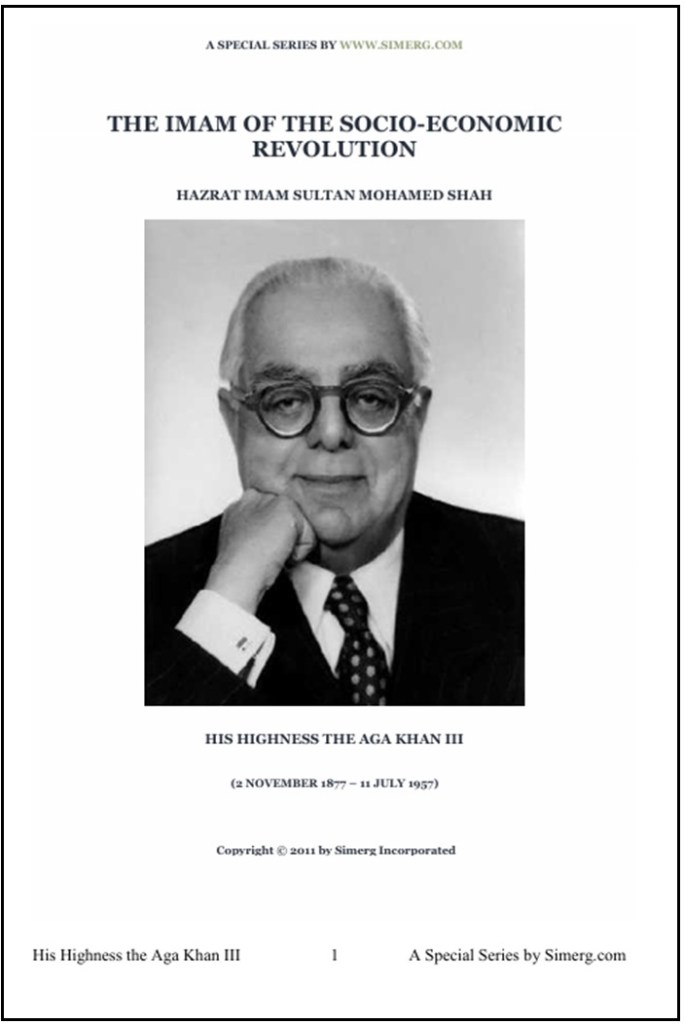
Cover page of Simerg’s publication The Imam of the Socio-Economic Revolution. Please click on the image to download the PDF file.
Simerg presents a 191-page booklet providing highlights and glimpses of his life. Please click HERE or on the cover page image posted on this page.
Passion, dedication, hard work, and commitment to an incredible cause — finding a cure for Alzheimer’s! That person is Princess Yasmin Aga Khan, who has raised over US $87 million during the past 40 years since her mother, Rita Hayworth, died from Alzheimer’s.
Alzheimer’s and other forms of dementia are not just distant issues. They are prevalent in our own communities. In the USA, approximately 7 million people are affected; in Canada, the number is 750,000. These numbers highlight the urgent need for awareness and action. In 2022, Alzheimer’s disease alone was identified as the ninth leading cause of all deaths in Canada.
Just Imagine a world without Alzheimer’s! That is the vision behind naming the Alzheimer’s Association’s annual IMAGINE BENEFIT event in New York. The most recent gala, held on October 23, 2024, brought together over 300 guests and raised US $1.2 million.
Inna lillahi wa inna ilayhi raji’un “Surely we belong to God, and to Him we return” — Holy Qur’an, 2:156
“Life is a great and noble calling, not a mean and grovelling thing to be shuffled through as best as we can but a lofty and exalted destiny.” — Mawlana Sultan Mahomed Shah, His Highness the Aga Khan III (1877-1957), 48th Ismaili Imam.
A TRIBUTE TO SALIM JIWA & HIS DEVOTED WIFE MINA & FAMILY
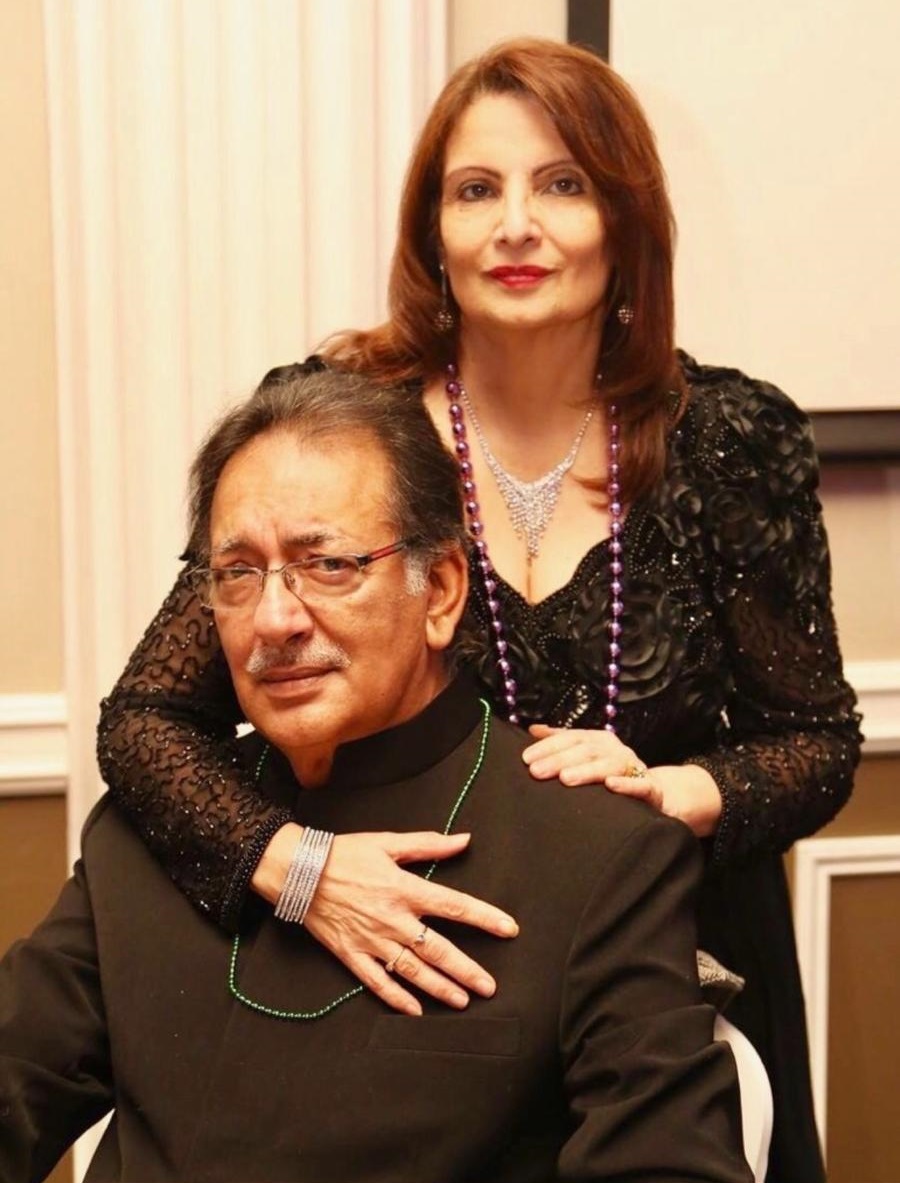
The late Salim Jiwa (d. September 2024) with his wife Mina. Photograph: Jiwa Family Collection.
By FAROUK B.K.S. VERJEE
Salim Sadrudin Jiwa passed away in Vancouver in September 2024 at the age of 73. He leaves behind his devoted wife, Mina, and 3 children.
Salim, born on the shores of Lake Victoria in Bukoba, Tanzania, began his journalism career in Dar es Salaam, the Capital. This was a significant time for Tanganyika, which was newly independent and faced a scarcity of local journalists. In this urgent context, ambitious Salim quickly made his mark. President Nyerere wanted local journalists to write their aspirations for a multi-racial, African Socialist society. His vision was reflected in his diverse cabinet, which included Amir Jamal, an Ismaili, as his Minister of Finance and a European Bryson, as his Minister of Agriculture, showcasing the inclusivity of his leadership.
Nyerere’s policy of African Socialism followed the Arusha Declaration of February 5, 1967, which, over the years, resulted in nationalizing businesses and individual properties. These measures unsettled many in the Indian and expatriate business communities.
For young Salim, Canada was a welcoming choice. He could apply for his status from within Canada, and with freedom of speech, as a journalist, he could write as he pleased.
He never went back.
Starting with the Province Newspaper, the second largest daily in British Columbia (BC), as a minority immigrant, he faced the usual challenge of no “Canadian experience.” His relentless ambition, determination, and sharp humour made him a daring crime reporter. His drive is a testament to what can be achieved with sheer determination. Crime reporters get hardened over time.
He reported on a murder in the posh British Properties in West Vancouver.
A daughter-in-law was killed by her father-in-law, leaving behind a daughter of 4 months.
Salim and his wife Mina stepped forward and adopted her to give the young baby a loving home and an escape from the terrible family trauma.
At his well-attended funeral in September, I met some of Salim’s retired colleagues from the Province Newspaper. I thanked them for coming and told them I had met Salim in 1975 when he was a cub reporter. His colleagues remarked that Salim was no cub; he was a Lion!
In 1985, the bombing of Air India Flight 182 over the Atlantic took over 329 lives, 90 of whom were children. The flight had originated from Toronto and had suspected links to the Khalistan Movement. To this day, it remains the largest terrorist event in Canadian history.
After a $100 Million prosecution, this crime remains unresolved. A memorial marks this horrendous tragedy in Vancouver’s Stanley Park, bearing the names of all the victims. Salim wrote a bestseller, Death of Air India Flight 182.
In his book’s dedication, he writes: “This book is dedicated to the 329 victims of the sabotage of Air India Flight 182 and the two victims of the Narita bomb, as well as their families. Also to the Royal Canadian Mounted Police for their extraordinary work, members of the Canadian Security Intelligence Service, who must remain in the shadows, and investigators in the United Kingdom, Ireland, Japan, the USA and India. Finally, to my wife and children for all their help.”
Fabian Dawson the former Deputy Editor of the Province expressed the following sincere and heartfelt tribute to Salim:
“Salim was larger than life character in the newsroom. He was well respected, funny and always armed with a pun.”
Fabian worked alongside Salim for almost three decades. He continued:
“Throughout his career, Salim’s ability to build rapport with sources, from law enforcement to the families affected by tragedy, was legendary….his ability to connect with people on a human level made him not only a remarkable journalist but also a cherished friend to many. Salim’s presence in the newsroom was influential as it will be unforgettable.”
Story continues below
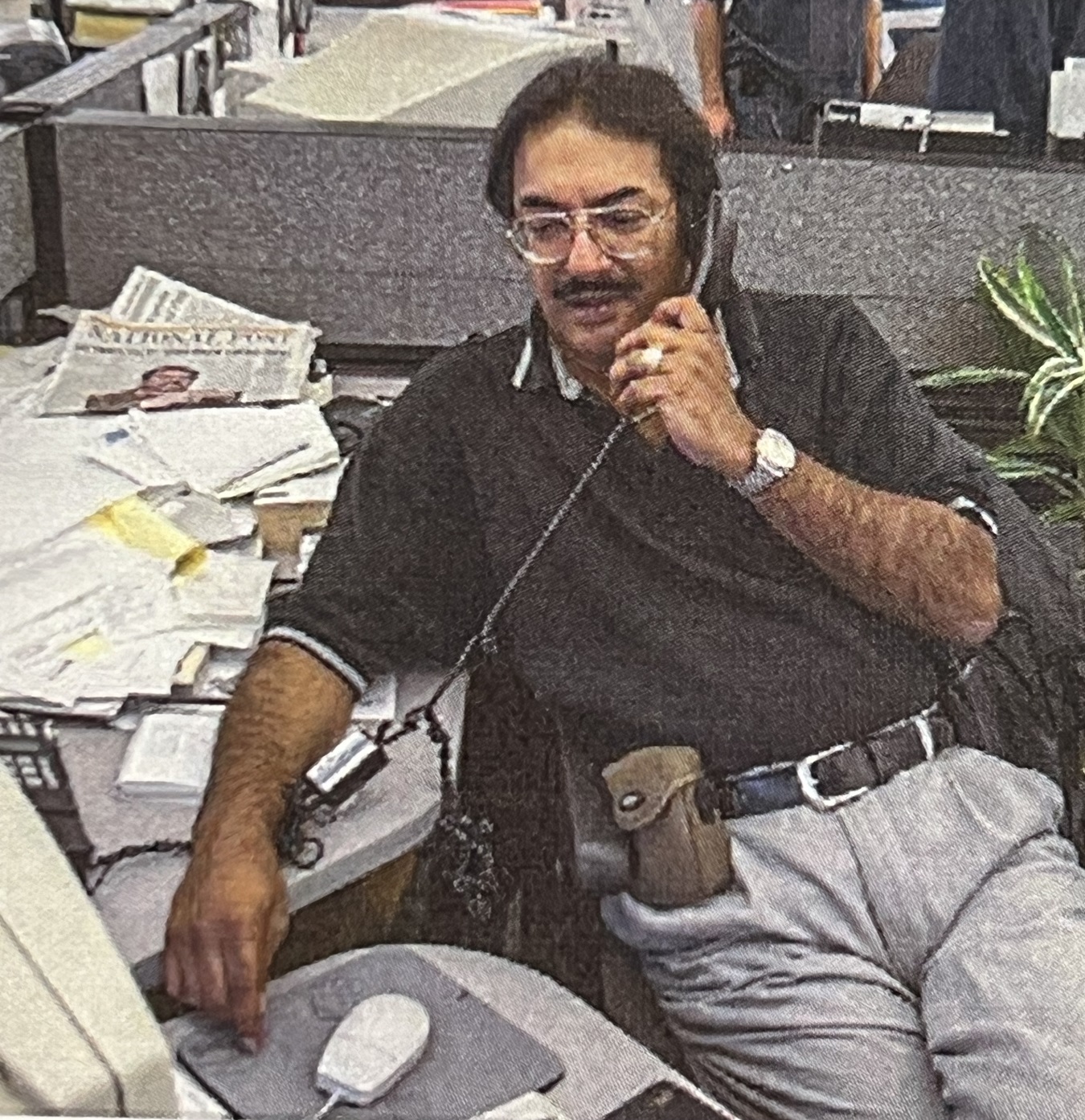
Salim Jiwa at his desk at The Province, Vancouver’s daily newspaper, first published in 1898. Photograph: Via Jiwa Family Collection.
As the Honorary Secretary of the Aga Khan Council for Western Canada in 1975, we were wary and very shy of the media. Salim was very pushy about asserting our Ismaili identity, as most had arrived here stateless, impoverished, with a loss of identity, and in culture shock.
~~~~~~
“At his well-attended funeral in September, I met some of Salim’s retired colleagues from the Province Newspaper. I thanked them for coming and told them I had met Salim in 1975 when he was a cub reporter. His colleagues remarked that Salim was no cub; he was a Lion!” — Farouk Verjee
~~~~~~
Salim was a big man with a huge heart. He did not mind stepping on toes to get his job done. He was gentle with my toes and most cooperative, as was his other colleague, publisher Promod Puri, the founder of the weekly Link Newspaper, which covers the broadest spectrum of the South Asian Communities news and social and political activities in BC. The paper continues to thrive today.
Salim’s contribution to our Just Society has been enormous but rarely acknowledged in the larger community.
His peers awarded him the prestigious Jack Webster Award for excellence in legal journalism. He also received the MacMillan Bloedel’s Annual Journalism Award for outstanding writing, journalistic initiative, public service, and contribution to the understanding of important issues.
Salim in in his last days left the following message to his family:
“I have had a full and beautiful life, and I have done everything one could wish for far and beyond any anticipation in my life. I have no regrets about the way I have lived my life. I have supreme affection for Mina, Farouk, Hafeez, Alyia, and my children’s wives.
Story continues below
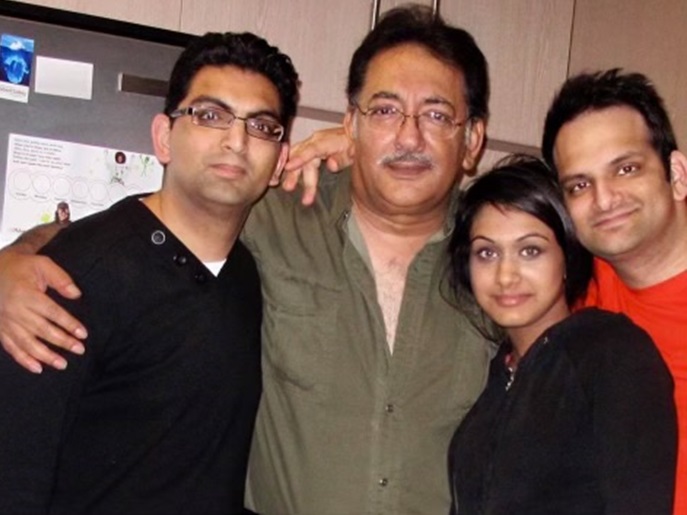
Salim Jiwa with his children Farouk, Hafeez, and Alyia. Photograph: Jiwa Family Collection.
“My grandchildren have been a source of love and joy. My sisters, my mother, and my father have loved me. No regrets people. Enjoy your lives, as I have mine. Do good to all. Be generous, be fair, help the less fortunate and act with justice towards all.”
Salim, you are greatly missed by your family, friends and colleagues. Rest in Peace. Brother, Ameen.
Indeed, I may conclude that by their inspiring examples, Salim and Mina are the unsung heroes and heroines of the Ismaili Jamat. They have also served the larger community as outstanding, exemplary citizens.
Date posted: October 24, 2024. Last update: October 31, 2024 (added text of Salim Jiwa’s dedication in his book and an image of the cover page).
Correction: In an earlier version of this post, we misstated Fabian Dawson as the former publisher of The Province. He was the deputy editor.
_______________
Condolence messages: We invite readers to submit their condolences, memories and tributes to Salim Jiwa by clicking LEAVE A COMMENT.
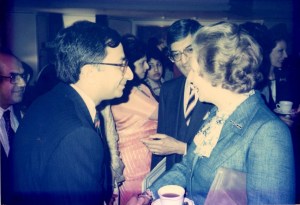
Farouk Verjee, left, with Baroness Margaret Thatcher (1925 – 2013) at the opening of the Ismaili Centre London, April 24, 1985.
About the writer: Farouk B.K.S. Verjee served as the Honorary Secretary of His Highness the Aga Khan Shia Imami Ismaili Council for Canada for 5 years from 1979-1984. He then became the Council’s President until 1987. His terms of office saw the foundation laying ceremony of the Ismaili Jamatkhana and Centre (a Silver Jubilee Project) by the Honourable Henry Bell-Irving, Lieutenant-Governor General of British Columbia, as well as its opening in 1985 by Canada’s Prime Minister, Brian Mulroney (d. February 2024). Both the ceremonies took place in the presence of Mawlana Hazar Imam, His Highness the Aga Khan, and his family members.
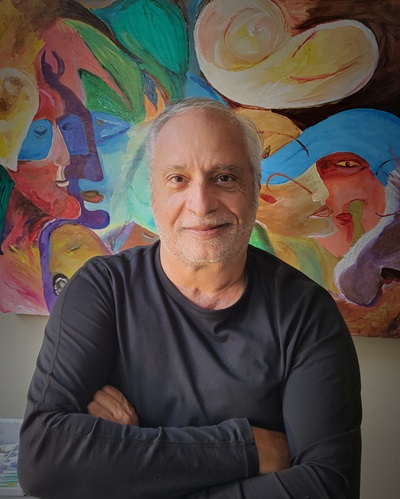
I am a self-taught artist from Tanzania based in Vancouver/Burnaby, Canada. I am retired and work from home in my studio. My art is inspired by vibrant landscapes and diverse wildlife. I try and capture them in my paintings. I also enjoy exploring abstraction and the human figure in my work. I like using vibrant colours in my art because I want to engage the viewer in a brighter way of seeing and experiencing life. I view these images through the artistic lens, looking at every angle, shape, and ray of light as a direct receptacle for creation.
Canadian Ismaili artist Mehboob Rajwani
I have exhibited works at the Roundhouse Community Centre organized by the Aga Khan Ismaili Council for Canada and various local exhibitions, including the Vancouver Outsider Arts Festival and Ismaili Center Vancouver. Recently, my artwork was accepted for display in Dubai for the Global Encounters 2025. My art piece, “Baobab Buffaloes,” was published in a book by Taslim Samji, “Kampala to Canada.” My work has also been published in the Artany Magazine, U.K.
I am enrolled at Emily Carr University of Arts and Design to demonstrate my commitment to art. I am glad to share a few of my art pieces through this forum in Simerg, which highlights the work of Ismaili Muslim artists worldwide.
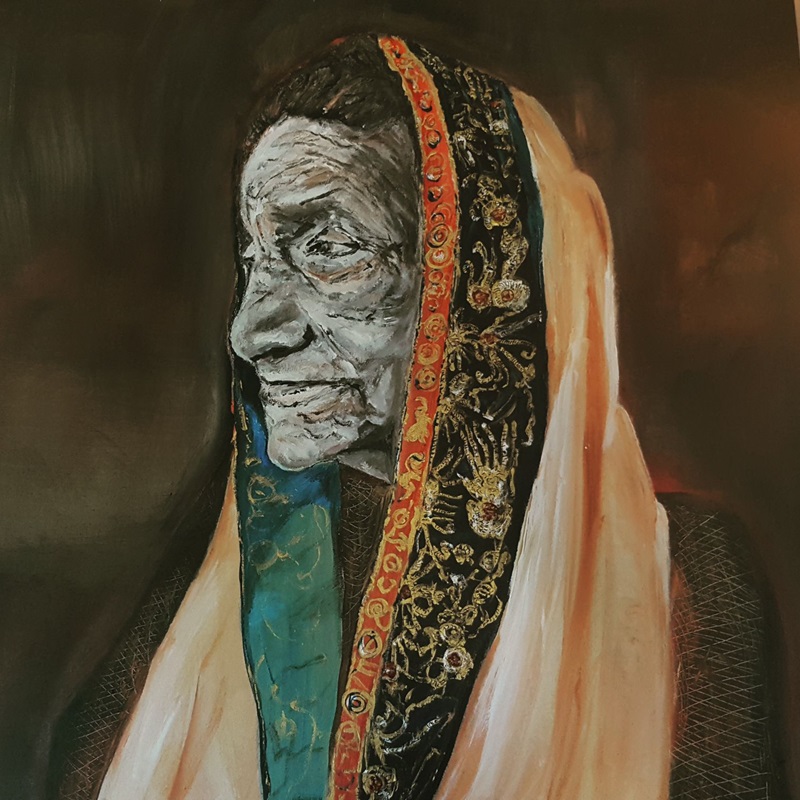
Dadimaa
Dadimaa, Acrylic on Canvas,30″ x 30″, July 2017, painting by Mehboob Rajwani
This portrays the ever-knowing grandmother. Though she may be shrouded in elegant brocade, her face shows what lies beneath. Her eyes carry the weight from years of life. Guile imbues her profile as wisdom unravels itself from a loom of knowledge. The intricacies of her wins and losses, light and darkness, defeats and accomplishments, are captured in this still singular moment. She has been left and loved, witnessed wars, and seen the world shift like a handful of sand slipping between her fingers. Where there is pain, one finds Allah giving her strength and His compassion to forge ahead into the present, no longer lost but found. This painting was inspired by a photograph of Sultan Bhaloo’s grandmother.
______________________
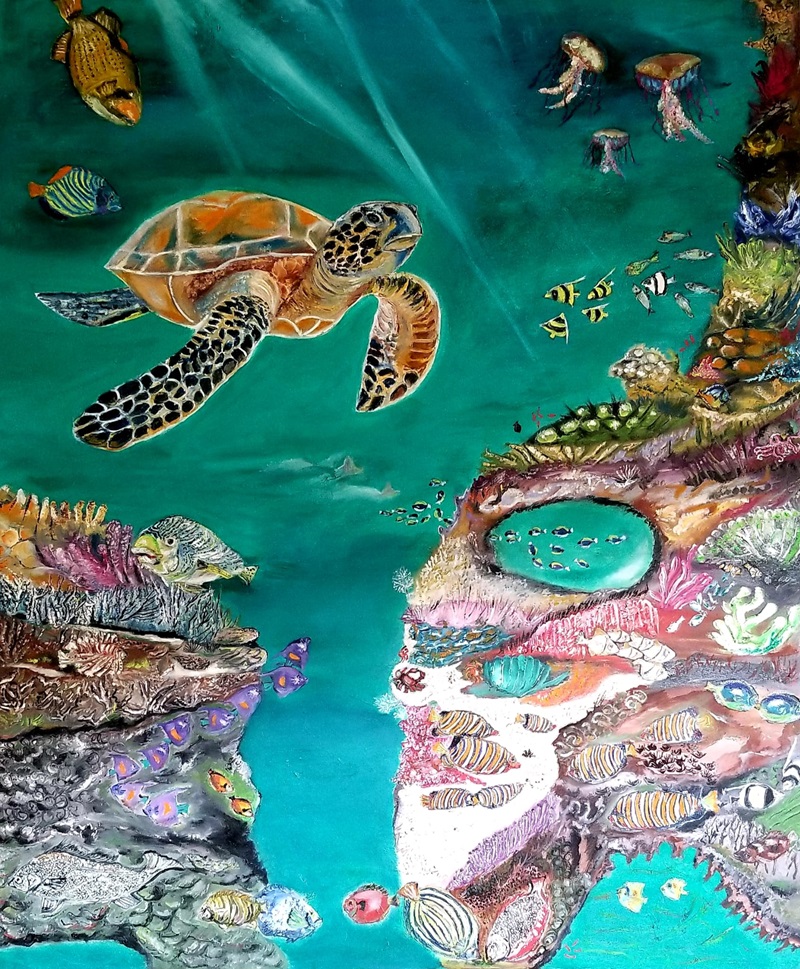
Vanishing Paradise
Vanishing Paradise, Oil, 48″ x 60″, January 2024, painting by Mehboob Rajwani.
All of us have an opportunity to save the natural world in one way or another. They say we fall in love with nature in different ways. For some, it is beholding orcas leaping out of the ocean, a heron silently stalking fish in a lagoon at dawn, the tragic joy of a salmon run. Thus, representing all of nature in its fragility. As such, I have created an underwater ocean floor to bring awareness for the beauty and splendour of the diverse species and coral that are unfortunately facing extinction.
I used oil paints to create an imaginative multi-coloured reef in an aquamarine background with a swimming turtle, exotic fish, and other colourful species. This work also depicts the gradual extinction of coral as it becomes dead and bleached, thus reducing the number of inhabitants.
My goal is to show the ocean’s importance as our home and the need to care for it as such. “In the existential quest to save the future, we need loving, persuasive leaders to save Earth,” says environmentalist Calvin Sandborn.
______________________
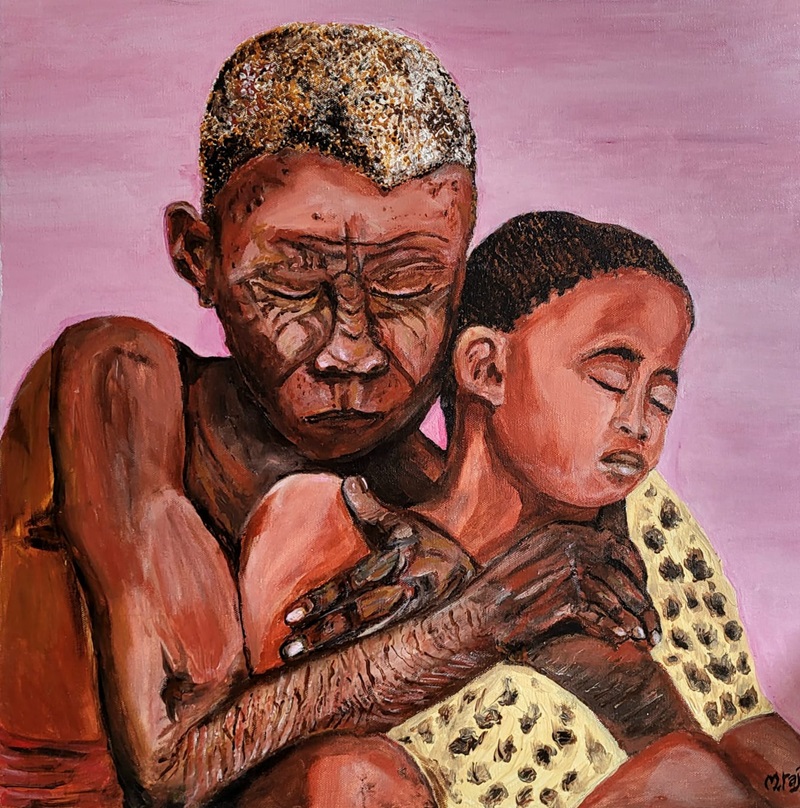
Let Me Protect You
Let Me Protect You, Acrylic on Canvas, 26″ x 26″, 2023, painting by Mehboob Rajwani.
This piece depicts a loyal grandmother and child embracing in a moment of shared love.
______________________
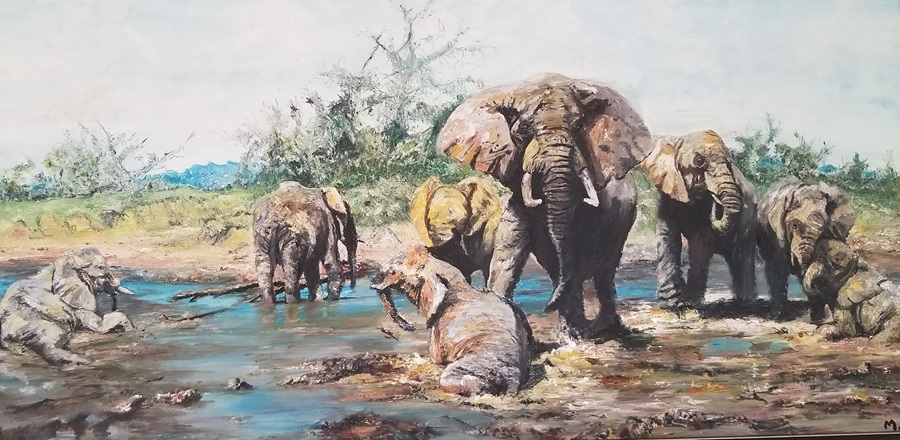
Elephants in Mud
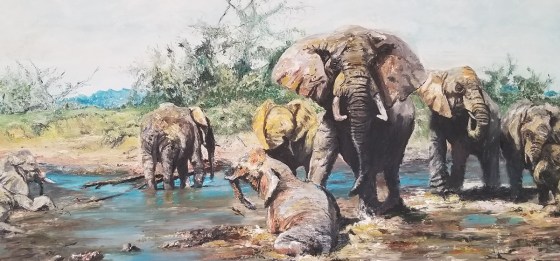
Elephants in Mud, Oil, 30″ x 60″, 1977, by Mehboob Rajwani
This piece is sentimental to me as it is the first one of my works done in Canada. It reminds me of the wildlife memories I left behind in Africa. It took me some time as I painted it slowly, creating each elephant at a time. It displays the mother and calves enjoying playing in the mud, washing each other’s backs with their long trunks and being protective and caring. Their proximity to the water hole offers sustenance and a desirable cooling effect. Their unique ability to remember is poignant and touching, as they remain with their herd for years. Elephant mothers are fiercely nurturing and protective. As a result, nature has so much to teach us about family, love and caring for one another. At a time when poachers are prevalent, it is important to celebrate and protect these beautiful creatures. This piece has been selected by Global Encounters 2025 for exhibition in Dubai.
______________________
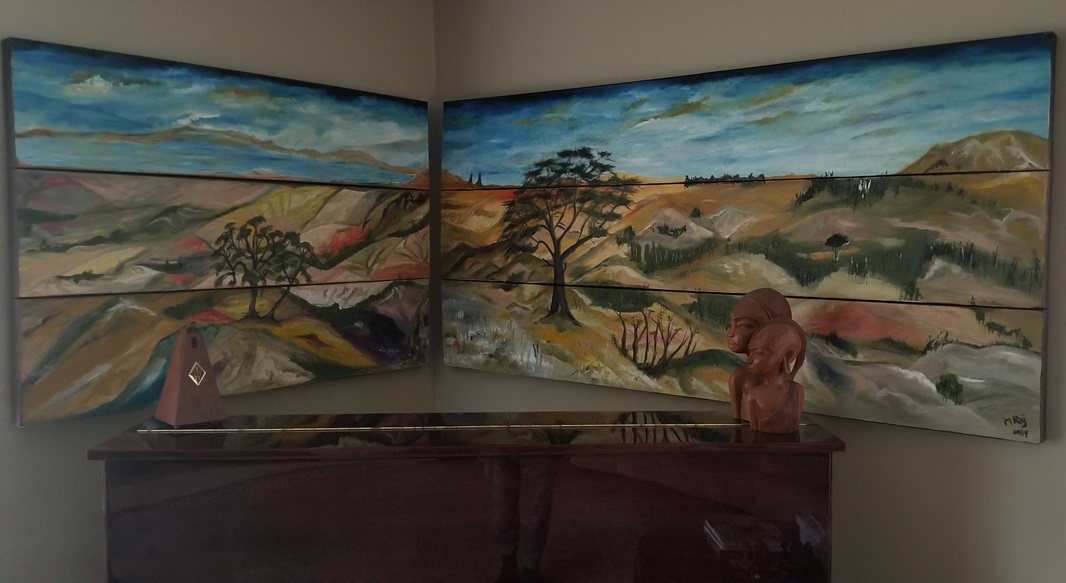
Dreamscape
Dreamscape, Oil, series of two paintings, 33” X 47″ and 33” x 70”, paintings by Mehboob Rajwani,
This painting represents The Okanagan Desert and is the common name for a semi-arid shrubland located in the southern region of the Okanagan Valley in British Columbia. It is centered around the city of Osoyoos and is the only semi-arid shrubland in Canada. Part of this ecosystem is called the Nk’mip Desert by the Osoyoos Indian Band. It is one of the most endangered ecosystems in Canada.
The artistic vision of this work is to show the dry arid hills’ breadth and the land’s scope, which still maintain their beauty despite their fragility. The hills are dream-like to me, representing waves that could go on for miles and miles, yet looking stark and even lost because of their lack of vegetation. I have added robust colours to this imaginary scape to bring out the vividness of the land as it may have been at one time in the past. I have used six-panel canvases to bring the segments in unison. When placed together as one painting, they symbolically mark the fragmented nature of this piece and the possibility of wholeness in nature.
______________________
Mardi Gras
Mardi Gras, Acrylic on Canvas, 30″ x 66″, painting by Mehboob Rajwani.
Mardi Gras is celebrated with faces depicting masks of love, hate, despair, and hope. The intricacies of bright colours and festivities demonstrate my representation of humanity. By bringing all cultures together and blending them into one another, Mardi Gras creates a peaceful symbol of unification and celebration. Here, difference is encouraged and complementary to the final vision.
Date posted: October 22, 2024. Last updated: October 23, 2024.
Corrections: (1) Taslim Samji was misspelled as Talim, and (2) it was incorrectly mentioned that Sultan Bhaloo took photographs of the paintings displayed here. A portrait of Bhaloo’s grandmother inspired Mehboob Rajwani’s painting Dadimaa. The corrections are reflected in our latest update.
__________________
We welcome feedback/letters from our readers. Please click Leave a comment. Your feedback may be edited for length and brevity and is subject to moderation. We are unable to acknowledge unpublished letters.
The editor invites Ismaili artists to submit a selection of their paintings and other works of art for publication in Simerg. Please submit images of no more than 8 objects in Jpeg (1200 x 900) and your profile to the editor, Malik, at mmerchant@simerg.com.












 Simerg - Insights from Around the World