Simerg is an independent initiative dedicated to Ismaili Muslims, the Aga Khan — their Hereditary Imam — and the Ismaili Imamat, and Islam in general through literary readings, photo essays and artistic expressions
The following are referral links to two new posts on Simerg’s sister websites Barakah and Simergphotos. Please click on them, read the posts and share them with your friends and relatives around the world.
THE PROCEEDS FROM THE SALE OF DR. JIWANI’S BOOK “HUMANIZING MEDICINE” WILL SUPPORT THE PATIENT WELFARE PROGRAM OF AGA KHAN HOSPITALS FOR NEEDY PATIENTS
Simerg’s Interview with Dr. Azim Jiwani
Simerg: What is behind the naming of the title of the book?
Azim H. Jiwani: I think readers will perceive levels of meaning embodied by the title. Each reader will draw meaning from the title after reading the book since it can have multiple interpretations. This reflection on implications is what I intended.
Today, many people perceive medicine and health care as cold, selective, fragmented and profit and technology-driven. It seems to lack the human touch, warmth, and empathy. Hence, many, particularly in the developing world, feel a lack of “tangibility” of competent, contextual, compassionate and affordable health care available to them. The health status of large segments of populations in many parts of the world is not improving, and gains in some instances are reversing. Never have so many had such broad and advanced access to sophisticated care, but never have so many been denied access to even basic health care.
Simerg: Why would you want me or my family members to read the book, and what will we all learn from it?
Azim: Rarely in recent times has the world found itself gripped in conditions that pose substantial existential threats to lifeforms on earth, destabilize societies, impact health, quality of life, economic and cultural survival, and engender greater inequality and divisions between and within countries and regions.
The ideal of health is a state of complete physical, mental, and social well-being envisioned by the WHO, not just the absence of disease. Hence, health is composite of a myriad of determinants, all constantly in a state of flux. This utopian state of health is unlikely to be achieved, but one can reimagine global health and its foundations and moral imperatives.
The recent onset of the Covid-19 global pandemic and the accelerating but belatedly acknowledged climate crisis and its devastating effects on human health have laid bare the historical, political, policy, and institutional deficiencies in health systems worldwide. The vast disparities in availability, accessibility and affordability, quality and equity are glaring in parts of the world, especially when comparing low-income countries of the global South to rich and industrialized countries of the North. This void is more apparent when healthcare systems worldwide are under tremendous stress. During the current pandemic, many in developing countries are denied access to even primary and essential care due to myriad reasons – a dearth of human and material resources, drugs, vaccines, deficits in health policies and local and geopolitical tensions.
I think one thing readers will learn is the complexity and challenges of the development process. The book traces efforts of large non-profit global development organizations — the Aga Khan University and agencies of the Aga Khan Development Network — mainly in the domains of education, healthcare, institutional capacity-building and the empowerment of civil societies. It underscores the mission to anticipate and respond to foreseeable effects of unaddressed inequalities, the poverty, program and leadership deficits in some of the most challenging regions of the developing world. It endeavours to enhance institutional capacities, establish collaborative networks, and promote best practices and international standards of excellence.
Simerg: What inspired you to write the book?
Azim: I had the good fortune of engaging with the early development of Aga Khan University and the Aga Khan Health Services internationally and its programs in medical education and fostering affordable, ethical and quality health care since the early 1980s.
I held various leadership roles in academic, administrative, clinical and planning positions in several major organizations within and outside the AKU and interacted with some outstanding leaders and thinkers. Early in my medical career, I developed an interest in the global arms race’s health, social and economic impacts, particularly on developing countries. This interest and other public health and justice questions led to a life-changing meeting with Prince Sadrudin Aga Khan at his chateau in Geneva in 1983. I was deeply inspired by his efforts and roles to foster a more just and equitable world.
As narrated in the book, the impetus and inspiration essentially derived from our faith’s essential ethical and moral foundations, as articulated by Hazar Imam in his numerous utterances. The lockdown periods of 2020/2021 finally induced me to chronicle almost four decades of engagement in aspects of medical education, global health, development, marginalization, and comment on historical imprints on development and questions of justice and human dignity. It was impressed upon me that the experience and skills I acquired over decades of engagement in global health and medical education were too valuable to be wasted. My friends and colleagues strongly encouraged me to chronicle my observations of the times and places, ideals and realities of just and compassionate societies and my wide-ranging engagements.
Article continues below
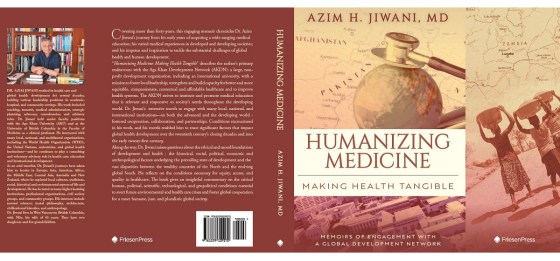
Front cover of Dr Azim H. Jiwani’s book “Humanizing Medicine: Making Health Tangible”, 300 pp., Friesen Press, August 2021.
Simerg: How can I purchase the book and what are its available formats?
Azim: The book is available in hardcover, softcover and e-books, e.g., Kindle, Nook, Apple Books, Google Books. It is widely available directly from the publisher FriesenPress and Amazon, Chapters/Indigo in Canada, Barnes & Noble in the U.S. and many other retail outlets. It is also available in many countries like the U.K., Australia, Europe and India.
Simerg: How did you find a publisher for the book?
Azim: As I was writing, I received many unsolicited offers to publish the book, mainly from the U.S. and Canada. I ignored these until towards the end of the initial draft. I decided to pick a large, established and reputable Canadian publisher, as I was aware of some of the books published by them. They were expensive but of high quality. The publisher FriesenPress partners with a large American publishing and printing house called Ingram; hence the book is printed in the U.S., the U.K. and Australia.
Simerg: Did you hire an editor, an illustrator or did you do all the work by yourself?
Azim: Basically, the publisher provided the editorial services, printing and distribution, but I selected the photographs and illustration with the kind permission of the AKU and the United Nations. Not being very tech-savvy, I needed some technical help from friends for this.
Simerg: How long did it take you to write Humanizing Medicine from start to finish and to begin marketing it?
Azim: I think the whole process of writing, editing, printing and distribution took about eighteen months of hard work since I could only focus on the book a few hours a day. The book was published in the Autumn of 2021 and launched in Washington, D.C., about three months ago.
Simerg: Tell us something more about your book.
Azim: The book interweaves three stands. Since it is essentially written from a personal perspective, it tells a unique story spanning almost five decades. It intertwines this strand with the efforts and the ethos of the AKU/AKDN in empowering civil society, human development and equity, the global conditions over the last century, and the historical and national and regional evolutions in health care and development. It includes many short anecdotes and vignettes set in various world locales, from Morocco to Cambodia, illustrating many of the points. I hope that the book provides a longitudinal perspective of global challenges and their relevance in today’s uncertain and trying times. I believe it could be informative and inspiring to professionals and volunteers who seek to broaden their careers and horizons through engagements globally in an interconnected world.
I should inform you that all proceeds from the global sale of this book are donated through the Aga Khan Foundation (AKF) to support the Patient Welfare Programs of the Aga Khan hospitals to care for needy patients.
Date posted: March 9, 2022.
_______________
We welcome feedback from our readers. Please complete the LEAVE A REPLY form below or click Leave a comment. Your letter may be edited for length and brevity, and is subject to moderation.
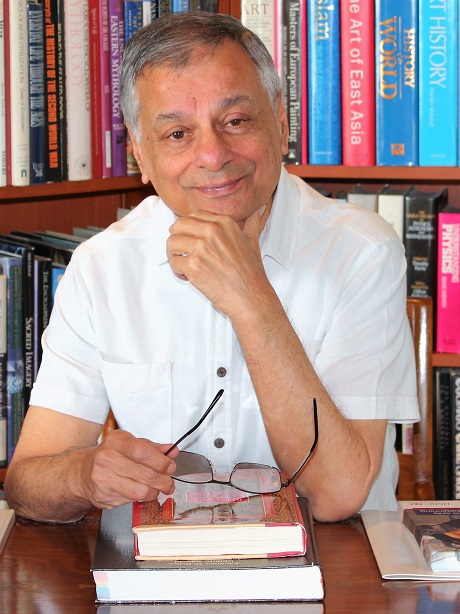
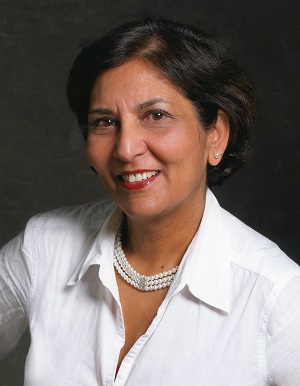
Dr. Azim Jiwani
Dr. Azim Jiwani worked in health care and global health development for several decades, holding various leadership positions in academic, hospital, and community settings. His work included teaching, research, medical administration, strategic planning, advocacy, consultancies, and advisory roles. Dr. Jiwani held senior faculty positions with the Aga Khan University (AKU) and at the University of British Columbia in the Faculty of Medicine as a clinical professor. He interacted with many local, national, and multilateral organizations, including the World Health Organization (WHO), the United Nations, universities, and global health institutions-and he continues to play a consulting and voluntary advisory role in health care, education and international development.
As an avid traveller, Dr. Jiwani’s journeys have taken him to locales in Europe, Asia, Americas, Africa, the Middle East, Central Asia, Australia and New Zealand, where he explored local cultures, traditions, social, historical and environmental aspects of life and development. He has lectured at many higher learning institutions, professional organizations, civil society groups, and community groups. His interests include natural sciences, moral philosophy, architecture, civilizational histories, and anthropology. Dr. Jiwani lives in West Vancouver, British Columbia, with Nilu, his wife of 45 years. They have two daughters and five grandchildren.
Calling all Ismaili Authors
We encourage Ismaili writers to introduce their books in a similar format as has been done in the post above. Please also see the series launch article and submit your responses to Malik at mmerchant@simerg.com. All submissions will be acknowledged. If a writer has published multiple books, each book will be highlighted in a separate article, and not combined with other books into one post. All writers should include a brief profile with a portrait photo.
The Ismaili Authors’ Series so far (in chronological sequence, oldest article first):
Before departing this website please take a moment to review Simerg’s Table of Contents for links to hundreds of thought provoking pieces on a vast array of subjects including faith and culture, history and philosophy, and arts and letters to name a few. Also visit Simerg’s sister websites Barakah, dedicated to His Highness the Aga Khan, and Simergphotos.
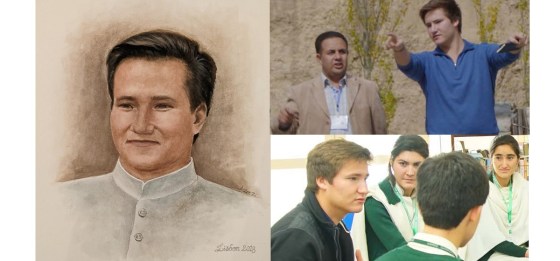
Simerg’s sister website Barakah is delighted to present a pictorial overview of Prince Aly Muhammad Aga Khan’s involvement with the projects of the Ismaili Imamat. This is a truly inspiring piece about the Prince’s life as a youth, during which he has visited several parts of the world, and has made two eye-opening documentaries on the work of the Aga Khan Development Network in culture as well as the challenges faced by people living in some of the remotest corners of this earth. The post also includes a superb artwork portrayal of Prince Aly Muhammad by Vancouver’s Ismaili artist Aziz Khanbhai. Please read this special piece by clicking on Prince Aly Muhammad or on the photo below.
Mawlana Hazar Imam, His Highness the Aga Khan, introduces Her Majesty Queen Elizabeth II to Prince Aly Muhammad and members of his family, Prince Hussain, Princess Salwa and Prince Rahim during his visit to Windsor Castle in 2018. Photo: AKDN/Gary Otte. Please click on photo for piece on Prince Aly Muhammad.
Date posted: March 6, 2022.
_________________
Before departing this website please take a moment to review Simerg’s Table of Contents for links to hundreds of thought provoking pieces on a vast array of subjects including faith and culture, history and philosophy, and arts and letters to name a few. Also visit Simerg’s sister websites Barakah dedicated to His Highness the Aga Khan, and Simergphotos.
1. Video and Text of Speech by Princess Zahra Aga Khan, Trustee, Aga Khan University
“….the hope we feel today is warranted by you, the graduands. By your hunger for knowledge. Your compassion for your patients. Your joy in sparking curiosity in your students. And your zeal to find the facts and share them with your fellow citizens, without fear or favour” — Princess Zahra Aga Khan (watch video and read speech excerpts, below)
“The graduation of the Class of 2021 is a watershed in the lives of its members and their families. And the installation of President and Vice Chancellor Sulaiman Shahabuddin is a milestone in the history of the Aga Khan University. This is therefore a doubly joyous day – the kind that comes along once in a very great while.
“I will be speaking today on behalf of the University’s Chancellor, His Highness the Aga Khan. I would like to convey the Chancellor’s deep gratitude, and my own, to the Government of Kenya and the Commission for University Education for granting AKU its Charter. I am also delighted to welcome the founding members of the new AKU Kenya University Council, which will provide oversight of the University’s operations in Kenya.
“Today, I am filled with hope for the future. How could anyone not be, knowing what this day represents?
“President and Vice Chancellor Shahabuddin brings to his position a wealth of experience and a lengthy record of success in both East Africa and Pakistan. His career embodies the themes of opportunity, cross-cultural connection, and commitment to improving quality of life that define AKU and the Aga Khan Development Network.
“Already, he has begun to build on the strong foundations laid by former President Firoz Rasul. Moreover, he now enjoys the wise counsel of University Council Chairman Moyez Alibhai and of the new Chairman of the AKU Board of Trustees Zakir Mahmood.
“It is therefore with great pleasure that I welcome President Shahabuddin to his new role; thank former President Rasul; and congratulate Chairman Alibhai and Chairman Mahmood on their recent appointments. I also wish to thank our retiring Chairman of the Board, Dr. Haile Debas, for his extensive contributions to the University’s development for the past 12 years.
“It is with equally profound pleasure that I welcome each of you, our graduands, to the ranks of the alumni of the Aga Khan University. Your fellow graduates are changing lives from rural clinics and classrooms to the laboratories of world-renowned universities. I know how proud you are to be part of this illustrious tradition, and how proud your families are to be watching you today.
“This AKU class has worked harder for this moment than any other ever has. The last two years challenged you with lockdowns, quarantines, and isolation. But you found new ways to learn, to connect, and to maintain your motivation amid each new wave of the pandemic.
“The diplomas and degrees you are about to receive testify to your fortitude and agility. In the years to come, you will always be able to look back and draw strength from your achievements during this momentous period.
“Convocation is a celebration of individual accomplishment. But it also reminds us of our connections and our dependence on one another. Each of us is a link in a chain that extends backwards and forwards in time, and outward across borders and boundaries. That is especially true at AKU, as this globe-spanning event testifies.
“With these bonds in mind, I wish to thank all those who have made it possible to send these 664 women and men into the world to educate, enlighten, and care for their fellow human beings. Our faculty and staff have demonstrated extraordinary dedication to our students and to our mission. Our front-line health professionals have displayed exemplary courage in the face of Covid-19 – I cannot thank them enough and on behalf of the Chancellor for their many sacrifices. We are grateful to our alumni, partners, and volunteers. And we are profoundly thankful for the generosity of our donors.
“I began by speaking of hope. The hope I refer to is not an idle wish. It is the hope one feels when there is strong evidence for optimism. It is the hope our Chancellor, His Highness the Aga Khan, has called “probably the single most powerful trampoline of progress.”
“That is the hope that I believe unites us today. It is warranted, first, by the history and impact of the Aga Khan University. AKU will mark its 40th anniversary next year. From a seed in the mind of our Chancellor, it has blossomed into an institution that spans three continents and stands at the heart of the AKDN’s unwavering commitment to the countries that it serves. In Kenya, that commitment is vividly symbolized by AKU’s towering new University Centre in Nairobi — a world-class academic facility that is one of the largest investments in higher education in the country’s history.
“Globally, AKU has educated over 18,000 individuals. It cares for more than 2 million patients every year in internationally accredited hospitals, and was recently ranked among the top 100 universities in the world in public health. It also serves as a trusted advisor to government and is a powerful advocate for pluralism and for women’s empowerment.
”During the pandemic, the value of the University’s capacity for cutting-edge inquiry has never been clearer. Its researchers have made important contributions to the fight against Covid-19. And AKU is also contributing to another crucial battle, one that our Chief Guest Peter Kalmus will be talking about shortly – the battle against climate breakdown. Along with the AKDN as a whole, AKU has committed to becoming carbon neutral in its operations by 2030 — making it one of the first institutions in Pakistan and East Africa to do so.
“In short, the University’s record is surely one to instill hope.
“But most of all, the hope we feel today is warranted by you, the graduands. By your hunger for knowledge. Your compassion for your patients. Your joy in sparking curiosity in your students. And your zeal to find the facts and share them with your fellow citizens, without fear or favour.
“I have no doubt that the hope that fills our hearts, and the pride that swells our chests, will be amply confirmed by your achievements in the years to come. On behalf of the Chancellor, my thanks to all of you.”
Read full speech by Princess Zahra Aga Khan at SOURCE.
~~~~~~~~~~~
2. Video and Text of Speech by Chief Guest, Climate Scientist Peter Kalmus
“We need to help each other wake up, and quickly. We need a billion climate activists. We need a huge number of engaged, passionate, courageous climate activists. We need to come together, with courage, conviction, and creativity, to stop the meteor that’s hurtling toward us” — Peter Kalmus (watch video and read speech excerpts, below)
“Greetings and congratulations! What an honor it is to address you today, on this joyful occasion! Great job to all of you! I share your commitment to improving the lives of all beings on this Earth. I want to acknowledge AKU’s work to improve quality of life in the developing world, as well as the leadership that Prince Rahim and the AKDN are demonstrating in addressing climate change and environmental degradation.
“Now, this strikes me as a strange time in our planet’s four-and-half-billion-year history for giving convocation speeches.
“As a climate scientist, I see a meteor hurtling directly toward our achingly beautiful planet, and I don’t yet see society or world leaders mobilising to stop it. Fossil fuels are heating our planet at a rate of a tenth of a degree Celsius every five years. This may not sound like much, but for an entire planet to heat this quickly is both astounding and terrifying.
“The disasters we are living through now are just the beginning. At every additional fraction of heating, climate disasters will come faster and hit harder. Like gut punches to our global society, they will increasingly stress infrastructure systems, economic systems, energy systems, food and water systems, political systems and ecosystems.
“The proximal cause of climate destruction is burning fossil fuels. Before we had a fossil fuel industry, the planet was in energy balance. The same amount of energy came in as sunlight as went back out to space, so it stayed at a constant temperature. Burning gas, coal, and oil has changed that. It continues pushing our planet further and further out of balance, forcing it to heat up.
“The crisis has been overwhelmingly caused by the Global North, with impacts hitting the Global South soonest and hardest. And powerful vested interests are doing what they can to block action. So, what can we do?
“This is a question I’ve been grappling with for a very long time.
“Sixteen years ago, I was a physics PhD student in New York City, in love with the universe and its mysteries, overjoyed to finally be part of the noble quest for human knowledge. I was interested in cosmology — the big questions, where we come from, and where we’re going.
“The year 2006 brought two big changes to my life. First, I became a dad, which was expansive. It connected me to the future. And second, I heard a lecture about how the Earth was out of energy balance and heating up. This lecture rattled me. Earth is out of energy balance? This is absolutely monumental news, literally the biggest story on the planet. It was then, and it’s even more so today.
“I started learning about climate change. I tried to get my university to switch to electricity that came from wind power. I could only find one other person on campus who supported my cause – and not for a lack of trying, because back then, hardly anyone cared about climate change. Social norms around climate hadn’t started to shift.
“Now, social norms are unspoken but very powerful shared beliefs. They’re like society’s subconscious mind. For example, the belief that it’s normal to burn fossil fuels. Sure, it’s destroying our planet — but it’s a normal thing to do. Everyone’s doing it.
“Social norms are like the water surrounding a fish. We swim in them, every moment. They create society, they shape its systems and its power structures, but most of the time, we don’t even notice them. They are partly responsible for climate and ecological breakdown, as well as humanity’s breathtaking lack of response. How much we can still save will be largely determined by how quickly we can shift these norms.
“Now, as the years ticked by, I grew ever more alarmed and frustrated about climate inaction. By 2010, burning fossil fuels had become deeply upsetting to me. The connection between fossil fuels and worsening climate impacts was just too clear. So I started reducing my emissions systematically, scientifically, starting with the biggest things first: giving up air travel, biking instead of driving, and slashing my energy use at home, among many other changes. This taught me three valuable lessons. First, for me it was fun to live with less fossil fuel. It engaged my curiosity, led me to new hobbies and caused me to make new friends. Second, I experienced how we all rely on vast impersonal systems for all of our daily needs – food, water, clothes, streets – everything. To be able to get to zero fossil fuel use, all those systems are going to have to change. And third, very few people were actually willing to follow me in these sorts of changes.
“When I started, I hoped my actions would inspire other people. But I’d say roughly maybe one out of a hundred people are willing to systematically reduce their emissions. So, while I think it’s a great thing to do, it simply isn’t enough on its own.
“By 2012, I’d become so alarmed that I couldn’t focus on astrophysics any longer, so I switched into climate science. I also started speaking out as much as I could. I was told that scientists aren’t supposed to speak out, but I did it anyway. How could I not speak out, seeing what I see, and knowing what I know?
“We need to help each other wake up, and quickly. We need a billion climate activists. We need to build a global climate movement that’s even stronger than the fossil fuel industry. We need a huge number of engaged, passionate, courageous climate activists. We need to come together, with courage, conviction, and creativity, to stop the meteor that’s hurtling toward us. No one is safe from global heating. There is no hiding from it on this tiny, connected, pale blue dot of a planet. The only safety will come from stopping it, and doing this will require deep changes in how humanity organizes as a society, and how we live upon this Earth.
“Climate work will be humanity’s main task for the rest of this century: healing the Earth, restoring wild places, adapting to new disasters, and figuring out how to live side by side with each other and all the other species here, who have just as much of a right to be on this planet as we do. There’s infrastructure to build, technologies to invent. There are new legal and moral and even spiritual frameworks to come up with. There is new art to make, new economics to devise, and new stories to tell. We need institutions to devise new disciplines and new ways of thinking, rapidly reduce their emissions, educate the public, and create social change. AKU is already playing a hugely important role in the Global South and must keep going.
“We also need you, the graduates of the Aga Khan University — among the best and the brightest the world has to offer — to devote your lives to solving the greatest crisis humanity has ever faced. Contribute to global knowledge and innovation. Demand climate justice. Have the courage to cause good trouble. Be the voice for the voiceless, for all the species that are going extinct and for future generations.
“Climate disasters will get worse before they get better. But we could stop all of this, if we would make the collective choice to treat climate breakdown as an emergency. Imagine in the future that we’ve turned this corner, that the living Earth is in the process of healing, that our species was on the brink of destruction but came to its senses at the last moment. I foresee that this will bring a tremendous feeling of global solidarity, of cosmic solidarity with life in the universe. My dream is that I will live to experience a time when we are finally on the right path, toward a more mature humanity, a kinder and more grateful humanity, full of joy simply to be here, on this Earth – one strand in the tapestry of life.
“I know that a much better world is possible. No law of physics prevents it. It’s up to us. It’s the journey of a lifetime, and it beckons to each and every one of you. Go out there and do it.”
3. Video and Text of Speech by Aga Khan University President Sulaiman Shahabuddin
“We continue to believe, as we always have, in the power of knowledge to solve humanity’s biggest problems. And we continue to believe that AKU, as a powerful creator and disseminator of knowledge, can make an extraordinary contribution to improving life in Africa, Asia, and beyond.” — Sulaiman Shahabuddin (watch video and read speech excerpts, below)
“I am profoundly honoured to have been chosen to serve as President and Vice Chancellor by our Chancellor, His Highness the Aga Khan. As this medallion reminds me, I have been entrusted with a great responsibility. I am humbled by His Highness’s confidence in me. I pledge to do everything in my power to prove that it has been well placed.
“What a day this is! I am profoundly honoured to have been chosen to serve as President and Vice Chancellor by our Chancellor, His Highness the Aga Khan. As this medallion reminds me, I have been entrusted with a great responsibility. I am humbled by His Highness’s confidence in me. I pledge to do everything in my power to prove that it has been well placed.
“I am deeply grateful to you, Princess Zahra, for honoring us with your presence. Your participation speaks to the bright future of our graduands and our University. It adds luster to an already brilliant day.
“Most of all, I am excited by the opportunity I have been granted to carry forward the Chancellor’s vision, by AKU’s role as a powerful force for good in the world, and by the tremendous potential of all of you, our graduands.
“I remember watching my daughter, Anjiya, graduate from AKU’s Medical College. By my side was my wife, Zeenat, herself an alumna of the School of Nursing and Midwifery. Little did I know that I would be standing at this podium a few short years later while they and my son Basim look on. Certainly, when I stepped onto the AKU campus as a 22-year-old purchasing officer and a newly minted MBA, I could not have imagined that one day I would return to the University in my present role.
“But that just demonstrates the transformations that AKU makes possible.
“Each of you, our graduands, has taken your own unique path to this moment. Some of you are the first in your family to attend university. Others are carrying on a family tradition as the sons and daughters of teachers, nurses, or doctors. For some, our campus was their first home after leaving home. For others, AKU represented a return to academia after years in the workforce.
“I want to take a moment to acknowledge your individual journeys. The moments of doubt – the first time you got back an exam paper covered in questions and comments and you thought to yourself, “I’ve got work to do!” The moments that galvanized your confidence – that day in the classroom, in the newsroom, in the library or in the clinic when you achieved a new level of insight or excellence.
“I also want to recognize that you are part of a collective – one that stretches across three continents. As members of the Class of 2021, you have forged lasting relationships, supported one another’s academic development, and built a shared commitment to helping those in need.
“And now you are ready to make your mark on your professions and the world.
“This is a time of transition for our graduates. It is also a time of transition for AKU. But a change in leadership does not mean a change in the University’s guiding principles.
“We continue to believe, as we always have, in the power of knowledge to solve humanity’s biggest problems. And we continue to believe that AKU, as a powerful creator and disseminator of knowledge, can make an extraordinary contribution to improving life in Africa, Asia, and beyond.
“As our Chancellor, His Highness the Aga Khan told the Class of 1994, “At its best, the university is linked to the welfare of the society in which it is based. While taking knowledge from all quarters, such a university applies that knowledge to the solution of the pressing problems of the world, both at home and abroad.”
“That is, in fact, what AKU is doing. Allow me to elaborate:
“In East Africa, AKU and the University of Michigan are using cutting-edge artificial intelligence to identify individuals at risk of future health problems. We are not the only ones who think that project has tremendous potential – it just received more than $6 million in funding from the National Institutes of Health in the United States.
“In Pakistan, AKU reduced newborn death rates by more than 15 percent in eight rural districts that are home to 14 million people. How did we do it? By sharing our knowledge with hundreds of public and private health facilities and thousands of community health workers.
“AKU researchers are using stem cell science and gene editing to develop new treatments for blood disorders and cancers such as leukaemia. They have analyzed the test scores of 15,000 students to show which factors improve performance in math and science. They are studying indigenous efforts to protect the rights of minorities in Muslim-majority countries.
“As Princess Zahra highlighted a moment ago, we are also working to slash our carbon emissions and become one of the few universities in the world to achieve carbon neutrality. It is an ambitious goal that will require tremendous innovation. But we are committed to achieving it, and to helping other universities to follow in our footsteps.
“In the coming years, we will launch new undergraduate medical and nursing education programmes in East Africa. Build a new University Center and Hospital in Kampala. And open our Faculty of Arts and Sciences in Karachi to prepare young men and women as leaders with a unique education that spans the social sciences, natural sciences, and the arts.
“As all these examples show and as AKU approaches its 40th anniversary, we remain faithful to our founding vision, while acting boldly to meet new challenges.
“I am grateful to all those who make our success possible. The policymakers who create the enabling environment in which we work, among them our guest of honor, East African Community Secretary General Dr Peter Mathuki. Our generous donors, volunteers, alumni, and partners, including our fellow agencies of the Aga Khan Development Network. Nothing has given me more pleasure in my first months in office than getting to know and working with the diverse members of the AKU family.
“Ladies and gentlemen, the University’s biggest contribution to the countries we serve will always be our graduates.
“Graduands, our alumni – your predecessors – walked the same corridors and courtyards that you have walked, and learned in the same clinics and classrooms. They wore the same green and gold that you wear now. And every day, they are proving just how powerful an AKU education can be.
“They are founding schools and clinics in underserved communities. Winning international recognition for their teaching, research, and leadership. Serving in government and shaping public policy. Launching high-tech startups and writing award-winning poetry. Here at AKU, they are among our most valued leaders, scholars, and practitioners. Their record proves that you can achieve your most audacious ambitions.
“Today is not an end. Your journeys are just beginning. Now is the time for you to show the world what an AKU graduate can do. Thank you.”
Read full speech by Sulaiman Shahabuddin at SOURCE.
For complete coverage of the 2021 Global Convocation, please click HERE.
Date posted: March 3, 2022.
Featured image at top of post: The Seal of Aga Khan University is a visual representation of the principles which underlie the founding of the University. The circular form of the Seal, with its different levels of imagery contained in concentric circles, has its visual roots in the rosettes of early Islamic periods. The circle also symbolises the world and reflects the international presence of the University. At the centre of the Seal is a star, or sun. Light is a universal symbol for the enlightenment that education provides. The light emanating from the star is also symbolic of Nur (Divine light). The star incorporates 49 points to commemorate the University’s founding by His Highness Prince Karim Aga Khan, the forty-ninth Imam of the Ismaili Muslims.The outer ring circumscribes a Quranic Ayat rendered in classic thuluth script and reads as follows:
“And hold fast, All together, by the rope Which God (stretches out for you), And be not divided among yourselves, And remember with gratitude God’s favour on you: For ye were enemies And He joined your hearts In love, so that by His grace Ye became brethren” — Sura 3, Ayat 103
_____________________
Before departing this website please take a moment to review Simerg’s Table of Contents for links to hundreds of thought provoking pieces on a vast array of subjects including faith and culture, history and philosophy, and arts and letters to name a few. Also visit Simerg’s sister websites Barakah dedicated to His Highness the Aga Khan, and Simergphotos.
“….the very concept of providing refuge is not and should not be based on factors such as physical proximity or skin color, and for a very good reason. If our sympathy is activated only for welcoming people who look like us or pray like us, then we are doomed to replicate the very sort of narrow, ignorant nationalism that war promotes in the first place.” — Moustafa Bayoumi, The Guardian
UNHCR Dismayed at Mistreatment of non-European Refugees
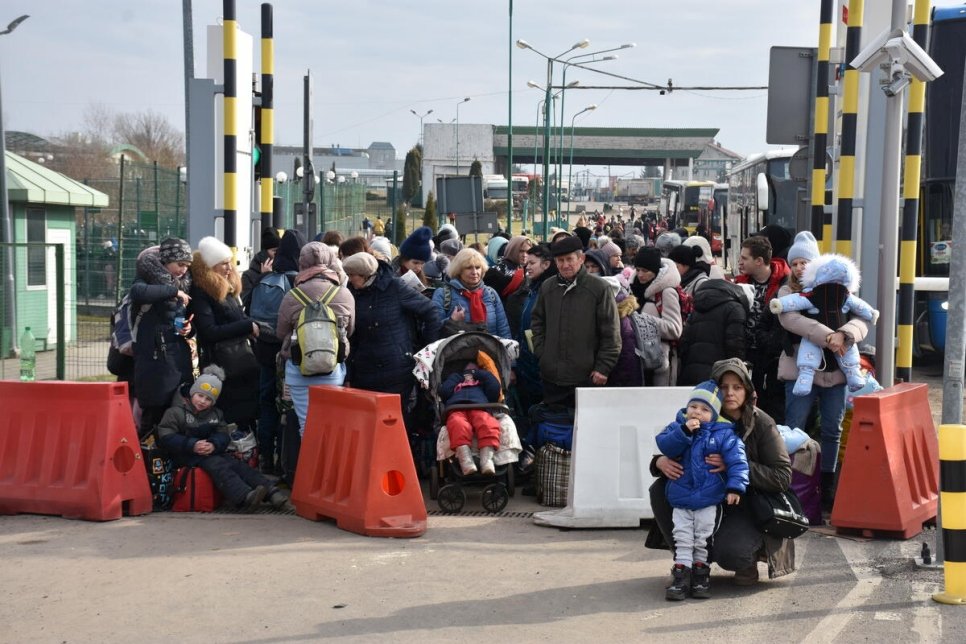
The UN Refugee Agency, UNHCR, has expressed dismay over reports that foreigners fleeing Ukraine amid its war with Russia are experiencing mistreatment and pleaded for more humanity and compassion for non-Europeans and refugees from other nations. The UN High Commissioner for Refugees Filippo Grandi spoke out about reports that have emerged of discrimination against non-Ukrainian or non-European refugees at some entry points and people’s reference to them using discriminatory or racist terminology. He quoted UN Secretary-General Antonio Guterres as saying that “there should be absolutely no discrimination between Ukrainians and non-Ukrainians, Europeans and non-Europeans,” as all are at risk.
Moustafa Bayoumi has analyzed the racism factor in the way the media has been reporting the refugee situation and asks: “Are Ukrainians more deserving of sympathy than Afghans and Iraqis?” And he observes, “Many seem to think so,” based on his in-depth look at what has been said and written in the media as hundreds of thousands of refugees flee Ukraine to seek protection in neighbouring countries following Russia’s invasion of Ukraine a week ago.
“What all these petty, superficial differences – from owning cars and clothes to having Netflix and Instagram accounts – add up to is not real human solidarity for an oppressed people. In fact, it’s the opposite. It’s tribalism. These comments point to a pernicious racism that permeates today’s war coverage and seeps into its fabric like a stain that won’t go away. The implication is clear: war is a natural state for people of color, while white people naturally gravitate toward peace” — Moustafa Bayoumi, The Guardian
Moustafa Bayoumi, is professor of English at Brooklyn College, City University of New York and contributing opinion writer at Guardian US as well as author of the award-winning books How Does It Feel To Be a Problem?: Being Young and Arab in America and This Muslim American Life: Dispatches from the War on Terror. Please read Bayoumi’s complete article in The Guardian by clicking They are ‘civilised’ and ‘look like us’: the racist coverage of Ukraine.
Date posted: March 3, 2022.
______________________
Before departing this website please take a moment to review Simerg’s Table of Contents for links to hundreds of thought provoking pieces on a vast array of subjects including faith and culture, history and philosophy, and arts and letters to name a few. Also visit Simerg’s sister websites Barakah, dedicated to His Highness the Aga Khan, and Simergphotos.
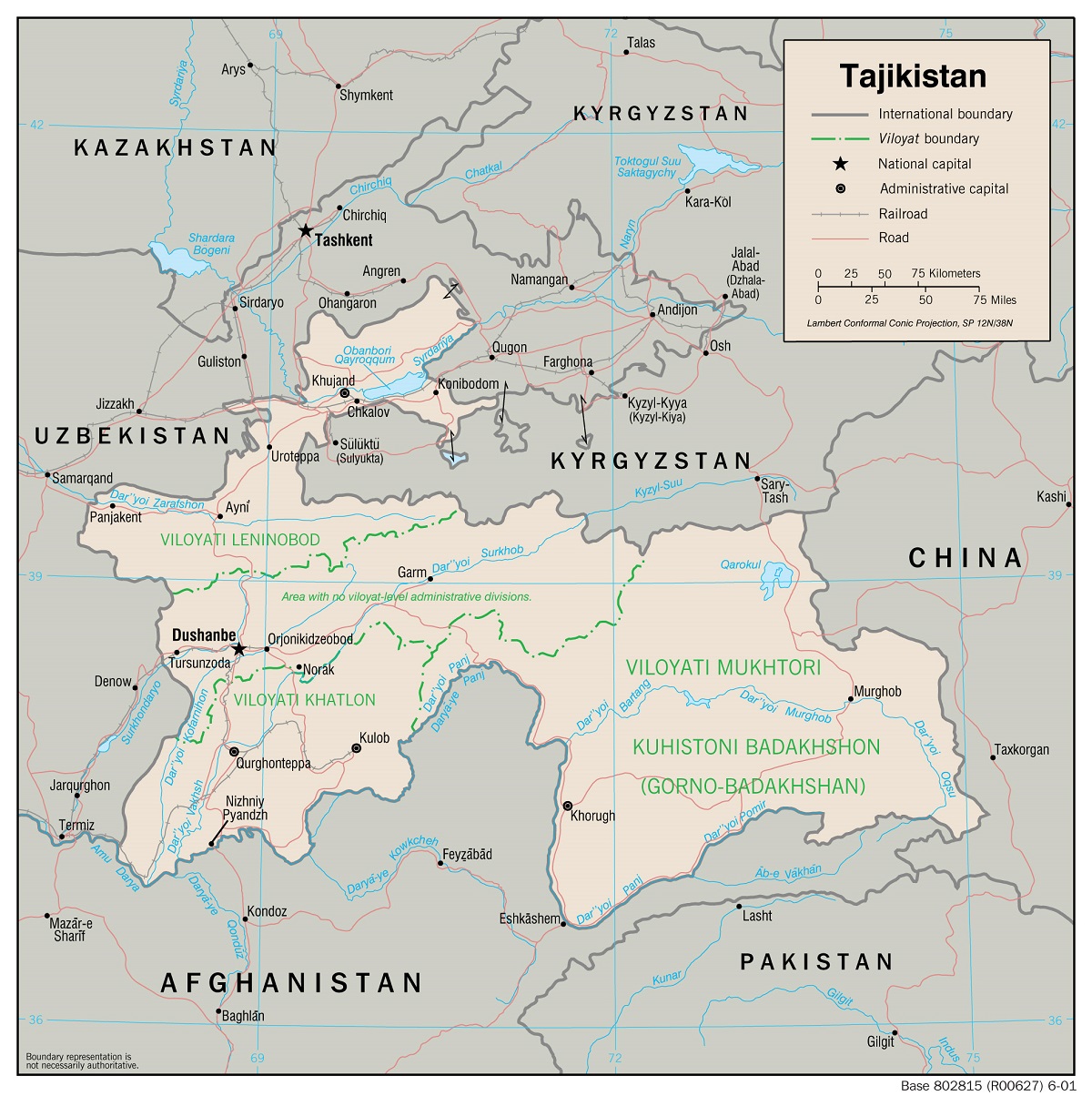
“Given the great moral authority of His Highness Prince Karim Aga Khan over the Ismaili population of Badakhshan, Special Envoy Piriz-Ballon [of UN Secretary General Boutro Boutro Ghali], and Special Representative Gerd Merrem [of Germany] consulted him on issues related to the peace process. His visits to the country, informal mediating role and moderating influence significantly contributed to the success of the peace process. The Aga Khan Foundation made major contributions to alleviating the humanitarian crisis, particularly in the eastern part of the country [i.e Gorno-Badakhshan, see map, below].” — Vladimir Goryayev (note: words in square brackets inserted for clarity — ed.)
Some readers, and especially those engaged in the research and study of Tajikistan, may already be familiar with the details of the civil war that broke out in 1992 following Tajikistan’s withdrawal from the Soviet Union on September 9, 1991. The civil war was at its peak during its first year and dragged on for five years, with different interest groups vying for control of the new state. An estimated 20,000 to 100,000 people were killed by June 1997 and about 10 to 20 percent of the population were internally displaced. The war devastated the country.
Very little, however, may be known about the peace process that was underway during this period of civil unrest. In the Accord issue of April 2001, published by Conciliation Resources, numerous authors take an in-depth look at what was an exceptionally well-coordinated peace process that involved local civil society, the international community and a newly established Commission for National Reconciliation. The 100 page PDF publication, “Politics of Compromise: The Tajikistan Peace Process” edited by Kamoludin Abdullaev and Catherine Barnes may be downloaded by clicking HERE.
Story continues below
Map of Tajikistan with surrounding countries from the Perry-Castañeda Library Map Collection, University of Texas. Click on map for enlargement.
In a chapter entitled “Architecture of International Involvement in the Tajik Peace Process,” from which the quote on Mawlana Hazar Imam, His Highness the Aga Khan, at the beginning of this post is taken, author Vladimir Goryayev examines the role of regional intergovernmental organisations, international NGOs, regional peacekeepers, and the UN’s special envoys, departments and humanitarian agencies played in the peace process. He concludes by setting out the widely acknowledged strengths of the Tajik model of international involvement as well as some lesser known problems with it. Please click HERE to download Vladimir Goryayev PDF article or read the article by visiting THIS PAGE.
Date posted: March 1, 2022.
_____________________
Before departing this website please take a moment to review Simerg’s Table of Contents for links to hundreds of thought provoking pieces on a vast array of subjects including faith and culture, history and philosophy, and arts and letters to name a few. Also visit Simerg’s sister websites Barakah, dedicated to His Highness the Aga Khan, and Simergphotos.
____________________
Featured photo at top of post
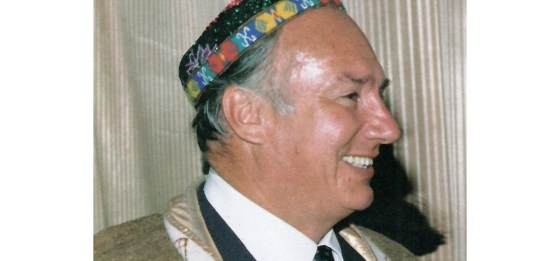
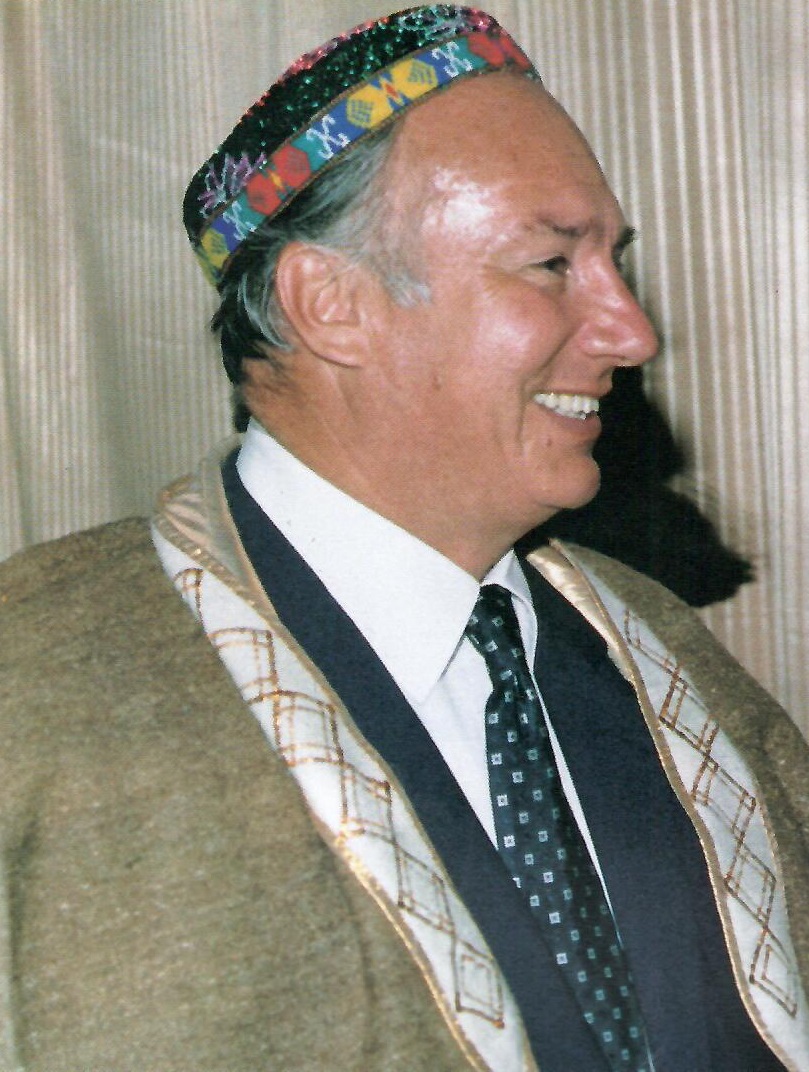
Mawlana Hazar Imam, His Highness the Aga Khan, pictured in Tajikistan during his first historic visit to the country in May 1995. Photo: The Ismaili, Mawlana Hazar Imam’s Visit to Central Asia, 22-31 May 1995.
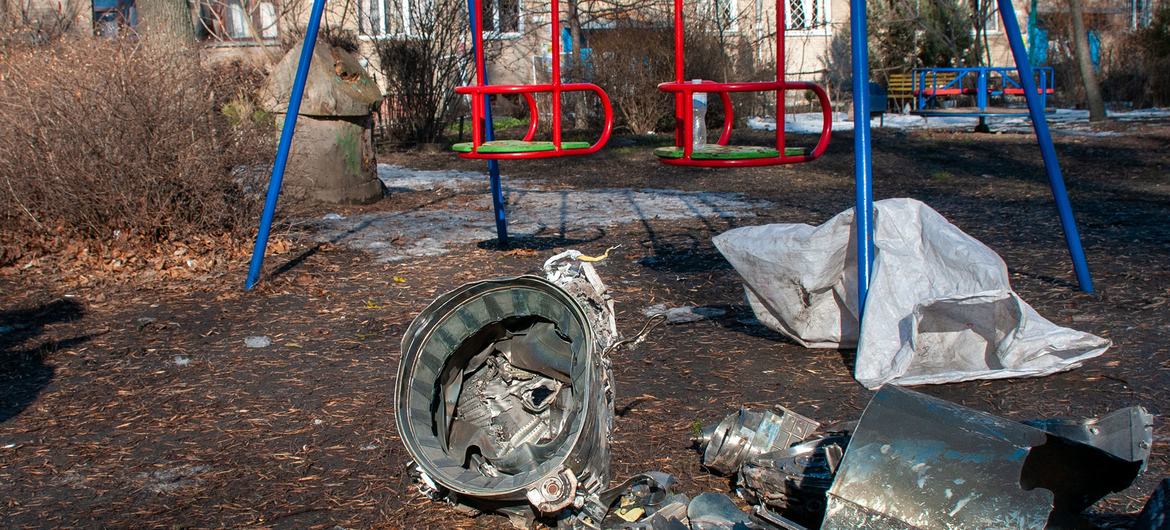
For the past week, the world’s attention has dramatically shifted from the misery that Afghanistan is facing to the invasion of Ukraine by the armed forces of Russia. The Ukraine war is indeed very very serious and frightening, especially with Russian President Putin asking his country’s nuclear deterrent forces to be on high alert. Hundreds of thousands of Ukrainian residents are escaping from the war, and showing up as refugees in neighbouring countries. While this tragedy in Eastern Europe unfolds, we should also remain focused on the humanitarian crisis that is in Afghanistan.
Two countries facing humanitarian crisis — Ukraine and Afghanistan (both circled). Image: Map adapted from Perry-Castañeda Library Map Collection, University of Texas.
In addition to our special correspondent in Kabul sending us his reports in the form of Letter from Afghanistan (please see Simerg’s Special Afghanistan Page), we also rely on authentic and accurate coverage of Afghanistan from the world media. In this respect, we find the Voice of America (VOA) to be a reliable and very useful source of information through reports that are produced on its website from journalists such as Ayaz Gul in Islamabad, Ayesha Tanzeem, who heads VOA’s Pakistan and Afghanistan bureau in Islamabad, and Lisa Schlein in Geneva. They are fair and factual in their news and commentary about the situation in the country.
To keep our readers up to date about the various aspects of life in Afghanistan, we share below a compilation from stories that appeared on VOA this past week, between February 23 and February 27, 2022. Readers may access VOA’s full coverage as well as special episodes on Afghanistan by clicking on VOA: Central and South Asia.
1. Experts: More Than Half of Afghanistan’s Population Need Lifesaving Assistance
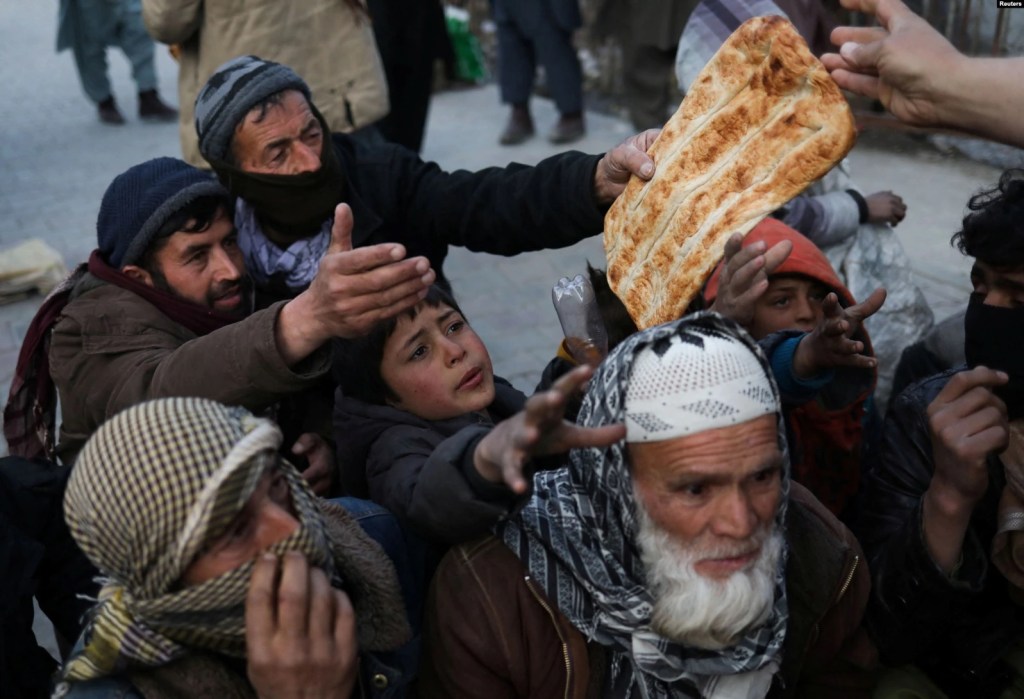
People reach out to receive bread, in Kabul, Afghanistan, January. 31, 2022. Photo: VOA file photo
By LISA SCHLEIN, VOA
Humanitarian experts warn that more than 24 million people, or 59% of Afghanistan’s population, are living on starvation diets and forced to take extreme measures to survive. Eight senior emergency experts from U.N. and non-governmental organizations recently concluded a five-day mission to Afghanistan. They describe the level of humanitarian needs as unprecedented. They say they are shocked at the enormity of human suffering they witnessed. The experts say many Afghans will not survive the dire conditions under which they are living without international support. And this, they note is severely lacking. The U.N. Office for the Coordination of Humanitarian Affairs (OHCA) reports only 13 percent of the United Nations’ $4.44 billion appeal for this year has been funded. OCHA spokesman Jens Laerke told VOA the competition for donor support from a myriad of countries including Ukraine, Yemen, and the Democratic Republic of Congo is intense and growing. Nevertheless, he said the plight of the Afghan people must not and cannot be ignored.
“People’s reserves are exhausted, forcing many into harmful coping mechanisms to survive, including child marriages and child labor. Women and girls in particular are affected with their human rights, participation in society, their ability to work, and access to education under threat,” he said. Laerke said the number of people requiring lifesaving assistance has risen 30% since the Taliban takeover of the country in August. He said the consequences of not responding to their needs are very stark. “It simply means that women who are pregnant will not have a hospital to go to for giving birth…We talk about girls and their access to school but here — this means that nobody goes to school… Peoples’ need for nutrition and food will not be met. People simply will not have enough to eat. They will starve,” he said. Laerke said donors’ fear that their money will go to the Taliban and not toward helping the Afghan people is unwarranted. He said all the money goes to the U.N. and private humanitarian organizations for which it is intended. Over the past months, he says aid agencies have been able to scale up their operations without interference to provide life-saving assistance to people in desperate need. (VOA full report HERE)
~~~~~~~~~~~~
2. All Public Universities in Afghanistan Open to Male, Female Students
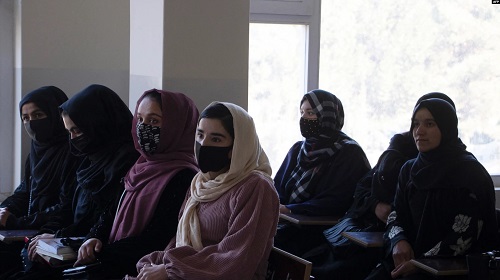
Students attend a class in the Badakshan University after Afghanistan’s main universities reopened, in Fayzabad on Feb. 26, 2022. Photo: AP via VOA
By AYAZ GUL, VOA
Public universities in Afghanistan’s colder areas, including Kabul, reopened Saturday, February 26, 2022, to both male and female students six months after the Islamist Taliban returned to power. The reopening marked the resumption of education in all of about 40 state-run universities in Afghanistan after Taliban authorities allowed university students earlier this month to return to their classes in provinces with a warm climate. The opening day at the country’s oldest and biggest university in the Afghan capital as well as campuses elsewhere was marred by low attendance and a lack of teaching staff. University administrations enforced gender segregation, including staggered operating hours and separate classes for men and women in accordance with the Taliban’s strict interpretation of Islam. Women must also wear hijabs. The Taliban banned co-education after taking control of Afghanistan on Aug. 15 [2021].
Students’ reaction was mixed after their first day back on Saturday. “I am very happy today as the Islamic Emirate reopened our universities,” Razia Kamal, a female student, was quoted by the Afghan TOLO news channel as saying. The Islamic Emirate is the official name of the Taliban government. In Kabul, student Haseenat said campus life for women was now very different than it was before. “There is no cafeteria anymore … we are not allowed to go to the university’s courtyard.”
“I am happy that the university resumed … we want to continue our studies,” said an English major who asked to be identified only as Basira. There was also a shortage of lecturers, she said, adding: “Maybe because some have left the country.” Tens of thousands of mostly educated Afghans have left the country fearing Taliban reprisals since the United States and other Western nations withdrew their troops in late August after a 20-year occupation.
In the western Afghan city of Herat, students also complained about a lack of tutors. “Some of our professors have also left the country, but we are happy that the university gates are open,” said Parisa Narwan, an arts major. The Taliban allowed males and females to resume education in some 150 private universities in the country in September under a gender-segregated classroom system. But they took time to reopen public universities, citing financial constraints and a lack of separate classrooms for men and women in accordance with Islamic Sharia law.
“It’s a positive move albeit late,” said Mohsin Amin, an Afghan policy analyst and researcher. “It’s of utmost importance to enhance the quality of education in all universities across Afghanistan for girls and address the scarcity of female teachers as well as professors.
“High schools for girls in all provinces should resume as soon as possible,” Amin told VOA. While the Taliban allowed boys to rejoin secondary schools in early September, most Afghan girls are still waiting for permission to resume class. Taliban officials have pledged to allow all girls to be back in school in late March, dismissing fears they intend to ban female education, as happened during the hardline group’s previous rule from 1996-2001. (VOA full report HERE)
~~~~~~~~~~~~
3. US to Allow All Commercial Transactions with Afghanistan
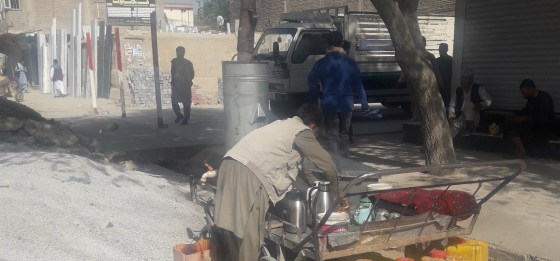
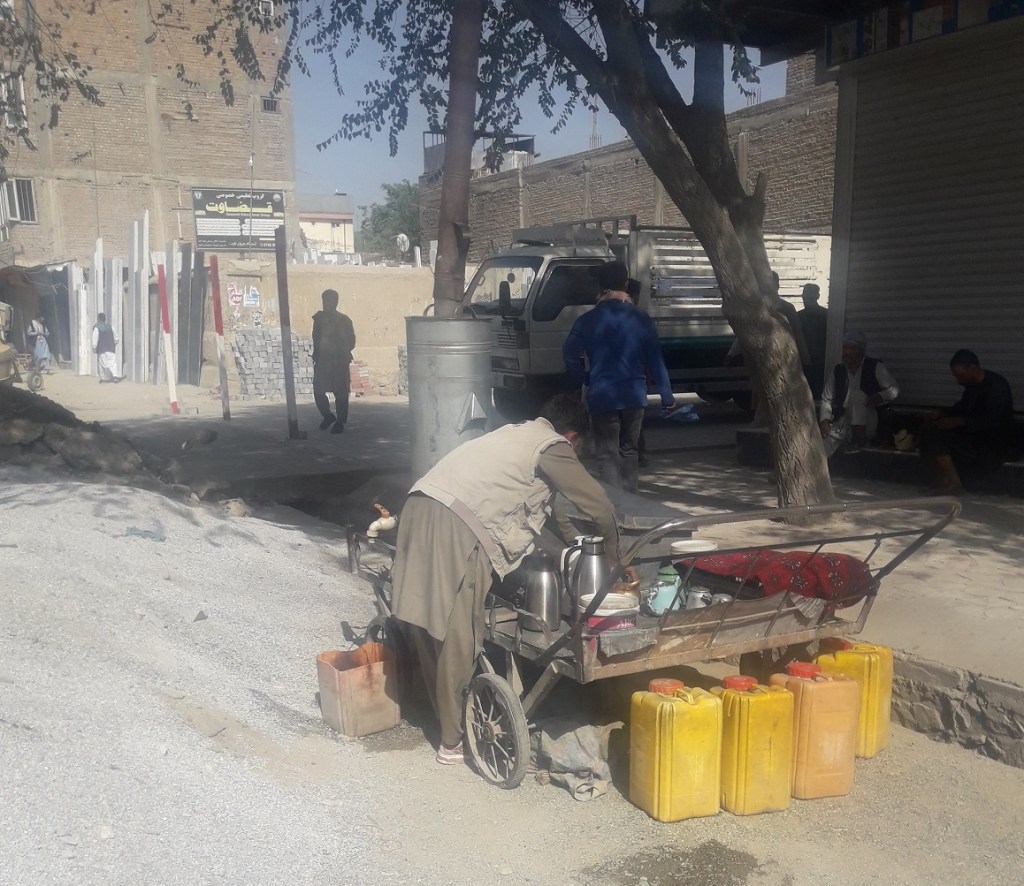
A man uses a makeshift carrier for providing tea drinking service at Kabul’s Kote Sangi commercial hub sector of the city. Sunday May 29, 2021. Photo: Simerg correspondent, Kabul.
By VOA NEWS
The U.S. Treasury on Friday [February 25, 2022] issued a new general license authorizing all commercial transactions with Afghanistan’s governing institutions, expanding recently announced exemptions from sanctions against the Taliban and the Haqqani network. The new license, the seventh issued by Treasury in recent months, allows “all transactions involving Afghanistan and its governing institutions that would otherwise be prohibited by U.S. sanctions,” the Treasury Department said.
The action came after talks between the Treasury Department and private sector executives doing business in Afghanistan and is similar to a series of sanctions exemptions granted in recent months to nongovernmental organizations. “Our action today recognizes that in light of this dire crisis, it is essential that we address concerns that sanctions inhibit commercial and financial activity while we continue to deny financial resources to the Taliban, the Haqqani Network, and other malign actors,” Deputy Treasury Secretary Wally Adeyemo said in a statement. Wide-ranging U.S. economic sanctions against the Taliban date to their first time in power in the 1990s. However, in the wake of the Taliban takeover of Afghanistan in August, the Treasury Department has issued a series of sanctions exemptions to allow Afghanistan to cope with a teetering economy and a humanitarian crisis. “There are too many Afghans starving today, too many Afghans who are cold; we all need to act faster,” a senior administration official told reporters during a press call announcing the general license. (VOA full report HERE)
~~~~~~~~~~~~
4. New Wave of COVID-19, Measles Outbreak Stretch Fragile Afghan Health System
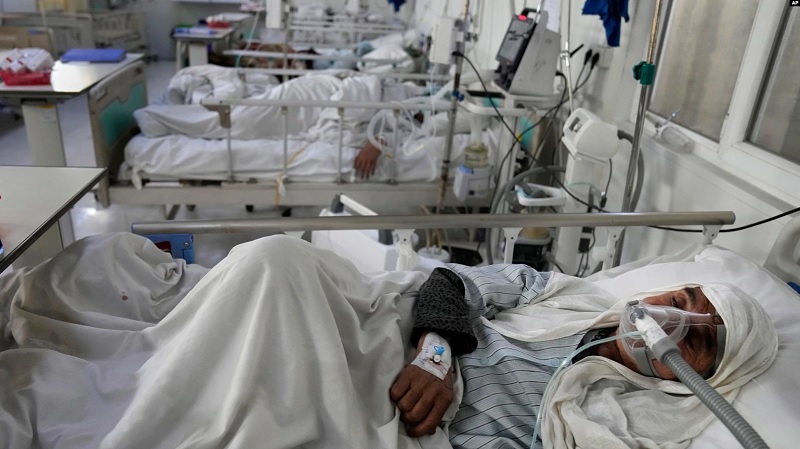
An Afghan patient infected with COVID-19 lies on a bed in the intensive care unit of the Afghan Japan Communicable Disease Hospital, in Kabul, Afghanistan, Feb. 7, 2022. Photo: AP/via VOA
By AYAZ GUL, VOA
Aid groups warned Wednesday [February 23, 2022] that a spike in COVID-19 infections and an alarming measles outbreak have compounded the health emergencies in Afghanistan, stretching the impoverished, war-torn country’s fragile health care system. The International Federation of Red Cross and Red Crescent Societies (IFRC) said in a statement that urgent global support, including health and testing services, as well as vaccinations, was needed to slow the spread of the coronavirus that is surging across Afghanistan.
“A new wave is hitting Afghanistan hard. Testing is inadequate, and the World Health Organization reports that almost half of tested samples are coming back positive, indicating an alarming spread of the virus,” the statement added.
It said the underfunded and understaffed national health system was struggling to cope with the surge in cases. Dozens of COVID-19 health facilities have closed because they didn’t have enough medicines, essential medical supplies and funds to pay the utilities and health workers’ salaries.
The aid group said that fewer than 10 of the country’s 37 public COVID-19 health facilities remained functional, and that they were unable to keep up with demand. Only 10% of the country’s estimated population of 40 million is fully vaccinated against the coronavirus. Mawlawi Mutiul Haq Khales, the acting president of Afghan Red Crescent, stressed the need for increasing the number of functional health facilities so that pressure can be eased on the few functioning hospitals.
“As the number of COVID-19 infections increases from cities to remote corners of the country, the international community needs to open up the doors to support critical health care, testing and other essential services before it’s too late for the people of Afghanistan,” Khales said. The IFRC noted in its statement that the measles outbreak has infected thousands and killed dozens of people in the last month in Afghanistan.
“The measles outbreak is alarming since Afghanistan is in the middle of one of the worst droughts and food crises in decades, leaving children malnourished and far more vulnerable to the highly contagious disease,” said Necephor Mghendi, IFRC’s country head.
Doctors Without Borders, an international charity known by its French acronym MSF, said in a separate statement that most of its programs, including those in southern Helmand and western Herat provinces, have seen high numbers of patients. It described the malnutrition rates as concerning.
“MSF is treating a high number of patients with measles in our projects in Helmand and Herat. Our teams are concerned about how the situation will progress unless more children are vaccinated against the disease,” the charity said. The ripple effect of long-running sanctions on the Taliban and the financial measures against the new rulers in Afghanistan are being felt nationwide, according to MSF. (VOA full report HERE)
Simerg has created a special page on Afghanistan where you will find links to all our posts published on Afghanistan since the Taliban takeover. Please click AFGHANISTAN.
Before departing this website please take a moment to review Simerg’s Table of Contents for links to hundreds of thought provoking pieces on a vast array of subjects including faith and culture, history and philosophy, and arts and letters to name a few. Also visit Simerg’s sister websites Barakah, dedicated to His Highness the Aga Khan, and Simergphotos.
Simerg’s series entitled “Books by Ismaili Authors” continues with Montreal based health care professional Naznin Rahemtulla Hébert’s biographical work “This is My Life.” We follow the same Q/A format as our earlier presentations of books written by Shairoz Lakhani, Shelina Shariff Zia, Ali Lakhani, Nizar Sultan, Nargis Fazal, Nazlin Rahemtulla, Azmina Suleman, Alnasir Rajan, Shafeen Ali, Mansoor Ladha, Zeni Shariff and Shamas Nanji. We invite Ismaili authors around the world to participate in this series, regardless of when their books were published. See details of the series HERE and submit your responses to Simerg’s editor, Malik, at mmerchant@barakah.com.
****************
“By reading this book, you will cry, you will laugh, you will be surprised, and you will travel the world with me. I can guarantee that everybody will relate to some parts of the book” — Naznin Rahemtulla Hébert
Click on photos for enlargement
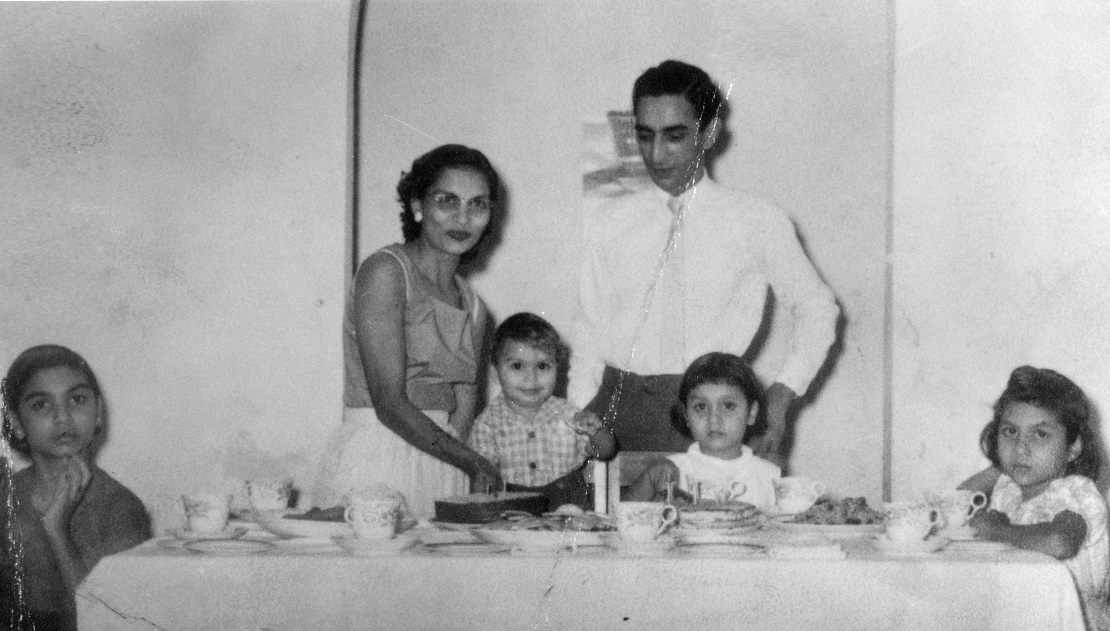
Naznin, author of “This is My Life” is seated on right in this family picture with her parents Zera (d. 1973) and Kamrudin (d. 2013), and siblings Ferial (left), Aziz and Azmina. Photo: Naznin Rahemtulla Hébert Family Collection
Simerg: What is behind the naming of the title of the book?
Naznin Rahemtulla Hébert: The title of my book “This is My Life” is my family biography. It is about my journey from East Africa to the UK and now in Canada. It is the most precious inheritance I can leave for my children and grandchildren.
Simerg: Why would you want me or my family members to read the book, and what will we all learn from it?
Naznin: To know where we are going, we must first need to know where we came from. I think by reading my book, readers will appreciate the sacrifices and the treacherous journey our ancestors made for a better life for their families and about the pioneers who paved their way. They will also learn about the journey and passion of one person which may perhaps inspire them to relate their own journey. Everybody has a story to tell.
Simerg: What inspired you to write the book?
Naznin: The pandemic of the year 2020. When the pandemic hit the world and brought it to a standstill it made me reflect on a couple of things: (1) The fragility of life and (2) a meaningful project to occupy my time and my mind. That is when I made the decision to document my journey and dedicate it to my children and grandchildren so that one day when they grow up and want to know who their nanima (grandmother) really was, it will all be there on paper.
Article continues below
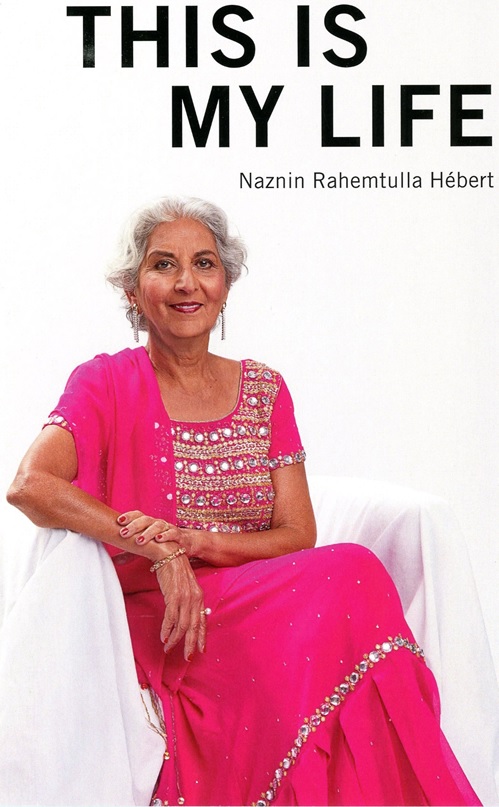
Front cover of Naznin Rahemtulla Hébert’s family biography “This is My Life.” 301 pp., self published, October 2021. Click on image for enlarged version.
Simerg: How can I purchase the book and what are its available formats?
Naznin: Readers may order the book by sending me an email at nazninh@gmail.com or visiting my Facebook page. The cost of the book is $ CDN 10.00 plus shipping, to any part of the world. Interested readers should contact me with their addresses and I will let them know the exact cost of the book, including shipping charges. The book is in soft cover, 301 pages long and was published in October 2021.
Simerg: How did you find a publisher for the book?
Naznin: I do not have a publisher. It was self-published.
Simerg: Did you hire an editor, an illustrator or did you do all the work by yourself?
Naznin: I had neither an editor nor an illustrator. I wrote it myself and self edited it. Luckily, I had a good collection of photos. I then sent my manuscript and the selected photos that I wanted to add to an infographiste who formatted it with my input. The whole document was then sent to the printers.
Simerg: How long did it take you to write This is My Life from start to finish and to begin marketing it?
Naznin: Twenty months. Before writing the book, I researched my ancestral history from the elderly members of the family since both my parents had passed on.
Article continues below
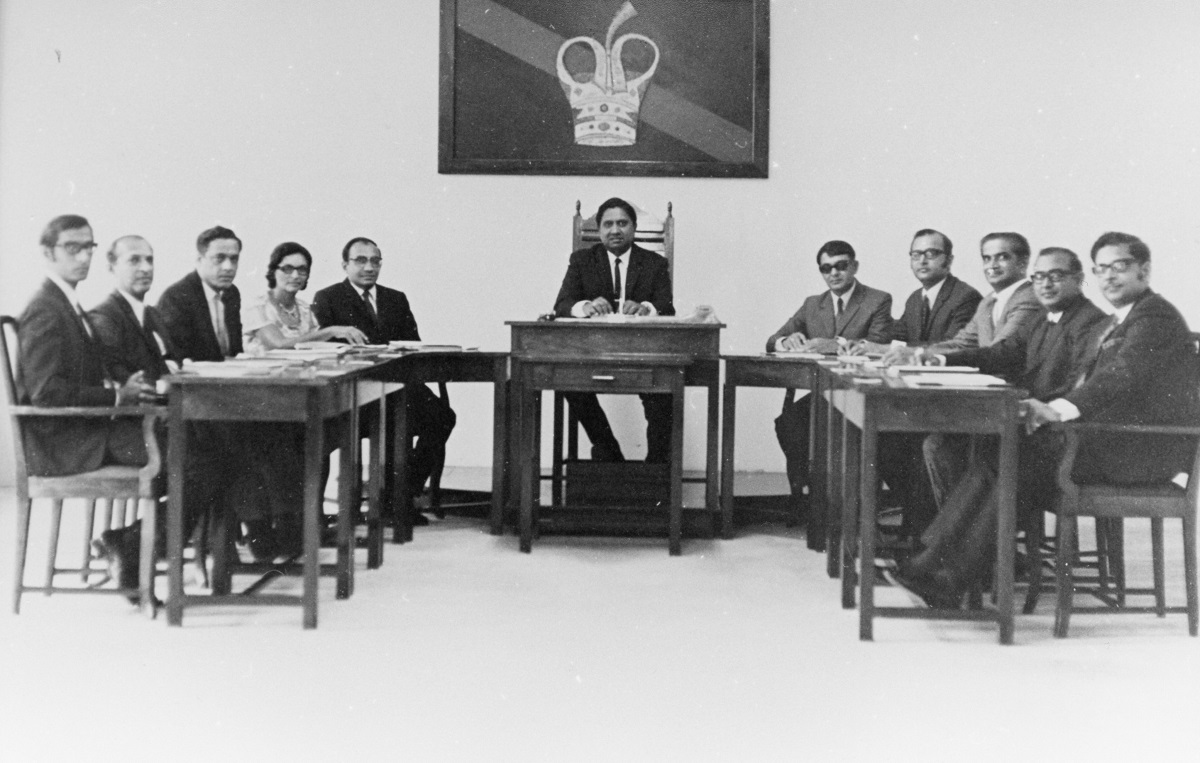
Zera Rahemtulla, seated 4th from left, the only lady member in the Aga Khan Council for Tanga, Tanzania (then Tanganyika) in a group photo with Ismaili leaders taken in Tanga Jamatkhana’s Council Chambers. The beautiful Taj (crest) of Mawlana Hazar Imam, His Highness the Aga Khan, overlayed on the Ismaili Flag, forms a backdrop in this historical photo from the 1950’s. Photo: Naznin Rahemtulla Hebert Family Collection.
Simerg: Tell us something more about your book.
Naznin: In this book you will find a comprehensive glossary and 200 photos. The book is full of joy, discovery, and many heartwarming moments. By reading this book, you will cry, you will laugh, you will be surprised, and you will travel the world with me. I can guarantee that everybody will relate to some parts of the book. I might also add that my mom, Zera Rahemtulla, was the inspiration behind the book. Although she had a short lifespan of only 47 years, she put everything into her life and accomplished a lot. She was a business woman in East Africa in the 1950’s and also very much involved with the Ismaili community. She was the only woman member of the Aga Khan Council in Tanga among 10 men, and also served as the chairperson of the Ismaili Women’s Association. All this while raising and lovingly looking after her 4 children. I am hoping that you will enjoy reading this book as much as I did, writing it.
Date posted: February 26, 2022.
_______________________
Naznin Hébert Rahemtulla
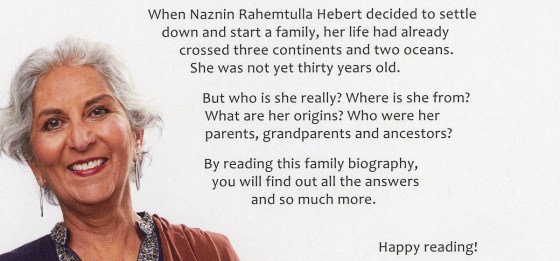
Born in Mogadishu, Somalia, Naznin Rahemtulla moved to Tanga, Tanzania, when she was only one year old. After completing her schooling in Tanga, she went to the UK to pursue a career in nursing and midwifery. She then settled in Montreal, Canada in the mid 1970’s and has worked as a health care professional for more than 35 years. In her role she has been fortunate to witness joy in the faces of new parents, as they bring the miracle of new life into the world.
During her long career, Naznin went on to became an International Board-Certified Lactation Consultant (IBCLC), one of the first ones in Quebec, and was responsible for founding the Lactation Consultant’s Association, the first Breastfeeding Clinic in Quebec and a peer support group. In the area of public heath, she has trained health care professionals in her region in breastfeeding as well has contributed as an evaluator for the Baby Friendly Certification with the Ministry of Health and Social Services.
Within the Ismaili community she has been a Mukhiani (congregational leader), a member of the Aga Khan Health Board as well as served in the funeral committee (referred to as the Mayat and Ghusal committee) where her responsibilities included giving courage and help to grieving family members who had lost their loved ones. She now finds joy from her partner in life, her 3 children as well as 5 grandchildren. The vibrant city of Montreal has been perfect for her for over 45 years. As a result of her settlement in Canada, she was able to assist her family to join her in Canada, and while in Montreal, she learnt a new language. The city also hosted the Olympic Games in 1976, shortly after arrival in 1975.
_______________
We welcome feedback from our readers. Please complete the LEAVE A REPLY form below or click Leave a comment. Your letter may be edited for length and brevity, and is subject to moderation.
Calling all Ismaili Authors
We encourage Ismaili writers to introduce their books in a similar format as has been done in the post above. Please also see the series launch article and submit your responses to Malik at Simerg@aol.com. All submissions will be acknowledged. If a writer has published multiple books, each book will be highlighted in a separate article, and not combined with other books into one post. All writers should include a brief profile with a portrait photo.
The Ismaili Authors’ Series so far (in chronological sequence, oldest article first):
Before departing this website please take a moment to review Simerg’s Table of Contents for links to hundreds of thought provoking pieces on a vast array of subjects including faith and culture, history and philosophy, and arts and letters to name a few. Also visit Simerg’s sister websites Barakah, dedicated to His Highness the Aga Khan, and Simergphotos.
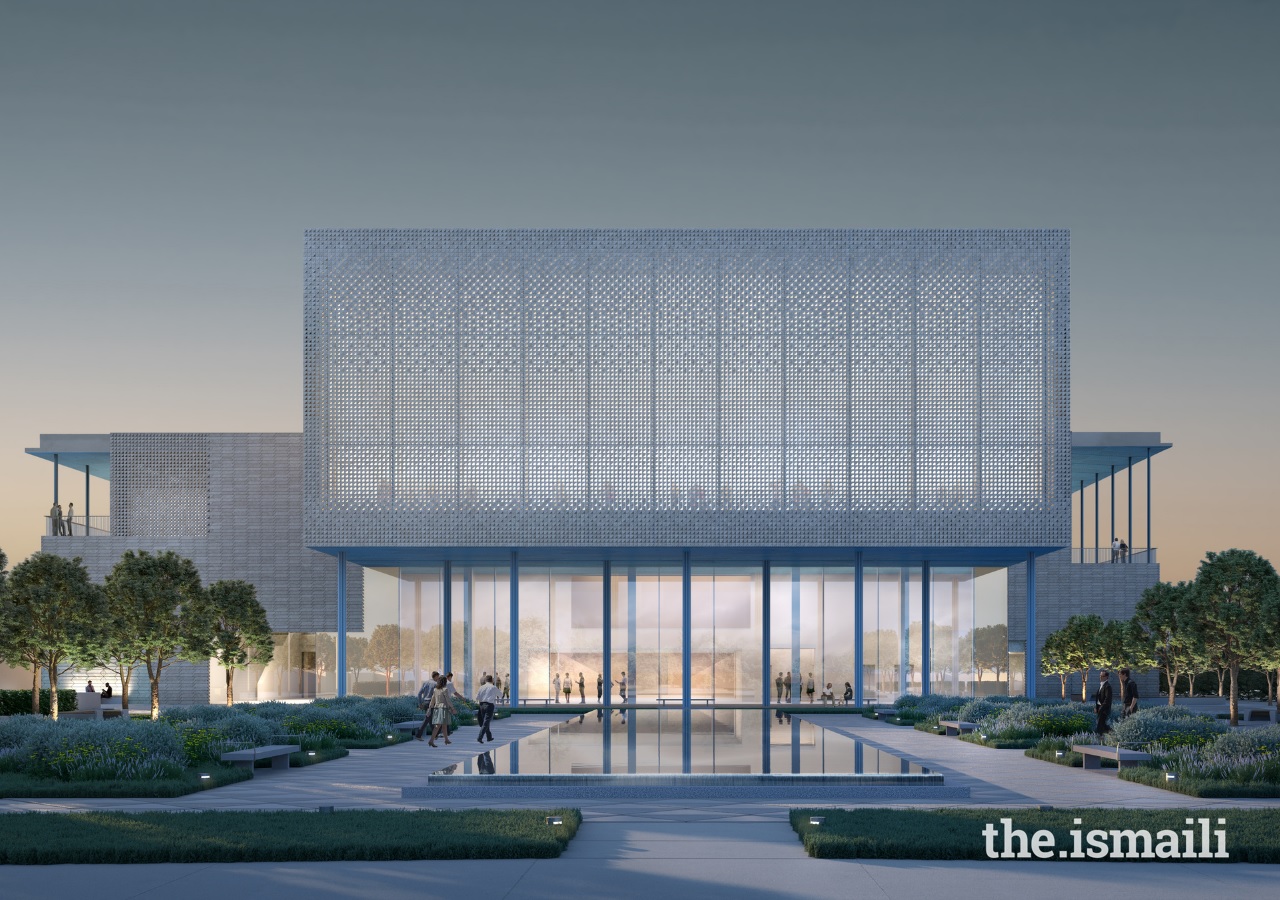
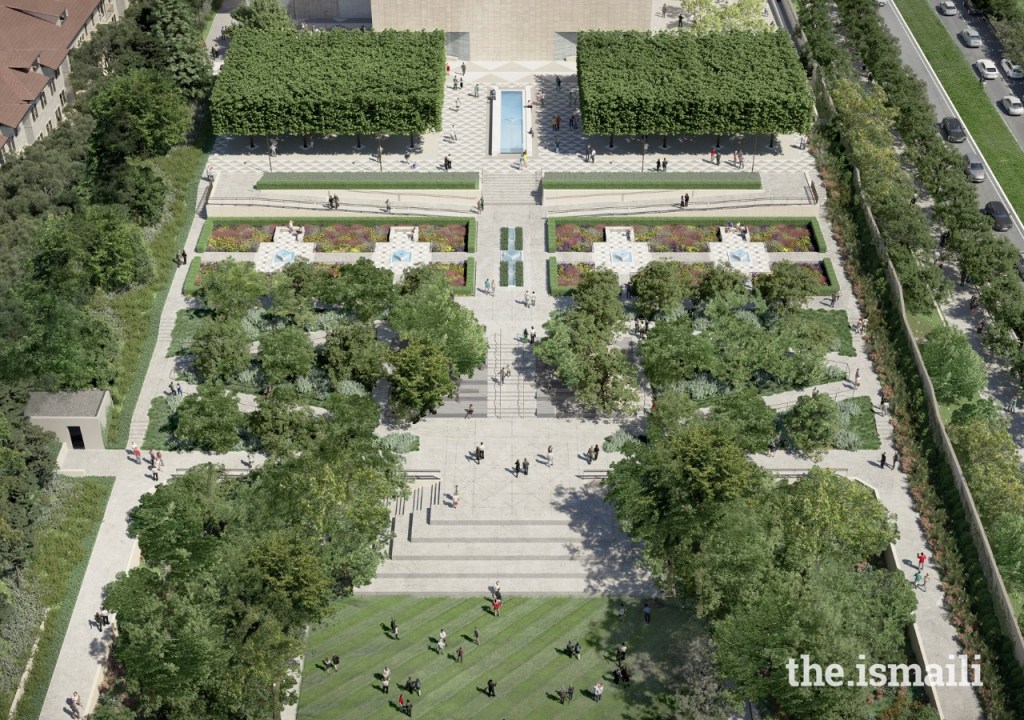
An excellent piece by Molly Glentzer on the Houston Ismaili Center appeared in the Texas Monthly shortly after the lead architect Farshid Moussavi came to the city in November 2021 to unveil her design for the building. Subscribers to Texas Monthly can click on the link provided in this post and read Molly’s piece. If you are not a subscriber, Texas Monthly allows you to read 2 free articles. Many readers might qualify for the two free reads, and may even consider subscribing. Please click Texas Monthly on the Ismaili Centre Houston or on on any of the two images shown below. This is a great piece, with wonderful insights by the architect as well as leaders of the city.
The new Ismaili Center in Houston will feature beautiful spaces, intricate geometry, and highly crafted work In this photo. In this depiction, the forecourt garden with its reflecting pool at the entrance of the building creates a contemplative atmosphere. IMAGE: IMARA HOUSTON INC. / IPL via the Ismaili
Ismaili centers are an invention of the Aga Khan. “They are places that reflect his belief in the power of architecture to improve lives,” Moussavi says. Each holds a jamatkhana, or prayer hall, but also serves as a brick-and-mortar ambassador for expressing the Ismailis’ commitment to uniting diverse people and cultures. Houston’s center will be the most public-focused yet — Excerpt from Texas Monthly
From wherever one enters the site, visitors will be welcomed by garden spaces. The Center’s landscaped gardens will provide a sense of serenity and peace, offering a respite from its urban surroundings. IMAGE: IMARA HOUSTON INC. / IPL via The Ismaili
Date posted: February 22, 2022.
___________________
Before leaving this website please take a moment to visit Simerg’s Table of Contents for links to hundreds of thought provoking pieces on a vast array of subjects including faith and culture, history and philosophy, and arts and letters to name a few. Also, visit Simerg’s sister websites Barakah, dedicated to His Highness the Aga Khan, and Simergphotos that features photos and videos from around the world.
Malik, the founding publisher and editor of the 3 websites, may be reached at his email address, mmerchant@simerg.com.
The David Rumsey Historical Map Collection focuses on 16th through 21st century maps of North and and South America, as well as maps of the World, Asia, Africa, Europe, and Oceania. Atlases, globes, school geographies, maritime charts, and a variety of separate maps including pocket, wall, children’s and manuscript maps are present on the website. The depth and breath of the digital collection is impressive, and is continuously growing. The website notes that the actual physical map collection is housed at the David Rumsey Map Center at the Stanford University Library.
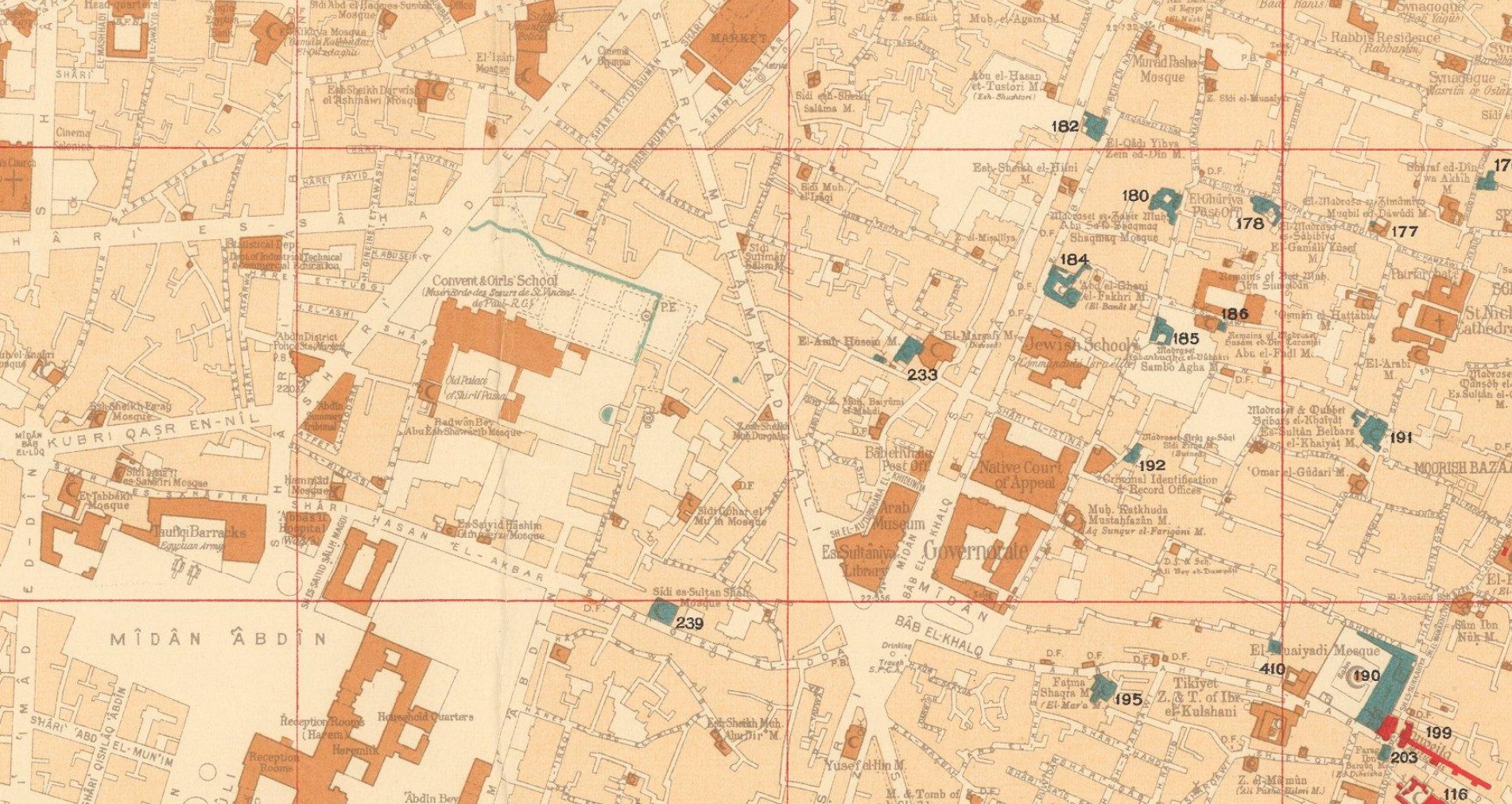
My search on the website using the term “Fatimid” yielded one result. It is a map produced in 1924 by the Survey of Egypt, which was once regarded as “one of the most professional mapping agencies in the World, predicated upon the synergy of the most authoritative topographical and urban mapping combined with the latest archaeological surveys.”
Simerg is pleased to reproduce the map, along with an interesting narrative that accompanies the map on the David Rumsey Map Center website. We also invite readers to click on the link to enrich their viewing experience of the map, download the map (by using the Export Function) as well as to explore other maps that may be of interest to readers or to provide them with further information in their specific area of research.
Cairo During the Islamic Golden Age
Please click on image for enlargement
Map of Cairo showing Islamic monuments, with the ‘Fatimid and Pre-Fatimid Monuments’ (909 – 1171), shaded in Red; the ‘Aiyubid [Ayyubid] Monuments’ (1171 – 1260), shaded in Green; and the ‘Mameluke Monuments’ (1260 – 1517), shaded in Blue. Credit: David Rumsey Map Collection, David Rumsey Map Center, Stanford Libraries. This work is licensed under a Creative Commons License.
Cairo was the greatest centre of culture, learning and commerce during the ‘Islamic Golden age’. Commencing in the early 20th Century professional archaeologists as well as art and architectural historians became interested in scientifically recording Cairo’s sensational Islamic buildings and monuments.
The map employs colours to denote sites built across the city during the eras of the three great Islamic empires that controlled Cairo prior to the arrival of the Ottomans in 1517: the ‘Fatimid and Pre-Fatimid Monuments’ (909 – 1171), shaded in Red; the ‘Aiyubid [Ayyubid] Monuments’ (1171 – 1260), shaded in Green; and the ‘Mameluke Monuments’ (1260 – 1517), shaded in Blue.
These mosques, palaces, madrassas, and fortifications appear amidst the otherwise buff-coloured city which generally consisted of buildings built during the subsequent Ottoman and British Protectorate periods.
The map shows that many of the greatest edifices from the periods of the three great Islamic empires have survived, although only traces of the vast Fatimid Place can be found amongst the foundations of newer buildings. Each of the historical sites is named in Gothic script and features a corresponding numeral which refers to that which appears upon the plaques affixed to each building by the civic authorities. The two insets on the left-hand side showcase sites in areas outside of the city proper. We understand that the first edition the map was issued in 1924, while an Arabic language version was published in 1948. The present revised, official edition was issued in 1950-1 (correction, this copy is the first edition, issued in 1924), while several facsimile (unofficial) versions have been issued since then. The Survey of Egypt followed the initial production of the present issue of the map with a small booklet, Index to Mohammedan monuments appearing on the special 1:5000 scale maps of Cairo (Cairo, 1951), that is not present here, but seems to have been issued with the latter-releases of the map.
Cairo during the ‘Islamic Golden Age’ Cairo was traditionally the largest and most culturally and economically important city in the Islamic world. The Muslim conquest of Byzantine Egypt occurred between 639 and 646 AD. While the Cairo area has been settled for thousands of years, with the key Ancient Egyptian cities of Giza and Memphis located nearby, the city proper was not founded until 969, when it became the principal city, and sometimes capital, of the Fatimid Caliphate, a Shia Muslim empire which controlled much of North Africa, the Levant and Hejaz between 909 and 1171.
Cairo rapidly rose to become a centre of great wealth, at the nexus of global trade routes as well as home to some of the world’s foremost centres of education and the arts. Befitting its importance, great monuments of Islamic architecture were built across the city.
The Al-Azhar Madrassa (no. 97 on the map), which later grew into a university, was founded in 970-2 and today remains the world’s most prestigious institute of Islamic learning. The map notes some Islamic monuments made before 969, as the pre-Cairo rural landscape featured some small mosques, houses and fortifications.
The Fatimids were replaced by the Ayyubid Dynasty (1171 – 1260), a regime of Kurdish origin, founded by the legendary conqueror Saladin, whereupon Cairo remained the prosperous centre of an empire spanning much of the Middle East.
The Mamelukes were an elite class of soldier-bureaucrats descended from former Christian slaves. In 1250, they took over Egypt, the Levant and Hejaz, forming the Mameluke Sultanate, with its capital in Cairo. It was during the early part of their regime that Cairo reached its zenith as the principal centre of the Islamic Golden Age.
The epicentre of a global trading network that spanned from India to Spain, Cairo far surpassed all European cities in wealth and cultural sophistication, and many exquisite works of architecture were built to reflect this glorious state. The Mameluke Sultanate was conquered by the Ottomans in 1517 and Cairo ceased to be an imperial capital. However, while technically subject to the Sublime Porte, Egypt maintained a high degree of autonomy and was the wealthiest and most prosperous part of the Ottoman Empire; Cairo remained a highly important centre.
Fortunately, as the repent map reveals, the survival rate of Cairo’s great works of Islamic architecture from the Fatimid, Ayyubid and Mameluke periods is impressively high, and many sites can be visited today. References: OCLC: 17543226. (Alexander Johnson, 2020).
Date posted: February 22, 2022.
________________________
Before leaving this website please take a moment to visit Simerg’s Table of Contents for links to hundreds of thought provoking pieces on a vast array of subjects including faith and culture, history and philosophy, and arts and letters to name a few. Also, visit Simerg’s sister websites Barakah, dedicated to His Highness the Aga Khan, and Simergphotos that features photos and videos from around the world.
Malik, the founding publisher and editor of the 3 websites, may be reached at his email address, mmerchant@barakah.com.







 Simerg - Insights from Around the World