Simerg is an independent initiative dedicated to Ismaili Muslims, the Aga Khan — their Hereditary Imam — and the Ismaili Imamat, and Islam in general through literary readings, photo essays and artistic expressions
IMPORTANT ANNOUNCEMENT: The inauguration of GENERATIONS Toronto will take place on Monday, March 30, 2026. Ismaili TV will broadcast the event live, with specific times listed above for various cities, so viewers can plan to join this important occasion. The Premier of Ontario, Doug Ford, and the Mayor of Toronto, Olivia Chow, will perform the opening in the presence of His Highness the Aga Khan.
Please visit the following anchor links for Barakah’s day-by-day coverage of Mawlana Hazar Imam His Highness the Aga Khan’s historic first visit to Canada as the 50th Hereditary Imam of the Shia Ismaili Muslims. These links will be updated regularly.
My beloved daughter, Farah, sadly passed away on December 17, 2025, at the age of 57. As a creative writer and storyteller, she contributed several pieces to Simerg and its sister website Barakah, one of which elicited a response from Mawlana Hazar Imam, His Highness the Aga Khan, then Prince Rahim.
Farah’s arduous personal journey over the past 27 years was intertwined in 2025 with the profound events of the Ismaili Imamat — the passing of Mawlana Shah Karim and the succession of Mawlana Shah Rahim Hazar Imam — both of which are central to the community’s modern history.
Rashida Tejani with her daughter, Farah, who passed away in Vancouver on December 17, 2025, aged 57. Photograph: Rashia Tejani Collection.
~~~~~~~~
Farah Tejani (d. December 17, 2025) with her younger brother Faizal, 50. Photograph: Rashida Tejani Collection.
For Farah, the most significant shock in her life was the loss of our beloved 49th Imam, Mawlana Shah Karim, on February 4, 2025. I vividly recall breaking the news of his passing over the phone. It tore her heart, and I can’t express the shock she felt or the depth of her grief until the announcement the following day that Prince Rahim was the new Mawlana Hazar Imam of the Ismailis. As the new Imam took over the reins and marked his Takht-nishini a week later, her emotions began to settle, and she penned a tribute to Mawlana Shah Karim while reflecting on the eternal rope of Imamat, whose new holder was Mawlana Hazar Imam.
Mawlana Shah Karim, His Late Highness Aga Khan IV (d. February 4, 2025, aged 88) and his successor Mawlana Hazar Imam, His Highness Prince Rahim Aga Khan.
This tribute — the piece below — was Farah’s last story, shaped by the tragic event of the 49th Imam’s passing and the succession of the 50th Imam. With the piece, she scanned several photos of Mawlana Shah Karim from Gary Otte’s pictorial biography, “Depth of Field: The Aga Khan Beyond the Lens,” and, in two images, she wrote her own touching reflections on the late Imam. I am gratified that the editor of Barakah is publishing this piece by her before 2025 ends. It is a fitting conclusion to her series of articles published on this inspiring platform.
For me, as for any other parent, the death of my beloved daughter has been the most hurtful episode in my life. I ask you to join me in praying for the eternal peace of my daughter, and for my courage and fortitude to bear her loss. I also invite you to read Simerg’s tribute to Farah published on December 19.
~~~~~~~~~
Reflections on Mawlana Shah Karim and Mawlana Hazar Imam
Mawlana Hazar Imam, His Highness the Aga Khan, the 50th Hereditary Imam of the Ismaili Muslims, addressing Ismailis worldwide on his Takht-nishini (ceremonial installation) held at the Diwan of Imamat, the Seat of the Ismaili Imamat, in Lisbon, Portugal, February 11, 2025. Photograph: AKDN.
By FARAH TEJANI
As I begin this piece, I humbly say to my 50th Imam, Mawlana Hazar Imam Shah Rahim al Hussaini: I hold fast to the Rope of Imamat and offer my devotion and allegiance to you.
The moment I learned that my Mawlana Shah Karim, His Late Highness Aga Khan IV, had passed away, my heart was pierced with profound grief and a sense of tragic loss. I remember my mom calling me on the phone and saying with a sense of urgency, “Farah, I have some very tragic news.” I immediately called out the name of one family member after another, to which she would sob and say, “No! Way Worse!”
She did not want to torture me anymore; she just wanted to somehow prepare me. But there was no way to prepare for this. “WHO?!?” I demanded. She blurted out, “Mawla Bapa!” The news struck me with awe, like a thunderclap, shattering the peace of my world. Mawlana Shah Karim’s face of Pure Nurani Light filled the inside of my eyelids. I responded “NNNNOOOOOOOOOOOOOO!!!!!!!!”
Story continues below
Mawlana Shah Karim, His Late Highness Aga Khan IV, at work in the office at his residence, Gstaad, Switzerland, 1963. Photograph: Depth of Field: The Aga Khan Beyond the Lens, ed. by Gary Otte, page 112. Farah Tejani submitted this photo for publication, sharing a personal message to encourage her readers to write, just as Mawlana Shah Karim does in this historic image.
~~~~~~~~
Mawlana Shah Karim His Late Highness Aga Khan IV, in the start area for a giant slalom ski race that prepared him for participation in the 1964 Winter Olympics in Innsbruck, Austria. Photograph: Depth of Field: The Aga Khan Beyond the Lens, ed. by Gary Otte, page 81.
I saw his face again. And then I saw pictures of him from my copy of “Depth of Field: The Aga Khan Beyond the Lens”: The one of him working intently at his desk at his residence. Then, the black-and-white photo of him competing in downhill skiing in preparation for the Olympics, to represent Iran. Then, the iconic one of him greeting to his Jamat, with a big smile and waving lovingly for all His Beloved Spiritual Children to see. Then, focusing on a view from the Great Wall of China. Then giving a mulaqat to his spiritual children in Bartang, Tajikistan, amidst the Pamir mountains under blue skies. Then, standing in front of the entire House of Commons in the Canadian Parliament, humbly, after giving a powerful speech and being met with a unanimous standing ovation. These pictures and moments connect him with us, his community, and his Imamat at different times. There are countless faces of him at so many ages, and there are so many meaningful expressions of hope, discipline, determination, celebration, deep thought, peaceful divinity, and inner joy. So many expressions.
Story continues below
Mawlana Shah Karim, His Late Highness Aga Khan IV, addresses his community and others present during a mulaqat in Bartang, Tajikistan, September 1998. Photograph: Depth of Field: The Aga Khan Beyond the Lens, ed. by Gary Otte, page 112. Farah Tejani submitted this photograph, expressing her grief over Mawlana Shah Karim’s passing, with a prayer and a teary eye, in her own writing.
My heart could not take it. I felt lonely in my studio apartment, and tears filled my eyes as I envisioned him, with his gentle, loving, tender hands that had touched and blessed millions of people all over the world. The world at large was grieving the loss of one of the most significant humanitarians on this globe today, who put the needs of the impoverished, economically downtrodden and educationally unfortunate at the forefront. As the Founder and Chair of the Aga Khan Development Network, the Aga Khan University, the University of Central Asia, Aga Khan Hospitals, and hundreds of Aga Khan Schools, their impact was felt across the globe.
I will never forget my travels to East African Aga Khan Schools in Nairobi, Kisumu, Mombasa and Tanzania in 1992, with 26 other Ismaili youth. We were all armed with a Bachelor’s Degree in one of the areas of service, such as English, Education, Science, Algebra, or any of the other core subjects. I distinctly remember the Aga Khan, my spiritual father, encouraging me to question, take time, offer our service in an area not as fortunate, and study the Aga Khan Schools and Institutions to see what it is all really about. His words of wisdom and encouragement continue to inspire and motivate me to this day. I even went to Mawlana Sultan Mahomed Shah’s burial site in Aswan, and along with 26 others, we were graciously permitted to enter the Mausoleum and see the long-stem red rose that Begum Aga Khan, Om Habiba (Mata Salamat), arranged to have placed daily on her late husband’s coffin.
Story continues below
Mawlana Shah Karim, His Late Highness Aga Khan IV, focuses on a view from on top of the Great Wall of China during a tour that was part of the Aga Khan Award for Architecture International Seminar, October 1981. Photograph: * Depth of Field: The Aga Khan Beyond the Lens, ed. by Gary Otte, page 125.
~~~~~~~~
Mawlana Shah Karim, His Late Highness Aga Khan IV, acknowledging volunteers as he leaves a ceremony at Dar es Salaam’s Darkhana, Tanzania’s main Jamatkhana, July 2011. Photograph: Depth of Field: The Aga Khan Beyond the Lens, ed. by Gary Otte, page 167.
~~~~~~~~
Mawlana Shah Karim, His Late Highness Aga Khan IV, receives a standing ovation during his speech to a joint session of the Canadian House of Commons and the Senate in the Parliament Building in Ottawa, February 27, 2014. Photograph: Depth of Field: The Aga Khan Beyond the Lens, ed. by Gary Otte, pages 100-101, a two-page spread.
I was also fortunate enough to work at the Aga Khan University and the Institute for Educational Development in Karachi, Pakistan, thanks to a cousin who sent me a detailed day-to-day itinerary for the entire month of 1997. I was grateful to have received a few job offers, but my true heart’s desire was to serve in one of the Aga Khan Schools in East Africa, where I was born and had already visited in 1992. Nevertheless, I will never forget the sense of awe, absolute inspiration, and wonder I felt when I first saw the beautiful pink marble university with students going from here to there with so much pride in holding their textbooks and knapsacks. The Aga Khan University was poetically beautiful and architecturally designed, and even had courtyards that were non-discriminatory, with benches where you would see less fortunate people sleeping. With gardeners who would give their time to keep up the meticulous landscaping, I was always thinking about my Mawlana Shah Karim.
February 4th, 2025, will always be a sombre day for everyone around the world. For 67 years, Mawlana Shah Karim devoted his life to health, education, rural development, economic growth, institution-building, and enhancing the quality of life. Due to his spiritual and material guidance, Ismailis are settled in the countries in which we live. At the same time, he has shown deep concern for his Jamats, who are poverty-stricken, and has been asking his institutions, for as long as I can remember, to assist them in overcoming their plight.
The resting place for Mawlana Shah Karim was in Aswan, in the same mausoleum as his grandfather, Shah Sultan Mohammed Shah, Aga Khan III. Mourners and especially his family were grief-stricken but poised and gracious under the circumstances.
We are so blessed and fortunate to have the Rope of Imamat to hold on to for over 1,400 years of unbroken Hereditary Imamat. The auspicious occasion of the Takht-nishini (ceremonial installation) on February 11, when the Oath of Allegiance (Baya’h) was given to the 50th Imam, Mawlana Shah Rahim, took place at the Diwan of the Ismaili Imamat in Lisbon. At this moment, our community stood united, filled with joy and anticipation for our new Present Living Imam’s guidance and love despite the grief of losing our Beloved Shah Karim.
The momentous ceremony moved many to tears of joy and hope, especially the first Farman made by Mawlana Shah Rahim, when he also reflected on his father’s Imamat. The significance and meaning of his poignant, solemn, sensitive, timely, authoritative words were so powerful, endearing and comforting. The Farman was detailed and covered subjects like pluralism, diversity, world peace and order, climate control, taking care of the less fortunate, volunteerism and his solemn vow and commitment to the protection and security of his global Ismaili Jamat. Every youth in the community should seek to read the Farman, as official printed copies are now available.
Ismailis truly are very blessed. The Divine and Sublime beauty of it all is that I feel Shah Karim’s eternal ever-lasting presence in his son, Mawlana Shah Rahim. Shah Karim always promised us that he would never leave us: “Always remember…I am always with you,” he would often tell us, whether he was physically around us. Throughout the Takht-nishini ceremony, I felt his genuine promise come true. I felt this through the same Nur vested in the Rope of Imamat from the time of Hazrat Ali (A.S.) I hear his words echoing in my head. And now they are Mawlana Rahim’s words. He even went on to say, “If you have any worries and concerns, then turn to your Imam.” These are powerful soothing words full of comfort and inspiration.
Story continues below
The students Mukhi and Kamadia from Belgium, and Mukhiani and Kamadiani from Switzerland — who serve as congregational leaders in periodic Jamatkhana student gatherings — welcome Mawlana Hazar Imam, His Highness the Aga Khan, to the youth mulaqat (meeting) in Paris, France, July 12, 2025. Photograph: IPL / Akbar Hakim.
Glory Be to Allah, and All Praise Goes to Allah, the Lord of All Worlds. Mashallah. Ya Hazar Imam, Oh Mawlana Shah Rahim, bless us with your Wisdom, your Experience, your Nurani Deedar, your Holy Blessed Guidance, Spiritually and Materially and your Divine and Physical Protection from any ill fate or disposition. Ameen.
I feel secure in the knowledge that our faith will be practiced and interpreted as it should be by the Nass that Shah Karim conferred to Him as Imam-of-the-Time, and by the Nur that he is carrying with him from the very moment of Shah Karim’s passing.
With no doubt in my mind, heart and soul, I have complete faith in Mawlana Shah Rahim, and I feel so Physically and Divinely protected by our beloved 50th Imam just as I did by his father, Mawlana Shah Karim Aga Khan IV.
Date posted: December 31, 2025.
A version of this post appears on Simerg’s sister website Barakah, which is dedicated to His Highness the Aga Khan.
Editor’s Note: The author’s name, a refugee in Spain, is being withheld to respect her privacy and protect her family members, who are dispersed in South and Central Asia. We have communicated with the author and are pleased to publish her inspiring and moving account of her Didar with Mawlana Hazar Imam, His Highness the Aga Khan, the 50th Hereditary Imam of the Shia Ismaili Muslims. She attended the Didar with the Jamat of Portugal and Spain on Wednesday, December 3, 2025, and with the youth of both countries the following morning, Thursday, December 4. Her resilience and courage, highlighted by her family’s widespread dispersal, are remarkable. Her piece emphasizes the importance of shared stories that strengthen our community bonds and sense of purpose.
Letter from Spain: My Didar of Mawlana Hazar Imam in Lisbon
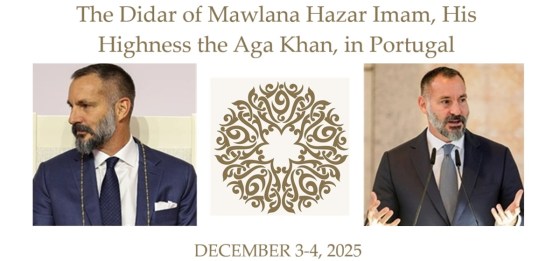
The motif representing Nur or Light, has been used by Mawlana Hazar Imam, His Highness the Aga Khan, during his inaugural visits to Ismaili Muslims around the world. His recent visit to Portugal from December 3 to 5, 2025, was his fifth such visit since becoming their 50th Imam on February 4, 2025. It was preceeded by visits to the USA (November), Uganda (September), Kenya (August), and France (July). Photograph: The Ismaili.
I received the news of the Didar of Mawlana Hazar Imam Shah Rahim al Hussaini twenty days earlier. It felt like a morning breeze carrying a long-held, unreachable wish. When I first heard that the Didar would take place from the 1st to the 4th, my heart began to shiver with happiness. Yet, at the same time, a weight of sorrow settled in my chest. I feared that I might not be able to go — that the wish I had carried throughout my life would never come true — because I am a refugee in Spain, awaiting the final documents confirming my refugee status.
With all the “yeses” and “nos” circling in my mind, and despite all the limitations around me, a small flame of hope kept whispering in my heart: You must go… You have to try. You deserve for this dream to come true.
Following that hope, I spoke with my social worker and case lawyer. I explained the value of this visit and described how deeply it mattered to me, both mentally and personally. But their response was subdued. They warned it could jeopardize my refugee case.
Yet I knew that if I did not make it to this Didar, I might lose a part of myself forever — a part that could never be found again. I accepted the risk because this was not just a journey. It was a symbol of my resilience and hope. It made me feel as though my soul was being protected. I decided to set out on the journey I had been waiting for my entire life, trusting that faith and perseverance would guide me through.
On Monday morning, the 1st of December — the Didar by now had been confirmed for the 3rd with the Jamat and on the 4th with the youth — I took a chance and rode to Lisbon. I prayed silently: Dear Allah, please make my path into this Didar easy… I want to reach without any trouble. By Allah’s grace, I entered Portugal without any problems, and waves of joy began moving through my heart.
That night, and the night before visiting Mawlana Hazar Imam, I could not sleep at all. I kept thinking: I am going to meet someone who has known me for so long, who loves me, who cares for me, who is my Imam, and who is like a father to me.
The arrival of morning felt like the arrival of light into the darkest corners of my heart. I counted every moment, feeling deeply grateful for the bond I had with the Imam, wondering whether I was dreaming or awake. In my 24 years of life, this was my first time visiting the Hazar Imam of the Ismaili community, and it felt almost unbelievable. Suddenly, I heard “اللهم صلّی علی محمد و آل محمد”…. Allahumm-a Sall-i ‘Ala Muhammad-in Wa Al-i Muhammad…. My eyes were already open, yet I tried to open them wider — to see more, hear more, feel more.
Story continues below
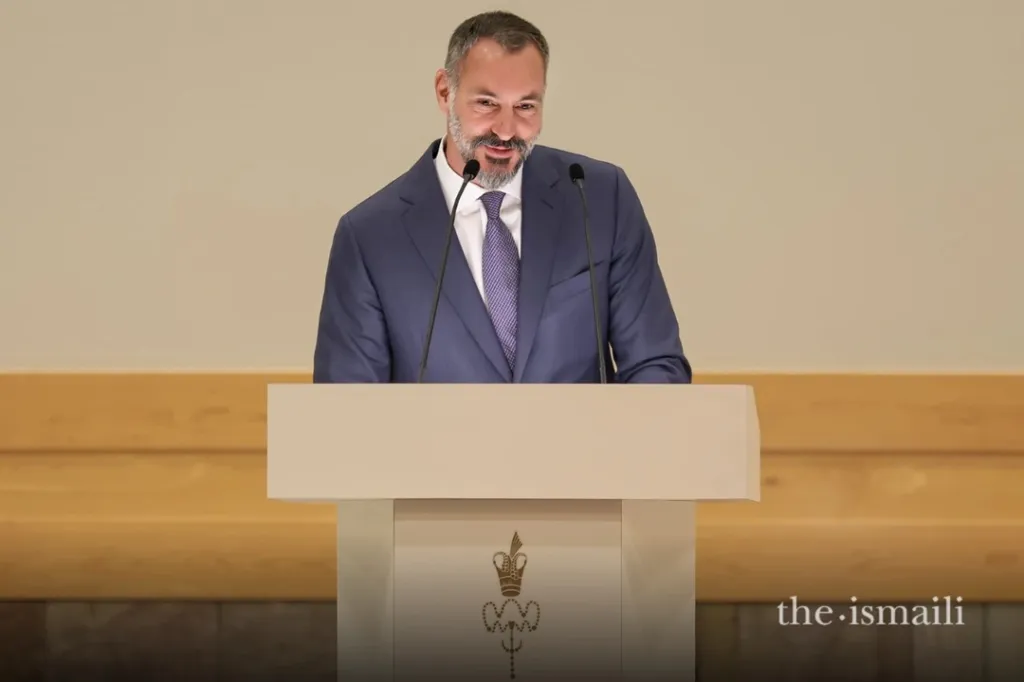
Mawlana Hazar Imam, His Highness the Aga Khan, on stage at the Didar for the Jamat of Portugal and Spain, in Lisbon, December 3, 2025. Photograph: IPL / Akbar Hakim.
“From where will he enter?” I whispered with a trembling voice. And then, in that very moment, my eyes caught sight of Hazar Imam. A wave of emotion washed over me — my heart grew heavy, my throat dried, and tears began falling from the corners of my eyes. With my hand on my heart, I kept watching him, overwhelmed by a mix of awe and longing.
For a moment, my heart spoke words that had been silent for years — words filled with sorrow, loneliness, and the hardships of being a refugee. With every step Hazar Imam took, my heart repeated those words, tears streaming down my face. I whispered, Why have I come so late to see you? Why could I not attend this Didar with my family? Why have we been shattered?
Although I felt immense happiness at reaching this Didar and seeing the luminous face of Hazar Imam, a heaviness lingered in my heart. In this sacred moment, my elation from finally arriving was met by loneliness. The joy of connection stood beside the ache of separation from my family and memories of enduring many hardships. These two emotions, happiness and pain, moved together within me.
Meeting Hazar Imam was a transformative spiritual experience that marked a turning point in my faith journey. I felt his presence, hearing every word in my heart and sensing each of my steps. From that moment, I no longer remained the weak and broken version of myself. A new hope has blossomed within me, and a new strength has settled in my heart.
As I write this piece, I feel like the luckiest person on earth. I feel light and relieved, no longer weighed down. All the helplessness and weakness that overshadowed me for years have disappeared. This is the light of Imamat. From the moment I saw Imam Hazir, Shah Rahim al Hussaini, and spoke to him with my broken heart, I found the peace I had been missing for years. Now, I feel like a blessed and spiritually renewed child.
Fortunately, as a young member of the Jamat, I had the opportunity to attend another Didar the next morning, Thursday, December 4. This Didar was in the intimate setting of the Darkhana Jamatkhana at the Ismaili Centre Lisbon. The previous day’s Didar was attended by around 3,000 members from Portugal and Spain. It was held at FIL — Feira Internacional de Lisboa, in Parque das Nações. I was informed it was the venue of the Diamond Jubilee celebrations of Mawlana Shah Karim in July 2018.
Now I was already in Lisbon. I had had my first beautiful Didar, which filled me with (spiritual) happiness I cannot truly express in words. I was going to be in Mawlana Imam Hazar Imam’s presence, to see him in person once again and to listen to his loving words that always bring peace to my heart.
We left the hotel at 7:30 in the morning. With every step I took toward the venue, I felt joy slowly flooding my heart, like a calm yet powerful wave. I had prepared myself with care, wanting to be worthy of such a special moment.
But just when everything seemed perfect, something unexpected happened. I didn’t have the special card for the second day. They had told me earlier that the same card from the first day would be enough. Still, they refused to let me enter. My heart sank. I thought I might miss the second moment, surrounded by Hazar Imam’s young spiritual children, I had been waiting for.
They asked me to wait on the side while they decided. Every second felt incredibly long. I watched other young people walk in, smiling, while I stood outside. I was caught between hope and disappointment. I could feel my heartbeat slowing down, as if giving up…
After about twenty minutes, someone came and told me I could go inside. At that moment, it felt like I could breathe again. I stepped in, full of emotion. I was almost the last person to arrive, but my heart was overflowing with gratitude… truly grateful.
Not long after, Hazar Imam walked into the Jamatkhana hall. I instinctively straightened up, as if my whole being wanted to welcome him with love and respect. He looked at the youth with warm energy and a loving fatherly smile. I felt something new growing inside me.
Story continues below
Mawlana Hazar Imam, His Highness the Aga Khan, addresses young members of the Ismaili communities of Portugal and Spain in the Darkhana Jamatkhana at the Ismaili Center, Lisbon, December 4, 2025. Photograph: IPL / Akbar Hakim.
When he began to speak, his words glowed with faith, hope, learning, respect, and strength. I promised myself I wouldn’t just listen — I would live those words. Like millions around the world, I will listen again as Mawlana Hazar Imam’s Farmans are read out in Jamatkhanas and distributed as printed booklets.
I was going through one of the most challenging moments of my life, feeling lost until his words felt like fresh air filling my lungs again. At first, I was overwhelmed by despair, but his encouragement brought back my desire to live and to fight for a better tomorrow. It felt as if a hand of light lifted me from darkness and whispered: It’s not over… There is always hope. The two days of Didar became the most memorable and happiest days of my life, and I will cherish the experience for the rest of my life.
Date posted: December 9, 2025
NOTE: A version of this post appears on our sister website Barakah, which is dedicated to His Highness the Aga Khan, members of his family and the Ismaili Imamat.
When I relocated to Alberta some 4 years ago, Nazarali Momin, originally of India and a pioneer of the USA Ismaili community who arrived as a student in 1969, shared photos with Barakah readers about the foundation ceremony of India’s Methan Sidhpur Jamatkhana by Mawlana Shah Karim, His Late Highness Aga Khan IV, in 1978, an event that marked a milestone in Sidhpur’s history and development, highlighting the deep roots and ongoing legacy of the Indian Ismaili community.
Nazarali Momin (right, popularly known as Nazar Indian) and Malik Merchant in Houston, Texas, November 11, 2025.
Since then, Nazarali and I have stayed in regular contact. He has been encouraging me to visit Houston, Texas, to experience the innovative spirit among Ismaili entrepreneurs that has fostered projects promoting economic prosperity and the Jamat’s social, physical, and mental well-being.
The projects have been implemented in the spirit of ‘One Jamat,’ a slogan that has resonated worldwide since the Golden Jubilee of Mawlana Shah Karim, and which he mentioned years before his Jubilee. During my conversations with Nazarali, he often highlighted Mawlana Shah Karim’s aspirations for the Jamat, especially a handwritten message from December 13, 2008, which underscores the ongoing relevance of his guiding principles and inspires us to align our efforts accordingly:
“I will be calling upon you from time to time in the future, to come to work with me, so that what we have decided to do together, from the end of the Golden Jubilee year onwards, actually and effectively, is carried forward. Because our institutions are growing very quickly, it is my hope and prayer that, 10 or 15 years from now, the Jamat’s capacity in most of the countries where it is living, will be very significant indeed, and that is what the Shia Ismaili Tariqah of Islam should achieve in the world. I am ambitious for you in the right way, just as a father and mother are ambitious for their children. Both a father and a mother want their children to work well, properly and ethically, and to carry these values throughout their lives. These are thoughts that I share with you, and although I will be leaving you physically today, I am always with you. I watch over you, I think of you, I pray for you, and I want you to know that I am always with my Jamath.” — Mawlana Shah Karim, His Late Highness Aga Khan IV.
When I recently attended the inauguration ceremony of the Ismaili Center in Houston, I was deeply moved by the impact of the Ismaili initiatives, which are transforming lives and strengthening our community. Instead of the usual tourist attractions such as Houston’s museums and the NASA Space Center, I dedicated three days to understanding these inspiring projects and engaging with the founders and visionaries behind them. This experience, in the company of Nazarali Momin, not only equipped me with a wealth of knowledge but also inspired me to create this special series to describe the Flagship initiatives inspired by Mawlana Shah Karim’s repeated guidance to the Ismaili community worldwide. His teachings on addressing poverty within the Jamat, caring for our aging members, and the importance of the Jamat coming together to form viable partnerships in common industries and professions, first mentioned in the 1960s, have served as a guiding light for these projects.
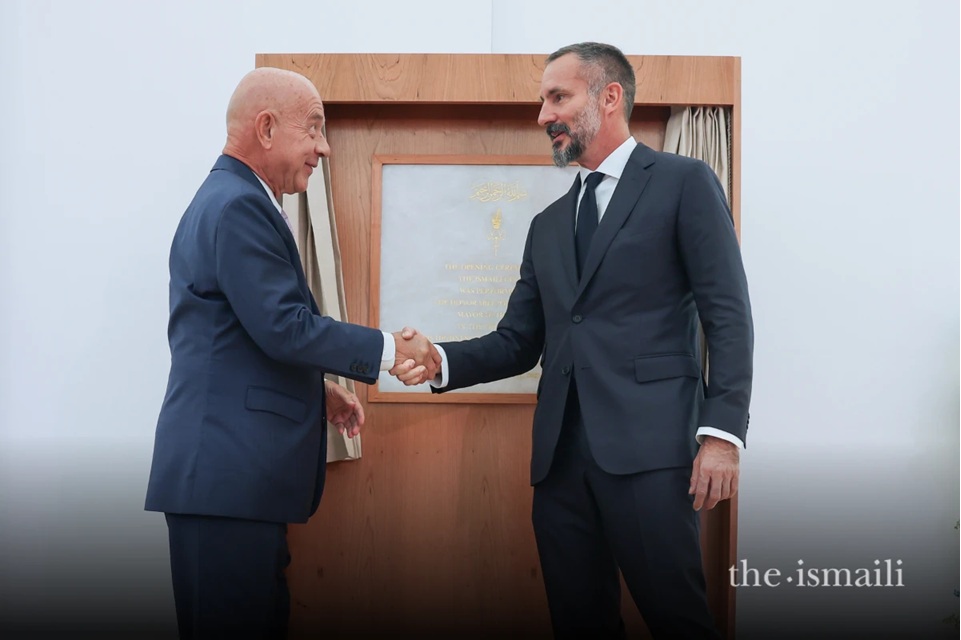
Mawlana Hazar Imam, His Highness the Aga Khan, and Houston Mayor John Whitmire unveil the inauguration plaque of the Ismaili Center, Houston, November 6, 2025.
It should be noted that Mawlana Shah Rahim has equally addressed these important sentiments in his Farmans since becoming the Imam. One of the most profound statements he made during his meeting with Ismaili youth in the USA was his definition of success as someone who gives and shares what they have. Success to Mawlana Hazar Imam is someone who uplifts others, emphasizing that the well-being and upliftment of the Jamat are central to our collective purpose.
Story continues below
Mawlana Hazar Imam, His Highness the Aga Khan, addresses young members of the Central USA Jamat at Dallas Headquarters Jamatkhana, November 10, 2025. Photograph: IPL / Akbar Hakim.
Nothing to Mawlana Hazar Imam, as all the Imams before him, is as important as the well-being, stability, and upliftment of the Jamat, and I was gratified and touched by what I saw in Texas. The dedication and hard work of the Jamati individuals and entrepreneurs, leaders in their own right, who seek to meet his expectations for his beloved spiritual children around the world, are truly inspiring. When I met the leaders of these institutions, they exhibited humility and sincerity. I experienced their joy and happiness at being able to help the Ismaili Jamat and contribute to their establishment in the country.
In short, the exciting projects I will describe serve as a role model for the Ismaili community worldwide. They all benefit from the economic power of the Houston Jamat’s private sector entrepreneurs and professionals. I will describe each of the projects I visited in detail as part of a four-part series, beginning with project 1 next week. However, before I do that, here is an overview of the projects — 1 through 3 — I visited during my recent trip, as well as project 4 that I hope to visit during my next trip to Houston.
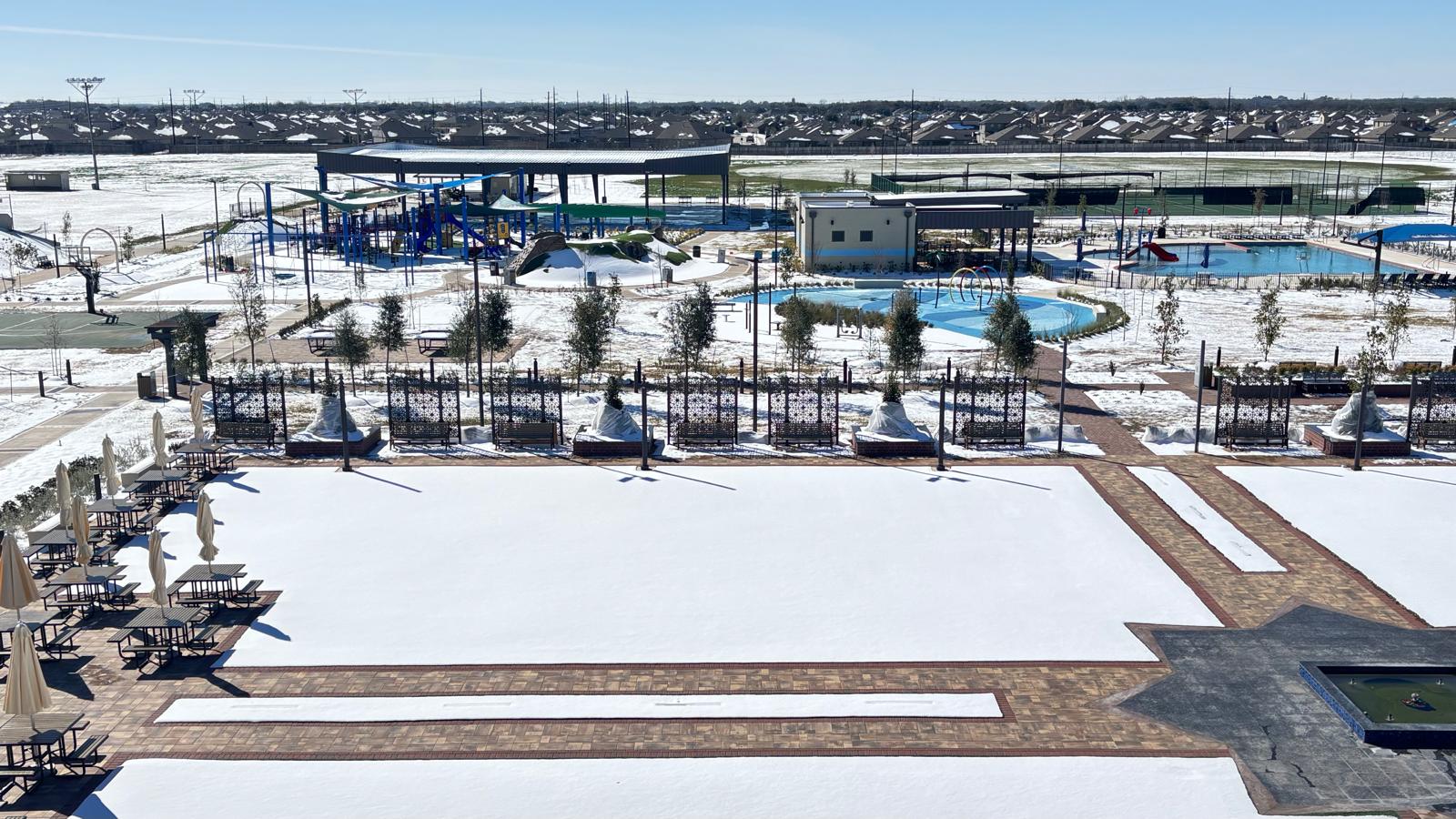
A beautiful view of the grounds of the 44-acre Pioneer Community Center after a rare snowfall in Houston during the 2024/5 winter season. Photograph: Salim Sunesara / Pioneer Community Center.
When I visited this unique facility, I could not help but think of Mawlana Shah Rahim’s Farmans, which emphasize the importance of being active through playing sports and moving!
Located in Rosenberg, within the Greater Houston Area, this stunning facility is a treasure trove of diverse amenities exclusively for the Ismaili community. With an indoor fitness center, a huge gymnasium with two NBA-sized basketball courts, children’s playgrounds, a beautiful lake, pickleball and tennis courts, a lovely swimming pool, a kilometre-long walking path, cricket and football fields and much more, including a seniors building, there’s something for everyone to enjoy.
A scaled depiction of the 44-acre Pioneer Community Center, Houston, Texas. Photograph: Pioneer Community Center.
The 44 acres of land were acquired through a generous donation from Pioneer Mutual Credit Union. It accommodates 1,000 concrete parking spaces. For Mawlana Hazar Imam’s recent visit to Houston, the Center served as an overflow to support the seven Ismaili Jamatkhanas in the metro area. It also supports one of the largest Jamatkhana overflows during other significant events.
NPFCU, launched in 1989, has more than 18,000 Ismaili members and total assets of $422 million, according to its 2024 Annual Report.
Nizari plays a vital role in meeting the diverse financial needs of SW USA Jamat through its locations in Austin, Dallas, San Antonio, and Sugar Land (part of Houston’s Metro Area). It has been achieving outstanding performance rankings and government certifications, which help instill confidence and security among its members.
NPFCU is considered in the top 1% percentile among peers in the United States. PMFCU and NPFCU are two of the three credit unions in the USA Jamat, the other being Platinum Federal Credit Union in Atlanta. The unions are healthy competitors, yet in the spirit of unity within the Ismaili community, they act as partners. No other Jamat has such Ismaili-led credit unions, independent of Jamati institutions.
NPFCU will be described in more detail in a forthcoming article in the series.
This project, led by Nasruddin Rupani and governed by the Ibn Sina Foundation, reflects the foundation’s long-standing commitment to healthcare. Rupani founded Houston’s first clinic in 2001 to provide affordable medical services to the community. The seven Ibn Sina clinics in greater Houston serve a diverse population, with the majority of patients being non-Ismailis, illustrating the foundation’s broad reach and history of service. The ribbon-cutting of this clinic was done by then-Texas Governor Rick Perry.
Rupani showed me the health center’s facilities, including a busy walk-in clinic staffed by doctors and qualified medical practitioners, a separate children’s clinic, and a dental health center with state-of-the-art equipment. A new building for Ibn Sina’s mental health program is expected to be completed within the next few months. Rupani’s ambition is to achieve university status as the Ibn Sina Center continues its growth trajectory. As I left the health center, I met the on-duty pharmacist, who informed me that all prescriptions issued by the Center’s medical team are provided free of charge, demonstrating the center’s commitment to accessible healthcare services.
Recognition from government authorities, including the City of Houston, Harris County, and the State of Texas, affirms the quality and impact of the seven Ibn Sina clinics in the Houston Metro Area, underscoring their reputation and credibility.
Ibn Sina will be described in more detail in a forthcoming article in the series.
_____________
4. Greater Houston Retailers Association (GHRA) Distribution and Warehouse Center; Houston, Texas
I was all set to visit the Warehouse Center in Houston and travel to Austin, the Texas State Capital, to see an even larger warehouse facility. Unfortunately, the Houston warehouse was closed on Veterans’ Day, November 11, so I did not make the trip. I was also unable to travel to Austin. However, I was fortunate to receive an informative summary about GHRA from my Houston host, Nazarali, as follows:
GHRA was established in 1999 to supply thousands of grocery-related items to Ismaili owners of convenience stores and gas stations (C-stores) in the Houston metro. Shortly after its founding, GHRA became the largest trade association (TA) among the then 12 trade associations under the Jamat’s umbrella, the National Alliance of Trade Associations (NATA). NATA’s success and reputation enabled its former board chairman to be invited to serve on the Board of the National Association of Convenience Stores (NACS), headquartered in the Washington, DC, metro region.
NACS is also a lobby and serves the global convenience and fuel retailing industry, with 152,000+ C-stores operating in the USA. Today, lsmailis own more than 3,000 stores spanning all seven NC jurisdictions. This represents 2% of NACS’s national total, disproportionately higher than the Ismaili community’s share of the national population. Ismaili stores have combined gross annual sales of a whopping $12 billion. Around 2,000 stores are members of GHRA, which controls 33% of the C-stores in greater Houston. Recognizing the need to cut out the “middlemen” and streamline parts of the supply chain, GHRA built its warehouse in 2016 and began distributing merchandise directly to its C-store members at a discounted price. It has an annual sales turnover of $400 million and is growing.
We hope to commence our four-part Houston project series soon, starting with an exciting photo essay on the Pioneer Community Center in the next fortnight, and complete the series by the end of this year.
Date posted: November 24, 2025. Last updated: December 2, 2025 (removal of an editorial note, editor’s discretion.)
Corrections:
Pioneer Community Center was incorrectly referenced earlier as Pioneer Recreation Center.
Ensuring precise information is vital, the post has now been updated accordingly.
___________________
Simerg welcomes your comments. You may submit your feedback by clicking Leave a comment or by sending it to mmerchant@simerg.com with the subject line Ismaili Projects, Houston.
Leading up to the inauguration of the Ismaili Center, Houston, on November 6, 2025, by His Highness Prince Rahim Aga Khan, Christianity Today, founded in 1956 by Billy Graham (d. 2018), and with a worldwide circulation of 130,000 today, has published a two-part series on the Ismaili Center and the Ismailis. The first article, Everything Is Bigger in Texas, Including Its New Islamic Center by Ken Chitwood, a contributing writer to Christianity Today, portrays the Center as a structure that mirrors Houston’s reputation for grandeur, situated on an 11-acre site with nine gardens and a 150,000-square-foot building that includes a theatre, banquet halls, a café, and a prayer area.
Story continues below
Please click on the photograph to read the article in Christianity Today.
The writer, in a balanced tone, underscores the Center’s role as a hub for dialogue among Houston’s religious communities. Chitwood has skillfully incorporated the perspectives of key members of the Ismaili community, as well as a Christian pastor, a Methodist Minister, and others, who share their insights and reflections on the Center and the Ismaili community in Texas.
“For Ismailis today, who number between 12 and 15 million across 35 countries, pluralism is more than a commitment — it is near dogma. That is due to the center’s subsect, Nizari Ismailism, and its distinguishing feature: the living imam. Most Shiite Muslims name the leader of the Islamic community an imam, but only the Nizari sect claims he is alive and actively present in the world today. And the imam’s legitimacy originates in his descent from Muhammad” — Jayson Caper in Christianity Today
In the second and final part of the series, the article Who Are the Ismaili Muslims? by Jayson Casper, a Lebanon-based Middle East correspondent for Christianity Today, provides an overview of Ismaili history within the context of Shia and Sunni Islam from the time of the Prophet Muhammad to the present 50th Imam, His Highness Prince Rahim Aga Khan, who is making a visit to Texas from November 5-10, 2025. The article also sheds light on its theological beliefs, including the crucial and significant role of the Ismaili Imamat.
These are balanced articles by Christianity Today, considering its Global Initiative, which seeks to “expand our coverage to better represent what God is doing around the world, interconnecting the Global Church, and illuminating the work of Jesus on every continent.” For more information about Christianity Today, see the About Page.
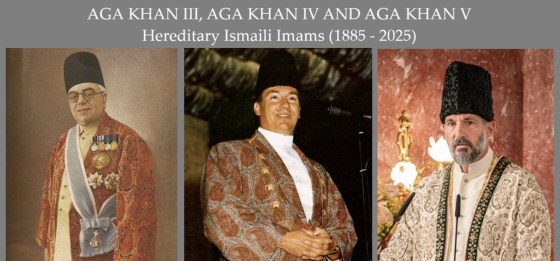
Sunday, November 2, 2025, marks the 148th anniversary of the birth of Mawlana Sultan Mahomed Shah, His Highness the Aga Khan III, the 48th Imam of the Ismaili Muslims. Born on November 2, 1877, he assumed the role of Imam at the remarkably young age of seven on August 17, 1885, a fact that never fails to inspire awe.
48th Ismaili Imam, Mawlana Sultan Mahomed Shah, His Late Highness Aga Khan III.
His 72-year reign was the longest in Ismaili history. He passed away on July 11, 1957, and appointed his grandson, Mawlana Shah Karim, His Highness the Aga Khan IV, as the 49th Imam.
49th Ismaili Imam, Mawlana Shah Karim Shah, His Late Highness Aga Khan IV.
Born on December 13, 1936, Mawlana Shah Karim reigned for a total of 67 years, until his passing on February 4, 2025, at the age of 88, making him the oldest Imam in Ismaili history. Together, the 48th and 49th Imams served an astonishing total of 139 years.
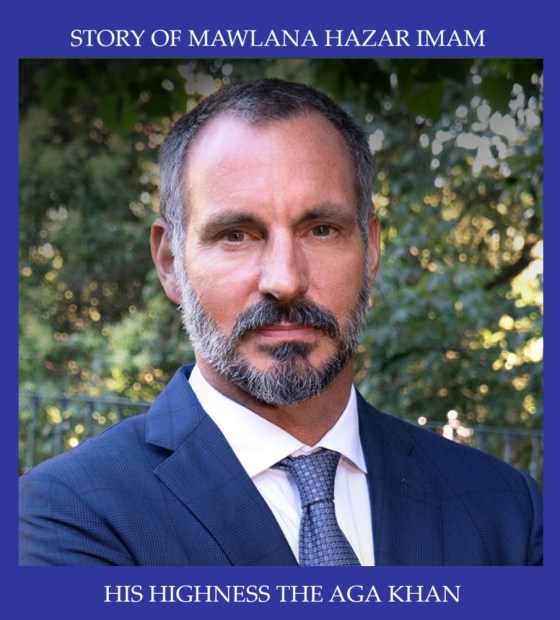
50th and present Ismaili Imam, Mawlana Shah Rahim Al Hussaini Hazar Imam, His Highness the Aga Khan V.
Mawlana Shah Karim’s successor is his eldest son, Mawlana Shah Rahim Al Hussaini, His Highness the Aga Khan V. Since becoming the 50th Imam earlier this year, he has visited his Ismaili communities in France, Kenya, and Uganda and is scheduled to visit them in the USA and Portugal from November 5-10 and December 1-4, 2025, respectively.
We present stories of the three Imams, which provide a comprehensive and enlightening picture of their lives and guidance to the Ismailis as well as their contributions to the world at large, in all aspects of human endeavour. The stories will ensure that you are well-informed about their legacy.
Following our earlier post that explored the Aga Khan’s speeches from 2007 to 2025, this new post on our sister website Barakah provides a comprehensive, detailed pictorial overview of the Ismaili Imam’s life, paying tribute to his significant role both before and after becoming the Imam. His Highness Prince Rahim Aga Khan, fondly known as Mawlana Hazar Imam (Our Lord, the present living Imam) by his Ismaili followers, assumed the Throne of the Ismaili Imamat on February 4, 2025. This is his first birthday celebration as the community’s Imam, a momentous occasion. Ismailis refer to this celebratory day as Salgirah, exchanging greetings of “Salgirah Mubarak” and attending Jamatkhanas in huge numbers. The celebration holds deeper significance as the community reflects on the profound care, concern, and guidance provided by the Everlasting Rope of Imamat, prompting us to contemplate and reflect on the Imam’s role in our lives. Life, as we all know, is transitory. An Imam will live his life as everyone else does, but there WILL always be an Imam to guide the community. This is the central notion of the Ismailis and the Imamat.
As Ismaili Muslims worldwide come together to celebrate the historic first Salgirah (birthday) of His Highness the Aga Khan, as their 50th Ismaili Imam, Barakah presents a collection of speeches which cover a diverse array of topics — from arts and culture to education and faith. The diverse range of topics will stimulate our intellect and broaden our perspectives. The speeches also highlight the urgency of the climate crisis. Please click HERE or on the image below to read his speeches and messages.
Please click on the image for the Aga Khan’s speeches, statements and messages.
Princess Zahra Aga Khan, with her brother, the 50th Imam, and with her late father, Mawlana Shah Karim. Please click on image for her story.
We honour Princess Zahra, the beloved daughter of his Late Highness Aga Khan IV (d. February 4, 2025, aged 88), and sister of his successor, Mawlana Shah Rahim Al Hussaini, His Highness the Aga Khan, as she marks her 55th birthday, September 18, 2025.
Her brother, on becoming the 50th Hereditary Imam, said:
“My sister, Princess Zahra, has played a major leadership role for many years, contributing with all her heart, intellect and capacity to advance the well-being of the Jamat. I know that she is still well-loved and admired by the Jamat and the leadership and staff of our institution. These sentiments are well deserved, and I share them too.” on the occasion of his installation on February 11, 2025.”
After having featured twenty-nine English books authored by Ismailis since the inception of our special series Books by Ismaili Authors in 2021, we present for the first time a Gujarati book that provides insight into an Ismaili Institution of the early 20th century, the Recreation Club. The author, Chhotubhai Khanderia, lovingly known as CNK, a native Gujarati speaker, has also made it available as a downloadable PDF file, ensuring easy access for our readers. We are pleased to feature his work in the series.
We call Ismaili authors worldwide to highlight their books in our continuing series by submitting their responses to our standard set of questions — please see details HERE. For any queries, please email Malik at mmerchant@simerg.com.
Interview with Chhotubhai Khanderia
Simerg: What constitutes your book Recreation Club Institute: History and Illustrated Glimpses of Service Holders? Why would you want me to read it, and what will we learn from it?
Chhotubhai Khanderia: My book “Recreation Club Institute: History and Illustrated Glimpses of Service Holders” is a significant contribution to the history of the Ismaili community. It chronicles its early days, from the Recreation Club to the Ismailia Association in the 1950s, which is now known as the Ismaili Tariqah and Religious Education Board (ITREB).
The Recreation Club had a glorious history that our beloved 48th Imam, Mawlana Sultan Mahomed Shah, nurtured through instruction and guidance. The book also includes glimpses of members of the Jamat who served in the institution in the early years from 1901 to 1925, and made unparalleled contributions. As many as 45 missionaries who were recorded in the pages of history during the period of the Imam have presented their illustrious service. After that, during the 68 years of the Imamat of Mawlana Shah Karim, the institution, which had been renamed as the Ismailia Association before his Imamat, made unparalleled progress that we can all be proud of. And after the promulgation of the 1986 Constitution, the institution was renamed as the Ismaili Tarqiah and Religious Education Board. Many new institutions were created, strengthening the Ismaili institutional structure and making it uniform around the world.
One of the aims of this book is to provide insights into the vast work done by missionaries. The larger aim is for the Ismaili community to become familiar with the history of the institution and to gain a deeper understanding of the services of many who served the Society.
Simerg: What is behind the name and title of the book?
CNK: The book’s title acts as a window into the illustrious history of the Institute and a bridge, connecting the Jamat to the lives of the organization’s early foundation service members. These members, such as Waris Ismail Mohammad Jafar, Huzur Wazir Ali Muhammad Rehamtullah Macklay, Mukhi Lalji Devraj, Virji Premji Parapiya, Master Hashim Bogha, Manji GulamHussain Padamshi, and Alijah Wali Muhammad Nanji Hudda, are brought to life through the book’s pages. Moreover, the book is a treasure trove for those interested in the organization’s history, as it acquaints readers with the brief biographies of 210 Ismaili missionaries, who are known today as Alwaez.
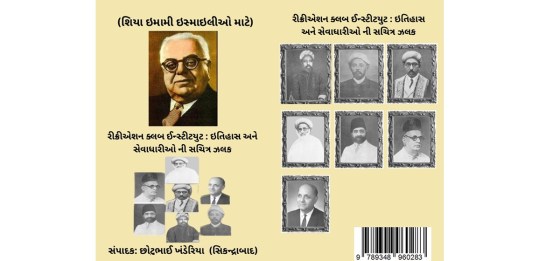
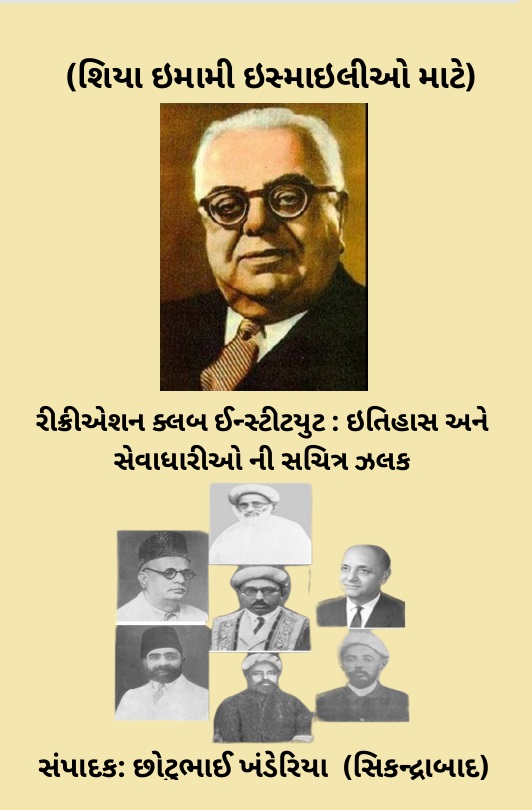
Cover page of “Recreation Club Institute: History and Illustrated Glimpses of Service Holders” by Chhotubhai Khanderia, self-published, July 2025, 222 pages. Please click on the image to download the PDF version of the book.
Simerg: How can I purchase this book?
CNK: The hard copy of the book is available upon request by writing to me at cnkhanderia@gmail.com. However, I have made an electronic copy available as a PDF file, which can be downloaded HERE (or by clicking on the image above). The book is entirely self-funded and self-published by me.
Simerg: Did you hire an editor or designer, or did you do all the work yourself?
CNK: I hired a graphic designer to work on the layout and the formatting of the book.
Simerg: What inspired you to do this important work?
CNK: The practice of daw’a in the Ismaili community was pioneered centuries ago by the Ismaili Dais, Pirs and Sayyids. In later centuries, the Ismaili missionaries took on the responsibility of imparting religious and moral education to the Jamat in a unique way, under the careful guidance of the Imam-of-the-Time. Their service, which has left an indelible mark on the Ismaili community, is a significant part of our history, recorded in various books and on websites. The material that I came across encouraged me to collect, consolidate and include information about our unsung missionaries.
Story continues below
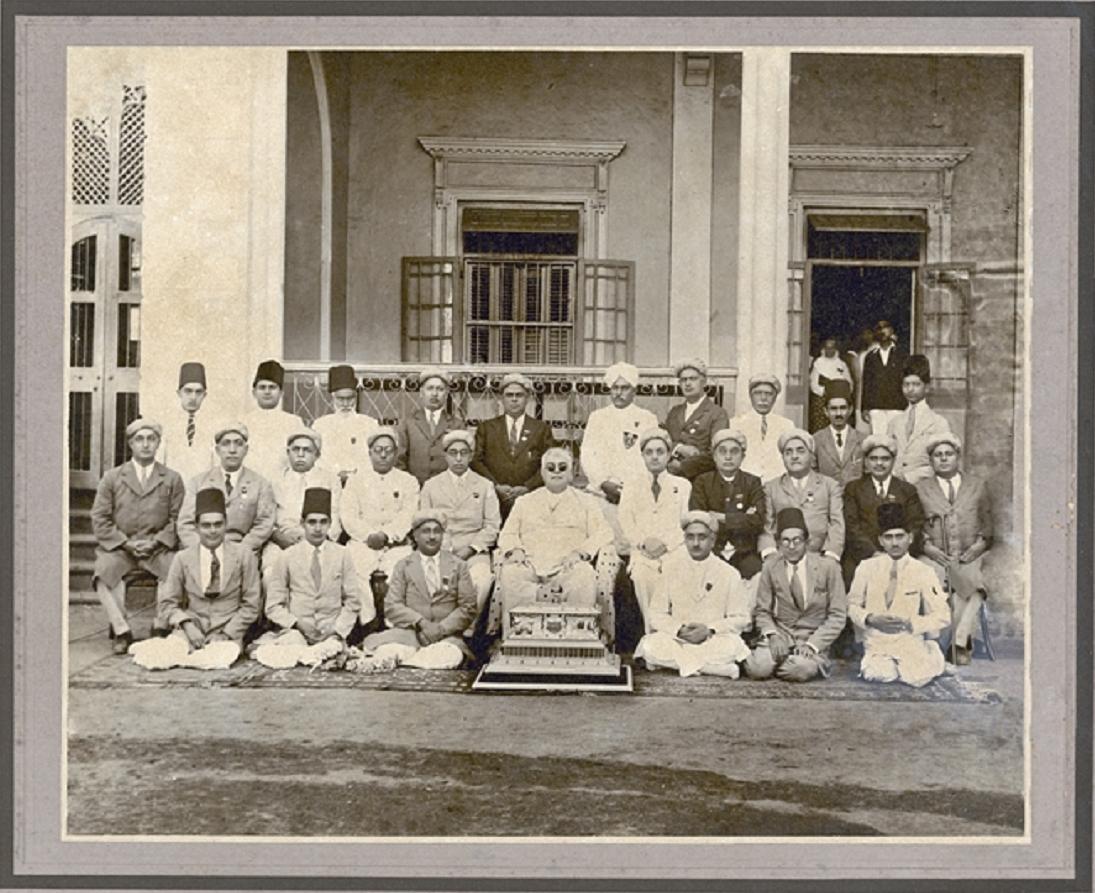
March 1936: This photo was taken in India on the occasion of the presentation of a casket by a group of Ismaili missionaries to His Late Highness Aga Khan III to mark the occasion of his Golden Jubilee. The casket, a symbol of respect and honour, was created and donated by ‘Senior’ Missionary Alijah Moloobhai Allarakhia Jangbarwalla. Unless otherwise noted, we may assume that all the persons in the photograph are missionaries. STANDING BACK ROW Left to right: Noorali Bandali, Gulamhusein Juma, Sayyed Mohamed Shah, Jaffer Jivan, Alidina Mamu, Ebrahim J. Varteji, Tajjar Mukhi Mohamed, Damji Velji, Abdulla Esmail and Badrudin Nurmohamed. SEATED ON CHAIRS Left to right: Meghji Maherali, Husseini Pirmohamed, Alijah Moloo Allarakhia (Donor of Casket), Chief Secretary Gulamhusein Virjee, President Alimohamed R Maklai, HIS LATE HIGHNESS THE AGA KHAN III, President Alijah Esmail Mohamed Jaffer, Finance Secretary Tarmohamed Ravji, Alijah Sabza Ali Ramzanali, Jamal Virji and Hamir Lakha. SEATED ON CARPET Left to right: Kassamali L Wadiwalla, Amirali Khudabaksh, Hajimohamed Fazalbhai, Mahmed Muradali, Madatali Rahemtullah Rajan and Juma Jiwa. Photo: Late Ameer Janmohamed Collection, London, UK.
Simerg: How long did it take you to complete your monograph?
CNK: The idea to write the book came in 2021. While reading an article on Simerg, I came across a picture of Imam Sultan Mahomed Shah with the missionaries taken in 1936. In that picture, the Imam was presented with a casket in 1936 to mark his Golden Jubilee. When I curiously started searching for the history of those missionaries, I found the history of about 40 missionaries online, and I consolidated it. Then it expanded to include more missionaries who were in different regions worldwide, creating a global narrative that spans India, Pakistan, Kenya, Tanzania, Uganda, the USA, Canada, the UK, and the UAE. As the famous saying goes: ‘मैं अकेला ही चला था जानिब-ए-मंज़िल मगर, लोग साथ आते गए और कारवाँ बनता गया’ (which roughly translates as ‘I started alone towards my destination, but people kept joining me and a caravan started forming’). This journey of discovery and collaboration, which is described in the book in more detail, transformed a mere idea into a comprehensive account of missionary history. After I had gathered all the information, I passionately began to develop the book in April 2025 and completed it in three months.
Simerg: Tell us something more about your book
CNK: The cover page was specially chosen, with our beloved 48th Imam as the primary focus. He laid the foundation of the Recreation Club. The cover page also includes portraits of some prominent leaders of the Club.
This is the first edition of the book, and your feedback could shape its future. If you find errors in the factual information, please let me know, and I will incorporate the corrections in the next edition. This will ensure the accuracy of the book. Some missionary biographies are brief — one-liners in some instances. I am particularly interested in including more details about their contributions to the Jamat. I would be deeply grateful if the surviving missionaries or members of their families could send me brief profiles for inclusion in the revised edition. Finally, I wish to say that while readers may use Google to translate the PDF Gujarati book into English, I intend to make the book available in English.
Date posted: August 20, 2025.
______________
About the author: Mr. Chhotubhai Khanderia, fondly known as CNK, was born in Porbandar, Gujarat. He pursued a Diploma in Civil Engineering and began his government service in 1981, supervising the repair and maintenance of government buildings, roads, bridges, and new constructions. In the Ismaili community, he has held numerous voluntary positions since 1977, which have left a lasting impact: he has served as a secondary level religious instructor, a local board member in ITREB, a regional member in the Youth and Sports Board, a secretary in the Ismaili Council, a regional chair in the Southern Saurashtra Social Welfare Board and ITREB, and as Mukhi of Majlises (special gatherings). His services were recognized with the title of Alijah by Mawlana Shah Karim, His Late Highness Aga Khan IV. Chhotubhai currently resides in Secunderabad, India, as a retired serviceman. He can be reached at cnkhanderia@gmail.com.
~~~~~~~~~
Links to the Ismaili Authors’ Series (in chronological sequence, oldest article first)
Before departing this website please take a moment to review Simerg’s Table of Contents for links to hundreds of thought provoking pieces on a vast array of subjects including faith and culture, history and philosophy, and arts and letters to name a few. Also visit Simerg’s sister websites Barakah, dedicated to His Highness the Aga Khan, and Simergphotos. Simerg’s editor Malik Merchant may be reached via email at mmerchant@simerg.com. You can also stay updated by following Malik on Facebook, X, and LinkedIn.





















 Simerg - Insights from Around the World