Simerg is an independent initiative dedicated to Ismaili Muslims, the Aga Khan — their Hereditary Imam — and the Ismaili Imamat, and Islam in general through literary readings, photo essays and artistic expressions
Inna lillahi wa inna ilayhi raji’un “Surely we belong to God, and to Him we return” — Holy Qur’an, 2:156
“Life is a great and noble calling, not a mean and grovelling thing to be shuffled through as best as we can, but a lofty and exalted destiny.” — Mawlana Sultan Mahomed Shah, His Highness the Aga Khan III (1877-1957), 48th Ismaili Imam.
A PERSONAL TRIBUTE TO A FANTASTIC AND TALENTED WRITER, AND A PURE SOUL
Farah Tejani (d. December 18, 2025)
UPDATE, DECEMBER 21, 2025: Dilsoji (condolences to family members) at Richmond Jamatkhana on Monday, December 22, after evening prayers; Funeral ceremonies at Burnaby Lake Jamatkhana on Wednesday, December 24, from 10 am; samar and zyarat (special prayers for the departed soul), December 24, Richmond Jamatkhana.
My heart is sunk and deeply saddened as I announce the death of Farah Tejani in Vancouver on December 17, 2025, conveyed to me by her loving mother, Rashida Tejani, the noblest of souls I have met in my life. Farah earned a Bachelor of Arts in English Literature and a Master of Fine Arts in Creative Writing from the University of British Columbia in May 1997, earning top Honours for her thesis on Short Fiction, reflecting her dedication and talent.
Farah was brought to my attention by her family friend in Montreal. I was amazed and convinced by what I read and felt that Farah’s writings deserved recognition, hoping that sharing her creative pieces would inspire readers and warm their hearts. I began introducing her work to Simerg readers by first publishing a series of poems titled Elastic Embrace. Shortly thereafter, I got to know her loving mother, Rashida. Her care and concern for her daughter were remarkable, and I had never seen anything like it before. There was nothing she wished more than to remain hopeful and pray for her daughter’s resolution of her challenges. Rashida’s dedication and struggle — and never losing hope — continued unabated until Farah left this world.
However, Farah’s creative writing, storytelling, and inspiring poetry has brought immense joy to her and our readers. She gained a large readership across Canada and around the world. Above all, Farah was thrilled when Mawlana Hazar Imam, then Prince Rahim, recognized her talent by leaving a comment on one of her poems. It made her feel genuinely appreciated and valued. I personally felt deeply humbled and blessed by Mawlana Hazar Imam’s support for Farah on Simerg. Farah passionately pursued writing and contributed the following excellent pieces for Simerg and its sister website, Barakah:
Just a few days before her passing, I spoke with Rashida, who had earlier had a very happy and fulfilling conversation with Farah. I suggested that Farah consider writing a piece for Mawlana Hazar Imam’s first Imamat Day, on February 4, 2026, an idea she said she would pass along to her daughter. Rashida indicated Farah would be thrilled to follow up on the suggestions. Alas, this would never be realized anymore, with Farah’s death. Rashida was devastated. She knew that her daughter’s dreams and hopes had remained unfilled. For years, she had looked after Farah single-handedly and sought to uplift her. I personally witnessed this dedication throughout Farah’s journey of writing for Simerg.
With the passing of Mawlana Shah Karim and the succession of Mawlana Hazar Imam Shah Rahim as the 50th Ismaili Imam, Farah submitted a meaningful and inspiring poem titled Ya, Hazar Imam, Please Accept My Devoted Allegiance, which we reposted again as Mawlana Hazar Imam was nearing his three-day visit to Lisbon from December 3. The piece was read widely.
Sadly, Farah died in very challenging circumstances, bereft of the support she deserved beyond what her mother offered, and the blessings of the Imam-of-the-Time that she had received and carried in her heart for the rest of her life. We did our best to support her writings and thank the many readers who responded with so much affection and love for Farah and her contributions.
As I think of Farah and meeting her with Rashida over breakfast at an IHOP restaurant in Vancouver, some three years ago, and presenting her with Gary Otte’s pictorial volume of Mawlana Shah Karim, Depth of Field: The Aga Khan Beyond the Lens, I saw a delightful twinkle in her eye expressing her love for books and writing, but above all, her unbounded love and faith in the Imam-of-the-Time, then Mawlana Shah Karim.
At this time of bereavement, we sincerely extend our condolences to her mum, Rashida, and share in her grief. We pray for the eternal peace of Farah’s soul. This talented and passionate writer could have continued writing for years with better external help and gratitude beyond what her mother provided, which many may not be aware of. Her creative works for Simerg will inspire readers to cherish her memory and budding writers to draw inspiration from her. In my conversations with her, I found excitement and passion in her voice, “Malik Bha” as she worked toward completing a piece. Her faith, devotion and love for Mawlana Hazar Imam were enormous. I saw that devotion in her face, heard it in her voice and felt it in my heart. To Rashida, I say: Bravo for your support for your daughter. You were a fantastic mother, like none I have seen. Your daughter has left a lasting legacy on this website. She was a pure soul and is at peace surrounded by Nur.
Date posted: December 19, 2025. Last updated: December 21, 2025 (added funeral information, see top).
_______________
FEEDBACK: We invite our readers to express condolences and tributes to Farah Tejani on LEAVE A COMMENT.
Over twenty years ago I, a Christian, began a journey to learn about my Muslim neighbours.
Throughout this process of learning, there was one individual — arguably the most impactful world leader without a country of his own — who, as a Muslim, taught me more about being a good Christian than I ever would have expected. In his humble, earnest way, he used his influence to be a powerful force for good, not just for those whom he lived his entire life to guide and protect but for all the rest of us as well.
The Aga Khan and Ismaili Muslims
This quietly powerful, beautiful soul is, of course, the 49th Hereditary Imam of Nizari Ismaili Muslims, Mawlana Shah Karim Al Hussaini, His Highness the Aga Khan. He passed away in Lisbon, Portugal, on February 4, 2025, at the age of 88, thus becoming the longest-lived Imam in the 1400-year history of the Shia Imami Ismaili Muslims, whose first Imam was Ali, the cousin and son-in-law of Muhammad.
Mawlana Hazar Imam (our Lord, the Imam of the Time), as Ismailis address their reigning Imam, was their protector and guide for 67 years, filled with parental love for all his followers around the world, a profoundly inspiring world leader — but for me, a Christian, he was my hero.
A life-size depiction of Mawlana Shah Karim, His Highness the Aga Khan, (d. February 4, 2025, aged 88) exhibited at the Canadian Museum for Human Rights in Winnipeg, Manitoba. The exhibit appears with depictions of other Honorary Canadian Citizens on a floor dedicated to “Turning Points of Humanity.” Photograph (of the exhibit taken July 2017): Malik Merchant / Barakah.
In his guidance to the world Nizari community living in more than 35 countries, with over 200,000 having made their homes in North America over the past fifty years, he not only spoke to immediate worldly concerns but encouraged his followers to show compassion and understanding; to volunteer, educate, and be educated; to support and empower women, and those who historically have little voice; to be good citizens of whatever country around the world they might find themselves in; and to be powerful examples of pure charity to everyone encountered. Prince Karim’s support of Nizari Ismailis was without bounds, and his charity and caring towards the world at large were without measure.
Shortly after his grandfather’s passing and his installation as the 49th Imam on July 11, 1957, Prince Karim delivered Takht-nishini (ceremonial installation) addresses internationally in Africa and South Asia — messages immediately impactful for their time and still profoundly relevant today.
He spoke to the promise of electronic education and cheaply distributed power, admonishing them to make wholesome use of these advancements while maintaining their faith.
“The most significant thing about the atomic age is the new and unbounded sources of energy which are released for the use of mankind. In Europe and America today, power stations are springing up which need no coal, nor oil, nor water power to run them. They feed themselves. This is close to the secret of perpetual motion. In my life time, it is almost certain that such atomic power stations will be exported, very likely to countries like Tanganyika. From them will flow the energy which will create new towns, railways, factories and all the foundations of modern industrial progress — Dar-es-Salaam, October 19, 1957 [1].
“The years of development and change which lie ahead are certain to throw up many new problems. We should not be afraid of these. You will surely surmount them if you stand by your faith and meet your difficulties in the spirit of humility and tolerance that your religion demands of us. This is especially important for the younger generations who will have to carry the future on their shoulders” — Nairobi, October 22, 1957 [1].
“The faith by which we live is the only sure guarantee that our problems will be surmounted. The younger people among you must be especially aware of this. Only the faith of your fathers will enable you to live in peace.” — Dar-es-Salaam, October 19, 1957 [1].
He talked about the need to find our spiritual center and work together as we navigate rapidly evolving technological landscapes.
“Never before in the history of man has there been such an age of technological progress… It is most important for the future of this country that the various races face these changes together” — Nairobi, October 22, 1957 [1].
Mawlana Shah Karim, His Highness the Aga Khan, at his Takht-nishini, in Nairobi, Kenya, 1957. Photograph: 25 Years in Pictures, Volume 1, Islamic Publications, 1983, London.
He spoke on contests of skill where every participant does their best and succeeds; that competition and respect are not mutually exclusive.
“You must work together with mutual forbearance and with respect for each other. Only thus shall we achieve the harmony and happiness which is necessary for the true advancement of our faith.” — Kampala, October 25, 1957 [1].
He declared that technological success and community development are tools to benefit everyone.
“As a community, our Faith will always preserve our special identity, but there should be nothing exclusive in what you do…There is no reason why our traditions and our faith should stop us from moving with our times, nor in fact why we should not lead our fellowmen to new spheres of knowledge and learning.” — Karach, January 23, 1958 [1].
He spoke to the power that compassion, understanding, and service have within a spiritually powerful minority community.
“With humility, tolerance, and respect for each other, by honest work and straight dealings, you will earn the true friendship of you fellows… By the way you conduct your daily lives, by the compassion you show your fellow men and women, and above all by your faith in God — you will ultimately be judged” — Bombay, March 11, 1958 [1].
Through living his own life, he transformed mine!
O mankind, indeed We have created you from male and female and made you peoples and tribes that you may know one another. Indeed, the most noble of you in the sight of Allah is the most righteous of you — Surah Al-Hujurat (49:13).
For me, Prince Karim Al-Hussani, Aga Khan IV, will always stand as a unique global figure, an exemplary world leader who effortlessly combined his spiritual role as the 49th hereditary Imam of the Nizari Ismaili Muslims with his transformative contributions to education, culture, and development.
A sign etched on a mountain to welcome Mawlana Shah Karim, His Highness the Aga Khan to Pasu in the Hunza region of Gilgit-Baltistan, Pakistan; November 1987. Photo: Faqir Ullah Khan.
~~~~~~~~
In a setting of spectacular natural beauty, Mawlana Shah Karim, His Highness the Aga Khan addresses Ismailis and non-Ismaili Muslims in Ishkashim during his first historic visit to Badakhshan in Tajikistan; May 27, 1995. Photograph: The Ismaili.
Remarkable Aspects of Leadership
For a period longer than my lifetime he led a community of millions across the world, guided by the principles of Islam while expanding his work to improve the quality of life for countless individuals, regardless of their faith or background. This perspective — anchored in faith but outward-facing and inclusive — defined his leadership and shaped his vision for a more compassionate and interconnected world.
Central to this vision was a unique worldview he termed “empathic pluralism,” the idea that humanity’s differences should be viewed not as sources of division but as opportunities for mutual enrichment. In one of his most profound observations, Prince Karim stated, “The world needs an architecture of generosity, one that speaks to a global ethic of respect and compassion.” [2] More than the design of physical structures, this “architecture” extended to encompass the systems, institutions, and relationships forming the very foundations of human society.
Cultures across the globe are grappling with complex challenges: rising inequality, deepening cultural divides, and the rapid erosion of both natural and cultural heritage. Though diverse in nature, these crises share a common thread — they require responses prioritizing empathy, resilience, and cooperation. Prince Karim’s work provided a blueprint for addressing these issues, tempering spiritual guidance with practical, sustainable solutions which strengthen communities and foster understanding.
Indeed, Allah orders justice and good conduct and giving to relatives and forbids immorality and bad conduct and oppression. He admonishes you that perhaps you will be reminded –Surah An-Nahl (16:90).
In my eyes, the most remarkable aspect of his leadership was his ability to bridge faith and reason. As a spiritual leader, he inspired millions of Ismailis through teachings emphasizing ethical conduct, introspection, and commitment to social welfare. Yet his initiatives extend far beyond his community, addressing universal concerns and building institutions that continue to serve as models of inclusivity and excellence. Whether funding hospitals and schools in remote areas or revitalizing cultural landmarks that hold meaning for widely diverse communities, his efforts reflected a holistic understanding of humanity’s shared destiny.
He continuously emphasized that understanding one’s heritage and connecting with cultural expressions — through art, music, and architecture — strengthens both individuals and communities alike. The Aga Khan Museum in Toronto perfectly documents this commitment and understanding.
A view of the Aga Khan Museum during the annual Toronto Open Doors event, May 27, 2023. Photograph: Malik Merchant/Barakah.
~~~~~~~~~
Treasures at the Aga Khan Museum Toronto. From the upper floor, one can see permanent and loaned exhibits, such as the Wagner Garden Carpet, Burrell Collection, Glasgow, Scotland. Photograph: Malik Merchant / Simerg.
The exhibits housed within its walls celebrate the artistic and intellectual contributions of Muslim civilizations spanning the globe, providing a space where visitors from all walks of life can explore and appreciate our shared human history. Reflecting on this purpose, he noted that such sites are “places where people from every background can experience the wisdom and beauty of Muslim cultures.” [2] A world standard of contemporary museology and conservatorship, the entire project underscores his broader vision of cultural dialogue as catalyst for empathy and mutual respect.
This showcase of international art was not conceived for just one group or community, but for the world. The Prince’s philosophy of unceasing kindness, consideration, and thoughtfulness is evident across his wide range of initiatives in architecture, spirituality, education, and philanthropy internationally. Together, they form a cohesive vision seeking tirelessly to heal divisions and inspire a deeper sense of global solidarity.
Pluralistic Vision for Architecture
Allah is the Light of the heavens and the earth. The example of His light is like a niche within which is a lamp…Surah An-Nur (24:35)
This vision for the world becomes particularly vivid when considering his contributions to physical architecture. For Prince Karim, architecture was far more than the design of buildings; it is a profound expression of values and aspirations. His belief that “architecture is a bridge to cultural dialogue” [1] emphasizes the transformative potential of thoughtfully designed spaces. In his view, architecture nurtures empathy, fosters inclusion, and celebrates diversity — all of which are essential to a world where only pluralistic solutions can truly resolve complex problems.
As he once said, “The spaces we build must reflect the diversity of those who occupy them and encourage coexistence. Architecture is a bridge to cultural dialogue.” [2] This perspective guided his work in architecture and urban development for decades, shaping physical environments of social harmony and cultural diversity.
The Humayun Tomb, the resting place of the second Mughal emperor and a precursor to the Taj Mahal, forms a backdrop in this picture taken during the inauguration ceremony on September 18, 2013 which was attended by the Chief Guest, the Prime Minister of India, Dr Manmohan Singh, Mawlana Shah Karim, His Highness the Aga Khan, the Minister of Culture, Chandresh Kumari Katoch, Chairman Ratan Tata of the Sir Dorabji Tata Trust and Prince Hussain Aga Khan. Photograph: Prime Minister’s Office (GODL-India), GODL-India , via Wikimedia Commons.
Through the Aga Khan Trust for Culture (AKTC), he spearheaded projects that restored significant landmarks while revitalizing the surrounding communities. In places like Islamic Cairo and the historic cities of Northern Pakistan, these initiatives preserve cultural heritage and serve as catalysts for social and economic development. These efforts are grounded in his conviction that “cultural preservation is as essential to a people’s spirit as food is to their bodies.” [2] By linking preservation with community engagement, Prince Karim demonstrated how architecture can simultaneously honour the past and empower the future.
Recognizing the urgent need for environmentally sensitive design, the projects he supported often integrated green technologies and sustainable practices. In urban spaces, this might mean prioritizing water conservation, using locally sourced materials, or creating public parks that enhance both environmental and social well-being. These initiatives addressed the practical demands of a changing climate and reflected his broader belief in stewardship and responsibility toward future generations.
There shall be no compulsion in [acceptance of] the religion. The right course has become clear from the wrong — Surah Al-Baqarah (2:256)
Underlying all these efforts was his commitment to pluralism. The Aga Khan IV consistently emphasized architecture should celebrate diversity, stating, “Architecture that embraces diversity creates not only beautiful spaces but also peaceful communities.” [2] For him, the physical environment is a reflection of society’s values — or should be — and inclusive design serves as a powerful tool for promoting understanding and coexistence. His architectural projects, whether cultural museums, educational institutions, or restored historic sites, embody this principle, offering spaces where people from all walks of life are given space to come together in mutual respect.
Architecture, in Prince Karim’s view, is not merely about creating physical spaces but about shaping environments which inspire understanding and cooperation. This principle of building for the future extends naturally into his approach to education, where cultivating minds and hearts becomes the foundation for fostering ethical leadership and global citizenship.
Education and Knowledge
Say, ‘Are those who know equal to those who do not know?’ — Surah Az-Zumar (39:9)
For Prince Karim, education was not merely about imparting knowledge but about cultivating minds and hearts to create effective and nurturing leaders in our rapidly evolving world. Education should be holistic, fostering intellectual curiosity, ethical reasoning, and cultural awareness. He observed, “An education that emphasizes both the mind and the heart…will empower young people to create positive change.” [3] Education should be a transformative force capable of addressing global challenges while enriching individual lives and inspiring future leaders.
President Chissano of Mozambique and Princess Zahra Aga Khan look on as Mawlana Shah Karim, His Highness the Aga Khan, addresses dignitaries at the foundation laying ceremony of the Aga Khan Academy Maputo on June 25, 2004. Photograph: The Ismaili USA, December 13, 2004.
~~~~~~~~
Mozambique’s President Filipe Nyusi and Portugal’s President Marcelo Rebelo de Sousa unveil the inaugural plaque of the Aga Khan Academy Maputo, as Prince Rahim, who succeeded as the 50th Imam on February 4, 2025, looks on. Photograph: Akbar Hakim/IPL
The Aga Khan Academies are a network of schools located in diverse cultural settings, each committed to nurturing future leaders who value pluralism and social responsibility. These schools emphasize a rigorous academic curriculum alongside lessons in ethical leadership, preparing students not only to excel in their chosen fields but also to contribute meaningfully to society at large. Reflecting on this mission, he remarked, “Education should be an opening of the mind to the rich diversity of human experience” [3], underscoring his belief in the power of education to build bridges across cultural and intellectual divides.
The University of Central Asia Naryn campus in the Kyrgyz Republic lies on the banks of the Naryn River, surrounded by the Tien Shan mountain range. Photograph: AKDN.
Another cornerstone of Prince Karim’s educational vision was his focus on post-colonial societies, where the legacies of imperialism include painfully fractured identities and profoundly limited opportunities. Through initiatives like the University of Central Asia and the Aga Khan University, he sought to address these challenges by creating institutions which blend global standards with local relevance. These universities prioritize research and teaching directly tied to the needs of the communities they serve, fostering a sense of agency and self-determination.
Education should not only elevate individuals but also empower entire communities, particularly in a world where globalization often threatens to homogenize identities. By integrating cultural literacy into educational frameworks, Prince Karim fostered a sense of pride and belonging while encouraging cross-cultural empathy.
Read in the name of your Lord who created. Created man from a clinging substance. Read, and your Lord is the most Generous — Who taught by the pen — Taught man that which he knew not — Surah Al-Alaq (96:1-5).
His vision for education also extended to global ethics. In a time of increasing polarization and ethical dilemmas posed by technological and social change, he called for education systems worldwide to prioritize moral reasoning and empathy. His institutions place a strong emphasis on teaching integrity, respect for diversity, and responsibility toward others, reflecting his understanding that intellectual achievements are hollow without a foundation of ethical principles.
The Prince’s educational institutions and initiatives actively work to increase access to education for women and marginalized groups, and recognize that equitable education is a prerequisite for truly sustainable development. These efforts echo his broader belief in the transformative potential of empowering all individuals, regardless of gender or socioeconomic background.
The transformative power of education lies not only in the knowledge it imparts but also in its ability to nurture creativity and cultural pride. These values resonated deeply with Prince Karim’s work devoted to supporting the arts, where he championed the preservation of heritage alongside present innovation, bridging the past and present.
Empathic Pluralism in the Arts
God is beautiful and loves beauty — Hadith Qudsi, Prophet Muhammad, Saheeh Muslim
The arts are a universal language — a means of expressing the human spirit and fostering understanding across cultures. Throughout his leadership, the Aga Khan championed the preservation and celebration of artistic traditions while encouraging contemporary forms of expression resonating with modern audiences. The arts are an integral part of human development, a tool for cultural dialogue and empathy — as he stated: “Art is a universal language that has the power to build bridges where words cannot.”
Mawlana Shah Karim, His Highness the Aga Khan, meeting musicians from the Kyrgyz Republic. The troupe was brought to the Smithsonian Folklife Festival held in Washington, DC, in 2002 by the Aga Khan Trust for Culture. Photograph: AKDN/Zahur Ramji
The Aga Khan Music Initiative is one of the most compelling examples of his vision. Through this initiative traditional music from Central and South Asia, the Middle East, and North Africa is preserved and revitalized, ensuring that these rich cultural legacies are passed down to future generations. The initiative goes far beyond preservation; it supports innovation as the initiative encourages collaborations between traditional and contemporary artists. This dynamic approach ensures that these traditions remain relevant in a changing world, inspiring new audiences and fostering a deeper appreciation of cultural diversity.
Stamps issued by the Sultanate of Oman to commemorate the Aga Khan Award for Architecture and the Aga Khan Music Awards, October 2022.
More than just a repository of objects, the Aga Khan Museum mentioned earlier is a space where visitors actively explore the shared history and interconnectedness of humanity. Through its exhibits, performances, and educational programs, the museum brings the relevance of art forward into the contemporary space — while encouraging dialogue and a dynamic exchange of ideas with other cultures. The Aga Khan described the museum as “a place where art and history come together to foster mutual understanding.” [2] This ethos of inclusivity underscores every one of the Prince’s artistic initiatives, all designed to invite reflection and inspire respect for diversity.
He who created seven heavens in layers. You do not see in the creation of the Most Merciful any inconsistency…Surah Al-Mulk (67:3-4).
Secretary of State Madeleine Albright and President Bill Clinton with Mawlana Shah Karim, His Highness the Aga Khan, at the first White House conference on culture and diplomacy convened by President and Mrs. Clinton on November 28th, 2000. The Aga Khan was among the distinguished panelists invited to advise the president and secretary of state on the role of culture in foreign policy. Photograph: Official White House Photo.
Arts are essential to resilience. Prince Karim often spoke about the role of cultural expressions in providing communities with a sense of identity and continuity, particularly in times of upheaval. When traditions are preserved and celebrated they serve as anchors, helping individuals and communities alike to navigate change. This perspective is particularly relevant in a globalized world where many traditional practices face the risk of extinction. In the Prince’s eyes, the arts are not merely luxuries or entertainment but vital elements of human survival and flourishing.
While his efforts often focused on Muslim cultures, they were never exclusive. In encouraging artistic dialogue across traditions, he demonstrated that the arts have a unique ability to transcend boundaries and bring people together. Whether it is musical collaboration between Central Asian and Western artists or museum exhibits juxtaposing Islamic and European art, his initiatives remind us of the shared threads connecting all of humanity.
Philanthropy, Social Impact, and Community Resilience
Whoever saves one [life] – it is as if he had saved mankind entirely — Surah Al-Ma’idah (5:32)
Prince Karim’s commitment to fostering pluralism and preserving cultural heritage is inseparable from his broader vision of social impact. His work in philanthropy demonstrated the same principles of empathy and inclusivity that shaped his approach to education, architecture, and the arts. While the arts nurture the soul and build bridges of understanding, philanthropy addresses the practical realities of building stronger, more resilient communities. For Prince Karim these endeavors are complementary, working together as a holistic strategy to uplift humanity.
One of the defining characteristics of the Aga Khan’s philanthropy was its emphasis on long-term sustainability. Standing apart from traditional charity models, the focus is instead on enabling communities to achieve self-reliance.
He said, “True philanthropy is about empowering people to help themselves.” [4] This guiding principle underpins the work of the Aga Khan Development Network (AKDN), a sprawling network of institutions and programs addressing everything from health and education to economic development and environmental sustainability.
(Late) Kofi Annan, former UN Secretary-General, presents the Champion for Global Change Award to Mawlana Shah Karim, His Highness the Aga Khan, at a special gala dinner held in New York on October 18, 2017. Photo: The Ismaili/Akbar Hakim/Mairaj Manji.
The AKDN’s work is vast in scope but deeply localized in its execution, tailoring each initiative to the specific needs of the communities it serves. In regions recovering from conflict or grappling with systemic poverty, the AKDN projects create opportunities for employment, education, and healthcare, while also investing in infrastructure supporting long-term growth. This strategy is evident in the AKDN’s investments in East Africa, Central Asia, and South Asia, where initiatives not only dramatically improved living conditions but also strengthened social cohesion.
Healthcare is a cornerstone of his philanthropic mission. Hospitals and clinics established under the AKDN are recognized worldwide for their excellence and accessibility, often serving marginalized populations who might otherwise lack any access to quality care. These institutions reflected his belief that health is a fundamental human right and a prerequisite for broader societal progress. By combining world-class medical care with community outreach and preventative programs, these initiatives continue to improve both individual and collective well-being.
Mawlana Shah Karim, His Highness the Aga Khan, during one of his visits to the site of the Al-Azhar Park, in Cairo.
~~~~~~~
In the 1980’s the Aga Khan turned his attention to a site in Cairo, where garbage had been dumped for more than 500 years and was nearly 25 feet deep. After more than 15 years of work masterminded by his Trust for Culture, his vision has transformed the derelict site into a sequence of formal gardens filled with groves of fruit and flowering trees, fountains and an artificial lake studded with a modern lakeside café and a central allee of royal palms lines a path that has views of Islamic Cairo’s minarets and domes. Atop the dump site sit three new sunken reservoirs that provide invisible succor and a children’s playground and other special features. Shown in the image are: the 1992 park site, Al Darassa municipal dump (top left); on going work in shaping the Al-Azhar Park site in 1999 (top right); and the completed Al-Azhar Park which was inaugurated in 2005. Photos: Aga Khan Trust for Culture via Archnet.
~~~~~~~~~~
Mawlana Shah Karim, His Highness the Aga Khan, welcomes Prince Charles, The Prince of Wales, and The Duchess of Cornwall to Al-Azhar Park in 2006 at the beginning of their official 2-week to Egypt, Saudi Arabia and India. Photo: AKDN/Gary Otte.
The AKDN’s philanthropy also emphasized the importance of resilience in the face of environmental and economic challenges. Projects restoring cultural landmarks, such as the restoration of Humayun’s Tomb in India or the Al-Azhar Park in Cairo, served multiple purposes: preserving heritage while creating jobs and revitalizing urban spaces. These initiatives exemplify the Prince’s view that cultural and economic development are deeply interconnected, and both are essential for sustainable progress.
Underlying all of these efforts is the principle of pluralism. The Aga Khan consistently argued diversity is a strength, not a weakness, and his philanthropic projects reflected this belief. Whether promoting cross-cultural dialogue through the arts or fostering inclusive growth through development initiatives, his work embodied a profound respect for the unique contributions of every community. He noted, “Pluralism is not simply a concept but a necessity for peace.” [5] A perspective particularly relevant in a world where divisions often seem to outweigh connections.
Universal Values: Connecting Vision with Broader Global Concerns
And of His signs is the creation of the heavens and the earth and the diversity of your languages and your colors. Indeed, in that are signs for those of knowledge — Surah Ar-Rum (30:22)
While deeply rooted in the traditions of the Ismaili Muslim community, Prince Karim’s vision spoke to universal values that resonate across cultural, religious, and national boundaries. His emphasis on pluralism, empathy, and resilience reflected a profound understanding of the interconnected challenges facing humanity. From addressing social inequalities to fostering environmental stewardship, his work transcended the particulars of any one community, offering lessons and solutions relevant to the world at large.
Mawlana Shah Karim, His Highness the Aga Khan, and Norway’s Minister for International Development, Ms. Hilde F. Johnson, sign a Memorandum of Understanding between the AKDN and the Government of Norway, to enhance collaboration on development issues and programmes in Africa, Central and South Asia; April 6, 2005, Oslo, Norway. Photograph: AKDN / Gary Otte.
Righteousness is not that you turn your faces toward the east or the west, but [true] righteousness is [in] one who believes in Allah, the Last Day, the angels, the Book, and the prophets…Surah Al-Baqarah (2:177)
Dr. Friedemann Greiner, Director and Chairman of the Jury (left), presents the Tolerance Award 2006 to Mawlana Shah Karim, His Highness the Aga Khan, as the then-German Minister of Foreign Affairs Dr Frank-Walter Steinmeier (right) looks on; May 2006. Photograph: AKDN/Zahur Ramji.
One of the most compelling aspects of Prince Karim’s vision was his ability to bridge the material and the spiritual. While his work often addressed practical needs — such as healthcare, education, and infrastructure — it was deeply informed by both ethical and spiritual considerations. He argued that “faith should be a source of hope, not division,” a sentiment highlighting the potential of religious values to inspire positive change in a fractured world. His leadership exemplified this philosophy, demonstrating how faith can be a unifying force transcending differences and fostering shared purpose.
His belief that “education should be an opening of the mind to the rich diversity of human experience” [3] underscored his commitment to fostering global citizens who are both informed and compassionate.
Ultimately, the Aga Khan’s vision was about creating a world where differences are seen as opportunities for enrichment rather than barriers to progress. His initiatives offered a model for addressing some of the most pressing issues of our time, from inequality and cultural polarization to environmental degradation. By combining empathy, practicality, and a deep respect for humanity’s shared heritage, he demonstrated that it is possible to build a future both inclusive and sustainable.
His universal values continue to offer a beacon of hope for a world in search of unity and resilience.
Inspiring Ethical Leadership and Global Solidarity
So by mercy from Allah, [O Muhammad], you were lenient with them. And if you had been rude [in speech] and harsh in heart, they would have disbanded from about you — Surah Al-Imran (3:159)
Synergos Founder and Chairperson Peggy Dulany presenting the David Rockefeller Bridging Leadership Award to Mawlana Shah Karim, His Highness the Aga Khan in London on October 22, 2012. Photo: AKDN/JMB Photographic Ltd
Prince Karim’s life and work reflect a rare combination of visionary leadership and grounded pragmatism. As a spiritual leader, he inspired his followers with values rooted in compassion, justice, and the pursuit of knowledge. As a global leader, he applied these principles to initiatives which address head-on the most immediate and pressing challenges of our time, offering solutions resonating far beyond his immediate community. This dual role positioned him as a bridge between spiritual ideals and worldly realities, demonstrating that leadership rooted in ethical principles can foster solidarity and resilience on a global scale.
He repeatedly emphasized that leaders must strive to understand and address the needs of those they serve, saying, “Leadership is not about power but about responsibility.” [3] In prioritizing service over authority, the Prince modelled leadership that seeks to empower rather than dominate, fostering collaboration and mutual respect.
Mawlana Shah Karim, His Highness the Aga Khan, receives the inaugural Adrienne Clarkson Prize for Global Citizenship in Toronto, Canada, on September 21, 2016. The prize recognises an individual who has, through thought and dialogue, encouraged approaches and strategies that strive to remove barriers, change attitudes, and reinforce the principles of tolerance and respect. Photo: AKDN/Lisa Sakulensky.
His emphasis on solidarity is evidenced in his approach to global challenges. Prince Karim recognized that issues such as inequality, environmental degradation, and cultural polarization cannot be addressed in isolation. Instead, they require collective action and a willingness to transcend narrow interests for the greater good. He argued that “our survival depends on collaboration, not competition” [2], a sentiment underscoring his commitment to fostering partnerships and alliances across sectors and borders.
Prince Karim Al-Hussaini’s leadership inspired individuals to take personal responsibility for creating positive change. Through his speeches, writings, and projects, he tirelessly encouraged people to reflect on their own roles as stewards of their communities and the planet. By emphasizing that small, collective actions can lead to significant impact, he inspired a path forward that is both practical and hopeful.
Mawlana Shah Karim, His Highness the Aga Khan, is presented the World Monument Fund’s Hadrian Award on October 25, 1996 by David Rockefeller. In the keynote speech at the presentation ceremony, Cyrus Vance, former US Secretary of State, noted Aga Khan’s lifelong labour in improving the lives of Islamic peoples worldwide and his commitment to preserving and renewing societies. Photograph: The Ismaili Canada, July 1997, print edition.
The contributions of this singular individual, an Olympic skier who chose to study and help his friends rather than live frivolously, offer profound lessons for individuals and institutions alike. As we reflect on his enduring legacy, it becomes clear that his vision was not just a roadmap for his community but a source of inspiration for all the world.
Then shall the King say unto them on his right hand, Come, ye blessed of my Father, inherit the kingdom prepared for you from the foundation of the world: for I was an hungred, and ye gave me meat: I was thirsty, and ye gave me drink: I was a stranger, and ye took me in: naked, and ye clothed me: I was sick, and ye visited me: I was in prison, and ye came unto me.
Then shall the righteous answer him, saying, Lord, when saw we thee an hungred, and fed thee? or thirsty, and gave thee drink? When saw we thee a stranger, and took thee in? or naked, and clothed thee? Or when saw we thee sick, or in prison, and came unto thee?
And the King shall answer and say unto them, Verily I say unto you, Inasmuch as ye have done it unto one of the least of these my brethren, ye have done it unto me — Matthew 25:34-40, KJV
So race to [all that is] good.Surah Al-Baqarah (2:148)
Through his initiatives in architecture, the arts, education, and development, he demonstrated that honoring the past need not come at the expense of embracing the future. Instead, he showed that these forces can complement and support one another, creating solutions both innovative and deeply rooted in cultural and ethical values. His projects, from the Aga Khan Museum to the revitalization of historic urban centers around the world, serve as living testaments to this philosophy, embodying a balance urgently needed in today’s world.
His legacy continues to remind us of the strength which comes from embracing differences and seeking common ground. Whether through volunteering, fostering cross-cultural understanding, or advocating for sustainability, his vision continues to offer pathways for meaningful contribution.
I am a Christian, and the late Prince Karim Al-Hussaini, Aga Khan IV, was Muslim. We come from different backgrounds and world views, but we are both Children of the Book. I have quoted from one of my most favorite books in the world, the Illustrious Qur’an, and my perspective is shaped in large part by another which I was introduced to first, the Holy Bible. As a Christian, I have looked to the Aga Khan and his works as encouragement — inspiring me in my own demonstrations of compassion, empathy, and caring.
This Muslim has managed to make me a better Christian.
Prince Karim once remarked, “To be an architect of a better world requires both compassion and courage.” [2] These words are the essence of his leadership. His life’s work will continue to serve as a powerful reminder that unity is not only possible but is absolutely essential — and that by working together with empathy and integrity, we will create a brighter future for all.
A version of this post appears on our sister website Barakah, which is dedicated to His Highness the Aga Khan
______________________
About the author: Andrew Kosorok is an artist, educator, and bridge-builder. An art glass designer, sculptor, and university instructor, he is also a pluralist chaplain and a writer. Andrew examines the Christian/Muslim interface looking for opportunities to use art and the creative process to deepen friendships, encourage exploration, and build community. He writes: “Art is the language which communicates outside of words — it allows us to embrace our similarities and celebrate those wonderful elements which make each of us unique. At the heart of every faith tradition is the knowledge we are all intentionally made different by a wisely governing Creator; understanding these differences is a fundamental part of building a wonderful future for humanity.” Andrew is the author of the books 99 Names: A Christian’s Exploration of the Names of God from the Qur’an and United Design Principles in Islamic Architecture During Safavid Era in Kerman City: A perspective to Gestalt laws (with Drs. Mina Safizadeh and Fatemeh Khozael), as well as a growing series of books exploring world views and regional folklore.
______________________
Simerg welcomes your tributes to Mawlana Shah Karim Shah, His Highness the Aga Khan. Please click Leave a comment If you encounter problems, email the comments to mmerchant@simerg.com. We want to reassure you that we respect your privacy and that your published comment will never reveal your email address. For recent and older posts, please visit our HOME PAGE.
“I am convinced that the Aga Khan’s extraordinary accomplishments, in a blessed long life, lived without a single allegation of wrongdoing, emerged out of a God-given capacity, utterly rare among leaders, to blend his spiritual, intellectual and temporal passions” — Salim Lone, Nation. Please read the tributes on our sister website; click Barakah.
The 49th Ismaili Imam, Mawlana Shah Karim, His Highness the Aga Khan (December 13, 1936 – February 4, 2025), was on Sunday, February 9, 2025, laid to rest at a private burial ceremony in Aswan, Egypt, in the mausoleum of his grandfather, Mawlana Sultan Mahomed Shah.
Story continues below
The Egypt map highlights Cairo, founded by the Fatimid Imams, the ancestors of the new 50th Ismaili Imam, Mawlana Shah Rahim, and Aswan — approximately 900 kms south of Cairo — where a mausoleum was built as the permanent burial site of the 48th Ismaili Imam, Mawlana Sultan Mahomed Shah. The 49th Imam, Mawlana Shah Karim, who died on February 4, 2025, was temporarily buried in the same mausoleum on February 9 until a new mausoleum is constructed. Map credit: Perry-Castañeda Library Map Collection / University of Texas.
His successor, Mawlana Shah Rahim, the 50th Imam, and his family were present, together with the Ismaili Jamat senior leaders. The burial follows the funeral ceremony on February 8 at the Ismaili Centre Lisbon (see our coverage of the funeral ceremony with my personal reflections HERE.)
Mawlana Shah Rahim Al Hussaini, the 50th Hereditary Imam of the Ismaili Muslims, who succeeded his beloved father, Mawlana Shah Karim, on February 4, 2025, at the age of 88. Photograph: The Diwan of the Ismaili Imamai, Lisbon.
Major General Dr Ismail Kamal, the Governor of Aswan, who had welcomed Mawlana Hazar Imam a day earlier, facilitated and participated in a dignified procession through the city to the banks of the River Nile.
Story continues below
The Mausoleum of the 48th Ismaili Imam, Mawlana Sultan Mahomed Shah in Aswan, where the 49th Imam, Mawlana Shah Karim, was temporarily buried on February 9, 2025, until one dedicated to him has been constructed. Photograph: Muslim Harji, Montreal.
Mawlana Shah Karim’s casket was transferred by boat in a ceremonial crossing to the mausoleum of his predecessor, 48th Imam, Mawlana Sultan Mahomed Shah, who wanted to be buried in Aswan.
Story continues below
Mawlana Shah Rahim and his family and residents of Aswan participate in a dignified procession through the city of Aswan to the banks of the River Nile, February 9, 2025. Photograph: AKDN.
~~~~~~~
Prince Rahim Aga Khan V and his family accompanied by the Governor of Aswan, transferring the casket of the late Prince Karim Aga Khan IV across the River Nile, Aswan, Egypt, February 9, 2025. Photograph: Akbar Hakim / IPL.
The janaza (casket) was carried by hand to the hilltop mausoleum. Mawlana Shah Karim’s body has been laid to rest in the mausoleum next to his grandfather until a new one is constructed as his final resting place on land adjacent to the existing structure.
Story continues below
The casket of the late Prince Karim Aga Khan IV being carried by hand to the mausoleum of Sir Sultan Mahomed Shah Aga Khan III, visible in the background, Aswan, Egypt, February 9, 2025. Photograph: Akbar Hakim / IPL
~~~~~~~
Casket of the late Prince Karim Aga Khan IV entering the mausoleum of his grandfather Aga Khan III where he was interred, Aswan, Egypt, 9 February 2025. Photograph: Akbar Hakim / IPL.
After the ceremony, the leaders present had the opportunity to express condolences to the family, and the Governor of Aswan presented Mawlana Hazar Imam with a symbolic key to the City of Aswan as a mark of respect (see following Tweet).
AP video/Radwan Abu Al Majd (see below): A burial service for Aga Khan IV, the 49th hereditary imam of the Shiite Ismaili Muslims, was held in the southern Egyptian province of Aswan on Sunday. After a procession through the streets, his body was carried down the Nile in a white boat.
Date posted: February 10, 2025. Last updated: February 10, 2025 (, 01:35 PM, added Tweet on Key of Aswan granted to Prince Rahim).
Note: A version of this piece has been posted on Simerg’s sister website, Barakah.com.
Correction: A typo in the title of the original version of this post, which mentioned Highness the Aga Khan as the 47th Ismaili Imam, has been corrected. He was the 49th Imam.
_________________
Simerg welcomes your tributes to Mawlana Shah Karim, His Highness the Aga Khan. Please click Leave a comment. If you encounter problems, email the comments to mmerchant@simerg.com.
Shamshu Jamal (1936-2019). Photo: Shamshu Jamal family archives.
By KARIM H. KARIM (with contributions from Dolatkhanu Jamal, Rosemin Karim, Riyaz Jamal, Imran Karim and Irshad Karim)
Shamshu Jamal has left a profound impression on the global Ismaili jamat. His music was “magical,” declared a poem written in honour of his 80th birthday in 2016. The singer, musician, lyricist, composer, and music teacher had innumerable admirers in the countries across North America Europe, Africa and Asia where he performed in a tenure of over 60 years. Shamshudin Noordin Jamal was the unofficial poet laureate and bard of Canada’s Satpanthi Khoja Ismailis. His musical legacy has been passed on to a multitude of students and to his children and grandchildren, with whom he produced several recordings.
It was not only Shamshu’s music but his personal affability, generosity and humility that touched people’s hearts. Despite achieving success and fame, he remained grounded in family and community.
Shamshu was a loving son, husband, father and grandfather as well as a devoted friend. He and his wife lived simply in the same home in Vancouver for the last four decades. It was where he received prominent musicians and legions of admirers. It was also where he taught music and even repaired colleagues’ harmoniums.
Participating actively in the life of the neighbourhood, he stayed in touch with people who left and made new acquaintances. The many close friends and fans around the world are a testament to his compassion and graciousness. His humour was legendary – he seemed to have a joke for every occasion. Shamshu is remembered as having a smile on his lips and a twinkle in his eye. These features of his personality shone through in his singing and compositions.
Shamshu Jamal was born in a home whose air was filled with music. His father performed at gatherings and held sessions at the family’s residence. He taught the young Shamshu about the basics of Indian ragas and how to sing and play instruments during the 1940s. This early introduction to music stirred an irrepressible desire to learn more.
Formal Indian musical training was not available in Dar es Salaam, Tanzania, so Shamshu began teaching himself through research, careful listening and constant practice. He instinctively understood rhythm, melody and vocal expression. As a young teenager, he would sneak into the concerts of prominent artists visiting from India. Performing at private musical gatherings and then on the stage before turning twenty, he soon emerged as a virtuoso both within and outside the Khoja Ismaili community.
story continues after photo
Shamshu Jamal and colleagues performing in Dar es Salaam in the 1960’s. Photo: Shamshu Jamal family archives.
Shamshu’s attention to linguistic detail and diction drew him into the hearts of ghazal lovers who marvelled at his knowledgeable and precise enunciation of Urdu, which was not his mother language. He performed with a circle of fellow singers and musicians who were Muslims, Hindus, Sikhs and other members of the diaspora that had crossed the Indian Ocean to settle in Africa.
In 1973, Shamshu Jamal and his family moved to Vancouver as part of the East African Ismaili migration to western countries. He re-established old musical contacts and made new ones. The larger South Asian community of Vancouver responded enthusiastically to Shamshu’s talented renderings of ghazals and bhajans. He performed with singers and musicians from various cultures and religions. As an accomplished harmonium player, he also shared the stage with renowned artistes from India, such as the classical vocalists Pandit Jasraj and Shrimati Shweta Jhaveri and the master tabla players Ustad Zakir Hussain and Pandit Swapan Chaudhuri.
Shamshu generously gave of his musical self to his own and other communities for all of his adult life. He became a much sought-after teacher of Indian music, sharing his time and knowledge with students from various communities. Notwithstanding his success, he continued his own journey of studying music.
In 2000, the Government of Canada recognized his accomplishments and awarded him a prestigious grant to pursue advanced musical studies in India. It was in that year that he retired from his job as an accountant to devote himself more fully to music.
story continues after photo
Shamshu Jamal and fellow musicians performing in Vancouver in the 2010s. Photo: Shamshu Jamal family archives.
Shamshu’s live concerts were much celebrated events even when he was in his eighties. He performed at public venues, at Ginan mushairas in Jamatkhana social halls and at private music parties in homes. His particularly distinctive vocal style had been developed over many decades. Quite apart from his mastery of the technical aspects of music, the real excitement of Shamshu’s performances lay in the enthralling manner in which he engaged and connected with the audience. The mischievous smile, the impromptu alaaps and variations, and the ability to draw out deeply embedded emotions will be remembered long into the future.
His delivery remained at a sophisticated level even as age modulated the timbre of his voice. He practiced extensively before each performance. Audiences were delighted at the way that Shamshu maintained his vocal range and high notes of alaaps even as evening concerts flowed into the early morning. Apart from devotional material and heart-rending ghazals, Shamshu’s repertoire also regaled his audiences with playful songs like “Aavata Jata Jara” in Gujarati and “Nazar Se Milaa Kar” in Hindi.
From time to time, there arise individuals whose voices capture a community’s most profound feelings. For Canada’s immigrant Khoja Ismailis, one of those powerful voices has been Shamshu Jamal. His musical creativity has vocalized some of the deepest emotions of the community. Various versions of his original composition in Gujarati of “Mara Mowla Canada Padharshe” (1978) continue to be sung to this day. The word “Canada” is changed in different parts of the global diaspora to “London,” “Kenya,” “America” etc. when anticipating Mawlana Hazar Imam’s arrival in particular locations. It is viewed as Shamshu Jamal’s signature song which Malik Talib, former president of the Aga Khan Ismaili Council for Canada, termed as “iconic” for the community. This geet’s literal English translation, “My lord shall make a visitation to Canada” does not do justice to the deeply-felt range of sentiments that it expresses.
When Shamshu composed it in 1978, he creatively captured an immigrant community yearning for its spiritual leader’s first visitation in the autumn of that year. Its members were in a western country, far away from their eastern roots and were uncertain of their future. The Imam had been a constant guide when they had lived in Africa. There was eager anticipation of his advice on how to deal with the difficult situation in which they found themselves. With his finger on the pulse of the community, Shamshu Jamal gave voice to what it was feeling in its heart. The lyricist compassionately articulated the anxiety of uprootedness as well as the aspirations for renewal.
The same padhramni’s book-end composition of “Mowla Sidhaavi Gya” by Shamshu is a profoundly sad geet of the Imam leaving the community at the end of his visit. It vocalizes the bitter-sweet feelings of the Jamat at the end of the mulaqaat and to this day produces streams of tears from listeners’ eyes. This song has also become an iconic expression of similar departures of Mawlana Hazar Imam over many years since 1978.
Jamal went on to produce many other geets in praise of the Imam, particularly commemorating his various jubilees. Ever the perfectionist, he enlisted the participation of professional musicians in London, England for the Silver Jubilee album Jubilee Ke Naghme (1983) and in Mumbai, India, for the Golden Jubilee’s Jashne Jubilee (2008).
One of Shamshu Jamal’s major achievements was to enable Canadian Khoja Ismailis, who have been cut off from their cultural roots, to appreciate the profound depth of their Indian musical heritage. He enabled the Jamat to understand the musical culture and classical ragas on which the ginans are based. Shamshu recorded “Tran Tran Ved Na Dhyaavo” in Raag Malkauns, Joothi Re Duniya in Raag Bairagi Bhairav, Dur Desh Thi Aayo Vañjhaaro in Raag Jaijaiwanti and many others. These are masterful renditions that have now become integral to the treasury of the recorded Satpanth heritage, one of whose founders was Pir Shams (12th-13th century).
Shamshudin Noordin Jamal’s star shines brightly in the firmament of music. He lived a full and accomplished life. His legacy was visible at his funeral at which his grandchildren soulfully sang ginans that he had taught them. Shamshu Jamal’s final farewell is expressed in Shakeel Badayuni’s ghazal, Aakhri Waqt Hai Saans Hai Aakhri, which he used to sing at his concerts:
“Duniya walo mubarak ho duniya tumhe, Kar chale hum salaam akhri.”
Translation
“This world is yours now, o people of the world, I have done my final farewell.”
Date posted: July 16, 2020.
________________________
We invite you to submit your condolences, memories and tributes to Shamshu Jamal by completing the feedback form below or by clicking on LEAVE A COMMENT. Should you have difficulty in submitting your comment through the feedback form, please email it to simerg@aol.com; Subject: Shamshu Jamal.
________________________
Karim H. Karim
About the author: Karim H. Karim is the Director of the Carleton Centre for the Study of Islam and a Professor at Carleton University’s School of Journalism and Communication.
The tributes may be submitted for passings due to Covid-19 or any other cause
Some years ago, Simerg launched PASSINGS where Ismailis around the world were invited to submit obituaries or tributes to honour members of their families who had passed away, irrespective of the time frame. Over the past few years, we have seen a trickle of these obituaries and tributes flowing in, and we have graciously published them to the comfort of several family members.
Today, the coronavirus pandemic has brought great sadness to families who have lost family members during the past two months. Like other places of worship, Jamatkhanas in North America, the UK, Europe and many other parts of the world, have remained closed since around the middle of March. Whether the death has been due to Covid-19 or other illnesses, funeral, burial and post-burial ceremonies and rites have been vastly compromised, with limited number of family members and friends being permitted to attend the mourning ceremonies, both before and immediately after the person has been buried.
Restrictions have even prevented family members from being close to their loved ones during their times of illness and during the final moments of their lives. Often, the death of the individual is unknown to many due to Jamatkhana closures, as special prayers for the soul of the deceased (known as samar, which takes place in many parts of the world where the deceased is known through family and friends) can no longer be conducted. With all of these elements missing, many families who have lost their beloved have not experienced a sense of closure with respect to the loved ones that have left them.
Most recently, as readers might be aware, Simerg paid a loving tribute to Missionary Amirali Gillani. His closest family members were deeply comforted by the condolences that they were offered by friends, relatives as well as well-wishers from around the world, who made contact by phone and emails. Many submitted tributes to Missionary Amirali Gillani in the comments section of this website. We went on to report about the extraordinary funeral and burial ceremonies that took place in Toronto for the long serving and well-known Ismaili missionary.
Today, we announce a special weekly series in which we will publish tributes to deceased Ismailis or individuals who are members of Ismaili families who have passed away during the coronavirus pandemic.
The tribute that you pen is not restricted to deaths caused by Covid-19. It will be to anyone who is part of an Ismaili family and who has died from any cause – Covid-19 or otherwise – during the coronavirus pandemic. This opportunity to submit tributes is being offered to Ismaili families around the world in the spirit of the ONE JAMAT that we are, under the leadership and loving care of Mawlana Hazar Imam, His Highness the Aga Khan.
Please email the tribute (preferably 75-100 words in length), along with the deceased family member’s portrait photo (if available, in jpeg format), to Malik Merchant at simerg@aol.com. You MUST include your full name and phone number where you can be reached. Anonymous tributes will not be accepted.
The Toronto Star article The Lives They Lived will help you in developing a comprehensive tribute, and Simerg’s editor will always be available to provide his assistance in formulating a good tribute, so long as you provide good information about the deceased.
Kindly note that Simerg’s tribute will be for ALL deceased Ismailis and members of Ismaili families who have passed away during the pandemic due to Covid-19 and other causes. Again, please send your tribute to Simerg@aol.com.
We hope to commence the series of tributes on Friday, May 22, 2020. In addition to English, we will also accept tributes written in French, Portuguese and Spanish with their corresponding English translations, provided by you (you may use Google translate, if you wish).
Date posted: May 17, 2020. Last updated: May 18, 2020 (added note about submitting tributes in French, Spanish, and Portuguese).
Before departing this website please take a moment to review Simerg’s Table of Contents for links to hundreds of thought provoking pieces on a vast array of subjects including faith and culture, history and philosophy, and arts and letters to name a few.
_________________________
Malik Merchant is the founding publisher/editor of Simerg (2009), Barakah (2017) and Simergphotos (2012). A former IT consultant, he now dedicates his time to small family projects and other passionate endeavours such as the publication of this website. He is the eldest son of the Late Alwaez Jehangir Merchant (1928-2018) and Alwaeza Maleksultan Merchant, who both served Ismaili Jamati institutions together for several decades in professional and honorary capacities. His daughter, Nurin Merchant, is a veterinarian. He may be contacted at Simerg@aol.com.
We welcome feedback/letters from our readers. Please use the feedback box which appears below. If you don’t see the box please click Leave a comment. Your comment may be edited for length and brevity, and is subject to moderation. We are unable to acknowledge unpublished letters.
[Includes material from multiple sources; a new addendum to the obituary has been added on March 8, 2020, following a feedback from Nazir Kassamali of Edmonton, who joined Nazeer Ladhani’s team at the University of Central Asia (UCA). We thank Kassamali for his input, which shows the significance of Nazeer Ladhani’s contribution at UCA at a critical juncture of its development path. – Ed.]
Simerg has learnt with profound sadness the untimely death of Nazeer Aziz Ladhani at the age of 72, in Nairobi, Kenya. According to an extensive obituary dedicated to him in The Globe and Mail, one of Canada’s most widely read and respected newspapers, Nazeer passed away in his sleep on February 19, 2020. Written by Ian Smillie and published under the title “International development agency CEO Nazeer Aziz Ladhani had a mischevious energy” (subscription may be required to read piece), the obituary is a tribute to the exceptional individual he was and the magnificent services he rendered to the Aga Khan Development Network and its numerous agencies in Canada, Asia and Africa.
Guy Pfeffermann, a long time friend of Nazeer, notes on the website of Global Business School Network (GBSN), that “I loved Nazeer. He was a gentle man, and one of the most learned I ever met on almost any subject. People loved to listen to him speak. In 2014 he sat on a panel of business school deans and other outstanding academics at the prestigious Online Education Berlin conference. He spoke last, and the participants were so enraptured by his Renaissance Man discourse that they just didn’t want to leave; the next group who had booked the room had to wait outside until, reluctantly, he let the audience go.”
Mawlana Hazar Imam, His Highness the Aga Khan discusses architectural plans with Firoz Rasul, President of the Aga Khan University (AKU), Ambassador Saidullah Khan Dehlavi, Chairman of the AKU Board of Trustees, Trevor Andrews, Managing Director of Planning Systems Services Limited, and Nazeer Ladhani (2nd from right), Project Director of the AKU Graduate School of Media and Communications. Photo: AKDN / Ejaz Karmali.
Nazeer Ladhani’s Contribution to the Ismaili Imamat
Nazeer Ladhani worked in many senior roles with the Aga Khan Development Network and its agencies. He was the Project Director for Graduate Professional Education for Aga Khan University in East Africa, which includes the Graduate School of Media and Communications (see photo, above). He also served as the Director General of the University of Central Asia, a unique, internationally chartered higher university focused on the development of mountain societies, with purpose-built world class residential campuses in Naryn, Kyrgyzstan, and Khorog, Tajikistan and (future) Tekeli in Kazakhstan. Nazeer will be fondly remembered in Canada as the founding Chief Executive Officer of Aga Khan Foundation Canada (AKFC), which he led from start-up to a premier private international development agency in Canada. While at AKFC, Ladhani led efforts to establish the Global Centre for Pluralism in Canada.
Nazeer was born on August 20, 1947 in Tanganyika (now Tanzania) to a farming family. He went on to earn an agricultural diploma in animal husbandry from the famous Egerton University in Kenya. He then completed a series of designated accounting certificate programs, and also pursued an Executive Program at the Stanford University Graduate School of Business. He later earned an MBA from INSEAD, the prestigious business school at Fontainebleau, just outside Paris.
Nazeer leaves behind his wife, Gulabi; daughters, Noor Niyar and Aliya Begum Ladhani; sisters, Zinat Remtulla and Naseem Fazal; and brother, Mushtaq Ladhani. We convey our deep sympathy and condolences to them as well as the entire Ladhani family and to all his colleagues, friends and acquaintances around the world.
Through the services he rendered to Imamat institutions for four decades, Nazir has impacted the lives of millions of people around the world, making a positive difference in their livelihood, well-being and growth. His work will also ensure sustainable growth in communities impacted by the work of the Aga Khan Development Network and Aga Khan Foundation Canada, which holds the annual World Partnership Walk in numerous cities across Canada.
We pray that Nazeer’s soul may rest in eternal peace.
Addendum to Nazeer Ladhani’s Obituary
[Following our publication of Nazeer Ladhani’s obituary, above, we received the following details from Edmonton’s Nazir Kassamali who joined Nazeer Ladhani’s University of Central Asia (UCA) management team as the Director of Finance and Administration. We are pleased to incorporate Kassamali’s feedback into this post, as it reflects Nazeer Ladhani’s outstanding accomplishments at the UCA during the short time he stayed there. He was indeed on an important mission and performed his duties admirably! – Ed.]
By NAZIR KASSAMALI
First of all, I pay my deep respects to Nazeer Ladhani and convey my deep condolences to his family on his recent passing, and pray for the eternal peace of his soul.
I wish to add further to the obituary that has been presented here with respect to his short stint at the UCA whose Administrative Office was in Bishkek, Kyrgyzstan.
During his assignment as the Director General of the University of Central Asia, a unique, internationally chartered higher university focused on the development of mountain societies, with purpose-built world class residential campuses in Naryn, Kyrgyzstan, and Khorog, Tajikistan and (future) Tekeli in Kazakhstan, Nazeer accomplished significant progress which is explained below.
In a meeting in New York, discussion came up about the slow progress of the of University subsequent to the signing of the Agreement with the respective governments, namely, Kazakhstan, Kyrgyzstan and Tajikistan. There were significant issues that were not being addressed to meet the vision of the newly created University. Mawlana Hazar Imam, His Highness the Aga Khan, asked Nazeer Ladhani to takeover the management of the University and address the issues and provide solutions so that the three campuses and core curricula are built on a solid foundation.
Under Nazeer’s leadership and guidance, the UCA team achieved:
• Protocols following the agreements were approved and ratified by the acts of Parliaments of the three countries. This gave recognition equivalent to that of International NGOs such as United Nations which included Diplomatic status of the University, diplomatic license plates for the vehicles, ease of movements of the University employees across the three campuses and trilateral work permits. Government departments and senior employees were educated of the status of the University of Central Asia. This recognition of the UCA status made it easier to work with the Government officials of the three countries. • Three Schools of Continuing Education and vocational training (SPCE) were built and opened. Full enrollments were accepted across the three campuses during Nazeer’s tenure and first cohorts graduated during the Golden Jubilee of Mawlana Hazar Imam; • Administrative and support staff were hired and trained; • Financial, Human Resources and Campus enrollment Systems, business processes and procedures were implemented; • Campus designs of the three Campuses were completed with the Japanese Architects, Arata Sasaki; • Cadastral surveying of the University lands allocated by the three governments were completed and delivered; • For Khorog Campus in Gorno Badakhshan Autonomous Oblast (GBAO), Tajikistan, alternative land and compensations were allocated to the families who were residing inside the University boundary. This took a lot of persuasion and working with the local leaders and the three layers of Governments; • Vocational schools to train brick layers, plasterers, carpenters and painters were established with the grant from US Aid which Nazeer was instrumental in acquiring; and • Incorporation of the Aga Khan Humanities Programme into the UCA’s curriculum.
It takes over three to four decades for a University to achieve the Global standards of recognition and Nazeer Ladhani made an outstanding contribution to give it a solid foundation.
Date posted: March 5, 2020. Last updated: March 8, 2020 (addendum to obituary).
________________________
We invite you to submit your condolences, memories and tributes to Nazeer Ladhani by completing the feedback form below. If form does not show, please click on LEAVE A COMMENT. Alternatively, you may submit your comment for publication to simerg@aol.com; Subject: Nazeer Ladhani.
Simerg offers to all its Ismaili readers around the world an opportunity to submit memorials to honour and celebrate the lives of beloved members of their families who have physically departed this world. For guidelines, please click Passings.
[The following is an adapted version of a eulogy delivered by Karim H. Karim at the bhatti reception honouring his sister Nazil, who passed away recently in Port Moody, British Columbia, at the age of 61]
By KARIM H. KARIM
Nazil Kara (1957-2018)
I would like to tell you about my sister Nazil Kara, whose life was ordinary and also extraordinary. Let me start by referring to women in general. They are often the anchors of their communities. Women tend to have the practical and pragmatic wisdom that keeps families stable. They are dynamic engines who seem to have unending resources of energy. Some have ordinary lives that are extraordinary. Yet many of their stories remain untold.
The name Nazil refers to someone who descends from above. Mawlana Hazar Imam’s late father Prince Aly Khan (1911-1960) gave this name to Gulbanu and Haiderali Essa Karim for their yet to be born daughter.
Nazil had a life history similar to that of many other Satpanthi Khoja Ismaili women of her generation. Her values, ethics and spirituality were shaped by the teachings of Pir Sadardin passed down through 700 years, from generation to generation, from parents to children, from grandparents to grandchildren, from aunts and uncles to nieces and nephews. The multiple cultures that she lived were those of India, Africa and North America. Nazil’s story is, in many ways, common to the women and men of the diaspora that has travelled from Gujarat to Africa and then to Canada – traversing half the planet in the course of two centuries.
Nazil was the great granddaughter of Jethibai (also known as “Bead Bai”) and Mohamed Jeevan, who were from India. Both her grandfathers were born in Gujarat and both her grandmothers were born in Kenya. Nazil’s maternal grandparents were Huzurmukhiani Sikina Mohamed Jeevan and Huzurmukhi Kanji Mohamed Jeevan; her paternal grandparents were Alijabanu Shirin Karim and Alijah Essa Karim. (Mohamedbhai travelled from India to East Africa in a dhow; Essabhai made the journey later on the steamship SS Karanja.)
Born on 20th August 1957 in Kisii, Kenya, she was Nazil Haiderali Essa Karim Kassam Premji Punja Vallani. She was a daughter, a granddaughter, a great granddaughter, a sister, a cousin, a niece, a wife, a mother, an aunt, a friend, a confidant, a mentor, and so much more. As a child she flourished among her many relatives in the townships and cities of East Africa – Kisii, Kisumu, Arusha, Magugu, Babati, Dar es Salaam, Nairobi, Mbarara. The family has grown and extended into new generations. It is scattered across Canada and other parts of the world. Some of its younger members who reside in far off places never met Nazil, but her memory is cherished greatly by her own generation of the clan and its elders. She is also remembered by many friends who reside in several countries.
My sibling lived an ordinary life like the most of us, making mistakes and doing good things. However, there is a certain symmetry and uniqueness about Nazil’s stay in this world. Unlike most people, she was given birth at home and she passed away at home. Her earthly beginning and end occurred on high ground: she was born in the hilly town of Kisii in the Nyanza Province of Kenya and took her last breath at Heritage Mountain in Port Moody, British Columbia. The spans of her life before and after marriage were divided into almost equal parts. In her community of some fifty cousins, she is the first to walk to the other world. Or, to put it another way, she is the awwal among this generation of her family to make the journey to the akhirah. My sister was much-loved by our father, Haiderali Essa Karim, who passed away six years ago. Both departed as autumn leaves were turning gold. Her physical resting place is close to our father’s in Burnaby’s Forest Lawn cemetery, which was her dearest wish.
Nazil’s was a life of service. Even her choices for employment were institutions devoted to the care of people. Her first full-time job was with the Aga Khan Foundation Canada, when its offices were in Vancouver. She then worked for her fellow citizens for 27 years as a Service Canada employee. But more than anything else, Nazil was absolutely devoted to her parents, her twin daughters Nayab and Naseeba, and to the love of her life, her husband Arif. Born under the sign of Leo, she was a lioness in protecting her family. Nazil dedicated her life to them. Her last words at 8:15 am on Monday 5th November 2018 were those of care for Arif, who has a long-term illness. With that, at the age of three score and one, she completed her seva (service) in this world and was called to the other.
My sister’s formal education began at the Aga Khan Nursery School in our home town. Following which, she attended the Kisii Primary School until 1966, and later, the Aga Khan Primary School in Naiirobi, Kenya’s capital city. From 1970 to 1975, Nazil was at Nairobi’s Aga Khan High School. Embarking on her post-secondary education, she travelled to Bradford College in Haverhill, Massachusetts, before the family formally migrated to North America. Later, she studied at the Oakland campus of the California College of the Arts. Her higher education was completed at Simon Fraser University in Vancouver. But above and beyond school learning, Nazil’s greatest intellectual asset was the practical and pragmatic wisdom of women.
Her school friends remember her as a captain in the Girl Guide Rangers. She was Head Girl in her last year at the Aga Khan High School. In sports, she was a member of the school netball team and competed at the national level in badminton. Nazil was also artistically gifted. She began pursuing art seriously in her late teenage years. The many portraits that she drew are striking in their simplicity.
During the last two decades, Nazil turned to a traditional medium – that of applying henna or mehndi as body art. Her fingers moved almost effortlessly for hours, ultimately unveiling ornate designs that flowed into infinity. Nazil’s art was a creative expression of how she saw the world. It is a metaphor of her existence. Her life had blossomed like the intricate floral patterns that she drew so dexterously. It delighted and infused beauty into many lives. And mirroring mehndi’s ephemeral nature, Nazil’s earthly sojourn was a fleeting one. But unlike henna, ruhani (spiritual) essence does not fade – its eternity is symbolized in the subtle, intersecting patterns that she traced on many hands.
The art of Henna or Mehndi was Nazil’s passion for the last twenty years of her life.
Nazil’s artistic skill was much in demand at public fairs and weddings. Her art lives on in many treasured bridal albums. My sister passed on her skills to Nayab and Naseeba, who developed their own unique styles. Art became a way to serve. Mother and daughters frequently applied henna at full-day fund-raising events of the Canadian Cancer Society. Moving beyond the customary use of mehndi as body art, the three of them engaged in a newer form that finely traces henna on art paper. They have individually produced marvellous pieces. A selection of their work was exhibited at the Jubilee Arts Festival in Toronto in the Spring of 2018. A week after Nazil departed, a regular delivery of henna arrived at her home from India. The family’s mehndi art draws from the community’s cultural roots in Gujarat. Building on this age-old tradition, Nazil, Nayab and Naseeba have strived innovatively to transform it into a 21st century genre.
Nazil’s life was integral to the broad arc of time that is the community’s history. She was like many other Satpanthi Khoja Ismaili women of her time. They have been instrumental in passing on the skills, values and ethics of the community. Satpanth means “the true path” or “the path of truth.” Satpanthi women have been leading on the path of truth for generations. The world changes constantly, but the truth remains constant. Its value is eternal. The truth that Nazil expressed was manifested in her art and in her caring for others.
Her daughters are her living legacy. She has passed on the values, ethics and spiritual sensibility of Satpanth to them. We will continue to see Nazil Kara’s continuing presence in the world through Nayab and Naseeba’s accomplishments.
This is a story of one ordinary and extraordinary Satpanthi Khoja Ismaili woman.
Date posted: December 6, 2018.
____________________
We invite you to submit your condolences, memories and tributes to Nazil Kara by completing the feedback form below or by clicking on Leave a comment. Your comment may also be submitted to simerg@aol.com.
John Nuraney (October 31, 1937 – November 21, 2016) by the Centennial Flame at the Lawn of the Parliament Building in Ottawa. Photo: Facebook page. Please click on photo for his interview with Simerg.
“…When she was still in her early to mid-twenties, she was involved in a remarkable rescue operation involving her best friend’s two children who had been forcibly abducted from Singapore to Karachi. Risking her own life, she made her way to Karachi, located the boys and delivered them safely to their uncle’s home…” — 1950’s
“…As is so often the case the Imam of the Time, at an appropriate time, found an opportunity to recognize her entire family during a special audience…” — 1982-83, Silver Jubilee
Simerg encourages readers to submit tributes or death notices for deceased members of their families. For submission details, please click Obituaries and Tributes.





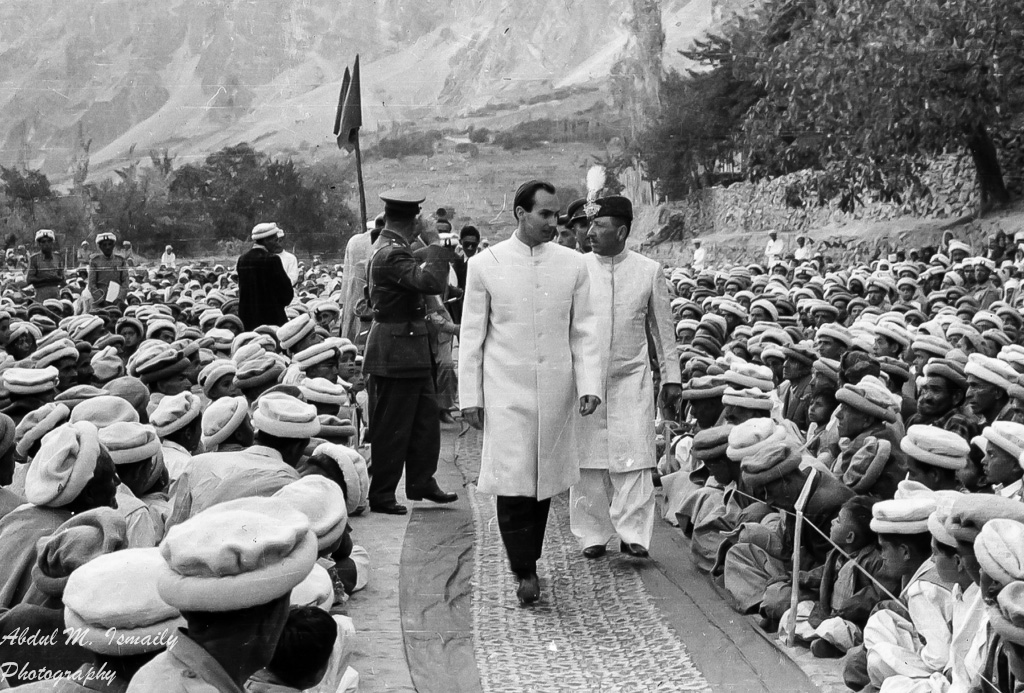


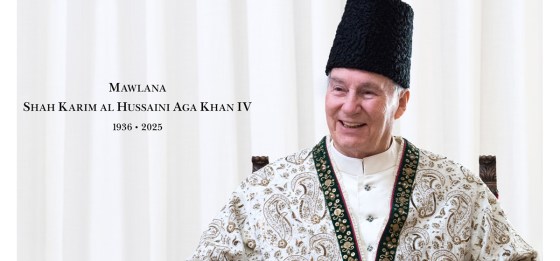
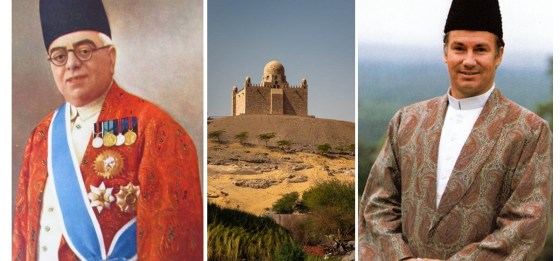



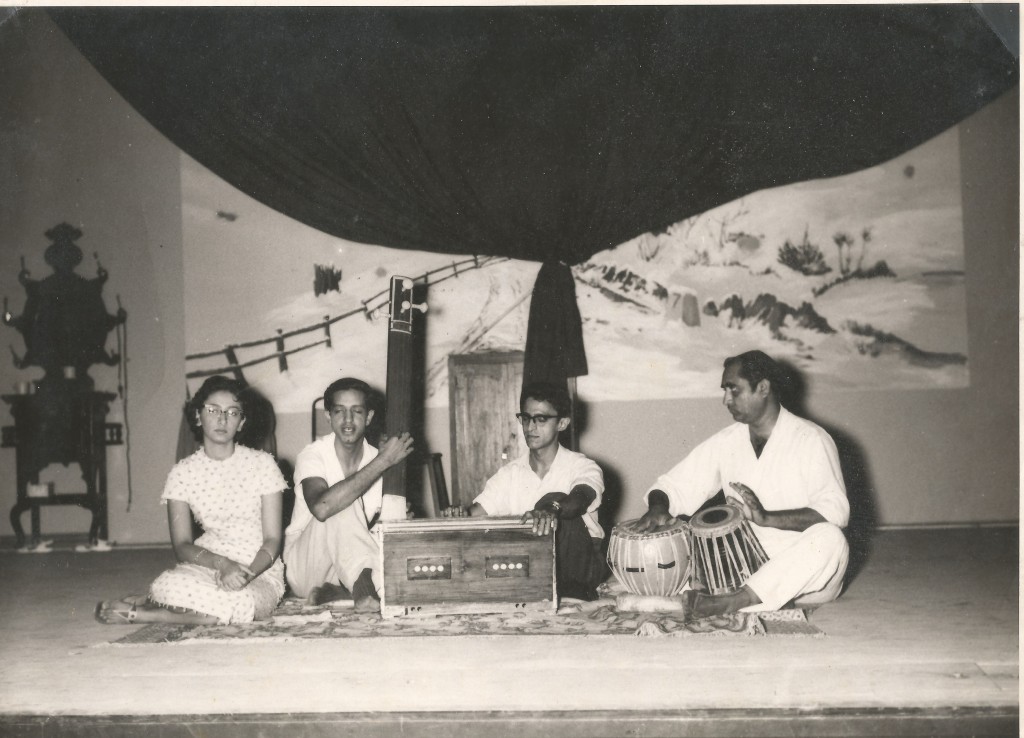


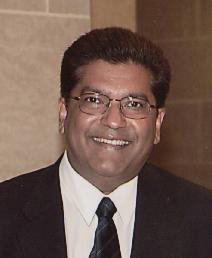

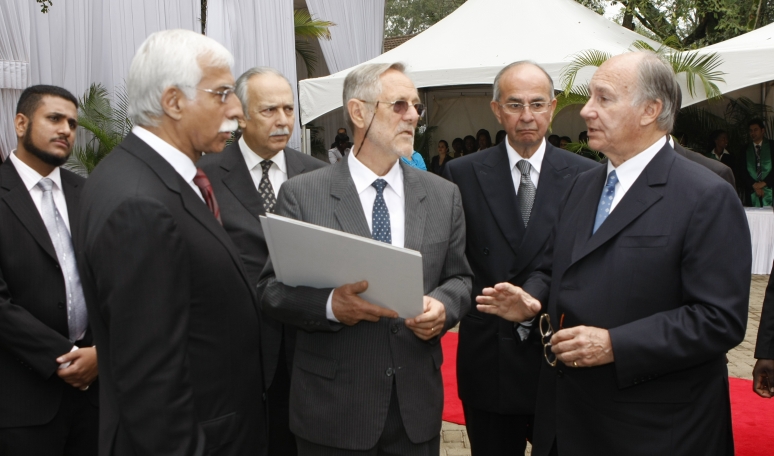

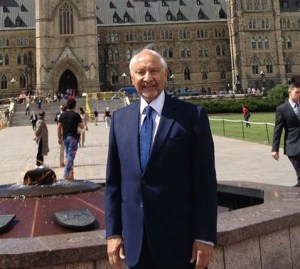
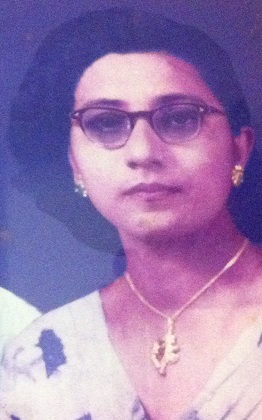
 Simerg - Insights from Around the World