Simerg is an independent initiative dedicated to Ismaili Muslims, the Aga Khan — their Hereditary Imam — and the Ismaili Imamat, and Islam in general through literary readings, photo essays and artistic expressions
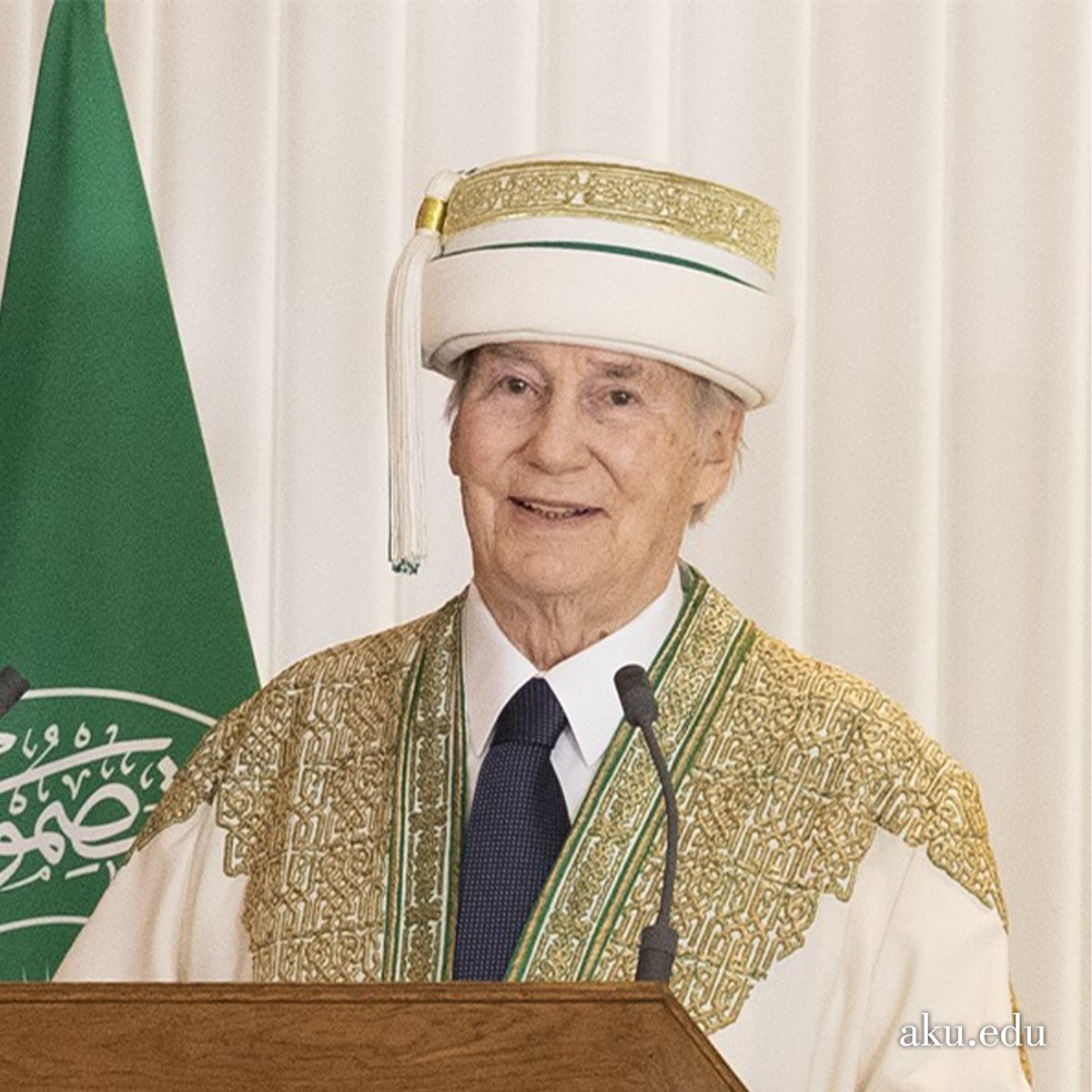
His Highness the Aga Khan addressing the 2020 Aga Khan University Convocation. His 64th Imamat Day will be celebrated on July 11, 2021. He became the 49th Imam of the Ismaili Muslims at the age of 20 when he was still a student at Harvard University. Please click on photo for article by acclaimed American writer Michael Hamilton Morgan.
“Believe it or not — hard work in the areas of education, scientific research, medicine, public works, charity, economic development and entrepreneurship — are the behavioral pillars of historical Muslim culture that made Muslim culture the single most progressive force in the world from about 650 to 1500 of the current era…..This ancient Muslim religious devotion to science, ideas, openness and empirical evidence has indeed been obscured in the mainstream….in the Muslim world, incomplete popular understanding of the faith of Islam has weakened understanding of the importance of logic and reason to the Islamic tradition.
“In this vast tapestry of the interaction of Muslims with each other, and with other cultures and faiths, there is one tradition that unfailingly continues the progressive heritage of classical Islam — profoundly intellectual, open, tolerant, pacific — and in particular one leader who has made it especially attuned to the many difficulties of the world today. That would be Ismailism and its revered Imam, the current Aga Khan IV”….. READ FULL ARTICLE.
Michael Morgan is an international speaker and author of Lost History: the Enduring Legacy of Muslim Scientists, Thinkers and Artists (National Geographic/Random House) which has reached thousands of readers around the world, and has been translated into several languages. Morgan received Egypt’s Presidential award for the Arts & Sciences in 2008. His insightful article on the Aga Khan is a must read!
Date posted: July 7, 2021.
_________________________
Before departing this website please take a moment to review Simerg’s Table of Contents for links to hundreds of thought provoking pieces on a vast array of subjects including faith and culture, history and philosophy, and arts and letters to name a few. Also visit Simerg’s sister websites Barakah, dedicated to His Highness the Aga Khan, and Simergphotos.
As Ismaili Muslims prepare to commemorate the 64th Imamat Day anniversary of their 49th Imam on July 11, 2021, we bring you these fine piece by Ismaili and non-Ismaili authors that provide a rich account of the work of His Highness the Aga Khan in different areas of human endeavour. The first piece by Shiraz Nasser is a narrative that provides an Ismaili perspective of the facets that he sees where Mawlana Hazar Imam has touched the lives of Ismailis and non-Ismailis alike. It is a great introductory piece by which to recall the Imam’s accomplishments, and to begin studying the life of the Imam in more depth. To read each piece, click on the image or its hyperlinked caption. You will be taken to Barakah, a website dedicated to His Highness the Aga Khan, members of his family and the Ismaili Imamat.
Before departing this website please take a moment to review Simerg’s Table of Contents for links to hundreds of thought provoking pieces on a vast array of subjects including faith and culture, history and philosophy, and arts and letters to name a few. Also visit Simerg’s sister websites Barakah, dedicated to His Highness the Aga Khan, and Simergphotos.
Simerg’s series entitled “Books by Ismaili Authors” continues with Canadian writer M. Ali Lakhani’s book “Faith and Ethics: The Vision of the Ismaili Imamat”. We follow the same Q/A format as our recent presentations of books written by Nizar Sultan, Nargis Fazal, Nazlin Rahemtulla, Azmina Suleman, Alnasir Rajan, Shafeen Ali, Mansoor Ladha, Zeni Shariff and Shamas Nanji. We invite Ismaili authors around the world to participate in this series, regardless of when their books were published. See details of the series HERE and submit your responses to Simerg’s editor, Malik, at Simerg@aol.com.
****************
Simerg: What is behind the naming of the title of the book?
M. Ali Lakhani: The book is the first major survey of the ideas of His Highness Prince Karim Aga Khan, based on his public statements over the last six decades. It illustrates how the ethos of the Ismaili Imamat is derived from the principle of tawhid, what the Imam calls an “all-encompassing unity” which is the essence of the faith of Islam. Ethics is the way of translating faith into action, of bringing our faith into the world; which is why the Imam defines ethics as the bridge between faith (din) and the world (duniya). The title of my book reflects this principal theme.
Simerg: Why would you want me or my family members to read the book, and what will we all learn from it?
Lakhani: The book will, it is hoped, explain the key messages of the Ismaili Imam to both Ismailis and to non-Ismaili audiences. It addresses the themes of, for example, tradition and modernity, the modernist ethos, Islam and the West, cosmopolitanism and pluralism, and harmonizing identity and belonging through culture.
Simerg: What inspired you to write the book?
Lakhani: I was invited by the Institute of Ismaili Studies (IIS) to write the book in order to expand on the ideas of my essay, published in volume 34 of my journal, Sacred Web titled ‘Living the Ethics of One’s Faith: The Aga Khan’s Integral Vision’. (Read article)
I have also spoken about these ideas at the Royal Asiatic Society (for the Temenos Academy) and have written about them for the Doha International Centre in an article titled ‘Integral Pluralism as the Basis for Harmony: The Approach of His Highness The Aga Khan’ (Read article).
Article continues below
____________________
M. Ali Lakhani’s “Faith and Ethics: The Vision of the Ismaili Imamat” examines how the ideas and actions of the 49th Ismaili Imam, Prince Karim Aga Khan, provide an Islamic response to the challenges that face Muslims in the modern era.
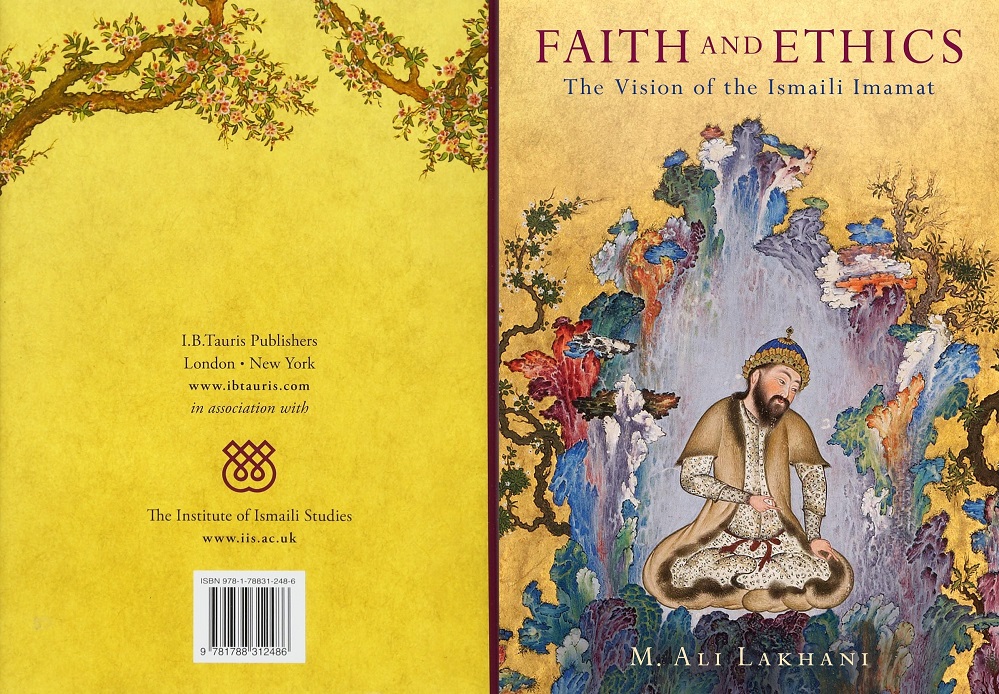
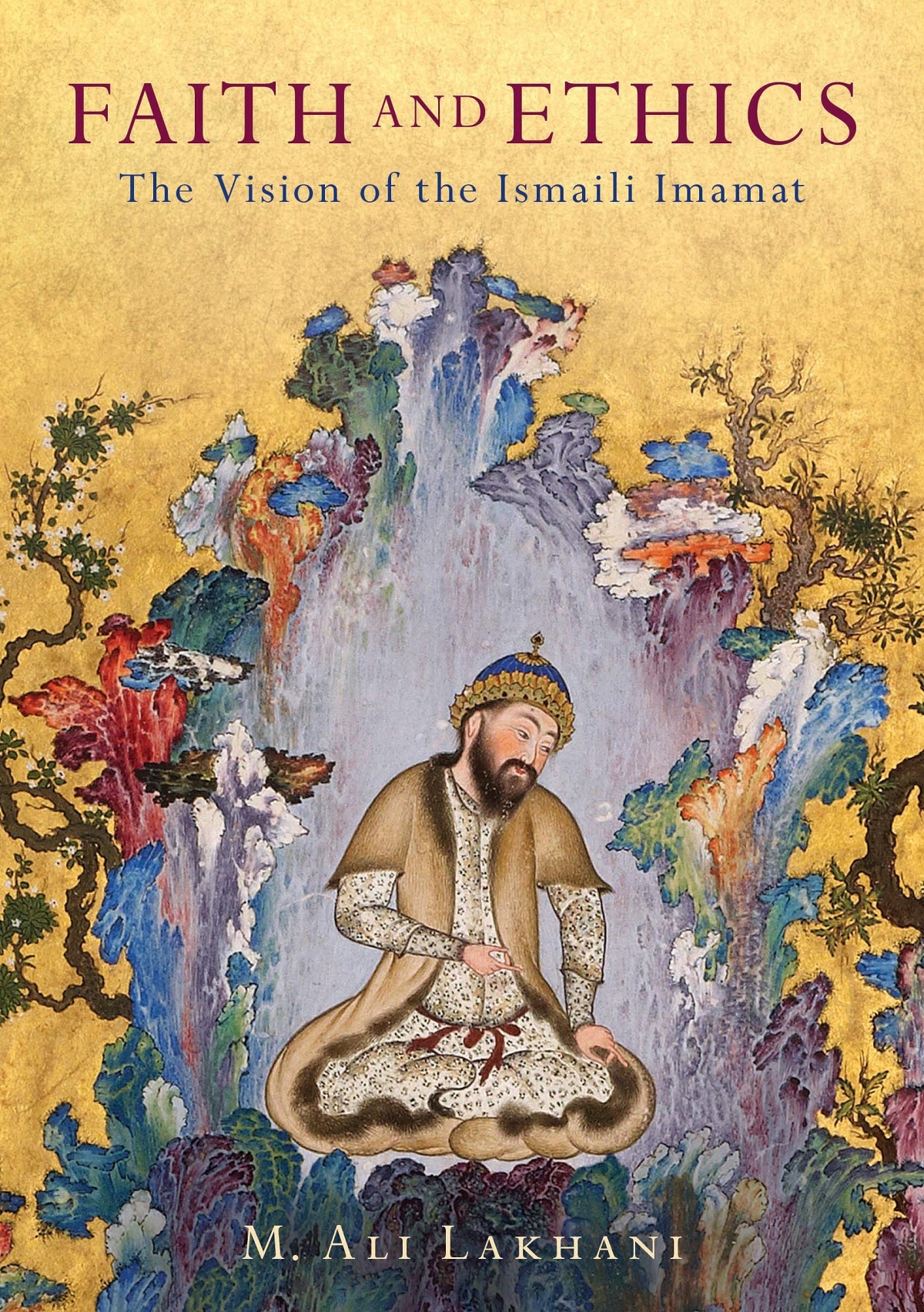
Jacket of M. Ali Lakhani’s “FAITH AND ETHICS: The Vision of the Ismaili Imamat,” 272 pp, I.B. Tauris and the Institute of Ismaili Studies; December 2017, Illustrated edition, Feb. 28 2018.
____________________
Simerg: How can I purchase the book and what are its available formats?
Lakhani: The book was published by the IIS and IB Tauris in 2017, and is available in hardcover format from Amazon Canada, and as a Kobo Ebook at Chapters-Indigo. Both the Kindle and hardcover editions are also available at Amazon.com, and Barnes and Nobles has the book available in hardback as well as a NOOK book. Prices vary from store to store.
[The book may be eligible for delivery within Canada in your area by July 7, 2021; please click Amazon Canada, free delivery is available with Amazon prime membership; the other option is to purchase it as an ebook, as noted above — Ed.]
Simerg: How did you find a publisher for the book?
Lakhani: The book was commissioned by the publisher, the IIS. I accepted the commission on condition that it would be my independent work of scholarship, free of any influence regarding its content by the IIS.
Simerg: Did you hire an editor, an illustrator or did you do all the work by yourself?
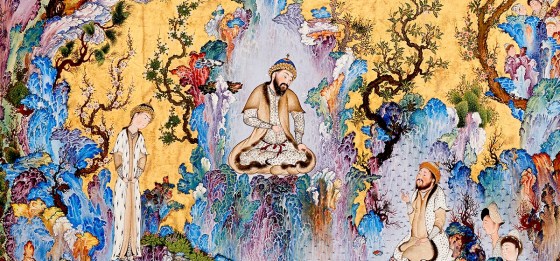
Lakhani: I handpicked the illustrations, including the splendid cover illustration, whose marvelous original is housed at the Aga Khan Museum in Toronto, and which depicts the ethical human being, a major theme of the book (as I explain in the text).
Article continues below
Praise for Ali Lakhani’s Book
Lakhani’s lengthy discussion of the Aga Khan’s cosmopolitan approach to modern conflict simultaneously has the wider application of demonstrating to outsiders that Islam in the orthodox, Quranic sense is a religion of unity and justice, not of persecution and oppression…. Islam as presented in the Quran and by the Muslim sages is anything but pitiless and fanatical; it is joyful, intellectually rigorous and compassionate….The Aga Khan’s ethical teachings as presented in this book are especially applicable to the challenges presented by religious pluralism and to encouraging dialogue between religious perspectives, and to calm down reactions to polemics between religious people and secularists, but less so for conflict resolution that requires shared epistemological and ontological principles…. Lakhani’s book is valuable for the insight it offers into Islam’s rich pluralistic and tolerant tradition.” — Andrew Frisardi, American writer whose essays and reviews have appeared in numerous U.S. magazines and journals, including the Atlantic Monthly, Hudson Review, the New Republic and the New Yorker (Read full review)
__________________
Simerg: Which was your first book and how many have you written?
Lakhani: This was my third published book of a total of four books by me. It was an honor to have this book published by the IIS on the occasion of the Imam’s Diamond Jubilee.
My other three publications are:
The Sacred Foundations of Justice in Islam contains my First Prize essay on Imam Ali from the 2001 Imam Ali International Conference. That essay and Dr. Reza Shah Kazemi’s Second Prize essay were hailed by Dr. Seyyed Hossein Nasr to be among the best writings in English on Imam Ali.
The Timeless Relevance of Traditional Wisdom contains many of my writings on metaphysics, religion, philosophy, tradition and modernity, gathered from my biannual book-form journal, Sacred Web: A Journal of Tradition and Modernity (www.sacredweb.com).
When the Rose Blooms (The Matheson Trust, London, 2021), my latest book, is a collection of spiritual aphorisms which I wrote more than three decades ago. The book includes beautiful illustrations which were designed by Nigel Jackson.
Synopsis of the Book
Shi`i Ismaili Muslims are unique in following a living, hereditary Imam (spiritual leader), whom they believe to be directly descended from the Prophet Muhammad. The Imam’s duty has been to guide his community with Islamic principles that apply to the needs of the time.
In this insightful book, M. Ali Lakhani examines how the ideas and actions of the current Ismaili Imam, and fourth Aga Khan, Prince Karim al-Hussaini, provide an Islamic response to the challenges that face Muslims in the modern era. Prince Karim’s programmes, implemented mainly through the broad institutional framework of the Aga Khan Development Network, are aimed at improving the quality of human life among the disadvantaged, regardless of their religion or ethnicity. Addressing global issues ranging from healthcare and education to culture and civil society, the Aga Khan’s initiatives are founded on core Islamic principles and values. This book is the first to provide an extensive survey of the Aga Khan’s aspirations, showing how the values of integrity and dignity are at the forefront of his work, with the traditional Muslim concepts of cosmopolitanism and social justice guiding his response to the stark challenges of the modern age.
At a time when criticisms and misrepresentation surrounding Islam abound, Faith and Ethics explores the religion’s universal principles and values, which the author believes can make a positive impact both among Muslims and non-Muslims. The book will be of special interest to scholars researching Islam, Muslim faith and ethics and the Ismailis, and to general readers wanting a deeper understanding of Islam.
Date posted: July 4, 2021.
_______________________
M. Ali Lakhani
M. Ali Lakhani, QC, graduated from Cambridge University and has been practising as a barrister in Vancouver for the last forty years. Interested in applying metaphysics to modern world issues, in 1998 he founded Sacred Web: A Journal of Tradition and Modernity, a leading journal in the field that has published articles by the Prince of Wales, the Dalai Lama, Karen Armstrong, Huston Smith, Seyyed Hossein Nasr and William C. Chittick, among others.
_____________________
Calling all Ismaili Authors
We encourage Ismaili writers to introduce their books in a similar format as has been done in the post above. Please also see the series launch article and submit your responses to Malik at Simerg@aol.com. All submissions will be acknowledged. If a writer has published multiple books, each book will be highlighted in a separate article, and not combined with other books into one post. All writers should include a brief profile with a portrait photo.
The Ismaili Authors’ Series so far (in chronological sequence, oldest article first):
We welcome feedback from our readers. Please complete the LEAVE A REPLY form below or click Leave a comment. Your letter may be edited for length and brevity, and is subject to moderation.
Before departing this website please take a moment to review Simerg’s Table of Contents for links to hundreds of thought provoking pieces on a vast array of subjects including faith and culture, history and philosophy, and arts and letters to name a few. Also visit Simerg’s sister websites Barakah, dedicated to His Highness the Aga Khan, and Simergphotos.
Once an isolated region barely touched by the hands of time, Afghanistan’s Wakhan Corridor stands on the brink of great change with the building of a new road linking it with China. Study map below and click on the map or HERE to read BBC’s new photo travel piece by Simon Urwin.
The Wakhan Corridor is an area of far north-eastern Afghanistan (or Badakhshan) which forms a land link or “corridor” between Afghanistan and China. The Corridor separates Tajikistan in the north from Pakistan in the south. Along with Mazar-e Sharif (Afghanistan), Dushanbe (Tajikistan’s capital) and Ishkashim (which borders Badakhshan of both Afghanistan/Tajikistan) which are all circled in red, the map also shows the Panj River. It is a tributary of the Amu Darya. The river is 1,125 km long and forms a considerable part of the Afghanistan – Tajikistan border. Map: Adapted from University of Texas. Annotated by Simerg. Please click on map for BBC article. Caption includes material from Wikipedia.
Date posted: July 3, 2021.
__________________
Before departing this website please take a moment to review Simerg’s Table of Contents for links to hundreds of thought provoking pieces on a vast array of subjects including faith and culture, history and philosophy, and arts and letters to name a few. Also visit Simerg’s sister websites Barakah, dedicated to His Highness the Aga Khan, and Simergphotos.
By (Late) Malek J. Merchant Adapted and edited by Malik and Nurin Merchant
This religious dialogue on Ya Ali Madad is adapted and edited from the original piece by Mrs. Merchant (1931-2021). It was presented by her students at their respective religious education centres and Jamatkhanas in London, England, and also appeared in the 1977 Navroz issue of UK ITREB’S prestigious Ilm magazine. An adapted version of the original piece was later published on this websiste HERE. The piece below was revised recently by her son Malik and granddaughter Nurin who both edit and publish this website, Simerg, and its sister websites Barakah and Simergphotos
Following the dialogue, we present two beautiful Ya Ali Madad songs. The first one by Ismaili children was presented on The.Ismaili website in October 2020, and the second one is a song that was popularized by a team of Ismaili artists from Tajikistan’s Pamir regions when they performed to full houses in cities across Canada in 1999/2000. The Ya Ali Madad song brought the Jamat to their feet, and continues to remain popular in the Ismaili world – Ed.
Dialogue: Ya Ali Madad…. Mawla Ali Madad
Ayaz: Hi, Naguib. How’re you?
Naguib: Ya Ali Madad Ayaz; I’m fine thank you.
Ayaz: You greeted me somewhat differently!
Naguib: Yes, Ayaz, I said Ya Ali Madad, our traditional Ismaili greeting! Just as ‘Hello’, ‘Good morning’, ‘Good afternoon’ and others are greetings in the English culture, Ya Ali Madad is a greeting in our Ismaili tradition and culture. I have been using that to greet all my friends and family members.
Ayaz: That’s interesting — I am glad you greeted me as such.
Naguib: Actually, there is also a Muslim greeting in Arabic, which goes ‘As-salaam-alaykum’. The reply to that is ‘Wa-alaykum-salaam’.
Ayaz: I guess all that has a special meaning as well?
Naguib: Yes. As-salaam-alaykum means ‘May peace be upon you!’ The reply to this is Wa-alaykum-salaam, which means ‘And may peace be upon you, too’.
Ayaz:That’s really great! Tell me, what does Ya Ali Madad mean?
Naguib: Ya Ali Madad is a phrase very rich in meaning. Firstly, Ali is one of the Names of Allah. It means ‘The Exalted’ or ‘The Most High.’
Ali, of course, is also the name of our first Imam. Thus, from an Ismaili context, Ya Ali Madad means ‘May Mawla Ali, our Hazar Imam, help you’.
I should just like to add that Mawlana Hazar Imam, like his grandfather and our 48th Imam, Mawlana Sultan Mahomed Shah, and all Hereditary Imams going back to the first Imam Hazrat Ali, are the Bearers of the Same Light or Noor of Imamat. So, when we say Ya Ali Madad we are seeking help from the Imam of the Time.
Ayaz: I certainly have to read up and become familiar with the concept of Imamat. What is the reply to Ya Ali Madad?
Nuguib: It’s Mawla Ali Madad, which means ‘May Mawla Ali, our Hazar Imam, help you, too’.
Ayaz:I think that’s a very beautiful greeting!
Naguib: It sure is, because Ya Ali Madad, unlike greetings like hi, good morning, etc. is not merely a polite and courteous way to acknowledge another Ismaili’s presence. It is a Tasbih and a prayer.
It’s a Tasbih because we remember Allah and we also remember Hazar Imam. At the same time, it is also a prayer seeking the help of Mawlana Hazar Imam. I remember instances when Hazar Imam has often asked us to call on the name of Allah, the Prophet, Hazrat Ali or even the names of the Imams at any moment during the day as a form prayer. That moment can be as little as a second.
Ayaz:It’s amazing and almost embarrassing to admit hat I’ve never used this beautiful traditional greeting before.
Naguib: But haven’t your parents ever greeted you with Ya Ali Madad?
Ayaz:No. All mum says is, ‘Bye, take care’ when I go out and ‘Hello’ when I come in. When I go to bed, it’s ‘Goodnight’ with a kiss. Come to think of it, mum never says Ya Ali Madad to her friends either. It’s always ‘Hi Jenny’ and ‘Hi Sakar’.
Naguib: It’s very sad to hear that we ignore our traditions. Don’t you think it would be nice to say Ya Ali Madad before leaving for school, then again on returning from school, and finally when going to bed? And parents could reply with Mawla Ali Madad, along with ‘Sleep well’ or ‘Take care of yourself’.
Ayaz:Yes it would, because then we know that Hazar Imam’s help and protection is always available to us. I now can relate to Mawlana Hazar Imam’s blessings during the past year when we have been living through this Covid-19 pandemic. He has conveyed to each one of us his most affectionate loving blessings for protection from difficulties, for our well being, good health, safety and security. And he has also constantly reminded us that he is always with us.
Mum and dad will be really surprised tonight when I say Ya Ali Madad instead of ‘Goodnight’.
Naguib: I bet they’ll be amazed! It is always very inspiring when I hear the exchange of Ya Ali Madad and Mawla Ali Madad greetings between members of the Jamat and especially the youth. They do so with so much affection for each other, and with immense faith in Mawlana Hazar Imam.
Also, Ayaz, you might hear people simply say Ya Ali, and miss out on the final word Madad. Unfortunately, this has become very common. Of course, it is always good to remember our Mawla, but when we are greeting it is good to greet with the full phrase Ya Ali Madad which has a specific meaning.
Ayaz: As a matter of interest, are there greetings similar to Ya Ali Madad among other traditions and cultures?
Naguib: You will be interested to know in Iran the greeting Daste Ali Beh Hamrat is often exchanged, meaning “Ali’s blessing be with you.”
Ayaz: I’m glad I met you today and you said Ya Ali Madad. I wouldn’t have learnt all this if you’d just wished me ‘Hi’. I also thank you for your observation that the greeting should be said in full as Ya Ali Madad and not simply Ya Ali.
Naguib: Well, I’m glad you see the beauty and importance of our tradition.
Ayaz: Thank you very much for being so patient and explaining all this to me.
Naguib: Not a problem at all – I’m glad I could be of help.
Ayaz:I’m glad too that I’ve learnt something about our traditions today. Well, I guess I’d better go now. Thank you Naguib, and Ya Ali Madad – ‘May our Hazar Imam help you’, is that right?
Naguib: Yes, that’s right. Mawla Ali Madad, Ayaz.
______________________
Two Ya Ali Madad Songs to Enjoy
1. Ya Ali Madad by Ismaili Children
Ya Ali Madad song by Ismaili children.
______________________
2. Audio: The Iconic Ya Ali Madad – Mawla Ali Madad Song by the Ismaili Ensemble from the Pamirs
The unforgettable Ismaili singer who enchanted and brought the Ismaili Jamats to their feet with his iconic song Ya Ali Madad during a visit by Ismaili artists from Gorno-Badakhshan to Canada in1999/2000. Photo: The singer performing at the 80th birthday celebration of Mawlana Hazar Imam in Moscow, Russia, in December 2016.
The following rendition of the Ya Ali Madad song is from the DVD “Expressions from the Pamirs” produced in 2000 following a highly successful tour of Ismailis artists from Tajikistan who performed in major centres across Canada in 1999/2000. The Canadian Jamat was introduced for the first time to the Ismaili culture of their brothers and sisters in Badakhshan through a 2 hour stage performance of dance, drama, music and songs, along with an informative exhibition containing cultural artefacts related to the Jamats of Central Asia. The editor of this website, Malik Merchant, acted as a guide at the exhibition that was hosted in Vancouver in the latter half of 1999.
Ya Ali Madad, Mawla Ali Madad. Credit: Expressions of the Pamirs, 2000.
Date posted: July 1, 2021.
______________
Mrs. Malek Merchant (1931-2021)
Alwaeza Malek J. Merchant (1931-2021), popularly known as Mrs. Merchant, rendered services to the Jamat, its institutions and the Imam-of-the Time for several decades as a missionary and religious education teacher in Africa, Pakistan, Canada and the UK. She passed away on January 21, 2021 at the age of 89. This piece has been adapted and re-written from her original dialogue on Ya Ali Madad by her son, Malik, and granddaughter Nurin. Alwaeza contributed a great piece for Simerg’s highly acclaimed series I Wish I’d Been There (downloadable as a PDF file). Her article may be independently read by clicking on Varas Ismail Gangji: The Turning Point.
Sign-up for blog subscription at top right of this page. Share this article via the share option below.
We welcome feedback from our readers. Please complete the LEAVE A REPLY form below or click Leave a comment. Your letter may be edited for length and brevity, and is subject to moderation.
Before departing this website please take a moment to review Simerg’s Table of Contents for links to hundreds of thought provoking pieces on a vast array of subjects including faith and culture, history and philosophy, and arts and letters to name a few. Also visit Simerg’s sister websites Barakah, dedicated to His Highness the Aga Khan, and Simergphotos.









 Simerg - Insights from Around the World