Simerg is an independent initiative dedicated to Ismaili Muslims, the Aga Khan — their Hereditary Imam — and the Ismaili Imamat, and Islam in general through literary readings, photo essays and artistic expressions
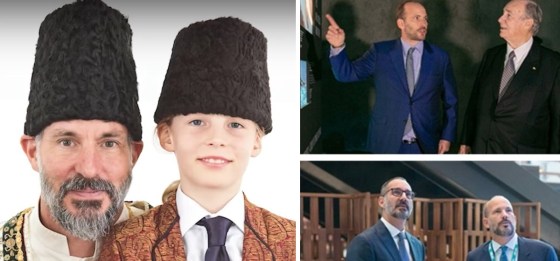
April 10 and 11 mark the birthdays of Prince Hussain Aga Khan and his nephew, Prince Irfan Aga Khan, older of the two sons of Mawlana Hazar Imam, His Highness Prince Rahim Aga Khan, who became the 50th Imam of the Ismaili Muslims when his father, Mawlana Shah Karim, His Late Highness Aga Khan IV, passed away February 4, 2025. To celebrate these birthdays, Malik Merchant, a trusted publisher and editor of Barakah, a blog dedicated to the Aga Khan and his family, has meticulously compiled information and photographs about the two princes you must read. Please click:
Prince Irfan’s procession walk in Aswan, leading the group of mourners with his brother Prince Sinan in a disciplined, dignified and respectful manner, was extraordinary. He exhibited confidence….READ MORE
~~~~~~~~~~~
Swimming with whales is unbelievably rewarding. As corny as it sounds, the whales do “change your life”. They’re simply too majestic, too enormous, too touching and too intelligent not to…..READ MORE
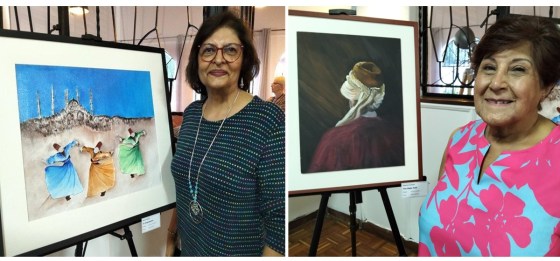
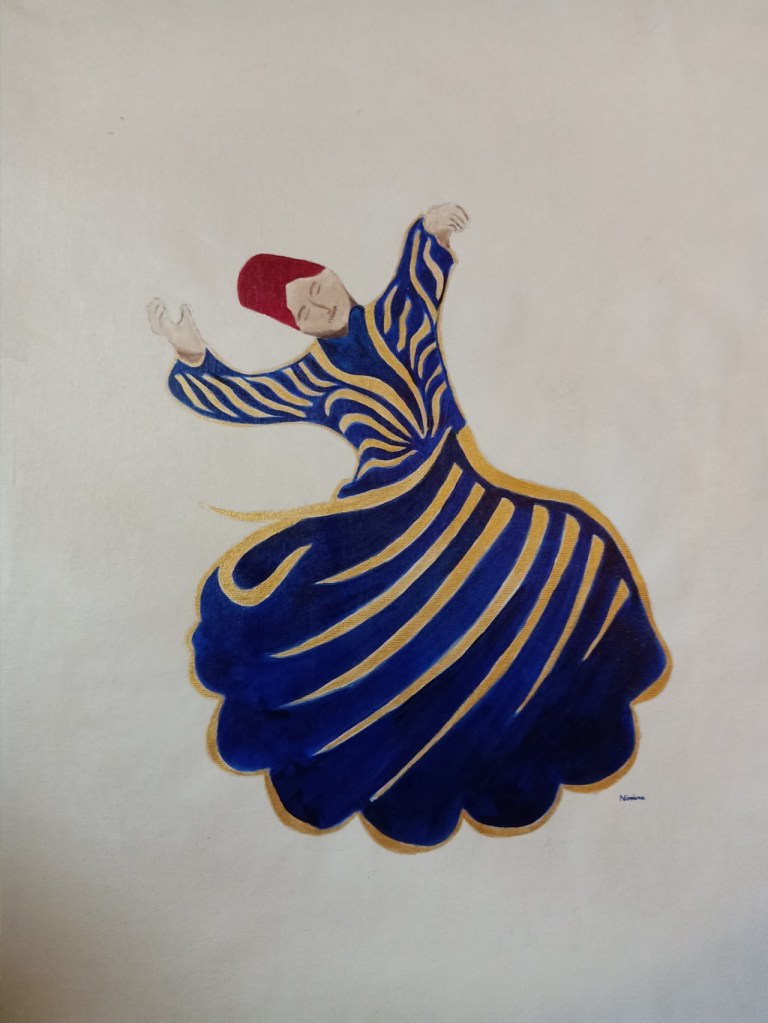
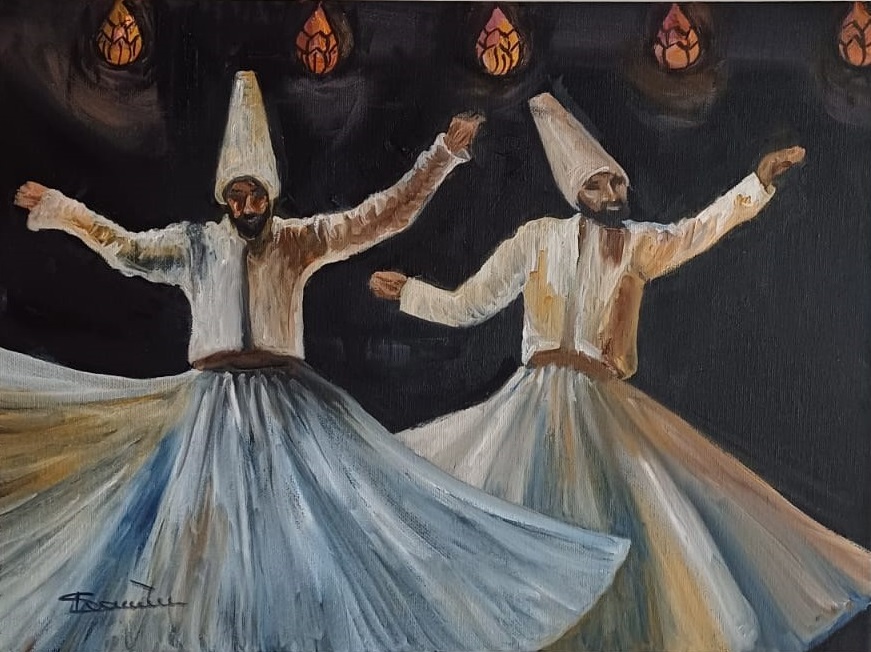
Chez Mahmadi, a renowned sanctuary in Nairobi, Kenya, graciously invited two Ismaili artists, Nimira Shariff and Shamim Subzali, to exhibit a collection that uniquely depicted a theme anchored on Sufism — the mystical aspect of Islam. Despite being separated by the winds of time and space, living oceans apart, these two artists embarked on a collaborative journey that transcended physical distance. They displayed their noteworthy pieces from their respective collections of artwork, each showcasing a unique style of inspiration and talent, all under the singular theme of Sufism. Chez Mahmadi, the serene host that showcased the beautiful exhibition from February 1 – 23, 2025, is a multifunctional space that champions an aura designed to inspire, connect, and nurture one’s mind in unison with the soul.
In a story featured in the Asian Weekly, Tanya Vas noted that the exhibition was a harmonious blend of art and atmosphere, each element resonating with the Sufi theme. She described the art pieces as having vibrant hues and swirling patterns, which seemed to breathe, vividly bringing to life the spiritual essence of Sufism.
Artist Nimira Shariff noted the differences in their artistic styles yet emphasized how their works complemented each other. Shamim Subzali shared the joy they found in working with the Sufi theme. The artists are thrilled to showcase a collection of their exhibition work in Simerg, which warmly welcomes and encourages Ismaili artists worldwide to showcase a selection of their works in our continuing series on Ismaili Artistic Expressions.
ARTWORK BY NIMIRA SHARIFF
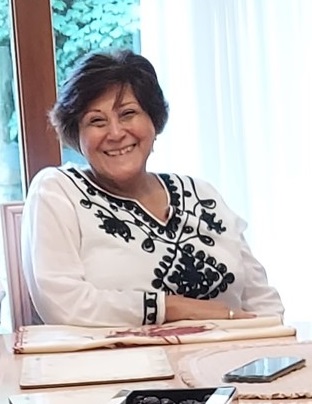
Nimira Shariff
Nimira Shariff is inspired by pursuing a lifelong passion for ‘Art,’ validating that which is authentic or allegorical at the heart of a given scene. This is evident as she displays her talent stimulated by the inner beauty within her environment and the inner being she yearns for. Using watercolours, Nimira finds harmony in depicting animals, birds, flowers, landscapes, whirling dervishes, and silhouettes of African women. In addition, she has dabbled meticulously using Oils and Pastels. The medium she applied for the Chez Mahmadi Sufi Art Exhibition was Acrylic. This exhibit engrossed her to plough further into ‘The World of Sufism’, exemplifying her passion and the cornerstone of her disposition, illustrating that ‘no literature is enough for her to dwell in.’
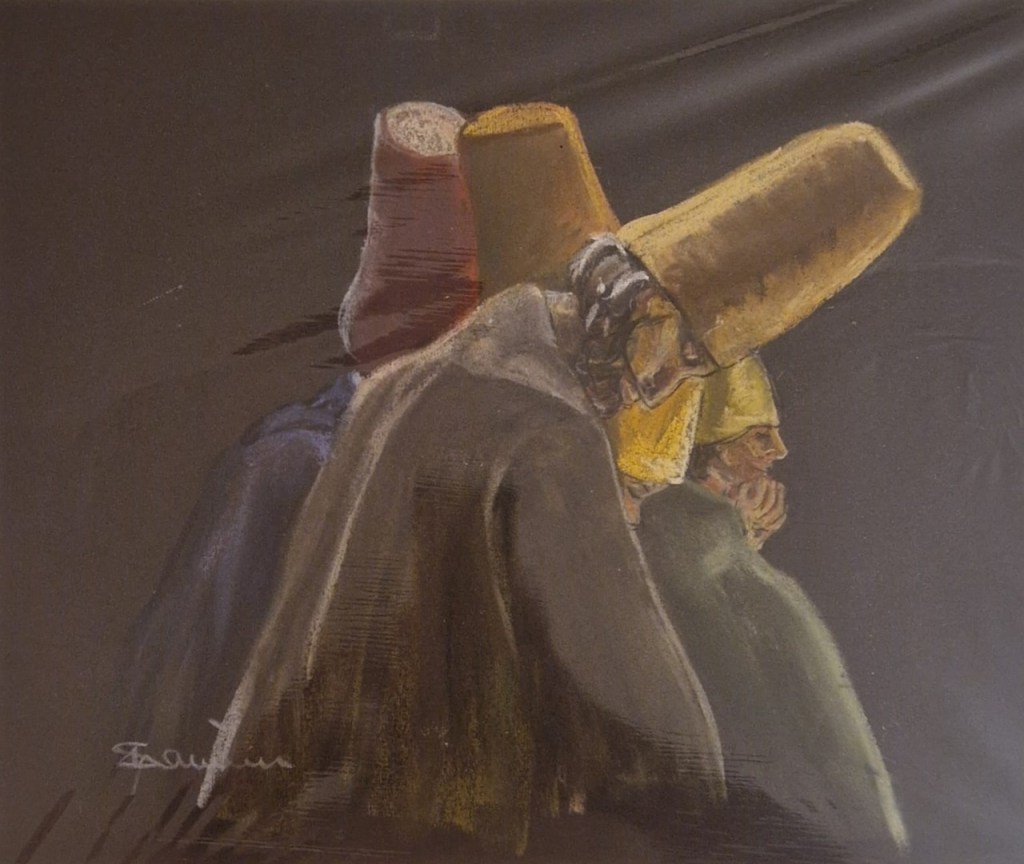
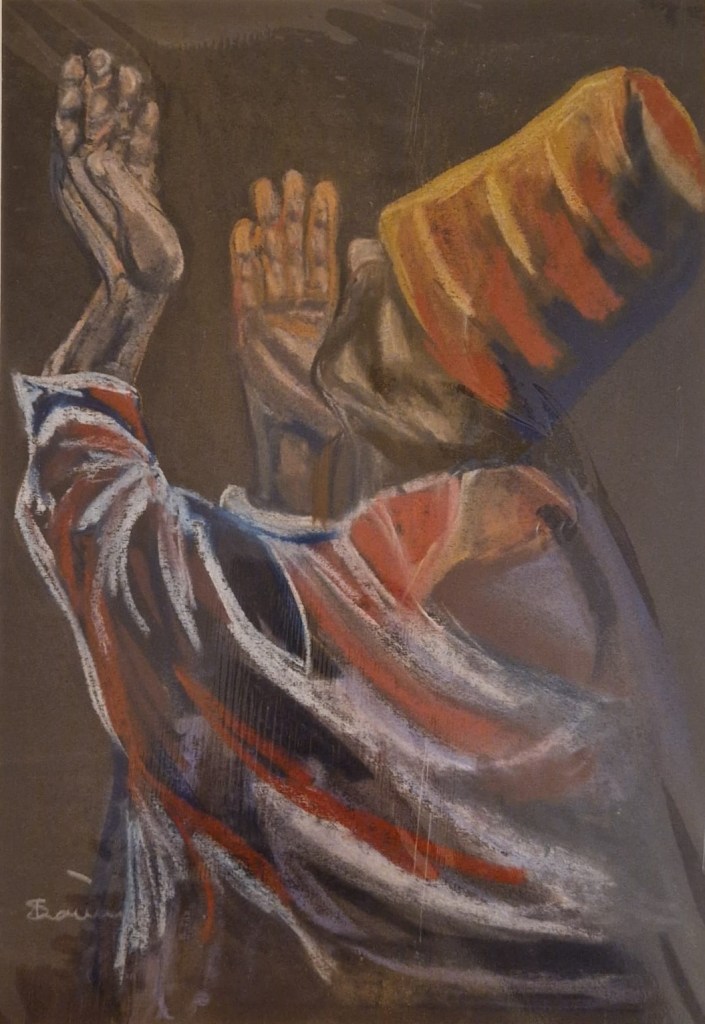
Shamim Subzali has nurtured her skill by creating impressive pieces of artwork. She favours the formation of portraitures yet continues to explore various art themes, as is demonstrated in this specific Sufi art works. Some of her other creations encompass animals, landscapes, whirling dervishes, life drawings, still life, seascapes, and portraits, drawing inspiration from impressionists. At the Chez Mahmadi exhibit, Shamim harnessed the use of Oils, Pastels, and Watercolours. She continues to excel by experimenting with various other mediums and techniques, such as charcoal and pencil. Shamim’s artful approach is a testament to her talent as she states ‘the learning curve is ever evolving, and never diminishes’. Her ongoing artistic journey is an inspiration to all. Discover the intriguing wonders of an enchanting journey by reading Shamim Subzali’s BIO.
“BROTHERHOOD” by Shamim Subzali.
~~~~~~~~~~
“PRAISE” by Shamim Subzali.
~~~~~~~~~~
“SAMA BROTHERHOOD” by Shamim Subzali.
~~~~~~~~~~
“TOTAL SUBMISSION” by Shamim Subzali.
Date posted: March 31, 2025. Last updated: April 1, 2025 (inserted links).
_______________________
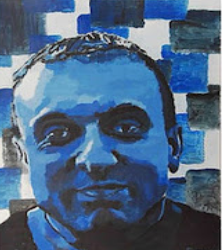
“DAD” (Al-Karim Jaffer), acrylic painting by son Faizaan Jaffer.
About the contributor: Al-Karim Jaffer, the youngest of four siblings, was born in Burundi and has travelled extensively, having resided in the Democratic Republic of Congo (DRC), the UK, and the USA. Presently, he lives in Vancouver, B.C., where he cherishes his family and community. As a proud father of two outstanding young men, his commitment to their well-being and the well-being of his community is unwavering. He is ready to serve with outright dedication and passion. Volunteerism has consistently been the tenet of his being. Life has taken him on a spiritual search path by composing allegorical poetry inspired by faith, the environment, and nature photography.
The editor invites Ismaili artists to submit a selection of their paintings and other works of art for publication in Simerg. Please submit images of no more than 8 objects in Jpeg (1280 x 940) and your profile to the editor, Malik, at mmerchant@simerg.com.
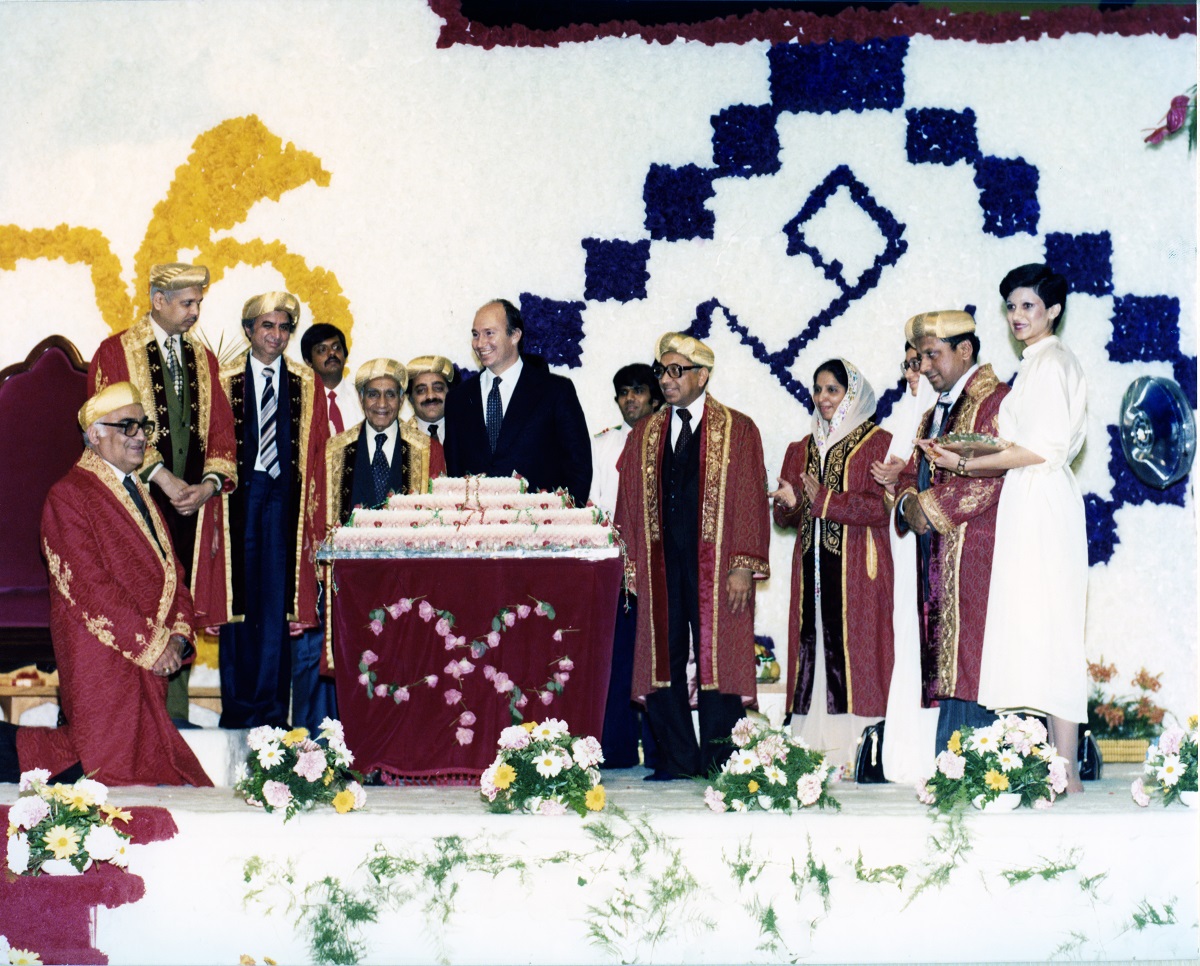
Mawlana Hazar Imam, His Highness the Aga Khan, is presented with a birthday cake at the International Centre in Toronto ahead of his birthday on December 13, during his first visit to his Ismaili Muslim followers in Canada in November 1978. Photograph: Zeenat Virani Family Collection, Vancouver.
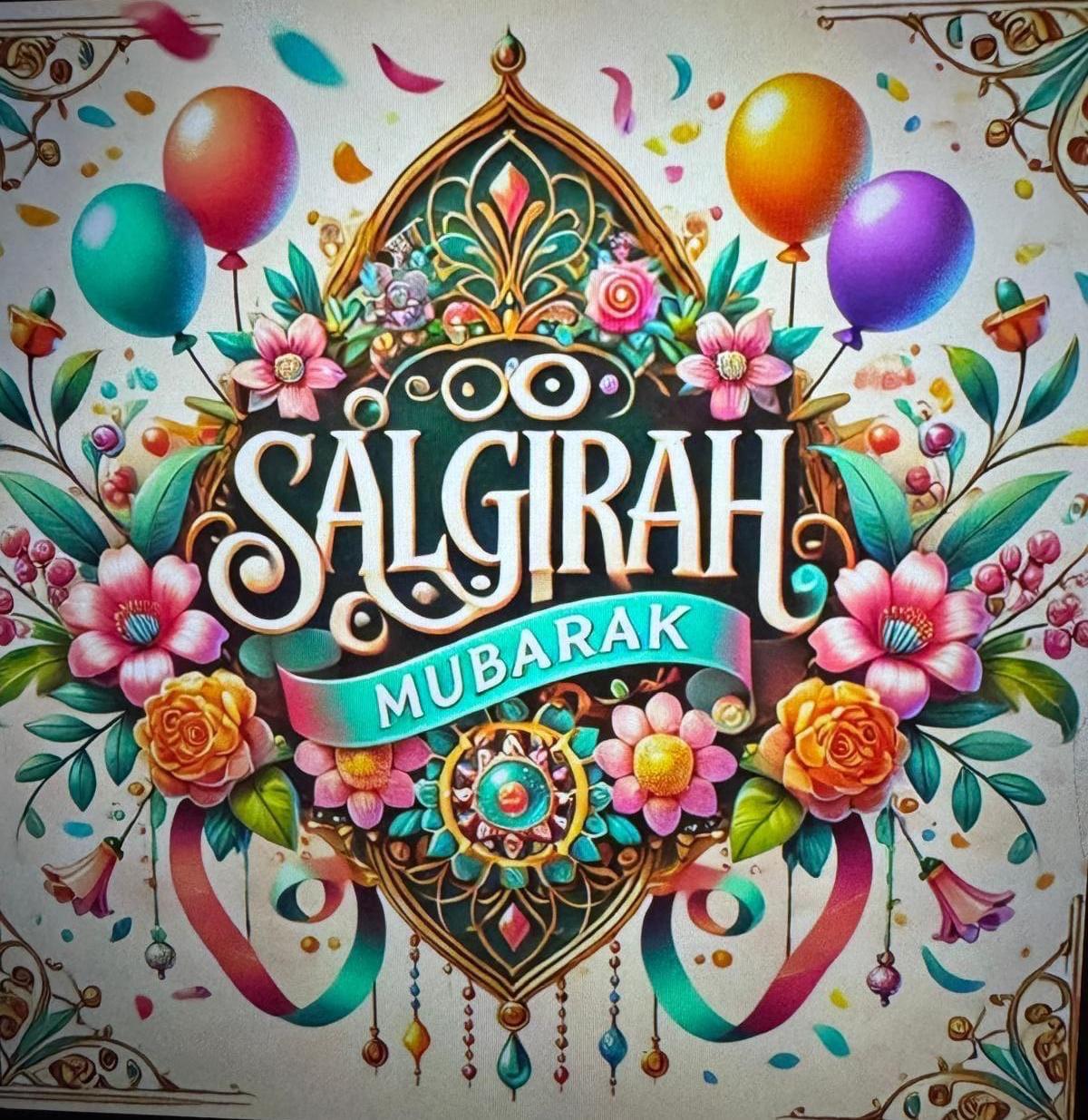
Social media platforms are filled with unique and beautiful birthday (Salgirah) greetings, birthday cakes and artwork on the auspicious occasion of Mawlana Hazar Imam, His Highness Prince Karim Aga Khan’s 88th birthday.
Born on December 13, 1936, he became the 49th Hereditary Imam of the Shia Ismailis on July 11, 1957. At 88, Mawlana Hazar Imam is the oldest living Imam in Ismaili history, and his reign of 67 years is the second longest. His grandfather ruled for an astonishing 71 years and celebrated the Platinum Jubilee.
Story continues below
A beautiful greeting on the auspicious occasion of the birthday of Mawlana Hazar Imam, His Highness the Aga Khan. Photograph: Social Media.
~~~~~
~~~~~~
As Ismailis celebrate their Imam’s birthday, they take pride in the historical significance of his reign, which has inspired and guided the community through the years. They are also mindful of their brothers and sisters’ difficulties in conflict areas in several parts of the world. The messages embedded in several greetings reflect the problematic situation and include inspiring prayerful notes.
Artistic greeting with a poem honouring Mawlana Hazar Imam, His Highness the Aga Khan. Photograph: Social Media.
~~~~~~
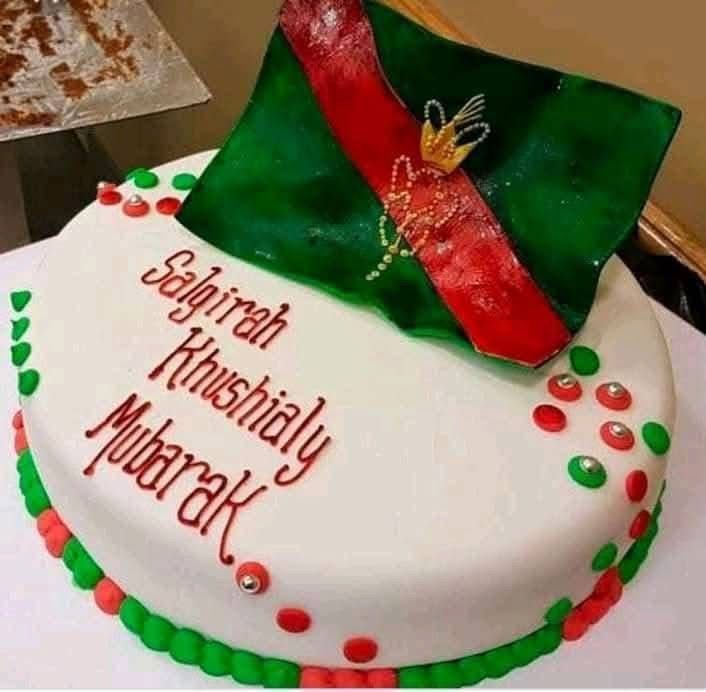
A cake celebrating the birthday of Mawlana Hazar Imam, His Highness the Aga Khan, with the red-green Ismaili flag containing the Aga Khan’s crest in the centre. Photograph: Social Media.
~~~~~~
A Swahili Song Honouring the Aga Khan on His Birthday
Swahili Song circulating on social media greeting His Highness Prince Karim Aga Khan Mawlana Hazar Imam on his birthday (Salgirah or Khushiali Mubarak) and thanking him for his guidance.
We join Ismailis worldwide in conveying our gratitude to our beloved Imam on his 88th birthday for guiding his spiritual children on the Straight Path, Blessing us and always keeping us under his loving paternal-maternal care. We pray for the happiness and mushkil ahsan — protection from difficulties — of Ismailis around the world.
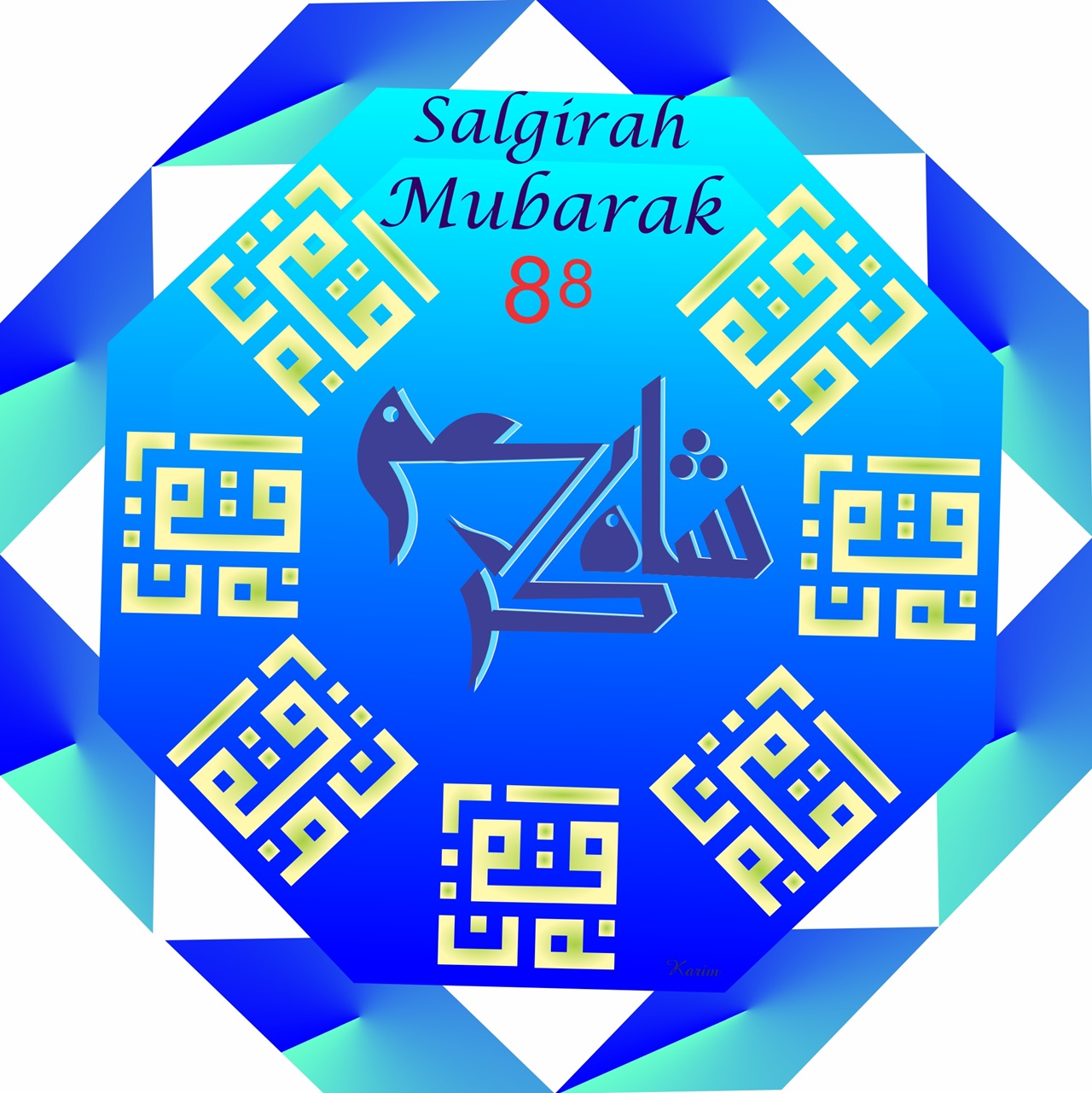
Artwork for Mawlana Hazar Imam, His Highness the Aga Khan’s 88th Salgirah (birthday). The names Shah Karim and Imam-e-Zaman (Imam-of-the-Time) are repeated in Kufi Kairouani script and Square Kufic seven times. Calligraphy amd design by Karim Ismail, Toronto.
Award-winning filmmaker Kiana Rawji has returned to her hometown to screen her two highly acclaimed films at Calgary’s Cardel Theatre at 180 Quarry Park Blvd on December 7 from 3:00 to 5:00 PM. A few tickets are left, and they can be secured at https://rawjifilms.eventbrite.com.
The movies “Inside Job” and “Mama of Manyatta,” both shot in Kenya, mark an essential milestone in Kiana’s career as a passionate filmmaker. This is a unique opportunity to witness Kiana’s exceptional career in filmmaking (read our earlier post HERE). The screening will be followed by an engaging Q&A session with the filmmaker herself, making this event a significant highlight in Calgary’s 2024 calendar.
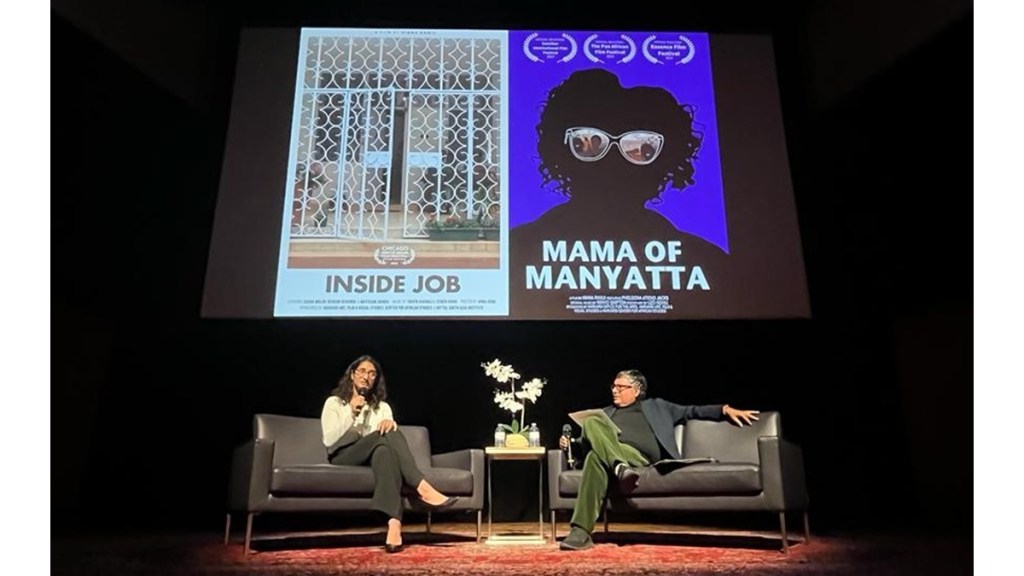
Kiana Rawji engages with the audience in the Nanji Family Foundation Auditorium at the Aga Khan Museum, Toronto, in October 2023.
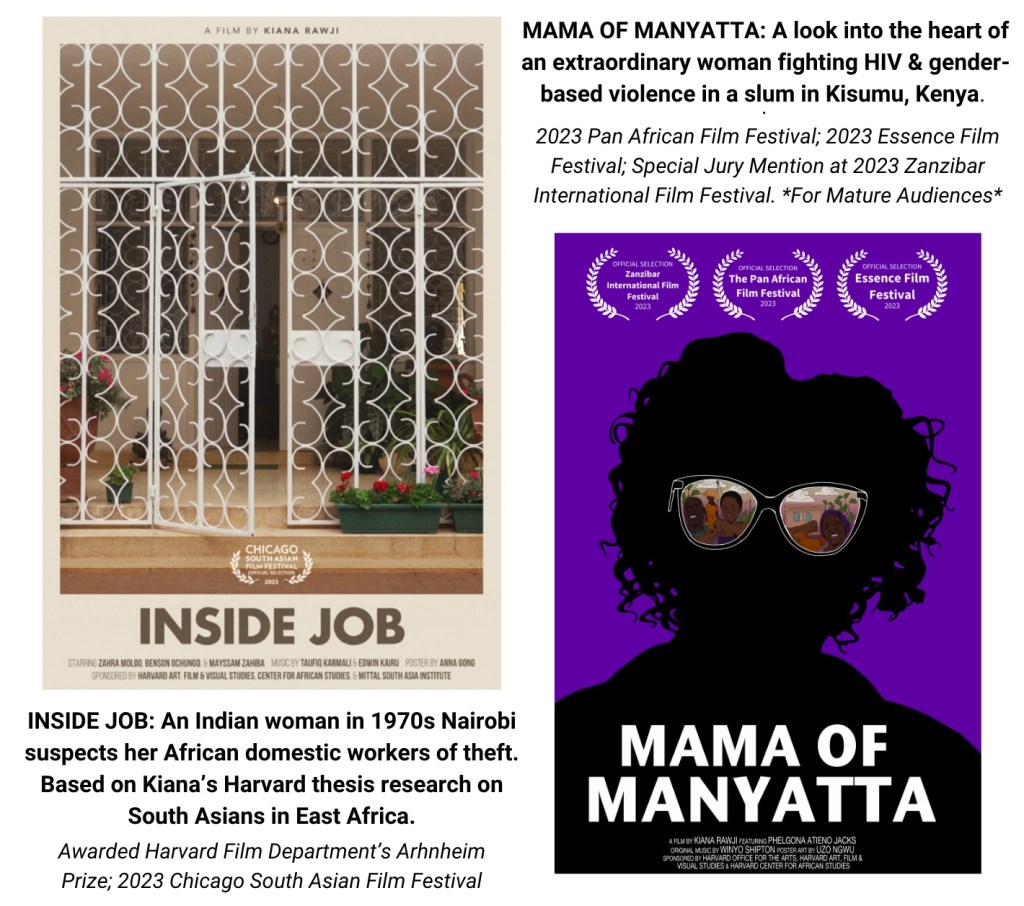
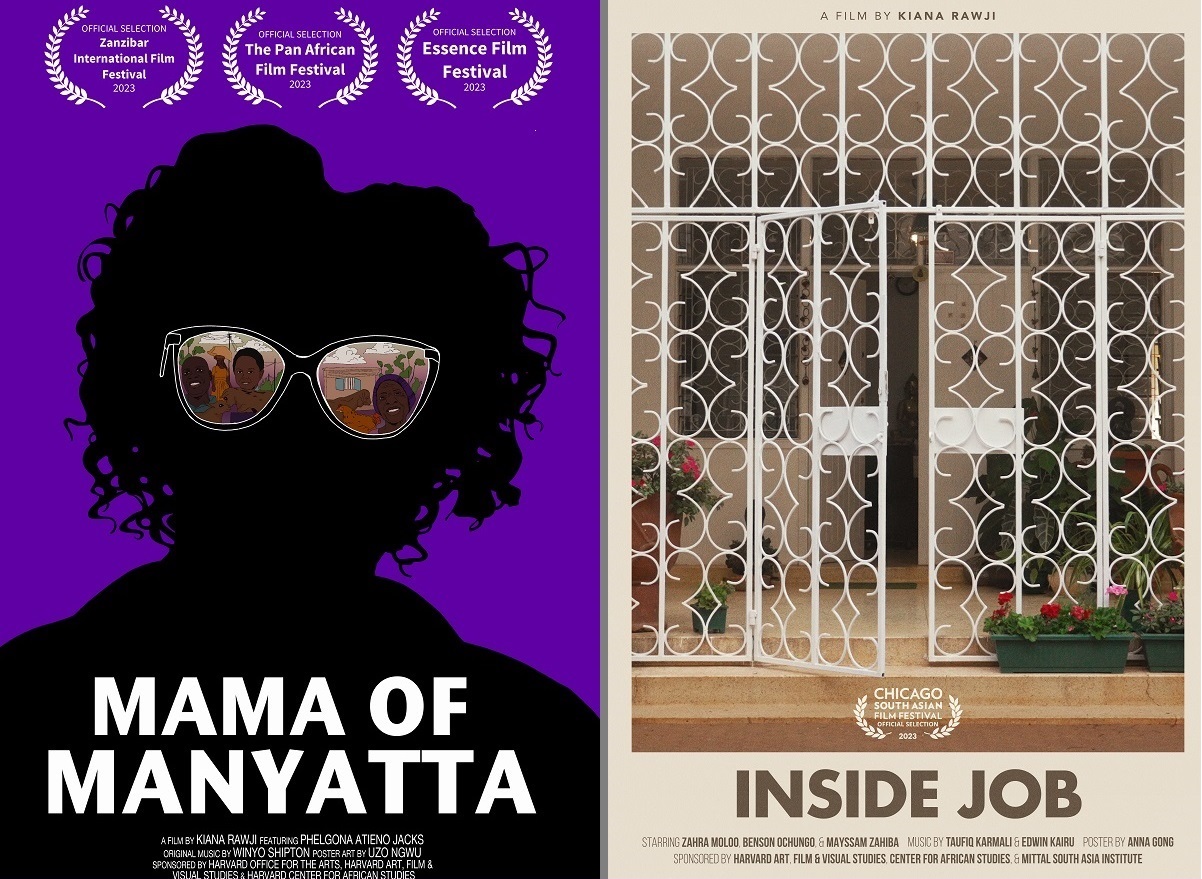
MAMA OF MANYATTA is a touching portrait of a woman fighting HIV and gender-based violence in a Kenyan slum. The film has been widely acclaimed, screening at the 2023 Pan African Film Festival, Essence Film Festival & Zanzibar International Film Festival, and receiving a Special Jury Mention.
INSIDE JOB is a fictional reconstruction of the lives of South Asians in Kenya in the 1970s. The film received the Harvard Film Department’s Arnheim Prize for most outstanding interdisciplinary project & premiered at the 2023 Chicago South Asian Film Festival.
The two films made their Canadian debut in October 2023 in the Nanji Family Foundation Auditorium at the Aga Khan Museum in Toronto to a packed and appreciative audience.
Event Summary and Tickets
What: Kiana Rawji Film Screening — Inside Job and Mama of Manyatta
I am thrilled to inform Calgarians and readers across Alberta about an event we have all eagerly anticipated. Calgary’s own, the young award-winning filmmaker Kiana Rawji, has organized a showing of her highly acclaimed films, Mama of Manyatta and Inside Job, which made their Canadian debut to a packed audience at the Aga Khan Museum in Toronto on October 15, 2023.
Kiana Rawji
The excitement is palpable as these films, created by our very own Kiana, are set to grace our city on Saturday, December 7 at Calgary’s Cardel Theatre at 180 Quarry Park Blvd. The films mark an essential milestone in Kiana’s career as a passionate filmmaker and an exciting and unique moment in the city’s 2024 calendar.
Cardel Theatre is small and will fill up quickly, so get your tickets now at EVENTBRITE. Following the screening, Kiana will conduct an in-person Q&A.
~~~~~~
The Films
Kiana describes the making of the films in her insightful interview below.
~~~~~~
Profile: Kiana Rawji
Kiana Rawji (www.kianarawji.com) is an award-winning Calgarian filmmaker who graduated from Harvard College with a concentration in Film and History & Literature. As an Ismaili Muslim woman and daughter of East African Asian immigrants, she is drawn to stories around diasporas, pluralism, and social justice. Her TEDx talks on Islam and the Cosmopolitan Ethic have reached 150,000+ people worldwide.
Kiana’s 2021 documentary, LONG DISTANCE, about migrant workers at an Albertan meat plant, won the Grand Jury Prize for Best Alberta Short Film at the 2021 Calgary International Film Festival.
Her 2023 documentary, MAMA OF MANYATTA, has been widely acclaimed, screening at the 2023 Pan African Film Festival, Essence Film Festival & Zanzibar International Film Festival, and receiving a Special Jury Mention. This film follows an extraordinary woman fighting HIV & gender-based violence in a Kenyan slum.
Kiana’s 2023 fiction film, INSIDE JOB, has also garnered attention. It is about an Indian woman who suspects her African domestic workers of stealing jewelry in 1970s Nairobi. The film received the Harvard Film Department’s Arnheim Prize for most outstanding interdisciplinary project & premiered at the 2023 Chicago South Asian Film Festival.
In 2023, INSIDE JOB & MAMA OF MANYATTA screened at the Unseen Nairobi theater in Kenya and the Nanji Family Foundation Auditorium at the Aga Khan Museum in Toronto. The sold-out Aga Khan Museum screening opened with remarks by Dr. Zainub Verjee, an accomplished writer, critic, curator, artist, and appointee of the honourable Order of Canada. “When I previewed these works,” Dr. Verjee explained in her introductory remarks, “I was really moved by its poetry. But more importantly, what struck me was its feminist ethos.”
The screening was followed by a moderated Q&A in which Kiana discussed her films’ historical, political, and social-justice underpinnings and her aim to grapple with the consequences of power and inequality in our lives.
“The screening of Inside Job and Mama of Manyatta [at the Aga Khan Museum] on October 15, 2023, was an inspiring event which gave those in attendance an early peek into the work of a gifted filmmaker with tremendous promise who will undoubtedly continue to make a real and meaningful difference through her films” — excerpt from review by Ali N. Alibhai
In Calgary, on December 7th, in addition to sharing her impactful work — and creating awareness around the social issues with which she artistically and intellectually engages — Kiana will share insights into the rigorous research and cosmopolitan ethos that drive her work.
~~~~~~
Tickets
INSIDE JOB and MAMA OF MANYATTA will be screened at Calgary’s Cardel Theatre from 3-5pm on Saturday, December 7th, 2024.
The theatre is small and will fill up quickly, so get your tickets now at this Eventbrite link.
The screening will be followed by an in-person Q&A with Kiana.
~~~~~~~~~
Sponsor and Support Kiana Rawji
Kiana Rawji welcomes sponsors who wish to support the event in Calgary and her continued work in film. Please contact her or submit your sponsorship via an e-transfer to kianarawjifilms@gmail.com. This budding young artist will appreciate any contribution.
~~~~~~~~~
Interview
“I strive to tell stories that recognize diversity, complexity, and nuance, while connecting people through universal, human experiences. I’m especially interested in topics surrounding migration, diasporas, and identity” — Kiana Rawji
Kiana Rawji engages with the audience at the Aga Khan Museum, Toronto, in October 2023.
To acquaint our Calgary and Alberta readers with Kiana’s work and what inspires her, we present an abridged version of our interview before her films premiered in Toronto (click HERE for the full interview.)
Simerg: Can you tell us about how you got into filmmaking?
Kiana Rawji: Throughout high school, I had been interested in the intersection between storytelling and social justice, and I had pursued that through writing and public speaking. Filmmaking was always a hobby of mine growing up, but I never even considered it as an academic or career path. When I got to Harvard, I took a class called Social Justice and the Documentary Film in my first year and I was drawn to film as a provocative medium to raise awareness, evoke empathy, and elevate marginalized voices. After I made my first short film in that class, I never looked back.
At Harvard, I pursued a joint concentration because through History & Literature, I could learn about the very histories, in all their nuance and complexity, that would inform the stories I want to tell through film. Inside Job was a perfect example of that.
Simerg: Where did the idea for Inside Job come from?
Kiana: The film was largely based on my own family history — my parents and grandparents grew up in Nairobi, but before that my family traces back to Gujarat, India. I knew I wanted to make a film set in the 1970s Kenya, during a period of exacerbated racial tensions, due to the rise of ethnocentric nationalism in the region. I was particularly interested in the ways “Africans” and “Indians”/“Asians” perceived and interacted with each other. Since society was so racially segregated though, I realized the most common realm of interracial interaction and intimacy was in the household; virtually all brown households employed black domestic “servants”. What was all the more interesting was that, despite the deeply entrenched taboo that restricted social contact between brown women and black men in particular, these two types of people consistently interacted on a daily basis through the domestic labor relationship. I started to wonder how larger cultural norms and boundaries as well as political tensions were both reinforced and transcended in such close quarters.
Interview continues below
Kiana Rawji’s fs Mama of Manyatta and Inside Job will be screened at the Cardel Theatre in Calgary on Saturday, December 7, 2024. For tickets, click EVENTBRITE.
So I decided to explore that dynamic through oral history research. I interviewed many East African Asian women who lived through the 70s, as well as black African domestic workers. These interviews informed my whole script, from the subtleties of the dialogue to the core elements of the plot. I decided to focus on the theme of theft because of how much it came up in my interviews, and how symbolic it was; it was clear that both sides felt the other had stolen something from them. South Asians in East Africa felt that their own homes, along with properties, businesses, etc., were stolen from them when they were largely expelled from the region in the 70s. At the same time, native East Africans felt that “Asians” had stolen all the wealth and land in the first place. Both were stuck in a colonial system of inequality and a highly racialized socioeconomic hierarchy that lasted well beyond the colonial period.
____________
“It doesn’t take much to start. You don’t need fancy equipment or huge amounts of funding — all you need is a camera (which could be your phone) and a good story” — Kiana Rawji
____________
Simerg: What was most difficult about filming Inside Job?
Kiana: Well, the effort to make a period film in a foreign country in under a week with a budget under $10,000 was a huge challenge in itself. But I was able to find an incredible, talented cast and crew to achieve this and make it all easier.
The biggest challenge I faced was trying to get it right. I was recreating a history that I hadn’t lived through. I studied Swahili at Harvard and that helped but I don’t even speak or understand Gujarati. But the way I addressed that challenge was to consult a lot of experts.
____________
“When it comes to filmmaking around social issues, I’ve learned that stories of injustice and adversity are incomplete without the stories of resilience and endurance that invariably exist alongside them” — Kiana Rawji
____________
Simerg: As for your other film, Mama of Manyatta, how did that come about? How did you come to meet the subject, Phelgone Jacks?
Kiana: A few years before I made the film, my older sister Zahra had met Mama Phelgone through a Harvard College summer global health program that connected students with local NGOs and CBOs. Mama Phelgone worked on removing stigma around those affected by HIV/AIDS in Kisumu. After spending some time with Mama Phelgone, Zahra told me there was a story there that I had to tell. The next summer (summer 2019), when I went to Kisumu and met Phelgone myself, I instantly agreed that hers was a story that needed to be told. Her community-centered approach to creating impact was remarkable, and she, herself, was one of the most generous, compassionate, and dedicated people I have ever met.
Twenty years ago, Phelgone founded a community-based organization fighting HIV/AIDS and gender-based violence in the slum of Manyatta in Kisumu. She was a mother figure to Manyatta’s young and old; she built an Early Childhood Development Center outside her home, hosted safe-sex workshops for teenage girls, counseling sessions for women survivors, and more. Though she helped people work through immense trauma, what was most remarkable about Mama Phelgone (as she was affectionately known in Manyatta) was that she cultivated strength and joy wherever she went, through prayer, song, and dance. She was, in her own words, an “ambassador of hope.”
Rather than the all-too-common narrative of the suffering African poor, I wanted Mama of Manyatta to present a portrait of African empowerment and leadership.
Soon after I shot Mama of Manyatta in 2022, Mama Phelgone was diagnosed with metastatic cancer. She passed away in the middle of my post-production. Though I was deeply saddened, my drive to preserve a remarkable life and legacy only intensified. Through my film, I hope Phelgone’s story continues to inspire change.
____________
“I decided I didn’t want to be a filmmaker who hides behind her lens, observing, recording, then leaving. I want to be the kind who knows when to stop being a fly on the wall and start engaging — when to be a friend, not just a filmmaker. When artists get proximate to their subjects — which sometimes requires those precious interactions unmediated by a camera lens — opening their souls and immersing themselves in the lives of others, the product is more meaningful and fulfilling for everyone involved” — Kiana Rawji
____________
Simerg: What were some of the most memorable moments from the production/filming of Mama of Manyatta?
Kiana: There were so many — it was such a joy and a privilege to be included in the circle of warmth and love that Mama Phelgone radiated.
But there is one moment in particular that stuck with me. It was in the middle of a workshop on gender-based-violence; Phelgone was helping a group of women — survivors of sexual assault –prepare for upcoming post-election violence and the risk it posed to women in the community, including themselves. I remember that, when Phelgone sensed the air in the room growing heavy, she suggested a dance break.
And so they got up, they played music, they danced, they smiled, and they laughed.
Phelgone and the women beckoned for me to join them. But the filmmaker in me was so keen to capture every detail of this moment — the rhythmic body movements, the courageous smiles, the unbridled laughter. Something unexpected and beautiful could happen any second, and if my camera wasn’t rolling. But that day, I realized that sometimes you also miss things when the camera is rolling. After filming the women dancing for a few minutes, I decided to set down my camera and join them. They showed me some moves, I was awful, they laughed at me, Ilaughed at me, and it was wonderful. I went into that shoot believing in the power of the camera, but I came out of it having also learned the power of putting it down.
Simerg: What inspires you? What drives your creative process?
Kiana: My intersecting identities as a South Asian Muslim woman and child of immigrants from East Africa inform the stories I want — and need — to tell.I strive to tell stories that recognize diversity, complexity, and nuance, while connecting people through universal, human experiences. I’m especially interested in topics surrounding migration, diasporas, and identity.
My creative process is driven by compassion, curiosity and collaboration. It begins with passion and personal investment in a story, followed by detailed research and engagement with real people and real stories.
Simerg: What is your advice to aspiring filmmakers?
Kiana: It doesn’t take much to start. You don’t need fancy equipment or huge amounts of funding — all you need is a camera (which could be your phone) and a good story. There are so many resources online. I taught myself how to use film editing software and write film scripts on the Internet. It just takes initiative and passion, and if you have those two things, you’re off to the races. I always remember what my idol, Ava DuVernay, said once when giving advice to filmmakers starting out. She said something along the lines of ‘don’t wait for something precious.’ Just begin. It doesn’t need to be the perfect, most eye-grabbing, world-changing idea. Everything you make will help you learn, and you’ll only get better. Just begin by telling stories you care about.
~~~~~~~~~
Event Summary
What: Kiana Rawji Film Screening — Inside Job and Mama of Manyatta
Support and Sponsor Filmmaker: Kiana Rawji welcomes sponsors who wish to support the event in Calgary and her continued work in film. The young artist will appreciate any contribution. Please contact her or submit your sponsorship via an e-transfer to kianarawjifilms@gmail.com.
Date posted: November 26, 2024.
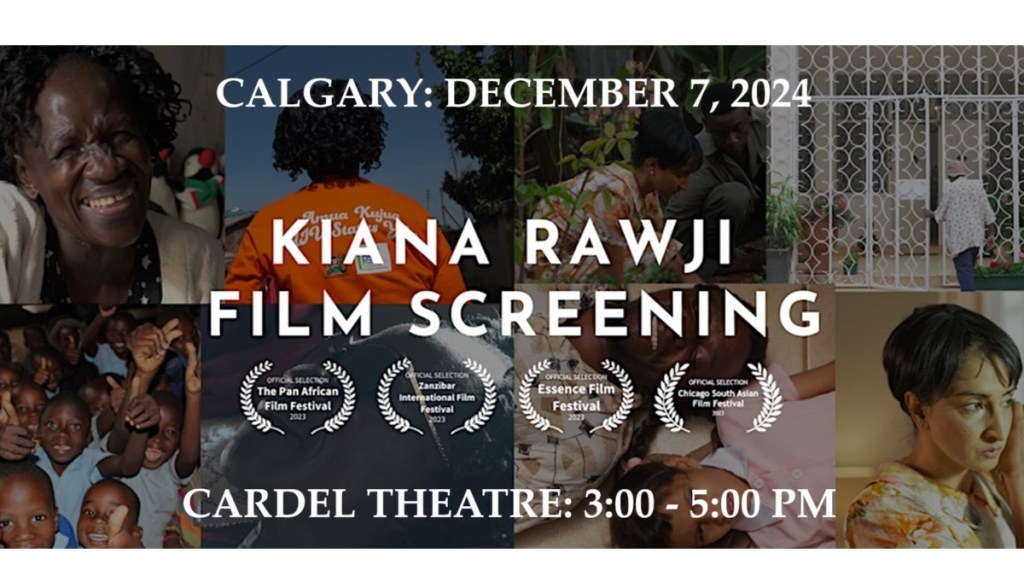
Correction: The featured image in the original version mistakenly highlighted November 7, 2024, as the event date. The image has been corrected to reflect the correct event date, December 7, 2024. The editor apologizes for the error.
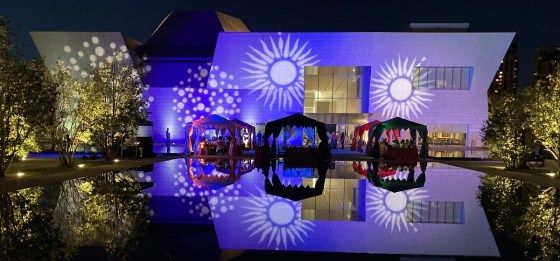
On May 28, 2010, Prime Minister Stephen Harper and His Highness the Aga Khan, the 49th Hereditary Imam of the Ismaili Muslims, performed the foundation ceremony of three projects: the Aga Khan Museum, the Ismaili Centre Toronto, and their Park. Just over four years later, on September 12, 2014, the Prime Minister and His Highness inaugurated the two iconic buildings — the Park was inaugurated in the spring of 2015 — which have become an intrinsic part of Toronto’s cultural landscape. These buildings, with their unparalleled architectural and artistic wonders, have captivated the hearts of thousands during the Toronto Doors Open, inspiring them to appreciate the beauty and creativity that went into their design. Click HERE or on the photo below for stories and photographs of this unique cultural landmark in Canada’s largest city.
The Aga Khan Museum, Wynford Drive, Toronto. The Ismaili Centre Toronto is directly across from the Museum, with the Aga Khan Park dividing the two iconic buildings built by His Highness the Aga Khan. Please click on the image for the story and photographs.
_______________________
The 10th anniversary of the Aga Khan Museum coincides with the 87th birthday of Prince Amyn Aga Khan, younger brother of His Highness the Aga Khan. We honour the Prince through a special post. Please click HERE or on the photo below
Aunt, Nurumasi, at 100! Acrylic, 16″ x 20″, March 2020. Painting by Mobina Marani, Crystal Beach, Ontario, Canada.
By MOBINA MARANI
Two years ago, I introduced a selection of my paintings on this website as part of its Artistic Expressions category, which encourages Ismaili Muslim artists to showcase their works of art. Among the paintings on the website was a portrait that I had painted of my aunt when she turned 100. The work was completed for her 100th birthday, celebrated on March 4, 2020.
Recently, I exhibited at the Illume Festival — an event showcasing talented Ismaili artists from across Canada — at both the regional and national levels. Out of the four paintings shown at the regional event, one was picked for display at the National Illume Festival held in November 2023 at the Ismaili Centre Toronto. It was that of my beloved aunt! This couldn’t have made me happier. My aunt, carrying a tasbih (rosary), honoured me by attending the event.
Nurbanu Esmail — popularly known as Nurumasi — was born in Uganda and married Haiderali Esmail, who passed away in Kampala on December 28, 1971, when she was only 51. All their children — daughters Khatoon, Parin, Firoza and Laila, and son Sultan — are still alive. She has 9 grandchildren and 13 great-grandchildren. Nurumasi, at 104, may be among the oldest living Ismailis in Canada.
My aunt dedicated her life to serving the Ismaili community, its institutions, and the Imam-of-the-Time, Mawlana Hazar Imam, His Highness the Aga Khan. She has served as a congregational leader in an Ismaili Jamatkhana and held many voluntary positions in Ismaili institutions. She was also a member of the ghusal committee that oversees all the funeral arrangements and preparations for deceased Ismaili community members. This is one of the noblest services one can perform.
Nurumasi has also keenly followed all the worldwide Imamat projects and travelled widely to see them.
Ismaili artist Mobina Marani pictured with her aunt, turning the beads on her tasbih (rosary), at the National Illume Ismaili Art Festival held at the Ismaili Centre Toronto in November 2023. On the wall is Mobina’s painting of her aunt, completed in March 2020, when she turned one hundred on March 4. Photograph: Mobina Marani Collection.
Nurumasi’s immense strength has come from regularly attending the Jamatkhana for prayers and services and her devotion and love for Mawlana Haza Imam. She has come to be adored by the community members who seek her out for prayers for strength in all aspects of their and their family’s lives.
It is a privilege for me and all the family members to have been blessed with an outstanding lady who has been with us for so long. Her presence and inspiration have been a source of strength and courage to all of us. Nurumasi is indeed one of the elders who has lived by Mawlana Hazar Imam’s guidance to both the young and older community members, in which he asked us to fulfill our material and spiritual responsibilities to the best of our abilities. He told the old that they were never too old and that as long as they were alive, every day must be lived, and we must seek to fulfill our responsibilities. That message has guided her throughout her life, leading to the age of 104.
May Allah, in His Infinite Mercy, continue to shower our beloved Nurumasi with strength, courage and faith and bestow her with the Light (Noor) of the Imam-of-the-Time in the days and weeks to come. Ameen.
Date posted: April 2, 2024.
_________________
Is anyone in your family a centenarian? We would like to hear from you, with a story and a photograph or two! Please write to the editor Malik at mmerchant@simerg.com.
We welcome feedback/letters from our readers. Please click Leave a comment. Your feedback may be edited for length and brevity and is subject to moderation. We are unable to acknowledge unpublished letters.
“You and I are brothers, and you and I are from the same city, the same country; we speak the same language and share the same history” — Christian pastor
Every Ramadan, an Iraqi Christian preacher returns from the Netherlands to his hometown of Mosul. He celebrates the holy Islamic month there to promote understanding between Muslims and Christians. Voice of America’s Kawa Omer has the story, narrated by Bezhan Hamdard.
The Aga Khan on Moving Christian-Muslim Relations Forward for a Better World
“Our histories have taught us the value of dialogue, and that rarely, indeed very rarely, does anything good come out of conflict. Our world view is to engage with the problem of social exclusion in our societies and to contribute to building bridges across faiths and across nations, by linking diverse parts of the world” — the Aga Khan
“I have no doubt that for you, whose historical roots are in the Christian world, it is as painful as it is for us Muslims, with our roots in the East, to watch an increasingly deep gulf growing between significant parts of our respective worlds. We cannot stand by as passive observers letting this gulf grow wider and wider, at the cost of future generations. If we have the will, which I am certain we share, we have the historical knowledge and the ethical foundations to move our world forward, to make it a better and more hopeful place, and to put an end to the storm of hatred which appears to be building up around us.
“Our histories have taught us the value of dialogue, and that rarely, indeed very rarely, does anything good come out of conflict. Our world view is to engage with the problem of social exclusion in our societies and to contribute to building bridges across faiths and across nations, by linking diverse parts of the world.
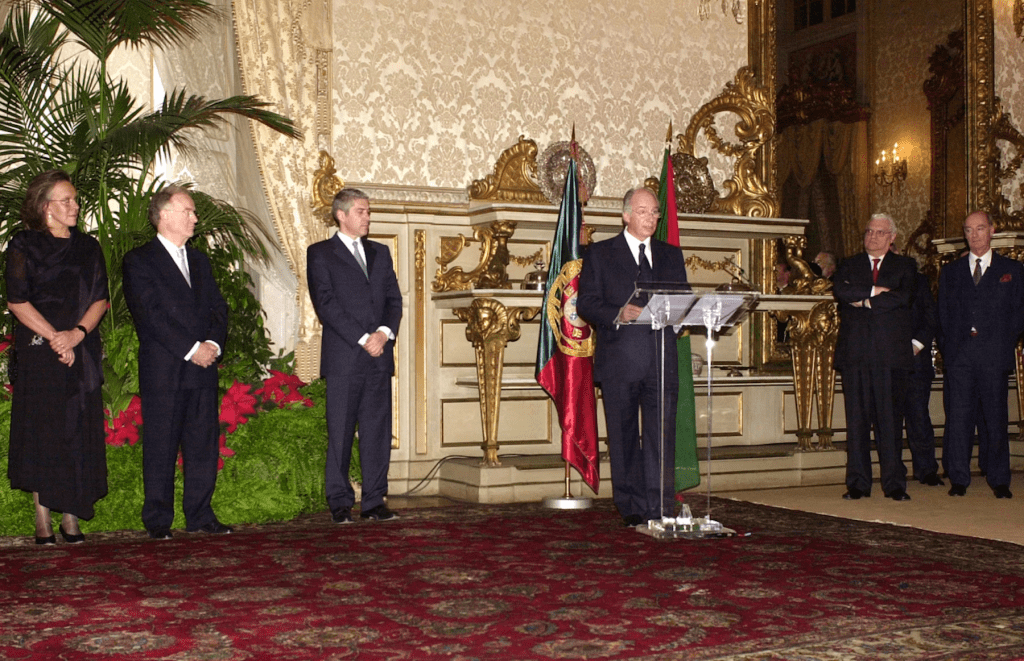
“We are concerned, and most rightly so, that there is poverty among our respective peoples, and we cannot stand by watching this inhuman indignity become a permanent part of our societies, of our generations of today and tomorrow. We must work together to develop an arsenal of peaceful weapons to attack this plight which blights our times, and to try to make sure that those who are marginalised today can be certain that we are not blind to them, that we will not let their future generations live in the same hopeless world in which they themselves are seeking, often only in despair, to survive.” — the Aga Khan, speaking at the Protocol of Co-operation Signing Ceremony between the Ismaili Imamat and the Government of Portugal, Lisbon, Portugal, December 19, 2005 (Read full speech HERE).
The author has adapted this article from the March 1982 issue of Al-Misbah Magazine, published by the Ismailia Association for the UK. The original article, which was under the title Navroz, has been edited and improved for clarity and includes additional material.
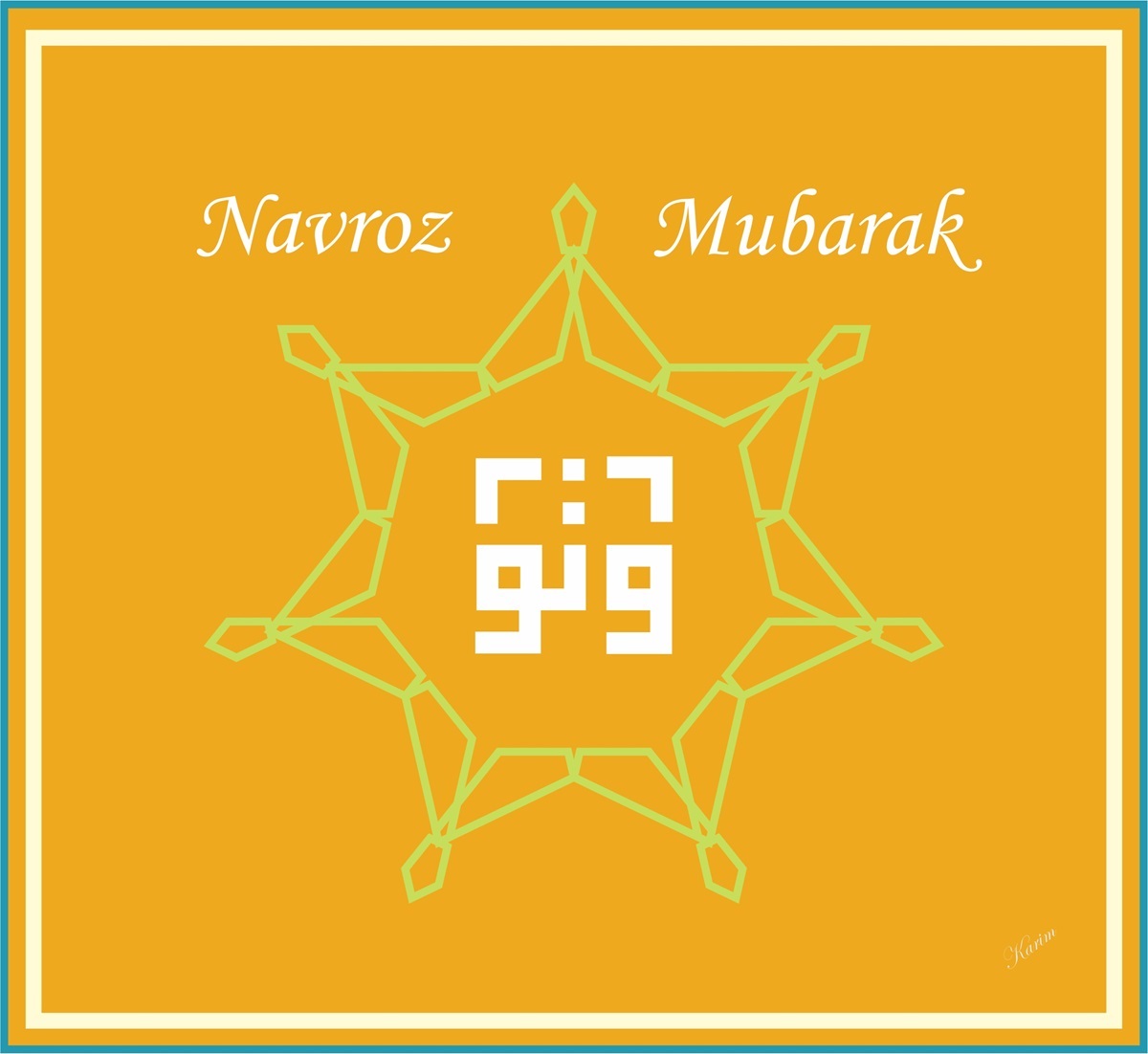
Navroz, meaning New Day or New Year, marks the start of the Persian spring festival. It occurs on or around March 21 of the March equinox. The United Nations has designated March 21 as the International Day of Nowruz annually (the Secretary General’s 2024 message can be read HERE.)
It is an occasion of great rejoicing among people in Iran, many parts of the Middle East, Central and South Asia, and the Shi’a communities worldwide. Besides being New Year’s Day, it is also celebrated as the Festival of Spring because it is at this period that winter makes its exit for the colourful spring season.
Navroz holds a significant place in history, dating back some 2,500 years to the reign of King Jamshed. Despite a temporary halt after the rise of Islam in Iran, it was reintroduced by the Abbasid Caliph Mansoor in 770 AC (153 AH, or Hijri). Since then, Navroz has been a cherished national occasion and custom, celebrated with zeal by more than 300 million people worldwide.
In Fatimid Egypt, the state ruled by Ismaili Imams, the Spring Festival was a national celebration during the reign of the first eight Fatimid Imams/Caliphs from 969 to 1094 AC (358 to 487 AH). Although the Fatimid Imams ruled over Egypt, this festival was not exclusively Ismaili because the Ismailis, even at that time, were a minority group in the Caliphate.
The actual celebration of Navroz among the Ismailis could be said to have started in Iran during the Alamut Period of Ismaili history. Ismailis living in Alamut were farmers; hence, in the spring season, they would look forward to preparing their farms for a good harvest.
The glorious transformation of nature at the time of Navroz, the start of the spring season, reminds us of Allah’s creative power and the bounties He continually showers on us. The arrival of spring, with its sprouting seedlings, blossoming buds, vibrant colours, and rushing waters, is a vivid reminder of our true inner essence.
Like these elements of nature, we, too, have the potential to bloom and grow under the nurturing care and warmth of Imam-of-the-Time. The Preamble of the Ismaili Constitution proclaims that the Imam’s ta‘lim (guidance/teaching) lights the each follower’s path to spiritual enlightenment and vision.
Born as Ismailis, with the recognition of the Imam, this life is the spring season of our souls. The Divine Noor shines brightly over our souls. We must cleanse ourselves of unrighteousness and cultivate an original, spontaneous, and permanent relationship with the Noor (Light) of Imamat so that every breath and activity of our life becomes the worship of the Merciful. The festival of Navroz should result in a spiritual rebirth for each of us and inspire greater love for our Imam.
Article continues below
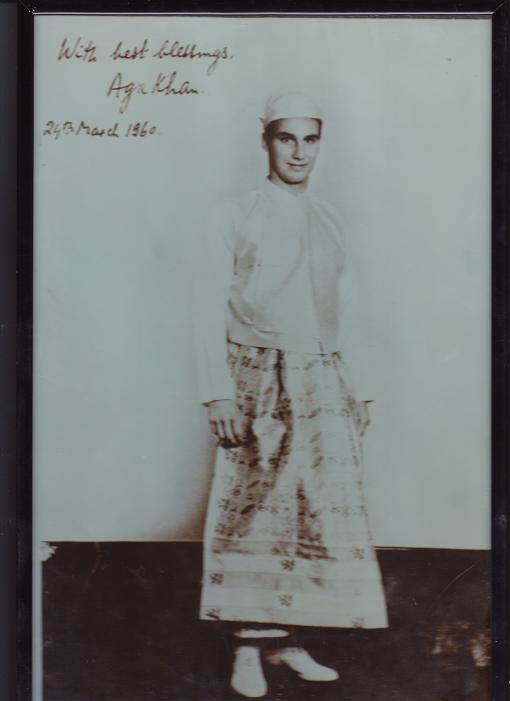
This is a signed photograph, dated March 24, 1960, of Mawlana Hazar Imam, His Highness the Aga Khan, 49th Imam of the Shia Imami Ismailis, pictured in a Burmese traditional dress during his visit to Burma in March 1960 when he celebrated the Persian New Year, Navroz, which falls on March 21st, with his Ismaili followers. The signed photograph contains his blessings. Photo: Anwar Virani Archives, Ottawa.
Navroz is an auspicious time to initiate self-improvement because nature, so to speak, is turning a new page in the book of life. It is a time to review our lives and determine necessary improvements. In a detached, objective way, we should analyze our positive and negative traits and then resolve to change bad habits into good ones.
Our covenant with Mawlana Hazar Imam is a promise we have given him to endeavour to achieve a proper balance between our material and spiritual lives. When choosing our resolution, one idea should always loom before the rest: ask ourselves, “What do we want from life, and what will earn Mawlana Hazar Imam’s divine pleasure?” A straightforward answer to this question should be: “To govern our lives by his deep desire for us to live within the Islamic concepts of unity, justice, tolerance, goodwill, generosity and the regularity by which we practice our faith.”
Mowlana Hazar Imam’s message spells out the meaning and significance of this auspicious day for us. He says: “I say to you all on Navroz, ‘Navroz Mubarak,’ and I want you, at the beginning of this New Year, to try to think a bit ahead in your future. Each Navroz, say to yourselves, ‘Have we done our work?’ If you have, then I will be very happy indeed. I say Idd Mubarak to all of you and give you most affectionate blessings.” — Rangoon, Burma, March 21, 1960.
By steeping our consciousness in love for the Imam-of-the-Time and wisely directing our activities, we shall make our lives one unending act of worship. Therefore, let this Navroz be a New Day on the path of spiritual glory, material well-being, and progress. Let each New Day be a Navroz to strengthen our spiritual bonds with Imam-e-Zaman, reminding us that his blessings are always with us.
We conclude with our beloved Imam’s final words spoken in Rangoon: “On this day of Navroz, I say to each and every one of you, Idd Mubarak, and I pray that in this New Year, your worldly and spiritual happiness should progress tenfold and that this will be the case every year.” — Rangoon, Burma, March 21, 1960.
Date posted: March 18, 2024. Last updated: March 20, 2024 (inserted link to UN Secretary General’s 2024 Nowruz message in 1st paragraph).
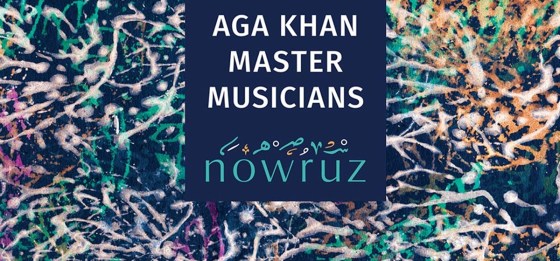
The website Worldmusiccentral reports that the Aga Khan Master Musicians (AKMM) formed in 2013 by the Aga Khan Music Programme is dominating the world music charts in Europe through their debut album Nowruz. The website goes on to list the top 20 selections for the month of February.
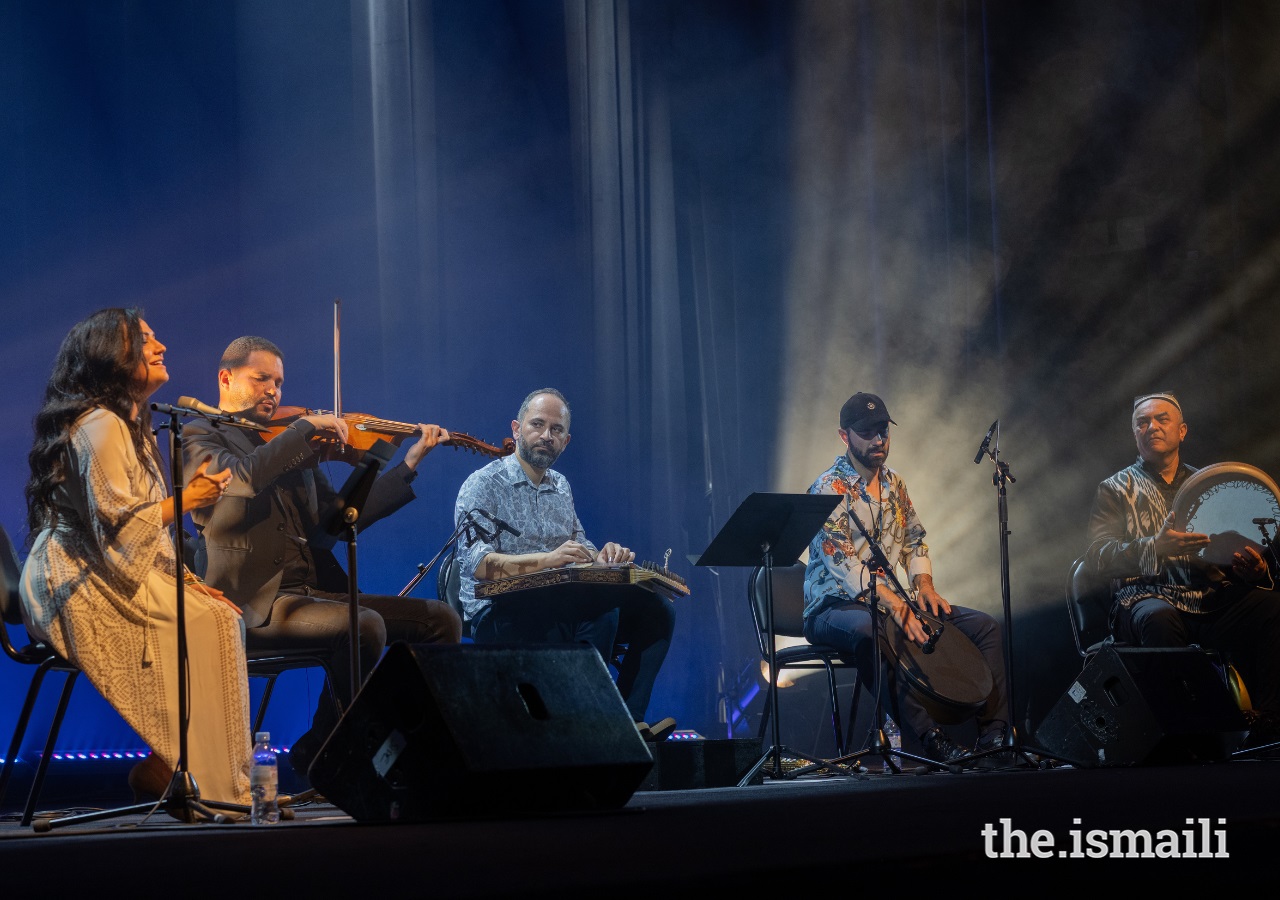
The producer of the album, Smithsonian Folk Ways Recording, says that “In Nowruz, the Aga Khan Master Musicians draw on music from Central Asia, China, the Middle East, and North Africa to create a strikingly original body of work where living musical traditions meet and meld. Acclaimed virtuosos on their respective instruments, the six members of AKMM deftly blend pipa, qanun, dutar, viola d’amore, saxophone, and a panoply of percussion into a soulful new musical language that comes alive in these eloquent performances.”
Story continues below
Aga Khan Master Musicians performing a mesmerizing selection of compositions at the L’Institut du Monde Arabe on October 18, 2023, in the presence of Prince Amyn Mohamed Aga Khan, younger brother of Mawlana Hazar Imam, His Highness the Aga Khan. Photograph: AKDN/Thomas Wibaux.
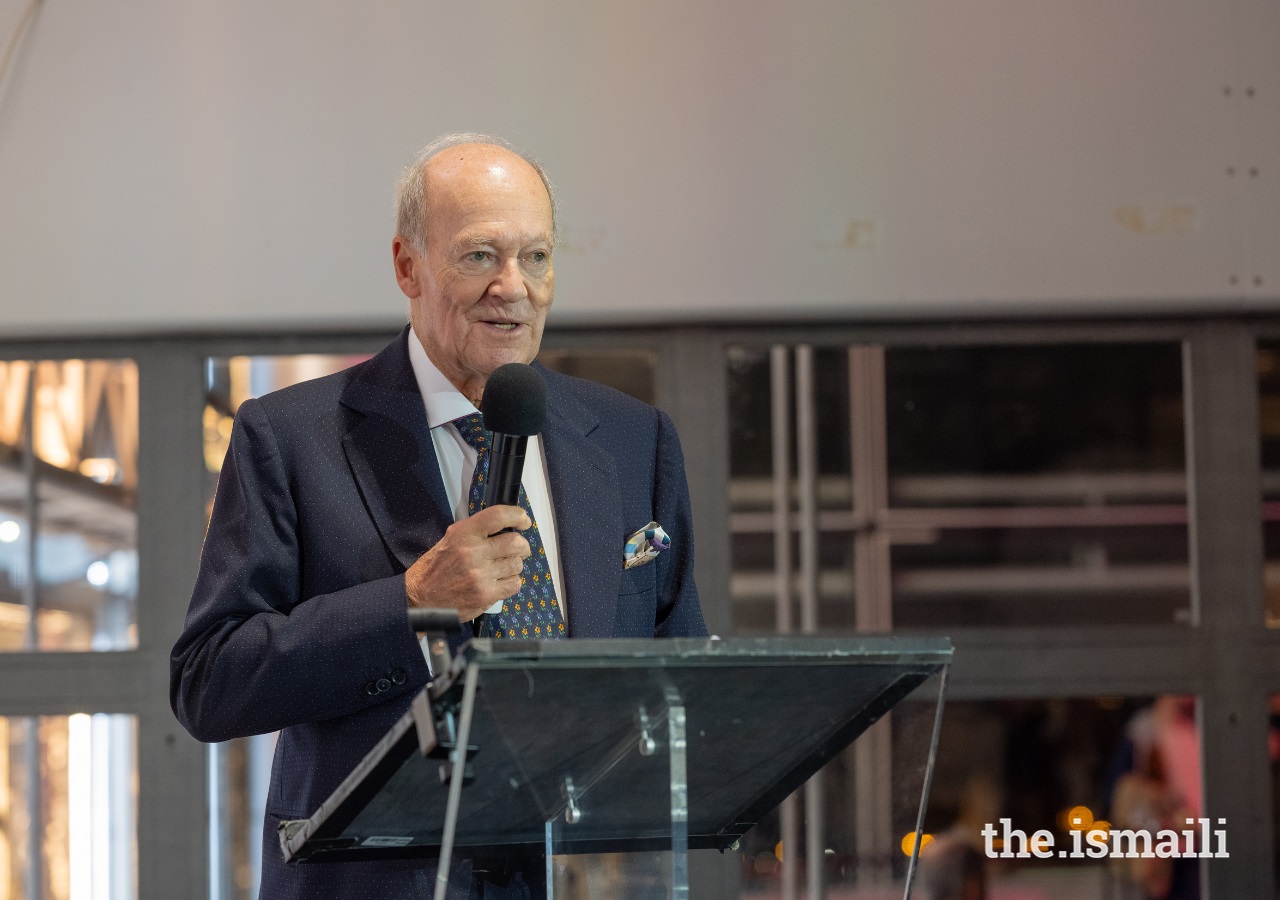
Prince Amyn Mohamed Aga Khan, younger brother of Mawlana Hazar Imam, His Highness the Aga Khan, delivers remarks at a post-concert reception at L’Institut du Monde Arabe on October 18, 2023.Photograph: AKDN/Thomas Wibaux.
PURCHASE (DOWNLOAD) THE NOWRUZ ALBUM PIECES AT US$0.99 EACH
Aside from the album’s namesake piece, Nowruz, the album consists of 11 other pieces such as Tashkent, Madad, Autum Flowers and Leaves, Ili and Jul Dance. Readers may listen to sample recordings on the Smithsonian Folk Ways website, and download each complete piece at US$0.99.














 Simerg - Insights from Around the World