Simerg is an independent initiative dedicated to Ismaili Muslims, the Aga Khan — their Hereditary Imam — and the Ismaili Imamat, and Islam in general through literary readings, photo essays and artistic expressions
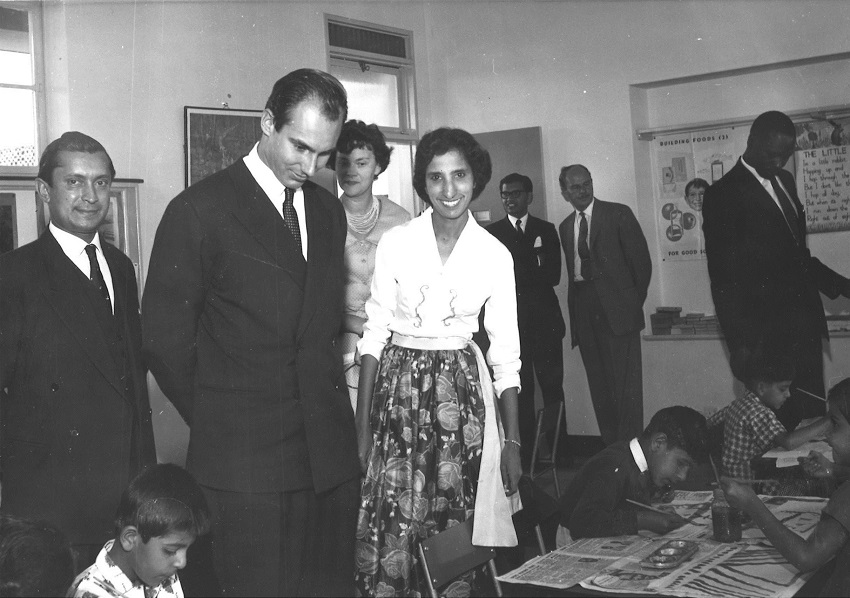
(Alijah) Mohamed Kassam of the UK was only 3 when a group photo that included his father was taken with His Late Highness Aga Khan III, the 48th Ismaili Imam. He shares the group photo and some unique pictures of the 49th Imam, Mawlana Shah Karim, His Late Highness Aga Khan IV (d. February 4, 2025), with readers of our sister website Barakah, which is dedicated to the Aga Khan. To view Kassam’s collection, please click on the photo below or HIS HIGHNESS THE AGA KHAN III AND IV PHOTOS: MOHAMED KASSAM ARCHIVES.
School teacher Shirin Kassam, sister of Mohamed Kassam, with Mawlana Shah Karim, His Late Highness Aga Khan IV, during his visit to the Aga Khan Primary School, Nairobi, Kenya, in the early 1960s. Please click on the image to view more photos.
The 49th Ismaili Imam, Mawlana Shah Karim, His Highness the Aga Khan (December 13, 1936 – February 4, 2025), was on Sunday, February 9, 2025, laid to rest at a private burial ceremony in Aswan, Egypt, in the mausoleum of his grandfather, Mawlana Sultan Mahomed Shah.
Story continues below
The Egypt map highlights Cairo, founded by the Fatimid Imams, the ancestors of the new 50th Ismaili Imam, Mawlana Shah Rahim, and Aswan — approximately 900 kms south of Cairo — where a mausoleum was built as the permanent burial site of the 48th Ismaili Imam, Mawlana Sultan Mahomed Shah. The 49th Imam, Mawlana Shah Karim, who died on February 4, 2025, was temporarily buried in the same mausoleum on February 9 until a new mausoleum is constructed. Map credit: Perry-Castañeda Library Map Collection / University of Texas.
His successor, Mawlana Shah Rahim, the 50th Imam, and his family were present, together with the Ismaili Jamat senior leaders. The burial follows the funeral ceremony on February 8 at the Ismaili Centre Lisbon (see our coverage of the funeral ceremony with my personal reflections HERE.)
Mawlana Shah Rahim Al Hussaini, the 50th Hereditary Imam of the Ismaili Muslims, who succeeded his beloved father, Mawlana Shah Karim, on February 4, 2025, at the age of 88. Photograph: The Diwan of the Ismaili Imamai, Lisbon.
Major General Dr Ismail Kamal, the Governor of Aswan, who had welcomed Mawlana Hazar Imam a day earlier, facilitated and participated in a dignified procession through the city to the banks of the River Nile.
Story continues below
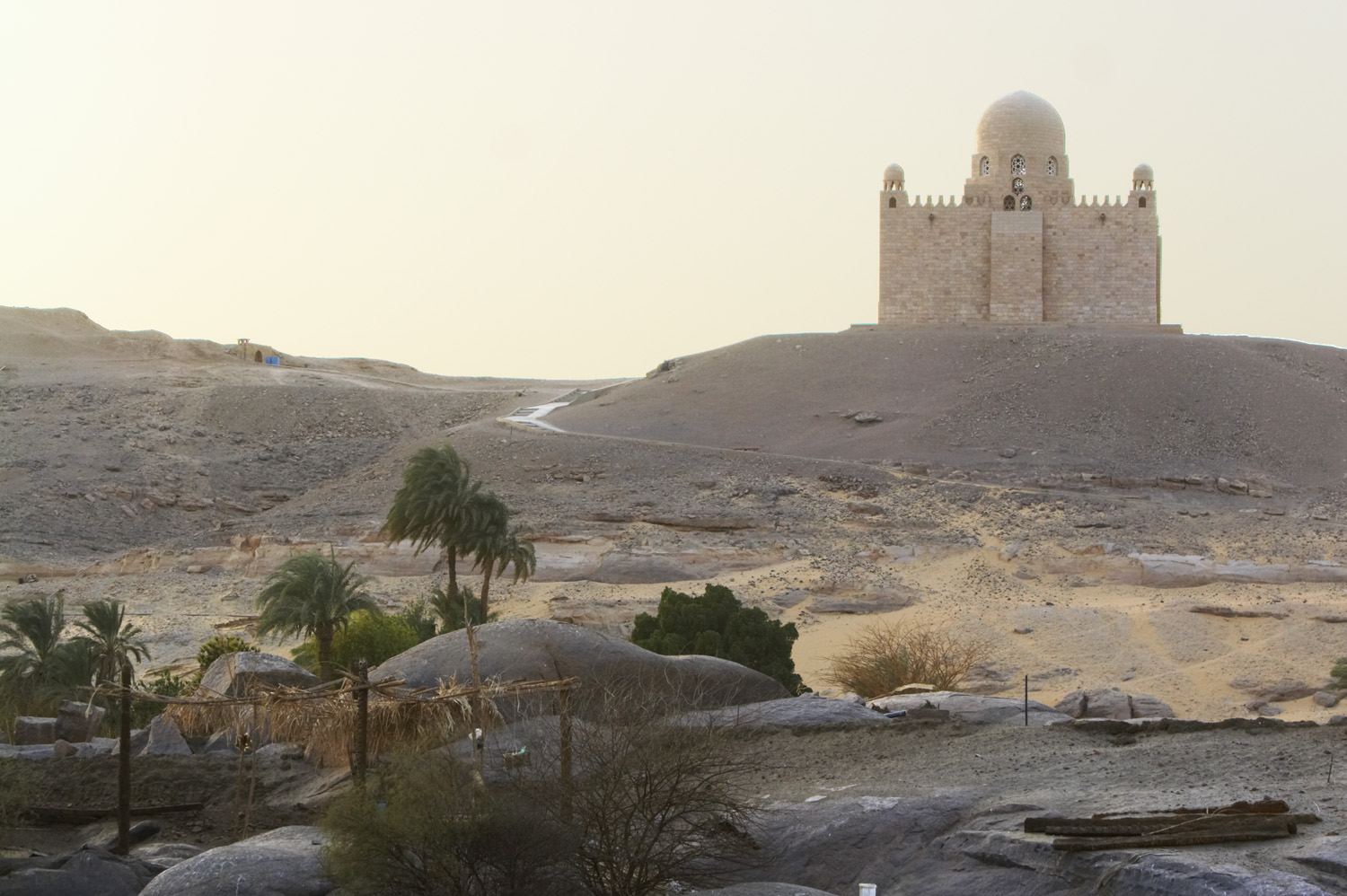
The Mausoleum of the 48th Ismaili Imam, Mawlana Sultan Mahomed Shah in Aswan, where the 49th Imam, Mawlana Shah Karim, was temporarily buried on February 9, 2025, until one dedicated to him has been constructed. Photograph: Muslim Harji, Montreal.
Mawlana Shah Karim’s casket was transferred by boat in a ceremonial crossing to the mausoleum of his predecessor, 48th Imam, Mawlana Sultan Mahomed Shah, who wanted to be buried in Aswan.
Story continues below
Mawlana Shah Rahim and his family and residents of Aswan participate in a dignified procession through the city of Aswan to the banks of the River Nile, February 9, 2025. Photograph: AKDN.
~~~~~~~
Prince Rahim Aga Khan V and his family accompanied by the Governor of Aswan, transferring the casket of the late Prince Karim Aga Khan IV across the River Nile, Aswan, Egypt, February 9, 2025. Photograph: Akbar Hakim / IPL.
The janaza (casket) was carried by hand to the hilltop mausoleum. Mawlana Shah Karim’s body has been laid to rest in the mausoleum next to his grandfather until a new one is constructed as his final resting place on land adjacent to the existing structure.
Story continues below
The casket of the late Prince Karim Aga Khan IV being carried by hand to the mausoleum of Sir Sultan Mahomed Shah Aga Khan III, visible in the background, Aswan, Egypt, February 9, 2025. Photograph: Akbar Hakim / IPL
~~~~~~~
Casket of the late Prince Karim Aga Khan IV entering the mausoleum of his grandfather Aga Khan III where he was interred, Aswan, Egypt, 9 February 2025. Photograph: Akbar Hakim / IPL.
After the ceremony, the leaders present had the opportunity to express condolences to the family, and the Governor of Aswan presented Mawlana Hazar Imam with a symbolic key to the City of Aswan as a mark of respect (see following Tweet).
AP video/Radwan Abu Al Majd (see below): A burial service for Aga Khan IV, the 49th hereditary imam of the Shiite Ismaili Muslims, was held in the southern Egyptian province of Aswan on Sunday. After a procession through the streets, his body was carried down the Nile in a white boat.
Date posted: February 10, 2025. Last updated: February 10, 2025 (, 01:35 PM, added Tweet on Key of Aswan granted to Prince Rahim).
Note: A version of this piece has been posted on Simerg’s sister website, Barakah.com.
Correction: A typo in the title of the original version of this post, which mentioned Highness the Aga Khan as the 47th Ismaili Imam, has been corrected. He was the 49th Imam.
_________________
Simerg welcomes your tributes to Mawlana Shah Karim, His Highness the Aga Khan. Please click Leave a comment. If you encounter problems, email the comments to mmerchant@simerg.com.
We invite our readers to click HERE for a brief background information and the history of Ismaili Constitutions over the past 120 years.
This post presents the Preamble of the Ismaili Constitution, a significant document ordained in 1986 by His Highness the Aga Khan. This introductory succinct statement delves into the principle of Imamat succession, a vital and essential aspect of Ismaili history, culture, and tradition over the past 1400 years since the designation of Hazrat Ali as the successor of Prophet Muhammad (May peace be upon him and his family). It also discusses the permanency of the spiritual bond between the Imam-of-the-Time and his followers, who now live in more than 35 countries, forming a global community of Ismaili Muslims. This community is diverse, with members from different cultural, linguistic, and ethnic backgrounds, yet united in their faith and allegiance to the Imam. There are approximately 200,000 Ismaili Muslims in North America, contributing to this global presence of 12 million Ismailis.
The present 49th Imam of the Ismaili Muslims, His Highness Prince Karim Aga Khan, like all his predecessors, is a figure of deep respect and affection for his followers. They address him as Mawlana Hazar Imam (Our Lord, the present living Imam) with a sense of reverence. He succeeded to the throne of Imamat at the remarkable age of twenty, when he was still a student at Harvard University, by the will of his grandfather, Mawlana Sultan Mahomed Shah, His Highness the Aga Khan III. His grandfather reigned the Ismaili community (Jamat) as their 48th Imam for an impressive 72 years, from August 17, 1885, to July 11, 1957, leaving behind a weighty legacy. The will made the succession clear. It stated:
“Ever since the time of my first ancestor Ali, the first Imam, that is to say over a period of thirteen hundred years it has always been the tradition of our family that each Imam chooses his successor at his absolute and unfettered discretion from amongst any of his descendants whether they be sons or remoter male issue. In view of the fundamentally altered conditions in the world in very recent years due to the great changes which have taken place including the discoveries of atomic science I am convinced that it is in the best interests of the Shia Moslem Ismailian Community that I should be succeeded by a young man who has been brought up and developed during recent years and in the midst of the new age and who brings a new outlook on life to his office as Imam. I appoint my grandson Karim, the son of my son Aly Salomone Khan to succeed to the title of Aga Khan and to be the Imam and Pir of all my Shia Ismailian followers.”
Although the will was read on July 12, 1957, the new Imam instantly became the Imam. In a TV interview with an American reporter during his installment ceremonies in East Africa, Prince Karim stated:
“The [installation] ceremony is a public installation of the Imam. The Ismailis pay homage to the Imam and that is when you are recognised by the world at large as the Imam. Officially, as soon as one Imam passes away, his successor takes on from the very minute the Imam has passed away.” [A clip of the interview was available on Nanowisdoms, but the resourceful website containing the Aga Khan’s speeches and interviews is currently inactive and unavailable.]
This instantaneous succession underlines the principle of the Unity of Imamat, that is, the Ismaili belief and understanding that each Imam is the same Bearer of the Nur (Light) of Imamat, irrespective of his own age or the time he lives in. Ismaili Imams, missionaries, poets and scholars have articulated this belief throughout Ismaili history. The 33rd Imam, Abd al-Salam, who lived in the 15th century, said:
“The Imam’s true face is to be perceived with the eyes of the heart. He has thousands of physical habitations, but his true home is traceless; He has had a thousand names, but all of them refer to one reality.”
The present Imam, in his address to his community in Karachi on the occasion of his 28th birthday in December 1964, said:
“For hundreds of years, my spiritual children have been guided by the Rope of Imamat; you have looked to the Imam of the Age for advice and help in all matters and through your Imam’s immense love and affection for his spiritual children, his Noor has indicated to you where and in which direction you must turn to obtain spiritual and worldly satisfaction.”
With these preliminary thoughts, we now provide the text of the Preamble from the Ismaili Constitution.
The Preamble of the Ismaili Constitution
Mawlana Hazar Imam, His Highness the Aga Khan, is seen signing a new constitution for the worldwide Ismaili community on his 50th birthday, December 13, 1986. Beside him is the flag of the Ismaili Imamat, bearing his crest in the centre.
A) The Shia Imami Ismaili Muslims affirm the shahādah lā ilāha illa-llāh, Muhammadur rasulu-llāh, the Tawhid therein and that the Holy Prophet Muhammad (s.a.s.) is the last and final Prophet of Allah. Islam, as revealed in the Holy Quran, is the final message of Allah to mankind, and is universal and eternal. The Holy Prophet (s.a.s.) through the divine revelation from Allah prescribed rules governing spiritual and temporal matters.
(B) In accordance with Shia doctrine, tradition, and interpretation of history, the Holy Prophet (s.a.s.) designated and appointed his cousin and son-in-law Hazrat Mawlana Ali Amiru-l-Mu’minin (a.s), to be the first Imam to continue the Ta’wīl and Ta‘līm of Allah’s final message and to guide the murids, and proclaimed that the Imamat should continue by heredity through Hazrat Mawlana Ali (a.s) and his daughter Hazrat Bibi Fatimat-az-Zahra, Khātun-i-Jannat (a.s).
(C) Succession of Imamat is by way of Nass, it being the absolute prerogative of the Imam of the time to appoint his successor from amongst any of his male descendents whether they be sons or remoter issue.
(D) The authority of the Imam in the Ismaili Tariqah is testified by Bay‘ah by the murid to the Imam which is the act of acceptance by the murid of the permanent spiritual bond between the Imam and the murid. This allegiance unites all Ismaili Muslims worldwide in their loyalty, devotion and obedience to the Imam within the Islamic concept of universal brotherhood. It is distinct from the allegiance of the individual murid to his land of abode.
(E) From the time of the Imamat of Hazrat Mawlana Ali (a.s), the Imams of the Ismaili Muslims have ruled over territories and peoples in various areas of the world at different periods of history and, in accordance with the needs of the time, have given rules of conduct and constitution in conformity with the Islamic concepts of unity, brotherhood, justice, tolerance and goodwill.
(F) Historically and in accordance with Ismaili tradition, the Imam of the Time is concerned with spiritual advancement as well as improvement of the quality of life of his murids. The imam’s ta‘lim lights the murid’s path to spiritual enlightenment and vision. In temporal matters, the Imam guides the murids, and motivates them to develop their potential.
(G) Mawlana Hazar Imam Shah Karim al Hussaini, His Highness Prince Aga Khan, in direct lineal descent from the Holy Prophet (s.a.s.) through Hazrat Mawlana Ali (a.s.) and Hazrat Bibi Fatima (a.s), is the Forty-Ninth Imam of the Ismaili Muslims.
(H) By virtue of his office and in accordance with the faith and belief of the Ismaili Muslims, the Imam enjoys full authority of governance over and in respect of all religious and Jamati matters of the Ismaili Muslims.
(I) It is the desire and Hidāyat of Mawlana Hazar Imam that the constitutions presently applicable to the Ismaili Muslims in different countries be superseded and that the Ismaili Muslims worldwide be given this constitution in order better to secure their peace and unity, religious and social welfare, to foster fruitful collaboration between different peoples, to optimise the use of resources, and to enable the Ismaili Muslims to make a valid and meaningful contribution to the improvement of the quality of life of the Ummah and the societies in which they live.
[An extended version of this post can be read on Simerg’s sister blog Barakah which was launched in 2017 as an honour and dedication to the 49th Hereditary Ismaili Imam, Mawlana Shah Karim al Husssaini, His Highness the Aga Khan, on the auspicious and historic occasion of his 60th Imamat anniversary or the Diamond Jubilee — Ed.]
When the 48th Ismaili Imam, Mawlana Sultan Mahomed Shah, His Highness the Aga Khan, passed away on July 11, 1957 at the age of 79, he chose his 20 year old grandson, Shah Karim al Hussaini, then a student at Harvard University, to succeed him as the 49th Hereditary Imam of the community.
The late Aga Khan who was born on November 2, 1877, succeeded to the throne of Imamat on August 17, 1885, when he was only 7 years old. His Imamat of 71 years is the longest in the 1400 span of Ismaili history that goes back to the origins of Shia Islam when the Prophet Muhammad — may peace be upon him and his family — appointed his son-in-law, Ali, to continue his teachings within the Muslim community. The current 49th Imam said in an interview, that the Ismailis are the only Shia Muslims to have a living Imam, namely himself.
At the death of the 48th Imam in 1957, Her Majesty Queen Elizabeth II (d. September 2022), sent the following message to the new Aga Khan through her Private Secretary:
“His Highness will be remembered by all for the wise guidance and selfless leadership which he has freely given during his many happy and eventful years. His energetic and devoted work for the League of Nations in a life dedicated to the service of his followers and to the welfare of mankind will long be remembered. In the arduous responsibility which you will be called on to bear as leader of your people, Her Majesty extends to you her sincere greetings and prayers that you may long fulfil your role as counsellor to the Ismaili community who owe you their allegiance.”
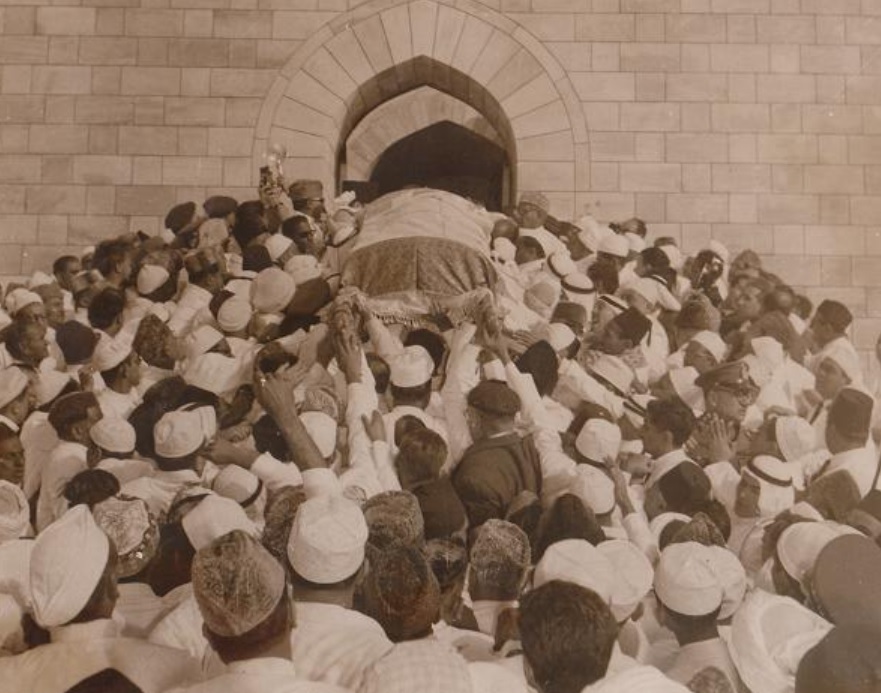
Aga Khan III had long expressed the wish that his burial should be in Aswan, Egypt. His wife, the Begum Om Habibeh Aga Khan, undertook the monumental task of coordinating the construction of the mausoleum near the villa. The mausoleum was completed in about 18 months. In the meanwhile, the body of the late Imam was temporarily buried in the compounds of the Villa. The final burial then took place on February 19, 1959.
We present a selection of photographs of the mausoleum as well as other images from the historical day (for more details and photos see the post in Barakah.)
The successor of Aga Khan III, Mawlana Sha Karim al Hussaini, His Highness the Aga Khan, left, his uncle Prince Sadruddin Aga Khan, right, and his younger brotehr Prince Amyn Aga Khan at the back, carrying the shrouded body of the 48th Ismaili Imam, Mawlana Sultan Mahomed Shah, from its temporary resting place to the mausoleum. Photograph: Jehangir Merchant collection.
Mourners watch as the body of the 48th Ismaili Imam, Mawlana Sultan Mahomed Shah, His Highness the Aga Khan, is carried into the mausoleum, February 19, 1959. Photograph: Jehangir Merchant collection.
Mawlana Hazar Imam, His Highness the Aga Khan, pictured on October 19, 1957 at his 1st Takhtnashini or ceremonial installation, held in Dar es Salaam, Tanganyika (now Tanzania). He became the 49th Imam of the Shia Imami Ismaili Muslims,on July 11, 1957 at the age of 20. Photograph: Ilm Magazine, July 1977.
“Today, I am speaking to you in a city and in a country which have a particular meaning to my family and myself. On 2nd November, 1877 my beloved grandfather was born here in Karachi. Through 72 years of Imamat, he guided his spiritual children to happiness and prosperity” — Karachi, August 4, 1957.
“Many many memories come to our minds as we think of him. He achieved in his life, for our community that which could only have been accomplished normally in a period of many generations. The tributes that the world has paid him bear honest testimony to his great life and work” — Takhtnashini, ceremonial installation, Karachi, Pakistan, January 23, 1958.
Date posted: February 21, 2023.
Featured image at top of post: The mausoleum of Mawlana Sultan Mahomed Shah, His Highness the Aga Khan, overlooking his villa and the Nile. Photograph: Motani Family collection, Ottawa, Canada.
_________________
For an extended version of this post please click HERE.
Before departing this website, please take a moment to review Simerg’s Table of Contents for links to hundreds of thought-provoking pieces on a vast array of subjects including faith and culture, history and philosophy, and arts and letters to name a few. Also visit Simerg’s sister websites Barakah, dedicated to His Highness the Aga Khan, and Simergphotos.
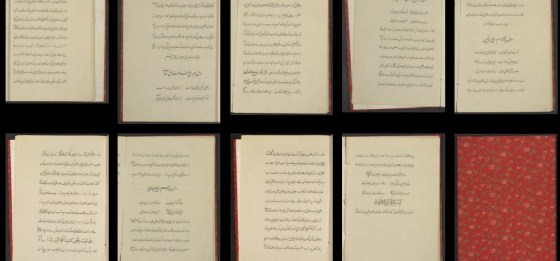
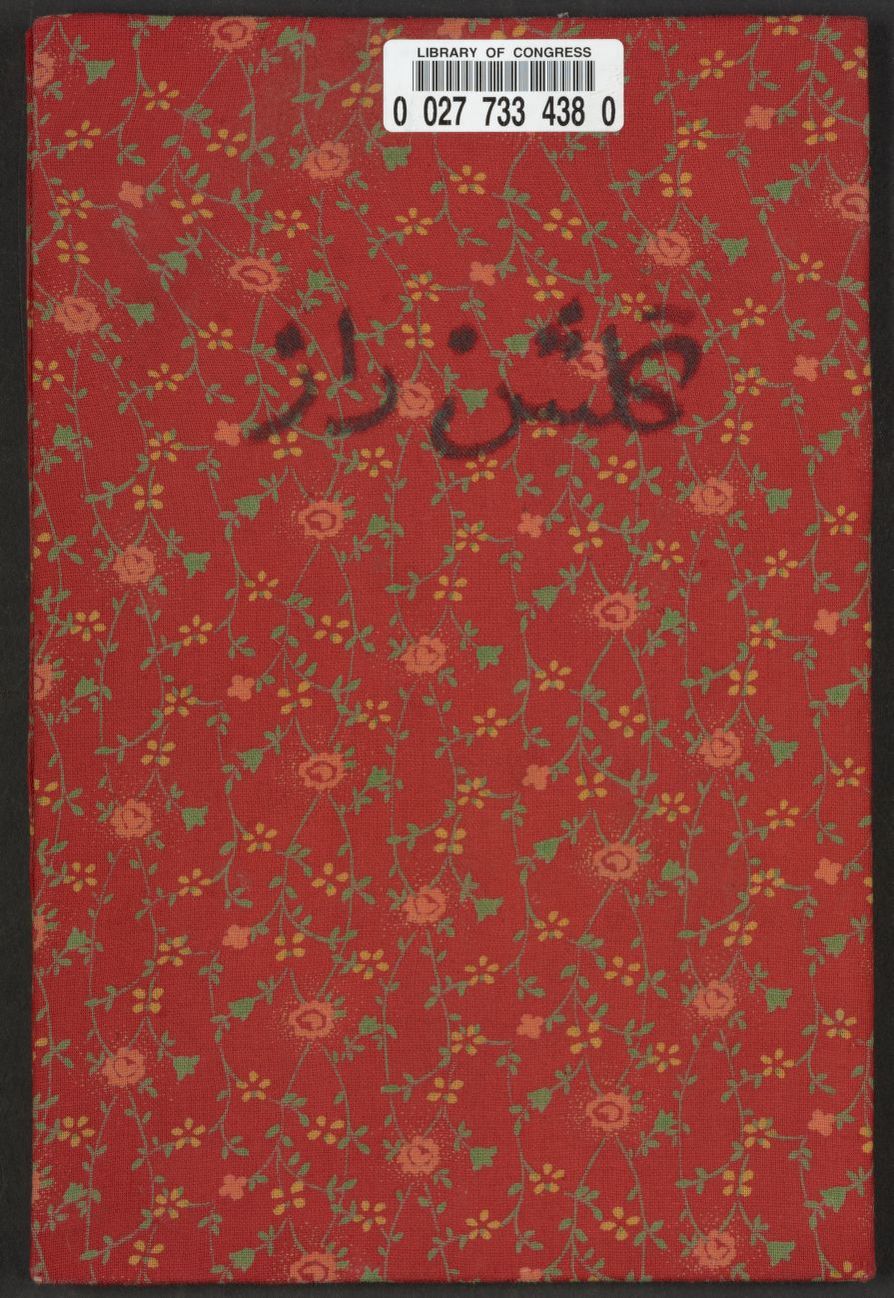
Gulshan-i rāz (The garden of mystery) is a 20th century text on the Nizari Ismaʻili belief system, written by Nadir Shah Kayani (circa 1897 – circa 1971), a leader of the Ismaʻili community in Afghanistan.
Article continues below
Page 1 of 42 of the Ismaili work Gulshan-i rāz. Photo: LOC.
The title of this work deliberately echoes a celebrated Ismaʻili book of verse of the same name composed by Mahmud Shabistari in 1317. Nadir Shah’s work is organized in 14 sections, each of which discusses a philosophical or religious topic such as nafs (the soul) or namaz (prayer). The first section, on tafakkur (the faculty of thought), is written as a commentary on a verse from the original Gulshan-i rāz.
Article continues below, click image to download PDF
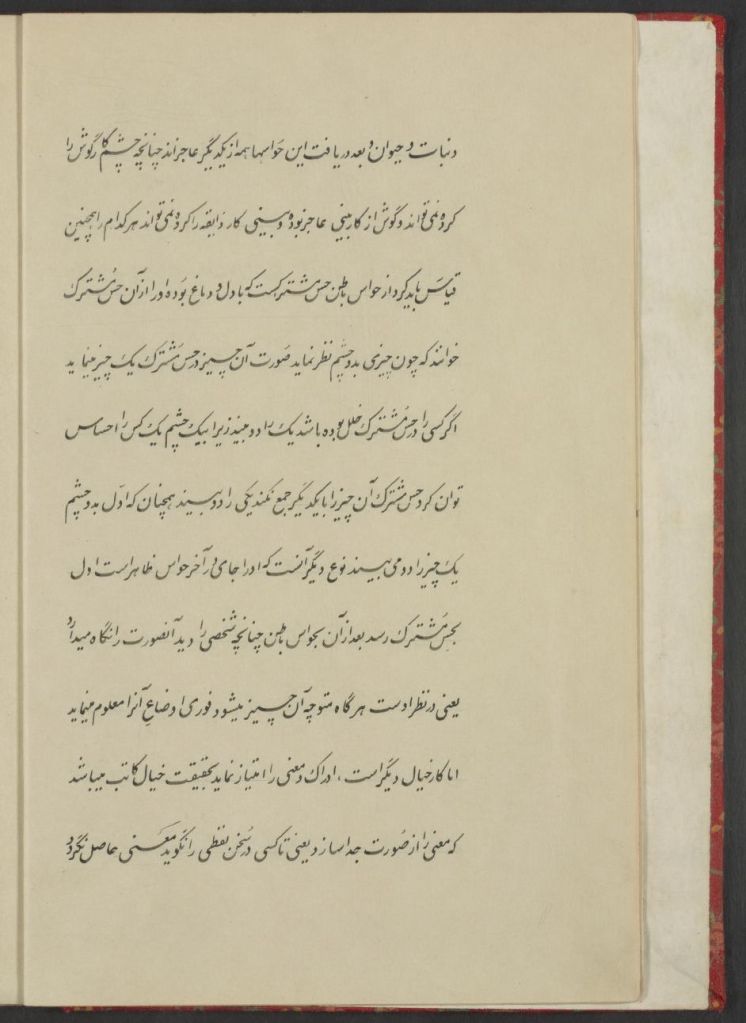
Page 12 of 42 of the Ismaili work Gulshan-i rāz. Photo: LOC; please click on image to download the work in PDF format.
Much remains to be discovered about the Ismaʻili community of Afghanistan during this period. What is known is that Nadir Shah belonged to a family of Ismaʻili leaders based in the Kayan valley in northern Afghanistan. He was a prolific author who wrote both poetry and philosophical texts. The present work is a manuscript, most likely produced in Afghanistan.
Aga Khan III. Photo: LOC.
Kayani’s leadership of the Ismaʻili community coincided with the reign of the 48th Ismaili Imam, Mawlana Sultan Mahomed Shah, His Highness the Aga Khan III (1877-1957; Imam from 1885-1957).
The script is nastaʻliq, written in black ink, 11 lines to the page, on a light-cream paper. The “third” in the title probably refers to Shabistari’s original work as the first Gulshan-i rāz. The identity of the second Gulshan-i rāz is not clear; it could be a reference to the well-known commentary by Shams al-Din Lahiji, written in 1472-73.
Please download Nadir Shah’s work in PDF format by clicking HERE.
Summary of Work
Contributor Names: Kiyānī, Nādir Shāh. Created/Published: Between 1900 and 1999? Notes: Manuscript; Nastalīq script; 11 lines in written area 21.5 x 14 cm; Paper is light cream; black ink; Probably written in Afghanistan; Also available in digital form (PDF and JPEG, click HERE for PDF); In Persian; Acquired for LC only.
Before leaving this website please take a moment to visit Simerg’s Table of Contents for links to hundreds of thought provoking pieces on a vast array of subjects including faith and culture, history and philosophy, and arts and letters to name a few. Also, visit Simerg’s sister websites Barakah, dedicated to His Highness the Aga Khan, and Simergphotos.
Malik Merchant recently set out to capture pertinent pictures that would be reflective of the writings of Mawlana Sultan Mahomed Shah, His Highness the Aga Khan III, on the glories of nature and the purpose of life. From the joys of watching beautiful moon and sun rises to the struggles that living things have to endure to sustain themselves as well as to multiply, Malik was lucky enough to experience moments he was seeking out for his new piece in Simergphotos.
A painting of Mawlana Sultan Mahomed Shah by N.B. Dewji that appeared in a voluminous journal called Rahe Rast, published in 1948-49 under the supervision of Dar es Salaam’s iconic religious education teacher Karim Master. Please read Rahe Rast article.
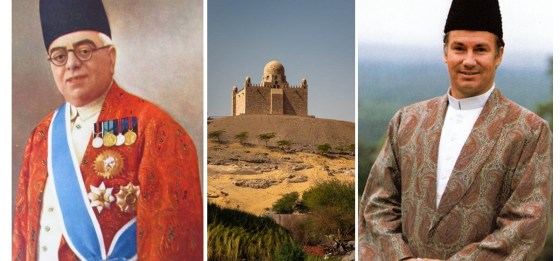
The photo post has been prepared to mark the 144th birth anniversary of the longest reigning Imam in Ismaili history, Mawlana Sultan Mahomed Shah, His Highness the Aga Khan III. Born on November 2, 1877 in Karachi, he became the 48th Ismaili Imam in August 1885 at the age of 7. He passed away on July 11, 1957 after a reign of 71 years, the longest in Ismaili history, handing the Hereditary Imamat that originated with Hazrat Ali (a.s.), the first Shia Imam, to his grandson Mawlana Shah Karim al Hussaini, His Highness the Aga Khan IV. Prince Karim is now in his 65th year of Imamat. Please click SIMERPHOTOS or on any of the two images on this page for a beautiful collection of nature photos as well as quotes on nature and the realities of life by Aga Khan III.
Please click on image for NATURE PHOTOS reflecting the wisdom of Aga Khan III.
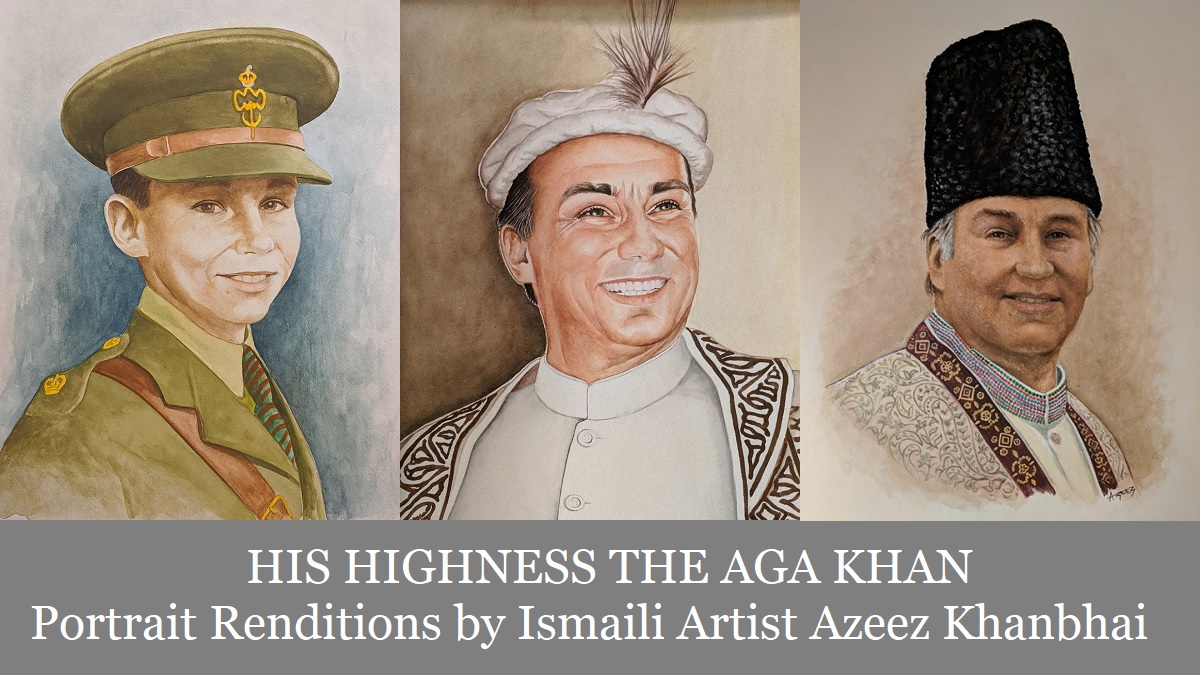
Azeez Khanbhai’s first portrait rendering of Mawlana Hazar Imam, His Highness the Aga Khan, was completed in 1959 and presented to the 49th Ismaili Imam in 1959 during his visit to Nairobi, Kenya. Mawlana Hazar Imam signed the painting, with his blessings. Khanbhai has continued his passion of painting Mawlana Hazar Imam’s portraits over the past 60 years, and Simerg’s sister website Barakah, which is dedicated to Mawlana Hazar Imam, members of his family and the Ismaili Imamat is pleased to present a selection of Khanbhai’s amazing works that also include portrait renditions of Princess Zahra, Prince Rahim and Prince Hussain. Please click HERE or on image below to view the Khanbhai collection in Barakah.
Please click on image for portraits of Mawlana Hazar Imam by Azeez Khanbhai
Date posted: October 30, 2021.
_______________
Before departing this website please take a moment to review Simerg’s Table of Contents for links to hundreds of thought provoking pieces on a vast array of subjects including faith and culture, history and philosophy, and arts and letters to name a few. Please also visit Simerg’s sister websites Barakah and Simergphotos.
For the first time in more than 19 months, I accepted an invitation to visit friends who were hosting a BBQ for their family. They regard me as one of their family members. I am fully vaccinated against Covid-19. I have known Salim and Nevin Kanji for decades. Salim’s older brother, Mohamed Amersi, was one of Tanzania’s top table tennis players, and he spent time with me and improved my game at the Diamond Jubilee Hall in Dar es Salaam in the late 1960’s. Mohamed passed away at the age of 51! It was shocking when I got the news some 20-25 years ago. May his soul rest in eternal peace.
Salim’s grandfather was the well known Late Count Amersi Kanji of Zanzibar, who served the Ismaili Imamat for decades. A couple of stories that Sikandar, Salim’s younger brother, told everyone yesterday about their grandfather, deserve a special post. Hopefully, we can prepare a special piece about Count Amersi’s contribution to the Jamat and the Imamat, often in extremely dangerous circumstances. The photos of the late count that are featured in this post are in Salim and Nevin’s home.
Article continues below
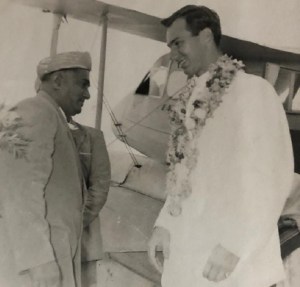
Mawlana Hazar Imam, His Highness the Aga Khan, with Salim Kanji’s grandfather Count Amersi Kanji. Photo: Salim Kanji Family Collection.
The BBQ was absolutely delicious and Nevin kindly filled up containers for me to take home. I left their place after about 4 hours, planning to return home and retire early. It was exactly 6:25 PM as I turned left onto Wynford Drive from Don Mills Road. The Ismaili Centre/Headquarters Jamatkhana was 300 metres away. On weekends, the Headquarters Jamatkhana Dua time is 6:30 PM. It was not my scheduled day to attend but deep down something told me to try my luck as a walk-in. I followed my instincts and luckily got a space. I saw the Ab-e-Shifa table set up, and wondered why. Was I wrong about the Milad-un-Nabi date? The mystery was solved when the President of the Aga Khan Council stood up and read the Talika from our beloved Mawlana Hazar Imam, which was followed by the recitation of the Talika Ginan. Everyone’s heart was touched, and there was unbounded joy and happiness on everyone’s face.
Article continues below…with Talika
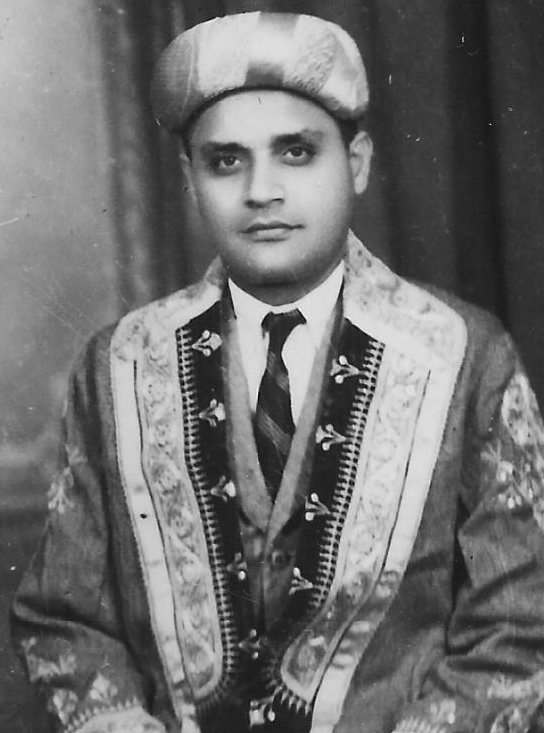
Mawlana Sultan Mahomed Shah, His Highness the Aga Khan, with the family of (Late) Count Amersi Kanji (seated left with robe). Photo: Salim Kanji Family Collection.
Thanksgiving is an expression of gratitude, and families get together for meals. It was a great afternoon being with a loving family, and I made new friends at Salim’s home with other members of his family that I had never met before. The invitation was a blessing indeed, and the kindness shown to me by Salim, Nevin, their son Hafez (a die-hard Liverpool fan, yes Salah is the best in the world) and all those who were present led me to the Jamatkhana. For me, this Thanksgiving was the happiest one in my 40 years in North America (the USA Thanksgiving comes later in November).
Barakah wishes Ismailis around the world Mubaraki on the auspicious occasion of the Talika. Let us earnestly continue to follow Mawlana Hazar Imam’s guidance, and always keep his blessings in our hearts.
Mawlana Hazar Imam’s Mubarak Talika
Mawlana Hazar Imam, His Highness the Aga Khan.
7th October 2021
My dear spiritual children,
On the occasion of a recent mulaqat with my senior Jamati leaders to review their reports on current Jamati work and activities, I send my warmest and most affectionate paternal maternal loving blessings to all my beloved spiritual children throughout the world.
I send my best loving blessings for the souls of all my ruhani spiritual children, and I pray that their souls may rest in eternal peace.
I am happy that, in the face of the ongoing Covid-19 pandemic, my Jamat is continuing to undertake the measures recommended by the health authorities to mitigate the risks, particularly by accepting to be vaccinated as soon as the opportunity becomes available. I wish all my spiritual children to remain constantly mindful of the importance of maintaining good health in all aspects of human life.
At this time my Jamat in some parts of the world is witnessing political transformation. I remind my spiritual children of our tradition to contribute positively for the growth of a healthy civil society, which I believe will enable the improvement of the quality of life of all peoples and will therefore underpin the restoration of peace and stability.
I send my most affectionate loving blessings for your spiritual wellbeing, worldly success, good health, happiness and progress, with best blessings for my Jamat’s strength of faith and unity.
I send my special loving blessings for mushkil-asan, and for the safety and security of all my Jamat. You are all particularly in my heart, in my thoughts and in my prayers.
Please visit our sister website Barakah’s Talika page for links to all the Talikas that Mawlana Hazar Imam has sent to the Jamats since the beginning of Covid-19.
Simerg welcomes your feedback. Please complete the LEAVE A REPLY form below or click Leave a comment. Your letter may be edited for length and brevity, and is subject to moderation.
Before departing this website please take a moment to review Simerg’s Table of Contents for links to hundreds of thought provoking pieces on a vast array of subjects including faith and culture, history and philosophy, and arts and letters to name a few.
The above post is also published in Barakah, a website dedicated to Mawlana Hazar Imam, members of his family and the Ismaili Imamat. Please visit www.barakah.com.
Photographs and story of a historical gold medal that was presented to a British Colonial Officer at the Aga Khan’s Diamond Jubilee in 1946 (READ ARTICLE).
Toronto based Ismaili artist and author introduces “Little One, You are the Universe,” the latest of her three books, by answering a series of short question (READ ARTICLE).
Kamruddin Rashid and Shah Abdulla, both originally from Pemba, share their rare photo collection of His Highness the Aga Khan’s 1957 historical visit to the towns of Chake Chake and Wete in the Island of Pemba (READ ARTICLE).
The unforgettable (Late) Alwaez Shamshu Bandali Haji inspires us with selected Ginanic verses as we commemorate the birth anniversary of Hazrat Ali (a.s.), the 1st Shia Imam (READ ARTICLE).
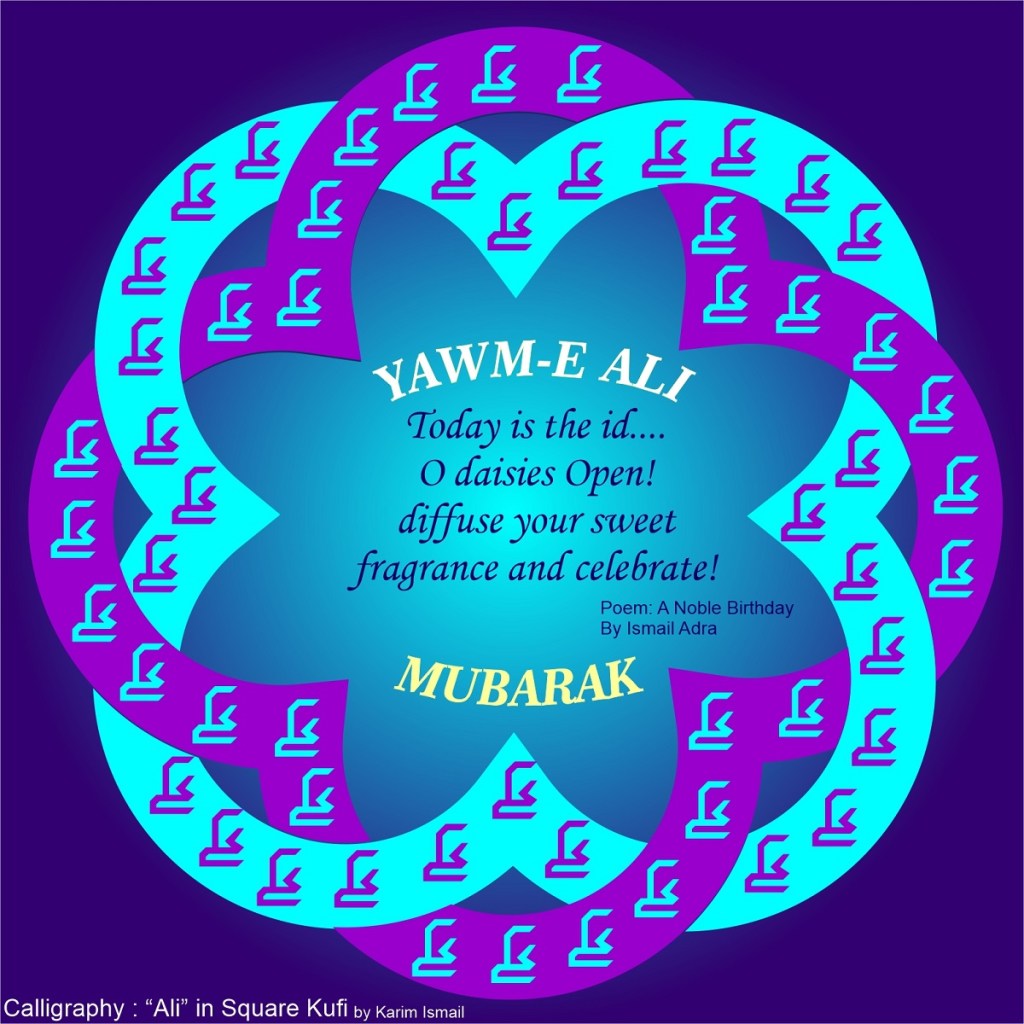
Karim Ismail of Toronto creates a beautiful calligraphy in commemoration of Hazrat Ali’s birth anniversary. The post includes inspiring quotes by Hazrat Ali and his direct descendant His Highness the Aga Khan, the 49th Hereditary Imam of Shia Imami Ismaili Muslims. There is also a calligraphy of the prayer of Nadi Ali (READ ARTICLE).
Edmonton based Ismaili author and philosopher answers a series of question about his book Justice Bertha Wilson Pushes the Boundaries of Humanity through which readers will learn about the Canadian past from outside the boxes of patriarchy and whiteness (READ ARTICLE).
Creative writer Farah Tejani pens a poetic tribute to the iconic Ismaili religious education teacher and missionary Alwaeza Maleksultan Merchant who passed away recently at the age of 89 (READ ARTICLE).
Date posted: February 27, 2021.
______________________
Before departing this website please take a moment to review Simerg’s Table of Contents for links to hundreds of thought provoking pieces on a vast array of subjects including faith and culture, history and philosophy, and arts and letters to name a few. Also visit Simerg’s sister websites Barakah, dedicated to His Highness the Aga Khan, and Simergphotos.
November 2, 2020 marks the 143rd birth anniversary of Mawlana Sultan Mahomed Shah, the 48th hereditary Imam of Shia Imami Ismaili Muslims. We invite you to download our marvellous publication “The Imam of the Socio-Economic Revolution” which is bundled with plenty of inspiring and informative stories, articles and unique points of view. Please click HERE to download the book, and listen to the following presentation of a small piece from the book.
Audio Reading: The Face of Imamat
A short reading on Imam Sultan Mahomed Shah, His Highness the Aga Khan
For the full version of this post, including a transcript of the audio, please click on Barakah.
Date posted: November 2, 2020.
_________________________
Before departing this website please take a moment to review Simerg’s Table of Contents for links to hundreds of thought provoking pieces on a vast array of subjects including faith and culture, history and philosophy, and arts and letters to name a few.
We welcome feedback from our readers. Please complete the LEAVE A REPLY form below or, if you don’t see the box, please click Leave a comment. Your letter may be edited for length and brevity, and is subject to moderation.






















 Simerg - Insights from Around the World