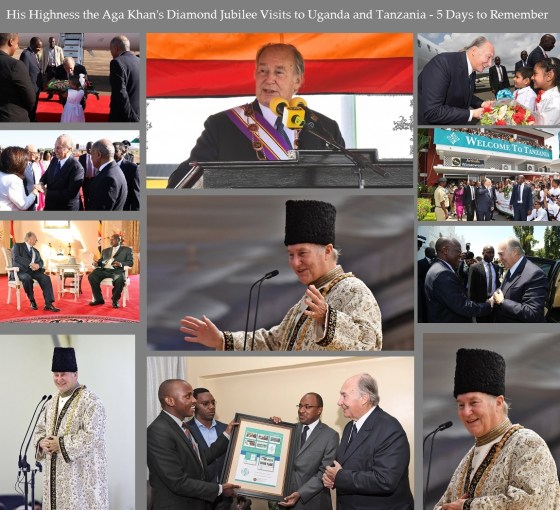
Aga Khan arrives, a photo tour of the Global Centre for Pluralism and more

Aga Khan Ottawa Arrival
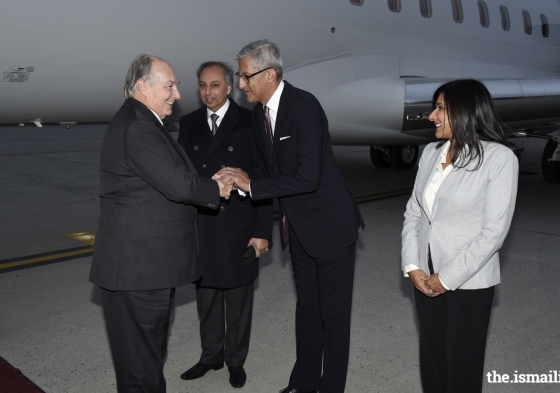
Aga Khan arrival 2017-11-14-moez_visram_moe2382Mawlana Hazar Imam is received at Ottawa International Airport by the Aga Khan Development Network Representative for Canada, Mahmood Eboo (left), the President of the Aga Khan Council for Canada, Malik Talib, centre with Hazar Imam, and Karima Karmali, the Council’s Vice President. Photo: Moez Visram/The Ismaili.

By ABDULMALIK MERCHANT

His Highness the Aga Khan arrived in Ottawa Tuesday, November 14, to begin his week long trip to Canada during which he will meet with his Ismaili followers in Eastern Canada for religious meetings in Toronto and Montreal.

He will however first preside over the inaugural Pluralism Award ceremony at the iconic Delegation of the Ismaili Imamat Building located on Sussex Drive. Readers will be able to watch the ceremony live on Wednesday, November 15, starting at 6 P.M. EST.

A short photographic tour of the Global Centre for Pluralism

His Highness the Aga Khan and His Excellency David Johnston in a jovial mood joke as they unveil the commemorative plaque of the official opening of the International Headquarters of the Global Centre for Pluralism. Photo: Jean-Marc Carisse. Copyright.Flashback: The unveiling of the plaque by His Highness the Aga Khan and the former Governor General of Canada, David Johnston, during the inauguration ceremony of the building on May 16, 2017. The plaque is now embedded in the right wall, just inside the main entrance to the building. Photo: Jean-Marc Carisse.

In preparation for the press conference that was held yesterday (Tuesday, November 14), and this evening’s award ceremony, I decided to visit the Global Centre for Pluralism on Saturday, November 11, the last day the interior of the building was open for viewing by the public (it will reopen again next spring).

A short video presentation highlighting the purpose of the Global Centre for Pluralism. Above Princess Zahra Aga Khan. Note: Light streak is camera reflection. Photo: Malik Merchant/Barakah/Simerg.

An immense transformation has taken place, while still preserving the historic features of the building. The Aga Khan during the official opening of the building on May 16, 2017, noted: “The architects, designers, engineers and so many others who have rehabilitated this wonderful Tudor Gothic building have taken enormous care to respect its distinctive historic character.”

A plaque highlighting the Global Centres connection to the Ottawa River, see following two photos. Photo: Malik Merchant/Barakah/Simerg.

One of the major features that you are drawn to as you enter the building and climb its few steps is the large window that overlooks the Ottawa River. And the Aga Khan provided an insight on the topic too. In the same speech, he said:

“When I first visited this site, I went across the Ottawa River, to see things from the opposite side. From that perspective, I noticed that many buildings on the Ontario side had, over the years, turned their backs to the river. But as we began to plan, another possibility became evident. It seemed increasingly significant to open the site to the water.” This is precisely what the building offers every day to each person who walks in, perhaps with the thought: “Let me see the Ottawa River first.”

Visitors at the Global Centre on Saturday, November 11, 2017. One, far right end, is standing a few metres from the full-height window, and pointing to the Ottawa River, see next photo. Photo: Malik Merchant/Barakah/Simerg.

A beautiful view of the Ottawa River from the Global Centre’s full height window.See photo of plaque, above. Photo: Barakah/Simerg.

pb112064-global-centre-plaque.jpgGlobal Centre for Pluralism was designated as one of 10 CONFEDERATION PAVILIONS, for 2017, the 150th anniversary of Canada. This plaque stands outside the building on Sussex Drive. Photo: Malik Merchant/Barakah/Simerg.

The Global Centre for Pluralism was designated as one of the 10 Confederation Pavilions in the National Capital Region for the year 2017. The Commission identified buildings that had been dormant and then brought back to life. A passport booklet highlighting all  the 10 buildings has been published, as shown in the next image. It encourages everyone to visit the buildings and experience them for their architectural heritage.

Bilingual front cover of the passport booklet, with an insert (English shown) on the Global Centre for Pluralism. Photo: Barakah/Simerg.

The Global Centre has been a National Historic Site since 1990, at which time it was the home of the Canadian War Museum. The PASSPORT booklet explains: “Today a $35 million investment from His Highness the Aga Khan has brought the building back to life as the new home of the Global Centre for Pluralism. This independent research and education centre, created in partnership with the Government of Canada, advances respect for diversity around the world. Become a pluralism champion; visit this heritage landmark, and explore the mission and work of the Centre.”

The historic Sir Arthur Doughty’s fireplace inside the Global Centre’s presentation room. See plaque, next photo, explaining the significance of the fireplace. Photo: Malik Merchant/Barakah/Simerg.

Fireplace plaque. Photo: Malik Merchant/Barakah/Simerg.

Chandelier in the hall by the main entrance. Photo: Malik Merchant/Barakah/Simerg.

A segment of a drawing, “Invincible before daybreak”, by Edward Pien (2007). Photo: Malik Merchant/Barakah/Simerg.

Ceiling in seminar room, with all the high tech gadgets seamlessly incorporated. Photo: Malik Merchant/Barakah/Simerg.

A segment of a painting symbolizing past indigenous injustices. Photo: Malik Merchant/Barakah/Simerg.

Decorative designs on walls and windows symbolizing plurarity. Photo: Malik Merchant/Barakah/Simerg.

Painting (details soon). Photo: Malik Merchant/Barakah/Simerg.

Contemplative garden. The Aga Khan in referring to this exterior space said, “a new garden in the forecourt, a tranquil space for contemplating the past and thinking about the future.” Background building is the Royal Canadian Mint. Photo: Malik Merchant/Barakah/Simerg.

A colourful plaque on wall explaining pluralism in all its aspects. Photo: Malik Merchant/Barakah/Simerg.

The last of the beautiful fall colours shading the Global Centre for Pluralism on November 11, in a delayed autumn foliage. Photo: Malik Merchant/Barakh/Simerg.

~~~~~~

Press Conference with winners of the 2017 Pluralism Award

Pluralism Award Winners with Mcnee and Clarke at press conference(l to r): Daniel Webb of Australia, Alice Wairimu Nderitu of Kenya, Leyner Palacios Asprilla of Colombia – all three are Pluralism Award Winners – Rt. Hon. Joe Clarke and John McNee.

Members of the media were invited on Tuesday morning for an hour long press conference at the Global Centre for Pluralism to meet with the winners of the first Pluralism Award. The opening remarks by the Centre’s Secretary General John McNee were followed by the introduction of each of the 3 winners by the Rt. Hon. Joe Clark, Canada’s former Prime Minister. Mr. Clarke headed the jury that selected the 3 winners and 7 other honourable mentions from over 200 nominations that were submitted in 43 different countries.

Leyner Palacios Asprilla: The humble and courageous activist Leyner Asprilla of Colombia spoke about the the terrible massacre in May 2002 when the Revolutionary Armed Forces of Colombia, the guerilla movement known with the Spanish acronym FARC, launched gas cylinder bombs at a church in Bojayá full of civilians that was being used as a human shield by a paramilitary group. The bombs bursted the church killing 79 people including 48 infants and children. Asprilla survived the massacre but he emerged to find that 32 of his family members had been killed. Instead of becoming despondent over this cruel tragedy, Asprilla went on to found the Committee for the Rights of Victims of Bojayá, giving voice to over 11,000 victims of the conflict that live in the municipality of Bojayá, Chocó. As a result of his fight for social justice, Leyner was asked to represent Bojayá massacre victims during peace negotiations between guerilla forces and the government. One of the results was that FARC publicly acknowledged their role in the 2002 tragedy and, in a private ceremony in a Bojayá church, requested forgiveness.

leyner-palacios-asprilla-1-feature.jpgLeyner Palacios Asprilla. Photo: Barakah/Simerg.

Asprilla organized assemblies with representatives from every community in Bojayá, even the most remote, and encouraged each community to include a female representative. Now, these remote communities have a united voice that takes their demand for human rights to the highest levels of government, and around the world. By bringing communities together in the fight for social justice, Leyner realized how powerful a chorus of diverse voices can be. Today, he continues to demand that Colombia embrace diversity by respecting the rights of all its citizens, particularly its most marginalized.

~~~~~~~~~

OLYMPUS DIGITAL CAMERAAlice Wairimu Nderitu. Photo:Barakah/Simerg.

Alice Wairimu Nderitu: The graceful Alice Nderitu of Kenya has been a tireless peacemaker, conflict mediator and gender equality advocate who believes that differences can be strengths, not weaknesses. She took a seat at the peace table with 100 elders from ten ethnic communities who had never negotiated peace with each other before. This was 18 months after violence erupted in Kenya’s Rift Valley when results of a flawed election were announced which ignited historic grievances over land and deep-seated ethnic tensions. As a child eavesdropping in a tree, Alice was told that as a woman she could not participate in the work of making peace. But Alice took her place at the table with male mediators and led the elders in a dialogue that resulted in the region’s first peaceful elections in 20 years Today, as a lead mediator brokering peace throughout Africa, she has proven again and again that making peace is very much women’s business; however she explained that she found it necessary to integrate attitudes generally reserved for man!

~~~~~~~~~

Daniel WebbDaniel Webb. Photo: Barakah/Simerg.

Daniel Webb: The narrative by the articulate Australian Daniel Webb, a lawyer by training, was forceful. He was severely critical of the Australian Government for its decision to place every refugee arriving in boat in Australia’s offshore detention center on Manus Island, Papua New Guinea. The conditions in these detention centres are inhumane and demoralizing, with numerous reports of violence, medical neglect, suicide, self-harm. When Daniel visited the island he met many refugees and found out that they were inspiring people who could make great contributions to Australian society, if only given the chance to live on the mainland.

To tackle the offshore detention issue in Australia, Daniel has developed an innovative approach that combines legal action, media advocacy, public campaigns and United Nations engagement. Daniel’s work has helped to hold the Australian government accountable for breaches in international law. His work has not stopped there. He realized he needed to change the public perception of people seeking asylum. Australians had to understand that the people detained offshore were not threats, but rather human beings with their own stories, talents and families.

In addition to hearing stories of Leyner, Alice and Daniel, the media was also briefed about seven other individuals and corporations who received honourable mentions.

Press Conference Video

To access press conference, click on image below and then click again where its says “Watch this video on Youtube”

Date posted: November 15, 2017.

Note: Another version of this post, with enlarged photos, can be read at http://www.barakah.com

________________
Ismailis of Eastern Canada and their upcoming holy encounter with their beloved 49th Imam, His Highness the Aga Khan: #2 – Go, run to the ‘Manifest Light’ and ‘Ship of Salvation’ with joy and hope

This is the second article in a special series that we hope will contribute to making the forthcoming mulaqat with Mawlana Shah Karim al-Hussaini Hazar Imam more meaningful and purposeful. If you missed any of the previous post(s), here are the links:

  1. Ismailis of Eastern Canada and their upcoming holy encounter with their beloved 49th Imam, His Highness the Aga Khan: #1 – FORGIVENESS
Aga Khan Eastern Canada Upcoming Visit

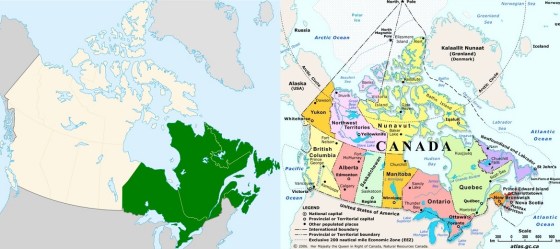
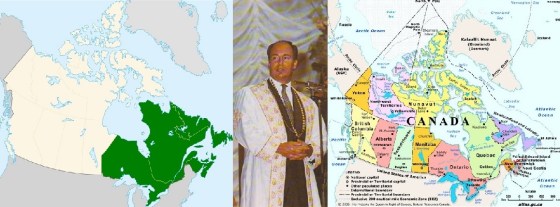
Eastern Canada shown in green on map (left) consists of the provinces of New Brunswick, Newfoundland and Labrador, Nova Scotia, Ontario, Prince Edward Island, and Quebec. The total population is 23,946,177 (2016), and approximately 40-45,000 Ismailis live in these provinces, with the largest concentration in Ontario and Quebec. Credits: Map (left) yy Connormah – Wikipedia, CC BY 1.0, https://commons.wikimedia.org/w/index.php?curid=19857457, and (right) Department of Natural Resources.

1. By Shaykh Khudr, contemporary of 40th Ismaili Imam, Mawlana Nizar

The people of the House of Prophethood
are the Manifestations of Light;

They are that which exists forever
and in what has already elapsed;

They are the ships of salvation for those
who come running to them with hope;

They are the rain abundant in moisture
and their grace is the best of springs;

The essence of their souls is knowledge
from a world beyond the intellects;

Indeed, it is their invitation which rescues
souls from the pit of destruction.

~~~~~~~

2. By Muayyad Al-Shirazi, Fatimid period

“I was taken near the place where from I saw the bright Light of the Prophethood. My eyes were dazzled by the Light. I shed tears of joy and felt as if I was looking at the face of the Prophet of Allah and of the Commander of the Faithful, Hazrat Ali. I prostrated myself before the one who is the fittest person to bow to. I wanted to say something, but I was awe-struck.

“I tried to speak but my tongue refused to move. People asked me to say what I wished to say. I could say nothing. The Imam said, ‘Leave him. Let his fear and awe subside’. After this, I rose. I took the holy hand of the Imam [Mustansir-billah], placed it on my eyes and on my chest and then kissed it. I left the place with immense joy.”

~~~~~~~

3. By Fidai Khurasani

He is always present
a witness with his followers;

but who has seen his beauty
except the blessed?

He who is the cupbearer of
the fount of paradise

is aware altogether of
the hearts of his followers

He is the Imam of the time
the guide and comforter

the protector of his followers
whether young or old

Like the sun in the sky
he is manifest in the world

but the blind bat cannot see
his luminous face

~~~~~~~

4. By Imam Mustansir-Billah, 32nd Ismaili Imam

“All believers are urged to come into the presence of the Imam and to see him with their own eyes. Thus, the esoteric (batini) vision, realized through pious works and the constant remembrance of God during the nightly vigil, as well as the exoteric (zaheri) vision, achieved by travelling to the Imam’s residence and beholding the gateway of God’s mercy, becomes the ultimate purpose of human life.

“Piety should be for the purpose of recognizing and beholding God, which is achieved through the recognition and vision of the Imam of one’s time.”

Date posted: November 6, 2017.

______________

Related: Ismailis of Eastern Canada and their upcoming holy encounter with their beloved 49th Imam, His Highness the Aga Khan: #1 – Forgiveness

We welcome your feedback. Please click on Leave a comment.

Ismailis of Eastern Canada and their upcoming holy encounter with their beloved 49th Imam, His Highness the Aga Khan: #1 – Forgiveness

LETTER FROM PUBLISHER

Eastern Canada Maps

Eastern Canada shown in green on map on left consists of the provinces of New Brunswick, Newfoundland and Labrador, Nova Scotia, Ontario, Prince Edward Island, and Quebec. The total population is 23,946,177 (2016), and approximately 40-45,000 Ismailis live in these provinces.  Map (left) Connormah – Wikipedia, CC BY 1.0, https://commons.wikimedia.org/w/index.php?curid=19857457, and (right)  Natural Resources, Canada.

Lets us make the visit of Mawlana Hazar Imam a fantastic and happy one for us and our families, particularly our parents and children


By ABDULMALIK J. MERCHANT

His Highness the Aga Khan, or Mawlana Hazar Imam as he is affectionately and respectfully addressed by his Ismaili Muslim community, will be meeting with tens of thousands of his followers living in Eastern Canada — an area stretching from Windsor in Ontario to Montreal in Quebec to Halifax and beyond in the Maritime Provinces — for religious gatherings in Toronto and Montreal from November 17 – 21, 2017.

The Ismailis use the term didar (lit. to have a glimpse of the Imam of the Time) for these intimate religious mulaqats (meetings or encounters). The didar with the Imam can be on an individual basis, in small or large settings or in ceremonial gatherings that are referred to as darbars. Most recently, His Highness visited the Ismailis in Uganda and Tanzania and graced them with darbars as part of his Diamond Jubilee celebrations.

Ismailis throughout their rich and eventful 1400 year history, from the time of the first Imam, Hazrat Ali, have sought to articulate their experiences of the didar  of their Imams through oral expressions of ginans, qasidas, poetry and songs as well wonderful narratives. These varied expressions have become sources of inspiration for Ismailis leading up to the moment of the didar.

Today, we commence the publication of a series consisting of short articles that we hope will contribute to making the mulaqat with Mawlana Shah Karim more meaningful and purposeful. Our material will center on the concept of Imamat as articulated in Ismaili and related Shia literature and we will also include stories and accounts of didars well as supplications from the oral traditions and other pertinent material.

We begin the series with what we feel is an important ethic that will help us benefit during Mawlana Hazar Imam’s coming holy visit: FORGIVENESS.

Let bygones be bygones: “If people have harmed you, forget and forgive…”


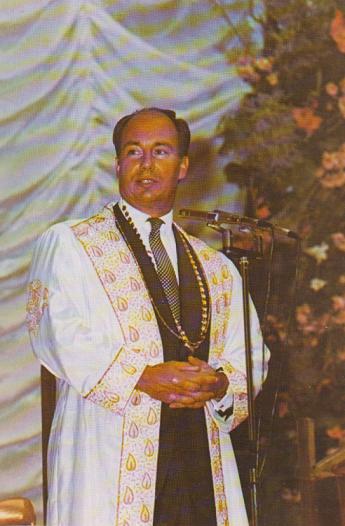
Mawlana Hazar Imam pictured at the Olympia Hall, London, during his weeklong visit to the United Kingdom Jamat in September 1979. Photo: Jehangir Merchant Collection.

The spirit of forgiveness is an ethic that Mawlana Hazar Imam, His Highness the Aga Khan, has articulated many times since his Imamat. In 1969, he said in Mumbai:

“As the world gets smaller, it is fundamental that people should work together and not against each other, and try to be a little bit more generous than you have been in the past. If people have made mistakes, forgive them their mistakes. If people have harmed you, forget and forgive. Do not hold grudges. Do not turn around and say, ‘he hurt me yesterday, so I will hurt him today’. This is not the spirit of Islam, and it is not as I understand that our faith should be practiced, and this is fundamental.”

The act of apologizing when one thinks that one was not at fault, and the act of exercising forgiveness when one feels that they have been wronged, are probably the most difficult to struggle with.

However, each one of us has to realize that when there are conflicts, especially within a family, the burden of disunity is the greatest on parents because their love for all their children is absolute. Now consider that in the context of Hazar Imam, who addresses all Ismailis as his spiritual children!

According to a popular tradition, when the Prophet Muhammad asked Angel Gabriel what was meant by the Qur’anic verse (7:199),

“Keep to forgiveness (O Muhammad), and enjoin kindness, and turn away from the ignorant”

the Angel replied:

“It is God’s command to forgive those who have wronged you, to give to those who have deprived you, and to tie relations with those who severe theirs with you.”

Another tradition of the Prophet says:

“Show mercy and you shall be shown mercy. Forgive others and you shall be forgiven by God.”

When Mawlana Hazar Imam received the Adrienne Clarkson prize for Global Citizenship he shortlisted a good measure of forgiveness, along with an  abundant capacity for compromise, a little sense of patience and humility, as strengths for an aspiring global citizen. Accomplishing these would mean hard work, he said, “but no work would be more important.”

In a piece “Why Forgive” Fatima Ariadne in her blog Decoding Eden says that “forgiveness is about giving yourself permission to let go of the past….and giving that inner space in your heart for something more positive. We forgive because we deserve peace.”

Through our kind gesture of forgiving, we are also raising the consciousness of  this fundamental Islamic ethic in the hearts and minds of  the persons we are seeking to forgive. Speaking in Moscow in 1995 during his first physical presence among his community in Central Asia, Mawlana Hazar Imam said that “forgiving those who may have made a mistake or harmed you, will give them respect for your behaviour, and it will encourage them to follow your behaviour.”

Of course, Mawlana Hazar Imam was addressing an audience that had passed through a period of civil strife in Tajikistan. However, this principle is as fundamentally important in our daily attitudes to our families and friends.

Louis B. Smedes, professor emiritus of ethics and theology at Fuller Seminary in Pasadens, California and author of book Forgive and Forget wrote that, “Forgiving does not erase the bitter past. A healed memory is not a deleted memory. Instead, forgiving what we cannot forget creates a new way to remember. We change the memory of our past into a hope for our future.” He further noted that “You will know that forgiveness has begun when you recall those who hurt you and feel the power to wish them well.”

The Qur’anic ayat quoted earlier “tie relations with those who severe theirs with you” imposes upon us  a moral obligation to forgive.

So as we approach the important day of the holy encounter with Hazar Imam it would be most appropriate for us to reach out to our friends and family members with whom we are seriously at odds and say, “Let unpleasant things that have happened in the past be forgotten.”

That act of courage would be in the truest and finest tradition of our faith. With that kind spirit in our heart, we will truly lavish in the love, grace, and blessing of Mawlana Hazar Imam when he is with us in a few days. Forgiveness will lead to greater unity within families and the jamat.

It is within the framework of united families and Jamats that Mawlana Hazar Imam wishes us to attain spiritual as well as worldly success and happiness.

Date posted: November 4, 2017.

________________

We welcome your feedback. Please click on Leave a comment.

His Highness the Aga Khan: What we are now reading @Barakah.com

Please click on photos or Barakah

Aga Khan receives Lifetime Achievement Award from Asia Society.

~~~~~

140 years: From birth of Aga Khan III to Diamond Jubilee of Aga Khan IV.

~~~~~

Aga Khan 1979 Asia Society Speech: “Building City of God and Man”

~~~~~~

AGA KHAN’S FORTHCOMING VISIT TO EASTERN CANADA

GOD’S KINGDOM: AGA KHAN ON PATRIOTISM

AGA KHAN’S VIEW OF THE WORLD

A LONG ASSOCIATION: AGA KHAN AND JOHNSTON

AGA KHAN IN EAST AFRICA: 5 DAYS TO REMEMBER

1946 JUBILEE: ISMAILI WOMEN OF TIME REMINISCE

A PEARL FOR MONARCH OF FAITH AND PRACTICALITY

Date posted: November 2, 2017.
__________

Mawlana Hazar Imam, His Highness the Aga Khan, to Bless Ismailis in Eastern Canada with Didar in November 2017

2017 Aga Khan Tanzania Darbar zr1_web_4823

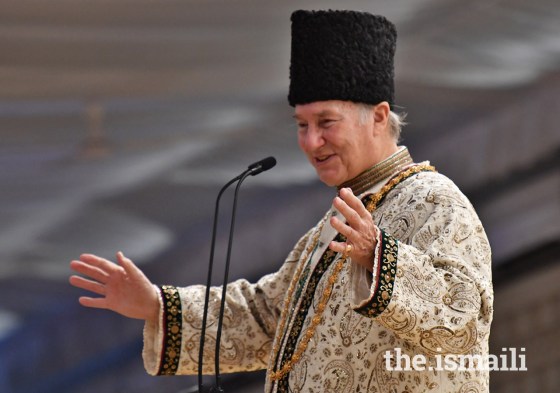
His Highness the Aga Khan, Mawlana Hazar Imam, at the Dar es Salaam Darbar in October 2017. He will grace the Eastern Canadian Ismailis with his didar in November 2017.

Ismailis gasp in delight and shed tears of joy at announcement of Mawlana Hazar Imam’s visit to Canada in November 2017

By Malik Merchant, Editor

(Note: We will have regular updates leading upto the visit; here are the latest updates for this blog):


Ismailis in Eastern Canada will, inshallah, be graced with the holy visit of their beloved 49th Imam, His Highness the Aga Khan, during the month of November 2017. The announcement of the visit by the Ismaili Leadership International Forum (LIF) came as a big surprise, and thousands who were present in Jamatkhanas across Canada on Friday, October 27,  gasped with delight when the news of the visit was read out. At the Ismaili Centre in Toronto, the Jamat was informed about the visit  by the Chairman of the LIF, Mahmoud Eboo, who is also the representative of the Aga Khan Development Network (AKDN) in Canada.

The exact dates and details of the visit were not announced on Friday. However, an update on Saturday October 28th, stated that Mawlana Hazar Imam’s mulaqats with the Eastern Canada Jamat, which will include religious work, will take place in Toronto for the Ontario region and in Montreal for the Quebec and Maritime Provinces.  Although located in Ontario, the Jamat in Ottawa, Canada’s capital, will join hands with the Jamats of the Quebec and Maritime Provinces in Montreal.

This will be the third visit by the Aga Khan to his followers during his Diamond Jubilee year that commenced on July 11, 2017, when he completed 60 years of his reign. Earlier in October, he made official visits to Uganda and Tanzania at the invitation of the two governments. During the five day tour that began on October 8th, Mawlana Hazar Imam graced the Ismailis with momentous Darbars (lit. a court or audience chamber where kings had formal or informal meetings) in Kampala and Dar es Salaam.

On this most auspicious and joyous news of Mawlana Hazar Imam’s forthcoming visit to Canada, we convey our heartiest felicitations to Ismailis in Canada and around the world and offer a humble supplication with the following words taken from a Ginan by Pir Hasan Kabirdin (14th century).

Transliteration

Eji, Aash Karine Ya Ali* hun tere dar ubhi,
Kar jodine em mangu Ya Shah;
Dejo didar tusi mahavar datar Shah,
Hama tere charane lagu.

Translation

With hope O Ali I stand at Thy door,
With palms joined I sincerely beg of Thee;
Bless me with Thy Holy Didar, O Great Lord and Benefactor!
At Thy Feet I fall to prostrate.

*Ismaili doctrine emphasizes the principle of the Unity of Imamat under the superficial diversity exhibited by each Imam of the Time. It is in this sense that the Ismailis believe that Imam is the same irrespective of his own age or the time he lives in. Thus, the name of the first Imam, Hazrat Ali, is commonly invoked for each Imam of the Time.

The proverbial valour and exemplary statesmanship of Imam Mawla Murtaza Ali, the encyclopaedic erudition of Imam Ja’far as-Sadiq, the extraordinary intellectual brilliance of Imam al-Hakim bi Amrillah, the administrative ability of Imam Mustansir Billah (during the first half of his Khilafat), the political acumen of Imam Sultan Mahomed Shah, Aga Khan III (he defied geography and created history), the organizing genius of the present Imam, Mawlana Shah Karim al-Husayni, are only some of the more spectacular characteristics exhibited by the Imam of the Time in accordance with the exigencies of the situations facing him.

Date posted: October 27, 2017.
Last updated: October 29, 2017.

Related updated post: Ottawa Celebrates Mawlana Hazar Imam’s Forthcoming Visit to Canada, @Barakah.com

_____________

We invite our readers to download Simerg’s special PDF publication Imamat and Didar Series.

We welcome your feedback. Please click LEAVE A COMMENT

Building God’s Kingdom: The Aga Khan, Imam of the Atomic Age, on Patriotism and Community by Andrew Kosorok

PLEASE CLICK: “Muslims are charged with building God’s Kingdom on earth (one of the many implications of the term “vice-regent” used so often in the Qur’an to describe the role of human beings), as are Christians. This refers not to the forced institution of a theocracy, but to the active spreading of Divine ideals through our own individual actions….I profoundly appreciate the Aga Khan’s comments regarding our roles and responsibility in the never-ending process of building a better future — for ourselves, our families, our physical world, and our future spiritual well-being: “By the way you conduct your daily lives, by the compassion you show to your fellow men and women, and above all by your faith in God” (Aga Khan, 11 March 1958, Mumbai, India).” — READ MORE BY ANDREW KOSOROK

“The closer you come, the more you will see him.” A digital portrait of His Highness the Aga Khan by Akber Kanji. The portrait is composed of several hundred thumbnails representing a cross-section of events during the Aga Khan’s Imamat. Please click on image for Andrew Kosorok’s essay. Image: Akber Kanji. Copyright.

_______________

Reflections on the Aga Khan by an Esteemed African Mwalimu

A PEARL FOR A MONARCH OF FAITH AND PRACTICALITY: We may read the daily paper, watch a TV programme, resort to a banking, insurance or other financial service, attend school or receive medical care. Hardly are we aware that most of these times we are benefiting from an Aga Khan enterprise. Even more importantly, few of us in East Africa, especially in the urban areas, ever go through the day without interacting with “subjects” of the Aga Khan, at work, at school or at play. This already hints at the sovereignty, the virtual ‘Head-of-State’ status, of the Aga Khan. But the story is even more intricate and fascinating, as I found out when I started looking around a little. CLICK TO READ PROFESSOR AUSTIN BUKENYA’S COMPLETE ARTICLE

Please click on photo to read Mwalimu Bukenya’s essay on the Aga Khan.

Date posted: October 18, 2017.

_________________________

Aga Khan at Uganda’s 55th Uhuru Celebrations

AUDIO OF REMARKS BY HIS HIGHNESS THE AGA KHAN UPON RECEIVING UGANDA’S HIGHEST HONOUR


~~~~~~~~~~

COVERAGE

~~~~~~~~~~

PHOTOS OF MAWLANA HAZAR IMAM’S ARRIVAL AND FLASHBACK: THE AGA KHAN AND UGANDA

PLEASE CLICK: His Highness the Aga Khan arrives in Uganda for 55th Uhuru Day celebrations and to grace Ismailis with Darbar

Please click on image for photos and story as well as special feature The Aga Khan and Uganda