Simerg is an independent initiative dedicated to Ismaili Muslims, the Aga Khan — their Hereditary Imam — and the Ismaili Imamat, and Islam in general through literary readings, photo essays and artistic expressions
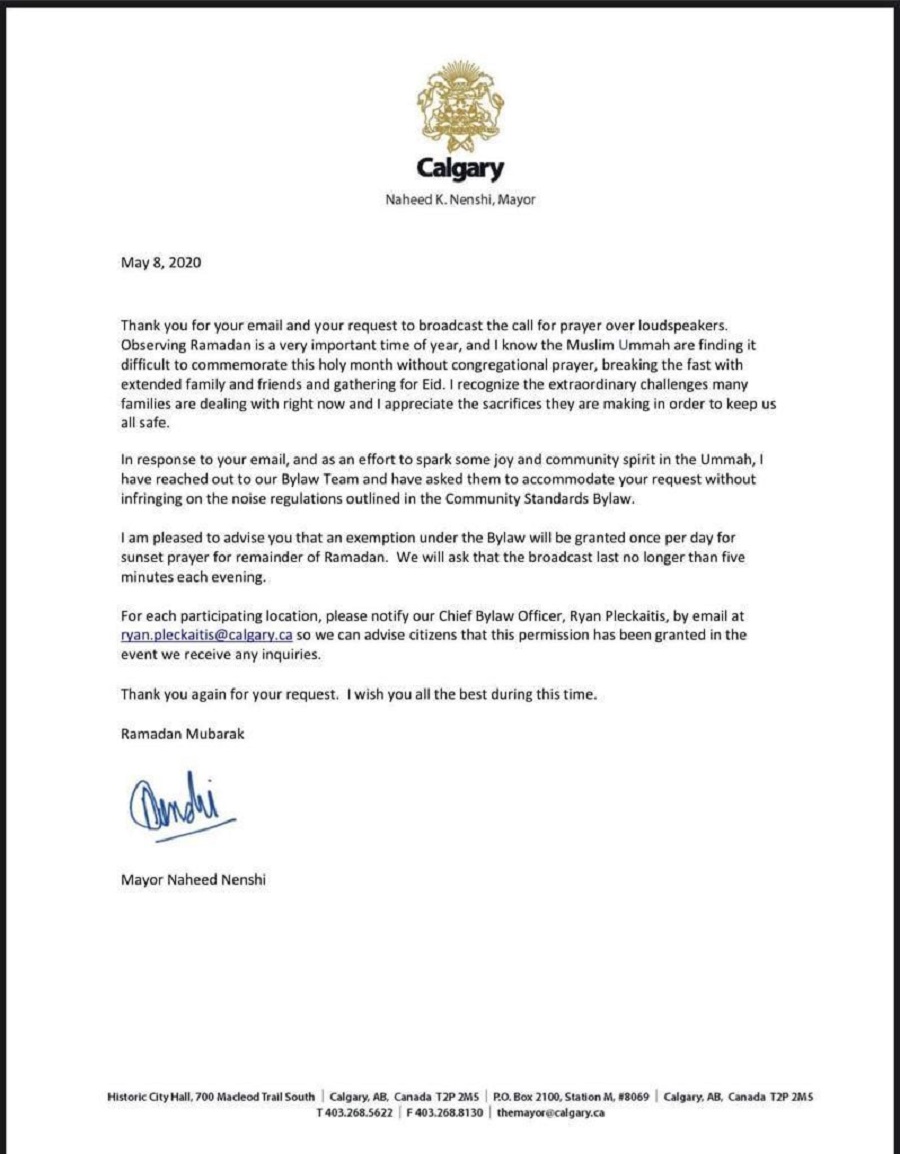
CBC reported that history was made in Windsor, Ontario, when the Muslim Adhan (call to prayer) was allowed to be recited over a loudspeaker on the roof of the city’s mosque during the remaining days of Ramadhan. Now the beautiful and heart warming Islamic call to prayer will also be heard at participating Calgary mosques once a day during the sunset prayer.
The following is Mayor Naheed Nenshi’s response to a request from the Muslim community:
Part of Calgary Mayor Naheed Nenshi’s letter: “In response to your email, and as an effort to spark some joy and community spirit in the Ummah, I have reached out to our Bylaw Team….I am pleased to advise you that an exemption under the Bylaw will be granted once per day for sunset prayer for reminder of Ramadan…”
Editor’s Note: Calling Calgarians — have you taken a very good video recording of the recitation of the Adhan in Calgary? If so, please submit it to Malik Merchant at email Simerg@aol.com, Subject: Adhan recording in Calgary. We will review your submission, and publish some of very best ones from across the city on this website. Please specify mosque location, date and time of the Adhan.
Date posted: May 10, 2020. Last updated: May 11, 2020.
Before departing this website please take a moment to review Simerg’s Table of Contents for links to hundreds of thought provoking pieces on a vast array of subjects including faith and culture, history and philosophy, and arts and letters to name a few.
_________________________
We welcome feedback/letters from our readers. Please use the feedback box which appears below. If you don’t see the box please click Leave a comment. Your comment may be edited for length and brevity, and is subject to moderation. We are unable to acknowledge unpublished letters.
“I should like to assure you, my Islamic friends, that under the American Constitution, under American tradition, and in American hearts, this center, this place of worship, is just as welcome as could be a similar edifice of any other religion” — President Eisenhower, June 28, 1957, Islamic Center, Washington D.C.
In an on-line story dated February 3, 2016, TIME magazine informed its readers that President Barrack Obama would be visiting the Islamic Society Mosque in Baltimore, Maryland, thus setting a milestone for his presidency. The reporter, Sarah Begley, reminded readers that the President was far from being the first American President to do so.
Story continues after photo
Islamic Center, Washington, D.C. Conceived in 1944, the site for the mosque was purchased in 1946, and the cornerstone was laid on January 11, 1949. The mosque was designed by Italian architect Mario Rossi and completed in 1954.Photo: Carol M. Highsmith Archive collection / US Library of Congress.
The honour, she said, belonged to President Dwight D. Eisenhower, who served as the 34th President of the United States from 1953 to 1961. He opened the Islamic Center of Washington in the city’s Embassy Row district on June 28, 1957. First lady Mamie Eisenhower accompanied him to the dedication ceremony.
In his speech, President Eisenhower emphasized the importance of religious freedom in the USA, and highlighted the “Muslim genius” that has cultivated some of history’s most important inventions, discoveries, art, literature and thought now considered indispensable to modern civilization.
President Dwight D. Eisenhower’s Remarks at the Opening of the Islamic Center in Washington D.C. on June 28, 1957
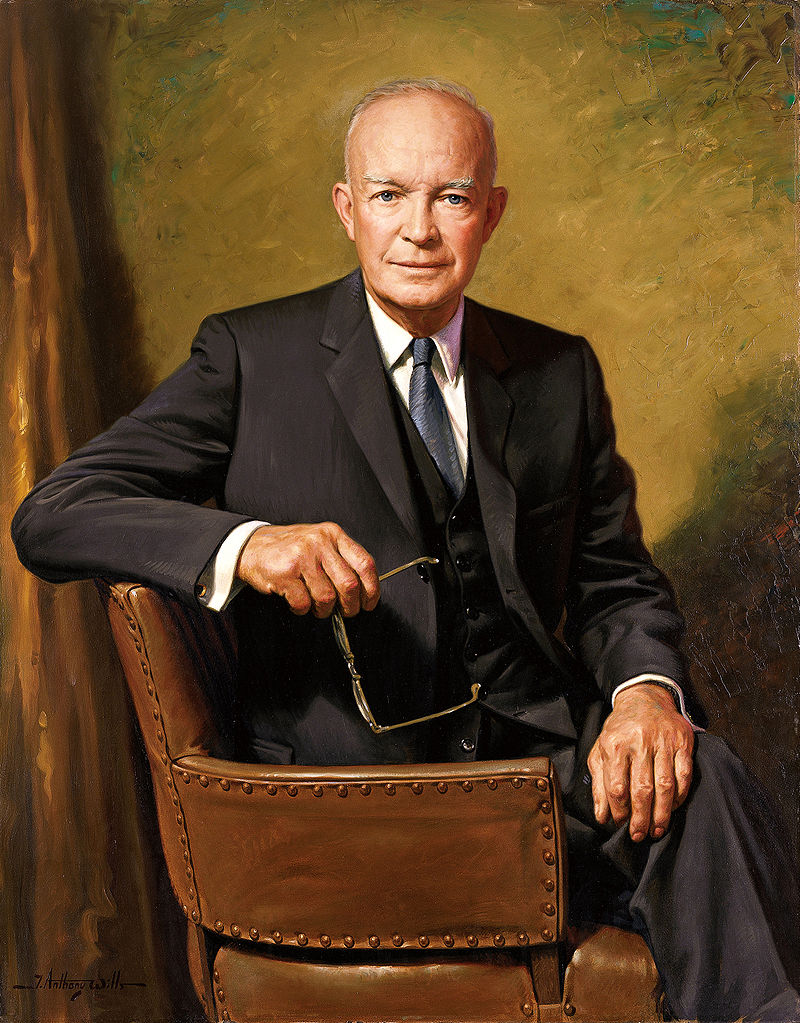
34th US President Dwight D. Eisenhower. White House portrait painted by James Anthony Wills.
By DWIGHT D. EISENHOWER (see profile, below)
[For a photo of the President delivering the speech, please click Politicio — ed.]
Mr. Ambassador, Dr. Bisar, Governors of the Islamic Center, and distinguished guests:
It is a privilege to take part in this ceremony of dedication. Meeting with you now, in front of one of the newest and most beautiful buildings in Washington, it is fitting that we rededicate ourselves to the peaceful progress of all men under one God.
And I should like to assure you, my Islamic friends, that under the American Constitution, under American tradition, and in American hearts, this center, this place of worship, is just as welcome as could be a similar edifice of any other religion. Indeed, America would fight with her whole strength for your right to have here your own church and worship according to your own conscience. This concept is indeed a part of America, and without that concept we would be something else than what we are.
The countries which have sponsored and built this Islamic Center have for centuries contributed to the building of civilization. With their traditions of learning and rich culture, the countries of Islam have added much to the advancement of mankind. Inspired by a sense of brotherhood, common to our innermost beliefs, we can here together reaffirm our determination to secure the foundation of a just and lasting peace.
Our country has long enjoyed a strong bond of friendship with the Islamic nations and, like all healthy relationships, this relationship must be mutually beneficial.
Civilization owes to the Islamic world some of its most important tools and achievements. From fundamental discoveries in medicine to the highest planes of astronomy, the Muslim genius has added much to the culture of all peoples. That genius has been a wellspring of science, commerce and the arts, and has provided for all of us many lessons in courage and in hospitality.
This fruitful relationship between peoples, going far back into history, becomes more important each year. Today, thousands of Americans, both private individuals and governmental officials, live and work — and grow in understanding — among the peoples of Islam.
At the same time, in our country, many from the Muslim lands — students, businessmen and representatives of states — are enjoying the benefits of experience among the people of this country. From these many personal contacts, here and abroad, I firmly believe that there will be a broader understanding and a deeper respect for the worth of all men; and a stronger resolution to work together for the good of mankind.
As I stand beneath these graceful arches, surrounded on every side by friends from far and near, I am convinced that our common goals are both right and promising. Faithful to the demands of justice and of brotherhood, each working according to the lights of his own conscience, our world must advance along the paths of peace.
Thank you very much.
Date posted: April 28, 2020.
Before departing this website please take a moment to review Simerg’s Table of Contents for links to hundreds of thought provoking pieces on a vast array of subjects including faith and culture, history and philosophy, and arts and letters to name a few.
____________________
Pakistan Prime Minister Huseyn Suhrawardy being received at the White House by President Dwight Eisenhower in 1957. Photo: Thomas J. O’Halloran / US Library of Congress.
Dwight D. Eisenhower (1890-1969) served as the thirty-fourth president of the United States, governing from 1953 to 1961, after a military career culminating in his role as Supreme Commander of Allied Forces in Europe during World War II. Eisenhower’s presidency was largely occupied by foreign affairs, most notably the Korean War, the expansion of U.S. involvement in the Middle East after the Suez Crisis, and the general deepening of the Cold War. Even domestically, many of Eisenhower’s achievements were shaped by national security, including the construction of the interstate highway system. Eisenhower joined the Presbyterian Church as an adult and played a role in the addition of “In God We Trust” on American currency. Eisenhower famously stated that “our government has no sense unless it is founded in a deeply felt religious faith, and I don’t care what it is.”
We welcome feedback/letters from our readers. Please use the feedback box which appears below. If you don’t see the box please click Leave a comment. Your comment may be edited for length and brevity, and is subject to moderation. We are unable to acknowledge unpublished letters.
Noteworthy book: “This Day in Presidential History,” by Paul Brandus. For each of the 365 days of the year, Brandus offers fascinating facts, historical anecdotes, and pithy quotations from and about all the presidents of the United States, from George Washington to Donald Trump.
The following message in English and all the translations that follow are reproduced from the The Ismaili, the official website of the community. After reading the message, please scroll to the bottom of this post to read our supplication to Mawlana Hazar Imam — it follows the Urdu translation.
Message from Mawlana Hazar Imam, His Highness the Aga Khan, on Covid-19 (English)
My beloved spiritual children,
My Jamat is aware that the Covid-19 virus has created a global crisis that is also affecting the Jamat worldwide. As Imam-of-the-Time, I have recommended the Jamati and AKDN institutions and agencies to closely monitor the impact of this pandemic, and to extend support and assistance to the Jamat and the communities in which they live.
The Covid-19 virus is highly contagious, and every day we are witnessing the damage it is inflicting on human lives and societies. In facing this threat, it is very important that all members of my Jamat should take personal responsibility for exercising all possible steps to protect their own good health, safety and wellbeing, and that of their family.
Among the most critical of the measures recommended by all government and health agencies are the maintenance of the best standards of personal hygiene, and practising the notion of physical distancing. While not easy, physical distancing is essential.
It is my wish that my murids, and all those among whom they live, should follow these as well as all other guidelines and recommendations that the government and health authorities issue.
It is my hope and prayer that, in due course, work on producing vaccines and other forms of medicine will yield positive results, and that we will see a gradual return to normal life in all societies.
As we focus now on overcoming the present challenges, the Jamat and all my institutions should plan to build for the future from a position of strength and wisdom.
I send my most affectionate paternal, maternal loving blessings for the good health, safety, and well-being of all my murids, with best loving blessings for mushkil-asan.
My Jamat worldwide is constantly in my thoughts and in my prayers.
Yours affectionately,
Aga Khan
___________________
Message from Mawlana Hazar Imam, His Highness the Aga Khan, on Covid-19 (French)
Mes Chers Enfants Spirituels,
Mon Jamat est conscient du fait que le virus Covid-19 a déclenché une crise globale qui affecte également le Jamat à travers le monde. En tant qu’Imam-du-Temps, j’ai recommandé aux institutions et agences Jamati et de l’AKDN de suivre de près l’impact de cette pandémie, et d’offrir aide et assistance au Jamat et aux communautés dans lesquelles ils vivent.
Le virus du Covid-19 est hautement contagieux, et chaque jour nous sommes témoins des dégâts qu’il cause sur les vies humaines et les sociétés. Face à cette menace, il est très important que tous les membres de mon Jamat s’engagent personnellement à prendre toutes les mesures possibles pour protéger leur propre santé, sécurité et bien-être, ainsi que ceux de leur famille.
Parmi les plus importantes des mesures recommandées par tous les gouvernements et agences de santé figurent le maintien des meilleurs standards d’hygiène personnelle, et le respect de la notion de distanciation sociale. Bien qu’elle ne soit pas facile, la distanciation sociale est essentielle.
C’est mon souhait que mes murids, et tous ceux parmi lesquels ils vivent, suivent ces mesures ainsi que toutes les autres directives et recommandations que le gouvernement et les autorités sanitaires émettent.
C’est mon espoir et ma prière que, en temps voulu, le travail mené pour produire des vaccins et d’autres formes de remèdes va produire des résultats positifs, et que nous verrons un retour graduel à la vie normale dans toutes les sociétés.
Alors que nous nous concentrons en ce moment à surmonter les défis actuels, le Jamat et toutes mes institutions devraient se préparer à construire pour l’avenir à partir d’une base solide et avec sagesse.
J’envoie mes plus affectueuses tendres bénédictions paternelles et maternelles pour la bonne santé, la sécurité, et le bien-être de tous mes murids, avec mes meilleures tendres bénédictions pour mushkil-asan.
Mon Jamat à travers le monde est constamment dans mes pensées et dans mes prières.
Affectueusement,
Aga Khan
___________________
Message from Mawlana Hazar Imam, His Highness the Aga Khan, on Covid-19 (Portuguese)
Meus amados filhos espirituais,
O meu Jamat está ciente de que o vírus Covid-19 criou uma crise global que está também a afetar o Jamat em todo o mundo. Como Imam do Tempo, recomendei às instituições e agências Jamati e da AKDN que monitorizassem de perto o impacto desta pandemia e prestassem apoio e assistência ao Jamat e às comunidades onde estes vivem.
O vírus Covid-19 é altamente contagioso e todos os dias assistimos aos danos que este está a infligir tanto nas vidas humanas como nas sociedades. Ao enfrentar esta ameaça, é muito importante que todos os membros do meu Jamat assumam a responsabilidade pessoal de colocar em prática todas as medidas possíveis para proteger a sua própria saúde, segurança e bem-estar, bem como as da sua família.
Entre as medidas mais críticas recomendadas por todas as agências governamentais e de saúde estão a manutenção dos melhores padrões de higiene pessoal e a prática da noção de distanciamento físico. Embora não seja fácil, o distanciamento físico é essencial.
É meu desejo que os meus murids, e todos aqueles entre os quais vivem, sigam estas e todas as outras orientações e recomendações que o governo e as autoridades de saúde emitem.
É minha esperança e oração que, a seu tempo, o trabalho na produção de vacinas e outras formas de medicina produzam resultados positivos e que se assista a um regresso gradual à vida normal em todas as sociedades.
Enquanto centramos as nossas atenções em ultrapassar os desafios atuais, o Jamat e todas as minhas instituições devem planear a construção para o futuro a partir de uma posição de força e sabedoria.
Envio as minha melhores bênçãos paternais e maternais para boa saúde, segurança e bem-estar de todos os meus murids, com as minhas melhores bênçãos para mushkil-asan.
O meu Jamat em todo o mundo está constantemente nos meus pensamentos e nas minhas orações.
Afetuosamente
Aga Khan
___________________
Message from Mawlana Hazar Imam, His Highness the Aga Khan, on Covid-19 (Farsi)
Message from Mawlana Hazar Imam (Farsi)
___________________
Message from Mawlana Hazar Imam, His Highness the Aga Khan, on Covid-19 (Dari)
Message from Mawlana Hazar Imam (Dari)
___________________
Message from Mawlana Hazar Imam, His Highness the Aga Khan, on Covid-19 (Arabic)
Message from Mawlana Hazar Imam (Arabic)
___________________
Message from Mawlana Hazar Imam, His Highness the Aga Khan, on Covid-19 (Gujarati)
Message from Mawlana Hazar Imam (Gujarati)
___________________
Message from Mawlana Hazar Imam, His Highness the Aga Khan, on Covid-19 (Russian)
Message from Mawlana Hazar Imam (Russian)
_______________________
Message from Mawlana Hazar Imam, His Highness the Aga Khan, on Covid-19 (Tajik)
Message from Mawlana Hazar Imam (Tajik)
___________________
Message from Mawlana Hazar Imam, His Highness the Aga Khan, on Covid-19 (Urdu)
Message from Mawlana Hazar Imam (Urdu)
___________________
Shukrana and Supplication to Mawlana Hazar Imam, His Highness the Aga Khan, for Guidance on Covid-19
We submit our humble gratitude to our beloved Mawlana Hazar Imam for his guidance on Covid-19 as well as his blessings to the world wide Jamat for mushkil-asan (protection from difficulty).
We submit the following supplications from verses 1 and 5 of Pir Hasan Kabirdin’s Ginan Sahebe Farman Lakhi Mokalea:
O brother! Listen, My Lord Ali has written and sent a Farman. The beloved Lord has remembered this servant today with kindness in his heart
O my Lord Ali! Listen! Remove all my sorrows and troubles. O Lord Ali, the great king! O Lord of infinity! Fulfill all my wishes.
Date posted: April 24, 2020.
_______________
Before departing this website please take a moment to review Simerg’s Table of Contents for links to hundreds of thought provoking pieces on a vast array of subjects including faith and culture, history and philosophy, and arts and letters to name a few.
We welcome feedback/letters from our readers. Please use the feedback box which appears below. If you don’t see the box please click Leave a comment. Your comment may be edited for length and brevity, and is subject to moderation. We are unable to acknowledge unpublished letters.
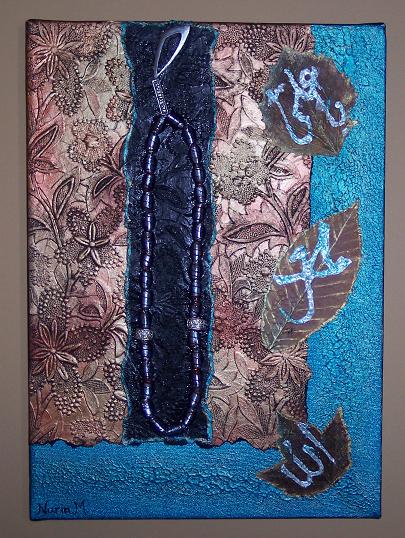
‘The Nature of Prayer’ is a 14″ x 10″ mixed media acrylic painting on canvas. Secured on the canvas with gesso, a strong glue, are a handmade tasbih (prayer beads), and 3 dried leaves bearing the Arabic inscriptions reading from bottom to top, Allah, Muhammad and Ali. The whole piece represents keeping the memory of Allah, and making sure that every day there is in our minds the presence of our faith in our hearts and souls which in itself is a prayer, hence the title of the painting ‘The Nature of Prayer’. This work was Nurin Merchant’s contribution for Colours of Love, an art and culture initiative by the Ismaili Council for Canada in 2008 during the Golden Jubilee Celebrations of Mawlana Hazar Imam, His Highness the Aga Khan.
By DR. V. A. LALANI with additional material by MALIK MERCHANT
In response to a recent piece on the impact of Jamatkhana closures, we were pleased to receive a very inspiring recommendation from Omar Kassam of Vancouver who suggested that we slowly recite the Surah Al-Fatihah while we spend 20 seconds thoroughly washing our hands – the #1 health guideline during the current COVID-19 pandemic. Such is the nature of prayer –- that we can seek out small moments of 1 second, 5 seconds or 20 seconds to the remembrance of God, to exalt Him, and to seek His help. The Surah is regarded as one of greatest Surahs in the Holy Qur’an, along with Surah Al-Ikhlas. The wisdom and prayers contained in this small seven verse Surah are absolutely remarkable.
There are many other opportune moments that we have throughout the day, and Mawlana Hazar Imam has often recommended to us to carry the tasbih with us –- in our pockets or handbags –- and seek out moments of happiness by calling on the name of Allah, Hazrat Ali, Prophet Muhammad or the names of the Imams. He has also asked us to invoke these names during any difficulty we are facing.
What is tasbih and what are its origins in Islam?
The Arabic word tasbih means to exalt God, praise God or to pray to God. It is supererogatory prayer, that is, an act which is considered to be good and beyond the call of duty, and not something that is strictly required.
The word tasbih is also given to the beads strung together in the form of a circle which are used in the process of praying.
The tasbih consists of a string of beads that is looped into a circle. The two ends are passed through a larger, decorative bead where they are tied or woven into a knot. This is the starting point of a tasbih.
Almost all the religions in the world today possess some form of this object which differ a little in size, number and arrangement of beads. Calling it by different names (for example, rosary, in Christianity), they make use of it for the purpose of reciting the name of the deity in whom they believe.
Although tasbih is a constant companion and an object of daily use by the believers, its origin, development and purpose has remained so obscure to most of us that I shall discuss some of the details of this small, but important object.
“Verily in the remembrance of Allah do hearts find rest!” — Holy Qur’an, 13:28
It is said that the first tasbih (supererogatory prayer) was given by the Prophet Muhammad (S.A.S.) to his beloved daughter Hazrat Bibi Fatima (A.S.), the wife of Hazrat Mawla Murtaza Ali (A.S.). This comprise of the praises of Allah, namely, Allahu Akbar (Allah is Great), Subhan Allah (Glory be to Allah) and Al-Hamdu-lillah (All praise is due to Allah). Each of these was to be recited thirty-three times in succession. This is known as Tasbih-e Bibi Fatima.
In the absence of any circular object like the present day tasbih, it is said that Bibi Fatima used to recite these praises taking help of thirty-three stones of dates or thirty-three pebbles.
Later on, as it was found to be very inconvenient to keep loose stones or pebbles, or have to collect them when needed, it was probably decided to string together thirty-three stones of dates or some such object to make a rosary giving it a circular appearance. At a later period, at the point where the knot was tied, a more decorative, larger bead was added, forming what we recognize as the tasbih today. Tasbih prayer beads are made of various materials, including different stones, sterling silver, wood, etc.
The larger bead at the tasbih’s crown is called imam which means ‘a leader’ and it is so called because all recitations start at this point. Imam leads and all the other small beads follow.
In the ordinary Islamic tasbih, the number of beads varies widely from 99 to 102. The 99 bead tasbih may have 2 extra small beads as dividers, after each group of 33 beads. The 102 bead tasbih used in some tariqahs is divided in parts of 12, 22, 34, 22 and 12. Then, of course, we have the commonly used smaller tasbih with 33 beads that is considered in conformity with our Holy Prophet Muhammad’s original conception of tasbih.
As in the 99 bead tasbih, the 33 bead also carries 2 extra beads after each 11 beads, as dividers. The extra small beads act as an informer when the required number of recitations are completed. These are called mui’zin in Arabic which means ‘an informer’ (like the informer who calls Muslims to prayer). In the Indian sub-continent, these two beads are called banga, bangi or bango which all mean ‘a caller’ or ‘an informer’.
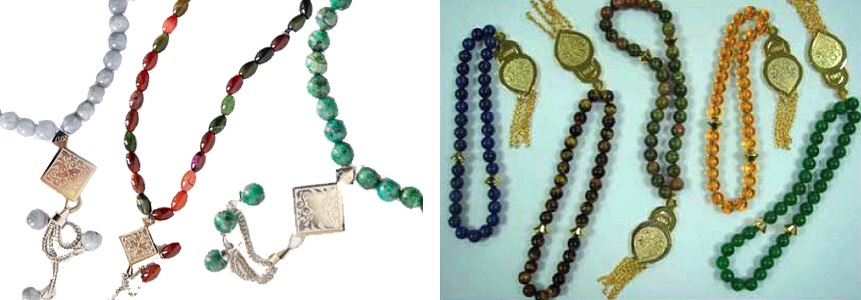
A selection of tasbihs produced during the Diamond Jubilee (left) and Golden Jubilee celebrations of Mawlana Hazar Imam. Photo: The Ismaili.
Among the numerous memorabilia objects that were produced for Mawlana Hazar Imam’s Golden and Diamond Jubilee celebrations in 2007 and 2017, the tasbih was the most sought after item. The Diamond Jubilee tasbihs came with a finely-detailed floral pattern interwoven with intricate and diverging leaves inspired by a Fatimid wood carving. The 33 bead Golden Jubilee tasbihs came in twenty-three varieties of semi-precious stone with the top stem adapted from a 16th century alam (emblem or standard).
“O believers, remember God oft and give Him glory at the dawn and in the evening” — Holy Qur’an, 33:41-42
The last and most important point about tasbih is its purpose. The purpose of tasbih is quite evident and that is to remember Allah.
Over the past 35 years, Mawlana Hazar Imam has sought to encourage us to keep the remembrance of our faith as an integral part of our daily life, and to seek from this remembrance spiritual happiness on an ongoing basis. His most recent reference regarding using the tasbih for calling out the name of Allah, the name of Prophet Muhammad, or Hazrat Ali was in a Farman Mubarak that he made in India in 2018 (see page 144, para. 3, in Diamond Jubilee Farman Mubarak book)
While we all face and feel the effects of the worldwide COVID-19 pandemic with the rest of humanity, let us all recall the message that Mawlana Hazar Imam conveyed to us at the commencement of the Diamond Jubilee year, when he said that the faith of our forefathers would help us to face life’s challenges in times of crisis and rapid changes (see page 12, para. 2, in Diamond Jubilee Farman Mubarak book).
“Sitting, sleeping, going about, take the Lord’s name, take the Lord’s name” — Ginan, Pir Hasan Kabirdin
An illustrious piece of advice regarding our faith comes from none other than our illustrious forefather Pir Hasan Kabirdin, composer of hundreds of Ginans that have illuminated millions of Ismailis over the past seven centuries. In the second verse of Dur Desh Thee Aayo Vannjaaro, he says: “Sitting, sleeping, going about, take the Lord’s name, take the Lord’s name.” (Translation, Aziz Esmail, in his Scent of Sandalwood)
Ginan Dur Desh…sung by Late Shamshu Bandali Haji. Credit: Ginan Central
Carrying the tasbih with us will act as reminder for us to contemplate on the names of Allah, the Prophet and the Imams during any moment in our lifetime. That is the nature of prayer.
Date posted: April 6, 2020.
Before departing this website please take a moment to review Simerg’s Table of Contents for links to hundreds of thought provoking pieces on a vast array of subjects including faith and culture, history and philosophy, and arts and letters to name a few.
______________
This piece contains material from the March 1986 issue of Al-Misbah magazine published by the Ismaili Tariqah and Religious Education Board for the United Kingdom (ITREB). The magazine, like all other religious magazines published by ITREB in numerous countries around the world, ceased publication in the early 1990’s.
Share this article with others via the share option below.
We welcome feedback/letters from our readers. Please use the feedback box which appears below. If you don’t see the box please click LEAVE A COMMENT. Your comment may be edited for length and brevity, and is subject to moderation. We are unable to acknowledge unpublished letters.
Mawlana Hazar Imam, His Highness the Aga Khan, 49th Imam of the Shia Imami Ismaili Muslims, pictured at the Diamond Jubilee Darbar in Kenya. Photo: The Ismaili,
By MALIK TALIB (Chairman of the Ismaili Leaders’ International Forum)
On the occasion of Navroz, our beloved Mawlana Hazar Imam has most graciously sent a Talika Mubarak to be shared with our global Jamat, which reads as follows:
My dear Malik,
On the occasion of Navroz, I send to my worldwide Jamat my best blessings for peace and happiness in their lives.
I am also sending my special blessings for Mushkil Asan for my Jamats wherever they may be, and I pray for their health and their well-being.
Yours affectionately,
Aga Khan
I convey warm Mubarak to the global Jamat on the occasion of Navroz and, on behalf of all the murids world-wide, I express humble shukrana to our beloved Mawlana Hazar Imam for the gracious Talika.
Mawlana Hazar Imam’s Guidance Central to Ismaili Institutions’ decision making during the COVID-19 crisis
….Malik Talib’s message continues below
The festival of Navroz is a time for hope, optimism, renewal, and faith – even in times of uncertainty and difficulty.
I would like to assure the Jamat that all Jamati institutions and leaders around the world are doing everything possible to ensure the Jamat’s safety and security.
For so many of us, the temporary suspension placed on Jamatkhana gatherings is perhaps the most difficult among the wide array of disruptions to our everyday lives. The decision to temporarily suspend our Jamatkhana gatherings was not taken lightly, and was implemented in accordance with Hazar Imam’s guidance to comply with government and public health guidelines around the world.
While we appreciate that this indeed is a very difficult disruption, and that we are no longer able to gather physically at the present time, we remain unified in our faith, in devotion and compassion.
These bonds of community have sustained throughout the vagaries of time and history, and will continue in the difficult weeks and months ahead. As we prepare ourselves, we will work together as a united Jamat.
It is of great importance that we follow the directions given by the Jamati institutions who are working with the AKDN [Aga Khan Development Network] to ensure compliance with government measures to mitigate the effects of COVID-19.
Ours is an esoteric faith. Our Imam has time and time again reminded us of the importance of spiritual contemplation, reflection, personal search and prayer. In these moments we will find peace and solace to overcome our current challenges. We would be well advised to recall Mawlana Hazar Imam’s Farmans regarding engaging in personal prayer, when we are unable to attend Jamatkhana. It is my conviction that adhering to this guidance will bring us comfort in these challenging times.
Virtual Jamatkhanas Inappropriate
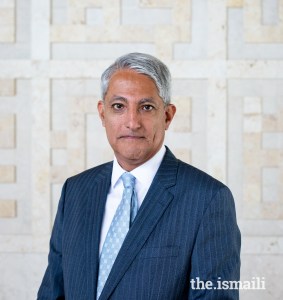
Malik Talib, Chairman Ismaili Leaders’ International Forum
….Malik Talib’s message continues below
The temporary closure of our Jamatkhanas has resulted in the appearance of electronic and digital channels offering a “virtual Jamatkhana”. This is clearly inappropriate, as a Jamatkhana may only be established and function under the Imam’s authority, through his institutions and appointed Mukhi-Kamadias.
At this time in particular, it is critical that we understand the risks of misinformation and miscommunication, and rely only on credible government and Jamati institutional sources – including The Ismaili – the official website and social media channels for the Jamat.
At a time of increased economic anxiety, it is also imperative that we act rationally, with prudence and sound judgement.
COVID-19 pandemic at the forefront of Mawlana Hazar Imam’s thoughts
….Malik Talib’s message continues below
The current developments regarding the COVID-19 pandemic have been at the forefront of Mawlana Hazar Imam’s thoughts, and I would like to inform the Jamat that, following Mawlana Hazar Imam’s guidance, an international Steering Group has been established to coordinate the efforts to ensure the Jamat’s safety and well-being, and to support the responses being undertaken in each national Jamati jurisdiction.
These are difficult times. However, as one Jamat, our faith unites us, and gives us the strength, courage and hope to face this adversity, and emerge from it, a stronger community, bound by our values, and our allegiance to the Imam-of-the-Time.
Let us offer shukrana for Mawlana Hazar Imam’s continued love, grace, protection and guidance, and pray for the Jamat’s safety, good health and Mushkil Asan.
Ameen.
_______________________
A Note from the Publisher/Editor of Simerg
By MALIK MERCHANT
Nothing can be more gratifying for a murid of Mawlana Hazar Imam than receiving his blessings on the occasion of Navroz, as well as special blessings for Mushkil Asan at this particular time of a world wide novel coronavirus pandemic. Instead of celebrating Navroz in Jamatkhanas, we will be observing it in our unique ways in our homes. This is unprecedented in recent history! However we have received the Imam’s Blessings as we would in Jamatkhanas. That should bring contentment and happiness in our hearts and give us immense strength and hope for the future.
The message from Malik Talib, the Chairman of the Ismaili Leaders’ International Forum, has outlined our responsibilities as members of a universal brotherhood. It is important that we follow the instructions of the leaders at this time of crisis, and act according to the wishes of Mawlana Hazar Imam.
Date posted: March 21, 2019.
We invite our readers to share their feelings, Navroz greetings, and unique experiences during the extraordinary events that are taking place in light of COVID-19. Please complete the feedback below, and if you don’t see the form please click LEAVE A COMMENT
______________________
Before departing this website please take a moment to review Simerg’s Table of Contents for links to hundreds of thought provoking pieces on a vast array of subjects including faith and culture, history and philosophy, and arts and letters to name a few. In the past few days, we have published some excellent pieces on Navroz.
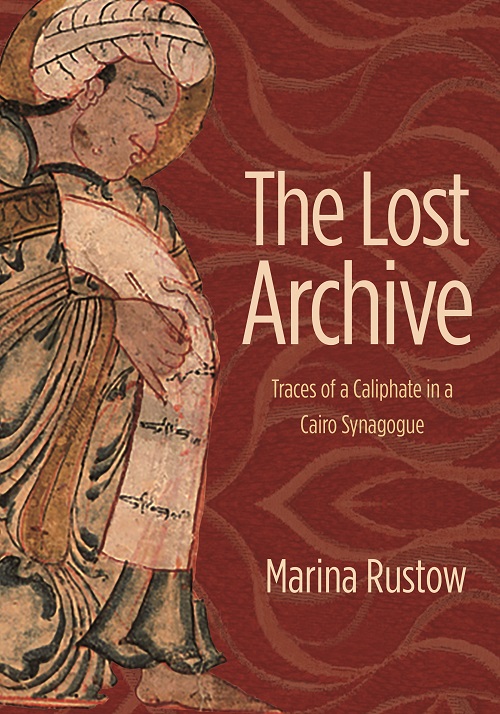
The Lost Archive by Marina Rustow, published on January 14, 2020 by the Princeton University Press; Pages: 624; Size: 7 x 10 in. Illus: 83 color + 17 b/w illus. 4 maps. 4c throughout. To purchase hardcover, Kindle or Kobo versions see links at bottom of this page.
Grabbing our attention now is a splendid new book on the Fatimids that looks at the caliphate’s robust culture of documentation. In an editorial review of the book, Konrad Hirschler of the Freie Universität Berlin describes Marina Rustow’s work “as a veritable magnum opus that will remain a point of reference for decades to come.” He also notes that “there are few books like this one that take the reader on such a long-distance journey across centuries and writing systems.”
The Lost Archive: Traces of a Caliphate in a Cairo Synagogue is Marina Rustow’s second work on the Fatimids. Her first one was entitled Heresy and the Politics of Community: The Jews of the Fatimid Caliphate. Sheis the Khedouri A. Zilkha Professor of Jewish Civilization in the Near East and professor of Near Eastern studies and history at Princeton University. She is director of the Princeton Geniza Lab and a MacArthur fellow. Her latest work is also praised by Geoffrey Khan, University of Cambridge, who states that “with great historiographical skill, Rustow brings new insights into the history of the medieval Middle East through a holistic analysis of the surviving state documents of the Fatimid dynasty. This is a splendid book.”
Marina Rustow has made very interesting and informative presentations of her research and work at the American Philosophical Society and the University of New Mexico. Links to both the videos are provided at the end of this piece.
The lost archive of the Fatimid caliphate survived in an unexpected place: the storage room, or geniza, of a synagogue in Cairo, recycled as scrap paper and deposited there by medieval Jews. In the book Marina Rustow tells the story of this extraordinary find, inviting readers to reconsider the longstanding but mistaken consensus that before 1500 the dynasties of the Islamic Middle East produced few documents, and preserved even fewer.
Beginning with government documents before the Fatimids and paper’s westward spread across Asia, Rustow reveals a millennial tradition of state record keeping whose very continuities suggest the strength of Middle Eastern institutions, not their weakness. Tracing the complex routes by which Arabic documents made their way from Fatimid palace officials to Jewish scribes, the book provides a rare window onto a robust culture of documentation and archiving not only comparable to that of medieval Europe, but, in many cases, surpassing it. Above all, Rustow argues that the problem of archives in the medieval Middle East lies not with the region’s administrative culture, but with our failure to understand preindustrial documentary ecology.
Illustrated with stunning examples from the Cairo Geniza, this compelling book advances our understanding of documents as physical artifacts, showing how the records of the Fatimid caliphate, once recovered, deciphered, and studied, can help change our thinking about the medieval Islamicate world and about premodern polities more broadly.
The hard copy or electronic Kindle version of “The Lost Archive” may be purchased at the following websites: Princeton Amazon & Amazon Canada Indigo
Date posted: March 8, 2020.
__________________
American Philosophical Society presentation by Marina Rustow (34 minutes)
~~~~~~~~~~~~
University of New Mexico presentation by Marina Rustow (1 hour 35 minutes)
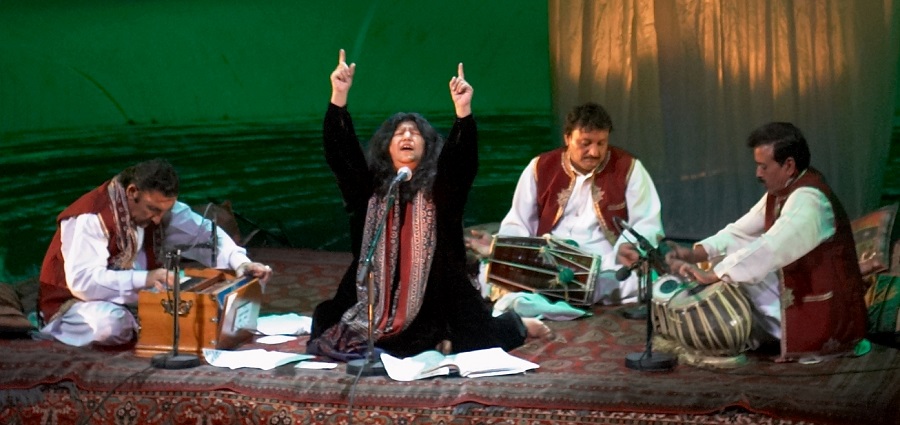
On Saturday, February 29, 2020, Abida Parveen performed in Melbourne, Australia, in a rare appearance outside Pakistan. On the day of her performance she gave an interview to Andrew Ford, host of ABC Australia’s “The Music Show.” In discussing shades of Sufi music (Kafi) towards the end of the interview, the last question Ford asked Abida was what she would be singing in Melbourne that evening, and she replied “Man Kunto Maula.” She demonstrated a few lines from the song in the studio. The famous words are attributed to the Holy Prophet Muhammad (May peace be upon him and his family) at Ghadir Khumm when he said, “He whose Maula I am, Ali is his Maula” thus giving Hazrat Ali parity with himself as his successor to the Divine Institution of Imamat, a hereditary institution that continues to this day under the 49th Imam, Mawlana Hazar Imam, His Highness the Aga Khan. The following rendition of Man Kunto Maula sung by Abida Parveen in Oslo, Norway, is deeply inspiring and worth listening to in full. It has been viewed on YouTube more than 2.7 million times (Update, January 29, 2023: We note the video is no loner available and has been designated as private.).
Date posted: March 1, 2020. Last updated: January 29, 2023 (video unavailable.)
Before departing this website please take a moment to review Simerg’s Table of Contents for links to hundreds of thought provoking pieces on a vast array of subjects including faith and culture, history and philosophy, and arts and letters to name a few.
Please click on photo to read Ben Eltham’s excellent piece in The Guardian
Abida Parveen to perform February 29, 2020 at Melbourne’s Hamer Hall
There are few artists who are spoken about with the same rapturous fervour as Abida Parveen. Perhaps only her spiritual brother, the late Nusrat Fateh Ali Khan, has inspired the same level of devotion among fans.
Parveen has been described by The Guardian newspaper as “the greatest female Sufi singer in history” and by the BBC as “one of the most remarkable voices on the planet.” In his new piece for the Guardian, Ben Eltham writes, “The devotional singer is known to move audiences to a higher plane. Meeting her in Melbourne time went ‘all bendy and loose’.” Please click here to read The Guardian’s excellent piece.
Have you attended a performance by Abida Parveen? What are your impressions? Were you awed by her performance? We welcome your feedback. Please click Leave a comment.
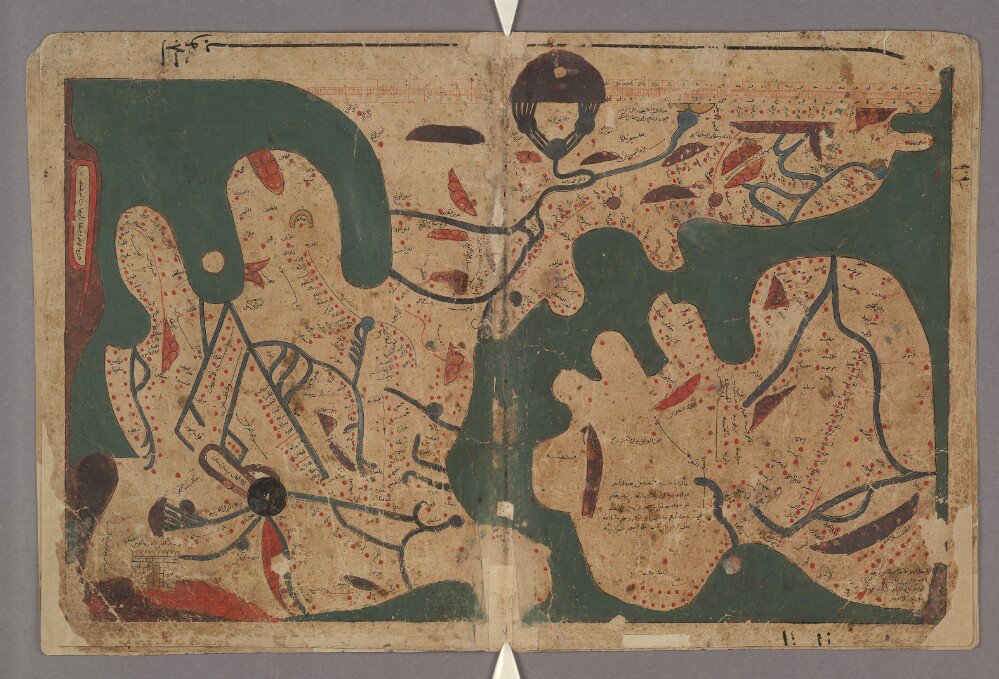
There are 17 maps in the Fatimid manuscript Book of Curiosities, 14 of which are completely unique to this manuscript. Perhaps the most remarkable is this rectangular map of the world. This the only such map to be dated before the renaissance that we know to have survived.
“The Book of Curiosities is one of the greatest achievements of medieval map-making; it is also a remarkable part of the story of Islamic civilization….It is a profoundly Fatimid treatise. Like a tirāz armband, it wears its allegiance to the Fatimid caliphs on its sleeve. This is apparent from the opening dedication, from the blessings heaped on the Fatimid imams” — Emilie Savage-Smith and Yossef Rapoport, authors of Lost Maps of the Caliphs.
About a millennium ago, in Fatimid Cairo, an unknown author completed a large and richly illustrated book. In the course of thirty-five chapters, this book guided the reader on a journey from the outermost cosmos and planets to Earth and its lands, islands, features, and inhabitants. This treatise, known as The Book of Curiosities, was unknown to modern scholars until a remarkable manuscript copy surfaced in 2000. Christie’s auction house in London, who had put up the manuscript for sale, wanted to know more about it and invited Professor Emilie Savage-Smith of Oxford University to examine the manuscript. As it turned out the manuscript was one of the most important discoveries in the history of cartography in recent decades, and was eventually acquired by Oxford University’s Bodleian Library. With Yossef Rapoport, then a young research assistant, Professor Savage-Smith, set out to critically study the manuscript and together they co-authored “Lost Maps of the Caliphs,” with the aim of providing the first general overview of The Book of Curiosities and the unique insight it offers into medieval Islamic thought.
“As tales of scholarly finds go, this is up there with the best….Lost Maps of the Caliphs is a testament both to the scholarship of its authors and to the spirit of inquiry fostered by the Fatimids.” — The Daily Telegraph, London.
The article that follows below was originally published on Jadaliyya on April 8, 2019. We are deeply indebted to Bodleian Library Publishing, publishers of the UK edition of “Lost Maps of the Caliphs,” as well as The University of Chicago Press for facilitating the publication of the complete interview as well as an excerpt from the book on Simerg.
“Lost Maps of the Caliphs” has been acclaimed world wide in numerous reviews. In addition to the very brief excerpt that has been quoted here from London’s Daily Telegraph, the following quote from Imago Mundi goes on to validate the book’s outstanding content: “We are fortunate indeed that Rapoport and Savage-Smith have undertaken fifteen years of meticulous, collaborative research on the Book of Curiosities. The culmination, Lost Maps of the Caliphs, is an exceptional tribute to an exceptional object of study.”
~~~~~~~~
Interview with Yossef Rapoport and Emilie Savage-Smith, authors of Lost Maps of the Caliphs
Jadaliyya (J): What made you write this book?
Yossef Rapoport and Emilie Savage-Smith(YR and ESS): This book started with a discovery. In September 2000, a specialist in Islamic manuscripts at Christie’s auction house in London called Emilie—who specializes in the history of Islamic science—and asked her if she could come into London from Oxford and look at a puzzling Arabic manuscript that was up for sale a couple of weeks later. It was entitled Kitāb Gharāʾib al-funūn wa-mulaḥ al-ʿuyūn, which loosely translates as “The Book of Curiosities of the Sciences and Marvels for the Eye.” Christie’s didn’t know what to make of it, and wanted to seek Emilie’s advice about its importance.
Emilie was shown a rather scruffy manuscript, bound in ill-fitting covers, with a bird-dropping visible on the cover. But inside the covers was a medieval Arabic treatise on the skies and the Earth, accompanied by a series of strange images and maps unparalleled in any other medieval work. Above all, it had a map of the world with a scale of degrees of longitude at the top, in what seemed to be the earliest surviving example of mathematical plotting on any world map known to us.
The manuscript turned out to be one of the most important discoveries in the history of cartography in recent decades. With the support of Oxford colleagues, Emilie began a campaign to ensure the work would be available to the public rather then be kept by private collector. In June of 2002, it was acquired by the Bodleian Library at the University of Oxford, with the help of the National Lottery Fund. Yossi then joined as (then) a young research assistant. We first established that the treatise was written in the first half of the eleventh century, in Cairo, the newly-founded capital of the Fatimid Shi’a Empire. We then spent the following decade carefully preparing a critical edition and annotated translation of the maps and text, published by Brill in 2014.
Our critical edition made the treatise and its maps available for scholars, but it did not explain what they mean or why they are so important. We strongly felt that merely translating the text and presenting the images—beautiful and striking as they are—was not enough. The treatise had to be understood as a whole, because the maps of the sky and of the Earth, of the Indian Ocean and of the Nile, of Sicily, of Mahdia, and of southern Anatolia, all made sense only when read together in the context of the society and culture in which they were produced. Lost Maps of the Caliphs tells the story of this exceptional manuscript—how it was discovered and why it is so significant.
J: What particular topics, issues, and literatures does the book address?
YR and ESS: Because the treatise is so wide-ranging, we use it to reconsider the development of astronomy, astrology, geography, and cartography in the first four centuries of Islam. In the Lost Maps we outline the medieval Islamic understanding of the structure of the cosmos and celestial phenomena. The amalgamation of Hellenistic, Coptic, Hindu and other star lore was all channeled towards an astrological mind-set. The Earth together with the Heavens formed the universe of eleventh-century Cairo. To a medieval person, whose night skies were not blanked-out by city lights and pollution, the contents of the night sky—the ‘Raised-Up Roof’ as our author, following the Qur’an, called it—revealed the workings of the universe and, if properly understood, heralded events on Earth.
Our book is also a contribution to the history of global communication networks at the turn of the previous millennium. We use the geographical materials of the Book of Curiosities to depict the Fatimid Empire as a global maritime power, with tentacles of military and religious authority in the Eastern Mediterranean, the Indus Valley, and along the East African coast. The extent of Fatimid knowledge of Byzantine coasts demonstrates close ties between the Muslim and Christian empires. The material on East Asia sheds new light on Sino-Indian trade routes and is very surprising for a treatise written in Egypt. The treatise’s familiarity with the East African coasts contributes to recent debates on the Islamization of the Swahili coast.
Perhaps most importantly, we use the Book of Curiosities to re-consider the history of early Islamic map-making. The world map of the Book of Curiosities is a result of the dialogue of the Islamic world with Hellenistic, Late Antique geography. The extensive maritime material in the Book of Curiosities sheds new light on navigation in the Mediterranean and the Indian Ocean before the introduction of the compass in the thirteenth century, and presents an Islamic angle on debates concerning the origins of the European portolan chart.
J: How does this book connect to and/or depart from your previous work?
YR and ESS: Emilie has been working on Islamic scientific manuscripts for several decades, and published books on Islamic celestial globes, medieval Islamic magic and divination, and a catalogue of the medical manuscripts in the Bodleian Library. She also co-authored the volume on Medieval Islamic Medicine that won the 2008 Book Prize in Middle Eastern Studies of the British-Kuwait Friendship Society. It was Emilie’s vast experience with Islamic scientific manuscripts that enabled her to appreciate how special this treatise was. In Lost Maps of the Caliphs, Emilie also wrote the chapters that deal with astronomy and astrology, as well as providing a very personal chapter about her campaign to make this gem available for the public.
Yossi came to this project with training in the history of Arabic-speaking medieval Islamic societies, shortly after competing a PhD on the history of marriage and divorce in late medieval Egypt. But, like so many, he was always fascinated with maps, and the deciphering of the maps of the Book of Curiosities was as close as one gets to deciphering a fairy-tale treasure map. Through this project, he became an expert on Islamic maps, navigation, medieval trade routes between India and China, and Hellenistic collections of strange animals.
J: Who do you hope will read this book, and what sort of impact would you like it to have?
YR and ESS: We hope that this book will be widely read as a window onto medieval Islamic views of the world, a perspective on Islamic science that is missing from current debates about the legacies of Islamic civilization. The Book of Curiosities is one of the greatest achievements of medieval map-making; it is also a remarkable part of the story of Islamic civilization. Too often, the achievements of Islamic science are divorced from the culture that produced them and are only brought to light as a trophy in a sterile competition with West. Islamic maps in particular get almost no attention in surveys of Islamic history, and even when they are shown they are rarely explained. Because we tend to view Islamic civilization through the prism of religion and faith, we find no use for these abstract diagrams that tell us nothing about God.
What could be more foundational to any culture than the manner in which it conceived of the sky and the Earth? We hope to show that the discovery of the Book of Curiosities is also a timely rediscovery of those aspects of Islamic history which are too often neglected in academic and non-academic visions of Islam. It is a rediscovery of the sea as an integral part of a civilization that supposedly originated in the desert, of an outward looking scientific enquiry that was built on the foundation of the classical Greek legacy, and of the power of the image in a culture that is too often reduced to texts.
J: What other projects are you working on now?
YR and ESS: It is about time to put the Book of Curiosities behind—it is nearly twenty years since we started working on it. Emilie came back to the history of Islamic medicine and is now completing a mutli-volume translation of a thirteenth-century Syrian biographical dictionary of doctors, to be published by Brill, with selections in the Oxford World Classics series published by Oxford University Press.
Yossi has been working over the past few years on the history of the medieval Islamic countryside. He recently published a monograph, Rural Economy and Tribal Society in Islamic Egypt, whichis a detailed micro-study of the economy and society of the villages of the Egyptian province of the Fayyum as described in a unique thirteenth-century tax register. This book, too, has a lot of maps, mostly modern GIS ones but also a copy of one that was originally made in the tenth century.
~~~~~~~~
Excerpt from Lost Maps of the Caliphs by Yossef Rapoport and Emilie Savage-Smith
Who, then, was the author of the Book of Curiosities? His apparent access to naval military records suggests a direct connection to the Fatimid state. His personal acquaintance with an Ismaʿili missionary who had been to Nubia, and his unique information on itineraries in the world of the Indian Ocean, all suggest he was close to the Ismaʿili missionary network. The map of Palermo with its suburbs, the diagram of Tinnīs, and in particular the map of Mahdia, which is drawn from the perspective of someone looking at the city from a vantage point just outside of its walls, suggest that he had visited these port cities in person. In some ways, he is a successor to the geographer Ibn Ḥawqal and a predecessor of the poet Nāser-e Khosraw—both Ismaʿili missionaries, travelers and keen observers of human societies. Unlike them, however, his interest in trade is minimal, and he is more likely to have been a military man than a merchant. Nor was he a scholar of the caliber of his Egyptian contemporaries, the physician Ibn Riḍwān or Ibn Haytham, the founder of the science of optics. His grasp of mathematical concepts appears to have been quite poor, and he generally avoided technical discussions.
Rather than a scholar our author was, primarily, a mapmaker. It is the maps that make the Book of Curiosities such a distinct work of medieval scholarship and such an appealing manuscript for modern audiences. The author has unprecedented confidence in the ability of maps and diagrams to convey information. Unlike any other geographical treatise before this, the maps are stand-alone artifacts, unsupported by any accompanying text. This is true for some of the maps of the sky, but especially for the rectangular map of the world, the maps of the three great seas, and the maps of the rivers. Even when the maps are related to a text, such as those of the islands of Sicily and Cyprus, or the city of Mahdia, the information they contain goes well beyond that of the preceding prose sections. We do not have the original treatise, only a later copy, so we do not know how lavish it might have been when first penned. But the second part of the title literally translates as “that which is pleasant to the eyes” (mulaḥ al-ʿuyūn), indicating that this treatise was about the images as much as it was about the text.
article continues after image
A photo of the UK edition of Lost Maps of the Caliphs by Yossef Rapoport and Emilie Savage-Smith, published by Bodleian Library, University of Oxford. Please click on image to see book details.
Maps are at the center of this Book of Curiosities, and this anonymous mapmaker offers us his reflections on the craft of cartography. His chapter on mapmaking techniques introduces the maps of seas and islands, the most original maps in the treatise. He opens with a formulation of the purpose of his maps: “Although it is impossible for created beings to know the extent of God’s creation, the knowledgeable and qualified among them are entrusted with witnessing or imparting a small part of it.” The maps that will follow will convey knowledge, albeit imperfect, of God’s creation. He then continues to explain why his maps are intentionally “not accurate representations” of reality: the contours of coastlines change over time, the mapmaking instruments are not fine enough to reproduce reality on a small scale, and labels need to be legible. Here is a mapmaker explaining his choices and reflecting on the purposes and functionality of his maps. The results of his labor are unique medieval versions of “graphic representations that facilitate spatial understanding,” to use the definition of “map” by the leading modern historian of cartography. There is no parallel for this passage in any other medieval treatise known to us.
The Book of Curiosities is a profoundly Fatimid treatise. Like a tirāz armband, it wears its allegiance to the Fatimid caliphs on its sleeve. This is apparent from the opening dedication, from the blessings heaped on the Fatimid imams, and from the curses flung at the rebels who sought to overthrow them. The treatise also reflects some immediate political ambitions of the Fatimid state, especially in the Mediterranean. It depicts visually and in text the defenses of the strategic Fatimid holdings in Tinnīs, Mahdia, and Sicily. There are historical references to the early Islamic conquests of Cyprus, Crete, and Bari, with the inference that they may be ripe targets for Fatimid re-conquest. The mapping of anchorages, ports, and bays deep in Byzantine territory, some of them as far north as the Dardanelles, also reflect a military context. It is likely that much of the material here was actually drawn from the records of the Fatimid navy. And beyond the immediate political objectives, the maritime focus of the Book of Curiosities is also distinctly Fatimid. The unusual categories for organizing the geographical material, from seas to islands, and then to lakes and rivers, reflect the unique maritime orientation of the Fatimids, who, alone among the great medieval Muslim empires, preferred networks of ports, rivers, and islands over horses and land routes.
The treatise can be viewed as part of a westward shift in the geographical tradition and in the center of gravity in the Islamic world in general. Most ninth-century works, such as those by Ibn Khurradādhbih and the Relation of China and India, focused on Asia and the Indian Ocean. By the middle of tenth century, however, the gaze shifts to the Mediterranean, North and Sub-Saharan Africa. Al-Masʿūdī spent much of his later life in Egypt and Syria, and Ibn Ḥawqal provided an unprecedented account of the Maghreb. The eleventh-century Book of Curiosities focuses on the eastern Mediterranean. Later works of the Andalusian author Abū ʿUbayd al-Bakrī (d. 1094) and, of course, the Sicilian based al-Idrīsī (fl. 1154) have their focal point even farther to the west. The heavy reliance of the Book of Curiosities on the work of Ibn Ḥawqal is also suggestive, because the latter was, most likely, also a missionary. The focus on islands in the Book of Curiosities may have had special resonance against the backdrop of the Ismaʿili nomenclature of regional “islands.”
The Ismaʿili context of the Book of Curiosities invites comparisons with the influential Epistles of the Brethren of Piety, an encyclopedic corpus of science and Neoplatonic philosophy, composed in Iraq sometime before the middle of the tenth century. The Epistles are not cited in the Book of Curiosities, nor is there evidence for their circulation in Fatimid Egypt, despite their affinity with Ismaʿili teachings. Yet the Epistles seem to approach the subject matter of the sky and the Earth in a similar manner. Following the Greek astronomer and geographer Ptolemy, geography is seen in the Epistles as an appendix to the study of the stars. But the Epistles also have a higher purpose: the reader is invoked to contemplate the design of the creator, “to ponder wonders (ʿajāʾib) of his creation and reflect on the curiosities (gharāʾib) of what he fashioned.” This desire to observe God’s work explains some of the interest in marvels and wonders exhibited by the Book of Curiosities, as its title suggests.
Like the Epistlesof the Brethren of Piety, the Book of Curiosities draws heavily and without compunction on the heritage of Greek science. Ptolemy, Hippocrates, and Galen provide our author with much of the material on the general structure of the heavens and the Earth, and on the way the former influence the latter. Muslim scholars like al-Masʿūdī correct and add information, especially when one zooms in on the Earth’s size and layout, but the general framework inherited from the Greeks is not questioned. And while God is omnipresent, the Qur’an is cited sparingly, only to invite reflection on creation or to buttress moral points about God’s punishment meted out to the unbelievers. There is only one Tradition from the Prophet in the entire treatise, on the intrinsic purity of water. Such reliance on a Hellenistic heritage was not uncommon in eleventh-century Cairo. Mubashshir ibn Fātik, a wealthy and influential scholar, left us a remarkable collection of ethical sayings from the Greek sages, with special focus on the Late Antique and legendary Hermes.
The author of the Book of Curiosities does not limit himself to Greek authorities, but is also acquainted with Persian, Indian, and Coptic knowledge. He cites an account of the birth of astrology in India, and Persian authorities on the ominous bābānīyah stars. He is also keen to show command of multiple languages. For example, the names of each planet are given in Persian, Classical Greek, “Indian,” and Byzantine Greek; the names of each day of the week are given in Persian, Byzantine Greek, “Indian,” Hebrew, and Coptic. The use of Coptic is of special significance. There is here a deep influence of Egyptian Coptic traditions, an influence which has been overlooked in modern scholarship on Islamic science. Coptic lore was already reworked by al-Masʿūdī, and the Coptic calendar seems to have been used very early when predicting the risings of the lunar mansions. There is even more Coptic material in the Book of Curiosities, including accounts of the moray eel and the foundation of Tinnīs. Most importantly, the explanations related by Copts regarding the flooding of the Nile—that the Nile floods are a result of the summer melting of the snow on equatorial mountains—are as close to the present understanding of the Nile system as was ever achieved by medieval Islamic scholarship.
Date posted: January 26, 2020. Last updated: February 3, 2020.
Before departing this website please take a moment to review Simerg’s Table of Contents for links to hundreds of thought provoking pieces on a vast array of subjects including faith and culture, history and philosophy, and arts and letters to name a few.
In his piece dated October 23, 2019, the Editor-in-Chief of “The Muslim Link” published a comprehensive list of Muslims who were elected in the Canadian Federal Election that was held on October 21, 2019. In compiling the names and their profiles with some interesting facts as well as links to their social-media pages, the editor notes that “As the Editor in Chief, I always enjoy compiling these lists as I get to know more about quite interesting people and I get to learn more about what is happening in Canadian cities other than my own, which is the Nation’s Capital, Ottawa.”
Simerg is pleased to provide a link to Muslim Link’s fine on-line piece about the 12 Muslims who were elected in the Federal election. Ismailis Yasmin Ratansi and Arif Virani were re-elected in their ridings. They represented the Liberal Party, which fell short of forming a majority government during the 2019 elections.
Please click on image to read article in The Muslim Link










 Simerg - Insights from Around the World