Simerg is an independent initiative dedicated to Ismaili Muslims, the Aga Khan — their Hereditary Imam — and the Ismaili Imamat, and Islam in general through literary readings, photo essays and artistic expressions
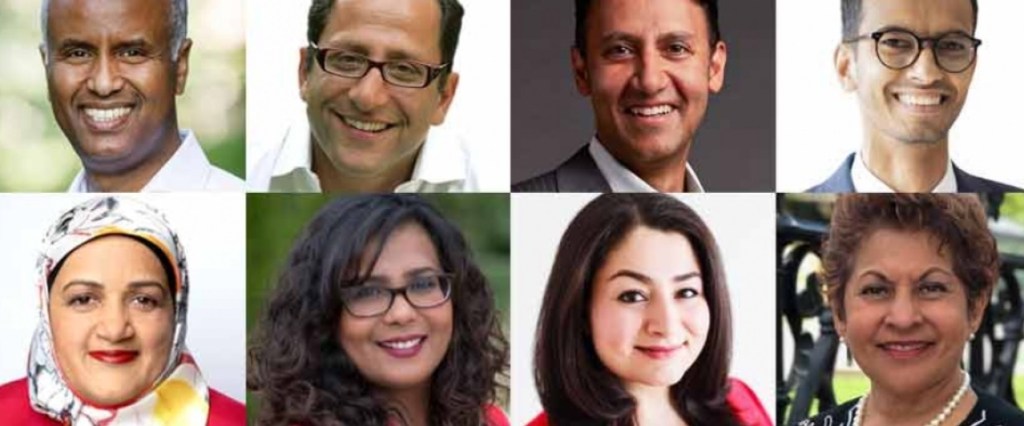
In his piece dated October 23, 2019, the Editor-in-Chief of “The Muslim Link” published a comprehensive list of Muslims who were elected in the Canadian Federal Election that was held on October 21, 2019. In compiling the names and their profiles with some interesting facts as well as links to their social-media pages, the editor notes that “As the Editor in Chief, I always enjoy compiling these lists as I get to know more about quite interesting people and I get to learn more about what is happening in Canadian cities other than my own, which is the Nation’s Capital, Ottawa.”
Simerg is pleased to provide a link to Muslim Link’s fine on-line piece about the 12 Muslims who were elected in the Federal election. Ismailis Yasmin Ratansi and Arif Virani were re-elected in their ridings. They represented the Liberal Party, which fell short of forming a majority government during the 2019 elections.
Please click on image to read article in The Muslim Link
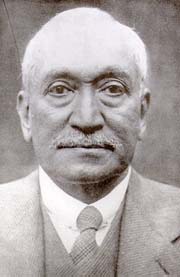
“On a frigid December morning in 1953, a policeman found a half-conscious old man slumped on a street bench in the Westminster area of London. That man was Abdullah Yusuf Ali, the famous 20th-century translator of the Quran. He died alone, homeless, and with no one by his side…Generations of Muslims in English-speaking countries have grown up reading Yusuf Ali’s interpretation of the Quran…Read Saad Hasan’s piece in TRTWORLD.
___________________
Please click on image for article.
Multiple translations of the Qur’an line shelves at book stores. Because of the growing Muslim communities in English-speaking countries, as well as greater academic interest in Islam, there has been a blossoming in recent years of English translation. Since fewer than 20 percent of Muslims speak Arabic, this means that most Muslims study the text only in translation. So how accurate are the Qur’an’s renderings into English? The record is mixed…Read more of this informative piece in Simerg(includes a note on Abdullah Yusuf Ali’s translation).
______________
TRT World Showcase Special with Yusuf Islam, formerly Cat Stevens – Why he picked up the guitar again.
“…When the people have nothing, that’s the moment when you have to sing…” — Yusuf Islam
Video: Yusuf Islam
Considered a legend in the music world, Yusuf Islam, formerly known as Cat Stevens opens up to TRT World about his spiritual journey, and shares his thoughts about the world. Please watch the interview, above.
The following piece has been compiled and adapted from material supplied by the Aga Khan Museum; it incorporates notes by Dr. Ulrike al-Khamis, the Museum’s Director of Collections and Public Programs.
From Mecca to Toronto
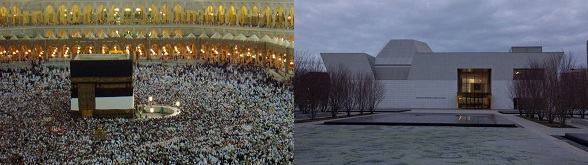
Ka’ba in Mecca. Photo: Aga Khan Museum; Toronto’s Aga Khan Museum. Photo: Rian Dewji.
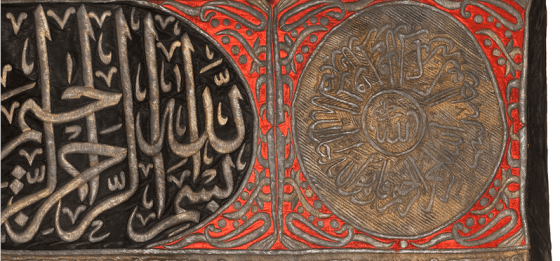
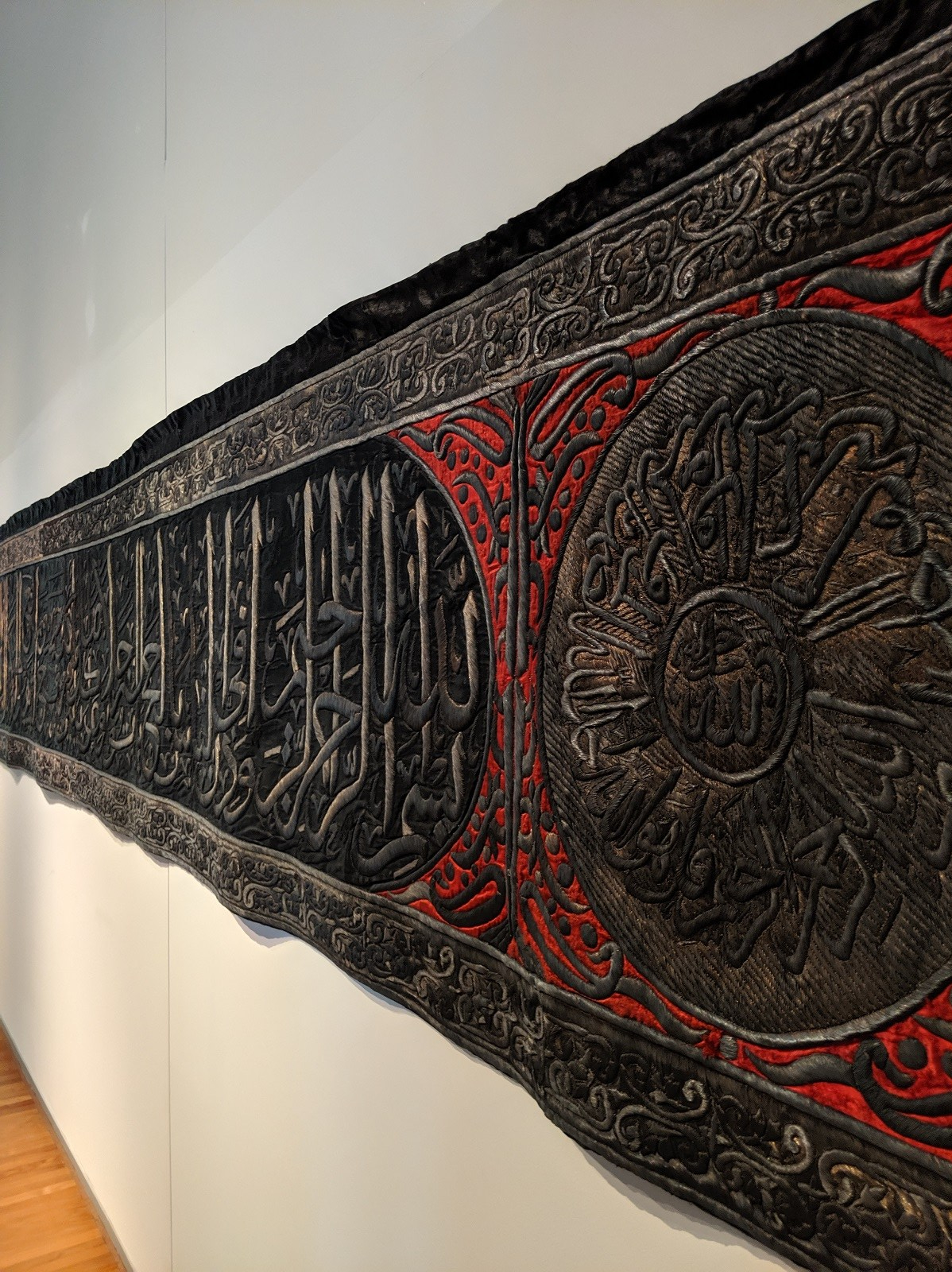
On display for the first time in Toronto is a 100-year-old silk fragment from a hizam — part of a ceremonial draping that covers the Ka’ba, Islam’s holiest site to which millions of Muslims made the annual pilgrimage on Friday August 9, 2019.
The Ka’ba is draped in a black ceremonial covering known as the kiswa, and around the upper part of the kiswa runs the hizam — an ornamented belt embroidered in silver and silver-gilt thread with Qur’anic verses relating to the pilgrimage.
This hizam is one of the Aga Khan Museum’s most significant textiles and is on special display until September 9, 2019. Measuring eight metres long and nearly one metre tall, it once belonged to a kiswa that measured 47 meters and was made in Cairo around the early 20th century.
This textile from the Ka’ba is on display at the Aga Khan Museum until September 9, 2019. Free viewing was available during celebrations marking the Hajj and Eid al-Adha from August 10-14. Photo: The Aga Khan Museum.
As one of the most prominent kiswa ornaments, the hizam traditionally runs the length of the Ka‘ba’s upper perimeter. The inscription here contains verses 27-29 from chapter 22 (Al-Hajj) of the Qur’an:
“And proclaim to mankind the hajj. They will come to you on foot and on every lean camel, they will come from every deep and distant mountain highway. That they may witness things that are of benefit to them, and mention the name of Allah on appointed days, over the beast of cattle that He has provided for them. Then eat thereof and feed therewith the poor who have a very hard time. Then let them complete their prescribed duties and perform their vows, and circumambulate the Ancient House.”
The roundels contain further Qur’anic references that mention ‘God the Eternal’ as well as the Prophet Muhammad.
The Ka‘ba receives a new drape every year during the pilgrimage season. After it ends, the kiswa is taken down, divided and either gifted to dignitaries or sold to raise money for charity.
Note: The museum is open everyday from 10 am to 6 pm (8 pm on Wednesdays). It is closed on Mondays, except holiday Mondays.
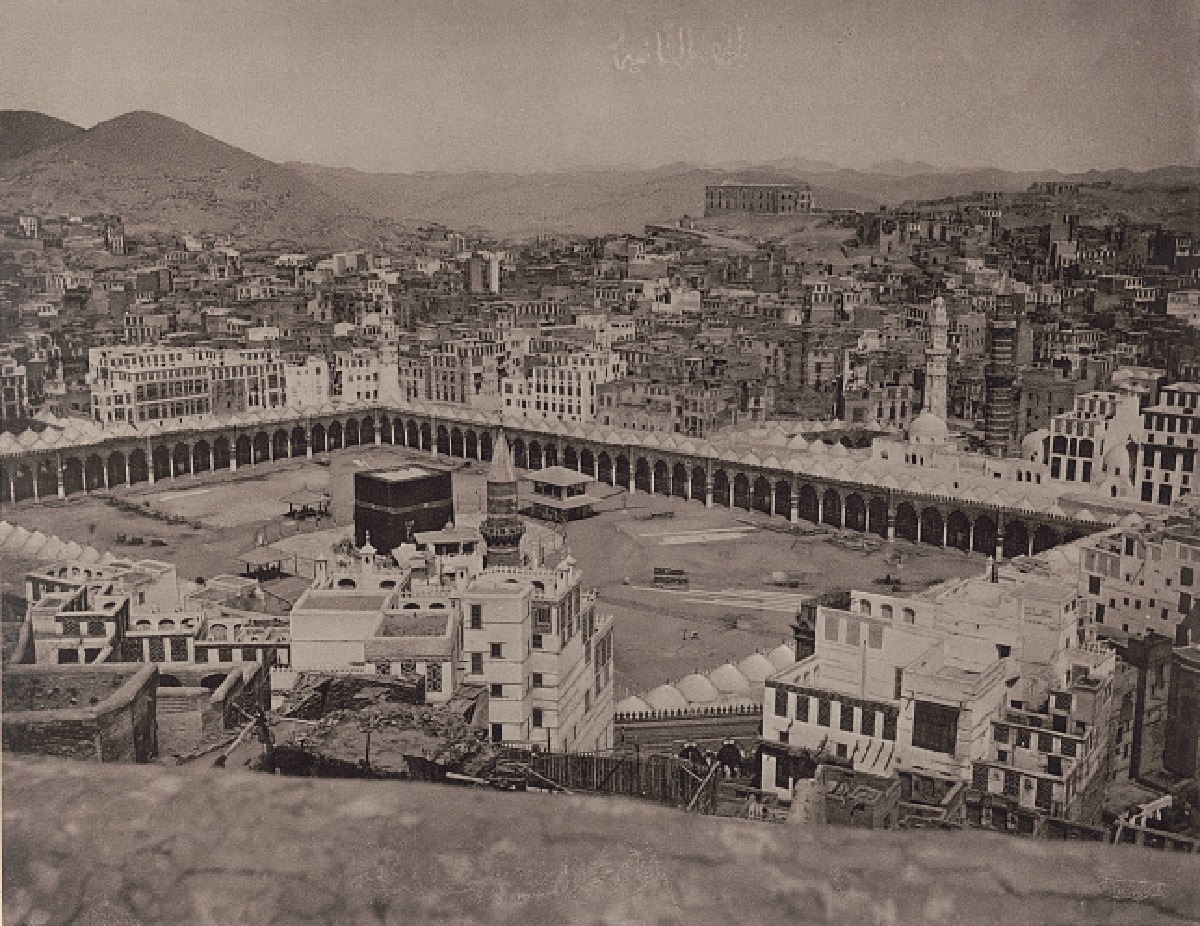
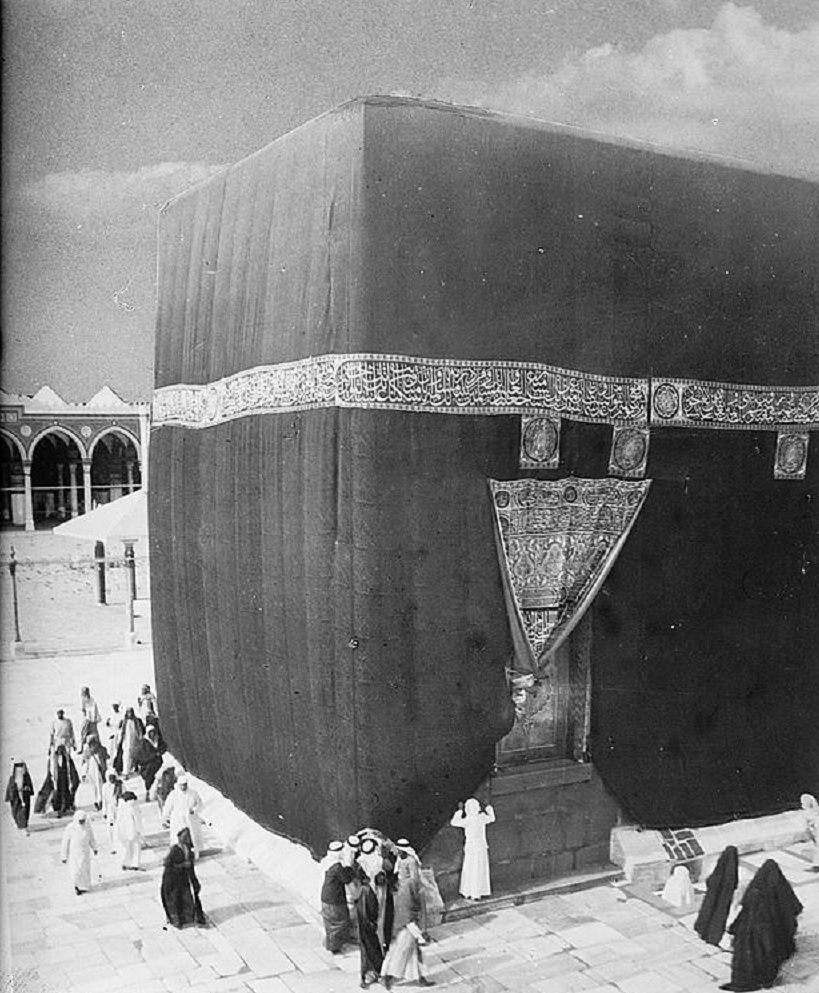
19th/20th Century Views of Ka’ba
A bird’s eye view of the Ka’ba as photographed in 1889. Note the hizam that runs around the upper part of the Ka’ba. Photo: US Library of Congress.
ca. 1910. A close-up photo of the Ka’ba with the hizam running around the upper part of the black cloth (the kiswa). Photo: US Library of Congress.
Date posted: August 7, 2019. Last updated: August 15, 2019.
[Before leaving this page, please take a moment to visit Simerg’s Table of Contents for links to a vast and rich collection of articles and photographs published on this blog as well as its two sister blogs Barakah and Simergphotos.]
To meet the challenge that the global ecological crisis presents today, there is an urgent need to draw on humanity’s philosophical and spiritual repertoire – because it teaches us valuable lessons on the importance of taking care of life in all its forms. Senegalese philosopher Souleymane Bachir Diagne draws on this source here, by blending the philosophical novel of a twelfth-century Andalusian Muslim scholar, African words of wisdom and thoughts from Western philosophers. We are not nature’s masters and owners, the Senegalese philosopher warns us.
By SOULEYMANE BACHIR DIAGNE
My intention is to think about a major crisis – the ecological crisis, which we agree, defines the era we are living in − by showing how the history of philosophy can shed light on it and give us guidance on the actions we must take to deal with it. More precisely, I would like to show how there is continuity between the way philosophy helps us to consider a policy of humanity and the way it illuminates a policy of the “humanization of the Earth”, in the words of the French philosopher and theologian Pierre Teilhard de Chardin (1881-1955).
I use this expression as signifying the duty and the responsibility that the human has to act accordingly, from the moment he understands that nature is entrusted to him and to humanity in the future. It forbids me to consider myself as “nature’s master and owner”, to cite the well-known phrase by the seventeenth-century French philosopher, René Descartes. On this point, regarding a philosophy that is simultaneously spiritual and ecological, I would like to evoke the ideas of the Andalusian scholar Abu Bakr Ibn Tufayl (1105-1185). They are masterfully expressed in his magnum opus, the philosophical novel Hayy ibn Yaqzān.
He presents the idea that humans realize their humanity fully only when they reach ecological consciousness − which allows them to simultaneously understand the evolution of their own becoming and the responsibility which is incumbent on them to protect life on earth.
Homo perfectus
The Arabic philosophical fable, after its translation into Latin in 1671, under the title Philosophus autodidactus, and later into English, was a source of inspiration for many writers, including the English writer, Daniel Defoe, the author of Robinson Crusoe.
Indeed, the Andalusian philosopher’s novel is the story of the survival of Hayy, a child abandoned on an island that has never known a human presence, and who is rescued, protected and fed by a doe. When the animal dies, Hayy learns to use his hands, his practical and then theoretical intelligence, in an ontogeny (the origin and development of the individual organism, from conception to death) that recapitulates phylogeny (evolution of the species over the ages): the child develops into homo perfectus, the insānkāmil of Islamic mysticism. In other words, he becomes an accomplished human who rediscovers not only the essence of civilization (and especially fire), but also the sense of transcendence that leads him to the idea, and then to the experience of the divine. We find an echo of the Philosophus autodidactus in the philosophical debate about the tabula rasa, the clean slate that represents our ability to know before experience begins to record our knowledge on it.
Thus we have underlined the continuity between the idea illustrated by the novel about Hayy and An Essay Concerning Human Understanding by the seventeenth-century English philosopher John Locke. We should note, in passing, that the teaching of the history of philosophy as it is presented in most textbooks leaves little room for a work as important as Ibn Tufayl’s, or for the intellectual tradition to which it belongs − this calls for another way of teaching the history of philosophy, which does not make it a purely European matter.
The caliph of God on Earth
The first shock that sets in motion the practical and theoretical intelligence of the child is the question that confronts him, plunging him into suffering and incomprehension, at the moment his mother, the doe, dies − what is this thing, life, which has left the body of the mother and made her forever deaf to her child’s calls? To answer this question, Hayy devotes himself to the practice of dissecting dead animals, and then attempts to surprise the vital principle in living animals by performing vivisections on them − not seeing, in his ignorance and his innocence, the cruelty of his actions. He abandons this research, again because of failure. Later, when he attains full awareness of self, God, Creation and his own place within it and responsibility for it, Hayy will understand his responsibility to be the guardian of life, in all its forms. He will take from nature only what is necessary for his sustenance, ensuring that the capacity for renewal of life is perfectly preserved, and that nature reconstitutes what it gives him.
Ibn Tufayl’s insistence on Hayy’s ecological consciousness is a philosophical illustration of Koranic anthropology that defines the human as “the caliph of God on Earth”. The word caliph, which means substitute, and the best translation for which is no doubt lieutenant – or more precisely lieu-tenant, place-holder, in French etymology – teaches humans what they have to be and defines their responsibility to watch over their environment, namely the Earth. Moreover, this word caliph, inspite of what we hear today, has in the Koran only this meaning, denoting the destination of the human. An important message from Ibn Tufayl’s book is, therefore, that the human is guardian of the Earth for itself and for the generations to come, because the human is originally the depository of what makes him the placeholder of God on Earth. Today, we need more than ever to heed this responsibility, without it being necessarily linked to a religious meaning.
Making humanity together
I’ll sum up my point in one word: ubuntu. This Bantu word gained worldwide fame when it was used by South Africans Desmond Tutu and Nelson Mandela. It literally means “to make humanity together” − to create, thanks to other people, the human that I have to become, and at the same time, create “one humanity” with others.
To be the receptacle of what makes me a placeholder of God on Earth makes me understand that “making humanity together” is the opposite of depredation. It gives me the duty to look after life in general − to think that although animals, for instance, do not themselves formulate rights that must be recognized as declared, these are not any less real to me, because my humanity obligates me to them.
In my opinion, I am not one of those people who go overboard in their efforts to bring down anthropocentrism – and for whom the different kingdoms should be self-represented in a sort of “natural contract” replacing the social contract. It is not necessary to dissolve humanity to forbid it to behave, as another seventeenth-century philosopher, Baruch Spinoza, wrote, “like an empire in an empire” − to make humans understand that they are not free nor separate from natural necessities. On the contrary, we must affirm our humanity, but affirm it as ubuntu. Ubuntu is a philosophical concept with universal scope and it seems to me that it encompasses the meaning and the role of the humanities − in particular, the philosophical humanities. By showing how these can enlighten us, I want to emphasize their contribution, even their “utility”. But it is not a matter of exaggerating what philosophy can do, nor of giving in to the imperative of the profitability of knowledge, considered solely from the point of view of its technical implementation – by insisting on the use to be made of it.
Instead, when it comes to the thought and action required by the major crises of our time, I want to show that we can, we must, rely just as much on a philosophical novel written in the twelfth century in Muslim Spain as on Western philosophical thought, or African words of wisdom. To meet the challenges of changing times, we need to revitalize ourselves by delving into what humans have thought all around the world and at different times.
In other words, I want to recall that philosophy, and the humanities in general, are what give meaning to an education aimed towards the total, complete human − the homo perfectus – who is able to use the knowledge of history to invent a future we must build all together.
Date posted: July 29, 2019.
[The article is reproduced from The UNESCO Courier, April-June 2018, under IGO Creative Commons Licence type: CC BY-SA 3.0 IGO, that has been adopted by UNESCO to give the public the right to re-use a work as freely as possible – Ed.]
Before departing this website, please take a moment to visit the Table of Contents for links to a vast collection of articles published on this blog as well as its two sister blogs Barakah and Simergphotos.
__________________
About the author: Professor Souleymane Bachir Diagne, currently Chair in the Department of French & Romance Philology at Columbia University (New York), was born in Saint-Louis, Senegal. He received his academic training in France. An alumnus of the École Normale Supérieure in Paris, he took his Ph.D (Doctorat d’État) in philosophy at the Sorbonne (1988) where he also took his BA (1977). His field of research includes Boolean algebra of logic, history of philosophy, Islamic philosophy, African philosophy and literature. Author of numerous books, his work, Bergson postcolonial: L’élan vital dans la pensée de Senghor et de Mohamed Iqbal (Paris: Editions du CNRS, 2011) is forthcoming in an English version to be published by Fordham University Press. That book was awarded the Dagnan-Bouveret prize by the French Academy of Moral and Political Sciences for 2011 and on that same year professor Diagne received the Edouard Glissant Prize for his work. Professor Diagne’s current teaching interests include history of early modern philosophy, philosophy and Sufism in the Islamic world, African philosophy and literature, and twentieth century French philosophy.
___________________
We welcome feedback from our readers. Please clickLEAVE A COMMENT
“A Muslim must play an active role in helping his family and the brotherhood of believers. The object is not to achieve status, wealth and power, but to contribute to society’s overall development. This implies moral responsibility to help the weaker, less fortunate members.” — His Highness the Aga Khan, Toronto, May 14, 1987. [1]
EID MUBARAK
A new Moon occurs when all of the Sun’s light is reflected away from Earth, and the side of the Moon facing Earth is barely visible, as illustrated in the above photo. Sometimes the dark face of the Moon catches Earth’s reflected glow and returns that light. The phenomenon is called earthshine. This Astronaut Photograph was taken on July 31, 2011, on board the International Space Station and is provided by the ISS Crew Earth Observations Facility and the Earth Science and Remote Sensing Unit, Johnson Space Center.
The festival of Eid ul-Fitr, also known as Bairam or Eid Ramadan is one of the most joyous days in the Islamic calendar. It is an occasion for celebration and rejoicing for Allah’s Bounty upon mankind for His revelation of the Holy Qur’an during the month of Ramadan. It is also a time for individuals to express their gratitude to Allah for having given them the strength, courage and resilience to complete the fast, and thus fulfilling the duty enjoined upon them by Allah.
On this joyous occasion, we convey our heartiest felicitations and Eid Mubarak to all our readers as well as Muslims around the world, with the fervent hope and prayer that the current crisis humanity faces from the Covid-19 pandemic should end quickly, so that everyone’s lives may start returning to normal. Life after Covid-19 will never be the same as before due to the lifestyle changes we have gone through, and some measures such as physical distancing will probably remain with us for a long time.
We also pray that peace and harmony should prevail over many areas of the Muslim world afflicted by horrible conflicts, which are resulting in the loss of lives and contributing to unbearable hardships and struggles. The Islamic ethic of forgiveness, generosity, and peaceful co-existence and unity through dialogue are keys by which conflicts can be resolved, whereby every Muslim can aspire for a life of material and spiritual well-being and happiness.
The excerpts produced in this post from the Holy Qur’an and the hadith as well as from the farmans, writings and speeches of Hazrat Ali (a.s.) and Mawlana Hazar Imam are foundation block for building harmonious societies around the world. The acts of charity and generosity mentioned in the quotes will facilitate those who are underprivileged to manage their own destinies, thereby leading them to a life of dignity, befitting Allah’s greatest creation.
PROFOUND TEACHINGS OF ISLAM
Conceptual image for the holy month of Ramadan and Eid al Fitr. Photo: Istockphoto
“It is not righteousness that you turn your faces towards the East and the West, but righteous is the one who believes in Allah and the Last Day, and the angels and the Books and the prophets, and gives away wealth out of love for Him to the near of kin and the orphans and the needy and the wayfarer and to those who ask and set slaves free.” — Holy Qur’an, 2:177
“And whatever good you may spend on others is for your own good, provided that you spend only out of a longing for God’s countenance.” — Holy Qur’an, 2:272
“You will not enter paradise till you believe, and you will not believe till you love one another. Let me guide you to something by doing which you will love one another: Salute and sundry among you.” — Tradition of the Prophet Muhammad (s.a.s.)
“A great river is not made turbid by a stone. A religious man who takes to heart an injury is as yet, but shallow water. If any misfortune befalls you, bear with it, that by forgiving others you may yourself obtain pardon. O my brother! seeing that we are at last to return to earth, let us humble ourselves in ashes before we are changed into dust.” — Hazrat Bibi Fatima (a.s.). [2]
“…As the world gets smaller, it is fundamental that people should work together and not against each other, and try to be a little more generous than you have been in the past. If people have made mistakes, forgive them their mistakes. If people have harmed you, forget and forgive. Do not hold grudges. Do not turn around and say, ‘he hurt me yesterday, so I will hurt him today’. This is not the spirit of Islam…” His Highness the Aga Khan, Farman Mubarak, Mumbai, 1969, Precious Gems.
“…when you are studying the Qur’an, when you are studying the history of Imams, when you are studying the history of pre-Islamic Arabia, I would like you to take from this history that which will help you to live within the spirit of Islam. This means to live honestly, to live purely, to know that you are brothers and sisters, to be available at all times when one or the other needs help, to be generous, to be honest. These are the qualities which you can trace throughout Qur’an-e Shariff, throughout the life of the Prophet, throughout the lives of the Imams. And this is something which I would like you to follow, not only in letter but also in spirit, because it is this spirit which cannot be changed, and which I would like my spiritual children to understand fully…” Farman Mubarak, His Highness the Aga Khan, Karachi, November 29, 1964. [3]
“There are those who enter the world in such poverty that they are deprived of both the means and the motivation to improve their lot. Unless these unfortunate ones can be touched with the spark which ignites the spirit of individual enterprise and determination, they will only sink back into renewed apathy, degradation and despair. It is for us, who are more fortunate, to provide that spark.” — His Highness the Aga Khan, speech, Housing and Development, Mumbai, January 17, 1983.
[2] Ilm, Volume 13, Number 1, July 1990, page 45-46.
[3] Farman Mubarak Pakistan Visit 1964, published by the Ismailia Association for Pakistan, quoted also in Ilm, Volume 13, Number 1, July 1990, page 38.
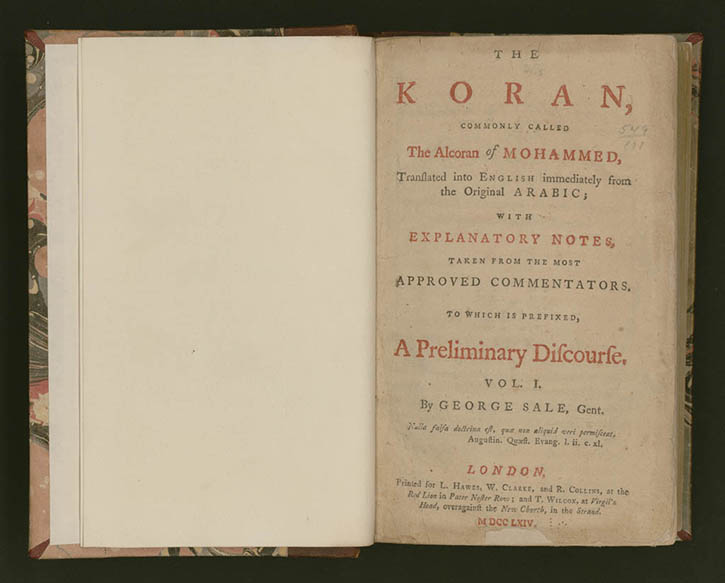
The inside title page of the Qur’an owned by 3rd US President Thomas Jefferson. It appears that Jefferson purchased George Sale’s translation of the Qur’an in 1765 from the office of the Virginia Gazette. At the time, Jefferson was engaged in his law studies at the College of William and Mary, so it is likely that he purchased the book as an example of Arabic law as his textbooks suggested. Jefferson cataloged the book in his section on “Religion,” where it shared the shelves with early Greek and Roman mythology and the Bible. Photo and caption: US Library of Congress.
By JOHN TOLAN Professor of history, University of Nantes
Publishing the Quran and making it available in translation was a dangerous enterprise in the 16th century, apt to confuse or seduce the faithful Christian. This, at least, was the opinion of the Protestant city councillors of Basel in 1542, when they briefly jailed a local printer for planning to publish a Latin translation of the Muslim holy book. The Protestant reformer Martin Luther intervened to salvage the project: there was no better way to combat the Turk, he wrote, than to expose the ‘lies of Muhammad’ for all to see.
The resulting publication in 1543 made the Quran available to European intellectuals, most of whom studied it in order to better understand and combat Islam. There were others, however, who used their reading of the Quran to question Christian doctrine. The Catalonian polymath and theologian Michael Servetus found numerous Quranic arguments to employ in his anti-Trinitarian tract, Christianismi Restitutio (1553), in which he called Muhammad a true reformer who preached a return to the pure monotheism that Christian theologians had corrupted by inventing the perverse and irrational doctrine of the Trinity. After publishing these heretical ideas, Servetus was condemned by the Catholic Inquisition in Vienne, and finally burned with his own books in Calvin’s Geneva.
During the European Enlightenment, a number of authors presented Muhammad in a similar vein, as an anticlerical hero; some saw Islam as a pure form of monotheism close to philosophic Deism and the Quran as a rational paean to the Creator. In 1734, George Sale published a new English translation. In his introduction, he traced the early history of Islam and idealised the Prophet as an iconoclastic, anticlerical reformer who had banished the ‘superstitious’ beliefs and practices of early Christians – the cult of the saints, holy relics – and quashed the power of a corrupt and avaricious clergy.
Sale’s translation of the Quran was widely read and appreciated in England: for many of his readers, Muhammad had become a symbol of anticlerical republicanism. It was influential outside England too. The US founding father Thomas Jefferson bought a copy from a bookseller in Williamsburg, Virginia, in 1765, which helped him conceive of a philosophical deism that surpassed confessional boundaries. (Jefferson’s copy, now in the Library of Congress, has been used for the swearing in of Muslim representatives to Congress, starting with Keith Ellison in 2007.) And in Germany, the Romantic Johann Wolfgang von Goethe read a translation of Sale’s version, which helped to colour his evolving notion of Muhammad as an inspired poet and archetypal prophet.
In France, Voltaire also cited Sale’s translation with admiration: in his world history Essai sur les mœurs et l’esprit des nations (1756), he portrayed Muhammad as an inspired reformer who abolished superstitious practices and eradicated the power of corrupt clergy. By the end of the century, the English Whig Edward Gibbon (an avid reader of both Sale and Voltaire) presented the Prophet in glowing terms in TheHistory of the Decline and Fall of the Roman Empire (1776-89):
The creed of Mahomet is free from suspicion or ambiguity; and the Koran is a glorious testimony to the unity of God. The prophet of Mecca rejected the worship of idols and men, of stars and planets, on the rational principle that whatever rises must set, that whatever is born must die, that whatever is corruptible must decay and perish. In the author of the universe, his rational enthusiasm confessed and adored an infinite and eternal being, without form or place, without issue or similitude, present to our most secret thoughts, existing by the necessity of his own nature, and deriving from himself all moral and intellectual perfection … A philosophic theist might subscribe the popular creed of the Mahometans: a creed too sublime, perhaps, for our present faculties.
But it was Napoleon Bonaparte who took the Prophet most keenly to heart, styling himself a ‘new Muhammad’ after reading the French translation of the Quran that Claude-Étienne Savary produced in 1783. Savary wrote his translation in Egypt: there, surrounded by the music of the Arabic language, he sought to render into French the beauty of the Arabic text. Like Sale, Savary wrote a long introduction presenting Muhammad as a ‘great’ and ‘extraordinary’ man, a ‘genius’ on the battlefield, a man who knew how to inspire loyalty among his followers. Napoleon read this translation on the ship that took him to Egypt in 1798. Inspired by Savary’s portrait of the Prophet as a brilliant general and sage lawgiver, Napoleon sought to become a new Muhammad, and hoped that Cairo’s ulama (scholars) would accept him and his French soldiers as friends of Islam, come to liberate Egyptians from Ottoman tyranny. He even claimed that his own arrival in Egypt had been announced in the Quran.
Napoleon had an idealised, bookish, Enlightenment vision of Islam as pure monotheism: indeed, the failure of his Egyptian expedition owed partly to his idea of Islam being quite different from the religion of Cairo’s ulama. Yet Napoleon was not alone in seeing himself as a new Muhammad: Goethe enthusiastically proclaimed that the emperor was the ‘Mahomet der Welt’ (Muhammad of the world), and the French author Victor Hugo portrayed him as a ‘Mahomet d’occident’ (Muhammad of the West). Napoleon himself, at the end of his life, exiled on Saint Helena and ruminating on his defeat, wrote about Muhammad and defended his legacy as a ‘great man who changed the course of history’. Napoleon’s Muhammad, conqueror and lawgiver, persuasive and charismatic, resembles Napoleon himself – but a Napoleon who was more successful, and certainly never exiled to a cold windswept island in the South Atlantic.
The idea of Muhammad as one of the world’s great legislators persisted into the 20th century. Adolph A Weinman, a German-born American sculptor, depicted Muhammad in his 1935 frieze in the main chamber of the US Supreme Court, where the Prophet takes his place among 18 lawgivers. Various European Christians called on their churches to recognise Muhammad’s special role as prophet of the Muslims. For Catholics scholars of Islam such as Louis Massignon or Hans Küng, or for the Scottish Protestant scholar of Islam William Montgomery Watt, such recognition was the best way to promote peaceful, constructive dialogue between Christians and Muslims.
This kind of dialogue continues today, but it has been largely drowned out by the din of conflict, as extreme-Right politicians in Europe and elsewhere diabolise Muhammad to justify anti-Muslim policies. The Dutch politician Geert Wilders calls him a terrorist, paedophile and psychopath. The negative image of the Prophet is paradoxically promoted by fundamentalist Muslims who adulate him and reject all historical contextualisation of his life and teachings; meanwhile, violent extremists claim to defend Islam and its prophet from ‘insults’ through murder and terror. All the more reason, then, to step back and examine the diverse and often surprising Western portraits of the myriad faces of Muhammad.
Date posted: May 6, 2019.
______________
This article was originally published at Aeon and has been republished under Creative Commons.
About the writer: John Talon is Professor of history at the University of Nantes and author of Faces of Muhammad: Western Perceptions of the Prophet of Islam from the Middle Ages to Today published via Princeton University Press (2019). The book shows that Prophet Muhammad wears so many faces in the West because he has always acted as a mirror for its writers, their portrayals revealing more about their own concerns than the historical realities of the founder of Islam. Faces of Muhammad reveals a lengthy tradition of positive portrayals of Muhammad. Talon’s previous books include Saracens: Islam in the Medieval European Imagination and Saint Francis and the Sultan. Twitter @JohnVTolan
He is always present a witness with his followers; but who has seen his beauty except the blessed?
He who is the cupbearer of the fount of paradise is aware altogether of the hearts of his followers
He is the Imam of the Time the guide and comforter the protector of his followers whether young or old
Like the sun in the sky he is manifest in the world but the blind bat cannot see his luminous face
Source: Shimmering Light: An Anthology of Ismaili Poems, ed. Faquir M. Hunzai and Kutub Kassam, pub. I. B. Tauris in association with The Institute of Ismaili Studies, 1997.
__________________
Making Our Faith Complete
By IMAM MUSTANSIR BI’LLAH
Pandiyat-i- Jawanmardi or Counsels of Chivalry is a compilation of the guidance of the 32nd Ismaili Imam, Mustansir bi’llah, who lived in the 15th century. The book contains exhortations to the faithful on the necessity of recognising and obeying the Imam of the Time and on how to live a truly ethical life. The circumstances that led to the compilation of the work are intriguing, and are alluded to in many of the manuscripts copies as follows:
When Pir Taj al-Din passed away, a number of people from the Sindhi Ismaili Community went to the Imam. Upon arrival they pleaded: “Our Pir Taj al-Din has passed away. Now we are in need of a Pir.” The Imam then had the Counsels of Chivalry compiled and gave it to them saying: “This is your Pir. Act according to its dictates.”
In the following piece from one of the chapters, the Imam enumerates on how murids (those who have pledged their allegiance to the Imam) can make their faith complete. Says the Imam:
“O, believers, O, pious ones!
“Now is the time when you should strengthen religion (din), by helping each other, by trying to gain knowledge, by advancing the religious cause, and striving to make your faith complete.
“Gain safety by obeying the Imam of the time, and become completely obedient to his orders.
“Do unhesitatingly what you are told by the blessed word of the Imam, –- then you will attain (real) salvation.
“Follow the Imam of your time strictly, so that he may take you under his protection, helping you, granting you victory and relief.
“And obedience to the Imam, attention to his word, will bring about the healing of spiritual ailments and lead to soundness and clarity of the heart.”
Reading adapted from The Ismailis in the Middle Ages: A History of Survival, a Search for Salvation by Shafique N. Virani, Hardcover – May 3, 2007
Finding Reveals Connection Between Gaelic Ireland and Islamic Worlds
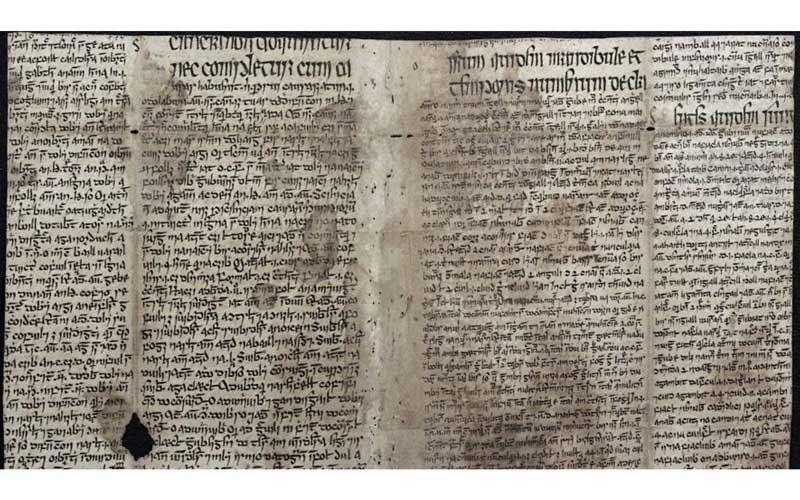
The Avicenna Fragment is an Irish translation of parts of the opening chapters on the physiology of the jaws, the nose and the back in the ‘Canon of Medicine’ by the Persian physician Ibn Sina (980–1037), better known as Avicenna, who is regarded as one of the most significant physicians in the Islamic Golden Age. The existence of this text was not hitherto known in Ireland. University College Cork (UCC) Professor of Modern Irish, Pádraig Ó Macháin, was made aware of a family in Cornwall in possession of a small Latin manual printed in London in 1534/1536. However it was not the book’s content that Professor Macháin was interested in but the binding which contained the fragment. The above image is a digitised version of the binding that was opened out after the binding was removed from the manuscript with the permission of the owners.
ByNEWS AND VIEWS, UNIVERSITY COLLEGE CORK, IRELAND
“The discovery and digitisation of the text was a scholarly adventure” — Professor Macháin
A previously undiscovered 15th-century Irish vellum manuscript, reveals an enchanting connection between Gaelic Ireland and the Islamic world, and illustrates how medieval Ireland was once at the centre of medical scholarship in the world. University College Cork (UCC) Professor of Modern Irish, Pádraig Ó Macháin, was made aware of a family in Cornwall in possession of an early printed book, with an exciting connection to medieval Irish learning.
A 15th-century discovery in a 16th-century book
The book, a pocket-sized Latin manual of local administration, was printed in London in 1534/1536 and had been in the family’s possession since that time. What was of interest to Prof. Ó Macháin was the binding of the book. This consisted of a sheet, full of text in Irish, cut from a 15th-century Irish vellum manuscript, that had been trimmed and folded and stitched to the spine of the printed book to form a sturdy binding.
“The use of parchment cut from old manuscripts as a binding for later books is not unusual in the European tradition,” says Ó Macháin, “but this is the first time that a case has come to light of such a clear example of the practice in a Gaelic context.” From photographs of the binding supplied by the owners, Prof. Ó Macháin established that the Irish text was a medical one. “A quarter of what survives of late-medieval manuscripts in the Irish language is medical in content,” says Ó Macháin, ‘an indication of the practical purpose of these books in Ireland of the time.”
The identity of the text was established immediately by Ó Macháin’s collaborator of many years, Professor Aoibheann Nic Dhonnchadha of the Dublin Institute for Advanced Studies, the only living expert on medieval Irish medicine. It is a fragment of a translation into Irish — previously unrecorded — of the ‘Canon of Medicine’ by the Persian physician Ibn Sena (980–1037), also known as Avicenna, considered one of the most significant physicians in the Islamic Golden Age.
The existence of this text was not hitherto known in Ireland
The ‘Canon of Medicine’ was a great medical encyclopedia which, through translation into Latin (from which the Irish text itself is translated), achieved great popularity in Europe, where state-of-the-art medical theory and practice in medieval times had their origins in the Muslim world. The Irish fragment contains parts of the opening chapters on the physiology of the jaws, the nose and the back. The existence of this text was not hitherto known in Ireland.
Medical scholarship in medieval Gaelic Ireland was on a par with that practised on the Continent and was the most outward-looking of all the native branches of learning. There is evidence of Irish scholars travelling to European medical schools, and bringing their learning back to the medical schools of Ireland.
Because of the importance of the manuscript fragment to the history of Irish learning and medicine, the owners agreed that the binding should be removed from the book by John Gillis of TCD, opened out and digitised under the supervision of Prof. Ó Macháin to whom they entrusted the book, and a new binding provided. This was completed and ‘The Avicenna Fragment’ is now available for viewing on the Irish Script on Screen website.
“The discovery and digitisation of the text was a scholarly adventure,” says Ó Macháin, “one of those occasions when many people, not least the owners of the book, were working together towards a common purpose for the cause of pure learning. It was a pleasure to have been able to make it happen and to have been part of it.”
Following the discovery, a public seminar on ‘The Avicenna Fragment’ and on aspects of Gaelic medieval medicine was hosted by University College Cork on Thursday, March 7, 2019.
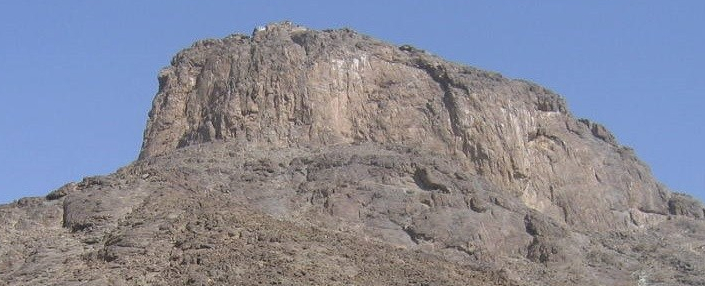
Prophet Muhammad (s.a.s.) received his first revelation from Allah through Angel Jibreel (Gabriel) in a small cave on top of Mount Hira which is also known as Jabl al Nur (Mount of Light). The Prophet used to climb this mountain for his devotions and meditations. During the 23rd night in the month of Ramadan the first 5 verses of the Surah Al-Alaq (96) were revealed to him. The mountain is located just 2 kms from the Ka’bah.
By PERVIS RAWJI
This is a story of Prophet Muhammad (s.a.s.) and Hazrat Ali (a.s.) from the earliest days of Islam. I have been telling the story to my children, nieces and nephews for the past several years.
When Prophet Muhammad first received his calling from Allah via Angel Gabriel in the cave of Mount Hira, he came home shaking and was comforted by his beloved wife Khadija, who validated his experience.
Now, with Khadija’s support, the Prophet of Islam had to convey Allah’s message to the people of Mecca. He invited the important men of Mecca, including those of his prominent Quraish tribe. The guests came and ate the meal and were expecting an announcement, as was customary. None came, so they duly departed for their homes.
The Holy Prophet’s nerves, knowing the revolutionary nature of the idea about to be unleashed upon the pagan Meccan society, had at the last minute failed him.
But at the urging and support of Bibi Khadija, Prophet Muhammad again invited the same men over for another feast. After the meal, the men waited expectantly again.
This time the Prophet did speak. He spoke of his vision, the message and the mission he wanted to convey to the people: that of one God. He then asked:
“And who among you will champion my cause and work by my side?”
None answered. People put their heads down and avoided eye contact.
Prophet Muhammad asked again, “Who is willing to help shoulder my burden and to work by my side and to be my champ?”
Foreseeing the magnitude of such an undertaking, none answered. Then, from the midst of the crowd, an 11 year old boy jumped up.
He was Hazrat Ali, the Prophet’s young cousin and future son-in-law. “I will champion your cause, O Muhammad! I shall work by your side,” spoke up Ali.
At this, there was a wave of derisive laughter from the crowd of wealthy and influential Meccans as they contemplated the outcome and struggles of this ‘visionary’ with his little sidekick.
But Prophet Muhammad’s face broke into a smile as he opened his arms and hugged the boy, his brother, really, for had they not both been raised by the same Abu Talib and Fatima binti Asad?
This expression of endearment and confidence in Hazrat Ali is one incident I Wish I’d Been There to witness.
I link this inspiring story to Mawlana Hazar Imam’s 1992 visit to Vancouver, when he addressed the jamat and, smiling from ear to ear, he gestured with his hand and said, “I think of you as working by my side.”
Mawlana Hazar Imam was asking us to champion him in his cause against poverty in this troubled world. His vision is to include us, his lashkar (symbolic army) of men and women, in this endeavor.
Date posted: February 22, 2019.
(This is a slightly revised version of the author’s piece that originally appeared in Simerg’s highly acclaimed series I Wish I’d Been There).
______________
About the writer: Born in colonial Uganda, Pervis Rawji (née Patni) went to Aga Khan Nursery and Primary schools before immigrating to Canada with her parents and siblings in 1969. Graduating from New Westminster Secondary School, she went for a BA and Teacher Training (PDP) at Simon Fraser University.
Pervis taught elementary school in greater Vancouver, got married, had two children. During this time she got a Montessori diploma as well as an MSc in International Policy from the University of Bristol, UK. Pervis also teaches ESL and yoga. Pervis Rawji has taught English to Ismailis in Iran, India and Syria, and has worked one autumn at the Roshan Clinic in Kabul. Her hobbies are skiing, logic puzzles, badminton and gardening.
The recent CNN photo piece On the trail of Iran’s ‘Assassins’ in the Alborz Mountains has stirred an immense amount of interest on the subject of Alamut and the Ismaili community that for more than 150 years protected itself from its enemies by securing fortresses like Alamut in Iran and Syria.
In a high powered and moving poem penned originally for Simerg’s highly acclaimed series I Wish I’d Been There, Shariffa Keshavjee reminds all our readers about the tragedy that took place in Alamut nearly 800 years ago when the Mongol warlord Genghis Khan had declared his intention to destroy the Ismailis with the following chilling words, “None of that people should be spared, not even the babe in its cradle.”
The context of Shariffa’s poem can further be appreciated through the following 2 excerpts taken from recent non-Ismaili sources.
1. In his extraordinary historical fictional book Samarkand relating to the turbulent history of Iran from the 11th to the 20th century, which was partially inspired by Omar Khayyam’s Rubayat, the award winning French-Lebanese writer Amin Maalouf writes:
“He [the Mongol officer] was carrying a torch in his hand and to show [the historian – Juvayni] just how much in a hurry he was, he placed it next to a pile of dusty scrolls. The historian gave in and gathered into his hands and upto his armpits as many [manuscripts] as he could grab and when a manuscript entitled Eternal Secrets of Stars and Numbers fell to the ground, he did not bend over to pick it up again.
“Thus it was that the Assassins’ library burnt for seven days and seven nights causing the loss of innumerable works, of which there was no copy remaining, and which are supposed to contain the best guarded secrets of the universe.”
2. The online website Iran.com offers the following description:
“The Mongol leader [Hulagu, grandson of Genghis Khan] journeyed himself to the citadel in 1256 and ordered everything to be destroyed, including the famous library. Among the precious writings that disappeared were the works of Hasan himself and the complete history of the Assassins and their doctrines. But just before the burning he allowed his historian Juvainy (who was writing a biography of the Mongol prince) to enter the library and bring out a few of the books, enough as would fit into a small wheelbarrow. No time was allowed to consider the matter.
“Juvainy hurriedly saved a few Qurans, a chronicle of Alamut and a biography of Hasan Sabbah. Everything else perished in the flames. The vast library filled with….hundreds of thousands of manuscripts burned for seven days and seven nights bringing to an end the history of the Ismailis of Alamut. Over the years, knowledge of the Ismailis degenerated into misunderstandings, romances and other fanciful nonsenses such as those popularised by the explorer Marco Polo.”
~~~~~~~~~~~~
Inferno of Alamut
By SHARIFFA KESHAVJEE
I often go back in my mind To a time when giant forts dwarfed Our human form But great minds soared Soared about the forts of Alamut Where great minds thought The scribes told wonders Of the worlds of new continent New passages in the oceans Of search for truth.
I often go back in my mind To the pain of persecution The fear of the self Above all the anguish The anguish of lost knowledge Beautifully bound skillfully crafted Books of great knowledge Of mathematics and cartography Of mystical passion for the divine The deep yearning
I often go back in my mind to the Night the books were burnt The pages curled in fires of doom The ink evaporates Loving thoughts of seers up in smoke Parchments and tomes flung into Feeding the bonfire of lost knowledge What the mind perceived What the pen had scribed Was gone for ever
The smoke rises over Over the fort The charred air rises The effort to stop in vain The scream of anguish Stuck in the throat As the gaze falls upon The lost knowledge of Alamut The human form dwarfed Dwarfed
Gagged In its inability to act.
This however is renaissance Where time and knowledge Laid at the feet of the Master Not sepulchered in the fort But given birth by the vision No longer subjugated Free to search into cyberspace Following vision without boundaries Reaching over mountains across seas Reaching heights
Unthought of in the sojourn in Alamut.
Date posted: February 8, 2019.
_______________
Shariffa Keshavjee is a philanthropist and an entrepreneur with an objective to help women empower themselves. Raised in Kisumu, she considers herself a “pakaa” Kenyan. She is now based in the nation’s capital, Nairobi. She is the founding member and director of the Hawkers Market School and the Kigera Girl Guides Centre which provide educational opportunities for destitute girls in the country’s slums. Her Hawkers Market Girls Centre has been the recipient of the World Bank Development Marketplace Award in 2004 in which the centre was given $85,000. In addition, she is also the founding member of FONA (Friends of the Nairobi Arboretum) which is dedicated to preserving Kenya’s forest and preserved arboreta. Her other interest is in visual arts where she delights in painting on wood, silk and porcelain using water colours, oils and acrylics. She also likes writing, especially for children, and bird watching.





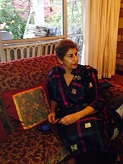 Shariffa Keshavjee is a philanthropist and an entrepreneur with an objective to help women empower themselves. Raised in Kisumu, she considers herself a “pakaa” Kenyan. She is now based in the nation’s capital, Nairobi. She is the founding member and director of the Hawkers Market School and the Kigera Girl Guides Centre which provide educational opportunities for destitute girls in the country’s slums. Her Hawkers Market Girls Centre has been the recipient of the World Bank Development Marketplace Award in 2004 in which the centre was given $85,000. In addition, she is also the founding member of FONA (Friends of the Nairobi Arboretum) which is dedicated to preserving Kenya’s forest and preserved arboreta. Her other interest is in visual arts where she delights in painting on wood, silk and porcelain using water colours, oils and acrylics. She also likes writing, especially for children, and bird watching.
 Simerg - Insights from Around the World