The Echoes of Nature

By NAVYN NARAN

Cave of Hira, Saudi Arabia

The echoes of Nature
Bring us back to the cave
Wherein spirituality harkens the soul
Hush
What is this ?
To “Read”?
Not yet.
First to calm down
Slow down the thoughts
And attend the Divine Intellect
That which emanates within each of our souls
Within the bear of this Magnificent body
That is all too human
But never humanly created.

The echoes of Nature
Bring us back to the cave
To will the calm.
Creating space to calm the Will.
The physical jamat Khana is closed today
The spiritual space wide open
The windows to spring invite us in
To quiet the mind for moments within

The echoes of Nature
Light our world
Let fresh air be a gift to enjoy.
Within the chaos we must remember our Peace
The time is given
To slow the rat race.
Echoes of Nature
Harken the soul
Can you hear?
Perhaps outside in nature
Or your child’s face asleep
Or the eyes of a pet by your side

Pause
Come in.

© Navyn Naran. 2020.

Date posted: May 14, 2020.

____________________

Dr. Navyn Naran

About the author: A regular contributor to this website, Dr. Navyn Naran was born in Dar es Salaam, Tanzania, to Anaar (1936-2017) and Badrudin Naran (1930-1979). She is currently in Toronto working in pediatrics and volunteering at the Aga Khan Museum.

____________________

We welcome feedback/letters from our readers. Please use the feedback box which appears below. If you don’t see the box please click Leave a comment. Your comment may be edited for length and brevity, and is subject to moderation. We are unable to acknowledge unpublished letters.

Before departing this website please take a moment to review Simerg’s Table of Contents for links to hundreds of thought provoking pieces on a vast array of subjects including faith and culture, history and philosophy, and arts and letters to name a few.

Devotion Through Dhikr

By ROXANA JAFFER

Heart in a pulsating mode; in rhythm with the breath
Mind reaching its zenith; as thoughts meet their death

Gratefulness taking over; Conveying lightness to the body
Entire body in smiles; Perhaps the spiritual light in embody

All because of the Dhikr, the constant chanting
His attributes in tempo, energy in sync; all else negating

Dhikr:
What an effect on the waves of the Gamma and the Theta
Both leave defeated, allowing the take-over by the wave of
relaxing Alpha

Dhikr:
Bringing an awareness of His elements; so many …..Ninety-nine
An inner need arises; to ascribe, to impute these traits divine

Dhikr:
My heart is in a pulsating mode, in sync with the mind
Now there is total unity; as mind, body and soul are totally entwined.

Date posted: May 13, 2020.

Before departing this website please take a moment to review Simerg’s Table of Contents for links to hundreds of thought provoking pieces on a vast array of subjects including faith and culture, history and philosophy, and arts and letters to name a few.

______________________

Editor’s note: We welcome Roxana Jaffer as our new contributor. Dhikr, penned by her in March 2020, is the first of her several poems we will be publishing in the coming weeks.

Roxana Jaffer, Simerg

A Kenyan born girl, brought up in the UK and now residing in UAE, Roxana Jaffer has many awards to her name including “Global Inspirational Leadership Award”, “Best Best Woman in Hospitality UAE Award”, and “The Most Influential Women Leader  Award 2019”. She was also recognized as one of the “Indian Super 100 Women Achievers in the Middle East & Africa”. She partners with UN World food program, and her endeavours have managed to feed over 460,000 hungry children in the world. She is instrumental in Holiday Inn Dubai attaining the coveted  CSR Arabia award, four years running out of 13 Arab countries.

An Accountant by profession she has an MBA from University of Liverpool in Leadership and is a scholar of the Harvard Business School for Executive Education.

Roxana epitomises the best in human endeavour -– fun, laughter, hard work, creativity, caring for others, leading with a social conscience and above all, striving to make the world a better place and is the founder of the NGO -– ‘abc: an Advent for Building human Capital’ (see www.myabcfoundation.org) which accords English to the unemployed in Hunza and Delhi, resulting in a 70% impact as youth get growth.

Her creativity is taking a different turn as she expresses spirituality through poetry she pens.

______________________

We welcome feedback/letters from our readers. Please use the feedback box which appears below. If you don’t see the box please click Leave a comment. Your comment may be edited for length and brevity, and is subject to moderation. We are unable to acknowledge unpublished letters.

Calgary’s Muslim Mayor Naheed Nenshi Responds to Request for the Recitation of the Adhan During Ramadhan

Mayor Nenshi taking a selfie at the 2017 Global Pluralism Award in Ottawa.
Calgary’s Mayor Naheed Nenshi, seen taking a selfie at the inaugural ceremony of the Global Pluralism Award held in Ottawa, Canada on November 15, 2017 during the Diamond Jubilee Year of Mawlana Hazar Imam, His Highness the Aga Khan. The Mayor served as a member of the jury that selected winners and honourable mentions for the Award. Photo: Copyright © Jean-Marc Carisse.

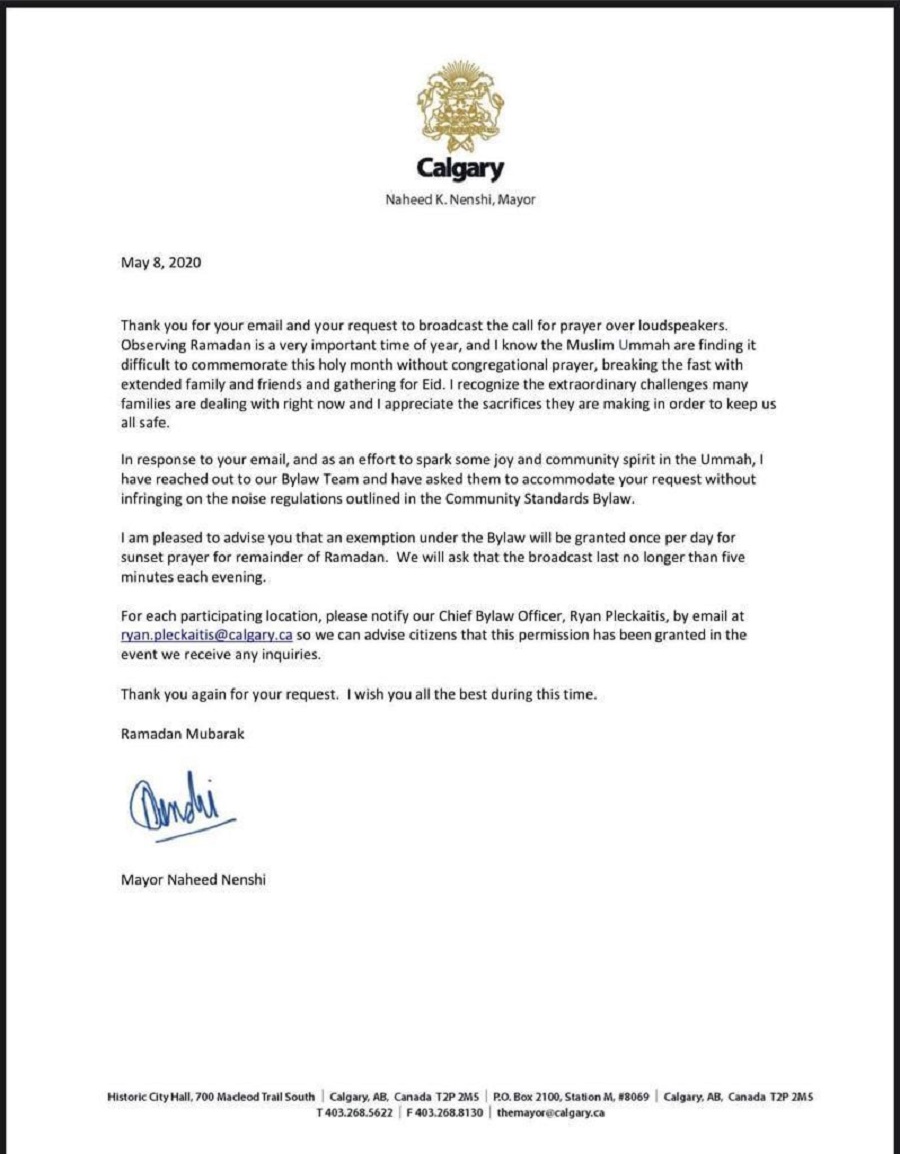
CBC reported that history was made in Windsor, Ontario, when the Muslim Adhan (call to prayer) was allowed to be recited over a loudspeaker on the roof of the city’s mosque during the remaining days of Ramadhan. Now the beautiful and heart warming Islamic call to prayer will also be heard at participating Calgary mosques once a day during the sunset prayer.

The following is Mayor Naheed Nenshi’s response to a request from the Muslim community:

Mayor Nahid Nenshi's for the Islamic Adhan Adhan
Part of Calgary Mayor Naheed Nenshi’s letter: “In response to your email, and as an effort to spark some joy and community spirit in the Ummah, I have reached out to our Bylaw Team….I am pleased to advise you that an exemption under the Bylaw will be granted once per day for sunset prayer for reminder of Ramadan…”

Editor’s Note: Calling Calgarians — have you taken a very good video recording of the recitation of the Adhan in Calgary? If so, please submit it to Malik Merchant at email Simerg@aol.com, Subject: Adhan recording in Calgary. We will review your submission, and publish some of very best ones from across the city on this website. Please specify mosque location, date and time of the Adhan.

Date posted: May 10, 2020.
Last updated: May 11, 2020.

Before departing this website please take a moment to review Simerg’s Table of Contents for links to hundreds of thought provoking pieces on a vast array of subjects including faith and culture, history and philosophy, and arts and letters to name a few.

_________________________

We welcome feedback/letters from our readers. Please use the feedback box which appears below. If you don’t see the box please click Leave a comment. Your comment may be edited for length and brevity, and is subject to moderation. We are unable to acknowledge unpublished letters.

June 28, 1957: A Special Day for Islam in America – President Eisenhower opens Mosque in Washington, D.C.

“I should like to assure you, my Islamic friends, that under the American Constitution, under American tradition, and in American hearts, this center, this place of worship, is just as welcome as could be a similar edifice of any other religion” — President Eisenhower, June 28, 1957, Islamic Center, Washington D.C.

In an on-line story dated February 3, 2016, TIME magazine informed its readers that President Barrack Obama would be visiting the Islamic Society Mosque in Baltimore, Maryland, thus setting a milestone for his presidency. The reporter, Sarah Begley, reminded readers that the President was far from being the first American President to do so.

Story continues after photo

Exterior view of the Islamic Center in Washington D.C., featuring a prominent minaret and decorative arches, surrounded by greenery and a clear blue sky.
Islamic Center, Washington, D.C. Conceived in 1944, the site for the mosque was purchased in 1946, and the cornerstone was laid on January 11, 1949. The mosque was designed by Italian architect Mario Rossi and completed in 1954. Photo: Carol M. Highsmith Archive collection / US Library of Congress.

The honour, she said, belonged to President Dwight D. Eisenhower, who served as the 34th President of the United States from 1953 to 1961. He opened the Islamic Center of Washington in the city’s Embassy Row district on June 28, 1957. First lady Mamie Eisenhower accompanied him to the dedication ceremony.

In his speech, President Eisenhower emphasized the importance of religious freedom in the USA, and highlighted the “Muslim genius” that has cultivated some of history’s most important inventions, discoveries, art, literature and thought now considered indispensable to modern civilization.

President Dwight D. Eisenhower’s Remarks at the Opening of the Islamic Center in Washington D.C. on June 28, 1957

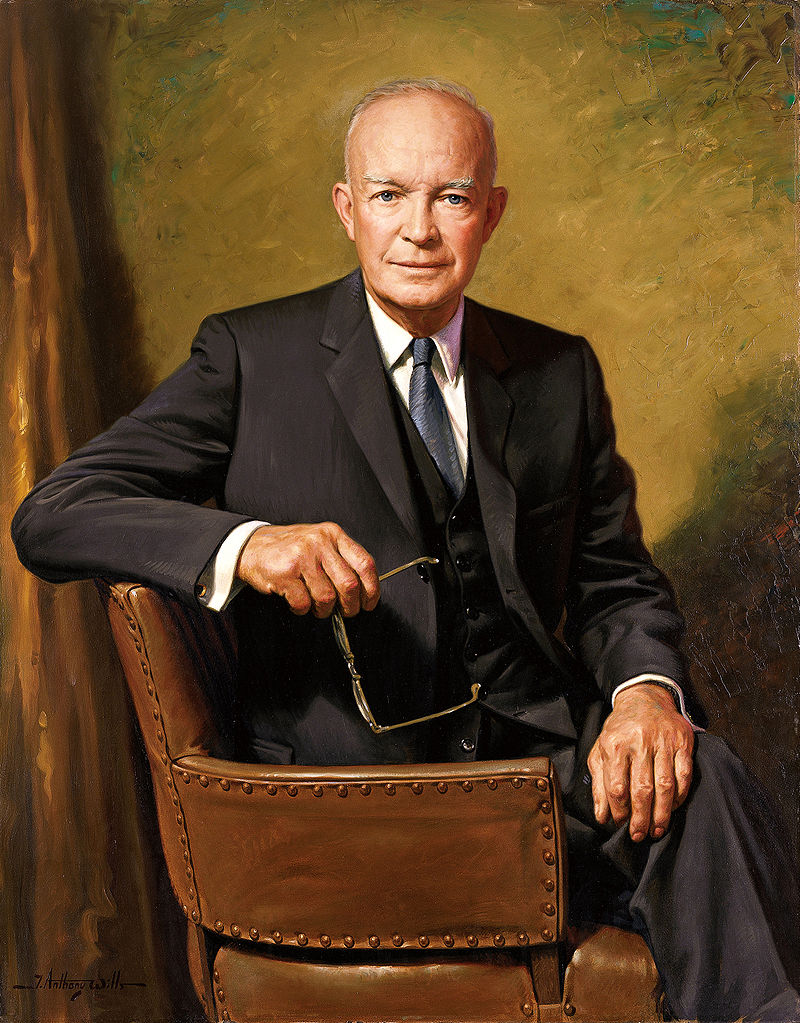
A portrait of President Dwight D. Eisenhower, seated in a brown leather chair, holding a pair of glasses, wearing a dark suit and tie, with a neutral background.
34th US President Dwight D. Eisenhower. White House portrait painted by James Anthony Wills.

By DWIGHT D. EISENHOWER
(see profile, below)

[For a photo of the President delivering the speech, please click Politicio — ed.]

Mr. Ambassador, Dr. Bisar, Governors of the Islamic Center, and distinguished guests:

It is a privilege to take part in this ceremony of dedication. Meeting with you now, in front of one of the newest and most beautiful buildings in Washington, it is fitting that we rededicate ourselves to the peaceful progress of all men under one God.

And I should like to assure you, my Islamic friends, that under the American Constitution, under American tradition, and in American hearts, this center, this place of worship, is just as welcome as could be a similar edifice of any other religion. Indeed, America would fight with her whole strength for your right to have here your own church and worship according to your own conscience. This concept is indeed a part of America, and without that concept we would be something else than what we are.

The countries which have sponsored and built this Islamic Center have for centuries contributed to the building of civilization. With their traditions of learning and rich culture, the countries of Islam have added much to the advancement of mankind. Inspired by a sense of brotherhood, common to our innermost beliefs, we can here together reaffirm our determination to secure the foundation of a just and lasting peace.

Our country has long enjoyed a strong bond of friendship with the Islamic nations and, like all healthy relationships, this relationship must be mutually beneficial.

Civilization owes to the Islamic world some of its most important tools and achievements. From fundamental discoveries in medicine to the highest planes of astronomy, the Muslim genius has added much to the culture of all peoples. That genius has been a wellspring of science, commerce and the arts, and has provided for all of us many lessons in courage and in hospitality.

This fruitful relationship between peoples, going far back into history, becomes more important each year. Today, thousands of Americans, both private individuals and governmental officials, live and work — and grow in understanding — among the peoples of Islam.

At the same time, in our country, many from the Muslim lands — students, businessmen and representatives of states — are enjoying the benefits of experience among the people of this country. From these many personal contacts, here and abroad, I firmly believe that there will be a broader understanding and a deeper respect for the worth of all men; and a stronger resolution to work together for the good of mankind.

As I stand beneath these graceful arches, surrounded on every side by friends from far and near, I am convinced that our common goals are both right and promising. Faithful to the demands of justice and of brotherhood, each working according to the lights of his own conscience, our world must advance along the paths of peace.

Thank you very much.

Date posted: April 28, 2020.

Before departing this website please take a moment to review Simerg’s Table of Contents for links to hundreds of thought provoking pieces on a vast array of subjects including faith and culture, history and philosophy, and arts and letters to name a few.

____________________

Historic black and white photo showing a man exiting a car while a uniformed officer assists him, with another man, presumably Dwight D. Eisenhower, standing nearby.
Pakistan Prime Minister Huseyn Suhrawardy being received at the White House by President Dwight Eisenhower in 1957. Photo: Thomas J. O’Halloran / US Library of Congress.

Dwight D. Eisenhower (1890-1969) served as the thirty-fourth president of the United States, governing from 1953 to 1961, after a military career culminating in his role as Supreme Commander of Allied Forces in Europe during World War II. Eisenhower’s presidency was largely occupied by foreign affairs, most notably the Korean War, the expansion of U.S. involvement in the Middle East after the Suez Crisis, and the general deepening of the Cold War. Even domestically, many of Eisenhower’s achievements were shaped by national security, including the construction of the interstate highway system. Eisenhower joined the Presbyterian Church as an adult and played a role in the addition of “In God We Trust” on American currency. Eisenhower famously stated that “our government has no sense unless it is founded in a deeply felt religious faith, and I don’t care what it is.”

________________________

Please like Simerg’s joint Facebook page with Barakah and follow us at http://twitter.com/simerg.

We welcome feedback/letters from our readers. Please use the feedback box which appears below. If you don’t see the box please click Leave a comment. Your comment may be edited for length and brevity, and is subject to moderation. We are unable to acknowledge unpublished letters.
Noteworthy book: “This Day in Presidential History,” by Paul Brandus. For each of the 365 days of the year, Brandus offers fascinating facts, historical anecdotes, and pithy quotations from and about all the presidents of the United States, from George Washington to Donald Trump.

Mawlana Hazar Imam, His Highness the Aga Khan, sends guidance on Covid-19, with affection and blessings to Ismailis around the world; text in 10 languages

The following message in English and all the translations that follow are reproduced from the The Ismaili, the official website of the community. After reading the message, please scroll to the bottom of this post to read our supplication to Mawlana Hazar Imam — it follows the Urdu translation.

Message from Mawlana Hazar Imam, His Highness the Aga Khan, on Covid-19 (English)

Aga Khan in traditional attire, seated against an ornate background, smiling.

My beloved spiritual children,

My Jamat is aware that the Covid-19 virus has created a global crisis that is also affecting the Jamat worldwide. As Imam-of-the-Time, I have recommended the Jamati and AKDN institutions and agencies to closely monitor the impact of this pandemic, and to extend support and assistance to the Jamat and the communities in which they live.

The Covid-19 virus is highly contagious, and every day we are witnessing the damage it is inflicting on human lives and societies. In facing this threat, it is very important that all members of my Jamat should take personal responsibility for exercising all possible steps to protect their own good health, safety and wellbeing, and that of their family.

Among the most critical of the measures recommended by all government and health agencies are the maintenance of the best standards of personal hygiene, and practising the notion of physical distancing. While not easy, physical distancing is essential.

It is my wish that my murids, and all those among whom they live, should follow these as well as all other guidelines and recommendations that the government and health authorities issue.

It is my hope and prayer that, in due course, work on producing vaccines and other forms of medicine will yield positive results, and that we will see a gradual return to normal life in all societies.

As we focus now on overcoming the present challenges, the Jamat and all my institutions should plan to build for the future from a position of strength and wisdom.

I send my most affectionate paternal, maternal loving blessings for the good health, safety, and well-being of all my murids, with best loving blessings for mushkil-asan.

My Jamat worldwide is constantly in my thoughts and in my prayers.

Yours affectionately,

Aga Khan

___________________

Message from Mawlana Hazar Imam, His Highness the Aga Khan, on Covid-19 (French)

Aga Khan seated in traditional attire, smiling, with a decorative background.

Mes Chers Enfants Spirituels,

Mon Jamat est conscient du fait que le virus Covid-19 a déclenché une crise globale qui affecte également le Jamat à travers le monde. En tant qu’Imam-du-Temps, j’ai recommandé aux institutions et agences Jamati et de l’AKDN de suivre de près l’impact de cette pandémie, et d’offrir aide et assistance au Jamat et aux communautés dans lesquelles ils vivent.

Le virus du Covid-19 est hautement contagieux, et chaque jour nous sommes témoins des dégâts qu’il cause sur les vies humaines et les sociétés. Face à cette menace, il est très important que tous les membres de mon Jamat s’engagent personnellement à prendre toutes les mesures possibles pour protéger leur propre santé, sécurité et bien-être, ainsi que ceux de leur famille.

Parmi les plus importantes des mesures recommandées par tous les gouvernements et agences de santé figurent le maintien des meilleurs standards d’hygiène personnelle, et le respect de la notion de distanciation sociale. Bien qu’elle ne soit pas facile, la distanciation sociale est essentielle.

C’est mon souhait que mes murids, et tous ceux parmi lesquels ils vivent, suivent ces mesures ainsi que toutes les autres directives et recommandations que le gouvernement et les autorités sanitaires émettent.

C’est mon espoir et ma prière que, en temps voulu, le travail mené pour produire des vaccins et d’autres formes de remèdes va produire des résultats positifs, et que nous verrons un retour graduel à la vie normale dans toutes les sociétés.

Alors que nous nous concentrons en ce moment à surmonter les défis actuels, le Jamat et toutes mes institutions devraient se préparer à construire pour l’avenir à partir d’une base solide et avec sagesse.

J’envoie mes plus affectueuses tendres bénédictions paternelles et maternelles pour la bonne santé, la sécurité, et le bien-être de tous mes murids, avec mes meilleures tendres bénédictions pour mushkil-asan.

Mon Jamat à travers le monde est constamment dans mes pensées et dans mes prières.

Affectueusement,

Aga Khan

___________________

Message from Mawlana Hazar Imam, His Highness the Aga Khan, on Covid-19 (Portuguese)

A portrait of a man in traditional attire, seated and smiling, with an ornate background featuring geometric patterns.

Meus amados filhos espirituais,

O meu Jamat está ciente de que o vírus Covid-19 criou uma crise global que está também a afetar o Jamat em todo o mundo. Como Imam do Tempo, recomendei às instituições e agências Jamati e da AKDN que monitorizassem de perto o impacto desta pandemia e prestassem apoio e assistência ao Jamat e às comunidades onde estes vivem.

O vírus Covid-19 é altamente contagioso e todos os dias assistimos aos danos que este está a infligir tanto nas vidas humanas como nas sociedades. Ao enfrentar esta ameaça, é muito importante que todos os membros do meu Jamat assumam a responsabilidade pessoal de colocar em prática todas as medidas possíveis para proteger a sua própria saúde, segurança e bem-estar, bem como as da sua família.

Entre as medidas mais críticas recomendadas por todas as agências governamentais e de saúde estão a manutenção dos melhores padrões de higiene pessoal e a prática da noção de distanciamento físico. Embora não seja fácil, o distanciamento físico é essencial.

É meu desejo que os meus murids, e todos aqueles entre os quais vivem, sigam estas e todas as outras orientações e recomendações que o governo e as autoridades de saúde emitem.

É minha esperança e oração que, a seu tempo, o trabalho na produção de vacinas e outras formas de medicina produzam resultados positivos e que se assista a um regresso gradual à vida normal em todas as sociedades.

Enquanto centramos as nossas atenções em ultrapassar os desafios atuais, o Jamat e todas as minhas instituições devem planear a construção para o futuro a partir de uma posição de força e sabedoria.

Envio as minha melhores bênçãos paternais e maternais para boa saúde, segurança e bem-estar de todos os meus murids, com as minhas melhores bênçãos para mushkil-asan.

O meu Jamat em todo o mundo está constantemente nos meus pensamentos e nas minhas orações. 

Afetuosamente

Aga Khan

___________________

Message from Mawlana Hazar Imam, His Highness the Aga Khan, on Covid-19 (Farsi)

Aga Khan seated in ceremonial attire, smiling, in front of an intricate patterned backdrop.
Farsi text from Mawlana Hazar Imam addressing the impact of COVID-19 on the community, emphasizing personal responsibility for health and safety.
Message from Mawlana Hazar Imam (Farsi)

___________________

Message from Mawlana Hazar Imam, His Highness the Aga Khan, on Covid-19 (Dari)

Aga Khan sitting elegantly in traditional attire against an ornate backdrop.
A written message from Mawlana Hazar Imam, His Highness the Aga Khan, addressing the impact of Covid-19 on the community, detailing health recommendations and expressing his blessings for the well-being of all.
Message from Mawlana Hazar Imam (Dari)

___________________

Message from Mawlana Hazar Imam, His Highness the Aga Khan, on Covid-19 (Arabic)

Aga Khan seated in traditional attire, smiling, with a patterned background.
A letter from Mawlana Hazar Imam, His Highness the Aga Khan, addressing the community about Covid-19, emphasizing personal health, hygiene, and following government guidelines.
Message from Mawlana Hazar Imam (Arabic)

___________________

Message from Mawlana Hazar Imam, His Highness the Aga Khan, on Covid-19 (Gujarati)

Letter from Aga Khan addressing the Jamat regarding Covid-19, emphasizing the importance of health measures and personal responsibility.
Message from Mawlana Hazar Imam (Gujarati)

___________________

Message from Mawlana Hazar Imam, His Highness the Aga Khan, on Covid-19 (Russian)

Aga Khan sitting gracefully in traditional attire against a decorative backdrop.
Message from Mawlana Hazar Imam addressing the global Covid-19 crisis, emphasizing health safety, personal responsibility, and community support.
Message from Mawlana Hazar Imam (Russian)

_______________________

Message from Mawlana Hazar Imam, His Highness the Aga Khan, on Covid-19 (Tajik)

Portrait of a man wearing traditional attire, seated against a decorative background.
A letter from Mawlana Hazar Imam, His Highness the Aga Khan, addressing the Jamat about Covid-19, focusing on health, safety, and community support.
Message from Mawlana Hazar Imam (Tajik)

___________________

Message from Mawlana Hazar Imam, His Highness the Aga Khan, on Covid-19 (Urdu)

Aga Khan seated in traditional attire, smiling during an event, with intricate patterned backdrop.
A message from Mawlana Hazar Imam, His Highness the Aga Khan, addressing the Covid-19 pandemic in Urdu. The document discusses health guidelines, the importance of personal responsibility, and prayers for the Jamat's well-being.
Message from Mawlana Hazar Imam (Urdu)

___________________

Shukrana and Supplication to Mawlana Hazar Imam, His Highness the Aga Khan, for Guidance on Covid-19

We submit our humble gratitude to our beloved Mawlana Hazar Imam for his guidance on Covid-19 as well as his blessings to the world wide Jamat for mushkil-asan (protection from difficulty).

We submit the following supplications from verses 1 and 5 of Pir Hasan Kabirdin’s Ginan Sahebe Farman Lakhi Mokalea:

O brother! Listen, My Lord Ali has written and sent a Farman. The beloved Lord has remembered this servant today with kindness in his heart

O my Lord Ali! Listen! Remove all my sorrows and troubles. O Lord Ali, the great king! O Lord of infinity! Fulfill all my wishes.

Date posted: April 24, 2020.

_______________

Before departing this website please take a moment to review Simerg’s Table of Contents for links to hundreds of thought provoking pieces on a vast array of subjects including faith and culture, history and philosophy, and arts and letters to name a few.

Please like Simerg’s joint Facebook page with Barakah and follow us at http://twitter.com/simerg.

We welcome feedback/letters from our readers. Please use the feedback box which appears below. If you don’t see the box please click Leave a comment. Your comment may be edited for length and brevity, and is subject to moderation. We are unable to acknowledge unpublished letters.

______________

The Nature of Prayer: Significance of the Tasbih, and carrying it to practice the faith by calling on the name of Allah, Muhammad, Ali or the names of Imams

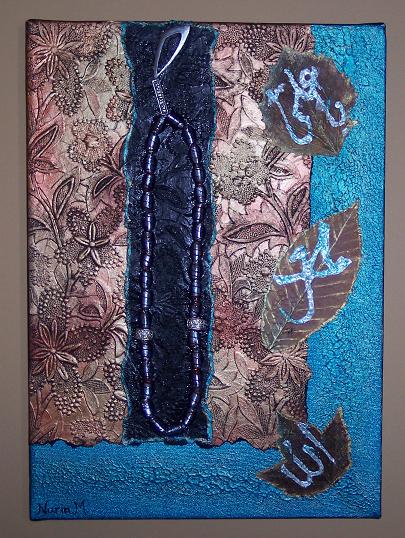
T'The Nature of Prayer'  by Nurin Merchant. Golden Jubilee art for His Highness the Aga Khan's Golden Jubilee
‘The Nature of Prayer’ is a 14″ x 10″ mixed media acrylic painting on canvas. Secured on the canvas with gesso, a strong glue, are a handmade tasbih (prayer beads), and 3 dried leaves bearing the Arabic inscriptions reading from bottom to top, Allah, Muhammad and Ali. The whole piece represents keeping the memory of Allah, and making sure that every day there is in our minds the presence of our faith in our hearts and souls which in itself is a prayer, hence the title of the painting ‘The Nature of Prayer’. This work was Nurin Merchant’s contribution for Colours of Love, an art and culture initiative by the Ismaili Council for Canada in 2008 during the Golden Jubilee Celebrations of Mawlana Hazar Imam, His Highness the Aga Khan.

By DR. V. A. LALANI
with additional material by MALIK MERCHANT

In response to a recent piece on the impact of Jamatkhana closures, we were pleased to receive a very inspiring recommendation from Omar Kassam of Vancouver who suggested that we slowly recite the Surah Al-Fatihah while we spend 20 seconds thoroughly washing our hands – the #1 health guideline during the current COVID-19 pandemic. Such is the nature of prayer –- that we can seek out small moments of 1 second, 5 seconds or 20 seconds to the remembrance of God, to exalt Him, and to seek His help. The Surah is regarded as one of greatest Surahs in the Holy Qur’an, along with Surah Al-Ikhlas. The wisdom and prayers contained in this small seven verse Surah are absolutely remarkable.

There are many other opportune moments that we have throughout the day, and Mawlana Hazar Imam has often recommended to us to carry the tasbih with us –- in our pockets or handbags –- and seek out moments of happiness by calling on the name of Allah, Hazrat Ali, Prophet Muhammad or the names of the Imams. He has also asked us to invoke these names during any difficulty we are facing.

What is tasbih and what are its origins in Islam?

The Arabic word tasbih means to exalt God, praise God or to pray to God. It is supererogatory prayer, that is, an act which is considered to be good and beyond the call of duty, and not something that is strictly required.

The word tasbih is also given to the beads strung together in the form of a circle which are used in the process of praying.

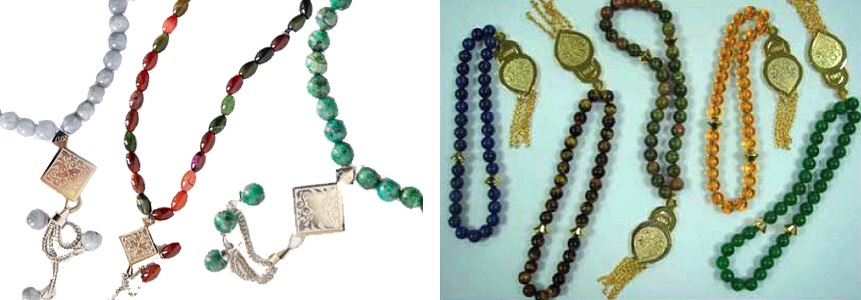
The tasbih consists of a string of beads that is looped into a circle. The two ends are passed through a larger, decorative bead where they are tied or woven into a knot. This is the starting point of a tasbih.

Almost all the religions in the world today possess some form of this object which differ a little in size, number and arrangement of beads. Calling it by different names (for example, rosary, in Christianity), they make use of it for the purpose of reciting the name of the deity in whom they believe.

Although tasbih is a constant companion and an object of daily use by the believers, its origin, development and purpose has remained so obscure to most of us that I shall discuss some of the details of this small, but important object.

Verily in the remembrance of Allah do hearts find rest!”Holy Qur’an, 13:28

It is said that the first tasbih (supererogatory prayer) was given by the Prophet Muhammad (S.A.S.) to his beloved daughter Hazrat Bibi Fatima (A.S.), the wife of Hazrat Mawla Murtaza Ali (A.S.). This comprise of the praises of Allah, namely, Allahu Akbar (Allah is Great), Subhan Allah (Glory be to Allah) and Al-Hamdu-lillah (All praise is due to Allah). Each of these was to be recited thirty-three times in succession. This is known as Tasbih-e Bibi Fatima.

In the absence of any circular object like the present day tasbih, it is said that Bibi Fatima used to recite these praises taking help of thirty-three stones of dates or thirty-three pebbles.

Later on, as it was found to be very inconvenient to keep loose stones or pebbles, or have to collect them when needed, it was probably decided to string together thirty-three stones of dates or some such object to make a rosary giving it a circular appearance. At a later period, at the point where the knot was tied, a more decorative, larger bead was added, forming what we recognize as the tasbih today. Tasbih prayer beads are made of various materials, including different stones, sterling silver, wood, etc.

The larger bead at the tasbih’s crown is called imam which means ‘a leader’ and it is so called because all recitations start at this point. Imam leads and all the other small beads follow.

In the ordinary Islamic tasbih, the number of beads varies widely from 99 to 102. The 99 bead tasbih may have 2 extra small beads as dividers, after each group of 33 beads. The 102 bead tasbih used in some tariqahs is divided in parts of 12, 22, 34, 22 and 12. Then, of course, we have the commonly used smaller tasbih with 33 beads that is considered in conformity with our Holy Prophet Muhammad’s original conception of tasbih.

As in the 99 bead tasbih, the 33 bead also carries 2 extra beads after each 11 beads, as dividers. The extra small beads act as an informer when the required number of recitations are completed. These are called mui’zin in Arabic which means ‘an informer’ (like the informer who calls Muslims to prayer). In the Indian sub-continent, these two beads are called banga, bangi or bango which all mean ‘a caller’ or ‘an informer’.

Tasbihs
A selection of tasbihs produced during the Diamond Jubilee (left) and Golden Jubilee celebrations of Mawlana Hazar Imam. Photo: The Ismaili.

Among the numerous memorabilia objects that were produced for Mawlana Hazar Imam’s Golden and Diamond Jubilee celebrations in 2007 and 2017, the tasbih was the most sought after item. The Diamond Jubilee tasbihs came with a finely-detailed floral pattern interwoven with intricate and diverging leaves inspired by a Fatimid wood carving. The 33 bead Golden Jubilee tasbihs came in twenty-three varieties of semi-precious stone with the top stem adapted from a 16th century alam (emblem or standard).

“O believers, remember God oft and give Him glory at the dawn and in the evening” —
Holy Qur’an, 33:41-42

The last and most important point about tasbih is its purpose. The purpose of tasbih is quite evident and that is to remember Allah.

Over the past 35 years, Mawlana Hazar Imam has sought to encourage us to keep the remembrance of our faith as an integral part of our daily life, and to seek from this remembrance spiritual happiness on an ongoing basis. His most recent reference regarding using the tasbih for calling out the name of Allah, the name of Prophet Muhammad, or Hazrat Ali was in a Farman Mubarak that he made in India in 2018 (see page 144, para. 3, in Diamond Jubilee Farman Mubarak book)

While we all face and feel the effects of the worldwide COVID-19 pandemic with the rest of humanity, let us all recall the message that Mawlana Hazar Imam conveyed to us at the commencement of the Diamond Jubilee year, when he said that the faith of our forefathers would help us to face life’s challenges in times of crisis and rapid changes (see page 12, para. 2, in Diamond Jubilee Farman Mubarak book).

“Sitting, sleeping, going about, take the Lord’s name, take the Lord’s name” —
Ginan, Pir Hasan Kabirdin

An illustrious piece of advice regarding our faith comes from none other than our illustrious forefather Pir Hasan Kabirdin, composer of hundreds of Ginans that have illuminated millions of Ismailis over the past seven centuries. In the second verse of Dur Desh Thee Aayo Vannjaaro, he says: “Sitting, sleeping, going about, take the Lord’s name, take the Lord’s name.” (Translation, Aziz Esmail, in his Scent of Sandalwood)

Ginan Dur Desh…sung by Late Shamshu Bandali Haji. Credit: Ginan Central

Carrying the tasbih with us will act as reminder for us to contemplate on the names of Allah, the Prophet and the Imams during any moment in our lifetime. That is the nature of prayer.

Date posted:  April 6, 2020.

Before departing this website please take a moment to review Simerg’s Table of Contents for links to hundreds of thought provoking pieces on a vast array of subjects including faith and culture, history and philosophy, and arts and letters to name a few.

______________

This piece contains material from the March 1986 issue of Al-Misbah magazine published by the Ismaili Tariqah and Religious Education Board for the United Kingdom (ITREB). The magazine, like all other religious magazines published by ITREB in numerous countries around the world, ceased publication in the early 1990’s.

Share this article with others via the share option below.

We welcome feedback/letters from our readers. Please use the feedback box which appears below. If you don’t see the box please click LEAVE A COMMENT. Your comment may be edited for length and brevity, and is subject to moderation. We are unable to acknowledge unpublished letters.

Mawlana Hazar Imam, His Highness the Aga Khan, sends his blessings to world-wide Ismailis for Navroz and mushkil asan (protection from difficulties), with prayers for their health and well-being

His Highness the Aga Khan, Mawlana Hazar Imam
Mawlana Hazar Imam, His Highness the Aga Khan, 49th Imam of the Shia Imami Ismaili Muslims, pictured at the Diamond Jubilee Darbar in Kenya. Photo: The Ismaili,

By MALIK TALIB
(Chairman of the Ismaili Leaders’ International Forum)

On the occasion of Navroz, our beloved Mawlana Hazar Imam has most graciously sent a Talika Mubarak to be shared with our global Jamat, which reads as follows:

My dear Malik,

On the occasion of Navroz, I send to my worldwide Jamat my best blessings for peace and happiness in their lives.

I am also sending my special blessings for Mushkil Asan for my Jamats wherever they may be, and I pray for their health and their well-being.

Yours affectionately,

Aga Khan

I convey warm Mubarak to the global Jamat on the occasion of Navroz and, on behalf of all the murids world-wide, I express humble shukrana to our beloved Mawlana Hazar Imam for the gracious Talika.

Mawlana Hazar Imam’s Guidance Central to Ismaili Institutions’ decision making during the COVID-19 crisis

….Malik Talib’s message continues below

The festival of Navroz is a time for hope, optimism, renewal, and faith – even in times of uncertainty and difficulty.

I would like to assure the Jamat that all Jamati institutions and leaders around the world are doing everything possible to ensure the Jamat’s safety and security.

For so many of us, the temporary suspension placed on Jamatkhana gatherings is perhaps the most difficult among the wide array of disruptions to our everyday lives. The decision to temporarily suspend our Jamatkhana gatherings was not taken lightly, and was implemented in accordance with Hazar Imam’s guidance to comply with government and public health guidelines around the world.

While we appreciate that this indeed is a very difficult disruption, and that we are no longer able to gather physically at the present time, we remain unified in our faith, in devotion and compassion.

These bonds of community have sustained throughout the vagaries of time and history, and will continue in the difficult weeks and months ahead. As we prepare ourselves, we will work together as a united Jamat.

It is of great importance that we follow the directions given by the Jamati institutions who are working with the AKDN [Aga Khan Development Network] to ensure compliance with government measures to mitigate the effects of COVID-19.

Ours is an esoteric faith. Our Imam has time and time again reminded us of the importance of spiritual contemplation, reflection, personal search and prayer. In these moments we will find peace and solace to overcome our current challenges. We would be well advised to recall Mawlana Hazar Imam’s Farmans regarding engaging in personal prayer, when we are unable to attend Jamatkhana. It is my conviction that adhering to this guidance will bring us comfort in these challenging times.

Virtual Jamatkhanas Inappropriate

Malik Talib. Ismaili Leaders' International Forum
Malik Talib, Chairman Ismaili Leaders’ International Forum

….Malik Talib’s message continues below

The temporary closure of our Jamatkhanas has resulted in the appearance of electronic and digital channels offering a “virtual Jamatkhana”. This is clearly inappropriate, as a Jamatkhana may only be established and function under the Imam’s authority, through his institutions and appointed Mukhi-Kamadias.

At this time in particular, it is critical that we understand the risks of misinformation and miscommunication, and rely only on credible government and Jamati institutional sources – including The Ismaili – the official website and social media channels for the Jamat.

At a time of increased economic anxiety, it is also imperative that we act rationally, with prudence and sound judgement.

COVID-19 pandemic at the forefront of Mawlana Hazar Imam’s thoughts

….Malik Talib’s message continues below

The current developments regarding the COVID-19 pandemic have been at the forefront of Mawlana Hazar Imam’s thoughts, and I would like to inform the Jamat that, following Mawlana Hazar Imam’s guidance, an international Steering Group has been established to coordinate the efforts to ensure the Jamat’s safety and well-being, and to support the responses being undertaken in each national Jamati jurisdiction.
 
These are difficult times. However, as one Jamat, our faith unites us, and gives us the strength, courage and hope to face this adversity, and emerge from it, a stronger community, bound by our values, and our allegiance to the Imam-of-the-Time.

Let us offer shukrana for Mawlana Hazar Imam’s continued love, grace, protection and guidance, and pray for the Jamat’s safety, good health and Mushkil Asan.

Ameen.

_______________________

A Note from the Publisher/Editor of Simerg

By MALIK MERCHANT

Nothing can be more gratifying for a murid of Mawlana Hazar Imam than receiving his blessings on the occasion of Navroz, as well as special blessings for Mushkil Asan at this particular time of a world wide novel coronavirus pandemic. Instead of celebrating Navroz in Jamatkhanas, we will be observing it in our unique ways in our homes. This is unprecedented in recent history! However we have received the Imam’s Blessings as we would in Jamatkhanas. That should bring contentment and happiness in our hearts and give us immense strength and hope for the future.

The message from Malik Talib, the Chairman of the Ismaili Leaders’ International Forum, has outlined our responsibilities as members of a universal brotherhood. It is important that we follow the instructions of the leaders at this time of crisis, and act according to the wishes of Mawlana Hazar Imam.

Date posted: March 21, 2019.

We invite our readers to share their feelings, Navroz greetings, and unique experiences during the extraordinary events that are taking place in light of COVID-19. Please complete the feedback below, and if you don’t see the form please click LEAVE A COMMENT

______________________

Before departing this website please take a moment to review Simerg’s Table of Contents for links to hundreds of thought provoking pieces on a vast array of subjects including faith and culture, history and philosophy, and arts and letters to name a few. In the past few days, we have published some excellent pieces on Navroz.

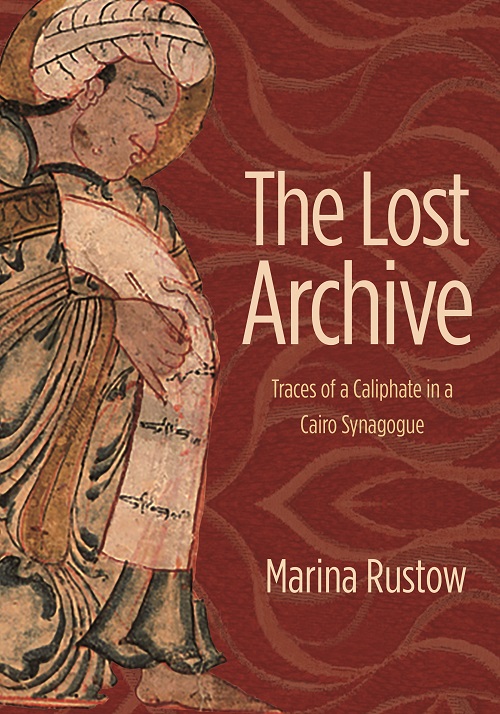
The Lost Archive by Marina Rustow: Splendid new book on the Fatimids looks at the caliphate’s robust culture of documentation; + 2 videos

The Lost Archive by Marina Rustow
The Lost Archive by Marina Rustow, published on January 14, 2020 by the Princeton University Press; Pages: 624; Size: 7 x 10 in. Illus: 83 color + 17 b/w illus. 4 maps. 4c throughout. To purchase hardcover, Kindle or Kobo versions see links at bottom of this page.

Very recently this website reproduced An interview with authors of Lost Maps of the Caliphs: A meticulous book about an extraordinary Fatimid manuscript illustrating the heavens and the earth as was known in 11th century Cairo.

Grabbing our attention now is a splendid new book on the Fatimids that looks at the caliphate’s robust culture of documentation. In an editorial review of the book, Konrad Hirschler of the Freie Universität Berlin describes Marina Rustow’s work “as a veritable magnum opus that will remain a point of reference for decades to come.” He also notes that “there are few books like this one that take the reader on such a long-distance journey across centuries and writing systems.”

The Lost Archive: Traces of a Caliphate in a Cairo Synagogue is Marina Rustow’s second work on the Fatimids. Her first one was entitled Heresy and the Politics of Community: The Jews of the Fatimid Caliphate. She is the Khedouri A. Zilkha Professor of Jewish Civilization in the Near East and professor of Near Eastern studies and history at Princeton University. She is director of the Princeton Geniza Lab and a MacArthur fellow. Her latest work is also praised by Geoffrey Khan, University of Cambridge, who states that “with great historiographical skill, Rustow brings new insights into the history of the medieval Middle East through a holistic analysis of the surviving state documents of the Fatimid dynasty. This is a splendid book.”

Marina Rustow has made very interesting and informative presentations of her research and work at the American Philosophical Society and the University of New Mexico. Links to both the videos are provided at the end of this piece.

The lost archive of the Fatimid caliphate survived in an unexpected place: the storage room, or geniza, of a synagogue in Cairo, recycled as scrap paper and deposited there by medieval Jews. In the book Marina Rustow tells the story of this extraordinary find, inviting readers to reconsider the longstanding but mistaken consensus that before 1500 the dynasties of the Islamic Middle East produced few documents, and preserved even fewer.

Beginning with government documents before the Fatimids and paper’s westward spread across Asia, Rustow reveals a millennial tradition of state record keeping whose very continuities suggest the strength of Middle Eastern institutions, not their weakness. Tracing the complex routes by which Arabic documents made their way from Fatimid palace officials to Jewish scribes, the book provides a rare window onto a robust culture of documentation and archiving not only comparable to that of medieval Europe, but, in many cases, surpassing it. Above all, Rustow argues that the problem of archives in the medieval Middle East lies not with the region’s administrative culture, but with our failure to understand preindustrial documentary ecology.

Illustrated with stunning examples from the Cairo Geniza, this compelling book advances our understanding of documents as physical artifacts, showing how the records of the Fatimid caliphate, once recovered, deciphered, and studied, can help change our thinking about the medieval Islamicate world and about premodern polities more broadly.

The hard copy or electronic Kindle version of “The Lost Archive” may be purchased at the following websites:
Princeton
Amazon & Amazon Canada
Indigo

Date posted: March 8, 2020.

__________________

American Philosophical Society presentation by Marina Rustow (34 minutes)

~~~~~~~~~~~~

University of New Mexico presentation by Marina Rustow (1 hour 35 minutes)

___________________________

Amazing – Must watch Abida Parveen’s rendition of “Man Kunto Maula, Ali Maula Maula, Ali Ali Ali…” from a live concert in Oslo, Norway

Abida Parveen performing on stage with three musicians, passionately singing with her hand raised, surrounded by traditional instruments.
Abida Parveen performing in Oslo, Norway. Photo licensed under the Creative Commons Attribution 2.0 Generic

On Saturday, February 29, 2020, Abida Parveen performed in Melbourne, Australia, in a rare appearance outside Pakistan. On the day of her performance she gave an interview to Andrew Ford, host of ABC Australia’s The Music Show.” In discussing shades of Sufi music (Kafi) towards the end of the interview, the last question Ford asked Abida was what she would be singing in Melbourne that evening, and she replied “Man Kunto Maula.” She demonstrated a few lines from the song in the studio. The famous words are attributed to the Holy Prophet Muhammad (May peace be upon him and his family) at Ghadir Khumm when he said, “He whose Maula I am, Ali is his Maula” thus giving Hazrat Ali parity with himself as his successor to the Divine Institution of Imamat, a hereditary institution that continues to this day under the 49th Imam, Mawlana Hazar Imam, His Highness the Aga Khan. The following rendition of Man Kunto Maula sung by Abida Parveen in Oslo, Norway, is deeply inspiring and worth listening to in full. It has been viewed on YouTube more than 2.7 million times (Update, January 29, 2023: We note the video is no loner available and has been designated as private.).

Date posted: March 1, 2020.
Last updated: January 29, 2023 (video unavailable.)

Before departing this website please take a moment to review Simerg’s Table of Contents for links to hundreds of thought provoking pieces on a vast array of subjects including faith and culture, history and philosophy, and arts and letters to name a few.

_________________

Abida Parveen – “the greatest female Sufi singer in history” – set to transport Melbourne this weekend + 1994 video clip of her performance before Mawlana Hazar Imam, His Highness the Aga Khan

Abida Parveen performing passionately on stage, wearing a vibrant purple outfit with a traditional shawl, capturing the essence of Sufi music.
Please click on photo to read Ben Eltham’s excellent piece in The Guardian

Abida Parveen to perform February 29, 2020 at Melbourne’s Hamer Hall

There are few artists who are spoken about with the same rapturous fervour as Abida Parveen. Perhaps only her spiritual brother, the late Nusrat Fateh Ali Khan, has inspired the same level of devotion among fans.

Parveen has been described by The Guardian newspaper as “the greatest female Sufi singer in history” and by the BBC as “one of the most remarkable voices on the planet.” In his new piece for the Guardian, Ben Eltham writes, “The devotional singer is known to move audiences to a higher plane. Meeting her in Melbourne time went ‘all bendy and loose’.” Please click here to read The Guardian’s excellent piece.

Also read “The musical, ecstatic devotion of ‘Sufi queen’ Abida Parveen” by Nick Miller in The Sydney Morning Herald.

___________

Video clip: Abida Parveen performs before His Highness the Aga Khan in 1994

Date posted: February 27, 2020.
Last updated: March 1, 2020.

_______________

More on the concert in Melbourne at Australian Exclusive – Arts Centre Melbourne.

Have you attended a performance by Abida Parveen? What are your impressions? Were you awed by her performance? We welcome your feedback. Please click Leave a comment.