“Gold remains in this world but right conduct (adab) enables you to meet your lord” – Hazrat Ali
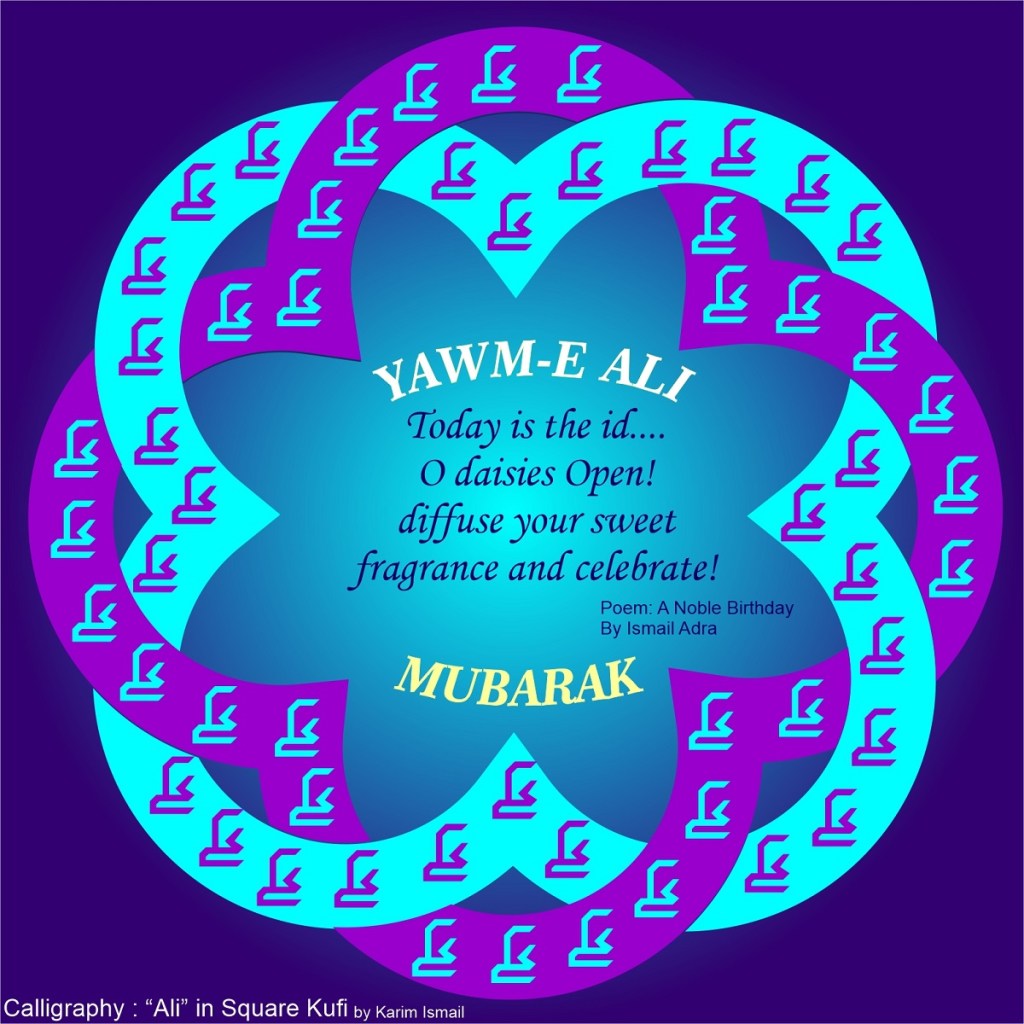
For complete article, click HERE or image below
Date posted: February 22, 2021.
____________________

“Gold remains in this world but right conduct (adab) enables you to meet your lord” – Hazrat Ali
For complete article, click HERE or image below
Date posted: February 22, 2021.
____________________
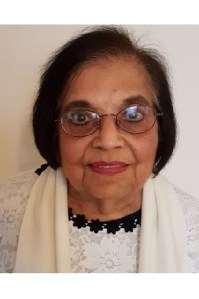
An Ever Burning Flame
By FARAH TEJANI
Like a candle,
In a dark room,
Her light would erase,
Any frown,
Or any pain,
You had on your face.
A gifted teacher,
Full of knowledge,
She’d leave you wanting more.
Her loving arms,
Were always open,
She would never shut her door.
All her students,
Were her children,
Whom she loved with her whole heart.
Not one student,
Could forget her,
Right from the very start.
Her knowledge
Was a mountain,
Everyone wanted to climb.
She imparted
With her wisdom,
Never concerned about the time.
Her bright smile
Filled the hearts,
Of all who came near,
When in her
Holy Presence,
There was never need to fear,
Her faith
Never wavered,
Not once would she question.
The words
Of the Imam
Or his Noble Direction.
Years and years
Of service,
She has given to our Mawla.
Precious, priceless
Memories,
For all of us to store.
With much sadness
Her time to go,
Has left us all with pain,
But if she had words
She’d tell us,
“I am an Ever Burning Flame.
Forget me not,
For I am near,
Closer than you know.
For even though
We leave this earth
We never truly go.
We are with God
Though we may be gone,
And though it is a shame.
You keep me alive
Alive in your heart
An Ever Burning Flame.”
Date posted: February 9, 2021.
___________________________
We welcome feedback from our readers. Please complete the LEAVE A REPLY form below or click Leave a comment. Your letter may be edited for length and brevity, and is subject to moderation.

Farah Tejani graduated with her Bachelor of Arts in English Literature and her Master of Fine Arts in Creative Writing from the University of British Columbia in May of 1997 and earned top Honors for her Thesis on Short Fiction. She has published a collection of short stories “Make Your Own Chai, Mama’s Boy!” dealing with different dilemmas South Asians face. Farah also wrote and co-directed her stage play, “Safeway Samosas,” which won “The Best of Brave New Playwrights Award” in July 1995. Her short story , “Too Hot” won third place in the “Canada-Wide Best Short Fiction Award” and was read at The Vancouver Writers Festival. Currently, Farah is working on Childrens’ stories and a collection of poetry called, “Elastic Embrace” to be published in 2021.
Before departing this website please take a moment to review Simerg’s Table of Contents for links to hundreds of thought provoking pieces on a vast array of subjects including faith and culture, history and philosophy, and arts and letters to name a few. Also visit Simerg’s sister websites Barakah, dedicated to His Highness the Aga Khan, and Simergphotos.
_____________________________
Also see the following 3 related pieces:
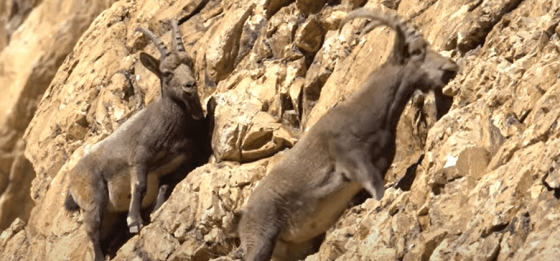
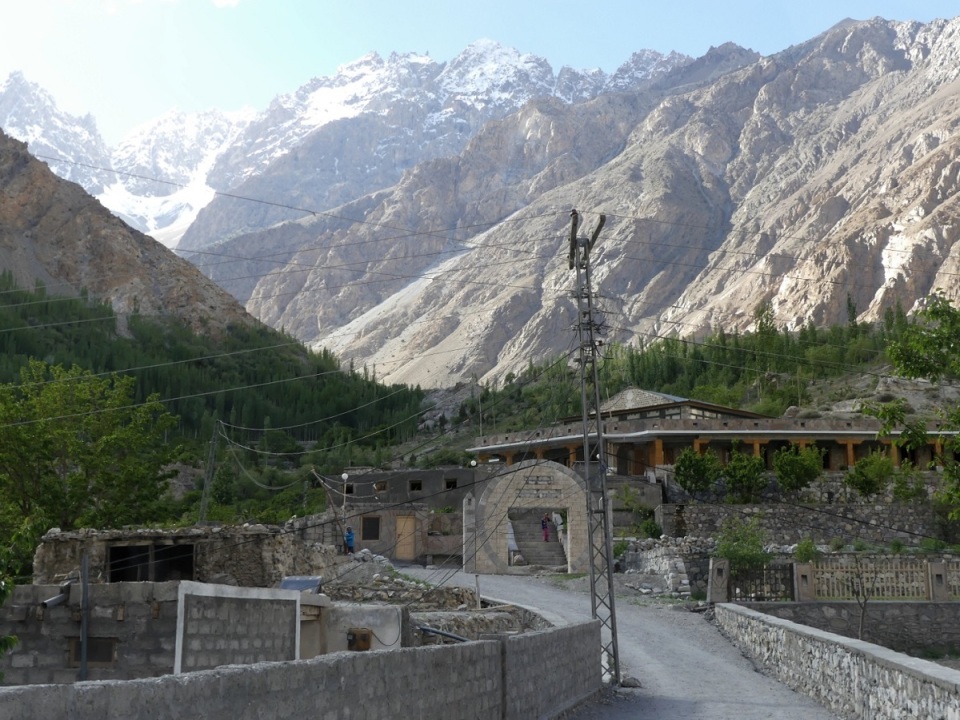
In a fascinating 5 part travelogue of his trip to China and Pakistan, Ali Karim dedicated an entire post to the Ismailis of Northern Hunza. His visits to the villages of Passu and Khyber left Ali and his wife Dilshad speechless. They noted, “The experience was overwhelming, as were the sights! The Ismailis of Khyber village and Passu showed us that you can symbolically scale and even climb above the highest of peaks through goodness, warmth and generosity.” Please read Ali’s piece Ismailis of Remote Northern Hunza Rise High Above the Tallest Peaks.
Interestingly, just this past week, the media in Pakistan reported a story about Nyal Mueenuddin, wildlife filmmaker for World Wildlife Fund (WWF) Pakistan and Imtiaz Ahmed, a local photographer, spotting a herd of about 50 Himalayan ibex including females along with their yearlings near Khyber village. We located the beautiful short film on Youtube, which every member of your family, young and old alike, will love watching. The short film follows photos of Khyber Village and Passu from Ali Karim’s must read article.



________________________
Date posted: January 16, 2021.
_____________________
A version of this post also appears at Simergphotos.
We welcome feedback from our readers. Please complete the LEAVE A REPLY form below or click Leave a comment. Your letter may be edited for length and brevity, and is subject to moderation. Before departing this website please take a moment to review Simerg’s Table of Contents for links to hundreds of thought provoking pieces on a vast array of subjects including faith and culture, history and philosophy, and arts and letters to name a few.
By KARIM H. KARIM
(The author is Director of Carleton University’s Centre for the Study of Islam and former Co-Director of the Institute of Ismaili Studies)
“… we find ourselves in the moment of transit, where space and time cross to produce complex figures of difference and identity, past and present, inside and outside, inclusion and exclusion.” Professor Homi K. Bhabha, former Master Jurist, Aga Khan Award for Architecture
Abstract: A former Co-Director of the IIS considers this key Ismaili institution’s way forward, following its Board of Governors’ recent reconstitution. Although substantial changes have been made, certain features regarding the diversity of office holders remain. The IIS’s past performance is briefly examined in the article, with respect to academic metrics as well as Ismaili history and values. There have been several achievements in the last four decades, but also some unexpected outcomes. The author discusses the importance of ethics and clarity in chains of authority. IIS’s reconstituted governance structure has the opportunity to put it on a path to globally-recognized excellence and long-lasting impact.
A New Phase
Recent appointments to the governance structures of the Institute of Ismaili Studies (IIS) present an opportunity to consider its way forwards. The substantial reconstitution of the Board of Governors appears to initiate a new phase for this key Imamat institution, which occupies a unique place in-between Jamati and Aga Khan Development Network (AKDN) organizations. This is a time of particular significance as the Governors are tasked with guiding the IIS towards its 50th anniversary in 2027.
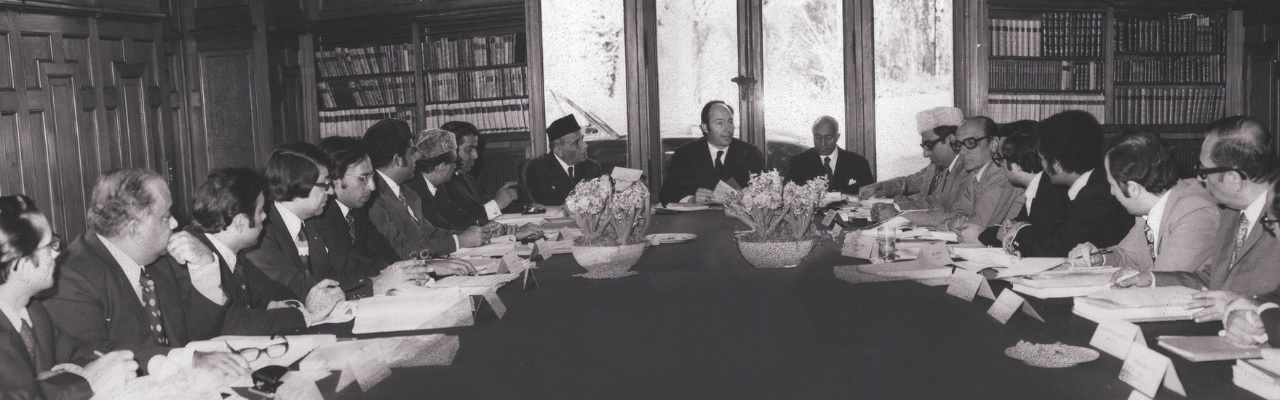
The concept of the Institute was formally discussed in 1975 in the historic Paris Conference of the Ismaili Associations, at which Mawlana Hazar Imam presided. He announced the IIS’s establishment in a Talika to the international Jamat on December 13, 1977. The institution began with a very small staff occupying one floor of a London building. Growing and traversing the city for four decades, the IIS settled into its purpose-built home at the Aga Khan Centre in 2018. It currently has research, teaching and support staff of over a hundred and has seen some 650 graduate students pass through its doors. Scores of publications and several sets of curricular materials have been produced. Alumni work around the world in a variety of professions and have particularly enriched the knowledge base of the worldwide Ismaili Tariqah and Religious Education Boards (ITREBs).
Unintended Consequences
The Institute, which has a very distinct institutional character, operates in an organizationally and intellectually liminal space. Governors have played an unusual hands-on role in the operation of this academic organization. Although the IIS’s educational endeavours are limited to the community, it positions itself in the public sphere. Unlike similar scholarly bodies, it does not identify as a theological seminary or a divinity school. It is a post-graduate institution whose students receive degrees from various universities, including the University of London’s School of Oriental and African Studies.
IIS publishes materials on Ismaili, Shia, Quranic and Central Asian studies authored by its own researchers and external scholars. Islamic Publications Limited (IPL), an affiliate, produces them with the imprimaturs of presses such as I.B. Tauris and Oxford University Press. Whereas substantial work has been carried out in examining Arabic and Persian documents, the study of Indic manuscripts (bearing content such as Ginans) has been miniscule in the last four decades. Research is also conducted on the transnational Ismaili community’s living traditions, but it is not published for the most part. The Institute prioritizes a rationalistic and civilization-centred approach over faith perspectives in its course instruction and religious education curricula for the global Jamat.
These characteristics, viewed as appropriate for the IIS’s particular mandate, have, however, raised an air of ambivalence that has apparently produced unintended consequences. A number of students in the Graduate Programme in Islamic Studies and Humanities (GPISH), who arrive at the Institute of Ismaili Studies expecting a faith-friendly academic approach undergo cognitive dissonance (Magout, 2020, chapter 6). Most alumni do not list the Institute on their CVs or LinkedIn profiles; faculty members have been leaving for university positions as soon as they secure them; and one of the two Co-Directors’ posts has remained unfilled for almost a decade. Furthermore, donors who have contributed substantially to the endowment are perplexed by the asymmetry in Ismaili areas of research.
Aspirations for Excellence
At its founding, the IIS was compared to learned institutions like the Dar al-Ilm and Al-Azhar University, which were established a thousand years ago under the aegis of Fatimid Imam-Caliphs. Al-Azhar survived the fall of the Fatimids and flourishes today as a prominent centre of Muslim learning. Can one expect that the IIS will also function for hundreds of years? Perhaps the more pertinent question is whether it will make a lasting impact. What will the role of the governance structure be in helping it achieve this?
Although the Institute is a globally-recognized hub of Ismaili Studies, it has some ways to travel before being acknowledged as a centre of scholarly excellence. It recently made a selection of books available electronically, but many important IIS contributions remain absent in cyberspace and from most bookstores as well as university and public libraries. It is also unfortunate that only a handful of its more than 120 books have done well in academic citation indices.
One could argue that standard scholarly metrics are inappropriate for an institution whose aspirations are drawn from millennial-long history. Is it more apt then to measure the Institute’s performance in terms of the Ismaili past? Of the many luminaries in previous eras, the most well-known outside the community are the Ikhwan al-Safa (circa 10th century), Nasir-i Khusraw (d. 1088) and Nasir al-Din Tusi (d. 1274). Satpanthi Pirs conducted ingenious syntheses of Indic and Islamic traditions that stand as major human achievements of pluralist engagement. These intellectuals are exemplars of excellence whose contributions have been of universal significance. They maintained a rigorous independence of thought within parameters of the Ismaili movement and its intellectual universe. Given the aspirations for the IIS, should we expect it to provide the conditions for nurturing scholars of similar calibre in our time?
Contemporary Values as Metrics
Contrarily, one can contend that it is not right to apply historical standards to 21st century contexts. Perhaps the benchmarks for success are to be drawn from the community’s current emphases on ethics, meritocracy, and pluralism. This topic is addressed here only with reference to IIS’s Boards.
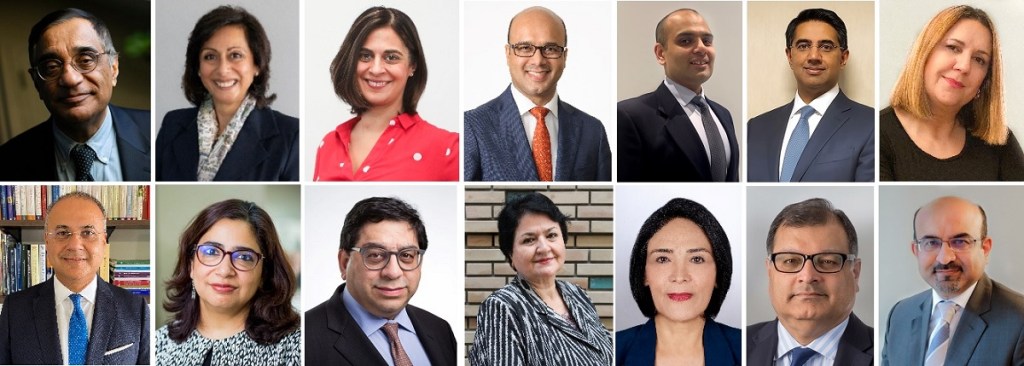
The new Governors are drawn from commercial and academic sectors, and they include some IIS alumni. Mawlana Hazar Imam continues as Chairman. Membership of the current Board of Governors (BoG), which began its term on December 13, 2020, is remarkably different from earlier ones in size, gender, age, ethnicity, geographic scope, and outlook. Although the IIS has been an international institution since inception, preceding Boards consisted almost entirely of middle aged men of British residence, with the balance tilting towards commercial worldviews. The incoming BoG’s average age has dropped considerably in comparison to the preceding one. There are now six women and eight men, and half of the Governors are currently located outside the UK. Eight newcomers are academics, most of whom have taught at universities. Several individuals have had experience in Jamati institutions, including ITREB, which is a major partner of the IIS. It is also noteworthy one Governor has professional expertise in diversity and inclusion.
There has been some non-Ismaili presence previously; however, this BoG’s members are all Ismaili. When Professor Mohammed Arkoun passed away in 2010, the remaining six Governors were all South Asian men of East African provenance. Whereas the new BoG is enriched by the presence of other ethnicities, all three members of the Board of Trustees (BoT), the IIS’s primary governing body and of which the BoG is a sub-committee, are UK residents of South Asian background, as are all four Board members of Islamic Publications Limited. Full time academics are absent from the BoT and IPL. The former does, however, have a female Trustee. There is much more pluralist inclusion than in earlier manifestations of the institution’s governance structures, but they have considerable room for improvement.
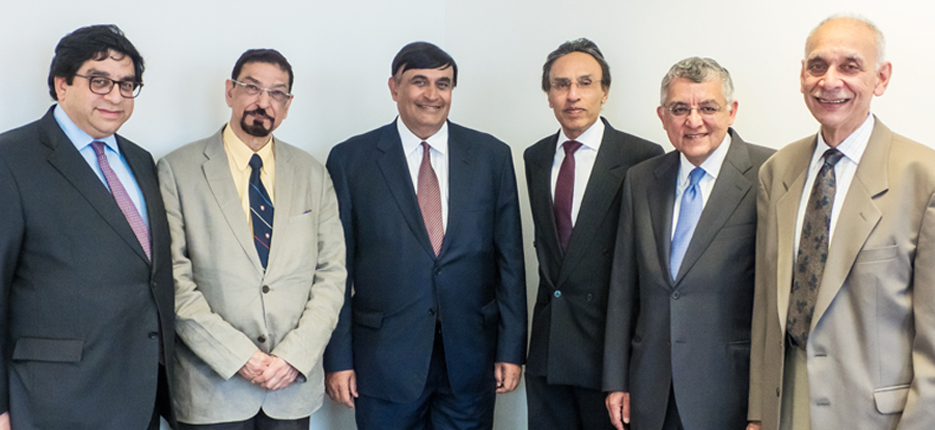
A truly unique characteristic of the previous BoG was not identity but longevity. Its more than 25-year term was one of the lengthiest in the world. Whereas this provided continuity and familiarity with the work at hand, shorter tenures usually mitigate detrimental tendencies in such organizations. Stretches that are longer than seven years seem inadvisable.
The presence of new university-linked Governors should help to assert academic norms in matters such as standardized merit-based pay scales rather than particular arrangements for some employees; remuneration for performance adjudicated according to published benchmarks instead of bonuses based on ambiguous criteria; and discontinuation of consulting contracts with Governors. Notably, the current separation of Board members from IIS’s remunerated staff makes the organizational chart look less like the M.C. Escher lithograph “Relativity”.
Ethics, Ambiguity, and Credibility
Ismaili history has seen the development of ethical codes in the works of Qadi Nu’man (d. 974), dai Ahmad al-Naysaburi (d. circa 11th century), Pir Sadardin (d. circa 14th century), and Imam Mustansirbillah II (d. 1475). Writing at a time of deep corruption in the Fatimid state, al-Naysaburi warned that “chaos will reign” with the failure of integrity among the Imam’s leaders (Klemm and Walker, 2011, p. 75). The IIS developed an AKDN “ethical framework” two decades ago; however, this theoretical document does not provide guidance for actual deontological practice. There remains ambiguity about the pragmatics of ethics in contemporary Ismaili institutions. Narratives on this subject have sometimes drifted towards trivialization; for example, one Jamati periodical’s feature on an “Ethic of the Month” seemed to reduce long-term values to fleeting tastes (The Ismaili Bulletin, Issue 54, March 2018). Given the importance that the community gives to the subject of ethics, serious issues like conflicts of interest, cronyism, nepotism, harassment, and bullying, which unfortunately appear over time in most human organizations, will need to be dealt with effectively and coherently. These issues must be an integral part of a 21st century code of conduct that provides clear guidance for everyone involved with the work of Jamati as well as AKDN institutions.
Systemic deficiencies in institutional procedures have unpredictable outcomes and can be factors for reputational loss. Incoming academic Governors will know that ambiguous chains of authority in scholarly institutions lead to the unchecked promotion of pet projects with dubious merit. A book published in 2018 by the Institute (but not initiated by its Department of Academic Research and Publications) was reviewed in a recent issue of the journal Arabica. The reviewer, who is the Director of the University of Lausanne’s Institute of the History and Anthropology of Religions, assessed it to be “a book of propaganda … without method and completely devoid of critical analysis” (Halawi, 2020, 315). Such unfortunate situations can be avoided by instituting an academic editorial board that oversees IIS’s scholarly publications to replace largely ambiguous practices of vetting manuscripts for “sensitivities.” (Such an editorial board already exists for the Quranic Studies Series.) The new Governors will also be aware of the importance of ensuring that the institution’s faculty, students and academic visitors have ready access to library materials that reflect a plurality of views, including those that are considered to be “sensitive.” Such efforts will assist in enhancing the IIS’s scholarly credibility in academic circles.
Transparency and Demarcations of Authority
Despite the noblest of intentions, the tendency in human organizations is for power to accumulate in a few persons. Whereas the doubling of the number of Governors to 14 offers advantages, it may also produce the conditions for the emergence of a hierarchy and the marginalization of some individuals. A horizontal relationship and equitable sharing of information in the globally-constituted BoG is important. Fair and optimal participation by Governors can be ensured by upholding transparency. Transparency and disclosure will not only strengthen the corporate governance framework but also provide Mawlana Hazar Imam with all the pertinent information.
It is expected that Hazar Imam will meet with the Governors and Directors once a year, with respective Board committees working on specific policy issues in the interim. The transnational BoG has the challenge of working efficiently across continents. Given these circumstances, safeguarding the greatest possible diversity in every committee will help ensure the pluralist expression of views. This should help to mitigate the influence of cliques and undue bias for or against specific issues and employees.
A key consideration facing the new Governors is the extent of the BoG’s involvement in operational matters. Healthy, well-functioning institutions are characterized by clear demarcations of authority and function, with Boards having confidence in duly-appointed Directors to take charge of administration. Clear protocols regarding Governors’ communications with employees, which rarely occur in universities, ensure that administrative authority is not undermined. Scholarly conventions should also determine the leadership of various organizational committees (academic, curricular, and community relations as well as finance and human resources).
A Potential Turning Point
The strong presence of university-based academics in the Institute’s new BoG signals that scholarly priorities will be paramount in the years to come. This Board’s tenure has the potential for being a turning point. It has the opportunity to put the IIS on the path to globally-recognized excellence by moving closer to academic norms of organization and outlook. Professor Mohammed Arkoun used to speak of “intellectual modernity” in contemporary Muslim contexts. Such a disposition requires not only scholarly rigour but the confidence to conduct critical introspection. There are important discussions to be had about the adoption of greater academic freedom, critical inquiry, and the broaching of “sensitive” topics as well as about effective ways to engage with the transnational Jamat, with which the Institute has an integral relationship. Governors will constantly have to account for the dual contexts of community and public scholarship. This calls for skillful and conscientious navigation between the shores of the parochial and the universal. The likes of the Ikhwan al-Safa, Nasir-i Khusraw, Nasir al-Din Tusi and Pir Sadardin have shown us that this is eminently possible.
Date posted: January 10, 2021.
Last updated: May 31, 2025 (reformatting, typos).
____________________
Reproduction of material posted on this website without the expressed written permission of the publisher is prohibited. For permission to reproduce in whole or part, please write to mmerchant@simerg.com.
We welcome feedback from our readers. Please complete the LEAVE A REPLY form below or click Leave a Comment. Your letter may be edited for length and brevity, and is subject to moderation.

About the author: Professor Karim H. Karim is the Director of Carleton University’s Centre for the Study of Islam, where he has held the International Ismaili Studies Conference. He previously served as Co-Director of the Institute of Ismaili Studies (IIS) and Director of Carleton’s School of Journalism & Communication. Dr. Karim has had visiting scholarly appointments at Harvard University, Aga Khan University/Simon Fraser University, and the IIS. He has also been an advisor for AKU and the Central Asian University and has been a member of the AKDN’s Higher Education Forum. Additionally, he has served in Kenyan, American, and Canadian Jamati institutions (Education, Ismaili Association, and Ismaili Tariqah and Religious Education Board, ITREB). Professor Karim is an award-winning author whose globally-cited writings include publications on Ismaili communities, institutions, and leadership. He has delivered distinguished lectures at venues around the world and has been honoured by the Government of Canada for promoting co-operation among faith communities. He studied at Aga Khan schools in East Africa and at the IIS, and holds degrees from Columbia and McGill universities in Islamic and Communication Studies.
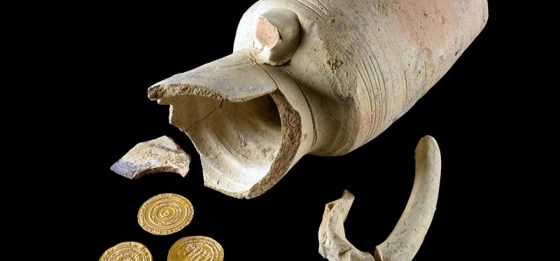
“The profile of the coins found in the juglet are a near perfect reflection of the historical events. This is a time of great political change as control of Israel shifts from the Sunni Abbasid caliphate, which sits in Baghdad, Iraq, to its Shiite rivals, the Fatimid dynasty of North Africa.” — Robert Cole
[The following compiled piece includes material released by the Israel Antiques Authority. Also, the website livescience has prepared a short video highlighting the discovery of the Abbasid and Fatimid coins. Please watch the video HERE — Ed.]
In 2015, in a post entitled Sea of Gold, Simerg provided a link to a special on-line exhibit about the discovery by a group of divers of a hoard of Fatimid gold dinars lying on the seabed in the ancient harbor in Caesarea National Park. The divers alerted marine archaeologists of the Israel Antiquities Authority (IAA), who conducted a salvage excavation at the site and recovered more than 2,580 Fatimid coins of pure (24 karat) gold weighing a total of 7.5 kg.
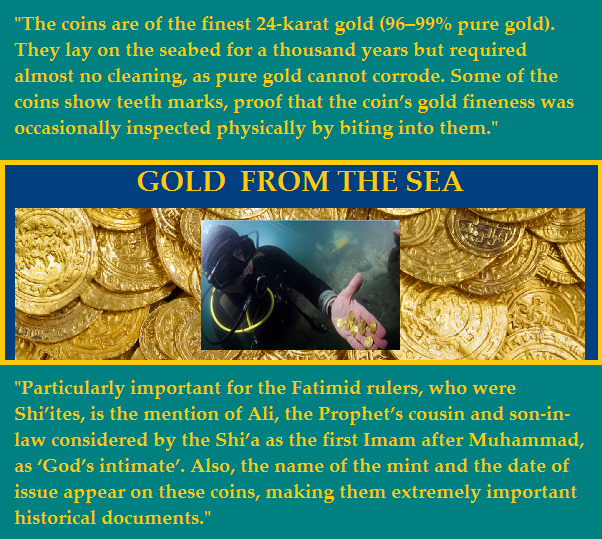
The IAA then noted as follows: “The coins are of the finest 24-karat gold (96-99% pure gold). They lay on the sea-bed for a 1000 years but required almost no cleaning, as pure gold cannot corrode. Particularly important for the Fatimid rulers, who were Shi’ites, is the mention of Ali, the Prophet’s cousin and son-in-law considered by the Shi’a as the first Imam after Muhammad, as ‘God’s intimate’. Also, the name of the mint and the date of issue appear on these coins, making them extremely important historical documents.”
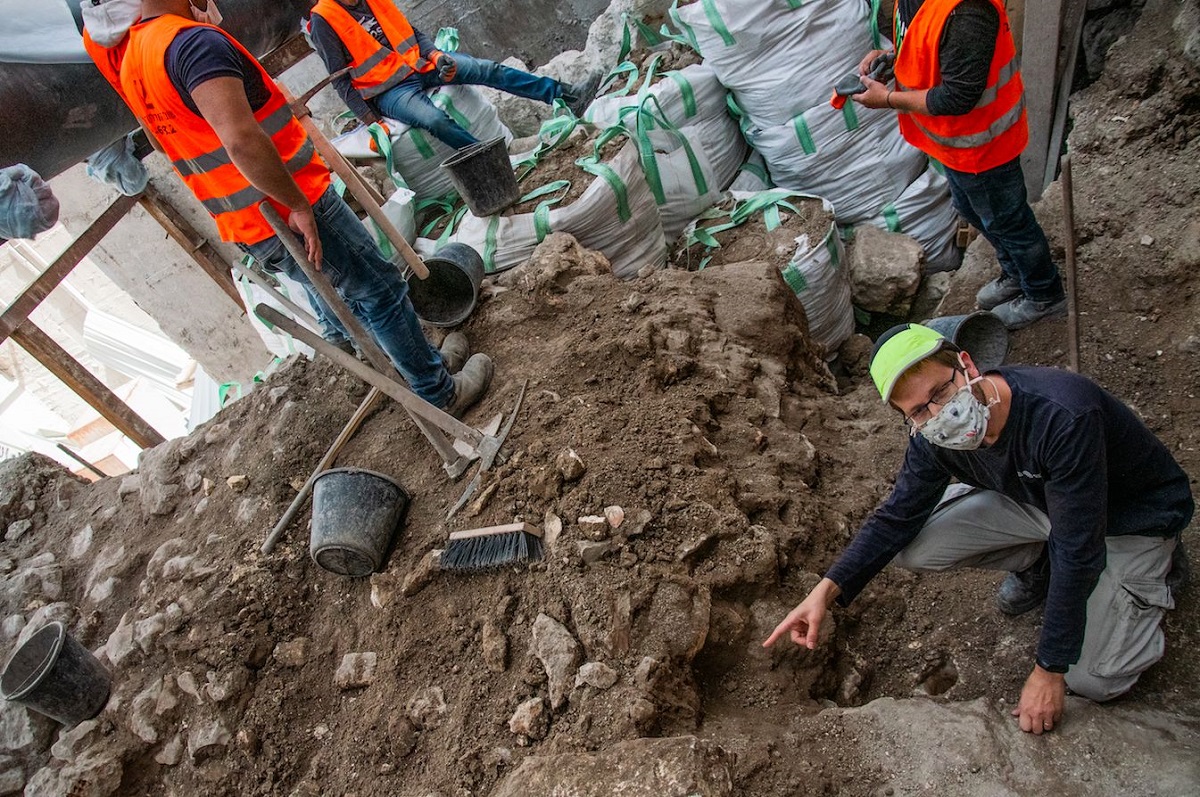
Just over a month ago, on November 9 2020, IAA archaeologists reported another very significant find at a site where an elevator is being built at the Old City of Jerusalem in the Jewish quarter to make the Western Wall more accessible.
Story continues below
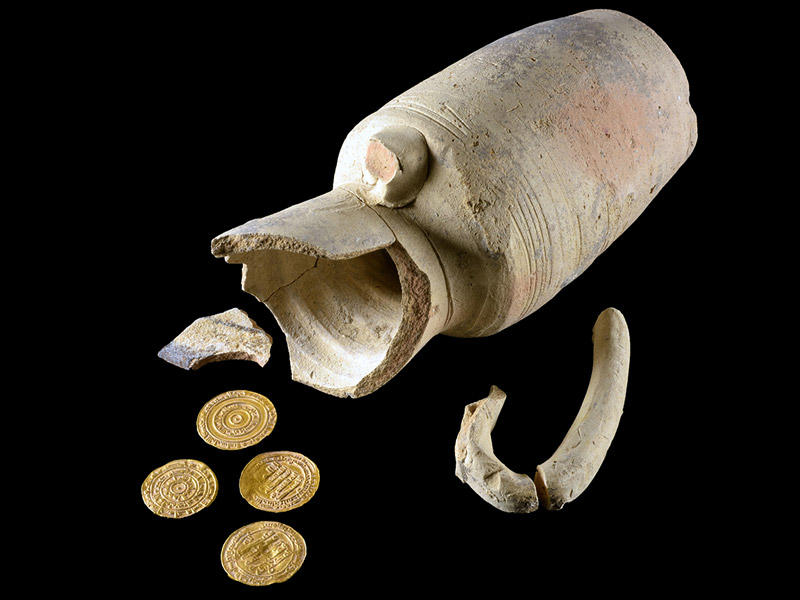
David Gellman, the director of the excavation observed, “We seem to have found an ancient savings bank!” He was actually referring to a small pottery urn containing four pure gold coins more than a thousand years old that was found by the inspector of the Israel Antiquities Authority, Yevgenia Kapil, during preliminary work that was carried out at the site during the holidays. Gellman says that when he emptied the jug a few weeks later, the four glittering gold coins along with sand were washed into his hands. This was the first time that Gellman, as an archaeologist, had discovered gold and he was immensely excited by the discovery.
Story continues below
Dr. Robert Cole, an expert on coins at the IAA, noted as follows about the four coins: “The coins were preserved in excellent condition and could be read immediately even without being cleaned. The profile of the coins found in the juglet are a near perfect reflection of the historical events. The coins date to a relatively brief period, from the late 940s to the 970s CE. This is a time of great political change as control of Israel shifts from the Sunni Abbasid caliphate, which sits in Baghdad, Iraq, to its Shiite rivals, the Fatimid dynasty of North Africa, which in those days conquered Egypt, Syria and Israel. These historical events are reflected almost perfectly in the distribution of the coins discovered in the jug: two gold dinars were minted in Ramla, under the rule of the Caliph Matia (946 – 974 CE) and the governor on his behalf, Abu al-Qassem ibn al-Ihshid Onuhar (946 – 961 CE). The other two gold coins were minted in Cairo, by the Fatimid rulers al-Mu’iz (953 – 975 CE), and his successor — al-Aziz (975 – 996 CE).”
Story continues below

He also explained that “the four gold dinars was a considerable sum of money for most of the population, who lived under difficult conditions at the time. It was equal to the monthly salary of a minor official, or four months’ salary for a common laborer.” This is the first time in fifty years that gold coins from the Fatimid period have been discovered in Jerusalem’s Old City. The previous find of 5 coins and jewellery hoards from the Fatimid period took place after the Six Day War south of the Temple Mount, not far from the recent new discovery.
Date posted: December 22, 2020.
_____________________
Before departing this website please take a moment to review Simerg’s Table of Contents for links to hundreds of thought provoking pieces on a vast array of subjects including faith and culture, history and philosophy, and arts and letters to name a few.
We welcome feedback from our readers. Please complete the LEAVE A REPLY form below or, if you don’t see the box, please click Leave a comment. Your letter may be edited for length and brevity, and is subject to moderation.
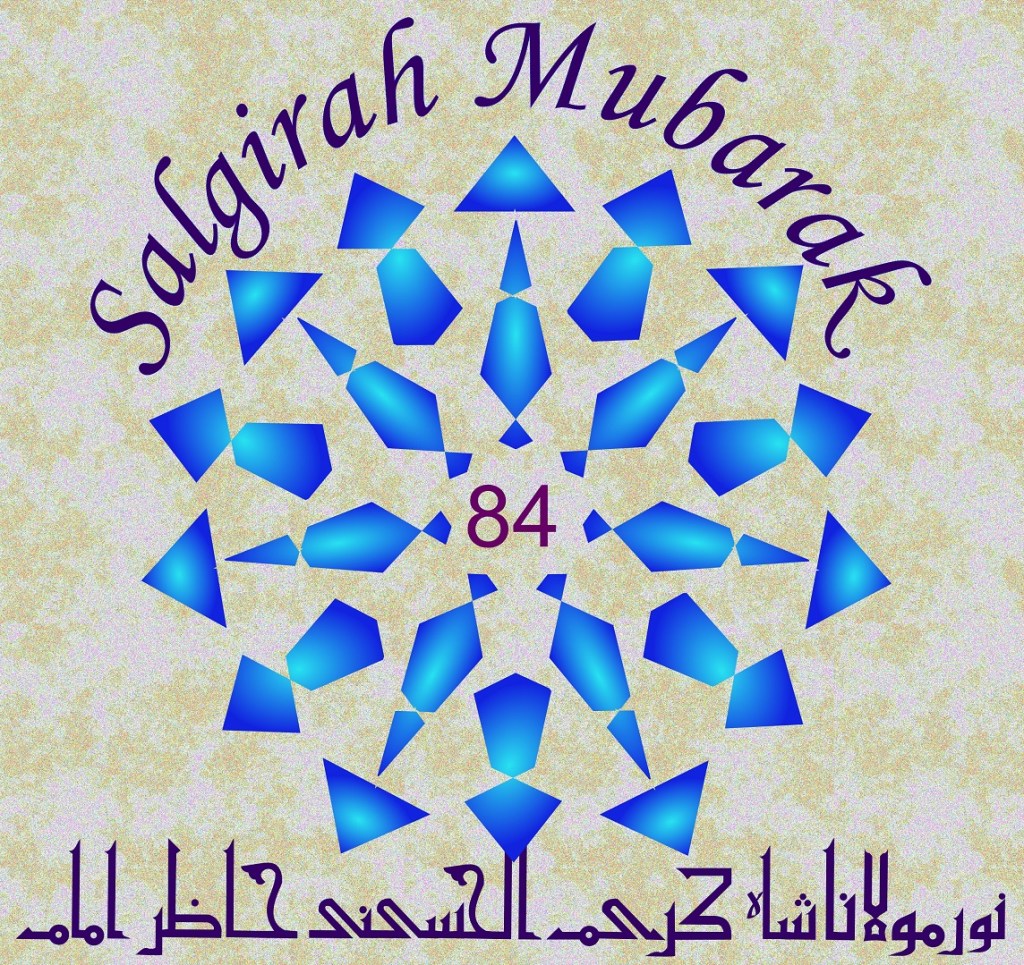
On the occasion of his 84th birthday or Salgirah on December 13, 2020, His Highness the Aga Khan has sent a special message, traditionally referred to as a Talika, to his followers around the world. The Talika is published HERE in English, French, Portuguese, Farsi, Arabic, Gujarati, Tajik, Urdu and Russian.
We have an insightful article for our readers on the significance of the Aga Khan’s birthday. To read it, please click HERE or on the Salgirah Mubarak greeting shown below.
We convey Salgirah greetings to our readers, Ismailis and non-Ismailis alike, and wish everyone and their families happiness and success as well as courage, strength and good health — especially in the present time of a global pandemic. We further hope and pray for the fulfillment of all your wishes. Ameen.
Date posted: December 12, 2020.
___________________

By MALIK MERCHANT
(Publisher/Editor Barakah, Simerg and Simergphotos)
When I left home (Monday, November 9) to run an errand, I went northbound on the Don Valley Parkway (DVP), and had planned to drive back south along the same route, and take the Wynford Drive exit that brings you to a T-junction, 200 metres east of the Aga Khan Museum entrance. But instead of taking the DVP, I decided to drive on Don Mills Road, and then turn left into Wynford Drive, and drive past the Ismaili Centre, the Aga Khan Park and the Aga Khan Museum before getting home. The Museum now opens from Thursday through Sunday, and the full parking lots at both the Ismaili Centre and the Museum made me wonder what was going on — perhaps a community event I wasn’t aware of.


That hyped me up, and I drove into the Aga Khan Museum Parking lot, and managed to find a tight spot to squeeze into near a huge truck. Many vehicles carried US license plates. A gentleman politely asked me to walk on the pedestrian pathway on Wynford Drive. A volunteer I met on the way refused to answer my simple question, “What is going on?” citing a non-disclosure agreement! Such secrets make me really really mad!


Then a few metres away, I met another gentleman who told me that the shooting of the action comedy film, “The Man from Toronto,” was underway, starring Woody Harrelson, a Primetime Emmy Award winner who has been nominated for three Academy Awards and four Golden Globe Awards! After about a minute, as I got closer to the Ismaili Centre, I watched and photographed a scene being completed, which had to be retaken. It was a 45 second event!

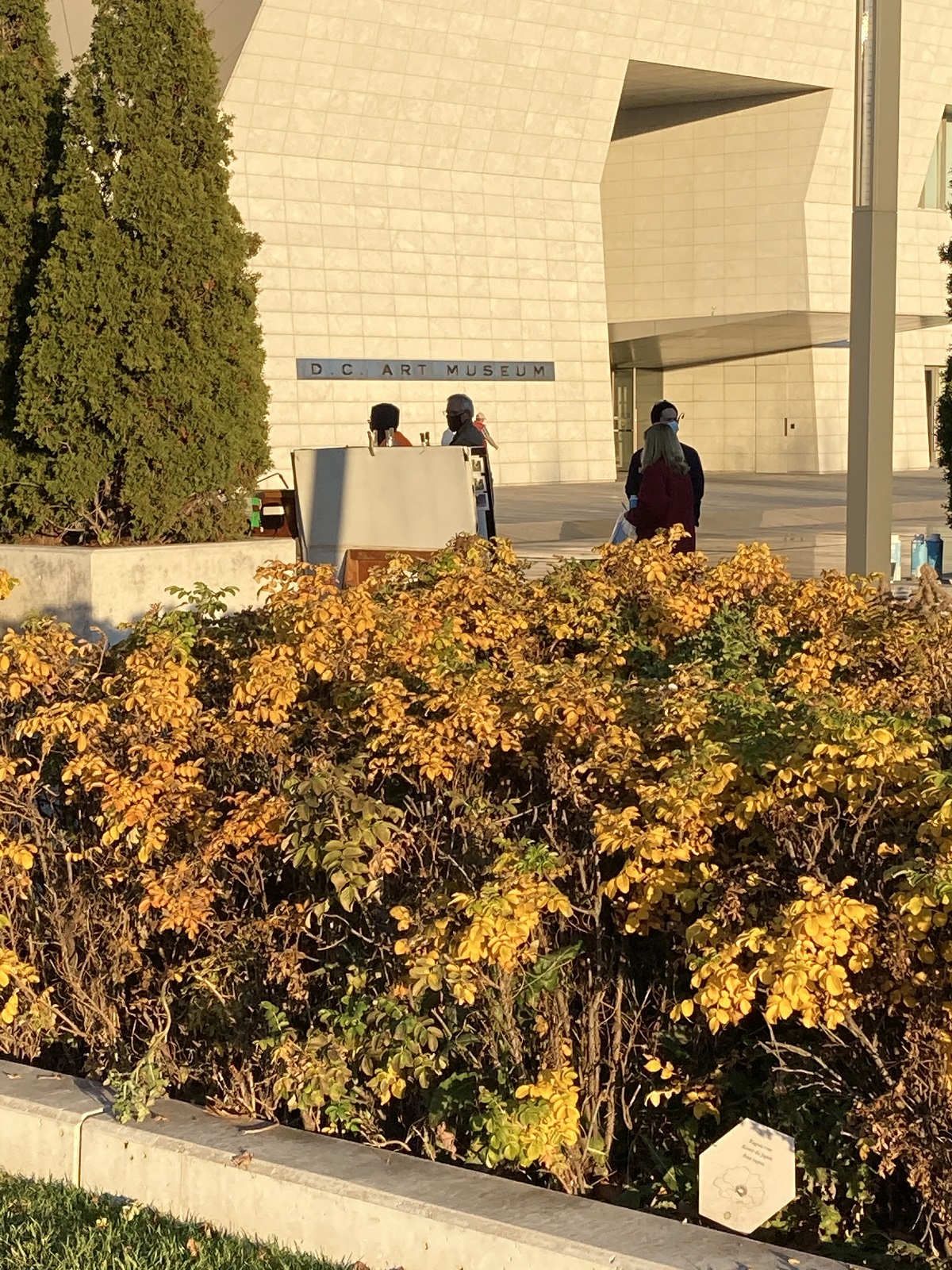

An Ismaili standing outside the guardrails alongside me explained that earlier when he was taking his daily routine Aga Khan Park walk, he was asked to remain away from specific areas. Then he told me that as he glanced up at the museum wall, he was bewildered to see the original bilingual “Aga Khan Museum” sign in English and French now reading “D.C. Art Museum.” He said that for a moment he was in a state of shock. He saw people walk in and out of the museum doors, and only got a sigh of relief when he was informed that the new sign was for the movie shooting!

After taking photos of the “new” looking wall, I walked across the Aga Khan Park to the Ismaili Centre, and met an American alongside some cars that I think included, a vintage Mustang. I learnt from him and others I talked to that the preparations for the shooting event had begun 10 hours earlier, and everything went according to plans. The date of the release of “The Man from Toronto” has not been finalized but it will be interesting to see the scene(s) when the movie is released. The Aga Khan Museum security guard who kept on following me from the Museum building onwards, as if I was a security threat, marred my otherwise enjoyable few moments at the Aga Khan Park under clear and beautiful blue skies and warm temperatures!
Coronavirus, you may try to deter us, but we have our winning ways!
Date posted: December 9, 2020.
__________________
Before departing this website please take a moment to review Simerg’s Table of Contents for links to hundreds of thought provoking pieces on a vast array of subjects including faith and culture, history and philosophy, and arts and letters to name a few.
We welcome feedback from our readers. Please complete the LEAVE A REPLY form below or, if you don’t see the box, please click Leave a comment. Your letter may be edited for length and brevity, and is subject to moderation.
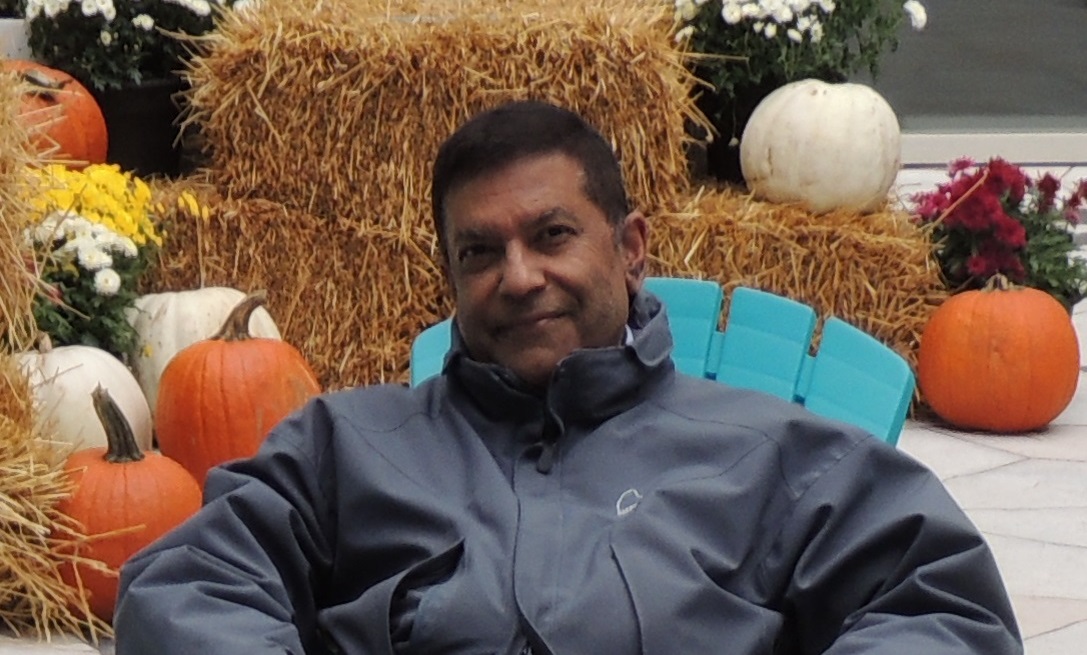
About the author: Malik Merchant is the founding publisher/editor of this website, Simerg (2009), as well as two other blogs Barakah (2017) and Simergphotos (2012). Formerly an IT consultant, he now dedicates his time to family projects and his 3 websites. He is the eldest son of Alwaez Jehangir Merchant (1928-2018) and Alwaeza Maleksultan Merchant who both served Ismaili Jamati institutions for several decades in Mozambique, Tanzania, Pakistan, the UK and Canada in both professional and honorary capacities as teachers and missionaries. Malik’s daughter, Dr. Nurin Merchant, assists him as an honorary co-editor of the three websites. She received her veterinary medicine degree with distinction from the Ontario Veterinary College (2019, University of Guelph) and now works as a veterinarian.
Prepared and compiled by MALIK MERCHANT
Editor/Publisher Simerg, Barakah and Simergphotos
The Milad or Mawlid of the Prophet Muhammad (S.A.S.) falls on the 12th day of the Islamic month of Rabi’ al-awwal. In 2020, Muslims in different countries around the world will be observing the birth anniversary between October 28-30. This post has a number of pieces on the Prophet that will be of interest to everyone.
We invite our readers to view the first episode of a 3-part series that covers the Prophet’s birth, the first revelation and early writing of the Qur’an, the creation of the first mosque, the persecution suffered by the first Muslims and the major battles fought by the Prophet and his followers to establish the new religion. Narrated by Academy Award-winning actor Ben Kingsley, and directed and produced by Robert Gardner, the captivating episode which first aired on PBS in 2001, has been highly recommended over the years for its educational value.
________________________
Readers who have just seen the documentary will be able to relate numerous segments in it to the following excerpt from the Presidential address made by Mawlana Hazar Imam, His Highness the Aga Khan, at the Seerat Conference in Pakistan in 1976. They will next appreciate Ismaili astrophysicist Farzana Meru’s reflection on a moment in Ismaili history that she would have loved to experience.
By MAWLANA HAZAR IMAM, HIS HIGHNESS THE AGA KHAN

“The Holy Prophet’s life gives us every fundamental guideline that we require to resolve the problem as successfully as our human minds and intellects can visualise. His example of integrity, loyalty, honesty, generosity both of means and of time, his solicitude for the poor, the weak and the sick, his steadfastness in friendship, his humility in success, his magnanimity in victory, his simplicity, his wisdom in conceiving new solutions for problems which could not be solved by traditional methods, without affecting the fundamental concepts of Islam, surely all these are foundations which, correctly understood and sincerely interpreted, must enable us to conceive what should be a truly modern and dynamic Islamic Society in the years ahead.” — Read full speech and listen to audio HERE.
________________________
By FARZANA MERU
I am struggling to narrow down all the moments in Ismaili history that I would love to have experienced. As I journey through the modern day trying to understand the past, I often ponder what it would be like to rewind time and experience a number of occasions in Ismaili history. But if I could only choose one of the vast number of spectacular incidents, I would go back and experience the beginning of Ismaili history, the key events that sparked the origin of our religion, the dawn of a new era: the time of our Prophet Muhammed (S.A.S.) in seventh century Arabia.
I would love to have experienced first-hand the living conditions and lifestyles of the people in those times. I would want to understand the culture, the tribal systems, the harsh desert conditions that people had to move through on camels. I would want to see how the Prophet himself dealt with the pressures of leading a community which started off very small but grew rapidly and flourished. I want to understand how people transitioned from the way of life in pre-Islamic Arabia into the new times. As a fly on the wall, I could watch the seventh century Arabian world go by, in awe. I would want to experience “where it all began”, an era that would mark the beginning of Ismaili history.
The piece you just read was contributed by astrophysicist Farzana Meru for our first and original series I Wish I’d Been There series some ten years ago. On October 26, 2020, Dr. Meru and NASA’s aerospace engineer, Dr. Farah Alibay, were on the air on Ismaili.TV and reflected on their respective career paths as well as offered some outstanding words of wisdom to Ismaili youth during their schooling years, and for them to be passionate about their chosen area of interest, whatever that may be. Please watch Ismaili.TV’s excellent program by clicking HERE or below.
Date posted: October 27, 2020.
Last updated: October 29, 2020.
________________________
Before departing this website please take a moment to review Simerg’s Table of Contents for links to hundreds of thought provoking pieces on a vast array of subjects including faith and culture, history and philosophy, and arts and letters to name a few.
We welcome feedback from our readers. Please complete the LEAVE A REPLY form below or, if you don’t see the box, please click Leave a comment. Your letter may be edited for length and brevity, and is subject to moderation.
By MALIK MERCHANT
Editor/Publisher Simerg, Barakah and Simergphotos
The Aga Khan Museum is one of the few museums in Toronto that has been able to implement Covid-19 protocols and make the museum safe for its visitors. The visiting times were revised this past week, and it is now open from Thursdays through Sundays from 10 a.m. until 5:30 p.m.
In recent weeks, Simerg and its sister websites have produced a superb collection of photos of the Museum, the Ismaili Centre and the Aga Khan Park, which divides the two magnificent buildings. Readers have been uplifted to see the photos of the 3 magnificent projects, built by Mawlana Hazar Imam, His Highness the Aga Khan, under the full moon, crescent moon, as well as at the peak of the autumn foliage season.
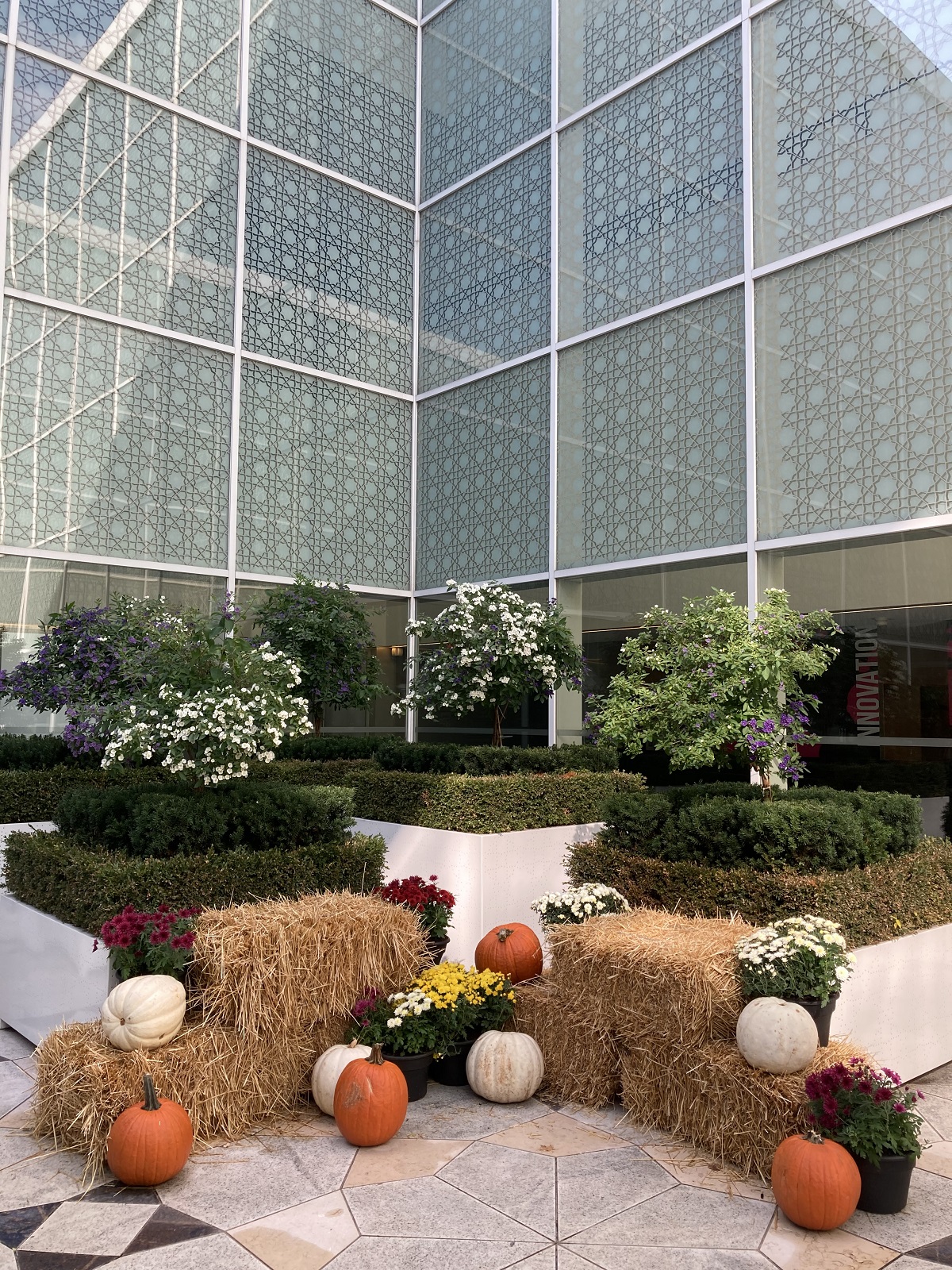
On a fine day, there is no better place in the museum than to be sitting in its open air courtyard, while enjoying a delicious cup of latte.
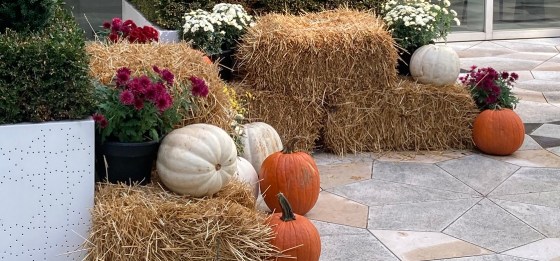
October 23, 2020 was one such day. It actually felt like summer, with blue skies and very warm temperatures. The magnificent courtyard was a perfect place for my morning coffee as well as a late breakfast — an egg salad croissant, slightly grilled. I was thrilled to enter the courtyard, and noticed pumpkin decorations in one corner of the courtyard. Of course, pumpkins are to be seen everywhere at this time of the year. It is one of the most popular desserts served during Thanksgiving holidays in Canada (October 12, 2020) and the USA (November 26, 2020), and I wondered how the food was viewed in Islam. My little bit of research led me to numerous traditions of the Prophet Muhammad (S.A.S.) on the pumpkin, and I am delighted to post adaptations of some that I read.
“I saw the Prophet being served with soup and containing gourd (pumpkin or squash) and cured meat, and I saw him picking and eating the pieces of gourd.” — Bukhari Volume 7, Book 65, Number 348.
It is related that a sailor once invited Prophet Muhammad to eat some food that he had prepared. Anas bin Malik who accompanied the Prophet, noted that the Prophet was served barley bread and a soup with pumpkin in it. The Prophet keenly ate the pumpkin around the dish, and from that day Anas made it his favourite food. Traditions also note that whenever a a dish of bread, meat and broth was presented to the Prophet and it contained pumpkin, the Prophet would pick up the pumpkin because he really liked it, and made the heart strong. Other Muslim traditions note that the pumpkin increases brain function and brain strength.
Ibn Ridwan, in a medical treatise written during the Fatimid period, recommended the pumpkin as a diet for healthy living along with several other fruits and vegetables such as celery, carrots, lentils and cucumbers.
Interestingly, there is also a general consensus among scholars about the Arabic word yaqteen that is mentioned in the Holy Qur’an. They say that it refers to the pumpkin — a food that nourished and helped heal Prophet Yunus (A.S.), after he was cast into the wilderness while he was sick (see Qur’an, 37:144-146, at Corpus Quran English Translation).
The website healthline mentions that pumpkin is rich in vitamins, minerals and antioxidants, and is incredibly healthy. Moreover its low calorie content makes it a weight-loss-friendly food. It goes on to add that “its nutrients and antioxidants may boost your immune system, protect your eyesight, lower your risk of certain cancers and promote heart and skin health.”
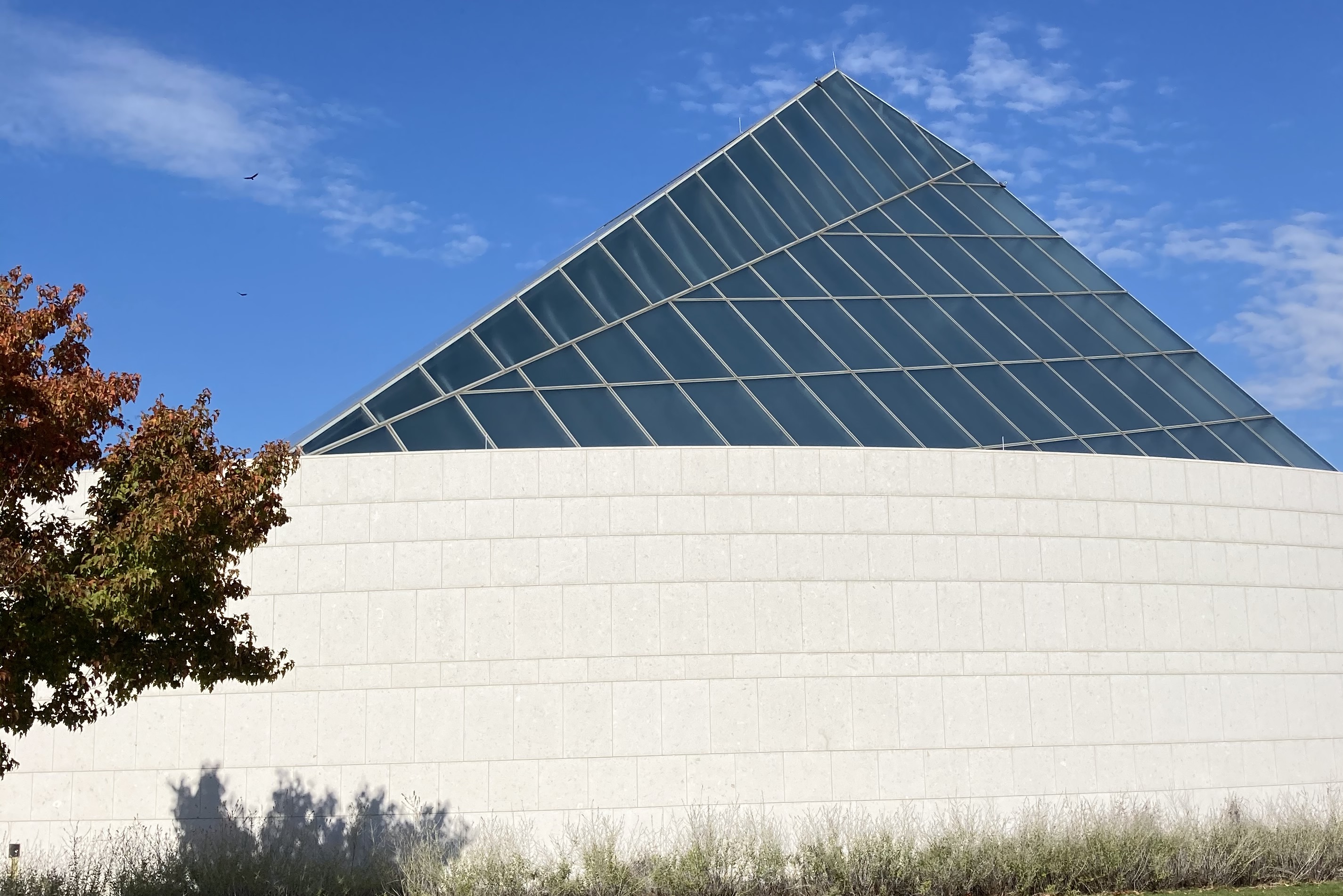
After about an hour at the museum’s courtyard, I could not return home without walking around the Aga Khan Park. As I looked up in the blue sky above the Ismaili Jamatkhana dome, I saw two birds beautifully gliding at the dome’s left. I was left wondering: Were they turkey vultures, eagles or hawks? Alas, I wasn’t carrying a powerful lens to get a better and sharper close-up.
Please click on photo for enlargement
Returning to the museum’s courtyard on Sunday October 25, offered a much different kind of experience, as the temperature had dropped from Friday’s 22°C to only 8°C. But the museum had that in mind too! Blue lounge blue chairs had been placed in the courtyard, with portable fireplaces where visitors mingled with their family members over light refreshments.
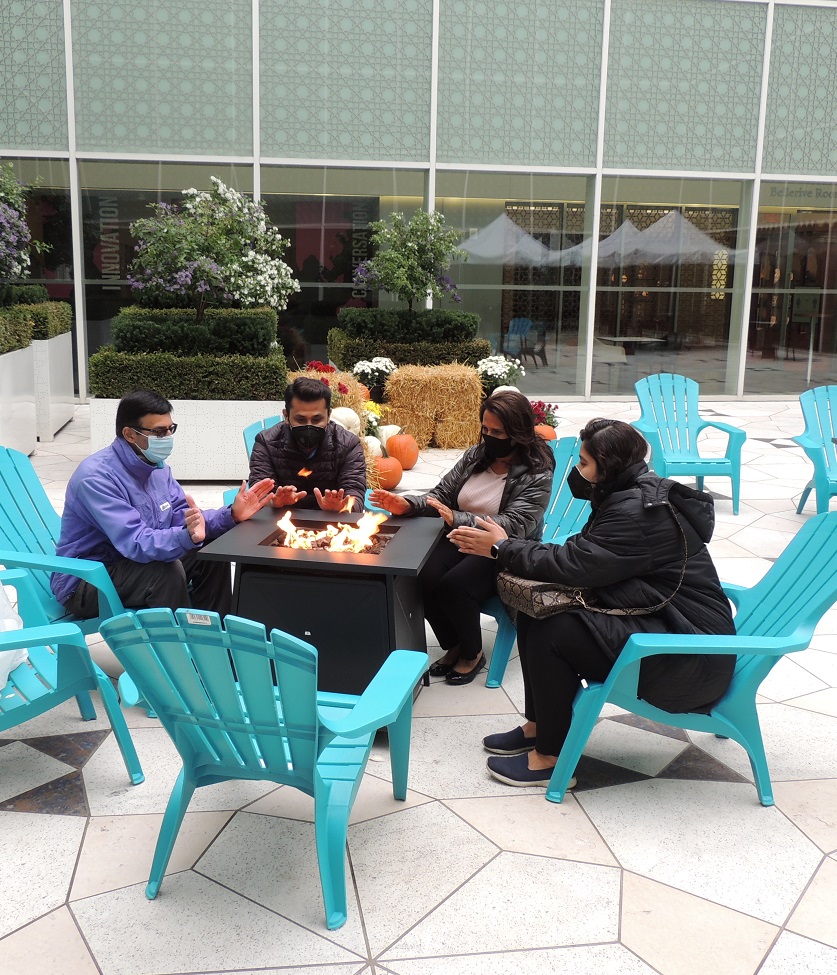
The overall experience at the three Aga Khan projects during recent weeks has been overwhelming.
As we all seek good health, I dedicate this post to the humble pumpkin which supports heart and eye health, and boosts immunity, among other benefits.
And, without the pumpkin’s presence in the museum’s courtyard, it may have never occurred to me to search out the traditions of the Prophet Muhammad (S.A.S.) that have showed that he really liked the pumpkin. For 2020, Muslims around the world will celebrate his birth anniversary — the Milad un Nabi — between October 28-30. It is an appropriate time to learn more about his inspiring life and leadership as well as his faith in God whom he served as the last messenger for 23 long and devoted years, bringing to Muslims the blessing of the Holy Qur’an.
Date posted: October 24, 2020.
Last updated: October 25, 2020 (new photo/information added)
_____________________
Before departing this website please take a moment to review Simerg’s Table of Contents for links to hundreds of thought provoking pieces on a vast array of subjects including faith and culture, history and philosophy, and arts and letters to name a few.
We welcome feedback from our readers. Please complete the LEAVE A REPLY form below or, if you don’t see the box, please click Leave a comment. Your letter may be edited for length and brevity, and is subject to moderation.

For a decade, Simerg has officially supported the initiatives of Prince Hussain Aga Khan to his satisfaction. When we received his signed book “Animal Voyage” ten years ago, they were snapped up within a few days. Then, more recently, his signed copies of “Diving Into Wildlife” containing sea animal photos were also sold out shortly after they were made available to Simerg. We have now received very limited quantities of his signed as well as unsigned copies of “Diving Into Wildlife” for sale in Canada.

In addition, we have also received for sale in Canada an entire collection of Italian made scarves inspired by Prince Hussain’s photography.
The beautiful STENNELA produced scarves were conceived by Valérie Maurice and designed by Kirsten Synge, exclusively for the Prince’s organization Focused on Nature (abbr. FON). Simerg can arrange to show you the entire collection in person in Toronto. You may then purchase them. Please contact Malik Merchant at Simerg@aol.com to arrange a viewing in Toronto (or in Ottawa, when he travels to Ottawa). All social distancing rules will be adhered to. As in the past, the entire proceeds from the sales of scarves and books will be submitted to FON, which assists in the conservation and protection of threatened and endangered species, as well as habitat conservation efforts.

Once again, to view and purchase the books or the scarves, please write to Malik Merchant at Simerg@aol.com. Signed and unsigned copies of Diving Into Wildlife are priced at $US 125.00 and $US 25.00, respectively. Payments can be made by cheques, e-transfers or via Paypal (Simerg is Paypal verified). The prices of scarves range from approximately $US 95.00 – $US 295.00, depending on material (silk or silk/cotton) and size. The entire collection can be viewed online at the Prince’s FON website by clicking HERE. As mentioned, you can try the scarves in Toronto – and buy them in person in Toronto from the complete range we are carrying. We can also ship the books and scarves across Canada, and shipping charges will apply. Please write to Malik at Simerg@aol.com.
Date posted: September 26, 2020.
_____________________
We welcome feedback from our readers. Please complete the LEAVE A REPLY form below or click on Leave a comment . Your letter may be edited for length and brevity, and is subject to moderation.
For objects shown in this post and to purchase them please write in confidence to Malik Merchant at Simerg@aol.com.

