Simerg is an independent initiative dedicated to Ismaili Muslims, the Aga Khan — their Hereditary Imam — and the Ismaili Imamat, and Islam in general through literary readings, photo essays and artistic expressions
Category Archives: Literary Readings from Ismaili History
“Much like Kim’s Convenience, The Wrong Bashir offers characters familiar to and loved by their communities…and a laugh-yourself-silly evening.” — JoLedingham.ca
Zahida Rahemtulla’s play The Wrong Bashir, which ran to packed houses when it was launched a year ago in Vancouver, is premiering at Toronto’s renowned Crow’s Theatre on May 21, 2024. It will run until June 9, 2024. The Theatre picked up Zahida’s new play as part of its bold, ambitious and imaginative 2024-2025 season following The Wrong Bashir’s successful Vancouver showing. It then issued a special call for Ismaili actors based in Eastern Canada to audition for some roles. Crow’s Theatre has been home to groundbreaking and award-winning productions.
The Wrong Bashir is Burnaby-born Ismaili playwright Zahida Rahemtulla’s debut play.
The play delves into the life of Bashir Ladha, a young philosophy major who has strayed from his Ismaili Muslim roots. The story takes a hilarious turn whenBashir’s parents receive a call that their unconventional podcaster son has been chosen as the student’s Mukhisaheb, a significant role in Ismaili Jamatkhanas. They dutifully accept the role on behalf of their son. Before Bashir can argue, two official committee representatives arrive at the Ladha household. The representatives soon realize a mistake in selection, adding to the comedic chaos. The doorbell rings, and Bashir’s excited grandparents and family friend make a surprise visit, having caught wind of the news at their Jamatkhana.
With its heartwarming and humorous portrayal of an intergenerational, transitional moment in the life of a family and community, the play is a must-see for all Ismaili community members. The Wrong Bashir affectionately shows much humour within the worldwide Ismaili community. The play elicited ample laughs and resonated widely with Ismaili and broader audiences in Vancouver.
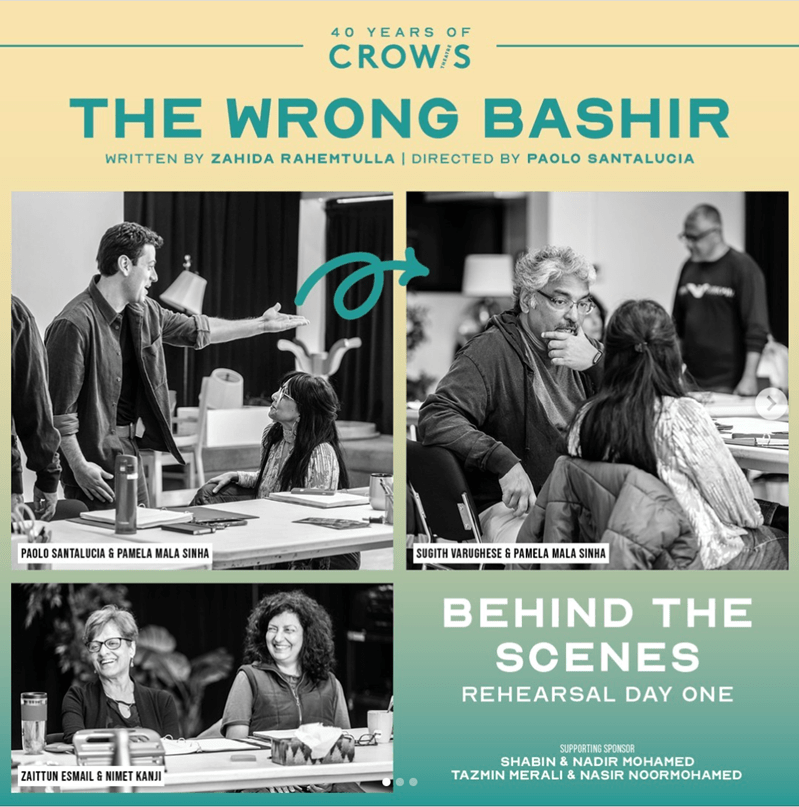
Vancouver’s world premiere featured Ismaili actors Sabrina Vellani, Shera Haji, Salim Rahemtulla, and Hussein Janmohamed. The Toronto premiere will feature Ismailis Nimet Kanji, Zaitun Esmail, and Salim Rahemtulla alongside a large cast (click The Team link on the page). Supporting sponsors for the production are Shabin and Nader Mohamed and Tazmin Merali and Nasir Noormohamed.
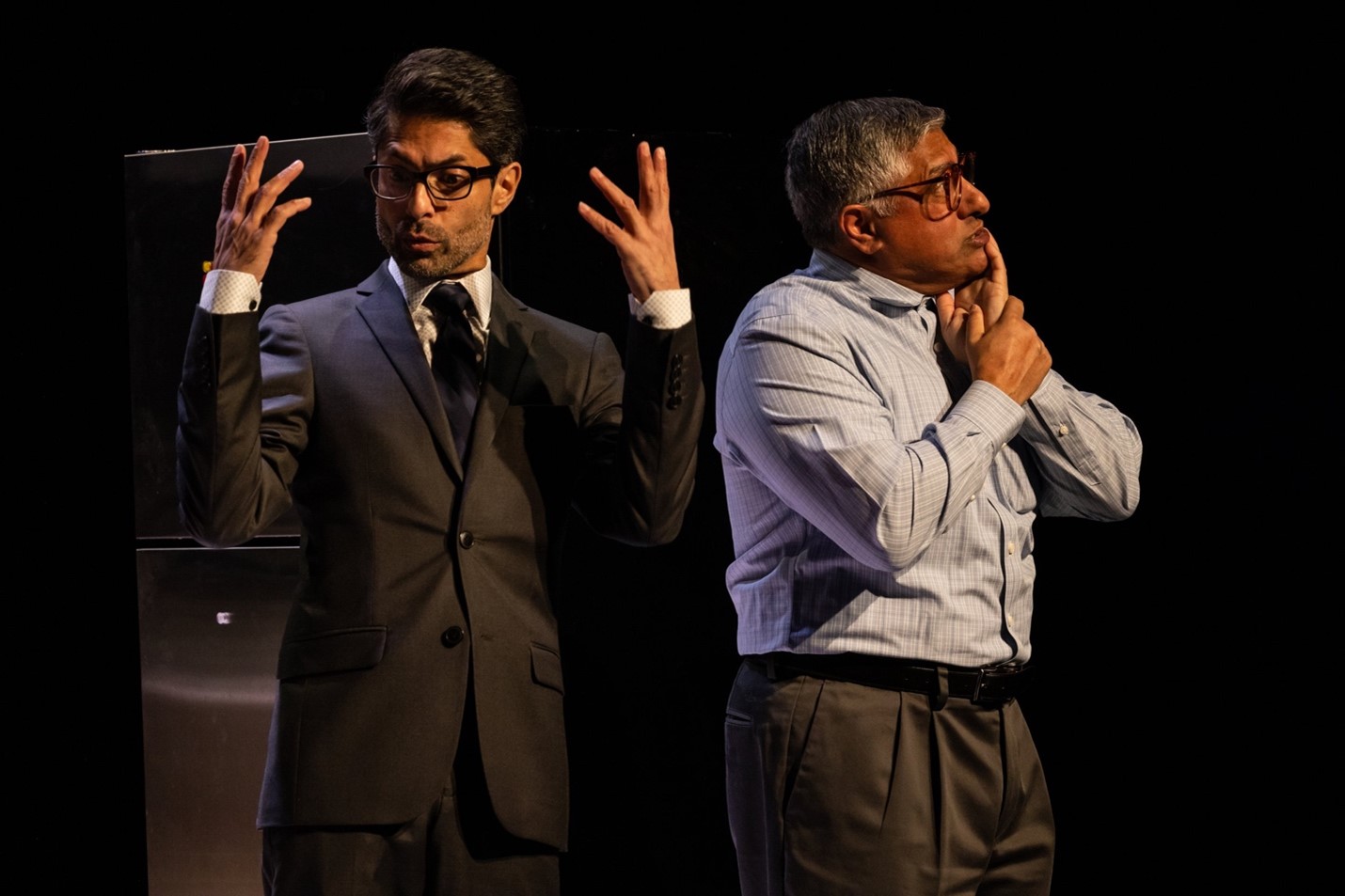
A scene from Zahida Rahemtulla’s The Wrong Bashir.
“The Wrong Bashir found the right audience on opening night if gales of laughter are any indication. From the curtain opener to the surprise at curtain fall, the sold-out crowd at the Firehall had a grand time. The Wrong Bashir is going to be a big hit; for some, it will be a laugh-yourself-silly evening” — Jo Ledingham, Vancouver Theatre Review.
The play is directed by award-winning Toronto director Paolo Santalucia. Crow’s Artistic Director, Chris Abraham, who was already familiar with the Ismaili community in Toronto, championed its inclusion in the 2024 season and brought it to the theatre.
Playwright Zahida says she is excited to see it premiere in Toronto, where the story has shifted from its original Vancouver setting to Toronto’s Don Mills.
Special Discounts: Purchase Tickets for The Wrong Bashir
For tickets for all shows from May 21 to June 9, 2024, please click Buy Tickets for The Wrong Bashir and use the following promotion codes, as applicable:
May 21 to May 26, 2024: General Admission Adult and Senior Tickets can be purchased 2-FOR-1. Please use promotion code WRONG241;
May 21 to June 1, 2024: General Admission Adult and Senior tickets will be discounted 25%. Please use promotion code BASHIR25; and
Throughout the entire run (May 21st-June 9th), there is also a 20% discount for groups of 8+ anytime, which can be obtained by contacting the Crow’s Theatre box office at boxoffice@crowstheatre.com or calling (647) 341-7390.
Date posted: May 13, 2024. Date updated: May 14, 2024 (added promotion codes for discounted tickets).
________________
PLAYWRIGHT ZAHIDA RAHEMTULLA AND DIRECTOR PAOLO SANTALUCIA
Zahida Rahemtulla
Zahida Rahemtulla is a playwright and short story writer. Her debut play, The Wrong Bashir, premiered with Touchstone Theatre in Vancouver in May 2023 and makes its Toronto premiere on May 21, 2024, at the Crow’s Theatre, which has been a leading force in new play creation in the Canadian theatre landscape. Zahida currently facilitates Parragon Theatre’s East of Tarragon Project in Scarborough and is passionate about education and working on new plays and with new playwrights.
~~~~~~
Paolo Santalucia
Paolo Santalucia is an award-winning actor, director and writer. He is a graduate of the Soulpepper Academy, and has been a member of Soulpepper’s ensemble for the past ten seasons. Paolo is a co-founder and Artistic Leader of the award-winning Howland Company. Paolo also teaches classical performance with the University of Toronto’s Theatre and Drama Studies Program, and is the recipient of two Dora Mavor Moore Awards in acting, one nomination for direction, and has been shortlisted for the John Hirsch Award for Directing.
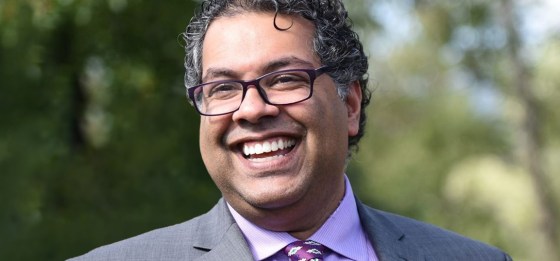
Naheed Nenshi, the esteemed former mayor of Calgary, is paving his way to lead Alberta’s New Democratic Party (NDP) in the Party’s June 2024 Elections. To have a say in this crucial decision, it’s essential that you register as an NDP party member before Monday, April 22. This simple step, which costs only $10.00, will enable you to cast your vote in the June elections. Please visit Nenshi.ca to become an NDP member.
One morning last summer, I joined hundreds of Ismaili Muslims to celebrate the 66th anniversary of Mawlana Hazar Imam, His Highness the Aga Khan, as the 49th Hereditary Imam of the Ismaili Muslim community with chai, sherbet and delicious snacks at a Calgary Jamatkhana’s social hall. Considering my compromised immune system, I sat in an area with only a few people around me. I glanced to my left multiple times and asked myself: “Can it be? Is the guy next to me Naheed Nenshi?” I could not hold back and told him. “You look like Naheed Nenshi.” And he answered, “You are right, I am.”
Seated next to him was his beloved mother. I remembered how, a few years earlier, I would take my mum to the Ismaili Centre and Jamatkhana in Vancouver and, on celebratory occasions, take her to the social hall upstairs to enjoy Ismaili delicacies and chat with community members. Naheed’s care, love and warmth for his mum touched me on this significant day in Ismaili history. In the few minutes I had with him, I dared to suggest that he should, one day, seek to lead a Federal Party. His brief response told me that the idea wasn’t exactly in his mind!
On two earlier occasions in Ontario, when Nenshi was still Mayor of Calgary, I briefly introduced myself to him with a handshake: first at the Aga Khan Museum opening in Toronto in September 2014 and three years later at the Global Centre of Pluralism’s First Award Ceremony at the Delegation of the Ismaili Imamat Building in Ottawa in November 2017. At the first meeting in Toronto, I expressed my interest in interviewing him one day, and he welcomed the idea. However, I have yet to approach him and request an interview.
Since relocating to Alberta two years ago, I’ve witnessed the profound impact of Naheed Nenshi’s leadership as Calgary’s mayor between 2010 and 2021. As the first Muslim mayor of a major North American city, Nenshi garnered widespread respect and admiration from both Calgarians and residents of the Bow Valley for his significant achievements and profound connection with the people. Despite his decision not to seek re-election for a fourth term, his legacy remains robust, and his leadership skills are undeniable.
Naheed Nenshi’s announcement on March 11, 2024, to stand for the election to become the new leader of Alberta’s New Democratic Party (NDP) is a significant development. His decision has sparked a wave of anticipation across the province. Nenshi is up against Kathleen Ganley, Sarah Hoffman, Jodi Calahoo Stonehouse and Gil McGowan to replace Rachel Notley as Alberta’s NDP leader. Notley, who led the party for a decade and served as the province’s premier from 2015 to 2019, announced in January 2024, eight months after her party lost the provincial elections to the United Conservative Party, that she would be stepping down as the leader of the NDP. She will continue to lead the party until after the June elections, when her successor will be decided.
It is noteworthy that even before Nenshi had declared his interest, a Pollara poll revealed that “One in three (33%) Albertans who say they are likely to buy an NDP membership would be “excited” if Nenshi became the next NDP leader, significantly higher than the 10-to-14% who feel that way about the three declared candidates” [at the time]. The report further highlights that “Feelings towards Nenshi are largely positive province-wide, with about twice as many Albertans feeling positive (41%) rather than negative (22%) at the prospect of him leading the NDP.” This positive sentiment underscores the potential impact of Nenshi’s leadership. His leadership has always been driven by strong values and ethics of building community, integrity and honesty and is founded on human justice and cosmopolitanism.
Since entering the race, Nenshi has graciously praised all the other candidates. Still, he feels he would be the best person to lead the NDP and defeat Premier Danielle Smith in the next provincial election in 2017.
Whether you decide to vote for Naheed Neshi or any other candidate in the June 2024 election, it is crucial that you first become an NDP party member by April 22, 2024. This is the date of the membership deadline for voting eligibility. Your participation is vital in shaping the future of the party. Please click on Nenshi.ca to become a member. As Nenshi urges in his video below, you do not need to pay more than $10.00 at this time, as options are available to submit to membership at higher and more significant amounts.
~~~~~~~~~~~~
Naheed Nenshi’s Important Message to the Ismaili Community
~~~~~~~~~~~~
Naheed Nenshi: Tweets
We live in one of the most amazing places on Earth. It’s time we start talking about what we stand FOR, not what we’re against. For Alberta. For all of us. Join the movement today and purchase your membership at https://t.co/OqpFCojan7. pic.twitter.com/1260AdBpwn
The Institute of Ismaili Studies (IIS) in London, England, was established by Mawlana Hazar Imam, His Highness the Aga Khan, the 49th Hereditary Imam of the Ismaili Muslims, on December 13, 1977. For more than 45 years, the IIS has sought to promote scholarship and learning on Islam in historical and contemporary contexts and contributed to a better understanding of Islam’s relationship with other societies and faiths.
The Institute has also dedicated a significant amount of time and resources to studying the history of the Ismaili branch of Islam in all its aspects, including its intellectual, scientific, artistic and commercial activities. The Ismaili Imams ruled over vast territories such as the Fatimid Empire in North Africa and Egypt and the Nizari Ismaili state of Iran and Syria during the Alamut period. Under the Fatimid rule, the Ismailis created one of the world’s oldest learning seats, the Al-Azhar University in Cairo; today, the university is a major Sunni institution.
The IIS’s research and publications, led by both Ismaili and non-Ismaili scholars, have had a profound impact over the past 30 years. They have fundamentally reshaped the perception of Ismailis, who, for centuries, were primarily understood through the lens of works by medieval heresiographers and polemicists, who were generally hostile towards Shias and particularly the Ismailis.
Story continues below
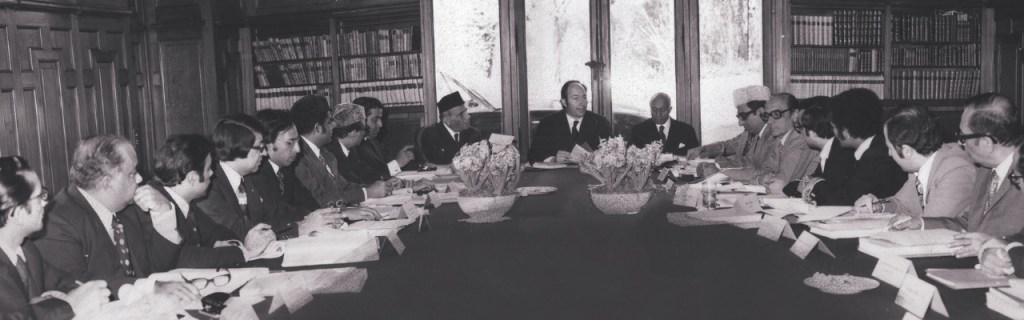
Mawlana Hazar Imam, His Highness the Aga Khan, met with leaders of the Ismailia Association and Ismaili scholars in April 1975 in Paris. A decision was taken at the world conference to establish the Institute of Ismaili Studies. Photo: Ilm magazine, October 1975.
Aside from research papers, scholarly publications and participation in essential conferences worldwide, the IIS has conducted significant programmes such as the Waezeen and Teacher Education Programme (WTEP), the advanced curriculum-planning programme with the University of London’s Institute of Education, the joint IIS-McGill University programme, the Graduate Programme in Islamic Studies and Islamic Humanities (GPISH), and the Secondary Teacher Education Programme (STEP). Some eight hundred individuals have graduated from IIS’s educational programmes since the Institute began receiving postgraduate students in 1980.
Story continues below
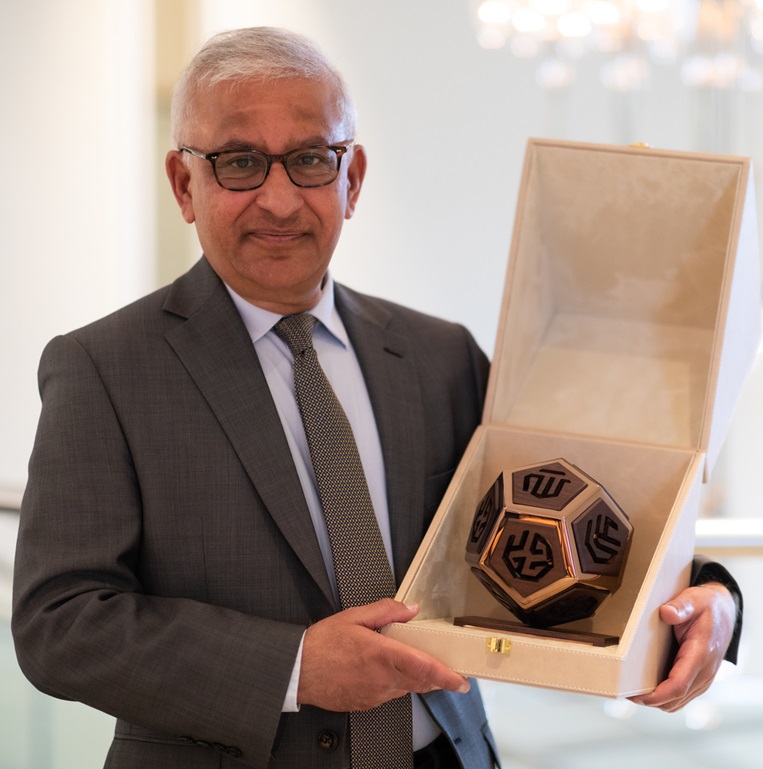
Professor Zayn Kassam, the current director of the Institute of Ismaili Studies, presents the inaugural IIS Alumni Recognition Award to Professor Karim H. Karim during the IIS’s 2024 graduation ceremony, March 23, 2024, at the Ismaili Centre in London. Photograph: Farid Daya.
Several IIS alumni have made remarkable achievements in different parts of the world. On March 23, 2024, the IIS had its first ever Alumni Recognition Award at the Ismaili Centre in London, UK, during its 2024 graduation ceremony.
The Award celebrates those who have demonstrated a career of exceptional service and leadership. A panel of senior management and academics from the AKDN and IIS reviewed the nominations for the Award and selected Professsor Karim H. Karim as the recipient of the First Award based on the following primary criteria:
Professional or Academic Accomplishment: Achieved a high degree of prominence and leadership in their respective field, which may or may not be directly relevant to the work of the IIS.
Contributions to Community Service: Distinguished service to their professional or faith community.
Professor Zayn Kassam, the Institute’s current director, presented the inaugural Award to Professor Karim.
~~~~~~~~
Citation Honouring Karim H. Karim on Being the First Recipient of the IIS’s Alumni Recognition Award
Professor Karim H. Karim holding the first Alumni Recognition Award that was presented to him by the Institute of Ismaili Studies on March 23, 2024, at the Ismaili Centre London. The sculpture was designed by Mohammed Adra (AKDN Geneva) and is inspired by (Late) Karl Schlamminger’s Hepta Globe sculpture, which is placed at the entrance of the Aga Khan Centre in London. Photograph: The Institute of Ismaili Studies via Karim H. Karim.
The citation for the award read as follows:
“Professor Karim has an extensive record of over three decades of scholarship, service, and leadership. His designation as Chancellor’s Professor is the highest honour given by Carleton University for scholarship of outstanding merit with substantial international impact, research leadership and continued active participation in the development of research excellence. Professor Karim has a worldwide reputation as a leading scholar of media representations of Muslims and diasporic communications. He has had visiting appointments at Harvard, Aga Khan, and Simon Fraser universities. Professor Karim has delivered keynote addresses in several countries and his critically acclaimed publications are cited widely. He was the inaugural winner of the Robinson Book Prize and has received media coverage in six continents.
“Dr. Karim has served as Director of Carleton’s renowned School of Journalism and Communication and its Centre for the Study of Islam, respectively. He was also the Institute of Ismaili Studies’ first alumnus to lead it in a directorial capacity. He spearheaded founding initiatives on Accessibility to Digitized Collections and the Canadian Race Relations Foundation as a Senior Policy Officer in the Canadian Government, which endowed him with awards for exceptional public service and for fostering collaboration between ethno-religious communities.
“Karim has an extensive record of international service to academic, community, government, and civil society institutions, including Aga Khan University (Kenya) and Central Asian University; AKDN Higher Education Forum; Canadian Parliamentary Committees and government boards; and Ismaili community organizations (Kenya, USA, and Canada). He has also held an International Ismaili Studies Conference at Carleton University; founded a prize for research in Ismaili Studies’ understudied aspects; and has been a mentor and external Ph.D. examiner for IIS alumni.”
We take this opportunity to congratulate Professor Karim on his accomplishments over the past several decades and on receiving the First Alumni Recognition Award from the Institute of Ismaili Studies. We are proud to have published several of his pieces on our websites (follow the links below).
Below are excerpts from his acceptance speech upon receiving the IIS’s inaugural Alumni Recognition Award.
“Let the Truth Infuse Your Words”
Professor Karim H Karim delivering his remarks on March 23, 2024, at the Ismaili Centre in London upon being presented Inaugural Alumni Recognition from the Institute of Ismaili Studies. Photograph: Institute of Ismaili Studies via Karim H. Karim.
By KARIM H. HARIM March 23, 2024, Ismaili Centre, London
Bismillahir-Rahmanir-Rahim.
I would like to thank the Institute of Ismaili Studies for selecting me as the recipient of its inaugural Alumni Recognition Award. This is a profound honour, which takes me back 40 years when I was a student at the IIS. This beautiful building, the Ismaili Centre London, was under construction at that time.
Congratulations to all the GPISH and STEP students who have graduated today. You carry enormous potential and promise. Allow me to speak about an event in my life that underlined the long-term impact that an individual can have. I attended the funeral of Professor Amin Amershi, a mathematician, two weeks ago in Vancouver. He taught me one class as a guest lecturer in a religious class in Nairobi, when I was 12 years old. It was a singular experience that opened my mind and sparked my imagination because his explanations had the ring of truth. I have found it remarkable that I continue to think about his ideas some 55 years later. You, too, have the potential of a long-lasting impact that will span decades and range as far into the future as the 22nd century. Let the truth infuse your words.
As you may know, our tradition adopted the name “Ismaili” in the early 20th century. Prior to that it was called Da’wat al-Haqq — which means Invitation to Truth, Summons to Truth, or Mission of Truth. In India, the Pirs named it Satpanth — Path of Truth or the True Path. Our aspiration is to have truth manifest our worldview and actions. It underpins our ethical outlook.
We are thrown many challenges throughout our lives. We face success, failure, joy, and frustration. The organizations that we work for pressure us to get the job done and we are often tempted to take shortcuts in order to fulfill expectations. But this is where critical thinking, which you have discussed extensively in your studies, becomes pertinent. How does one balance the imperative to get the job done, on the one hand, and remain ethical, on the other? His Highness the Aga Khan, Mowlana Hazar Imam, instructed the community’s leaders at a gathering in the United States in 1986, that “we will ask the hard questions.” Fulfilling your tasks ethically is one of the hard issues that you will face constantly in your careers.
Let the truth infuse your words, your music, your art, and your actions as you go ahead to fulfill your potential and promise.
Date posted: April 17, 2024.
______________
Featured image at top of post: Professor Zayn Kassam, the current director of the Institute of Ismaili Studies, presents the inauguralIISAlumni Recognition Award to Professor Karim H. Karim during the IIS’s 2024 graduation ceremony, March 23, 2024, at the Ismaili Centre in London. Photograph: Farid Daya.
The following are links to articles by Karim H. Karim published in Simerg and its sister websites:
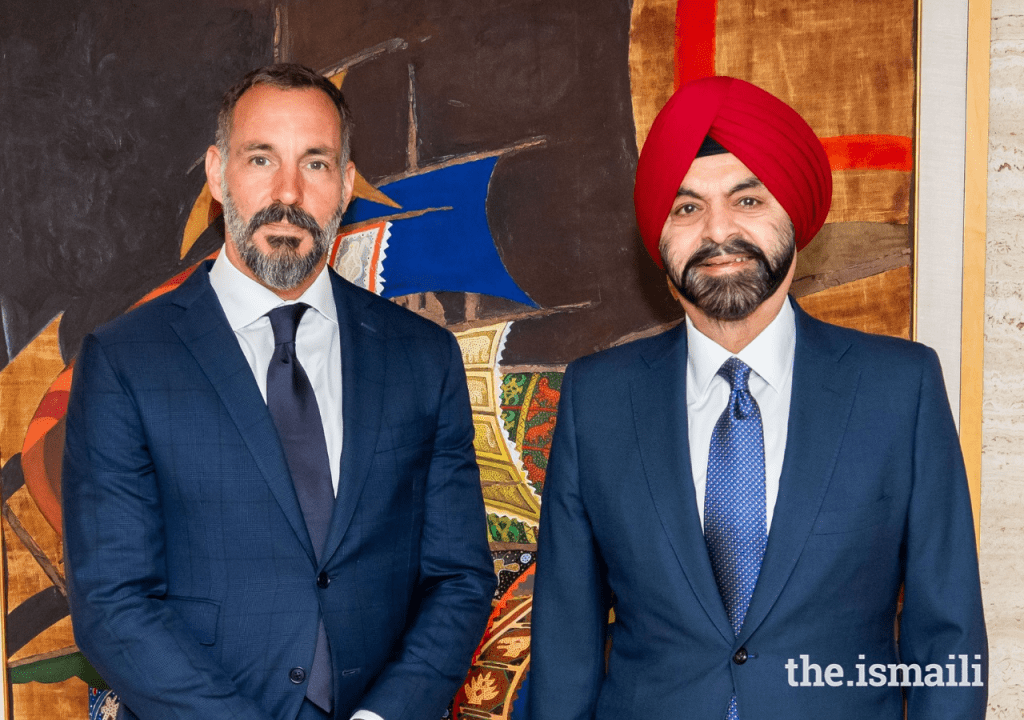
NOTE:The map of Afghanistan and Prince Rahim Aga Khan’s photograph with the World Bank President are not part of the news release issued by the World Bank.
A grant in the amount of $16 million from the Afghanistan Resilience Trust Fund (ARTF) has been approved by the World Bank to support financing for micro and small enterprises in Afghanistan, with a focus on women and women-led businesses.
The project will help revive microfinance providers active in Afghanistan by clearing their balance sheets of old loans that cannot be repaid due to economic conditions arising after August 2021. This will help increase their liquidity so they can provide new financing to micro and small enterprises. The project will also provide technical assistance to the microfinance providers to strengthen the micro-finance sector, digitize business proceses, and train staff to prioritize lending to women and women-led businesses.
“Supporting micro-finance providers in Afghanistan is one of the few viable options at this time to promote access to finance in Afghanistan, especially for women,”said Melinda Good, World Bank Country Director for Afghanistan. “This project aims to strengthen the microfinance sector in Afghanistan so that small business owners and women-led businesses can access the credit they need to rebuild their businesses, rebuild their lives, and help revive the private sector.”
Story continues below
Prince Rahim Aga Khan and Ajay Banga, President of the World Bank, meet in Washington DC on February 6, 2024. Photograph: The World Bank via The Ismaili. Please read report of the meeting HERE.
The project will also provide business development services that focus on building a pipeline of bankable micro and small enterprises and enterprises that proactively create jobs for women. These services will help women-led small businesses transition from informal savings groups to formal credit channels.
The project will also establish a Credit Viability Fund (CVF), implemented by the Aga Khan Foundation USA’s Office in Afghanistan. The CVF will help eligible micro, small and medium-size enterprises that have benefited from the business development services to access formal financial channels.
“The EMERGe project was developed after extensive stakeholder consultations, including microfinance providers and chambers of commerce, especially those led by women. This helps to ensure it offers solutions to unlock access to finance for small businesses in Afghanistan and to make the flow of donor funds into the sector more sustainable,” said Namoos Zaheer, Senior Financial Sector Specialist and World Bank Task Team Leader for the project. “The vision is to foster and sow seeds for sustainable solutions to support livelihoods, particularly for women.”
Financial inclusion is a persistent challenge in Afghanistan, with nine out of 10 Afghan adults excluded from the financial system — meaning they have no bank account or access to credit or loans. Only 5 percent of Afghan women have some form of financial transaction account, compared to 10 percent of men. This is a tremendous barrier to women’s economic empowerment and their participation in economic life.
The EMERGe project, as with all World Bank and ARTF-supported projects since August 2021, includes specific provisions to ensure that women benefit from project activities.
The project will focus on 15 provinces (Badakhshan, Baghlan, Balkh, Bamyan, Daikundi, Faryab, Herat, Jowsjan, Kabul, Kunduz, Nangarhar, Parwan, Samangan, Sar-e-pol, and Takhar — see map at top of page — Ed.) where the Aga Kkan Foundation is currently working and where microfinance providers are active.
The ARTF grant is provided to the Aga Khan Foundation USA and will be implemented by two implementing partners: The Aga Khan Foundation-Afghanistan and the Afghan Credit Guarantee Foundation (ACGF). The ACGF was established in 2004 and works to enhance access to finance for Afghan micro, small, and medium enterprises by providing credit guarantees and technical assistance.
The author has adapted this article from the March 1982 issue of Al-Misbah Magazine, published by the Ismailia Association for the UK. The original article, which was under the title Navroz, has been edited and improved for clarity and includes additional material.
Navroz, meaning New Day or New Year, marks the start of the Persian spring festival. It occurs on or around March 21 of the March equinox. The United Nations has designated March 21 as the International Day of Nowruz annually (the Secretary General’s 2024 message can be read HERE.)
It is an occasion of great rejoicing among people in Iran, many parts of the Middle East, Central and South Asia, and the Shi’a communities worldwide. Besides being New Year’s Day, it is also celebrated as the Festival of Spring because it is at this period that winter makes its exit for the colourful spring season.
Navroz holds a significant place in history, dating back some 2,500 years to the reign of King Jamshed. Despite a temporary halt after the rise of Islam in Iran, it was reintroduced by the Abbasid Caliph Mansoor in 770 AC (153 AH, or Hijri). Since then, Navroz has been a cherished national occasion and custom, celebrated with zeal by more than 300 million people worldwide.
In Fatimid Egypt, the state ruled by Ismaili Imams, the Spring Festival was a national celebration during the reign of the first eight Fatimid Imams/Caliphs from 969 to 1094 AC (358 to 487 AH). Although the Fatimid Imams ruled over Egypt, this festival was not exclusively Ismaili because the Ismailis, even at that time, were a minority group in the Caliphate.
The actual celebration of Navroz among the Ismailis could be said to have started in Iran during the Alamut Period of Ismaili history. Ismailis living in Alamut were farmers; hence, in the spring season, they would look forward to preparing their farms for a good harvest.
The glorious transformation of nature at the time of Navroz, the start of the spring season, reminds us of Allah’s creative power and the bounties He continually showers on us. The arrival of spring, with its sprouting seedlings, blossoming buds, vibrant colours, and rushing waters, is a vivid reminder of our true inner essence.
Like these elements of nature, we, too, have the potential to bloom and grow under the nurturing care and warmth of Imam-of-the-Time. The Preamble of the Ismaili Constitution proclaims that the Imam’s ta‘lim (guidance/teaching) lights the each follower’s path to spiritual enlightenment and vision.
Born as Ismailis, with the recognition of the Imam, this life is the spring season of our souls. The Divine Noor shines brightly over our souls. We must cleanse ourselves of unrighteousness and cultivate an original, spontaneous, and permanent relationship with the Noor (Light) of Imamat so that every breath and activity of our life becomes the worship of the Merciful. The festival of Navroz should result in a spiritual rebirth for each of us and inspire greater love for our Imam.
Article continues below
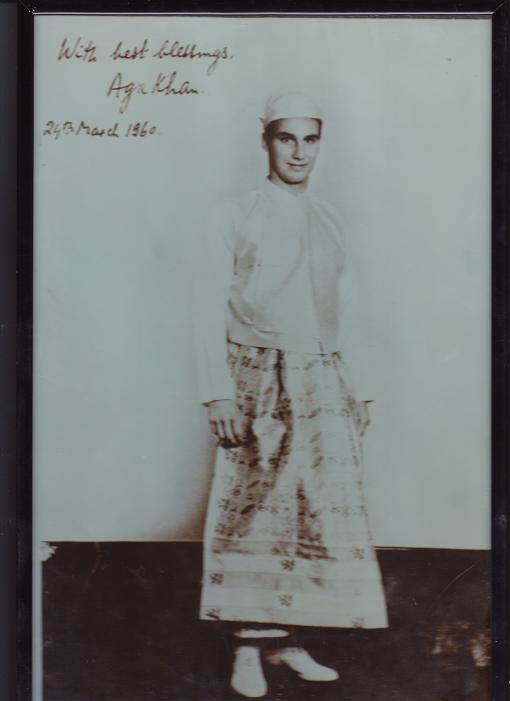
This is a signed photograph, dated March 24, 1960, of Mawlana Hazar Imam, His Highness the Aga Khan, 49th Imam of the Shia Imami Ismailis, pictured in a Burmese traditional dress during his visit to Burma in March 1960 when he celebrated the Persian New Year, Navroz, which falls on March 21st, with his Ismaili followers. The signed photograph contains his blessings. Photo: Anwar Virani Archives, Ottawa.
Navroz is an auspicious time to initiate self-improvement because nature, so to speak, is turning a new page in the book of life. It is a time to review our lives and determine necessary improvements. In a detached, objective way, we should analyze our positive and negative traits and then resolve to change bad habits into good ones.
Our covenant with Mawlana Hazar Imam is a promise we have given him to endeavour to achieve a proper balance between our material and spiritual lives. When choosing our resolution, one idea should always loom before the rest: ask ourselves, “What do we want from life, and what will earn Mawlana Hazar Imam’s divine pleasure?” A straightforward answer to this question should be: “To govern our lives by his deep desire for us to live within the Islamic concepts of unity, justice, tolerance, goodwill, generosity and the regularity by which we practice our faith.”
Mowlana Hazar Imam’s message spells out the meaning and significance of this auspicious day for us. He says: “I say to you all on Navroz, ‘Navroz Mubarak,’ and I want you, at the beginning of this New Year, to try to think a bit ahead in your future. Each Navroz, say to yourselves, ‘Have we done our work?’ If you have, then I will be very happy indeed. I say Idd Mubarak to all of you and give you most affectionate blessings.” — Rangoon, Burma, March 21, 1960.
By steeping our consciousness in love for the Imam-of-the-Time and wisely directing our activities, we shall make our lives one unending act of worship. Therefore, let this Navroz be a New Day on the path of spiritual glory, material well-being, and progress. Let each New Day be a Navroz to strengthen our spiritual bonds with Imam-e-Zaman, reminding us that his blessings are always with us.
We conclude with our beloved Imam’s final words spoken in Rangoon: “On this day of Navroz, I say to each and every one of you, Idd Mubarak, and I pray that in this New Year, your worldly and spiritual happiness should progress tenfold and that this will be the case every year.” — Rangoon, Burma, March 21, 1960.
Date posted: March 18, 2024. Last updated: March 20, 2024 (inserted link to UN Secretary General’s 2024 Nowruz message in 1st paragraph).
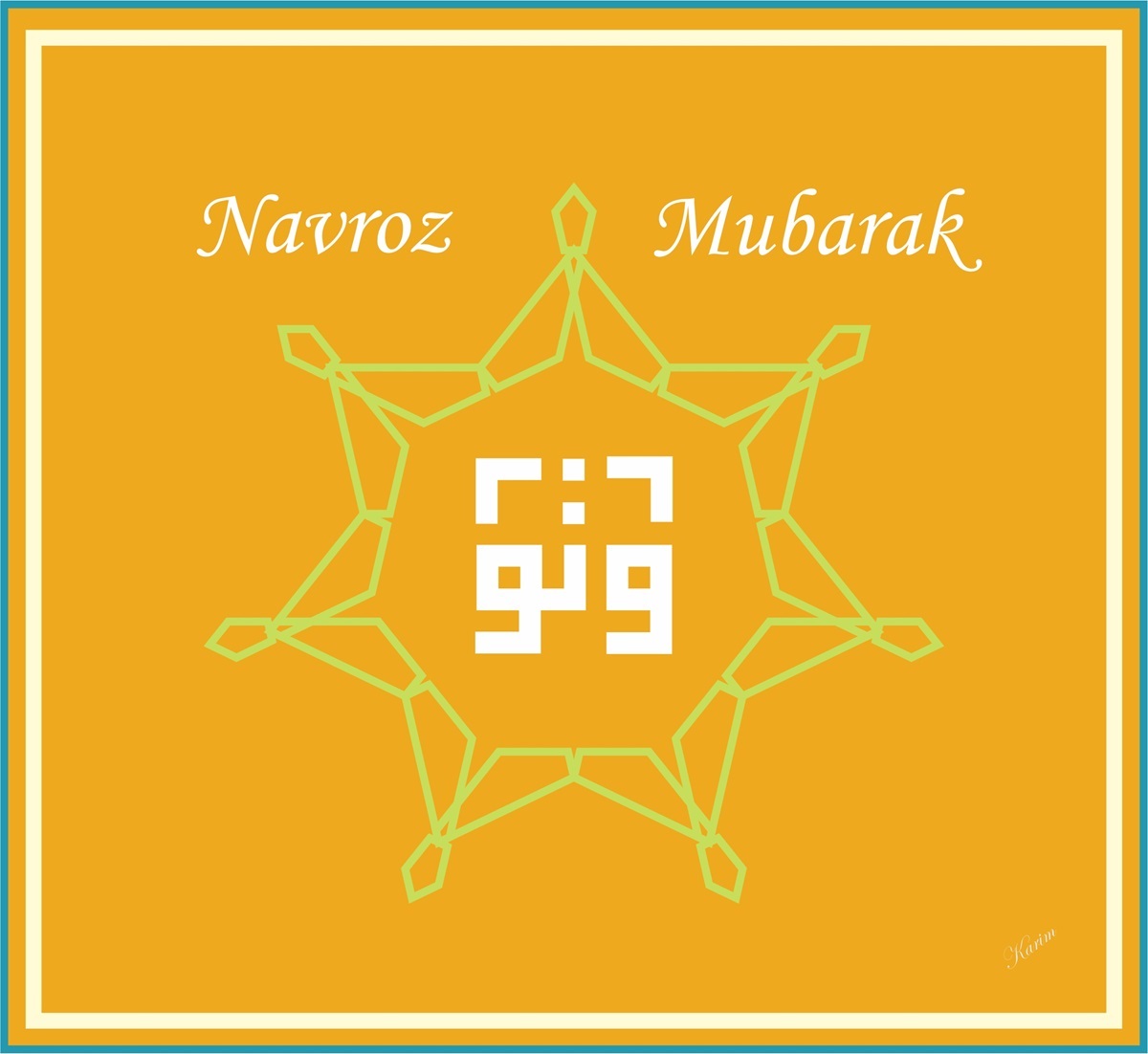
Conceived and created by Dr. Nurin Merchant, this Navroz greeting incorporates the rose and jasmine flowers which are extremely popular in Iran during the celebration of Navroz. The base of the picture shows shoots of wheat grass signifying robust evergreen health throughout the year.
Abstract: The auspicious occasion of Navroz generates immense happiness and makes our hearts jump with joy as we receive blessings from Mawlana Hazar Imam together with roji and Ab-e-Shifa and recite the traditionally Ginan Navroz na din Sohamna. This post includes two beautiful recitations of the Ginan by Shamshudin Bandali Haji (full Ginan) and Mumtaz Bhulji (selected verses) followed by an explanation by Sadruddin Hassam. In the Ginan, Sayyid Fatehali Shah relates the combined experience of the zahiri deedar (exoteric or physical glimpse or meeting) that he was granted by the 45th Ismaili Imam, Shah Khalilullah (peace be on him), and the inner joy of contentment and ecstasy that he experienced with the bestowal of Noorani (spiritual or esoteric) grace.
Navroz Ginan recitation by Shamshu Bandali Haji
Recitation of Navroz Ginan by Late Shamshudin Bandali Haji. In his opening remark, the reciter mistakenly attributes the Ginan to Pir Shamsh. The clarification about the composer is provided in the article below.
_______________________
Navroz Ginan recitation of selected verses by Mumtaz Bhulji
Recitation of selected verses of Navroz Ginan by Mumtaz Bhulji
An attempt is made in this article to give an interpretation of the devotional Ginan Navroz na din Sohamna, which is recited by Ismaili Jamats in many parts of the world on the occasion of the celebration of the Persian New Year which falls on March 21st. In this ginan the composer, Sayyid Fatehali Shah, relates the combined experience of the zahiri deedar (exoteric or physical glimpse or meeting) that he was granted by the 45th Ismaili Imam, Shah Khalilullah (peace be on him), and the inner joy of contentment and ecstasy that he experienced with the bestowal of Noorani (spiritual or esoteric) grace. At the same time, he gently persuades the mu’min (a believer) to always strive for esoteric understanding as well as to develop a lasting spiritual relationship with the Imam of the Time. It may be noted that in Shia Imami Ismaili theology each Imam is the bearer of the same Divine Light (Noor). The Divine Institution of Imamat has its origins in the first Shia Imam, Hazrat Ali (peace be on him), who was declared as the successor to Prophet Muhammad (may peace be upon him) at the famous historical event at Ghadir-e-Khumm.
As the composer has to narrate the exoteric experience as well as the ineffable esoteric relationship, the ginanic diction that he uses has to resort to the traditional and familiar imagery and symbolic expressions in order to convey his message. The words, the imagery and the symbolic expressions, however, blend beautifully in this ginan. This beauty, unfortunately, cannot be recreated in this prosaic interpretation. Nor can we go into the prosody of the ginan.
In this reading we shall first address a common held misunderstanding about the identity of the composer. We shall then make an attempt to describe the exoteric experience of the composer’s meeting with the Imam, as so wonderfully narrated in the ginan, and finally we shall examine and interpret some of the key words and expressions to convey the ineffable spiritual experience as well as the composer’s gentle persuasion to the mu’mins. One hopes that this brief reading will heighten the reader’s appreciation and understanding of this ginan.
~~~~~~~
A clarification about the composer and the period of composition
The composition of this ginan is sometimes wrongly attributed to Pir Shams al-Din who lived more than four centuries before the actual composer of this ginan, Sayyid Fatehali Shah. This mistake may have arisen because of the pen-name he has used in the second line of the last verse which reads:
Bhane Shamsi tamme sambhro rookhi.
It was a normal practice for the composer to mention his own name in the concluding verses of the ginan. But Shamsi here does not refer to Pir Shams al-Din – rather it was the pen-name of Sayyid Fatehali Shah.
He, like a number of other Sayyids, who did the work of da’wa (propagation and teaching) in India, may have been a descendant of Pir Hassan Kabirdin. Sayyid Fatehali Shah himself preached among the communities in Sind. He eventually died there and was buried near Jerruk which is south of Hyderabad in Pakistan.
The first two lines in verse seven give us the clues as to the period when this ginan was composed as well as validate the real name of the composer. These lines read:
Eji gaddh Chakwa ne kille Shah Khalilullah ramme Tiyaan Fatehali ne mayya karine bolaawiyya
Shah Khalilullah here refers to the forty-fifth Ismaili Imam, whose Imamat was from 1780 to 1817 A.C. He lived in Iran in the town of Mahallat, which is located approximately 362 kilometers from Tehran. The town is situated on the slope of a mountain. Mahallat is also amongst the most ancient residential areas in Iran and was an important base of the Ismailis; hence the many references to the 46th and 47th Imams (Aga Khan I and II) as Aga Khan Mahallati. Sayyids and murids of the Imam from various parts used to come to Mahallat to pay their respects. This ginan is therefore fairly recent, having been composed either towards the end of eighteenth century or early in the nineteenth century.
It appears that like many other murids, Sayyid Fatehali Shah travelled from Sind to Iran to meet Hazrat Imam Shah Khalilullah.
On arriving in Mahallat on the day of Navroz, he learns that the Imam has gone to the woods on a hunting expedition. The Sayyid naturally feels disappointed that having come all the way, he did not have the opportunity for the deedar. This feeling of sadness is lamented in the first stanza of the ginan. Despite this, there is an undercurrent of inner hope at the prospect of having the deedar by the mercy of the Imam.
The pangs of separation from the beloved and the yearning for reunion are a recurrent theme in Ismaili ginans and also in Sufi mystical poetry. In this ginan, there is the lament of this separation, but in keeping with the traditional ginanic function, there is also gentle persuasion and hope of spiritual union.
We shall now examine how Sayyid Fatehali Shah relates his zaheri deedar of the Imam and how this blends with his esoteric experience.
~~~~~~~
The meeting with the Imam of the Time in the woods and at the fort
In the following four verses (1, 2, 3 and 7), Sayyid Shamsi relates his quest for the Master which leads to his meeting with Imam Shah Khalilullah. The meetings (deedar) fulfilled his intense yearning.
Transliteration:
Eji Navroz na din sohamna, Shah Ali Qayam shikaar ramwa vann gaya, Sevak na mann thaya oodassi, Praan Ali charne rahiya…..1
Interpretive Translation and Explanation
On a beautiful day of Navroz, Imam-e-Zaman had gone to the woods to hunt. (I) His murid (disciple) became sad at heart (for missing my Master), as my soul was yearning to be at the feet of the Imam. (An expression of respect and – obedience to the Imam)….1
Navruz (Navroz – Gujrati variation) is a Persian word meaning ‘New Year’s Day’ (twenty-first March). This is the first day of spring, hence the day is beautiful (sohamna). Shah Ali Qayam refers to Imam-e-Zaman (Imam of the Time) because Noor-e-Imama is everpresent (qayam). Shikaar ramwa gaya means ‘went hunting’ and vann means ‘woods.’ Sevak is ‘one who is ready to serve or obey,’ in this case a ‘disciple’ or a ‘murid.’ Praan means ‘inner life’ or ‘soul.’
VERSE 2
Transliteration
Eji Shah Qayam preete jo chint baandhi Nar ne preete amme vann gaya Eva vann sohamna Nar Qayam ditha, Dela dai devanta rahiya …..2
Interpretive Translation and Explanation
Impatient because of my ardent and deep loving desire to meet the Imam, I also went into the woods, which in the presence of the Imam unfolded like heavenly gates looking angelically beautiful….2
The expression preete jo chint baandhi literally means ‘with love when (one) focuses on the remembrance (dhikr).’ Dela dai devanta rahiya is an idiomatic expression implying ‘the unveiling of angelic (devanta) beauty with the opening of gates (dela).’ When the murid (devotee) searches inwards for the murshid (master), spiritual insight keeps on unveiling the gates with ever-increasing beauty.
VERSE 3
Transliteration
Eji bhalu thayu Saahebe soomat aali, Shah Ali Qayam saathe ramwa amme vann gaya. Anant aasha poori amaari Shah dil bhaave gamya….3
Interpretive Translation and Explanation
It was a blessing that the Master inspired in me the wisdom so that I went into the woods. My intense yearning was fulfilled because true bliss had blossomed in my heart…..3
Saahebe soomat aali means ‘the Master inspired in me the wisdom.’ Anant asha poori amaari means ‘my intense yearning (for deedar, both zahiri and batini) was fulfilled.’
VERSE 7
Transliteration
Eji gaddh Chakwa ne kille Shah Khalilullah ramme, Tiyaan Fatehaline mayya kari ne bolaawiya, Anant aasha poori amaari Neet Ali Noore oothiya….7
Interpretive Translation and Explanation
Shah Khalilullah, pleasantly relaxing at the fortress in Chakwa, graciously summoned me (Fatehali) in his presence; then with the constant overflowing of His Noor, fulfilled my many ardent wishes (for spiritual growth)….7
The expression Neet Ali Noore oothiya implies ‘the mystical experience of the overflowing of the Noorani Deedar of Ali (The Imam Eternal) which was granted (to him).’
~~~~~~~
The inner search and experience
In the remaining four verses (4, 5, 6 and 8 ) of the ginan, Sayyid Shamsi, touches upon his own inner yearnings and gently persuades the listener to seek out the spiritual vision through the love and grace of the spiritual lord.
VERSE 4
Transliteration
Eji hette Alisu hirakh baandho, Avichal ranga Sahebse girahiya, Evi chint baandhi Nar Qayam saathe, Sat bhandaar motiye bhariya….4
Interpretive Translation and Explanation
Be joyfully bound in the love of Ali And attain the unfading spiritual color (the state of bliss) from the Master; When my mind was bound to the Ever-Living Lord in contemplation Reality adorned (the Soul) with priceless treasure of (Noorani) pearls….4
Avichal ranga Sahebse girahiya means ‘the permanent state of bliss from the Lord’ and refers to the nafs-i-mutmainna or ‘the contented self’ (Holy Qur’an, 89:27). It is a state of mind which is serene because the self has understood the Reality. The verse of the Holy Qur’an reads: But ah! thou soul at peace! (translated M. Pickthall).
VERSE 5
Transliteration
Eji amme Saheb saathe sahel kidha, Riddh siddhaj paamiya, Ek mann ginan je saambhre Aa jeev tena odhariya….5
Interpretive Translation and Explanation
I (Fatehali) relished the spiritual journey with the Master (the Imam), and (as a result) I was blessed with spiritual elevation and gnosis (spiritual insight). He who listens to the Ginans attentively (and strives for the contemplative knowledge), his soul finds the path to salvation….5
Here the Sayyid implies that a mu’min should strive for the batini deedar (spiritual reality of the Imam). One may achieve this with the blessing of the Imam.
VERSE 6
Transliteration
Eji jeev jiyaare joogat paame, Praan popey ramm rahiya, Agar chandan prem rasiya, Hette hans sarowar zeeliya…..6
Interpretive Translation and Explanation
When the self understands reality, the soul blends beautifully like a flower and experiences musk and sandalwood-like fragrance. The self floats in ecstasy of love as a swan swims in a lake….6
This verse contains symbolic expressions and imagery to convey the ineffable serenity and the inner joy of the fortunate one who has been graced with the the batini (esoteric) experience. The life of such a person becomes beautiful like a flower.
The fragrance of musk (agar) and sandalwood (chandan) symbolizes good behavior of the gifted one through speech and good deeds.
The swan (hans) represents the soul that is pure. Through esoteric and ecstatic experiences it remains liberated and is in abiding love for the beloved.
VERSE 8
Transliteration
Eji bhai re moman tamey bhaave araadho, Bhane Shamsi tamey saambhro rookhi, Saaheb na goon nahi wisaare, Tena praan nahi thashe dookhi….8
Interpretive Translation and Explanation
O momin brothers! With deep affection remember the Lord. Take heed and listen to what Shamsi says: “They who do not forget the batin of the Imam (realizable through Imam’s grace), their souls will never ever be miserable or unhappy”…..8
Sayyid Shamsi gently reminds his momin brothers (rookhi) always to remember the Lord with affection. Here, rookhi is probably the intimate form of the word rikhisar which is used in the ginans to refer to mu’min brothers. The word has been used thus to rhyme with the last word of the stanza dookhi (miserable).
The last two lines are to remind us not to forget the batin of the Imam but to strive towards it through regular prayers. Those who carry out these responsibilities with dedication and devotion can never be unhappy whatever the worldly life might impose upon them. Thus the souls of the true mu’mins will always be at peace within themselves, knowing that they are under the protection and guidance of a living manifest Imam.
“Remember the Day when we will summon all human beings with their Imam. …” – The Holy Qur’an 17:71
From the above discourse, we can see why the ginan is appropriate for the occasion of Navroz, which marks the commencement of a new year. The glorious transformation of nature in spring reminds us of the creative power of Allah, who continually showers His bounties for us. Thus, the festival of Navroz should effect a spiritual renewal in each one of us. It should inspire greater love for Imam-e-Zaman as is enjoined upon us by Allah and our beloved Prophet Muhammad (may peace be upon him).
This Navroz ginan by Sayyid Fatehali Shah reminds us of our spiritual obligations for continuous search for enlightenment through the Ta’alim (teachings and guidance) of the Imam of the time.
Date posted: March 19, 2020. Last updated: March 20, 2024 (reformatting.)
_____________________
Before departing this website please take a moment to review Simerg’s Table of Contents for links to hundreds of thought provoking pieces on a vast array of subjects including faith and culture, history and philosophy, and arts and letters to name a few.
The piece on Navroz included this post has been adapted by Simerg from the original article, “Eji Navroz Na Din Sohamna – An Interpretation,” by Sadrudin K. Hassam, which appeared in Ilm, Volume 9, Number 2, (March 1985).
Inna lillahi wa inna ilayhi raji’un “Surely we belong to God and to Him we return” — Holy Qur’an, 2:156.
“Life is a great and noble calling, not a mean and grovelling thing to be shuffled through as best as we can but a lofty and exalted destiny” — Mawlana Sultan Mahomed Shah, His Highness the Aga Khan III (1877-1957), 48th Imam of the Shia Imami Ismaili Muslims.
It is with deep sadness that I inform readers that Aitmadi Dr. Aziz Rajabali Kurwa of Mumbai, India, London, England, and Calgary, Canada, passed away peacefully in Calgary on Wednesday, March 13, 2024, at the age of 91. Dr. Kurwa’s wife, Aitmadibanoo Shirin Aziz Kurwa (d. December 2016), and his two brothers, Ramzan and Mohammedally, predeceased him.
Surviving Dr. Kurwa are his three children and their respective spouses, six grandchildren, and two great-grandchildren. They are daughter Khadeeja and her husband Steven Emmerson, and their two children, Adam and Daniel; daughter Laila and her husband Rahim Arstall and their two children, Nadia and Karim; and son Dr. Habib Kurwa and his wife Farzana and their two children, Khalil and Hassan. Laila’s daughter Nadia is Dr. Kurwa’s granddaughter, and with her husband Bob, they have two children, Rohan and Remi, making Dr. Kurwa a great-grandfather. Also surviving Dr. Kurwa is his younger brother, Dr. Badru Kurwa, an ophthalmologist in California.
Aitmadi Dr. Aziz Kurwa’s funeral will take place at Calgary’s South Jamatkhana on Saturday, March 16, 2024, at 11 AM. The funeral will be preceded by a dilsoji (condolences) to family members at the same Jamatkhana on Friday, March 15, after the evening ceremonies.
Article continues below
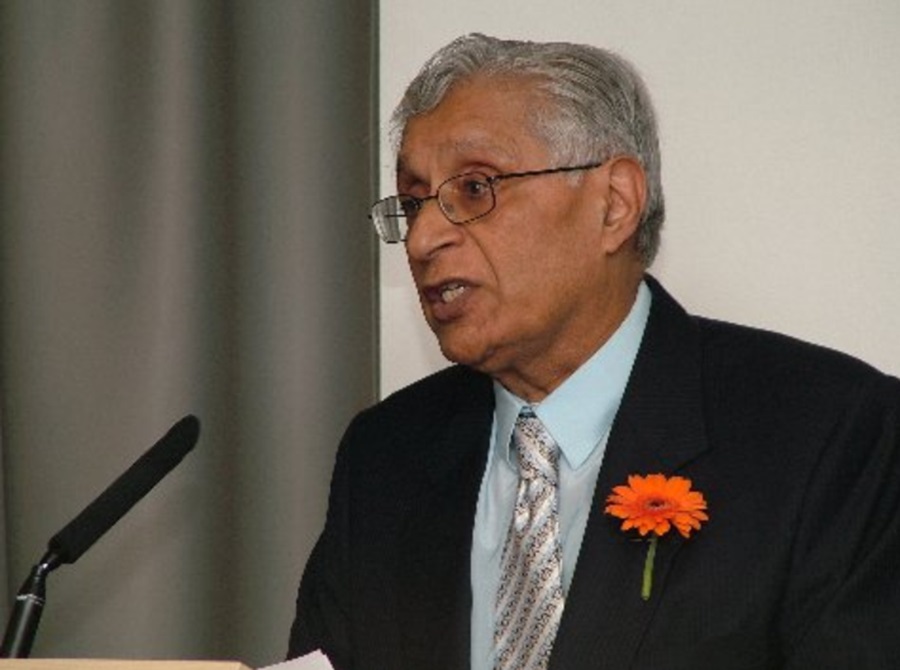
Aitmadi Dr. Aziz Rajabali Kurwa (d. March 13, 2024, aged 91)
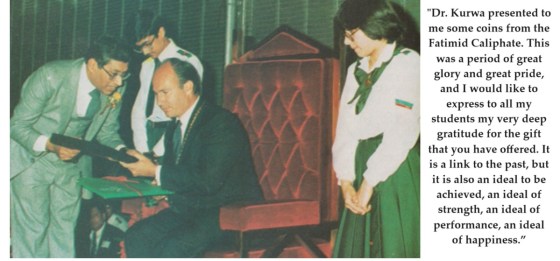
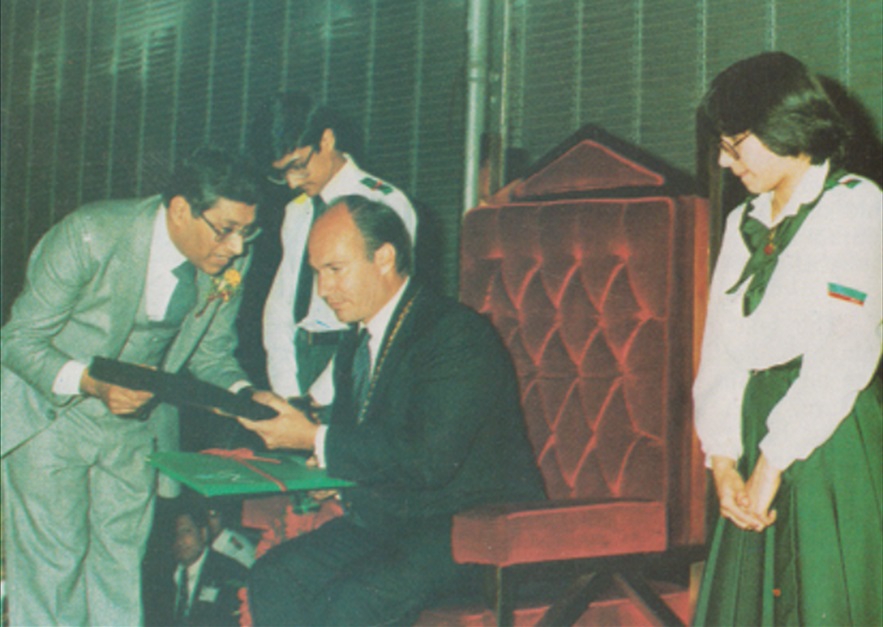
Dr. Aziz Kurwa was an exceptional and dedicated Ismaili leader who left an indelible mark on the community by pursuing excellence and implementing transformative programs and ideas in the United Kingdom. As someone who, with my late parents Alwaez Jehangir and Alwaeza Malek Merchant, served under Dr. Kurwa’s leadership as the President of the Ismailia Association for the United Kingdom (now known as the Ismaili Tariqah and Religious Education Board or ITREB), I have fond and special memories as I think of him. Still, there is one that was extraordinarily special. It is of the day in London, England, when he presented a framed set of 3 Fatimid coins to Mawlana Hazar Imam, His Highness the Aga Khan, at a student gathering in Olympia Hall during his weeklong visit in September 1979 to the Ismaili Jamat (community). Mawlana Hazar Imam looked at the gift with deep interest and admiration and responded as follows:
“Dr. Kurwa earlier, presented to me some coins from the Fatimid Caliphate. This was a period of great glory and great pride, and I would like to express to all my students my very deep gratitude for the gift that you have offered. It is a link to the past, but it is also an ideal to be achieved, an ideal of strength, an ideal of performance, an ideal of happiness.” (Excerpt from Ilm, Volume 4, Number 3).
Following the presentation, Dr. Kurwa brought the gift to the Ismaili Association’s literature counter for display for the benefit of the Jamat. This first-ever presentation of Fatimid coins to Mawlana Hazar Imam during his 22 years of Imamat from 1957 to 1979 raised the Jamat’s interest in the glory of the Fatimid Empire.
Article continues below
London, September 1979: Mawlana Hazar Imam, His Highness the Aga Khan, is seen receiving the report of the Ismailia Association’s Activity and a framed set of 3 Fatimid Gold Dinars from the President of the Association, Dr. Aziz Kurwa. The students Mukhi and Mukhiani are standing on either side in a volunteer’s uniform. Photo: Ilm magazine.
Aziz Rajabali Kurwa was born in Mumbai on December 1, 1932, and studied there until his medical graduation. He became involved with services to the Ismaili community at a very young age. As a college student, he helped revive a student society under the new name of Ismaili Students Education Society (ISES). The committee then undertook several initiatives, including organizing an arts and crafts exhibition in the city. Prince Aly Khan, who was then visiting Mumbai, very graciously accepted the committee’s invitation to inaugurate the exhibition.
Article continues below
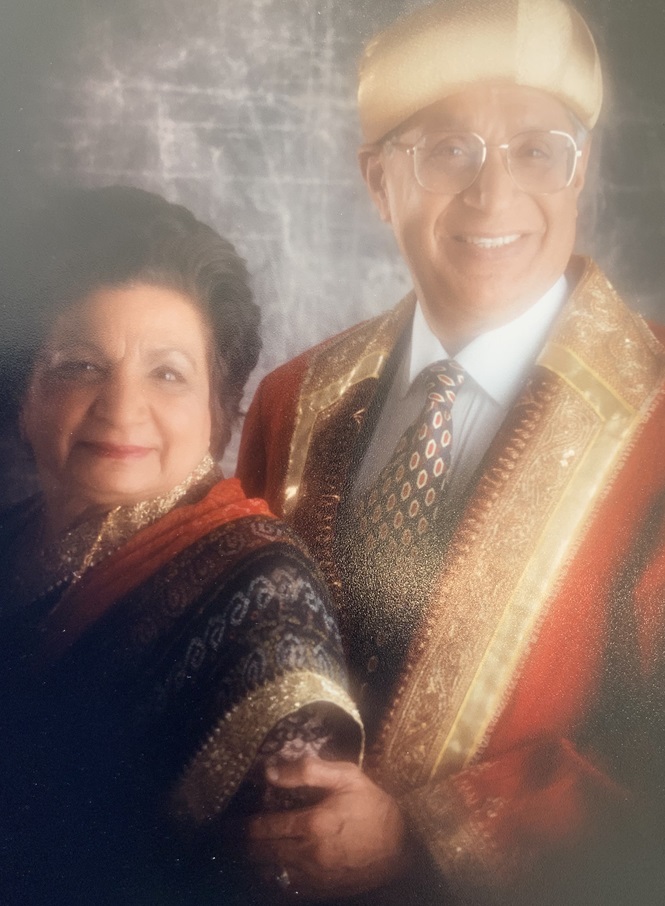
Aitmadi Aziz Kurwa and Aitmadibanoo Shirin Kurwa. Photograph: Habib Kurwa family collection.
Dr. Kurwa arrived in England in 1958. With his solid medical background from India, he went on to specialize as a dermatologist, obtaining FRCP(Edinburgh) and FRCP(London). Before Dr. Kurwa relocated to London, where he opened a dermatology clinic in the city’s famous medical district, Harley Street, he pursued his ambition of serving the Ismaili Jamat in Birmingham. He became the Mukhi (leader of the congregation) of the Jamat in 1970 and, together with his counterpart and other members of the Jamat, assisted in settling many Ismailis who arrived in the Midlands area as refugees from Uganda after their 1972 expulsion by Idi Amin.
Article continues below
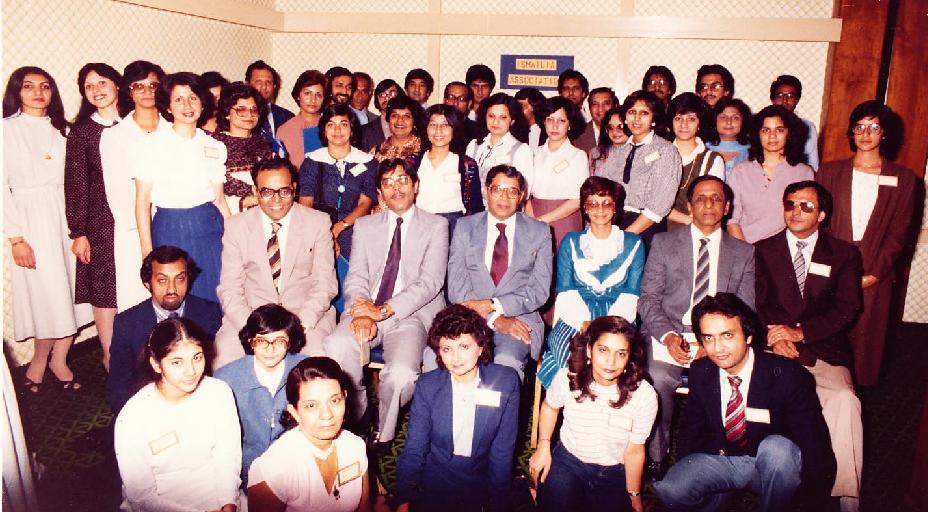
Dr. Aziz Kurwa, President of the Ismaili Association for the U.K. between 1979 and 1985, is seated third from left and is pictured with the members, staff, and teachers who served under him. Photograph: Jehangir Merchant Family Collection.
When he opened his dermatology practice in London’s Harley Street, Dr. Kurwa continued to set his sights on serving the Ismaili community. He established a Jamatkhana in Purley, Surrey, and in 1979, he was appointed President of the Ismailia Association for the United Kingdom by Mawlana Hazar Imam.
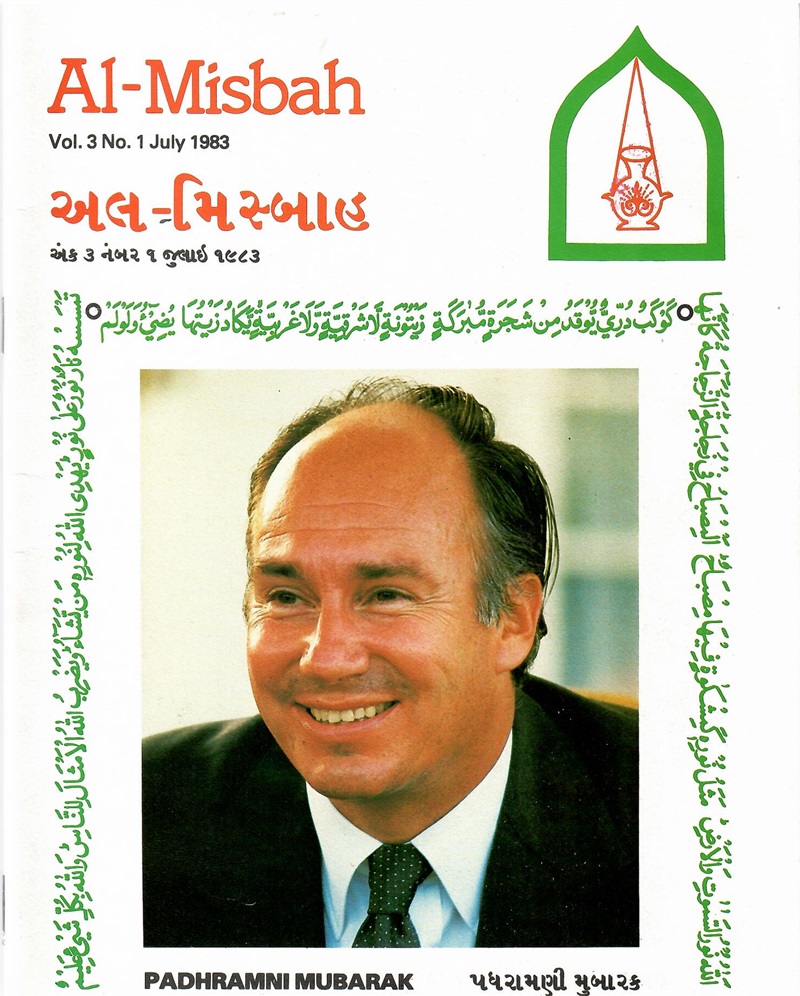
As a visionary leader, he introduced the concept of Baitul Ilm, an Ismaili religious education program for children and youth, which continues to shape the U.K. and other worldwide Ismaili communities. He also championed the distribution of high-quality religious material in cassettes to remote Jamats in the U.K. He created a bilingual religious magazine, Al-Misbah, containing easy-to-follow religious material, stories for children, and readings for the Gujarati-speaking members of the Jamat.
~~~~
Article continues below
The bi-lingual Gujarati-English Al-Misbah magazine was launched in the UK during Dr. Aziz Kurwa’s term as the President of the Ismailia Association for the UK.
His support for adult education and the growth of the literature and library portfolios further underscored his commitment to the community. Waezin (sermon) activities grew multifold throughout the U.K. as did children’s activities and participation in the Jamatkhanas. Dr. Kurwa also ensured that missionaries in the U.K. would regularly travel to the widespread European Jamats to support their religious activities and interests. The highly acclaimed Ilm magazine, established in 1975, continued to prosper with increasing circulation in the U.K. and abroad. Such was the magazine’s reputation that in 1980, the magazine’s editor, my dad Jehangir, was invited by the Aga Khan Award for Architecture to attend the first Award Ceremony in Lahore. Sadly, he was unable to go.
After completing his two terms as the President of the Ismaili Association, Mawlana Hazar Imam, in 1986, chose him to be one of the resident governors of the Institute of Ismaili Studies in London, which Dr. Kurwa proudly served until 1995.
Article continues below
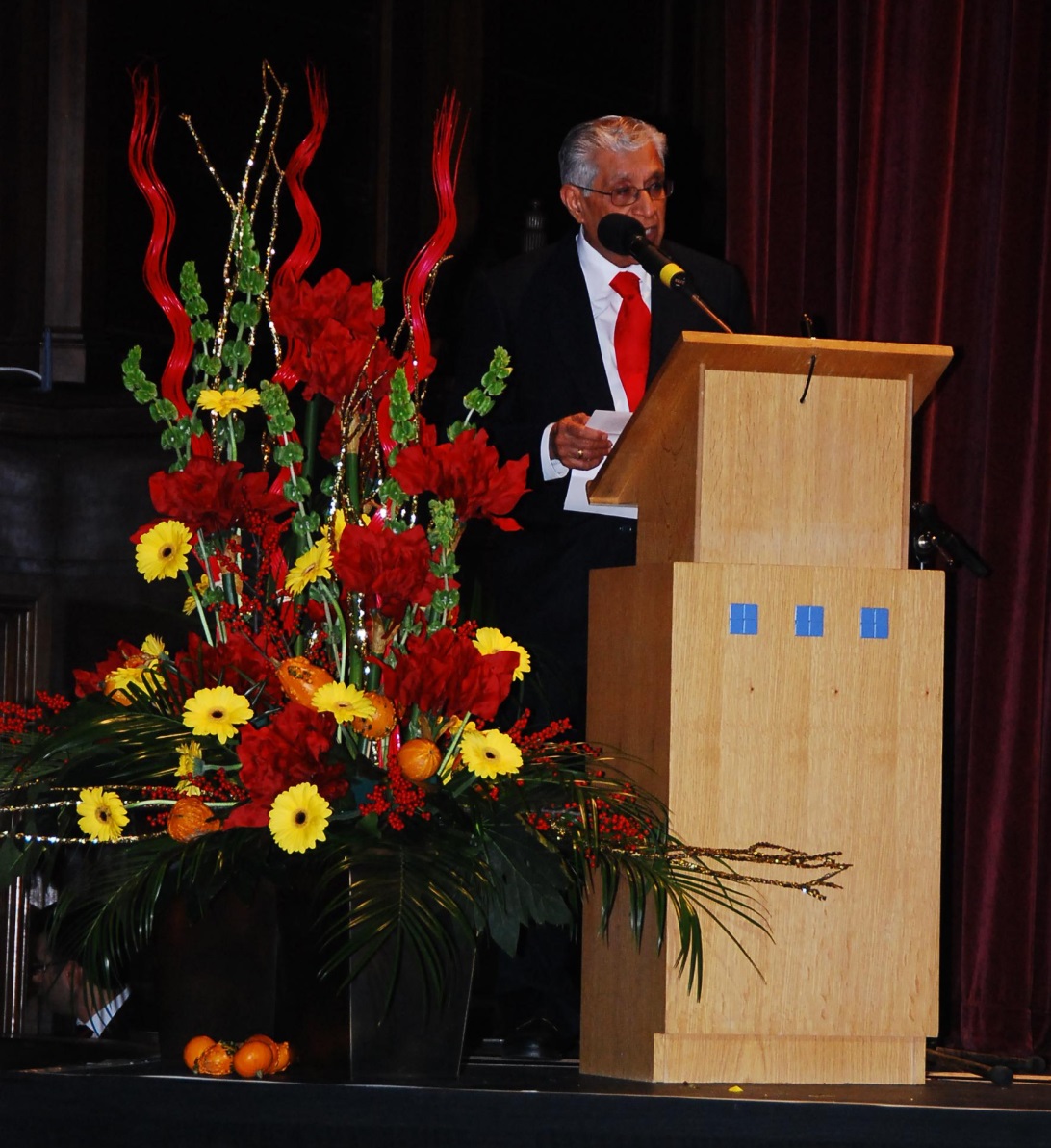
Dr. Aziz Kurwa, producer and director of “The Festival of Poetic Expressions” speaking at the event which was held by the Ismaili Council for the UK in London, Manchester and Germany to commemorate the Golden Jubilee of Mawlana Hazar Imam, His Highness the Aga Khan Aga Khan.
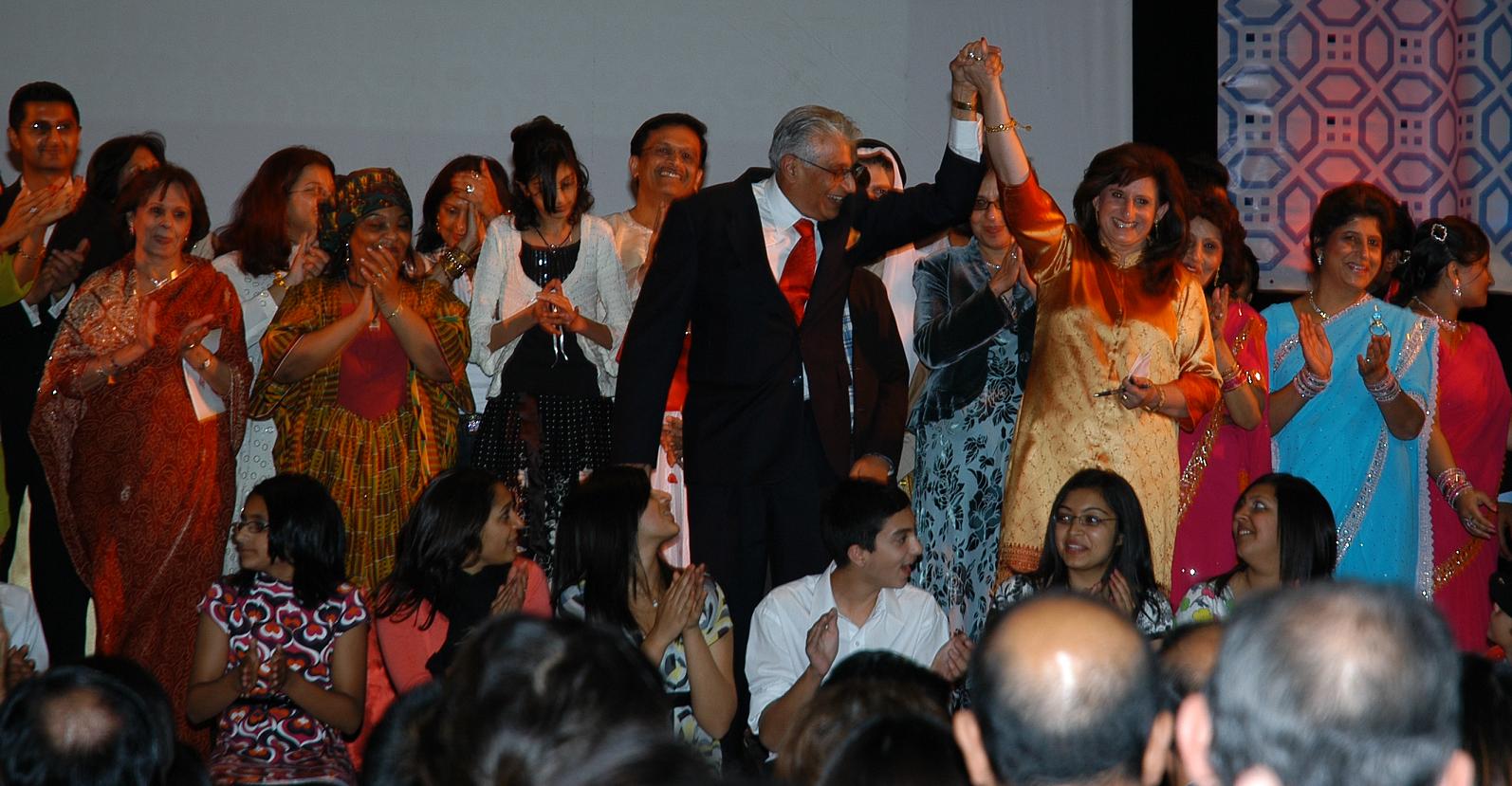
Dr. Aziz Kurwa celebrates at the conclusion of “The Festival of Poetic Expressions” which was held by the Ismaili Council for the UK in London, Manchester and Germany to commemorate the Golden Jubilee of Mawlana Hazar Imam, His Highness the Aga Khan Aga Khan.
Dr. Kurwa continued relentlessly to participate in other activities within the community. He contributed in creating the Health Care Professional’s Association and reviving the Ismaili Seniors Club. His passion for the Baitul Ilm religious education program led him to organize poetry sessions for Ismaili children and seniors, the success of which led to the Festival of Poetic Expressions as a Golden Jubilee programme. The event was staged in London, Manchester and Germany. He invited Simerg to publish the poems on the website, which we proudly did. Dr. Kurwa also served as a member of the Executive Committee of The Association For The Study Of Ginans, a private initiative.
In his article on Volunteering at the Dawn of Imamat, Dr. Kurwa wrote: “In whatever position in the Jamat, in my heart, I am devoted to voluntary service, and in this article, I am making an effort to recognise that volunteer services have existed since the inception of Islam and Inshallah will continue to flourish in the Jamat as long as Imam-e-Zaman wishes it to be.”
Article concludes below
All smiles as Aitmadi Dr. Aziz Kurwa is pictured with his son Dr. Habib Kurwa and his wife Farzana and their two children Khalil and Hassan. Photograph: Habib Kurwa family collection.
Dr. Kurwa moved to Calgary, Canada, in 2017 following the demise of his beloved and wonderful wife, Aitmadibanoo Shirin Aziz Kurwa, in December 2016. He cherished the beautiful moments with his loving son, Dr. Habib Kurwa, and his family. I was honoured to visit my former president and to meet him in Jamatkhanas. My wish to see him on Thursday, March 14, 2024, at 3:30 PM never materialized. A day earlier, on March 13, Habib texted me mid-morning, “Ya Ali Madad – Dad passed away this morning.”
Allah most graciously granted Aitmadi Aziz Kurwa a peaceful, happy and healthy life — a life that was filled with service to the Ismaili community, its institutions and the Imam-of-the-Time
He was an extremely rare Ismaili leader who returned to serve the Jamat at the grassroots level in any capacity as long as it enabled him to contribute to the community’s upliftment.
Aitmadi Aziz Rajabali Kurwa was a gallant, humble leader and a devoted murid of Mawlana Hazar Imam. We pray that his soul may rest in eternal peace. Ameen. We further pray that his family may face this immense loss with great courage and fortitude.
Date posted: March 14, 2024. Last updated: March 15, 2024 (reformatting and typos.)
__________________________
We invite you to submit your condolences, memories, and tributes to Aitmadi Dr. Aziz Kurwa by completing the feedback form below or clicking Leave a comment. Should you encounter technical issues or difficulties submitting your comment, please send it via email to mmerchant@simerg.com (subject Aziz Kurwa).
The Right Honourable Brian Mulroney, who passed away on February 29, 2024, served as Canada’s 18th Prime Minister from September 18, 1984 until June 25, 1993. Expressing sadness at his passing, the current Prime Minister Justin Trudeau said: “Mr. Mulroney loved Canada….and made significant progress on important issues here at home and around the world. He negotiated the Canada-United States Free Trade Agreement and, later, the expanded North American Free Trade Agreement with the United States and Mexico. He worked hard to build bridges between French and English Canada. He was at the forefront of environmental issues, helping secure an air quality agreement with the United States to reduce acid rain, championing the first Canadian Environmental Protection Act, and creating several new national parks. And he exemplified Canadian values, standing up against apartheid in South Africa.”
Mr. Mulroney’s accomplishments will be etched into Canadian history books forever.
But how will a religious community such as the worldwide Ismaili Muslim community remember Mr. Mulroney for generations or centuries to come when it tells its story?
Story continues below
A beautiful photograph of Prime Minister Brian Mulroney and his family that was released by the Prime Minister’s office in Ottawa on December 5, 1991 for the 1991 official Christmas card. From left, top row: Mark, then aged 12, Benedict, 15; Middle row: Caroline, 17, Rt. Hon. Brian Mulroney, Nicolas, age 6, Mrs. Mila Mulroney; Bottom row: Clover the dog. Photograph: The Office of the Prime Minister (Brian Mulroney).
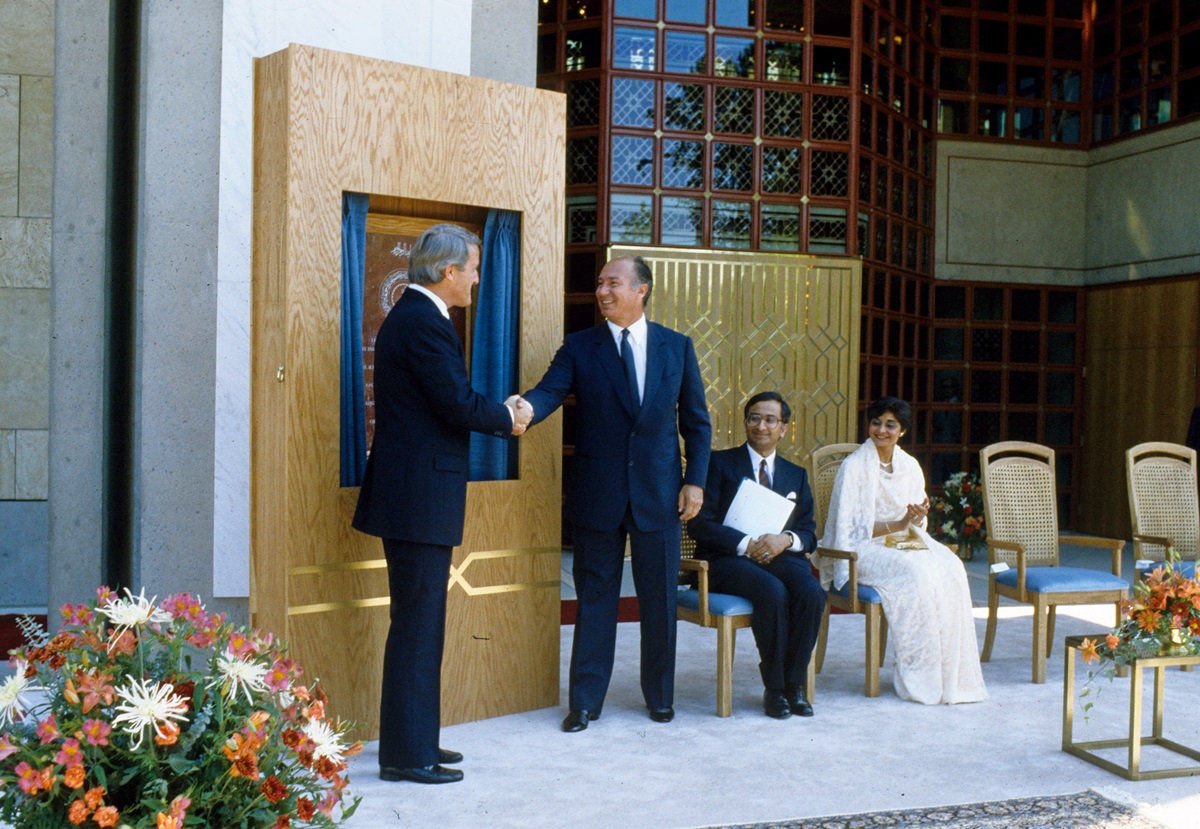
The answer lies in Prime Minister Brian Mulroney’s opening of the community’s first purpose-built Jamatkhana and Ismaili Centre in North America in Vancouver. The historic event took place on August 23, 1985, in the presence of His Highness the Aga Khan, who is fondly and respectfully addressed by his Ismaili Muslim followers as Mawlana Hazar Imam (Our Lord, the Present Living Imam). The Aga Khan is the 49th Imam in direct succession of Hereditary Imams beginning with Imam Ali, who was designated by the Prophet Muhammad to succeed him to continue his teachings within the Muslim community.
Story continues below
His Highness the Aga Khan and the Rt. Hon. Prime Minister Brian Mulroney shake hands after the unveiling of the plaque commemorating the opening of the Ismaili Jamatkhana and Centre Vancouver on August 23, 1985. Looking on is the President of the Aga Khan Council for Canada, Farouk Verjee. Photograph: The Ismaili. Please click on photo for story and photographs.
At the end of his speech on the inauguration of the landmark Jamatkhana the Aga Khan declared, “Mr Prime Minister, it is my privilege to ask you to declare open this building, which symbolises the Ismaili Community’s confidence in its future as an integral part of the nation you lead.”
The Prime Minister unveiled the opening plaque, making it a truly proud and historic moment for Ismailis around the world, and especially those who have made Canada their home.
We have the Ismaili Centre opening day story, including Prime Minister Brian Mulroney’s speech, HERE, along with rare photographs of the Aga Khan with Mr. Mulroney taken at Harrington Lake in 1992.
The month of Rajab, 7th in the Islamic calendar, marks two important anniversaries — the birth of the first Shia Imam and Islam’s 4th Caliph, Hazrat Ali (may peace be upon him), on the 13th of Rajab (which was observed on January 24, 2024), and the Shab-i-Miʿrāj on the 26th of Rajab commemorating the blessed night when Prophet Muhammad (peace be upon him and his progeny) ascended to the heavens. The Mi’raj of the Prophet Muhammad will be observed by Ismaili Muslims in Canada and several other countries around the world on Wednesday, February 7, 2024.
Mi’raj is an Arabic word which literally means a ‘ladder’ and refers to an experience in the life of Prophet Muhammad which took place during the night. Thus, sometimes it is referred to as the ‘night journey’ of the Prophet. The first verse of Surah al-Isra (The Night Journey) in the Holy Qur’an says:
“Glory be to Him, who carried His servant by night from the Holy Mosque to the Further Mosque the precincts of which We have blessed, that We might show him some of Our signs. He is the All-hearing, the All-seeing.” — 17:1, translated by A.J. Arberry, see Corpus Qur’an for multiple translations.
Article continues below
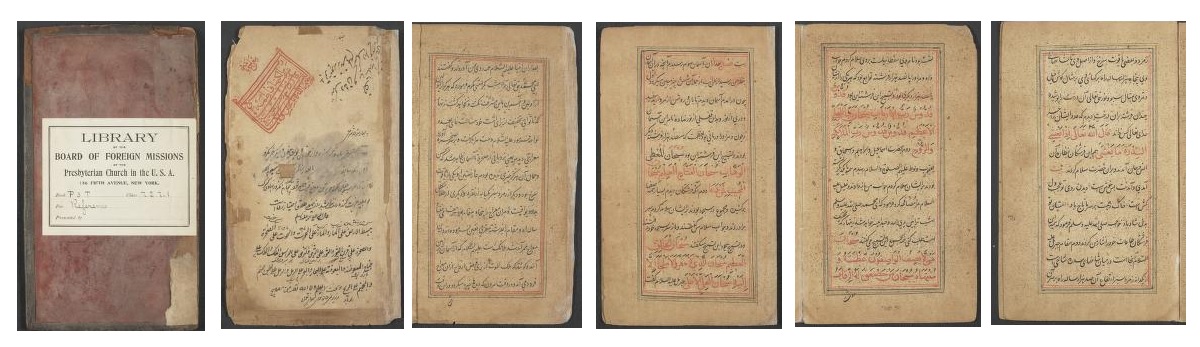
Six images from a total of 408 from an unidentified Persian treatise on the Miʻrāj and several other topics from the Hadith (traditions) of the Prophet Muhammad. Image: US Library of Congress. For more details please click https://www.loc.gov/item/2016397783/
~~~~~~
Fragment from page 7 of the Bustan of Sadi. The last two lines of poetry on this page extol the Prophet’s miraculous ascension to the heavens (mi’raj): One night he sat (on his flying steed Buraq) and passed through the heavens. / In majesty and grandeur, he exceeded the angels. / So impulsive, he urged (his steed) into the plain of closeness (to God) / While Gabriel remained behind him at the Lote Tree (of the Limit). Image: Wikipedia.
Among Sufis and other Islamic esoteric traditions, such as those practiced by Ismaili Muslims, Mi’raj is considered the highest point of spiritual perfection an individual can attain through religion and the practice of faith. Believers long to experience a Mi’raj, just as the Prophet experienced it. The Shia Ismailis seek out this spiritual elevation under the guidance of the Imam-of-the-Time, presently Mawlana Shah Karim Al-Hussaini Hazar Imam, His Highness the Aga Khan, who leads his followers to self-awareness, spiritual insight and elevation. This is clearly noted in the Preamble of the Ismaili Constitutionin paragraph (F), which reads:
“Historically and in accordance with Ismaili tradition, the Imam of the time is concerned with spiritual advancement as well as improvement of the quality of life of his murids. The Imam’s ta‘lim lights the murid’s path to spiritual enlightenment and vision. In temporal matters, the Imam guides the murids, and motivates them to develop their potential.”
His Highness the Aga Khan is the 49th Hereditary Imam, directly descended from Hazrat Ali, whose remarkable teachings have come down to us through the preservation of his sermons and teachings which are recorded in works such as Nahj al-Balaghah. Close to the heart of the Ismaili Muslims are poems of the Imam Ali known as Kalam-i Mawla that have been rendered into Hindi. The verses speak about the conduct, behaviour and action of man during his sojourn on earth (please read Farouk Topan’s excellent piece Kalam-i-Mawla)
We are pleased to provide a recitation of verses from the Kalam of Hazrat Ali that focus on ethics, spirituality and the Mi’raj of the Prophet Muhammad. The verses are recited by Alnoor Saleh and have been downloaded from the MUST VISIT website Ginans Central, which is maintained by Karim Tharani of the University of Saskatchewan.
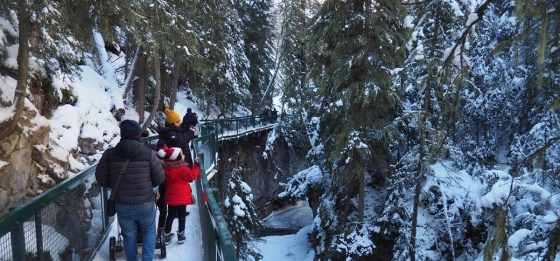
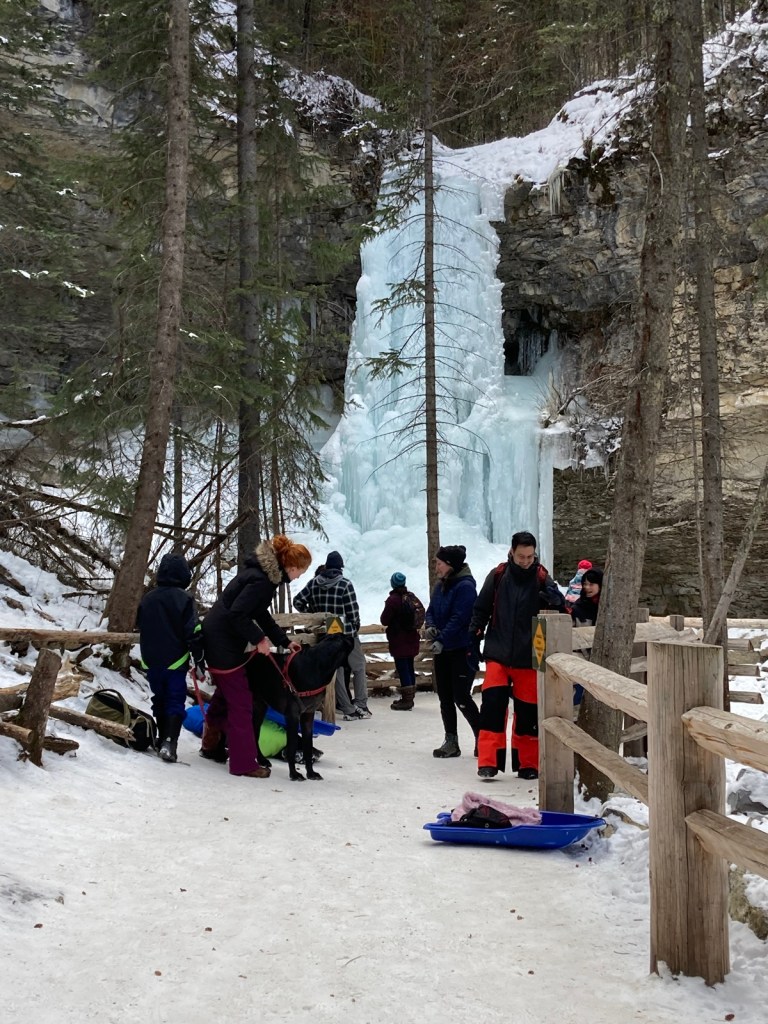
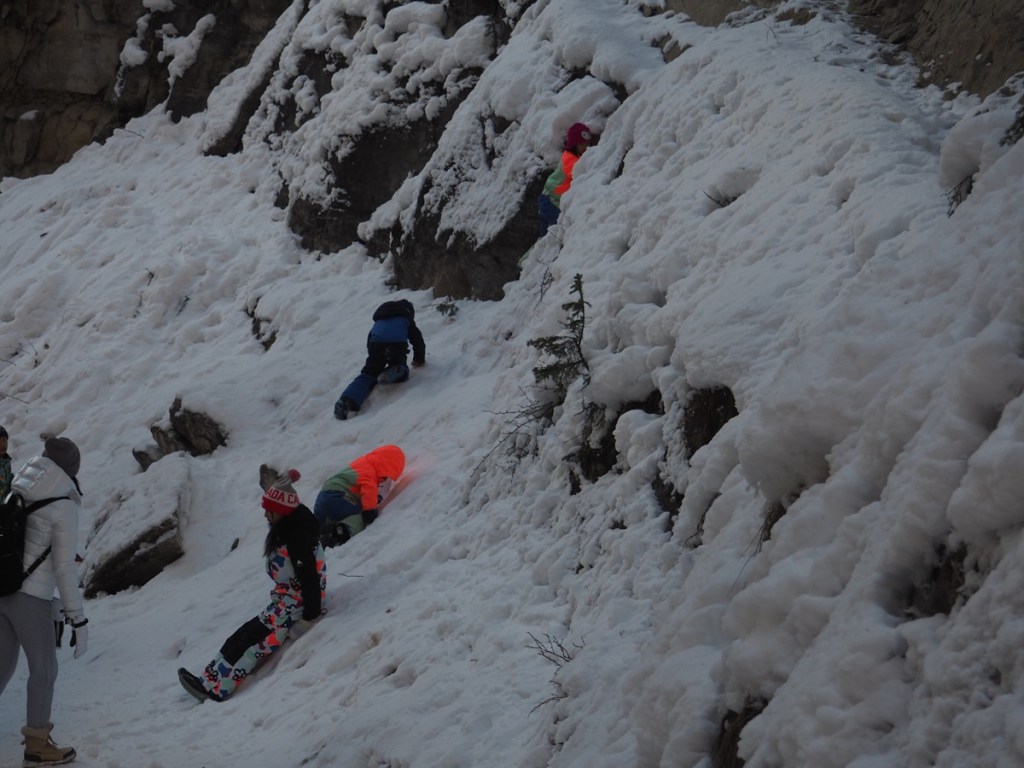
On New Year’s Day, January 1, 2024, Malik Merchant drove 90 minutes from Calgary to stunning Johnston Canyon on the Bow Valley Parkway (Hwy 1A) for a hike to the Lower Falls. Then, 5 days later, his drive to Kananaskis Country was shorter, and his hike through the aspen forest to Troll Falls was slow-paced and easy-going. The two contrasting hikes are beautifully captured in his photographs.














 Simerg - Insights from Around the World