The Three Shams in Ismaili History: Imam Shamsuddin, Pir Shams and Shams Tabriz

Editor’s Note: Malik Mirza’s recent piece, Exclusive Photo Essay: The Mausoleum of Pir Shams in Multan, resulted in comments from our readers concerning the status of the shrine today, its role within the Ismaili community, the miracles attributed to Pir Shams, as well as confusion over the identities of Pir Shams and Shams Tabriz. Simerg turned to Mumtaz Ali Tajddin for some answers, and we are pleased to publish his piece that sheds light on the subject.

By RAI MUMTAZ ALI TAJDDIN S. ALI
Special to Simerg

In the contemporary period of 13th century, there is a confusion on the name “Shams” as there were three personalities existing at the same time. These were Imam Shamsuddin Muhammad, Pir Sham Sebzewari and Shams Tabriz, which is discussed in this paper. 

1. IMAM SHAMSUDDIN MUHAMMAD

Imam Shamsuddin Muhammad (1257-1310), the 28th Imam of the Nizari Ismailis is said to have been born in 646/1230 in the fortress of Maimundiz. He was known as Agha Shams in Syria and Shah Shams in India. He is also known as Shamsu’l Haq in a few Iranian poems. Poet Nizari Kohistani (d. 1320) called him Shamsuddin Shah Nimroz Ali and Shah Shams. He was also known as Shams Zardozi due to residing in a village called Zardoz in Azerbaijan, but another tradition suggests that he had adopted the profession of embroidery, and as such the term zardoz (embroiderer) became his epithet. 

JUVAINI AND MODERN HISTORIANS’ VIEWS ON ISMAILIS AND THE IMAMAT

Ata Malik Juvaini, the Persian historian who wrote an account of the Mongol Empire, wrongly considers the butchery of the Ismailis conducted by the Mongols in Qazwin and Rudhbar following the reduction of Alamut in 1256, as an end of the Ismailis and unbroken line of the Imamate as well. It is however, ascertained from reliable sources that Imam Shamsuddin Muhammad had left the fortress of Maimundiz probably on 11th Shawal, 654/November 1, 1256; the Mongols reached there on 17th Shawal, 654/November 7, 1256.

Ata Malik Juvaini joined the Mongols after 12th Zilkada, 654/December 2, 1256, and as is well known entered the library at Alamut, and upon the orders of Mongol leader burnt the entire library, sparing only a few copies of the Qur’an and some other works, just enough to fit into a small wheelbarrow.

According to Bernard Lewis in The Assassins (London, 1967, p. 63), “The extirpation of the Ismailis in Persia was not quite as thorough as Juvaini suggests. In the eyes of the sectarians, Rukn al-Din’s small son succeeded him as Imam on his death and lived to sire a line of Imams.” Marshall Hodgson also writes in The Order of Assassins (Netherland, 1955. pp. 270 and 275) that, “Juvaini assures himself that every Ismaili was killed; yet even if all the members of garrison were in fact killed, a great many other will have escaped.”  He further adds, “but their spirit was more nearly indomitable; as it is from among them that the great future of Nizari Ismailism sprouted again. It is said the child Imam was carried to Adharbayjan, where the Imams lived for some time.” According to W. Montgomery Watt in Islam and the Integration of Society (London, 1961, p. 77), “In 1256, Alamut was surrounded, and was destroyed and in the following year the Imam met his death and there was a widespread massacre of the Nizaris. It may be further mentioned that, despite this catastrophe and the fact that it has never since had a territory of its own, the community was not exterminated and the line of Imams was maintained unbroken.” 

Imam Shamsuddin Muhammad went to Daylam, and thence moved to Ardabil. It is said that he also lived in Ahar, about 150 miles west of Ardabil. He had been also in Tabriz, which he most possibly evacuated in the early months of 1257 as Halagu invaded Tabriz on July 26, 1257. It seems that he became known as Shams Tabriz in the Sufic circle in Tabriz. Pir Shihabuddin Shah (d. 1884) writes in Khitabat-i Alliya (Tehran, 1963, p. 42) that, “Imam Shamsuddin Muhammad who lived in Tabriz, was compared by the local people to the sun, because of his handsome countenance, and thus he came to be called Shams (the sun) of Tabriz. This gave rise to the confusion between him and Shams Tabrizi, the master of Jalaluddin Rumi, but they were always in reality two different persons.” 

The tradition has it that Imam Shamsuddin Muhammad most probably lived from one to another place under different mantles in the province of Azerbaijan. The veritable locality of his residence, however, has not been substantiated. Azerbaijan was an ideal land for the growing Sufi circles, and the Imam had settled in northern region with his family, where he professed in the embroidery works. 

Imam Shamsuddin Muhammad is reported to have betrothed to a Sufi lady at Daylam in 1276, or in the next year. His sons, Momin Shah and Kiya Shah operated Ismaili mission as far as Gilan. Imam Shamsuddin Muhammad died in 1310 in Azerbaijan after vesting the office of Imamate to his son, Kassim Shah.

2. PIR SHAMS

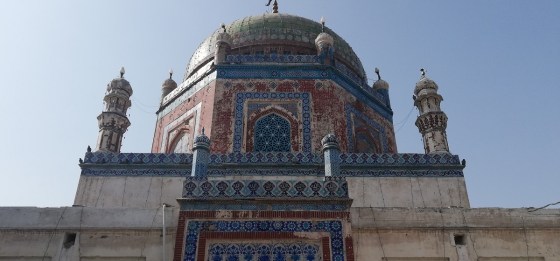
The mausoleum of Pir Shams in Multan, Pakistan. Photo: © Malik Mirza. Simerg.
The mausoleum of Pir Shams in Multan, Pakistan. Photo: © Malik Mirza.

Pir Shams was born most probably in Sebzewar, a town in Khorasan, lying 64 miles west of Nishapur. His father Syed Salauddin had been deputed in Baltistan by Imam Kassim Shah, who most probably came into the contact of Taj Mughal in Badakhshan. Kamaluddin Mujahri of Sebzewar writes in Malfuz-i Kamalia that Pir Syed Muinuddin Hasan of Sebzewar of Ajmer had a meeting with Syed Salauddin in Sebzewar in 1165. It is recounted that Pir Shams had gone to Badakhshan with his father at the age of 19 years, and thence he proceeded to Tibet and returned back to Sebzewar.

It is said that after the death of Syed Salauddin, Imam Kassim Shah commissioned Pir Shams as the hujjat of Sind and Hind at Daylam. In referencing the Imam, Pir Shams says: “Adore sincerely the true guiding light manifested in the person of Kassim Shah, the Lord of the Time.” (vide, Garbi, 5:17).

The earliest description of Pir Shams is found in the treatise of the biographies of Sufis, entitled Nafahat al-Uns (comp. 1478) by Nuruddin Abdur Rahman Jami (1414-1492), the last classic poet of Iran. Nurullah bin Sharif Shushtari (d. 1610) in his Majalis al-Mominin (comp. 1604) traces his ancestry back to the Ismaili root. Some details are also found in Tarikh-i Firishta (comp. 1606). The great Sufi saint Bulleh Shah (1680-1758) also referred to Pir Shams in his poetry.

It is indeterminable point in the modern sources as to when Pir Shams was born? The extant materials however don’t afford one to draw a safe conclusion. His death in 1356 however is indisputable, based on the plaque at the mausoleum in Multan. The most confusing and unsolved point is to locate his date of birth. Most of the scholars concur in his age for 115 years, but it however seems that Pir Shams had lived to an advanced age beyond 115 years. Syed Bawa Ahmad Ali Khaki writes in his Dar-i Khuld-i Bari (Ahmadabad, 1905, p. 123) on the basis of an old manuscript that the span of Pir Shams’s life was for 171 years. If the date of his demise in 1356 may be considered genuine, it means that his birth would have been taken place around 1175 during the period of Imam Ala Muhammad (1166-1210). The genealogy of Pir Shams given in the Shajara, preserved in the shrine at Multan, indicates the birth of Pir Shams in 1165, which is also corroborative.

Pir Shams arrived from Daylam to Badakhshan, where he is said to have brought many followers of Momin Shahi sect into the Ismaili fold. He visited Gilgit and proceeded to Tibet and as far as the ranges of the Himalayas. He came back to Ghazna, where he deputed the local converted prince to Badakhshan on mission work. Pir Shams also converted a bulk of the Hindus during their dasera festival after singing garbis (songs) in a temple for ten consecutive nights in the village called Analvad. W. Ivanow places its location in Gujrat, called Anilvad, not far from Ahmadabad. Pir Shams also visited Kashmir in 1316 and converted the Chak and Changad tribes, thence he proceeded to Multan in 1326 for the first time.

Pir Shams Mausoleum in Multan Pakistan, Simerg
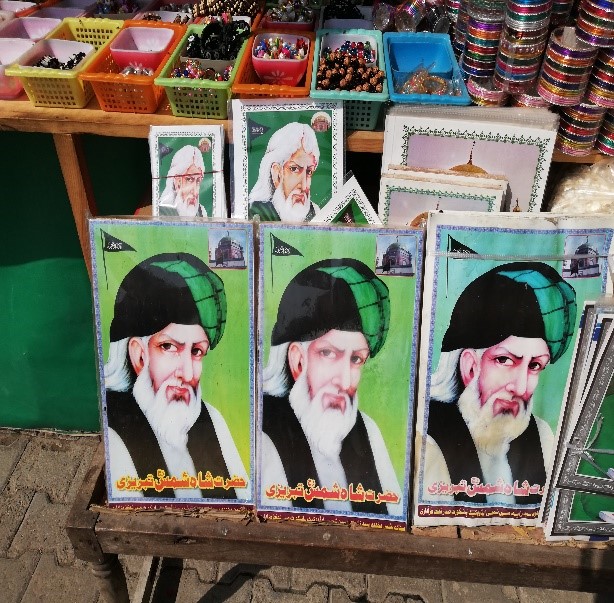
A board on a wall of the mausoleum of Pir Shams which briefly describes short incidents from the life of Pir Shams. He is referred to him as ‘Hazrat Shamshuddin Tabrizi Sabzwari’ which has resulted in confusion over his identity Photo: © Malik Mirza.

In Multan, many miracles of Pir Shams are reported, but not potential for historical value. It needs interpretation to translate the miracles. It is therefore difficult to penetrate through the mist of legends, which formed even during the lifetime of Pir Shams and thickened rapidly after his death. The most popular miracle was the bringing down of the sun on earth, which earned him an epithet of taparez (burning) in Punjab. The word taparez is so coherent with that of Tabriz that it began to be pronounced as Tabriz, contriving a wrong theory to merge these two into one. Since Pir Shams and Shams Tabriz were proximate to each other in time, it is probable that Pir Shams, also known as Shams Taprez was confused with that of Shams Tabriz. It is believed that Shams Tabriz, the master of Jalaluddin Rumi, left Konya and then died in in Khoy, where he was buried. A false tradition arose that he moved from Konya to Multan, thus charactering Pir Shams and Shams Tabriz as the same and one, which is absolutely untrue.

Among the Sufis, there existed four principal orders in India, viz. Chisti, Qadari, Suharwardi and Naqashbandi. The period of Pir Shams was thus noted for the several skilled exponents of Sufi thought. He therefore launched his brisk and pervasive mission during the eve of the growing Sufi circles in Punjab. In the villages of Punjab, he mostly converted the Aror or Rohra, a leading caste in south-western part of the Punjab, i.e., of the lower reaches of the five rivers and below their junction, extending through Bahawalpur into Sind. They were mostly cultivators, and their large portion on the lower Chinab were purely agricultures, while in the western Punjab, they were mostly tailors, weavers of mats and baskets, makers of vessels of brass and copper and goldsmiths. Pir Shams appointed musafir (one who travels) in different regions to collect the religious dues, and also built prayer-halls (khana) and appointed their Mukhis. He also introduced the daily prayer in Sairaki dilect, which continued to be recited till the period of his son, Pir Sadarddin. Pir Shams expired in 1356 and was buried at Multan.

MAUSOLEUM OF PIR SHAMS AND ITS RECONSTRUCTION

The mausoleum of Pir Shams is located on the high bank of the old bed of the river Ravi. The tomb is square, 300 feet in height surmounted by a hemispherical dome. It is decorated with ornamental glazed tiles.

Seth Mehr Ali was a prominent person in Sind. His later life was quite different from his early life, which sounds his great leaning towards the doctrine of the Kaysania sect. In spite of the diversity in the oral traditions, there is a common story that Seth Mehr Ali had visited Bombay and then proceeded to Pirana, and came into the contact of the Kaka (headman) of the Imam Shahi sect, named Syed Sharif (d. 1795). This contact would have created his strong disposition towards the veneration of the shrines. Soon after his return, he visited Multan and became the disciple of Makhdum Safdar Ali alias Jiwan Shah, the custodian of the mausoleum of Pir Shams. This contact prompted Seth Mehr Ali to rebuild the mausoleum of Pir Shams. A sum of Rs. 75,000 was spent in its renovation, which he procured through donation in Sind in 1779. He posed himself as a Syed to win the hearts of the people. This is the reason that he is called Syed Mehr Ali in Tawarikh-i Zila’e Multan (Lahore, 1884, p. 85) by Munshi Hukam Chand and Multan: History and Architecture (Islamabad, 1983, p. 206) by Dr. Ahmad Nabi Khan.

CULTURE OF VENERATNG SHRINES AND ISMAILI RESPONSE

Syed Mehr Ali intended that the mausoleum should be crowded on the first Friday after 15th Shaban. He therefore he invited the local Shi’ites and the Ismailis of Sadiqabad, Uchh Sharif and Sind, but his objective was foiled. The Shi’ites venerated it and took its possession, but few Ismailis responded.

The culture of veneration and vows gradually continued to thicken. The custodian of the shrine gave thread and so called sacred water. Imam Sultan Mahomed Shah visited Multan on February 16, 1950, the Mukhi humbly requested the Imam that some local Ismaili attended the shrine of Pir Shams, claiming that there was power, which fulfilled the vows. The Imam asked the Mukhi to make an announcement in the Jamatkhana that he would visit the shrine of Pir Shams, and the Jamat was also invited to be there

On the next day, before noon, Ismailis gathered outside the mausoleum. The Imam also came and entered alone, while the Ismailis were outside. It is said that the Imam made seven rounds around the grave of Pir Shams, and came out and said to the Ismailis, “You claim that there is power in the shrine.” Then the Imam raised his right hand and put inside his pocket and said, “I have picked up all the power. Hence, there is nothing in the shrine, therefore, don’t come here and make your vows in the Jamatkhana.” Since then, the Ismailis didn’t go to make the vows at the shrine of Pir Shams as well as other shrines of Pir Sadardin and Pir Hasan Kabirdin in Uchh.

The shrines of Pir Shams, Pir Sadardin and Pir Hasan Kabirdin are under control of the local Muslims.

3. SHAMS TABRIZ OR SHAMSUDDIN TABRIZI, MASTER OF JALALUDDIN RUMI

Shams Tabriz Tomb
Tomb of Shams Tabriz in Khoy, South Azerbaijan province, Iran. Photo: Wikipedia, CC BY-SA 3.0.

Shams Tabriz was born either in Daylam or Tabriz in 1165. He was called Parinda (flying bird), because he was always traveling from place to place.

In 1244, while Maulana Jalaluddin Rumi was teaching his pupils in an open courtyard next to a fountain in Konya, a shabbily externally dressed but perfectly internally adorned Sufi Shams Tabriz came to their assembly and watched them. He saw Maulana Rumi was referring to a large stack of handwritten books in the course of his teaching. Shams Tabriz asked him as to what was in the books. Rumi scoffed and replied, “O! Sufi. This contains knowledge that is beyond your comprehension, so you continue to recite your rosary.” Unnoticed by Rumi, Shams Tabriz threw the stack of books into a nearby pond of water. When Rumi’s students saw what had occurred they began beating Shams Tabriz. Rumi complained that all his valuable knowledge had been destroyed. Shams Tabriz said, “I will give back your books.”

A visibly dejected Rumi conceded to the request thinking that this was impossible. He was surprised to see that Shams Tabriz lifted the drenched books from the pond, blew dust of them and returned the books intact. He asked Shams Tabriz as to how he did this. Shams Tabriz replied, “This knowledge is beyond your comprehension, so you continue to teach your pupils.” Rumi fell at his feet and was swept into the currents of love. The presence of this ragged Sufi, Shams Tabriz, changed Rumi from a respected professor of theology into a lover of God. This event made Rumi to become a disciple of Shams Tabriz.

Hence, Rumi left orthodox teaching of his disciples, and learnt esoteric treasure from Shams Tabriz. One day, Shams Tabriz mysteriously disappeared, and was never seen again. Some say that he was killed by close disciples of Rumi, who were jealous of the close relation between Rumi and Shams. Other also assert that in the plot of his murder, Sultan Walad, the son of Rumi was involved. Shams Tabriz the master of Jalaluddin Rumi (d. 1273), was not traceable after 1247 in Konya. Shamsuddin Aflaki, who wrote in 1353, stated that the death of Shams Tabriz took place in Konya in 1247.

However a group of Sufis maintained that after leaving Konya, Shams Tabriz travelled to Tabriz, about 900 miles to the east. Interestingly, a tomb of Shams Tabriz that had remained obscure for many centuries was discovered in Khoy in the Western Azerbaijan Province in Iran. It has been nominated to be a UNESCO World Heritage Site. The distance from Khoy to Tabriz is approximately 100 miles.
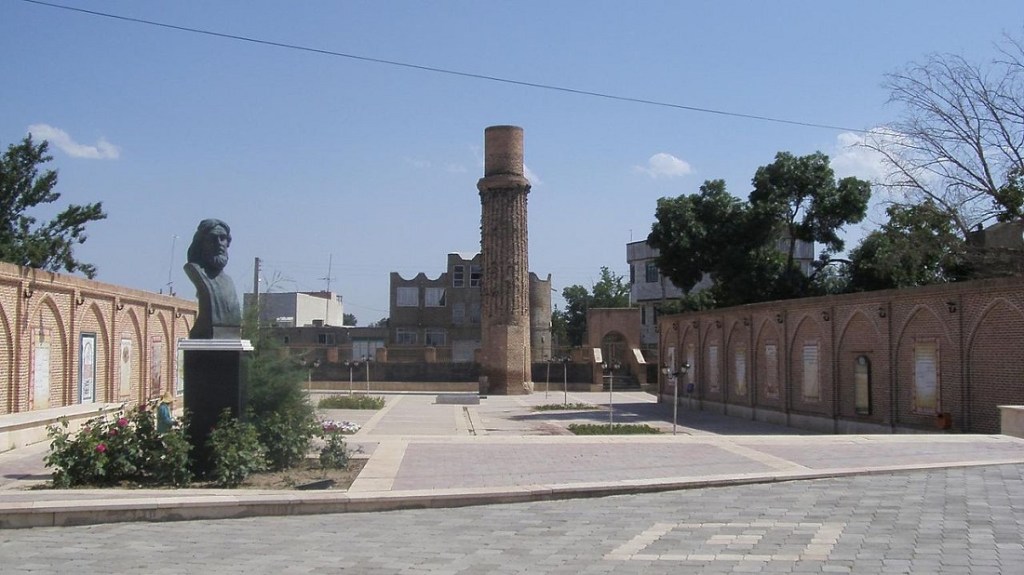
Shams Tabriz Tomb
Bust, monument tower, and Tomb of Shams Tabrizi — in Khoy, South Azerbaijan province, Iran. Photo: Wikipedia, CC BY-SA 3.0

As we have noted previously, Imam Shamsuddin Muhammad died in 1310. When Imam Shamsuddin Muhammad was in Tabriz, he became known as Shams Tabriz.

Rida Quli Khan (d. 1872), a 19th century poet, scholar and literary historian in the service of Qajar kings, writes in Majmau’l Fusaha that, “Shaikh Abu Hamid Awhadu’ddin Kirmani had seen and met Shams Tabriz in Tabriz.”

It is therefore quite likely that Shaikh Abu Hamid had actually seen Imam Shamsuddin Muhammad in the mantle of Shams Tabriz, and that the Imam’s identity began to be equated with that of Shams Tabriz. Henceforward, the presence of two Shams Tabriz during the same period became perplexing and puzzling. 

When Imam Shamsuddin Muhammad was identified as the “son of the last ruler of Alamut”, he was made the “son of Alauddin Muhammad,” incorporating him in the above report. 

The scrutiny of the sources indicates that a bulk of the frightened Muslims began to evacuate the vicinity of Rudhbar and Kohistan during the period of Imam Alauddin Muhammad (1221-1255) to escape the main brunt of the Mongols.

The stampede of the Muslims also carried away with them, the then latest report that, “Alauddin Muhammad is the ruler of Alamut, and the Mongols are about to come to reduce Alamut.”

These Muslims ultimately settled down in Qazwin, Daylam and Tabriz, where they came to know the fall of Alamut by the Mongols in 1256. They seem to have generalized an image in mind that the Alamut’s fall would have taken place in the time of Imam Alauddin Muhammad, and this story continued to prevail for many years in Qazwin, Rudhbar and Tabriz, making Imam Alauddin Muhammad as the last ruler of Alamut.

Marco Polo (1254-1324) passed by these regions in 1272, and heard these fantastic stories from these orbits, which he noted in his diary as follows, “I will tell you his story just as I Messer Marco, have heard it told by many people…The Shaikh was called in their language Alaodin…So they were taken, and the Shaikh, Alaodin, was put to death with all his men.” (vide, The Travels of Marco Polo (London, 1958, pp.40-42) by Ronald Latham. 

When the people conclusively identified Imam Ruknuddin Khurshah as the last ruler of Alamut, most probably after 1272, one other tradition seems to have originated to distinguish these two characters. Imam Shamsuddin Muhammad was deleted from that story from being the son of Imam Alauddin Muhammad, but Shams Tabriz was made known as the son of Imam Alauddin Muhammad instead. Being influenced with this tradition, Daulatshah (d. 1494) was the first to show Shams Tabriz, the master of Jalaluddin Rumi, as the son of Imam Alauddin Muhammad, in his Tazkertu’sh Shu’ara.

A question then arises, who was Shams Tabriz?  He indeed was an Ismaili, the master of Jalaluddin Rumi, but not the son of Imam Alauddin Muhammad. As to the early life of Shams Tabriz, we are yet in dark. Shamsuddin Aflaki (1310-1354) in Manaqibu’l Arifin and Abdur Rahman Jami (d. 1493) in Nafhatu’l Uns concur that Shams Tabriz was the son of a certain Muhammad bin Ali bin Malikad. Rida Quli Khan (d. 1872) in his Majmau’l Fusaha also relied on Aflaki and Jami. According to Silsilatu’ad-Dhahab, it is wrong to allege Shams Tabriz to have been the son of Imam Alauddin Muhammad. It was only Daulatshah, who made him the son of Imam Alauddin Muhammad.

Prof. Muhammad Iqbal of Punjab University, who prepared the Lahore edition of Daulatshah’s work, makes his remarks that: “It is evident that Daulatshah has not written historical facts carefully in his book. He has accepted all sorts of traditions, right or wrong, owing to which several errors have crept into his work.” The British orientalist Edward G. Browne writes in A Literary History of Persia (3:436) that “This is an entertaining but inaccurate work, containing a good selection of historical errors.” 

It is also curious that Daulatshah quoted another tradition of parentage of Shams Tabriz that, “Some people say that he was originally a native of Khorasan and belonged to the town of Bazar. His father had settled in Tabriz for the purpose of doing business in cloth.” It is probable that Shams Tabriz was the son of Muhammad bin Ali bin Malikad according to Aflaki and Jami, and he seems to be a native of Khorasan as per another tradition cited by Daulatshah.

Nurullah Shustari (d. 1610) in his Majalis al-Mominin (6:291) states that Shams Tabriz descended from “Ismaili headman” (da’iyani Ismailiyya budand). His father had settled in Tabriz, and was a cloth merchant. Shams Tabriz was indeed an Ismaili like his father. Imam Sultan Mahomed Shah delivered a historical speech on 20th July, 1945 at Dar es Salam during the Ismaili Mission Conference in which he said, “Jalaluddin Rumi himself was not an Ismaili, but a murid (disciple) of an Ismaili (Shams Tabriz)”. It clearly means that Shams Tabriz was the master of Jalaluddin Rumi.

There is also a reason to believe that Jalaluddin Rumi must have known both Shams Tabriz and Imam Shamsuddin Muhammad, but did not describe that palpably in his Diwan. He however addresses Shams as the heir of the Prophet (verse no. 2473) and compares him to Ali (verse no. 1944), which seems to have been referred only to the Imam. 

Rumi has repeatedly said in his Mathnawi and Diwan that it was not him but Shams talking through him. That is why he did not use his name in any of the verses out of more than 50,000 verses that he left behind. Rumi ends most of his poems with the name of Shams of Tabriz.

Finally, I may humbly note that the above write-up is not conclusive; it still needs further research.

Date posted: September 23, 2020.
Last updated: September 25, 2020 (typo, wrong birthdate was given for Shams Tabriz).

___________________________
A formal portrait of a man with short black hair and a mustache, wearing a dark suit and a striped tie against a blue background.
Mumtaz Ali Tajddin

About the author: Mumtaz Ali Tajddin S. Ali is a prolific writer based in Pakistan. He majored in Islamic history with a Masters degree. Over the past several decades, he has contributed numerous articles to Ismaili literary journals, and is also the author of several books including 101-Ismailis Heroes, Encyclopaedia of Ismailism, and Ismaili Pirs,  Sayeds, Vakils of South Asian Region. Most recently his Brief History of Ismaili Imams was serialized on the website Ismaili Digest. Within Ismaili institutions, he has served as a religious education teacher at the Karachi Religious Centre in Kharadar as well as an Honorary Lecturer/Waezeen with the Ismaili Tariqah and Religious Education Board (ITREB) for Pakistan. In addition, he is a curator of Hashoo Museum in Karachi which is dedicated to memorabilia from recent Ismaili history. For his long and devoted services to the Ismaili community, he has been bestowed with the titles of Huzur Mukhi (1986), Alijah (1996) and Rai (2010) by Mawlana Hazar Imam, His Highness the Aga Khan.

__________________

We welcome feedback from our readers. Please complete the LEAVE A REPLY form below or click on Leave a comment. Your letter may be edited for length and brevity, and is subject to moderation.

Exclusive: A Truly Inspiring Narrative with Historical Photos of Mawlana Hazar Imam’s 1966 Visit to Iringa, Tanzania

“On November 4, 1966, as Mawlana Hazar Imam’s plane circled the Iringa airport, there was palpable excitement as the leaders of the Jamat anxiously awaited the arrival of our beloved Imam. Mawlana Hazar Imam had taken a break on his extended tour of East Africa to return to Europe to attend to some personal matter. Iringa was the second stop on his return visit from Europe. As the ebullient Imam emerged from his plane, without regard to his evident infirmary, with plastered foot and a walking cane, Jamati leaders’ ecstatic emotions turned to one of unexpected concern. But the Imam was quick to calm the leaders’ fears about his infirmed foot.” — PLEASE CLICK TO READ COMPLETE ARTICLE

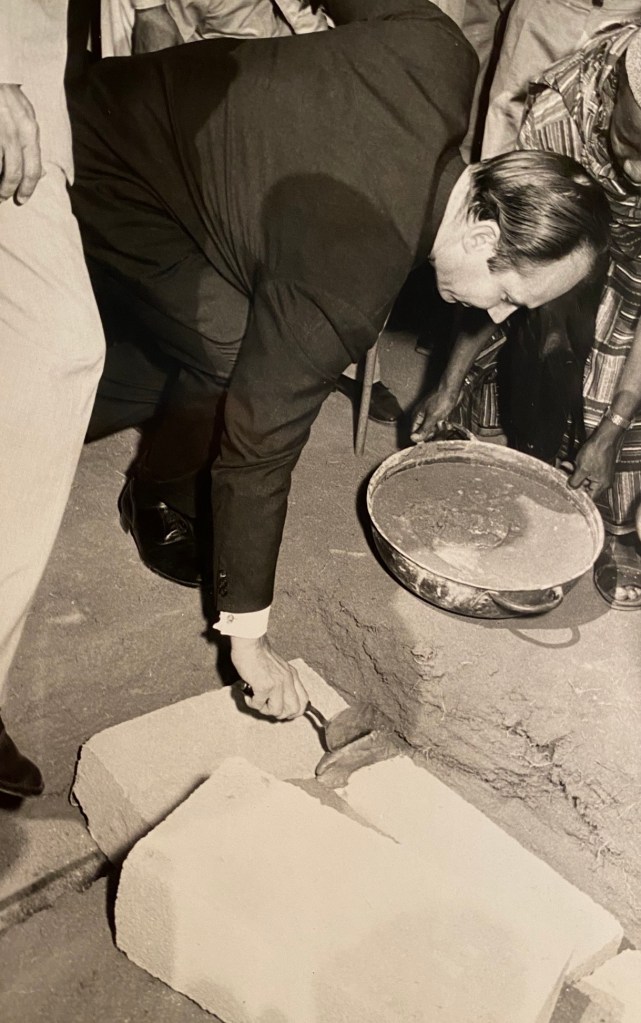
His Highness the Aga Khan in Iringa Tanzania
Mawlana Hazar Imam, His Highness the Aga Khan, with a plastered foot, lays the foundation stone of the Iringa Sports Complex during his extensive visit to East African countries in 1966. Please click on photo for an exceptional narrative of the visit as well as more photos.

Date posted: September 21, 2020.

_____________________

Elastic Embrace: A Poem by Farah Tejani

Mystic Moon

By FARAH TEJANI

Mystic Moon,
Cast your spell…
Your shimmering gaze,
And, oh how many faces!
Cleverly captured in reflections,
On the dark, dark blue waves.

Shifting shadows of craters
On your surface,
Leave mere mortals
Spellbound…
With your catalogue
Of explicit expressions
No two alike.

At times you are serene,
Sometimes in sorrow.
When Joy overtakes you,
Your smile crawls across your face
Slowly but surely.

At times you appear horrified…
Really speaking,
I can’t blame you.

Are you keeping your eye on us?
Like we watch over you?
My niece calls you ‘God’s flashlight,’
Just making certain “All is well.”
Sometimes she calls you a fingernail,
Depending on your phase.

All are in wonder
Of your sublime stature,
Your welcomed wisdom.
I offer you my humble respect
By never underestimating your pull
On our strings…

In all honesty
I am in absolute awe of your
Daily devotion to the Sun.
It is a love of Another World.

Date posted: September 5, 2020.

___________________

Farah Tejani graduated with her Bachelor of Arts in English Literature and her Master of Fine Arts in Creative Writing from the University of British Columbia in May of 1997 and earned top Honors for her Thesis on Short Fiction. With the help of her agent Barbara Graham she then went on to publish a collection of short stories published by Trafford, called, “Make Your Own Chai, Mama’s Boy!” — ten short stories dealing with different dilemmas South Asians face. Farah also wrote and co-directed her stage play, “Safeway Samosas,” which won “The Best of Brave New Playwrights Award” in July 1995. Her short story , “Too Hot” won third place in the “Canada-Wide Best Short Fiction Award.” and was read at The Vancouver Writers Festival. Currently, Farah is working on Childrens’ stories and a collection of poetry called, “Elastic Embrace” to be published in 2021.

Farah’s recent pieces in Simerg and affiliated website(s):

(1) The Great Sacrifice;
(2) Behold, the Light of Ali; and
(3) Elastic Embrace: A Collection of Poems by Farah Tejani.

We welcome feedback from our readers. Please complete the LEAVE A REPLY form below or click on Leave a comment. Your letter may be edited for length and brevity, and is subject to moderation

Pir Shams Mausoleum

Exclusive Photo Essay @Simergphotos: The Mausoleum of Pir Shams

A few years ago, Malik Mirza contributed a great piece on the mausoleums of Pir Sadardin and his son Pir Hasan Kabirdin, who are among the architects of Ismaili Dawa in the Indian sub-continent through the wonderful tradition and teachings of Ginans. Mirza’s wish to visit the mausoleum of Pir Shams, father of Pir Sadardin, was fulfilled recently, and he has contributed a fantastic and informative photo essay on the mausoleum. Click on EXCLUSIVE PHOTO ESSAY: THE MAUSOLEUM OF PIR SHAMS or image below to read the essay.

Depictions of Pir Shams at his mausoleum in Multan ,Pakistan
Depictions of Pir Shams in posters and cards sold at his mausoleum in Multan. Pakistan.

Date posted: August 29, 2020.

________________________

Former Daily Nation Chief Reporter Produces a Special Souvenir to Commemorate 60th Anniversary of Paper founded by His Highness the Aga Khan

Reviewed by MALIK MERCHANT
Publisher/editor SimergBarakah and Simergphotos

(Special Edition Yesterday at the Nation by Cyprian Fernandes, published by Cyprian Fernandes, Pendle Hill NSW Australia, printed and produced by Australian Trade Printers, April 2020. 132 pp.)

The Daily Nation was my favourite newspaper in Dar es Salaam, along with the Tanganyika Standard (later the Standard and then the Daily News). The popular Kenyan newspaper founded by Mawlana Hazar Imam, His Highness the Aga Khan, first rolled off at the press as a Sunday newspaper on March 20, 1960, and then as a daily on October 3 of the same year.

The paper would arrive in Dar es Salaam from Nairobi in an afternoon flight. At around 6 PM, our 2nd floor neighbour at Islamabad Flats on United Nations Road, (Late) Akbar Ladha, would knock on my door on his way up and hand me a copy of the paper. He and Sherali Bhai owned a prestigious camera shop on Dar es Salaam’s Independence Avenue, and received letters and packages from all over the world from their clients and suppliers. Akber Bhai knew I was an avid stamp collector, and he would pass all foreign envelopes to me.

On Saturday afternoon, I would cycle to downtown to get my own copy of the early editions of the Sunday Nation and the Sunday Post — without the English premier league results! I became conversant with many of the Nation’s columnists, writers and photographers as well as editors. Among them were Philip Ochieng (who would later join the Tanzania’s Daily News for a brief period), Kul Bhushan who reviewed Indian films, sports writer and editor Norman da Costa, chief reporter Cyprian Fernandes, Ismaili reporter Sultan Jessa and photographer Azhar Chaudary, among several others.

The Daily Nation 60th anniversary souvenir edition by Cyprian Fernandes
Front cover of special souvenir edition to mark the 60th anniversary of the Nation. The portraits are of Nation journalists, deceased as well as living. Photo: Cyprian Fernandes / Yesterday at the Nation.

Many years later, I had the fortune of meeting the Nation’s Bill Fairbain in Ottawa. Author of a number of books in recent years, he contributed a special piece for Simerg. Then, I connected with Sultan Jessa who invited me to his home in Montreal and handed me a collection of photos taken by Azhar Chaudary, which were reproduced in Barakah and Simerg. Sultan passed away in 2019. I prepared a tribute to him and linked it to a much longer piece I had written earlier in Simerg.

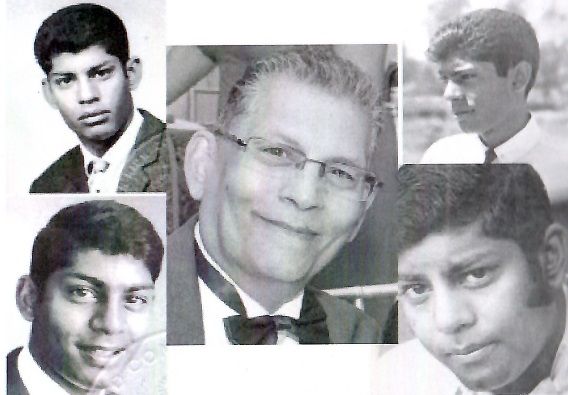
Cyprian Fernandes Daily Nation Chief Reporter Simerg
The many faces of Cyprian Fernandes through the years as they appear in his souvenir publication, “Yesterday at the Nation.” Photo: Cyprian Fernandes / Yesterday at the Nation.

Last December, I received a note from the Nation’s former chief reporter Cyprian Fernandes, who has made his home in New South Wales, Australia. He wanted to reproduce my article on Sultan Jessa in a special “not for sale” souvenir to mark the 60th birthday of the paper that he stated in his email to me was “my other mother, The Nation.” I was glad to oblige. When the publication was ready in April 2020, Cyprian mailed two copies to me by Australia’s Post Express — including one to give to Sultan Jessa’s widow, Rosila. I kept on tracking the package for weeks. Due to Covid-19, it never left Australia by air. Instead, I would learn several weeks later, that it was sent by surface. I received “Yesterday at the Nation” just last week!

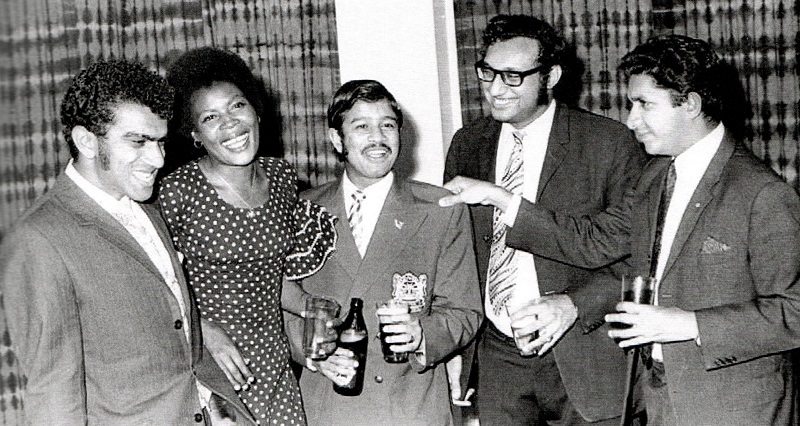
The Daily Nation 60th anniversary souvenir edition by Cyprian Fernandes
“Once when they were young,” from left Nation’s Polycarp Fernandes, Fibi Munene, Norman da Coata, Alfred Araujo and Sultan Jessa. Photo: Cyprian Fernandes / Yesterday at the Nation.

Cyprian commences his souvenir book by producing the introductory note that appeared on the front page of the Nation on the first day of its publication, March 20, 1960. He then says that the souvenir “was made possible by the articles provided by former Nation colleagues and the writings and obituaries of colleagues who have gone before us.”

In his preface “Once Upon a Time” Cyprian notes the brilliant work that Gerry Loughran did chronicling the first 50 years in “Birth of a Nation, The Story of a Newspaper in Kenya” (available in paperback or kindle edition at Amazon).

But for this 60th anniversary souvenir produced completely independently, Cyprian wanted to go further and he therefore dug deep to find more stories about the paper and from the paper. One thing he has done most admirably is to recognize the surviving and deceased journalists who worked at the Nation as well as those whom he tried hard to locate but was unsuccessful to get in touch with. His focus is on the period 1960-1975, a little over the time he himself spent at the paper.

The Daily Nation 60th anniversary souvenir edition by Cyprian Fernandes
Back cover of a special souvenir edition to mark the 60th anniversary of the Nation. The portraits are of Nation journalists, deceased as well as living. Photo: Cyprian Fernandes / Yesterday at the Nation.

The 132 page souvenir contains previous articles by Michael Curtis (1920-2004) who Mawlana Hazar Imam first recruited as a speech writer and publicity organizer when he became Imam in 1957; experiences at the Nation by numerous editors such as Jack Beverley (Sunday Nation editor from 1962-64), Jon Bierman (Daily Nation, 1960-63), Joe Rodriques, Boaz Omori and Hilary Ng’weno among others. In reading their stories, one learns about the challenges the editors and journalists faced when they were bold in their opinions about heads of state or on local and international political issues. As we find out from Cyprian’s book many were fired or forced to resign or even ended up in jails. One, a news editor by the name of Mike Chester, was expelled from Kenya due to mistaken identity!

One particular event that was reported well, and has been reproduced in the Souvenir, is when Kenya successfully launched the San Marco’s satellite into equatorial orbit from Malindi. Adrian Grimwood’s column in the Sunday Nation of November 12, 1972 explains what would likely take place on the day of the launch. The launch itself was reported on the front page of the Daily Nation’s coast edition with the headline “Kenya in the Space Age.”

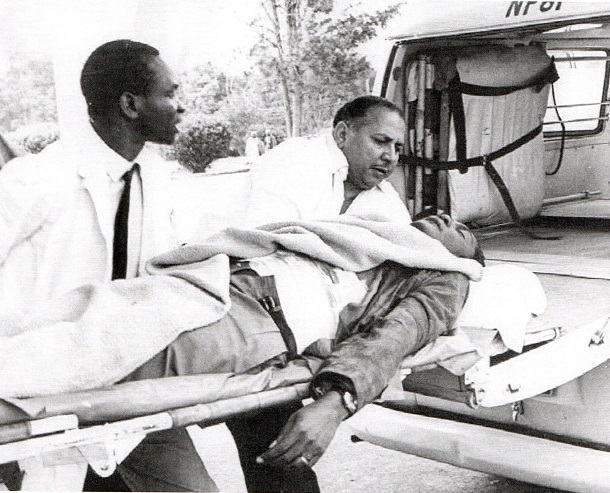
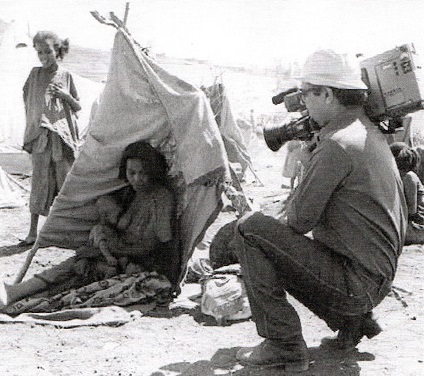
A tragic story that Cyprian includes in his souvenir is that of the extraordinary photographer and front line cameraman Mohamed “MO” Amin who was at the right place at the right time when Kenyan cabinet minister Tom Mboya was assassinated. Within a couple of minutes of being shot, Mo Amin was there to record on still and movie cameras, like the photo that is shown below. The souvenir also notes Mo Amin’s coverage of the 1984 Ethiopian famine in that it proved to be so compelling that it inspired a collective global conscience and became the catalyst for the greatest-ever act of giving. “Unquestionably,” the souvenir notes, “it also saved the lives of millions of men, women, and children.”

The Daily Nation 60th anniversary souvenir edition by Cyprian Fernandes Tom Mboya assassination
Within a couple of minute’s of the Kenyan Minister Tom Mboya being shot on Nairobi’s main street, Mo Amin was there to record on still and movie cameras, like the photo shown here. Photo via Cyprian Fernandes / Yesterday at the Nation.
The Daily Nation 60th anniversary souvenir edition by Cyprian Fernandes Mo Amin Photo
Mo Amin in Ethiopia at the height of drought crisis. Photo via Cyprian Fernandes / Yesterday at the Nation.

Mo Amin died in a hijacked Ethiopian Airlines plane that crash landed in November 1996 in the Comoros Islands. It is said that he died standing while still negotiating with the hijackers until the moment of the crash.

A great piece in the souvenir is about Joe Rodriques, who spent 18 years at the Nation, the final few as the paper’s Editor-in- Chief. During his tenure, The Daily Nation was accused by President Moi’s government of assuming the role of an opposition party and selecting news on a sectarian and tribally motivated basis. Rodriques had written an editorial against the Government when the long time Kenyan politician and opposition leader Oginga Odinga was banned from standing in a by-election. Rodriques was arrested and interrogated. The souvenir notes that “The Nation published an apology of sorts, assuring the government of its support, but actually without using the word apology. This was the beginning of the end of Joe Rodriques, as Editor-in-Chief and his own 18 year association with the paper.”

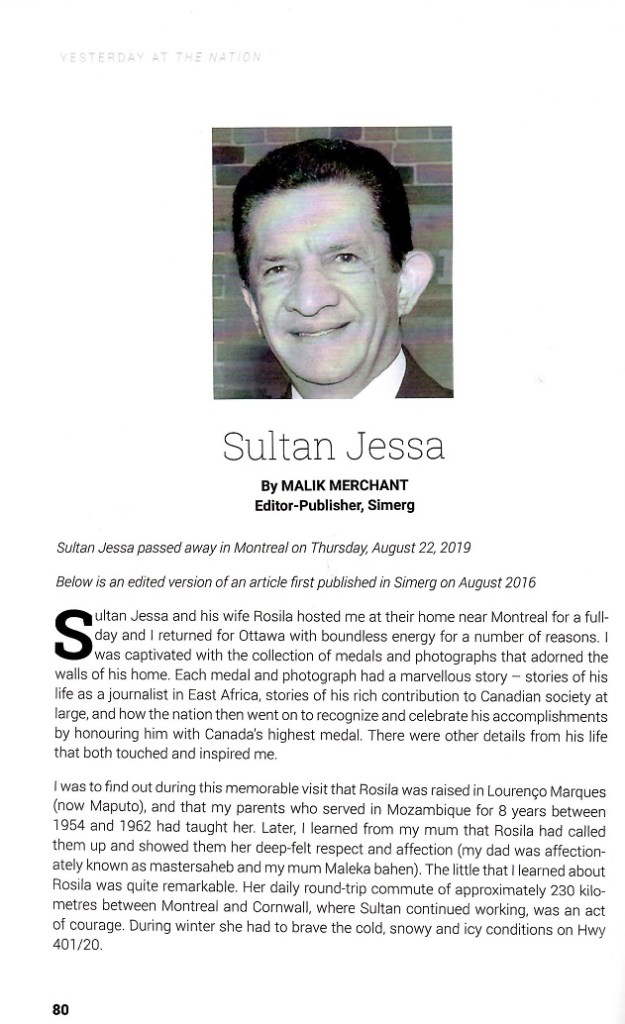
The Daily Nation 60th anniversary souvenir edition by Cyprian Fernandes profile of Sultan Jessa
A page from Simerg’s 4 page piece on Sultan Jessa from “Yesterday at the Nation” by Cyprian Fernandes.

Writing for himself, Cyprian Fernandes observes, “I owe the Nation — everyone who worked in editorial, photographic, proofreading, the compositors, advertising, Karo and Kano the drivers — and everyone else at Nation House the greatest debt of my life. Thanks for giving me a journalistic life that has spanned nearly 60 years and like Johnny Walker still keeps on walking — for the moment at least.”

He ends his detailed narrative about his days at the Nation with the following anecdote:

“I was travelling with the then Vice President Daniel arap Moi and his wife to Botswana. All went well, except for two things: The VP’s security kept his spare bullets by a candle in his bedroom…there was a lot of bang bang. When I tried to phone my story in via Johannesburg, the operator at the other end let loose a torrent of racist abuse including telling me to ask my wife and taste the real thing….and lots more. Unfortunately for him, the President of Botswana, Sir Seretse Khama, was in the room and listened in. A few weeks later I received an official apology from the South African government and an invitation to visit South Africa as (an honorary white man).”

Cyprian’s love for “my other mother, The Nation” is deep and sincere. The souvenir edition has been prepared, printed and mailed out from his own personal resources. I was delighted to receive a personalized signed copy and thank him for a volume that I will cherish for the rest of my life. It is one of very few copies that has been produced, and I am indeed lucky to be among the recipients. I hope a demand for the souvenir will prompt Cyprian to come up with a larger printer run for interested readers to purchase. The Daily Nation’s 60th anniversary falls on October 3, 2020.

Date posted: August 27, 2020.

_________________________________

Before departing this website please take a moment to review Simerg’s Table of Contents for links to hundreds of thought provoking pieces on a vast array of subjects including faith and culture, history and philosophy, and arts and letters to name a few.

We welcome feedback from our readers. Please complete the LEAVE A REPLY form below or click on Leave a comment. Your letter may be edited for length and brevity, and is subject to moderation.

Editor’s Choice: Alphonso Davies – Canada’s Humble, Joyful Soccer Phenom by the Christian Science Monitor

Introduced by MALIK MERCHANT
Publisher/editor SimergBarakah and Simergphotos

Alphonso Davies in action for Canada during a match against Dominica at BMO field in Toronto in October 2018. Photo: Wikipedia, CC BY 2.0. Click on photo for Christian Science Monitor article.

What a marvellous afternoon to be watching the finals of UEFA Champions between Bayern Munich and Paris Saint-Germain, and seeing, YES, 19 year old Canadian Alphonso Davies lift one of the most prestigious trophies in the sporting world! One moment I will never forget from the game was when Alphonso calmly headed back a cross to his own keeper in the second half. His soft precise touch was simply that of a self-assured and confident person. A stronger header, slightly off the goalkeeper’s mark, could have resulted in an own-goal and 1-1 scoreline, taking the game to extra-time if the game remained tied after 90 minutes. It was an amazing touch, and a great footballer commenting the game noted that he would not have dared to do that himself!

Click on photo for article

I never expected one of my favourite newspapers The Christian Science Monitor to be carrying a piece about him, as the Monitor doesn’t carry a sports section. So it was marvellous to read Sara Miller Llana’s wonderful column Alphonso Davies: Canada’s humble, joyful soccer phenom piece! All Canadians and football lovers around the world should read it too!

Date posted: August 27, 2020.

Before departing this website please take a moment to review Simerg’s Table of Contents for links to hundreds of thought provoking pieces on a vast array of subjects including faith and culture, history and philosophy, and arts and letters to name a few.

________________________

Film in the Making, as Harvard Professor Explores Two Ismaili Poets on Opposite Sides of Amu Darya in the Remote and Rugged Wakhan Corridor

We would like to thank Lesley Bannatyne for permission to reproduce her piece on the latest work of Harvard Professor Richard Wolf, which appeared in a recent issue of The Harvard Gazette. Dr. Wolf is producing a film about two Ismaili poets, who live on either side of Amu Darya in the rugged Wakhan Corridor (see map below). Qurbonsho lives in Vrang in the Ishkashim district of Gorno-Badakhshan in Tajikistan, and Daulatsho lives approximately 80 kilometres away in Yur village in Afghanistan. Both the villages are highlighted in the map. The Wakhan Corridor is a narrow strip of land about 350 km long and 13 to 65 kms wide in North Eastern Afghanistan, part of Badakhshan Province. Two large mountain ranges dominate the area, the Pamir in the North, and the Hindu Kush in the South. It is surrounded on three sides by Tajikistan, China, and Pakistan. The United Nations puts the population of the Wakhan Corridor at approximately 10,590, of which about 1,200 are Kyrgyz, and the remainder are mainly Ismailis.

‘Two Poets and a River’: Worlds of Love in the Wakhan Valley

Annotated map of the Wakhan Corridor
Filmmaker and Ethnomusicologist Richard Wolf is studying two Ismaili poets living in the Wakhan Corridor. Qurbonsho lives in South Eastern Tajkistan in Vrang, in Ishkashim district, and Daulatsho about 50 miles (80 kms) miles away across the Amu Darya (specifically the Panj River) in Yur village in Northeastern Afghanistan. Map: Adapted from University of Texas; updated by Simerg with approximate locations of Vrang and Yur (both circled in red).

By  LESLEY BANNATYNE
Harvard Correspondent

On opposite sides of the Oxus River [or Amu Darya, see map], border between Tajikistan and Afghanistan live two poet-singers who share a common language [Wakhi], faith [Ismaili Islam], and family network, and yet remain separated by vicissitudes of the Great Game, the 19th-century conflict between the British Empire and Czarist Russia. Ethnomusicologist Richard Wolf has been contemplating the rupture that exists across this divide in “Two Poets and a River,” a film in progress about poet-singers Qurbonsho in Tajikistan and Daulatsho in Afghanistan.

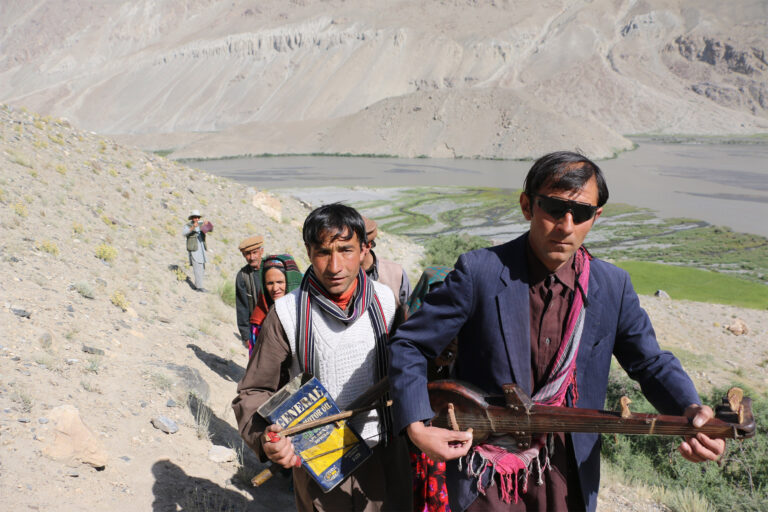
A group of people trekking along a mountainside near the Amu Darya river, with one person holding a traditional string instrument, while others carry items and wear traditional clothing.
Daulatsho, Yarqub and others playing their instruments and singing as they climb from Yur village to the ayloq (upper pasture). Upper Wakhan, Afghanistan, July 2016. Photo: Richard K. Wolf.
A black and white photograph of three individuals from the Wakhan Corridor; an older woman wearing a headscarf, a young girl with a patterned head covering, and a middle-aged man in traditional attire, all looking directly at the camera.
71470016 Qurbonsho, sitting beside his daughter and aunt, in front of his ancestral home. Vrang, Ishkoshim district, Tajikistan, July 2018. Photo: Richard K. Wolf.

Wolf, a professor in music and South Asian studies, has a longstanding curiosity about Central Asian people and music, but his research efforts began in earnest on a Fulbright Fellowship to Tajikistan in 2012.

“I went to Central Asia to work on Wakhi music and soon came to know of Qurbonsho, a poet-singer who lives on the Tajik side of the river,” he said. “I was always curious about the Wakhis living on the Afghan side, but in 2012–13, as a Fulbright scholar, I wasn’t allowed to cross into Afghanistan.”

The border had been negotiated long ago by Britain and Russia, and Wolf was intent on crossing it, but the effort took years. In 2015, he returned to Tajikistan with names of Wakhi poets, musicians, and their villages in hand. He and his small team drove for several days until the road came to an abrupt end: Melting snow had descended in torrents off the mountaintops and washed out the road and many settlements. Wolf and his companions were forced to continue into Upper Wakhan by foot, yak, and donkey. In village after village, he would hear of Daulatsho, who seemed to be everyone’s teacher as well as the composer of most modern Wakhi songs. Wolf arrived at Daulatsho’s village of Yur (alt. 10,500 feet / 3200.4 metres) only to find that the musician had retreated to the higher pastures where Wakhis graze their cattle in the summer months. The poet-singer finds much creative inspiration in the high mountain flowers, fields, rocks, and rushing water.

A group of people gathered in a mountainous region, watching two individuals perform while recording the event. The landscape features rugged mountains and a river valley in the background.
Richard Wolf and villagers recording Wakhi women singing “bulbulik.” Ayloq (upper pasture) above Yur village, Upper Wakhan, Afghanistan, July 2016. Photo: Katherine Freeze

“I left word that I’d return the next year. In July 2016, Daulatsho was ready for me and set me up in a one-room house. But I didn’t get much of a chance to see what was going on in the village. So I proposed making a film in order to have an excuse to see more of the village,” he said.

Wolf had used other formats to present scholarly material before — his 2014 book, “The Voice in the Drum: Music, Language, and Emotion in Islamicate South Asia,” was a work of creative nonfiction based on 30 years of fieldwork in India and Pakistan. He had been thinking about using a film to create a sequel, but his current research in Central Asia led him to postpone that plan.

“Two Poets and a River” took shape over the next several years and has been shown in the U.S. and Europe as a work in progress. Wolf traces the poets’ contemplations on separation, family, and environment, as well as their imaginings about what lies on the other side of the border. The two singers knew of one another by reputation and through recordings Wolf had made, but they had never met. In the winter of 2018–19, stranded with Daulatsho not far from the border because an enormous truck had broken down and blocked the road, Wolf realized he was close enough to pick up a cellphone signal from Tajikistan. He called Qurbonsho, and the two poets spoke to each other for the first time.

“The life experiences of these two musicians differ significantly,” Wolf said. “Qurbonsho studied in Soviet schools near his house and served as a construction worker for the army; Daulatsho had to relocate to the district center. He has crossed the border into nearby Pakistan but for the most part stays in Wakhan. Qurbonsho lives on what he makes from performing at weddings, but no one can afford to pay Daulatsho for his performances — rather he survives on his meager monthly salary as a schoolteacher. Distances that can be covered in hours on the Tajik side may take days on the Afghan side. Wakhis from Tajikistan see in Afghan Wakhis images of themselves 50 years ago. Afghan Wakhis see in their Tajik counterparts a measure of freedom and wealth.

“But as I worked with each of these musicians I found many similarities. They share common lifeways of pastoralism, house construction, and food. Their musical poetry is based on themes common to the Persianate world. The quintessentially Wakhi song of separation, bulbulik [nightingale], inspires the art of both poets with its sparse, three-line structure. Daulatsho’s Afghan Wakhi poems tend to be lengthy but use only a few melodies. Qurbonsho writes brief, pithy poems that draw from a variety of musical styles current in Tajikistan.”

After more than 100 years of imposed division, what resonates among the Wakhis, what their poets sing and write about, comes from something deeper: love, longing, and distance from a beloved.

“My film considers the broad trope of love as well as what it means for members of a community to be separated across a national divide. I was thinking of ending ‘Two Poets and a River’ with the two men meeting in person,” said Wolf. “But I’m not sure that would be true to the spirit of love, loss, and separation that underlies the river metaphor.”

Date posted: August 26, 2020.

________________

Portrait of Richard Wolf, a professor of Music and South Asian Studies, smiling outdoors while holding a camera tripod.
Harvard’s Richard Wolf

Richard Wolf is professor of Music and South Asian Studies at Harvard University who conducts ethnomusicological field research on the musical traditions, languages and cultures of South, Central and West Asia. His website http://richardkwolf.com/ includes samples of songs and film clips related to his work in diverse areas. For his more complete profile, please click Richard Wolf.

Before departing this website please take a moment to review Simerg’s Table of Contents for links to hundreds of thought provoking pieces on a vast array of subjects including faith and culture, history and philosophy, and arts and letters to name a few.

We welcome feedback from our readers. Please complete the LEAVE A REPLY form below or click on Leave a comment. Your letter may be edited for length and brevity, and is subject to moderation.

“I Wish I’d Been There” – What is One Moment in Ismaili History You Wish You Would Have Liked to Witness and Why!

LETTER FROM PUBLISHER

By MALIK MERCHANT
Publisher/editor SimergBarakah and Simergphotos

A decade has passed since the first publication of our series “I Wish I’d Been There” when we asked you to be “a fly on a wall” and pick one moment in Ismaili history that you particularly wish you had lived to see, and why. [Note: The “I Wish I’d Been There” idea had sprung from the December 1984 issue of American Heritage magazine which was dedicated to American history under the same theme.]

The response was superb, with scholars, writers and readers from every field imaginable contributing insightful and thought-provoking pieces some long and others short and precise. Following the series, a professionally looking booklet was produced, which is downloadable as a PDF file.

Aside from the current Covid-19 pandemic which has wreaked havoc, affected everyone’s day to day life, and disrupted our plans, a great deal has changed in the past 10 years: young children have entered university, students are now in professional employment, and many have embarked on new careers and adventures. New sources of knowledge have come to light and been published, and we have celebrated the Golden and Diamond Jubilees of our beloved Mawlana Hazar Imam, as well as participated in new Imamat initiatives and projects. As such, we have decided to relaunch a series that was so well received and acclaimed for its originality and the remarkable quality of the narratives.

articles continues after image

I Wish I'd Been There - Ismaili History Simerg Series
Simerg Launches a New I Wish I’d Been There Series

Technology and the quality of podcasts keeps on improving. The new “I Wish I’d Been There” series will, therefore, avail of these developments. In addition to textual expressions, we would like to receive contributions in the form of podcasts, as well as videos (of up to 5 minutes).

We would like all age groups to contribute to the series. In 2010, we published thirty-one unique stories. Can we double that count in 2020? The series will commence on October 15th, 2020 and conclude in April 2021.

From 50 words to a narrative of 500-800 words or more (or a 1- to 5- minute podcast/video), see what you can do to inspire, and educate, thousands of readers around the world with your insight of one scene, incident or event in ISMAILI history, recent or past, you would like to have witnessed — and why?

We look forward to a fantastic response. Please write to Malik Merchant at Simerg@aol.com.

Date posted: August 21, 2020.

__________________________

Download the First “I Wish I’d Been There” Series on Ismaili History

CLICK HERE OR ON IMAGE BELOW

A collage of covers from the 'I Wish I'd Been There' series, featuring narratives on Ismaili history. The layout includes various themed images and titles prominently displayed on a dark background.
Click on image to download complete I Wish I’d Been There Series in PDF Format

____________________

A man and a woman smiling together, standing close to each other in front of a glass brick wall.
Malik with his mum Maleksultan

Malik Merchant is the founding publisher/editor of Simerg (2009), Barakah (2017) and Simergphotos (2012). A former IT consultant, he now dedicates his time to family projects and other passionate endeavours such as the publication of this website. He is the eldest son of the Late Alwaez Jehangir Merchant (1928-2018) and Alwaeza Maleksultan Merchant who both served Ismaili Jamati institutions together for several decades in Mozambique, Tanzania, Pakistan, the UK and Canada in both professional and honorary capacities. Malik’s daughter, Dr. Nurin Merchant, is a veterinarian and supports his endeavours as an honorary editor of the three websites.

Before departing this website please take a moment to review Simerg’s Table of Contents for links to hundreds of thought provoking pieces on a vast array of subjects including faith and culture, history and philosophy, and arts and letters to name a few.

Photos: Ismaili Centre Jamatkhana in Full Glory, and a Unique Garden Party

The Toronto Headquarters Jamatkhana located at the Ismaili Centre Toronto on 49 Wynford Drive, reopens Monday August 17, 2020, after 156 days of closure due to Covid-19. We bring you photos of the dome, which was lit for the first time in months, and a unique Garden Party organized by the Aga Khan Museum at the adjacent Aga Khan Park. Please click Jamatkhana in Full Glory or on image below.

Toronto's Headquarters Jamatkhana located in Ismaili Centre Toronto.
Please click on image for story and more photos.

Please also read Parin Verjee’s Poem Inspired by the Reopening of Jamatkhanas.

Date posted: August 16, 2020.

____________________

Jamatkhana Ismaili Centre Toronto and Aga Khan Park, Simerg, Photo Malik Merchant

A Poem Inspired by the Reopening of Jamatkhanas

As We Reopen

By Parin Verjee

Approaching the doors of the Jamatkhana
Heads bowed in all humility
Lower your gaze
Pause a moment
Softly say a heartfelt prayer
Shukhrana, Al Hamdu’lillah
The blessed day has arrived
Quieten your thoughts
Touch your heart
Hand on your heart
Smile with your eyes
Greet gently
Gracious to one and all
Carry your mehmani in your heart
Let Allah’s light guide you
To His threshold
Let divine grace
Touch your praying hands
Embrace the silence
Be at peace
The sacred space
Awaits your soulful zikr

Date posted: August 16, 2020.

_______________________

About the author: Parin’s love of books, music, theatre, and travel sometimes leads her to writing about her experiences, and the reopening of Jamatkhanas inspired her to pen a few lines here. Originally from Kenya, she studied at Makerere University, Kampala, and at the University of Dijon, France, and lived in Oxford, England, before moving to Canada. She has been in Doha, Qatar, for the last 12 years and living in the Middle East has enhanced her appreciation of Islamic art and culture. She is presently back in Calgary.

We welcome feedback from our readers. Please complete the LEAVE A REPLY form below or click on Leave a comment. Your letter may be edited for length and brevity, and is subject to moderation.

____________________

The featured photo shown at the top of this post was taken on the night of Friday August 14, 2020, when the Headquarters Jamatkhana dome at the Ismaili Centre Toronto was lit up for the first time since mid-March when Jamatkhanas across Canada closed down due to the Covid-19 pandemic. The spectacular lit up dome is visible from the busy Don Valley Parkway, and is much admired by pedestrians and drivers alike as they drive through the Parkway or walk along Eglinton Avenue and Wynford Drive. The photo and the beautiful poem penned by Parin Verjee celebrate the opening of the Headquarters Jamatkahana on Monday August 17, as well as other Jamatkhanas that have opened in recent days or will be opening in the coming days.

___________________

Before departing this website please take a moment to review Simerg’s Table of Contents for links to hundreds of thought provoking pieces on a vast array of subjects including faith and culture, history and philosophy, and arts and letters to name a few.