Simerg is an independent initiative dedicated to Ismaili Muslims, the Aga Khan — their Hereditary Imam — and the Ismaili Imamat, and Islam in general through literary readings, photo essays and artistic expressions
Mr. Manilal Devani was elected Mayor of Dar es Salaam, Tanganyika (now Tanzania) in 1959. In October of that year, Mawlana Shah Karim, His Late Highness Aga Khan IV, the 49th Hereditary Imam of the Ismaili Muslims, visited Dar es Salaam and other towns across Tanzania. The Mayor hosted him and leaders of the Ismaili community for lunch at The Aquarium Restaurant in Dar es Salaam and organized meetings with the British Governor General, Sir Richard Turnbull, and other dignitaries.
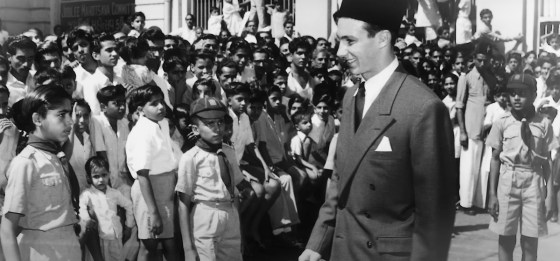
The 49th Hereditary Imam of the Ismaili Muslims, Mawlana Shah Karim, His Late Highness Aga Khan IV (d. February 4, 2025), is welcomed by the Mayor of Dar es Salaam, Tanzania (then Tanganyika), Manilal Devani, in 1959. Photograph: Rohit and Nisheet Devani collection.
Upon the Aga Khan’s recent death on February 4, 2025, aged 88, the late Mayor’s nephew, Sanjay Devani, my friend since the 1980s, sent me a condolence note along with the photo of the Mayor and the Aga Khan, shown above. The photograph Sanjay so thoughtfully sent me has turned into an album after Sanjay, sensing my keen interest in the one picture he sent me, contacted Mayor Manilal’s sons, Rohit and Nisheet, who responded with a set of additional rare photos from their father’s collection. These precious images, so unique and exclusive, will deeply resonate with many readers of this website. I sincerely thank Rohit and Nisheet for their kindness and my beloved friend Sanjay for seeking these precious, rare photographs from his cousins on my behalf — a testament to our firm and enduring friendship.
Mayor Manilal Devani, Mayoress Sushila Devani and Mwalimu Julius Nyerere, who assigned the Mayor to carry out important functions for the Government of Tanzania before and after independence. Photograph: Rohit and Nisheet Devani collection.
Mayor Manilal Devani, who died on June 10, 2010, was active in Tanzania’s commercial and public life for over 50 years. He served the Tanzanian Government and the local community in Dar es Salaam in many vital roles. We are pleased to share the Late Mayor’s historical and exclusive collection and invite readers to read the Rotarian’s tribute to him.
~~~~~~~~~~~~
Dar es Salaam Mayor Manilal Devani Hosts Mawlana Shah Karim Aga Khan, 1959
Mawlana Shah Karim, His Late Highness Aga Khan IV, with Mayor Manilal Devani, Mayoress Sushila Devani, Hon. Al Noor Kassam, a prominent Ismaili leader (behind His Highness), and Mr. P. J. Bharwani (right), Dar es Salaam, 1959. Photograph: Rohit and Nisheet Devani collection.
~~~~~~~~
Mawlana Shah Karim, His Late Highness Aga Khan IV, with Mayor Manilal Devani and Mr. Subotuik, owner of The Aquarium Restaurant, where the Mayor hosted Mawlana Shah Karim for lunch, Dar es Salaam, 1959. Photograph: Rohit and Nisheet Devani collection.
~~~~~~~~
Mayor Manilal Devani introduces Mawlana Shah Karim, His Late Highness Aga Khan IV, to a British dignitary, Dar es Salaam, 1959. Photograph: Rohit and Nisheet Devani collection.
~~~~~~~~
Mawlana Shah Karim, His Late Highness Aga Khan IV, is hosted for lunch by Mayor Manilal Devani as Mayoress Sushila Devani and Mr. Subotuik, the owner of The Aquarium Restaurant, watch over, Dar es Salaam, 1959. Photograph: Daily News via Rohit and Nisheet Devani collection.
~~~~~~~~
Mawlana Shah Karim, His Late Highness Aga Khan IV, and Mayor Manilal Devani, with several guests at a buffet table in The Aquarium Restaurant, Dar es Salaam, 1959. Photograph: Rohit and Nisheet Devani collection.
~~~~~~~~
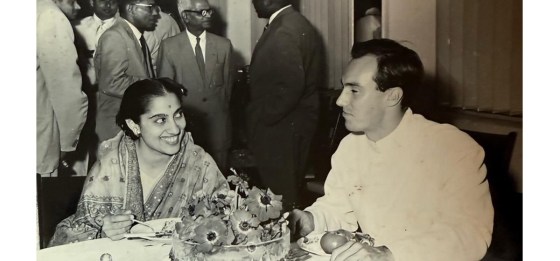
Mawlana Shah Karim, His Late Highness Aga Khan IV, savours food as Mayoress Sushila Devani looks at him with a wide smile, Dar es Salaam, 1959. Photograph: Rohit and Nisheet Devani collection.
~~~~~~~~
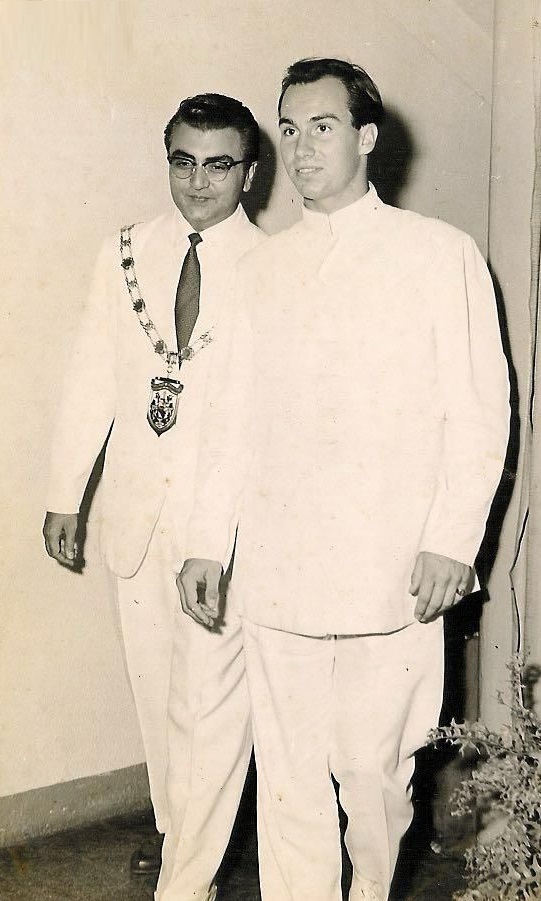
Mawlana Shah Karim, His Late Highness Aga Khan IV, and Mayor Manilal Devani, depart The Aquarium Restaurant, Dar es Salaam, 1959. Photograph: Rohit and Nisheet Devani collection.
~~~~~~~~
Mawlana Shah Karim, His Late Highness Aga Khan IV, with British Governor of Tanganyika, Sir Richard Turnbull, Dar es Salaam, 1959. Photograph: Rohit and Nisheet Devani collection.
Date posted: April 4, 2025.
NOTE: A version of this post appears on our sister website, Barakah, dedicated to the Aga Khan, his family, and the Ismaili Imamat. His Late Highness Aga Khan IV’s son, Prince Rahim, succeeded him as the 50th Ismaili Imam on February 4, 2025, immediately after his father’s passing. This swift and seamless transition is a testament to the stability and continuity of the Ismaili Imamat. His Majesty King Charles III honoured him with the title of His Highness.
___________________
Simerg welcomes tributes to Mawlana Shah Karim and messages of congratulations to Mawlana Shah Rahim Al Hussaini, His Highness the Aga Khan. Please click COMMENT box. If you encounter problems, email the comments to mmerchant@simerg.com. We want to reassure you that we respect your privacy and that your published comment will never reveal your email address. For recent and older posts, please visit our HOME PAGE. Please also follow us @Facebook, @X and @LinkedIn.
Malik Merchant scours printed Ismaili magazines dating back many decades, personal and family archives, contributions from readers around the world and the official websites of the Ismaili community for Barakah’s impressive collection of 250+ pictures highlighting the life of the 49th Ismaili Imam, Mawlana Shah Karim Al Hussaini His Highness the Aga Khan IV, who died on February 4, 2025. This is Part 1 and just the tip of the iceberg of his story and contributions that would take years and volumes to complete.
On the 4th of February 2025, news spread quickly about the passing of Karim al-Hussaini, the fourth Aga Khan and 49th Imam of the Shi’a Ismaili Muslims. For over 67 years, His Highness Prince Karim Aga Khan had occupied the singular office of guide, spiritual leader and interpreter of the Qur’an for millions of Ismailis from around the world living in more than 35 countries. In practical terms, this meant not only looking after the spiritual well-being of his community but also investing in improving their quality and standard of life regardless of where they lived.
Karim Aga Khan was designated as Imam by his grandfather, Sir Sultan Mahomed Shah, upon his passing in 1957 while still an undergraduate at Harvard University. His grandfather, in turn, inherited the more-than-one-thousand-year office of Imamat in successive generations from his lineal ancestor, Ali b. Abi Talib, the first Shi‘a Imam and the cousin and son-in-law of the Prophet Muhammad through his beloved daughter Fatima.
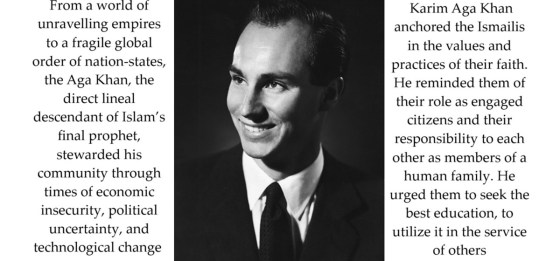
From a world of unravelling empires to a fragile global order of nation-states nearly seven decades later, Karim Aga Khan, the direct lineal descendant of Islam’s final prophet, stewarded his community through times of economic insecurity, political uncertainty and technological change. He saw how the ravages of war, instability and climate change impacted the lives of his community as well as their livelihoods. He witnessed large movements of Ismailis from rural to urban centres over this period, and their migration and displacement from Asia and Africa to Europe and the Americas. He took a keen interest in the settlement of Ismailis in their newfound homes and shepherded them where he could, from states of uncertainty and crisis to stations of hope and opportunity.
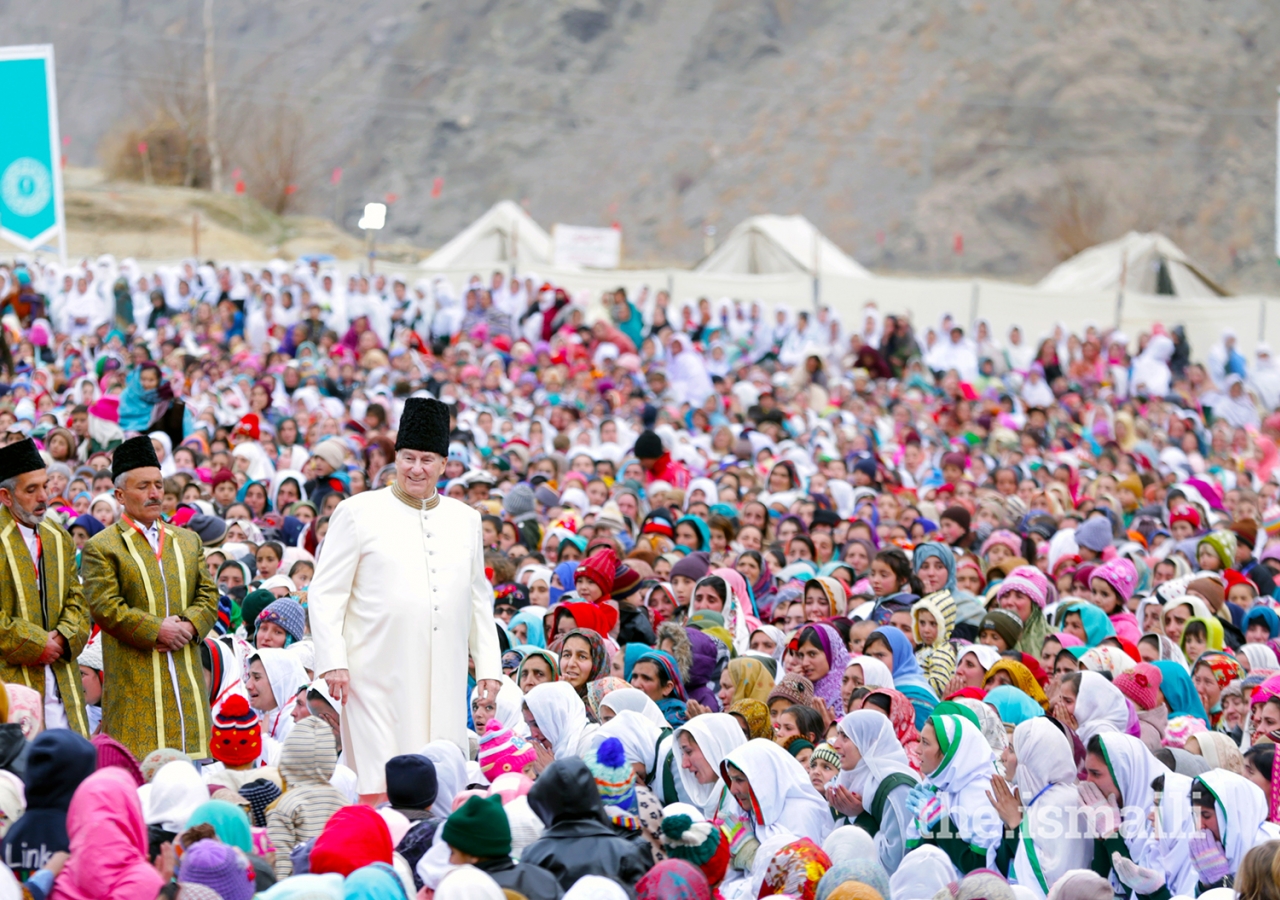
Mawlana Shah Karim Shah, His Highness the Aga Khan, walks through his followers during his Diamond Jubilee visit to Garamchashma, Lower Chitral, Pakistan, 2017. Photograph: The Ismaili / Amirali Rimjee
These winds of change and demographic shifts often left Ismailis facing novel challenges, difficult choices and new horizons. Many looked to their Imam for guidance in finding ways to apply the spirit and ethics of Islam to the unfamiliar realities of their lives. And it was often with his keen sense of understanding, concern and dedication that Aga Khan IV was able to anticipate change. And with his prescient wisdom, he prepared his communities throughout the world for what was likely to come. He anchored them in the values and practices of their faith. He reminded them of their role as engaged citizens and their responsibility to each other as members of a human family. He urged them to seek the best education, to utilize it in the service of others and to use the intellect endowed to them by their creator ethically and responsibly.
The Ismaili Imam also took it upon himself to emphasize the mandate of his office to help others in need beyond the Ismaili community. Through the creation of strong institutions and through acts of quiet diplomacy and humanitarian action, Aga Khan IV made a lasting impact on his followers, global leaders of all persuasions, changemakers and the world at large — possibly more than any other spiritual leader of his generation. Through strong civil and governmental partnerships and by creating spaces for dialogue and discourse, the Aga Khan modelled those behaviours in his own work and through his own words so that those he came in contact with left from their exchanges inspired, touched and changed, often making attempts to enact his vision in their own lives. The most far-reaching of these institutions is the Aga Khan Development Network, which continues to operate in more than 30 countries around the world with agencies dedicated to eradicating poverty, uplifting economic activity, providing educational opportunities and increasing tourism, to name just a few.
The unbroken link of the Ismaili Imamat goes back to the time of the Prophet Muhammad and Hazrat Ali. The collage represents the 46th through 49th Ismaili Imams, known by the honorific title of Aga Khan, which was first bestowed on the 46th Ismaili Imam Hassan Ali Shah, top left, in the 19th century. All in all, Aga Khan I, II, III and IV collectively were Imams of the Ismaili community for an impressive 207 years, more than 1/7th of the total period of forty-nine Imams in Ismaili history. Imam Hassan Ali Shah’s successors in the collage are (top right) 47th Imam, Shah Aly Shah, Aga Khan II; (bottom left) 48th Imam Sultan Mahomed Shah, and Imam Shah Karim Shah.
At 88 years old, Aga Khan IV had been the longest-living Ismaili Imam on record. In fact, the tenure of the Aga Khan’s immediate ancestors has been unmatched in history. Shah Karim’s predecessor, Sultan Mahomed Shah, Aga Khan III, had led the Ismailis through an Imamat period lasting nearly 72 years, the longest of any Imam. The first Aga Khan was Imam for 64 years. All in all, Aga Khan I, II, III and IV collectively were Imams of the Ismaili community for 207 years, more than 1/7th of the total period of forty-nine Imams in Ismaili history.
While many Imams have lived through periods of change and transition, none more than Imams Sultan Mahomed Shah and Karim al-Hussaini, Aga Khan III and IV. Their realities have been characterized by a world in constant flux and change. Aga Khan III was born into the world of empires in 1877 and left the same world at a time of their dismantling.
Aga Khan IV, born in 1936, saw the rise of independence struggles and the eventual emergence of nation-states and then observed many of them through periods of fragility, stability and crisis yet again. These crises were the result of both the strengthening and weakening of democratic institutions, changes in power politics such as the start and end of the Cold War, as well as the disproportional actions and rhetoric of individual leaders, many who long overstayed their mandates as heads-of-state.
Through all this, the Imam made the safety, development and success of his murids (adherents) in tens of countries around the world his priority. Despite their various geographies, cultures and political contexts, the Imam navigated the complexities of their worlds to improve their lives, to better their futures and to infuse them with a generational hope. With and through this experience, emerged a capacity, knowledge and ability to also help others — often the most destitute and dejected in society. And not just in countries and regions where Ismailis lived, but in varying contexts and localities around the world where it was most needed.
Like his predecessors, Aga Khan IV’s impact may only be more fully known decades and generations from now with the hindsight and perspective that time and history provides. However, the following is a very humble, and impoverished attempt, to try and document some of the lasting legacy that his Imamat has bequeathed upon the Ismaili community, the Muslim ummah and the world-at-large.
Laying the Foundation
In his first year as 49th Imam of the Ismaili Muslims, which began in the middle of 1957, many of his broader interests which would become part of his life’s work and passions became apparent. Through the events that filled that year from his Takht-nishini ceremonies, to laying the foundation stones of Jamatkhanas, opening mosques, meeting his jamats around the world, and enabling institutions that were concerned with the welfare of his community and the communities in which they lived.
The Ismaili Flag among several other decorative pieces fly across the grounds of the Takht-nishini (ceremonial installation) ceremony of Mawlana Shah Karim Shah, His Highness the Aga Khan, in Dar es Salaam in October 1957. Photograph: The Ismaili.
The late Imam was able to devote the attention and care to these areas without abandoning his final year of education at Harvard. For the next nearly seven decades, his early interests unfolded further and were deepened. To these were added his appreciation for the arts of the Muslim world, with a particular emphasis on architecture and the built environment. Together, many became hallmarks of Karim Aga Khan’s Imamat. The care and concern for his jamat’s material and spiritual well-being centred him. But it did not prevent him from also laying a path forward for others. These included the most marginalized and vulnerable populations in society, whether from amongst the Muslim ummah or elsewhere. For Aga Khan IV was acutely aware that the injection of hope and promise of a better life, through tangible action, would catapult them and their families away from previous generations of poverty. For the Imam, no one should be devoid of dignity, and for those whose dignity had been stripped, he saw it as his mission to restore it, for each person on the earth, each member of the human family, was ennobled as God’s creation.
Princess Salimah and Ismaili leaders look on as Mawlana Shah Karim Shah, His Highness the Aga Khan, lays the foundation for a new Jamatkhana in Methan Village, Sidhpur, India, January 22, 1978. Photograph: Nazarali K. Momin/Akbarali K. Momin collection, Sugar Land, Texas, USA.
In fact, the Imam’s far-sightedness and ability to reach into the future allowed him a vision of a better world: one in which humanity valued its responsibility and understood the importance of interdependence; one where intelligentsia and the common person were more conversant with the contributions and cultures of the ummah, one where an ummah was more aware and confident of its potential; and a stronger, more united and capable jamat (community of Ismaili believers) more readily aware of its history, traditions and diversity.
The following section highlights a number of areas in which Aga Khan IV made significant contributions in his role as Imam of the Ismailis. These include stewardship of the global Ismaili community, the strengthening of social governance instruments and establishment and expanse of Jamatkhanas as important hubs of community amongst the global community. It also includes instituting the Seat of the Ismaili Imamat. A second part will situate the wider work of the Ismaili Imamat through the Aga Khan Development Network, his efforts to dispel stereotypes of Islam and create opportunities to educate wider audiences about Muslim civilization’s contribution and heritage. It will also cover the Imam’s poignant discourses on the value of pluralism and cosmopolitanism.
Jamatkhanas
Under the Imamat of his grandfather, Sutan Mahomed Shah, the role and importance of the Jamatkhana in the lives of Ismaili murids had increased significantly. From modest buildings to architectural heralds of the community’s presence, the Jamatkhana served the religious, educational and administrative needs of the community in varying parts of the world. While the Jamatkhana had a presence in the lives of Ismailis of South Asian ancestry where it originated, other worship spaces and sites for gathering fulfilled those needs for Ismailis of other backgrounds in many parts of the world. While Jamatkhanas were introduced to Ismailis in different parts of the world as contact increased between Sultan Mahomed Shah and his dispersed community, it was during the Imamat of Aga Khan IV that we see a significant increase in the number of Jamatkhanas and in their locations.
Upanga Jamatkhana, Dar es Salaam, Tanzania, was built on the site of the Takht-nishini of Mawlana Shah Karim Shah, His Highness the Aga Khan.
During his Imamat, Aga Khan IV continued to heavily invest in the building of permanent structures that served the needs of his community right across the globe. While some were modest in stature, others were ambitious in their scope and architecture. Regardless of their size, their function remained the same. They were hubs for the community, and as such the Jamatkhana brought Ismailis together, from Iran to America, to pray, to learn and to socialize. There was no doubt that it was the Jamatkhana that integrated and reintegrated the community and continued to define and redefine it.
With increasing migration and displacement, Ismailis, more than ever, established themselves in unfamiliar urban centres and in new countries where communities had not existed in significant numbers before. When it was clear that Ismailis would become integral to the fabric of a neighbourhood, a city or a country, a Jamatkhana took on the twin burdens of being ambassador for Islam as well as its Ismaili community through its architecture and its role in broader civic life.
Hundreds of Jamatkhanas were built during the Imamat of Shah Karim. A number of these took shape in countries like Afghanistan and Tajikistan whose Jamatkhana tradition had been severed or interrupted or where the political situation or lack of contact of community with the Imam had prevented it.
Methan Jamatkhana, India. The foundation — see photograph above — was laid by Mawlana Shah Karim Shah, His Highness the Aga Khan, on January 22, 1978, and the Jamatkhana was opened on April 26th, 1987. Photograph: Nazarali K. Momin collection, Sugar Land, Texas, USA.
As Karim Aga Khan forged stronger and more regular ties with disparate communities during his Imamat, it was the Jamatkhana that kept the community together, anchored their faith and provided a vehicle for communal institutions to share announcements and programmes and to reiterate the community’s longstanding values. The Jamatkhana, in many cases, provided comfort, solace and even shelter during times of war, political change and uncertainty. It could be a community centre, a meeting ground, a place to socialize and be educated in addition to being a place to pray and express one’s faith through the religion’s practices and ceremonies.
Ismaili Centres
Other Jamatkhanas were built in the newly adopted countries of the jamat’s settlement. Such was the story of the first Ismaili Centres opened in London and Burnaby, Canada respectively. The Ismaili Centres envisioned the Jamatkhana as an integral part of a larger architectural jewel, which, in addition to serving the needs of the jamat in its religious, educational and administrative capacities also provided a conduit and site to engage with wider publics — whether government, civil society, the Muslim ummah or people of other faiths.
A sketch of the Ismaili Centre London, located in South Kensington. It was inaugurated by British Prime Minister Margaret Thatcher in the presence of Mawlana Shah Karim Shah, His Highness the Aga Khan, on April 24, 1985.
The architecture of these buildings were envisioned to be distinctive, to invite conversation about Islam and to provide a platform for the Ismaili community to engage with wider society by hosting events, programs and conversations with wider societies. This was in stark contrast to the ways in which many viewed the Jamatkhana as a space of privacy for the jamat to conduct its own rituals and observances. It was in this apparent contradiction — that of the invitation the building provided and a tradition of reticence of the community — in which the re-envisioning of the Jamatkhana, and the Ismaili Centre in particular took shape.
At the time of Aga Khan IV’s death, six Ismaili Centres had been completed in five different countries where the jamat lived and one was near completion in another. The United Kingdom (UK), Portugal and Tajikistan each had one in their nation’s capitals. The United Arab Emirates’ Ismaili Centre was located in its economic heart, Dubai. And the Canadian cities of Vancouver and Toronto had Ismaili Centres, one in the far west of the country and the other in the nation’s most populated city. Houston, the city with the largest Ismaili population in the United States had an Ismaili Centre nearly completed and once opened, would be the largest in terms of area.
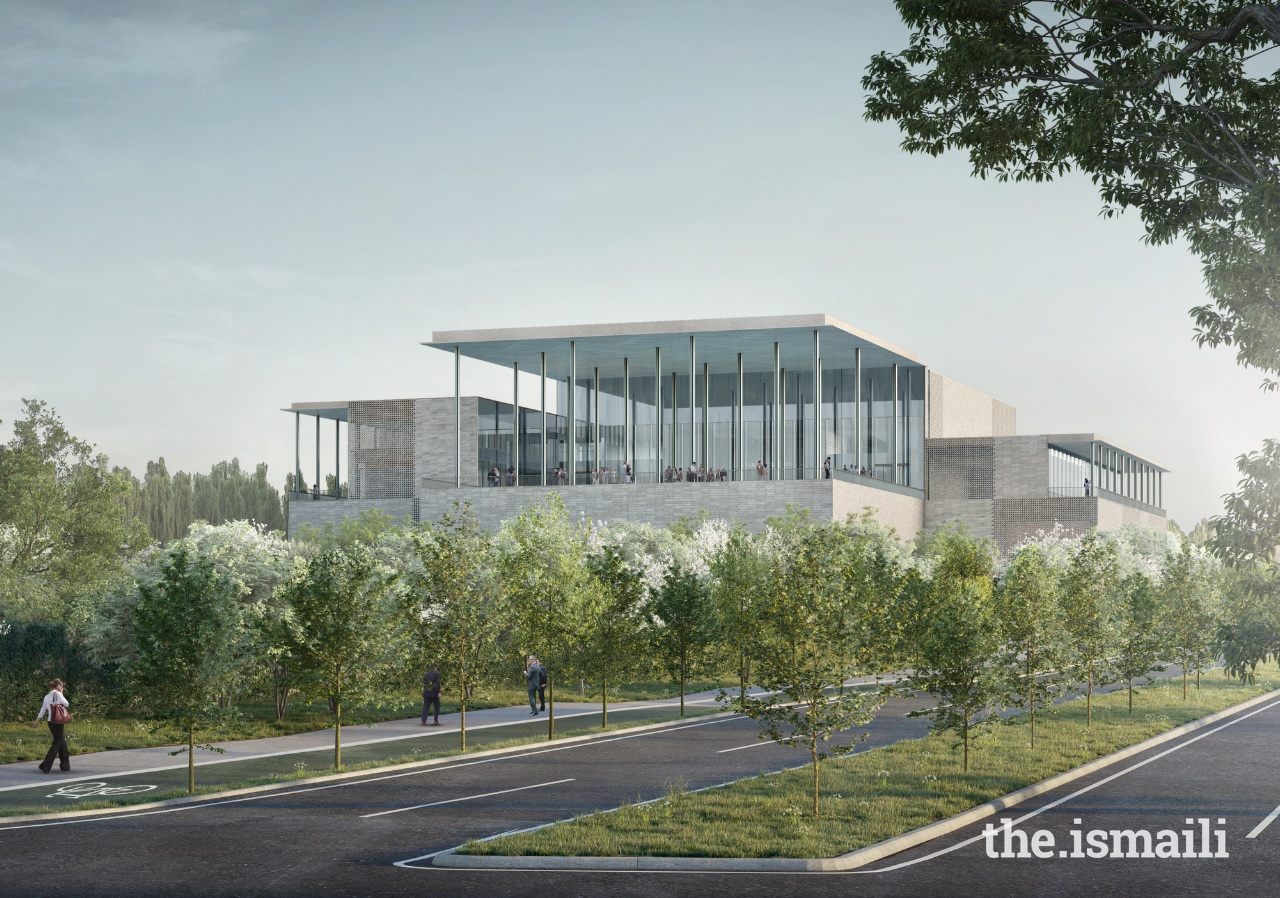
Artistic rendering of the Ismaili Center Houston. It will serve as a Jamatkhana for the Ismaili community to come together for prayers, spiritual search, contemplation, and an ambassadorial cultural center. It is near completion and is expected to be opened later in 2025. IMAGE: IMARA HOUSTON INC. / IPL
While the UK had seen a settled Ismaili population for decades before the opening of its Ismaili Centre in 1985, the building gave the community a prominence and impact that they had never had before. Located amongst the hallowed stones of London’s museum district in the heart of the city, was now a Muslim institution of prominence. Less than a decade earlier, a purpose-built mosque of significant size opened in the city’s Regent’s Park, serving the needs of Muslims who lived and worked in the city. While both were built by international architectural firms of note, the Jamatkhana was the first purpose-built institution in London serving the expressed needs of a Shi‘a Muslim community. Its location on a prominent plot meant that it was viewed by passers-by on a daily basis.
Mawlana Shah Karim Shah, His Highness the Aga Khan, welcomed the Prince of Wales — now His Majesty King Charles III, to the Ismaili Centre London on July 12, 2007 to view the Spirit and Life Exhibition showcasing the beauty, diversity and rich legacy of Islamic Art. Many of these artifacts are now on display at the Aga Khan Museum in Toronto.
The timing was conspicuous. Barely six years after the events of the Iranian Revolution and the transfer of power from the country’s then-Shah to Ayatollah Khomeini, the conception of a prominent Shi‘a Muslim space likely alarmed some given the stereotypes and fervour associated with Iran’s religio-political regime. Aga Khan IV saw it as an opportunity to educate the broader public about Islam and its Muslim civilizations, the ummah’s diversity and the Shi‘a faith of his own community not only by way of theological means, but also through Islam’s cultural heritage, its built environment and the values he aspired and championed for his community. The Ismaili Centre London embedded this vision in a very public way and not only in its architecture and mandate. It even included a public gallery in its early years hosting exhibitions focused on the cultures and arts of the Muslim world.
It was the vision of Aga Khan IV, with a generational outlook, that facilitated a double-move. To provide an architectural face of Islam for the West and a permanent structure of beauty that showcased the artistic traditions of Islam was only part of it. The building also announced to his own community its civic and religious value. It effectively instructed them to consider to plant their roots much deeper and wider than they already had. It also gave them a sense of pride and a place of physical beauty by which to express and internalize their faith and values.
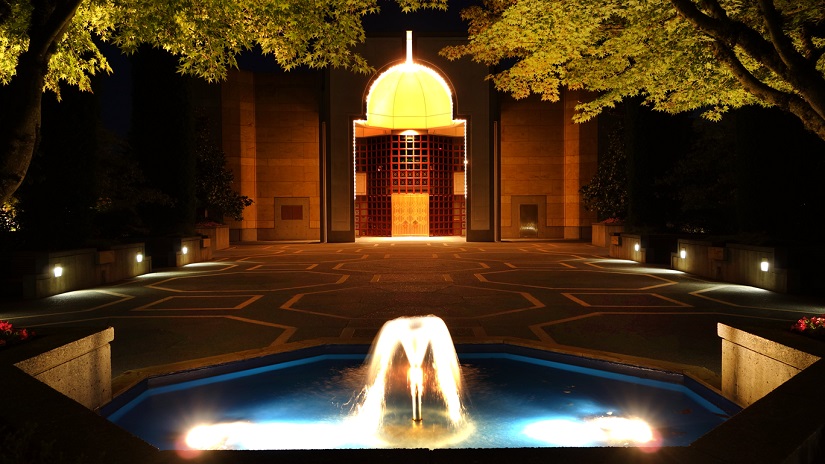
The Ismaili Centre TorontoJamatkhana dome at twilight. Photograph: The Ismaili.
~~~~~~~
The Ismaili Jamatkhana prayer hall within the Ismaili Centre Toronto which was inaugurated on September 12, 2014, by Mawlana Shah Karim Shah, His Highness the Aga Khan, and Canadian Prime Minister Stephen Harper. Photograph: The Ismaili.
Likewise Canada also saw the opening of its first Ismaili Centre and purpose-built Jamatkhana in 1985, later that same year. Located in a suburb of Vancouver, the Burnaby Ismaili Centre was not as prominently located as its London sibling. In fact, to allay any fears that the space’s Muslim “identity” and purpose might cause alarm in the neighbourhood, a concession was made to sink the building and surround it with shrubbery so it couldn’t be as easily noticed from the major thoroughfare that passed by it.
Despite the steadfast stereotypes of Islam and Muslims that were still in circulation at the time, the building did go ahead and was ultimately opened by then-Canadian Prime Minister Brian Mulroney, in the same way that Margaret Thatcher opened the London Ismaili Centre in Aga IV’s presence. The profile that these two buildings received validated the Aga Khan’s commitment to the countries in which his communities were living, to his vision of sharing Islam through its heritage and culture — in this case architecture — and to create a space for his own community that they could be proud of for decades and generations.
Jamatkhanas — large and small — continued to be built during the tenure of Aga Khan IV and connected members of each local community. Jamatkhanas also provided a space for the community to gather when they were travelling outside their home communities. It helped to facilitate a comradery, a sense of community and pride as Ismailis from around the world came in closer contact with each other. The importance of the Jamatkhana in the life of the community cannot and should not be underestimated. In addition to their role as the site for the spiritual and religious aspects of the jamat’s expression, their integration into the fabric of every part of the community — from its social and educational dimensions to its interface with members of other communities — has been remarkable.
Social Governance
Continuing the legacy of his grandfather, Aga Khan IV continued to embolden the administrative institutions who were tasked with the responsibility of looking after each jamat. These institutions, known as councils and peopled by appointed volunteers were given the mandate and responsibility to provide the necessary guidance, programs and supports to the Ismaili community. Each council effectively represented a jamat, a localized community, with its own needs and priorities. The council included a range of committees, boards and portfolios that would look after the social, religious, health, and educational needs of the community and oftentimes many others.
In addition to supporting the various Ismaili communities and becoming vehicles to enact, interpret and apply the Imam’s guidance, councils also developed human resource capacity, professionalized volunteers and gave the community an important responsibility — a mandate to look after its own. The giving of one’s time and expertise as a volunteer on the council was ultimately seen as a way to both serve the Imam and to serve the community. Being appointed a member of the council was understood as a privilege rather than a burden; although it came with a significant obligation, and often blessing.
Over time the councils became more complex in their scope and remits. In addition to social governance, they also took on the role of being conduits to communicate and enact the Imam’s wishes for his jamats. And through their reach, they were able to ensure the Imam’s concerns could be addressed and acted upon so that all members of his community regardless of their family background, economic lot or social status could reap the benefits and opportunities made available by the council’s work.
Aga Khan IV in his tenure expanded the councils to include jamats outside South Asia and its diasporic communities. As it became increasingly clear that it was the independent nation-state that would become the primary configuration of the new world order, council structures began to align with the countries that the communities were citizens of, often with councils preserved at regional and local levels, for ease of administration, communication and understanding the diverse needs and realities of Ismailis in different localities. It was from this vision that councils provided the necessary knowledge of the daily ground realities to the Imam while he provided the insight and wisdom to address the jamat’s concerns.
Ismaili council leaders from around the world representing their countries at the inauguration of Mawlana Shah Karim Shah His Highness the Aga Khan’s Diamond Jubilee in Aiglemont, France, July 11, 2017. Photograph: The Ismaili.
As new realities emerged and countries such as Bangladesh and Tajikistan gained independence, they too would eventually adopt administrative institutions like the councils. And as Ismailis migrated to different countries in Europe and to North America and Australia along with different regions in Africa and Asia, councils in their own rights emerged in these regions as well. By the time of Shah Karim’s death, every Ismaili community of size was represented by a Council with the exception of China.
During his Imamat, council leadership of Central Asia, Iran, Syria, the America, the Middle East, South Asia and Africa mingled with each other. This provided umpteen and regular opportunities to learn from each other, and as importantly, to work together and support each other. This was further trampolined through the use of contemporary technologies to meet and interact.
However, it wasn’t enough to simply establish councils, they had to be equipped with skilled volunteers who had the capacity and know-how in a range of knowledge-areas and fields. Collectively, they also had to have a sympathetic understand of the diverse economic, educational, health-related and aspirational needs of their communities. And so the next step was to professionalize the institutions, their structures and mandates so they could survive change as well as encourage excellence in every field of human endeavour and reiterate that the purpose of education was not just self-serving but could benefit others.
This emphasis on education had far-reaching effects on the the Ismaili community leading to the emergence of exceptional leaders, thinkers and influencers in almost every field and industry where the jamat lived. This emphasis facilitated men and women gaining access to knowledge as well as helping Ismailis to extend their education even further — whether formally or informally — past a single degree or diploma. Whether through war or in times of strive, this worldview facilitated a view of education as something whose benefit was for the common good — and whose reach could change families, communities and nations — a vision put in place by Aga Khan IV himself.
Mawlana Shah Karim Shah, His Highness the Aga Khan smiles broadly as he greets students during a visit to the Aga Khan Primary School in Nairobi, Kenya, in 1966. Photograph: Juby Sprake Collection, Vancouver, Canada.
~~~~~~~~~
Always a mentor to his younger spiritual children, Mawlana Shah Karim Shah, His Highness the Aga Khan, keenly watches as a student tackles an art assignment during his visit to the Aga Khan Primary School in the early 1960s. Photograph: Late Mrs. Jean Kirk Family Collection. Credit: Daughter, Allison Wallace, Australia.
While each council worked at its own pace, it was often emboldened with assistance from members of the Ismaili community from different parts of the world. In time, Ismailis served communities outside their own and helped to strengthen the collective jamat across borders. They also volunteered and worked in the portfolios of the Aga Khan Development Network or other institutions of the Ismaili Imamat.
By professionalizing their remits and widening their mandates, in time the councils became important tools to serve the Ismaili communities’ various needs in its diverse contexts. By delivering programmes and providing knowledge and guidance to the jamats in fields as diverse as health, economics, social welfare, religious education, youth issues, seniors’ concerns and technology, values formation, jamats guided by their councils were able to turn their knowledge outwards and provide counsel and programming geared at external audiences. Much of this was due in part with the parallel process of education and professionalization happening within the Ismaili community in the countries in which they lived. As the Council’s constituent membership could draw upon strong volunteer resources, its recipients were the ultimate beneficiaries of those programs.
Mawlana Shah Karim Shah, His Highness the Aga Khan, drew volunteers from all professions and walks of life to implement programs for the Ismaili community. Photograph: The Ismaili.
And as councils began to draw upon best practices and aid each other across borders, the community’s own capacity and ability to serve also improved. The councils drew upon the good will, time and expertise of tens of thousands of volunteers spanning 22 countries or jurisdictions where the jamats were of significant numbers.
In time, where there was need for oversight and consistency, international bodies were formed. These included organizations such as the International Conciliation and Arbitration Board which offered mediation and dispute resolution services and value-based alternatives to costly court battles. It also included the Leaders International Forum, a consultative body made partly of Council Presidents from the various jurisdictions. Global Encounters, the most recent international body is dedicated to youth experiences and includes international events ranging from camps, heritage tours, sports tournaments and art showcases.
A Global Constitution and Framework for Ismaili Muslims
By 1986, the time had come to develop an international framework by which to articulate the purpose and value of the institutions as well as the relationship of the Ismaili Imam and Imamat to the jamat. This framework took the shape of a global constitution which governed Ismailis around the world, spelled out the various institutions at various levels, outlined their commitment to their countries-of-citizenship and residence while at the same time carving a space for their allegiance to the Ismaili Imam-of-the-Time and his successors. Before this period, disparate rules and regulations dealing with everything from personal law to religious matters operated independently in various jamats.
Mawlana Shah Karim Shah, His Highness the Aga Khan, is seen ordaining a new constitution for the worldwide Ismaili Muslim community on the auspicious occasion of his 50th birthday on December 13, 1986.
The scope and reach of the global constitutional instrument should not be underestimated. For the first time, there was a framework — theological, legal, administrative — global in scope, but local in practice that articulated the subjecthood and status of Ismaili Muslims wherever they lived.
The preamble of this constitution, a single page, attempted to give shape to their sentiments, attachments and belief to the Ismaili Imam-of-the-Time as well as the hereditary office of Imamat — the most distinctive feature of the Ismaili community. Over time, the tone and tenor of the preamble became the de facto language by which an Ismaili was and would be defined. In many ways it provided an outward articulation — in legal terms — of an inward commitment and relationship of the Ismaili adherent to his faith as a Shi‘a Muslim and adherence to the Ismaili path within it centred on Allah, the Prophet and the hereditary living Imam.
In doing so, the constitution also provided a legal and administrative framework to the national and regional bodies in which the jamat lived. It situated every Ismaili’s unambiguous status as a citizen of the countries in which they live while revealing their Shi’a Muslim faith outlining their religious and spiritual relationship to their Imam and their religious tenets.
In 1998, an updated version with a number of revisions was promulgated. These revisions primarily reflected the changing nature of the administrative complexity of the institutions of the Ismaili community including the introduction of new council jurisdictions, new programs and institutions.
Mawlana Hazar Imam, His Highness Prince Rahim Aga Khan, signs the Ismaili Constitution in his name at the Diwan of the Ismaili Imamat, the Headquarters of the Imamat in Lisbon on the historic occasion of his Takht-nishini (ceremonial installation), February 11, 2025. Photograph: Akbar Hakim / The Ismaili.
On February 11, 2025, Aga Khan IV’s successor and present Imam of the Ismailis, Shah Rahim al-Hussaini updated the constitutional framework with a further revision reflecting the changing landscape of the world, his community and more recent developments and institutional changes — including situating the most far-reaching of The Diwan or Seat of the Ismaili Imamat.
The Diwan of the Ismaili Imamat
While Geneva was the base of the Aga Khan Development Network, Aga Khan IV spent most of his life headquartered in France where his Secretariat was also located. Following in the footsteps of his grandfather and previous Imam, France seemed to offer the right conditions and was also conducive to a major stable for training and breeding horses, a familial and personal passion of Karim Aga Khan. From 1977 to 2018, Aiglemont or Eagle Mountain, a reference to the post-Fatimid stronghold of Alamut, located just outside Paris in Gouvieux served as the seat. In 2015, a landmark agreement was signed by the Government of Portugal and the Ismaili Imam, for the establishment of a new headquarters for the Imamat and its work.
The agreement formally recognized and gave status to the Ismaili Imamat as a hereditary and long-standing Muslim institution of leadership at whose helm was the Imam-of-the-Time. Previous to the Seat, the Government of Portugal had recognized a Delegation, or representative office of the Imamat and the Aga Khan Development Network (AKDN). A Delegation was also recognized and established in Canada in the same year — 2008.
With its formal recognition as a legal personality, the Ismaili Imamat was now able to engage with countries and other organizations through treaties, agreements and memoranda. It was able to send and receive diplomats and delegates in a similar way to that of the Holy See of the Catholic Church. And as a legal entity, it could now have representatives in the same way the British Monarchy has various royals deputed by its Head, representing the interests of the institution. Previously, many of these agreements were made through the Aga Khan Development Network. On July 11, 2018, this became a further reality with the formal establishment of the Seat of the Ismaili Imamat in Lisbon. Since that time, the Seat has hosted special guests, envoys, and national delegations and has also been able to send representatives elsewhere.
Mawlana Shah Karim Shah, His Highness the Aga Khan, ordains the instrument to designate the Henrique de Mendonça Palace as the Seat of the Ismaili Imamat on July 11, 2018. Mawlana Shah Karim then declared that the Seat be known as the “Diwan of the Ismaili Imamat.” Photograph: The Ismaili/Zahur Ramji.
Through the recognition of this Muslim institution of moral leadership and spiritual authority by a sovereign state and affording it the diplomatic privileges that other sovereign states and international organizations, the Ismaili Imamat can now formalize and entrench its work globally in ways that it hasn’t been able to. While the Seat of the Ismaili Imamat has been previously acknowledged by the Ismaili community over its more than 1425-year history, this is the first time where it is recognized legally in its own right by others — not as a caliphate or through the work of subsidiary organizations such as the AKDN or even via the personal work and efforts of an individual Ismaili Imam.
Academic Studies of Ismailism and Religious Education within the Ismaili Community
During the Aga Khan Case of 1866, the history and lineage of the Ismaili community was presented to the courts using the work, research and writing of European scholars. These works were crucial to the courts’ understanding of the Khojas, as belonging to a larger community-of-believers tracing their allegiance to a lineage of Shi‘a Ismaili Imams. While the research was monumental for its time, it was not without inaccuracies nor devoid of orientalist readings of the Muslim other. The research and its presentation, in keeping with its time, also privileged Arabic and Persian texts, separating it from the lived experiences of communities such as the Khojas. In doing so, it unwittingly both generated and drew upon biases and understandings of Islam and Ismailism — which did not always coincide with the articulation of Shi‘ism and Satpanth — Ismailism’s South Asian expression — in British India.
Mawlana Shah Karim Shah, His Highness the Aga Khan, addresses the new Institute of Ismaili Studies graduates in a joint program with the University of London Institute of Education during his Silver Jubilee visit to the UK in July 1983. Photograph: Ismaili Forum, December 1983.
To address this, a number of research institutions, libraries and committees were set up under the patronage of Sultan Mahomed Shah, the 48th Ismaili Imam. Scholars, both Muslim and non-Muslim, were employed by a number of these institutions including the likes of Wladimir Ivanow, Jawad al-Muscati and others. Their research went on to inform Ismaili understandings of its own heritage and history and set the stage for The Institute of Ismaili Studies (IIS), established in 1977 by Aga Khan IV. Almost half a century later, the IIS has produced two generations of Ismaili Muslim scholars, academics, teachers and other resources through its various diploma and degree programmes. These individuals, have in turn, contributed to the programmes, religious education and efforts of the council and self-understanding and knowledge that Ismailis have of their own intellectual and spiritual traditions in more than two dozen countries around the world. In addition, the largest collection of materials related to Ismaili Studies and related fields, covering all periods of its history, is housed at the IIS’ library in London including a significant collection of manuscripts, objects, photographs, oral histories and other primary materials.
Professor Azim Nanji and Dr Farhad Daftary of the IIS present Mawlana Shah Karim Shah, His Highness the Aga Khan, with a copy of The Ismailis: An Illustrated History on July 4, 2008, during his Golden Jubilee visit to the United Kingdom. Photograph: Gary Otte.
~~~~~~~
Mawlana Shah Karim Shah, His Highness the Aga Khan, viewing the five IIS publications specially commissioned in commemoration of the Golden Jubilee of his accession to the Imamat with Professor Azim Nanji, the former director of the Institute of Ismaili Studies, looking on. Photograph: The Institute of Ismaili Studies.
The IIS has also commissioned and supported hundreds of academic studies of Ismailism, Shi‘a Studies, Qur’anic studies and related fields. Many of these studies have been published as monographs, edited volumes and short studies. In addition, the IIS has sponsored and contributed to hundreds of conferences. Its broader research agenda has given both a voice and weight to Ismaili Studies, and arguably, even established it as a discipline of study. While the first decades of the IIS focused on unearthing the history, literature and doctrines of Ismailism — more recent studies have started to bring to light additional historical periods, the lives of communities from various regions, contemporary issues and Islam’s built environment. The IIS has also supported and continues to expend energy on enlivening the diversity and vibrancy of the rich interpretive communities that make up the Muslim ummah.
Mawlana Shah Karim, His Highness the Aga Khan, views the Talim series curriculum while visiting the Institute of Ismaili Studies as Dr. Aziz Esmail, right, the then-dean of the IIS, looks on. Photograph: The Institute of Ismaili Studies.
Beyond its academic agenda, the IIS has prepared a global curriculum of educational materials for Ismaili children and youth, available in 10 languages, as well as supporting educational materials for adults. This curriculum, intimately guided by Aga Khan IV, standardizes the content for the global Ismaili community and helps to provide a consistent language and articulation of key concepts and ideas. It is founded on a civilizational approach to understanding Islam and provides frameworks beyond the theological to help understand the history, experiences and doctrinal development and its Ismaili expression throughout time and across history
Central to the delivery of the curriculum, at least in its secondary component, was the professional training of a cadre of teachers from around the world who would return to their home countries to teach the curriculum. Drawing upon educational best practices, creative pedagogies and contemporary approaches to learning, these teachers are part of a vision in which content is not only instilled amongst students, but is done so through a philosophy of education that also privileges critical inquiry and thinking skills, core values of the community and an appreciation of its history and diversity.
Mawlana Shah Karim Shah, His Highness the Aga Khan, in conversation with (L. to R.) Lord Ahmad, Mayor Sadiq Khan, HRH The Prince of Wales, and Head Librarian of the Aga Khan Library, Dr. Walid Ghali, during the opening of the Aga Khan Centre; June 26, 2018. Photograph: The Ismaili/Shyrose Bhanji.
The result will likely be generations of Ismaili students — across the world — given access to a sophisticated approach to Islam and Ismailism whose secondary education is of a quality and substance comparable to other religious communities — and even to the secular school system. The fruits of these efforts remain to be seen. What we have seen so far suggests a much more engaged approach to religious life, a posture of critical enquiry and curiosity and a facility to better understand the values and faith of a revealed and practiced Islam and Ismailism throughout the globe.
Date posted: March 3, 2025.
NEXT: In Part 2, Rizwan Mawani will explore some of Aga Khan IV’s contributions beyond his own community through the work of the Aga Khan Development Network, the importance he placed on knowing the foundations and diversity of Islam, engagements with others in the Muslim ummah, and his wider contributions to deepening understandings of pluralism and cosmopolitanism.
____________
About the author: Rizwan Mawani has a background in Anthropology and Religious Studies and is the author of Beyond the Mosque: Diverse Places of Muslim Worship (I. B. Tauris in association with The Institute of Ismaili Studies, 2019). Rizwan has written for a wide variety of audiences, and his work has appeared in academic publications and encyclopedias, as well as in the Wall Street Journal and The Huffington Post. He has also previously contributed a piece to this website titled The Aga Khans, the Ismaili Imamat and the British Crown. Rizwan was previously the Website Content Editor and Research Coordinator in the Department of Constituency Studies at the Institute of Ismaili Studies. His current research focuses on the past two centuries of global Ismaili history, focusing on the Jamatkhana and its development during that period.
_______________________
Simerg welcomes your tributes to Mawlana Shah Karim Shah, His Highness the Aga Khan. Please click LEAVE A COMMENT. If you encounter problems, email the comments to mmerchant@simerg.com. We want to reassure you that we respect your privacy and that your published comment will never reveal your email address.
The Nation and the Ismaili have published beautiful photo memorials to the late 49th Ismaili Imam, Mawlana Shah Karim, who passed away on February 4, 2025, at the age of 88. Please click on the following links or accompanying photos to view the images at source:
Please click on image to view the Nation memoriam.
~~~~~~~~~~
The Ismaili: Pictorial memorial to Our beloved 49th Imam (watch on YouTube, below)
The following film, as mentioned on the Ismaili website, features images of Mawlana Shah Karim with his Jamat over the past 67 years, accompanied by a stirring rendition of the Salwaat.
“I am convinced that the Aga Khan’s extraordinary accomplishments, in a blessed long life, lived without a single allegation of wrongdoing, emerged out of a God-given capacity, utterly rare among leaders, to blend his spiritual, intellectual and temporal passions” — Salim Lone, Nation. Please read the tributes on our sister website; click Barakah.
Please click on image for Aga Khan’s Public Discourse
His Highness the Aga Khan, the 49th Ismaili Imam of the Ismaili Muslims, frequently delivers speeches in “post-secular” contexts on topics that include architecture, civil society, democracy, development, good governance, meritocracy, pluralism, public ethics, and Western-Muslim relations. Karim H. Karim of Carleton University examines how the Muslim leader, engages discursively with the public sphere…READ FULL PIECE
“I wish you all success, good health, happiness, everything you wish, everything you wish for, Best Blessings.” – Mawlana Hazar Imam, His Highness the Aga Khan. Please see one minute video footage from October 19, 2016, below.
LETTER FROM PUBLISHER
By Abdulmalik Merchant
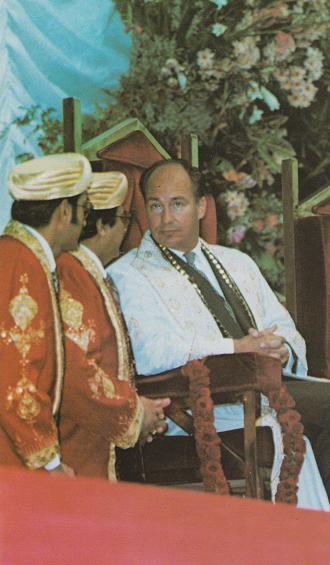
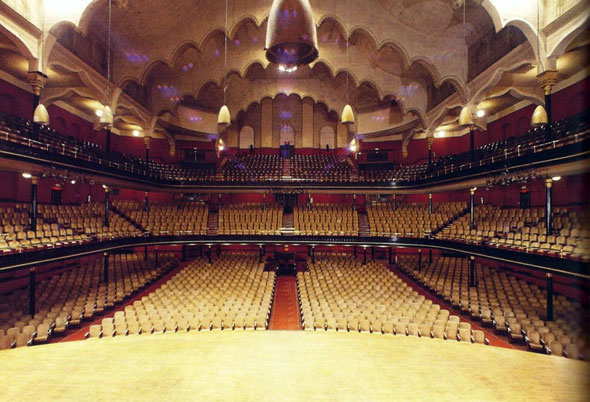
Mawlana Hazar Imam, His Highness the Aga Khan, pictured at the Olympia Hall, London, during his weeklong visit to the United Kingdom Jamat in September 1979. Seated next to him on the stage are Mukhi Noordin Jivraj and Kamadia Nizar Dhanani. Photo: Jehangir Merchant Collection.
Some 37 years ago, my dad (Alwaez Rai Jehangir Merchant) wrote a piece for Ilm magazine on Mawlana Hazar Imam’s memorable week long visit to the United Kingdom jamats held at the beginning of September 1979. He mentioned about the unbounded joy originating from the souls of the members of the UK Ismailis when the visit was announced with a talika read in Jamatkhanas on July 7th, 1979. Then, describing the last few moments of Mawlana Hazar Imam’s final day of his seven day memorable stay in England, my dad wrote:
“In his infinite mercy and grace, Mawlana Hazar Imam then blessed the jamat for happiness, good health, unity, success in spiritual happiness, success in worldly happiness and for remaining on the Straight Path. What more would the mu’mins wish? Their Imam, their beloved Mawla had blessed them munificently. Tears were streaming from their eyes in reverence and devotion for their beloved Mawla for the immense love he had shown towards them….Very slowly and graciously, Mawla walked all around the [Olympia] hall to be as near to his spiritual children as possible for the last time during this visit. When he arrived at the exit of the hall, he majestically turned towards his spiritual children, stood there in all his glory for one brief moment, showered his Noor on the whole assembly of souls and then moved away from the sight of his beloved spiritual children who had all made him so very very happy.”
I mention this anecdote because something remarkable and inspiring happened a few days ago on October 19, 2016 in Kyrgyzstan as Mawlana Hazar Imam visited the new Naryn campus of the University of Central Asia. An amateur video footage that we have received captures the excitement, uncontrollable joy, happiness and emotion from a group of Ismaili murids as Mawlana Hazar Imam most graciously walks over to them, and from a very close distance, with hands stretched out, graciously and lovingly blesses them with the following words:
“I wish you all success, good health, happiness, everything you wish, everything you wish for, Best Blessings.”
The voices that we hear in the footage as Mawlana Hazar Imam steps in the direction of his followers (“Ya Hazar Imam”), and when he leaves them after fulfilling their dreams and filling their hearts, minds and souls with peace and unbounded spiritual happiness is a testament to the faith and love that each and every Ismaili around the world holds for his or her beloved Imam.
WATCH FOOTAGE OF MAWLANA HAZAR IMAM BLESSING MURIDS IN KYRGYZSTAN ON OCTOBER 19, 2016
Inshallah, the jamats all over the world will be blessed with the Imam’s Holy Deedar during the forthcoming Diamond Jubilee Celebration as we commemorate 60 years of his glorious and magnificent reign as our 49th Imam on July 11, 2017.
It is not in vain that Ismaili Pirs and missionaries wrote how fortunate the Ismaili people are to attain the recognition of the Imam of the Time, who is the direct descendant of the Prophet Muhammad (s.a.s.). Pir Sadardin wrote:
Eji Anand anand kariyo rikhisaro, Awwal Shah tamey paya
Rejoice! O you who are on the True Path, rejoice!
For you have the Supreme Master.
On that note, we convey our heartiest felicitations and mubaraki to everyone who was present in Naryn to gain the Imam’s blessings, and wish to express our heartful thanks to the individual who has shared this video with us for the benefit of all our readers.
His Highness the Aga Khan is greeted by Justin Trudeau as he arrives in Ottawa, Canada, to celebrate his Golden Jubilee in 2008. At that time, Mr. Trudeau was a Member of Parliament in his riding in the Province of Quebec. He won the Liberal leadership in 2011, and after winning the recent Federal Elections held in October, he was sworn in as the Prime Minister of Canada on November 4th 2015. A day earlier he visited the Delegation of the Ismaili Imamat Building on Sussex Drive in Ottawa – see photo below. Photo: The Ismaili.
The Prime Minister of Canada, the Right Honourable Justin Trudeau, issued the following statement on December 13, 2015, on the 79th birthday of His Highness Prince Karim Aga Khan:
“Today, we celebrate the birthday of His Highness the Aga Khan, the spiritual leader of the Shia Ismaili Muslims, who has dedicated his life to the promotion of peace, pluralism, and compassion around the world.
“For over fifty years, the Aga Khan has been an inspiration to millions, working tirelessly to improve the health and education of those living in some of the world’s most vulnerable countries. As a global humanitarian leader, he has worked with many partners – including Canada – to implement vital programs that advance long-term solutions to poverty, illiteracy, and disease.
Prime Minister Justin Trudeau with Aga Khan Development Netork (AKDN) Representative Dr. Mahmoud Eboo (left) and the President of the Aga Khan Ismaili Council for Canada, Malik Talib, at the Delegation of the Ismaili Imamat in Ottawa on November 3, 2015, a day before he was sworn in as Prime Minister. Photo: The Ismaili.
“I have seen first-hand the Aga Khan’s commitment to the ideals of diversity and inclusion. As a nation, we are proud His Highness was granted honourary Canadian citizenship for the leadership he has shown to advance development, pluralism, and tolerance – values that are at the core of our national identity.
“The world needs champions of diversity and compassion. Today, we are delighted to thank our good friend, the Aga Khan, for all that he has done to help those in need, and wish him good health, happiness, and peace on this special day.”
__________
“Happy Birthday to the Hazar Imam” – Yasmin Rattansi, MP Don Valley E.
His Highness the Aga Khan, MP Yasmin Ratansi and External Affairs Minister Pierre Pettigrew (July 2004 – February 2006). Photo: Jean-Marc Carisse. Copyright.
“Mr. Speaker, I take this opportunity to thank the constituents of Don Valley East for re- electing me to Parliament.
“My riding is proud to house three architectural jewels of Toronto: the Aga Khan Museum, the lsmaili Centre, and the Aga Khan Park built in Canada by His Highness the Aga Khan with his own funds.
“On December 13, His Highness will be celebrating his 79th birthday. I rise today in the House to pay a special tribute to a remarkable human being. His tireless efforts in building bridges across the globe, his commitment to eradicating poverty and ignorance for millions of people, irrespective of race or religion, through the AKDN network are unparalleled.
“I was fortunate to have worked with His Highness in establishing the Global Centre for Pluralism here in Ottawa.
“Happy birthday to the Hazar Imam. May all who come in touch with him benefit from his integrity, humility, honesty, and courage to do good.”
~~~~~~~~~
A Message and Tweets from the Premier of Ontario, Kathleen Wynne, and Arif Virani, MP Parkdale–High Park.
Mawlana Hazar Imam graciously accepts the standing ovation he receives after completing his speech at the opening of the Aga Khan Park in Toronto on May 25, 2015. With him is the Premier of Ontario, Kathleen Wynne. Photo: Simerg/Malik Merchant. Copyright.
Warm wishes to Ontario’s Ismaili community on the occasion of His Highness the Aga Khan’s 79th birthday today!
….and a Tweet from the 2 Ismaili Mountaineers, Mirza Ali and Samina Baig, who conquered the “Seven Summits”, i.e. the highest mountain in each of the 7 continents
ON this day 2Years ago."Salgira Mubarak Ya Mawla " Saligirah Mubarak to Ismaili Brethren around the world!! #peacepic.twitter.com/5ipiaOrjmu
The following are thematic excerpts from remarks made by His Highness the Aga Khan at the North-South Prize Ceremony, Senate Hall, Parliament, Lisbon, on June 12, 2014.
Bismillah-ir-Rahman-ir-Rahim
THE CEREMONY’S SIGNIFICANCE
His Excellency Aníbal Cavaco Silva, the President of the Republic of Portugal presents His Highness the Aga Khan with the 2013 North-South Prize. – Photo: AKDN/ José Manuel Boavida Caria
This award, first of all, has special significance because of who shares it – Madame Suzanne Jabbour. Her dedication to those who are tortured is an example that inspires us all. I know she will agree when I mention the list of those – from both South and North – who have received this award since 1995. It is a moving experience to have one’s work recognized alongside theirs.
…this prize has particular meaning because of those who organize it – the men and women of the North-South Centre of the Council of Europe, who contribute so much to advancing democratic citizenship in our world. The Aga Khan Development Network has been proud to join with the Centre in distinguished projects such as the annual Lisbon Forum held at the Ismaili Centre.
The significance of this award is also enhanced for me by the fact that it has been presented by the President of Portugal, in the presence of so many eminent leaders, and in this splendid Parliamentary setting.
THE IMAMAT, AKDN, PORTUGAL AND THE NORTH-SOUTH PRIZE
The Ismaili Imamat and the Aga Khan Development Network have had a long, close relationship with Portugal, built on shared values. Over many centuries, Portugal has welcomed and integrated people of diverse cultures. It was here on the Iberian Peninsula that Al-Andulus flourished for so long as a model of effective pluralism, a home for Christian and Jewish peoples that was also part of an Islamic empire….
The North-South prize affirms principles which have long been animated and sustained by the work of the Aga Khan Development Network. Our Network seeks in many ways to improve the quality of human life, in health, education, in cultural and economic development. But our core conviction is that human progress depends on human cooperation, even across difficult lines of division.
A PLEA FOR RICHER DIALOGUE, DEEPER EDUCATION AND RECOGNITION OF THE BLESSINGS OF PLURALISM
His Highness the Aga Khan addresses the North-South Prize Ceremony in the Senate Hall of the Portuguese Parliament as His Excellency Aníbal Cavaco Silva, the President of the Republic of Portugal and President of the Assembly of the Republic, Maria Assunção Esteves look on. – Photo: AKDN/ José Manuel Boavida Caria
As I observe the world, I am struck by the insufficiency of well-informed debate, of richer dialogue, of deeper education in our quest to avoid human conflict. That insufficiency often plagues relations between the North and the South– and increasingly between the North and the Islamic world. Some have called this a clash of civilizations—I think it is, essentially, a clash of ignorances. What it means, in any case, is that institutions such as the North-South Centre have never been more important.
A related problem is the failure of so many to recognize that pluralism is not only a growing fact of life but also a blessing for their communities—an opportunity to be welcomed rather than a threat to be feared.
Since ancient times, great cultures have thrived because of their openness to diversity, and not because of their exclusivity.
ANTONIO GUTERRES AT GLOBAL CENTRE FOR PLURALISM
It was to address this issue that the Government of Canada and I created a new Global Centre for Pluralism in Ottawa in 2006.
Recently the Global Centre held its Third Annual Pluralism Lecture….our guest lecturer was Antonio Guterres, United Nations High Commissioner for Refugees since 2005….His recent Lecture described, eloquently, the unprecedented scale and severity of the world’s refugee crises. He addressed, passionately, the moral challenge this crisis presents, the tragic impulse of some to exploit it, and the critical importance of standing together on behalf of human tolerance. I commend his words to you; they resonate powerfully with the purposes of the North-South Centre.
We inhabit an overcrowded and interconnected planet and yet we share a common destiny. A weakness or pain in one corner can rapidly transmit itself across the globe. The pervasive rejection of pluralism in all its forms plays a significant role in breeding destructive conflicts.
An example is the current situation in the Middle-East, where conflict is having a profound destabilising impact — in the region but also well beyond — including here in Europe.
TRADITIONAL VALUES AND THE GIFT OF PLURALISM
Instability is infectious, but so is hope. And that it is why it is so important for us to carry the torch of hope as we seek to share the gift of pluralism.
Pluralistic values have been articulated since ancient times. Profound expressions about our common humanity are embedded in the world’s great religious traditions, including my own. But now it is for us to re-articulate those traditions. As we do so, our support for one another can be a source of renewed and growing strength.
WHAT CAN SAVE US?
It is ironic that a sense of intensified conflict comes at a time of unprecedented breakthroughs in communication technology. At the very time that we talk more and more about global convergence, we also seem to experience more and more social divergence. The lesson it seems to me is that technologies alone will not save us– the critical variable will always be and will always lie in the disposition of human hearts and minds.
I am grateful for the opportunity to share with all of you in this experience – and in the great purposes to which it calls us.
__________
For complete speech and photo gallery please visit the following websites:
Simerg Welcomes Eye Witness Accounts of His Highness the Aga Khan’s Parliament Address and His Presence at the Iconic Massey Hall
Massey Hall is a performing arts theatre in the Garden District of downtown Toronto. The theatre originally was designed to seat 3,500 patrons but, after extensive renovations in the 1940s, now seats nearly 2800. Photo via blogto.com.
Many dozens of Ismaili youth and university students living and studying in close proximity to Metro Toronto were pleasantly surprised to receive an email invitation for a gathering on Friday, February 28th at 2pm at Toronto’s iconic Massey Hall in which His Highness the Aga Khan will be present. This event will follow his historic address in Ottawa at the Canadian Parliament on Thursday, February 27, 2014 at the invitation of the Prime Minister, Stephen Harper.
Recipients of the email were left wondering whether the email invitation was indeed some kind of a spam, and many youth were contemplating on not replying to the invitation. But with key government of Canada phone numbers and details listed in the email most were expected to confirm their attendance by the February 24th deadline.
An elderly Ismaili who also received an email invitation proudly forwarded it to his contacts, including the editor of this website. The invitation to him read:
Dear (name withheld),
The Prime Minister of Canada, the Right Honourable Stephen Harper is pleased to invite you to an event in honour of His Highness the Aga Khan, 49th Hereditary Imam of the Shia Imami Ismaili Muslims.
Prime Minister Harper will be joined by Minister Baird, Minister Kenney, Minister Alexander, and other Ministers and Parliamentarians.
The event will be held at Massey Hall on Friday, February 28, 2014 at 2 p.m. in Toronto, Ontario in the presence of His Highness the Aga Khan, to honour him on the occasion of his visit to Canada and address to Parliament the previous day.
The dress code for this event is business attire.
Please confirm your attendance and mailing address by replying to this email no later than February 24th, 2014. Upon confirmation of your attendance, additional details regarding the event at Massey Hall will be sent to you.
Kindly note this invitation is personal and non-transferable.
Best regards,
Name and contact information withheld
Congratulations to him and all others who will participate at the historic ceremonies.
If you are at the Parliament on Thursday or at Massey Hall on Friday we would like you to share your experience and story for the benefit of this website’s world-wide readers. Your contribution will be appreciated by everyone. Please click on Leave a comment and provide as much information from the event(s) as you can, including your own personal and memorable experience. If you have a Facebook or other social media page or blog provide the link. Photos (as well as your narrative) may also be submitted to Simerg@aol.com.
A special post will be created with everyone’s stories and photos to mark the historical occasion!




















 Simerg - Insights from Around the World