Simerg is an independent initiative dedicated to Ismaili Muslims, the Aga Khan — their Hereditary Imam — and the Ismaili Imamat, and Islam in general through literary readings, photo essays and artistic expressions
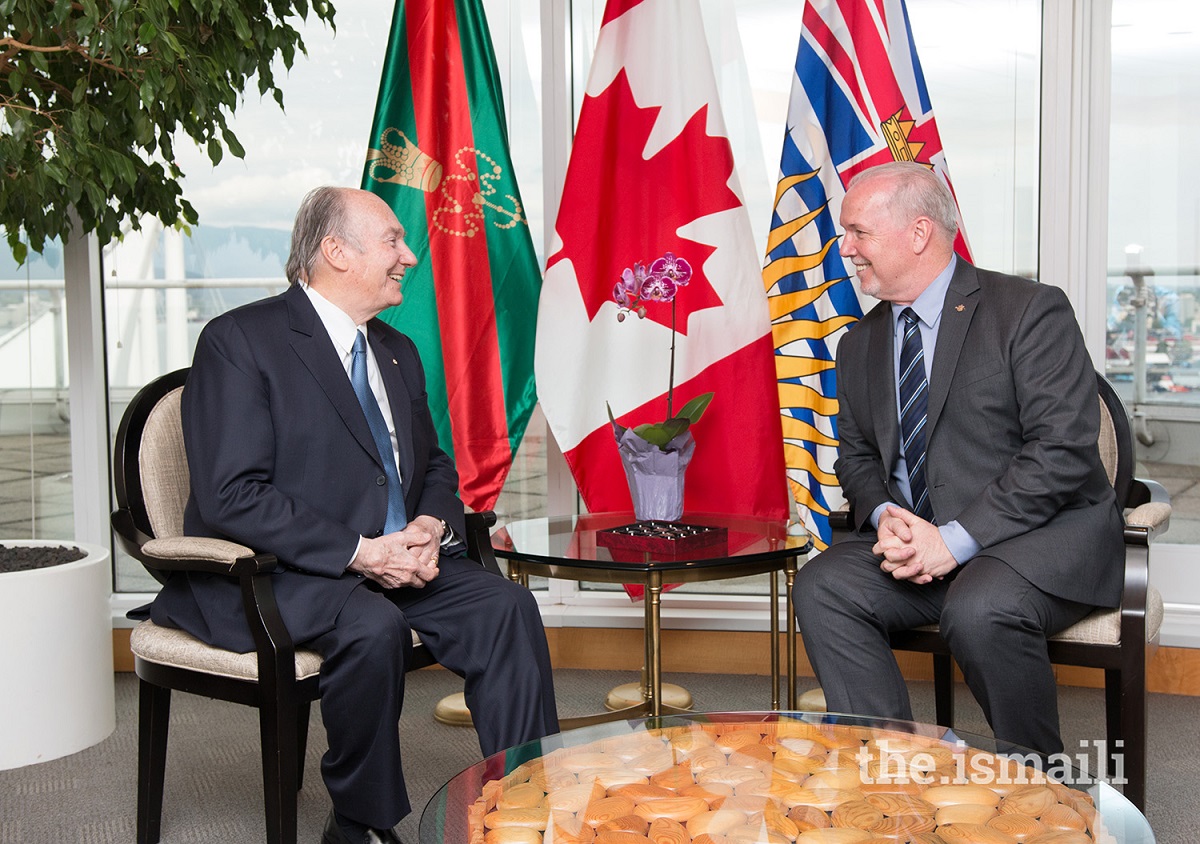
Premier John Horgan meets Mawlana Hazar Imam, His Highness the Aga Khan, on May 18, 2018, in Vancouver, on the occasion of his Diamond Jubilee. Forming the backdrop are the flags of the Ismaili Imamat, which bears the Imamat crest, Canada and British Columbia. Photograph: Province of British Columbia.
We have learnt with deep sadness that the former Premier of British Columbia, John Horgan, who served as the province’s leader from 2017 until 2022, has passed away of cancer at the age of 65. In a statement posted to X by Horgan’s longtime friend and press secretary, Sheena McConnell, the Horgan family said he passed away peacefully at the Royal Jubilee Hospital in Victoria on the morning of November 12, 2024.
Horgan’s dedication to public service is evident in his political career. He was first elected to the B.C. legislature in 2005 and became leader of the NDP in 2014. His leadership skills led to his election as B.C.’s premier in 2017. He continued to serve until 2022 when he decided to step down due to health reasons. His commitment to serving the public was further demonstrated when Prime Minister Justin Trudeau appointed him Canada’s ambassador to Germany in November 2023.
Trudeau expressed his condolences in a statement posted to social media:
“John Horgan believed in the power of public service. He saw it as a privilege, as a way to help others and to make our country better. He loved British Columbia. As premier, he had a tenacity, passion and dedication for his work that very few could match.
B.C. Ismailis will fondly remember the late Premier, who received their 49th Imam, His Highness the Aga Khan, Mawlana Hazar Imam, on May 4, 2018, upon the occasion of his Diamond Jubilee.
Story continues below
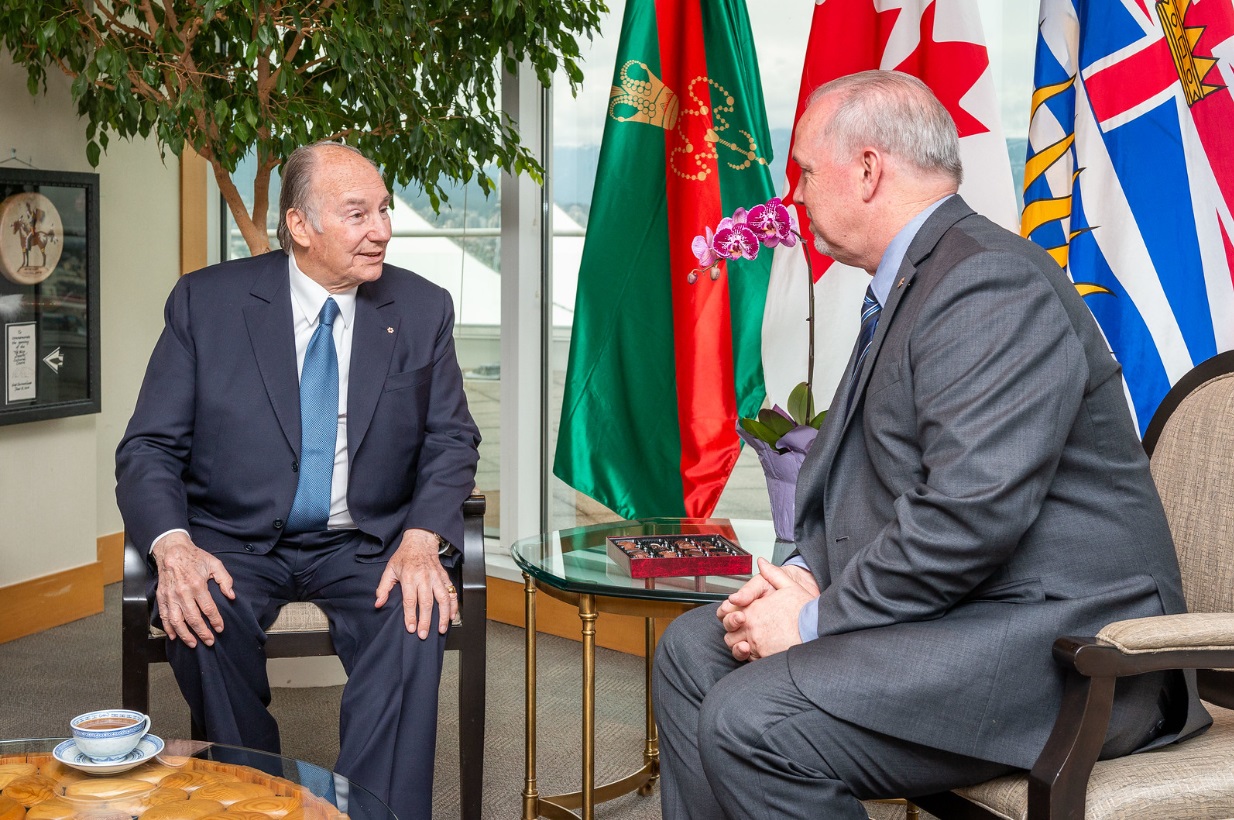
Premier John Horgan meets Mawlana Hazar Imam, His Highness the Aga Khan, on May 18, 2018, in Vancouver, on the occasion of his Diamond Jubilee. Photograph: Province of British Columbia.
~~~~~~~
Premier John Horgan meets Mawlana Hazar Imam, His Highness the Aga Khan, on May 18, 2018, in Vancouver, on the occasion of his Diamond Jubilee. Photograph: Province of British Columbia.
In a statement issued on meeting the 49th Hereditary Ismaili Imam, the Premier said:
“For the last 60 years, His Highness the Aga Khan has provided spiritual leadership to the world’s Shia Ismaili Muslims.
“In this role, he has dedicated his life to making life better for people. His work to eliminate poverty, give children early learning opportunities, and improve health care has helped people around the globe.
“It was a great honour to meet His Highness on the occasion of his Diamond Jubilee, and to welcome him to British Columbia.
“Canada’s Ismaili community has pledged to volunteer for one million hours in celebration of this special year. Our province and our country is a better place thanks to this ethic of volunteerism and compassion, shared by Ismaili people around the world.”
Story continues below
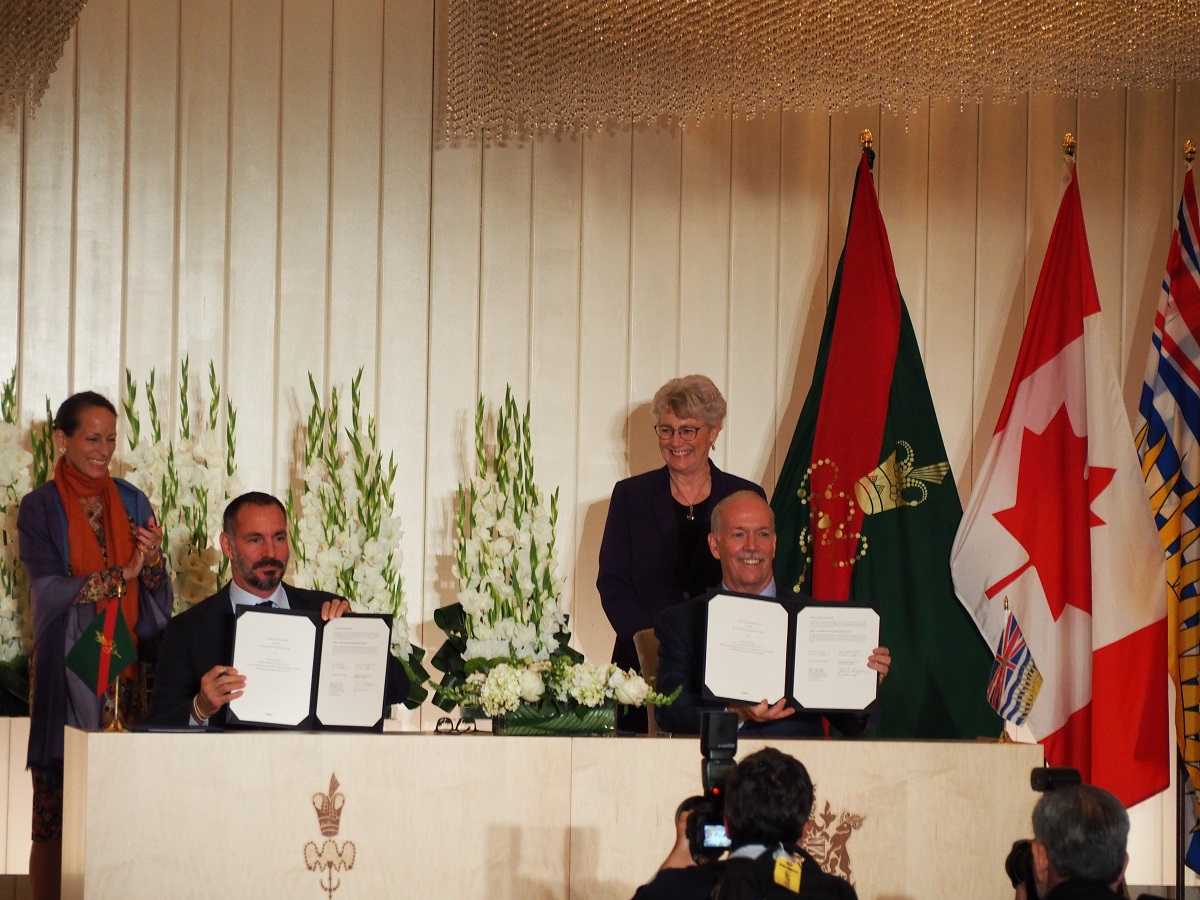
Prince Rahim Aga Khan (left), representing the Ismaili Imamat, and British Columbia’s Premier John Horgan display the Accord to the audience after the signing ceremony as Princess Zahra and BC’s Minister of Forest Katrine Conroy look on. The event was hosted on September 29, 2022, at the Pan Pacific Hotel at the iconic Canada Way in Vancouver’s beautiful waterfront. Photograph: Malik Merchant/Barakah.
On September 29, 2022, before stepping down as the premier, he signed an Accord of Cooperation with Prince Rahim Aga Khan, representing his father, at the Pan Pacific Hotel at the iconic Canada Place on Vancouver’s waterfront. The Accord, a significant milestone, was deeply rooted in the 50-year history of the Ismaili Community in Canada and Mawlana Hazar Imam’s lifetime of work to improve quality of life. The Agreement, a call to action, served to advance partnership and collaboration on one of the most pressing issues of our time: the urgent and critical issue of climate change.
During this challenging time, we express our heartfelt condolences to his wife, Ellie, and their two sons, Evan and Nate.
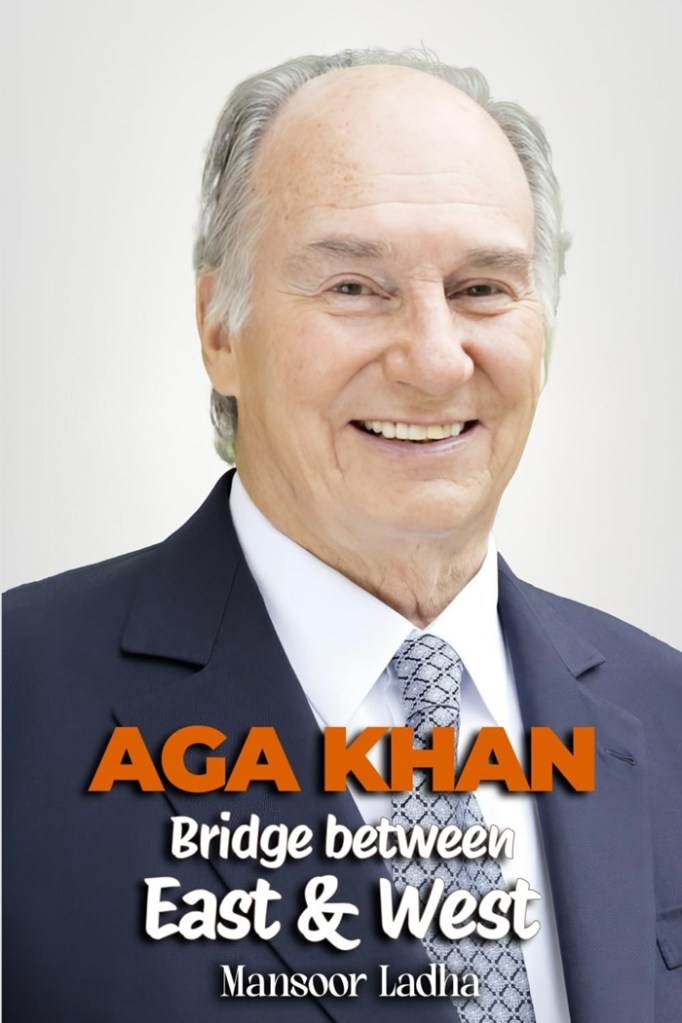
Simerg’s introduction of “Books by Ismaili Authors” continues with Calgary-based Mansoor Ladha’s latest book “Aga Khan: Bridge between East & West.” Mansoor is being featured in the series for the fourth time, following introductions of his three previous books “A Portrait in Pluralism: Aga Khan’s Shia Ismaili Muslims,” “Memoirs of a Muhindi” and “Off the Cuff.” We follow the same Q/A format as our earlier presentations of books, which are listed chronologically below. We encourage Ismaili authors worldwide to participate in this series, regardless of when their books were published. See details of the series HERE and submit your responses to Simerg’s editor, Malik, at mmerchant@simerg.com.
****************
Renowned worldwide as a transnational humanitarian, the Aga Khan has established schools, universities and hospitals in some of the remotest parts of the world. Portraying a moderate face of Islam, he has built bridges between East and West and has been a champion of pluralism, diversity and promoting Islamic values aimed at reducing extremism and radicalism — Mansoor Ladha
Simerg’s Interview with Mansoor Ladha
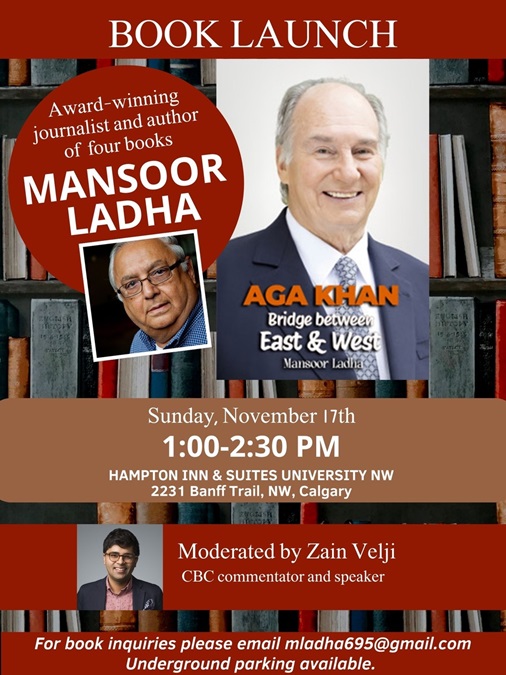
Ismaili journalist and author Mansoor Ladha will launch his new book in Calgary on Sunday, November 17, 2024. CBC’s Zain Velji will moderate the launch. Please refer to the image for details.
Simerg: What is behind the naming of the title of the book?
Mansoor Ladha: The book is “Aga Khan: Bridge between East & West.” It chronicles Hazar Imam’s global contributions and achievements as a transnational humanitarian. His role as a bridge builder between East & West, his efforts to promote the Muslim Ummah, and his progressive interpretation of Islam have had a profound impact. The book also highlights his mission to eliminate extremism and radicalism through education, a beacon of hope for the future, which led to establishing schools and universities in some of the most remote parts of the world.
Simerg: Why would you want me or my family members to read the book, and what will we all learn from it?
Ladha: The book, a comprehensive 616-page volume, presents a detailed account of Hazar Imam’s achievements. It explores his profound connections with Canada, his philosophy on pluralism, interviews with Time and Knowledge Nazrana (TKN) volunteers, the establishment of Diwan of the Ismaili Imamat in Lisbon, Portugal, interviews with Uganda refugees, and standard Ismaili practices. Its purpose is to inform Ismaili readers and enlighten and educate non-Ismailis about our Imam’s global achievements and the crucial role of the Imamate institutions in the world. This book is a bridge, a must-have for every Ismaili’s bookshelf, and a perfect gift for non-Ismaili friends, colleagues, and neighbours, fostering a deeper understanding of who we are and the transformative work Hazar Imam and the community are doing to bridge the gap between races, societies, and nations.
Simerg: What inspired you to write the book?
Ladha: In the minds of many Canadians, the main question is: Who is the Aga Khan? This book attempts to answer this question, describing his pivotal role as a religious leader of over 15 million Ismailis worldwide and his contributions to humanity, portraying a moderate face of Islam. In a world desperately needing change, I believe writers are responsible for inspiring personal, organizational, and global transformation. This book is a testament to that belief, as it aims to shed light on the work of Hazar Imam, which, among other things, is focused on eradicating radicalism and extremism.
Story continues below
Cover page of “Aga Khan: Bridge Between East & West” by Mansoor Ladha, with foreword by Professor Karim H. Karim of Carleton University, published July 12, 2024, 616 pp; formats: paperback and eBook.
Simerg: How can I purchase the book and what are its available formats?
Ladha: The book is available in softback and eBook format from Amazon and Barnes & Noble. You can also acquire signed copies directly from me by writing to me at mladha695@gmail.com. I am based in Calgary, Canada.
Simerg: How did you find a publisher for the book?
Ladha: This is my fourth book published. I decided to self-publish this book after facing rejections from traditional publishers, a process that can be disheartening. However, reputable self-publishing companies offer editing, formatting, and designing services, providing much-needed support and guidance. While two of my other books have been published by traditional publishers, the self-publishing route has merits. The recognition and respect for self-published books is on a steady rise, validating the choice of many authors and providing reassurance in the self-publishing journey. The future of self-publishing is bright, with more and more authors finding success in this industry.
Simerg: Did you hire an editor, an illustrator or did you do all the work by yourself?
Ladha: Most publishers provide editing and other services once you sign up. As someone who has been a copy editor and publisher of newspapers, my job throughout my career involved editing stories submitted by reporters. It’s worth noting that the publisher also plays a significant role in the editing process. In fact, one publisher complimented me, saying that it was a pleasure to receive my manuscript as he didn’t have much work to do!
Simerg: Which was your first book and how many have you written?
Ladha: My first book was Portrait in Pluralism: Aga Khan’s Shia Ismaili Muslims, published by Detselig. Memoirs of a Muhindi: Fleeing East Africa for the West, my second book published by the University of Regina Press, is not just a publication but a profoundly personal journey. I was also among a select group of journalists and scholars invited to contribute a chapter in a book called “The Story that Brought Me Here,” published by Brindle & Glass. My last book was Off the Cuff!
Simerg: How long did it take you to write Aga Khan: Bridge between East & West — from start to finish and to begin marketing it?
Ladha: It took me almost a year to complete the book. Writing is a solitary work involving lots of time and patience. Sometimes, writers get an author’s block, meaning an author can either not produce new work or experiences a creative slowdown. On top of that, there are family obligations that need to be fulfilled. So, writers must surmount all these to complete their work.
Date posted: November 14, 2024. Last updated: November 17, 2024 (correction, see note below.)
Correction: Our earlier version mentioned that the book is available in hardback, softback, and eBook forms. The author has advised us that it is unavailable in a hardback edition, although the online sellers mention its availability as a hardback.
_______________
We welcome feedback from our readers. Please click LEAVE A COMMENT. Your letter may be edited for length and brevity and is subject to moderation.
Mansoor Ladha
Mansoor Ladha’s career is a testament to his unwavering dedication to journalism. He has held senior editorial positions as a copy editor in Canada (Edmonton Journal & Calgary Herald), features editor (The Standard in Dar es Salaam, Tanzania), copy editor (Daily Nation, Nairobi, Kenya) and was the only owner/publisher of colour of a mainstream English newspaper in Canada for 25 years. His contributions to journalism have been recognized with numerous awards, including being a Citizen of the Year in the Town of Morinville, Alberta; the Silver Quill Award by the Alberta Weekly Newspapers for distinguished service to newspapers as well as Canada’s Caring Canadian Award for “outstanding and selfless contribution to your community and Canada” by the Governor General of Canada. Since retiring, he has travelled worldwide and published travel features in leading Canadian newspapers and magazines. Author of four books, Ladha has also contributed to Simerg’s highly acclaimed series I Wish I’d Been There with a remarkable piece, His Name is Jawhar. He has also contributed an exclusive piece for this website’s sister blog, Barakah, under the title Ismaili Journalist Mansoor Ladha’s Precious Moments with His Highness the Aga Khan.
_______________
Calling All Ismaili Authors
We encourage Ismaili writers to introduce their books in a similar format as has been done in the post above. Please also see the series Ismaili Authors Series and submit your responses to Malik at mmerchant@simerg.com. All submissions will be acknowledged. If a writer has published multiple books, each book will be highlighted in a separate article, and not combined with other books into one post. All writers should include a brief profile with a portrait photo.
We welcome feedback from our readers. Please click Leave a comment. Your letter may be edited for length and brevity, and is subject to moderation.
_______________
Links to the Ismaili Authors’ Series (in chronological sequence, oldest article first):
Before departing this website please take a moment to review Simerg’s Table of Contents for links to hundreds of thought provoking pieces on a vast array of subjects including faith and culture, history and philosophy, and arts and letters to name a few. Also visit Simerg’s sister websites Barakah, dedicated to His Highness the Aga Khan, and Simergphotos.
“The doors of goodness are many: enjoining good, forbidding evil, removing harm from the road, listening to the deaf, leading the blind, guiding one to the object of his need, hurrying with the strength of one’s legs to one in sorrow who is asking for help, and supporting the feeble with the strength of one’s arms.” And the Aga Khan has accepted this tradition of the Prophet Muhammad as a personal job description…Many prophets of the Bible recorded their prophetic lineage, just as Matthew and Luke in the New Testament stressed Jesus’s ancestry. In similar vein, His Highness the Aga Khan, is the 49th Imam directly descended from the Prophet Muhammad — Please click NOT ALL HEROES WEAR CAPES BY ANDREW KOSOROK.
~~~~~~~~~~~~
“We are receiving you here officially and not just as a friend because you are an important leader of the Muslim religion…What we admire in you is that you have been able to integrate a modern outlook with religion so that religion has been allowed its true role which is not merely to provide an all-embracing explanation of the universe but also to furnish the fundamental solutions of the problems which life poses us.” —Please click LEOPOLD SENGHOR’S TRIBUTE TO THE AGA KHAN.
“God chose Adam and Noah and the House of Abraham and the House of Imran above all beings, the seed of one another; God hears, and knows” — Qur’an, 3:33-34, translation by A. J. Arberry, see Corpus Quranfor multiple translations
A calligraphy designed by Toronto’s Karim Ismail honouring the first Shia Imam Ali, on the auspicious commemoration of Idd-e Ghadir.
On Monday, June 24, 2024, Ismaili Muslims in Canada and other parts of the world will unite to observe and celebrate Eid-e Ghadir. This momentous occasion marks the pivotal gathering at Ghadir Khumm, where Prophet Muhammad (peace be upon him and his family) designated Hazrat Ali as his successor, the first in the continuing line of Hereditary Imams.
This historical event holds immense significance in the Ismaili faith. Today, the holder of the Hereditary position is Mawlana Hazar Imam, His Highness the Aga Khan, the 49th Imam in direct succession. In this regard, the Aga Khan has affirmed “that the Ismailis are the only Shia community who, throughout history, have been led by a living, hereditary Imam in direct descent from the Prophet” — His Highness the Aga Khan, Parliament of Canada, Ottawa, February 27, 2014.
History records that on the way back to Medina after performing the final pilgrimage to Mecca, the Prophet received a revelation:
“O Messenger, deliver [to the people] what has been revealed to you from your Lord, and if you do not do so, then you will not have delivered His message” Surah al-Ma’ida (5:67)
Upon receiving this revelation, the Holy Prophet stopped at an oasis known as Ghadir Khumm. He addressed a large gathering of Muslims who had accompanied him. The Prophet proclaimed: “Man kuntu mawlahu fa aliyyun mawlahu,” meaning: “He whose Mawla I am, Ali is his Mawla.” The Prophet then prayed: “O Allah, be a friend of whoever is his friend and extend your support to those who support him.”
This event, occurring at a crucial point in Islamic history, marked the transition of leadership from the Prophet to Hazrat Ali, setting the stage for the leadership and future of the Muslim community. Thus, by declaring Hazrat Ali Mawla after him, the Prophet transferred the spiritual authority bestowed upon him by Allah to Hazrat Ali, making him — and all the Imams that follow — the Amirul Mu’minin, or Master of the Believers. In this context, ‘Mawla’ refers to a leader, protector, and guide, indicating the profound responsibility and authority bestowed upon Hazrat Ali.
Article continues below following excerpts
________________________________
Excerpts from L. Veccia Vaglieri piece in Encyclopaedia of Islam, Second Edition
“Ghadir Khumm is famous in the history of Islam because of a sentence (or some sentences) in favour of ‘Ali which the Prophet uttered there during a discourse….Taking ‘Ali by the hand. he asked of his faithful followers whether he, Muhammad, was not closer to the Believers than they were to themselves; the crowd cried out: “It is so, O Apostle of God!”, he then declared. “He of whom I am the mawla, of him ‘Ali is also the mawla (man kuntu nawlahu fa-‘Ali mawlahu)
Photograph: Vysotsky – Own work, CC BY-SA 3.0, Wikimedia.
~~~~~~
“Most of those sources which form the basis of our knowledge of the life of the Prophet pass in silence over Muhammad’s stop at Ghadir Khumm….Consequently, the western biographers of Muhammad, whose work is based on these [Sunni] sources, make no reference to what happened at Ghadir Khumm. It is however certain that Muhammad did speak in this place and utter the famous sentence…the hadiths are so numerous and so well attested by the different isnads that it does not seem possible to reject them.” Vaglieri goes on to state that on instruction from Prophet Muhammad, Hazrat Ali received baiyat (the oath of allegiance) from the Muslims assembled there, including Umar b. al-Khattab, Islam’s second Caliph.
(Note: special access is required to read articles in the on-line edition of EI2. Vaglieri’s piece was reproduced in full in the UK Ismaili Association’s publication Ilm, December 1976, pages 28-30, with the permission of E.J. Brill, publishers of EI2.)
________________________________
Excerpts from the Preamble of the Ismaili Constitution
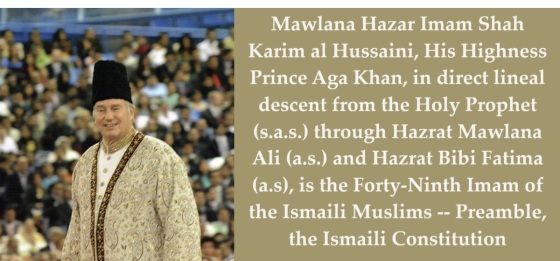
“In accordance with Shia doctrine, tradition, and interpretation of history, the Holy Prophet (s.a.s.) designated and appointed his cousin and son-in-law Hazrat Mawlana Ali Amiru-l-Mu’minin (a.s) to be the first Imam to continue the Ta’wīl and Ta’līm of Allah’s final message and to guide the murids, a term referring to the followers and disciples of the Imams. The proclamation also established the principle of the Imamat continuing by heredity through Hazrat Mawlana Ali (a.s) and his daughter Hazrat Bibi Fatimat-az-Zahra, Khātun-i-Jannat (a.s)”
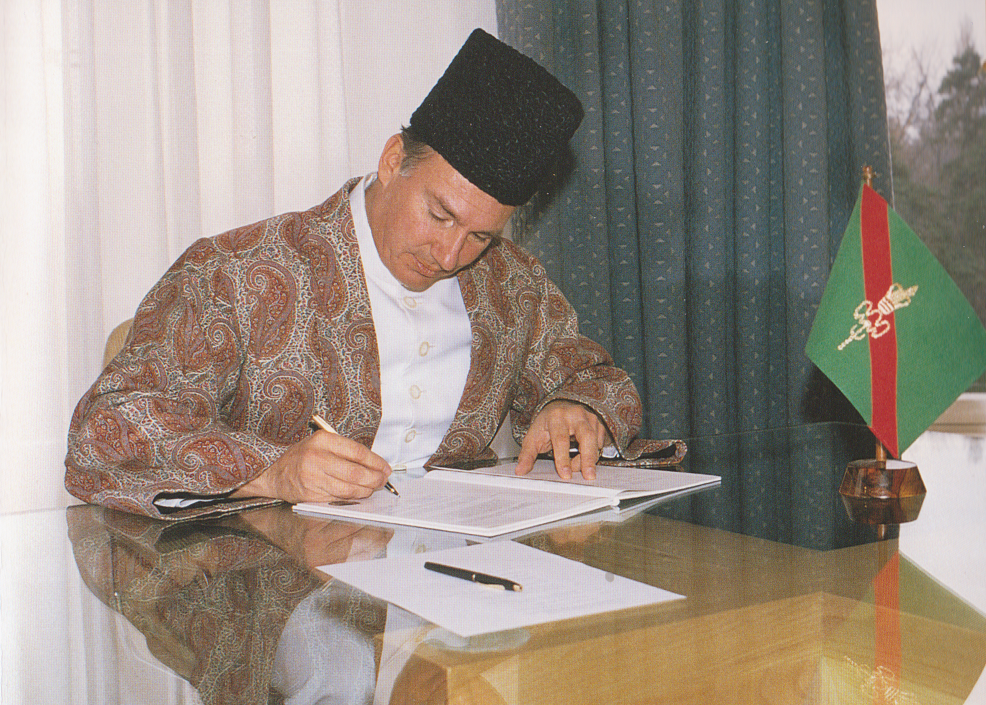
Mawlana Hazar Imam, His Highness the Aga Khan, is seen signing a new constitution for the worldwide Ismaili community on his 50th birthday, December 13, 1986. The preamble excerpts produced in this post are from this constitution.
“Mawlana Hazar Imam Shah Karim al Hussaini, His Highness Prince Aga Khan, in direct lineal descent from the Holy Prophet (s.a.s.) through Hazrat Mawlana Ali (a.s.) and Hazrat Bibi Fatima (a.s), is the Forty-Ninth Imam of the Ismaili Muslims.”
________________________________
…. continued
On instruction from Prophet Muhammad, Hazrat Ali received baiyat (the oath of allegiance) from the Muslims assembled there. According to Shia traditions and sources, following the proclamation, the final verse of the Qur’an was revealed to the Prophet:
“On this day, I have perfected for you your religion, completed my favours upon you, and have chosen for you Islam as your religion.”
Eid-e Ghadir is an anniversary of profound significance to all Shia Muslims. It is also associated with the well-attested tradition that the Prophet is said to have proclaimed:
“I am leaving among you two matters of great weight (al-thaqalayn), the Book of Allah and my kindred (itrati), the People of my House (Ahl al-Bayt), and these two shall never be separated until they return to me at the Pool [of Kawthar in Paradise on the Day of Judgement]…”
The phrase ‘two matters of great weight’ refers to the Quran and the Ahl al-Bayt, emphasizing their inseparability and eternal significance in the Islamic faith.
In commemorating Eid-e Ghadir, the Ismaili community celebrates the seminal event of Ghadir Khumm, reaffirming their allegiance to the Imam of the Time as the direct lineal successor and inheritor of Hazrat Ali’s authority. The community is not just inspired, but united and driven by the following remark made during his speech in Canada’s Parliament on February 27, 2024:
“Today, the Ismailis are the only Shia community who, throughout history, have been led by a living, hereditary Imam in direct descent from the Prophet.”
Date posted: June 23, 2024.
____________________
Please click HERE for many more pieces on this website on the topic of Eid-e Ghadir.
Sunday, January 21, 2024, marks the 3rd anniversary of the death of my beloved mum, Alwaeza Maleksultan Merchant, who passed away at the age of 89, shortly after contracting COVID-19. The brief tribute that was penned in her memory after her death, elicited hundreds of responses from around the world, honouring her life of service to the Jamat, its institutions and the Imam-of-the-Time. She was extremely popular among her students in Lourenço Marques (now Maputo), Mozambique, Dar es Salaam, Tanzania, and London, England.
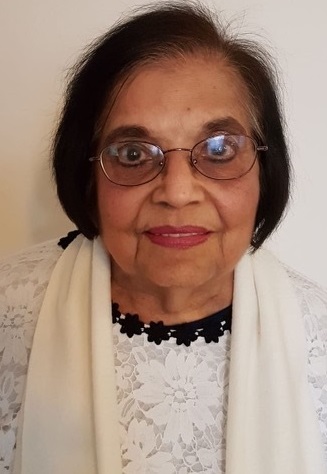
Mrs. Merchant (June 9, 1931 – January 21, 2021), pictured a few month before she passed away at the age of 89. Photograph: Shellina Karmali.
My mother was also a wonderful speaker, and the waezs (sermons) that she delivered were very well received by Ismaili congregations around the world. Hundreds of students she taught — many of whom went on to become, and still are, leaders in the Ismaili community — have always expressed their immense respect and gratitude for her shining example of hard work and inspiring teaching.
Article continues below
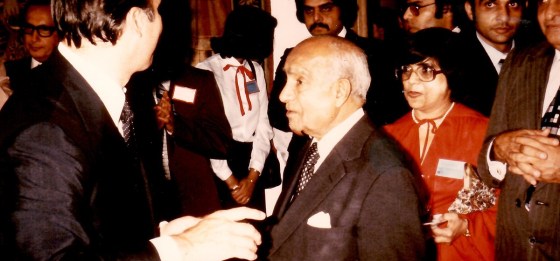
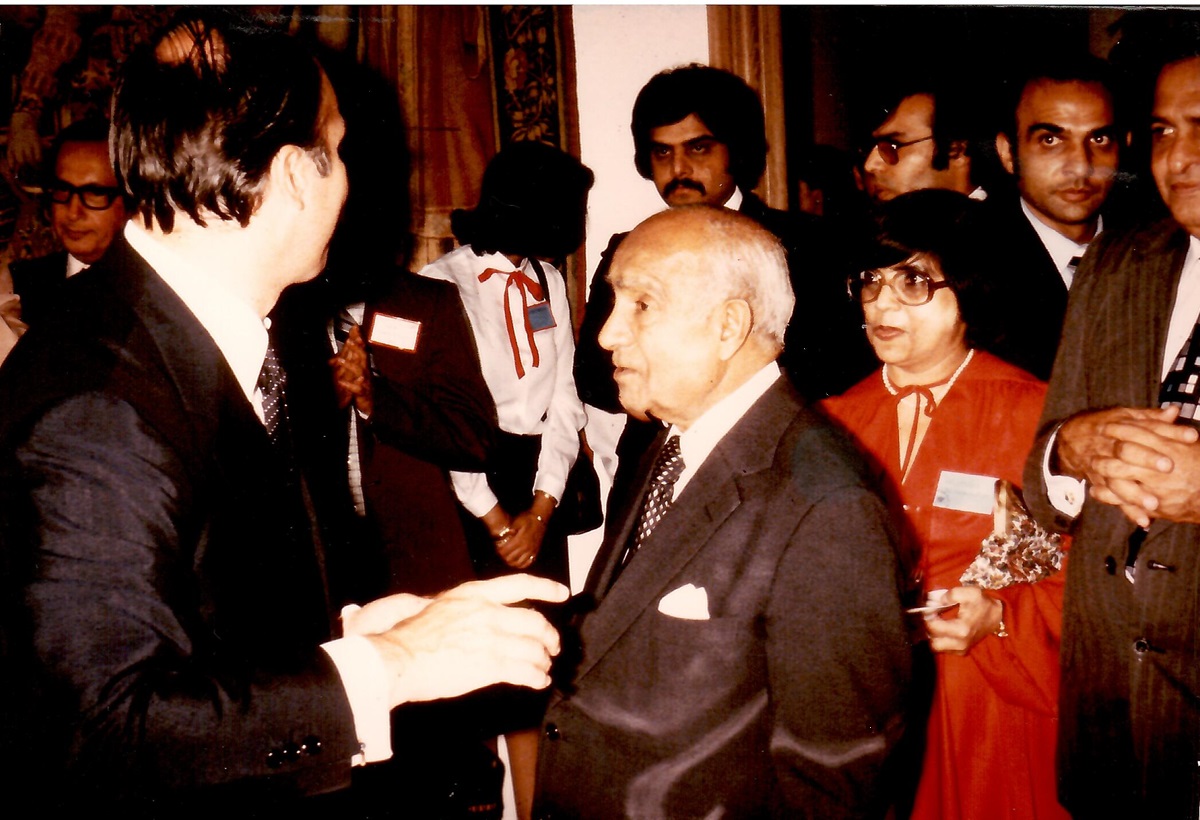
Mrs. Merchant in the presence of Mawlana Hazar Imam, His Highness the Aga Khan, during her visit to Aiglemont, France, in the 1980s. In picture are Diwan Sir Eboo Pirbhai, an iconic leader of the Ismaili community in the 20th century, and missionaries Rahim Bana and Nizar Chunara. Photograph: Jehangir Merchant collection.
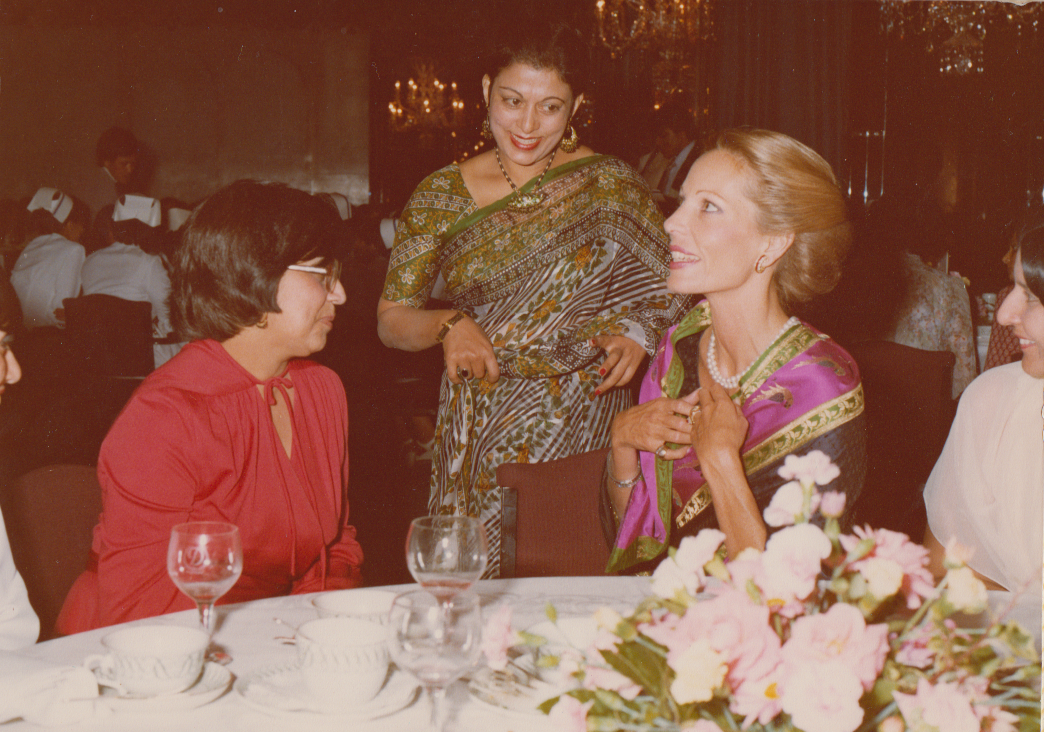
Late Gulzar Muller (centre) introduces Mrs. Merchant to Begum Salimah Aga Khan at a function held in London during Mawlana Hazar Imam His Highness the Aga Khan’s week long visit to the Ismaili Muslim community of the United Kingdom in September 1979. Photograph: Jehangir Merchant collection.
On January 20, when I went to convey my condolences to Shirin Harji on the sudden demise of her son, Rahim, who passed away a day earlier (January 19) at the age of 41, she and her sister-in-law, Shamim, told me about the impact of my mum as their teacher in Dar es Salaam in the 1960s.
Rahim Salim Harji (d. January 19, 2024, aged 41)
They said that whenever the Ginan (Hymn) Satgur Avea Kain Apane Duwar is recited in the Jamatkhana they always think of “Mrs. Merchant” — as she was fondly called — because she entrenched the Ginan firmly in their hearts. Shirin, I may note, recites beautiful Ginans. Of course, I am in deep shock over Rahim’s death, whose father Salim — my beloved friend of 60 years — passed away six months ago on July 13, 2023. Please read my tribute to Salim. Thus, I was deeply touched when Shirin and Shamim spoke about my late mum.
On this day as her entire family of children, grandchildren, daughters-in-law, two surving sisters, as well as her nieces and nephews and indeed friends remember her, Simerg is pleased to refer readers to a beautiful article Varas Ismail Gangji: The Turning Point that she penned for the special series I Wish I’d Been There.
Upon my mum’s retirement from professional duties, her students in London presented her with a rich 40 page tribute of photographs and textual material that reflected their appreciation and affection for her. I present a couple of images from the volume as well as a photograph of my parents with my daughter Nurin shortlty after her birth.
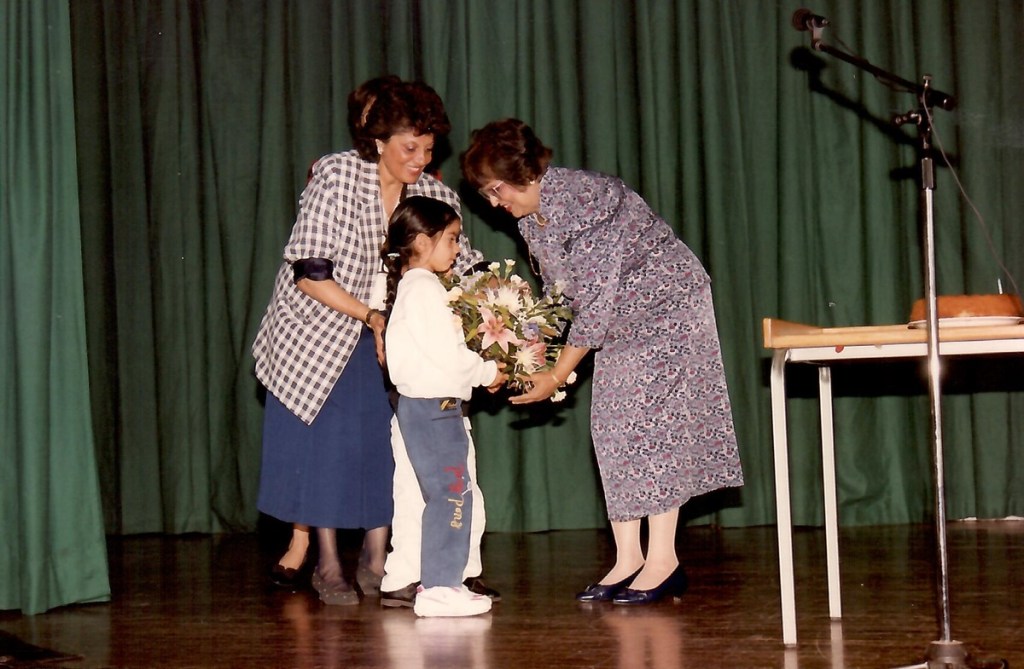
Mrs Merchant is presented with a bouquet of flowers on behalf ot Baitul Ilm students as she and her husband, Jehangir, retire from professional duties with the Ismaili Tariqah and Religious Education Board for the UK (ITREB); 1990s. Photograph: Jehangir Merchant collection.
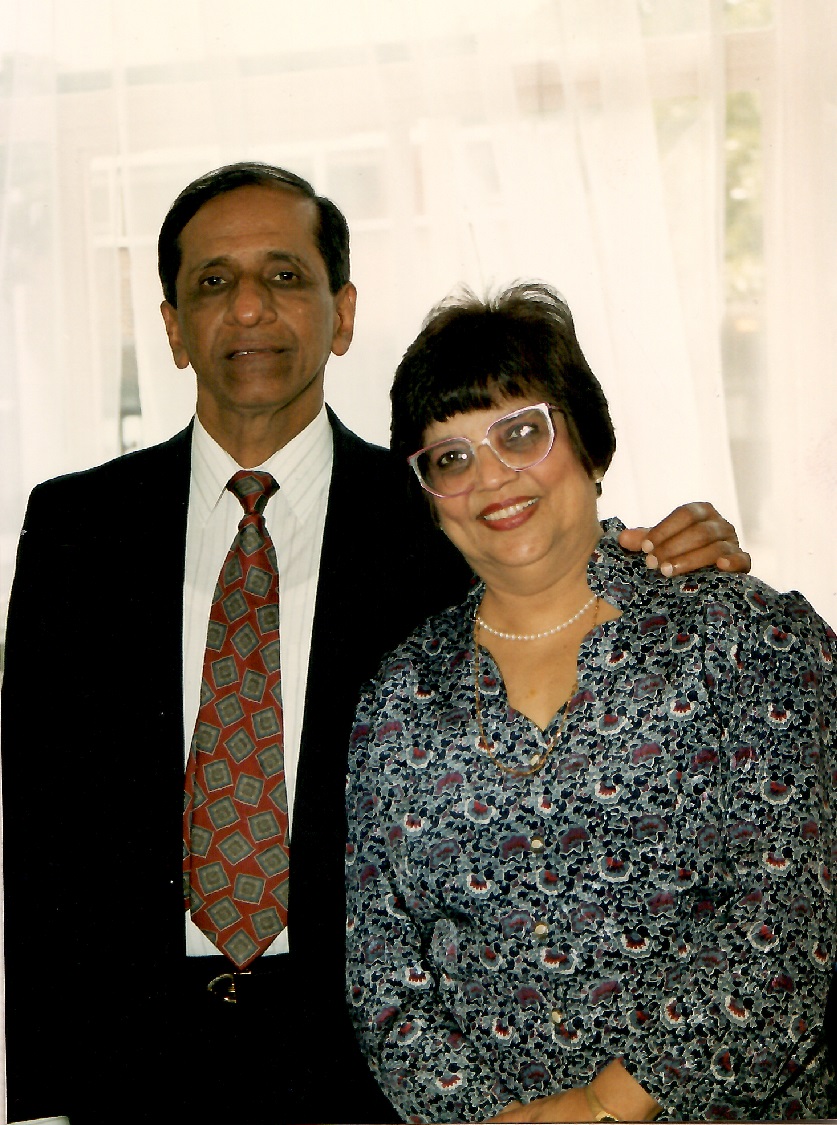
Mr. and Mrs. Merchant on the first page of the tribute album prepared by the BUI students of London, England, on their retirement. Photo: Jehangir Merchant collection,
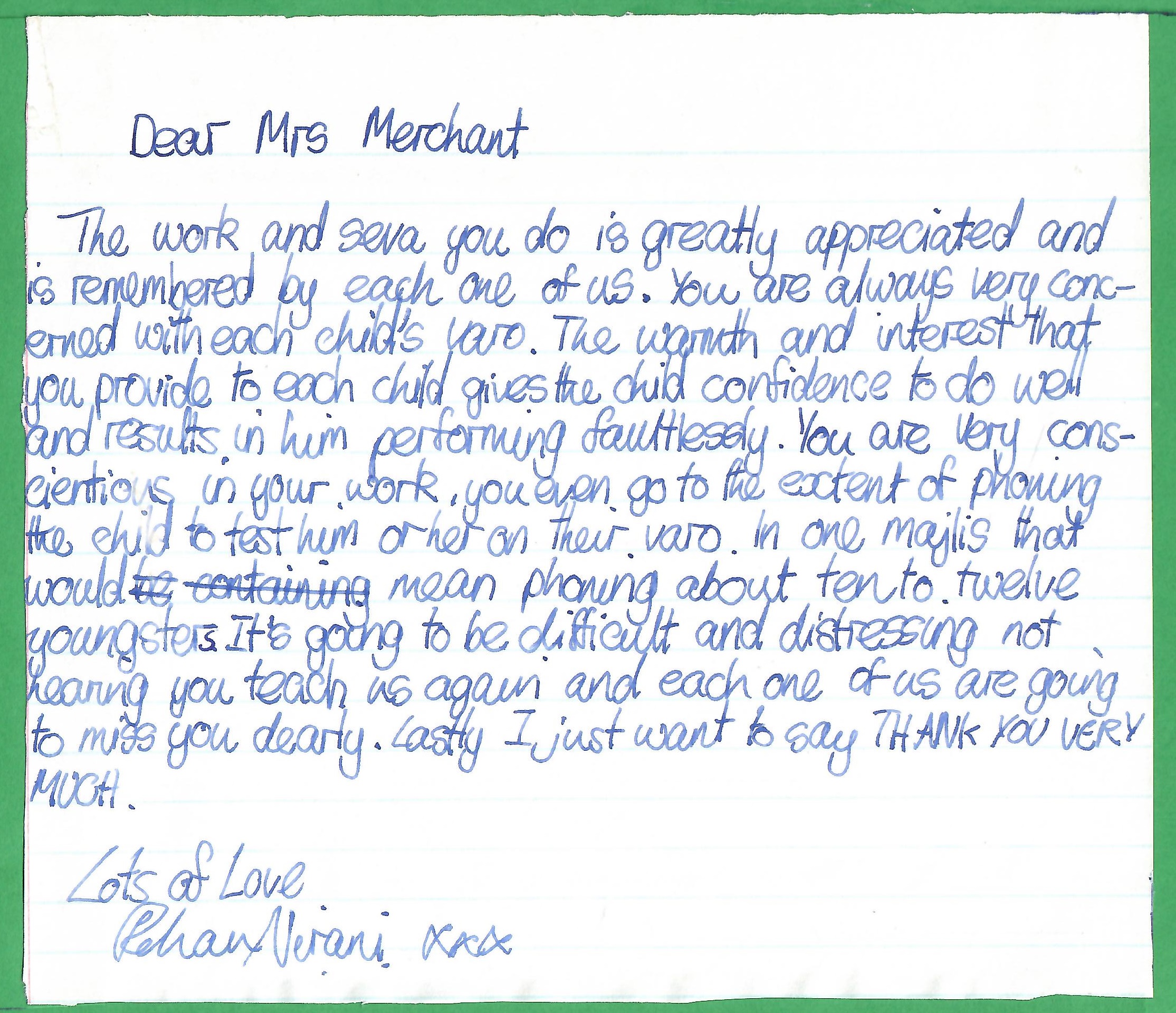
One of many tributes penned by Ismaili Baitul Ilm (BUI) students as Mrs. Merchant retired from professional teaching in the early 1990’s. Her professional service with Ismaili instituions began, with her husband Jehangir, in Lourenço Marques (now Maputo), Mozambique in 1954. Past her retirement, she continued to render honorary services until she passed away in 2021. Photograph: Jehangir Merchant collection/Tribute volume presented to Mrs. Merchant by her London BUI students,1990s.
Mr. and Mrs. Merchant with their newly born granddaughter Nurin, daughter of Malik and Rozina Merchant, July 1992. Nurin is now a veteriniarian. She has been practicing in the field for the past 5 years since her graduation from the Ontario Veterinary College, University of Guelph. Photograph: Malik Merchant collection.
On this day of remembrance of my mum, as well as a day on which I have been deeply affected by the untimely death of Rahim Harji, I pray for the souls of my parents, Rahim and Salim Harji, and all the deceased members of the Ismaili community. May their souls rest in eternal peace. Ameen.
During times of bereavement, Muslims seek and find inspiration and strength from the following Qur’anic verse:
Inna lillahi wa inna ilayhi raji’un “Surely we belong to God and to Him we return” — Holy Qur’an, 2:156.
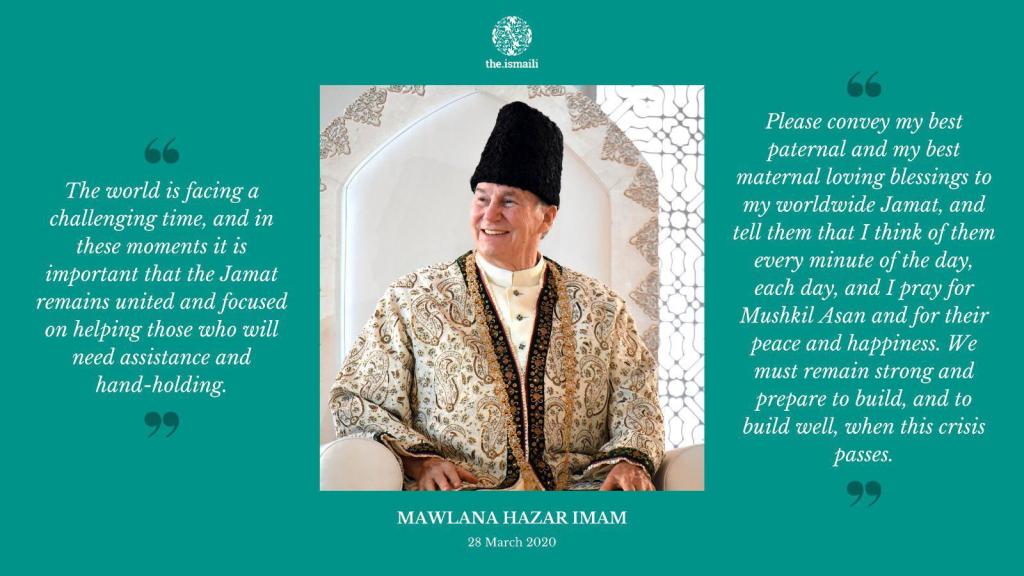
A portrait of His Highness the Aga Khan taken during his Diamond Jubilee, with the 2 columns containing his recent message to worldwide Ismailis. Image: The Ismaili. Please see text below.
[Mawlana Hazar Imam, His Highness the Aga Khan, has sent a message with blessings for his global Ismaili followers, which is shared here by Malik Talib, Chairman of the Ismaili Leaders’ International Forum. The message is reproduced from the official website of the Ismaili community. – Ed.]
By MALIK TALIB (Chairman of the Ismaili Leaders’ International Forum)
On the occasion of Navroz [March 21, 2020, New Year], our beloved Mawlana Hazar Imam blessed us with a Talika Mubarak conveying special blessings for Mushkil Asan, and prayers for our health and well-being. Today, I am pleased to share with you that, recently, in a communication to the International Steering Group coordinating the efforts to ensure the Jamat’s safety and wellbeing, Mawlana Hazar Imam was pleased to bestow blessings for the Jamat as follows:
“Please convey my best paternal and my best maternal loving blessings to my worldwide Jamat, and tell them that I think of them every minute of the day, each day, and I pray for Mushkil Asan [Protection from difficulty – Ed] and for their peace and happiness. We must remain strong and prepare to build, and to build well, when this crisis passes.”
It is in our Tariqah’s long-standing tradition that Mawlana Hazar Imam provides guidance to the Jamat at all times, including during crises, and the Jamat relies on the Imam of the Time’s blessings and direction. Hazar Imam’s message also stated the following:
“The world is facing a challenging time, and in these moments it is important that the Jamat remains united and focused on helping those who will need assistance and hand-holding.”
Hazar Imam expressed his happiness that all the institutions are working collectively to address the challenges that the Jamat is facing under the current circumstances, and reiterated that the Jamat’s safety, security and wellbeing is paramount.
As the COVID-19 virus continues to spread at an alarming rate, it is clear that the single most important action that we can take is to meticulously follow the advice of global health authorities by prioritising the requirements of “physical distancing” to protect ourselves, our families, and our Jamats. This means staying home as much as possible, and following the guidelines for washing hands regularly and thoroughly, avoiding contact with others, covering the mouth when coughing or sneezing, and self-isolating if symptoms arise.
This is a difficult time. We all miss attending Jamatkhana and meeting our family and friends. But for their safety and your own, we must stay strong. Through this period, let us stay connected with our family, friends and neighbours over the phone or through technology. Physical distancing does not mean social distancing – we must stay united as One Jamat and support each other. And let us remember to draw at all times on our faith for comfort and solace by calling on the tasbih as guided by Mawlana Hazar Imam.
Looking forward, Mawlana Hazar Imam has encouraged us to turn our focus to rebuilding, and perhaps in some cases repositioning, when this crisis passes, and focus our efforts to build a stronger future for the global Jamat.
Let us submit our humble Shukrana to Mawlana Hazar Imam for his blessings, encouragement and hope, and pray for the global Jamat’s safety, well-being and Mushkil Asan.
Ameen.
Date posted: March 30, 2020.
______________________
We welcome your feedback. Please complete the form below or click on Leave a comment if the form is not displayed.
Please click on photo to read Ben Eltham’s excellent piece in The Guardian
Abida Parveen to perform February 29, 2020 at Melbourne’s Hamer Hall
There are few artists who are spoken about with the same rapturous fervour as Abida Parveen. Perhaps only her spiritual brother, the late Nusrat Fateh Ali Khan, has inspired the same level of devotion among fans.
Parveen has been described by The Guardian newspaper as “the greatest female Sufi singer in history” and by the BBC as “one of the most remarkable voices on the planet.” In his new piece for the Guardian, Ben Eltham writes, “The devotional singer is known to move audiences to a higher plane. Meeting her in Melbourne time went ‘all bendy and loose’.” Please click here to read The Guardian’s excellent piece.
Have you attended a performance by Abida Parveen? What are your impressions? Were you awed by her performance? We welcome your feedback. Please click Leave a comment.
Please click on photo below to view/download a high resolution image
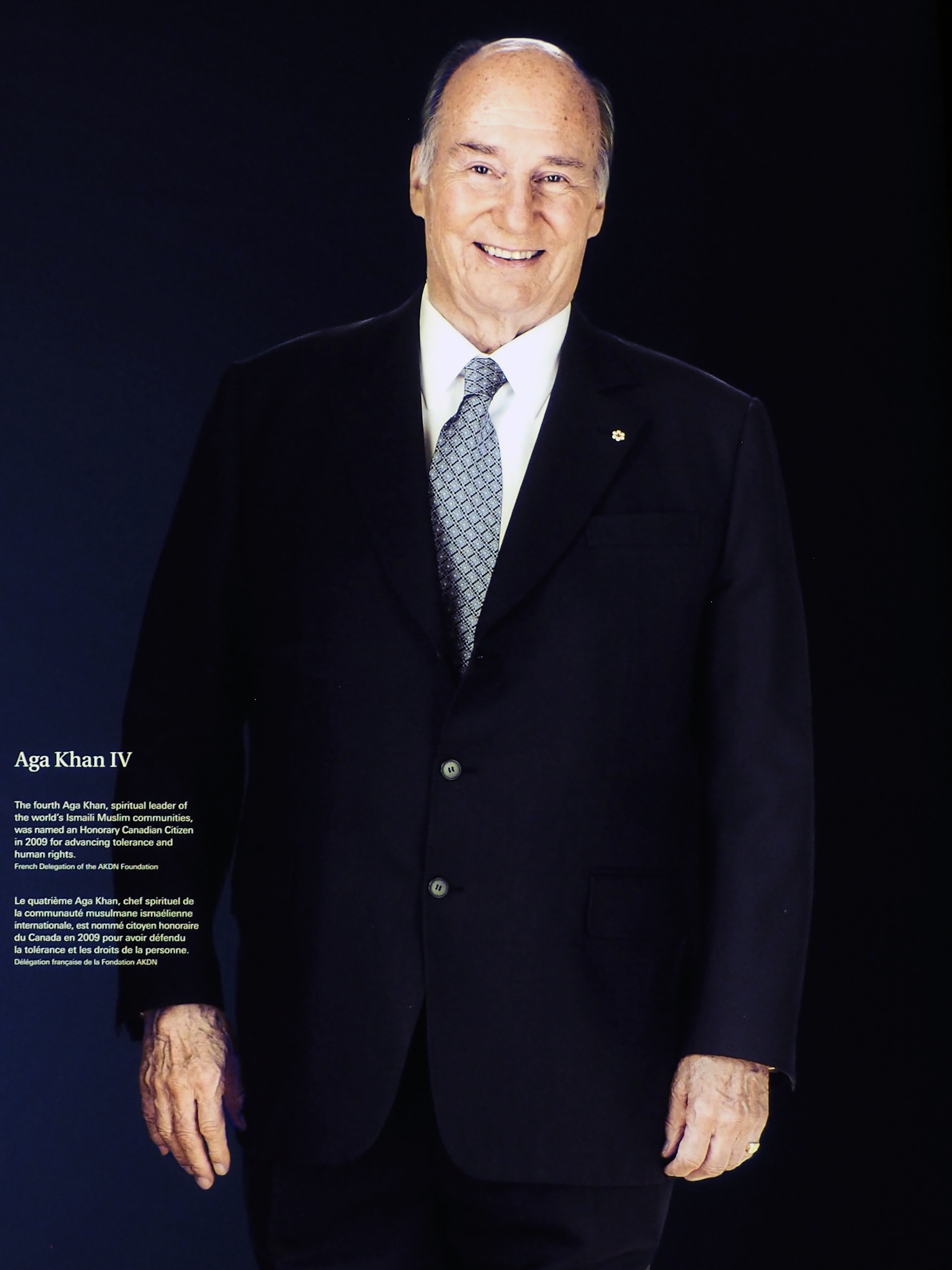
A life-size depiction of Mawlana Hazar Imam, His Highness the Aga Khan, at the Canadian Museum for Human Rights in Winnipeg, Manitoba. Mawlana Hazar Imam is depicted with other Honorary Canadian Citizens in a special section on the floor dedicated to “Turning Points of Humanity. The caption in the photo reads: “AGA KHAN IV: The fourth Aga Khan, spiritual leader of the world’s Ismaili Muslim communities was named an Honorary Canadian Citizen in 2009 for advancing tolerance and human right.” The last line in the caption, presumably crediting the photo, says, “French Delegation of the AKDN Foundation.” I wondered whether this credit was correct and wrote to the Museum to verify it. I took the photo when I visited the Museum in Winnipeg during my 4500 km drive from Vancouver to Ottawa. Please click on image to download a high resolution version of the image. Photo: Malik Merchant / Barakah.
Date posted: December 15, 2019. Last updated: January 12, 2020.
“Today my Farman is ‘Work and Many Words’. Communicate, enjoy life, be happy…” — Mawlana Hazar Imam, His Highness the Aga Khan, Calgary, May 10, 2018.
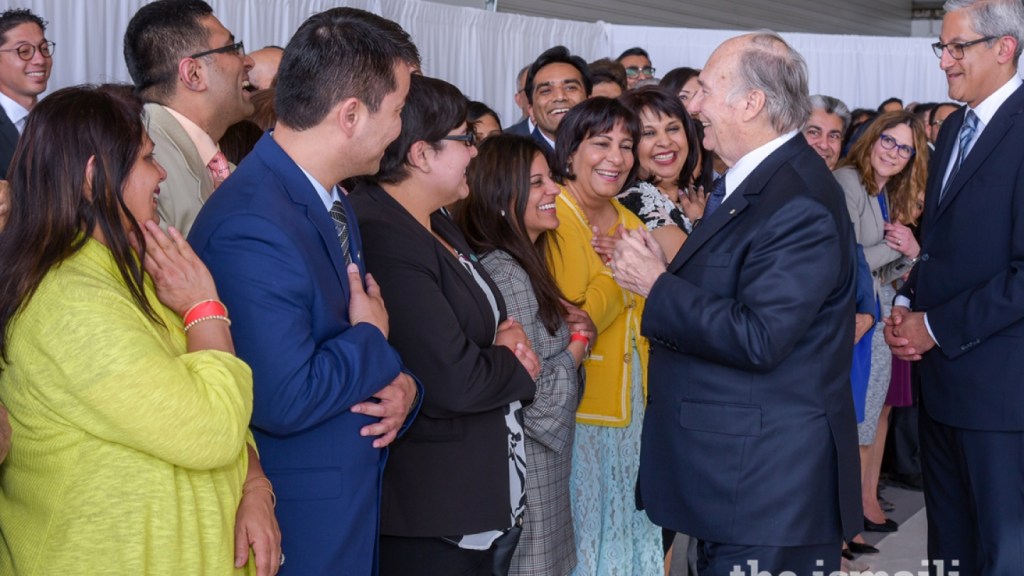
Mawlana Hazar Imam, His Highness the Aga Khan, meets representatives of the Jamat on his arrival in Calgary, Alberta, for his Diamond Jubilee visit in May 2018.
The Ismaili community is a dynamic community with the Imam-of-the-Time guiding his followers according to the time. The essence of the faith remains the same but the form may change over time in cognizance of differences in traditions, cultural, social or other factors. Similarly, there could be changes over time in the manner in which voluntary services may be rendered. Paraphrasing the 48th Imam’s Farman, Mawlana Sultan Mahomed Shah had once said that we should follow the Farmans of the Imam-of-the-Time, noting that as the world changes, even his Farmans would change as time progressed.
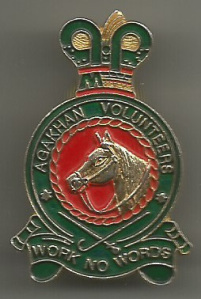
The volunteer’s badge with the motto “Work No Words” is based on Imam Sultan Mahomed Shah’s message, “Today I will give you a small motto and that is ‘Work No Words’.” The motto needs to be revised to reflect Mawlana Shah Karim’s Diamond Jubilee Farman in Calgary “Work and Many Words.”
One of the best known motto given by the late Imam in the 20th century to the volunteers of the Ismaili community was “Work No Words.” It is inscribed on every badge that an Ismaili volunteer wears today. It is also something that many honorary workers serving in institutions in various capacities constantly bear in mind.
What do these words actually mean for any volunteer, badged or otherwise?
I think the motto carries several meanings. Perhaps it is an expression of humility — that one does the work without seeking recognition.
It can be perceived to mean that you serve without question and not react to any attitude that may be shown to you while you are doing your work.
Other volunteers may have their own personal interpretations of the motto during the performance of their duties, and apply it during their service.
Remarkably, that motto was mentioned in the Farman Mawlana Hazar Imam made in Canada during the Diamond Jubilee. At the second Calgary mulaqat, on May 10th, 2018, while mentioning and praising the work of the volunteers, he made a reference to his grandfather’s motto “Work No Words” and declared that “Today my Farman is, ‘Work and Many Words’. Communicate, enjoy life, be happy….”
Eighteen months have since passed but still there seems to be no discussion on this matter. The old motto “Work No Words” appears everywhere in the celebration of the 100th anniversary of the volunteers including a new video “All Work, No Words” that has just been released at The Ismaili website. There is absolutely no reference to the most recent Farman and the new motto. For example, I was quite surprised that the President of the National Council for Tanzania, Amin Lakhani, speaking as recently as July 19, 2019, used the motto that Mawlana Sultan Mohamed Shah gave in one of his speeches, but did not make any reference to the new motto given by Mawlana Hazar Imam. When I raised the issue with a long serving Jamati member, the volunteer became very defensive saying that he would like to see the old motto remain on his badge.
I beg to differ, I believe that we now have to adopt to a new paradigm based on the most recent Farman, “Work, and Many Words.”
How then is this to be interpreted?
Firstly, the volunteers badged and non-badged should not feel fearful to speak up and express their views on matters that concern them on services that they are performing and how they can become more effective, rather than simply taking orders as subordinates. The superiors in the volunteer leadership and heads of various institutions should make their teams more engaged in decision making and seek out creative thoughts, ideas as well as best practices. Quite so often when suggestions are made to institutional heads about new approaches, one is often made to feel that they already knew about the idea that has been brought up. A case in point was when a suggestion was made to make Jamati members more engaged in meetings that the Aga Khan Council and national institutional boards hold on a quarterly basis. The reply was, “We are thinking about it.” For how long?
Many serving in institutions who speak out are left marginalized for speaking out boldly, even when they have done so sincerely and from the heart. This should no longer be the norm. I have personally experienced such treatment.
The old motto “Work No Words” on the badge that volunteers have been wearing for some 70 years is in need of a change. Mawlana Hazar Imam’s Diamond Jubilee “Work and Many Words. Communicate…” should resonate with everyone. We should communicate openly and sincerely and the office bearers should listen respectfully. One area that should require particular attention is legitimate concerns of volunteers in doing their work.
There is one other aspect where the motto “Work, and Many Words” may be applied very effectively. Volunteers of the Jamat participate in many outreach programs outside the community. We have each been considered by the Imam to be his Da’is — a very important term in Ismaili history where only a select few were known as Da’is. Now, remarkably, Mawlana Hazar Imam has told everyone that he or she is a Da’i! The Diamond Jubilee Farmans made at various locations attest to this role we have been asked to play. I think another way of looking at the Farman “Work and Many Words. Communicate…” is in the context of the volunteer who as a Da’i would be a great communicator to others about the ideals, principles and ethos of the Ismaili community. The following Farman made by Mawlana Hazar Imam in 2002 in Dar es Salaam, Tanzania, gives us a clear direction on the role the volunteers as well as the youth and professionals in the Jamat can play:
“…It is important, I think, today, that my Jamat worldwide, not just here in Tanzania, my Jamat worldwide, should reaffirm the traditions that we have, the rectitude and correctitude of our interpretation of Islam, of the role, within Shia Islam, of the intellect, of the human intellect, so that the young, the less young, the old, all of you, wherever you are, are ambassadors of Islam — the Islam that we believe in, that we practice, and that guides us in our lives. So I say to you today, whether you are in Tanzania or whether you are in any other part of the world, stand up, do not run away. Speak openly and frankly about what is our interpretation of Islam.”
Interestingly, in his Diamond Jubilee Farman in Atlanta, USA, Mawlana Hazar Imam asked the Jamat if they knew the meaning of the word Qul (from Sura Ikhlas, which is recited by Ismailis in their Du’a multiple times everyday). One person out of thousands raised a hand! Was that a hint from the Imam to us to seek to understand our faith better? To be effective communicators, requires that we have good knowledge of the faith, its ideals and the work of the Imamat, including for example the AKDN agencies.
So my notion of the work of the volunteers — and indeed each one of us — is to work, and with “many words” express kindness to others, convey good ideas and best practices and pass on the ethos of Islamic and Ismaili principles to everyone we come across.
What should the new badge say? Totally opposite of “Work No Words.” Indeed, the badge should now say “Work and Many Words.” However those “many words” should be spoken with humility, sincerity and thoughtfulness.
I welcome your feedback. Please click LEAVE A COMMENT or send your comment in an email to Simerg@aol.com. You may remain anonymous. Your email address will never be shared.
Before departing this website please take a moment to review Simerg’s Table of Contents for links to hundreds of thought provoking pieces on a vast array of subjects including faith and culture, history and philosophy, and arts and letters to name a few.
Malik Merchant is founding publisher/editor of 3 websites, Barakah (2017), Simerg (2009), and Simergphotos (2012). They are works of passion influenced by his parents involvement with literary pursuits and community publications, as well as his childhood dream of becoming a journalist. However, he spent almost 4 decades working as an IT consultant in both the public and private sectors in the UK, USA and Canada. He has volunteered in the Ismaili community as a teacher and librarian and was co-editor with his late father, Jehangir Merchant, of the flagship UK Ismaili publication Ilm. He has also held numerous institutional and Jamati portfolios, including being the Member for Religious Education and Chairman of the Ottawa Tariqah Committee. He is currently based in Ottawa and Toronto. He welcomes your feedback on this piece by completing LEAVE A REPLY or by sending him an email at Simerg@aol.com.
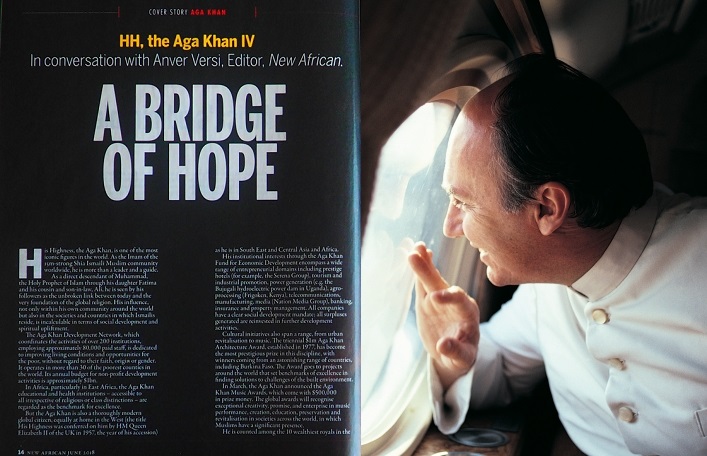
We invite our readers to read the complete interview on Simerg’s sister website Barakah, which is dedicated to Mawlana Hazar Imam, His Highness the Aga Khan. The interview was conducted by Anver Versi, Editor-in-chief of New African, the highly influential magazine on African affairs published in the UK. We are delighted to bring the interview with the editor’s permission. Please start reading the article HERE or click on the image below.














 Simerg - Insights from Around the World