Simerg is an independent initiative dedicated to Ismaili Muslims, the Aga Khan — their Hereditary Imam — and the Ismaili Imamat, and Islam in general through literary readings, photo essays and artistic expressions
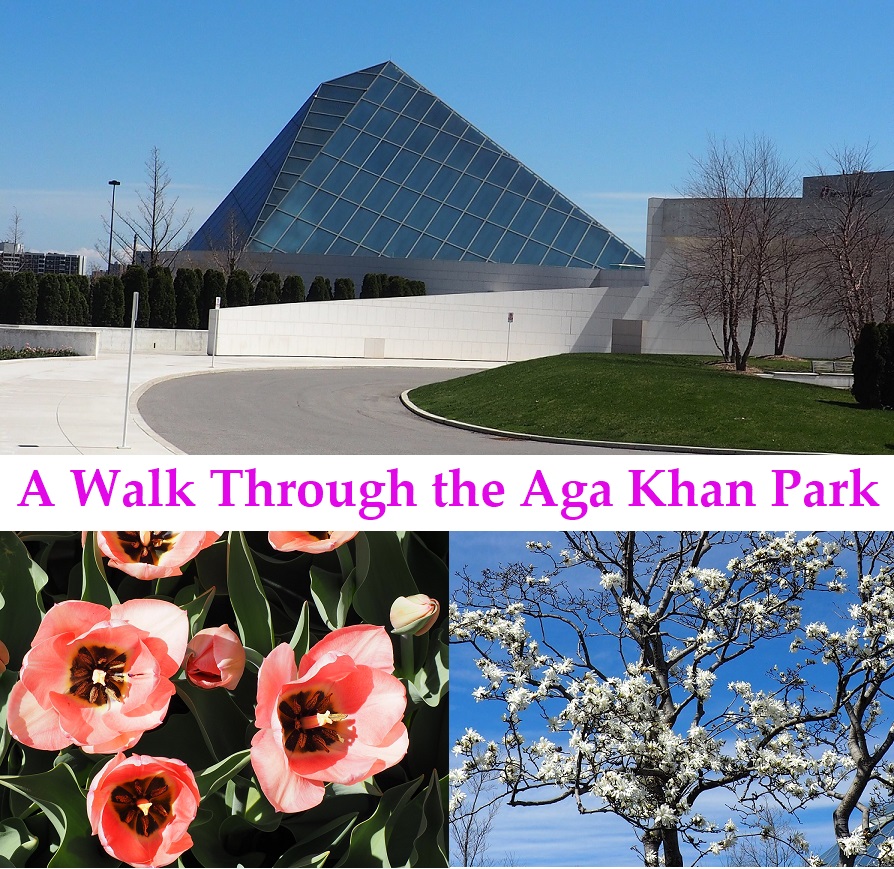
On May 28, 2010, Prime Minister Stephen Harper and His Highness the Aga Khan, the 49th Hereditary Imam of the Ismaili Muslims, performed the foundation ceremony of three projects: the Aga Khan Museum, the Ismaili Centre Toronto, and their Park. Just over four years later, on September 12, 2014, the Prime Minister and His Highness inaugurated the two iconic buildings — the Park was inaugurated in the spring of 2015 — which have become an intrinsic part of Toronto’s cultural landscape. These buildings, with their unparalleled architectural and artistic wonders, have captivated the hearts of thousands during the Toronto Doors Open, inspiring them to appreciate the beauty and creativity that went into their design. Click HERE or on the photo below for stories and photographs of this unique cultural landmark in Canada’s largest city.
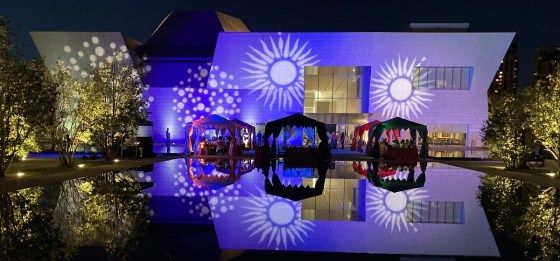
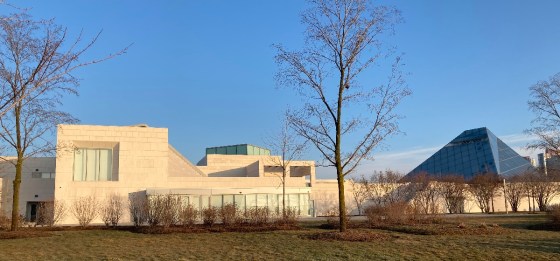
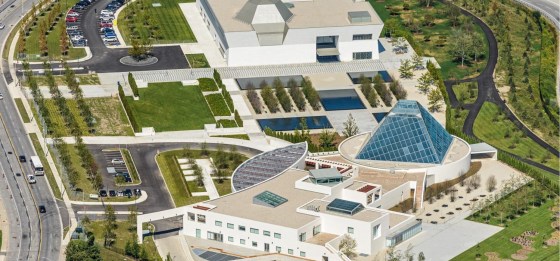
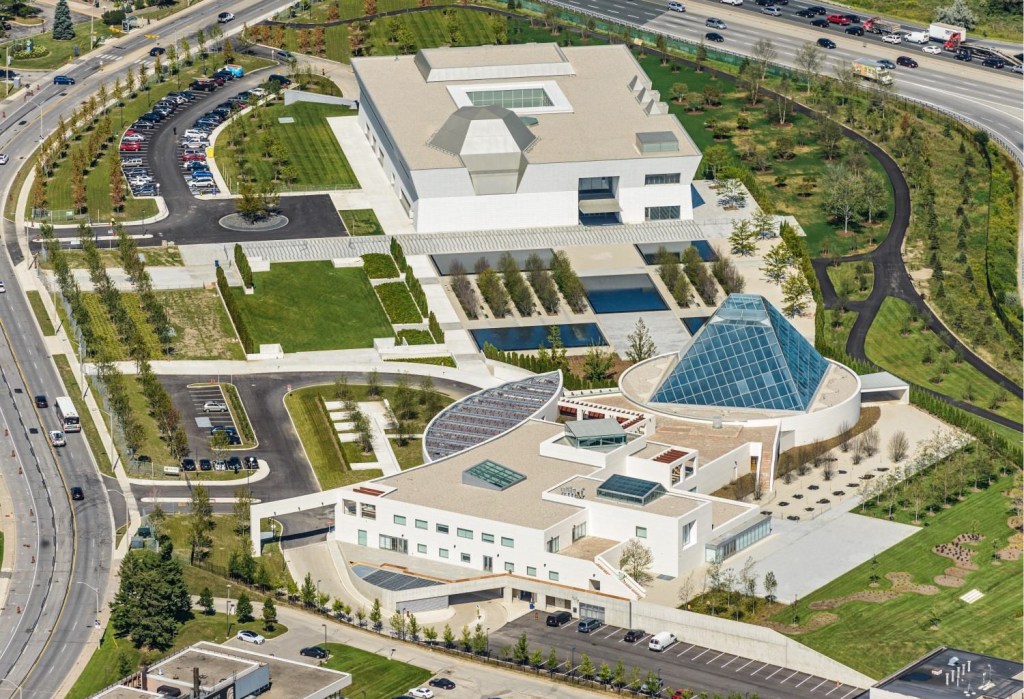
The Aga Khan Museum, Wynford Drive, Toronto. The Ismaili Centre Toronto is directly across from the Museum, with the Aga Khan Park dividing the two iconic buildings built by His Highness the Aga Khan. Please click on the image for the story and photographs.
_______________________
The 10th anniversary of the Aga Khan Museum coincides with the 87th birthday of Prince Amyn Aga Khan, younger brother of His Highness the Aga Khan. We honour the Prince through a special post. Please click HERE or on the photo below
“The architectural planning [of the Delegation of the Ismaili Imamat Building] has been entrusted to the capable hands of Fumihiko Maki, an architect of world standing. Maki and Associates have my enthusiastic admiration for addressing, with tact and empathy, challenges of design which are difficult and subtle. They call for translating concepts that have a context in our faith and our history, yet stride boldly and confidently ahead, into modernity; for expressing both the exoteric and the esoteric, and our awe and humility towards the mysteries of Nature, Time and beyond.” — His Highness the Aga Khan, June 2005.
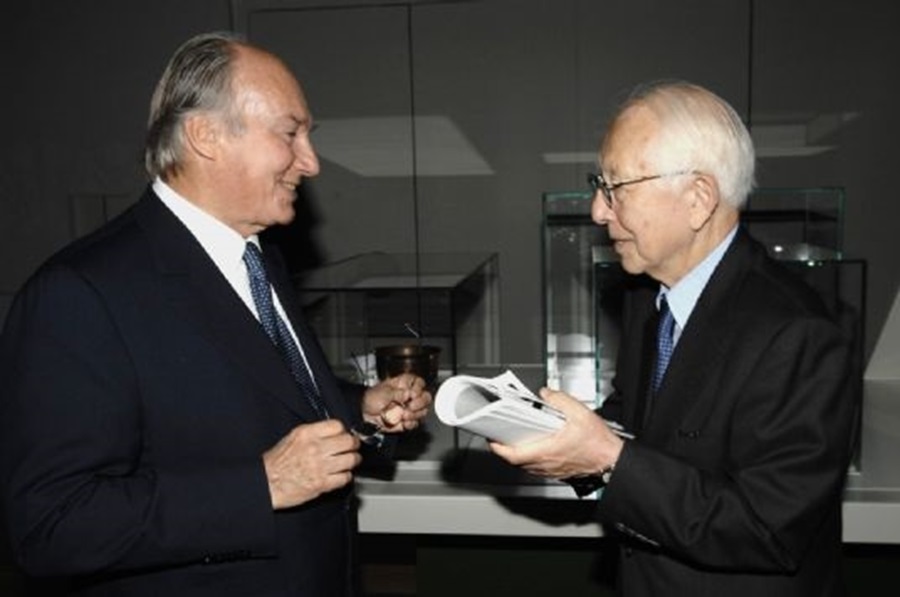
His Highness the Aga Khan with architect Fumihiko Maki at an Aga Khan Museum Exhibition held at the Louvre in 2007. The renowned Japanese architect served twice on the Master Jury of the Aga Khan Award for Architecture, and designed the Delegation of the Ismaili Imamat Building in Ottawa which was opened in December 2008 , the Aga Khan Museum in Toronto opened in September 2014., and the Aga Khan Centre in King’s Cross in London, opened in June 2018. Photo: AKDN/Gary Otte.
Reflecting back to 2005, I can’t help but feel a profound sense of loss as I note the passing of the renowned Japanese architect Fumihiko Maki on June 6, 2024, at the age of 95. His architectural firm, Maki and Associates, officially announced his demise. The news of Mr. Maki’s death reverberated across the globe, with obituaries appearing in esteemed publications such as the Washington Post, New York Times, and CNN, as well as prominent architectural websites like Architectural Record, World Architects, and Architect’s Newspaper.
The occasion in January 2005 was the award of the Vincent Scully Prize to Mawlana Hazar Imam, His Highness the Aga Khan, at the National Building Museum in Washington, D.C.
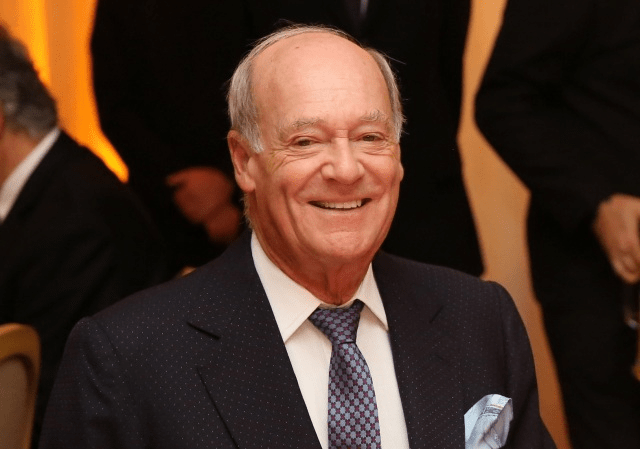
Stepping into the building, I found myself in the presence of Bruno Freschi, the architect behind the exquisite Ismaili Centre Vancouver, which had opened its doors in 1985. Just a few steps away stood Mawlana Hazar Imam, accompanied by Fumihiko Maki and Firoz Rasul, the President of the Aga Khan Council for Canada. It was a rare and profound moment, as Bruno had expressed his desire to meet both Mawlana Hazar Imam and Fumihiko Maki in person. I took the initiative and introduced Bruno to Rasul. In a later interview, Bruno shared his gratitude: “His Highness introduced me to Mr. Maki, and it was here that he again thanked me and said that the Jamatkhana (Ismaili Centre Vancouver) was indeed one of his favourite buildings. He encouraged Mr Maki to visit the building.”
Witnessing two remarkable architects with Mawlana Hazar Imam was a touching moment. The memory of that encounter is etched in my heart, a testament to the profound impact it had on me.
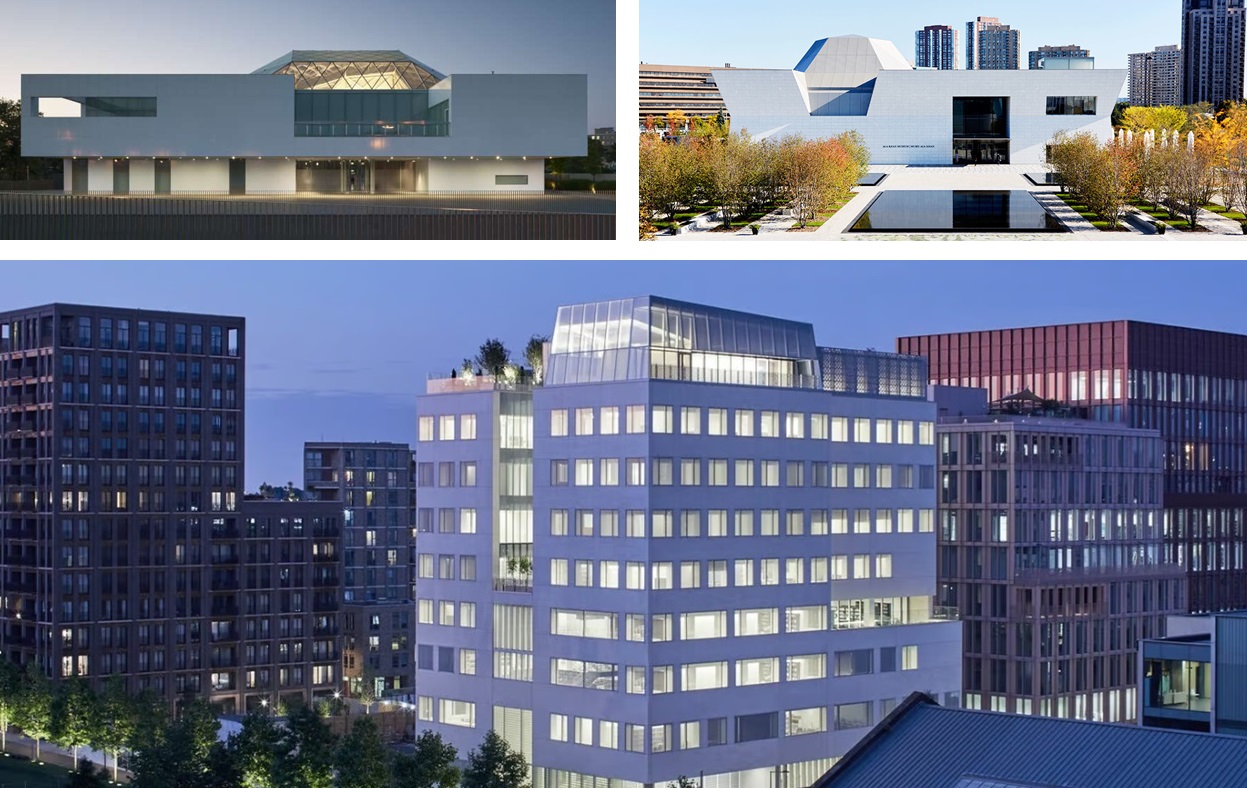
Buildings designed by Fumihiko Maki for His Highness the Aga Khan. Top: Delegation of the Ismaili Imamat, Ottawa (2008), and the Aga Khan Museum, Toronto (2014); bottom, Aga Khan Centre, London (2018).
We honour the renowned architect, Fumihiko Maki, by presenting links to photographs of three beautiful projects that he built for Mawlana Hazar Imam — the Delegation of the Ismaili Imamat building in Ottawa which was opened on December 9, 2008, as the Ismaili community marked the completion of Mawlana Hazar Imam’s Golden Jubilee, the Aga Khan Museum in Toronto which was opened on September 14, 2014, and the Aga Khan Centre in London which was inaugurated on June 26, 2018. We invite you to visit the links provided.
For each of these projects, Mawlana Hazar Imam made remarks on Fumihiko Maki. We publish a selection of the speech excerpts as part of Simerg’s tribute to Mr. Maki.
His Highness the Aga Khan on Fumihiko Maki’s Projects for the Ismaili Imamat
(1) The Delegation of the Ismaili Imamat Building, Sussex Drive, Ottawa
Remarks by the Aga Khan at the Foundation Ceremony of the Delegation Building, Ottawa, June 6, 2005
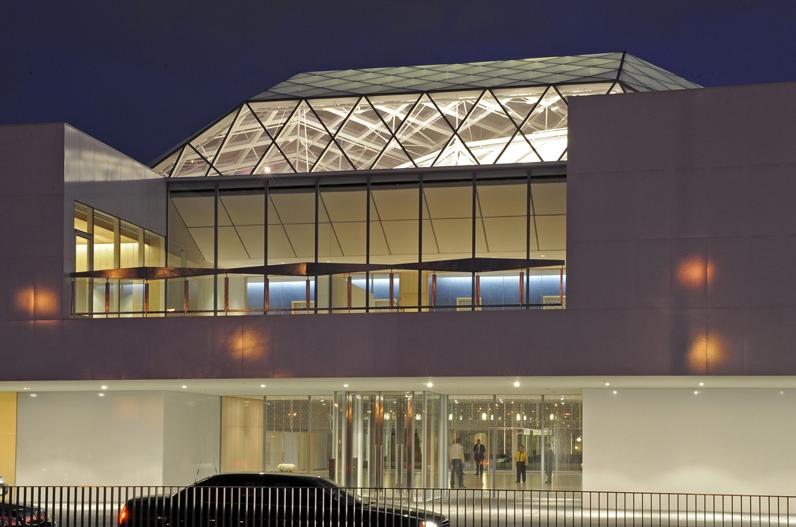
“The architectural planning [of the Delegation of the Ismaili Imamat Building] has been entrusted to the capable hands of Fumihiko Maki, an architect of world standing. Maki and Associates have my enthusiastic admiration for addressing, with tact and empathy, challenges of design which are difficult and subtle. They call for translating concepts that have a context in our faith and our history, yet stride boldly and confidently ahead, into modernity; for expressing both the exoteric and the esoteric, and our awe and humility towards the mysteries of Nature, Time and beyond. The outcome is an inter-play of multiple facets, like rock crystal. In it are platforms of pure but translucent horizontality. Light’s full spectrum comes alive and disappears as the eye moves. In Islam the divine is reflected in Nature’s creation. The building will rest on a solid linear granite podium. Above it will be a glass dome through which light will illuminate, from multiple directions, two symbolic spaces: an interior atrium and an exterior courtyard landscaped in four quarters, recalling the traditional Persian — Islamic garden, the Chahr-bagh. Nature, through the greenery of trees and flowers, will be on the site, but also in the building, just as we are sometimes able to see leaves and petals captured in rock crystal, but still visible through its unique translucency.
Remarks continue below
Exterior view, at night, of the entrance to the Delegation of the Ismaili Imamat on Sussex Drive in Ottawa, Canada. – Photo: AKDN/Gary Otte
“The building will be a metaphor for humanism and enlightenment and for the humility that comes from the constant search for answers that leads inevitably to more questions. The Delegation, with its openness and transparency, will be a symbolic seat for the Imamat’s permanent presence in Canada, and a platform for constructive exchanges that mutually broaden moral and intellectual horizons. It will be a window for the AKDN to reinforce existing, and cultivate new, partnerships with national and international agencies present in Ottawa, that share the ethic of contributing to an improved quality of life in the developing world.”
___________________________
(2) The Aga Khan Museum, Wynford Drive, Toronto
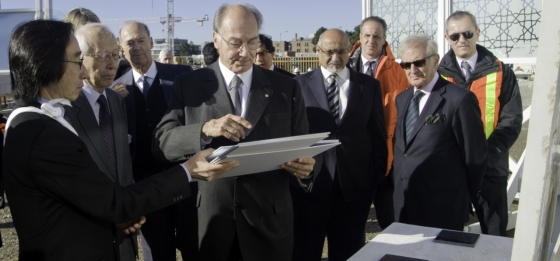
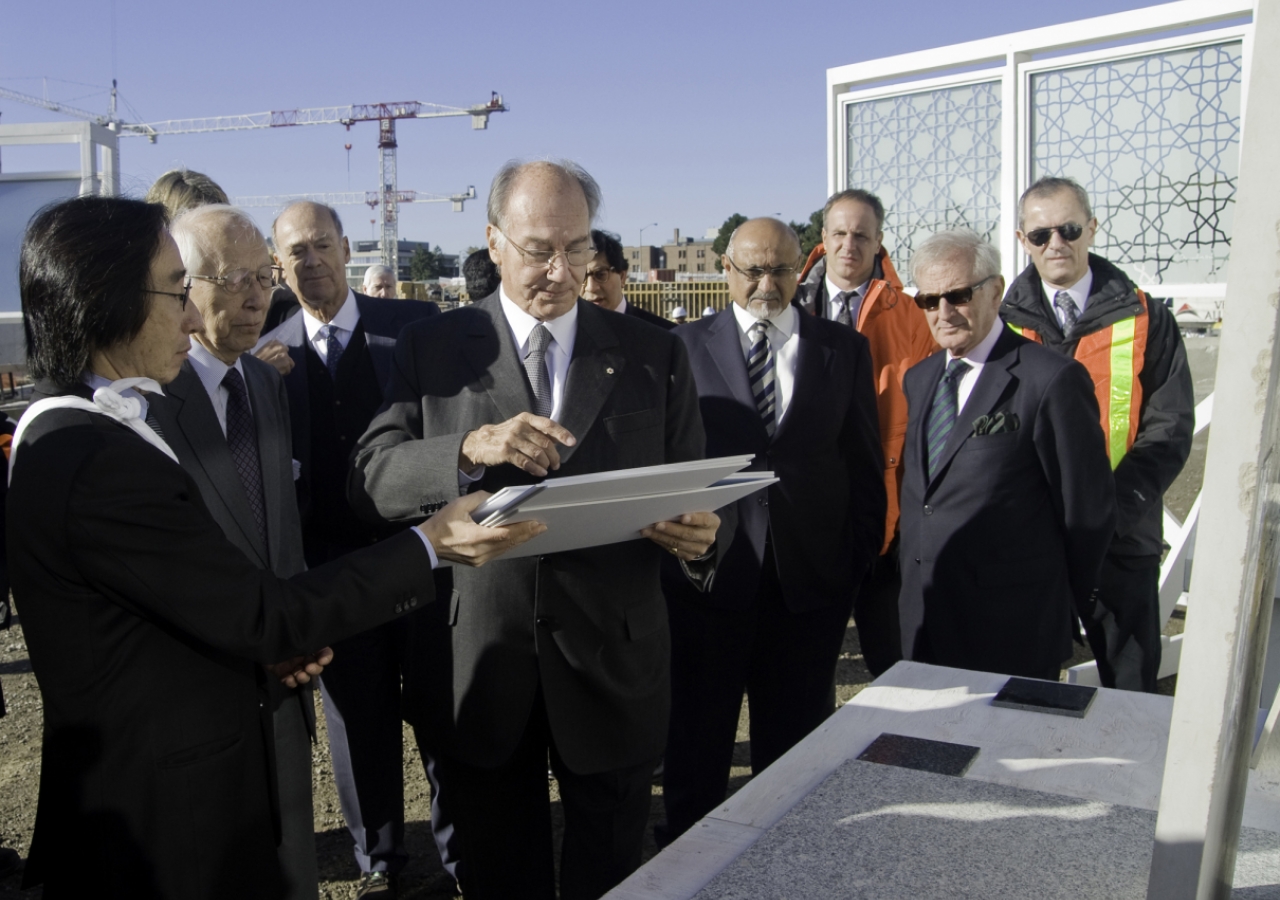
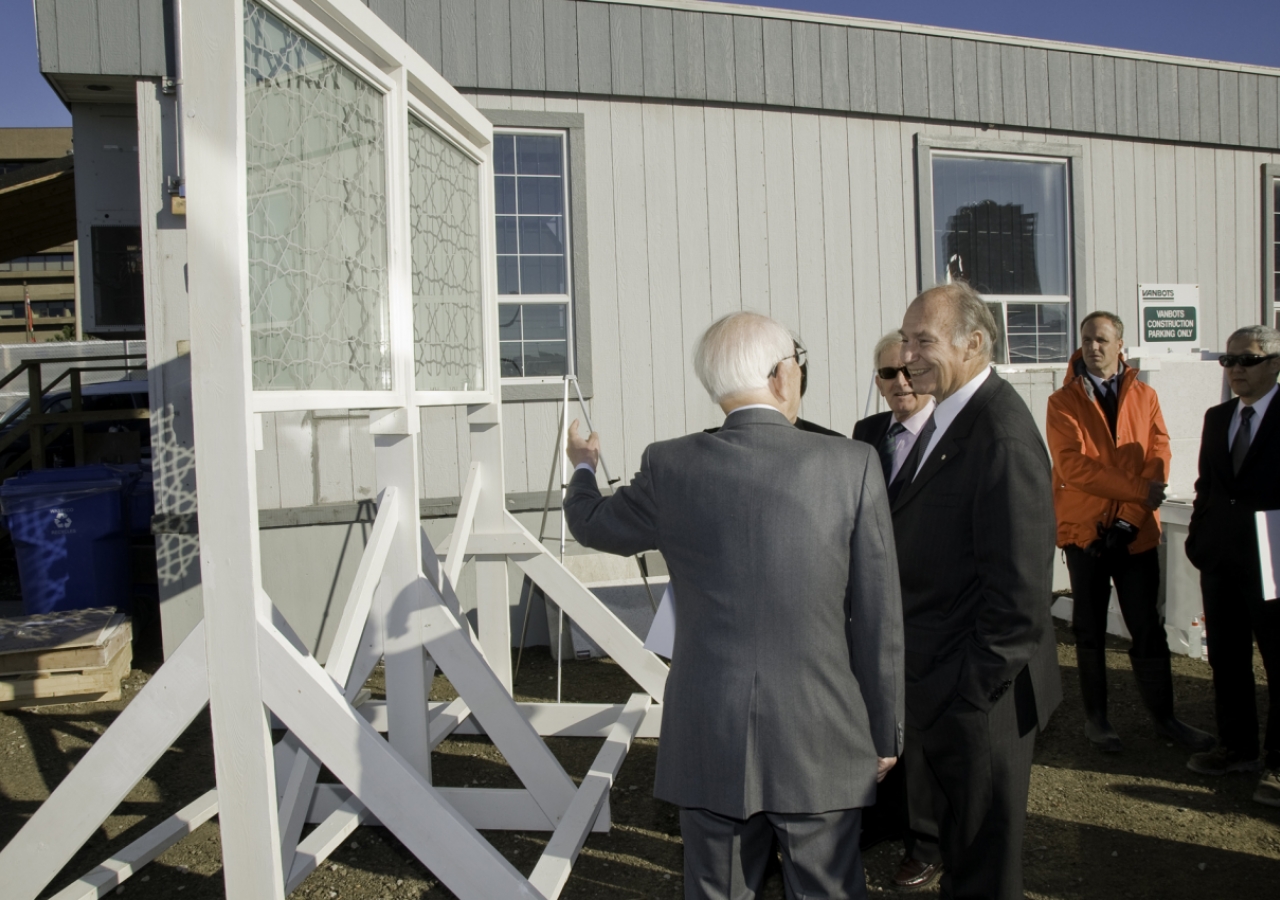
Fumihiko Maki and Gary Kamemoto of Maki & Associates review cladding stone for the Aga Khan Museum with His Highness the Aga Khan, October 2010. Photograph: The Ismaili.
(I) Remarks by the Aga Khan at the Inauguration of the Spirit and Life Exhibition, Ismaili Centre London, June 12, 2007
“What we see here today is the nucleus of the Islamic art collections of the future Aga Khan Museum in Toronto. This museum, which is being designed by the renowned Japanese architect Fumihiko Maki, is conceived as a primarily educational institution in the field of Islamic art and culture, a specific mandate that is not fulfilled so far by other North American museums. We hope and trust it will contribute to a deeper understanding among cultures — to the strengthening of true cultural pluralism — which is increasingly essential to peace, and to progress, in our world.”
~~~~~~~
(II) Remarks by the Aga Khan at the Foundation Ceremony of the Ismaili Centre, the Aga Khan Museum and their Park, Toronto, May 28, 2010,
“I should emphasise, as well, that the Museum building itself will be an important work of art — designed by the great Japanese architect Fumihiko Maki. Many of you know his superb building in Ottawa that has been the home for the Delegation of the Ismaili Imamat since 2008.
“That Delegation building was inspired by the evanescent mysteries of rock crystal. The new Toronto Museum will take as its theme the concept of light — suffusing the building from a central courtyard, through patterned glass screens. From the outside, it will glow by day and by night, lit by the sun and the moon.
Remarks continue below
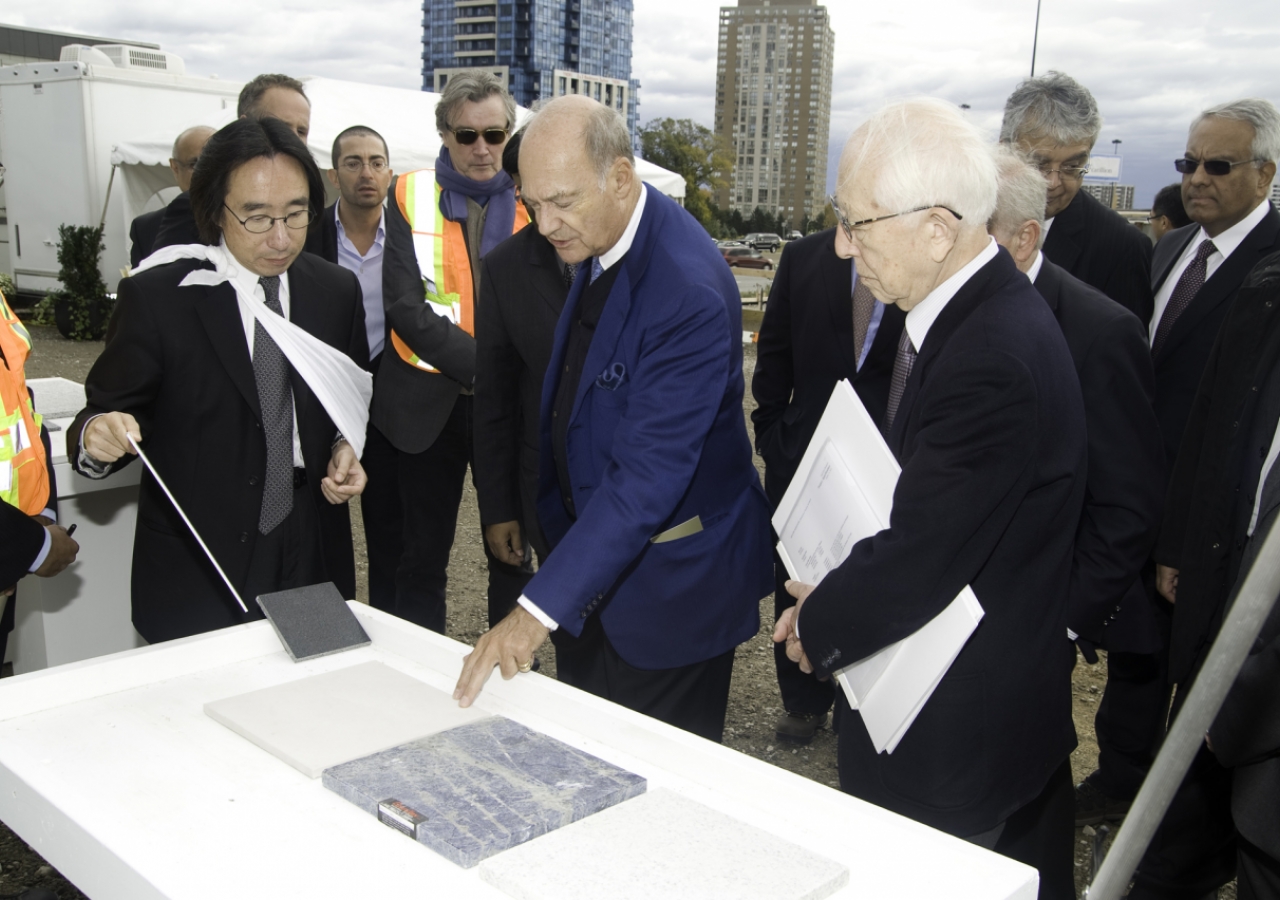
Fumihiko Maki and Gary Kamemoto of Maki & Associates review materials for the exterior finish of the Aga Khan Museum with Prince Amyn Aga Khan in October 2010. Photograph: The Ismaili.
“From the outside, it will glow by day and by night, lit by the sun and the moon. This use of light speaks to us of the Divine Light of the Creator, reflected in the glow of individual human inspiration and vibrant, transparent community. As the poet Rumi has written: “The light that lights the eye is also the light of the heart… but the light that lights the heart is the Light of God.”
~~~~~~~
(III) Remarks by the Aga Khan on the Aga Khan Museum at the Opening of the Aga Khan Museum and the Ismaili Centre, Toronto, September 12, 2014
“The fusion of tradition and modernity which this building achieves, and the blend of spiritual, educational and social objectives that it embodies, have also characterised our other Ismaili Centres — in Vancouver, London, Lisbon, Dubai, and Dushanbe. All of them were designed by architects of great international standing, and, I would emphasise, of great multi-cultural sensitivity.
Remarks continue below
Fumihiko Maki and His Highness the Aga Khan discuss the glass finish options for the courtyard walls of the Aga Khan Museum in October 2010. Photograph: The Ismail
“Charles Correa, for example, comes from an Indian background and has also designed Hindu and Christian buildings. The architect for our Vancouver Centre 30 years ago was Bruno Freschi, whose family is of Italian background, and whose earlier work had included a Sikh place of worship. The new Aga Khan Park was designed by an architect of Lebanese heritage, Vladimir Djurovic. And the Aga Khan Museum is the work of a superb Japanese professional, Fumihiko Maki. How pleased we are that all of these fine artists are with us today.”
_____________________
The Aga Khan Centre, King’s Cross, London
“The Aga Khan Centre is the third project we have worked on with the distinguished architect Fumihiko Maki, a master of form and light” — His Highness the Aga Khan, quoted on Aga Khan Centre website
Gary Kamemoto and Professor Maki of Maki & Associates, the architects of the Aga Khan Centre, at the Aga Khan Centre Library.
Remarks by the Aga Khan at the inauguration of the Aga Khan Centre, June 5, 2018
“We celebrate today a beautiful new architectural accomplishment. This place has been shaped by many diverse influences — and among them we now welcome the rich traditions of Islamic architecture. One of those traditions – one that is appreciated by both the Islamic and the British cultures – is the special importance of the garden. We see the garden not merely as an adjunct to other constructions, but as a privileged space unto itself.
“And that is why I have emphasised, since our role began here in 2010, my own hope that the value of garden spaces should be embraced here. As we perambulate together through these spaces today, I trust that you will share my delight in seeing how that hope has been fulfilled. What we will see as we walk along are not only beautiful buildings — but also a unique series of gardens, courtyards and terraces – eight of them, in all, across our two buildings. Each one of them, moreover, has a distinctive identity: each one is inspired by a different region of the Islamic Ummah.
Remarks continue below
On Tuesday, June 26, 2018, HRH The Prince of Wales, now His Majesty King Charles, opened The Aga Khan Centre in King’s Cross in the presence of Mawlana Hazar Imam, His Highness the Aga Khan. Situated at the heart of London’s Knowledge Quarter, the Aga Khan Centre, designed by Maki and Associates, led by Fumihiko Maki, one of Japan’s most distinguished contemporary architects, provides a new home for a number of UK based organisations founded by His Highness the Aga Khan: The Institute of Ismaili Studies (IIS), the Aga Khan University Institute for the Study of Muslim Civilisations (AKU-ISMC) and the Aga Khan Foundation UK (AKF UK).
“Taken together, this winding ribbon of special spaces is an eloquent tribute to the rich diversity of the Muslim world. As we open this remarkable site, it is a privilege to salute those who have brought us to this moment. I would recognise, in particular, our fine relationship with the government of this borough, this city, and this country, as well as our rewarding partnership with the people at Argent. We are grateful, as well, for the talents of Maki and Associates, Allies and Morrison, Madison Cox and Nelson Byrd Woltz, as well as Rasheed Araeen and the late Karl Schlamminger. I would also like to thank our splendid team of staff and volunteers, including my brother Prince Amyn, who have stewarded this project to completion.”
Date posted: June 13, 2024.
_____________________
Please visit the Maki and Associates website for Professor Maki’s biography and curriculum vitae, which summarize his education, professional affiliations, and worldwide recognitions and awards.
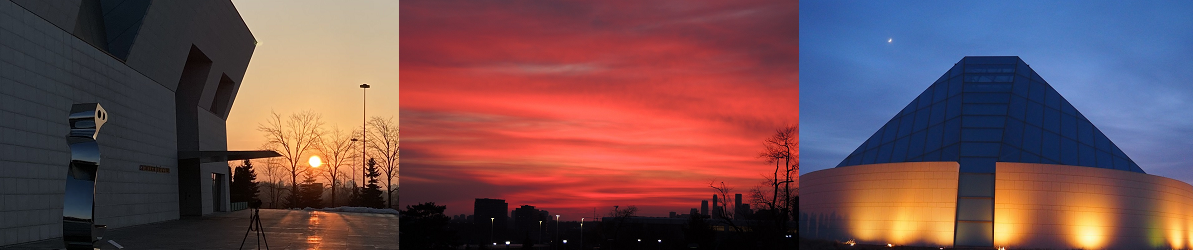
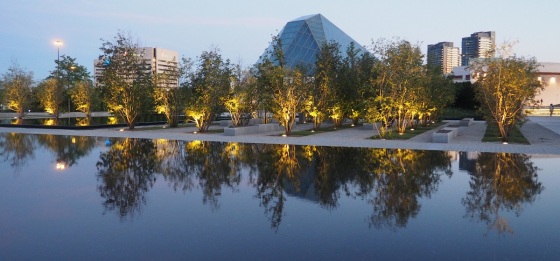
Mawlana Hazar Imam His Highness the Aga Khan’s vision, creativity and thought followed by action makes him a talisman for the Ismaili community and for millions around the entire world. For Simerg’s Malik Merchant, Mawlana Hazar Imam’s three projects in Toronto, among hundreds of others around the world that benefit humanity at large, attest to his brilliant leadership. Malik spent a few hours from dawn to dusk at the grounds of the Aga Khan Museum, the Aga Khan Park and the Ismaili Centre to bring you a collection of marvellous photos. View the complete collection by clicking SIMERGPHOTOS or the image below.
Please click on image for photos.
Date posted: January 19, 2021.
___________________________
Before departing this website please take a moment to review Simerg’s Table of Contents for links to hundreds of thought provoking pieces on a vast array of subjects including faith and culture, history and philosophy, and arts and letters to name a few. Also visit Simerg’s sister websites Barakah, dedicated to His Highness the Aga Khan, and Simergphotos.
The Aga Khan Museum is one of the few museums in Toronto that has been able to implement Covid-19 protocols and make the museum safe for its visitors. The visiting times were revised this past week, and it is now open from Thursdays through Sundays from 10 a.m. until 5:30 p.m.
In recent weeks, Simerg and its sister websites have produced a superb collection of photos of the Museum, the Ismaili Centre and the Aga Khan Park, which divides the two magnificent buildings. Readers have been uplifted to see the photos of the 3 magnificent projects, built by Mawlana Hazar Imam, His Highness the Aga Khan, under the full moon, crescent moon, as well as at the peak of the autumn foliage season.
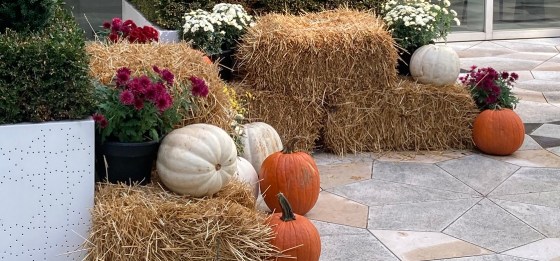
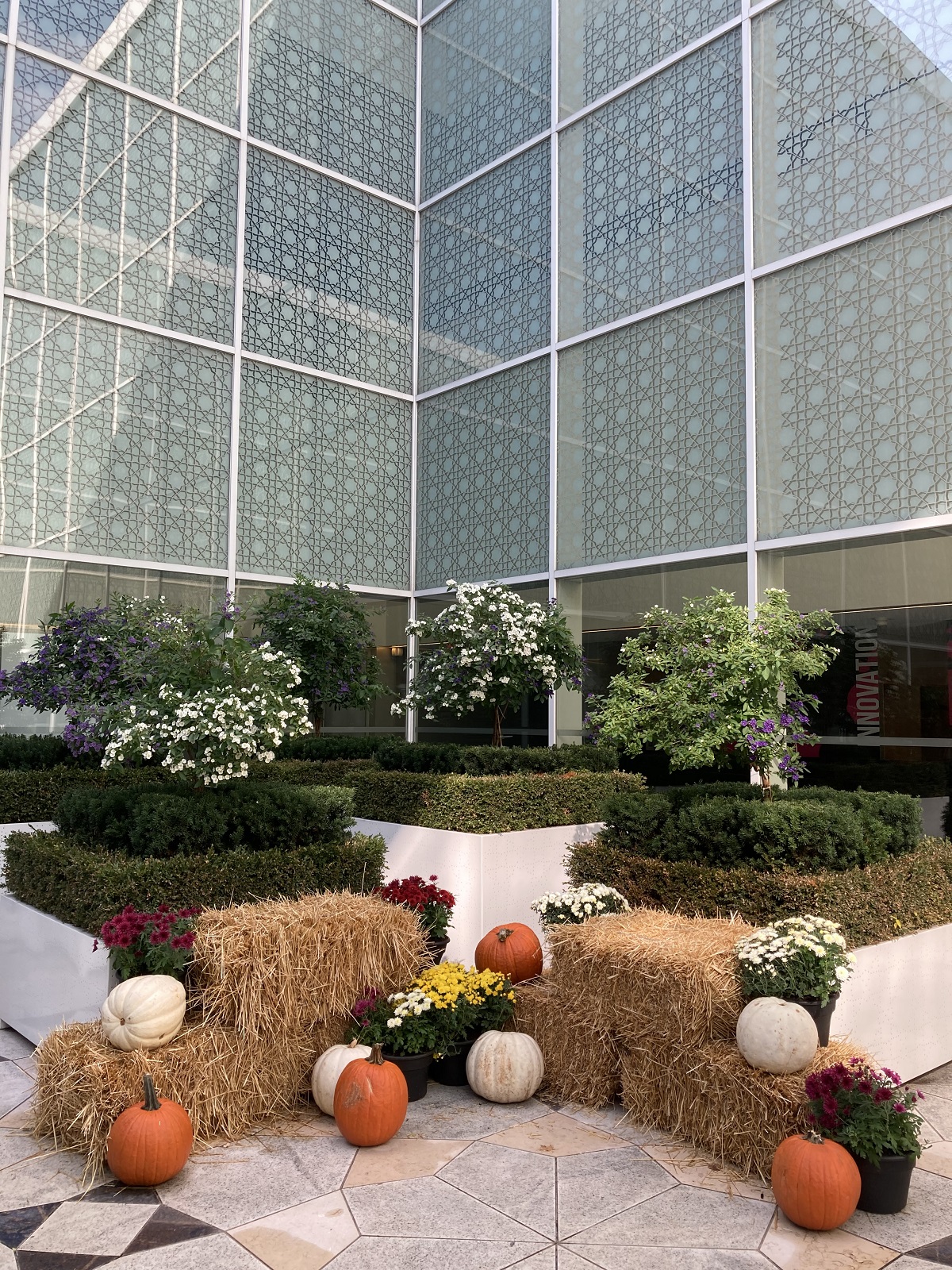
Aga Khan Museum Toronto Courtyard decorated with pumpkins. Photo: Malik Merchant / Simerg.
On a fine day, there is no better place in the museum than to be sitting in its open air courtyard, while enjoying a delicious cup of latte.
October 23, 2020 was one such day. It actually felt like summer, with blue skies and very warm temperatures. The magnificent courtyard was a perfect place for my morning coffee as well as a late breakfast — an egg salad croissant, slightly grilled. I was thrilled to enter the courtyard, and noticed pumpkin decorations in one corner of the courtyard. Of course, pumpkins are to be seen everywhere at this time of the year. It is one of the most popular desserts served during Thanksgiving holidays in Canada (October 12, 2020) and the USA (November 26, 2020), and I wondered how the food was viewed in Islam. My little bit of research led me to numerous traditions of the Prophet Muhammad (S.A.S.) on the pumpkin, and I am delighted to post adaptations of some that I read.
“I saw the Prophet being served with soup and containing gourd (pumpkin or squash) and cured meat, and I saw him picking and eating the pieces of gourd.” — Bukhari Volume 7, Book 65, Number 348.
It is related that a sailor once invited Prophet Muhammad to eat some food that he had prepared. Anas bin Malik who accompanied the Prophet, noted that the Prophet was served barley bread and a soup with pumpkin in it. The Prophet keenly ate the pumpkin around the dish, and from that day Anas made it his favourite food. Traditions also note that whenever a a dish of bread, meat and broth was presented to the Prophet and it contained pumpkin, the Prophet would pick up the pumpkin because he really liked it, and made the heart strong. Other Muslim traditions note that the pumpkin increases brain function and brain strength.
Ibn Ridwan, in a medical treatise written during the Fatimid period, recommended the pumpkin as a diet for healthy living along with several other fruits and vegetables such as celery, carrots, lentils and cucumbers.
Interestingly, there is also a general consensus among scholars about the Arabic word yaqteen that is mentioned in the Holy Qur’an. They say that it refers to the pumpkin — a food that nourished and helped heal Prophet Yunus (A.S.), after he was cast into the wilderness while he was sick (see Qur’an, 37:144-146, at Corpus Quran English Translation).
The website healthline mentions that pumpkin is rich in vitamins, minerals and antioxidants, and is incredibly healthy. Moreover its low calorie content makes it a weight-loss-friendly food. It goes on to add that “its nutrients and antioxidants may boost your immune system, protect your eyesight, lower your risk of certain cancers and promote heart and skin health.”
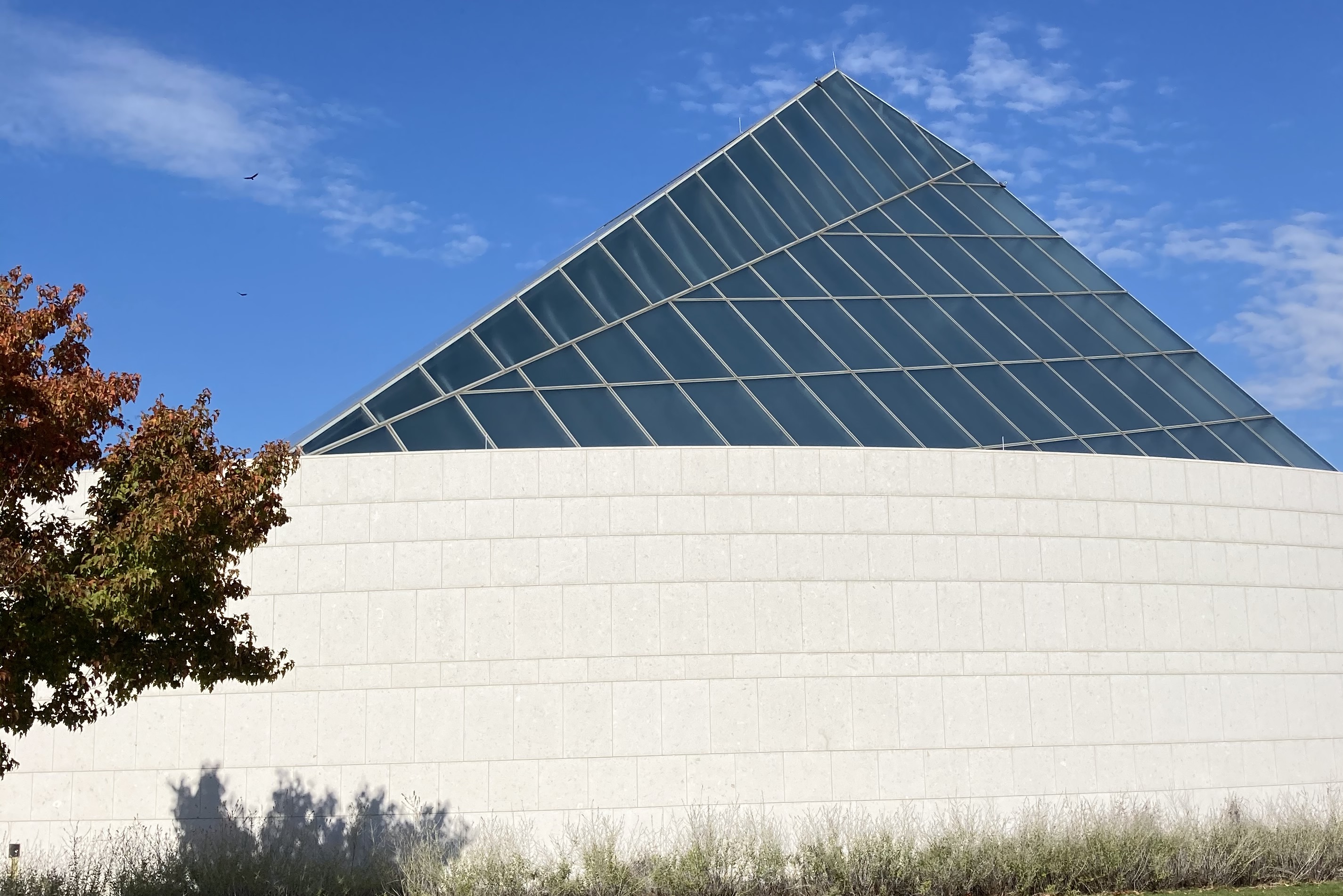
After about an hour at the museum’s courtyard, I could not return home without walking around the Aga Khan Park. As I looked up in the blue sky above the Ismaili Jamatkhana dome, I saw two birds beautifully gliding at the dome’s left. I was left wondering: Were they turkey vultures, eagles or hawks? Alas, I wasn’t carrying a powerful lens to get a better and sharper close-up.
Please click on photo for enlargement
Two birds seen gliding at left of the dome of the Toronto Headquarters Ismaili Jamatkhana, part of the Ismaili Centre. Click on image for enlargement. Photo: Malik Merchant / Simerg.
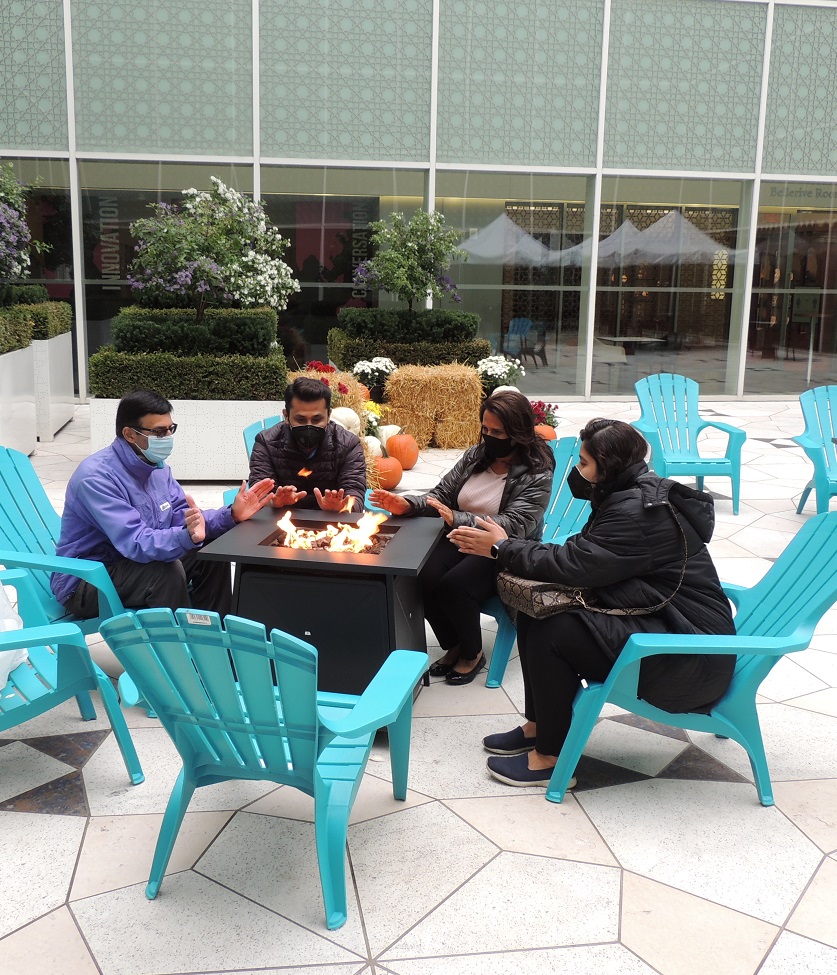
Returning to the museum’s courtyard on Sunday October 25, offered a much different kind of experience, as the temperature had dropped from Friday’s 22°C to only 8°C. But the museum had that in mind too! Blue lounge blue chairs had been placed in the courtyard, with portable fireplaces where visitors mingled with their family members over light refreshments.
Visitors keep warm at a portable fireplace at the Aga Khan Museum’s courtyard as temperatures take a dip on Sunday, October 25. 2020. Photo: Malik Merchant / Simerg.
The overall experience at the three Aga Khan projects during recent weeks has been overwhelming.
As we all seek good health, I dedicate this post to the humble pumpkin which supports heart and eye health, and boosts immunity, among other benefits.
And, without the pumpkin’s presence in the museum’s courtyard, it may have never occurred to me to search out the traditions of the Prophet Muhammad (S.A.S.) that have showed that he really liked the pumpkin. For 2020, Muslims around the world will celebrate his birth anniversary — the Milad un Nabi — between October 28-30. It is an appropriate time to learn more about his inspiring life and leadership as well as his faith in God whom he served as the last messenger for 23 long and devoted years, bringing to Muslims the blessing of the Holy Qur’an.
Date posted: October 24, 2020. Last updated: October 25, 2020 (new photo/information added)
_____________________
Before departing this website please take a moment to review Simerg’s Table of Contents for links to hundreds of thought provoking pieces on a vast array of subjects including faith and culture, history and philosophy, and arts and letters to name a few.
We welcome feedback from our readers. Please complete the LEAVE A REPLY form below or, if you don’t see the box, please click Leave a comment. Your letter may be edited for length and brevity, and is subject to moderation.
The Aga Khan Museum has been hosting the annual fund raising LAPIS event for the past few years, with Prince Amyn Muhammad Aga Khan honouring the event by personally attending it. Now due to Covid-19, the signature event has been reinvented with a broadcast from the Aga Khan Museum that everyone is invited to register for free.
The program on Thursday September 24, 2020 will be live streamed at 8 PM ET, and include remarks from Prince Amyn, Chairman of the Aga Khan Museum Board, meaningful conversations with acclaimed international artists on art in a changing world and four breathtaking performances with diverse talent from around the world.
The Aga Khan Museum invites you to join with friends and family from around the world as together it shares a unique message of hope, resilience and light. Please click HERE TO REGISTER.
Aga Khan Museum and Ismaili Centre 6th Anniversary
And while we are on the subject of the Aga Khan Museum, let us remind our readers that September 12, 2020 marked the 6th anniversary of the inauguration of the Aga Khan Museum and the Ismaili Centre by Mawlana Hazar Imam, His Highness the Aga Khan, and the then Prime Minister of Canada the Rt. Hon. Stephen Harper. The Museum officially opened to the public on September 18, 2014, with the Ismaili Centre Jamatkhana(known as the Toronto Headquarters Jamatkhana) opening to Ismaili community for prayers on Friday, September 19, 2014.
To commemorate the openings of the Aga Khan Museum and the Ismaili Centre as well as the annual Lapis event, we are delighted to present this thoughtful poem by Farah Tejani of Vancouver.
Celebrating the Aga Khan Museum and the Ismaili Centre in Toronto
Ismaili Imamat Projects on Wynford Drive, Toronto, Canada. The Ismaili Centre (with glass dome), the Aga Khan Museum and the Aga Khan Park.
By FARAH TEJANI
Two complementary sister structures of architectural elegance and splendor Jut out and pierce the heart of Toronto’s sky. The Aga Khan Museum and The Ismaili Centre.
United are they for the beneficial purpose of extending a hand Of Everlasting Friendship, Between Muslims and Non-Muslims alike. Uniting the Muslim Ummah, The World Ummah, With Cultural and Religious Tolerance and Respect…
Dispelling all deplorable depictions of Islam in the Media, By propagating the Truth:
Peace, Love, Brotherhood, Compassion, Spirituality and Prayer.
Yes, we extend a hospitable, gracious, loving hand of friendship, Celebrating Cultural Diversity, Historical Traditions, Arts and Artifacts, Awe-inspiring Calligraphic Designs and Structures, Tours, Recitals, Exhibitions, Theatre, Films and Educational and Cultural Activities.
The Ismaili Centre has unique and grand tiled floors Laced with elaborate, poignant calligraphy, Upon entering the prayer hall We begin every act beseeching God to Bless and Accept All Our Endeavours.
The Prayer Hall’s distinctive And elegant Crystalline dome, Illuminates the night sky, Reflecting itself into the pond, While angels come together to lift and carry, Each and every Murid’s, Most Earnest and Heartfelt Prayer To the stars: Just Outside Allah’s Door.
Comprising one fifth of the world, We are Muslims… Yet there is little known of our faith and traditions. These two buildings will stand side by side like Doves of Peace, Aiming to bridge the gap and promote Compassion and Understanding, Welcome, one and all.
Housing Well-Preserved Priceless Works of Art: Objects and Artifacts, From the Aga Khan and his Family’s Personal Collection, The Aga Khan Museum’s Relics will tell of themselves, For countless years to come.
Tradition and Modernity, Come and join together to create these Majestic Timeless Landmarks, For people from all parts of the world to enjoy.
As His Highness the Aga Khan said at the Opening Ceremony: “We are, after all, a community that WELCOMES THE SMILE!” With His Grace, many outdated notions of what Islam is Will be Demystified, And the Exemplary Fundamental Truths Unveiled For all to see.
So again we say Welcome… We extend a hand of Loyal and Loving Friendship, With Peace, Brotherhood, Unity and Prayer at the Core of Our Existence. And from the Heart of each and every individual Ismaili, We welcome you to Our Wonderful Universal and Timeless Tradition. Come discover, share and learn.
Date posted: September 29, 2020.
________________________
We welcome feedback from our readers. Please complete the LEAVE A REPLY form below or click on Leave a comment . Your letter may be edited for length and brevity, and is subject to moderation.
Farah graduated with her Bachelor of Arts in English Literature and her Master of Fine Arts in Creative Writing from the University of British Columbia in May of 1997 and earned top Honors for her Thesis on Short Fiction. With the help of her agent Barbara Graham she then went on to publish a collection of short stories published by Trafford, called, “Make Your Own Chai, Mama’s Boy!” — ten short stories dealing with different dilemmas South Asians face. Farah also wrote and co-directed her stage play, “Safeway Samosas,” which won “The Best of Brave New Playwrights Award” in July 1995. Her short story , “Too Hot” won third place in the “Canada-Wide Best Short Fiction Award.” and was read at The Vancouver Writers Festival. Currently, Farah is working on Childrens’ stories and a collection of poetry called, “Elastic Embrace” to be published in 2021. Her most recent poetic pieces are Behold the Light of Ali and The Great Sacrifice.
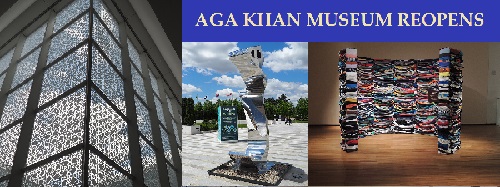
Sit in the Aga Khan Museum’s courtyard, sip a latter, have a biscotti, visit Prince Sadruddin Aga Khan’s collection of Islamic ceramics in the Bellerive Room, listen to performance by Afraaz Mulji and then walk through the Aga Khan Park. Enjoy July 12 at the Aga Khan Museum. Register (preferable) your visit at RESERVE TICKET. NOTE: Entrance to the Museum during the first month of reopening is Free or Pay as You Wish. For story on performance on July 11, 2020, please click A beautiful rendition of Nashid al Imamah by Afraaz Mulji at Aga Khan Museum
The Aga Khan Museum, closed since March 13, 2020, reopened after more than 100 days. Malik Merchant was present for the opening and shares his experience with story and photos…..MORE ON SIMERGPHOTOS
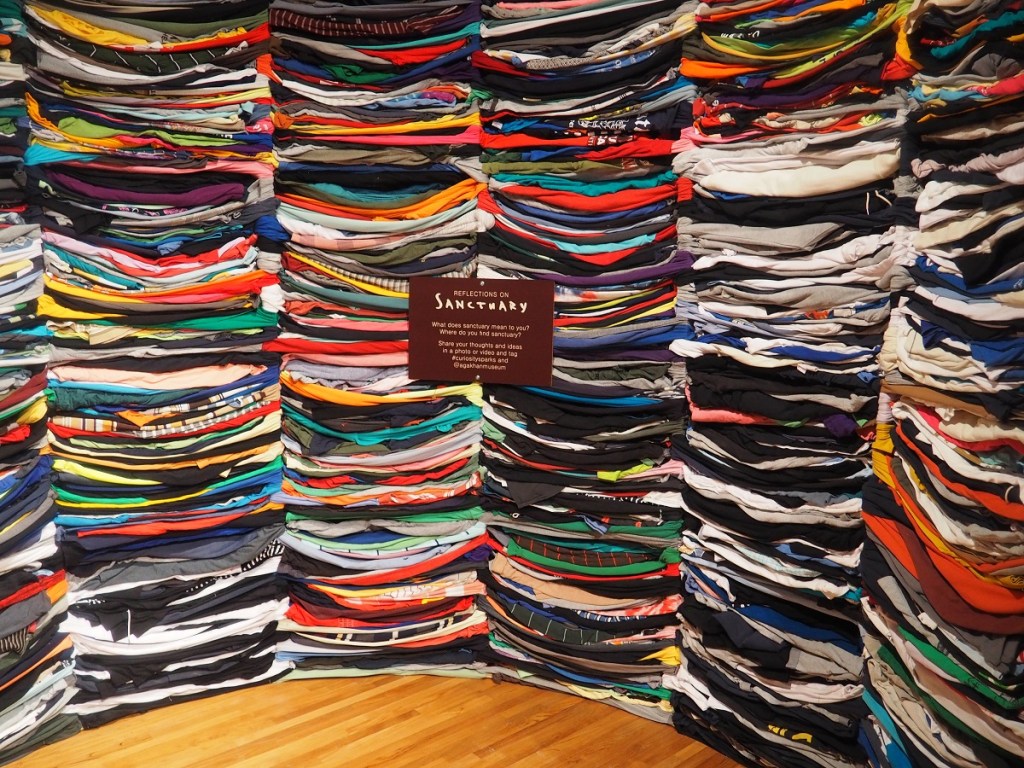
Sanctuary, a current exhibition running at the reopened Aga Khan Museum. Please click on image for reopening story and photos. Photo: Malik Merchant /Simerg.
The Aga Khan Museum in Toronto reopens to the public on Saturday, June 27, 2020. As a passionate supporter of the Museum, Simerg’s Malik Merchant decides to visit the grounds on the penultimate day of the reopening to take some pictures. Please click on image below or Aga Khan Museum Reopening Countdown Photos
Please click on photo for Aga Khan Museum countdown to reopening.
The following piece has been compiled and adapted from material supplied by the Aga Khan Museum; it incorporates notes by Dr. Ulrike al-Khamis, the Museum’s Director of Collections and Public Programs.
From Mecca to Toronto
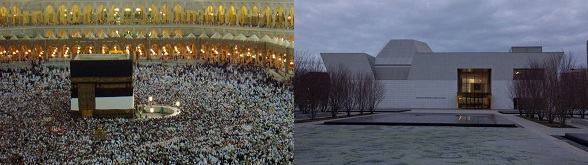
Ka’ba in Mecca. Photo: Aga Khan Museum; Toronto’s Aga Khan Museum. Photo: Rian Dewji.
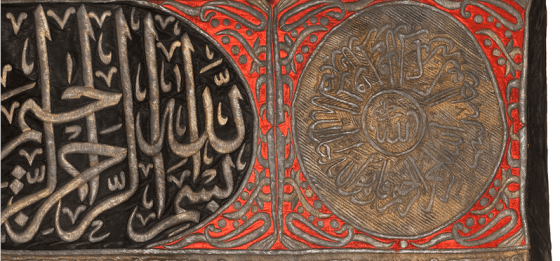
On display for the first time in Toronto is a 100-year-old silk fragment from a hizam — part of a ceremonial draping that covers the Ka’ba, Islam’s holiest site to which millions of Muslims made the annual pilgrimage on Friday August 9, 2019.
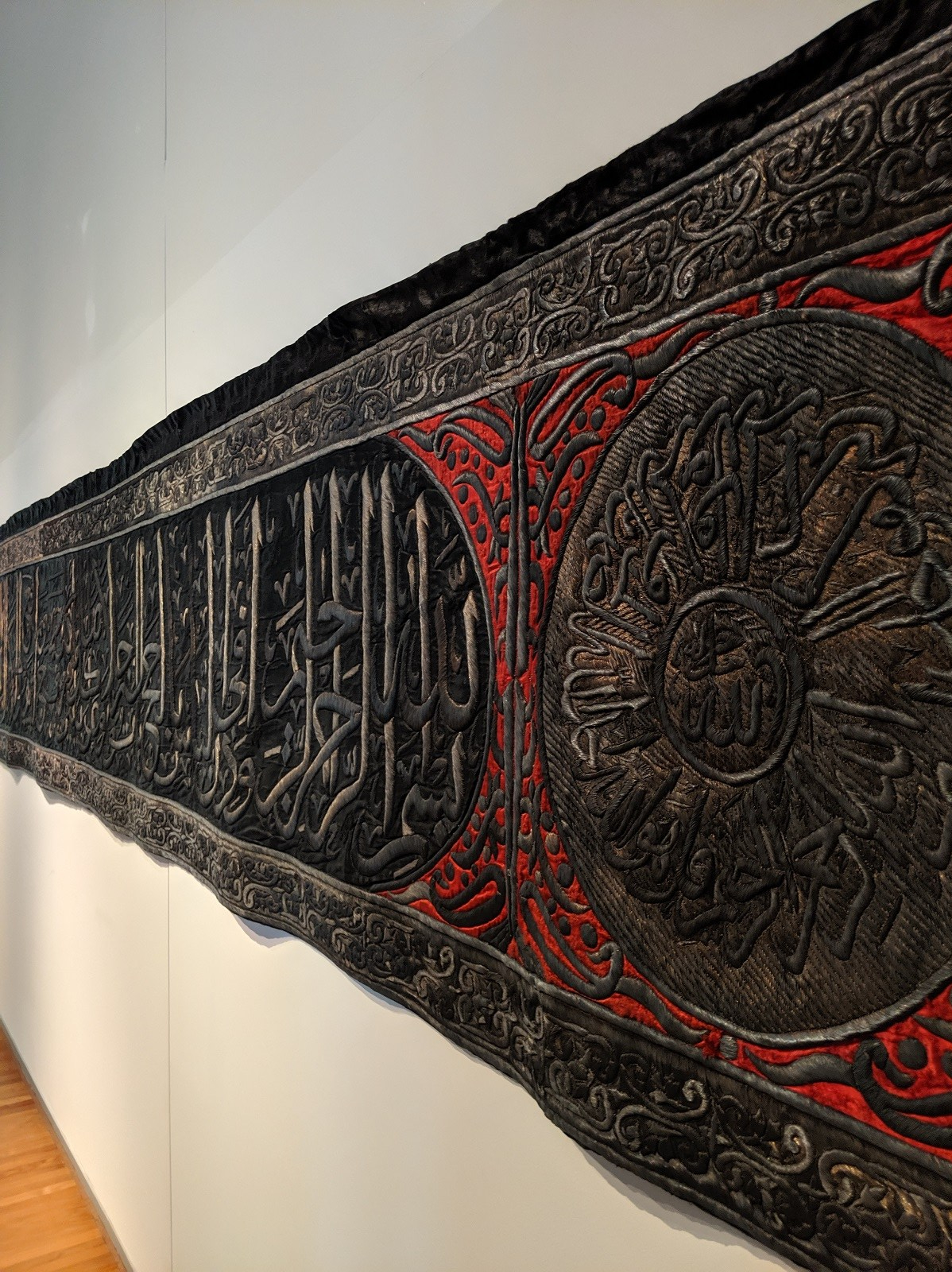
The Ka’ba is draped in a black ceremonial covering known as the kiswa, and around the upper part of the kiswa runs the hizam — an ornamented belt embroidered in silver and silver-gilt thread with Qur’anic verses relating to the pilgrimage.
This hizam is one of the Aga Khan Museum’s most significant textiles and is on special display until September 9, 2019. Measuring eight metres long and nearly one metre tall, it once belonged to a kiswa that measured 47 meters and was made in Cairo around the early 20th century.
This textile from the Ka’ba is on display at the Aga Khan Museum until September 9, 2019. Free viewing was available during celebrations marking the Hajj and Eid al-Adha from August 10-14. Photo: The Aga Khan Museum.
As one of the most prominent kiswa ornaments, the hizam traditionally runs the length of the Ka‘ba’s upper perimeter. The inscription here contains verses 27-29 from chapter 22 (Al-Hajj) of the Qur’an:
“And proclaim to mankind the hajj. They will come to you on foot and on every lean camel, they will come from every deep and distant mountain highway. That they may witness things that are of benefit to them, and mention the name of Allah on appointed days, over the beast of cattle that He has provided for them. Then eat thereof and feed therewith the poor who have a very hard time. Then let them complete their prescribed duties and perform their vows, and circumambulate the Ancient House.”
The roundels contain further Qur’anic references that mention ‘God the Eternal’ as well as the Prophet Muhammad.
The Ka‘ba receives a new drape every year during the pilgrimage season. After it ends, the kiswa is taken down, divided and either gifted to dignitaries or sold to raise money for charity.
Note: The museum is open everyday from 10 am to 6 pm (8 pm on Wednesdays). It is closed on Mondays, except holiday Mondays.
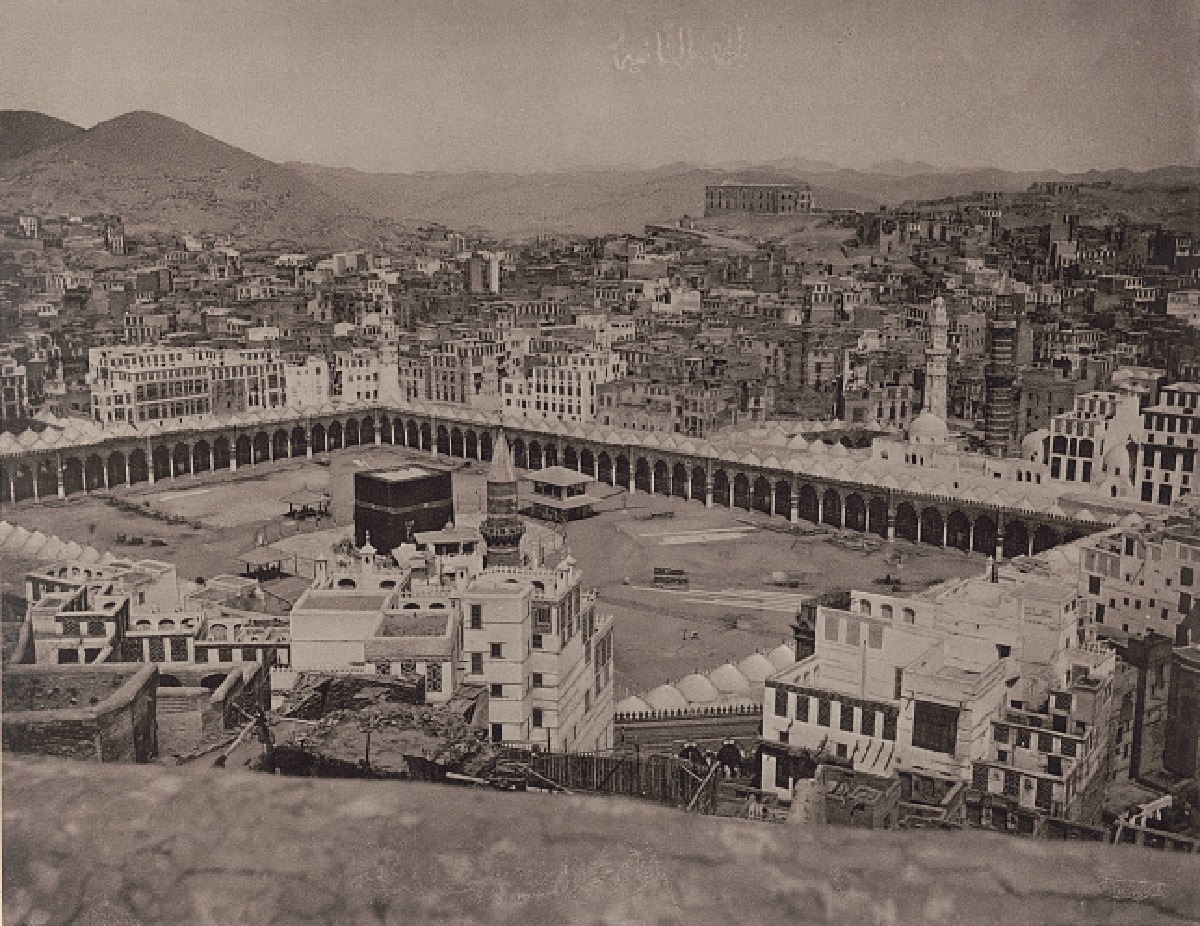
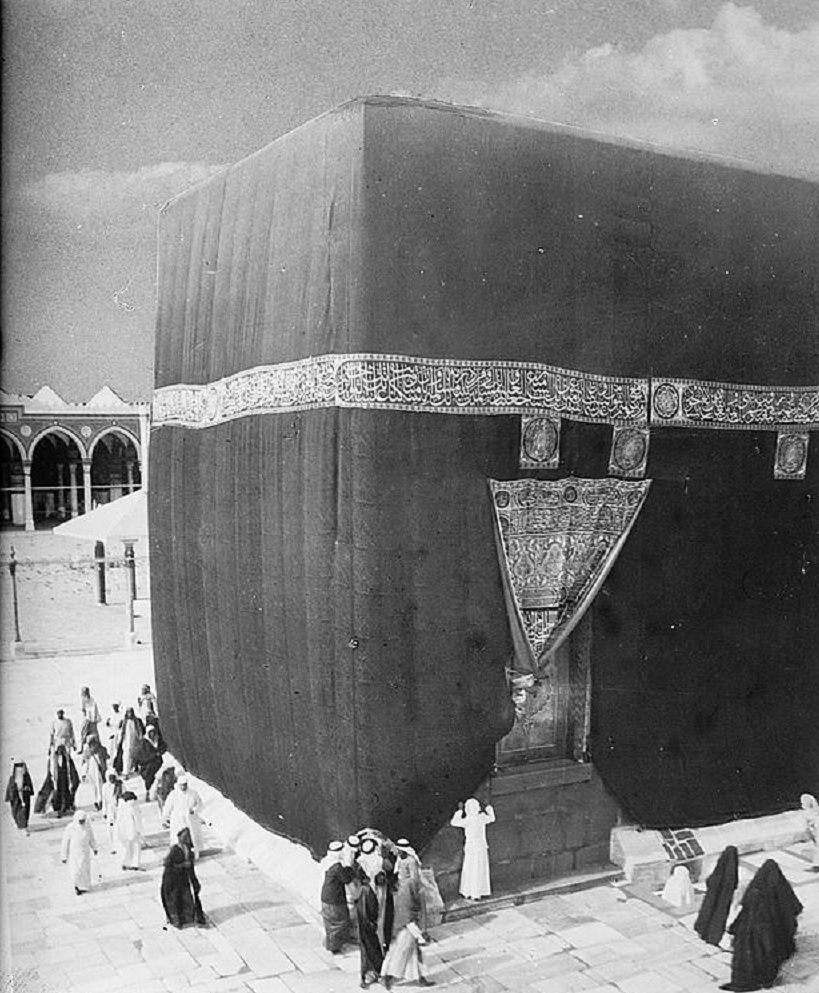
19th/20th Century Views of Ka’ba
A bird’s eye view of the Ka’ba as photographed in 1889. Note the hizam that runs around the upper part of the Ka’ba. Photo: US Library of Congress.
ca. 1910. A close-up photo of the Ka’ba with the hizam running around the upper part of the black cloth (the kiswa). Photo: US Library of Congress.
Date posted: August 7, 2019. Last updated: August 15, 2019.
[Before leaving this page, please take a moment to visit Simerg’s Table of Contents for links to a vast and rich collection of articles and photographs published on this blog as well as its two sister blogs Barakah and Simergphotos.]







 Simerg - Insights from Around the World