
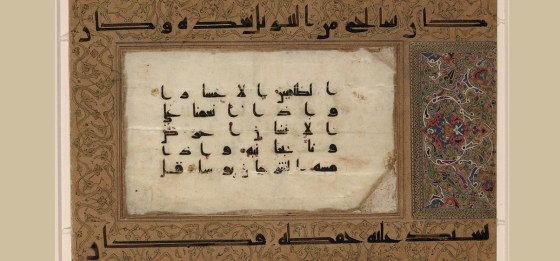
And We send down, of the Koran, that which is a healing and a mercy to the believers; and the unbelievers it increases not, except in loss — 17:82
Prepared and compiled by MALIK MERCHANT
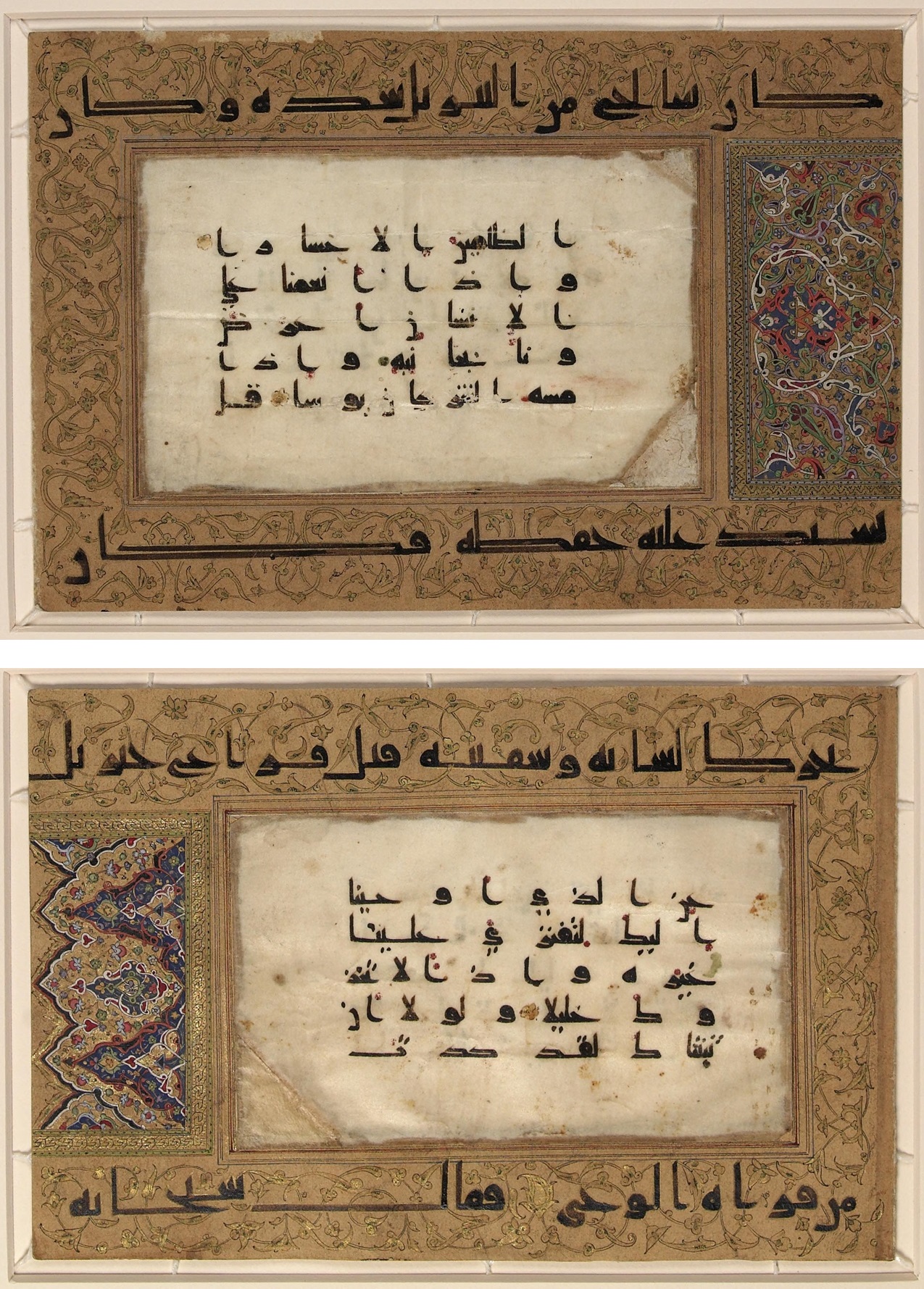
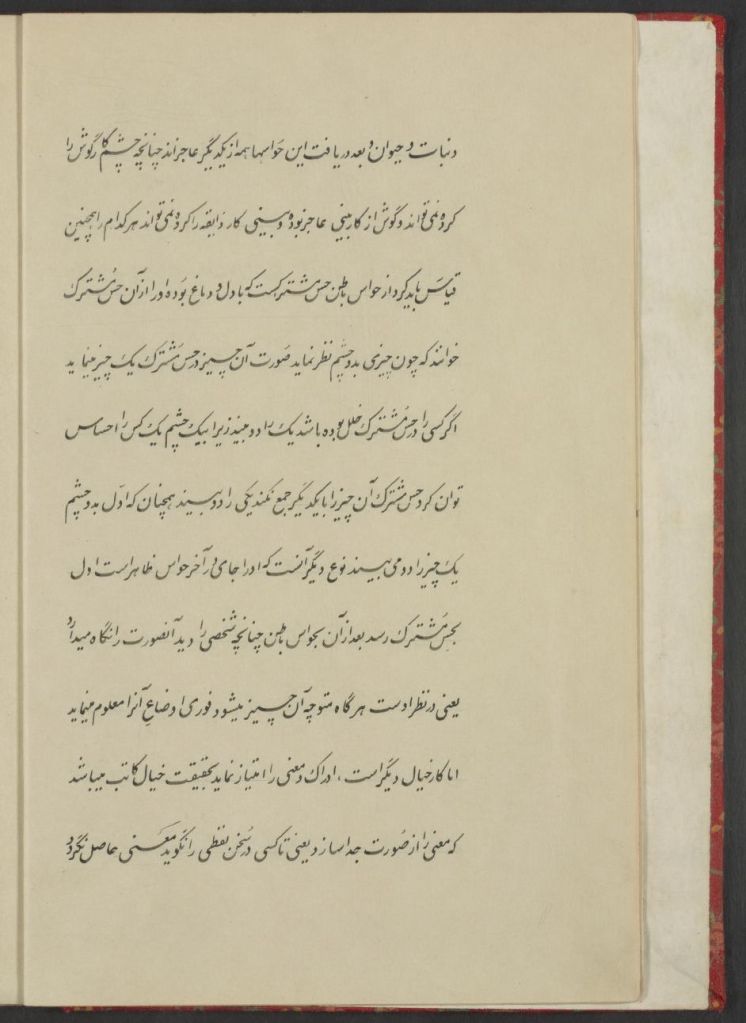
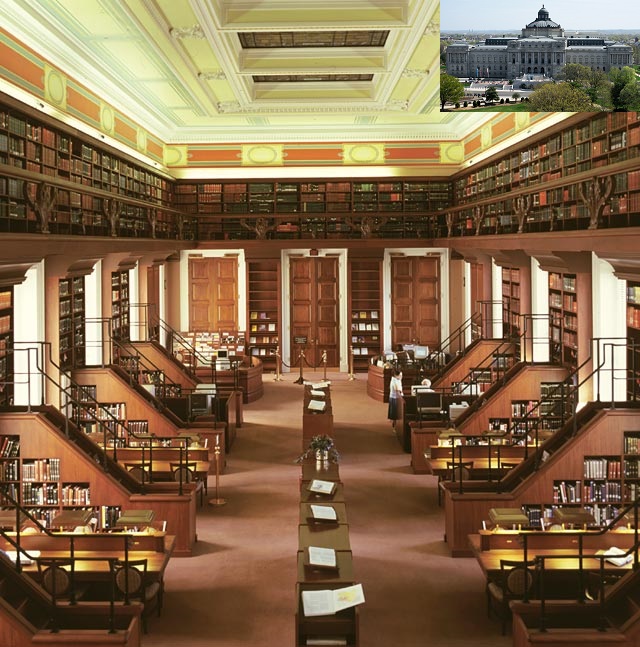
Chapter 17 of the Holy Qur’an known as Suraj I-isra (The Night Journey) or Bani Israel (The Children of Israel), describes several events, including the Prophet Muhammad’s (May peace be upon him and his progeny) night journey (Isra’) to Jerusalem and his ascension (Mi’raj) through the skies. The two fragments from the USA Library of Congress (LOC) shown in this post below are from Chapter 17, Verses 73-84, and describe the value of prayer and the Qur’an. These Qur’anic fragments are written in Kufi script on parchment. In-depth details of these fragments can be found on the LOC website HERE.
We present pertinent verses from the Qur’an on the night of Mir’aj and prayer, followed by a brief explanation of the holy night and its significance among the Shia Ismaili Muslims.
Verses from Suraj I-isra
Glory be to Him, who carried His servant by night from the Holy Mosque to the Further Mosque the precincts of which We have blessed, that We might show him some of Our signs. He is the All-hearing, the All-seeing — 17:1
Say: ‘Call upon God, or call upon the Merciful; whichsoever you call upon, to Him belong the Names Most Beautiful.’ And be thou not loud in thy prayer, nor hushed therein, but seek thou for a way between that — 17:110
Perform the prayer at the sinking of the sun to the darkening of the night and the recital of dawn; surely the recital of dawn is witnessed — 17:78
And as for the night, keep vigil a part of it, as a work of supererogation for thee; it may be that thy Lord will raise thee up to a laudable station — 17:79
The Night of Miraj is observed by Muslims around the world on the 27th night of the seventh month of
And whosoever desires the world to come and strives after it as he should, being a believer — those, their striving shall be thanked — 17:19
Your Lord knows very well what is in your hearts if you are righteous, for He is All-forgiving to those who are penitent. — 17:25.
___________
Mi’raj among the Shia Ismaili Muslims: The Imam-of-the-Time Leads his followers to spiritual elevation
The night of Mi’raj falls on the 27th day of Rajab, the seventh month in the Islamic lunar calendar, which is 11 days shorter than the Gregorian calendar. Thus, in 2025, Miraj falls on or around January 26 or 27, 2025, depending on when the moon was sighted.
Mi’raj is an Arabic word that literally means a ‘ladder’ and refers to an experience in the life of Prophet Muhammad during the night. Interpretations of the Mi’raj include a literal event in which the Prophet Muhammad first travelled to Jerusalem before mounting a horse called Buraq and being taken to God’s Throne. Along the flight, he met with the great Prophets, including Abraham, Moses, and Jesus (may peace be on them).
However, among Sufis and other Islamic esoteric traditions, such as those practiced by the Shia Ismaili Muslims, Mi’raj is considered the highest point of spiritual perfection an individual can attain through religion and the practice of faith.
Believers long to experience a Mi’raj, just as the Prophet experienced it. The Shia Ismailis seek out this spiritual elevation under the guidance of the Imam-of-the-Time, presently Mawlana Shah Karim Al-Hussaini Hazar Imam, His Highness the Aga Khan, who leads his followers to self-awareness, spiritual insight and elevation. This is clearly noted in the Preamble of the Ismaili Constitution in paragraph (F), which reads:
“Historically and in accordance with Ismaili tradition, the Imam of the time is concerned with spiritual advancement as well as improvement of the quality of life of his murids. The Imam’s ta‘lim lights the murid’s path to spiritual enlightenment and vision. In temporal matters, the Imam guides the murids, and motivates them to develop their potential.”
His Highness the Aga Khan, the 49th Hereditary Imam, is a direct descendant of Hazrat Ali (may peace be upon him) whose remarkable teachings, preserved in works such as Nahj al-Balaghah, have a profound impact on all Shia Muslims, including the Ismailis. Another literary work, known as the Kalam-i Mawla, poems of Imam Ali, is not just historical text but holds a personal relevance to the community members. These verses, rendered in Hindi, delve deep into individuals’ conduct, behaviour, and actions during their lives on earth (please read Farouk Topan’s excellent piece Kalam-i-Mawla).
We are pleased to provide a recitation of verses from the Kalam of Hazrat Ali that focus on ethics, spirituality and the Mi’raj of the Prophet Muhammad. The verses are recited by Alnoor Saleh and have been downloaded from the website Ginans Central, which is maintained by Karim Tharani of the University of Saskatchewan.
Date posted: January 25, 2025.
___________________



 Simerg - Insights from Around the World