Ideas of One Humanity in World Religions: Comparative Study of Ginan “Hum dil Khalak Allah Sohi Vase” by Shiraz Pradhan, With a Recitation

Be careful of your duty to your Lord Who created you from a single soul….” – Holy Qur’an, 4:1

Instability is infectious, but so is hope. And that it is why it is so important for us to carry the torch of hope as we seek to share the gift of pluralism….Profound expressions about our common humanity are embedded in the world’s great religious traditions, including my own…” — His Highness the Aga Khan, Lisbon, June 12, 2014.

Credit: Istockphoto.com. Please click on image for "One Humanity"

Image Credit: Istockphoto.com. Copyright. Please click on image for “One Humanity”

PLEASE CLICK: Ideas of One Humanity, Love and Peace in World Religions: Comparative Study of Ginan “Hum dil Khalak Allah Sohi Vase” with a Hindu Bhajan

Openness to Diversity and Pluralism in Human Hearts and Minds Necessary for Humanity’s Progress and Social Convergence, Says His Highness the Aga Khan, 49th Ismaili Imam, at North-South Award Ceremony

The following are thematic excerpts from remarks made by His Highness the Aga Khan at the North-South Prize Ceremony, Senate Hall, Parliament, Lisbon, on June 12, 2014.

Bismillah-ir-Rahman-ir-Rahim

THE CEREMONY’S SIGNIFICANCE

 His Excellency Aníbal Cavaco Silva, the President of the Republic of Portugal presents His Highness the Aga Khan with the 2013 North-South Prize. - Photo: AKDN/ José Manuel Boavida Caria


His Excellency Aníbal Cavaco Silva, the President of the Republic of Portugal presents His Highness the Aga Khan with the 2013 North-South Prize. – Photo: AKDN/ José Manuel Boavida Caria

This award, first of all, has special significance because of who shares it – Madame Suzanne Jabbour. Her dedication to those who are tortured is an example that inspires us all. I know she will agree when I mention the list of those – from both South and North – who have received this award since 1995. It is a moving experience to have one’s work recognized alongside theirs.

…this prize has particular meaning because of those who organize it – the men and women of the North-South Centre of the Council of Europe, who contribute so much to advancing democratic citizenship in our world. The Aga Khan Development Network has been proud to join with the Centre in distinguished projects such as the annual Lisbon Forum held at the Ismaili Centre.

The significance of this award is also enhanced for me by the fact that it has been presented by the President of Portugal, in the presence of so many eminent leaders, and in this splendid Parliamentary setting.

THE IMAMAT, AKDN, PORTUGAL AND THE NORTH-SOUTH PRIZE

The Ismaili Imamat and the Aga Khan Development Network have had a long, close relationship with Portugal, built on shared values. Over many centuries, Portugal has welcomed and integrated people of diverse cultures. It was here on the Iberian Peninsula that Al-Andulus flourished for so long as a model of effective pluralism, a home for Christian and Jewish peoples that was also part of an Islamic empire….

The North-South prize affirms principles which have long been animated and sustained by the work of the Aga Khan Development Network. Our Network seeks in many ways to improve the quality of human life, in health, education, in cultural and economic development. But our core conviction is that human progress depends on human cooperation, even across difficult lines of division.

 A PLEA FOR RICHER DIALOGUE, DEEPER EDUCATION AND RECOGNITION OF THE BLESSINGS OF PLURALISM

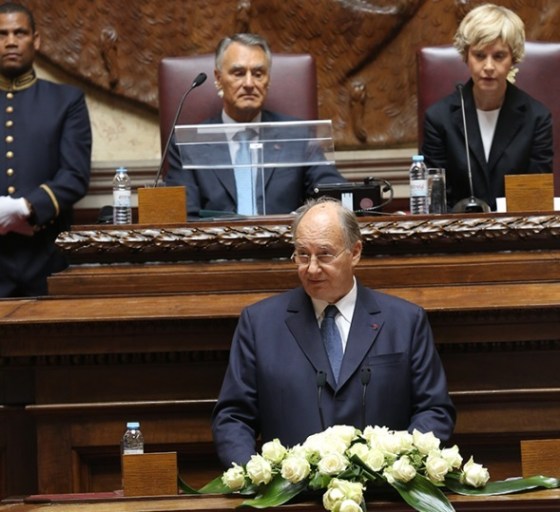
His Highness the Aga Khan addresses the North-South Prize Ceremony in the Senate Hall of the Portuguese Parliament as His Excellency Aníbal Cavaco Silva, the President of the Republic of Portugal and President of the Assembly of the Republic, Maria Assunção Esteves look on. - Photo: AKDN/ José Manuel Boavida Caria

His Highness the Aga Khan addresses the North-South Prize Ceremony in the Senate Hall of the Portuguese Parliament as His Excellency Aníbal Cavaco Silva, the President of the Republic of Portugal and President of the Assembly of the Republic, Maria Assunção Esteves look on. – Photo: AKDN/ José Manuel Boavida Caria

As I observe the world, I am struck by the insufficiency of well-informed debate, of richer dialogue, of deeper education in our quest to avoid human conflict. That insufficiency often plagues relations between the North and the South– and increasingly between the North and the Islamic world. Some have called this a clash of civilizations—I think it is, essentially, a clash of ignorances. What it means, in any case, is that institutions such as the North-South Centre have never been more important.

A related problem is the failure of so many to recognize that pluralism is not only a growing fact of life but also a blessing for their communities—an opportunity to be welcomed rather than a threat to be feared.

Since ancient times, great cultures have thrived because of their openness to diversity, and not because of their exclusivity.

ANTONIO GUTERRES AT GLOBAL CENTRE FOR PLURALISM

It was to address this issue that the Government of Canada and I created a new Global Centre for Pluralism in Ottawa in 2006.

Recently the Global Centre held its Third Annual Pluralism Lecture….our guest lecturer was Antonio Guterres, United Nations High Commissioner for Refugees since 2005….His recent Lecture described, eloquently, the unprecedented scale and severity of the world’s refugee crises. He addressed, passionately, the moral challenge this crisis presents, the tragic impulse of some to exploit it, and the critical importance of standing together on behalf of human tolerance. I commend his words to you; they resonate powerfully with the purposes of the North-South Centre.

We inhabit an overcrowded and interconnected planet and yet we share a common destiny. A weakness or pain in one corner can rapidly transmit itself across the globe. The pervasive rejection of pluralism in all its forms plays a significant role in breeding destructive conflicts.

An example is the current situation in the Middle-East, where conflict is having a profound destabilising impact — in the region but also well beyond — including here in Europe.

TRADITIONAL VALUES AND THE GIFT OF PLURALISM

Instability is infectious, but so is hope. And that it is why it is so important for us to carry the torch of hope as we seek to share the gift of pluralism.

Pluralistic values have been articulated since ancient times. Profound expressions about our common humanity are embedded in the world’s great religious traditions, including my own. But now it is for us to re-articulate those traditions. As we do so, our support for one another can be a source of renewed and growing strength.

WHAT CAN SAVE US?

It is ironic that a sense of intensified conflict comes at a time of unprecedented breakthroughs in communication technology. At the very time that we talk more and more about global convergence, we also seem to experience more and more social divergence. The lesson it seems to me is that technologies alone will not save us– the critical variable will always be and will always lie in the disposition of human hearts and minds.

I am grateful for the opportunity to share with all of you in this experience – and in the great purposes to which it calls us.

__________

For complete speech and photo gallery please visit the following websites:

http://www.akdn.org
http://www.theismaili.org

For links to numerous other pieces on the Award Ceremony please click on http://www.ismailimail.wordpress.com.

For a comprehensive coverage of the speeches of His Highness the Aga Khan, please click on http://www.nanowisdoms.org.

Notes on Neoplatonism With Article and Audio on Ismaili Philosopher and Scientist Avicenna

The philosophical school of Neoplatonism provided ways that the individual could ascend the ladder of being through theoria – contemplation of the Divine. The ultimate goal of life is to achieve mystical union with the Divine (the One)…Many people think that Neoplatonism flourished only in the Roman Empire around the third and fourth centuries CE. However, it re-emerged again in the Islamic lands in later centuries. This new post is presented from a special issue of the Rosicrucian Digest and includes the story of Avicenna, the great Muslim Neoplatonic philosopher and mystic as well as a scientist who influenced Western thought for hundreds of years. The Ismailis consider Avicenna as one of their own.

PLEASE CLICK: Introductory Notes on Neoplatonism and “Return to the One”, With Article and Audio About the Works of the Great Ismaili Thinker Avicenna

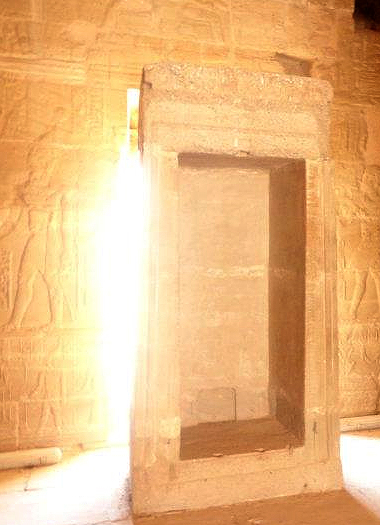
Divine light - Ancient Egypt. Please click on image for article on Neoplatonism and Avicenna.

Divine light – Ancient Egypt.
Please click on image for article on Neoplatonism and Avicenna.

The Holy Qur’an: An Anecdote from His Highness the Aga Khan’s Visit to an Ismaili Religious Night School

In this piece Kamaluddin Mohammed, a prominent and highly respected Ismaili scholar and missionary explains the importance of studying the Holy Qur’an, and gives an anecdote from a religious night school visit made by the current 49th Imam of the Ismailis, His Highness the Aga Khan, during his visit to India in 1967.

PLEASE CLICK:  Ismaili Children’s Understanding of the Holy Qur’an Gives Immense Happiness to Mawlana Hazar Imam

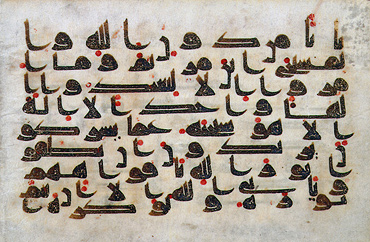
Calligraphy writing has been a preeminent Islamic art since the seventh century when the Qur'an was revealed to Prophet Muhammad and recorded in the Arabic language. Controlled, angular lettering called Kufic script was commonly employed in the writing of early Qurans. This folio from the Qur'an, is Sura 9, "Repentance" (al-Tauba), verses 31-32, Near East or North Africa, ca. 900. Photo:  Doris Duke Foundation for Islamic Art. Please click on image for article.

Calligraphy writing has been a preeminent Islamic art since the seventh century when the Qur’an was revealed to Prophet Muhammad and recorded in the Arabic language. Controlled, angular lettering called Kufic script was commonly employed in the writing of early Qurans. This folio from the Qur’an, is Sura 9, “Repentance” (al-Tauba), verses 31-32, Near East or North Africa, ca. 900. Photo: Doris Duke Foundation for Islamic Art. Please click on image for article.

His Highness the Aga Khan Shows Path to Renew and Re-Express the Post Millennium Development Goals Agreed on by World Leaders in 2000

Compiled and presented by Abdulmalik Merchant
(Editor-Publisher, http://www.simerg.com and http://www.simergphotos.com)
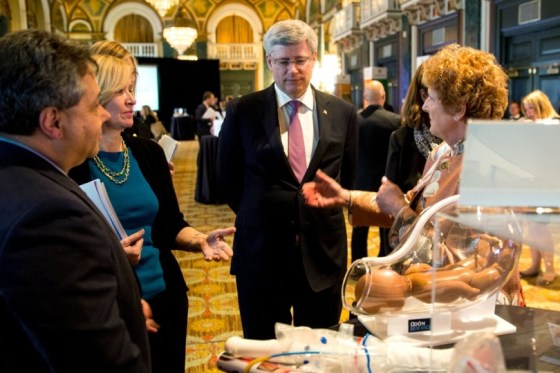
Prime Minister Stephen Harper receiving an explanation about an exhibit displaed at the summit Saving Every Woman, Every Child: Within Arm’s. Phooto: The website of the Prime Minister of Canada.

Prime Minister Stephen Harper receiving an explanation about an exhibit displayed at the summit Saving Every Woman, Every Child: Within Arm’s Reach. Photo Credit: The website of the Prime Minister of Canada.

Editor’s note: In 2000 world leaders joined together in an unprecedented UN summit to develop a blueprint to meet the needs of the world’s poorest, with the targeted date of 2015.  The leaders along with the support of worldwide institutions set the following eight goals in what became known as the Millennium Development Goals (MDGs):

  • Eradicate Extreme Hunger and Poverty
  • Achieve Universal Primary Education
  • Promote Gender Equality and Empower Women
  • Reduce Child Mortality
  • Improve Maternal Health
  • Combat HIV AIDS Malaria and Other Diseases
  • Ensure Environmental Sustainability
  • Develop a Global Partnership for Development

A special summit in Toronto under the theme Saving Every Woman Every Child: Within Arm’s Reach, is addressing some of the MDGs goals and we are pleased to publish below excerpts from His Highness the Aga Khan’s remarks made at the summit on May 29, 2014.

~~~~~

Bismillah-ir-Rahman-ir-Rahim

His Highness the Aga Khan, 49th Ismaili Imam and the direct descendant of the Prophet Muhammad (s.a.s), delivers keynote remarks at the Maternal, Newborn and Child Health Summit in Toronto on 29 May 2014. Photo: The Ismaili/Zahur Ramji.

His Highness the Aga Khan, 49th Ismaili Imam and the direct descendant of the Prophet Muhammad (s.a.s), delivers keynote remarks at the Maternal, Newborn and Child Health Summit in Toronto on 29 May 2014. Photo: The Ismaili/Zahur Ramji.

I. THE ISMAILI IMAM EXPLAINS HIS PRESENCE

“Like you, I am here today because of my conviction that improving maternal, neonatal and child health should be one of the highest priorities on the global development agenda. I can think of no other field in which a well-directed effort can make as great or as rapid an impact.

“I am here, as well, because of my enormous respect for the leadership of the Government of Canada in addressing this challenge. And I am here too, because of the strong sense of partnership which our Aga Khan Development Network has long experienced, working with Canada in this critical field.

“Leadership and partnership – those are words that come quickly to mind as I salute our hosts today and as I greet these distinguished leaders and partners in this audience.”

II. THE MUSKOKA INITIATIVE AND ONE OF ITS OFF-SHOOTS

“Mr Prime Minister – I recall how our partnerships were strengthened four years ago when you launched the Muskoka Initiative. It led to an important new effort in which our Network has been deeply involved in countries such as Afghanistan, Pakistan, Tanzania, Mozambique, and Mali.

“In all of these efforts, we’ve built on our strong history of work in this field. It was 90 years ago that my late grandfather founded the Kharadhar Maternity Home in Karachi. In that same city, for the last thirty years, the Aga Khan University has worked on the cutting edge of research and education in this field – including its new specialised degree in midwifery.”

III. WHAT THE AGA KHAN UNIVERSITY’S NEW REPORT REVEALS, AND HOW THE WORK OF AKDN WORK IMPACTS MILLIONS

“One of our Aga Khan University scholars [Dr. Zulfiqar Bhutta] helped fashion the new series of reports on this topic that was released last week – an effort that involved more than 54 experts from 28 institutions in 17 countries. The reports tell us that right intensified steps can save the lives of an additional 3 million mothers and children annually.

“To that end, our Development Network has also focused on building durable, resilient healthcare systems. One example is the not-for-profit health system by the Aga Khan Health Service in Northern Pakistan – a community-based network of facilities and health workers, including a growing number of nurse-midwives.
Photo: The Government of Canada.

Photo: The Government of Canada.

“We have extended these approaches to other countries, including a remarkable partnership in Tanzania funded by the Canadian government and implementing in close partnership with the Tanzanian government.

“Such AKDN activity now serves some two-and-a-half million people in 15 countries, with 180 health centres both in urban and rural areas, often in high-conflict zones, and embracing some of the world’s poorest and most remote populations.

“Last year alone, these facilities served nearly 5 million visitors, inpatients and outpatients, with more than 40,000 newborn deliveries.

IV. HIS HIGHNESS SHARES WHAT HIS NETWORK
HAS LEARNED FROM EXPERIENCE

“So our experience has been considerable. But what have we learned from it? Let me share a quick overview.

1. Sustainable Systems

“First, I would underline that our approaches have to be long-term. Sporadic interventions produce sporadic results, and each new burst of attention and activity must then start over again. The key to sustained progress is the creation of sustainable systems.

2. Local Ownership

“Second, our approaches should be community-oriented. Outside assistance is vital, but sustainable success will depend on a strong sense of local “ownership”.

3. Broad Health-Care Focus

“The third point I would make is that our approaches should support the broad spectrum of health care. Focusing too narrowly on high-impact primary care has not worked well – improved secondary and tertiary care is also absolutely essential.

4. New Financial Models – Savings Groups, Debts Financing, Tax-Privileged Donations

“Our approaches should encourage new financial models. Donor funding will be critical, but we cannot sustain programmes that depend on continuing bursts of outside money. Let me underscore for example, the potential of local “savings groups” and micro-insurance programmes, as well as the under utilised potential for debt-financing. Also – and I think this is very, very important indeed – we have watched for many years as many developing countries, and their economies of course, have created new financial wherewithal among their people. These growing private resources can and I think should, help social progress, motivated by a developing social consciousness and by government policies that encourage tax-privileged donations to such causes.

5. Reaching the Hardest to Reach with Modern Communications Technology

“Our approaches should also focus on reaching those who are hardest to reach. And here, new telecommunications technologies can make an enormous impact. One example has been the high-speed broadband link provided by Roshan Telecommunications, one of our Network’s companies, between our facilities in Karachi and several localities in Afghanistan and in Tajikistan. This e-medicine link can carry high-quality radiological images and lab results. It can facilitate consultations among patients, doctors and specialists at various centres. And it can contribute enormously to the effective teaching of health professionals in remote areas.

6. Multi-Sectoral Challenges Need Effective Multi-Input Coordination

“Our approaches should be comprehensive, working across the broad spectrum of social development. The problems we face have multiple causes, and single-minded, “vertical” interventions often fall short. The challenges are multi-sectoral, and they will require the effective coordination of multiple inputs. Creative collaboration must be our watchword. This is one reason for the growing importance of public-private partnerships.

“These then are the points I would emphasise in looking back at our experience. I hope they might be helpful as we now move into the future, and to the renewal and re-expression of the Post Millennium Development Goals.”

V. THE USEFULNESS OF MEETINGS –  BUT PARTNERS MUST TALK AND WORK WELL TOGETHER THROUGH CANDID EXCHANGE

His Highness the Aga Khan, President Kikwete of Tanzania and Prime Minister Stephen Harper of Canada, who hosted the 3 days summit in Toronto. Photo: The website of the Prime Minister of Canada. Copyright.

His Highness the Aga Khan with President Jakaya Kikwete of Tanzania and Prime Minister Stephen Harper of Canada, who hosted the summit in Toronto. Photo credit: The website of the Prime Minister of Canada. Copyright.

“As we undertake the new planning process, the opportunity to exchange ideas at meetings of this sort can be enormously helpful. And potential partners must be able to talk well together if they are going to work well together.

“I would hope such occasions will be characterised by candid exchange, including an acknowledgment of where we have fallen short and how we can do better. The truth is that our efforts have been insufficient and uneven. We have not met the Post Millennium Development Goals.”

VI. LEVERAGING PROGRESS THROUGH THE FIELD OF MATERNAL AND NEWBORN HEALTH

“At the same time, we must avoid the risk of frustration that sometimes accompanies a moment of reassessment. Our challenge – as always – is a balance [between] honest realism with hopeful optimism.

“And surely there are reasons to be optimistic.

“In no other development field is the potential leverage for progress greater than in the field of maternal and newborn health.”

VII. RESULTS: THE HEARTENING EXAMPLE OF AFGHANISTAN

“….I thought I might close by talking about some of the results. My example comes from Afghanistan – a heartening example from a challenging environment.

“The rural province of Afghan Badakhshan once had minimal infrastructure and few health-related resources. Less than a decade ago it had the highest maternity mortality ratio ever documented.

“It was about that time that the Afghan government, supported by international donors, contracted with the Aga Khan Health Service to create a single non-governmental health organisation in each district and in each province. Today, the Badakhshan system alone includes nearly 400 health workers, 35 health centres, two hospitals, serving over 400,000 people. Its community midwifery school has graduated over 100 young women.

“The impact has been striking. In Badakhshan in 2005, six percent of mothers died in childbirth – that is 6,000 for every 100,000 births. Just eight years later, that number was down twenty-fold – for every 100,000 live births, death has gone from 6,000 down to 300.

“Meanwhile, infant mortality in Badakhshan has fallen by three-quarters, from over 20 percent to less than 6 percent.”

VIII. CHILDBIRTH RISKS GAPS ARE NOT DESTINED – WITH SCIENCE AND EFFECTIVE COORDINATION RISKS CAN BE TRANSFORMED FOR THE BETTER

“For most of the world, science has completely transformed the way life begins, and the risks associated with childbirth. But enormous gaps still exist. These gaps are not the result of fate – they are not inevitable. They can be changed, and changed dramatically.

“When government and private institutions coordinate effectively in challenging a major public problem, as this example demonstrates, we can achieve substantial, genuine, quantifiable progress – and fairly rapidly.

“This is the story we need to remember, and this is the sort of action we need to take as leaders and as partners in addressing one of the world’s most critical challenges.”

Date posted: Friday, May 30, 2014.

________________

Photos and text used in this post compilation were obtained from the following sources.

1. http://www.pm.gc.ca (Prime Minister of Canada)
2. http://www.akdn.org (the Aga Khan Development Network)
3. http://www.theismaili.org (official website of the Ismaili Community)
4. http://www.undp.org/content/undp/en/home/mdgoverview/
(The Millennium Development Goals)

The Light of Imamat Continues to Shine Forever – “Light Upon Light” by Ikhwan Allani

Ikhwan Allani of Toronto, Canada, is fascinated by the beauty of poetry, especially in the expression of mystical knowledge and devotion. In this poem, he illustrates a technique to embed an esoteric aspect of the Ismaili tariqah through a universal medium such as poetry. Please click on Light Upon Light or on the image below.

Image credit: Irfan Lakhani/Saniya Hussain. Copyright. Please click on image for "Light Upon Light" by Ikhwan Allani.

Image credit: Irfan Lakhani/Saniya Hussain. Copyright. Please click on image for “Light Upon Light” by Ikhwan Allani.

Mi’raj-e-Rasul – The Night Journey of the Prophet Muhammad (s.a.s.) by Jehangir A. Merchant

PLEASE CLICK: An Esoteric Interpretation of the Mi’raj and the Prophetic Tradition ‘I Have a Time with God’ (li ma’a Allah waqt) By Jehangir A. Merchant

This painted page from a manuscript shows the Archangel Gabriel with the Prophets Moses (left) and Muhammad (right). Surrounded by angels they discuss the question of daily prayers. This happened during Prophet Muhammad’s ascent to heaven. Because it was forbidden to show Muhammad, his face is veiled. Image: Copyright Museum With No Frontiers (MWNF). Please click on image for literary reading.

This painted page from a manuscript shows the Archangel Gabriel with the Prophets Moses (left) and Muhammad (right). Surrounded by angels they discuss the question of daily prayers. This happened during Prophet Muhammad’s ascent to heaven. Because it was forbidden to show Muhammad, his face is veiled. Image: Copyright Museum With No Frontiers (MWNF). Please click on image for literary reading.

DETAILS OF THE IMAGE

This single sheet probably came from a handwritten work completed for the Ottoman Sultan Murad III (r. AH 982–1003 / AD 1574–95), and is currently housed at the Museum of Islamic Art at the Pergamon Museum in Berlin, Germany. It features, between bands of script, the prophets Moses and Muhammad and the Archangel Gabriel conversing in heaven. Angels, perched on five clouds behind these three principal characters, appear to be listening. The scene portrayed is one from Muhammad’s visionary ascension to heaven. Muhammad stands on the right-hand side in a long green robe and turban, and Moses, wearing a long dark red robe, is on the left, in front of his heavenly throne, which is denoted by an inscription in Arabic lettering. Moses is gesturing his hands in speech. Muhammad, with whom he is conversing, stands on the opposite side. A white veil conceals his face, while his hands are hidden in the long sleeves of his gown. The heads of both prophets are crowned with halos, within which their names, written in a black script, can be deciphered. The Archangel Gabriel stands between Muhammad and Moses, turning towards Muhammad. He is characterised by a twin pair of multi-coloured wings and a crown. He is featured in the Old Testament as the gate-keeper of Paradise. As one of two angels standing in the presence of God (Luke 1:19), it was Gabriel who explained the story of the Messiah (Daniel 8:16ff.). In Muslim tradition, the angel brought the Divine Revelation of the Holy Qur’an to Prophet Muhammad. In Sura 2 verse 97 it is written that: Gabriel ‘has by God’s grace revealed it [the Qur’an] to you [Muhammad] to your heart’.

The text above the three personages, which describes the story, is written in Ottoman Turkish. It includes the account of Muhammad discussing with God the number of daily prayers. Both eventually agreed on five daily prayers. Moses is Muhammad’s heavenly adviser and Gabriel is his companion. The direct speech of all those involved is written in Arabic. The text is taken from a biography of the prophet which had appeared from the AH 1st century/AD 7th century on. The generic term for this type of biography is sira, which translates as ‘life facts’ or ‘way of life’.  (Text adapted from the website of MWNF – see link below).

Date posted: Saturday, May 24, 2014.

__________________

For further information about the image shown above, please click on Page of Ottoman Manuscript. Please also click on http://www.museumwnf.org/.

Links to a selection of Jehangir Merchant’s pieces at Simerg:

An Introduction to My New Book “Qur’an and Ginan” (Qur’anic Teachings in the Ginan) by Kamaluddin Ali Muhammad

In this special piece for Simerg, erudite Ismaili missionary and scholar, Alwaez Kamaluddin of Pakistan, provides a short but very interesting insight on the subject of Qur’anic teachings in the Ginan, while highlighting the features of his most recent book published in English.

PLEASE CLICK: “Qur’an and Ginan” (Qur’anic Teachings in the Ginan)

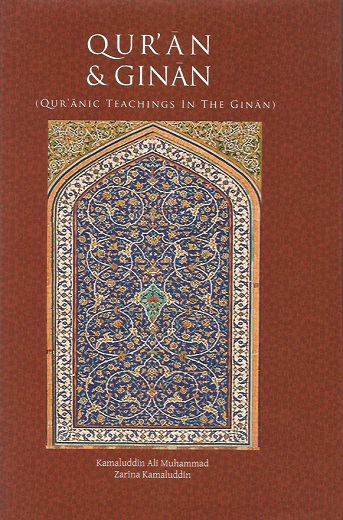
Front cover of "Qur'an and Ginan" - Qur'anic Teachings in the Ginan - co-authored by Alwaez Kamaluddin and Alwaeza Zarina Kamaluddiin. Hardback, pp. 225, Kamalzar, 2014. Please click for article.

Front cover of “Qur’an and Ginan” – Qur’anic Teachings in the Ginan – co-authored by Alwaez Kamaluddin and Alwaeza Zarina Kamaluddin. Hardback, pp. 225, Kamalzar, 2014. Please click on image for article.


Toral Pradhan Expands and Publishes Fascinating Ismaili History Article as Dual English-Gujarati Booklet

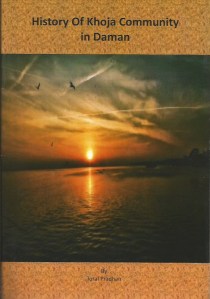
One of the most popular history articles ever published on this bog has been expanded, revised and published as a 40 page dual-language booklet by its author, Toral Pradhan. The article which was first published in October 2013 (please click A Brief History of the Khoja Ismaili Community in Daman, India, from the Portuguese Period to the Present), was highly acclaimed by our readers, who submitted more than 30 comments.
History of Khoja Community in Daman by Toral Pradhan English CoverPradhan passionately set out to explore the history of the origins of the Daman Khoja Ismaili Jamat in order to pay her respects and tribute to the jamat as well as to commemorate the 40th anniversary of the opening of the jamatkhana in Daman in March 2014. She obtained the information for her lively small booklet from primary sources which included visits to the local archives in and around Daman. The town was formerly ruled by the Portuguese, before India took it over in 1961. The fusion of the two cultures and its impact on the small Ismaili community in Daman is strongly emphasized in the book, which includes dozens of small historical illustrations including a center fold of colourful photos of gowns and headgear.
The style and format of Pradhan’s book is like many publications in Canada where books are published in dual languages, English in the first half and French forming the other half (see the two images of the book on this post, which are the front and back of the book).

The benefit of Pradhan’s dual language book is that it can be shared among families with Gujarati and English readers.  The 40 page booklet is about 6.5″ x 4.5″ in size.

History of Khoja Community in Daman by Toral Pradhan Gujarati Cover

“Daman Khoja Samaj No Itihas”
(transliteration)

Simerg will be making this book available in the near future if there is a sufficient demand for it in North America. The cost including shipping to any North American address will be around US$6.00 – $7.00.

We invite readers interested in acquiring this booklet to send an email to Simerg@aol.com, Subject: Booklet – History of the Daman Jamat. No payment is required at this time. We will advise you when the book reaches us in Canada, and send you an invoice if you are still interested.

Simerg Exclusive Interview: Samina Baig, the First Pakistani and Ismaili Woman to Climb Mt. Everest, Sets Ambitious Goal to Conquer the World’s Seven Summits

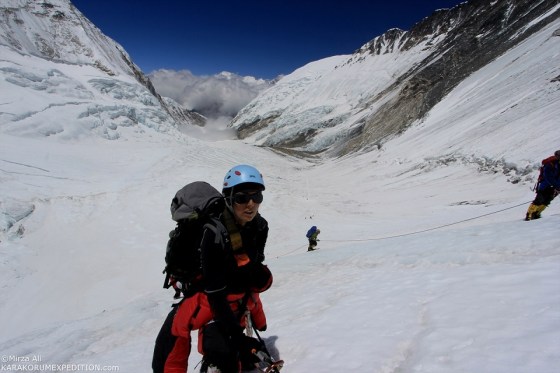
On May 19, 2013, at precisely 7:40 am, Samina Baig became the first Pakistani woman to reach the peak of the world`s highest mountain, Everest, and proudly place on it the flag of Pakistan as well as that of the Ismaili Imamat, which is often referred to as ‘My Flag’ by members of the Ismaili community. She spent 10 minutes on the summit as her mentor, trainer and proud older brother, Mirza Ali Baig, watched her unique accomplishment from a few hundred metres away….Continue Reading This World Exclusive Interview

Samina Baig climbing Mt. Everest. Photo: Mirza Ali. Copyright.

Samina Baig climbing Mt. Everest. Photo: Mirza Ali. Copyright. Click on image to read interview.

PLEASE CLICK: Simerg’s Exclusive Interview with Mirza Ali and his Sister Samina Baig Who Became the First Ismaili and Pakistani Woman to Reach the Summit of Mt. Everest