An Ode to the Indian Dukawala of East Africa by Kersi Rustomji

This work is a small tribute to the unsung intrepid pioneering Indian traders and very often their families, who braved the unknown hazards of the “Dark Continent”, carried on regardless of disease, lack of comforts, privations, ill-health, and even death, which they knew was their constant and real possibility.

“While the tribute is aimed at all the Indian, later termed Asians traders and shop keepers, we should bear in mind that these intrepid early trading pioneers also included Ismailis, who became prominent merchants and developers in all economic fields in East Africa. The Ismailis left behind an admirable record of their contribution, and this work touches them too.” — Kersi Rustomji

Hitherto the dukawala remain unrecognised nor given a deservedly appropriate place in the annals of these nations. Without record of these traders and other Indians who also played a very prominent and important part in the economic and the political growth of these nations, the histories of these three East African countries would be incomplete.

PLEASE CLICK: Ode to the Indian Dukawala on East African Plains

The image depicts on the rich red soil, a typical Indian duka, a small trading store, in small towns and remote country areas of East Africa. The signage is also typically hand painted work of the duka owners. These put up with any paint at hand, included some spelling errors. The man behind the counter is my paternal uncle Jehangirji Rustomji, who first opened a small watch repair duka in the old Indian Bazaar, now Biashara Street, in early 1906 in Nairobi, Kenya. He later moved to the then Government Road,  now Moi Avenue, in the corner of a chemist shop, Chemitex,  next to the old Alibhai Sherrif hardware shop, going towards the Ismaili jamatkhana, on the corner of Government Road and River Road. Later his youngest son Rati joined him, and after Jehangirji’s death, Rati carried on the little business until 2009, when he retired and closed the little duka after 103 years of its existence. Rati still lives in Nairobi. Copyright> Kersi Rustomji.

The image depicts on the rich red soil, a typical Indian duka, a small trading store, in small towns and remote country areas of East Africa. The signage is also typically hand painted work of the duka owners. These put up with any paint at hand, included some spelling errors. The man behind the counter is my paternal uncle Jehangirji Rustomji, who first opened a small watch repair duka in the old Indian Bazaar, now Biashara Street, in early 1906 in Nairobi, Kenya. He later moved to the then Government Road, now Moi Avenue, in the corner of a chemist shop, Chemitex, next to the old Alibhai Sherrif hardware shop, going towards the Ismaili jamatkhana, on the corner of Government Road and River Road. Later his youngest son Rati joined him, and after Jehangirji’s death, Rati carried on the little business until 2009, when he retired and closed the little duka after 103 years of its existence. Rati still lives in Nairobi. Copyright: Kersi Rustomji, Australia.


For Victoria Day, A Small Dedication to Queen Victoria, with Reflections on Her Majesty by the Aga Khans

Post compiled by Malik Merchant,
Publisher-Editor, Simergphotos.com and Simerg,com

Introduction: Victoria Day is a Federal Canadian public holiday celebrated on the last Monday before May 25, in honour of Queen Victoria’s birthday. Queen Victoria was born on May 24, 1819. Following the death of three uncles and her father, she became Queen of the United Kingdom on June 20, 1837 and reigned for 63 years until her death on January 22, 1901. Queen Victoria is still the longest-reigning monarch of the United Kingdom.

OTTAWA, CANADA

Queen Victoria Monument

Queen Victoria officially chose Ottawa as Canada’s capital in 1857. Nearly forty years later, a monument to Queen Victoria, intended as part of a lavish celebration of the Queen’s Diamond Jubilee, the sixtieth year of her reign, was proposed for the Hill. The competition for this monument was only open to Canadian sculptors. Louis-Philippe Hébert, a sculptor from Quebec, won the contract. Before being placed on Parliament Hill, the statue was first displayed at the Universal Exposition in Paris in 1900.

HISTORICAL FAMILY PHOTO OF QUEEN VICTORIAQueen Victoria

Queen Victoria and family. Copyrighted by Boussod Valadon & Co. Painting by John Philip. Date created/published c.1897. Credit: USA Library of Congress Collection

QUEEN VICTORIA’S VISIT TO THE ARCTIC SHIP RESOLUTE

Queen Victoria visIts Resolute

HMS Resolute was a mid-19th-century barque-rigged ship of the British Royal Navy, specially outfitted for Arctic exploration. Resolute became trapped in the ice and was abandoned. Recovered by an American whaler, she was returned to Queen Victoria in 1856. This is an illustration of the visit of Her Majesty Queen Victoria to the Resolute on December 16th, 1856, to whom this engraving is by special permission respectfully dedicated by her obedient servants, P. & D. Colnaghi & Co. Credit: USA Library of Congress

AN INCREDIBLE TECHNOLOGICAL
ACHIEVEMENT 150 YEARS AGO

Queen Victoria and President Buchanan Telegraphic Exchange

A telegraphic message of Queen Victoria and a reply by US President James Buchanan by trans-Atlantic telegraph cable on 16 August 1858. The Queen’s message congratulates the President for the completion of an electrical cable between the two nations, and wishes prosperity for the United States. In response, President Buchanan says that the accomplishment “is a triumph more glorious, because far more useful for mankind, than was ever won by a conqueror on the battlefield.” He continues, “May the Atlantic Telegraph under the Blessings of Heaven prove to be a bond of perpetual peace and friendship between the kindred nations, and an instrument destined by Divine Providence to diffuse religion, civilization, liberty and law throughout the world.” Date work created/published: 1858. Medium: 1 print : wood engraving. With vignette busts of the principals and scenes of the event; also inscribed are the names of 4 men who made the even possible: [Benj.] “Franklin”, [S.F.B.] “Morse”, [Cyrus] “Field”, and [Hans Christian] “Oersted”. Credit: USA Library of Congress Collection

~~~~~~

THE AGA KHANS ON QUEEN VICTORIA
0459_001-s-nf-THUMB– I –

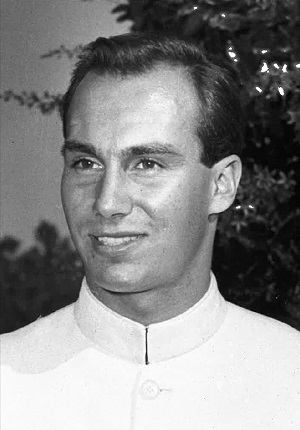
“Over a century ago, my grandfather, Sir Sultan Mahomed Shah Aga Khan, worked closely with Her Majesty Queen Victoria and her governments in the pursuit of common ideals. These ties were further strengthened by the strong presence of the Ismaili community – initially in places which later became Commonwealth countries, and later, here in the United Kingdom.

“It is striking to me that in 1957, there were only about 100 Ismaili residents in this country, and most of them were students. Today, there are fourteen thousand Ismailis permanently living here and of all ages and walks of life.

“In 1957, there was only one Ismaili space here for congregational prayer – and that was on leased premises! Creating places of prayer as centres for community life was fundamental to ensuring the cohesion of the community, and there are now over 40 such places. Among them, of course, a central focal point is The Ismaili Centre, located in South Kensington.

All of these comments, then, speak to the context in which we gather tonight – a rich history of partnership reaching deeply into the past – and extending, we hope and trust, into an even more productive future….” — Excerpts from a speech by His Highness the Aga Khan at the Golden Jubilee Banquet in London, UK, July 3, 2008.

~~~~~~~~
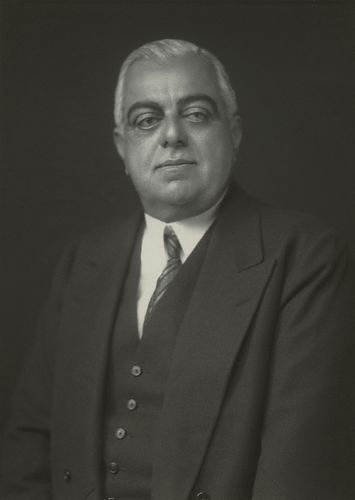
Sir Sultan Muhammad Shah, His Highness the Aga Khan (1877-1957), direct descendant of the Prophet Muhammad (s.a.s) and 48th Imam of the Shia Imami Ismaili Muslims. Photo: Copyright National Portrait Gallery, London.

Sir Sultan Muhammad Shah, His Highness the Aga Khan (1877-1957), direct descendant of the Prophet Muhammad (s.a.s) and 48th Imam of the Shia Imami Ismaili Muslims. Photo: Copyright National Portrait Gallery, London.

– II –

“The first deep impression of my life was undoubtedly when I had dinner with Queen Victoria. I was in my 20th year and that was my first visit to London. The queen was fond of Indian potentates and she kindly invited out to Windsor to dine and spend the night. She placed me next to her at the table. The queen was most gracious. She arranged that the food was served by Indians, and she spoke to me about the problems of India, the plague and all that. She was especially interested in the plague. I was young and I was particularly interested by her human element. She was then 79, you know, and the dinner was very long, with three sweet courses at the end, but she ate everything. She was dressed in black, with a white-collar. She wore a huge bracelet having a medallion of her husband, Prince Albert, on it, and one large diamond ring and several smaller diamonds. She did not wear glasses but she saw clearly and she had beautiful hearing — she could hear a whisper. She was a remarkable woman — yes, undoubtedly, I must be one of the few left alive who have dined with her” — His Highness the Aga Khan, quoted in Life Magazine, May 16, 1949.

– III –

“My life in many ways has been a bridge across vastly differing epochs. Looking at it for the moment simply from the Western point of view — I had a full life in the Victorian era, and I am leading now an equally full life in this new Elizabethan era. When I was a young man I sat next to Queen Victoria at a dinner party and talked to her throughout it; the other day I sat next to Queen Elizabeth II at a tea party and talked to her throughout it.

“In my youth the internal combustion engine was in its early, experimental phase, and the first motor cars were objects of ridicule; now we all take supersonic jet propulsion for granted, and interplanetary travel is far more seriously discussed today than was even the smallest flying venture at a time when I was quite grown up and had already lived a full and active life. I had the great honor of knowing Lord Kelvin, in his time the greatest physicist in the world; he assured me solemnly and deliberately that flying was a physical impossibility for human beings and quite unattainable. Even H. G. Wells in his early book, Anticipations, put off the conquest of the air and the discovery of atomic power for two or three centuries. Yet these and much more have come to pass in a brief half century” — His Highness the Aga Khan III, writing in Memoirs of Aga Khan, 1954.

His Highness the Aga Khan received the title “His Highness” from Britain’s Queen Elizabeth II on July 26th 1957. Here he is pictured with Her Majesty the Queen and His Royal Highness Prince Philip when the Queen hosted a dinner hosted to mark the Ismaili Imam’s Golden Jubilee and to acknowledge the close relationship he and his family have had over generations with the British Monarchy and the UK. Photo Credit: Akdn.org

– IV –

“Queen Victoria herself was of course sharply conscious of the responsibilities, not only political but personal and social, which she had assumed with the splendid title of Empress of India. She insisted that Indian Princes and Indian gentlefolk should receive the respect and the dignified status accorded in those days to European princes and gentlefolk. The Duke of Connaught faithfully practiced her principles during his time in India. The Viceroy and Vicereine, Lord and Lady Dufferin, were, like Lord and Lady Reay, people of kind and gentle sensibility, warm hearts and graceful manners. A tone thus set could not be ignored, and Indo-British relationships in general were in this pattern.

“There is an outstanding example that I recall: Sir Jamsetjee Jeejeebhoy, a notable figure in the Parsee community in Bombay, gave a reception for the Viceroy and Vicereine, Lord and Lady Dufferin, for the Governor of Bombay and his wife, Lord and Lady Reay, and for the Duke and Duchess of Connaught. Sir Jeejeebhoy, as host, offered his arm to Lady Dufferin and went into the supper room, and the Viceroy followed with his hostess, Lady Jeejeebhoy, and everyone else went after in turn. A few years later – and thereafter, until the end of the Indian Empire — it would have been inconceivable that the Viceroy, a Prince of the British Royal House and the Governor of the great province of British India, would have gone to a reception at the house of a Parsee gentleman, however distinguished, and allowed him to lead the Vicereine in first and then have followed with his hostess.” — His Highness the Aga Khan III, writing in Memoirs of Aga Khan, 1954

HIS HIGHNESS THE AGA KHAN’S GIFT TO QUEEN VICTORIA

Queen Victoria Tiara

All photos: Princess Louise, Duchess of Connaught and Strathearn

“In 1896, a year before her Diamond Jubilee, an inventory of Queen Victoria’s jewels was made by Garrard, the crown jeweler. There weren’t many tiaras on the list — only five. But one of the five on the list was this one: the tiara given to her by the Aga Khan.

“The inventory describes the tiara as, ‘A pearl and diamond tiara with 12 Bouton and 12 pear-shaped pearls with a diamond chain to form a necklace, presented by Aga Khan’.

“To my knowledge, there are no images, painted or photographed, of Victoria in this tiara. However, we do know that Victoria bequeathed the tiara to one of her daughters-in-law: Princess Louise of Prussia, the wife of Prince Arthur, Duke of Connaught and Strathearn — Elia Kay writing in her blog Tiara a Day, please click The Victorian Aga Khan Tiara.

Date posted: Saturday, May 17, 2014, for Victoria Day Holiday Weekend, Canada. The post is repeated with minor updates from an earlier version which appeared at the photoblog, http://www.simergphotos.com.


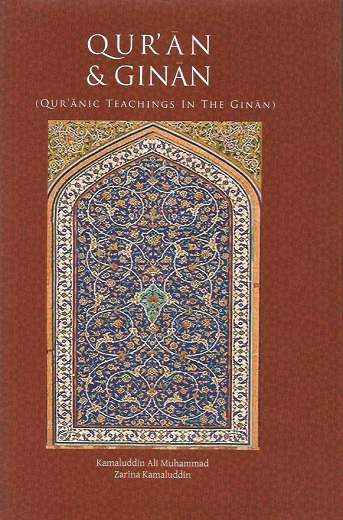
An Introduction to My New Book “Qur’an and Ginan” (Qur’anic Teachings in the Ginan) by Kamaluddin Ali Muhammad

In this special piece for Simerg, erudite Ismaili missionary and scholar, Alwaez Kamaluddin of Pakistan, provides a short but very interesting insight on the subject of Qur’anic teachings in the Ginan, while highlighting the features of his most recent book published in English.

PLEASE CLICK: “Qur’an and Ginan” (Qur’anic Teachings in the Ginan)

Front cover of "Qur'an and Ginan" - Qur'anic Teachings in the Ginan - co-authored by Alwaez Kamaluddin and Alwaeza Zarina Kamaluddiin. Hardback, pp. 225, Kamalzar, 2014. Please click for article.

Front cover of “Qur’an and Ginan” – Qur’anic Teachings in the Ginan – co-authored by Alwaez Kamaluddin and Alwaeza Zarina Kamaluddin. Hardback, pp. 225, Kamalzar, 2014. Please click on image for article.


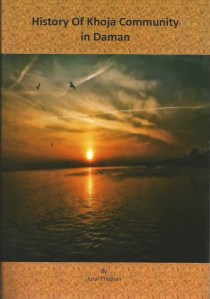
Toral Pradhan Expands and Publishes Fascinating Ismaili History Article as Dual English-Gujarati Booklet

One of the most popular history articles ever published on this bog has been expanded, revised and published as a 40 page dual-language booklet by its author, Toral Pradhan. The article which was first published in October 2013 (please click A Brief History of the Khoja Ismaili Community in Daman, India, from the Portuguese Period to the Present), was highly acclaimed by our readers, who submitted more than 30 comments.
History of Khoja Community in Daman by Toral Pradhan English CoverPradhan passionately set out to explore the history of the origins of the Daman Khoja Ismaili Jamat in order to pay her respects and tribute to the jamat as well as to commemorate the 40th anniversary of the opening of the jamatkhana in Daman in March 2014. She obtained the information for her lively small booklet from primary sources which included visits to the local archives in and around Daman. The town was formerly ruled by the Portuguese, before India took it over in 1961. The fusion of the two cultures and its impact on the small Ismaili community in Daman is strongly emphasized in the book, which includes dozens of small historical illustrations including a center fold of colourful photos of gowns and headgear.

The style and format of Pradhan’s book is like many publications in Canada where books are published in dual languages, English in the first half and French forming the other half (see the two images of the book on this post, which are the front and back of the book).

The benefit of Pradhan’s dual language book is that it can be shared among families with Gujarati and English readers.  The 40 page booklet is about 6.5″ x 4.5″ in size.

History of Khoja Community in Daman by Toral Pradhan Gujarati Cover

“Daman Khoja Samaj No Itihas”
(transliteration)

Simerg will be making this book available in the near future if there is a sufficient demand for it in North America. The cost including shipping to any North American address will be around US$6.00 – $7.00.

We invite readers interested in acquiring this booklet to send an email to Simerg@aol.com, Subject: Booklet – History of the Daman Jamat. No payment is required at this time. We will advise you when the book reaches us in Canada, and send you an invoice if you are still interested.

My Late Mother, Jean Kirk, and Her Collection of Rare Photos of His Highness the Aga Khan by Allison Wallace

“[My] mum trained as a teacher in London and was passionate about the importance of education, the communication of knowledge and the enhancement of the individual through such knowledge. During her time in Kenya, she held the position of Principal at the Aga Khan Primary School in Nairobi where His Highness the Aga Khan on at least one occasion, privileged her to host a visit.” — Allison Wallace

0492_001s-nf-thumb

An Ismaili (and the Flag) on Top of Mt. Everest….and Forthcoming @Simergphotos, Rare and Historical Photos from Australian and Other Private Collections

EXCLUSIVE INTERVIEW WITH ISMAILI MOUNTAINEERS

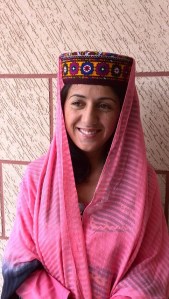
Samina Baig's cultural elegance captured in this  exquisite cultural dress from Hunza. Photo: Samina Baig's Facebook page.

Samina Baig’s cultural elegance captured in this exquisite cultural dress from Hunza. Photo: Samina Baig’s Facebook page.

PLEASE CLICK: Simerg’s Exclusive Interview with Mirza Ali and his Sister Samina Baig Who Became the First Ismaili and Pakistani Woman to Reach the Summit of Mt. Everest

Samina Baig at 21 became the first Ismaili woman to reach the summit of Mt. Everest as part of her goal to scale the world’s SEVEN SUMMITS. In an exclusive interview with Simerg, when asked about placing the Ismaili flag on top Everest and if she left it there, she said:

“….And when it comes to being the first Pakistani woman and the first Ismaili woman to put the nation’s flag and the Ismaili Imamat red and green flag on top of the world, one cannot adequately express the feeling. It is indeed a BLESSING of a life time! We did bring the flag back, and with all love and respect, sent it to Sarcar Mawlana Hazar Imam.”

Please Continue Reading This World Exclusive Interview for the broader perspectives it offers about the challenges of climbing some of the world’s highest mountains!

Share and forward this LINK to your friends and family around the world. Please also leave your comments on the article’s feedback form.

~~~~~~~

STARTING WEEK OF MAY 5:  EXTRAORDINARY, RARE AND HISTORICAL PHOTOS FROM PRIVATE COLLECTIONS FROM AROUND THE WORLD

Photo: Collection of the family of the late Mrs. Jean Kirk, Headmistress, Aga Khan Primary School, Nairobi. Copyright: Allison Wallace, Australia.

Photo: Collection of the family of the late Mrs. Jean Kirk, Headmistress, Aga Khan Primary School, Nairobi. Copyright: Allison Wallace, Australia.


Simerg Exclusive Interview: Samina Baig, the First Pakistani and Ismaili Woman to Climb Mt. Everest, Sets Ambitious Goal to Conquer the World’s Seven Summits

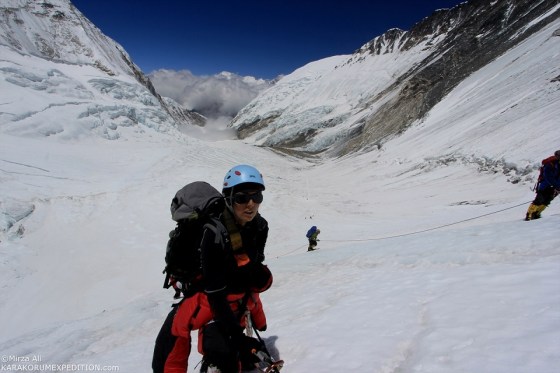
On May 19, 2013, at precisely 7:40 am, Samina Baig became the first Pakistani woman to reach the peak of the world`s highest mountain, Everest, and proudly place on it the flag of Pakistan as well as that of the Ismaili Imamat, which is often referred to as ‘My Flag’ by members of the Ismaili community. She spent 10 minutes on the summit as her mentor, trainer and proud older brother, Mirza Ali Baig, watched her unique accomplishment from a few hundred metres away….Continue Reading This World Exclusive Interview

Samina Baig climbing Mt. Everest. Photo: Mirza Ali. Copyright.

Samina Baig climbing Mt. Everest. Photo: Mirza Ali. Copyright. Click on image to read interview.

PLEASE CLICK: Simerg’s Exclusive Interview with Mirza Ali and his Sister Samina Baig Who Became the First Ismaili and Pakistani Woman to Reach the Summit of Mt. Everest


Shaheeds Khudabaksh Talib, Karmali Dahya and Lalji Ladha: An Account of their 1925 Tragic Accident in Tanganyika by Sadru Meghji

“This account of a Jamati tragedy that occurred almost ninety years ago, in 1925,  is based on an authentic Gujarati narrative that was prepared by an officer  of the Aga Khan Council in Dar-es-Salaam, just four days after the accident that took the lives of three Ismailis, namely Khudabaksh Talib, Karmali Dahya and Lalji Ladha, who were bestowed with the title of Shaheeds….” — Sadru Meghji

Please click: A True Account of How Three Ismaili “Shaheeds” Lost Their Lives in a Tragic Accident in 1925 Near Kilosa, Tanganyika

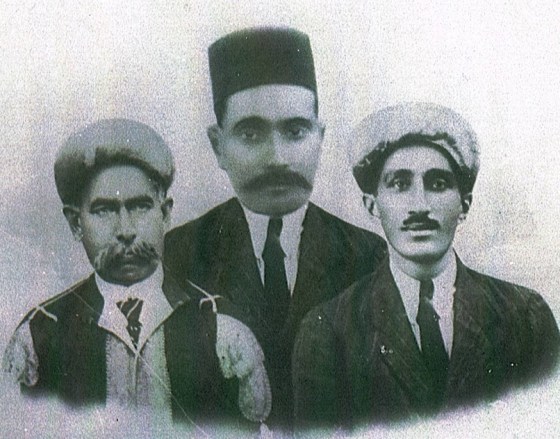
Portraits of the three Shahids, Karmali Dahya, Lalji Ladha and Missionary Khudabaksh Talib (right), who died when their lorry slid into a ditch near Kilosa in 1925. The photo was displayed in the lobbies of jamatkhanas around East Africa at the instruction of the 48th Ismaili Imam, Mawlana Sultan Mahomed Shah, His Highness the Aga Khan (1877-1957). Photo: Anverali Talib Family Collection, Montreal, PQ, Canada.

Portraits of the three Shaheeds, Karmali Dahya, Lalji Ladha and Missionary Khudabaksh Talib (right), who died when their lorry slid into a ditch near Kilosa in 1925. The photo was displayed in the lobbies of jamatkhanas around East Africa at the instruction of the 48th Ismaili Imam, Mawlana Sultan Mahomed Shah, His Highness the Aga Khan (1877-1957). Photo: Anverali Talib Family Collection, Montreal, PQ, Canada.

Passings: Rai Hussein Khanmohammed of Burma (1932 – 2013) – A Tribute by Hasan Essa

Hasan Essa pays a tribute to his close friend and mentor, Rai Hussein Khanmohammed, who passed away peacefully in Los Angeles on September 23, 2013 just as he was about to turn 81. Ismaili institutions in Pakistan recognized his contributions to the community in a well-organized condolence and memorial meeting.

Please click: Remembering Rai Hussein Khanmohammed of Burma

Rai Hussein Khanmohamed (1932 - 2013)

Rai Hussein Khanmohamed (1932 – 2013)

Modern Cosmology and Astrophysics in Ismaili Ginans by Shiraz Pradhan

“Our story begins as all stories do: In the beginning there was nothing, no universe, no galaxies, no sun, no moon, no stars. Then all of a sudden there was a titanic explosion from nothingness — BIG BANG….In this essay I propose to first present a brief scientific description of the Big Bang origin of the universe from a gigantic explosion, its growth in various phases right up to our present time, and then cite Ismaili Ginans that have striking parallels of modern Cosmology and Astrophysics in them” — Shiraz Pradhan

PLEASE CLICK: Concepts of Modern Cosmology and Astrophysics in Two Ismaili Ginans, Choghadia and Mul Gayatri

An annotated version of a meteor's streak and the arc of the Milky Way hanging over the imposing mountain fortress of Alamut in this starry scene. Highlights in this photo include bright white stars Deneb (in Cygnus), Vega, and Altair, nebulae near the Galactic Center, and the dark obscuring dust clouds of the Milky Way also known as the Great Rift. Photo: Babak Tafreshi. Copyright.

An annotated version of a meteor’s streak and the arc of the Milky Way hanging over the imposing mountain fortress of Alamut in this starry scene. The Milky Way, the galaxy that contains our solar system, is some 100,000 – 120,000 light years in diameter and contains 100-400 billion stars.  Like the Milky Way, there are some 100 – 200 billion other galaxies in our universe! Highlights in this photo include bright white stars Deneb (in Cygnus), Vega, and Altair, nebulae near the Galactic Center, and the dark obscuring dust clouds of the Milky Way also known as the Great Rift. Photo: Babak Tafreshi. Copyright. Please click on image to read article Modern Cosmology and Astrophysics in Ismaili Ginans.