Simerg is an independent initiative dedicated to Ismaili Muslims, the Aga Khan — their Hereditary Imam — and the Ismaili Imamat, and Islam in general through literary readings, photo essays and artistic expressions
Author Archives: Malik Merchant, Editor
Founding publisher and editor of www.barakah.com, www.simerg.com and www.simergphotos.com.
UPDATE (February 19, 2022): With over 100,000 votes cast during the last three weeks, ArchDaily has announced the 2022 ArchDaily Building of the Year Awards. The new but yet to be opened Ismaili Jamatkhana and Community Centre in Mumbai was nominated for the award in the religious building category (see story below) but did not come out as the winner. Readers can meet the winners for all the categories by clicking on Winners.
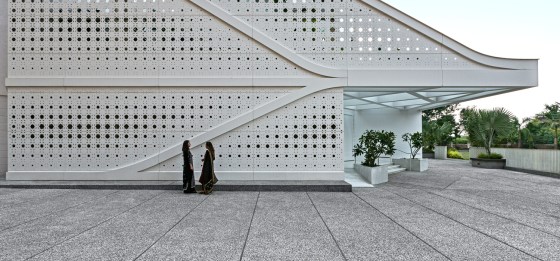
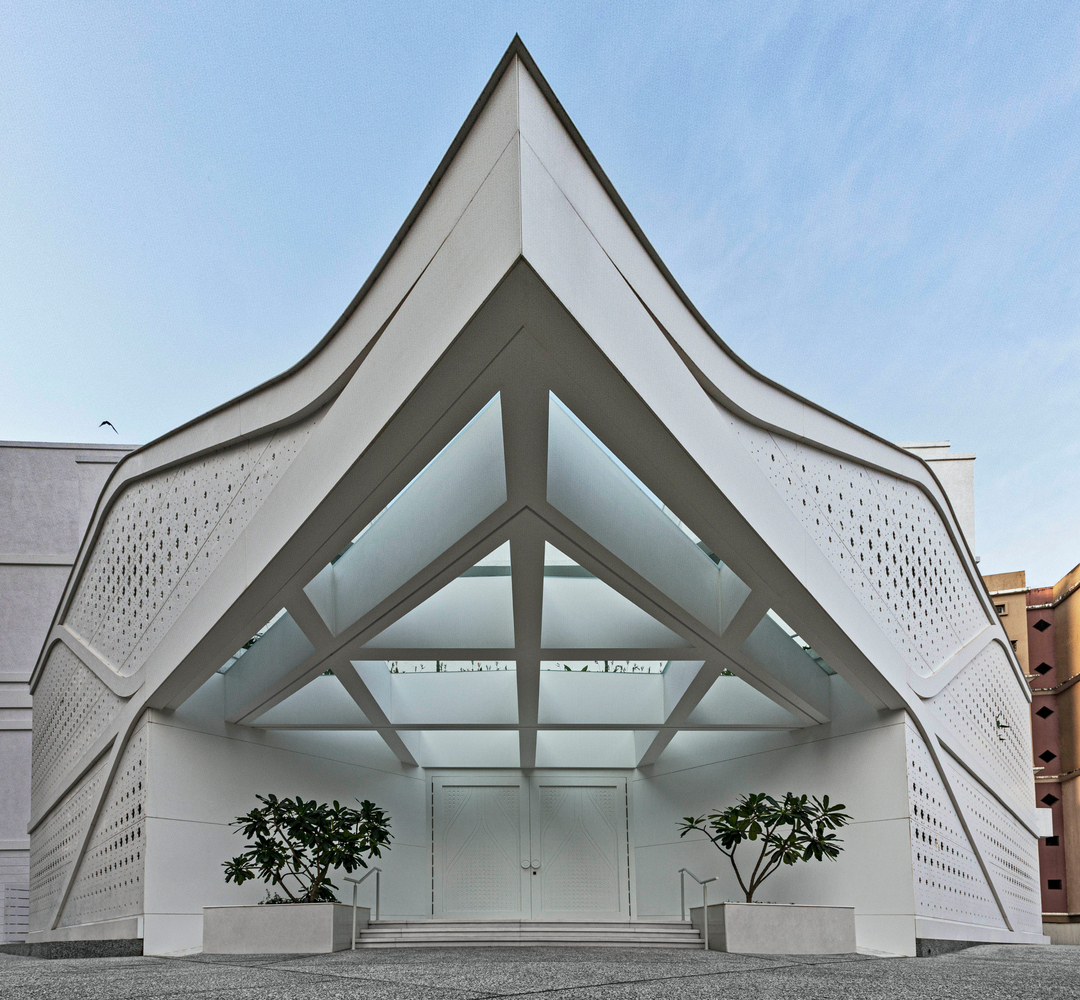
Our attention has been drawn by a reader to ArchDaily’s 2022 building awards, in which a new yet to be opened Ismaili Jamatkhana and Community Centre in Mumbai has been nominated as one of the buildings for the award in the religious buildings category. The following piece is compiled from Archdaily, NUDES (the website of the Jamatkhana’s design company), and a recent Mumbai Diary column in the e-paper Mid-Day — Ed.
For the 13th consecutive year, ArchDaily, the most visited architecture website worldwide, is asking its readers with the responsibility of recognizing and rewarding the projects that are making an impact in the profession with ArchDaily’s 2022 Building of the Year Awards. The nomination phase began on January 25th, 2022 and ends on February 9th, 2022, following which five projects per category that also includes religious buildings will move into the finalists stage, starting February 9th and ending on February 17th. Thus readers will be filtering over 4,500 projects down to just 15 stand-outs.
One of the candidates nominated for the award in the religious buildings category is the Ismaili Jamatkhana & Community Centre located in the neighbourhood of Oshiwara in the western suburban region of Mumbai.
No firm date has yet been established for the Jamatkhana’s opening. The building was designed by city based architectural firm NUDES, whose principal Nuru Karim has worked on a host of institutional projects both in competition/ schematic design and design development stages.
A collection of some 20 photographs of the Jamatkhana and Community Centre taken by Nazim Lokhandwalla are posted on the ArchDaily website.
Ismaili Jamatkhana and Community Centre, Mumbai, India. Photo: Nazim Lokhandwalla/Via Archdaily. Please click on image for more photos on Archdaily.
Writing in the Mumbai Diary column of mid-day under the title All eyes on Oshiwara’s new architectural wonder, the diarist quotes Nuru Karim as saying, “The Jamatkhana and Community Centre design explores the relationship between light, Islamic geometrical patterns, and built form to create an experiential space”. Karim goes on to explain that Islamic geometrical patterns are analysed to develop arrays of multi-sided polygons, thereby creating “Mashrabiya,” that stems from “Ashrab,” meaning “to drink.” The diarist further notes that the term which was originally defined as a space to drink water, evolved later as a space to cool water stored in earthen pots.
We invite all our readers to visit the page highlighting nominations for religious buildings, learn more about the features of the buildings and cast their votes for the building that impresses them the most. The voting for the Ismaili Jamatkhana may be submitted HERE. Readers who wish to vote are required to create an Archdaily email account or sign in via their Google or Facebook account.
Date posted: February 4, 2022. Last updated: February 19, 2022 (see announcement at top, re : Winners)
Featured photo at top of post: Ismaili Jamatkhana and Community Centre, Mumbai, India. Photo: Nazim Lokhandwalla/Via Archdaily. Please click HERE for more photos of the project on Archdaily.
________________
Before leaving this website please take a moment to visit Simerg’s Table of Contents for links to hundreds of thought provoking pieces on a vast array of subjects including faith and culture, history and philosophy, and arts and letters to name a few. Also, visit Simerg’s sister websites Barakah, dedicated to His Highness the Aga Khan, and Simergphotos.
“At Kabul’s Pul-e-Sokhta bridge, the health workers face the grim, and heavy chore of removing the bodies, hauling them up to the street and away for burial. If no family can be located, they will be laid in an unmarked grave, with no one to mourn their loss. It is the mark of shame to be buried alone in Afghanistan.”
The following documentary and the accompanying transcript are reproduced from Voice of America (VOA). The documentary was aired on October 21, 2021 (and also on November 25, 2021). In a subsequent report by Roshan Noorzai dated December 10, 2021, VOA notes that farmers in Afghanistan say that they will continue to grow poppy amid uncertainty over the Taliban’s poppy eradication policy. “We have no choice but to cultivate opium poppy,” said Noor, 52, a farmer living in a remote village in the western Farah province. A father of 10 children, Noor said his family will go hungry without the opium poppy crop. “I am not sure how I will be able to provide food to my children until the harvest. We do not have food for a month, even. The prices have skyrocketed, and people cannot afford buying food”
The editor wishes to warn viewers that some scenes in the film may be disturbing, and viewer discretion is advised.
WARNING: The following film contains scenes and statements that some readers may find disturbing
A Voice of America Documentary
______________
Transcript
Excerpts from transcript of the documentary “The Inside Story: Afghanistan Addiction Crisis” shown on VOA on October 21, 2021.
While members of Congress and others debate the tactics of the U.S. withdrawal from Afghanistan and the strategies of 20 years of war, there is one issue that has constantly plagued that country: Drugs. Narcotics. Specifically, opium.
According to the U.N., Afghanistan produces 80 percent of the world’s opium.
While the rest of the world tries to deal with the trafficking of the drug, millions of people are addicted inside Afghanistan.
Before the U.S. withdrawal, VOA’s Afghan Service traveled through the country to document the extent of Afghanistan’s Addiction Crisis.
Our grim trip begins in the capital, Kabul.
Voice of narrator (Annie Ball):
In Afghanistan, this is where, and how, it sometimes ends. A drug addict’s life.
Health workers came to round-up the addicts and take them to addiction treatment centers. But today they encounter the lifeless bodies of three addicts.
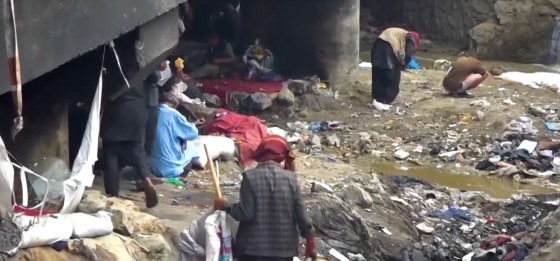
Here, at Kabul’s “Pul-e-Sokhta” bridge, the health workers face the grim, and heavy chore of removing the bodies, hauling them up to the street and away for burial. If no family can be located, they will be laid in an unmarked grave, with no one to mourn their loss. It is the mark of shame to be buried alone in Afghanistan.
For the workers and government officials, it reminds them they cannot help everyone.
Dr. Aref Wafa was working with addicts.
Dr. Aref Wafa, Department of Drug Demand Reduction:
Especially when we come here in the winter, our goal is to save their lives. They may increase the dose due to cold or chills. When they overdose, they do not feel it, therefore, this causes their death.
Narrator:
Doctors say, these addicts are consuming heroin, morphine, opium and increasingly, crystal meth. The cause of death is usually a drug overdose. They are taken to a Kabul cemetery for burial. How many bodies are buried there? No one knows. Officials don’t track the numbers.
Gholam Yahya’s brother lost his life to addiction under the bridge. Yahya, an addict like his brother, still lives under this bridge. Now, he describes the sadness — and shame — and how addicts’ deaths are treated by religious leaders.
Gholam Yahya, Drug Addict:
They said those who use drugs, commit suicide. Since they commit suicide, their funeral prayers are forbidden. They cannot be washed. His mother did not bring her child to this world to end up under Pull-e-Sokhta bridge. He did not wish this for himself., but I could not bury him in any cemetery.
Narrator:
In Kabul’s ‘Pul-e-Sokhta area, this is not just the story of Gholam Yahya’s life.
Throughout Afghanistan, it is known as a drug addiction center. The bridge in western Kabul has become a major hub for drug users for the past two decades. An iconic symbol of drug abuse in a nation rife with addiction.
The addicts don’t come just from Kabul, but many from the provinces, too. Hundreds of them share this grimy space, spending their days and nights getting high amidst the waste and debris. Most of them have been evicted by their families and have no shelter.
They live in squalor, surrounded by filth, black walls, and dirty water.
Over the years there have been several unsuccessful attempts to close the area. But it remains a popular gathering place for addicts.
Nazo is one of many looking for loved ones. Her husband and brother are addicted to drugs. Nazo’s husband uses opium and is remarried. He left her with the responsibility of taking care of their six boys. In Afghanistan, single mothers with no men in the house face a particularly difficult life, especially when the single mother is the only breadwinner. This is why Nazo hopes to find her brother, who is a heroin addict.
“I weave carpets to earn money. I use opium, that’s not cheap. I was on my way to collect waste when a car stopped, and the driver told me to get in the car. And he told me I will take you home and help you. Then I got in the car. The driver showed me the suicide jacket and asked me, ‘Do you want to do this? I will give you money.’ I said ‘No, I will not do it.’ And I jumped out of the car.”
Nazo, Sister of a Drug Addict:
It has been five months since I went to Kart-e-now, Arzan Qemat, Jada, and Cinema-e-Pamir to Shama-li so that anyone could tell me his whereabouts. I don’t know the area. I went to ask. I got home about ten o’clock at night. I am a woman. I cannot bear this grief, if God forbid. someone touches me or someone talks dirty behind my back.
Narrator:
In addition to her six children, Nazo also has been taking care of her mother and her brother’s wife. She washes dishes and cleans people’s laundry, making about $2.60 a day.
Nazo, Sister of a Drug Addict:
I suffered for him so much. The other day, I told my mother. ‘Mother!’ She said, ‘Yes.’ I said ‘it’s a pain, we can get over it. I will find a poison tablet and we will end everything together.
KATHERINE GYPSON:
Stories like Nazo’s are becoming more commonplace because of the drug trade’s grip on Afghanistan’s economy.
2017 was the peak, according to the U.N. Office on Drugs and Crime.
Nearly 10-thousand tons of opium brought in one-point-four billion dollars — seven percent of Afghanistan’s GDP.
And now the opium produced from the poppy plant has a rival that also grows wild in Afghanistan.
Narrator:
As a country, Afghanistan deals with insecurity, endless wars, corruption, poverty, a weak economy, high unemployment, and other challenges. But it also faces the problem of home-grown addiction and drug use. Some describe drug addiction in this country as a hidden tsunami; a large wave ready to crush what is in its wake.
Despite billions of dollars in international aid, government projects and efforts, Afghanistan remains the world’s top cultivator of poppy — the plant used to make opium and heroin.
The country is the world’s largest narcotics producer. A joint survey by the Afghan government and the United Nations Office on Drugs and Crime, UNODC, shows they are losing the war to eradicate the crop.
It says in 2020, poppy cultivation was up 37% in Afghanistan.
The report found that last year poppy was cultivated on nearly a quarter of a million hectares of land in 22 of the 34 provinces.
Most of the opium is smuggled abroad, but what remains is a problem at home.
“Most people here use drugs together, in groups, and out in the open. The lives of the villagers revolve around smoking drugs. When they have it, they use it.”
Mark Colhoun, Former UNODC Representative in Afghanistan:
We are seeing high level of opioid use in the country. We are seeing high level of cannabis use in the country and an emerging threat that we have been noticing for the last number of years is definitely methamphetamine and other amphetamine type stimulants in the country. So, these are all increasing the threats to the population exponentially, so we have drug production and then rising drug use in the country which is a severe threat to the people of the country.
Narrator:
Drug production and addiction go hand-in-hand, and both are on the rise.
User statistics are hard to come by. The most recent numbers are from a 2015 survey. It was conducted by INL, the Bureau of International Narcotics and Law Enforcement Affairs and the Afghan government. It found that 2.5 to 3.5 million Afghans are directly or indirectly addicted to drugs. At that time, one in three families tested positive for drugs. And the rural areas were three times worse than in the cities.
Dr. Ahmad Jawad Osmani, Former Afghanistan Minister of Public Health:
Unfortunately, drug addiction is not diminishing. It is increasing. And that’s why, we think that the number that was estimated in the past has increased even more.
Narrator:
Meanwhile, a recent report shows crystal methamphetamine — also called crystal or meth — is a growing problem in Afghanistan. Last November, the European Monitoring Centre for Drugs and Drug Addiction (EMCDDA) reported that the country is becoming a significant global producer of meth.
One reason is drug traffickers discovered that the ephedra plant, which commonly grows wild in parts of Afghanistan, can be used to make meth. The report focused on the production of meth in Bakwa district. It called the preliminary findings “worrying,” adding there is potential for meth to rival the country’s production of opiates.
KATHERINE GYPSON:
Concern over the rapid increase in meth production is its relative low cost to make.
And for many of Afghanistan’s addicts, low cost is what they are looking for.
And it is not limited to the cities.
VOA’s Afghan Service went about 180 kilometers west of Kabul — to Bamyan province — for a ground-level view of addiction’s reach into rural villages.
Narrator:
Bamyan is known for its beautiful landscapes. It is where, nearly 20 years ago (March 2001) the Taliban destroyed two ancient statues of Buddha, which had been the largest in the world.
Here, people in the cities and villages suffer from drug addiction.
Local officials say there are about 50,000 addicts, and people affected by addiction.
Head west, into more rural areas, and you find drugs even more prevalent than in central Bamyan province.
The Waras district is where most of the villagers use drugs.
The long drive to get there winds through scenic landscapes and rutted roads.
Waras district is surrounded by green hills and valleys.
People in this remote area live in poverty. They lack the benefits of modern society, like good schools, clinics or hospitals, and technology.
The sun shines brightly this morning in Bazobala village. Here, everyone, young and old, including the men, women and children are drug addicts.
Eighty families live in Bazobala.
Most people here use drugs together, in groups, and out in the open. The lives of the villagers revolve around smoking drugs. When they have it, they use it.
When asked why, they mention many reasons. Like this 18-year-old man:
Drug Addict, Bazobala Shuqol village:
The reason I became addicted to drugs was unemployment and poverty. I went to Iran, far away from home. I was unemployed and the situation was bad, so I got addicted to drugs. So, when I return here, I thought that the situation will be better. The situation is bad here as well.
Ali Yawar, Bazobala Shuqol village:
I have been using drugs for almost fifteen years. First, I used heroin, now I’m using in crystal.
Narrator:
It affects the children too. Parents not only use themselves, but also give drugs to their children. In addition to heroin, opium and crystal meth, the addicts of Bazobala are also familiar with other drug options, like tramadol tablets. It is a cheap alternative to heroin and opium.
Drug Addict, Bazobala Shugol village:
Those whose consumption is high, like myself, my spending is also high. I use may be one or one and half packet. A packet is 25 (32 cents) to 50 Afghanis. You can’t even purchase this tramadol 500 for 100 Afghanis.
“My older son is not here. It has been three years since he is missing. I don’t know if he is alive or dead. There are four of us, and all four of us are addicts. Yes, we sold everything. We sold bedsheets and everything that we had. And with the money, we bought drugs and used it.”
Narrator:
In Pezhandur village, women are also drug addicts.
In many families in the area, they use drugs with their husbands and children
This is Fatima. She has been addicted to drugs for 30 years. Fatima, her husband and her sons use drugs together.
Fatima, Pashandur Village:
I have asthma. I’m sick as well. I’m 65 years old. I go to work in the desert and mountains until late. I’m weak and my husband is also sick.
Narrator:
Villagers here work in farming and raising animals. Young people go to the mountains to collect grass for the animals, and the children are shepherds.
The idyllic life of these villages is disrupted by narcotics, brought in from neighboring provinces. Residents say they have repeatedly informed security agencies about the smugglers, but no action is taken.
The villagers want the government’s attention. They want help, and they want an addiction treatment center.
There is only one 20-bed clinic in Waras, which clearly lacks the ability to treat all the addicts in an area of tens of thousands of people. Local officials want more.
Qasim Ali, Chairman, People’s Council of the Peshandur & Bazobala Area:
Everyone is addicted to drugs. These people are all unfortunate. The reason is unemployment and poverty. The government does not care about these people. I request from the government, the international community, and human rights to build a hospital in the Shiwqol area. The hospital should be 100 beds or so so these people can be treated.
KATHERINE GYPSON
Addiction treatment is undergoing a change now that the Taliban are running Afghanistan.
Police have been recently rounding up addicts in Kabul, giving them a choice to either sober up or face beatings.
They are stripped, bathed and shaved before going into a 45-day treatment program.
But as one Taliban officer put it: “It’s not important if some of them will die. Others will be cured. After they are cured, they can be free.”
The addicts rounded up in these raids have been men. But women fall victim to drug addiction, too. Before the Taliban took over, our VOA Afghan Service team went to Balk province in northern Afghanistan and discovered the disturbing way women addicts can be preyed upon.
Narrator:
The yellow morning sun shines on Mazar-e-Sharif, Balkh’s capital.
This is one of the most populous provinces in northern Afghanistan, and Mazar-e-Sharif is the fourth largest city in the country.
The Blue Mosque, dating back to the 15th century, has made this city famous.
Mazar-e-Sharif hosts internally displaced people, IDPs, from nearby provinces. Security in the city brings people to come live here.
The city suffers from a large presence of drug addicts. Local officials say more than 300,000 people in Balkh province, including women and children, use drugs.
Easy access to drugs has led to more addicts. In the city of Mazar-e-Sharif, some women addicts are homeless, and some seek shelter in the cemetery at night.
This area is called Dasht-e-Shoor. These are the tents of internally displaced families.
This woman lives in the camp. She is an addict with a difficult story.
“Well, it’s narcotics, it gets you high. When we collect, we sniff, and it made us dizzy. Made us high, then we would sit down or go home with an excuse to relax and then go out. It had a bad effect. I had a headache when I went to school.”
Zohra, Homeless Drug Addict:
I was 13 years old, and my father was not there when my brother and mother married me. Now I am 31 years old, and I am lost. My mother-in-law was beating me. My father-in-law was beating me. I was smoking opium. I used to drink opium and that’s why they were beating me and telling me not to eat it. My husband left me and said “I don’t want a wife like you. You are free.” I have my two children with me. My husband hates me and doesn’t allow me to go home. I live in a tent. I have relatives, but they don’t care about me.
Narrator:
But Zohra says she is not addicted to drugs by her own free will. She says her family got her hooked. They used drugs in groups, she explains, to lessen the intense pain caused by their work as carpet weavers.
Zohra uses marijuana and opium. She has tried to quit several times but concerns about being homeless led her to relapse..
She walks the streets of Mazar-e-Sharif at night, begging and collecting usable garbage. This is NOT normal practice for women — because generally, it is not safe here for a woman to be out alone at night.
VOA went with her one night to see how she fares alone.
Zohra told us about how she pays for her habit. And in this harrowing story, she shared about someone giving her a ride, and the offer he made her:
Zohra/Homeless Drug Addict:
I weave carpets to earn money. I use opium, that’s not cheap. I was on my way to collect waste when a car stopped, and the driver told me to get in the car. And he told me I will take you home and help you. Then I got in the car. The driver showed me the suicide jacket and asked me, ‘Do you want to do this? I will give you money.’ I said ‘No, I will not do it.’ And I jumped out of the car.
KATHERINE GYPSON:
The United States spent more than eight-and-a-half billion dollars between 2002 and 2017 battling Afghanistan’s drug trade — That, according to the Special Inspector General for Afghanistan Reconstruction.
In May, the Special Inspector General said the Taliban gets an estimated 60 percent of its income from illegal drugs — About 400-million dollars between 2018 and 2019 according to the U.N.
And in Afghanistan’s easternmost province, VOA’s Afghan service found out that addiction knows no age — old or young.
Narrator:
Here in Badakhshan province, there are an estimated 25 to 30,000 addicts. Like elsewhere, addiction tends to run in families.
Jan Begum’s family is one of them. They live in the city of Faizabad. Her two sons and husband are addicted. They use crystal meth and heroin.
Jan Begum, Drug Addict:
We don’t have anything. They are both unemployed, this one is an addict, that one is an addict, too. My older son is not here. It has been three years since he is missing. I don’t know if he is alive or dead. There are four of us, and all four of us are addicts. Yes, we sold everything. We sold bedsheets and everything that we had. And with the money, we bought drugs and used it.
Narrator:
Jan Begum’s family used to live in a house in Faizabad. When the homeowner found out the family was using drugs, he kicked them out.
Now, they beg, take in laundry, and spend most of their income on drugs. Some of them have been treated several times for their addiction, but relapsed.
Samiullah is 18 years old. He uses drugs together with his mother, father, and brother.
Samiullah, Drug Addict:
I have been taking drugs from a young age. I take it with my parents. I go out to find then I take it. I wish the government would come and treat us and I would work as a server in a hotel.
Narrator:
Afghanistan remains the world’s largest opium producer.
Here in Nangahar province, children and teenagers work in the poppy fields collecting the gum with the elders in their family. They’re helping with opium production.
Mustafa is one of the teenagers working the poppy fields. Now,16 years old, Mustafa says he has been moving towards addiction for a long time, just because he works with poppies and opium.
Mustafa, 16-Year Old Poppy Field Worker:
Well, it’s narcotics, it gets you high. When we collect, we sniff, and it made us dizzy. Made us high, then we would sit down or go home with an excuse to relax and then go out. It had a bad effect. I had a headache when I went to school. I got permission to leave. It had a very bad effect because our heads were spinning, we were high. Drugs must cause this condition to our body.
Narrator:
This is some of Mustafa’s poppy harvest for the year. A few kilograms of opium have been harvested from the fields. He says that after collecting, he sold the opium and kept two more kilograms to sell later.
When the poppy season is over, he works in fields tending other crops like onions.
Mustafa says he has seen many people, including women, become addicted to drugs after working in poppy fields. He does not want to become an addict himself.
Mustafa, Poppy Field Worker:
If no narcotics were planted here, maybe no one would be addicted to drugs. Poppy made many people addicted to heroin. We want the government to stop the poppy cultivation. They should cultivate for us good, good fruit trees.
Narrator:
Less poppy production would mean less drug addiction, and fewer drug addicts ending up here, in this cemetery, in an unmarked grave. A sad and shameful death, in a nation where nothing is more important than family, honor and tradition.
Date posted: February 1, 2022.
The featured photo at top of this post is from the documentary.
___________________
Before leaving this website please take a moment to visit Simerg’s Table of Contents for links to hundreds of thought provoking pieces on a vast array of subjects including faith and culture, history and philosophy, and arts and letters to name a few. Also, visit Simerg’s sister websites Barakah, dedicated to His Highness the Aga Khan, and Simergphotos.
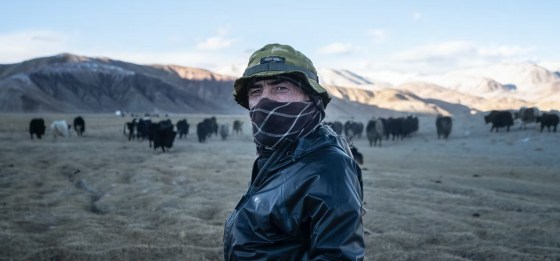
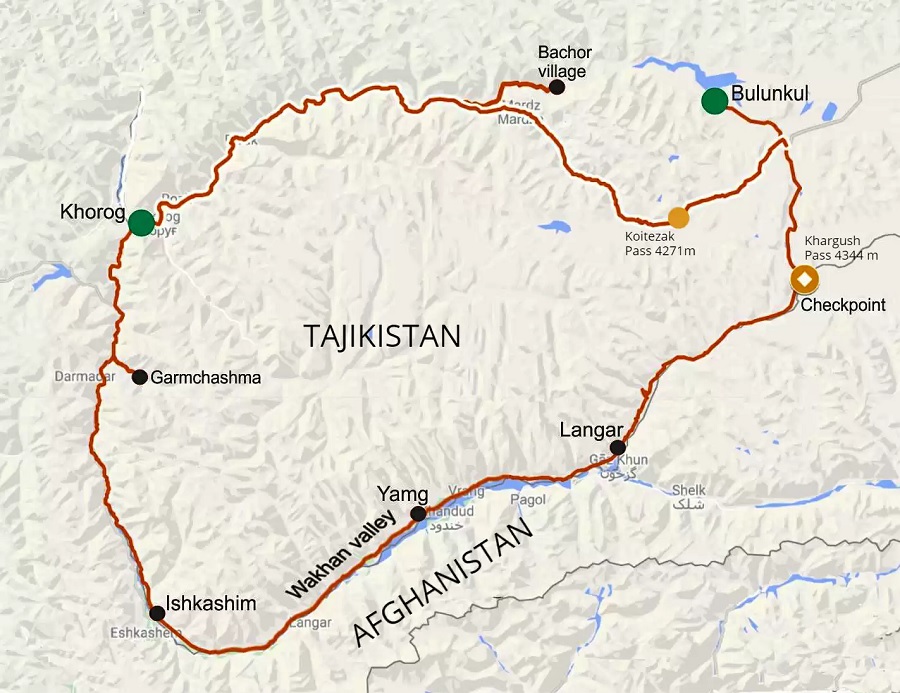
High up in the small town of Bulunkul, one of the most remote areas inhabited by Ismailis (read Pilgrim Journey — the sacred wonders of Pamirs and also How to self-drive the Pamir Highway), the clear view of the Milky Way is unparalleled, and wolves prey on the livestock tended to by semi-nomadic herders like Bulbulov Doniyor. But melting glaciers and increasingly extreme weather patterns are rewriting the rules of play for this village in Tajikistan’s Gorno-Badakhshan where, in winter, the weather temperature can drop down to -60°C.
Last winter, wolves descended from the mountains and went straight for Doniyor, instead of the sheep. In a three part series supported by the Pulitzer Center, Klas Lundström, a staff writer for the Swedish newspaper Tidningen Global, tells the stories of the people living through the climate crisis. Begin reading the series on the website Inverse by clicking on Part 1: In Tajikistan, a deadly new type of climate crisis has already arrived.
Bulbulov Doniyor. In 2020, Covid-19 struck and the herders’ usual trading routes closed. Photo: Fredrik Lerneryd/Inverse. Please click on photo for Part 1 of article.
Date posted: January 30, 2022.
_____________________
Before leaving this website please take a moment to visit Simerg’s Table of Contents for links to hundreds of thought provoking pieces on a vast array of subjects including faith and culture, history and philosophy, and arts and letters to name a few. Also, visit Simerg’s sister websites Barakah, dedicated to His Highness the Aga Khan, and Simergphotos.
Exactly a year ago, on Thursday, January 21, 2021, my beloved mum “Mrs. Merchant” (Alwaeza Maleksultan Jehangir Merchant) passed away peacefully at the age of 89. Tributes and condolences poured from all over the world, which deeply touched the entire family. The family also received a Talika of blessings from Mawlana Hazar Imam, His Highness the Aga Khan, as well as a message of condolence from Prince Rahim Aga Khan, both of which deeply inspired and gave courage to the family during their period of bereavement. My dad, Jehangir, her loving husband of 66 years, had died three years earlier on May 27, 2018. They both served Imamat institutions on a professional and voluntary basis as missionaries and religious education teachers for more than 60 years.
Story continues below
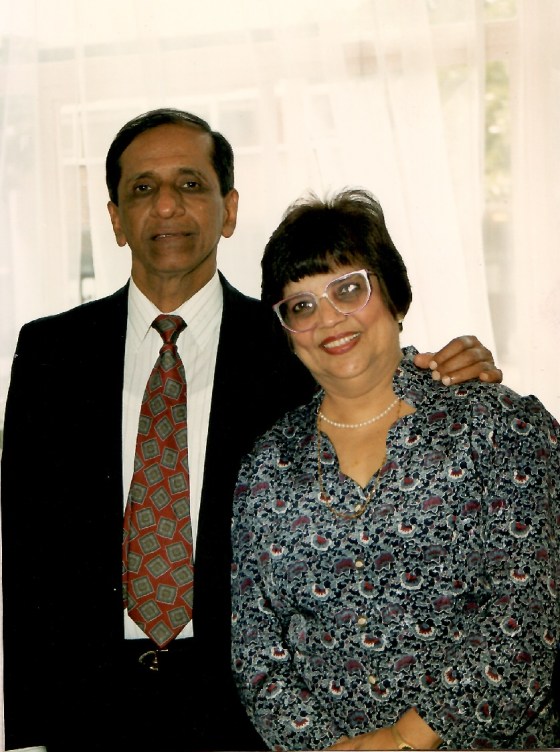
This July 1992 photo of Mr. and Mrs. Merchant is from the first page of the tribute album prepared by the BUI students of Central London, England on their retirement from the Ismaili Tariqah and Religious Education Board (ITREB) for the UK. Photo: Jehangir Merchant Family Collection.
I was unable attend the funeral because of Covid-19, and other challenges. Knowing my situation, my mum told me on Facetime on the morning of her admission to the hospital, “Malik, tereku nai aneka hai” (you are not going to travel). She passed away 12 hours later.
Three months later, I travelled to close her rented home and spent three weeks packing my parents belongings. As mentioned earlier my beloved father, had died 3 years earlier. As I went through thousands of pieces of objects that included their beautifully handwritten waezes (sermons) I came across a priceless album of tributes prepared by Baitul Ilm (BUI) students of Central London, England, for her retirement. All these objects, including the album, were packed and shipped to Ottawa, numbering some 86 boxes. The major categories of the contents were identified on a spreadsheet.
Story continues below after photos and tribute speech
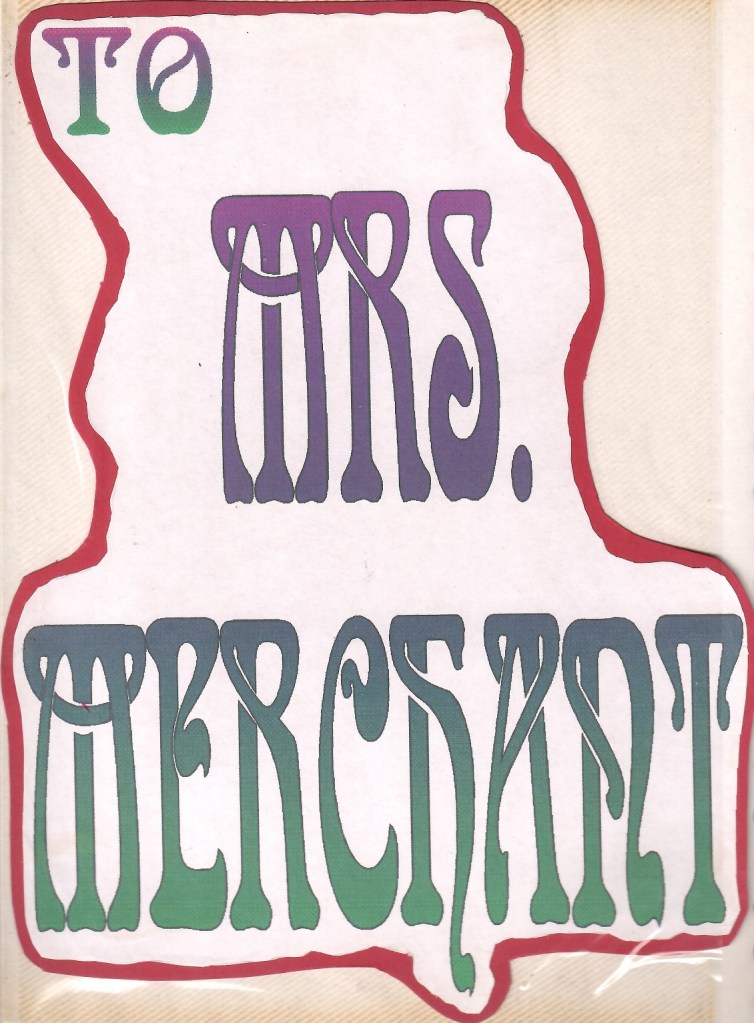
Title page of tribute album prepared for Mrs. Merchant. Photo: Jehangir Merchant Family Collection,
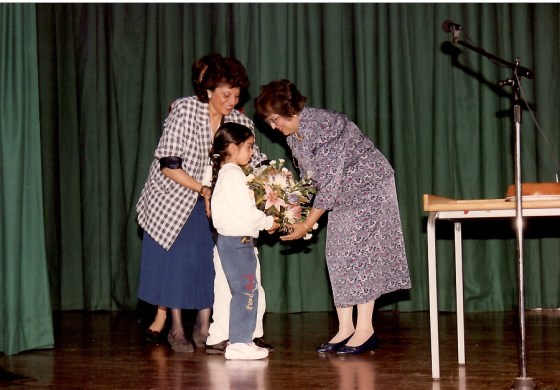
A young girl presents a bouquet of flowers to Mrs. Merchant on her retirement as teacher and waezin with ITREB for the UK, July 1992. Photo: Jehangir Merchant Family Collection.
________________
The Untiring Efforts of Mr. and Mrs. Merchant
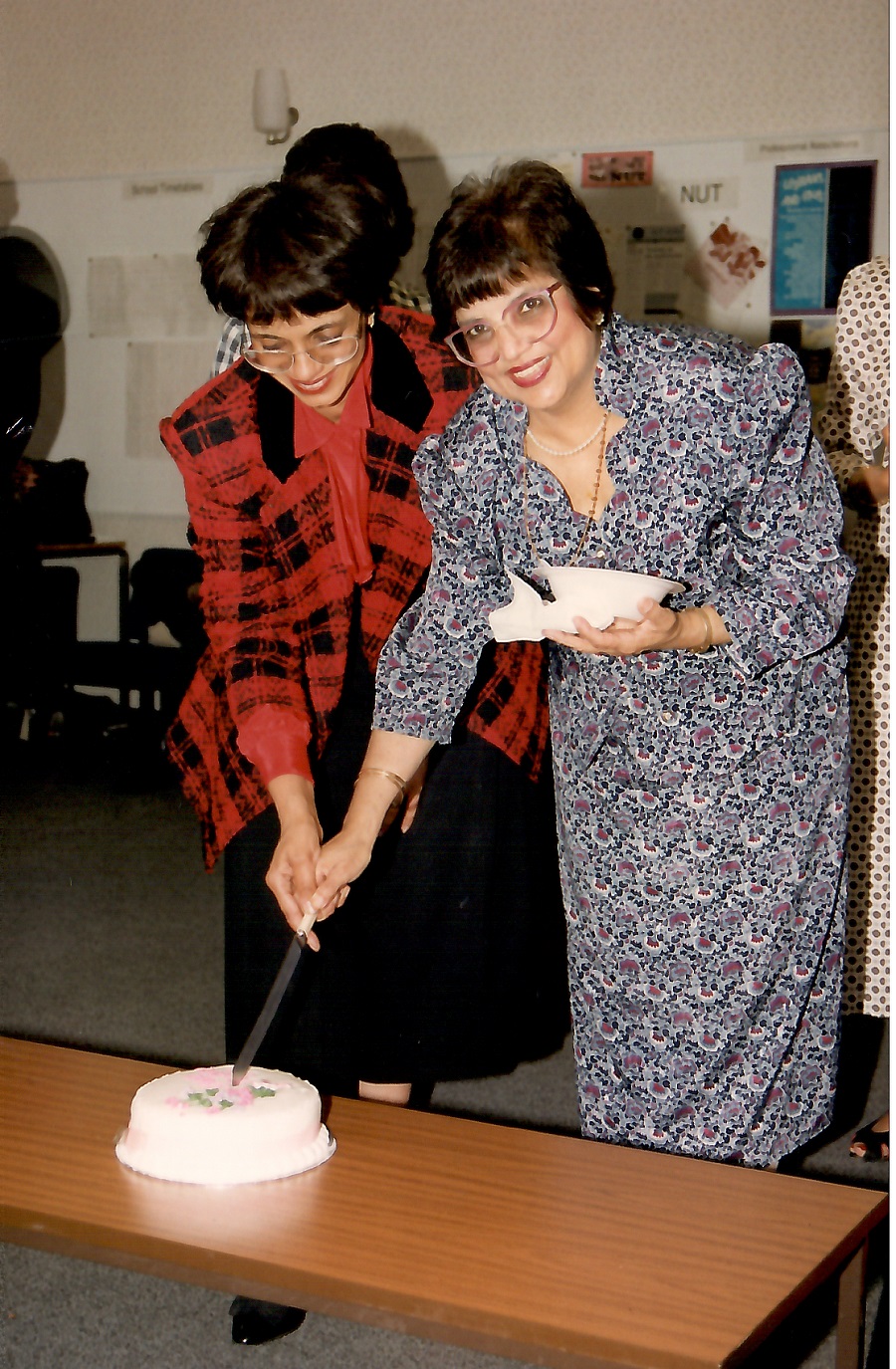
An absolutely beautiful Mrs. Merchant helped by Tasneem Virani cuts a cake at the tribute party held on the occasion of her retirement from ITREB UK. She and her husband were recognized for their services to the UK Jamat in a speech delivered by Ms. Virani (see excerpts below). Photo: Jehangir Merchant Family Collection.
By TASNEEM VIRANI
Let us take our minds back in the 1970’s when they [Mr. and Mrs. Merchant] worked seven days and evenings, spreading their knowledge to not only the children, but the leaders, the Mukhisahebs and Kamdiasahebs, as well as all the members of the Jamat. They would be in London one morning, then Brighton later in the afternoon, then back to another centre in London, then off again — all by British Rail.
They continued to be extremely involved with teaching, preparing teaching notes, training Mukhisahebs and Kamadiasahebs, perfecting varas [recitations] for children, training the teachers, training and supporting those coming into our Tariqua and so on. This is a real backbone of our strength in our institution as we see today and will never be forgotten. Our gratitude for those untiring efforts have no bounds.
I remember the long hours we all spent together in the stages when we we were planning to formalize the structure of religious education as we know it today. This format of Bait-al-Ilm is the culmination of the untiring and continued support and input from you both, Mr. and Mrs. Merchant.
Mrs. Merchant, you have taught us to follow, in spirit and in action, the most important Farman of Mawlana Hazar Imam of not accepting mediocrity but always aiming at the highest level and not compromising on quality. The time you spent on an individual child and the patience you show all make you a role model for those left now to do the job you started so long ago and continue to do.
We pray to Mawlana Hazar Imam to shower you with blessings that you will have happiness, long life, strength and courage to continue your hard work and give to others what what you have given to us. Ameen, Tasneem Virani, Administrator.
_______________
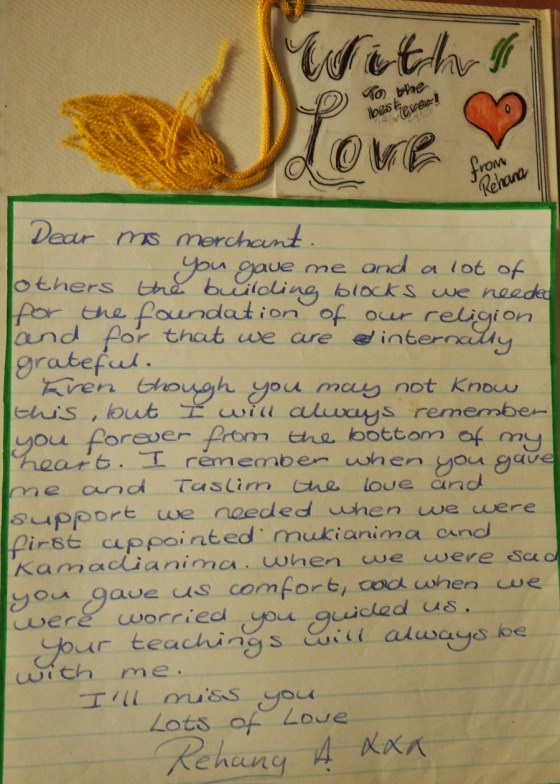
A tribute by a BUI student to Mrs. Merchant from the tribute album presented to her by the London BUI students, July 1992. Photo: Jehangir Merchant Family Collection.
.…Story continued
With some help from members of the Jamat, I began unpacking a few of the boxes that I had carefully labelled at the time of packing. JAM #55 (Jehangir Alibhai Merchant, everyone wondered why they were labelled JAM, but my dad had a sweet tooth, anyway) had been assigned to the box containing the album. I am deeply happy to post a few images from the voluminous album of tributes to my mum by the London students. I hope to be able to scan as well as OCR a few more pages from the album highlighting the impact of her contribution to religious education in the UK, and to publish another post sometime in the near future.
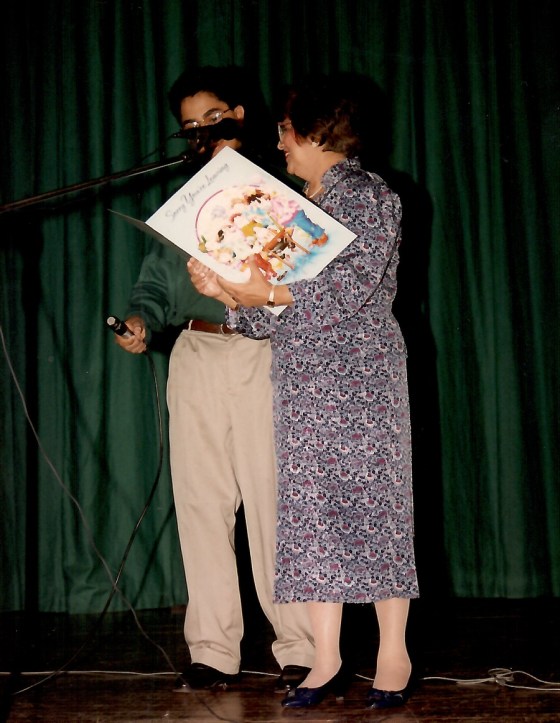
Mrs. Merchant admires a beautiful card presented to her during her retirement from ITREB for the UK, July 1992. Photo: Jehangir Merchant Family Collection.
A tribute by a BUI student to Mrs. Merchant, July 1992. Photo: Jehangir Merchant Family Collection.
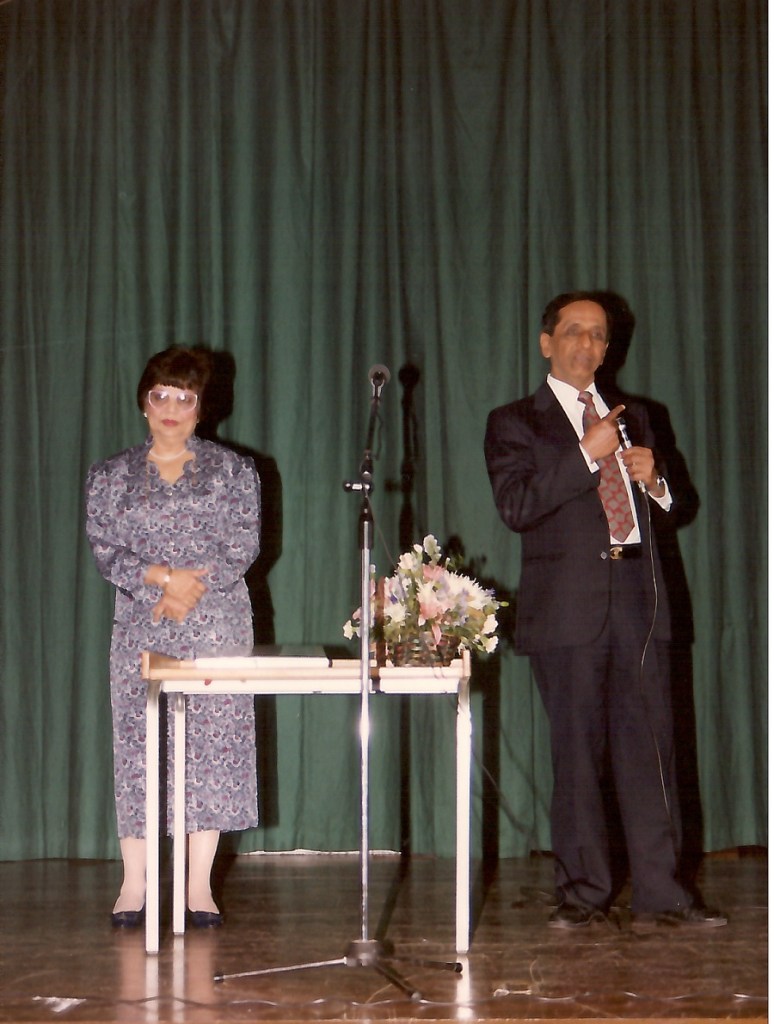
Mr. Merchant makes a point during his address at the farewell party honouring him and Mrs. Merchant (left) for the services they rendered as religious education teachers and Waezin with ITREB, UK, July 1992. Photo: Jehangir Merchant Family Collection.
_______________
The Gentle Mrs. Merchant: A Letter from a Student
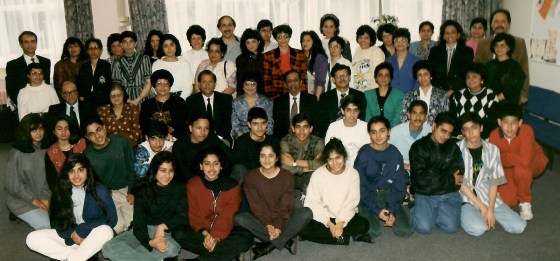
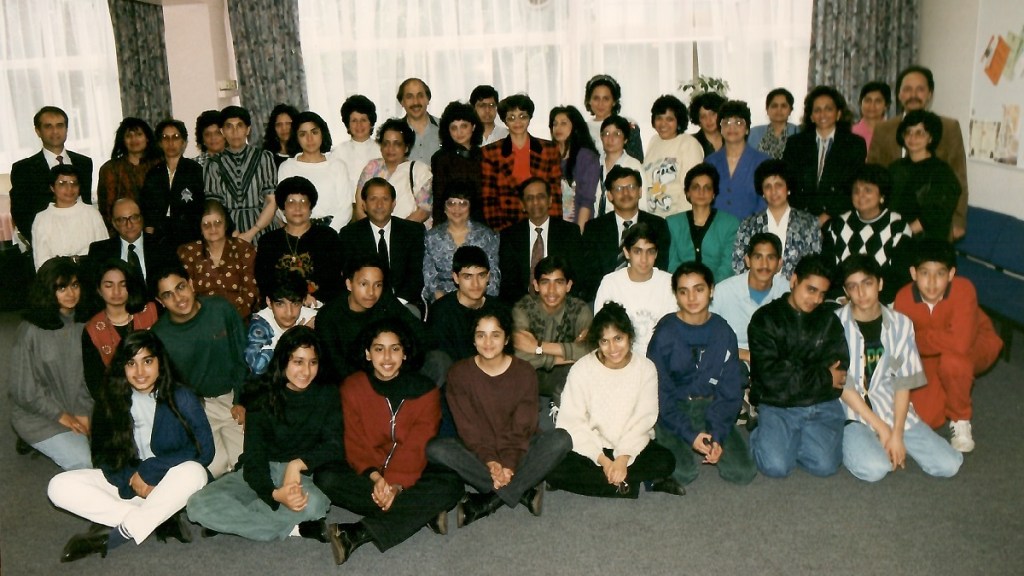
Mr. and Mrs Merchant with the Darkhana Jamatkhana and ITREB UK leadership, and teachers and senior students of BUI Central London, UK, July 1992. Photo: Jehangir Merchant Family Collection.
By SHAHEEN AND BUI STUDENTS
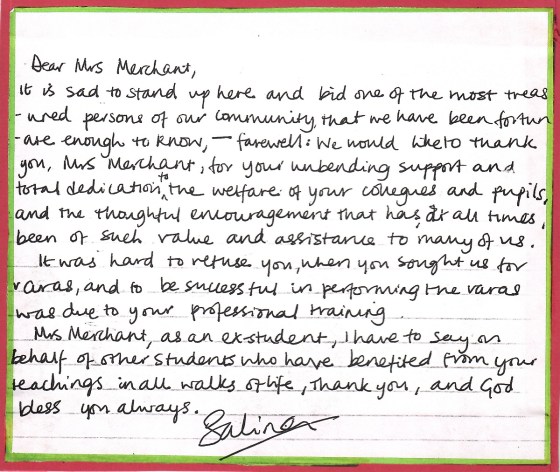
…..We are all gathered here today to say Good-Bye to our dear Mrs. Merchant, What I would really like to do is to share with you a letter which I have written to Mrs. Merchant.
Dear Mrs. Merchant,
I am going back a good number of years when I recall that when I started religious training at [5] Palace Gate you were my first teacher and you have continued to be the gentle but strong influence in my life, for religious training does not end at 1:30 p.m. on Saturday but continues to be an integral part of our lives. I have spent many Saturdays listening and discussing in your classes and these are the roots of my understanding of my beautiful religion. Your constant guidance and willingness to answer the questions, however bizarre, never once a harsh word, or a change in the pitch of your voice, however much we tried your patience, makes you a role model for us. Yes, believe or not Mrs. M. I now come in to teach the little children and I will try and use the same gentle but impossible to say No! manner when asking a child to take a vara [recitation of Dua, Farman, Ginan etc. in Jamatkhana]…. It is thanks to personal touches and willingness to do anything for your students that makes you that special person that you are….
Story continues below
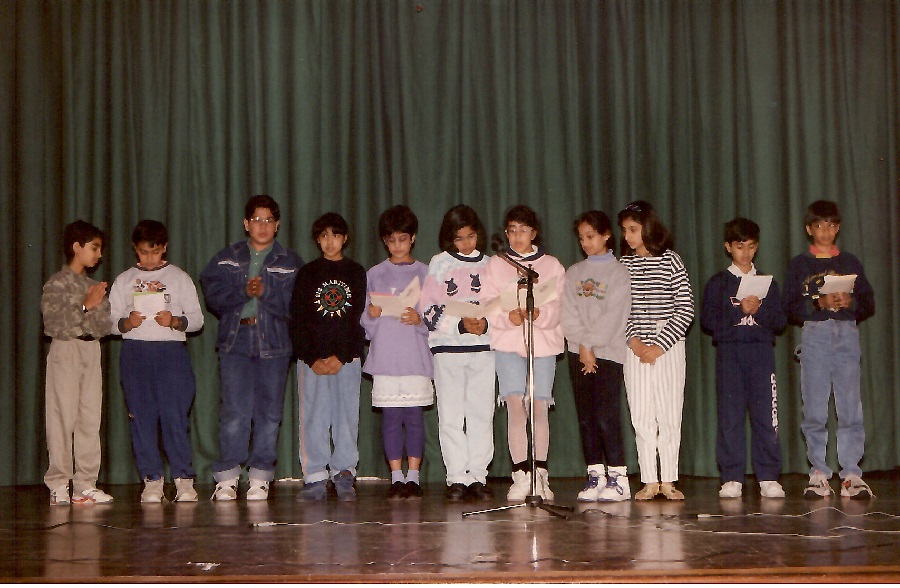
A group of BUI students perform a recitation at the retirement party in honour of Mr. and Mrs. Merchant who served as missionaries and religious education teachers with ITREB UK. Photo: Jehangir Merchant Family Collection.
If we have a vara we can be sure a day or so before the phone would ring and the familiar voice would say, “Beta, you were not in Jamatkhana today, why? How are you doing in your exams? I will pray for you. Are you ready for your vara? Can I hear it over the phone?”
This kind of dedication is rare and we are the lucky few who received it. Well Mrs. Merchant, today we pray for you, that you will always find peace and satisfaction and find more children to benefit from your softly softly approach so that they can become staunch Ismailis and may they also experience the love and confidence we have enjoyed.
We love you and we will miss you. Don’t forget us for we will never forget you. Love from Shaheen and all the others in London.
_______________
You Will Be in Our Hearts and Prayers Forever
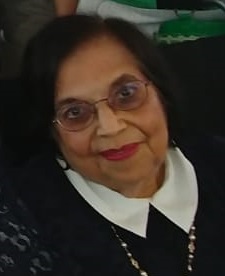
Alwaeza Malek J. Merchant (June 9, 1931 – January 21, 2021), pictured in Lisbon, Portugal, in July 2018, during the Diamond Jubilee of Mawlana Hazar Imam, His Highness the Aga Khan.
Mrs. Merchant was a truly beautiful soul, a deeply caring mother and grandmother as well as a fantastic teacher and an Alwaeza (missionary) loved by thousands around the world.
I humbly and sincerely ask everyone to join the family in praying that Alwaeza Malek Merchant’s soul may rest in eternal peace. Ameen.
Date posted: January 21, 2022.
_____________________
Simerg welcomes your feedback. Please complete the LEAVE A REPLY form below or click Leave a comment. Your letter may be edited for length and brevity, and is subject to moderation.
Before leaving this website please take a moment to visit Simerg’s Table of Contents for links to hundreds of thought provoking pieces on a vast array of subjects including faith and culture, history and philosophy, and arts and letters to name a few. Also, visit Simerg’s sister websites Barakah, dedicated to His Highness the Aga Khan, and Simergphotos.
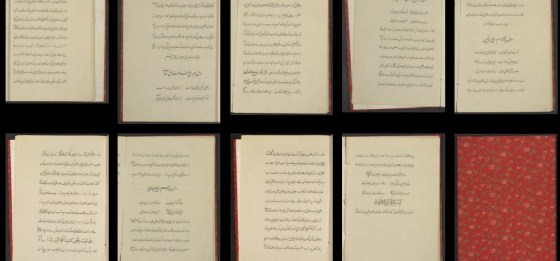
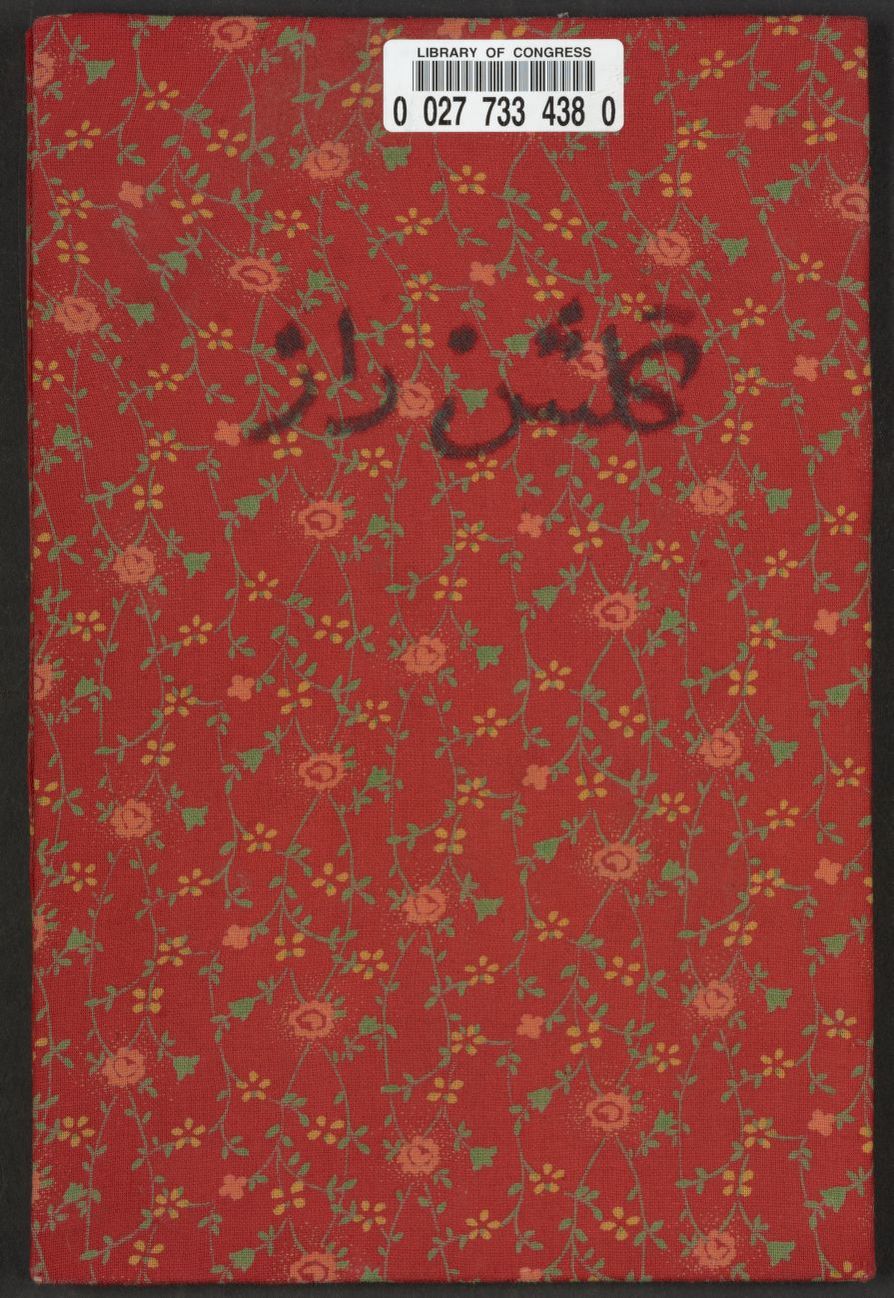
Gulshan-i rāz (The garden of mystery) is a 20th century text on the Nizari Ismaʻili belief system, written by Nadir Shah Kayani (circa 1897 – circa 1971), a leader of the Ismaʻili community in Afghanistan.
Article continues below
Page 1 of 42 of the Ismaili work Gulshan-i rāz. Photo: LOC.
The title of this work deliberately echoes a celebrated Ismaʻili book of verse of the same name composed by Mahmud Shabistari in 1317. Nadir Shah’s work is organized in 14 sections, each of which discusses a philosophical or religious topic such as nafs (the soul) or namaz (prayer). The first section, on tafakkur (the faculty of thought), is written as a commentary on a verse from the original Gulshan-i rāz.
Article continues below, click image to download PDF
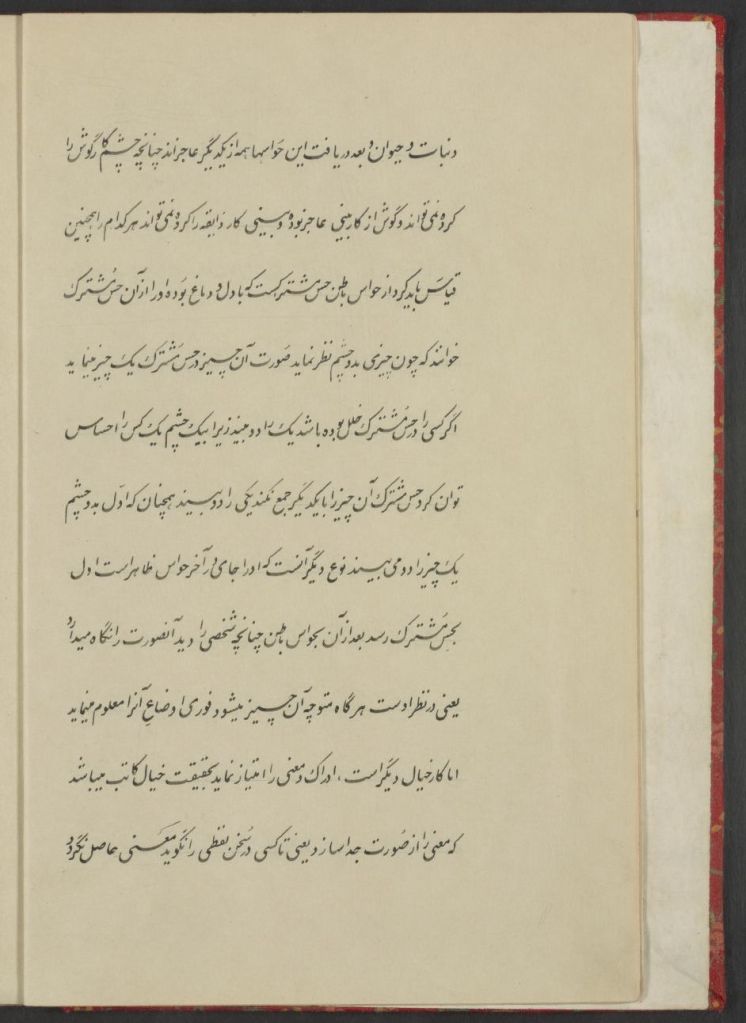
Page 12 of 42 of the Ismaili work Gulshan-i rāz. Photo: LOC; please click on image to download the work in PDF format.
Much remains to be discovered about the Ismaʻili community of Afghanistan during this period. What is known is that Nadir Shah belonged to a family of Ismaʻili leaders based in the Kayan valley in northern Afghanistan. He was a prolific author who wrote both poetry and philosophical texts. The present work is a manuscript, most likely produced in Afghanistan.
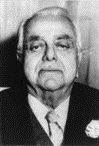
Aga Khan III. Photo: LOC.
Kayani’s leadership of the Ismaʻili community coincided with the reign of the 48th Ismaili Imam, Mawlana Sultan Mahomed Shah, His Highness the Aga Khan III (1877-1957; Imam from 1885-1957).
The script is nastaʻliq, written in black ink, 11 lines to the page, on a light-cream paper. The “third” in the title probably refers to Shabistari’s original work as the first Gulshan-i rāz. The identity of the second Gulshan-i rāz is not clear; it could be a reference to the well-known commentary by Shams al-Din Lahiji, written in 1472-73.
Please download Nadir Shah’s work in PDF format by clicking HERE.
Summary of Work
Contributor Names: Kiyānī, Nādir Shāh. Created/Published: Between 1900 and 1999? Notes: Manuscript; Nastalīq script; 11 lines in written area 21.5 x 14 cm; Paper is light cream; black ink; Probably written in Afghanistan; Also available in digital form (PDF and JPEG, click HERE for PDF); In Persian; Acquired for LC only.
Before leaving this website please take a moment to visit Simerg’s Table of Contents for links to hundreds of thought provoking pieces on a vast array of subjects including faith and culture, history and philosophy, and arts and letters to name a few. Also, visit Simerg’s sister websites Barakah, dedicated to His Highness the Aga Khan, and Simergphotos.
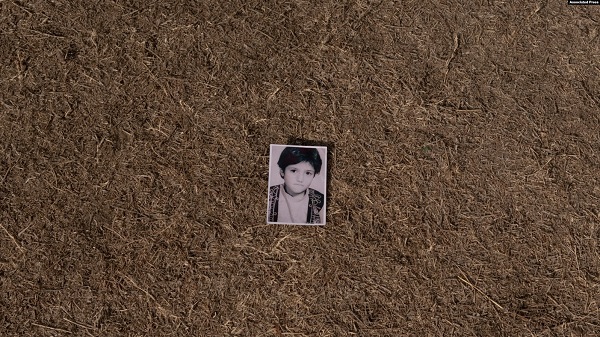
At not quite 8 years old, Sanam is a bacha posh: a girl living as a boy. One day a few months ago, the girl with rosy cheeks and an impish smile had her dark hair cut short, donned boys’ clothes and took on a boy’s name, Omid. The move opened up a boy’s world: playing soccer and cricket with boys, wrestling with the neighborhood butcher’s son, working to help the family make ends meet — READ MORE OF THIS ARTICLE BY ASSOCIATED PRESS AT VOICE OF AMERICA
A photo of Najieh dressed as a boy at a young age lies in a grass, in Kabul, Afghanistan, Sunday, Dec. 19, 2021. Please click on image to read full article. Photo: Associated Press.
Date posted: January 16, 2022.
_____________________
Before leaving this website please take a moment to visit Simerg’s Table of Contents for links to hundreds of thought provoking pieces on a vast array of subjects including faith and culture, history and philosophy, and arts and letters to name a few. Also, visit Simerg’s sister websites Barakah, dedicated to His Highness the Aga Khan, and Simergphotos.
Nairobi’s Town Jamatkhana was opened on January 14, 1922. On its 100th anniversary, we invite our readers to read Zahir Dharsee’s highly acclaimed piece Memories of Nairobi’s Majestic Town Jamatkhana that first appeared on this website in 2011 as part of our special Jamatkhana Series.
May we note that to mark the anniversary, Kenya’s Daily Nation has published a special piece co-authored by Azim Lakhani and Shamira Dostmohamed. Please read their article by clicking on Celebrating Over a Century of Ismaili Community in Kenya. It includes an excellent overview of numerous events that have taken place at the Jamatkhana over the past decade.
Please click for article and photos.
Date posted: January 14, 2022.
___________________
Before leaving this website please take a moment to visit Simerg’s Table of Contents for links to hundreds of thought provoking pieces on a vast array of subjects including faith and culture, history and philosophy, and arts and letters to name a few. Also, visit Simerg’s sister websites Barakah, dedicated to His Highness the Aga Khan, and Simergphotos.
Important Notice to Readers of Simerg, Simergphotos and Barakah
Effective January 13, 2022, no new posts will be published in Simerg and its two sister websites Barakah and Simergphotos until the first week in February. The editor is on the move, and hopes to resume publication on Friday, February 4, 2022. During this period, readers are invited to access hundreds of articles via the Table of Contents pages of Simerg, Barakah and Simergphotos. Thank you.
__________
We invite our reader’s to enjoy the following recent pieces on Simerg’s sister websites Barakah and Simergphotos. Please click on the hyperlink or corresponding image to read article.
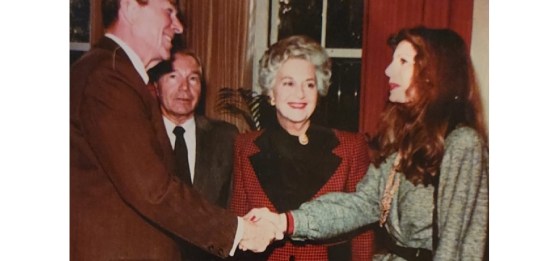
Simerg will be publishing a multi-part series on Alzheimer’s in 2022, and we plan to launch the series early in the New Year with a special profile on Princess Yasmin and her involvement with the Alzheimer’s Association since 1981. Alzheimer’s contributed to her mother Ms. Rita Hayworth’s death at the age of 67 in 1987. The Association has raised tens of millions of dollars through the annual Rita Hayworth Galas that have been held in Chicago and New York over the past 35 years.
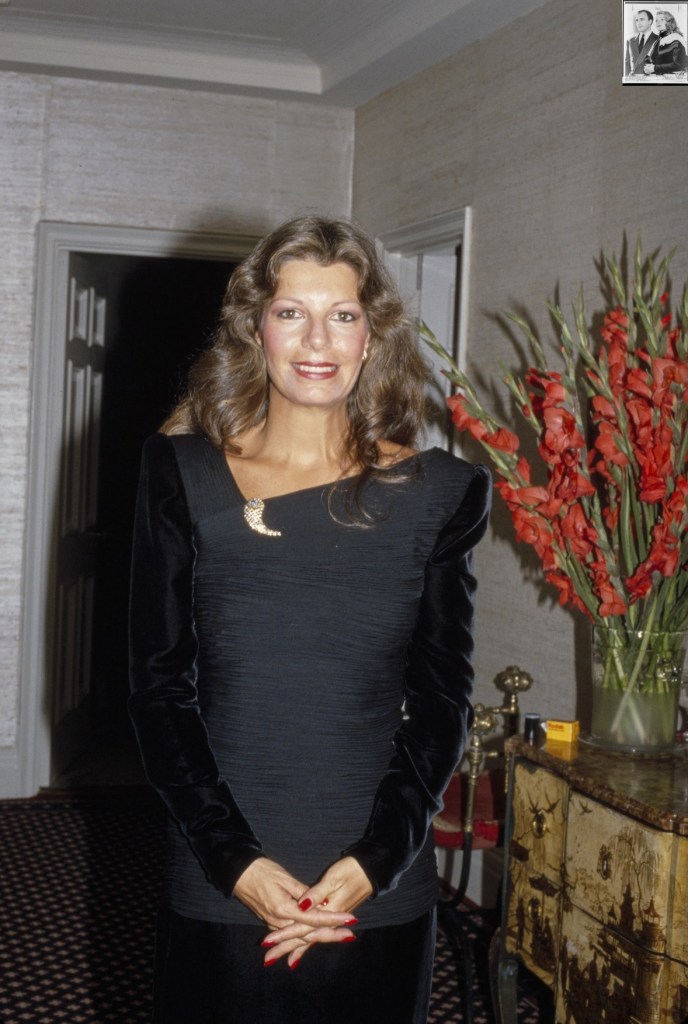
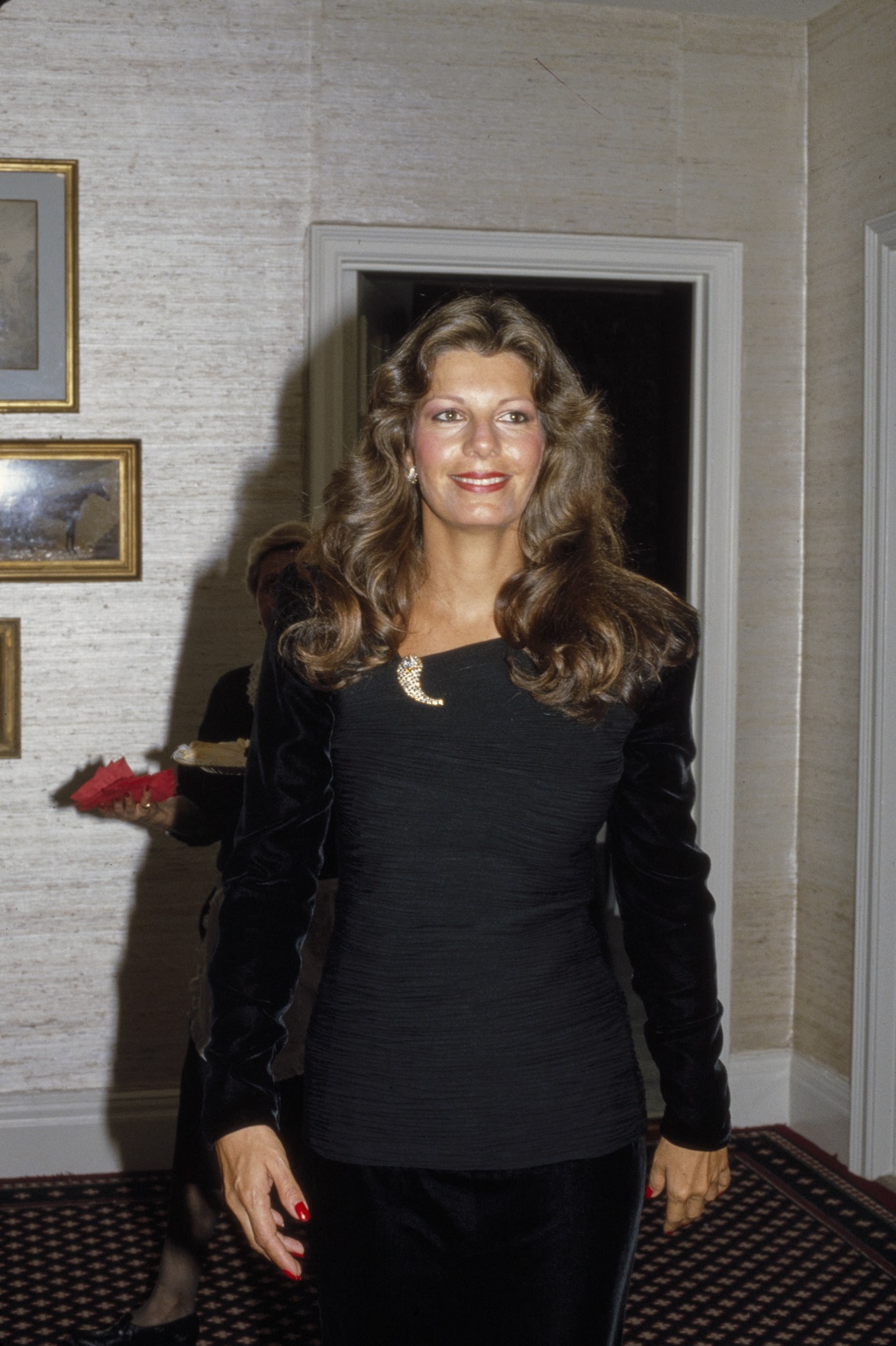
Princess Yasmin Aga Khan, daughter of Prince Aly Khan and Rita Hayworth, and younger sister of Mawlana Hazar Imam, His Highness the Aga Khan, and Prince Amyn Mohamed, at Alzheimer’s fundraiser in New York in December 1984. Photo Credit: Library of Congress, Prints & Photographs Division, photograph by Bernard Gotfryd.
Today, December 28, 2021, is a very special day in the life of the Princess as she celebrates her 72nd birthday. We mark her birthday with a brief tribute to the Princess on our sister website Barakah that includes a selection of historical photographs of the Princess as well as a link to an interview the she gave to Canada’s National Newspaper, “The Globe and Mail” in which she talks about Alzheimer’s.
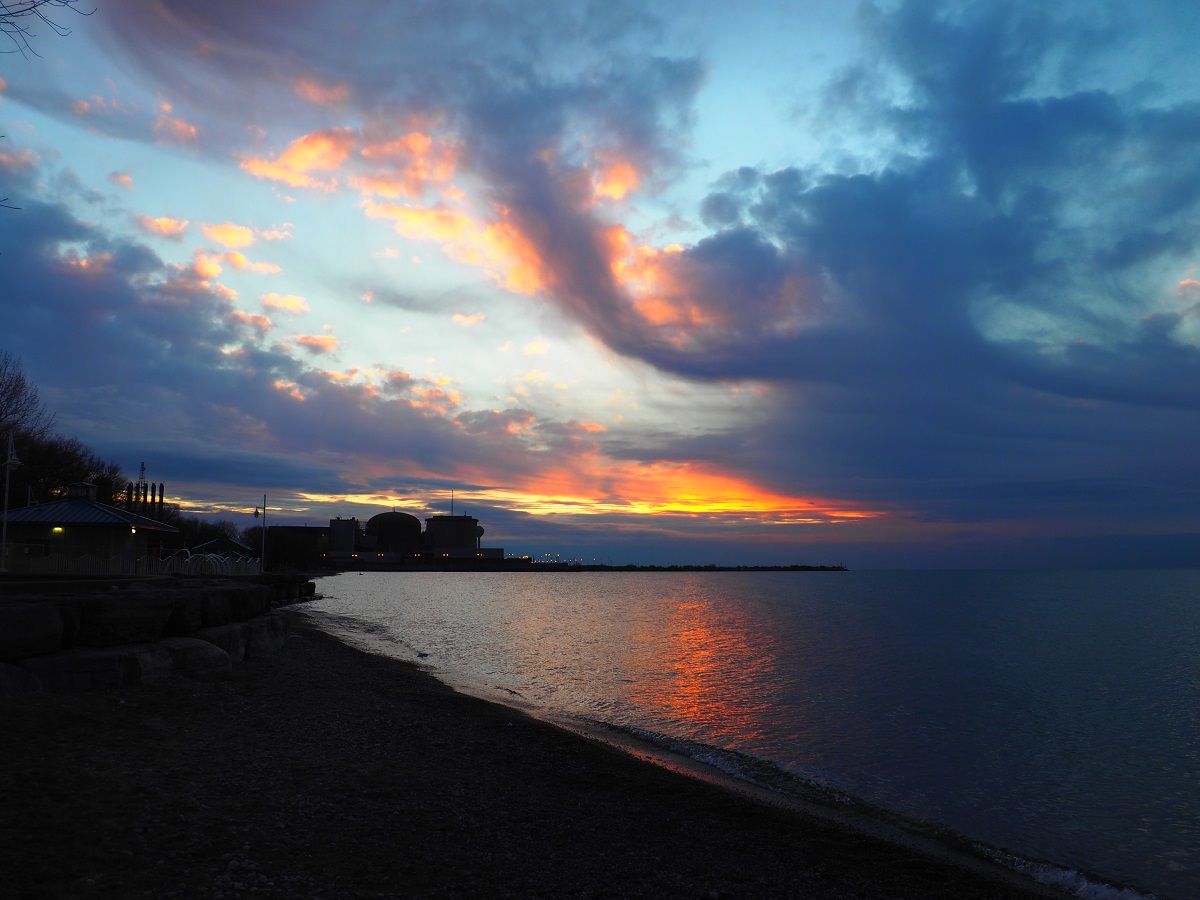
On Sunday December 26, my morning twilight visit to the Pickering Waterfront on Lake Ontario, was one of the most amazing I have ever had in my life. The sky took on different tones every few minutes — I did not see the rising of the sun because of the cloud cover in the horizon, but watched in awe the sun’s impact on the sky and clouds above it. During those moments of joy, hope and bewilderment, there was only one person that came into my thoughts as I clicked on my camera more than a 100 times during the hour I spent at the Waterfront — Princess Yasmin.
Lake Ontario, Pickering Waterfront Park, 7:44 am five minutes before sunrise on December 26, 2021. Photo: Malik Merchant/Simerg
Lake Ontario, Pickering Waterfront Park, 7:53 am, four minutes after sunrise on December 26, 2021. Photo: Malik Merchant/Simerg
The incredible twilight show in the sky, for me, was symbolic of a day in the life of an Alzheimer’s patient. In the horizon, I saw beautiful bright orange and red clouds that symbolized hope, then there was a dark swirling cloud that became the tail of a large gloomy cloud that represented despair and fear. Several minutes later as the sun continued to rise, and the skies turned blue, I saw the beautiful moon over Lake Ontario, representing hope once again. A normal-like pattern of behaviour in an Alzheimer’s patient, just like that of any other person without the disease, creates an absolutely thrilling moment for any family member, who might then say at that particular instant, ‘”my parent or spouse is healing and I can take him or her home. ” But that hope can quickly fade seconds, minutes or hours later when the patient’s behaviour pattern changes due to the disease; it is an unbearable moment for any loved family members or friends who may be around.
The Forthcoming 2022 In-Person Rita Hayworth Gala in Chicago: Founded and Chaired by Princess Yasmin Aga Khan
Our support for organizations such as the Alzheimer’s Association and other local and national institutions in the communities we live in can contribute to finding a long-term improvement in the quality of lives of everyone afflicted with the disease or indeed, one day, in eliminating Alzheimer’s altogether.
Princess Yasmin Aga Khan, front row centre, in a group photo with members and supporters of the Alzheimer’s Association. Sadruddin Noorani who has been involved with the Alzheimer’s Association since the 1980’s is pictured on the back row, 3rd from left. Photo: Rita Hayworth Gala/Alzheimer’s Association.
I might note that Princess Yasmin founded and has been the Chair of the annual Rita Hayworth Galas in Chicago and New York since the mid 1980’s. The New York Gala now named the Imagine Benefit, has been built on the legacy of the Rita Hayworth Gala that was first held in 1984 — the latest Imagine event was held in November 2021.
The next Rita Hayworth Gala in Chicago, that was inaugurated in 1987, 3 years after the New York Gala, is scheduled to be held on April 23, 2022 at The Hilton in Chicago. It has been planned as an in-person event, with the presence of Princess Yasmin. However, the on-going pandemic situation may cause the event to be relayed virtually.
Simerg invites you to view the Rita Hayworth Gala information HERE. While the event titled “Generation of Hope” may be a few months away, your thoughtful support for the Alzheimer’s cause can begin at any time by visiting the website and submitting a pledge.
I am proud to say that a member of the Chicago Ismaili community, Sadruddin Noorani, has been very prominent in the Chicago Gala and the Alzheimer’s Association for years. His support to Princess Yasmin has been incredible and I would hope that hundreds, like him, from around the world will join Princess Yasmin in her effort to fulfill what we would all imagine would be her greatest wish on her birthday — finding a cure for Alzheimer’s and Dementia.
Date posted: December 28, 2021. Last updated: December 28, 2021; 10:30 AM (corrections, see below).
Corrections: (1) The original piece contained the wrong date for the forthcoming 2022 Alzheimer’s Rita Hayworth Gala in Chicago; the piece now reflects the correct date; (2) the Gala is not planned as a virtual event as mentioned in earlier versions. It is expected to be an in-person event, with Princess Yasmin in attendance unless of course the pandemic situation forces it to be a virtual event; and (3) corrections have been made to dates noted in the twilight photos.
______________________
Simerg welcomes your feedback. Please complete the LEAVE A REPLY form below or click Leave a comment. Your letter may be edited for length and brevity, and is subject to moderation.
Before leaving this website please take a moment to visit Simerg’s Table of Contents for links to hundreds of thought provoking pieces on a vast array of subjects including faith and culture, history and philosophy, and arts and letters to name a few. Also, visit Simerg’s sister websites Barakah, dedicated to His Highness the Aga Khan, and Simergphotos.
[A similar version of this piece also appears on Simerg’s sister website Barakah that was inaugurated in 2017 to celebrate the Hereditary Leadership (or Imamat) of Mawlana Hazar Imam, His Highness the Aga Khan. The origins of the Divine Institution of Imamat that His Highness leads go back to the time of the Holy Prophet Muhammad (s.a.s) who designated and appointed his cousin and son-in-law, Hazrat Ali (a.s.), to continue to govern the Muslim community in spiritual and temporal matters. His Highness is the 49th Imam in this succession of Hereditary Imams — Ed.]
In the Talika Mubarak (holy written message) of December 10, 2021 that was sent to the world-wide Jamat on the auspicious occasion of his 85th birthday on December 13, Mawlana Hazar Imam, His Highness the Aga Khan, said: “I am most touched that on the occasion of my birthday, senior Jamati leaders have presented a beautiful gift on behalf of my global Jamat, which I accept with appreciation and gratitude.”
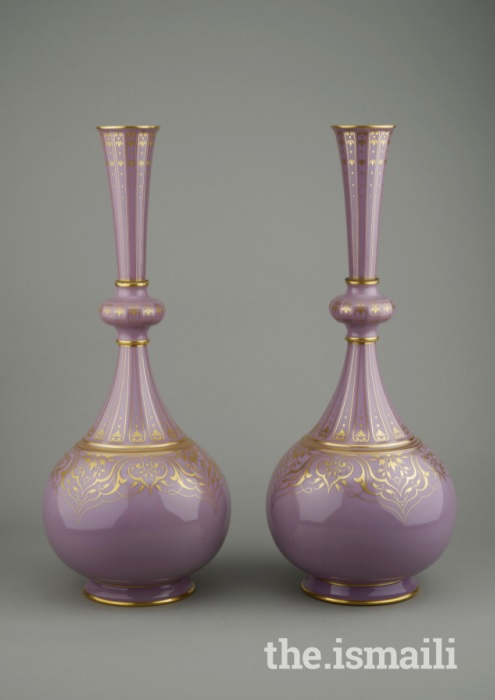
Porcelain vases presented to Mawlana Hazar Imam, His Highness the Aga Khan, on his 85th birthday on December 13, 2021. Photo: The Ismaili.
The ‘beautiful gift’ referred to by the Imam was a pair of porcelain vases, and The Ismaili provided a brief description and photograph of the two vases in a post dated December 12, 2021.
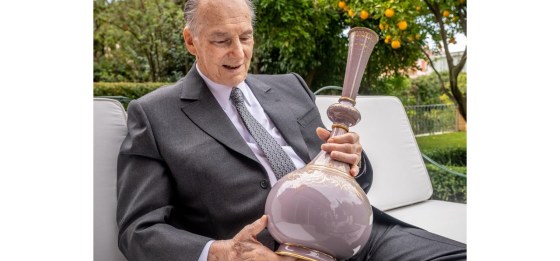
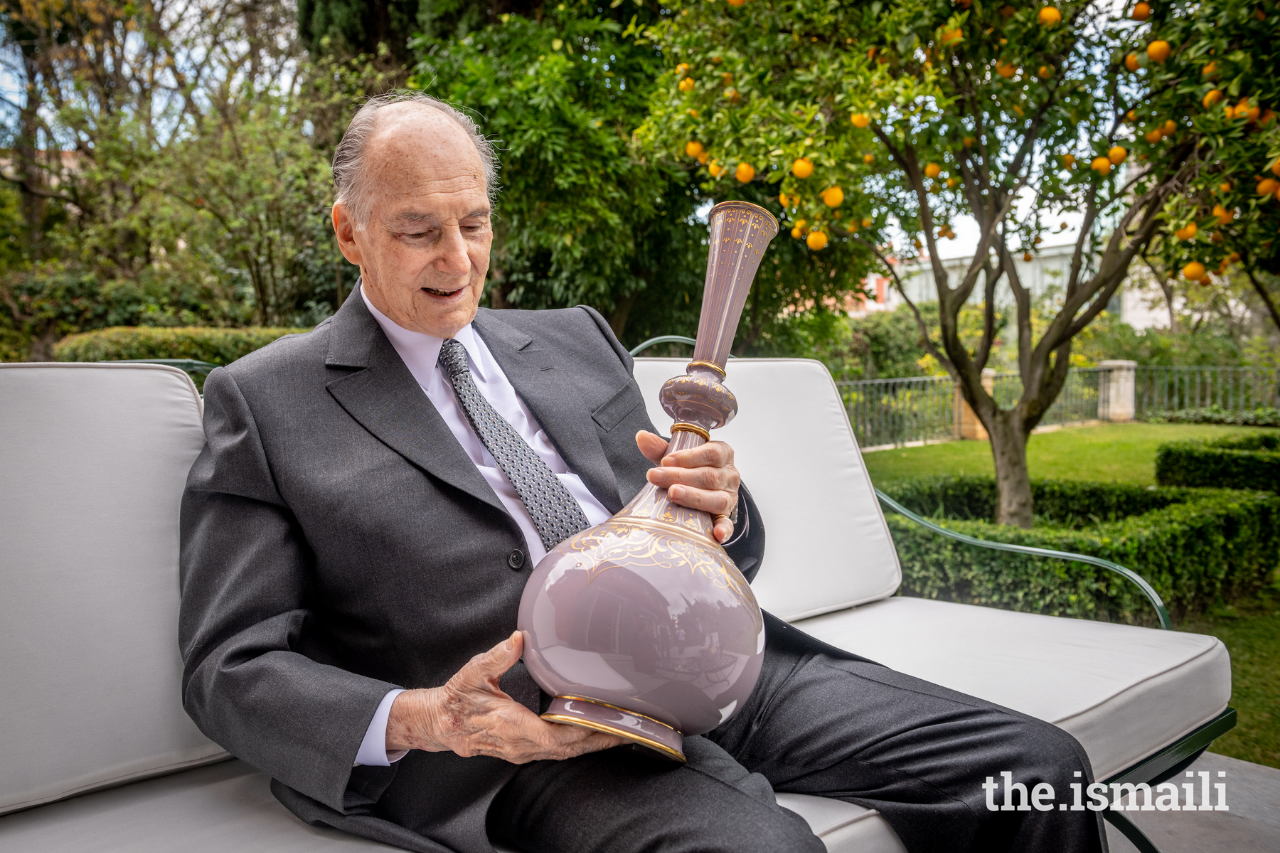
However, the happiest moment was for the Jamats worldwide to see Mawlana Hazar Imam himself holding one of the two vases in a garden setting at his Lisbon residence, with what appears to be an orange or clementine tree in the background. What a beautiful photo Fernando Costa captured for all of us to see, and give us so much joy.
Mawlana Hazar Imam, His Highness the Aga Khan, the 49th Hereditary Imam of the Shia Ismaili Muslims, is seen holding one of the two 19th century porcelain vases that was presented to him by leading Ismaili leaders on behalf of the global Ismaili community on the occasion of his 85th auspicious birthday on December 13, 2021. Photo: Fernando Costa / IPL via The Ismaili.
This pair of porcelain lavender-ground vases were made in 1874 at the Manufacture Nationale de Sèvres, which became the preeminent porcelain manufacturer in Europe in the 18th and 19th centuries. During the 19th century, the Sèvres factory’s output reflected an ongoing desire for technical innovation as well as a wide embrace of diverse decorative and historical styles. The shape and design of these vases is based on a Persian metal prototype and, as such, they are recorded in the Sèvres Archives as ‘Vase Bouteille Persane’. Eighteen similar vases were entered for sale in January 1874 and described as ‘fond sous couverte et décor en or’ (under cover and gold decoration) at a cost of 95 francs each. [1]
Detail of vase presented by the worldwide Ismaili community to Mawlana Hazar Imam, His Highness the Aga Khan, on the auspicious occasion of his 85th birthday, December 13, 2021.
Of Islamic shape, the ovoid body of each vase continues in a long narrow elongated tapered neck, all made in three sections and each joined with two slender fillets of ormolu. The vases are decorated with elaborate Persian gold-powder motifs in the form of interlacing scrollwork and arabesques on the body and ornamented fillets on the neck in heightened relief against a pale lavender or ‘fond changeant’ ground. Designed by the important Parisian sculptor, Albert Ernest Carrier-Belleuse (1824-1887), the vases exist in several versions that differ according to their colour and decoration.
The lavender colour of the vases presented to Mawlana Hazar Imam is very unusual — it changes according to the light under which it is placed, from purple/grey in daylight to pale pink in artificial light. This change of colour according to its exposure to light is due to a mixture of vanadium oxide and cerium oxide. This use of the ‘chameleon’ paste was invented in 1848 by the Sèvres factory chemist Alphonse Louis Salvetat for the 1862 Universal Exhibition held in London to promote the savoir-faire (know how) of the world’s rapidly expanding industries.
Detail of vase presented by the worldwide Ismaili community to Mawlana Hazar Imam, His Highness the Aga Khan, on the auspicious occasion of his 85th birthday, December 13, 2021.
While similar vases in blue and white are to be found in private and museum collections, vases in this pale lavender colour are exceptionally rare. The vases bear, on the underside, green printed lozenge and iron-red decore marks, as well as various incised potters inscriptions, of the Sèvres factory. The vases, each of which is 55 cm in height, are in extremely fine condition. Using the same techniques pioneered during the eighteenth and nineteenth centuries, the Manufacture Nationale de Sèvres continues to produce some of the most high quality works of porcelain art — vases, painted plaques, dinner services, figures — to this day, and it is therefore not surprising that Sèvres is such an integral part of the landscape of the decorative arts today.
Date posted: December 25, 2021.
_________________
[1] Manufacture Nationale de Sèvres Archive, Registre Vr, 1 iere serie, vol.2, fol. 247.17.
~~~~~~~~~~
Simerg welcomes your feedback. Please complete the LEAVE A REPLY form below or click Leave a comment. Your letter may be edited for length and brevity, and is subject to moderation.
Before leaving this website please take a moment to visit Simerg’s Table of Contents for links to hundreds of thought provoking pieces on a vast array of subjects including faith and culture, history and philosophy, and arts and letters to name a few. Also, visit Simerg’s sister websites Barakah, dedicated to His Highness the Aga Khan, and Simergphotos.