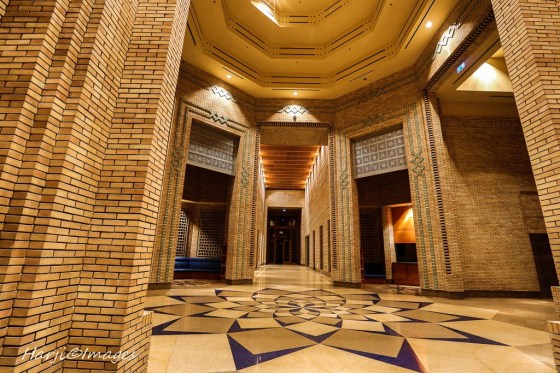
PLEASE CLICK: Dushanbe’s Ismaili Centre Through the Lens of Muslim Harji

Happy young faces at the Dushanbe Ismaili Centre. Please click on image for Muslim Harji’s Photo Essay.
Date posted: September 27, 2015.
PLEASE CLICK: Dushanbe’s Ismaili Centre Through the Lens of Muslim Harji

Happy young faces at the Dushanbe Ismaili Centre. Please click on image for Muslim Harji’s Photo Essay.
Date posted: September 27, 2015.
The 49th Ismaili Imam
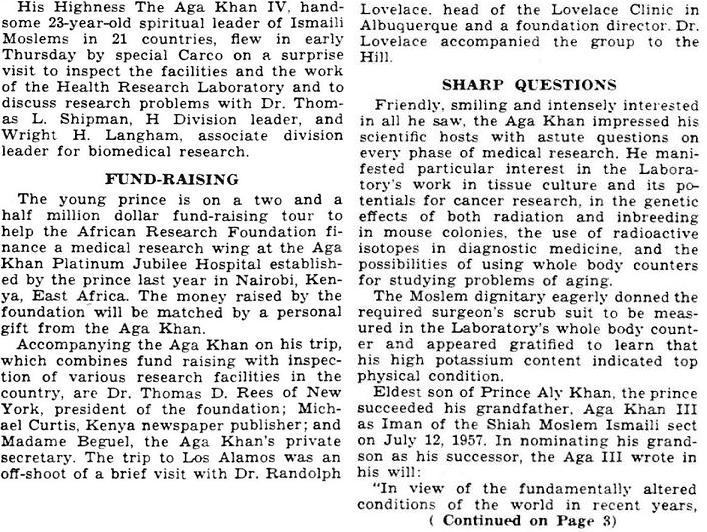
“Friendly, smiling and interested in everything he saw, the Aga Khan impressed his scientific hosts on every phase of the medical research. He manifested particular interest in the Laboratory’s work in tissue culture and its potential for cancer research, in the genetic effects of both radiation and inbreeding in mouse colonies, the use of radioactive isotopes in diagnostic medicine, and the possibilities of using whole body counters for studying the problems of aging.
“The Moslem leader eagerly donned the required surgeon’s scrub suit to be measured in the Laboratory’s whole body counter and appeared gratified to learn that his high potassium content indicated top physical condition.” — Excerpt from “NASL Community News”

The Aga Khan, seen with Dr. Thomas Shipman, showing immense delight of gift of trinite presented to him during his visit to the Health Research Laboratory in Las Alamos, California, in November 1959
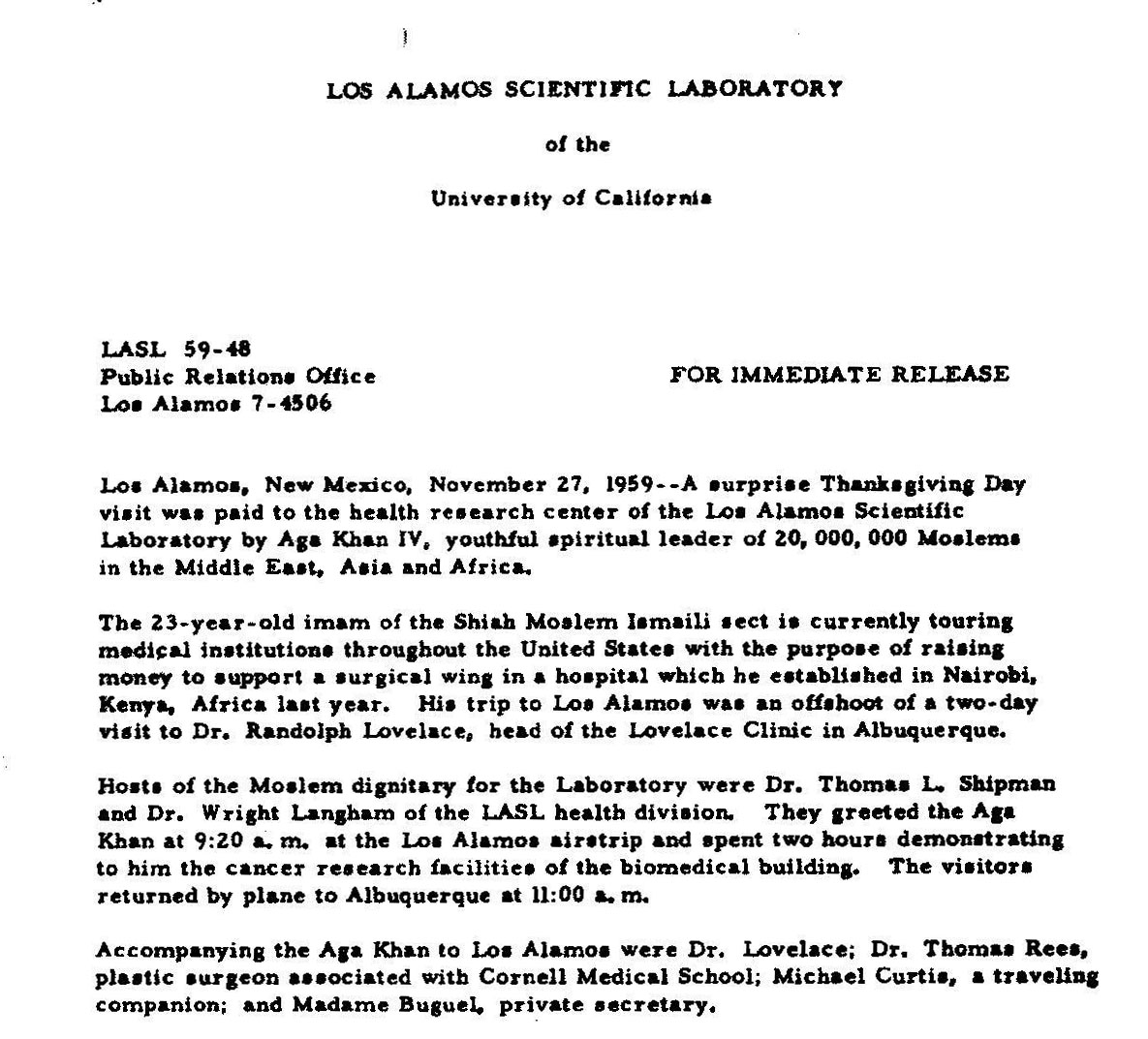
The following is the transcript:
Los Alamo, New Mexico, November 27, 1959: A surprise Thanksgiving Day visit was paid to the health research center of the Los Alamos Scientific Laboratory (LASL) by Aga Khan IV, youthful spiritual leader of 20,000,000 Moslems in the Middle East, Asia and Africa.
The 23-year-old Imam of the Shiah Moslem Ismalli sect is currently touring medical institutions throughout the United States with the purpose of raising money to support a surgical wing in a hospital which he established in Nairobi, Kenya, Africa last year. His trip to Los Alamos was an offshoot of a two-day visit to Dr. Randolph Lovelace, head of the Lovelace Clinic in Albuquerque.
Hosts of the Moslem dignitary for the Laboratory were Dr. Thomas L. Shipman and Dr. Wright Langham of the LASL health division. They greeted the Aga Khan at 9:20 am at the Los Alamos airstrip and spent two hours demonstrating to him the cancer research facilities of the biomedical building. The visitors returned by plane to Albuquerque at 11:00 am.
Accompanying the Aga Khan to Los Alamos were Dr. Lovelace; Dr. Thomas Rees, plastic surgeon associated with Cornell Medical School; Michael Curtis, a traveling companion; and Madame Buguel, private secretary.
_________________
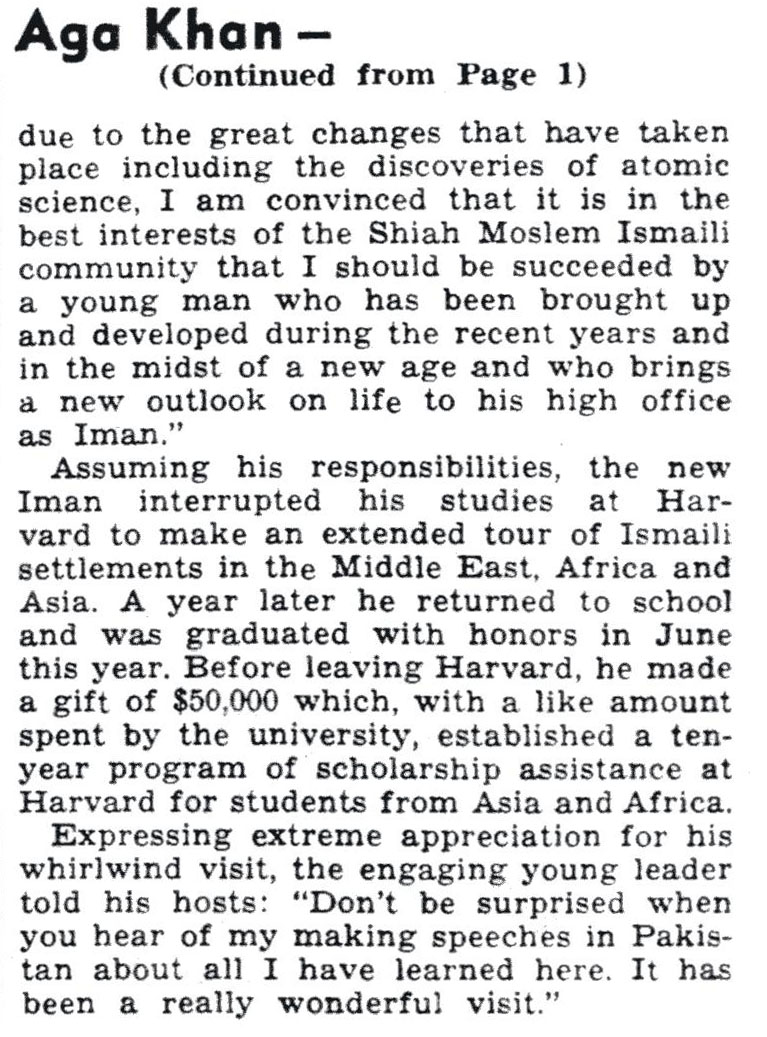
A report of the visit appeared in “NASL Community News” on December 3, 1959, Volume 1 Number 24, under the heading “YOUNG AGA KHAN TOURS HEALTH LAB ON SURPRISE THANKSGIVING VISIT.” See below for images of the report, and click each image on this page for enlargement.
![]() |
Last updated: September 25, 2015.
______________________
NOTES
1. About Los Alamos (from Wikipedia)
In a study conducted by American City Business Journals in 2004, Los Alamos County topped the list as the best place to live in America in terms of quality of life. This was attributed to the high levels of job stability, income and education of Los Alamos residents, many of whom are employed as scientists and engineers at the Los Alamos National Laboratory. The county has one of the highest number of PhDs per capita and the median household income of $78,993 per year is the fourth highest among all the counties in the US. In per capita income, Los Alamos County ranks 1st in New Mexico and 18th in the United States. Other factors contributing to Los Alamos’s high quality-of-life index were the access to affordable housing and short commuting times.
2. Source of article of the Aga Khan’s Visit:
(This piece had appeared on this website earlier – ed.)
“[the] Aga Khan and his network have done such remarkable development work across the world, especially in Asia and East Africa, and we’re delighted to play a part in spreading our knowledge throughout the world with partners like him.” — Sam Hawgood, School of Medicine, University of California San Francisco (UCSF)
PLEASE CLICK: The Aga Khan Visits UCSF to Strengthen Partnership to Advance Global Health
Editor’s note: For the month of September 2015, Simerg will be publishing new posts on a less frequent basis. Normal publication will resume in October. The following piece first appeared on this website in 2012.
ADVANCES IN SCIENCE AND MEDICINE, AND A SHIA ISLAMIC RESPONSE
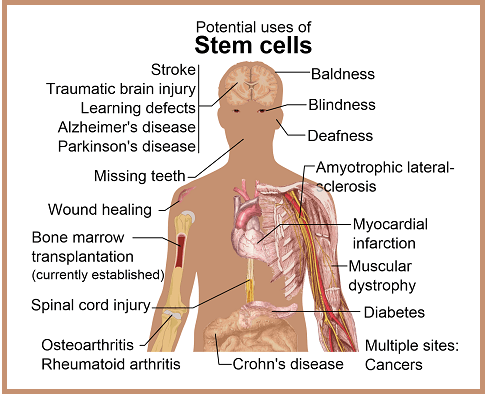
Ever since researchers in 1998 discovered that stem cells extracted from embryonic tissue could regenerate to become any type of cell, there has been a deep divide on the morality of such research. When stem cells are taken from an embryo, the embryo loses its viability: it cannot become implanted into a womb or develop into a fetus. To knowingly damage an embryo in order to remove stem cells is, for some, equal to destroying human life. For others, who see great promise in what stem cells might do to cure illnesses it is immoral not to move forward with such research. What is Islam’s position on this ethical question? Read how Iran, a Shia Muslim country, has responded to this debate.
Please click Embryonic Stem Cell Research and the Rights of a Foetus: A Shia Muslim Perspective from Iran or on the image below.
BY KARIM THARANI
University of Saskatchewan Library
Special to Simerg
Ginan Central is a web portal developed at the University of Saskatchewan Library with the goal of digitally preserving and providing access to ginanic literature in order to promote research and education. The projects undertaken and shared on Ginan Central are diverse and ongoing. For example, the Ginan Index and Search Tool or GIST initiative is a web-based application developed for researchers and scholars to locate and digitally access textual sources such as manuscripts and lithographs of ginans. The Ginan Recitals project, on the other hand, focuses on making oral sources of ginans available to students and researchers. Work is also underway to bring together these textual and oral sources to create an evidence-based master list of ginans in order to ascertain how many unique ginans and granths (titled ginans) are available and accessible today. In addition to these projects, the Ginanic Studies section on Ginan Central is dedicated to compiling and maintaining an online bibliography of research outcomes pertaining to ginans. In terms of education and outreach, the Ginan Central portal also hosts a multimedia Khojki Guide for those who are interested in learning the Khojki script to decipher ginan manuscripts.
Please click on image for enlargement
The Ginan Central portal uses the University of Saskatchewan Library’s Community Engagement Model (CEM), which was recently presented at the Ismaili Studies Conference, held at the University of Chicago in 2014. The CEM model uses the roles of protector and promoter as two contrasting endpoints to illustrate various possibilities and levels of individual and institutional collaboration to digitally share sacred traditions and literature. At one end of the CEM continuum is the role of an idealistic protector, whose basic instinct is to protect the sanctity of knowledge by limiting access as a security measure against real and imaginary threats. On the opposite end of this continuum is the role of an optimistic promoter who is driven by the sentiment of sharing literature to advance human knowledge.
At Ginan Central, we recognize and appreciate this paradoxical dynamic amongst community individuals and institutions. This is why collaborating and sharing collections with Ginan Central does not require our partners to forgo their identity or control over their collections. Our goal is not to appropriate collections or build massive repositories, instead we strive to build partnerships and processes that can unify and link disparate collections and repositories by leveraging work of our partners to advance study of ginans.

Collaboration, respect, and trust remain the guiding principles for Ginan Central to be able to carry out its purpose of preserving and providing access to ginanic literature. Libraries have been involved in digitally harvesting community knowledge for decades. At the University of Saskatchewan Library as well, we are capable of utilizing modern day technologies in responsible and respectful ways to balance the need of protecting the sanctity of sacred traditions and providing the necessary access to students and researchers to advance the study of ginans.
Date posted: September 21, 2015.
_________________
Please visit Ginan Central, and for more information on Ginan Central, please contact ginans@library.usask.ca.
“….The tallest mountain near Mecca is Abu Qubays, which is round like a dome, so that if you shoot an arrow from the foot of the mountain it reaches its top.…Having come into the city, you enter the Haram Mosque, approach the Ka’ba, and circumambulate….. always keeping the Ka‘ba to your left [shoulder]. Then you go to the corner containing the Black Stone, kiss it, and pass on….”
PLEASE CLICK: Naser-e Khosraw’s Pilgrimages to Mecca

A bird’s-eye view of the Ka’ba crowded with pilgrims. The photo is from the archives of the US Library of Congress and was created by American Colony (Jerusalem), Photo Dept., in 1910. Please click for article by Naser-e Khosraw.
Date posted: September 17, 2015.
________________

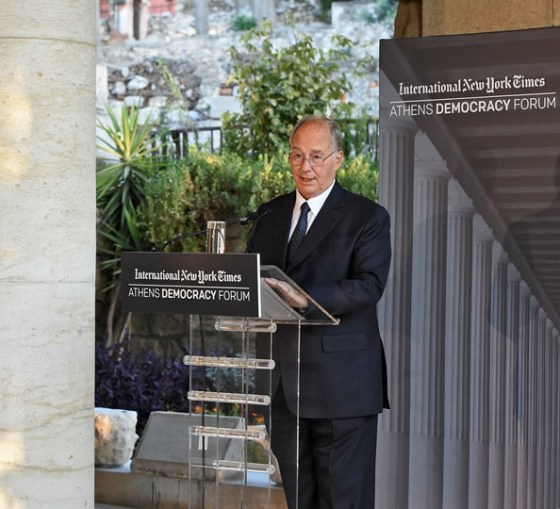
His Highness the Aga Khan delivering the Keynote Address to the 2015 Athens Democracy Forum on September 15, 2015. Photo: AKDN / Gary Otte
The following are excerpts from remarks made by His Highness the Aga Khan on September 15, 2015, in a keynote address to the Athens Democracy Forum, an international gathering of diplomats, business leaders and opinion makers. The event was hosted by the International New York Times and the United Nations Democracy Fund.
THE NEW YORK TIMES
I have long admired – since my undergraduate days at Harvard – what the [New York] Times has meant to the pursuit of truth and justice in our world. And I have appreciated our opportunities to work together through our Diplomatic Academy in Paris for example, and also through the good counsel the Times provides for our media company in East Africa.
ELEMENTS FOR STRENGTHENING EFFECTIVENESS OF DEMOCRACY
The topic of democracy and its challenges is one that I have followed closely for a long time, most intently in the developing world….where so many members of the Ismaili community live and where so much of our development work takes place.
I believe that the progress of democracy in our world is fundamentally linked to improving the quality of human life. The promise of democracy is that the people themselves best know how to achieve such progress. But if that promise is disappointed, then democracy is endangered. A UNDP survey of South American publics some years ago demonstrated that most people preferred an effective authoritarian government to an ineffective democratic one. Quality of life was the prime concern.
But what can we say then, about why democratic systems often fall short in their efforts to improve the quality of their constituents’ lives? Let me suggest four elements that could help strengthen democracy’s effectiveness in meeting this central challenge.
(I). Improved Constitutional Understanding

His Highness the Aga Khan speaking at the Stoa of Attalos in Athens where he delivered a Keynote Address at the Athens Democracy Forum on the International Day of Democracy. Photo: AKDN / Gary Otte
My first suggestion is that the current challenges to governance should be seen less as problems of democracy than as problems of constitutionality. There are more countries today than I can ever recollect before that are grappling with outdated constitutions – frameworks that seem unable to reconcile opposing factions, advance economic priorities, encourage civil society, or protect human rights.
But constitutional revision, especially in developing countries, is not easy. One problem is a poor understanding of comparative government systems. That subject is not part of most educational curricula, and in the countries I know best, the media rarely explain the logic or the options of constitutional change.
In some countries there actually is no clear constitutional means for constitutional change. Even when a referendum is held to validate such change, most people are neither prepared nor willing to express a considered judgment. The result is that governments in power often have an open field.
In my view then, a first step to better democratic governance is a better public understanding of constitutional principles.
It is easy for example, to say that we want government “of, by and for the people” – that governments should be servants of the people, and ultimately responsible to them. But that does not mean that most governmental decisions must be made by an enormous range of far-flung participants: by vast plebiscites, or popular referenda, or public opinion polling, or the number of hits on an internet blog. Such misapplied versions of democracy can produce irrational leadership choices and poorly informed policies. Sometimes, efforts to impose simplistic popular democracy can create voids of governance, which can be exploited to dangerous ends – and I have seen this in various countries in the developing world.
But then, who should make various governmental decisions? My response would emphasise the idea of balanced authority, including the concept of healthy federalism. For increasingly diverse societies, a constitution that divides and balances power is essential.
In discussing constitutional challenges, it is impossible to ignore the recent revival or creation of new theocratic political parties in the Islamic world. The question is how theocratic principles of governance can operate constitutionally in increasingly secular political environments. It seems essential to me that such principles should be regularly tested by the electoral process, if only so that the Muslim world can have a better understanding of the secularisation processes, which are inherent in western democracy. And democratic principles in turn, must respect the broad diversity of human faiths and cultures.
Finding the right constitutional balance is no easy matter, and we make a great mistake if we think that one size can somehow fit all. Effective constitutions must be adapted to a variety of cultural and demographic realities. But it can be done. One recent example is that of Tunisia, where after intense and arduous negotiation, a promising new constitution won broad public support. My central point, in sum, is that we cannot build better democratic performance over time without a better understanding of constitutional values.
(II). Independent and Pluralistic Media

His Highness the Aga Khan with Stephen Dunbar-Johnson, President, International at The New York Times and Nobel-winning economist Paul Krugman, op-ed columnist at the New York Times. Photo: AKDN / Gary Otte
A second key variable for enhancing democratic effectiveness is the critical role of competent and independent media voices. We often forget that ancient Greek democracy required a highly compact community living within the sound of a “crier’s voice,” as Aristotle said. Under such conditions, face-to-face dialogue could foster a sense of trust and political accommodation.
But these ideal conditions now obtain only rarely. Populations are much larger, more widely scattered, and more diverse. They can most easily be mobilised around vivid but superficial symbols and negative propositions. Often what counts most in our extended societies is not what one is for, but whom one is against.
In such circumstances, polarisation and impasse are constant risks.
Nor can we rely on advances in communication technologies to overcome the obstacles of distance and diversity. In fact, new media technologies have often made matters worse (and I don’t mean the New York Times!) From the development of written language to the invention of printing, to the development of electronic and digital media – quantitative advances in communication technology have not necessarily produced qualitative progress in mutual understanding.
To be sure, each improvement in communications technology has triggered new waves of political optimism. But sadly, if information can be shared more easily as technology advances, so can misinformation and disinformation. If truth can spread more quickly and more widely, then so can error and falsehood.
Throughout history, the same tools – the printing press, the telegraph, the microphone, the television camera, the cell phone, the internet – that promised to bring us together, have also been used to drive us apart.
The age-old promise of democracy is that social cohesion and public progress could be achieved by consensus rather than by coercion. But genuine democratic consent depends on dependable public information.
The danger in an age of mass media is that information also can be misused to manipulate the public. All around the world, authoritarian rulers increasingly use media to “coerce” the consent of the governed. Our hosts today, the International New York Times, recently published a remarkable description of this phenomenon under the headline, “The Velvet Glove.”
The power of a leader’s reasoning or the truth of his arguments, the report suggests, are often less important than his command of media influence. What results can be the illusion of democracy, but not its substance.
No, our technologies alone will not save us. But neither need they ruin us. It is not the power of our tools, but how we use them that will determine our future.
Among other things, this means prioritising the role of independent media, and indeed, of a multiplicity of independent voices. Demographic pluralism must be reflected in healthy media pluralism.
I mentioned earlier my own involvement in the African media scene – as founder of the Nation Media Group. It was launched at the time of Kenyan independence, and for nearly six decades media independence has been its watchword – a sine qua non for democratic health.
(III). Potential of Civil Society
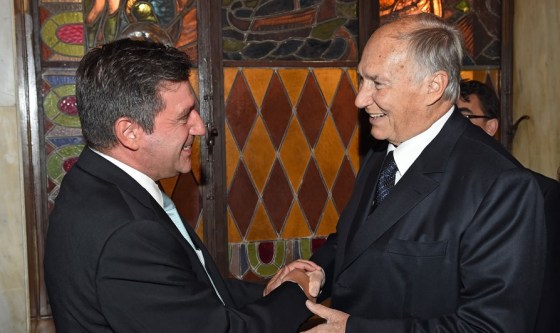
His Highness the Aga Khan is received by the Mayor of Athens, Mr Giorgos Kaminis at a dinner he hosted for Forum participant at Athens City Hall. Photo: AKDN / Gary Otte
This leads me to my third observation. Government, while critical, can only take us so far. At a time of democratic disappointment, we must re-emphasise the immense potential of those non-governmental institutions that we call “civil society.”
Too often, our thinking is trapped in a false dichotomy. We talk about the public sector and the private sector, but we often undervalue a third sector – that of civil society.
Civil society is powered by private energies, committed to the public good. It draws on the ancient, classical link between democracy and the publicly-committed citizen.
It includes institutions of education, health, science and research, embracing professional, commercial, labour, ethnic and arts organisations, and others devoted to religion, communication, and the environment.
It seeks consensus through genuine consent. It can experiment, adapt and accommodate diversity. It can in the fullest sense be “of, by and for the people.” It can in the fullest sense be a remarkable support – but only on condition that is it sustained, accepted and encouraged by government.
(IV). Genuine Democratic Ethic
Finally, let me mention a fourth concern that underlies this entire discussion – the central importance of fostering a “democratic ethic.”
At the heart of a democratic ethic is a commitment to genuine dialogue to achieve a better quality of life, even across new barriers of distance and diversity. This means a readiness to give and take, to listen, to bridge the empathy gaps as well as the ignorance gaps that have so often impeded human progress. It implies a pluralistic readiness to welcome diversity and to see our differences not as difficult burdens but as potential blessings.
One ultimate requirement for any effective democracy is the capacity to compromise. Social order rests in the end either on oppression or accommodation. But we can never find that balancing point – where the interests of all parties are recognised – unless competing leaders and their diverse followers alike, are committed to finding common ground.
That common ground, in my view, is the global aspiration for a better quality of life – from the reduction of poverty to quality longevity – built upon opportunities that will provide genuine hope for the future.
Democracy can only survive if it demonstrates – across the years and across the planet – that it is the best way to achieve that goal.
Thank you.
Date posted: September 16, 2015.
_____________
Please click on http://www.akdn.org for complete speech, video and photos.
Editor’s note: For the month of September 2015, Simerg will be publishing new posts on a less frequent basis. Normal publication of 6 – 8 new posts per month will resume in October. The following piece by Barnaby Rogerson first appeared on this website in 2012.
PLEASE CLICK: An Englishman Reflects on the Nature of Imam Ali
“….No one could ever doubt the devotion with which Ali held Muhammad and the many bonds that connected them: Ali was the Prophet’s cousin, the Prophet’s son-in-law, the Prophet’s first male believer, the father of the Prophet’s only male grandchildren, the Prophet’s most intimate disciple and the first heroic warrior champion of Islam. Ali had also served the Prophet as an army commander, missionary, diplomat and administrative secretary…..”

This is an image of Nurin Merchant’s mixed media canvas painting titled “Nature of Prayer.” Secured on the 14″ x 10″ canvas with strong glue are a handmade Tasbih (prayer beads), and 3 dried leaves bearing the Arabic inscriptions of Allah, Ali, and Muhammad. The whole piece represents prayer through the invocation of these names. Copyright: Nurin Merchant. Please click for Barnaby Rogerson’s article.
Previous post: Readings for the Birth Anniversary of Hazrat Ali (a.s.): Kalam-i Mawla, Nahj al-Balaghah for Young People, and more @Simerg
By Abdulmalik Merchant

Alijah Zul Khoja: Lifetime Educator and Leader
It is with deep sadness that we announce the passing of an outstanding educator and leader of the Ismaili Muslim community, (Alijah) Zulfikarali M.A. Velji Khoja, in Ottawa, Canada, on Friday, September 4th, 2015. His funeral and burial ceremonies will take place in Ottawa on Wednesday, September 9.
Born in Pretoria, South Africa, Mr. Khoja was a skilled trainer, facilitator, educational consultant and mediator. His experience and training was diverse: with a post-graduate degree in Radio Chemistry from Carleton University, Ottawa, and professional designations from the Universities of Birmingham, Queens, Ottawa, Windsor and the London School of Economics, he travelled worldwide on many consulting assignments as a Mediator. These included: The Canadian Human Rights Commission, Better Business Bureau, Ottawa-Carleton Dispute Resolution Centre,and the Ottawa-Carleton District School Board.

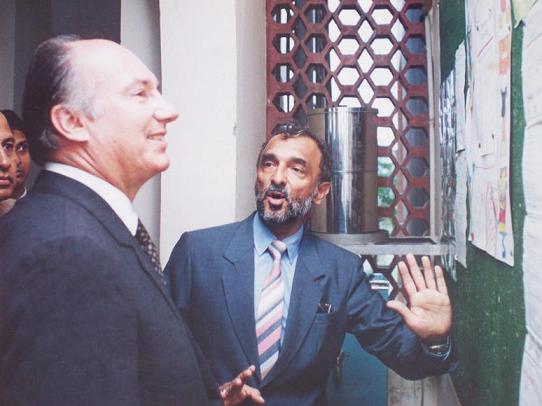
This visit to the Aga Khan School in Dhaka took place during Mawlana Hazar Imam’s four day stay in Bangladesh in 1993. During the school visit Hazar Imam was accompanied by a Government Minister, The President of the Council, school board members. In this photo, Zul Khoja, the principal of the school from 1992-1994 is seen showing a curricular activity implemented to introduce creative and critical thinking among the students. Mawlana Hazar Imam took immense pride in this activity, known as the Mind Benders Club, and turned to his guests to explain the accomplishments in his school. Zul noted that when Mawlana Hazar Imam introduced him to the guests, it was done with a “full bio!” Mr. Khoja said that when he escorted the party into the school, it took the Imam less than 30 seconds to fully understand what was being accomplished in the school. One of the areas that the late Zul Khoja specialised in was the education of bright and gifted children. Please click on photo for Zul’s piece, Ismaili Penmanship. Photo: Zul Khoja Collection.
As an administrator, educator and trainer, Zul worked at the Ottawa-Carleton District School Board. He was also headmaster, educator and trainer (Professional Development) to The Aga Khan Development Network, both in Bangladesh and Kenya. Zul’s voluntary service with the Ismaili Community and its institutions included several countries (South Africa, Kenya, Bangladesh and Canada). The services in Canada included training Management Auditors and conducting Management Audits. He also served as a Baitul Ilm teacher and held leadership positions with both the Ismaili Tariqah and Religious Education Board and the Aga Khan Council since his settlement in Ottawa in the 1970’s. Most recently he served as the Convener for Donor Services for the Aga Khan Foundation committee in Ottawa, where he resided with his wife, Khairunissa. He also leaves behind two children, a son, Sherali, and a daughter, Rozmin.
We pray that Allah may rest Alijah Zul Khoja’s soul in eternal peace, and that He may bless his entire family with courage and fortitude at this difficult time.

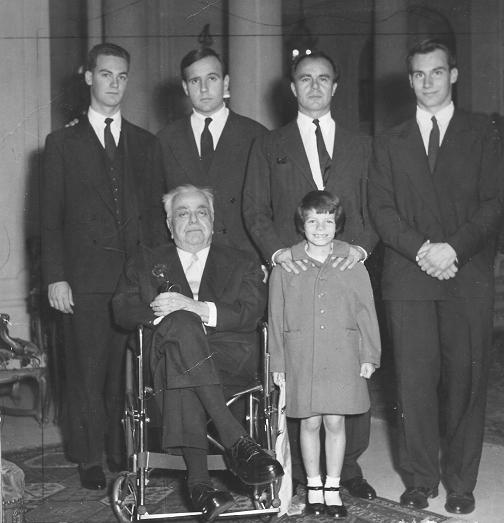
The late 48th Ismaili Imam, His Highness the Aga Khan, seated on a wheelchair with members of his family with his successor, the present Imam, Prince Karim Aga Khan, standing at extreme right. Others in the photo (l to r), grandson Prince Amyn Muhammad, and the late Imams two sons, the late Prince Sadruddin and Prince Aly Khan, who is seen holding his daughter Princes Yasmin Aga Khan. This rare photo was provided to Simerg by Alijah Zul Khoja.
__________
Mr. Khoja had contributed to this blog in numerous ways including writing a memorable piece Ismaili Penmanship in 1906 for this website’s special series, I Wish I’d Been There.
Date posted (from Halifax, Nova Scotia): September 8, 2015.