Simerg is an independent initiative dedicated to Ismaili Muslims, the Aga Khan — their Hereditary Imam — and the Ismaili Imamat, and Islam in general through literary readings, photo essays and artistic expressions
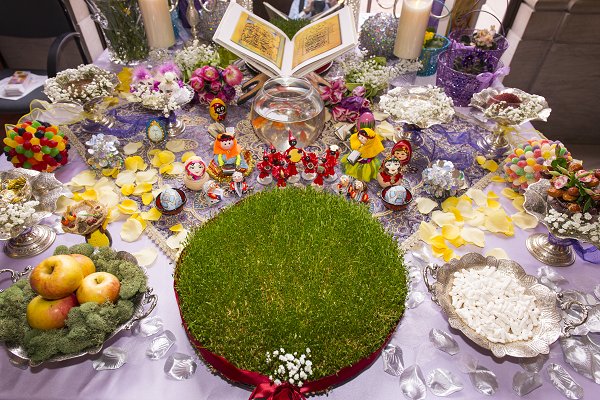
Conceived and created by Nurin Merchant, this Navroz greeting incorporates roses and jasmine, which are extremely popular in Iran during Navroz. The base of the picture shows shoots of wheat grass, signifying robust evergreen health throughout the year..
Eid al-Fitr Statement by the Prime Minister of Canada, the Right Honourable Mark Carney
March 19, 2026 Ottawa, Ontario
“Tonight, Muslims in Canada and around the world will celebrate Eid al-Fitr, marking the end of the holy month of Ramadan.
Over the coming days, Muslims will gather with family and friends to enjoy feasts, exchange gifts, recite prayers, and reflect on the spiritual lessons of Ramadan. Before this sacred celebration starts, Muslims will give Zakat al-Fitr. This is an act of charity that reflects the spirit of generosity at the heart of Islam.
As Eid sheds light on the importance of community, unity, and faith, we are reminded that these values are embedded in the many contributions Canadian Muslims make to building a stronger, more resilient country.
I wish a blessed and happy Eid al-Fitr to all those celebrating. Eid Mubarak.”
Read the Prime Minister’s Eid al-Fitr statement at source in English HERE and in French HERE.
~~~~~~~~
Nowruz Statement by the Prime Minister of Canada, the Right Honourable Mark Carney
NOTE: The image of the haft-sin table is not part of the Prime Minister’s statement.
March 20, 2026 Ottawa, Ontario
“Nowruz – also known as the Persian New Year – marks the arrival of spring and the promise of renewal for millions of people in Canada and around the world, including Iranian, Kurdish, Afghan, and Central Asian communities.
Today, families and friends gather around the haft-sin table to share meals, read poetry, and welcome the year ahead with optimism. This is also a time when loved ones will pause to reflect on the moments over the year that brought them joy, and the people in their lives who made them special.
Message continues below
To celebrate the new year, families gather around a specially prepared holiday table to make wishes for the coming months. Items on the haft sin table refer to new life and renewal. Haft sin table at the Freer|Sackler’s, 2013 Nowruz celebration. Photograph: Freer|Sackler staff photographer.
During this time of profound uncertainty for Canadians with ties to people and communities throughout the Middle East, this spirit of renewal and optimism is especially important. The moments that bring people together and deepen our sense of belonging can be a source of peace and stability.
Nowruz underscores the strength that comes from Canada’s diversity. The communities who celebrate Nowruz have helped build a more prosperous and resilient country.
I wish all those celebrating a happy Nowruz.
Har Ruz etan Nowruz, Nowruz etan Pyrouz.”
Read the Prime Minister’s Nowruz statement at source in English HERE. and in French HERE.
___________________
Nowruz Message by the United Nations Secretary General, António Guterres
Click HERE for a video message by António Guterres, Secretary-General of the United Nations, on the International Day of Nowruz 2026. The text follows:
“Dear friends,
For more than 300 million people around the world, Nowruz represents renewal.
A new year.
A new spring.
A new chance to build bridges of understanding and mutual respect among all cultures and peoples.
In these difficult and divided times, the message of Nowruz is vital.
Its timeless values of diversity, dialogue, understanding and reconciliation represent a powerful path to achieving the peace, human rights and dignity that the United Nations works for each and every day.
The challenges faced by the human family are immense.
But Nowruz can be our guide.
Across all nations and cultures, let’s walk together as we build a more peaceful, sustainable and inclusive world for all people.
May this Nowruz bring joy, health, prosperity and peace”.
Read the Secretary General’s message at source HERE. Also, read a post on the history and significance of Nowruz on the UN website HERE.
Date posted: March 20, 2026. Last updated: March 21, 2026 (reformatting).
The motif representing Nur, or Light, has been utilized during the inaugural visits of Mawlana Hazar Imam, His Highness the Aga Khan, to Ismaili Muslims globally since he became the 50th Hereditary Ismaili Imam on February 4, 2025, succeeding his father, Mawlana Shah Karim, His Late Highness Aga Khan IV. His seventh visit to his followers will be to Canada from March 25-31, 2026. Photograph: The Ismaili.
Our tradition begins its teachings not with rules, but with reminders of presence. Pir Ṣadardin, in his timeless wisdom, offers us a spiritual imagination that prepares the heart before it prepares the body.
In the Ginan Satgur Sathe Gothadi Kije[1], he evokes a powerful image:
Jyote jagadine jumloji betha…
Translation
The Lord sits with His Light in full blaze.
This is not poetry for the mind alone. It is a vision for the murid. It invites us to imagine the Jamatkhana not as a hall of bricks and lamps, but as a sanctified space where the Divine Light is already present, already radiant. When a murid enters with this awareness, the heart softens, the senses awaken, and the soul becomes receptive.
Another Ginan by Pir Ṣadardin [2] deepens this inner posture:
When you enter the Jamatkhana, O chivalrous brother, remain in the presence of the Light; avoid slander and idle talk.
Here the Pir gently redirects us: the Jamatkhana is not a place for distraction, gossip, or worldly chatter. It is a sanctuary of presence. The murid is encouraged to feel, not merely know, that he or she stands before the Light of the Imam.
These verses form the spiritual foundation of our discussion. They remind us that conduct is not merely behaviour; it is an inner state that expresses itself outwardly.
When the Imam Physically Graces the Jamat with Didar
There are moments in the life of a murid that are unlike any other. When the Imam of the time physically graces the Jamat with Didar, the familiar space transforms. What was a sanctuary, becomes a royal court, a sacred, luminous, resplendent space filled with joy, anticipation, and profound gratitude.
For many murids, this moment is the fulfilment of a lifelong yearning: to see the Murshid, to be seen by the Murshid, to feel the warmth of his presence.
But this raises an essential question:
What should be the state, inner and outer, of the murid in the presence of the Imam? This is not a new question. Our tradition has contemplated it for centuries.
Guidance from Qadi Nu‘man: The Adab of the Murid
In the 10th century, Qadi Nu‘man [3], one of the great jurists of the Fatimid tradition, wrote extensively on adab, the etiquette and conduct of the followers of the Imam. His guidance remains deeply relevant.
He reminds us that the physical presence and the Didar of the Imam is not a public spectacle; it is an intense, personal, one-on-one encounter between the murid and the Murshid. Even in a gathering of thousands, the murid stands as though alone before the Imam.
From this understanding flow the essential qualities of conduct:
HUMILITY: A heart emptied of pride, ego, and self-importance.
RESPECT AND REVERENCE: Speech, movement, and gaze shaped by awareness of sanctity. No rushing to greet the Imam, no physical contact with the Imam, no standing to draw attention to oneself.
STILLNESS AND PRESENCE: No distraction. No idle talk. No wandering thoughts.
AWARENESS OF LIGHT: Every gesture shaped by the recognition that the Imam bears Divine Light.
At this point, the teaching of Pir Shams in Saloko Moto [4] becomes especially meaningful:
Satgur says…Offer your true tithe, and bow at the feet of the Imam from a respectful distance.”
This verse captures the essence of reverence: devotion expressed with humility, sincerity, and dignified distance.
The Conduct of the Murid and the Awe of the Imam
The conduct of the murid must reflect the essence of the Imam. As the master of ta’wil, the one who unveils the inner reality (batin) of the physical (zahir) universe, the Imam stands at the apex of spiritual authority [5]. In the Ginans, he is described as the sovereign of the fourteen spiritual realms, the one through whom the cosmos is interpreted and harmonized.
Such a station naturally calls the murid into a posture of awe, humility, and respectful distance. This is not distance of heart, but a way of carrying oneself that acknowledges the Imam’s spiritual stature.
In a congregation of thousands, each murid arrives for the Didar with his or her own hopes, burdens, and expectations of grace. It becomes a shared ethical responsibility to preserve the sanctity of the collective space. Any action that draws attention to oneself, disrupts the serenity of others, or creates disturbance, even unintentionally, risks overshadowing the quiet interior work that each soul is undertaking.
Mindfulness, therefore, is not only a personal virtue but a communal obligation. It ensures that the congregation remains a vessel of harmony, not distraction; a place where the murid’s inner orientation toward the Imam can unfold without interruption.
Nasir Khusraw’s Eyewitness Account
The 11th-century Ismaili da’i, traveller and poet-philosopher Nasir Khusraw offers a vivid glimpse of this reverence. In his eye-witness description of the procession of the Festival of the Canal (Fath al-khalij) during the time of Imam al-Mustansir bi’llah in AH 438-39/1047 CE, Nasir Khusraw informs us that when the Imam, wearing a white robe, passed by on a horse, the murids and citizens alike, bowed in devotion and awe, lowering their heads in deep respect, reciting prayers and benedictions [6].
This simple gesture reveals a profound truth: the presence of the Imam evokes spontaneous reverence in the hearts of believers.
A Fatimid Example of Reverent Conduct
Al-Maqrizi’s [7] historical accounts of the Fatimid court illuminate this principle with striking clarity. Audiences with the Imam–Caliph were carefully structured to preserve the dignity and contemplative gravity of the encounter. Visitors approached with measured steps, maintained silence, and observed spatial boundaries that signalled respect for the Imam’s spiritual and temporal authority.
This Fatimid ethos mirrors the ethical expectation placed upon murids today: to uphold the serenity of the communal space, to avoid actions that draw attention to oneself, and to recognize that the Imam’s presence, whether physical or symbolic, requires behaviour aligned with reverence.
The Meaning of Adab (Sabyata, Maryada)
The classical Arabic/Persian term adab, is expressed in Gujarati/Hindi as sabyata (refined behaviour) and maryada (dignified respect). They refer to the graceful, respectful way a murid carries themselves in sacred spaces in the presence of the Imam. In our tradition, adab toward the Imam is not merely social etiquette; it is a spiritual discipline. It reflects an inner recognition of the Imam’s role as the bearer of divine guidance. To act with adab is to let one’s outward behaviour mirror one’s inward understanding.
Concluding Reflection
To stand before the Imam, physically or spiritually, is to stand in the presence of Light. The murid’s conduct, shaped by humility, reverence, and awareness, becomes an offering in itself. When each murid upholds serenity and dignity, the entire Jamat becomes a vessel worthy of the moment of grace.
Date posted: March 19, 2026.
________________
END NOTES
Gujarati Ginans and Granths
[1] Pir Sadardin, Satgur Sathe Gothadi Kije. P. 28.
[2] Pir Sadardin, Gat Mahe Avine Sanmukh Rahiye. P.116
English
[3] Qādi Nu‘man’s teachings on adab are preserved across Fatimid jurisprudential works; see Halm, Heinz. The Fatimids and Their Traditions of Learning. London: I.B. Tauris.
[4] Pir Shams, SalokoMoto
[5] For the Imam as master of ta’wil, see Daftary, The Ismailis: Their History and Doctrines.
[6] Paula Saunders, Ritual, politics and the city in Fatimid Cairo. Pp. 103-04
[7] Al-Maqrizi, Ittiʿaz al-Ḥunafaʾ, descriptions of Fatimid court protocol.
___________________
BIBLIOGRAPHY
Gujarati Ginans and Granths
Mahan Ismaili Sant Pir Sadardin Rachit Ginanono Sangrah 1. Bombay 1952
Pir Shams Rachit Saloko Moto, Ginans Series 2, Ismailia Association for Pakistan, Karachi, -3, 1967
English
Daftary, The Ismaʿilis: Their History and Doctrines.
Halm, Heinz. The Fatimids and Their Traditions of Learning, London: I.B. Tauris.
Hunsberger, Alice C, and Institute of Ismaili Studies, London, 2003. Nasir Khusraw, the Ruby of Badakhshan: A Portrait of the Persian Poet, Traveller and Philosopher.
Maqrizi, Taqi al-Din Aḥmad. Ittiʿa al-Ḥunafāʾ bi-Akhbar al-Aʾimma al-Faṭimiyyin al-Khulafaʾ. Cairo: Supreme Council for Islamic Affairs.
Saunders, Paula, Ritual, politics and the city in Fatimid Cairo, New York, 1994.
______________________
About the author: Shiraz Pradhan is an international consulting engineer, author, and long‑time researcher of the Ginan tradition. He serves as the Chairperson of the Association for the Study of Ginans, an international organisation dedicated to preserving and advancing Ginan scholarship. Shiraz has written extensively on Nizari Ismaili Ginans and Satpanth in Ilm (Ismailia Association UK, 1987) and on Simerg. His interests span the Vedas, Judeo‑Christian history, and Sufism, reflecting his broad engagement with spiritual traditions. His forthcoming book, Amrapuri: Exploring the Evolution of Nizari Ismaili Satpanth through the Prism of Ginan Literature, brings together years of dedicated study.
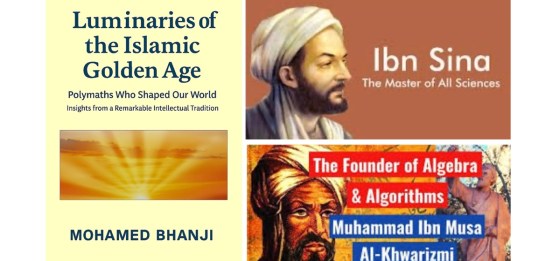
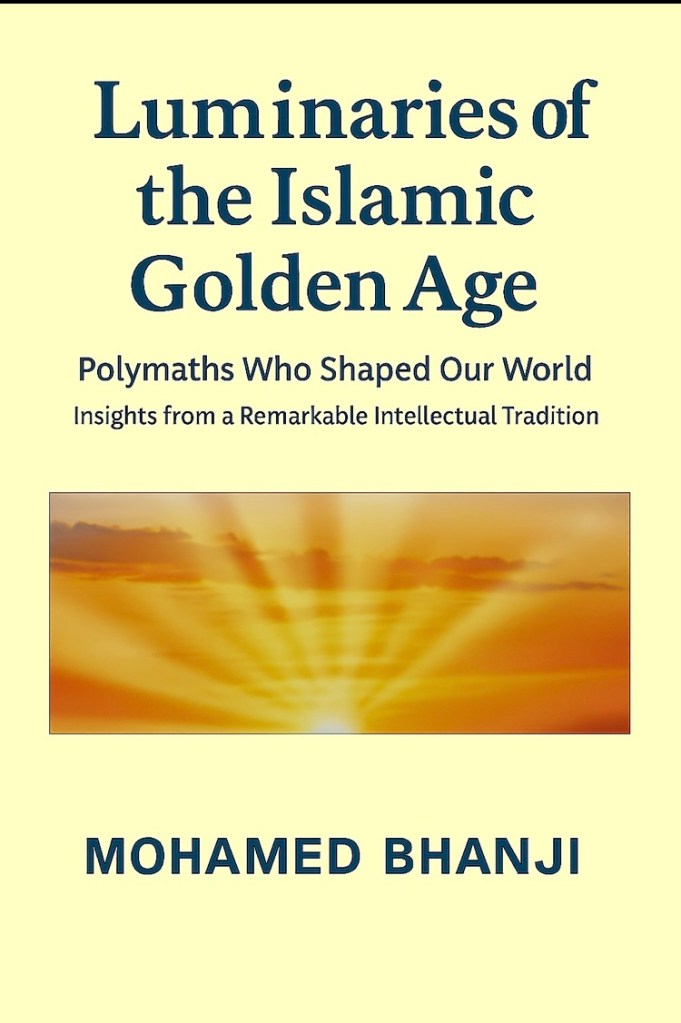
Simerg’s series on “Books by Ismaili Authors” continues with Mohamed Bhanji’s highly educational and informative “Luminaries of the Islamic Golden Age,” published as an e-book in 2025. We value the insights of Ismaili authors worldwide and invite you to share your work in this ongoing series by submitting responses to our questions — please see the details HERE. For any queries, please email Malik at mmerchant@simerg.com.
____________
Simerg: What is behind the naming of the title Luminaries of the Islamic Golden Age?
Mohamed Bhanji: The title emphasizes the brilliance of Muslim scholars as luminaries who sharpened the cutting edge of knowledge during the Islamic Golden Age — a period when science, philosophy, and culture flourished, laying the foundations for our modern world.
Simerg: Why would you want me or my family members to read the book and what will we learn?
Bhanji: The e-book reconnects readers with nearly thirty luminaries of the Islamic Golden Age, offering insights into a remarkable intellectual tradition.
Families will discover how these polymaths advanced knowledge — and why their lessons in curiosity, resilience, and ethics remain timeless and profoundly relevant in the age of AI.
~~~~~~~~
“This e-book is a curated synthesis of a series of posts I originally shared on LinkedIn, thoughtfully expanded with appropriate content from additional sources. My hope is that it offers a window into a rich and too-often-forgotten intellectual tradition — and that it helps lift the veil on what Aga Khan IV called “this amnesia [that] has left a six hundred-year gap in the history of human thought.” — Mohamed Bhanji, author of Luminaries of the Islamic Golden Age.
Luminaries of the Islamic Golden Age by Mohamed Bhanji, 82 pages, self-published as an ebook, 2025. Click on the image to download it for free as a PDF file.
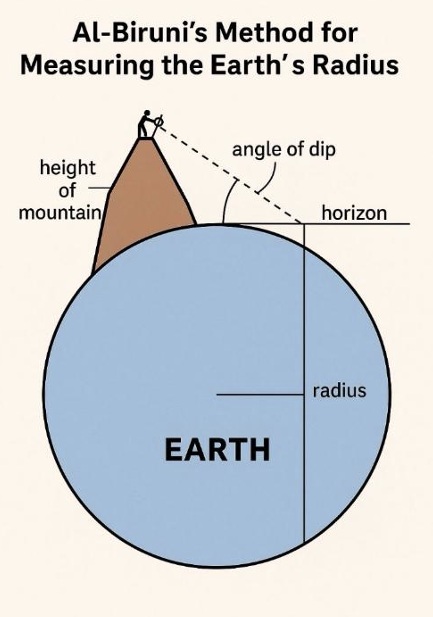
How did Al-Biruni (773-1050) calculate the Earth’s diameter?
He climbed a tall mountain (most likely in present-day Pakistan).
He measured the angle of the dip of the horizon from the peak using an astrolabe.
Knowing the height of the mountain and the angle, he applied trigonometric formulas to estimate the Earth’s radius.
Story continues below
Al-Biruni’s results:
He estimated Earth’s radius to be about 6,339.6 km, which is very close to the modern value of about 6,371 km.
That gives a diameter of approximately 12,679 km, again impressively close to the modern value of 12,742 km.
Significance:
Al-Biruni’s method did not require knowledge of the Earth’s full circumference or travel between distant locations.
His use of pure geometry and careful observation was incredibly innovative for the time.
~~~~~~~~
Simerg: What inspired you to write the book?
Bhanji: Mawlana Shah Karim, His Late Highness Aga Khan IV, insightfully observed:
“The Islamic field of thought and knowledge included and added to much of the information on which all civilizations are founded. And yet this fact is seldom acknowledged today, be it in the West or in the Muslim world, and this amnesia has left a six-hundred-year gap in the history of human thought.”
These words inspired me to embark on a journey into the rich yet often forgotten history of the Muslim intellectual tradition.
Simerg: How can one purchase the book or access it?
Bhanji: Readers can read it for free online as a flipbook at bit.ly/liga-ebook or download it for free as a PDF file HERE.
Date posted: January 6, 2026.
______________
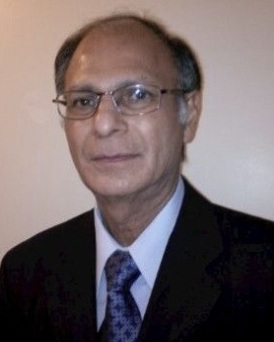
Mohamed Bhanji is a volunteer educator/tour guide at the Aga Khan Museum in Toronto, with a passion for sharing stories about the artistic, intellectual, and scientific contributions of Muslim civilizations to our shared world heritage. Bhanji leads visitors through the Museum’s architectural design and permanent collection of Islamic Art, emphasizing the significance of Islamic architecture. Previously, Bhanji served as Special Advisor to the Chief Commercial Officer at VIA Rail Canada from February 1984 to September 2021, leading strategic initiatives, including the Traveller Touch-Points Transformation program, and establishing partnerships in the travel sector. Academic credentials include a Master’s degree and a Bachelor’s degree in Chemical Engineering from Loughborough University, England.
~~~~~~~~~
Links to the Ismaili Authors’ Series (in chronological sequence, oldest article first)
Before departing this website please take a moment to review Simerg’s Table of Contents for links to hundreds of thought provoking pieces on a vast array of subjects including faith and culture, history and philosophy, and arts and letters to name a few. Also visit Simerg’s sister websites Barakah, dedicated to His Highness the Aga Khan, and Simergphotos. Simerg’s editor Malik Merchant may be reached via email at mmerchant@simerg.com. You can also stay updated by following Malik on Facebook, X, and LinkedIn.
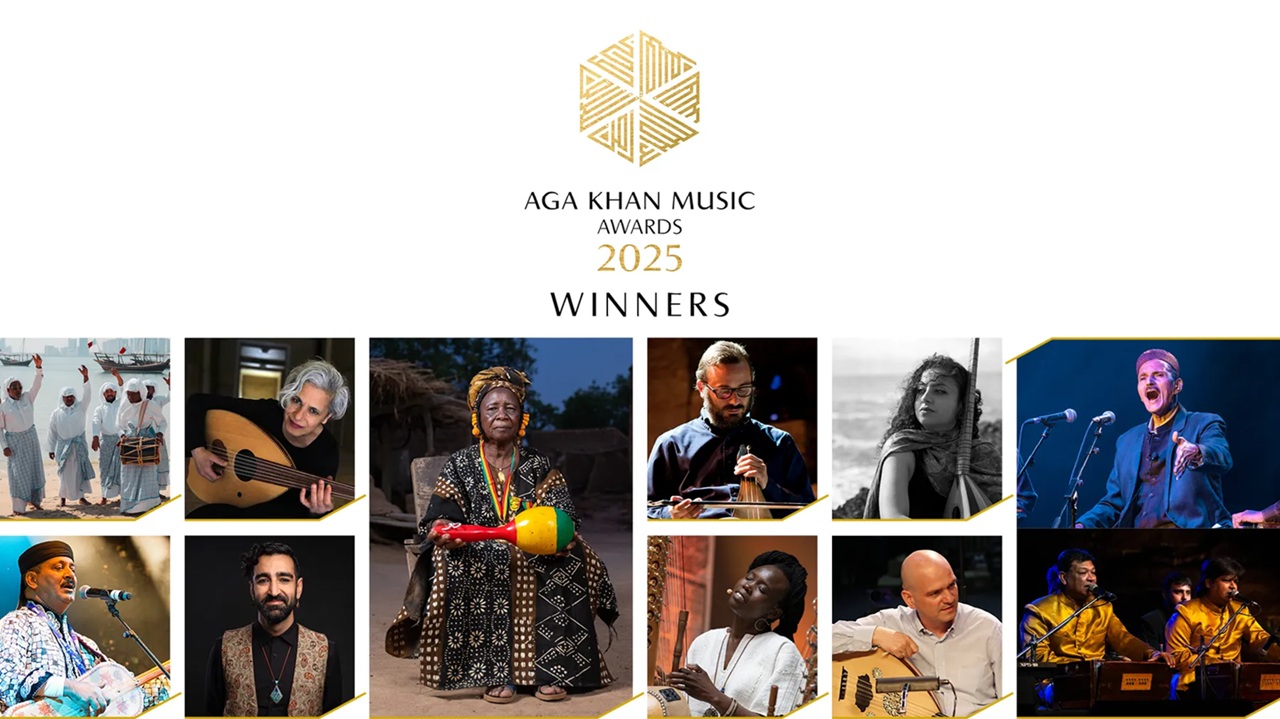
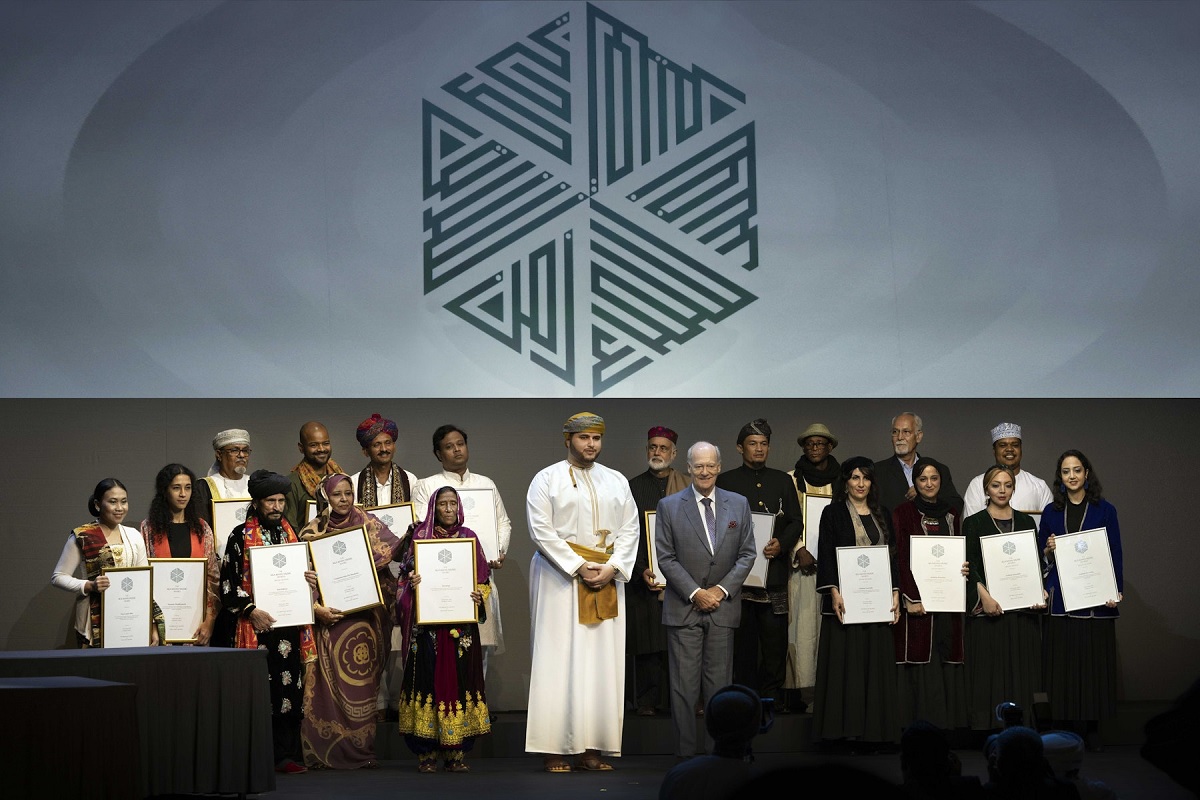
Established in 2018 by His Late Highness Prince Karim Aga Khan IV and his brother, Prince Amyn Aga Khan, the Aga Khan Music Awards (AKMA), held every three years, are under the governance of an Advisory Council, which is co-chaired by the 50th Hereditary Imam of the Ismaili Muslims, Mawlana Hazar Imam, His Highness Prince Rahim Aga Khan, and his uncle, Prince Amyn Aga Khan.
Please click on the image for the winners of the 2025 Aga Khan Music Awards.
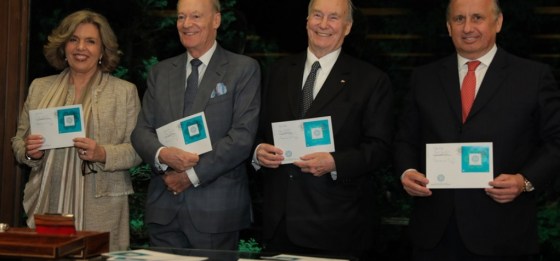
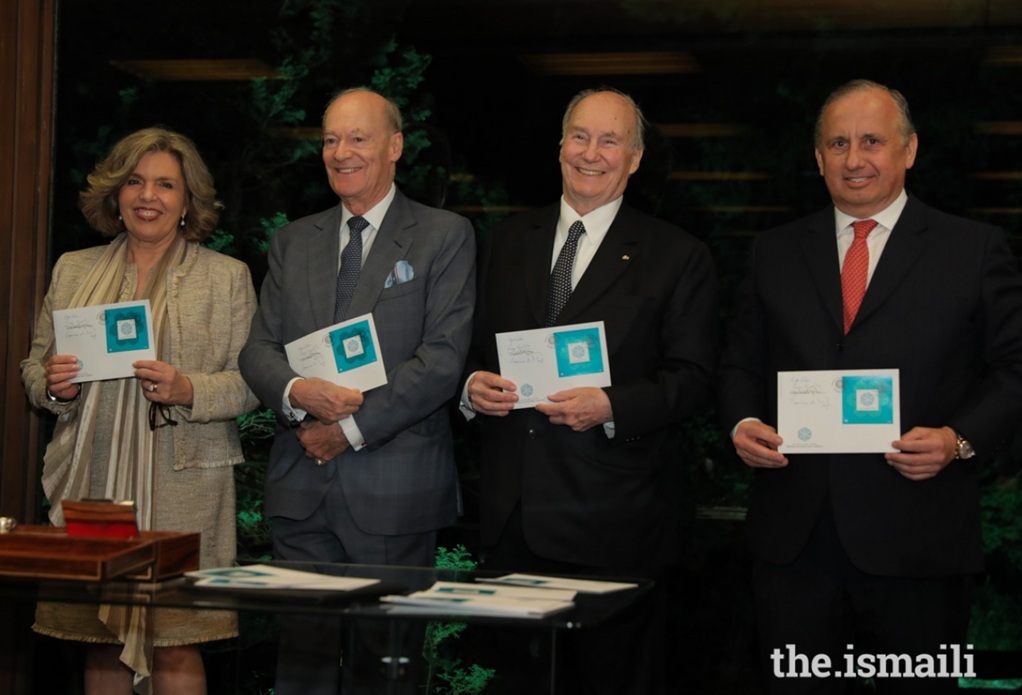
The photograph captures Mawlana Shah Karim, His Late Highness Aga Khan IV, with his brother, Prince Amyn, and Isabel Mota, President of the Calouste Gulbenkian Foundation (left), and Raul Moreira, Head of Philately at CTT (right). They are holding signed first-day covers of the commemorative stamp to celebrate the 2019 Aga Khan Music Awards. The stamps were unveiled on March 29, 2019, by Francisco Lacerda, the CEO of CTT (Portugal Post). Photograph: The Ismaili / Akbar Hakim.
~~~~~~~~
2022: MUSCAT, OMAN
Prince Amyn Aga Khan, younger brother of His Late Highness Aga Khan IV, and His Highness Sayyid Bilarab, preside over the presentation of the 2022 Aga Khan Music Awards in Muscat, Oman, October 30, 2022. Photograph: Akbar Hakim / AKDN.
2025: LONDON, ENGLAND
For the first time, the 2025 Aga Khan Music Awards are teaming up with the EFG London Jazz Festival and Southbank Centre to bring an extraordinary programme of concerts, collaborations, and award celebrations to the UK. This unique partnership is a testament to AKMA’s unwavering vision of excellence in world traditions.
For programming details over four days, November 20-23, 2025, please visit the EFG London Jazz Festival website and scroll down for more information and tickets.
The first day’s program on November 20, with two performances at 1 pm and 9 pm London time, will be held at the Ismaili Centre, London, and will be transmitted live on The Ismaili TV.
Viewers worldwide will be able to watch the live coverage as follows:
1 pm and 9 pm (London)
5am and 1pm (Vancouver);
7am and 3pm (Houston);
8am and 4pm (Toronto);
2pm and 10pm (Paris);
4pm (Nairobi); and
6pm (Karachi).
The winners will be celebrated on November 21 and 22, at London’s Southbank Centre, in an awards ceremony forming part of the four-day festival.
Date posted: November 19, 2025.
Note: A version of this post appears on Barakah, our sister website dedicated to His Highness the Aga Khan.
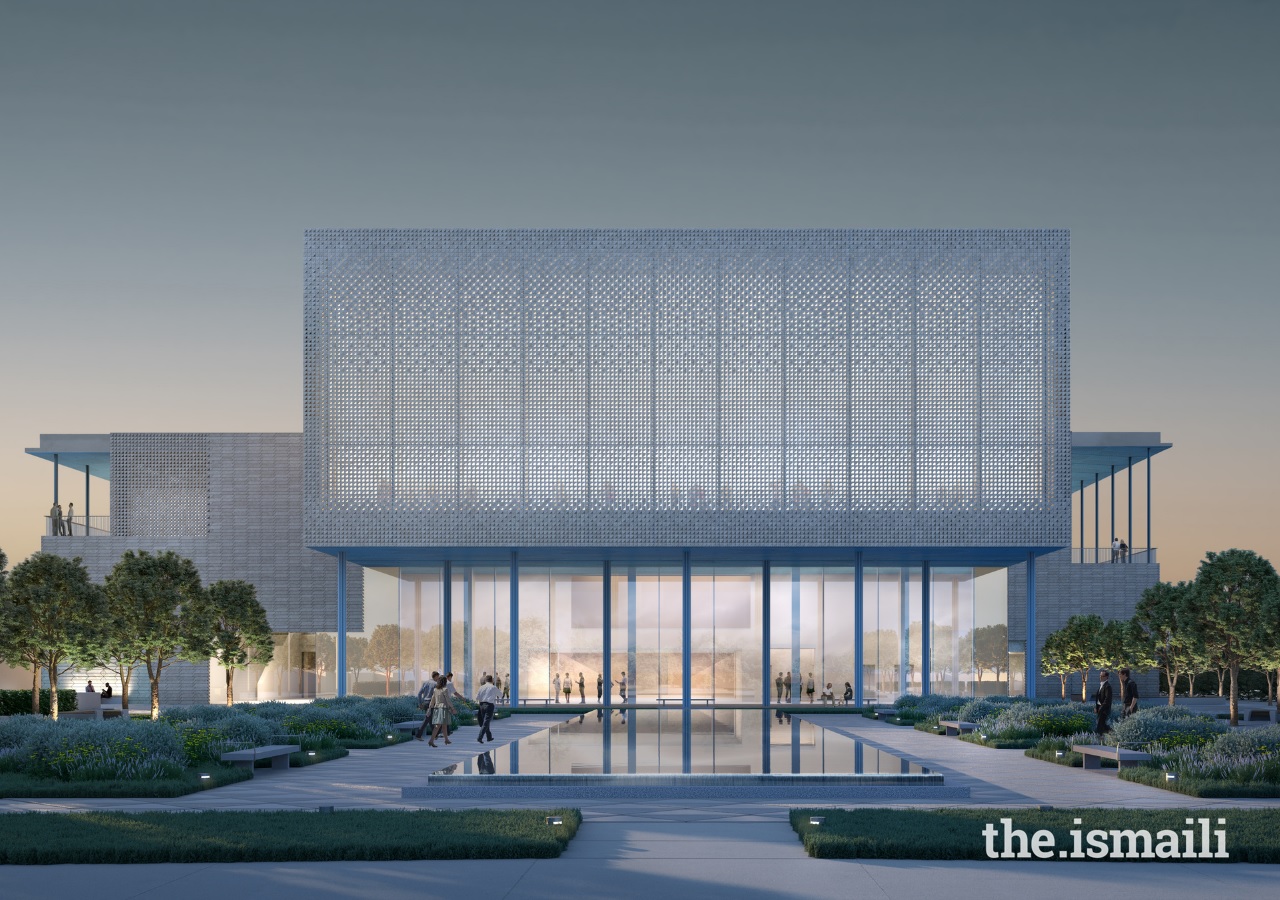
The Ismaili Center in Houston was inaugurated on November 6, 2025, by His Highness Prince Rahim Aga Khan, the 50th Hereditary Imam of the Shia Imami Ismaili Muslims, and John Whitmire, the Mayor of Houston. The Center, a beacon of beauty and elegance, is a sight to behold.
Like six other Ismaili Centers worldwide, it is adorned with stunning works of art, tastefully mounted on walls or placed on the floor. One large, lovely piece, titled Nocturnal Journey, on the 3rd floor, is a masterpiece that takes your breath away when you hear the story behind it.
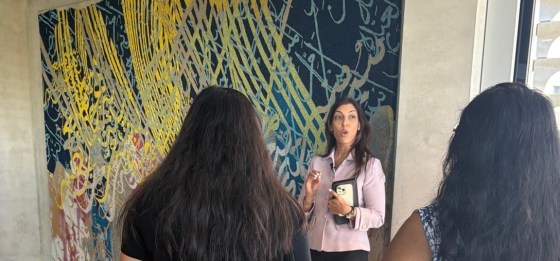
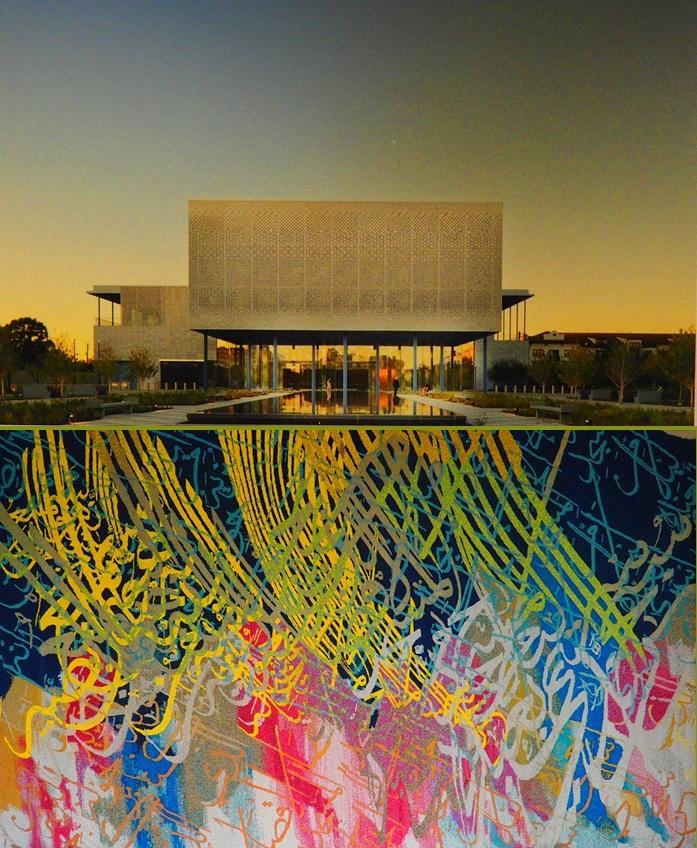
Formed from a staggering four million beads, each meticulously embroidered by hand onto a textile substrate, the composition is a testament to the dedication and craftsmanship of the Egyptian-British artist Ahmed Moustafa and the twenty Ismaili women from the Ismaili Helping Society (IHS) in Mumbai, India. The artwork is based on a calligraphic painting produced by Moustafa in 1984, titled Nocturnal Journey, which commemorates the text of the first verse of Surah al-Isrāʾ (Chapter 17, The Night Journey) of the Holy Qur’an. This work, along with several others that form part of the Ismaili Center’s permanent art collection, is featured in a special piece on our sister website Simergphotos.
The Ismaili Center, Houston, depicted in an artwork (top), features a large embroidery with 4 million beads on its 3rd floor. It is one of many pieces of art at the newly inaugurated Center. Please click on the image for more pictures and stories of the Center’s permanent art collection.
Date posted: November 15, 2025.
Featured photo at the top of the post: Visitors attending the inauguration ceremony of the Ismaili Center in Houston get an introduction to the artwork, “Nocturnal Journey.”
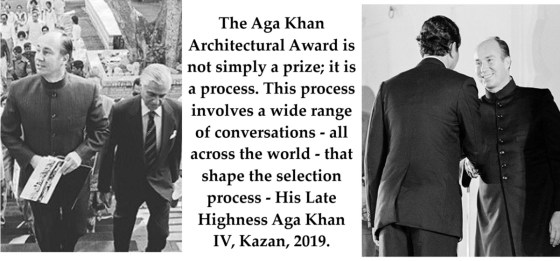
On June 9, 2025, the Aga Khan Award for Architecture (AKAA) announced 19 shortlisted projects for the 2025 Award cycle, a selection made with utmost care and expertise by an independent Master Jury, which meticulously reviewed 369 projects nominated for the 16th Award Cycle (2023-2025). Established by Mawlana Shah Karim, His Late Highness Prince Karim Aga Khan IV, the 49th Hereditary Imam of the Ismaili Muslims, in 1977, the Award identifies and encourages building concepts that successfully address the needs and aspirations of communities in which Muslims have a significant presence.
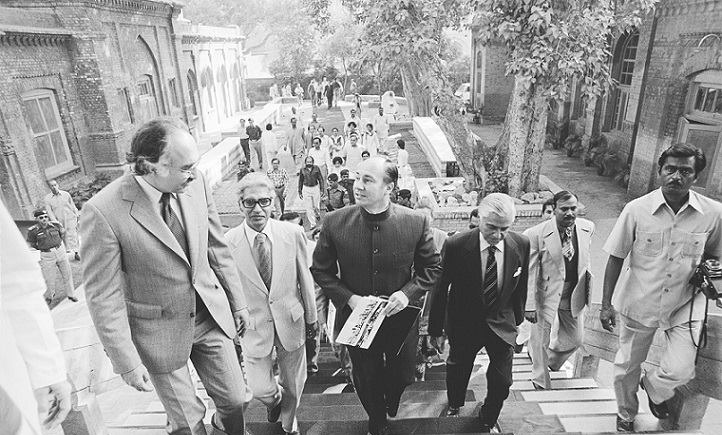
Flashback: Mawlana Shah Karim, His Late Highness Aga Khan IV, arrives for the inaugural ceremony of the Aga Khan Award for Architecture held on October 23. 1980, in Lahore, Pakistan. Photograph: AKDN / Christopher Little.
~~~~~~
Mawlana Shah Karim, His Late Highness Aga Khan IV, delivering his speech at the Aga Khan Award for Architecture ceremony, Kazan, Tatarstan, September 13, 2019. This was the last Award ceremony he attended in person. In 2022, at the Award Ceremony and seminars held in Muscat, Oman, he was represented by his brother, Prince Amyn and his children, Princess Zahra and Prince Hussain. Photograph: AKDN. Please read speech HERE.
Since its launch 48 years ago, with the first award ceremony taking place in Lahore, Pakistan, on October 23, 1980, 128 projects have received the award, and nearly 10,000 building projects have been documented. The AKAA’s selection process emphasizes architecture that not only provides for people’s physical, social and economic needs, but that also stimulates and responds to their cultural aspirations.
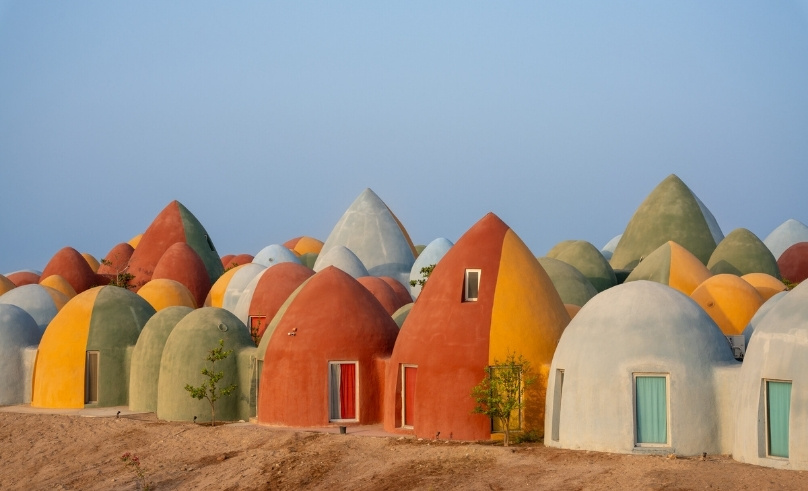
Majara Complex and Community Redevelopment, Hormuz Island, Iran. Please click on the image for the Cairo Scene article.
Salma Ashrat Thabit, writing for Cairo Scene, says that “the 2025 Aga Khan Award for Architecture shortlist is here, and the Middle East is in the spotlight. From Egypt’s revived markets to Iran’s vibrant domes, these standout projects offer fresh visions of culture and community.” Please read Salma’s piece Cairo Scene: Middle Eastern Marvels.
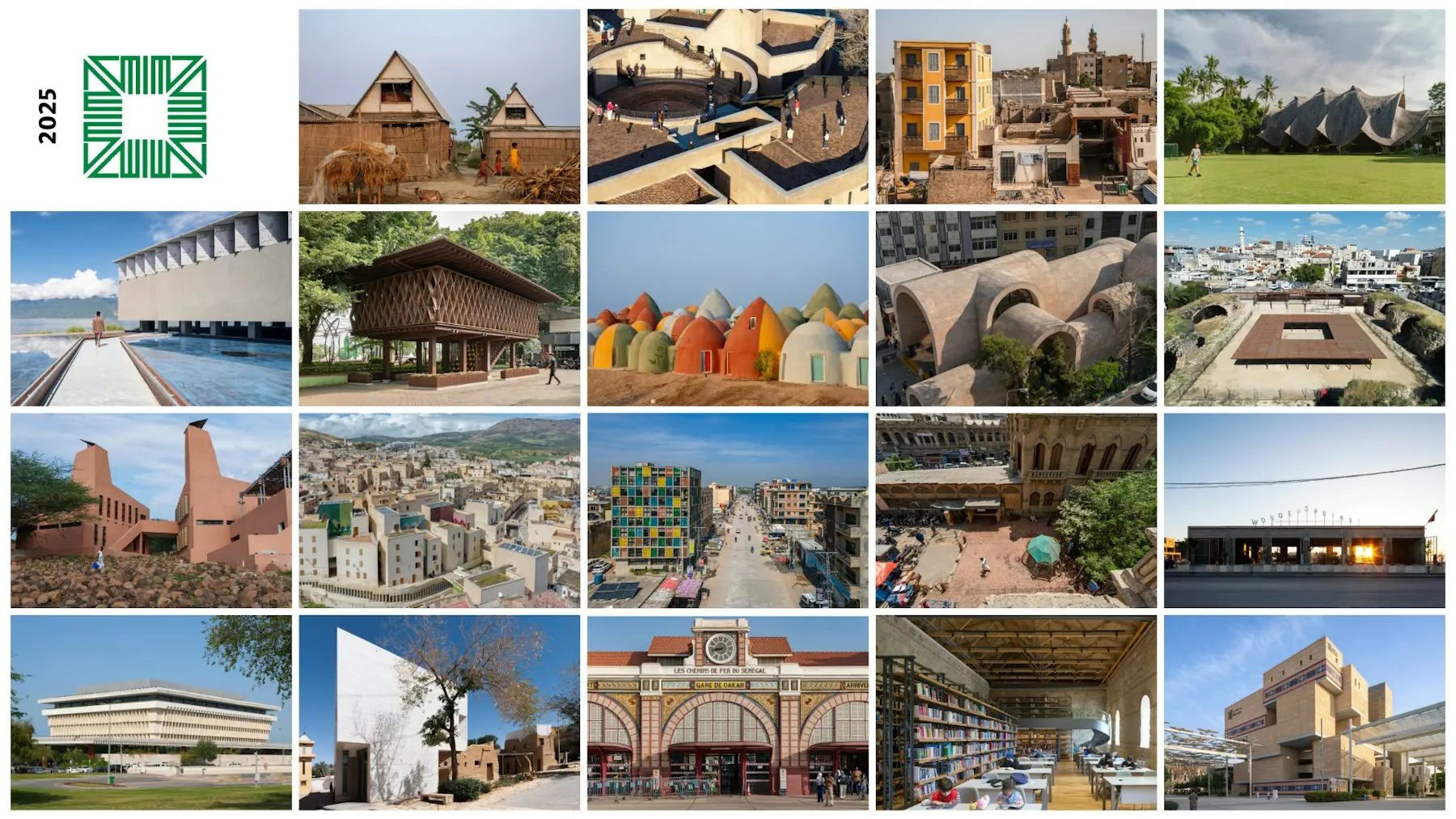
A collage of 19 projects shortlisted for the 2025 Aga Khan Award for Architecture. Please click on the image for overviews and descriptions of the projects on the AKDN website.
The AKDN website provides a comprehensive overview with links to detailed descriptions of the 19 shortlisted projects from Bangladesh to China to Kenya to Türkiye to the United Arab Emirates. Please click Aga Khan Award for Architecture 2025 shortlist.
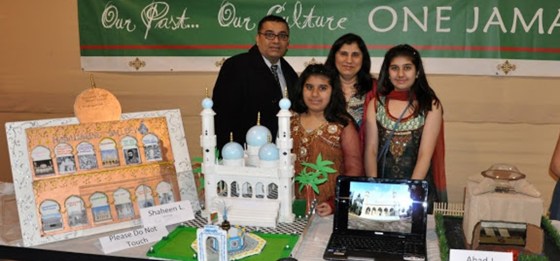
Editor’s note: As children, we have created some stunning works of art and written beautiful essays that we might have long forgotten. However, for our parents, these creations are not just objects, but the threads that weave our family memories, preserving our childhood in their hearts. A model of Hasanabad, a 3-month labour of love and creativity by Sarah and Sophia Ladha some 14 years ago, remains a cherished part of the Ladha family home in Toronto. It stands as a testament to the role of childhood creations in preserving our family memories, even as the two girls embark on their journeys in distant cities. We present their story, celebrating the enduring connection that childhood creations bring to our families.
If there is an iconic piece of art or object related to Ismaili Muslim culture that your children made years ago and remains part of your family’s proudest moment, we would like to hear about it. The Ladha sisters have set an excellent example with their inspiring project, and we encourage you to follow in their footsteps. Write to mmerchant@simerg.com and be part of this inspiring initiative. Simerg and its sister websites Barakah and Simergphotos are independent platforms, committed to encouraging the pursuit of knowledge in all areas of Ismaili history, art and culture, the Divine Institution of Imamat and His Highness the Aga Khan.
The Hasanabad Model
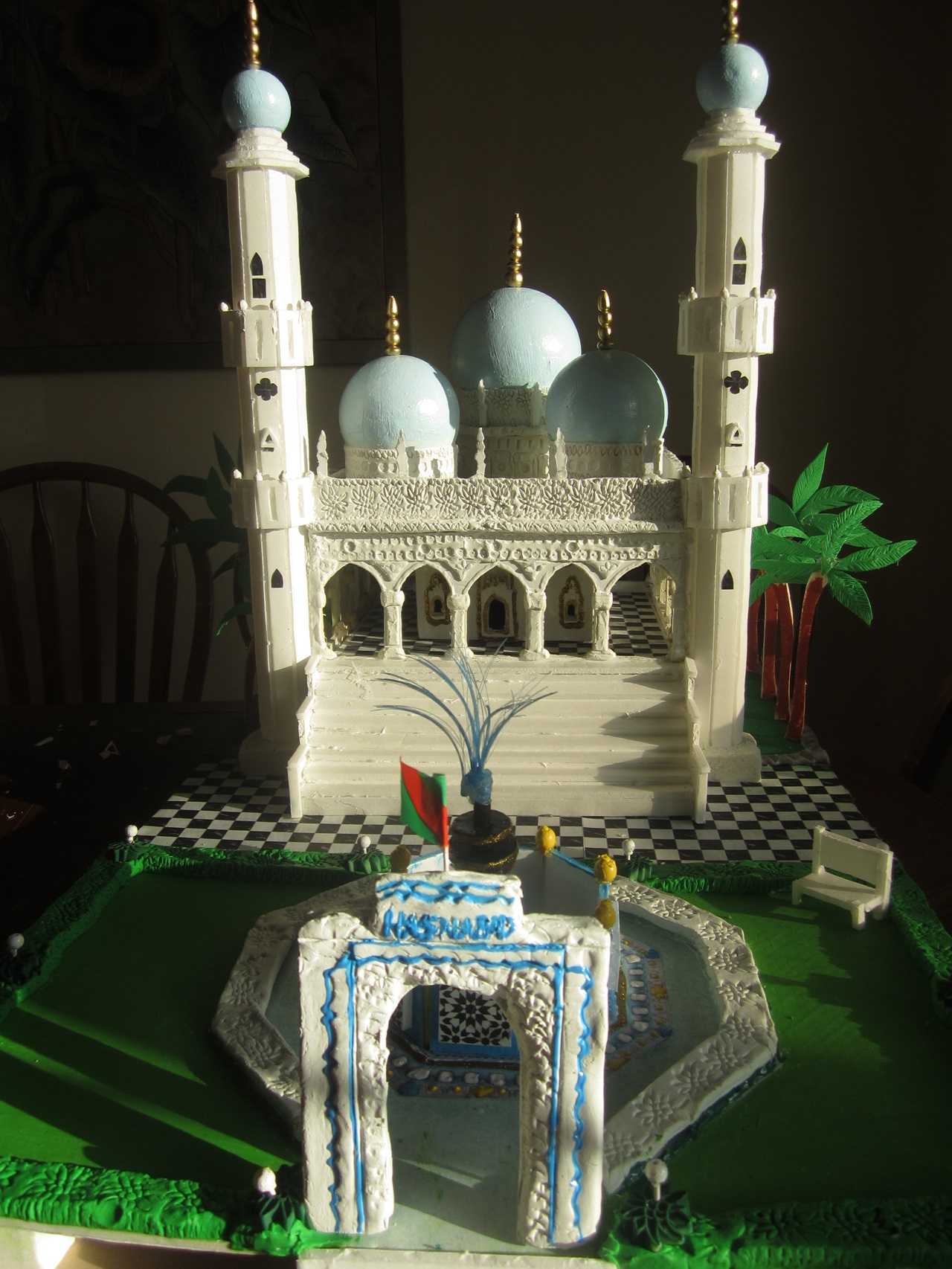
Hasanabad Model, 29″ x 19″, by Sarah and Sophia Ladha. Photograph: Murad Ladha family collection.
We were inspired to create the Hasanabad model after a profoundly personal visit to Hasanabad and its grounds, which include a Jamatkhana and a housing complex in Mumbai in 2011. This trip was particularly meaningful to us because Hasanabad is where my dad, Dr. Murad Ladha, spent his formative years as one of five children of Amina Ladha and Moledina Ladha. Experiencing its breathtaking architecture up close and learning about its historical significance left a lasting impression on us.
Hasanabad, more than just an architectural marvel, is a place of profound historical significance. It is the final resting place of the 46th Ismaili Imam, Mawlana Hasan Ali Shah, who in 1846, journeyed from Iran to Mumbai, establishing the Seat of Imamat in India after centuries in Persia.
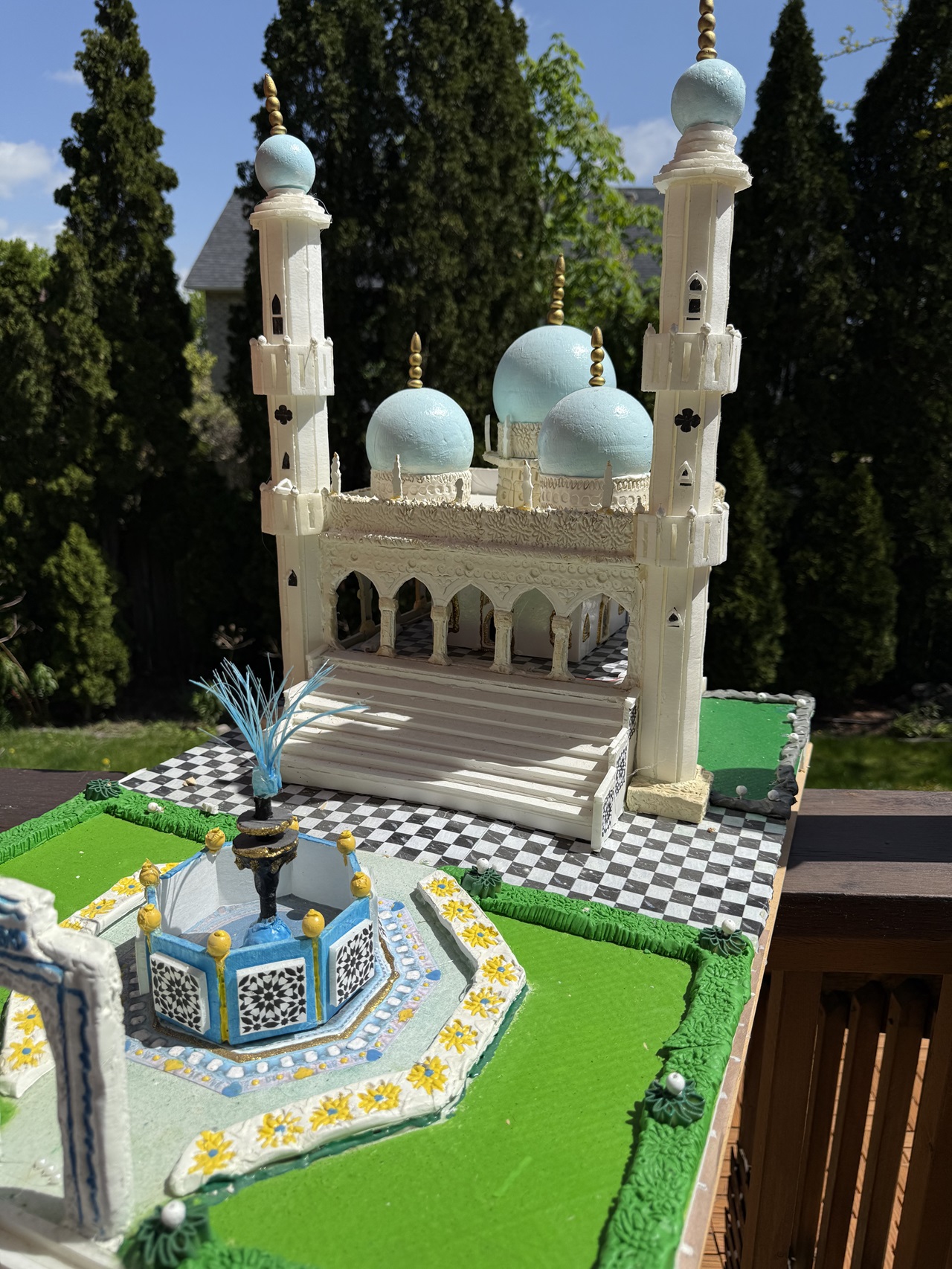
Inspired by the grandeur of the Taj Mahal, Hasanabad’s design features intricate detailing, majestic domes, and perfect symmetry, making it a remarkable landmark and the only Ismaili historical site in India. Inside the Hasanabad Dargah — where Imam Hasan Ali Shah (Aga Khan I) is buried — there is intricate Islamic art decorating the interior of the kuba (the dome). However, due to architectural limitations and lighting, visitors do not readily see or appreciate this artwork. To address this, the fountain in the model was intentionally designed to help reflect and highlight the variety of Islamic artistic elements within the Dargah. This allows members of the Jamat, especially those unable to visit in person, to engage with and appreciate the spiritual and artistic heritage embodied in the structure.
Moved by its historical and cultural significance, we dedicated three months to meticulously crafting our 29″ x 19″ model, striving to capture every detail. Using materials like clay, styrofoam spheres, beads, and pastels, we sought to bring the essence of Hasanabad to life.
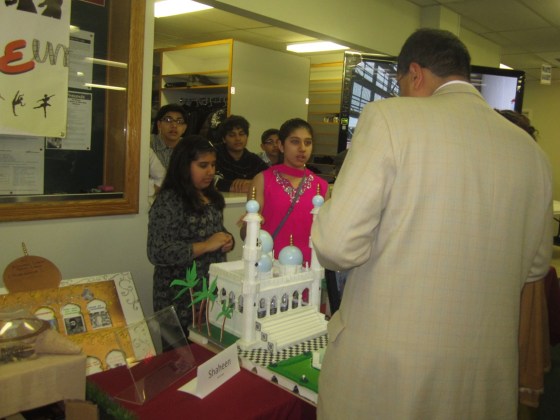
Members of the Jamat view the model of Hasanabad created by sisters Sophia and Sarah Ladha. Photo: Murad Ladha family collection.
~~~~~~~~
The fountain featured in front of historic Hasanabad is not part of the building but was created by Sarah and Sophia Ladha to depict some of the artistic work in the dome inside the building. Photograph: Murad Ladha family collection.
~~~~~~
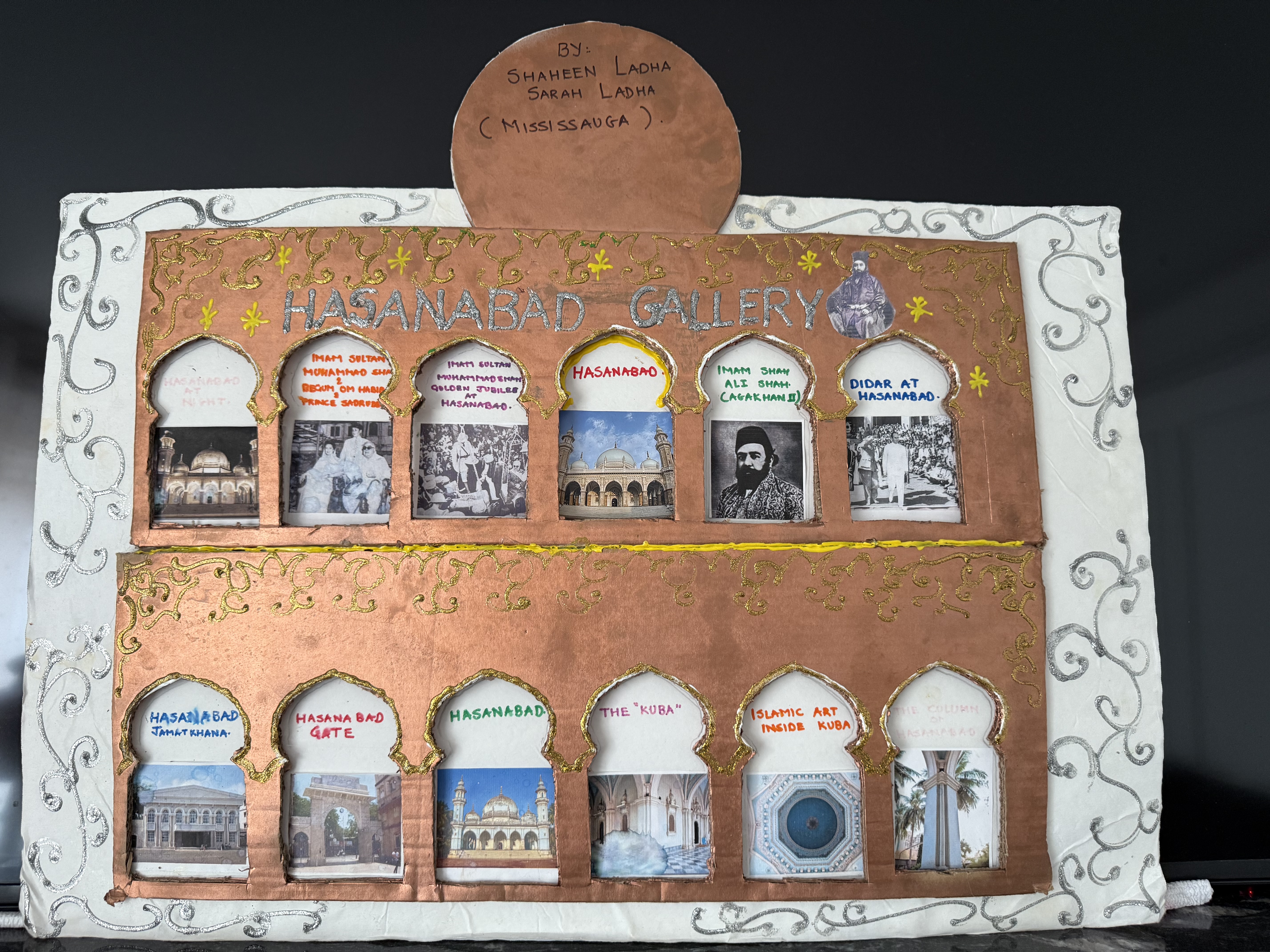
Hasanabad Gallery, accompanying the model exhibit. Photograph: Murad Ladha family collection.
The Ismaili Art and Cultural Committee recognized our model for its craftsmanship, attention to detail, and the story behind it. They appreciated how it highlighted Hasanabad’s architectural beauty and helped share its rich history with others. We displayed the model in Etobicoke Jamatkhana, along with a PowerPoint presentation explaining the the significance of historic Hasanabad to the Jamat. Subsequently, the model was displayed at the Toronto’s International Centre, during a large Navroz gathering of the Greater Toronto Area Jamats. This allowed even more members to experience and connect with this unique representation of Ismaili heritage. Today, the model is a treasured object in our parents’ home in Toronto, and we hope that other children, who have created interesting art work related to Ismaili culture and history will come forward and share their projects through this website.
Featured photo at the top of the post: Sophia and Sarah with their parents, Mr. and Mrs. Murad Ladha, during the Hasanabad model exhibit at Etobicoke Jamatkhana.
Date posted: June 8, 2025. Last updated: September 24, 2025.
___________________
ABOUT THE ARTISTS
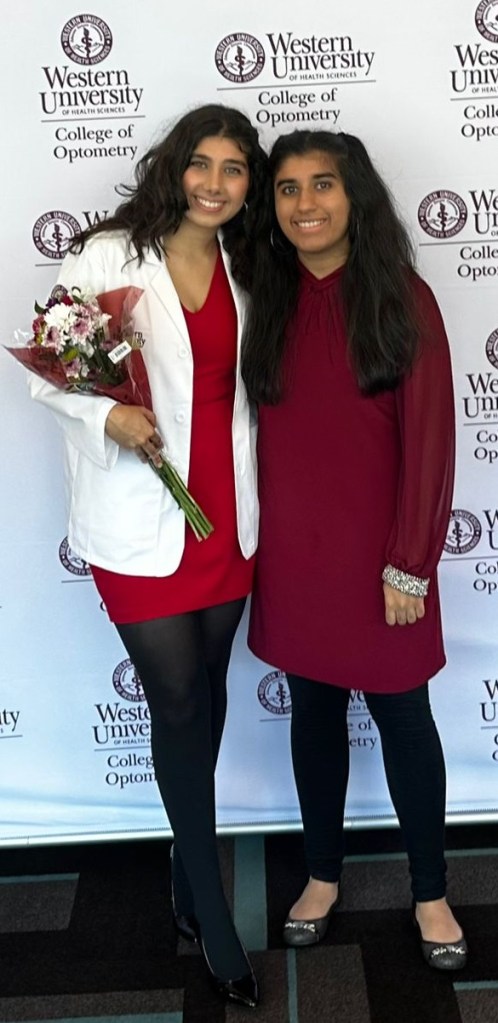
Sisters Dr. Sophia (left) and Sarah Ladha.
Dr. Sophia Ladha is a dedicated optometrist who recently completed her Doctor of Optometry degree at Western University of Health Sciences. She also holds a Bachelor of Science in Optometry from City University in the United Kingdom. Dr. Ladha is passionate about providing patient-centered eye care, combining clinical expertise with a compassionate approach. Outside of the clinic, she enjoys exploring Islamic art and calligraphy, finding harmony between scientific precision and creative expression.
Sarah Ladha is a medical student currently studying in Pennsylvania. Outside of medicine, she has a deep passion for architecture and design. She is fascinated by how structure, form, and function converge to create spaces that are not only visually striking but also purposeful. Sarah draws inspiration from the stories behind buildings — the history, culture, and intention that shape their design. Exploring these elements allows her to see architecture not just as construction, but as a form of living art.
We welcome your feedback. Please click LEAVE A COMMENT. If you are unable to post your comment, please email it to mmerchant@simerg.com. Simerg, an independent platform, has published over 2,000 pieces on all aspects of Ismaili and Islamic history, culture and thought since its launch in 2009. Please see our Table of Contents in 2 parts — 2009-2019 and 2020-Current. Please visit Simerg’s sister websites, Barakah, which is dedicated to His Highness the Aga Khan, and Simergphotos that features photo essays on history, culture and travel. Follow the publisher/editor Malik Merchant on @Facebook, @X and @LinkedIn
“I urge you to imagine the loneliness of being unseen, the despair of being unheard, and the pain of being forgotten. Now imagine that world being yours. If you can’t walk in our shoes, try to walk beside us. Offer a hand, a voice, or even just a moment of empathy….The “Straight Path” requires all strands of society to come together to care for society’s most vulnerable” — Ghulam Baig, CEO, Gilgit-Baltistan Goodwill Movement
The concept of the “Straight Path” (Sirat-Al Mustaqeem) represents a journey guided by justice, compassion, and equity — principles that urge us to care for society’s most vulnerable. This path transcends spiritual growth, calling for a community where everyone is uplifted and included. The Ismaili Imamate’s focus on social work and community development through Jamati Institutions and the Agencies of the Aga Khan Development Network consistently reminds murids of these values.
Yet, in the rush of modern life, we often lose sight of those left behind: the elderly, the disabled, and the sick — the most vulnerable among us. While many indulge in comfort, countless others struggle in silence.
A Global and Local Perspective on Suffering
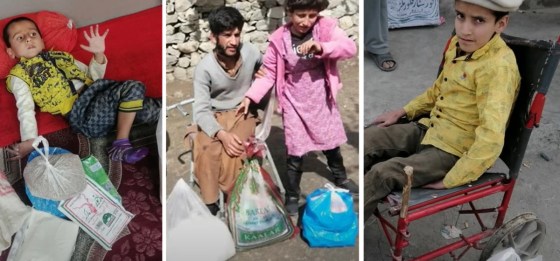
When we think of suffering, images of famine, poverty, or war often come to mind — realities associated with regions like Africa. Yet suffering also exists in less visible forms. One of these is the struggle for inclusion. In Gilgit-Baltistan, particularly in areas like Hunza and Yasin, disabled individuals live on the margins, yearning for equal rights and opportunities. Their pleas for dignity, inclusion, and opportunity are often drowned out by societal indifference.
During my time at a community college, the COVID-19 pandemic offered space to reflect on societal norms, especially regarding disability in Gilgit-Baltistan. While organizations like Aga Khan Focus for Habitat, KADO, and other local disability-focused groups have made progress, these efforts remain limited compared to the inclusivity and accessibility seen in more developed regions.
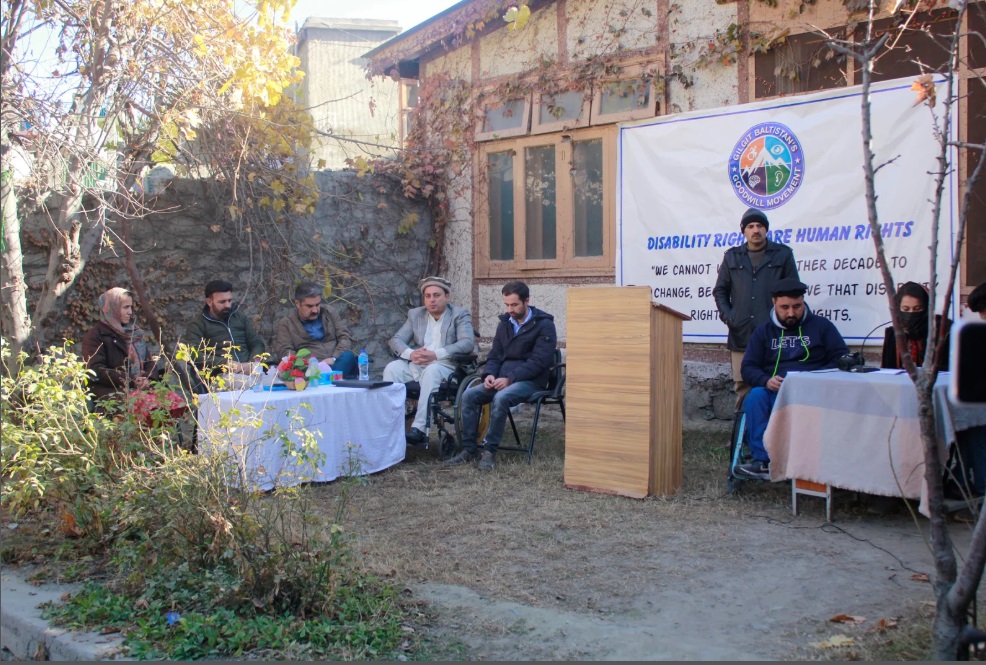
Through my organization, the Gilgit-Baltistan Goodwill Movement (GBGM), we are addressing these challenges. Guided by the values of justice, compassion, and equity, GBGM strives to improve the lives of disabled individuals through initiatives such as:
Vocational and Life Skills Training: Free programs equip individuals with tools for independent living.
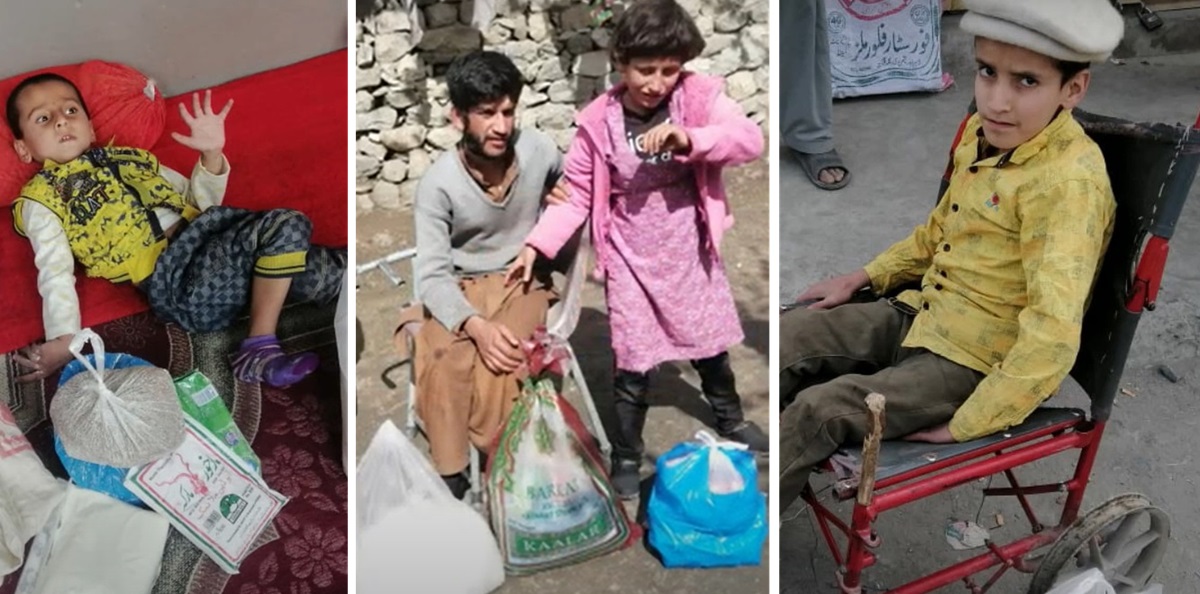
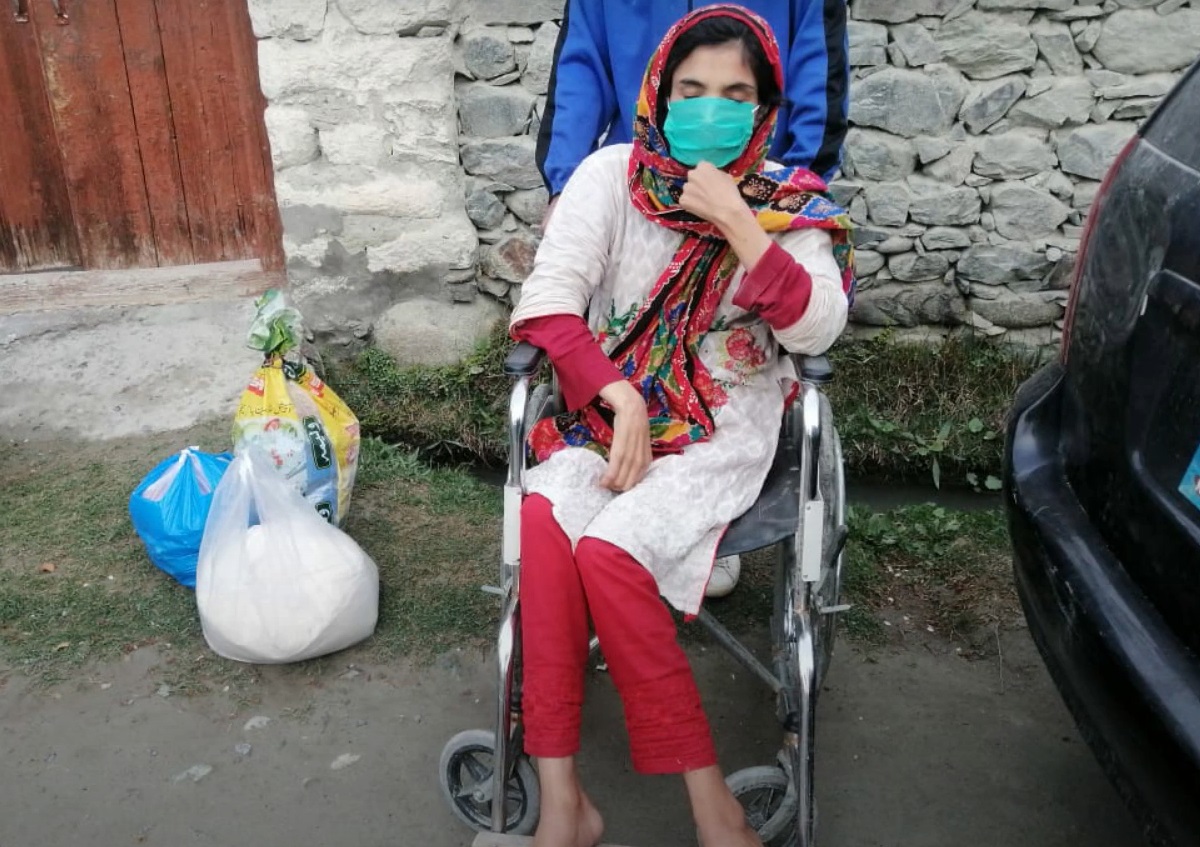
Assistive Devices: Wheelchairs, hearing aids, and other essential devices improve mobility and quality of life.
Healthcare Support: Free medicines and personalized healthcare services are provided to those in need.
Financial Aid: Economic challenges are alleviated with support for essentials like food and shelter.
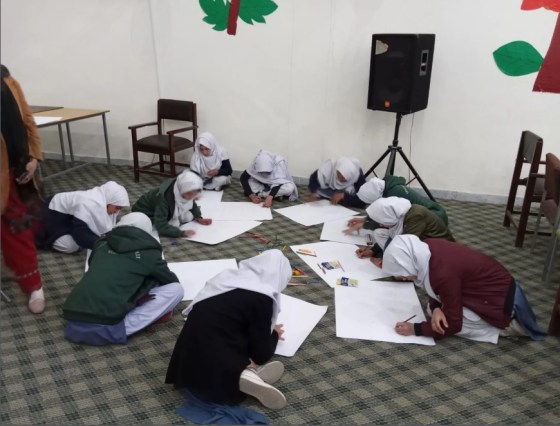
Advocacy and Awareness: Campaigns and outreach efforts aim to eliminate stigmas and foster acceptance.
Our website, www.gbgoodwillmovement.com, showcases stories of resilience and transformation, demonstrating the profound impact of these initiatives.
Stories of Change
One of our beneficiaries shared:
“As a disabled woman, I had limited opportunities within my community. The Goodwill Movement not only supported me but also empowered other women, fostering gender inclusion in society. Today, I help others as a teacher in an additional support needs school in Gilgit.”
Another student remarked:
“I learned from Goodwill and now apply these skills at KIU Gilgit. Thank you, Goodwill Movement. I had no other options, but your one-on-one support five days a week changed my life.”
These testimonials highlight that disabled individuals are often excluded from active participation in Gilgit’s culture but can thrive with the right support.
Challenges Persist
~~~~~~
~~~~~~
~~~~~~
Despite significant strides, challenges remain:
Infrastructure: Public spaces often lack accessibility.
Barriers to Mobility: Ramps, elevators, and accessible transportation are scarce.
Educational Gaps: Inclusive education resources are insufficient.
Healthcare Access: Affordable, quality healthcare is often out of reach.
Social Stigma: Deep-seated prejudices continue to marginalize disabled individuals.
These obstacles, while significant, are not insurmountable. Addressing them requires collective action and a commitment to compassion, justice, and equity.
Working for the Disabled Jamati Members
While the GB Goodwill Movement maintains impartiality regarding religion and gender, most of our students have been from the Ismaili Jamat in regions such as Hunza, Ghizer, Yasin, Chilas, and various villages across Gilgit.
Story continues below after messages
_______________________________________________
SUPPORT AND APPRECIATION FOR GHULAM BAIG AND HIS GILGIT-BALTISTAN GOODWILL MOVEMENT
The following is an excerpt from Lyn Patterson, Ghulam Baig’s Mathematics Teacher at Ashton — formerly Ashcraig — Secondary School, Glasgow, Scotland:
From early on in his secondary school career Muhammad impressed me with his determination to overcome the challenges presented by his disability (cerebral palsy) and to succeed as far as possible in his studies. His willingness to work hard was clear from a young age and increased even more as he matured. He developed a real understanding of the barriers to learning experienced by students with a range of disabilities. His fellow students in Ashcraig included young people with conditions such as Muscular Dystrophy, Spina Bifida, visual and hearing impairments, and autism spectrum disorders. Muhammad always displayed an interest in classmates and an empathy towards them. It therefore does not surprise me to see that he has now founded the GBGM devoted to improving the lives of disabled people. Muhammad demonstrated a clear commitment to equality and diversity issues, speaking passionately about such topics.
~~~~~~
The following is an excerpt from the Dhanani Family of the USA, with family members supporting the initiative living in Georgia, California, and Texas:
We have known GBGM’s leadership for over three years and have financially facilitated some of their activities in support of their mission. During this period, we have found the leadership to be very conscientious in executing their duties and accomplishing GBGM’s goals. We are really impressed with their desire to raise awareness about the challenges faced by the DA population, especially in the GB area. They have worked hard to lobby the federal, state and local governments in Pakistan in support of their DA activities. We were fortunate to have met some of their leadership and staff during our visit to GB in September 2022. The visit provided further evidence of their commitment to DA population and reaffirmed our own desire to continue to work with them for a foreseeable future.
~~~~~~
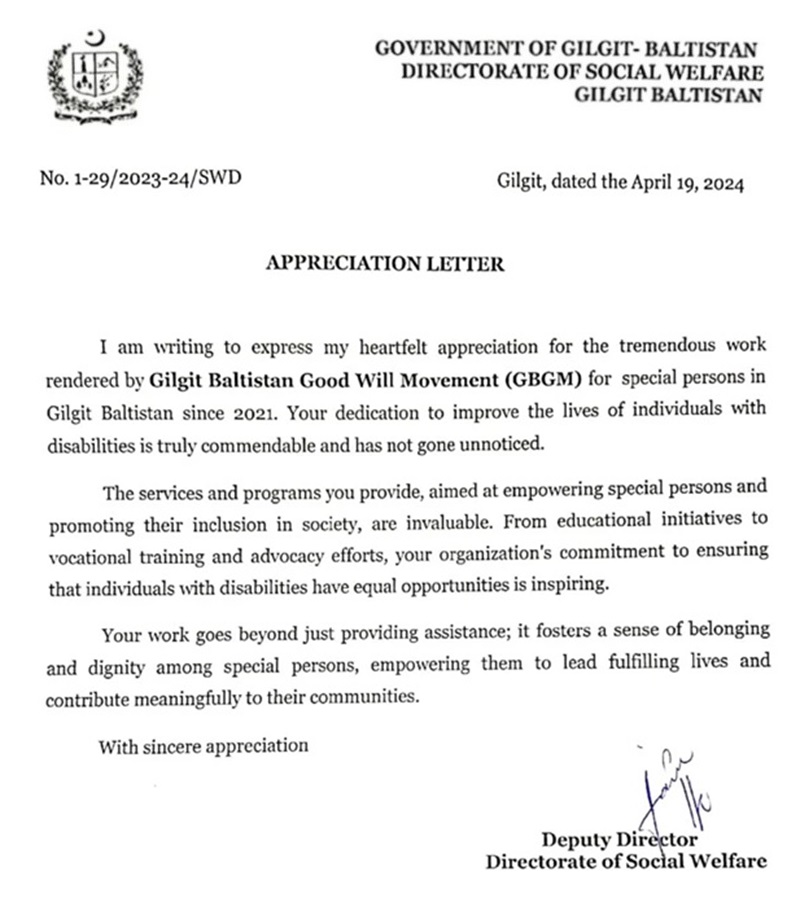
The following is a message from the Government of Gilgit-Baltistan:
_______________________________________________
A Call to Action
Returning to the West, I hoped my experiences in the social care sector would inspire support for the disabled community within the Jamat. While responses have been minimal, the Dhanani Family of the USA has been a notable exception, providing instrumental support for many of our initiatives. In April 2025, GBGM has an exciting project lined up. With the Dhanani family members, we will do a face-to-face project to contribute to the disability community in parts of Gojal, Upper Hunza, Yasin, and Ghizer.
To the readers, I urge you to imagine the loneliness of being unseen, the despair of being unheard, and the pain of being forgotten. Now imagine that world being yours. If you can’t walk in our shoes, at least try to walk beside us. Offer a hand, a voice, or even just a moment of empathy. Whether through financial contributions, volunteering, or spreading awareness, your support can make a tangible difference.
Building an Inclusive Society
The “Straight Path” requires all strands of society to come together, each contributing unique skills and perspectives. Just as a plumber and a surgeon serve different roles, we all have a part to play in building a more inclusive world. Let us follow this path to ensure that no voice goes unheard, no individual unseen, and no life unlived to its fullest potential.
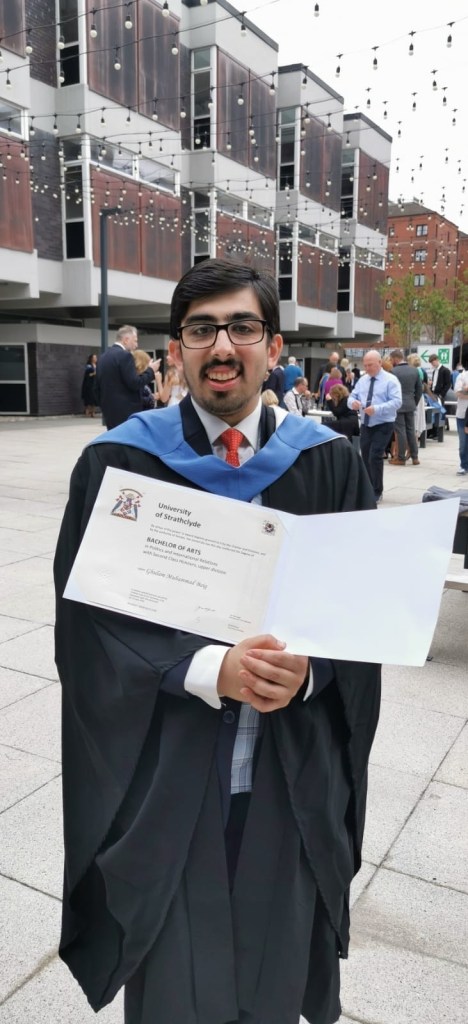
About the author: Ghulam Muhammad Baig, originally from the Hunza Valley in Northern Pakistan’s Gilgit-Baltistan region, received primary and secondary schooling in the UK with his parent’s support. He completed his university studies with an honours degree in Politics and International Relations from the University of Strathclyde in Glasgow, Scotland. Being disabled himself with Cerebral palsy, Ghulam was deeply moved by the plight of the disabled community in his home region, especially during COVID-19 pandemic. They were grappling with severe challenges, including a lack of basic facilities such as healthcare, education, and employment. This realization fueled his lifelong commitment to work for the Disabled or Differently Abled Community of Gilgit-Baltistan. He created the Gilgit-Baltistan Goodwill Movement (GBGM), of which he is the CEO.
Despite the closure of educational institutions during the first year of the pandemic, Ghulam remained proactive on social media. His efforts led to the formation of a large team of volunteers, including prominent disabled activists of Gilgit-Baltistan, such as Sehrish Kanwal Farhan Baig, Abrar Ahmed, Mumtaz Ali, Abdul Hakeem, Mustafa Kamal, Najeeba, Khushan Bano, and Ali Ahmed.
Recognizing the disparity in opportunities available to others in similar circumstances, Ghulam passionately advocates for the rights and well-being of persons with disabilities in Pakistan’s Gilgit-Baltistan region. With the support of his team, he is using his education and experience to improve the lives of disabled individuals in his home region.
Our sister website, Barakah.com, established independently in 2017, is a treasure trove of information dedicated to Mawlana Hazar Imam, His Highness the Aga Khan, the 49th Hereditary Imam of the Shia Ismaili Muslims and direct descendant of the Prophet Muhammad (peace be upon him and his family).
Barakah logo
The word Barakah is inspired by the Arabic root b-r-k; its most fundamental meaning is ‘Blessing’, conferred by the Divine upon humankind.
You’ll find informative articles there, including the latest pieces on the Aga Khan’s sister, Princess Yasmin, and her incredible commitment over the past 40 years to eradicating Alzheimer’s, and a tribute to the late Indian Prime Minister Manmohan Singh, who received the Aga Khan on numerous occasions during his visits to India. We assure you that visiting Barakah will be not only informative but also enjoyable, strengthening your connection to the work of the Ismaili Imam through the Aga Khan Development Network, which is dedicated to improving the quality of life of those in need, mainly in Africa and Asia, irrespective of their origin, faith, or gender.
Story continues below
Princess Yasmin Aga Khan addresses a Gala event to raise funds for Alzheimer’s Association and Late Indian Prime Minister Manmohan Singh (d. December 27, 2024) receives His Highness the Aga Khan in 2013. Please click on image for link to these and other stories on Barakah.com
It will be of particular interest for Canadians to note that aside from the beautiful Ismaili Centres in Toronto and Vancouver, the Aga Khan has created a lovely museum in Toronto, the Aga Khan Museum, the first such museum in North America dedicated to Islamic Art and Culture, and the Aga Khan Garden, which is a gift to the University of Alberta and is part of the University’s magnificent Botanic Gardens in Parkland County near Edmonton. American readers might note that Houston, Texas, will house a superb purpose-built Ismaili Center. There are more than 200,000 Ismailis in North America.
Story continues below
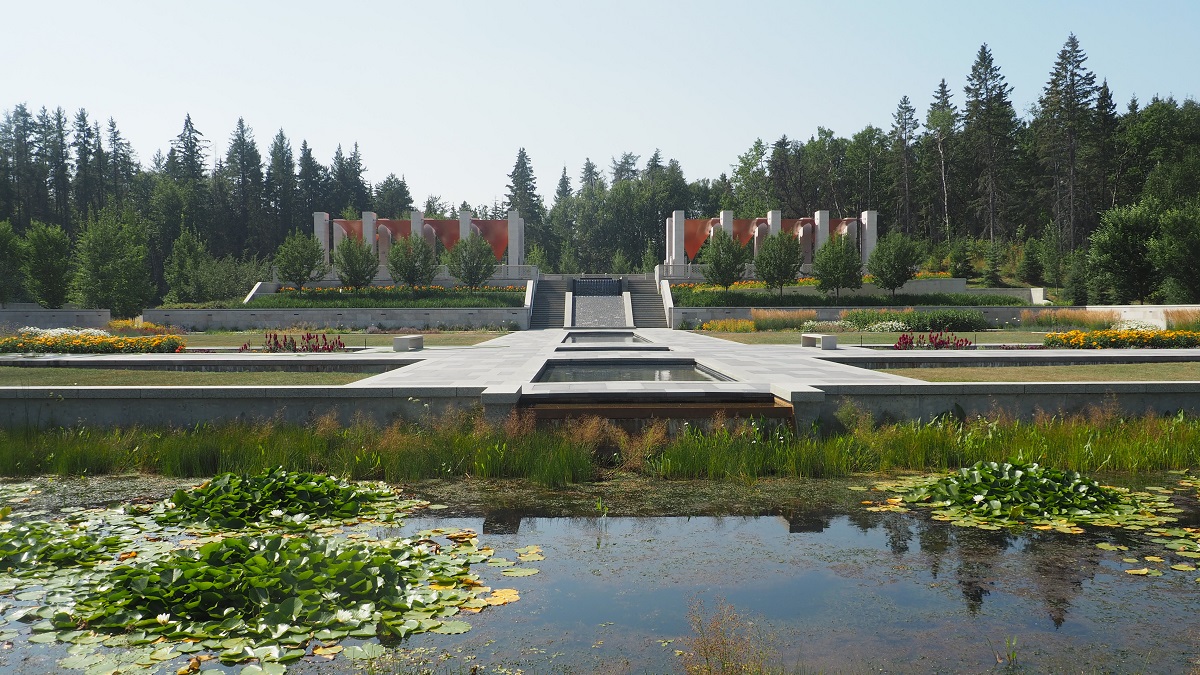
Aga Khan Garden, University of Alberta Botanic Garden, Parkland County, Alberta. Photograph: Nurin Merchant/Simerg. For stories and photographs about the Garden and other travel narratives, please visit Simergphotos.
~~~~~~
The Ismaili Center Houston is under construction and is scheduled to be completed in late 2025. Image: Imara Houston Inc. /IPL via The Ismaili (the official website of the worldwide Ismaili community
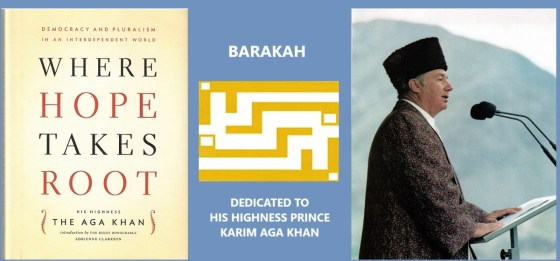
Featured image at the top of post: Cover page of “Where Hope Takes Root” featuring selected speeches of His Highness the Aga Khan (see book review HERE), the logo of Barakah, and the Aga Khan addressing his subjects in the Pamir mountains of Gorno-Badakhshan Autonomous Province, Tajikistan, in 1995.
“The love of the Imam knows no physical boundaries. No mountain, no river, no desert, can stop the love of the Imam for his Jamat [community] worldwide” — Mawlana Hazar Imam, His Highness the Aga Khan, 49th Hereditary Imam of Ismaili Muslims (please watch video, below)
From Prophet Muhammad’s declaration at Ghadir-e-Khumm, after his farewell pilgrimage to Mecca, appointing his son-in-law Ali as his successor to the present 49th Hereditary Imam of the Ismailis, we invite our readers to watch the following video to learn about the Ismaili Imamat. Each Imam, from the past to the present, has been a Guiding Light to his followers, a source of inspiration and guidance through their changing times and circumstances. We present this video as two Aga Khan projects in Canada, the Aga Khan Museum and the Ismaili Centre in Toronto, are about to celebrate their tenth anniversary in mid-September. The most recent project, the beautiful Aga Khan Garden near Edmonton, is part of the University of Alberta Botanic Garden and will soon mark its 6th anniversary in mid-October.






 Simerg - Insights from Around the World