Pir Sadr al-Din’s Ginan “Eji Dhan Dhan Aajano” with Meaning, and Other Readings for the 77th Salgirah of the 49th Ismaili Imam, His Highness the Aga Khan

Spread in various countries around the world, the Shia Imami Ismailis have their own innumerable ways for celebrating important religious occasions according to their various cultural, social and religious traditions and backgrounds. One very important occasion in the annual calendar of the Ismailis is the Salgirah, or the birthday of their spiritual leader (Imam). His Highness the Aga Khan is their present Imam, and Ismailis around the world will be marking his 77th Salgirah on December 13, 2013. The following readings will enhance the readers’ understanding about the occasion as well as the special relationship that binds the Imam of the Time with his spiritual children.

Mawlana Hazar Imam’s Salgirah and the Depth of His Love for the Jamat

The term Salgirah is of Persian origin. Sal means anniversary and girah means knot and hence Salgirah literally means ‘an anniversary knot added on to a string kept for the purpose’. This article approaches the subject of Mawlana Hazar Imam’s birthday in terms of the Imam’s love for his murids and the love and devotion of the murids for their Imam.
In Metaphoric Ginan “Eji Dhan Dhan Aajano” Pir Sadr al-Din Asks Mu’mins to Act Righteously and Gain Spiritual Recognition of Imam-e-Zaman

The Ginan has attained a very special status because it is primarily recited during the festivities marking the Salgirah of the Imam. The appropriateness of reciting Eji Dhan Dhan Aajano during the Salgirah will become apparent as we try to understand the ginan and its underlying spiritual teachings.

The Preamble Of “The Constitution of the Shia Imami Ismaili Muslims”

The new Ismaili Constitution was ordained, signed and sealed by His Highness the Aga Khan on December 13th, 1986, his 50th birthday. His Highness did this with the belief that the Constitution would provide a strong institutional and organizational framework for his Ismaili community to contribute meaningfully to the societies among whom they live.

His Highness the Aga Khan and the Ismailis

.

.

On the occasion of His Highness the Aga Khan’s 75th birthday on December 13, 2011, Simerg published a three-part photo essay tribute to the 49th Ismaili Imam. For those who may have missed, the series has been consolidated into a captivating one piece photo essay, which can be read at Simerg’s companion photo blog, Simergphotos, by clicking on the above link.

Date posted: December 7, 2013

___________________

A Note to Readers: Please scroll down or click Home page for other recent posts and click What’s New for links to all articles published on this blog since March 2009. Subscribe to this Website via the box near the top right of this page.

The Muslim Calendar, Muharram and Muslim and Non-Muslim Expressions on Imam Hussein (a.s.) and the Karbala Tragedy

Please click: Muslim and non-Muslim Expressions on Imam Hussein (a.s.)

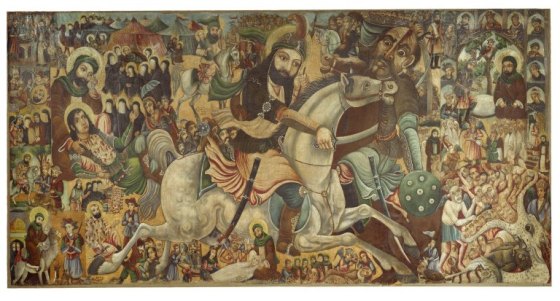
This oil on canvas painting by Abbas Al-Musavi commemorates the martyrdom of Imam Husayn at the Battle of Karbala. Its focus is his half brother Abbas ibn Ali on a white horse. This image was uploaded into Wikipedia Commons as a donation by the Brooklyn Museum. The image is a faithful photographic reproduction of a two-dimensional, public domain work of art. Please click on image for article on Imam Hussein.

This image of an oil on canvas painting by Abbas Al-Musavi commemorates the martyrdom of Imam Hussein at the Battle of Karbala. Its focus is his half-brother Abbas ibn Ali on a white horse. This image was uploaded into Wikipedia Commons as a donation by the Brooklyn Museum and is a faithful photographic reproduction of a two-dimensional, public domain work of art. The painting is a gift of K. Thomas Elghanayan in honor of Nourollah Elghanayan. Please click on image for article on Imam Hussain.

The emigration (Hijrah) of Prophet Muhammad (s.a.s) from Mecca to Medina in the year 622 AC was a significant event and later adopted to mark the beginning of the Muslim Era. The Muslim New Year begins with the month of Muharram. The coming of the New Year is observed by offering of special prayers at night and reflection on the life and times of the Holy Prophet Muhammad.

The twelve months of the Muslim calendar and major Muslim festivals. Image by Simerg.

The twelve months of the Muslim calendar and major Muslim festivals. Image by Simerg.

Amongst the Shi’a Muslims, the first part of the month of Muharram is also an occasion which is marked with a sense of sorrow and solemnity. The 10th of Muharram was the day when Hazrat Imam Hussein (a.s.) together with most of the members of his family and close companions were martyred on the fields of Karbala….Please click Muslim and non-Muslim Expressions on Imam Hussein

Ya Hussain Wallpaper, designed by Mohammad Sajjad. Please click for article. Wallpaper credit: Sajjadsgraphics.blogspot.com

Ya Hussain Wallpaper, designed by Mohammad Sajjad.
Please click for article. Wallpaper credit: Sajjadsgraphics.blogspot.com

An Account of His Highness the Aga Khan’s Recent Visit to India: For Ismaili Followers and Volunteers, “An Experience of Being Lifted Away to Another World” by Toral Pradhan

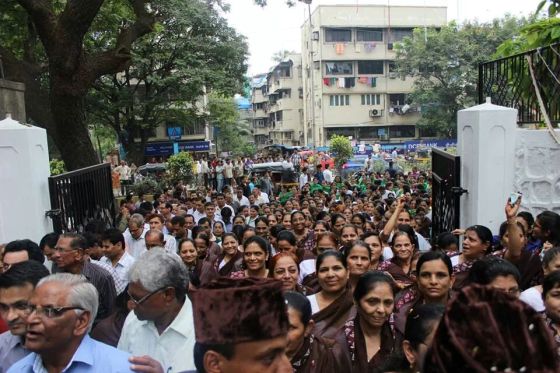
“The car door was left open waiting for him to sit in, but Hazar Imam was instead moving around the compound as if unwilling to leave the premises…..This is a sight that is difficult to erase from the mind” — Toral Pradhan

PLEASE CLICK: His Highness the Aga Khan’s Visit to India: For His Ismaili Followers and Volunteers, “A Dream Come True” and “An Experience of Being Lifted Away to Another World”

Please click on image for article by Toral Pradhan.

Please click on image for article by Toral Pradhan.

Id-e-Ghadir – The Designation of Hazrat Ali (a.s.) as Commander of the Faithful

Excerpt adapted from Ilm magazine, December, 1989*

The twelve months of the Muslim calendar and major Muslim festivals. Image by Simerg.

The twelve months of the Muslim calendar and major Muslim festivals. Image by Simerg.

‘Id-e-Ghadir is celebrated by the Shi ‘ite communities to mark the event that took place at Ghadir Khumm (Valley of the Pond) on the 18th Dhul-Hijjah. This event commemorates the designation (appointment by way of nass) of Hazrat All as the ‘Amir-ul-Mu’minin (commander of the faithful) and Imamul-Muslimin’ (the Imam of the community of believers) at Ghadir-i Khumm when the Prophet (s.a.s.) was returning from his Last Pilgrimage (hajjatul-wida) in the year 632 AC. On this occasion, the Prophet publicly proclaimed Ali to be his successor [1] in guiding the community after the end of the institution of Nubuwwah. According to the Shi’a doctrine, tradition and interpretation of history, the designation of Hazrat Ali marked the beginning of the institution of Imamah. The designated Imam was to continue the ta’wil (interpretation) and talim (teaching) of Allah’s Final Message, i.e. the Holy Qur’an.

This stamp, issued by Iran in 1990, includes the Shahada, Qur'anic ayats and the declaration made by Prophet Muhammad at Ghadir-e Khumm "Mun Koontu Mawla, Fa Hada, Aliyun Mawla" (He of whom I am the Mawla, Ali is also the Mawla). Image not exact stamp size.

This stamp, issued by Iran in 1990, includes the Shahada, Qur’anic ayats and the declaration made by Prophet Muhammad at Ghadir-e Khumm “Mun Koontu Mawla, Fa Hada, Aliyun Mawla” (He of whom I am the Mawla, Ali is also the Mawla). Image not exact stamp size.

Accordingly, throughout the course of the history, the Shi’a have commemorated this occasion as a mark of recognition and acceptance of Allah’s mercy to mankind by bestowing continued guidance. Each Imam, since the time of Hazrat Ali has designated his successor. The Imam in his time has continued to guide his followers according to the prevailing conditions. His function has always been to look after the welfare of the community both in spiritual and worldly (material) matters. His guidance to his followers is that they should lead their lives in such a way so as to practice their Faith with a sense of balance and harmony, ensuring that there is no conflict between the two aspects of an individual’s life. The practice of the Faith thus becomes the way of life.

Presently, the Shi’a Imami Ismaili Muslims celebrate the day of accession of their present Imam to the office of Imamah as Yaum-e Imamat or Imamat Day. This occasion is celebrated as a mark of gratitude to Allah in having bestowed His mercy and bounty in guiding them through the office of the Imam on Sirat al-Mustaqim (the Straight Path).

Date posted: October 22, 2013

Please also click: Ghadir-Khumm – “I Wish I’d Been There” and Other Writings

_____________________

Notes

[1] Vagglieri, Ghadir Khumm, The Encyclopedia of Islam, Vol II, E.J. Brill, 1965, pp. 993-994

* For link to complete article, please click Muslim Festivals and Religious Observances.

Ghadir-Khumm – “I Wish I’d Been There” and Other Writings

“Allah did choose Adam and Noah, the family of Abraham, and the family of Imran above all people – offspring, one of the other, and Allah knows and hears all things.” (Holy Qur’an, 3:33-34)

I. PREAMBLE OF THE ISMAILI CONSTITUTION

His Highness the Aga Khan seen ordaining a new constitution for the Ismaili community worldwide. Clause (G) of the Preamble states: “Mawlana Hazar Imam Shah Karim al Hussaini, His Highness Prince Aga Khan, in direct lineal descent from the Holy Prophet (s.a.s.) through Hazrat Mawlana Ali (a.s.) and Hazrat Bibi Fatima (a.s), is the Forty-Ninth Imam of the Ismaili Muslims.”

“In accordance with Shia doctrine, tradition, and interpretation of history, the Holy Prophet (s.a.s.) designated and appointed his cousin and son-in-law Hazrat Mawlana Ali Amiru-l-Mu’minin (a.s), to be the first Imam to continue the Ta’wīl and Ta‘līm of Allah’s final message and to guide the murids, and proclaimed that the Imamat should continue by heredity through Hazrat Mawlana Ali (a.s) and his daughter Hazrat Bibi Fatimat-az-Zahra, Khātun-i-Jannat (a.s).” – The Preamble of The Constitution of the Shia Imami Ismaili Muslims. [1]

~~~~~~~~~~~

II. IDD-E-GHADIR STAMPS

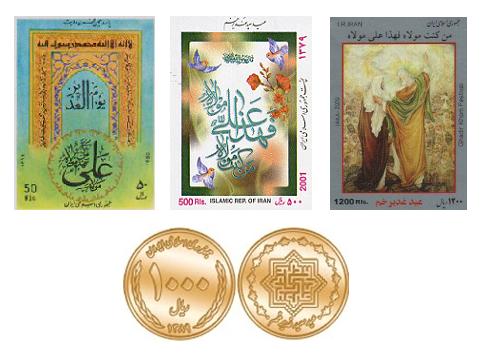
Images of some stamps and coins issued by the Islamic Republic of Iran between 1990 and 2010 commemorating the Idd-e-Ghadir. The inscriptions include the Shahada, Qur’anic ayats and the declaration made by Prophet Muhammad at Ghadir Khumm, “Mun Koontu Mawla, Fa Hada, Aliyun Mawla” meaning “He of whom I am the Mawla Ali is also the Mawla.”

~~~~~~~~~~~

III

With 9,000 chronological quotations arranged in 90 thematic chapters, this huge treasury is bursting with historical gems.

With 9,000 chronological quotations arranged in 90 thematic chapters, this huge treasury is bursting with historical gems.

“Muhammad said: ‘He of whom I am the Mawla, Ali is his Mawla. O God, be the friend of him who is his friend and be the enemy of his enemy.’

“This became the proof text for the Shia claim that Ali, the Prophet’s cousin and son-in-law, was the Prophet’s rightful successor after the Prophet’s death in 632. The meaning of Mawla here probably implies the role of patron, lord or protector.” — History in Quotations by M. J. Cohen and John Major.

~~~~~~~~

IV. HIS HIGHNESS THE AGA KHAN AND
HIS DEVELOPMENT NETWORK ON HAZRAT ALI

His Highness addressing the Evangelical Academy of Tutzing upon receiving the Tolerance Award, 20 May 2006.

His Highness addressing the Evangelical Academy of Tutzing upon receiving the Tolerance Award, 20 May 2006.

 “…As you know, the Shi’a divided from the Sunni after the death of the Prophet Muhammad. Hazrat Ali, the cousin and son-in-law of the Prophet, was, in Shi’a belief, named by the Prophet to be the Legitimate Authority for the interpretation of the faith. For the Shi’a today, all over the world, he is regarded as the first Imam.” – His Highness the Aga Khan, Tutzing Evangelical Academy, May 20, 2006. [2]

___________

“The Ismaili Imamat is a hereditary institution of Muslim leadership, linked to Prophet Muhammad (peace be upon him and his family) by direct lineal descent through Hazrat Ali, his cousin and son-in-law. The line of Ismaili Imams has continued uninterrupted by hereditary succession from Hazrat Ali through to the present, 49th Imam, His Highness the Aga Khan.” – The Aga Khan Development Network (AKDN) , Brazil and the Ismaili Imamat sign a Protocol. [3]

~~~~~~~~~~~

V. “I WISH I’D BEEN THERE”

By Jehangir Merchant, Aziz Kurwa and Barnaby Rogerson

Please click for Jehangir A. Merchant’s “Ghadir-Khumm and the Two Weighty Matters”

Ghadir-Khumm and the Two Weighty Matters by Jehangir Merchant

The last obligatory duty that Allah sent down was al-Walaya (adherence to the guardian designated by Allah). Then, He sent down the verse: “This day have I perfected your religion for you and have completed My favours upon you and have chosen for you Islam as your religion.” (Holy Qur’an, 5:3)…

~~~~~~~~~

Please click for Aziz Kurwa’s “Volunteering at the Dawning of the Age of Imamat”

Volunteering at the Dawn of the Age of Imamat by Aziz Kurwa

Rasul-illah mounted the pulpit and placed Ali on his right. He then delivered a sermon, thanking Allah for His bounty. Taking Hazrat Ali by the hand, he then declared: He of whom I am Mawla, of him Ali is also the Mawla. The volunteers cleared everything and then we sat around campfires in groups. In my group the conversations was buzzing over the historical and momentous events of the day…

~~~~~~~~~~

Please click for Barnaby Rogerson's "A Christian Envoy at the Ghadir Khumm Campsite"

Please click for Barnaby Rogerson’s “A Christian Envoy at the Ghadir Khumm Campsite”

A Christian Envoy at the Ghadir Khumm Campsite by Barnaby Rogerson

What an offer! To travel back in time and return as a true witness to the history that I have so often thought and dreamed about… (and) witness to the exact succession of events at the Ghadir Khumm campsite: the blessings, the sermon and the ritual actions of the Prophet ordaining Ali as his successor…

To download complete series please click I Wish I’d Been There Series – PDF. To read individual pieces, please visit I Wish I’d Been There.

___________________

[1] To read background story and complete preamble, please click The Preamble Of “The Constitution of the Shia Imami Ismaili Muslims”.

[2] To read this and other published speeches at the AKDN Website, please click Tolerance Award from the Evangelical Academy of Tutzing and Speech Archives.

[3] See The Ismaili Imamat note in AKDN–Brazil Protocol.

___________________

A Note to Readers: Please scroll down or click Home page for other recent posts and click What’s New for links to all articles published on this blog since March 2009. Subscribe to this Website via the box near the top right of this page.

A Description of the Hajj by the Ismaili Missionary Naser-e Khosraw – from “One Thousand Roads to Mecca” by Michael Wolfe

AN INSTALLMENT FROM SIMERG’S MUST READ SERIES ABOUT NASER-E KHOSRAW’S MEMORABLE JOURNEY TO FATIMID EGYPT

A statue of the famous Ismaili dai Nasir Khusraw in Badakhshan.

“….The tallest mountain near Mecca is Abu Qubays, which is round like a dome, so that if you shoot an arrow from the foot of the mountain it reaches its top.…Having come into the city, you enter the Haram Mosque, approach the Ka’ba, and circumambulate….. always keeping the Ka‘ba to your left [shoulder]. Then you go to the corner containing the Black Stone, kiss it, and pass on….”

Please click: Naser-e Khosraw’s Pilgrimages to Mecca
(Links to all series articles provided below)

A bird’s-eye view of the Ka’ba crowded with pilgrims. The photo is from the archives of the US Library of Congress and was created by American Colony (Jerusalem), Photo Dept., in 1910. Please click for article by Naser-e Khosraw.

________________
Complete series by Michael Wolfe:

Part I – Introduction and Naser-e Khosraw Commences the Journey
Part II – Naser-e Khosraw in Fatimid Cairo
Part III – Naser-e Khosraw’s Pilgrimages to Mecca
Part IV – Naser-e Khosraw’s Dangerous Homeward Journey

Letter from China: Eid al-Fitr in Guangzhou by Zulfikar Mulji

A Canadian on a visit to China pens a letter upon celebrating Eid al-Fitr at the Huaisheng mosque in Guangzhou, China’s third largest city….Click to Read More

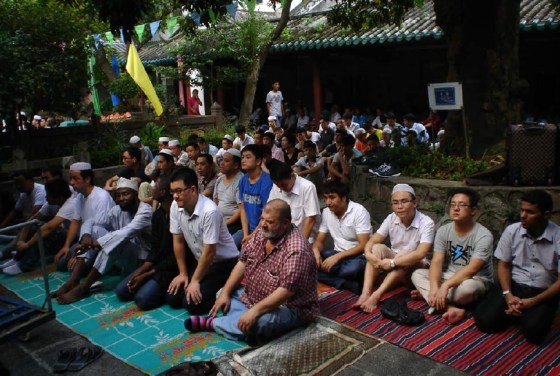
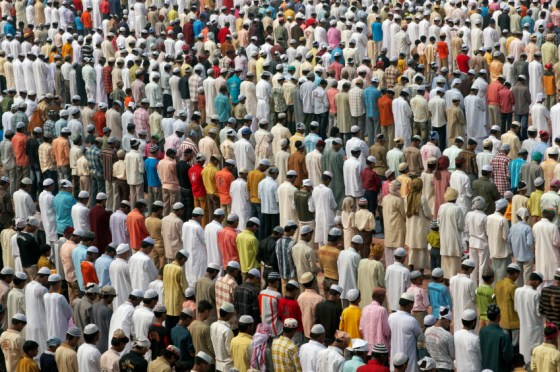
Muslims at the Eid al Fitr prayers at the Huasheing mosque on Thursday, August 7, 2013. Photo: Zulfikar Mulji. Please click for letter from China.

Muslims at the Eid al Fitr prayers at the Huasheing mosque on Thursday, August 8, 2013. Photo: Zulfikar Mulji. Please click for letter from China.

Eid ul-Fitr: Sighting of the new moon brings the Holy Month of Ramadan to an end

EID MUBARAK

Conceptual image for the holy month of Ramadan and Eid al Fitr. Photo: Istockphoto

Conceptual image for the holy month of Ramadan and Eid ul Fitr. Photo: Istockphoto. Copyright.

In some parts of the Muslim world, the actual sighting of the new or crescent moon determines the end of the month of Ramadan, whilst other Muslim bodies such as the Fiqh Council of North America determine the end of the month based on “scientifically guaranteed astronomical calculations.” According to a statement released by the Fiqh Council, the new moon was going to be visible with a telescope in California on Wednesday August 7, and Eid ul-Fitr would be celebrated on Thursday, August 8, the first day of the month of Shawwal. Newspapers from India such as the Deccan Herald  reported the sighting of the crescent moon over places such as Kapad beach, near Kozhikode in Kerala, yesterday, Wednesday August 7 and announced that Eid ul-Fitr would take take place on Thursday, August 8. Kuwait, Jordan and Palestine are marking  Eid on Thursday while Oman and Pakistan are expected to observe it on Friday.

Thus over a 1000 million Muslims around the world will be celebrating Eid on Thursday or on Friday August 9th, based on the method used to determine the end of Ramadan. In any case bakeries, confectionaries and toy shops have been witnessing heavy rush of customers as Muslims started preparing for the two-day Eid festival. In Srinagar, Kashmir, where Eid is to be expected to be observed on Friday shopping outlets dealing with clothing including kids-wear, perfumes and footwear have started seeing brisk sales from early in the morning.

A new moon at Mackerricher State Park, California, USA. Photo: Istockphoto. Copyright.

A new moon at Mackerricher State Park, California, USA. Photo: Istockphoto. Copyright.

The festival of Eid, also known as Bairam or Eid Ramadan is one of the most joyous days in the Islamic calendar. It is an occasion for celebration and rejoicing for Allah’s Bounty upon mankind for His revelation of the Qur’an during the holy month of Ramadan.

It is also a time for individuals to express their gratitude to Allah for having given them the strength, courage and resilience to complete the fast, and thus fulfilling the duty enjoined upon them by Allah.

The festival begins with a festive prayer (Salatul-Fitr) with all the believers congregating at  mosques and jamatkhanas. It is also an occasion for socializing and meeting with other Muslims and for fostering a sense of brotherhood and unity amongst the community (ummah). After the communal prayer, families gather together at home with relatives and friends and participate in exchanging gifts and partaking a meal.

Rows of worshippers gather in neat rows facing Mecca in front of the mosque at the Taj Mahal to celebrate the Muslim festival of Eid ul-Fitr in Agra, Uttar Pradesh, India. Eid is the muslim holiday that marks the end of Ramadan. Photo: Istockphoto. October 2, 2008. Copyright.

Rows of worshippers gather in neat rows facing Mecca in front of the mosque at the Taj Mahal to celebrate the Muslim festival of Eid ul-Fitr in Agra, Uttar Pradesh, India. Eid is the muslim holiday that marks the end of Ramadan. Photo: Istockphoto. October 2, 2008. Copyright.

We convey our heartiest felicitations and Eid Mubarak to all our readers as well as Muslims around the world, with the fervent hope and prayer that peace and harmony will soon prevail over many areas of the Muslim world afflicted by horrible conflicts, which are resulting in the loss of lives and contributing to unbearable hardships and struggles. The Islamic ethic of forgiveness, generosity,  and peaceful co-existence and unity through dialogue are keys by which conflicts can be resolved, whereby every Muslim can aspire for a life of material and spiritual well-being and happiness.

Date posted: Wednesday, August 7, 2013.
Date updated: Thursday, August 8, 2013

The Cave of Hira – the Place of the First Revelation of the Holy Qur’an

Mountain of Light

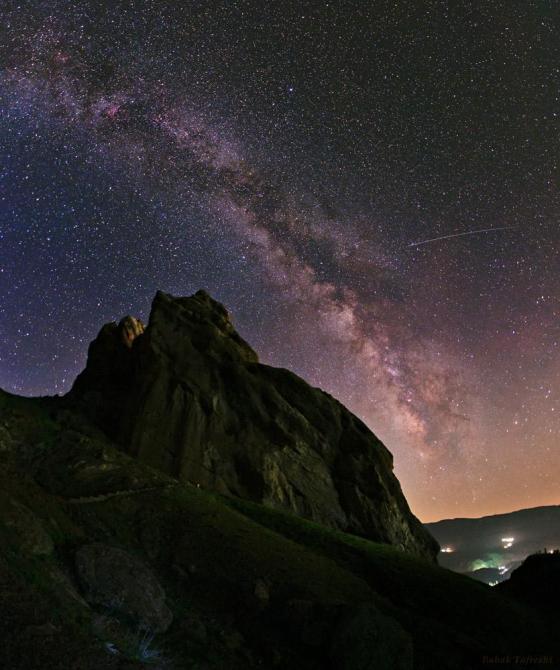
Prophet Muhammad (s.a.s) received his first revelation from Allah through Angel Jibreel (Gabriel) in the Hira cave which is on Jabl al Nur (Mount of Light) shown in this photo. The peak is visible from a great distance. The Prophet used to climb this mountain often even before receiving his fist revelation from Allah.

Cave of Hira

A photo of Cave of Hira in the Mount of Light, near Mecca, where the Prophet would come for his devotions and meditations, and the sacred spot where the Holy Quran began to be revealed. Prophet Muhammad (s.a.s.) had just stepped into the forty-first year of his life, when during the 23rd night in the month of Ramadan the first 5 verses of the Surah Al-Alaq (96) were revealed to him.

Cave of Hira

A close-up of the Cave of Hira. The small cave is about 3.5 meters long and 2 meters wide. It was Prophet Muhammad’s most adorable place for meditation.

The first revelation

Part of Al-Alaq (The Clot) – 96th sura of the Holy Qur’an – the first revelation received by Prophet Muhammad

When Prophet Muhammad was 40 years old, he received his first divine revelation from Allah through Angel Jibreel. When Angel Jibreel appeared to him, he said:

Recite: In the Name of thy Lord who created,
created, Man of a blood-clot.

Recite: And thy Lord is the Most Generous,
who taught by the Pen,
taught Man that he knew not…..Holy Qur’an, Al-Alaq, 96:1-5

The night of this first revelation is celebrated as Laylat al-Qadr (the Night of Power).

Date posted: Tuesday, July 30, 2013.

______________

Article and photos prepared from the following sources:

1. Wikipedia.org
2. Mecca.net
3. English Translation of the Qur’anic verses by Arthur John Arberry.

Please see related post: Laylat al-Qadr – A Night Better than a Thousand Months

2013 Navroz Readings: (IV) “Amen Khudavind” and “Hope” by Navyn Naran

“AMEN KHUDAVIND”

Enlightenment

a window opens.

a green meadow, lush
new tufts of grass under her feet,
running across these verdant, undulating hills.
weathering the storms past,
she tills the moist, brown soil.
emerald shoots peer fresh as a new-born baby’s cheeks
what news will spring bring?
what did i sow?
and how will i reap?

“i’m late to catch the train!
stop at the lights.
did i grab my lunch? my ticket?
presentation is 7am , room 337”
huffing up the stairs,
“did i remember my gym bag?
will he remember to call the dentist?
what will we eat tonight?
ok, gather self and be ready
here comes the first of the audience”

everyone is looking ahead
while living in the present.
i prayed for siratal mustaqu’eem,
and iman ji salamat
for jan, mal, aal, izat and abru
thumb on my chin and finger resting on my lip i ponder…
“but did i keep balanced?
did i make an ethical choice?”
was there time for my spiritual space
or did i let it go another day?

“this is such a mirage in Time!”
i sit back resting in my chair…
like a continual accordion of days
as if in pieces we organise it.
each ritual is a reminder,
as practice of submission and perfection
towards a stillness of thought and mind.

if you stop and give your Time
there will be naught but LIFE
a philanthropic donation if you will,
to venture out of the chatter or vision
familiar to oneself

“it’s Navroz”
and am i too rushed to notice?
Time does not rush…it provides, as promised,
sunshine, blossom and rains
if only we disrupted not its natural flow.
“have i done my work?”
do i stop long enough to reflect and answer?
the undulating specks or motion of time as we see,
are pregnant with change and gift
what was my gift to Mawla?
was it something i thought would “just happen”
by virtue of my breath?
or did i consciously plan and rise?
there is always the next second
“yet tomorrow never comes”.
so we live in the present with regard to future
and miss the essence because we are expectant.

Mawlana Hazar Imam said
“I say to you all on Navroz,
Navroz Mubarak.
I pray that in this New Year your worldly and your spiritual happiness should progress tenfold
and that this be the case every year.”

 “Amen, Khudavind”

a window opens.
into a prayer hall of contemplative men and women
only their souls are alight

will mine enter here today?

~~~~~~~~~

HOPE

Spring Day Around the World

Syria, your hopes and your struggles
are not forgotten,
nor forgotten are other struggles in our world
Navroz Mubarak to all around the globe
we look forward with HOPE
as time promises a new morning,
so Navroz promises a New Day.

a day of peace, good health, security,
a day when stranger greets stranger like brother and sister
where as children, our compassion and tolerance burn bright
for all wish for goodness and grace
even the earth’s submissive tilt
renders it perfect for season and change

the sun on this spring equinox
equates the day and the night
and symmetry magically stabilises our earth in motion
now daylight will become unbroken in the North, as ying,
and darkness will cover southern skies as yang
let us breathe
let us pray that all is fresh
and at moment’s peace on Navroz

Date posted: March 21, 2013.

Copyright: Navyn Naran/Simerg

________________

Navyn Naran

Navyn Naran

Dr. Navyn Naran was born in Dar-es-Salaam, Tanzania, to Anaar and Badrudin Naran. After beginning her high school in the UK, her family immigrated to the USA where she has lived since. Dr. Naran went to medical school at Tufts University School of Medicine in Boston, MA. She currently works in Paediatric Critical Care.