PLEASE CLICK: Ottawa Celebrates forthcoming visit of Mawlana Hazar Imam, His Highness the Aga Khan, to Eastern Canada
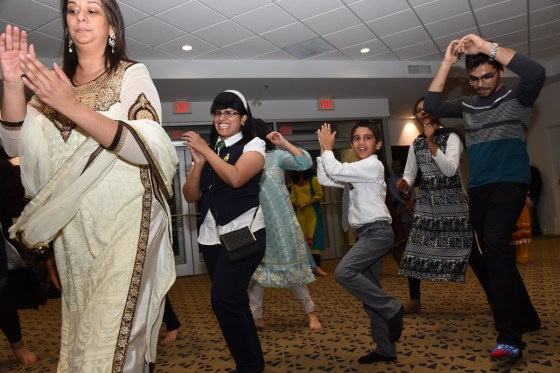
Photo: Safiq Devji. Please click on photo for story.
Date posted: October 29, 2017.
________

PLEASE CLICK: Ottawa Celebrates forthcoming visit of Mawlana Hazar Imam, His Highness the Aga Khan, to Eastern Canada
Photo: Safiq Devji. Please click on photo for story.
Date posted: October 29, 2017.
________
BY ABDULMALIK MERCHANT
The Youtube link to the Diamond Jubilee Tribute Song to Mawlana Hazar Imam, His Highness the Aga Khan, is one you can play repeatedly and keep on enjoying forever. The expression of love for Mawlana Hazar Imam is visible on each musician’s face, and this is what is most inspiring about this video. What we might say is our “unmeasurable love” for Hazar Imam becomes even more unfathomable to grasp when we read what Hazar Imam said to his jamat (community) during his visit in 1964 to Pakistan that “my love for my Jamat is a lot stronger than yours can ever be for me and I would like you to remember this….When I leave, each and everyone of you will be in my heart, in my prayers, in my thoughts and you must remember that Imam loves you more, much more than you can ever love him and you must be strong in this knowledge.” Unmeasurable unmeasurable love indeed! We are all recipients of his care and barakah, 1000fold, nay a million fold….Happiness forever to all Ismailis.
We welcome your feedback…. Please LEAVE A COMMENT.
Please also visit http://www.facebook.com/1000fold, a page dedicated to the Visual and Textual Celebration of His Highness the Aga Khan, with a corresponding website, http://www.barakah.com.
Date posted: June 8, 2017.
___________________
For feedback, please click LEAVE A COMMENT

A photo taken at a UN concert celebrating Nowruz (also Novruz, Navruz, Nooroz, Nevruz, Nauryz). In 2010 the UN General Assembly proclaimed International Nowruz Day at the initiative of several countries that share this holiday — Afghanistan, Albania, Azerbaijan, the Former Yugoslav Republic of Macedonia, India, Iran (Islamic Republic of), Kazakhstan, Kyrgyzstan, Tajikistan, Turkey and Turkmenistan. Inscribed in 2009 — and renewed in 2016 — on the Representative List of the Intangible Cultural Heritage of Humanity as a cultural tradition. Observed by over 300 million people, Nowruz is an ancestral festivity marking the first day of spring and the renewal of nature. It promotes values of peace and solidarity between generations and within families as well as reconciliation, thus contributing to cultural diversity and friendship among peoples and different communities. Credit: UN Photo/Evan Schneider
(In the following story, Sarkari Dawlatamamad from Siponj, Bartang, describes the beauty of the celebration that heralds the New Year in the Pamirs. The story will be familiar to many Pamiris, even if in other villages the tradition is different, or only exists now in stories told by their parents and grandparents. The inspiration of the story was drawn from the beautiful documentary film SHOGUN, made by Pamiri filmaker Tolik Gadomamadov. The story has been adapted below from the highly acclaimed award winning book “With Our Own Hands” authored by Frederik van Oudenhoven and Jamila Haider.
BY FREDERIK VAN OUDENHOVEN AND JAMILA HAIDER
WITH SARKORI DOWLATAMAMAD
To understand how we celebrate Nawruz in the Pamirs and how important the holiday is to us, it is necessary first to tell you about time as we experience it in the Pamirs. Our time is different from time elsewhere; it differs even from valley to valley. Our experience of time is conditioned by our dependence on our lands, and our need to predict seasonal changes to coordinate our work in the fields. This is why our ancestors developed special calendars that follow the changes in the land: the passage of the sun through the villages and valleys; the behaviour of plants, animals and spirits; and the influences of these changes on the human body. The body and time are inseparable: you might say that our calendar records the procession of life rather than time, and individual days take meaning from their place in that procession. So, Nawruz, our New Year, is not simply a day of celebration, but the culmination of all the days leading up to it.
Preparations begin already on the darkest day of the year, the winter solstice, which marks the beginning of a period of intense cold in the Pamirs. This period is called chilla and lasts for forty days. When, towards the end of January, the sun shining through the skylight, or roetz, reaches the first mark on the wall, the chilla ends. This is the first sign that spring is coming and we celebrate Khir-pichor.
On the first day of Khir-pichor no guests are allowed to enter the house. Only on the second day, early in the morning, a cousin or niece can visit the house, bringing two kulcha (wedding bread), which they place next to the kitsor (traditional oven). We prepare his or her favourite food — kamoch-tarit (butter bread), khomnigul, baht (sweet festive porridge), boj (celebratory soup with meat, if we have meat) — and offer a present as well. Afterwards, more people come and bring kulcha. We call this custom salom-salom. Later in the day, the community comes together to eat lunch and the khalifa (religious leader) performs du’a (act of worship for the fulfillment of specific needs, forgiveness or protection).
The Pamiri calendar begins on the second day of Khir-pichor, which literally means ‘sun-in-man’. From now on, the sun will slowly begin to gain in strength, marked by the symbolic passage of the sun‘s rays through the human body. It starts with the sole of the foot or the toenails and gradually climbs up towards the top of the head, before moving down again. The toenails, the top of the foot, the ankles, the shin, the calves of the legs…each part of the body indicates a period of three days. After approximately three weeks, when the sun reaches the knee and the next marking on the wall, we celebrate the second sign of the arrival of Nawruz, Khir-chizon (‘sun-in-knee’).
During Khir-chizon, we put a handful of seeds into the fire of the kitsor and after the fire has finished burning, we look for any remaining seeds in the ashes. These surviving seeds tell us our fortune; they help us know which crops to sow in the New Year. Afterwards we take the ashes and seeds outside and scatter them over the snow.
“Like the majority of the inhabitants of the Western Pamirs, the Bartangi also speak dialects of the family of the Indo-European, non-written Pamir languages. Religiously, they belong to the denomination of the Nizari-Ismailis, a sub-confession of Shia Islam. Nizari-Ismailis consider Aga Khan IV as the closest male descendent alive of the prophet Muhammad and as ephiphany of the divine light. His orders are absolutely binding. The Aga Khan propagates a version of Islam open to progress and to intellectual discourse with the west. His faith is practised even in the remote Bartang valley, enriched with some locally specific practices.” — Excerpt from the website http://www.bartang-has-future.com.
On the first day of Khir-chizon, we prepare boj, and share it with our neighbours. On the second day, we prepare baht. That is why, in our village in Bartang, we also refer to this holiday as Baht ayom.
When, finally, the snow begins to melt and the sun rises over the point on the mountain which we call amalkhana, it is time to celebrate Nawruz in our calendar, the Sun has reached the Heart.
We celebrate Nawruz with great happiness and intensity; Nawruz is the end of a long and difficult winter and the beginning of a new cycle of growth. It reminds us of our great dependence on the Earth, the Sun and Water, and each celebration is an occasion to ask God and the angels to grant us good harvests and healthy, productive animals.
The women and girls will clean every corner of the house and use brooms blessed with wheat flour to chase away the bad spirits that have taken shelter in the nooks and crannies of the wood. Flour is also used to decorate the beams of the ceilings which have been blackened by smoke over time: simple hand prints, old Zoroastrian patterns whose meaning has often been forgotten, or drawings of sheep and shepherds so that the house will not be without shepherd and a flock of sheep this year. Juniper twigs adorn the pillars of the houses, they bring fertility and blessings.
The men cut the bark of willow branches and weave them into flowers which, once the cleaning is finished and they are allowed back into the house, they offer to the women, with the traditional New Year greeting. The willow is associated with the productivity while the flower is the symbol of joy, abundance and people’s harmony with nature. In every household in the village women will prepare sumanak (pudding made from germinated wheat). It is one of the most well-known new year dishes in Central Asia.
Date posted: March 21, 2017
________________
Report compiled by Abdulmalik Merchant
Poem by Shariffa Keshavjee
In a special talika (written message) read out in Ismaili jamatkhanas on Friday, January 13, 2017, Mawlana Hazar Imam, His Highness the Aga Khan, informed his world-wide community that Princess Salwa gave birth to a baby boy named Sinan in London, England, on January 2, 2017. The Princess is married to Prince Rahim Aga Khan, the 49th Ismaili Imam’s oldest son. The couple was married in a nikah ceremony in September 2013, and their first child Prince Irfan was born in Geneva, Switzerland, on 11 April, 2015.
Prince Rahim has an older sister, Princess Zahra, and two brothers younger than him, Prince Hussain and Prince Aly Muhammad.

Princess Salwa and Prince Rahim, who is holding Prince Irfan, pictured recently during the 80th birthday celebration of His Highness the Aga Khan (right) held in Aiglemont. Photo: The Ismaili/Zahur Ramji.
“Prince Sinan’s birth has brought immense joy to our family,” wrote Mawlana Hazar Imam in the talika, and added that “We are most touched by your kind thoughts and prayers over the period leading to Sinan’s birth.” In the talika, he conveyed his affectionate loving blessings to his followers, whom he addresses as his spiritual children.
Hello magazine reported the birth of Prince Sinan as the world’s first royal baby of 2017!
We rejoice with our thousands of readers around the world on the wonderful news of the birth of Prince Sinan, and join with jamats around the world to congratulate Mawlana Hazar Imam, Prince Rahim and Princess Salwa as well as their son Prince Irfan, and all the members of Mawlana Hazar Imam’s and Princess Salwa’s families.
We sincerely hope and pray that the birth of Prince Sinan may bring immense barakah to jamats worldwide. We also pray for Prince Sinan’s long life and wellbeing.
Sinan is an Arabic name for boys meaning spearhead. It is derived from the root word S-N-N which is used in the Qur’an. Sinan is pronounced [(SI)mple] + [(NA)p + (N)ew] with emphasis on the second syllable. Wikipedia mentions that the name might also be related to the Ancient Greek name Sinon.
In Ismaili history, the name Sinan is associated with the revered personality of Rashid al-din Sinan, one of the greatest and most valiant of the Syrian Isma’ili da’is of the thirteenth century A.C.
________________
By Shariffa Keshavjee
A miracle, a gift today a child that comes to us
Our bending is of gladness in the archers hand to us
He loves the arrow that flies, the bow so stable for us
The archer sees the mark upon the path for us
Bends it with his might, the arrow goes far for us
The name of Sinan brings the memory of
Aleppo and Masyaf to us
His philosophy as dai forever imprinted on us
The balance of the zahir and batin as it come to us
A reciprocal social relationship of balance within us
Weaving a tapestry of din-dunia
In this our Diamond Jubilee year, your birth bring to us
Great tidings of gladness and joy within us
Our many faceted diamond is aglow for us.
Date posted: Saturday, January 14, 2017.
____________________
We welcome readers’ feedback. Please click Comment. If you run into difficulties submitting your feedback, please email it to simerg@aol.com.
This compiled piece contains material from the following sources:
[1] http://quranicnames.com/meaning-of-sinan-arabic-name//
[2] http://www.theismaili.org
[3] http://www.wikipedia.org
See also:
It is said that Avicenna, the famed Muslim philosopher, medical expert and scientist, whom Ismailis like to claim as their own, created the first ever recipe for the Pilaf (Pilau, Plov, Palov, Oshi Palav etc.). He was born in Bukhara in modern day Uzbekistan. Now more than a 1000 years later, the much beloved Central Asian dish has been recognized by UNESCO as part of Tajikistan’s and Uzbekistan’s intangible cultural heritage. Read this story and also try out a pilaf recipe from Khorog, Tajikistan, which is provided below.

Osh, generically known as plov (pilaf),is a rice dish made with shredded yellow turnip or carrot, and pieces of meat, all fried together in vegetable oil or mutton fat in a special qazan (a wok-shaped cauldron) over an open flame. The meat is cubed, the carrots are chopped finely into long strips, and the rice is colored yellow or orange by the frying carrots and the oil. The dish is eaten communally, often with one’s hands in the traditional way from a single large plate placed at the center of the table. Photo: Muslim Harji. Copyright.
Material for this piece was compiled and adapted
by Abdulmalik Merchant, Editor, Simerg.
Tajikistan’s “Oshi Palav” and Uzbekistan’s “Palov” (versions of the dish commonly called Plov in Central Asia) were both inscribed on the Representative List of the Intangible Cultural Heritage of Humanity when UNESCO’s Intergovernmental Committee for the Safeguarding of the Intangible Cultural Heritage met at its 11th annual session in Addis Ababa, Ethiopia, during the United Nations Economic Commission for Africa Conference held from 28 November to 2 December 2016.
Both Tajikistan and Uzbekistan had separately applied to UNESCO in 2015 — within a few weeks of each other — to have the plov recognized as part of their nation’s intangible cultural heritage. Readers will be interested to learn that UNESCO has inscribed numerous foods, including beverages such as coffee, as well as festivals such as Nauroz in its Representative List of the Intangible Cultural Heritage of Humanity.
Across Central Asia, the deceptively simple plov dish is based around lamb, rice, onions and carrots simmered in broth, and accompanies every meaningful life-cycle event. Food historians have noted that versions of plov are spread across Asia. The Turkish pilav, Persian polow and Indian pilau –- and even Spanish paella — are all related, with versions including dried fruit, paprika, garlic, tomato, beans and spices.

Preparations for Plov (pilaf)…cleaning and cutting carrots. Photo: Muslim Harji. Copyright.
With regard to Tajikistan’s application for inscription of the Palav as an Intangible Cultural Heritage, the UNESCO committee noted that the ‘Oshi Palav’ is a traditional dish of communities in Tajikistan and recognized it as a part of their cultural heritage and practice that aims to bring people of different backgrounds together. The dish is prepared to be enjoyed at regular mealtimes as well as social gatherings, celebrations and rituals. Known as the ‘King of Meals’, the Palav is based on a recipe using vegetables, rice, meat and spices but up to 200 varieties of the dish exist.
The importance of the dish to communities in Tajikistan is indicative in sayings such as “No Oshi Palav, no acquaintance” or “If you have eaten Oshi Palav from somebody, you must respect them for 40 years”!
Groups of men or women prepare the dish either in their homes or at tea houses while socializing or playing music and singing. Knowledge and skills associated with the practice is transmitted on an inter-generational basis in families, in addition to cooking schools from master to apprentice. Once an apprentice masters Oshi Palav, the apprentice hosts a dinner for the trainer and guests during which the trainer receives a skull-cap and traditional dress while the apprentice receives a skimmer (a tool for cooking Oshi Palav) symbolizing the apprentice’s independence.

Frederik van Oudenhoven happily displaying “With Our Own Hands” that he co-authored with Jamila Haider. Photo: Facebook page, PamirFoodandLife. The magnificent volume is now out of print, but may be obtained through resellers at Amazon.
Readers of this website may recall an award winning book called “With Our Own Hands – A Celebration of Food and Life in the Pamir Mountains of Afghanistan and Tajikistan” which we featured and also offered for sale last spring. It quickly sold out and the book is now out of print. A recipe from the book for the Plov that is prepared in Khorog, Tajikistan, is reproduced below. The Pamiri people living to the south of the Panj River in neighbouring Afghanistan use a slightly different recipe for their Palao, as it is known there, and making a good Palao is considered the most essential culinary skill a woman should possess to be a good wife!
“Rice was, and in some places still is, a food reserved still reserved for the most esteemed guests. No matter how many other dishes are prepared for the guests, if there is no rice the meal will still be considered poor…..Like salt, rice could not be produced from the soils of Western Pamirs…Shali was the name of the rice that was most commonly brought, a delicious variety that was exchanged for large quantities of Pamiri wool. It was so valuable that in the Wakhan valley, dropping even a single grain of rice was likened to dropping the relic of a saint.” — excerpt from With Our Own Hands, p. 287.
(Material and recipe adapted from “With Our Own Hands,” pp. 607-609)
Plov in the Tajik Pamirs is a much loved rice dish for celebrations and offering to guests. Good quality rice that doesn’t absorb too much moisture is an important part of this dish. The plov cooked with ozgensky rice (from the city of Uzgen in the Fergana Valley of Southern Kyrgyzstan) is truly delicious. Orgencky rice is sometimes available in the Khorog market but more common, due to its affordability, is the poorer quality Chinese rice.

Plov is one of the most popular dishes at the bazaar in Khorog, the capital of the Gorno-Badakhshan Autonomous Region in Tajikistan. Khorog, with a population of approximately 32,000, is mostly inhabited by Ismailis. Photo: “With Our Own Hands,” page 607.
INGREDIENTS
4 cups rice; 1 cup chickpeas; 1 small cup vegetable oil; 2 onions; 1-1.5 tbsp. cumin; 6 carrots; 2–3 cups mutton; 8 cups water; 1 head of garlic; and salt to taste.
MAKING THE KHOROG PLOV
_____________

The finest Plov in Samarkand, Uzbekistan. Photo: Muslim Harji. Copyright.
There is a saying in Uzbekistan that guests can only leave their host’s house after palov has been offered. Palov is a traditional dish made and shared throughout rural and urban communities of Uzbekistan. It is prepared with ingredients such as rice, meat, spices and vegetables and in addition to be enjoyed as a regular meal, is served as a gesture of hospitality, to celebrate special occasions like weddings and new year, to help those in need who are underprivileged, or to honour loved ones who have passed away. Palov may also feature at events alongside other rituals taking place such as prayer and performances of traditional music. It is a dish that is cooked by men and women regardless of age or social status. Knowledge and skills associated with the practice are handed down from older to younger generations formally and informally using a master-apprentice model or by demonstration and participation within families, peer groups, community-based establishments, religious organizations and vocational educational institutions. The making and sharing of the traditional dish acts to strengthen social ties, promote values including solidarity and unity and assist in the continuity of local traditions that form a part of the community’s cultural identity.
Date posted: Saturday, January 7, 2017.
Last updated: January 8, 2017 (9:15 EST).
FORTHCOMING (week of January 9, 2017): Shariffa Keshavjee of Nairobi, Kenya, reflects on the highly acclaimed and award winning book “With Our Own Hands.”
_____________________
Material for the post was compiled from numerous sources including:
1.Tajikistan inscription details at:
http://www.unesco.org/culture/ich/en/decisions/11.COM/10.B.33
2. Uzbekistan:
http://www.unesco.org/culture/ich/en/RL/palov-culture-and-tradition-01166
3. For complete list of inscriptions, click http://www.unesco.org/culture/ich/en/lists.
4. Also read “All You Need is Plov — Central Asians vie for ownership of a much-loved dish” by clicking https://iwpr.net/global-voices/all-you-need-plov.
5. For pilaf’s Avicenna connection, please see http://www.dailysabah.com/food/2016/12/10/uzbek-traditional-rice-now-on-unesco-heritage-list.
6. Please also see our piece The Story of a Beautiful and Intriguing Cookbook from the Pamirs, “With Our Own Hands”
_________________________
We welcome your feedback. Please click on Leave a comment.

Please click on photo to view wonderful segments of concert.
Date posted: January 4, 2017.
_____________
PLEASE CLICK: AN EXCEPTIONAL GIFT TO HIS HIGHNESS THE AGA KHAN FOR HIS LANDMARK 80TH BIRTHDAY

Please click on image for article and more photos.
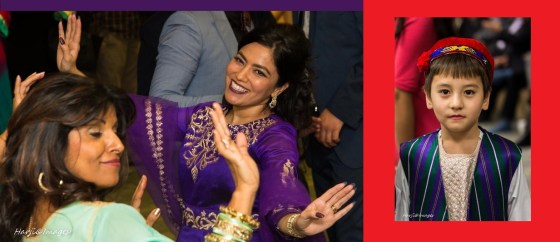
Please click for a gorgeous collection of photos of the Montreal Saligrah. Photo: Muslim Harji. Copyright.
Date posted: December 21, 2016.
_______________
INTRODUCED BY ABDULMALIK MERCHANT
(with material from The Ismaili website)
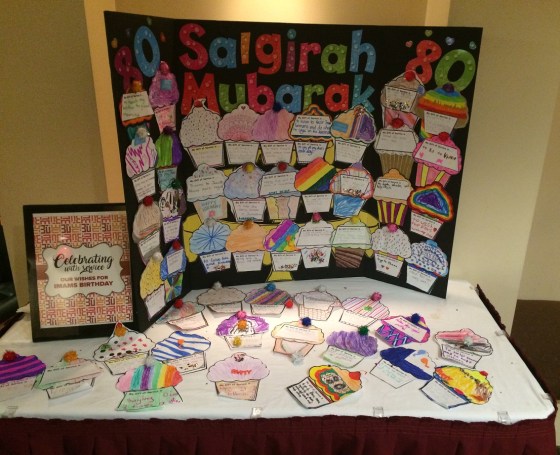
A mosaic of colourful Salgirah cards prepared by children of Burnaby Lake jamatkhana on the occasion of Mawlana Hazar Imam’s 80th birthday. Photo: Malik Merchant/Simerg
“No ocean, no mountain, and no desert can keep the Imam from his murids,” was the caring message that Mawlana Shah Karim al-Hussaini Hazar Imam, His Highness the Aga Khan, delivered to his spiritual children, the Ismailis, during one of the many visits which he undertook to his global community during his Golden Jubilee Celebrations. The Jubilee began on July 11, 2007, when he completed 50 years of his reign as the 49th hereditary Imam, directly descended from the Prophet Muhammad (s.a.s.), and ended on December 13, 2008, on the exact day of his 72nd birthday. He was born in Geneva in 1936.
Eight years on, on Saturday December 17, 2016, the harsh elements of nature — snow, freezing rain, and cold — did not subdue or keep tens of thousands of Ismailis in Canada, from attending the video showing of their beloved Imam’s 80th birthday celebration that had taken place just a day earlier at his estate and the Imamat headquarters in Aiglemont, France.

Malik Talib, President of the Ismaili Council for Canada, makes a point during a conversation with other Ismaili leaders at the 80th birthday celebration of Mawlana Hazar Imam. Photo: The Ismaili/Zahur Ramji.
Ismaili leaders from around the world, including President Malik Talib of Canada, travelled to France on behalf of their constituents to personally offer congratulations, express shukrana (thanks), and to reaffirm the Jamat’s bayyah (oath of allegiance) to the 49th Ismaili Imam. Also attending the birthday celebration, were members of Mawlana Hazar Imam’s family – Prince Amyn Muhammad, Princess Zahra, Prince Rahim and his wife Princess Salwa along with their son Prince Irfan, Prince Hussain, Prince Aly Muhammad and Princess Zahra’s children, Sara and Ilyan.
Earlier during the week, on December 13, the actual day of his birthday, Ismailis had gathered in their local jamatkhanas for special prayers and ceremonies to affirm their loyalty and love for their Imam. Mawlana Hazar Imam, in becoming 80, has established himself as the oldest serving Imam in Ismaili history!

Designed specially for the celebration of Mawlana Hazar Imam’s 80th birthday, this centre piece of the venue comprised a geodesic dome. Neither of the East nor of the West, the dome is an ancient symbol of Divine shelter, care and guidance. The Ismaili/Farhez Rayani.
The celebration in Aiglemont was housed in specially designed marquee, with a protective dome that signified the guidance and shelter that Hazar Imam constantly provides. The dome itself was inspired by an icosahedron — a geometric structure composed of 20 triangles. Each triangle symbolised one of the 20 national Ismaili Councils appointed by the Imam to oversee the community’s well-being.
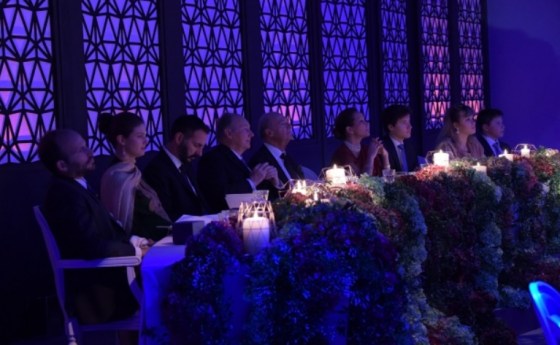
Mawlana Hazar Imam’s family in attendance at his 80th birthday celebration held at his home in Aiglemont on Friday, December 16, 2016. From left to right: Prince Hussain, Princess Salwa and her husband Prince Rahim, MAWLANA HAZAR IMAM, Prince Amyn Muhammad, Princess Zahra, Prince Ali Muhammad, and Princess Zahra’s children, Sara and Ilyan. Photo: The Ismaili/Zahur Ramji.

The President of the Aga Khan Ismaili Council for Syria, Muhammad Wardeh, recites the Tilawat-e-Qur’an at the start of Mawlana Hazar Imam’s 80th birthday celebration. Photo: The Ismaili/Zahur Ramji.

Mawlana Hazar Imam addresses Jamati and institutional leaders, who gathered at his home on the occasion of his 80th birthday. The Ismaili/Zahur Ramji

Prince Amyn Muhammad and Princess Zahra applaud as the birthday cake is presented to Mawlana Hazar Imam. Photo: The Ismaili/Zahur Ramji.

Mawlana Hazar Imam cuts his birthday cake, as Princess Salwa and Prince Hussain look on. The Ismaili/Farhez Rayani.

Mawlana Hazar Imam is presented with a birthday gift on behalf of the global Jamat. Titled “Horses”, this lapis lazuli mosaic was commissioned from the late Ismail Gulgee in 1989. Looking on are the Chairman of the Ismaili Leaders International Forum, Mahmoud Eboo (right), and Vazir Shafik Sachedina. Photo: The Ismaili/Zahur Ramji.

Salim Ahmed, a Canadian jamati leader and a former Darkhana Mukhi, and his wife, are greeted by Prince Hussain at the 80th birthday celebration of Mawlana Hazar Imam. Photo: The Ismaili/Zahur Ramji.

Mawlana Hazar Imam meets with the musicians and singers who performed at the celebration of his 80th birthday. Photo: The Ismaili/Zahur Ramji.
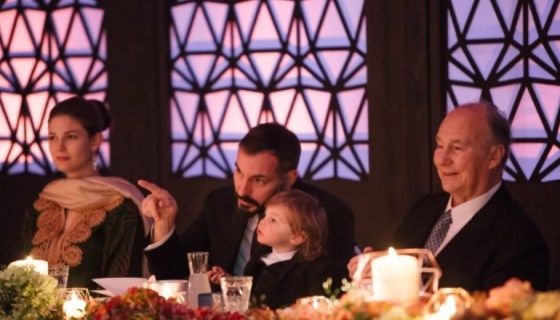
Mawlana Hazar Imam, Prince Rahim with Prince Irfan, and Princess Salwa at the 80th birthday celebration. Photo: The Ismaili/Zahur Ramji.
Reflecting on the progress of the Jamat over the past several decades, Hazar Imam said, “I think we can conclude today that the Jamat is a strong community. It is a global community. It is a community with strong institutions, with strong ethics and it is respected around the world. This evening is an extraordinarily special occasion for the global Jamat and for the leaders who are here present tonight who are representing them.”
He said that his wish for the decades ahead was that “you stand firmly by the principles and ethics of our faith. Wherever you are, whatever age you are, whatever you do in your lives, it is essentially important to me that the principles of our faith should be respected everyday of your lives.”
When Mawlana Hazar Imam cut a birthday cake presented on behalf of the global Jamat, he was serenaded by all those gathered with Happy Birthday sung in two languages. Hazar Imam was also presented with a gift of art — a mosaic of horses by the late Ismail Gulgee that was commissioned in 1989. It was selected “because of Hazar Imam’s passion for horses, the history of horses within Islamic civilisation and the history even within Mawlana Hazar Imam’s own family,” explained Chairman Eboo.
Mawlana Hazar Imam expressed great happiness at the celebration of his 80th birthday. “If I had known it was going to be so wonderful, I would have tried to bring it forward,” he joked, “and I would have tried to multiply it!” He said, “I hope that in the decades ahead, you will remember this occasion as one of special happiness, as I do.”
~~~~~~~~~

Jamati members enjoying the jaman at darkhana jamatkhana following the 80th birthday video presentation from Aiglemont, France. Photo: Simerg.
The jamat at the Darkhana, where I was present for the showing, watched the entire program with awe and absolute discipline.We then proceeded in an orderly fashion to a specially constructed tent in the parking lot to partake of the feast (jaman) prepared by a team of special volunteers of the jamat – the randhan committee. It consisted of fresh lettuce, vegetable and chicken biryanis with kachumber (diced tomatoes and onions), a dessert (barfi), soft drinks and chai! The tent was heated and very comfortable, protecting everyone from the freezing temperatures. The senior citizens of the jamat were served their dinner at the jamatkhana’s social hall on the second floor. After the feast, members of the jamat joined for a dandhia raas (stick dancing and hand clapping) program!

Senior citizens wait for the commencement of the dandhia raas program in the social hall of the Ismaili Centre in Burnaby, after completing their meal. Photo: Simerg.
The 80th birthday celebration has generated the momentum for yet another significant milestone in Mawlana Hazar Imam’s life – the celebration of his Diamond Jubilee beginning July 11, 2017, which will take place as Canada begins celebrating its 150th birthday on July 1, 2017.
Date posted: December 20, 2016.
______________
For a video of the 80th birthday celebration of His Highness the Aga Khan held in Aiglemont, France, on December 16, 2016, please visit http://www.theismaili.org, the official website of the Ismaili community. Readers will also find there a gallery of more than 30 photographs of the celebration.

Malik Talib
Mr. Malik Talib, the President of His Highness the Aga Khan Shia Imami Ismaili Council for Canada, along with the Chairmen of the Ismaili Tariqah and Religious Education Board (Dr. Kabir Jivraj), Grants and Review Board (Mr. Amir Lakhani), and Conciliation and Arbitration Board (Mr. Karim Sunderji), and the Mukhi of Darkhana Jamatkhana (Mr. Zahir Bhatia) issued the following message through the Canadian Ismaili community’s special newsletter edition of “Al-Akhbar,” as tens of thousands of Ismailis gathered in jamatkhanas across the country to observe the historic 80th birthday or Salgirah of Mawlana Shah Karim al-Hussaini Hazar Imam, His Highness the Aga Khan on December 13. The celebrations will continue late into the week with special cultural events, voices from the jamat and video presentations.

Mawlana Hazar Imam pictured at the 1998 darbar held in Lisbon, Portugal.
This is a historic event for our Jamat. No part of our lives has been untouched by the work and dedication of Mawlana Hazar Imam. For the Jamat in Canada, our very presence here and all of the opportunities afforded to us, have been made possible by the singular concern of our Imam for our material and spiritual well-being.
The spirit of frontierless brotherhood and sisterhood that has helped the community weather many storms springs from a common allegiance to our Imam, uniting us in purpose and vision.
The volume and quality of initiatives established and sustained by the office of the Imamat are staggering. More importantly, these have improved the well-being of millions.
In light of all with which we have been blessed, what can we give back? Perhaps the most powerful form of gratitude would be a re-commitment to the principles of our faith and many of the efforts to which they give rise:
- Attending to our spiritual lives in a world increasing concerned with material well-being as the sole objective of life;
- Improving the quality of life of the Jamat and the communities in which we live;
- Strengthening community and family ties amidst the challenges of modern living;
- Enhancing our understanding of our faith and our ability to articulate the peaceful, compassionate message of Islam;
- Promoting pluralism in a world that seems ever more fragmented.
As we approach Canada’s 150th birthday and look forward to commemorating the Diamond Jubilee, it is our hope and prayer that the coming months will be a time of excitement, fulfillment, renewal and happiness.
To all our volunteers and donors who unconditionally and generously commit their time and resources, we sincerely express our special thanks and gratitude.
We offer our humble shukrana to our beloved Mawlana Hazar Imam for his continued guidance, and pray for peace and stability for the Jamats living in difficult circumstances and for our collective good health, faith, prosperity, success and unity. Ameen.
Date posted: December 14, 2016.
________________
For a feedback, please click Leave a comment.

