Simerg is an independent initiative dedicated to Ismaili Muslims, the Aga Khan — their Hereditary Imam — and the Ismaili Imamat, and Islam in general through literary readings, photo essays and artistic expressions
Much of the inspiration for my paintings comes from Mawlana Hazar Imam His Highness the Aga Khan’s guidance to the Ismaili community on the importance of brotherhood, pluralism, and living a life where we “do not forsake the soul for the material world.” Indeed, I draw continued encouragement from the Imam’s guidance as an artist and in my daily life.
Take Me Away by Shafina Jaffer. Medium: Oil on canvas. Size: 200 x 80 cm (78.7 x 31.5 in). This painting was projected on the facade of Windsor Castle during the Coronation Concert honouring the Coronation of Their Majesties King Charles III and Queen Camilla, on May 7, 2023. Shafina presented the original painting to Mawlana Hazar Imam, His Highness the Aga Khan, for the auspicious occasion of Navroz, March 21, 2024. Photograph: Shafina Jaffer collection.
Last year, I curated a painting for King Charles’s coronation, and on the occasion of Navroz — the Persian New Year — on March 21, 2024, the same painting, “Take Me Away,” was gifted to Mawlana Hazar Imam, who graciously accepted it and encouraged me to pursue my talents. His message moved me, and as a show of gratitude to celebrate his 67th Imamat Day on July 11, 2024, I have embarked on a series of Mawlana Hazar Imam portrait paintings that will be presented in the coming months on this website.
Simerg and its sister website, Barakah, share the first painting in this series that captures a very youthful Hazar Imam. When asked about my choice to depict Mawlana Hazar Imam at this age, I explain that it’s the image that has been etched in my mind growing up: a sympathetic, youthful figure radiating with light. This personal connection with the Imam drives my artistic expression and deepens my sense of gratitude.
Delving into mixed-media mediums, I use my heritage and strong affiliation with spirituality to sow the seeds of my creativity. Since completing my Graduate Diploma (Art & Design) and Master’s Degree (Painting) from the Royal College of Art, I have explored the intricacies of nature, human relationships, and spirituality within the field of art and their interrelationship.
Religion and spirituality are not just important themes in my art; they are the essence of my work, reflecting my deep exploration of faith and the human connection to the divine. My canvases are vibrant and alive, filled with a playful mix of colour, form, and texture, with natural mediums playing a pivotal role. Faith pushes me to transcend the physical and visible, uncovering what resides at the core and infusing the outer edges with life. Indeed, with such portraiture of the Imam, the lines between literal and divine interpretation are moving and profound.
Please click on image for enlargement
Mawlana Hazar Imam, His Highness the Aga Khan, by Shafina Jaffer. Medium: Oil, Gold and Charcoal; Size: 42 x 32 cm. Original photograph for painting: Gary Otte (cover page and page 121 of Depth of Field: The Aga Khan Beyond the Lens).
This portrait of the Aga Khan, painted with meticulous care and deep gratitude, captures his serene and compassionate essence. I have highlighted his gentle smile and thoughtfully intelligent eyes, conveying wisdom and kindness. The subtle use of colours and shading brings out the depth of his character and position in humanity, reflecting his profound impact as a spiritual leader and guide. One can easily see an overarching glow settled upon the canvas — reflecting his holy and elevated demeanour.
The border, crafted in real gold and liquid charcoal, symbolizes his love for nature and adds a unique, elegant touch to the piece. This artwork is a heartfelt tribute, expressing deep appreciation for the Aga Khan’s guidance and positive influence on my life and practice. It stands as a testament to the enduring respect and admiration he commands.
Upon gazing at this painting, one can forget that it is not a photograph. My brush has sought to create a three-dimensional profound effect which makes it appear that the face is emerging from the confines of the page to look into the viewer’s eyes, saying:
“Everybody makes mistakes. Never regret them; correct them. There’s no such thing as a perfect world or perfect life” — His Highness the Aga Khan.
Date posted: July 9, 2024.
_________________
Work in progress, as Ismaili artist Shafina Jaffer paints a portrait of His Highness the Aga Khan in her studio in Dar es Salaam, Tanzania. The iconic artist was invited to the residence of the US Ambassador to Tanzania on US Independence Day, July 4, 2024, to exhibit her paintings featuring African women.
“The Spiritual Adam is to be identified with the divine Nur (Light) of Imamat, which is symbolised in the poem by the ‘glittering star of glory wrought and beauty spun’. The Mazhar par-excellence is the Imam who bears this Light in the terrestrial world. He is the most perfect expression of the divine hypostasis because in him the theomorphosis is fully realised and the Absolute becomes manifest to mortal eyes.”
Before and after the notion and the conception, after and before the ascent and the descent, before the exhalation and after the inhalation, in the mirror of infinity appears reflected without being effected, an oblique plane of occultation, a formless square of un-differentiated, impalpable darkness, without sense perceived nor by cognition conceived, in dreamless sleep concealed.
II
The darkness radiates a boundless halo of purest light that radiates no colour nor projects a shadow, seeming by degrees luminous and transparent, then radiant and fiery, manifesting to itself its mirrored face, dazzling bright in its own essence, observed by itself, to itself only known the conditioned fullness of the unconditioned abeyance, the circle locked with the square, the curve straining against the tangent.
III
One timeless momentum the bow arched, the string quivered; being by compulsion caught and volition seized, at once is released a speeding shaft of thought, through seven permutations whirling, thrilling the passive womb at the point of impact, irradiating around it instantaneously, an immaculate field of unity, between the centre and the circumference vibrating, from the zenith to the nadir gyrrating.
IV
In the third heavenly circuit, the primordial point generated a continuous horizontal line; crossed vertically from within without, at the intersection of possibility and necessity, there crystallised in the firmament a glittering star of glory wrought and beauty spun, unbegotten born, non-existent known, directionlike converging and dispersing effulgent beams of nine and forty prismatic rays, which hang from it by the finest threads.
~~~~~~~~
An Introduction to Mazhar
From a stylistic point of view, the poem may be regarded as an experiment in symbolic poetry. A symbol is an image or an idea with multiple levels of significance. The language of symbolism is an essential feature of Ismaili literature, where the principles of tanzil (literal interpretation) and tawil (allegorical interpretation) correspond to the zahir (exoteric) and batin (esoteric) dimensions of meaning respectively. This poem too employs a variety of symbols, ranging from the purely poetic to the geometrical and mathematical, which may be interpreted upon several planes of exoteric and esoteric significance. No single perspective, however, can possibly exhaust the totality of explicit and implicit meaning of the poem.
The title of the poem, Mazhar, which embodies the fundamental idea of the poem, may be translated into English as Epiphany or more accurately as Theophany, that is to say a manifestation of God. The poem describes such a theophanic process in the form of a symbolic cosmology or creation of the universe. This cosmic transformation, which is basically cyclic in execution, is effected through a series of trinary and septenary emanations without upsetting the primordial Unity of Being. It is by means of the dialectical tension generated between the symbols one, three and seven that the poem attempts to capture the sense of dynamic motion inherent in the Cosmogenesis.
It is impossible in this introductory note to explore the multiple levels of symbolic complexity to be discovered in the poem. It may be possible, however, to delineate the conceptual framework within which the poem may be appreciated or criticised. This framework is basically that formulated by Ismaili philosophers such as Abu Hatim ar-Razi, Abu Ya’qub al-Sijistani and Harnid’ud-din al-Kirmani centuries ago, though not entirely conforming to their cosmological schemes, for a certain degree of poetic license has been used to adapt them to the poet’s purpose. Moreover, a number of original symbols employed here have no counterparts in traditional Ismaili cosmological literature.
Part I of the poem conceives of the Absolute in its original, indivisible, undifferentiated and transcendent state of Unity, which is unknowable, ineffable, above all qualities and attributes. The Absolute has not yet initiated the Dawr al-Saar (Cycle of Epiphany), but remains concealed in the Dawral-Kashf (Cycle of Occultation). It is in Part II that the first plane of differentiation is effected with the primordial divine epiphany, the Aql-i-Kull (First Intellect), which is the cosmic rational principle. Unlike the Absolute, the Intellect can be predicated with primary attributes and a potentiality for action. It is the mirror in which the Absolute can behold its own qualities of oneness, knowledge, perfection, etc.
The Intellect is not to be regarded as inbi-‘ath (act of emanation). The identity of the Absolute and the Intellect is aptly summarised in the negative and affirmative poles of the declaration: La Ilaha illa’l-Lah. The theophanic process becomes dynamic in Part III with the imperative Amr (Word) of God: Kun (Be! ). The word is the Logos, the first creative principle, the kinetic agent of the Intellect. Its epiphanic field of activity is the passive Nafs-i-Kull (Universal Soul). Their relationship is symbolically expressed in Ismaili literature by the Quranic designations Qalam (Pen) for the Intellect and Lawh (Tablet) for the Soul. The Intellect is the Sabiq (Precursor) and the Soul its Tali (Successor).
Part IV of the poem completes the theophanic cycle in so far as the meta-cosmic plane of reality is concerned. It is in this phase that the celestial archetype of the universe and mankind is manifested which, in Ismaili terminology, bears the name of Adam Ruhani (Spiritual Adam). Though ranking third in the hierarchy of divine epiphanies, he occupies a unique position in the theophanic order, combining within himself the virtues of the Intellect and the Soul that preceded him, as well as the entire spectrum of hierocosmic epiphanies that is to follow him, corresponding to every plane of existence and order of being in the spiritual and material worlds.
Now the Spiritual Adam is to be identified with the divine Nur (Light) of Imamat, which is symbolised in the poem by the ‘glittering star of glory wrought and beauty spun’. And therefore, the Mazhar par-excellence is the Imam who bears this Light in the terrestrial world. He is the most perfect expression of the divine hypostasis because in him the theomorphosis is fully realised and the Absolute becomes manifest to mortal eyes. It then becomes clear in what manner the Imam represents the macrocosms as al-Isan al-Kabir The Great Man), the microcosmos as al-Insan al-Kamil (The Perfect Man), as well as the Qutb (axis) of the universe, without whom the world would not survive even for an instant.
Although the phases of creation, as narrated in the poem, are basically confined to the world of primal spiritual realities, by implication the theophanic process incorporates in one spontaneous sweep the material world also, right down to the contemporary historical period. This is specified in the conclusion of the poem by reference to the ‘nine and forty prismatic rays’, which identifies the Imam of the Age, Mawlana Shah Karim al-Hussaini, His Highness the Aga Khan, the forty-ninth direct descendant of Prophet Muhammad, the spiritual guide and leader of Ismailis, as the master hierophant of the divine mystery and the Mazhar of our times.
Date posted: July 8, 2024.
________________
Kutub Kassam
The poem Mazhar and its introduction have been adapted from Kutub Kassam’s original piece, which appeared in Ilm magazine, Imamat Day Issue (July 1977, pages 38-41), published by His Highness the Aga Khan Shia Imami Ismailia Association for the UK (now known as the Ismaili Tariqah and Religious Education Board or ITREB). Kutub Kassam passed away in 2019 after 40 years of dedicated service to Ismaili Institutions in Africa and the UK as a curriculum developer, editor, writer and researcher. Simerg paid a respectful tribute to Kutub Kassam and his enduring legacy in a special piece published on March 25, 2019.
Every year, on the 10th day of the Islamic month of Dhul-Hijjah, Muslims worldwide celebrate Eid al-Adha (also known as Eid-al-Nahr). This significant event, which this year falls on or around June 17, 2024, after the completion of the Hajj ceremonies, is rooted in a historical event. It commemorates the profound sacrifice of Prophet Ibrahim, who was willing to sacrifice his son, Prophet Ismail, as an act of obedience to Allah’s command. This act of sacrifice is what gives the festival its name. This story is narrated in the Holy Quran in surah (chapter) 37, ayats (verses) 100-112, as follows:
“My Lord, grant me [a child] from among the righteous.” (100)
So We gave him good tidings of a forbearing boy. (101)
And when he reached with him [the age of] exertion, he said, “O my son, indeed I have seen in a dream that I [must] sacrifice you, so see what you think.” He said, “O my father, do as you are commanded. You will find me, if Allah wills, of the steadfast.” (102)
And when they had both submitted and he put him down upon his forehead (103)
We called to him, “O Abraham, (104)
You have fulfilled the vision.” Indeed, We thus reward the doers of good. (105)
Indeed, this was the clear trial. (106)
And We ransomed him with a great sacrifice (107),
and We left for him [favorable mention] among later generations: (108)
“Peace upon Abraham.” (109)
Indeed, We thus reward the doers of good. (110)
Indeed, he was of Our believing servants. (111)
And We gave him good tidings of Isaac, a prophet from among the righteous. (112)
The story is a powerful demonstration of their unwavering faith and submission to Allah’s will. It is this faith and submission of Prophet Abraham and his son Prophet Ismaili that we commemorate and honour during Eid-al-Adha.
Examining the Quran further, one begins to understand and realize what Allah truly desires from us in the context of sacrifice. Allah says:
“Neither their meat nor blood reaches Allah. Rather, it is your piety that reaches Him. This is how He has subjected them to you so that you may proclaim the greatness of Allah for what He has guided you to and give good news to the good doers.” (Quran 22:37)
The above verse clearly states that what Allah considers is one’s righteousness, which is the way one practices and conducts one’s life.
Therefore, in all that one undertakes, it is essential to stay God-conscious (Taqwa) by remembering Allah in all walks of life. The Holy Quran says:
“O mankind, We have created you male and female, and We have made you into tribes and nations in order that you might come to know one another. Truly, in the sight of God, the most honoured amongst you is the most pious amongst you.” (Quran 49:13).
Our beloved Prophet and his hereditary successors, the Imams from Hazrat Ali to Mawlana Shah Karim al-Hussaini Hazar Imam, His Highness the Aga Khan, have always guided us to stay firm on Sirat-al-Mustaqim (the straight path).
They have provided us with invaluable guidance, urging us to practice Taqwa and seek spiritual advancement. This guidance, a beacon of light in the darkness, emphasizes the importance of developing an inner sense of God-consciousness, which is crucial for maintaining a righteous, honourable, respectful and fulfilling life.
In his sermon on the occasion of Eid al-Adha, 336 AH (June 21, 948 AC) at al-Mahdiyya in North Africa, the Fatimid Imam/Caliph Mawlana Mansur said:
“Pray to God most sincerely and implore Him wishfully, approaching with what He commands you to do or restrained you from.” (Walker, 2009)
Similarly, his successor, Imam Mu’izz, in his khutba (sermon) on Eid al-Adha, 341 AH (April 28, 953 AC), at al-Manṣuriyya, said:
“O people, God created you not in jest, (Quran — 23:115), nor will He overlook you without purpose. He does not impose on you a hardship in religion (Quran — 22:78), and yet He does not disregard being remembered, but rather He created you for worship, obeying Him, and He ordered you to obey His messenger. For obedience, He made fixed signs and written decrees. So draw near to God through what He commanded you to do. It is through piety that deeds are accepted and hopes are realized. Praise God for His having guided you (Quran — 22:37); thank Him for what He has given you.” (Walker, 2009)
Article continues below
Eid Mubarak stamp issued by Canada Post in April 2023
These thoughtful words underline Islam’s fundamental principle, emphasizing the importance of obedience to God’s commands and the guidance of His messenger. Through sincere devotion and adherence to these teachings, one can attain spiritual elevation and happiness and realize the true purpose of one’s existence.
The connection between spirituality and moral consciousness is not just a personal journey, but a central theme in Islamic thought that unites us all. According to Islamic teachings, human beings are inherently endowed with a deep sense of God-consciousness, which forms the foundation of our shared moral and social responsibilities. This intrinsic awareness of right and wrong guides us in our personal lives and interactions with others, fostering a sense of community and mutual responsibility.
In a hadith (tradition), the Prophet Muhammad is reported to have said:
“Submission is public, and faith is in the heart.” Then, he pointed to his breast three times, repeating: “Fear of God (Taqwa) is here, fear of God is here.”
This profound statement highlights the intimate and internal nature of true faith. While outward acts of submission, such as rituals and observances, are visible to the public, the essence of faith lies deep within the heart, manifesting as a profound consciousness of God (Taqwa). This inner awareness shapes a person’s moral compass, guiding them toward righteousness and away from wrongdoing. This intrinsic God-consciousness forms the bedrock of ethical and social responsibilities, encouraging individuals to act with integrity, compassion, and justice in all aspects of life.
What does God’s consciousness and piety entail?
As M. Ali Lakhani eloquently articulates:
“Human beings are, according to Islam, endowed with a sense of God-consciousness (Taqwa)… In Islamic thought, the soul’s capacity for spiritual awareness is also implicit in its possession of a moral conscience, an innate sense of right and wrong (Quran 91:7-10). Both spiritual awareness and moral conscience are seen as attributes of the soul’s primordial nature. God consciousness is the foundation of moral consciousness, of which one aspect is social consciousness with its corresponding social responsibilities — of service, generosity, equity, cooperation — which are all part of the fiduciary obligations of human life.” (Lakhani, 2018)
In conclusion, we draw an excerpt from a speech made by Mawlana Hazar Imam, His Highness the Aga Khan, at the American University of Cairo upon receiving an honorary degree:
“…I think of the words of Hazrat Ali ibn Abi Talib, the first hereditary Imam of the Shia Muslims and the last of the four rightly guided Caliphs after the passing away of the Prophet (may peace be upon Him). In his teachings, Hazrat Ali emphasized that ‘No honour is like knowledge.’ And then he added that ‘No belief is like modesty and patience, no attainment is like humility, no power is like forbearance, and no support is more reliable than consultation’.
“Notice that the virtues endorsed by Hazrat Ali are qualities which subordinate the self and emphasize others – modesty, patience, humility, forbearance and consultation.” (Commencement address of His Highness the Aga Khan at the American University in Cairo, Egypt, 2006)
Through sincere devotion and adherence to these teachings mentioned by Mawlana Hazar Imam, one can attain spiritual enlightenment and realize the true purpose of one’s existence. Acts of piety and devotion to God, will act as protecting shields in our daily life and bring us closer to God.
This Eid — and throughout our lives — let us try to become more selfless and more God-conscious, performing meritorious deeds to please the Almighty and ultimately achieving the level of purity that will bring us closer to Allah. These deeds will also bring honour and respect to our lives.
Date posted: June 15, 2024.
Featured image at top of post: First Day Cover issued by Canada Post on March 27, 2024.
______________________
Shan-E-Ali Wazir Ali is a passionate Religious Education Centre Teacher and Educator from Karachi, Pakistan. He specializes in Ismaili literature, including devotional works, magazines, periodicals, articles, and books. He incorporates heritage materials into his REC Secondary Classes, fostering insightful discussions. He actively follows the work of Ismaili and AKDN institutions to stay current with their activities and the work of the Ismaili Imamat.
“In my calligraphic work, I use one line from the Quran. I repeat it over the years. The line in this work is from the Iqra Ayat, which states ‘God taught man what he did not know’ in the naskhi script. This is a line that I have used repeatedly over the last three decades. My challenge has been how to translate it into sculpture.” — Amin Gulgee
By ANIZA MEGHANI
Algorithm II, 2015, Copper, 37.7 x 29.2 x 31 inches. Artist: Amin Gulgee.
No one can miss Amin Gulgee’s home from a distance with its rooftop adorned with a mosaic of mult-coloured glass, tile and terra cotta. No doubt a tourist attraction. As I entered Amin’s gallery on the ground floor, I was stepping into a world of pure copper sculpted into Quranic words. When sunlight caught his sculptures, they reflected shadows on the walls that seemed to dance in spiritual twirls. We made our way to his living room on the first floor, up the steel staircase with copper railings, designed by the artist himself. I noticed a photograph of his late father’s lapis mosaic portrait of Sir Sultan Mahomed Shah hanging on the wall just before we entered his private quarters.
Amin told me a story about this piece: “That was one of my father’s works from the 1970s,” he said. “I grew up with it. I remember one day when I was a kid, the Aga Khan came to our house in KDA. He spent time with my parents, and he loved the portrait. Of course, my father said, ‘Your Highness, we will gift this to you.’ Imam responded, ‘No, you will not gift this to me. You must tell me how much you are charging for it.’ I remember when my parents took the mosaic portrait to the Aga Khan, they were feeling sad about parting with it. But what I truly remember most was that the Aga Khan refused to accept it as a present. How fantastic is that? Imagine the respect he had for the artist and his work!”
As I sat and drank mid-morning ginger tea, I could see from Amin’s balcony the courtyard that connected his home with that of his late parents. His parents, of course, were the renowned artist, Ismail Gulgee, and his wonderful wife, Zaro. How I miss them dearly! Here I was, once again, at his home, reflecting upon a family friendship that has spanned over three decades.
I met Amin when both father and son had a joint exhibition at the Ismaili Centre in London in 1994. Zaro-Aunty took my hand and walked me across the social hall, where Amin was surrounded by his sculptures and a display of his handmade jewellery. She proudly introduced me to him. “Aniza, this is my son, Amin; he is an artist, too. He makes sculpture.” I was drawn to his jewellery and nickel-plated copper sculptures in kufic with large crystal stones set within. Tall and handsome, with shoulder-length hair, he showed me his beautiful collection.
Now as I sat in his living room, reflecting on that day, I was mesmerised by his father’s work adorning the walls and wondered whether Amin’s own creativity had been sparked by it. My mind raced with this and many other questions.
Perforated Egg, 2018 Copper, 27 x 16 x 16 inches. Artist Amin Gulgee.
Amin was born in Karachi, Pakistan and studied at the Karachi American School from kindergarten to the twelfth grade. He went on to do his bachelor’s degree from Yale University in the United States. I asked whether he was inspired to study art history because of his father. He replied, “Although both my parents were liberal, they didn’t want me to be an artist. I agreed with them as I saw how difficult the life of an artist can be. I didn’t think I had the courage to be an artist. Wishing to be the good South Asian boy, I majored in economics at Yale.”
However, when his classmate Dominique Malaquais took him for his first art history class freshman year, it was the beginning of a journey that made him realise that this is what he wanted to do. Economics was simply too “boring” to endure! This art history class was a study of Baroque gardens, which inspired him to take even more art history classes and to pursue a double major in art history and economics. He wanted to write his senior thesis on Moghul gardens, but at that time it was “problematic”, as there was no Islamic art history department at Yale. He was advised to do his thesis on European gardens instead, but Amin’s heart was set on writing about the Shalimar Gardens in Lahore, constructed by the Moghul Emperor Shah Jahan between 1641 and 1642.
Char Bagh II, 2003, Copper, 37 x 37 x 35 inches. Artist: Amin Gulgee.
With help from his late father’s connections in the art world, Amin was introduced to Dr Oleg Garbar, the renowned authority on Islamic art and Harvard’s first Aga Khan Professor of Islamic Art and Architecture. Dr Garbar agreed to be Amin’s secondary advisor. (His primary adviser at Yale was Dr Judith Colton, an expert on European gardens of the 17th to 19th centuries.) Amin’s senior thesis, “A Walk Through Shalimar: A Char-Bagh Garden of 17th Century Mughal India Seen as a Manifestation of Imperial Divine Right”, went on to win the Conger Goodyear Fine Arts Award from Yale’s art history department.
Amin was spiritually drawn towards exploring Islamic art as a result. A new journey of his life began when he embarked upon a career not as a painter like his father, but as a sculptor. I asked him if he kept his first art piece. He emphatically replied, “No! I am not sentimental!”
I was curious about what gave him inspiration to create his artwork. He explained, “All my work is personal. Everything relates to me at a certain point in my life.”
Iqra
I wanted to further explore his creative mind, how art evolves within it. What made him tick? Did he get up in the middle of the night to sketch out an idea, or write it down? Where did it all come from? So, I pointed to a tall sculpture. Amin talked me through it: “In my calligraphic work,” he explained, “I use one line from the Quran. I repeat it over the years. The line in this work is from the Iqra Ayat, which states ‘God taught man what he did not know’ in the naskhi script. This is a line that I have used repeatedly over the last three decades. My challenge has been how to translate it into sculpture. I like the idea of repetition. For me it becomes intellectually, aesthetically and conceptionally challenging to keep the same line in the same script, but to vary its physical form. I explored this idea in a solo shown that I called ’7’. I chopped the line into seven portions and rearranged them. There was nothing legible anymore as the letters were no longer in their original order. ‘7’ was co-curated by the late Paolo De Grandis and Claudio Crescentini and was held at the Museum of Modern Art in Rome, a short walk from the Spanish Steps. My installation was shown in the courtyard of the museum, which had once been a cloister.”
I asked him why he was drawn to this particular Quranic line. He replied, “It’s personal. It’s spiritual and I do not wish to share this. You must remember it’s private for me.”
I respected his answer. As in life, spiritual moments are personal and cannot be shared. I kind of understood. Correction: I understood him totally.
Cosmic Chapati, Unknown Centre, 2011, Copper, 35 x 35 x 2 inches. Artist: Amin Gulgee.
~~~~~~~
Another line Amin has used repeatedly is from the Surah-e-Rehman, which asks, “Which of the favours of God can one deny?” in new style kufic. (He has not created a work around this since 2008, however.) In this series as well, you can no no longer read the line. Amin explains, “You can only read the text in sculptures where I use the phrase Al-Hamdulillah (Praise be to God), which I render in the square kufic script. These are geometric, architectonic works.”
Amin stopped making his art jewellery in 2007. Although he called it jewellery, these gold-plated organic forms embellished with crystal and semi-precious stones were more like wearable sculpture. There was a relationship between his jewellery and his larger sculptures as he sometimes used these smaller works to work out ideas that might develop into bigger pieces. These were his sketches, in a way.
Embrace, 1999, Copper and rock crystals, 34 x 25 x 24 inches. Artist. Amyn Gulgee.
We got talking about Amin’s work as a curator. It began, he said, in the late 1990s, when he curated an art festival at the Sheraton Hotel in Karachi (now the Mövenpick). In the old days, the lobby was a place where young people used to hang out drinking coffee all day, “trying to be fancy”, as Amin put it. Being a semi-public space, it appealed to Amin as a venue to organise an exhibition that he would call Urban Voices. Amin curated four iterations of the group art show, which juxtaposed the work of recent graduates from the city’s art schools with that of established artists. The money generated from the sales of the artwork from these events went towards a scholarship at the prestigious National College of Arts in Lahore.
Rung I, 1994, Copper, rock crystals, and glass, 24 x 15 x 9 inches. Artist: Amin Gulgee.
In 2000, Amin inaugurated the Amin Gulgee Gallery on the ground floor of his newly built home in Clifton, a seaside neighbourhood. About once a year, he has opened up the space for large-scale, thematic shows of his contemporaries. (John McCarry, whom Amin met at Yale, is the coordinator of this artist-led space.) Amin explained, “Lahore is where all the art institutions are. Karachi is where the commercial galleries are. We wanted to do exhibitions without any kind of commercial point of view.”
The Bird Rickshaw, 2004 Copper, 84 x 100 x 42 inches. Artist: Amin Gulgee.
Having had many years of experience curating shows, Amin was approached in 2015 by Niilofur Farrukh, now the CEO of the Karachi Biennale, who asked him whether he would like to be the Chief Curator of its first edition in 2017. Amin readily accepted the challenge, despite the nascent biennial’s severe lack of funding. Amin began the task of creating a team of Karachi-based millennials, none of whom had any experience in curating a large art event. It included Zeerak Ahmed, Humayun Memon and Sara Pagganwala, all of whom had their own art practices.
The team worked collectively and tirelessly. With minimal financial backing but huge ambitions, the team was able to gather 182 artists from around the world, including Yoko Ono and Michelangelo Pistoletto, a key figure in Italy’s Arte Povera movement. There were twelve locations throughout the city to show their work. The whole process took two years. Six months prior to the opening, Amin invited Zarmeene Shah, who is now the director of graduate studies at the Indus Valley School of Art and Architecture in Karachi, to come on board in an advisory role as curator-at-large. The biennial –Pakistan’s first — was no easy task, but Amin and his team pulled off an outstanding event.
Perforated Wall I, Love Letter. 2014, Copper, 24 x 12 x 1 inches. Artist: Amin Gulgee.
I asked Amin how he envisions the future for artists in Pakistan. He replied, “I was born in the art scene. The scene has become much bigger now. I wish my parents were alive to see it! Now there is a Lahore Biennale as well as a Karachi Biennale. When I did my first show, there was only one gallery of note, Ali Imam’s Indus Gallery. Now we have more than 50 galleries in Karachi alone.” Amin is expanding his non-commercial gallery while also renovating his father’s adjoining museum. When I visited in May of 2024, building work was still in progress. The din of construction resounded in the connecting courtyard below. The aim is to open his parents’ former home as a small, private museum in 2025.
Amin has also been busy compiling a monograph on his work. It will be published in the spring of 2025 by Skira, a Milan-based publisher of art books that has brought out books on Picasso and Matisse as well as of important contemporary artists. Amin commented, “It’s a real honour for me that they have chosen my book to print. I am not nostalgic or sentimental, therefore the process of looking back has been hard.” He added with a laugh, “I’m just so happy that the two-year process of compiling it is now coming to an end!”
~~~~~~~
Amin Gulgee
“I think it’s very important that we record our own history and not wait around for someone abroad to do it for us. We must take control of our own narrative. I put all my documentation on my website (www.gulgeeamin.com). It is all free and downloadable. You will find a whole section of catalogues, not only on my work but on my curatorial projects, which discuss a whole variety of issues.” — Amin Gulgee
~~~~~~~
Ascension III, 2018, Copper, 88 x 27 x 27 inches. Artist: Amin Gulgee.
This led us to the topic of documentation of Pakistani art in general. Every show he curates, whether at his gallery or elsewhere, is accompanied by either a physical or electronic catalogue, and often a video and webinar as well. “Documentation is extremely important,” he explained. “When I compile a catalogue of a show I’ve curated, I not only write about the artists and the exhibition, but I also invite outside writers to contribute essays about issues and concerns they have about Pakistan in general. So, these become free platforms to express ideas. For example, Niilofur Farrukh and I co-curated a show at my gallery on the 1970s in Pakistan. This led to a book called Pakistan’s Radioactive Decade: An Informal Cultural History of the 1970s co-edited by me, Niilofur and John McCarry that was published by Oxford University Press in 2019. After the secession of Bangladesh, Pakistan swung from democratic liberalism to Islamist military rule. Those early democratic years saw a boom in cultural expression, whether it was in the visual arts, literature, film or music. This book included essays as well as Q and As with Pakistanis who helped forge the cultural life of Pakistan in that most pivotal of decades. I think it’s very important that we record our own history and not wait around for someone abroad to do it for us. We must take control of our own narrative. I put all my documentation on my website (www.gulgeeamin.com). It is all free and downloadable. You will find a whole section of catalogues, not only on my work but on my curatorial projects, which discuss a whole variety of issues.”
The Iron Horn, 203, Iron, 71 x 77 x 24 inches. Artist: Amin Gulgee.
I asked Amin what advice he would give to someone wishing to be an artist today. He laughed his booming laugh and answered: “Choose something else, sweatheart! Being an artist is so difficult. It’s easier doing something else. However, if you really want to do it, then be prepared to pay your pound of flesh. Follow your dreams as you don’t know how long you are going to live. Just be prepared. It’s a strange, strange way of making a living.”
Has it been an enjoyable journey being an artist for him? Amin replied, “Aniza, I am free. I am grateful. I am now an old man! I have done exactly what I wanted to do in my life.”
The Institute of Ismaili Studies (IIS) in London, England, was established by Mawlana Hazar Imam, His Highness the Aga Khan, the 49th Hereditary Imam of the Ismaili Muslims, on December 13, 1977. For more than 45 years, the IIS has sought to promote scholarship and learning on Islam in historical and contemporary contexts and contributed to a better understanding of Islam’s relationship with other societies and faiths.
The Institute has also dedicated a significant amount of time and resources to studying the history of the Ismaili branch of Islam in all its aspects, including its intellectual, scientific, artistic and commercial activities. The Ismaili Imams ruled over vast territories such as the Fatimid Empire in North Africa and Egypt and the Nizari Ismaili state of Iran and Syria during the Alamut period. Under the Fatimid rule, the Ismailis created one of the world’s oldest learning seats, the Al-Azhar University in Cairo; today, the university is a major Sunni institution.
The IIS’s research and publications, led by both Ismaili and non-Ismaili scholars, have had a profound impact over the past 30 years. They have fundamentally reshaped the perception of Ismailis, who, for centuries, were primarily understood through the lens of works by medieval heresiographers and polemicists, who were generally hostile towards Shias and particularly the Ismailis.
Story continues below
Mawlana Hazar Imam, His Highness the Aga Khan, met with leaders of the Ismailia Association and Ismaili scholars in April 1975 in Paris. A decision was taken at the world conference to establish the Institute of Ismaili Studies. Photo: Ilm magazine, October 1975.
Aside from research papers, scholarly publications and participation in essential conferences worldwide, the IIS has conducted significant programmes such as the Waezeen and Teacher Education Programme (WTEP), the advanced curriculum-planning programme with the University of London’s Institute of Education, the joint IIS-McGill University programme, the Graduate Programme in Islamic Studies and Islamic Humanities (GPISH), and the Secondary Teacher Education Programme (STEP). Some eight hundred individuals have graduated from IIS’s educational programmes since the Institute began receiving postgraduate students in 1980.
Story continues below
Professor Zayn Kassam, the current director of the Institute of Ismaili Studies, presents the inaugural IIS Alumni Recognition Award to Professor Karim H. Karim during the IIS’s 2024 graduation ceremony, March 23, 2024, at the Ismaili Centre in London. Photograph: Farid Daya.
Several IIS alumni have made remarkable achievements in different parts of the world. On March 23, 2024, the IIS had its first ever Alumni Recognition Award at the Ismaili Centre in London, UK, during its 2024 graduation ceremony.
The Award celebrates those who have demonstrated a career of exceptional service and leadership. A panel of senior management and academics from the AKDN and IIS reviewed the nominations for the Award and selected Professsor Karim H. Karim as the recipient of the First Award based on the following primary criteria:
Professional or Academic Accomplishment: Achieved a high degree of prominence and leadership in their respective field, which may or may not be directly relevant to the work of the IIS.
Contributions to Community Service: Distinguished service to their professional or faith community.
Professor Zayn Kassam, the Institute’s current director, presented the inaugural Award to Professor Karim.
~~~~~~~~
Citation Honouring Karim H. Karim on Being the First Recipient of the IIS’s Alumni Recognition Award
Professor Karim H. Karim holding the first Alumni Recognition Award that was presented to him by the Institute of Ismaili Studies on March 23, 2024, at the Ismaili Centre London. The sculpture was designed by Mohammed Adra (AKDN Geneva) and is inspired by (Late) Karl Schlamminger’s Hepta Globe sculpture, which is placed at the entrance of the Aga Khan Centre in London. Photograph: The Institute of Ismaili Studies via Karim H. Karim.
The citation for the award read as follows:
“Professor Karim has an extensive record of over three decades of scholarship, service, and leadership. His designation as Chancellor’s Professor is the highest honour given by Carleton University for scholarship of outstanding merit with substantial international impact, research leadership and continued active participation in the development of research excellence. Professor Karim has a worldwide reputation as a leading scholar of media representations of Muslims and diasporic communications. He has had visiting appointments at Harvard, Aga Khan, and Simon Fraser universities. Professor Karim has delivered keynote addresses in several countries and his critically acclaimed publications are cited widely. He was the inaugural winner of the Robinson Book Prize and has received media coverage in six continents.
“Dr. Karim has served as Director of Carleton’s renowned School of Journalism and Communication and its Centre for the Study of Islam, respectively. He was also the Institute of Ismaili Studies’ first alumnus to lead it in a directorial capacity. He spearheaded founding initiatives on Accessibility to Digitized Collections and the Canadian Race Relations Foundation as a Senior Policy Officer in the Canadian Government, which endowed him with awards for exceptional public service and for fostering collaboration between ethno-religious communities.
“Karim has an extensive record of international service to academic, community, government, and civil society institutions, including Aga Khan University (Kenya) and Central Asian University; AKDN Higher Education Forum; Canadian Parliamentary Committees and government boards; and Ismaili community organizations (Kenya, USA, and Canada). He has also held an International Ismaili Studies Conference at Carleton University; founded a prize for research in Ismaili Studies’ understudied aspects; and has been a mentor and external Ph.D. examiner for IIS alumni.”
We take this opportunity to congratulate Professor Karim on his accomplishments over the past several decades and on receiving the First Alumni Recognition Award from the Institute of Ismaili Studies. We are proud to have published several of his pieces on our websites (follow the links below).
Below are excerpts from his acceptance speech upon receiving the IIS’s inaugural Alumni Recognition Award.
“Let the Truth Infuse Your Words”
Professor Karim H Karim delivering his remarks on March 23, 2024, at the Ismaili Centre in London upon being presented Inaugural Alumni Recognition from the Institute of Ismaili Studies. Photograph: Institute of Ismaili Studies via Karim H. Karim.
By KARIM H. HARIM March 23, 2024, Ismaili Centre, London
Bismillahir-Rahmanir-Rahim.
I would like to thank the Institute of Ismaili Studies for selecting me as the recipient of its inaugural Alumni Recognition Award. This is a profound honour, which takes me back 40 years when I was a student at the IIS. This beautiful building, the Ismaili Centre London, was under construction at that time.
Congratulations to all the GPISH and STEP students who have graduated today. You carry enormous potential and promise. Allow me to speak about an event in my life that underlined the long-term impact that an individual can have. I attended the funeral of Professor Amin Amershi, a mathematician, two weeks ago in Vancouver. He taught me one class as a guest lecturer in a religious class in Nairobi, when I was 12 years old. It was a singular experience that opened my mind and sparked my imagination because his explanations had the ring of truth. I have found it remarkable that I continue to think about his ideas some 55 years later. You, too, have the potential of a long-lasting impact that will span decades and range as far into the future as the 22nd century. Let the truth infuse your words.
As you may know, our tradition adopted the name “Ismaili” in the early 20th century. Prior to that it was called Da’wat al-Haqq — which means Invitation to Truth, Summons to Truth, or Mission of Truth. In India, the Pirs named it Satpanth — Path of Truth or the True Path. Our aspiration is to have truth manifest our worldview and actions. It underpins our ethical outlook.
We are thrown many challenges throughout our lives. We face success, failure, joy, and frustration. The organizations that we work for pressure us to get the job done and we are often tempted to take shortcuts in order to fulfill expectations. But this is where critical thinking, which you have discussed extensively in your studies, becomes pertinent. How does one balance the imperative to get the job done, on the one hand, and remain ethical, on the other? His Highness the Aga Khan, Mowlana Hazar Imam, instructed the community’s leaders at a gathering in the United States in 1986, that “we will ask the hard questions.” Fulfilling your tasks ethically is one of the hard issues that you will face constantly in your careers.
Let the truth infuse your words, your music, your art, and your actions as you go ahead to fulfill your potential and promise.
Date posted: April 17, 2024.
______________
Featured image at top of post: Professor Zayn Kassam, the current director of the Institute of Ismaili Studies, presents the inauguralIISAlumni Recognition Award to Professor Karim H. Karim during the IIS’s 2024 graduation ceremony, March 23, 2024, at the Ismaili Centre in London. Photograph: Farid Daya.
The following are links to articles by Karim H. Karim published in Simerg and its sister websites:
The author has adapted this article from the March 1982 issue of Al-Misbah Magazine, published by the Ismailia Association for the UK. The original article, which was under the title Navroz, has been edited and improved for clarity and includes additional material.
Navroz, meaning New Day or New Year, marks the start of the Persian spring festival. It occurs on or around March 21 of the March equinox. The United Nations has designated March 21 as the International Day of Nowruz annually (the Secretary General’s 2024 message can be read HERE.)
It is an occasion of great rejoicing among people in Iran, many parts of the Middle East, Central and South Asia, and the Shi’a communities worldwide. Besides being New Year’s Day, it is also celebrated as the Festival of Spring because it is at this period that winter makes its exit for the colourful spring season.
Navroz holds a significant place in history, dating back some 2,500 years to the reign of King Jamshed. Despite a temporary halt after the rise of Islam in Iran, it was reintroduced by the Abbasid Caliph Mansoor in 770 AC (153 AH, or Hijri). Since then, Navroz has been a cherished national occasion and custom, celebrated with zeal by more than 300 million people worldwide.
In Fatimid Egypt, the state ruled by Ismaili Imams, the Spring Festival was a national celebration during the reign of the first eight Fatimid Imams/Caliphs from 969 to 1094 AC (358 to 487 AH). Although the Fatimid Imams ruled over Egypt, this festival was not exclusively Ismaili because the Ismailis, even at that time, were a minority group in the Caliphate.
The actual celebration of Navroz among the Ismailis could be said to have started in Iran during the Alamut Period of Ismaili history. Ismailis living in Alamut were farmers; hence, in the spring season, they would look forward to preparing their farms for a good harvest.
The glorious transformation of nature at the time of Navroz, the start of the spring season, reminds us of Allah’s creative power and the bounties He continually showers on us. The arrival of spring, with its sprouting seedlings, blossoming buds, vibrant colours, and rushing waters, is a vivid reminder of our true inner essence.
Like these elements of nature, we, too, have the potential to bloom and grow under the nurturing care and warmth of Imam-of-the-Time. The Preamble of the Ismaili Constitution proclaims that the Imam’s ta‘lim (guidance/teaching) lights the each follower’s path to spiritual enlightenment and vision.
Born as Ismailis, with the recognition of the Imam, this life is the spring season of our souls. The Divine Noor shines brightly over our souls. We must cleanse ourselves of unrighteousness and cultivate an original, spontaneous, and permanent relationship with the Noor (Light) of Imamat so that every breath and activity of our life becomes the worship of the Merciful. The festival of Navroz should result in a spiritual rebirth for each of us and inspire greater love for our Imam.
Article continues below
This is a signed photograph, dated March 24, 1960, of Mawlana Hazar Imam, His Highness the Aga Khan, 49th Imam of the Shia Imami Ismailis, pictured in a Burmese traditional dress during his visit to Burma in March 1960 when he celebrated the Persian New Year, Navroz, which falls on March 21st, with his Ismaili followers. The signed photograph contains his blessings. Photo: Anwar Virani Archives, Ottawa.
Navroz is an auspicious time to initiate self-improvement because nature, so to speak, is turning a new page in the book of life. It is a time to review our lives and determine necessary improvements. In a detached, objective way, we should analyze our positive and negative traits and then resolve to change bad habits into good ones.
Our covenant with Mawlana Hazar Imam is a promise we have given him to endeavour to achieve a proper balance between our material and spiritual lives. When choosing our resolution, one idea should always loom before the rest: ask ourselves, “What do we want from life, and what will earn Mawlana Hazar Imam’s divine pleasure?” A straightforward answer to this question should be: “To govern our lives by his deep desire for us to live within the Islamic concepts of unity, justice, tolerance, goodwill, generosity and the regularity by which we practice our faith.”
Mowlana Hazar Imam’s message spells out the meaning and significance of this auspicious day for us. He says: “I say to you all on Navroz, ‘Navroz Mubarak,’ and I want you, at the beginning of this New Year, to try to think a bit ahead in your future. Each Navroz, say to yourselves, ‘Have we done our work?’ If you have, then I will be very happy indeed. I say Idd Mubarak to all of you and give you most affectionate blessings.” — Rangoon, Burma, March 21, 1960.
By steeping our consciousness in love for the Imam-of-the-Time and wisely directing our activities, we shall make our lives one unending act of worship. Therefore, let this Navroz be a New Day on the path of spiritual glory, material well-being, and progress. Let each New Day be a Navroz to strengthen our spiritual bonds with Imam-e-Zaman, reminding us that his blessings are always with us.
We conclude with our beloved Imam’s final words spoken in Rangoon: “On this day of Navroz, I say to each and every one of you, Idd Mubarak, and I pray that in this New Year, your worldly and spiritual happiness should progress tenfold and that this will be the case every year.” — Rangoon, Burma, March 21, 1960.
Date posted: March 18, 2024. Last updated: March 20, 2024 (inserted link to UN Secretary General’s 2024 Nowruz message in 1st paragraph).
Conceived and created by Dr. Nurin Merchant, this Navroz greeting incorporates the rose and jasmine flowers which are extremely popular in Iran during the celebration of Navroz. The base of the picture shows shoots of wheat grass signifying robust evergreen health throughout the year.
Abstract: The auspicious occasion of Navroz generates immense happiness and makes our hearts jump with joy as we receive blessings from Mawlana Hazar Imam together with roji and Ab-e-Shifa and recite the traditionally Ginan Navroz na din Sohamna. This post includes two beautiful recitations of the Ginan by Shamshudin Bandali Haji (full Ginan) and Mumtaz Bhulji (selected verses) followed by an explanation by Sadruddin Hassam. In the Ginan, Sayyid Fatehali Shah relates the combined experience of the zahiri deedar (exoteric or physical glimpse or meeting) that he was granted by the 45th Ismaili Imam, Shah Khalilullah (peace be on him), and the inner joy of contentment and ecstasy that he experienced with the bestowal of Noorani (spiritual or esoteric) grace.
Navroz Ginan recitation by Shamshu Bandali Haji
Recitation of Navroz Ginan by Late Shamshudin Bandali Haji. In his opening remark, the reciter mistakenly attributes the Ginan to Pir Shamsh. The clarification about the composer is provided in the article below.
_______________________
Navroz Ginan recitation of selected verses by Mumtaz Bhulji
Recitation of selected verses of Navroz Ginan by Mumtaz Bhulji
An attempt is made in this article to give an interpretation of the devotional Ginan Navroz na din Sohamna, which is recited by Ismaili Jamats in many parts of the world on the occasion of the celebration of the Persian New Year which falls on March 21st. In this ginan the composer, Sayyid Fatehali Shah, relates the combined experience of the zahiri deedar (exoteric or physical glimpse or meeting) that he was granted by the 45th Ismaili Imam, Shah Khalilullah (peace be on him), and the inner joy of contentment and ecstasy that he experienced with the bestowal of Noorani (spiritual or esoteric) grace. At the same time, he gently persuades the mu’min (a believer) to always strive for esoteric understanding as well as to develop a lasting spiritual relationship with the Imam of the Time. It may be noted that in Shia Imami Ismaili theology each Imam is the bearer of the same Divine Light (Noor). The Divine Institution of Imamat has its origins in the first Shia Imam, Hazrat Ali (peace be on him), who was declared as the successor to Prophet Muhammad (may peace be upon him) at the famous historical event at Ghadir-e-Khumm.
As the composer has to narrate the exoteric experience as well as the ineffable esoteric relationship, the ginanic diction that he uses has to resort to the traditional and familiar imagery and symbolic expressions in order to convey his message. The words, the imagery and the symbolic expressions, however, blend beautifully in this ginan. This beauty, unfortunately, cannot be recreated in this prosaic interpretation. Nor can we go into the prosody of the ginan.
In this reading we shall first address a common held misunderstanding about the identity of the composer. We shall then make an attempt to describe the exoteric experience of the composer’s meeting with the Imam, as so wonderfully narrated in the ginan, and finally we shall examine and interpret some of the key words and expressions to convey the ineffable spiritual experience as well as the composer’s gentle persuasion to the mu’mins. One hopes that this brief reading will heighten the reader’s appreciation and understanding of this ginan.
~~~~~~~
A clarification about the composer and the period of composition
The composition of this ginan is sometimes wrongly attributed to Pir Shams al-Din who lived more than four centuries before the actual composer of this ginan, Sayyid Fatehali Shah. This mistake may have arisen because of the pen-name he has used in the second line of the last verse which reads:
Bhane Shamsi tamme sambhro rookhi.
It was a normal practice for the composer to mention his own name in the concluding verses of the ginan. But Shamsi here does not refer to Pir Shams al-Din – rather it was the pen-name of Sayyid Fatehali Shah.
He, like a number of other Sayyids, who did the work of da’wa (propagation and teaching) in India, may have been a descendant of Pir Hassan Kabirdin. Sayyid Fatehali Shah himself preached among the communities in Sind. He eventually died there and was buried near Jerruk which is south of Hyderabad in Pakistan.
The first two lines in verse seven give us the clues as to the period when this ginan was composed as well as validate the real name of the composer. These lines read:
Eji gaddh Chakwa ne kille Shah Khalilullah ramme Tiyaan Fatehali ne mayya karine bolaawiyya
Shah Khalilullah here refers to the forty-fifth Ismaili Imam, whose Imamat was from 1780 to 1817 A.C. He lived in Iran in the town of Mahallat, which is located approximately 362 kilometers from Tehran. The town is situated on the slope of a mountain. Mahallat is also amongst the most ancient residential areas in Iran and was an important base of the Ismailis; hence the many references to the 46th and 47th Imams (Aga Khan I and II) as Aga Khan Mahallati. Sayyids and murids of the Imam from various parts used to come to Mahallat to pay their respects. This ginan is therefore fairly recent, having been composed either towards the end of eighteenth century or early in the nineteenth century.
It appears that like many other murids, Sayyid Fatehali Shah travelled from Sind to Iran to meet Hazrat Imam Shah Khalilullah.
On arriving in Mahallat on the day of Navroz, he learns that the Imam has gone to the woods on a hunting expedition. The Sayyid naturally feels disappointed that having come all the way, he did not have the opportunity for the deedar. This feeling of sadness is lamented in the first stanza of the ginan. Despite this, there is an undercurrent of inner hope at the prospect of having the deedar by the mercy of the Imam.
The pangs of separation from the beloved and the yearning for reunion are a recurrent theme in Ismaili ginans and also in Sufi mystical poetry. In this ginan, there is the lament of this separation, but in keeping with the traditional ginanic function, there is also gentle persuasion and hope of spiritual union.
We shall now examine how Sayyid Fatehali Shah relates his zaheri deedar of the Imam and how this blends with his esoteric experience.
~~~~~~~
The meeting with the Imam of the Time in the woods and at the fort
In the following four verses (1, 2, 3 and 7), Sayyid Shamsi relates his quest for the Master which leads to his meeting with Imam Shah Khalilullah. The meetings (deedar) fulfilled his intense yearning.
Transliteration:
Eji Navroz na din sohamna, Shah Ali Qayam shikaar ramwa vann gaya, Sevak na mann thaya oodassi, Praan Ali charne rahiya…..1
Interpretive Translation and Explanation
On a beautiful day of Navroz, Imam-e-Zaman had gone to the woods to hunt. (I) His murid (disciple) became sad at heart (for missing my Master), as my soul was yearning to be at the feet of the Imam. (An expression of respect and – obedience to the Imam)….1
Navruz (Navroz – Gujrati variation) is a Persian word meaning ‘New Year’s Day’ (twenty-first March). This is the first day of spring, hence the day is beautiful (sohamna). Shah Ali Qayam refers to Imam-e-Zaman (Imam of the Time) because Noor-e-Imama is everpresent (qayam). Shikaar ramwa gaya means ‘went hunting’ and vann means ‘woods.’ Sevak is ‘one who is ready to serve or obey,’ in this case a ‘disciple’ or a ‘murid.’ Praan means ‘inner life’ or ‘soul.’
VERSE 2
Transliteration
Eji Shah Qayam preete jo chint baandhi Nar ne preete amme vann gaya Eva vann sohamna Nar Qayam ditha, Dela dai devanta rahiya …..2
Interpretive Translation and Explanation
Impatient because of my ardent and deep loving desire to meet the Imam, I also went into the woods, which in the presence of the Imam unfolded like heavenly gates looking angelically beautiful….2
The expression preete jo chint baandhi literally means ‘with love when (one) focuses on the remembrance (dhikr).’ Dela dai devanta rahiya is an idiomatic expression implying ‘the unveiling of angelic (devanta) beauty with the opening of gates (dela).’ When the murid (devotee) searches inwards for the murshid (master), spiritual insight keeps on unveiling the gates with ever-increasing beauty.
VERSE 3
Transliteration
Eji bhalu thayu Saahebe soomat aali, Shah Ali Qayam saathe ramwa amme vann gaya. Anant aasha poori amaari Shah dil bhaave gamya….3
Interpretive Translation and Explanation
It was a blessing that the Master inspired in me the wisdom so that I went into the woods. My intense yearning was fulfilled because true bliss had blossomed in my heart…..3
Saahebe soomat aali means ‘the Master inspired in me the wisdom.’ Anant asha poori amaari means ‘my intense yearning (for deedar, both zahiri and batini) was fulfilled.’
VERSE 7
Transliteration
Eji gaddh Chakwa ne kille Shah Khalilullah ramme, Tiyaan Fatehaline mayya kari ne bolaawiya, Anant aasha poori amaari Neet Ali Noore oothiya….7
Interpretive Translation and Explanation
Shah Khalilullah, pleasantly relaxing at the fortress in Chakwa, graciously summoned me (Fatehali) in his presence; then with the constant overflowing of His Noor, fulfilled my many ardent wishes (for spiritual growth)….7
The expression Neet Ali Noore oothiya implies ‘the mystical experience of the overflowing of the Noorani Deedar of Ali (The Imam Eternal) which was granted (to him).’
~~~~~~~
The inner search and experience
In the remaining four verses (4, 5, 6 and 8 ) of the ginan, Sayyid Shamsi, touches upon his own inner yearnings and gently persuades the listener to seek out the spiritual vision through the love and grace of the spiritual lord.
VERSE 4
Transliteration
Eji hette Alisu hirakh baandho, Avichal ranga Sahebse girahiya, Evi chint baandhi Nar Qayam saathe, Sat bhandaar motiye bhariya….4
Interpretive Translation and Explanation
Be joyfully bound in the love of Ali And attain the unfading spiritual color (the state of bliss) from the Master; When my mind was bound to the Ever-Living Lord in contemplation Reality adorned (the Soul) with priceless treasure of (Noorani) pearls….4
Avichal ranga Sahebse girahiya means ‘the permanent state of bliss from the Lord’ and refers to the nafs-i-mutmainna or ‘the contented self’ (Holy Qur’an, 89:27). It is a state of mind which is serene because the self has understood the Reality. The verse of the Holy Qur’an reads: But ah! thou soul at peace! (translated M. Pickthall).
VERSE 5
Transliteration
Eji amme Saheb saathe sahel kidha, Riddh siddhaj paamiya, Ek mann ginan je saambhre Aa jeev tena odhariya….5
Interpretive Translation and Explanation
I (Fatehali) relished the spiritual journey with the Master (the Imam), and (as a result) I was blessed with spiritual elevation and gnosis (spiritual insight). He who listens to the Ginans attentively (and strives for the contemplative knowledge), his soul finds the path to salvation….5
Here the Sayyid implies that a mu’min should strive for the batini deedar (spiritual reality of the Imam). One may achieve this with the blessing of the Imam.
VERSE 6
Transliteration
Eji jeev jiyaare joogat paame, Praan popey ramm rahiya, Agar chandan prem rasiya, Hette hans sarowar zeeliya…..6
Interpretive Translation and Explanation
When the self understands reality, the soul blends beautifully like a flower and experiences musk and sandalwood-like fragrance. The self floats in ecstasy of love as a swan swims in a lake….6
This verse contains symbolic expressions and imagery to convey the ineffable serenity and the inner joy of the fortunate one who has been graced with the the batini (esoteric) experience. The life of such a person becomes beautiful like a flower.
The fragrance of musk (agar) and sandalwood (chandan) symbolizes good behavior of the gifted one through speech and good deeds.
The swan (hans) represents the soul that is pure. Through esoteric and ecstatic experiences it remains liberated and is in abiding love for the beloved.
VERSE 8
Transliteration
Eji bhai re moman tamey bhaave araadho, Bhane Shamsi tamey saambhro rookhi, Saaheb na goon nahi wisaare, Tena praan nahi thashe dookhi….8
Interpretive Translation and Explanation
O momin brothers! With deep affection remember the Lord. Take heed and listen to what Shamsi says: “They who do not forget the batin of the Imam (realizable through Imam’s grace), their souls will never ever be miserable or unhappy”…..8
Sayyid Shamsi gently reminds his momin brothers (rookhi) always to remember the Lord with affection. Here, rookhi is probably the intimate form of the word rikhisar which is used in the ginans to refer to mu’min brothers. The word has been used thus to rhyme with the last word of the stanza dookhi (miserable).
The last two lines are to remind us not to forget the batin of the Imam but to strive towards it through regular prayers. Those who carry out these responsibilities with dedication and devotion can never be unhappy whatever the worldly life might impose upon them. Thus the souls of the true mu’mins will always be at peace within themselves, knowing that they are under the protection and guidance of a living manifest Imam.
“Remember the Day when we will summon all human beings with their Imam. …” – The Holy Qur’an 17:71
From the above discourse, we can see why the ginan is appropriate for the occasion of Navroz, which marks the commencement of a new year. The glorious transformation of nature in spring reminds us of the creative power of Allah, who continually showers His bounties for us. Thus, the festival of Navroz should effect a spiritual renewal in each one of us. It should inspire greater love for Imam-e-Zaman as is enjoined upon us by Allah and our beloved Prophet Muhammad (may peace be upon him).
This Navroz ginan by Sayyid Fatehali Shah reminds us of our spiritual obligations for continuous search for enlightenment through the Ta’alim (teachings and guidance) of the Imam of the time.
Date posted: March 19, 2020. Last updated: March 20, 2024 (reformatting.)
_____________________
Before departing this website please take a moment to review Simerg’s Table of Contents for links to hundreds of thought provoking pieces on a vast array of subjects including faith and culture, history and philosophy, and arts and letters to name a few.
The piece on Navroz included this post has been adapted by Simerg from the original article, “Eji Navroz Na Din Sohamna – An Interpretation,” by Sadrudin K. Hassam, which appeared in Ilm, Volume 9, Number 2, (March 1985).
EVENT: In person discussion of book, “My Name Is Not Harry: A Memoir” by Haroon Siddiqui PANELISTS: Author Haroon Siddiqui, Honourable Beverley McLachlin, Professor Karim H. Karim, and Zahra Premji (emcee) WHERE: Ismaili Centre Vancouver WHEN: Sunday, January 21, 2024, 2:30 PM TO ATTEND: Please click Register
After a journalistic career spanning almost half-a-century, including the final 37 years at Toronto Star, Haroon Siddiqui retired from the paper with a parting column published on April 1, 2015 reflecting on his life as a journalist at the Star and how Canada has changed since he arrived in the country in 1967. He recently published his memoir, My Name Is Not Harry (September 2023), which will be the focus of discussion on Sunday, January 21, 2024, at the Ismaili Centre Vancouver. With the likes of Honourable Beverley McLachlin, former Chief Justice of the Supreme Court of Canada, and Professor Karim H. Karim from Carleton University, joining the award-winning journalist, the event promises to be enlightening and informative. CBC’s Vancouver news anchor Zahra Premji will act as the emcee.
While I was familiar with the Globe and Mail in London, England, because the Saturday edition was available at Dillon’s Bookstore in London, I did not know anything about the largest selling newspaper in Canada, the Toronto Star, until I visited Toronto in November 1978, for Mawlana Hazar Imam His Highness the Aga Khan’s first mulaqat (meeting) with his Ismaili Muslim community in Canada. His Highness is the 49th Hereditary Imam of the Ismaili Muslims and the direct descendant of Prophet Muhammad (may peace be upon him and his progeny). Ismailis began arriving in Canada in large numbers after their expulsion with other Asians from Uganda in 1972.
For the historic visit I was welcomed to stay at my cousin’s place in Don Mills, close to the present location of the Aga Khan Museum, the Ismaili Centre Toronto and the Aga Khan Park. My cousin subscribed to the Star and, if I my memory serves me right, the paper got delivered in the afternoon, unlike newspapers in London, UK, where delivery would be very early in the morning. The Star’s coverage of the Aga Khan’s visit was lively, and I took back with me to London several reports.
Siddiqui, who arrived in Canada in Montreal during Expo ’67, was recruited by the Star after a ten-year stint at Manitoba’s Brandon Sun. Writing a special piece for the Sun in the issue of October 3, 2023, Siddiqui says that the decade at the paper “was the best thing that could have happened to me personally and professionally. It made me a Canadian journalist and let me experience the vast expanse of the Prairies and their rolling hills, and beyond, to the Rockies, the West Coast, and parts of the North that I’d have known only fleetingly had I remained in Southern Ontario.”
The Brandon Sun had a circulation of 15,000 and was regarded as the Cadillac of small newspapers in Canada. Siddiqui notes that the paper “was well designed, too, winning awards, including the prestigious Inland Daily Press Association and Northwestern University Medill School of Journalism Award, the only Canadian newspaper so honoured.”
This ten-year experience led Siddiqui to a long and fruitful 37-year career at the Toronto Star where he says he was initially “dumped in the newsroom and forgotten.” In the ensuing years, Siddiqui went on to establish himself as a great and respected Canadian journalist winning several awards and distinctions including, most recently, the Canadian Journalism Foundation’s (CJF) Lifetime Achievement Award. The 2023 award recognized his decades-long groundbreaking career in Canadian journalism and his commitment to diversity, journalistic integrity, and social justice. The Rt. Hon. Adrienne Clarkson, the 26th Governor General of Canada, and a member of the CJF’s Lifetime Achievement Award Jury noted in her (jury) statement that “Haroon Siddiqui is a trailblazer of astonishing vision and compassionate decency. Nuanced and brilliant, he is unique in the pantheon of great Canadian journalists.” The CJF award cemony was held on June 13 at Toronto’s prestigious Royal York Hotel.
I first arrived in Canada in 1981 in Edmonton and then made Ottawa my home in the autumn of 1983. The Saturday Star became my newspaper of choice. Why? It had introduced a special standalone section on motoring called Wheels, and I had always loved cars, as did my late dad whose dream car was to own a Jaguar! My strong — and long — love affair with the Star introduced me to Haroon Siddiqui’s columns! Whenever he wrote about Islam and Muslim countries, he did so with purpose, and I admired him for that.
In 1992, on the Aga Khan’s third visit to his Canadian Ismailis, Siddiqui conducted an excellent interview with him for the Star in which he raised interesting questions including Salman Rushdie’s highly controversial and offensive novel, The Satanic Verses (September 1988). Rushdie had stirred an immense amount of anger and unrest among Muslims all around the world. Indeed, Iran’s Ayatollah Khomeini even issued a death sentence on Rushdie through a fatwa (edict), and the author went into hiding for ten years. When he showed up at a book event in London, one of my friends took Rushdie’s entire collection of books he owned for signing. Rushdie jokingly remarked whether there was a concealed weapon in the large pile he was carrying! Nanowisdoms, which is dedicated to the writings and speeches of Ismaili Imams, carries excerpts from Haroon’s interview with the Aga Khan (please read it HERE.)
Article continues below
Front cover, My Name Is Not Harry: A Memoir, by Haroon Siddiqui, published September 26, 2023, Dundrum Press, 472 pp, available at Indigo (paperback and Kobo editions), Amazon (paperback and Kindle editions) and other booksellers.
Back cover of My Name Is Not Harry. Please click on image for enlargement
I must admit I haven’t followed Siddiqui’s columns in recent years, to the extent that I did between 1985 and 2010, due to important family engagements. However, on a recent visit to a Calgary Indigo, I was pleased to see Siddiqui’s new book prominently displayed on a book stand near the main entrance. I was drawn to the book title’s sincere proclamation My Name Is Not Harry. At once, the title reminded me of a message that I had come across in my father’s archive notes in which the Aga Khan, during a meeting in 1961 in London, had asked his Ismaili Muslim followers to preserve and be proud of their Muslim heritage. He asked them to use Muslim names that had been given to them at birth, and not to adopt Western names. Of course, we have numerous examples today of Muslims abbreviating their names for the sake of simplicity or using Latinized names to conceal their Islamic identity!
Well, we have a proud and sincere Muslim by the name of Haroon — and not Harry — who is taking to the stage on Sunday, January 21, 2024 at the beautiful Ismaili Centre Vancouver. He will no doubt offer his words of wisdom to fellow Muslims and Canadians as well as everyone who loves newspapers and journalism.
Being in Calgary, I will miss the event but I hope Ismailis in and around Vancouver will support this important community initiative. To register for the event and to read profiles of the panel members, please click Book Discussion: My Name is Not Harry.
The discussion with Haroon Siddiqui will be of interest to everyone around the world, and it is hoped that a video of the complete program will be made available online soon after.
“As you build your lives, for yourselves and others, you will come to rest upon certain principles. Central to my life has been a verse in the Holy Quran which addresses itself to the whole of humanity. It says: ‘Oh Mankind, fear your Lord, who created you of a single soul, and from it created its mate, and from the pair of them scattered abroad many men and women. I know of no more beautiful expression about the unity of our human race — born indeed from a single soul.” — The Aga Khan, excerpt from an address to both the Houses of the Canadian Parliament, February 27, 2014, see featured photo at top of post.
A calligraphy by Toronto’s Karim Ismail depicting the 87th birthday of His Highness the Aga Khan, the 49th Hereditary Imam of the Ismaili Muslims. Please clik on image for special post.
On December 13, 2023, Ismaili Muslims around the world mark the 87th birthday of their Imam, His Highness the Aga Khan. Simerg’s sister website Barakah presents a special post for the birthday. Please click The Benevolent Imam.
At the age of 87, the current Aga Khan is the oldest living Imam in Ismaili history. On July 11, 2023, he celebrated his 66th Imamat Day, still 5 years away from the record breaking 71 years of his predecessor, Aga Khan III (d. July 11, 1957), who began his reign at the age of seven in August 1885. Canada is home to more than 100,000 Ismailis and the Aga Khan’s projects include the beautiful Aga Khan Garden in Edmonton — part of the University of Alberta’s Botanic Garden — and the Aga Khan Museum in Toronto, two iconic Ismaili Centres in Toronto and Vancouver, and the Global Centre for Pluralism in Ottawa. In Calgary, the Ismailis host the annual stampede breakfast which is open to the entire public. Thousands attend and enjoy this annual event.
February 14th, Valentine’s Day, and Mother’s Day are the most significant days for the flower industry. Still, there is almost an entire season — and not just a day — in Canada and the USA where the pumpkin remains the king in indoor and outdoor markets and at numerous events celebrating corn and pumpkin harvests. In fact, Calgary and other cities acround Canada including Edmonton, Milton, Burnaby and Ottawa are hosts to “Pumpkins After Dark“, Canada’s award-winning outdoor fall event that feature over 10,000+ hand-carved pumpkins.
The pumpkin is associated with Thanksgiving in Canada (2nd Monday in October) and the USA Thanksgiving (4th Thursday in November), and is one of the most popular desserts served during the holiday. In between, on Halloween Day, October 31, pumpkin heads are put to scary uses through creative works of art. Aside from the pumpkins’ use in decorations and artistics works, the fruit is used in restaurants in North America, such as Starbucks, Tim Horton, McDonalds and many others for special pumpkin chais, coffees and desserts.
Story continues below
Aga Khan Museum Toronto Courtyard decorated with pumpkins, October 23, 2020. Photograph: Malik Merchant / Simerg.
My real interest on the health benefits of the pumpkin was drawn when I saw the large fruit decoratively laid out at the Aga Khan Museum’s coutyard during the pumpkin season some three years ago. I then wondered whether the fruit was mentioned anywhere in Islamic literature and, to my amazement, I read that the Prophet Muhammad (may peace be upon him and his progeny) was fond of pumpkins. I am pleased to include a small selection of adaptations from readings that I found.
“I saw the Prophet being served with soup and containing gourd (pumpkin or squash) and cured meat, and I saw him picking and eating the pieces of gourd.” — Bukhari Volume 7, Book 65, Number 348.
It is related that a sailor once invited Prophet Muhammad to eat some food that he had prepared. Anas bin Malik, a companion of the Prophet, noted that the Prophet was served barley bread and a soup with pumpkin in it. The Prophet keenly ate the pumpkin around the dish, and from that day Anas made it his favourite food. Traditions also note that whenever a a dish of bread, meat and broth was presented to the Prophet and it contained pumpkin, the Prophet would pick up the pumpkin because he really liked it, and made the heart strong. Other Muslim traditions note that the pumpkin increases brain function and brain strength.
Ibn Ridwan, in a medical treatise written during the Fatimid period, recommended the pumpkin as a diet for healthy living along with several other fruits and vegetables such as celery, carrots, lentils and cucumbers.
Interestingly, there is also a general consensus among researchers and scholars about the Arabic word yaqteen that is mentioned in the Holy Qur’an. They say that it refers to the pumpkin — a food that nourished and helped heal Prophet Yunus, after he was cast into the wilderness while he was sick (see Qur’an, 37:144-146, at Corpus Quran English Translation).
The website healthline mentions that pumpkin is rich in vitamins, minerals and antioxidants, and is incredibly healthy. Moreover its low calorie content makes it a weight-loss-friendly food. It goes on to add that “its nutrients and antioxidants may boost your immune system, protect your eyesight, lower your risk of certain cancers and promote heart and skin health.”


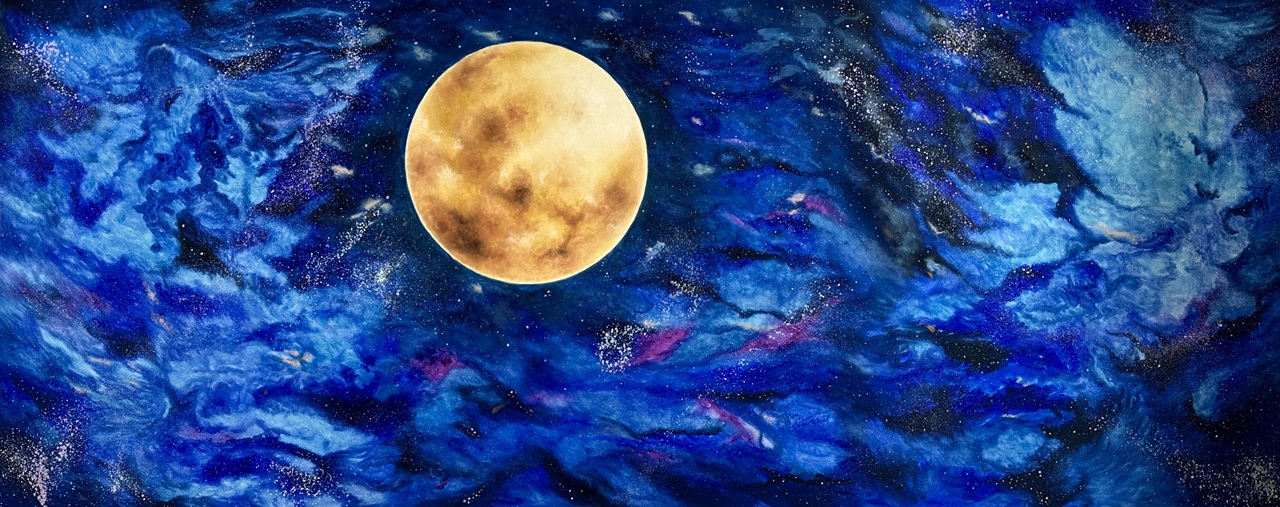






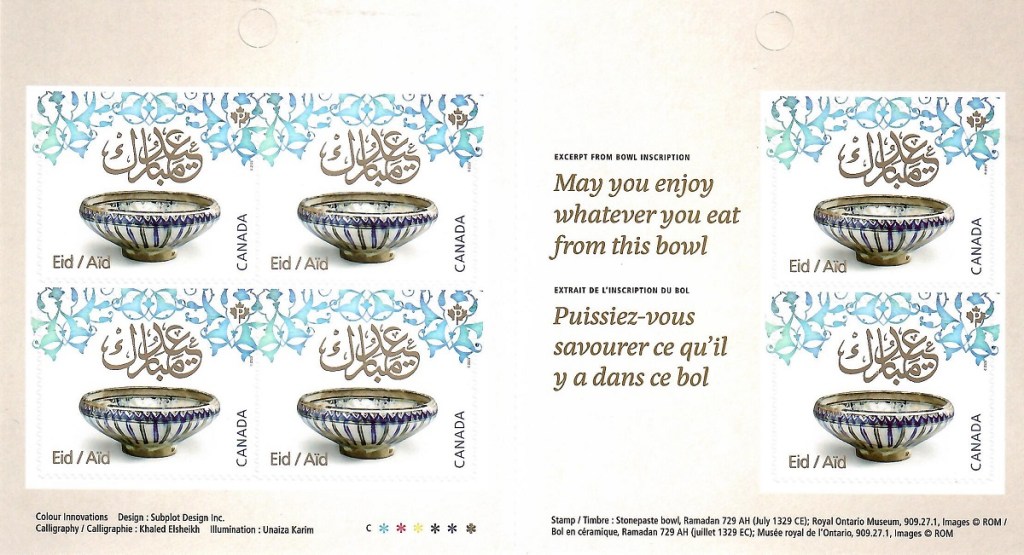


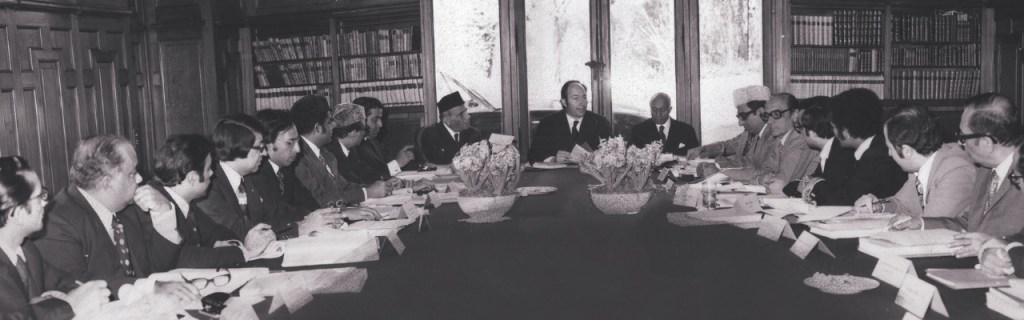

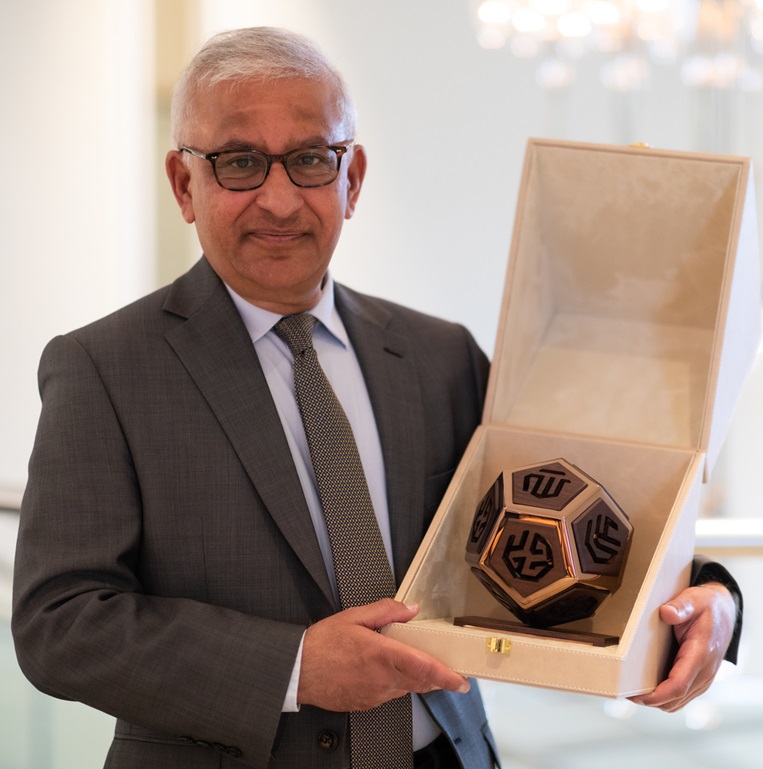

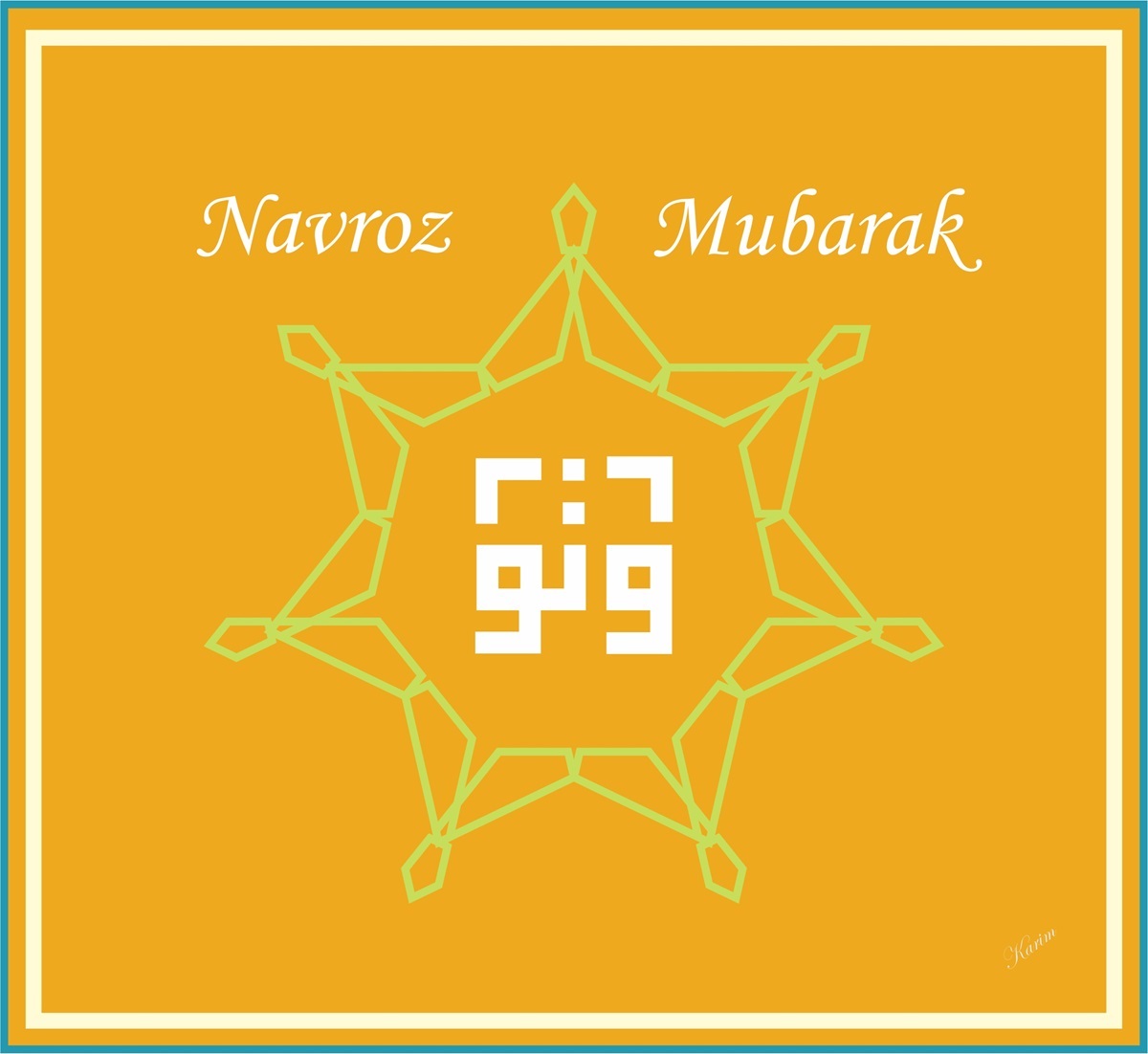
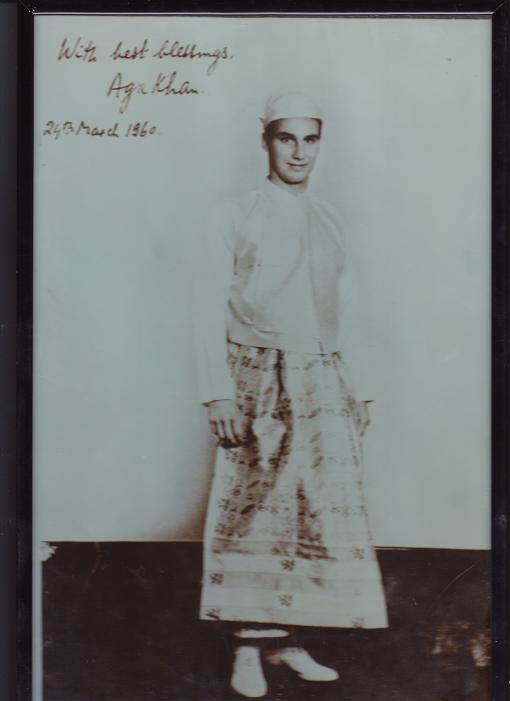
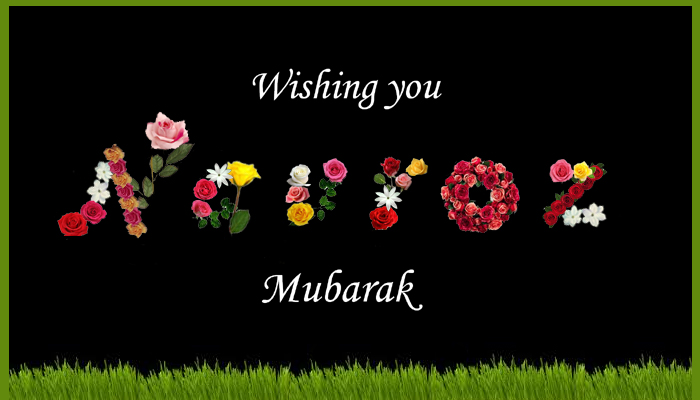
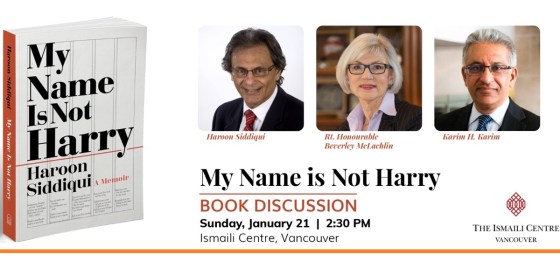

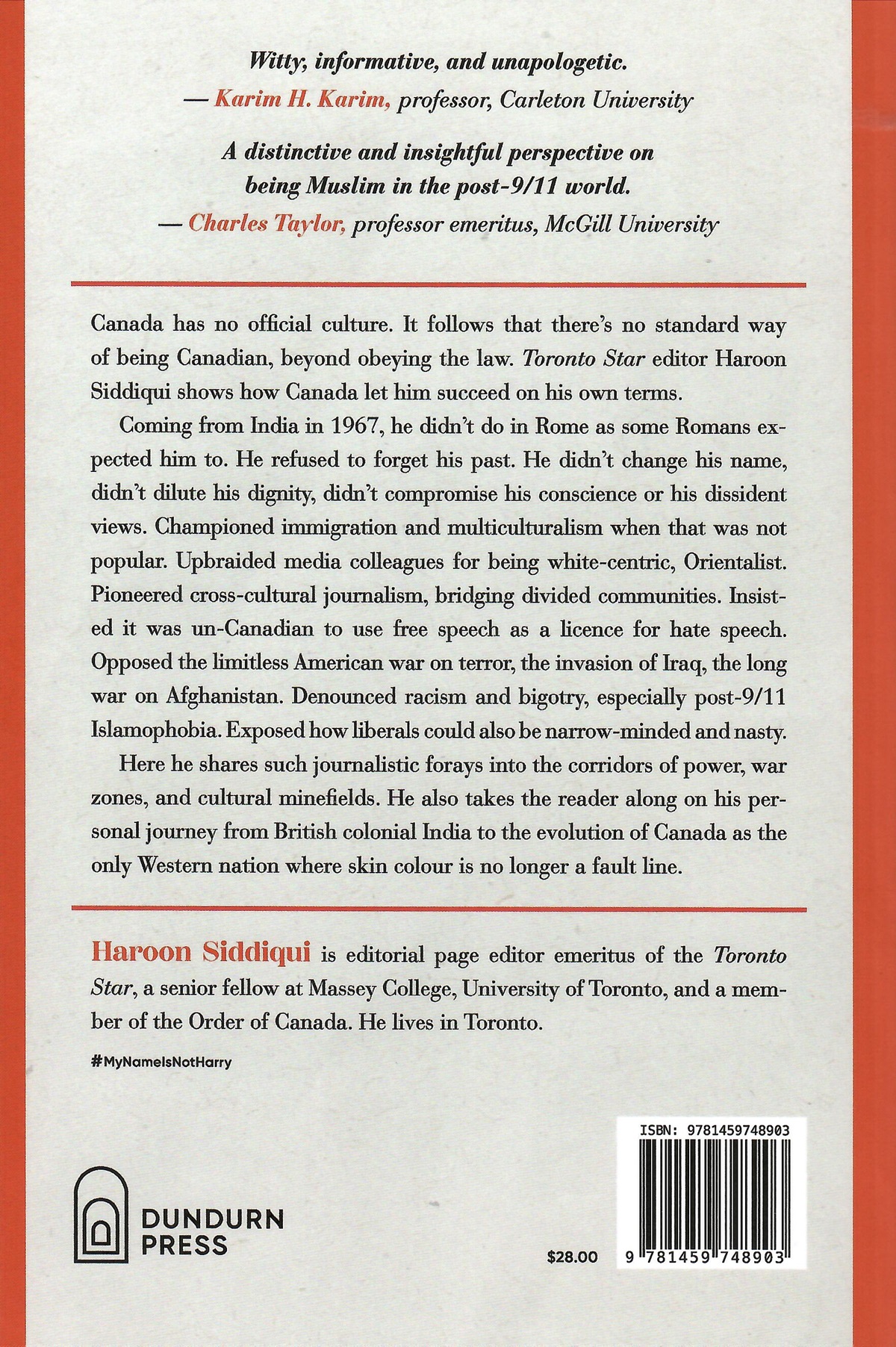

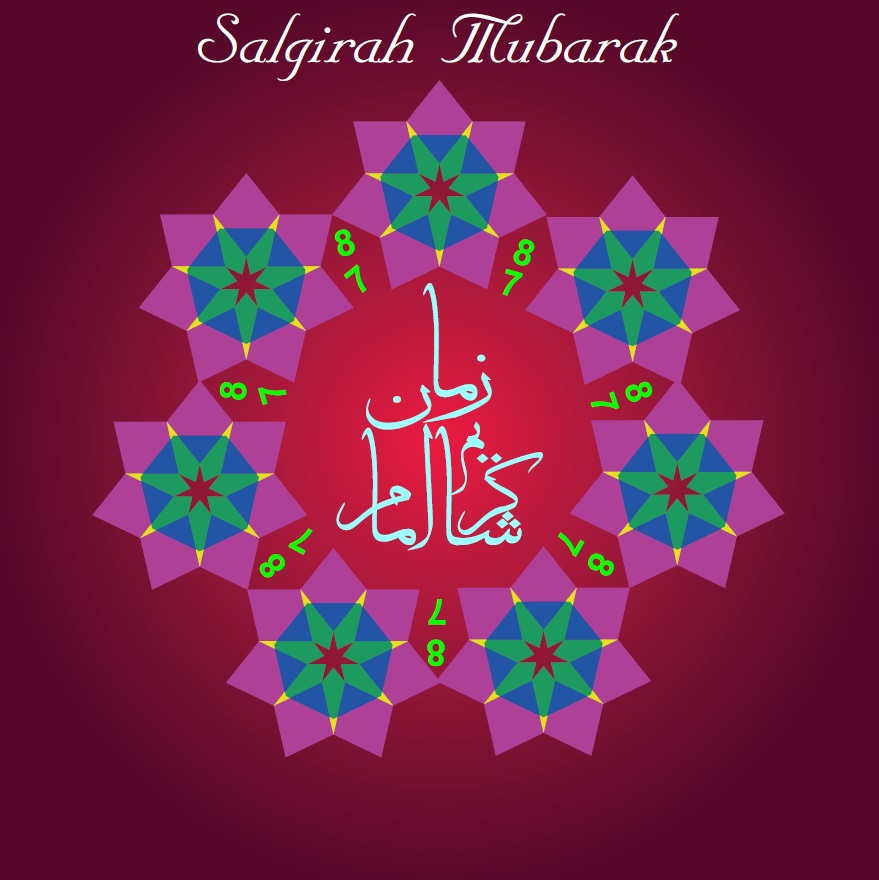
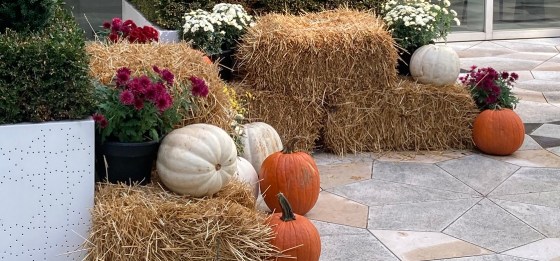
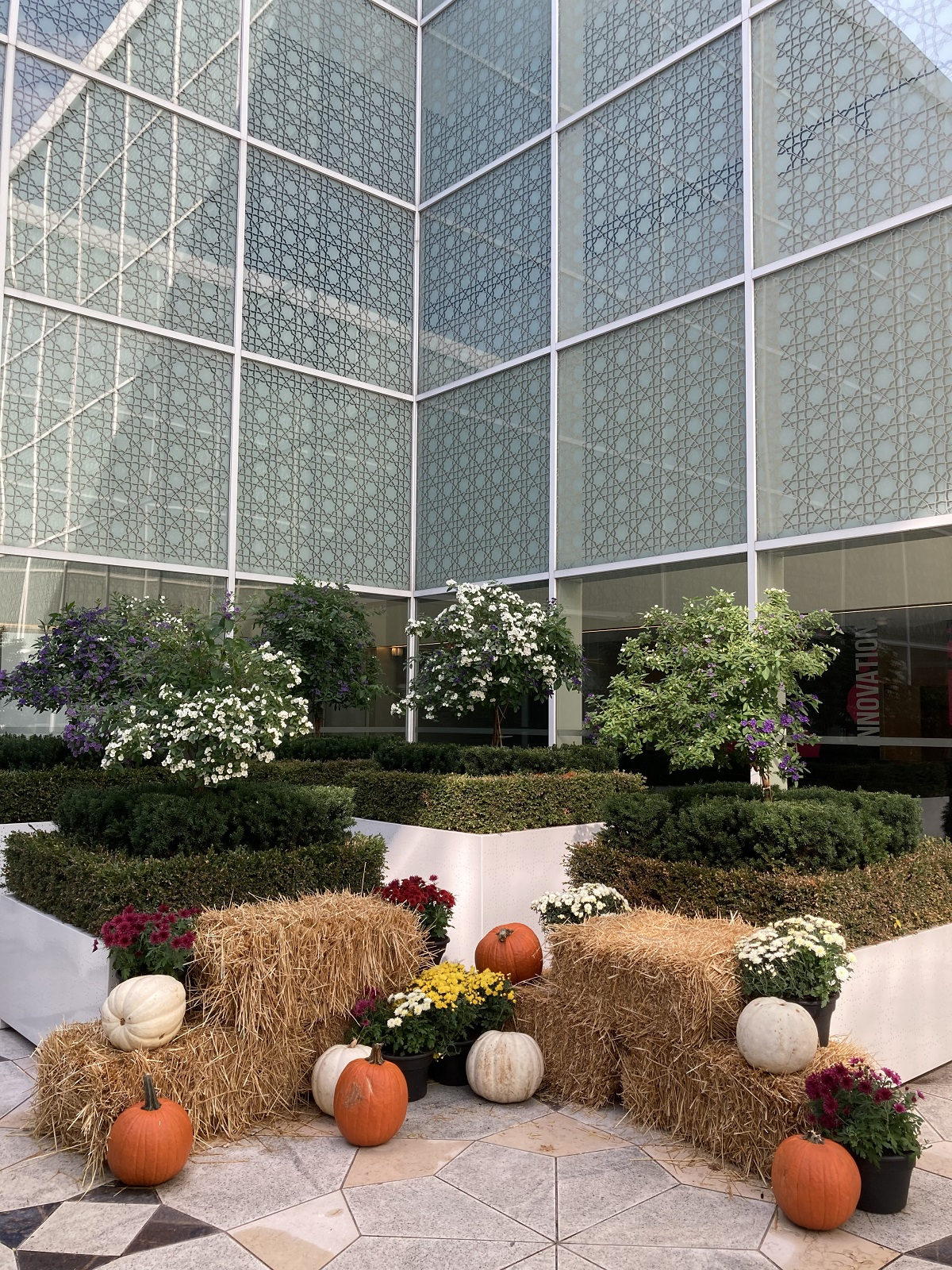
 Simerg - Insights from Around the World